From Exposure to Outcome: Air Pollution-Induced Oxidative Stress as a Determinant of Early and Late Outcomes After Coronary Artery Bypass Grafting



Abstract
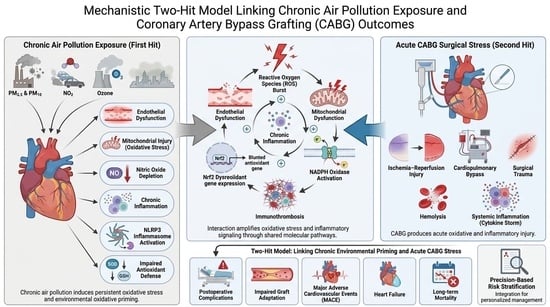
1. Introduction
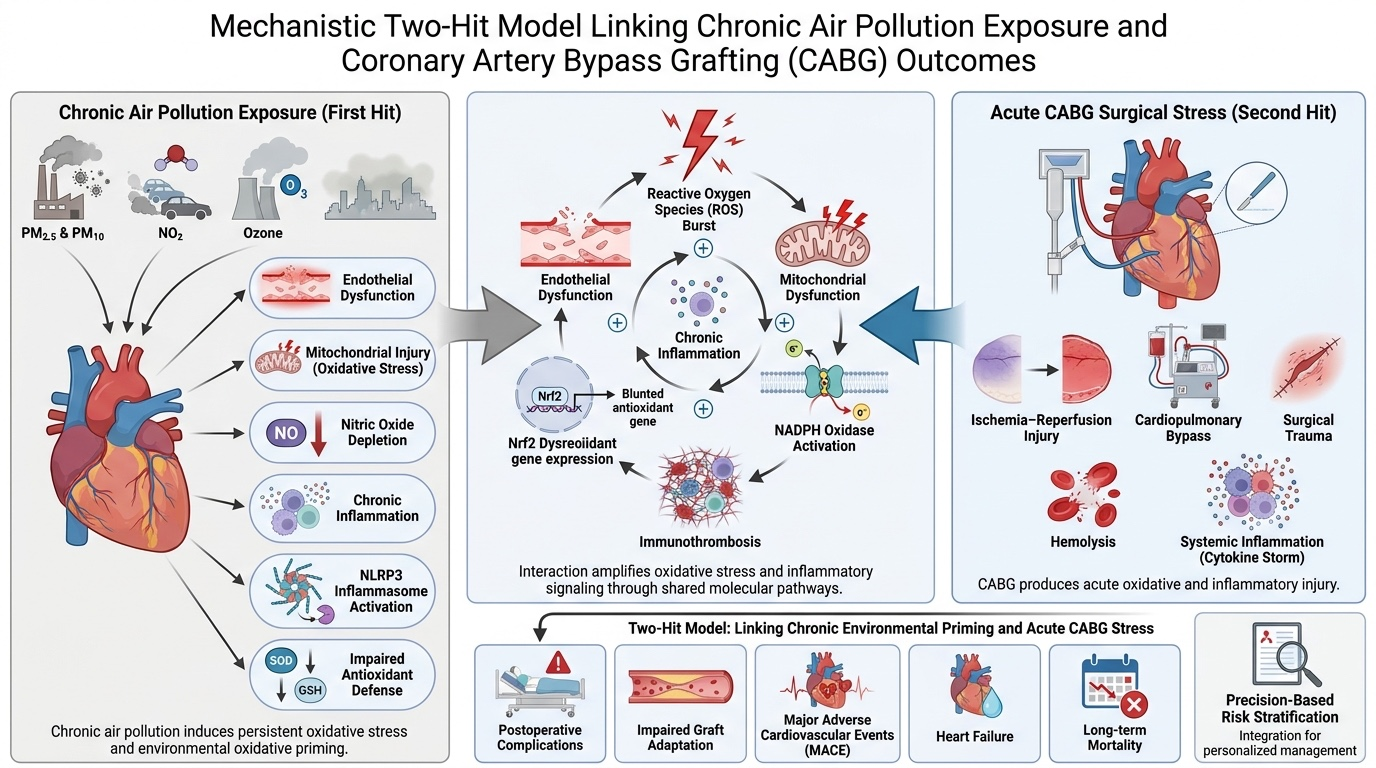
2. CABG as a Human Model of Acute Oxidative Injury
3. Environmental Oxidative Priming Before CABG: Determinants of Exposure
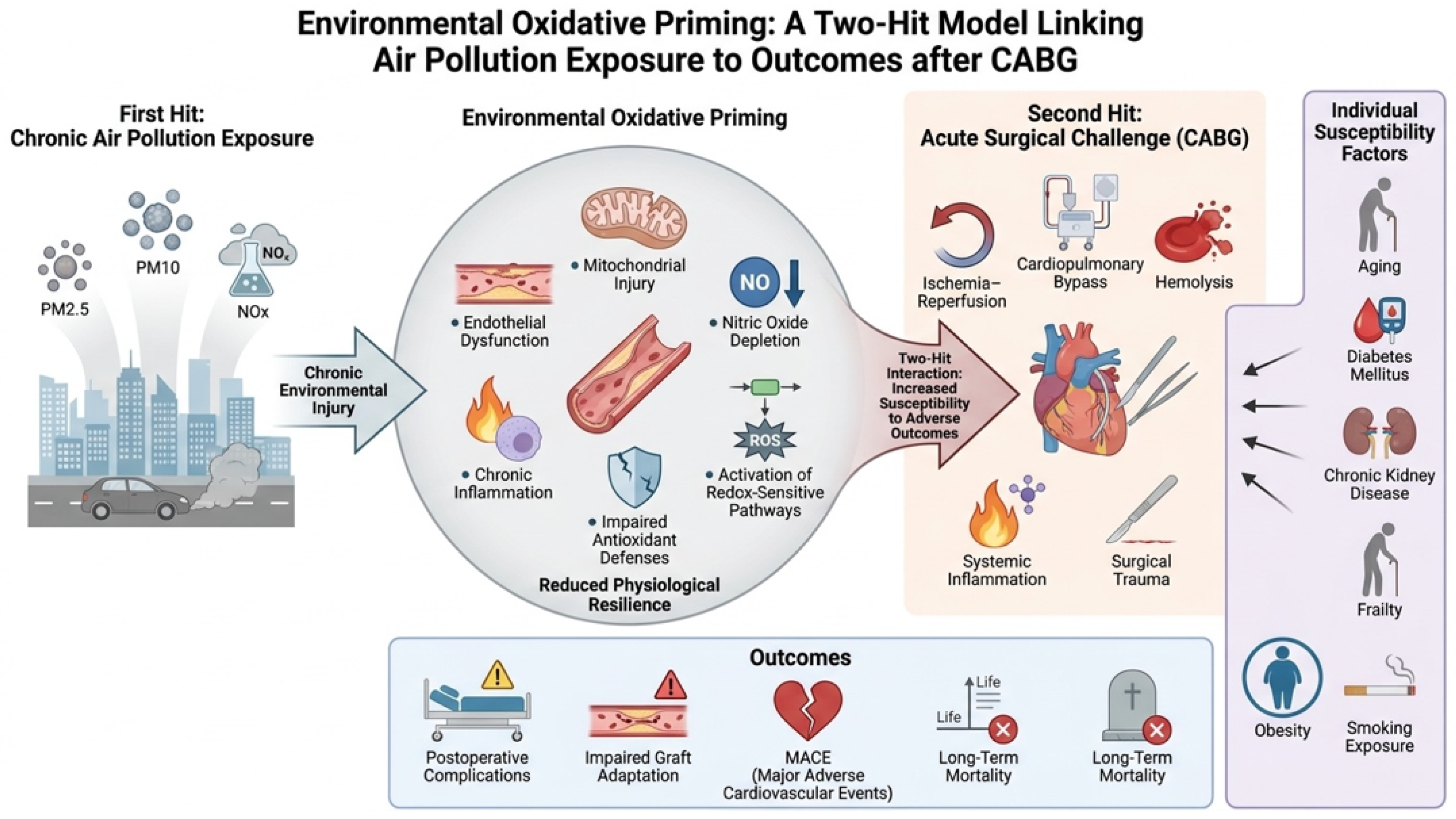
Pathophysiological Basis of Environmental Oxidative Priming
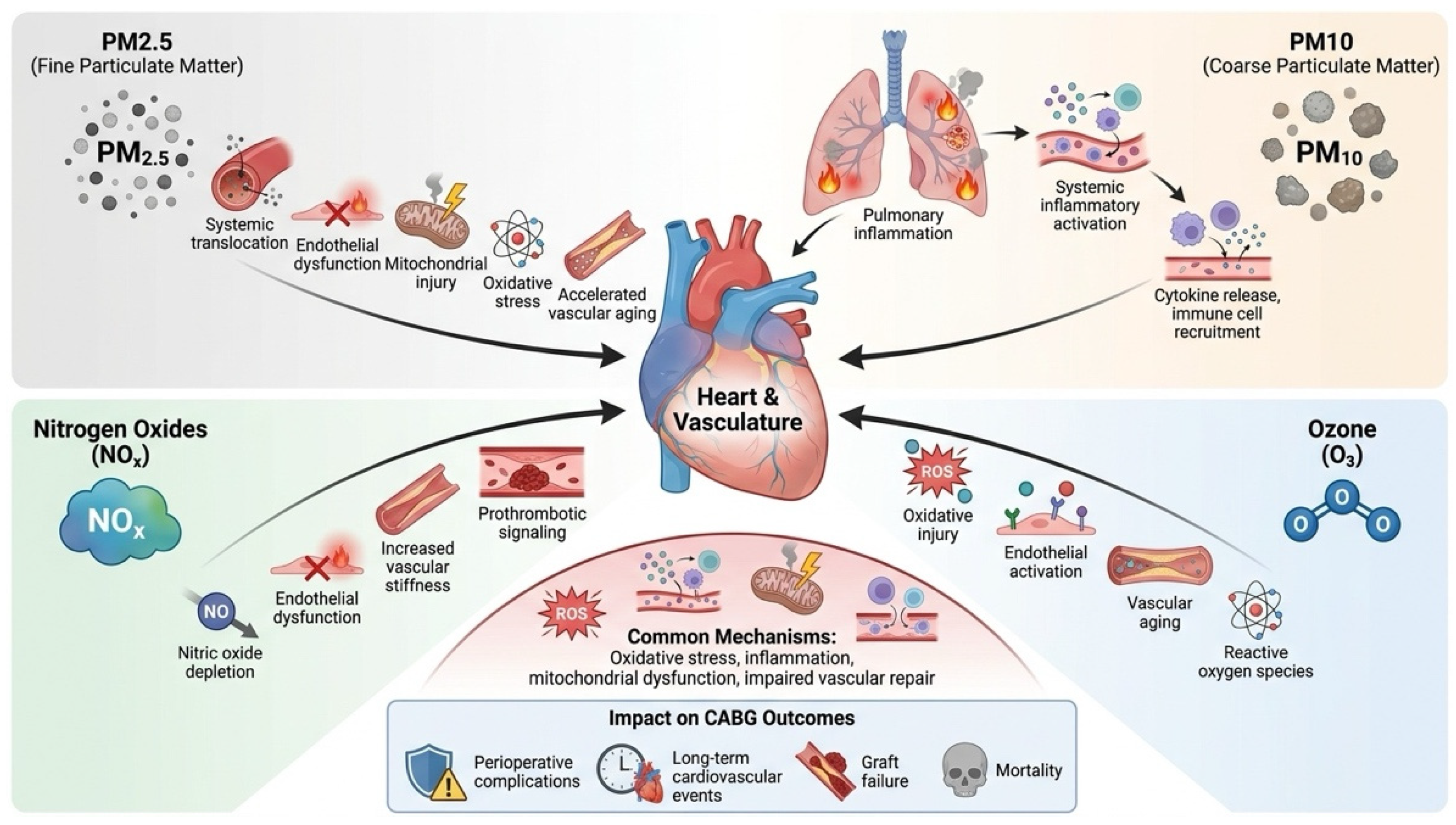
4. Distinct Pollutants, Distinct Biological Signatures
4.1. Airborne Particulate Matter with a Diameter of 2.5 μm or Less (PM2.5): The Dominant Cardiovascular Pollutant
4.2. Airborne Particulate Matter with Diameter of 10 μm or Less (PM10): Beyond the Lung
4.3. Nitrogen Dioxide (NO2): More than a Marker of Traffic Exposure
4.4. Pollutants as Biological Modifiers Rather than Isolated Risk Factors
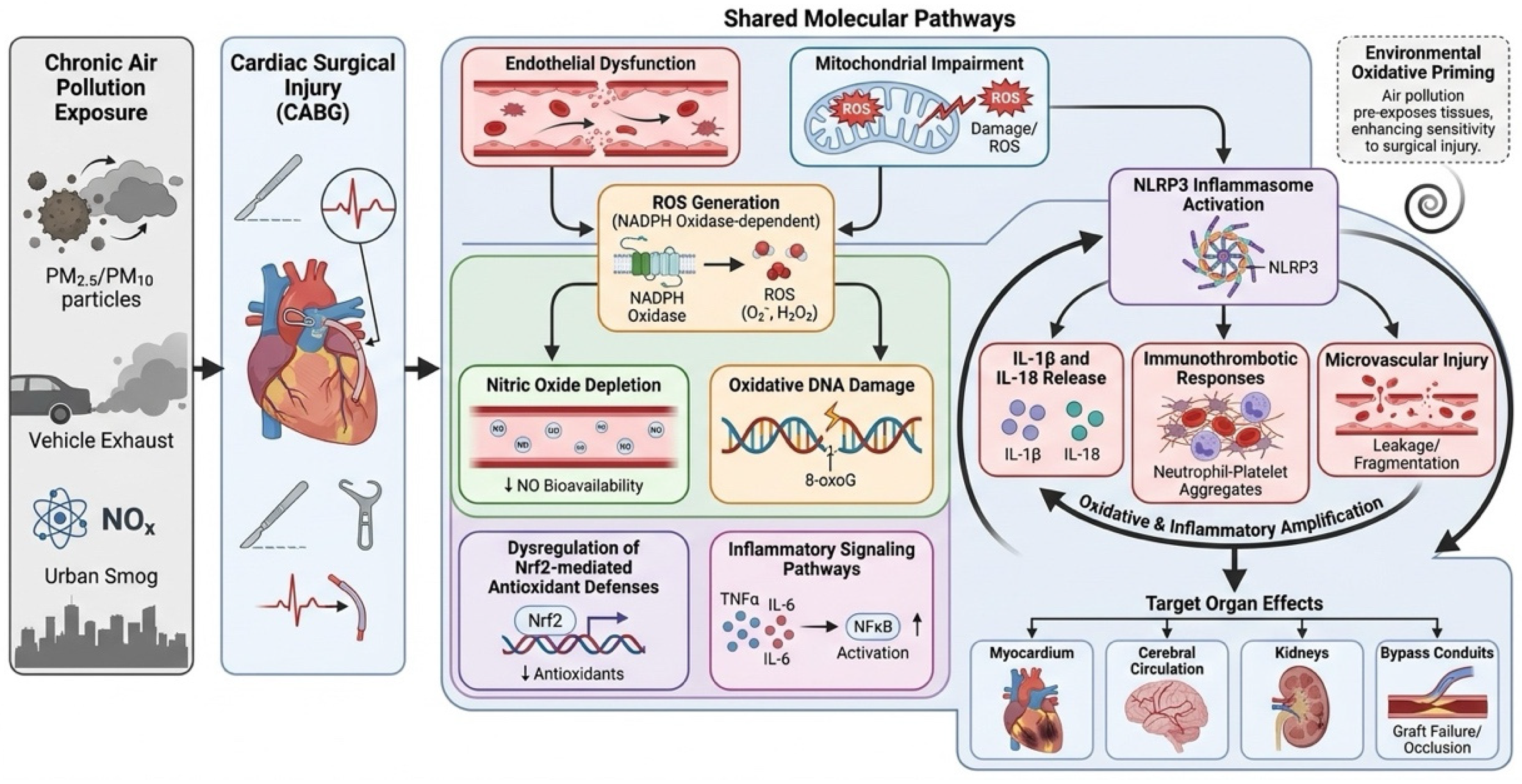
5. Converging Biological Pathways Between Air Pollution and CABG: The Mechanistic Basis of Environmental Oxidative Priming
5.1. Endothelial Dysfunction: The Earliest Point of Convergence
5.2. Mitochondrial Dysfunction: The Central Hub of Oxidative Injury
5.3. Nitric Oxide Biology and Loss of Vascular Homeostasis
5.4. NADPH Oxidase and Amplification of Oxidative Stress
5.5. Nrf2 Dysfunction: Failure of Endogenous Defense Mechanisms
5.6. Inflammation as a Consequence Rather than a Parallel Process
5.7. Environmental Oxidative Priming: A Unifying Mechanistic Framework
5.8. NLRP3 Inflammasome Activation, Immunothrombosis, and Amplification of Oxidative Injury
6. On-Pump Versus Off-Pump CABG as a Model of Environmental Oxidative Susceptibility
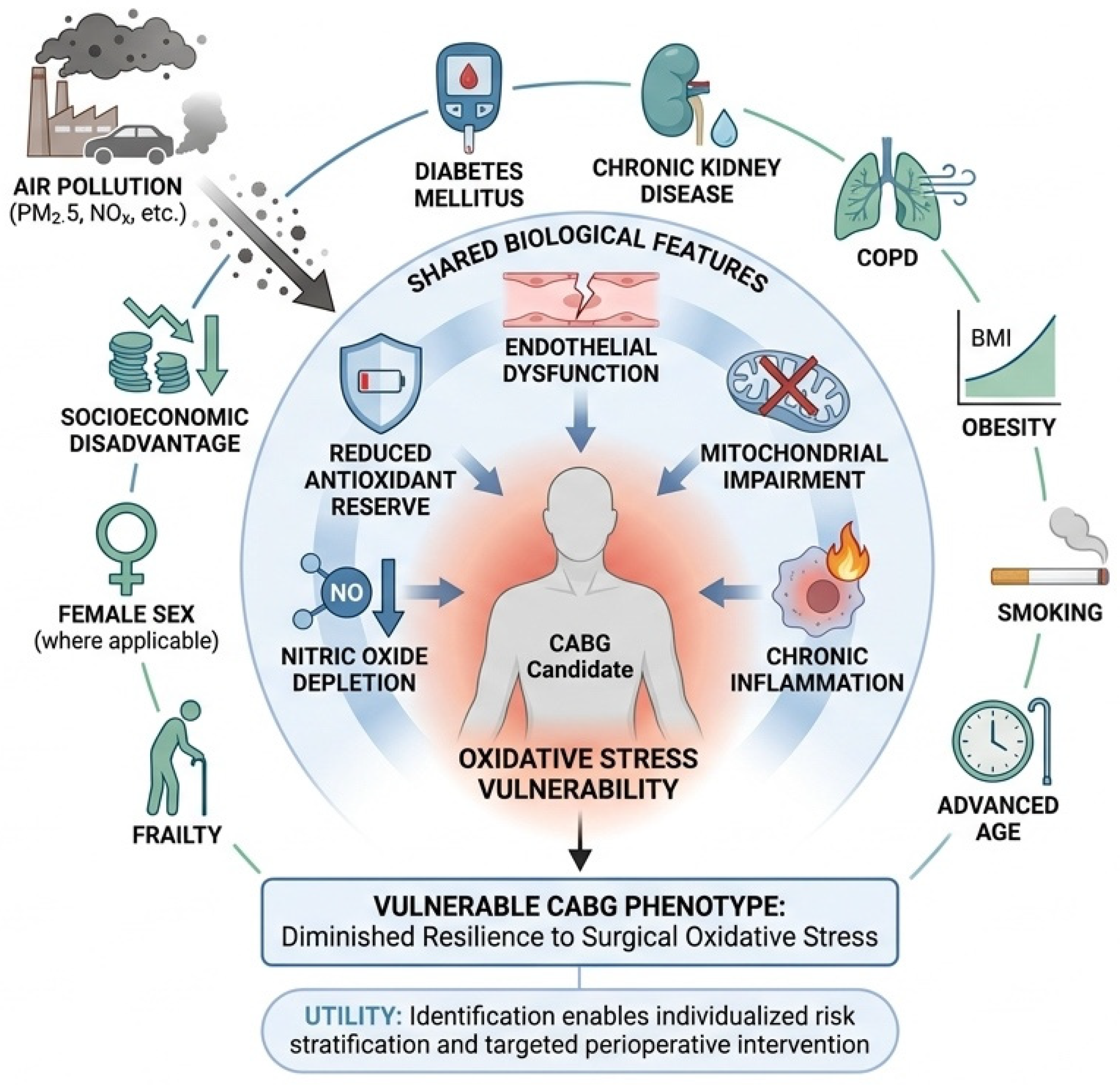
7. Susceptible Populations and Environmental Oxidative Priming
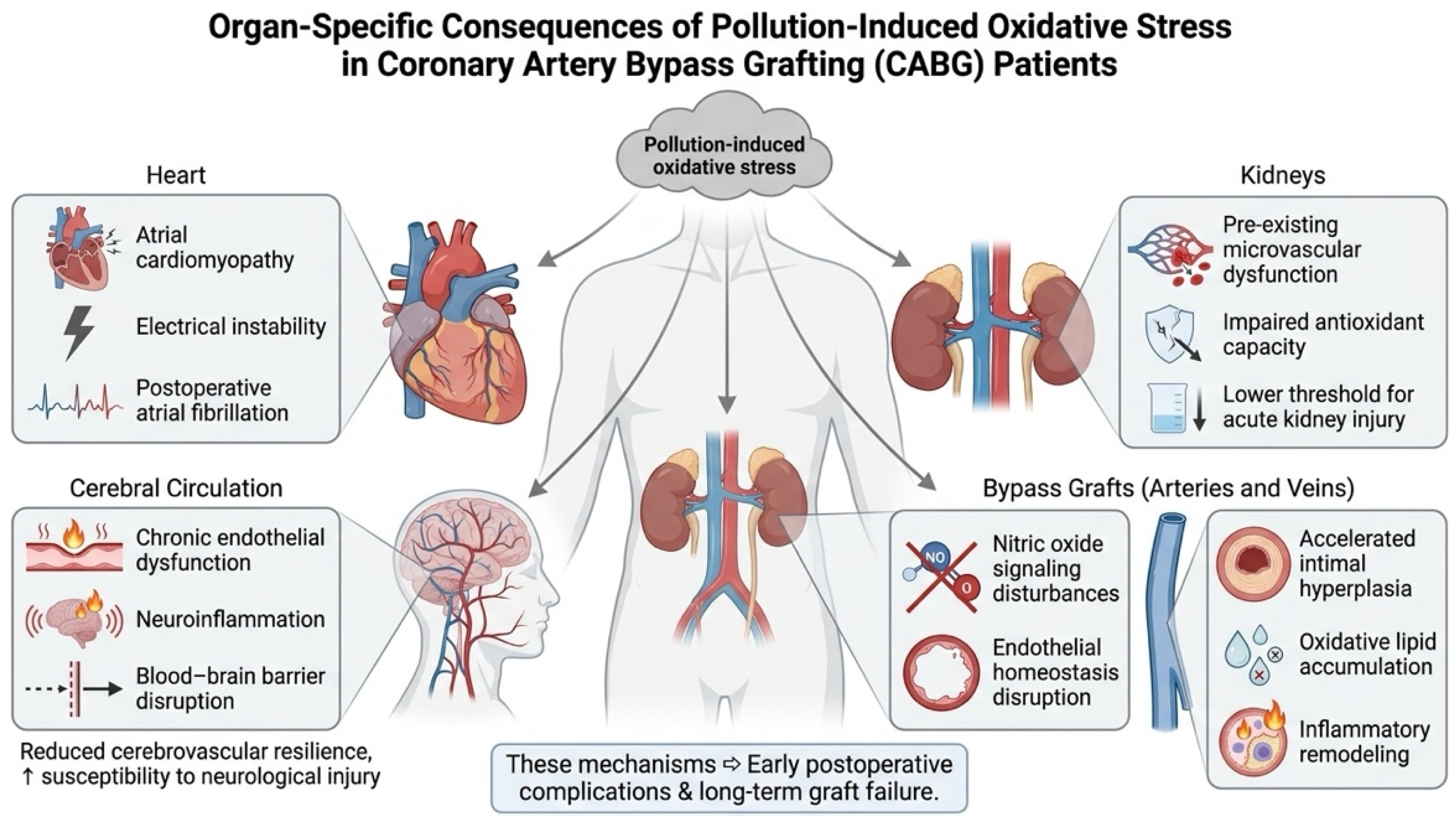
8. Postoperative Atrial Fibrillation: Is Air Pollution a Missing Driver of Atrial Vulnerability?
9. Stroke and Neurological Injury: Does Air Pollution Lower the Threshold for Cerebral Injury After CABG?
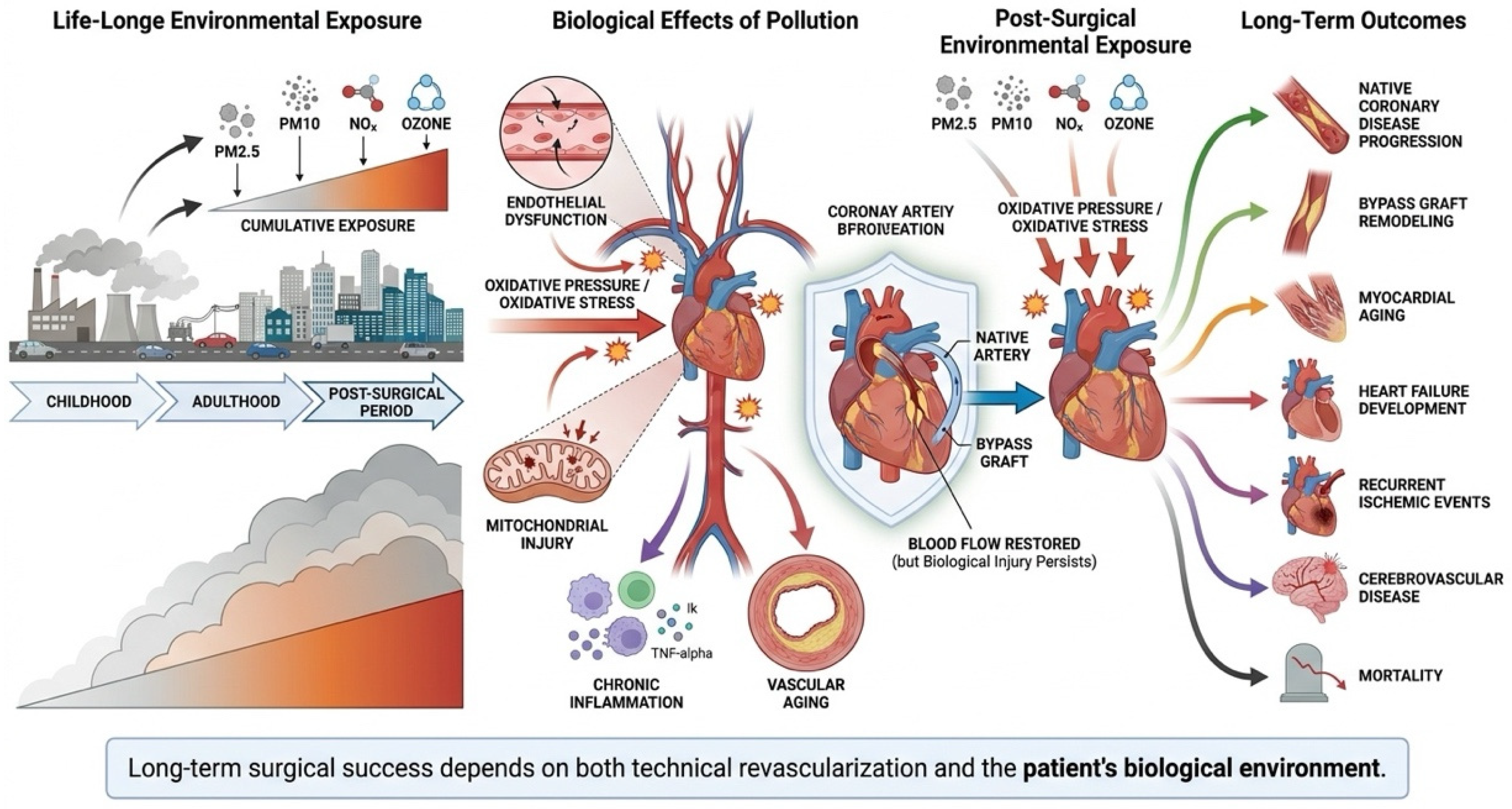
10. Long-Term Outcomes After CABG: Persistent Oxidative Pressure and the Erosion of Surgical Benefit
10.1. The Concept of Persistent Oxidative Pressure
10.2. CABG Corrects Anatomy, Not Biology
10.3. Air Pollution and Accelerated Vascular Aging
10.4. Oxidative Stress and the Progression of Residual Cardiovascular Disease
10.5. Heart Failure: The Forgotten Long-Term Outcome
10.6. Major Adverse Cardiovascular Events as a Manifestation of Biological Resilience
10.7. Environmental Memory and Long-Term Prognosis
10.8. Reframing Long-Term Success After CABG
11. Therapeutic Modulation of Pollution-Induced Oxidative Stress: Opportunities and Limitations
11.1. The Limitations of Conventional Antioxidant Therapy
11.2. Endothelial Protection as a Therapeutic Target
11.3. Mitochondrial Preservation and Energetic Resilience
11.4. Nrf2 and Endogenous Antioxidant Defense
11.5. Exposure Reduction: The Most Direct Intervention
11.6. Toward Precision Redox Medicine
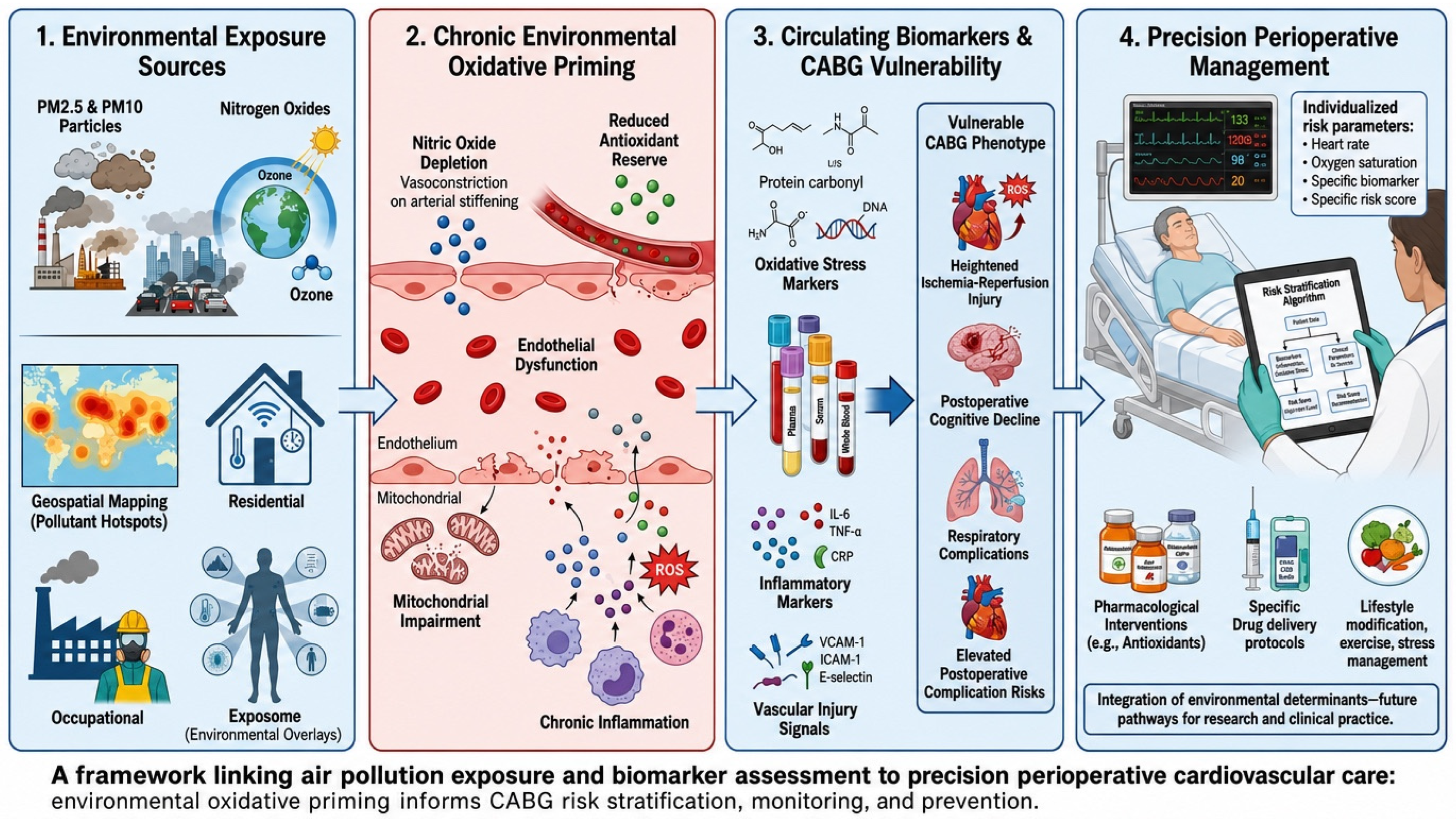
12. From Exposure to Biology: Biomarkers, the Exposome, and the Environmental Risk Stratification in CABG
12.1. The Limitations of Exposure-Based Risk Assessment
12.2. Why Oxidative Stress Biomarkers Have Been Disappointing
12.3. Endothelial Phenotyping: Measuring the First Target of Environmental Injury
12.4. Mitochondria as Integrators of Environmental History
12.5. The Exposome: A Missing Dimension in Cardiac Surgery
12.6. Toward Environmental Precision Cardiovascular Surgery
12.7. Beyond Biomarkers: Measuring Biological Resilience
13. Alternative Interpretations, and a Critical Perspective
13.1. The Fundamental Problem of Causality
13.2. Exposure Is Not Biology
13.3. Oxidative Stress Is an Attractive but Incomplete Explanation
13.4. The Antioxidant Paradox
13.5. A Question of Scale: Molecular Signals Versus Clinical Events
13.6. The Danger of Environmental Determinism
13.7. What Would Falsify the Hypothesis?
- Pollution exposure is not associated with measurable differences in endothelial, mitochondrial, or oxidative phenotypes among CABG patients.
- Patients with high environmental exposure do not exhibit greater susceptibility to oxidative stress-related complications after adjustment for conventional risk factors.
- Biomarkers of pollution-related oxidative injury fail to predict postoperative or long-term outcomes.
- Interventions that reduce exposure or improve redox resilience do not influence biological or clinical endpoints in high-exposure populations.
13.8. Future Directions—What Can We Change?
14. Limitations
15. Conclusions: Reframing CABG Through the Lens of Environmental Oxidative Priming
Author Contributions
Funding
Institutional Review Board Statement
Informed Consent Statement
Data Availability Statement
Acknowledgments
Conflicts of Interest
Abbreviations
| AKI | Acute kidney injury |
| ATP | Adenosine triphosphate |
| CABG | Coronary artery bypass grafting |
| CKD | Chronic kidney disease |
| COPD | Chronic obstructive pulmonary disease |
| CPB | Cardiopulmonary bypass |
| DNA | Deoxyribonucleic acid |
| EuroSCORE II | European System for Cardiac Operative Risk Evaluation II |
| IL | Interleukin |
| I/R | Ischemia–reperfusion |
| LDL | Low-density lipoprotein |
| MACE | Major adverse cardiovascular events |
| MPO | Myeloperoxidase |
| NADPH | Nicotinamide adenine dinucleotide phosphate |
| NETs | Neutrophil extracellular traps |
| NLRP3 | NOD-, LRR- and pyrin domain-containing protein 3 |
| NO | Nitric oxide |
| NO2 | Nitrogen dioxide |
| NOx | Nitrogen oxides |
| Nrf2 | Nuclear factor erythroid 2–related factor 2 |
| O3 | Ozone |
| PM | Particulate matter |
| PM2.5 | Particulate matter with an aerodynamic diameter ≤ 2.5 μm |
| PM10 | Particulate matter with an aerodynamic diameter ≤ 10 μm |
| POAF | Postoperative atrial fibrillation |
| ROS | Reactive oxygen species |
| STS | Society of Thoracic Surgeons |
References
- Thakare, V.S.; Sontakke, N.G.; Wasnik, P.S.; Kanyal, D. Recent Advances in Coronary Artery Bypass Grafting Techniques and Outcomes: A Narrative Review. Cureus 2023, 15, e45511. [Google Scholar] [CrossRef] [Scilit] [PubMed]
- Ruel, M.; Chikwe, J. Coronary Artery Bypass Grafting: Past and Future. Circulation 2024, 150, 1067–1069. [Google Scholar] [CrossRef] [Scilit] [PubMed]
- Yoo, K.J. The Past, Present, and Future of Off-Pump Coronary Artery Bypass Grafting. J. Chest Surg. 2025, 58, 121–133. [Google Scholar] [CrossRef] [Scilit] [PubMed]
- Vasconcelos, N.N.B.; Queiroz, V.N.F.; Souza, G.M.; Mangini, S.; Silva, F.M.F.; Costa, L.G.V.D.; Campos, P.P.Z.D.A.; Steffen, S.P.; Takaoka, F.; Serpa Neto, A.; et al. Perioperative management of adult patients undergoing coronary artery bypass grafting and valve surgery: A literature review. Einstein 2025, 23, eRW1353. [Google Scholar] [CrossRef] [Scilit] [PubMed]
- Krittanawong, C.; Rizwan, A.; Khawaja, M.; Newman, N.; Escobar, J.; Virk, H.U.H.; Alam, M.; Al-Azzam, F.; Yong, C.M.; Jneid, H. The Current State of Coronary Revascularization: Coronary Artery Bypass Graft Surgery Versus Percutaneous Coronary Interventions. Curr. Cardiol. Rep. 2024, 26, 919–933. [Google Scholar] [CrossRef] [Scilit] [PubMed]
- Prasad, M.; Ahmad, Y.; Howard, J.P.; Ben-Ami, J.; Madhavan, M.V.; Kirtane, A.J.; McEntegart, M.; Flattery, E.; Stone, G.W.; Leon, M.B.; et al. Long-term Incidence of Myocardial Infarction and Death After CABG and PCI for Isolated Left Anterior Descending Artery Disease: A Meta-analysis of Randomized Controlled Trials. J. Soc. Cardiovasc. Angiogr. Interv. 2023, 2, 100636. [Google Scholar] [CrossRef] [Scilit] [PubMed]
- Hayatsu, Y.; Ruel, M.; Bader Eddeen, A.; Sun, L. Single Versus Multiple Arterial Revascularization in Patients with Reduced Renal Function: Long-term Outcome Comparisons in 23,406 CABG Patients From Ontario, Canada. Ann. Surg. 2022, 275, 602–608. [Google Scholar] [PubMed]
- Nashef, S.A.; Roques, F.; Sharples, L.D.; Nilsson, J.; Smith, C.; Goldstone, A.R.; Lockowandt, U. EuroSCORE II. Eur. J. Cardiothorac. Surg. 2012, 41, 734–745. [Google Scholar] [CrossRef] [Scilit]
- Ng, J.Y.; Tan, E.F.; Kemberi, M.; Urgesi, E.; Jubouri, M.; Bailey, D.M.; Bashir, M.; Awad, W.I. EuroSCORE II: Current limitations and physiological gaps in risk stratification. Exp. Physiol. 2026, 111, 1069–1080. [Google Scholar] [PubMed]
- Krismanuel, H. Air pollution and cardiovascular diseases: Mechanisms, evidence, and mitigation strategies. J. Med. Life 2025, 18, 411–427. [Google Scholar] [CrossRef] [Scilit] [PubMed]
- Kumar, V.S.H.; Huligowda, L.K.D.; Umesh, M.; Chakraborty, P.; Thazeem, B.; Singh, A.P. Environmental Pollutants as Emerging Concerns for Cardiac Diseases: A Review on Their Impacts on Cardiac Health. Biomedicines 2025, 13, 241. [Google Scholar] [CrossRef] [Scilit] [PubMed]
- Liang, S.; Zhang, J.; Ning, R.; Du, Z.; Liu, J.; Batibawa, J.W.; Duan, J.; Sun, Z. The critical role of endothelial function in fine particulate matter-induced atherosclerosis. Part Fibre Toxicol. 2020, 17, 61–85. [Google Scholar] [CrossRef] [Scilit] [PubMed]
- Hill, B.G.; Rood, B.; Ribble, A.; Haberzettl, P. Fine particulate matter (PM2.5) inhalation-induced alterations in the plasma lipidome as promoters of vascular inflammation and insulin resistance. Am. J. Physiol. Heart Circ. Physiol. 2021, 320, H1836–H1850. [Google Scholar] [CrossRef] [Scilit] [PubMed]
- Araujo, J.A. Particulate air pollution, systemic oxidative stress, inflammation, and atherosclerosis. Air Qual. Atmos. Health 2010, 4, 79–93. [Google Scholar] [CrossRef] [Scilit] [PubMed]
- Lopez, M.G.; Shotwell, M.S.; Hennessy, C.; Pretorius, M.; McIlroy, D.R.; Kimlinger, M.J.; Mace, E.H.; Absi, T.; Shah, A.S.; Brown, N.J.; et al. Intraoperative Oxygen Treatment, Oxidative Stress, and Organ Injury Following Cardiac Surgery: A Randomized Clinical Trial. JAMA Surg. 2024, 159, 1106–1116. [Google Scholar] [CrossRef] [Scilit] [PubMed]
- Giacinto, O.; Satriano, U.; Nenna, A.; Spadaccio, C.; Lusini, M.; Mastroianni, C.; Nappi, F.; Chello, M. Inflammatory Response and Endothelial Dysfunction Following Cardiopulmonary Bypass: Pathophysiology and Pharmacological Targets. Recent Pat. Inflamm. Allergy Drug Discov. 2019, 13, 158–173. [Google Scholar] [CrossRef] [Scilit] [PubMed]
- Urbanowicz, T.; Skotak, K.; Olasińska-Wiśniewska, A.; Filipiak, K.J.; Płachta-Krasińska, A.; Piecek, J.; Krasińska, B.; Krasiński, Z.; Tykarski, A.; Jemielity, M. The Possible Role of PM2.5 Chronic Exposure on 5-Year Survival in Patients with Left Ventricular Dysfunction Following Coronary Artery Bypass Grafting. Toxics 2024, 12, 697. [Google Scholar] [CrossRef] [Scilit] [PubMed]
- Sidik, A.I.; Dontsov, V.; Khavandeev, M.L.; Sobolev, D.; Al-Ariki, M.K.; Ghosh, D.; Pereira, O.B.; Emmanuel, E.K.; Korjueva, L.S.; Cherjaoui, M.A.; et al. Redox Imbalance in Coronary Artery Bypass Grafting: The Clinical Significance of Aminothiols. Cureus 2025, 17, e96384. [Google Scholar] [CrossRef] [Scilit] [PubMed]
- Skeffington, K.L.; Moscarelli, M.; Abdul-Ghani, S.; Fiorentino, F.; Emanueli, C.; Reeves, B.C.; Punjabi, P.P.; Angelini, G.D.; Suleiman, M.S. Pathology-related changes in cardiac energy metabolites, inflammatory response and reperfusion injury following cardioplegic arrest in patients undergoing open-heart surgery. Front. Cardiovasc. Med. 2022, 9, 911557. [Google Scholar] [CrossRef] [Scilit] [PubMed]
- Kırali, K.; Aydın, S.; Güneş, A.; Aksüt, M.; Güler, E.M.; Gürcü, M.E. Prospective observational study comparing systemic inflammatory responses across different perfusion systems during isolated on-pump Coronary Artery Bypass Grafting. Interdiscip. Cardiovasc. Thorac. Surg. 2025, 40, ivaf221. [Google Scholar] [CrossRef] [Scilit] [PubMed]
- Dias, A.E.; Melnikov, P.; Cônsolo, L.Z. Oxidative stress in coronary artery bypass surgery. Rev. Bras. Cir. Cardiovasc. 2015, 30, 417–424. [Google Scholar] [CrossRef] [Scilit] [PubMed]
- Winterhalter, M.; Brandl, K.; Rahe-Meyer, N.; Osthaus, A.; Hecker, H.; Hagl, C.; Adams, H.A.; Piepenbrock, S. Endocrine stress response and inflammatory activation during CABG surgery. A randomized trial comparing remifentanil infusion to intermittent fentanyl. Eur. J. Anaesthesiol. 2008, 25, 326–335. [Google Scholar] [CrossRef] [Scilit] [PubMed]
- Miceli, V.; Lo Gerfo, E.; Russelli, G.; Bulati, M.; Iannolo, G.; Tinnirello, R.; Cimino, M.; Saso, L.; Avorio, F.; Lo Re, V. Circulating Biomarkers to Predict Post-Operative Cognitive Decline in Patients Undergoing Coronary Artery Bypass Grafting. Cell. Mol. Neurobiol. 2025, 45, 37–51. [Google Scholar] [CrossRef] [Scilit] [PubMed]
- Hatami, S.; Hefler, J.; Freed, D.H. Inflammation and Oxidative Stress in the Context of Extracorporeal Cardiac and Pulmonary Support. Front. Immunol. 2022, 13, 831930. [Google Scholar] [CrossRef] [Scilit] [PubMed]
- Wang, J. Neutrophils in tissue injury and repair. Cell Tissue Res. 2018, 371, 531–539. [Google Scholar] [CrossRef] [Scilit]
- Janakiram, N.B.; Valerio, M.S.; Goldman, S.M.; Dearth, C.L. The Role of the Inflammatory Response in Mediating Functional Recovery Following Composite Tissue Injuries. Int. J. Mol. Sci. 2021, 22, 13552. [Google Scholar] [CrossRef] [Scilit] [PubMed]
- Xiang, M.; Lu, Y.; Xin, L.; Gao, J.; Shang, C.; Jiang, Z.; Lin, H.; Fang, X.; Qu, Y.; Wang, Y.; et al. Role of Oxidative Stress in Reperfusion following Myocardial Ischemia and Its Treatments. Oxidative Med. Cell. Longev. 2021, 2021, 6614009. [Google Scholar] [CrossRef] [Scilit]
- Dhalla, N.S.; Ostadal, P.; Tappia, P.S. Involvement of Oxidative Stress and Antioxidants in Modification of Cardiac Dysfunction due to Ischemia-Reperfusion Injury. Antioxidants 2025, 14, 340. [Google Scholar] [CrossRef] [Scilit] [PubMed]
- Buja, L.M. Pathobiology of myocardial and cardiomyocyte injury in ischemic heart disease: Perspective from seventy years of cell injury research. Exp. Mol. Pathol. 2024, 140, 104944. [Google Scholar] [CrossRef] [Scilit] [PubMed]
- Han, D.Y.; Ahn, H.S.; Park, H.J. Myocardial Ischemia-Reperfusion Injury-Mechanistic Insights and Novel Therapeutics. Int. J. Mol. Sci. 2026, 27, 2106. [Google Scholar] [CrossRef] [Scilit] [PubMed]
- Panconesi, R.; Widmer, J.; Carvalho, M.F.; Eden, J.; Dondossola, D.; Dutkowski, P.; Schlegel, A. Mitochondria and ischemia reperfusion injury. Curr. Opin. Organ. Transplant. 2022, 27, 434–445. [Google Scholar] [CrossRef] [Scilit] [PubMed]
- Tian, L.; Liu, Q.; Guo, H.; Zang, H.; Li, Y. Fighting ischemia-reperfusion injury: Focusing on mitochondria-derived ferroptosis. Mitochondrion 2024, 79, 101974. [Google Scholar] [CrossRef] [Scilit] [PubMed]
- Dambrova, M.; Zuurbier, C.J.; Borutaite, V.; Liepinsh, E.; Makrecka-Kuka, M. Energy substrate metabolism and mitochondrial oxidative stress in cardiac ischemia/reperfusion injury. Free Radic. Biol. Med. 2021, 165, 24–37. [Google Scholar] [CrossRef] [Scilit] [PubMed]
- Sánchez-Pérez, P.; Mata, A.; Torp, M.K.; López-Bernardo, E.; Heiestad, C.M.; Aronsen, J.M.; Molina-Iracheta, A.; Jiménez-Borreguero, L.J.; García-Roves, P.; Costa, A.S.H.; et al. Energy substrate metabolism, mitochondrial structure and oxidative stress after cardiac ischemia-reperfusion in mice lacking UCP3. Free Radic. Biol. Med. 2023, 205, 244–261. [Google Scholar] [CrossRef] [Scilit] [PubMed]
- Granger, D.N.; Kvietys, P.R. Reperfusion injury and reactive oxygen species: The evolution of a concept. Redox Biol. 2015, 6, 524–551. [Google Scholar] [CrossRef] [Scilit] [PubMed]
- Zhang, M.; Liu, Q.; Meng, H.; Duan, H.; Liu, X.; Wu, J.; Gao, F.; Wang, S.; Tan, R.; Yuan, J. Ischemia-reperfusion injury: Molecular mechanisms and therapeutic targets. Signal Transduct. Target. Ther. 2024, 9, 12–51. [Google Scholar] [CrossRef] [Scilit] [PubMed]
- Lesnefsky, E.J.; Chen, Q.; Tandler, B.; Hoppel, C.L. Mitochondrial Dysfunction and Myocardial Ischemia-Reperfusion: Implications for Novel Therapies. Annu. Rev. Pharmacol. Toxicol. 2017, 57, 535–565. [Google Scholar] [CrossRef] [Scilit] [PubMed]
- Doyle, A.J.; Hunt, B.J. Current Understanding of How Extracorporeal Membrane Oxygenators Activate Haemostasis and Other Blood Components. Front. Med. 2018, 5, 352. [Google Scholar] [CrossRef] [Scilit]
- Ekdahl, K.N.; Fromell, K.; Mannes, M.; Grinnemo, K.H.; Huber-Lang, M.; Teramura, Y.; Nilsson, B. Therapeutic regulation of complement activation in extracorporeal circuits and intravascular treatments with special reference to the alternative pathway amplification loop. Immunol. Rev. 2023, 313, 91–103. [Google Scholar] [PubMed]
- Vallelian, F.; Buehler, P.W.; Schaer, D.J. Hemolysis, free hemoglobin toxicity, and scavenger protein therapeutics. Blood 2022, 140, 1837–1844. [Google Scholar] [CrossRef] [Scilit] [PubMed]
- Ferreira, L.O.; Vasconcelos, V.W.; Lima, J.S.; Vieira Neto, J.R.; da Costa, G.E.; Esteves, J.C.; de Sousa, S.C.; Moura, J.A.; Santos, F.R.S.; Leitão Filho, J.M.; et al. Biochemical Changes in Cardiopulmonary Bypass in Cardiac Surgery: New Insights. J. Pers. Med. 2023, 13, 1506. [Google Scholar] [CrossRef] [Scilit] [PubMed]
- Habes, Q.L.M.; Kant, N.; Beunders, R.; van Groenendael, R.; Gerretsen, J.; Kox, M.; Pickkers, P. Relationships Between Systemic Inflammation, Intestinal Damage and Postoperative Organ Dysfunction in Adults Undergoing Low-Risk Cardiac Surgery. Heart Lung Circ. 2023, 32, 395–404. [Google Scholar] [CrossRef] [Scilit] [PubMed]
- Kant, S.; Banerjee, D.; Sabe, S.A.; Sellke, F.; Feng, J. Microvascular dysfunction following cardiopulmonary bypass plays a central role in postoperative organ dysfunction. Front. Med. 2023, 10, 1110532. [Google Scholar] [CrossRef] [Scilit]
- Kanuparthy, M.; Manthana, R.; Kaushik, H.; Xiang, K.; Hamze, J.; Marimekala, D.; Feng, J.; Sellke, F.W. Microvascular Dysfunction Following Cardioplegic Arrest and Cardiopulmonary Bypass: Impacts of Diabetes and Hypertension. Biomedicines 2025, 13, 409. [Google Scholar] [CrossRef] [Scilit] [PubMed]
- Squiccimarro, E.; Lorusso, R.; Consiglio, A.; Labriola, C.; Haumann, R.G.; Piancone, F.; Speziale, G.; Whitlock, R.P.; Paparella, D. Impact of Inflammation After Cardiac Surgery on 30-Day Mortality and Machine Learning Risk Prediction. J. Cardiothorac. Vasc. Anesth. 2025, 39, 683–691. [Google Scholar] [CrossRef] [Scilit] [PubMed]
- Hinoue, T.; Yatabe, T.; Nishida, O. Prediction of postoperative atrial fibrillation with the systemic immune-inflammation index in patients undergoing cardiac surgery using cardiopulmonary bypass: A retrospective, single-center study. J. Artif. Organs 2023, 26, 112–118. [Google Scholar] [PubMed]
- Liu, Q.; Zhou, Y.; Cao, X.; Wang, W.; Pan, C.; Yichen, X.; Fan, R.; Chen, W.; Wang, R.; Chen, X. The impact of systemic inflammation index on prolonged mechanical ventilation after cardiac surgery: A retrospective study. J. Cardiothorac. Surg. 2025, 20, 293–302. [Google Scholar] [CrossRef] [Scilit] [PubMed]
- Xu, Z.; Cui, Y.; Ding, L.; Zhou, X.; Li, L. The association between air pollution and cardiovascular health in middle-aged and older Chinese adults: Cross-sectional and prospective analyses. Sci. Rep. 2025, 15, 37899. [Google Scholar] [CrossRef] [Scilit] [PubMed]
- Pan, Y.; Bi, J.; Sun, Z.; Xin, J.; He, X. Associations of air pollutant exposures with Cardio-Kidney-Metabolic syndrome in Chinese middle-aged and older adults: A cross-sectional study based on CHARLS. BMC Public Health 2025, 25, 4323. [Google Scholar] [CrossRef] [Scilit] [PubMed]
- Bevan, G.H. All the Risk You Cannot See: Residual Risk of Airborne PM2.5 After CABG. JACC Adv. 2023, 3, 100782–100792. [Google Scholar] [PubMed]
- Urbanowicz, T.; Skotak, K.; Olasińska-Wiśniewska, A.; Szczepański, K.; Tykarski, A.; Jemielity, M. Five-year mortality disparities across urban and rural areas in patients treated with coronary artery bypass grafting. Pol. Arch. Intern. Med. 2024, 134, 16847. [Google Scholar] [CrossRef] [Scilit] [PubMed]
- Urbanowicz, T.; Skotak, K.; Krasińska-Płachta, A.; Kowalewski, M.; Olasińska-Wiśniewska, A.; Szczepański, K.; Tykarski, A.; Krasińska, B.; Krasiński, Z.; Jemielity, M. Long-Term Nitrogen Dioxide Exposure as a Possible 5-Year Mortality Risk Factor in Diabetic Patients Treated Using Off-Pump Surgical Revascularization-A Retrospective Analysis. Medicina 2024, 60, 1326. [Google Scholar] [CrossRef] [Scilit] [PubMed]
- Lavezzi, A.M.; Ramos-Molina, B. Environmental Exposure Science and Human Health. Int. J. Environ. Res. Public Health 2023, 20, 5764. [Google Scholar] [CrossRef] [Scilit] [PubMed]
- DeBord, D.G.; Carreón, T.; Lentz, T.J.; Middendorf, P.J.; Hoover, M.D.; Schulte, P.A. Use of the “Exposome” in the Practice of Epidemiology: A Primer On-Omic Technologies. Am. J. Epidemiol. 2016, 184, 302–316. [Google Scholar] [CrossRef] [Scilit] [PubMed]
- Wang, J.; Kou, L.; Kwan, M.P.; Shakespeare, R.M.; Lee, K.; Park, Y.M. An Integrated Individual Environmental Exposure Assessment System for Real-Time Mobile Sensing in Environmental Health Studies. Sensors 2021, 21, 4039. [Google Scholar] [CrossRef] [Scilit] [PubMed]
- Brook, R.D.; Rajagopalan, S.; Pope, C.A., 3rd; Brook, R.; Bhatnagar, A.; Diez-Roux, A.V.; Holguin, F.; Hong, Y.; Luepker, R.V.; Mittleman, M.A.; et al. Particulate matter air pollution and cardiovascular disease: An update to the scientific statement from the American Heart Association. Circulation 2010, 121, 2331–2378. [Google Scholar] [CrossRef] [Scilit] [PubMed]
- Strosnider, H.; Kennedy, C.; Monti, M.; Yip, F. Rural and Urban Differences in Air Quality, 2008–2012, and Community Drinking Water Quality, 2010–2015—United States. MMWR Surveill. Summ. 2017, 66, 1–10. [Google Scholar] [CrossRef] [Scilit] [PubMed]
- Jiang, C.; Yang, L.; Miao, L.; Fang, M.; Yao, X.; Wu, Z.; Jiang, T.; Xie, Q.; Lin, Z. Mitochondrial dysfunction exacerbates environmental dose of PM2.5-induced vascular endothelial cells injury via oxidative stress: Findings from intervention study and cell experiment. Ecotoxicol. Environ. Saf. 2026, 310, 119813. [Google Scholar] [CrossRef] [Scilit] [PubMed]
- Yu, Y.; Sun, Q.; Li, T.; Ren, X.; Lin, L.; Sun, M.; Duan, J.; Sun, Z. Adverse outcome pathway of fine particulate matter leading to increased cardiovascular morbidity and mortality: An integrated perspective from toxicology and epidemiology. J. Hazard. Mater. 2022, 430, 128368. [Google Scholar] [CrossRef] [Scilit] [PubMed]
- Lim, E.Y.; Kim, G.D. Particulate Matter-Induced Emerging Health Effects Associated with Oxidative Stress and Inflammation. Antioxidants 2024, 13, 1256. [Google Scholar] [CrossRef] [Scilit] [PubMed]
- Lang, T.; Lipp, A.M.; Wechselberger, C. Xenobiotic Toxicants and Particulate Matter: Effects, Mechanisms, Impacts on Human Health, and Mitigation Strategies. J. Xenobiot. 2025, 15, 131. [Google Scholar] [CrossRef] [Scilit] [PubMed]
- Luyima, D.; Egyir, M.; Lee JHYoo, J.H.; Oh, T.K. A review of the potentiality of biochar technology to abate emissions of particulate matter originating from agriculture. Int. J. Environ. Sci. Technol. 2022, 19, 3411–3428. [Google Scholar]
- Hantrakool, S.; Kumfu, S.; Chattipakorn, S.C.; Chattipakorn, N. Effects of Particulate Matter on Inflammation and Thrombosis: Past Evidence for Future Prevention. Int. J. Environ. Res. Public Health 2022, 19, 8771. [Google Scholar] [CrossRef] [Scilit] [PubMed]
- Becerra, A.Z.; Georas, S.; Brenna, J.T.; Hopke, P.K.; Kane, C.; Chalupa, D.; Frampton, M.W.; Block, R.; Rich, D.Q. Increases in ambient particulate matter air pollution, acute changes in platelet function, and effect modification by aspirin and omega-3 fatty acids: A panel study. J. Toxicol. Environ. Health A 2016, 79, 287–298. [Google Scholar] [CrossRef] [Scilit] [PubMed]
- Birinci, E.; Çeker, A.O.; Özdemir, H.E.T.; Plocoste, T.; Deniz, A. Quantitative assessment of meteorological and air quality variables using airport monitoring data: Istanbul International Airports. Environ. Earth Sci. 2026, 85, 164–188. [Google Scholar] [CrossRef] [Scilit]
- Chan, K.H.; Xia, X.; Ho, K.F.; Guo, Y.; Kurmi, O.P.; Du, H.; Bennett, D.A.; Bian, Z.; Kan, H.; McDonnell, J.; et al. Regional and seasonal variations in household and personal exposures to air pollution in one urban and two rural Chinese communities: A pilot study to collect time-resolved data using static and wearable devices. Environ. Int. 2021, 146, 106217. [Google Scholar] [CrossRef] [Scilit] [PubMed]
- Krecl, P.; Castro, L.B.; Targino, A.C.; Oukawa, G.Y. Spatio-temporal variability and trends of air pollutants in the Metropolitan Area of Curitiba. Heliyon 2024, 10, e40651. [Google Scholar] [CrossRef] [Scilit]
- Dimitrovski, D.; Markov, Z.; Uler-Zefikj, M.; Lazarevikj, M.; Stojkovski, A. Numerical Modelling of Urban Air Pollution from Residential Heating: A Case Study of Skopje. Amtosphere 2026, 17, 291. [Google Scholar] [CrossRef] [Scilit]
- Li, Y.; Wu, J.; Xu, Y.; Dong, J.; Xing, B.; Wang, Y.; Zhou, Z.; Sun, B.; Li, J.; Yu, L.; et al. Cold exposure and the cardiovascular system: From physiological adaptation to pathological risk. Front. Physiol. 2026, 16, 1740919. [Google Scholar] [CrossRef] [Scilit] [PubMed]
- Zhang, J.J.; Wei, Y.; Fang, Z. Ozone Pollution: A Major Health Hazard Worldwide. Front. Immunol. 2019, 10, 2518. [Google Scholar] [CrossRef] [Scilit] [PubMed]
- Liu, X.; Guo, H.; Zeng, L.; Lyu, X.; Wang, Y.; Zeren, Y.; Yang, J.; Zhang, L.; Zhao, S.; Li, J.; et al. Photochemical ozone pollution in five Chinese megacities in summer 2018. Sci. Total Environ. 2021, 801, 149603. [Google Scholar] [CrossRef] [Scilit] [PubMed]
- Bello-Medina, P.C.; Rodríguez-Martínez, E.; Prado-Alcalá, R.A.; Rivas-Arancibia, S. Ozone pollution, oxidative stress, synaptic plasticity, and neurodegeneration. Neurol. (Engl. Ed.) 2022, 37, 277–286. [Google Scholar] [CrossRef] [Scilit]
- Clavo, B.; Martínez-Sánchez, G.; Rodríguez-Esparragón, F.; Rodríguez-Abreu, D.; Galván, S.; Aguiar-Bujanda, D.; Díaz-Garrido, J.A.; Cañas, S.; Torres-Mata, L.B.; Fabelo, H.; et al. Modulation by Ozone Therapy of Oxidative Stress in Chemotherapy-Induced Peripheral Neuropathy: The Background for a Randomized Clinical Trial. Int. J. Mol. Sci. 2021, 22, 2802. [Google Scholar] [CrossRef] [Scilit] [PubMed]
- Fares, A. Winter cardiovascular diseases phenomenon. N. Am. J. Med. Sci. 2013, 5, 266–279. [Google Scholar] [CrossRef] [Scilit] [PubMed]
- Urbanowicz, T.; Aboul-Hassan, S.S.; Skotak, K.; Luszczyn, M.; Moskal, Ł.; Bratkowski, J.; Bartkowski, J.; Perek, B.; Wilczyński, M.; Filipiak, K.J.; et al. Winter Temperature and Long-Term Mortality After Coronary Artery Bypass Grafting: A Multicenter Cohort Study. JCM 2026, 15, 4216. [Google Scholar] [CrossRef] [Scilit] [PubMed]
- Rao, X.; Zhong, J.; Brook, R.D.; Rajagopalan, S. Effect of Particulate Matter Air Pollution on Cardiovascular Oxidative Stress Pathways. Antioxid. Redox Signal. 2018, 28, 797–818. [Google Scholar] [CrossRef] [Scilit] [PubMed]
- Miller, M.R. Oxidative stress and the cardiovascular effects of air pollution. Free Radic. Biol. Med. 2020, 151, 69–87. [Google Scholar] [CrossRef] [Scilit] [PubMed]
- Münzel, T.; Gori, T.; Al-Kindi, S.; Deanfield, J.; Lelieveld, J.; Daiber, A.; Rajagopalan, S. Effects of gaseous and solid constituents of air pollution on endothelial function. Eur. Heart J. 2018, 39, 3543–3550. [Google Scholar] [CrossRef] [Scilit] [PubMed]
- Du, Y.; Xu, X.; Chu, M.; Guo, Y.; Wang, J. Air particulate matter and cardiovascular disease: The epidemiological, biomedical and clinical evidence. J. Thorac. Dis. 2016, 8, E8–E19. [Google Scholar] [CrossRef] [Scilit] [PubMed]
- Cormier, Y.; Israël-Assayag, E. Chronic inflammation induced by organic dust and related metabolic cardiovascular disease risk factors. Scand. J. Work. Environ. Health 2004, 30, 438–444. [Google Scholar] [CrossRef] [Scilit] [PubMed]
- Caravedo, M.A.; Herrera, P.M.; Mongilardi, N.; de Ferrari, A.; Davila-Roman, V.G.; Gilman, R.H.; Wise, R.A.; Miele, C.H.; Miranda, J.J.; Checkley, W. Chronic exposure to biomass fuel smoke and markers of endothelial inflammation. Indoor Air 2016, 26, 768–775. [Google Scholar] [PubMed]
- Langrish, J.P.; Lundbäck, M.; Barath, S.; Söderberg, S.; Mills, N.L.; Newby, D.E.; Sandström, T.; Blomberg, A. Exposure to nitrogen dioxide is not associated with vascular dysfunction in man. Inhal. Toxicol. 2010, 22, 192–198. [Google Scholar] [CrossRef] [Scilit] [PubMed]
- Zhang, Y.; Ji, X.; Ku, T.; Sang, N. Inflammatory response and endothelial dysfunction in the hearts of mice co-exposed to SO2, NO2, and PM2.5. Environ. Toxicol. 2016, 31, 1996–2005. [Google Scholar] [PubMed]
- Karoui, A.; Crochemore, C.; Harouki, N.; Corbière, C.; Preterre, D.; Vendeville, C.; Richard, V.; Fardel, O.; Lecureur, V.; Vaugeois, J.M.; et al. Nitrogen Dioxide Inhalation Exposures Induce Cardiac Mitochondrial Reactive Oxygen Species Production, Impair Mitochondrial Function and Promote Coronary Endothelial Dysfunction. Int. J. Environ. Res. Public Health 2020, 17, 5526. [Google Scholar] [CrossRef] [Scilit] [PubMed]
- Day, D.B.; Xiang, J.; Mo, J.; Li, F.; Chung, M.; Gong, J.; Weschler, C.J.; Ohman-Strickland, P.A.; Sundell, J.; Weng, W.; et al. Association of Ozone Exposure with Cardiorespiratory Pathophysiologic Mechanisms in Healthy Adults. JAMA Intern. Med. 2017, 177, 1344–1353. [Google Scholar] [CrossRef] [Scilit] [PubMed]
- Hua, Q.; Meng, X.; Gong, J.; Qiu, X.; Shang, J.; Xue, T.; Zhu, T. Ozone exposure and cardiovascular disease: A narrative review of epidemiology evidence and underlying mechanisms. Fundam. Res. 2024, 5, 249–263. [Google Scholar] [PubMed]
- Balmes, J.R.; Arjomandi, M.; Bromberg, P.A.; Costantini, M.G.; Dagincourt, N.; Hazucha, M.J.; Hollenbeck-Pringle, D.; Rich, D.Q.; Stark, P.; Frampton, M.W. Ozone effects on blood biomarkers of systemic inflammation, oxidative stress, endothelial function, and thrombosis: The Multicenter Ozone Study in oldEr Subjects (MOSES). PLoS ONE 2019, 14, e0222601. [Google Scholar] [CrossRef] [Scilit] [PubMed]
- García, G.; Martín-Gisbert, L.; Candal-Pedreira, C.; Ruano-Ravina, A. Does lung function mediate the role of environmental pollution on overall and cardiovascular disease mortality? ERJ Open Res. 2024, 10, 00141–2024. [Google Scholar] [CrossRef] [Scilit] [PubMed]
- Schraufnagel, D.E. The health effects of ultrafine particles. Exp. Mol. Med. 2020, 52, 311–317. [Google Scholar] [CrossRef] [Scilit] [PubMed]
- Ma, J.; Chiu, Y.F.; Kao, C.C.; Chuang, C.N.; Chen, C.Y.; Lai, C.H.; Kuo, M.L. Fine particulate matter manipulates immune response to exacerbate microbial pathogenesis in the respiratory tract. Eur. Respir. Rev. 2024, 33, 230259. [Google Scholar] [CrossRef] [Scilit]
- Chee, Y.J.; Dalan, R.; Cheung, C. The Interplay Between Immunity, Inflammation and Endothelial Dysfunction. Int. J. Mol. Sci. 2025, 26, 1708. [Google Scholar] [CrossRef] [Scilit] [PubMed]
- Taylor-Clark, T.E. Air Pollution-Induced Autonomic Modulation. Physiology 2020, 35, 363–374. [Google Scholar] [CrossRef] [Scilit] [PubMed]
- Verones, B.; Oortgiesen, M. Neurogenic inflammation and particulate matter (PM) air pollutants. Neurotoxicology 2001, 22, 795–810. [Google Scholar] [CrossRef] [Scilit] [PubMed]
- Fanizza, C.; De Berardis, B.; Ietto, F.; Soggiu, M.E.; Schirò, R.; Inglessis, M.; Ferdinandi, M.; Incoronato, F. Analysis of major pollutants and physico-chemical characteristics of PM2.5 at an urban site in Rome. Sci. Total Environ. 2018, 616–617, 1457–1468. [Google Scholar] [CrossRef] [Scilit] [PubMed]
- Levy, J.I.; Clougherty, J.E.; Baxter, L.K.; Houseman, E.A.; Paciorek, C.J.; HEI Health Review Committee. Evaluating heterogeneity in indoor and outdoor air pollution using land-use regression and constrained factor analysis. Res. Rep. Health Eff. Inst. 2010, 152, 5–81. [Google Scholar]
- Bhatnagar, A. Cardiovascular Effects of Particulate Air Pollution. Annu. Rev. Med. 2022, 73, 393–406. [Google Scholar] [CrossRef] [Scilit] [PubMed]
- Kuntic, M.; Kuntic, I.; Hahad, O.; Lelieveld, J.; Münzel, T.; Daiber, A. Impact of air pollution on cardiovascular aging. Mech. Ageing Dev. 2023, 214, 111857. [Google Scholar] [CrossRef] [Scilit] [PubMed]
- Zhao, Y.; Yang, X.; Du, Y.; Chen, L.; Dong, J.; Hu, T.; Sun, N.; Sun, Q.; Liang, W.; Wei, X.; et al. Global cardiovascular disease burden attributable to particulate matter pollution, 1990–2021: An analysis of the global burden of disease study 2021 and forecast to 2045. BMC Cardiovasc. Disord. 2025, 25, 401. [Google Scholar] [CrossRef] [Scilit] [PubMed]
- Moon, J.; Kim, E.; Jang, H.; Song, I.; Kwon, D.; Kang, C.; Oh, J.; Park, J.; Kim, A.; Choi, M.; et al. Long-term exposure to PM2.5 and mortality: A national health insurance cohort study. Int. J. Epidemiol. 2024, 53, dyae140. [Google Scholar] [CrossRef] [Scilit] [PubMed]
- Neumann, J.E.; Amend, M.; Anenberg, S.; Kinney, P.L.; Sarofim, M.; Martinich, J.; Lukens, J.; Xu, J.W.; Roman, H. Estimating PM2.5-related premature mortality and morbidity associated with future wildfire emissions in the western US. Environ. Res. Lett. 2021, 16, 035019. [Google Scholar] [CrossRef] [Scilit] [PubMed]
- Yang, L.; Li, C.; Tang, X. The Impact of PM2.5 on the Host Defense of Respiratory System. Front. Cell Dev. Biol. 2020, 8, 91. [Google Scholar] [CrossRef] [Scilit] [PubMed]
- Pryor, J.T.; Cowley, L.O.; Simonds, S.E. The Physiological Effects of Air Pollution: Particulate Matter, Physiology and Disease. Front. Public Health 2022, 10, 882569. [Google Scholar] [CrossRef] [Scilit] [PubMed]
- Shkirkova, K.; Lamorie-Foote, K.; Connor, M.; Patel, A.; Barisano, G.; Baertsch, H.; Liu, Q.; Morgan, T.E.; Sioutas, C.; Mack, W.J. Effects of ambient particulate matter on vascular tissue: A review. J. Toxicol. Environ. Health B Crit. Rev. 2020, 23, 319–350. [Google Scholar] [CrossRef] [Scilit] [PubMed]
- Anderson, J.O.; Thundiyil, J.G.; Stolbach, A. Clearing the air: A review of the effects of particulate matter air pollution on human health. J. Med. Toxicol. 2012, 8, 166–175. [Google Scholar] [PubMed]
- Farina, F.; Sancini, G.; Battaglia, C.; Tinaglia, V.; Mantecca, P.; Camatini, M.; Palestini, P. Milano summer particulate matter (PM10) triggers lung inflammation and extra pulmonary adverse events in mice. PLoS ONE 2013, 8, e56636. [Google Scholar] [CrossRef] [Scilit] [PubMed]
- Weinstock, J.; Chen, X.X.; Nino, G.; Koumbourlis, A.; Rastogi, D. The interplay between airway epithelium and the immune system—A primer for the respiratory clinician. Paediatr. Respir. Rev. 2021, 38, 2–8. [Google Scholar] [CrossRef] [Scilit] [PubMed]
- Sjödin, A.; Sjöberg, K.; Svanberg, P.A.; Backström, H. Verification of expected trends in urban traffic NOx emissions from long-term measurements of ambient NO2 concentrations in urban air. Sci. Total Environ. 1996, 189–190, 213–220. [Google Scholar] [CrossRef] [Scilit] [PubMed]
- Grundström, M.; Pleijel, H. Limited effect of urban tree vegetation on NO2 and O3 concentrations near a traffic route. Environ. Pollut. 2014, 189, 73–76. [Google Scholar] [CrossRef] [Scilit] [PubMed]
- Cyr, A.R.; Huckaby, L.V.; Shiva, S.S.; Zuckerbraun, B.S. Nitric Oxide and Endothelial Dysfunction. Crit. Care Clin. 2020, 36, 307–321. [Google Scholar] [CrossRef] [Scilit] [PubMed]
- Wang, L.; Cheng, C.K.; Yi, M.; Lui, K.O.; Huang, Y. Targeting endothelial dysfunction and inflammation. J. Mol. Cell. Cardiol. 2022, 168, 58–67. [Google Scholar] [CrossRef] [Scilit] [PubMed]
- O’Brien, C.; Sommerfield, D.; Sommerfield, A.; Hauser, N.; von Ungern-Sternberg, B.S. Environmental exposure to air pollution and pollen and the risk of perioperative respiratory adverse events in paediatric anaesthesia: A narrative review. Anaesth. Crit. Care Pain Med. 2025, 44, 101601–101611. [Google Scholar] [CrossRef] [Scilit] [PubMed]
- Chuang, S.H.; Kuo, Y.J.; Huang, S.W.; Zhang, H.W.; Peng, H.C.; Chen, Y.P. Association Between Long-Term Exposure to Air Pollution and the Rate of Mortality After Hip Fracture Surgery in Patients Older Than 60 Years: Nationwide Cohort Study in Taiwan. JMIR Public Health Surveill. 2024, 10, e46591. [Google Scholar] [CrossRef] [Scilit] [PubMed]
- Libby, P. Inflammation in atherosclerosis. Nature 2002, 420, 868–874. [Google Scholar] [CrossRef] [Scilit] [PubMed]
- Ain, N.U.; Qamar, S.U.R. Particulate Matter-Induced Cardiovascular Dysfunction: A Mechanistic Insight. Cardiovasc. Toxicol. 2021, 21, 505–516. [Google Scholar] [CrossRef] [Scilit] [PubMed]
- Koning, N.J.; Vonk, A.B.; Vink, H.; Boer, C. Side-by-Side Alterations in Glycocalyx Thickness and Perfused Microvascular Density During Acute Microcirculatory Alterations in Cardiac Surgery. Microcirculation 2016, 23, 69–74. [Google Scholar] [CrossRef] [Scilit] [PubMed]
- Liu, S.; Liu, J.; Wang, Y.; Deng, F.; Deng, Z. Oxidative Stress: Signaling Pathways, Biological Functions, and Disease. MedComm 2025, 6, e70268. [Google Scholar] [CrossRef] [Scilit] [PubMed]
- Chew, S.; Kolosowska, N.; Saveleva, L.; Malm, T.; Kanninen, K.M. Impairment of mitochondrial function by particulate matter: Implications for the brain. Neurochem. Int. 2020, 135, 104694. [Google Scholar] [CrossRef] [Scilit] [PubMed]
- Alsadder, L.; Hamadah, A. Cardiac Ischaemia-Reperfusion Injury: Pathophysiology, Therapeutic Targets and Future Interventions. Biomedicines 2025, 13, 2084. [Google Scholar] [CrossRef] [Scilit] [PubMed]
- Sierra-Vargas, M.P.; Montero-Vargas, J.M.; Debray-García, Y.; Vizuet-de-Rueda, J.C.; Loaeza-Román, A.; Terán, L.M. Oxidative Stress and Air Pollution: Its Impact on Chronic Respiratory Diseases. Int. J. Mol. Sci. 2023, 24, 853. [Google Scholar] [CrossRef] [Scilit] [PubMed]
- Kang, K.A.; Piao, M.J.; Fernando, P.D.S.M.; Herath, H.M.U.L.; Yi, J.M.; Choi, Y.H.; Hyun, Y.M.; Zhang, K.; Park, C.O.; Hyun, J.W. Particulate matter stimulates the NADPH oxidase system via AhR-mediated epigenetic modifications. Environ. Pollut. 2024, 347, 123675–123690. [Google Scholar] [CrossRef] [Scilit] [PubMed]
- Lassègue, B.; San Martín, A.; Griendling, K.K. Biochemistry, physiology, and pathophysiology of NADPH oxidases in the cardiovascular system. Circ. Res. 2012, 110, 1364–1390. [Google Scholar] [CrossRef] [Scilit] [PubMed]
- Ruiz, S.; Pergola, P.E.; Zager, R.A.; Vaziri, N.D. Targeting the transcription factor Nrf2 to ameliorate oxidative stress and inflammation in chronic kidney disease. Kidney Int. 2013, 83, 1029–1041. [Google Scholar] [CrossRef] [Scilit] [PubMed]
- Ngo, V.; Duennwald, M.L. Nrf2 and Oxidative Stress: A General Overview of Mechanisms and Implications in Human Disease. Antioxidants 2022, 11, 2345. [Google Scholar] [CrossRef] [Scilit] [PubMed]
- Li, J.; Liu, F.; Liang, F.; Yang, Y.; Lu, X.; Gu, D. Air pollution exposure and vascular endothelial function: A systematic review and meta-analysis. Environ. Sci. Pollut. Res. Int. 2023, 30, 28525–28549. [Google Scholar] [CrossRef] [Scilit] [PubMed]
- Shaito, A.; Aramouni, K.; Assaf, R.; Parenti, A.; Orekhov, A.; Yazbi, A.E.; Pintus, G.; Eid, A.H. Oxidative Stress-Induced Endothelial Dysfunction in Cardiovascular Diseases. Front. Biosci. (Landmark Ed.) 2022, 27, 105. [Google Scholar] [CrossRef] [Scilit] [PubMed]
- Münzel, T.; Daiber, A. Vascular Redox Signaling, Endothelial Nitric Oxide Synthase Uncoupling, and Endothelial Dysfunction in the Setting of Transportation Noise Exposure or Chronic Treatment with Organic Nitrates. Antioxid. Redox Signal. 2023, 38, 1001–1021. [Google Scholar] [CrossRef] [Scilit] [PubMed]
- Ge, C.; Hu, L.; Lou, D.; Li, Q.; Feng, J.; Wu, Y.; Tan, J.; Xu, M. Nrf2 deficiency aggravates PM2.5-induced cardiomyopathy by enhancing oxidative stress, fibrosis and inflammation via RIPK3-regulated mitochondrial disorder. Aging 2020, 12, 4836–4865. [Google Scholar] [CrossRef] [Scilit] [PubMed]
- Bayo Jimenez, M.T.; Hahad, O.; Kuntic, M.; Daiber, A.; Münzel, T. Noise, Air, and Heavy Metal Pollution as Risk Factors for Endothelial Dysfunction. Eur. Cardiol. 2023, 18, e09. [Google Scholar] [CrossRef] [Scilit] [PubMed]
- Grassi, D.; Desideri, G.; Ferri, L.; Aggio, A.; Tiberti, S.; Ferri, C. Oxidative stress and endothelial dysfunction: Say NO to cigarette smoking! Curr. Pharm. Des. 2010, 16, 2539–2550. [Google Scholar] [CrossRef] [Scilit] [PubMed]
- Dodd-o, J.M.; Welsh, L.E.; Salazar, J.D.; Walinsky, P.L.; Peck, E.A.; Shake, J.G.; Caparrelli, D.J.; Ziegelstein, R.C.; Zweier, J.L.; Baumgartner, W.A.; et al. Effect of NADPH oxidase inhibition on cardiopulmonary bypass-induced lung injury. Am. J. Physiol. Heart Circ. Physiol. 2004, 287, H927–H936. [Google Scholar] [CrossRef] [Scilit] [PubMed]
- Kampfrath, T.; Maiseyeu, A.; Ying, Z.; Shah, Z.; Deiuliis, J.A.; Xu, X.; Kherada, N.; Brook, R.D.; Reddy, K.M.; Padture, N.P.; et al. Chronic fine particulate matter exposure induces systemic vascular dysfunction via NADPH oxidase and TLR4 pathways. Circ. Res. 2011, 108, 716–726. [Google Scholar] [CrossRef] [Scilit] [PubMed]
- Hahad, O.; Rajagopalan, S.; Lelieveld, J.; Sørensen, M.; Kuntic, M.; Daiber, A.; Basner, M.; Nieuwenhuijsen, M.; Brook, R.D.; Münzel, T. Noise and Air Pollution as Risk Factors for Hypertension: Part II-Pathophysiologic Insight. Hypertension 2023, 80, 1384–1392. [Google Scholar] [CrossRef] [Scilit] [PubMed]
- Mo, B.; Ding, Y.; Ji, Q. NLRP3 inflammasome in cardiovascular diseases: An update. Front. Immunol. 2025, 16, 1550226. [Google Scholar] [CrossRef] [Scilit] [PubMed]
- Kelley, N.; Jeltema, D.; Duan, Y.; He, Y. The NLRP3 Inflammasome: An Overview of Mechanisms of Activation and Regulation. Int. J. Mol. Sci. 2019, 20, 3328. [Google Scholar] [CrossRef] [Scilit] [PubMed]
- Paik, S.; Kim, J.K.; Silwal, P.; Sasakawa, C.; Jo, E.K. An update on the regulatory mechanisms of NLRP3 inflammasome activation. Cell. Mol. Immunol. 2021, 18, 1141–1160. [Google Scholar] [CrossRef] [Scilit] [PubMed]
- Aghaei-Zarch, S.M.; Nia, A.H.S.; Nouri, M.; Mousavinasab, F.; Najafi, S.; Bagheri-Mohammadi, S.; Aghaei-Zarch, F.; Toolabi, A.; Rasoulzadeh, H.; Ghanavi, J.; et al. The impact of particulate matters on apoptosis in various organs: Mechanistic and therapeutic perspectives. Biomed. Pharmacother. 2023, 165, 115054. [Google Scholar] [CrossRef] [Scilit] [PubMed]
- Kalogeris, T.; Baines, C.P.; Krenz, M.; Korthuis, R.J. Cell biology of ischemia/reperfusion injury. Int. Rev. Cell Mol. Biol. 2012, 298, 229–317. [Google Scholar] [CrossRef] [Scilit] [PubMed]
- Wu, J.; Wang, Z.; Shao, W.; Mo, J. Bridging inflammation and venous thrombosis: The NLRP3 inflammasome connection. Front. Cardiovasc. Med. 2025, 12, 1584745–1584763. [Google Scholar] [CrossRef] [Scilit] [PubMed]
- Penna, C.; Pagliaro, P. Endothelial Dysfunction: Redox Imbalance, NLRP3 Inflammasome, and Inflammatory Responses in Cardiovascular Diseases. Antioxidants 2025, 14, 256. [Google Scholar] [CrossRef] [Scilit] [PubMed]
- Zanders, L.; Arifaj, D.; Wagner, J.U.G.; Dimmeler, S. Cellular Senescence, Inflammaging and Cardiovascular Disease. Immunol. Rev. 2026, 337, e70084–e70104. [Google Scholar] [CrossRef] [Scilit] [PubMed]
- Simantiris, S.; Papastamos, C.; Antonopoulos, A.S.; Theofilis, P.; Sagris, M.; Bounta, M.; Konisti, G.; Galiatsatos, N.; Xanthaki, A.; Tsioufis, K.; et al. Oxidative Stress Biomarkers in Coronary Artery Disease. Curr. Top. Med. Chem. 2023, 23, 2158–2171. [Google Scholar] [CrossRef] [Scilit] [PubMed]
- Ho, E.; Karimi Galougahi, K.; Liu, C.C.; Bhindi, R.; Figtree, G.A. Biological markers of oxidative stress: Applications to cardiovascular research and practice. Redox Biol. 2013, 1, 483–491. [Google Scholar] [CrossRef] [Scilit] [PubMed]
- Valavanidis, A.; Vlachogianni, T.; Fiotakis, C. 8-hydroxy-2′-deoxyguanosine (8-OHdG): A critical biomarker of oxidative stress and carcinogenesis. J. Environ. Sci. Health C Environ. Carcinog. Ecotoxicol. Rev. 2009, 27, 120–139. [Google Scholar] [CrossRef] [Scilit] [PubMed]
- Griendling, K.K.; Touyz, R.M.; Zweier, J.L.; Dikalov, S.; Chilian, W.; Chen, Y.R.; Harrison, D.G.; Bhatnagar, A.; American Heart Association Council on Basic Cardiovascular Sciences. Measurement of Reactive Oxygen Species, Reactive Nitrogen Species, and Redox-Dependent Signaling in the Cardiovascular System: A Scientific Statement From the American Heart Association. Circ. Res. 2016, 119, e39–e75. [Google Scholar] [CrossRef] [Scilit] [PubMed]
- Takeya, R.; Sumimoto, H. Regulation of novel superoxide-producing NAD(P)H oxidases. Antioxid. Redox Signal. 2006, 8, 1523–1532. [Google Scholar] [CrossRef] [Scilit] [PubMed]
- Offer, T.; Russo, A.; Samuni, A. The pro-oxidative activity of SOD and nitroxide SOD mimics. FASEB J. 2000, 14, 1215–1223. [Google Scholar] [CrossRef] [Scilit] [PubMed]
- Wang, W.; Wang, Y.R.; Chen, J.; Chen, Y.J.; Wang, Z.X.; Geng, M.; Xu, D.C.; Wang, Z.Y.; Li, J.H.; Xu, Z.D.; et al. Pterostilbene Attenuates Experimental Atherosclerosis through Restoring Catalase-Mediated Redox Balance in Vascular Smooth Muscle Cells. J. Agric. Food Chem. 2019, 67, 12752–12760. [Google Scholar] [CrossRef] [Scilit] [PubMed]
- Zhang, S.; Liu, D.; Zhang, J.; Liu, S.; Sun, R.; Huo, R.; Cui, C. Foam Cell Targeted Liposomes Co-Encapsulating Superoxide Dismutase and Catalase to Attenuate Atherosclerosis by Inhibiting Oxidative Stress. Discov. Med. 2024, 36, 343–354. [Google Scholar] [CrossRef] [Scilit] [PubMed]
- Böger, R.H. Asymmetric dimethylarginine (ADMA) and cardiovascular disease: Insights from prospective clinical trials. Vasc. Med. 2005, 10, S19–S25. [Google Scholar] [CrossRef] [Scilit] [PubMed]
- Castro, R.; Adair, J.H.; Mastro, A.M.; Neuberger, T.; Matters, G.L. VCAM-1-targeted nanoparticles to diagnose, monitor and treat atherosclerosis. Nanomedicine 2024, 19, 723–735. [Google Scholar] [CrossRef] [Scilit] [PubMed]
- Ding, S.; Liu, J.; Han, X.; Ding, W.; Liu, Z.; Zhu, Y.; Zhan, W.; Wan, Y.; Gai, S.; Hou, J.; et al. ICAM-1-related noncoding RNA accelerates atherosclerosis by amplifying NF-κB signaling. J. Mol. Cell. Cardiol. 2022, 170, 75–86. [Google Scholar] [CrossRef] [Scilit] [PubMed]
- Lagrand, W.K.; Visser, C.A.; Hermens, W.T.; Niessen, H.W.; Verheugt, F.W.; Wolbink, G.J.; Hack, C.E. C-reactive protein as a cardiovascular risk factor: More than an epiphenomenon? Circulation 1999, 100, 96–102. [Google Scholar] [CrossRef] [Scilit] [PubMed]
- Tyrrell, D.J.; Goldstein, D.R. Ageing and atherosclerosis: Vascular intrinsic and extrinsic factors and potential role of IL-6. Nat. Rev. Cardiol. 2021, 18, 58–68. [Google Scholar] [PubMed]
- Makhlouf, Y.; Boussaa, H.; Bettaieb, H.; Fazaa, A.; Dergaa, I.; Boudokhane, M.; Bellakhal, S.; Dougui, M.H.; Ben Abdelghan, K.; Miladi, S.; et al. Effects of TNF-α Inhibitors on Subclinical Atherosclerosis and Endothelial Function in Patients with Psoriatic Arthritis: A Systematic Review. Tunis. Med. 2025, 103, 1238–1251. [Google Scholar] [CrossRef] [Scilit] [PubMed]
- Karampetsou, N.; Tzani, A.; Doulamis, I.P.; Bletsa, E.; Minia, A.; Pliaka, V.; Tsolakos, N.; Oikonomou, E.; Tousoulis, D.; Kontzoglou, K.; et al. Epicardial Adipocyte-derived TNF-α Modulates Local Inflammation in Patients with Advanced Coronary Artery Disease. Curr. Vasc. Pharmacol. 2022, 20, 87–93. [Google Scholar] [CrossRef] [Scilit] [PubMed]
- Hu, M.M.; Shu, H.B. Mitochondrial DNA-triggered innate immune response: Mechanisms and diseases. Cell. Mol. Immunol. 2023, 20, 1403–1412. [Google Scholar] [CrossRef] [Scilit] [PubMed]
- Ott, M.; Gogvadze, V.; Orrenius, S.; Zhivotovsky, B. Mitochondria, oxidative stress and cell death. Apoptosis 2007, 12, 913–922. [Google Scholar] [CrossRef] [Scilit] [PubMed]
- Rao, X.; Patel, P.; Puett, R.; Rajagopalan, S. Air pollution as a risk factor for type 2 diabetes. Toxicol. Sci. 2015, 143, 231–241. [Google Scholar] [PubMed]
- Rajagopalan, S.; Al-Kindi, S.G.; Brook, R.D. Air Pollution and Cardiovascular Disease: JACC State-of-the-Art Review. J. Am. Coll. Cardiol. 2018, 72, 2054–2070. [Google Scholar] [CrossRef] [Scilit] [PubMed]
- Godoy, L.C.; Fuster, V.; Razzouk, L.; Dangas, G.; Sethi, S.S.; Sidhu, M.S.; Rodriguez, A.E.; Solomon, S.D.; Farkouh, M.E. Causes of Death After Coronary Revascularization in Patients with Diabetes. Ann. Thorac. Surg. 2025, 119, 1251–1260. [Google Scholar] [CrossRef] [Scilit] [PubMed]
- Paneni, F.; Beckman, J.A.; Creager, M.A.; Cosentino, F. Diabetes and vascular disease: Pathophysiology, clinical consequences, and medical therapy: Part I. Eur. Heart J. 2013, 34, 2436–2443. [Google Scholar] [CrossRef] [Scilit] [PubMed]
- Boieriu, A.M.; Luca, C.D.; Neculoiu, C.D.; Bisoc, A.; Țînț, D. Endothelial Dysfunction and Oxidative Stress in Patients with Severe Coronary Artery Disease: Does Diabetes Play a Contributing Role? Medicina 2025, 61, 135. [Google Scholar] [CrossRef] [Scilit] [PubMed]
- Folli, F.; Corradi, D.; Fanti, P.; Davalli, A.; Paez, A.; Giaccari, A.; Perego, C.; Muscogiuri, G. The role of oxidative stress in the pathogenesis of type 2 diabetes mellitus micro- and macrovascular complications: Avenues for a mechanistic-based therapeutic approach. Curr. Diabetes Rev. 2011, 7, 313–324. [Google Scholar] [CrossRef] [Scilit] [PubMed]
- Cachofeiro, V.; Goicochea, M.; de Vinuesa, S.G.; Oubiña, P.; Lahera, V.; Luño, J. Oxidative stress and inflammation, a link between chronic kidney disease and cardiovascular disease. Kidney Int. Suppl. 2008, 111, S4–S9. [Google Scholar] [CrossRef] [Scilit]
- Gerritsen, W.B.; van Boven, W.J.; Driessen, A.H.; Haas, F.J.; Aarts, L.P. Off-pump versus on-pump coronary artery bypass grafting: Oxidative stress and renal function. Eur. J. Cardiothorac. Surg. 2001, 20, 923–929. [Google Scholar] [CrossRef] [Scilit] [PubMed]
- Mejía, O.A.V.; Sá, M.P.B.O.; Deininger, M.O.; Dallan, L.R.P.; Segalote, R.C.; Oliveira, M.A.P.; Atik, F.A.; Santos, M.A.D.; Silva, P.G.M.B.E.; Milani, R.M.; et al. Off-pump versus On-pump Coronary Artery Bypass Grafting in Frail Patients: Study Protocol for the FRAGILE Multicenter Randomized Controlled Trial. Braz. J. Cardiovasc. Surg. 2017, 32, 428–434. [Google Scholar] [PubMed]
- Rogers, C.A.; Pike, K.; Campbell, H.; Reeves, B.C.; Angelini, G.D.; Gray, A.; Altman, D.G.; Miller, H.; Wells, S.; Taggart, D.P.; et al. Coronary artery bypass grafting in high-RISk patients randomised to off- or on-Pump surgery: A randomised controlled trial (the CRISP trial). Health Technol. Assess. 2014, 18, 1–157. [Google Scholar] [CrossRef] [Scilit]
- Zhou, Z.; Fu, G.; Huang, S.; Chen, S.; Liang, M.; Wu, Z. Bilateral internal thoracic artery coronary grafting: Risks and benefits in elderly patients. Eur. Heart J. Qual. Care Clin. Outcomes. 2022, 8, 861–870. [Google Scholar] [PubMed]
- Elsisy, M.F.; Schaff, H.V.; Crestanello, J.A.; Alkhouli, M.A.; Stulak, J.M.; Stephens, E.H. Outcomes of cardiac surgery in nonagenarians. J. Card. Surg. 2022, 37, 1664–1670. [Google Scholar] [CrossRef] [Scilit] [PubMed]
- Assmann, A.K.; Lichtenberg, A.; Assmann, A. Bilateral Internal Thoracic Artery Minimally Invasive CABG Management in COPD. Thorac. Cardiovasc. Surg. Rep. 2022, 11, e14–e16. [Google Scholar] [CrossRef] [Scilit] [PubMed]
- Cakirkose, O.; Corut, R.; Muhtaroglu, A.; Kuloglu, E.; Acar, B. A cross-sectional study of pulmonary and quality of life outcomes in patients with CABG and COPD. Front. Med. 2026, 12, 1696441–1696448. [Google Scholar] [CrossRef] [Scilit]
- Deo, S.V.; Sundaram, V.; Wilson, B.; Sahadevan, J.; Madan Mohan, S.K.; Rubelowsky, J.; Elgudin, Y.; Cmolik, B. Adverse events after coronary artery bypass grafting in patients with preoperative metabolic syndrome: A 10-year follow-up of the Veterans Affairs Database. J. Thorac. Cardiovasc. Surg. 2022, 163, 2096–2103. [Google Scholar] [CrossRef] [Scilit] [PubMed]
- Zapata, D.; Halkos, M.; Binongo, J.; Puskas, J.; Guyton, R.; Lattouf, O. Effects and outcomes of cardiac surgery in patients with cardiometabolic syndrome. J. Card. Surg. 2020, 35, 794–800. [Google Scholar] [CrossRef] [Scilit] [PubMed]
- Urbanowicz, T.; Krasińska, B.; Tykarski, A.; Jemielity, M. Obesity rather than metabolic syndrome as a possible 5-year mortality risk factor in off-pump surgical revascularization: A retrospective analysis. Pol. Arch. Intern. Med. 2025, 135, 17033–17037. [Google Scholar] [PubMed]
- Mandaglio-Collados, D.; López-Gálvez, R.; Ruiz-Alcaraz, A.J.; López-García, C.; Roldán, V.; Lip, G.Y.H.; Marín, F.; Rivera-Caravaca, J.M. Impact of particulate matter on the incidence of atrial fibrillation and the risk of adverse clinical outcomes: A review. Sci. Total Environ. 2023, 880, 163352. [Google Scholar] [CrossRef] [Scilit] [PubMed]
- Wass, S.Y.; Hahad, O.; Asad, Z.; Li, S.; Chung, M.K.; Benjamin, E.J.; Nasir, K.; Rajagopalan, S.; Al-Kindi, S.G. Environmental Exposome and Atrial Fibrillation: Emerging Evidence and Future Directions. Circ. Res. 2024, 134, 1029–1045. [Google Scholar] [CrossRef] [Scilit] [PubMed]
- Ho, J.S.Y.; Jou, E.; Tan, B.Y.Q.; Sharma, V.K. Air Pollution and Ischaemic Stroke. Ann. Indian. Acad. Neurol. 2022, 25, S26–S34. [Google Scholar] [CrossRef] [Scilit] [PubMed]
- Lamorie-Foote, K.; Ge, B.; Shkirkova, K.; Liu, Q.; Mack, W. Effect of Air Pollution Particulate Matter on Ischemic and Hemorrhagic Stroke: A Scoping Review. Cureus 2023, 15, e46694. [Google Scholar] [CrossRef] [Scilit] [PubMed]
- Hsu, S.; Bi, J.; de Boer, I.H. Invited Perspective: Still Hazy? Air Pollution and Acute Kidney Injury. Environ. Health Perspect. 2023, 131, 41302–41304. [Google Scholar] [CrossRef] [Scilit] [PubMed]
- Lee, W.; Wu, X.; Heo, S.; Kim, J.M.; Fong, K.C.; Son, J.Y.; Sabath, M.B.; Trisovic, A.; Braun, D.; Park, J.Y.; et al. Air Pollution and Acute Kidney Injury in the U.S. Medicare Population: A Longitudinal Cohort Study. Environ. Health Perspect. 2023, 131, 47008. [Google Scholar] [CrossRef] [Scilit] [PubMed]
- Basith, S.; Manavalan, B.; Shin, T.H.; Park, C.B.; Lee, W.S.; Kim, J.; Lee, G. The Impact of Fine Particulate Matter 2.5 on the Cardiovascular System: A Review of the Invisible Killer. Nanomaterials 2022, 12, 2656. [Google Scholar] [CrossRef] [Scilit] [PubMed]
- Feng, C.; Zhong, S.; Xiao, C.; Li, R.; Feng, X.; Li, S.; He, Z.; Lu, Y.; Zhu, J.; Lin, Y.; et al. Global burden of stroke attributable to air pollution (1990–2021): An analysis of GBD 2021 data. Medicine 2025, 104, e46419. [Google Scholar] [CrossRef] [Scilit] [PubMed]
- Deo, S.V.; Elgudin, Y.; Motairek, I.; Ho, F.; Brook, R.D.; Su, J.; Fremes, S.; deSouza, P.; Hahad, O.; Rajagopalan, S.; et al. Air Pollution and Adverse Cardiovascular Events After Coronary Artery Bypass Grafting: A 10-Year Nationwide Study. JACC Adv. 2023, 3, 100781. [Google Scholar] [PubMed]
- Rusciano, D.; Gagliano, C.; Avitabile, A.; Maya-Vetencourt, J.F. Environmental enrichment as a mitochondria-targeting systems strategy across neurodegenerative diseases and retinal dystrophies. Front. Neurosci. 2026, 20, 1744873. [Google Scholar] [CrossRef] [Scilit] [PubMed]
- Liu, C.; Ying, Z.; Harkema, J.; Sun, Q.; Rajagopalan, S. Epidemiological and experimental links between air pollution and type 2 diabetes. Toxicol. Pathol. 2013, 41, 361–373. [Google Scholar] [PubMed]
- Yan, C.; Chen, G.; Jing, Y.; Ruan, Q.; Liu, P. Association between air pollution and cardiovascular disease risk in middle-aged and elderly individuals with diabetes: Inflammatory lipid ratio accelerate this progression. Diabetol. Metab. Syndr. 2025, 17, 65–75. [Google Scholar] [CrossRef] [Scilit] [PubMed]
- Faries, P.L.; Rohan, D.I.; Takahara, H.; Wyers, M.C.; Contreras, M.A.; Quist, W.C.; King, G.L.; Logerfo, F.W. Human vascular smooth muscle cells of diabetic origin exhibit increased proliferation, adhesion, and migration. J. Vasc. Surg. 2001, 33, 601–607. [Google Scholar] [CrossRef] [Scilit] [PubMed]
- Mallah, M.A.; Soomro, T.; Ali, M.; Noreen, S.; Khatoon, N.; Kafle, A.; Feng, F.; Wang, W.; Naveed, M.; Zhang, Q. Cigarette smoking and air pollution exposure and their effects on cardiovascular diseases. Front. Public Health 2023, 11, 967047. [Google Scholar] [CrossRef] [Scilit] [PubMed]
- Shao, Q.; Liu, T.; Korantzopoulos, P.; Zhang, Z.; Zhao, J.; Li, G. Association between air pollution and development of atrial fibrillation: A meta-analysis of observational studies. Heart Lung 2016, 45, 557–562. [Google Scholar] [CrossRef] [Scilit] [PubMed]
- Yamamoto, K.; Natsuaki, M.; Morimoto, T.; Shiomi, H.; Matsumura-Nakano, Y.; Nakatsuma, K.; Watanabe, H.; Yamamoto, E.; Kato, E.; Fuki, M.; et al. Periprocedural Stroke After Coronary Revascularization (from the CREDO-Kyoto PCI/CABG Registry Cohort-3). Am. J. Cardiol. 2021, 142, 35–43. [Google Scholar] [CrossRef] [Scilit] [PubMed]
- Kulick, E.R.; Kaufman, J.D.; Sack, C. Ambient Air Pollution and Stroke: An Updated Review. Stroke 2023, 54, 882–893. [Google Scholar] [CrossRef] [Scilit] [PubMed]
- Jiang, W.; Su, Y.; Su, Y.; Xu, J.; Fang, Y.; Teng, J.; Ding, X.; Luo, Z.; Xu, X. Assessing the predictive value of elevated postoperative syndecan-1 levels for progressive acute kidney injury and kidney replacement therapy necessity in adult cardiac surgery patients. BMC Cardiovasc. Disord. 2024, 24, 414. [Google Scholar] [CrossRef] [Scilit] [PubMed]
- Xu, W.; Jia, L.; Lin, Y.; Zhang, C.; Sun, X.; Jiang, L.; Yao, X.; Wang, N.; Deng, H.; Wang, S.; et al. Association of air pollution and risk of chronic kidney disease: A systematic review and meta-analysis. J. Biochem. Mol. Toxicol. 2024, 38, e23610. [Google Scholar] [PubMed]
- Gemalmaz, H.; Gultekin, Y.; Kocaoglu, A.S.; Kaya, İ.C.; Ozbayburtlu, M.; Demirel, A. The role of inflammatory markers in predicting acute kidney injury after coronary artery bypass surgery: Platelet-lymphocyte and neutrophil-lymphocyte ratios. Cardiovasc. J. Afr. 2025, 36, 580–589. [Google Scholar] [CrossRef] [Scilit] [PubMed]
- Henning, R.J. Particulate Matter Air Pollution is a Significant Risk Factor for Cardiovascular Disease. Curr. Probl. Cardiol. 2024, 49, 102094. [Google Scholar] [CrossRef] [Scilit] [PubMed]
- Barodka, V.M.; Joshi, B.L.; Berkowitz, D.E.; Hogue, C.W., Jr.; Nyhan, D. Review article: Implications of vascular aging. Anesth. Analg. 2011, 112, 1048–1060. [Google Scholar] [CrossRef] [Scilit] [PubMed]
- Dontsov, V.; Filimonov, D.A.; Khavandeev, M.L.; Sobolev, D.; Karpenko, I.; Esion, G.; Sidik, A.I.; Shumakov, D.V. The Role of Aminothiols as Biomarkers of Oxidative Stress and Clinical Outcomes in Coronary Artery Bypass Grafting (CABG): A Narrative Review. Cureus 2025, 17, e96145. [Google Scholar] [CrossRef] [Scilit] [PubMed]
- Kim, I.S.; Yang, P.S.; Lee, J.; Yu, H.T.; Kim, T.H.; Uhm, J.S.; Pak, H.N.; Lee, M.H.; Joung, B. Long-term exposure of fine particulate matter air pollution and incident atrial fibrillation in the general population: A nationwide cohort study. Int. J. Cardiol. 2019, 283, 178–183. [Google Scholar] [CrossRef] [Scilit] [PubMed]
- Wang, F.; Ahat, X.; Liang, Q.; Ma, Y.; Sun, M.; Lin, L.; Li, T.; Duan, J.; Sun, Z. The relationship between exposure to PM2.5 and atrial fibrillation in older adults: A systematic review and meta-analysis. Sci. Total Environ. 2021, 784, 147106. [Google Scholar] [CrossRef] [Scilit] [PubMed]
- Zhou, L.; Zhang, Q.; Luo, H.; Yu, K.; Meng, X.; Chen, R.; Kan, H. Long-term exposure to air pollution and incidence risk of various arrhythmias: A prospective cohort study. Eco Environ. Health 2024, 3, 445–451. [Google Scholar] [CrossRef] [Scilit] [PubMed]
- Block, M.L.; Calderón-Garcidueñas, L. Air pollution: Mechanisms of neuroinflammation and CNS disease. Trends Neurosci. 2009, 32, 506–516. [Google Scholar] [CrossRef] [Scilit] [PubMed]
- Kim, K.S.; Kim, D.I.; Hwang, S.; Park, I.; Jeon, M.T.; Kim, Y.; Son, S.; Lee, J.; Park, K.; Lee, K.; et al. PM2.5 impairs gliovascular coupling via endothelial AHR-mitochondrial signaling in mice. J. Hazard. Mater. 2026, 504, 141275. [Google Scholar] [CrossRef] [Scilit] [PubMed]
- Shah, A.S.; Lee, K.K.; McAllister, D.A.; Hunter, A.; Nair, H.; Whiteley, W.; Langrish, J.P.; Newby, D.E.; Mills, N.L. Short term exposure to air pollution and stroke: Systematic review and meta-analysis. BMJ 2015, 350, h1295. [Google Scholar] [CrossRef] [Scilit] [PubMed]
- Stafoggia, M.; Cesaroni, G.; Peters, A.; Andersen, Z.J.; Badaloni, C.; Beelen, R.; Caracciolo, B.; Cyrys, J.; de Faire, U.; de Hoogh, K.; et al. Long-term exposure to ambient air pollution and incidence of cerebrovascular events: Results from 11 European cohorts within the ESCAPE project. Environ. Health Perspect. 2014, 122, 919–925. [Google Scholar] [CrossRef] [Scilit] [PubMed]
- Liang, R.; Chen, R.; Yin, P.; van Donkelaar, A.; Martin, R.V.; Burnett, R.; Cohen, A.J.; Brauer, M.; Liu, C.; Wang, W.; et al. Associations of long-term exposure to fine particulate matter and its constituents with cardiovascular mortality: A prospective cohort study in China. Environ. Int. 2022, 162, 107156. [Google Scholar] [CrossRef] [Scilit] [PubMed]
- Feng, Y.; Fang, G.; Ouyang, J.; Guo, Y.; Yang, X.; Ji, W.; Pan, C.; Ke, L.; Gu, K. Risk of PM2.5 and its constituents for cardiovascular diseases: A cohort study of over 5.8 million participants. iScience 2025, 29, 114537. [Google Scholar] [CrossRef] [Scilit] [PubMed]
- Kim, I.S.; Yang, P.S.; Lee, J.; Yu, H.T.; Kim, T.H.; Uhm, J.S.; Kim, J.Y.; Pak, H.N.; Lee, M.H.; Joung, B. Long-term fine particulate matter exposure and cardiovascular mortality in the general population: A nationwide cohort study. J. Cardiol. 2020, 75, 549–558. [Google Scholar] [CrossRef] [Scilit] [PubMed]
- Dai, L.; Yu, W.; Li, Q.; Gao, M.; Gu, C.; Yu, Y. Comparison of the mid-term clinical efficacy and short-term complications of Y-type coronary artery bypass grafting and sequential bypass grafting of the great saphenous vein: A retrospective cohort study. J. Thorac. Dis. 2022, 14, 1598–1606. [Google Scholar] [CrossRef] [Scilit] [PubMed]
- Momin, A.; Ranjan, R.; Valencia, O.; Jacques, A.; Lim, P.; Fluck, D.; Chua, T.P.; Chandrasekaran, V. Survival and Independent Predictors of Mortality Following Coronary Artery Bypass Graft Surgery in a Single-Unit Practice in the United Kingdom Over 20 Years. Cureus 2023, 15, e38413. [Google Scholar] [CrossRef] [Scilit] [PubMed]
- Lichtenberg, D.; Pinchuk, I.; Yonassi, E.; Weber, D.; Grune, T. Oxidative Stress Is a Concept, Not an Indication for Selective Antioxidant Treatment. Antioxidants 2023, 12, 1188. [Google Scholar] [CrossRef] [Scilit] [PubMed]
- Hackenhaar, F.S.; Martinez, D.; Medeiros, T.M.; Klein, C.; Alabarse, P.V.; Wainstein, M.V.; Gonçalves, S.C.; Benfato, M.S. Oxidized-LDL and paraoxonase-1 as biomarkers of coronary artery disease in patients with sleep-disordered breathing. Curr. Med. Chem. 2012, 19, 4359–4436. [Google Scholar] [CrossRef] [Scilit] [PubMed]
- Sydow, K.; Münzel, T. ADMA and oxidative stress. Atheroscler. Suppl. 2003, 4, 41–51. [Google Scholar] [CrossRef] [Scilit] [PubMed]
- Böger, R.H. Asymmetric dimethylarginine, an endogenous inhibitor of nitric oxide synthase, explains the “L-arginine paradox” and acts as a novel cardiovascular risk factor. J. Nutr. 2004, 134, 2842S–2847S. [Google Scholar] [CrossRef] [Scilit] [PubMed]
- Förstermann, U.; Sessa, W.C. Nitric oxide synthases: Regulation and function. Eur. Heart J. 2012, 33, 829–837. [Google Scholar] [PubMed]
- Ajoolabady, A.; Pratico, D.; Lin, L.; Mantzoros, C.S.; Bahijri, S.; Tuomilehto, J.; Ren, J. Inflammation in atherosclerosis: Pathophysiology and mechanisms. Cell Death Dis. 2024, 15, 817–833. [Google Scholar] [CrossRef] [Scilit] [PubMed]
- Weber, C.; Noels, H. Atherosclerosis: Current pathogenesis and therapeutic options. Nat. Med. 2011, 17, 1410–1422. [Google Scholar] [CrossRef] [Scilit] [PubMed]
- Murphy, M.P. How mitochondria produce reactive oxygen species. Biochem. J. 2009, 417, 1–13. [Google Scholar] [PubMed]
- Su, X.; Zhou, M.; Li, Y.; Zhang, J.; An, N.; Yang, F.; Zhang, G.; Yuan, C.; Chen, H.; Wu, H.; et al. Protective effects of natural products against myocardial ischemia/reperfusion: Mitochondria-targeted therapeutics. Biomed. Pharmacother. 2022, 149, 112893–112908. [Google Scholar] [CrossRef] [Scilit] [PubMed]
- Singh, D.D.; Yadav, D.K.; Shin, D. Next-Generation Antioxidants in Cardiovascular Disease: Mechanistic Insights and Emerging Therapeutic Strategies. Antioxidants 2026, 15, 164. [Google Scholar] [CrossRef] [Scilit] [PubMed]
- Margaritis, M.; Channon, K.M.; Antoniades, C. Statins as regulators of redox state in the vascular endothelium: Beyond lipid lowering. Antioxid. Redox Signal. 2014, 20, 1198–1215. [Google Scholar] [CrossRef] [Scilit] [PubMed]
- Shi, X.; Guan, Y.; Jiang, S.; Li, T.; Sun, B.; Cheng, H. Renin-angiotensin system inhibitor attenuates oxidative stress induced human coronary artery endothelial cell dysfunction via the PI3K/AKT/mTOR pathway. Arch. Med. Sci. 2019, 15, 152–164. [Google Scholar] [CrossRef] [Scilit] [PubMed]
- Koumallos, N.; Sigala, E.; Milas, T.; Baikoussis, N.G.; Aragiannis, D.; Sideris, S.; Tsioufis, K. Angiotensin Regulation of Vascular Homeostasis: Exploring the Role of ROS and RAS Blockers. Int. J. Mol. Sci. 2023, 24, 12111. [Google Scholar] [CrossRef] [Scilit] [PubMed]
- Yaribeygi, H.; Maleki, M.; Butler, A.E.; Jamialahmadi, T.; Sahebkar, A. Sodium-glucose cotransporter 2 inhibitors and mitochondrial functions: State of the art. EXCLI J. 2023, 22, 53–66. [Google Scholar] [PubMed]
- Tarnawska, M.; Walczak, I.; Paterek, A.; Rolski, F.; Knapczyk, R.; Mączewski, M.; Cracowski, J.L.; Hellmann, M.; Kutryb-Zając, B. Special focus on the mitochondria in endothelial cells: A novel therapeutic target for gliflozins? Biomed. Pharmacother. 2025, 188, 118210–1182228. [Google Scholar] [CrossRef] [Scilit] [PubMed]
- He, F.; Ru, X.; Wen, T. NRF2, a Transcription Factor for Stress Response and Beyond. Int. J. Mol. Sci. 2020, 21, 4777. [Google Scholar] [CrossRef] [Scilit] [PubMed]
- Wyatt, L.H.; Peterson, G.C.L.; Wade, T.J.; Neas, L.M.; Rappold, A.G. The contribution of improved air quality to reduced cardiovascular mortality: Declines in socioeconomic differences over time. Environ. Int. 2020, 136, 105430. [Google Scholar] [CrossRef] [Scilit] [PubMed]
- Chen, H.; Quick, M.; Kaufman, J.S.; Chen, C.; Kwong, J.C.; van Donkelaar, A.; Meng, J.; Martin, R.V.; Kim, J.; Lavigne, E.; et al. Impact of lowering fine particulate matter from major emission sources on mortality in Canada: A nationwide causal analysis. Proc. Natl. Acad. Sci. USA 2022, 119, e2209490119. [Google Scholar] [CrossRef] [Scilit] [PubMed]
- Djordjević, A.; Kotnik, P.; Horvat, D.; Knez, Ž.; Antonič, M. Pharmacodynamics of malondialdehyde as indirect oxidative stress marker after arrested-heart cardiopulmonary bypass surgery. Biomed. Pharmacother. 2020, 132, 110877. [Google Scholar] [CrossRef] [Scilit] [PubMed]
- Katsioupa, M.; Kourampi, I.; Oikonomou, E.; Tsigkou, V.; Theofilis, P.; Charalambous, G.; Marinos, G.; Gialamas, I.; Zisimos, K.; Anastasiou, A.; et al. Novel Biomarkers and Their Role in the Diagnosis and Prognosis of Acute Coronary Syndrome. Life 2023, 13, 1992. [Google Scholar] [CrossRef] [Scilit] [PubMed]
- Smukowska-Gorynia, A.; Perek, B.; Jemielity, M.; Olasińska-Wiśniewska, A.; Marcinkowska, J.; Stefaniak, S.; Cieślewicz, A.; Iwańczyk, S.; Lesiak, M.; Mularek-Kubzdela, T. Neopterin as a predictive biomarker of postoperative atrial fibrillation following coronary artery bypass grafting. Kardiol. Pol. 2022, 80, 902–910. [Google Scholar] [CrossRef] [Scilit] [PubMed]
- He, Y.; Liu, T. Oxidized low-density lipoprotein regulates macrophage polarization in atherosclerosis. Int. Immunopharmacol. 2023, 120, 110338. [Google Scholar] [CrossRef] [Scilit] [PubMed]
- Fedorova, M.; Bollineni, R.C.; Hoffmann, R. Protein carbonylation as a major hallmark of oxidative damage: Update of analytical strategies. Mass. Spectrom. Rev. 2014, 33, 79–97. [Google Scholar] [PubMed]
- Mokoena, H.; Choshi, J.; Hanser, S.; Mabhida, S.E.; Steel, H.C.; Mokgalaboni, K.; Phoswa, W.N.; Maarman, G.; Nkambule, B.B.; Dludla, P.V. Sustained Activation of Myeloperoxidase Is Associated with Oxidative Stress and Inflammation in People Living with the Human Immunodeficiency Virus at Risk of Cardiovascular Disease. Int. J. Mol. Sci. 2025, 26, 10285. [Google Scholar] [CrossRef] [Scilit] [PubMed]
- Violi, F.; Pignatelli, P.; Valeriani, E. Oxidative stress and atherosclerosis: Basic and clinical open issues. Kardiol. Pol. 2024, 82, 689–691. [Google Scholar] [CrossRef] [Scilit] [PubMed]
- Mróz, K.; Paszek, E.; Baran, M.; Ząbczyk, M.; Butenas, S.; Undas, A. Elevated carbonylated proteins are associated with major cardiovascular events in patients with chronic coronary syndrome: A cohort study. Kardiol. Pol. 2024, 82, 708–715. [Google Scholar] [CrossRef] [Scilit] [PubMed]
- Vermeulen, R.; Schymanski, E.L.; Barabási, A.L.; Miller, G.W. The exposome and health: Where chemistry meets biology. Science 2020, 367, 392–396. [Google Scholar] [CrossRef] [Scilit] [PubMed]
- Münzel, T.; Sørensen, M.; Hahad, O.; Nieuwenhuijsen, M.; Daiber, A. The contribution of the exposome to the burden of cardiovascular disease. Nat. Rev. Cardiol. 2023, 20, 651–669. [Google Scholar] [CrossRef] [Scilit] [PubMed]
- Münzel, T.; Sørensen, M.; Schmidt, F.; Schmidt, E.; Steven, S.; Kröller-Schön, S.; Daiber, A. The Adverse Effects of Environmental Noise Exposure on Oxidative Stress and Cardiovascular Risk. Antioxid. Redox Signal. 2018, 28, 873–908. [Google Scholar] [CrossRef] [Scilit] [PubMed]
- Urbanowicz, T.; Skotak, K.; Konecka-Mrówka, D.; Skowronek, R.; Bratkowski, J.; Nożyński, J.; Gierszewska, J.; Bartkowski, J.; Wachowiak-Baszyńska, H.; Przybyłowski, P.; et al. Residential Environmental Composition and Risk of Acute Cellular Rejection After Heart Transplantation: A Multi-Scale Buffer Analysis. J. Clin. Med. 2026, 15, 3272–3284. [Google Scholar] [CrossRef] [Scilit] [PubMed]



| Pollutant | Main Sources | Typical Exposure Setting | Principal Oxidative Mechanisms | Cardiovascular Effects | Potential CABG Relevance | References |
|---|---|---|---|---|---|---|
| PM2.5 | Traffic, industry, combustion | Urban | Mitochondrial ROS, endothelial injury | Atherosclerosis, thrombosis | POAF, graft dysfunction, MACE | [76,77,78] |
| PM10 | Agriculture, dust, biomass | Rural/mixed | Pulmonary inflammation | Systemic inflammation | AKI, inflammatory complications | [79,80,81] |
| NO2 | Traffic emissions | Urban | NO depletion, oxidative stress | Vascular stiffness | Endothelial dysfunction, graft adaptation | [82,83,84] |
| Ozone (O3) | Photochemical pollution | Summer | Oxidative injury | Endothelial dysfunction | Long-term vascular aging | [85,86,87] |
| Pathway | Air P. | CABG Evidence | Consequence | Clinical Outcome | Pathway | References |
|---|---|---|---|---|---|---|
| Endothelial dysfunction | PM2.5, NO2 | CPB, I/R injury | Reduced vascular reserve | Stroke, graft failure | Endothelial dysfunction | [124,125,126] |
| Mitochondrial dysfunction | ROS generation | Reperfusion injury | Energy failure | Myocardial injury | Mitochondrial dysfunction | [127,128] |
| Nitric oxide depletion | Oxidative scavenging | Endothelial injury | Vasoconstriction | POAF, graft dysfunction | Nitric oxide depletion | [126,129] |
| NADPH oxidase activation | Pollutant-triggered | Surgical inflammation | ROS amplification | Multi-organ injury | NADPH oxidase activation | [130,131] |
| Nrf2 impairment | Chronic exposure | I/R injury | Reduced antioxidant defense | Poor recovery | Nrf2 impairment | [127,132] |
| Biological Domain | Biomarker | Biological Significance | Evidence | Potential Perioperative Application | References |
|---|---|---|---|---|---|
| Oxidative stress | MDA | Lipid peroxidation | Strong | Baseline oxidative burden | [141,142] |
| 8-OHdG | DNA oxidation | Strong | Oxidative injury | [143] | |
| F2-isoprostanes | ROS activity | Strong | Oxidative phenotype | [144] | |
| Antioxidant defense | GSH/GSSG | Redox reserve | Moderate | Antioxidant capacity | [145] |
| SOD | Enzymatic defense | Moderate | Oxidative resilience | [146] | |
| Catalase | Antioxidant enzyme | Moderate | Redox balance | [147,148] | |
| Endothelial dysfunction | ADMA | NO inhibition | Strong | Endothelial reserve | [149] |
| VCAM-1 | Endothelial activation | Strong | Vascular inflammation | [150] | |
| ICAM-1 | Leukocyte adhesion | Strong | Endothelial injury | [151] | |
| Inflammation | hsCRP | Systemic inflammation | Strong | Risk stratification | [152] |
| IL-6 | Cytokine activation | Strong | Surgical inflammation | [153] | |
| TNF-α | Chronic inflammation | Moderate | Biological priming | [154,155] | |
| Mitochondrial dysfunction | mtDNA | Mitochondrial injury | Emerging | Reperfusion injury | [156] |
| Cytochrome c | Cell death | Emerging | Myocardial injury | [157] |
| Patient Characteristic | Baseline Oxidative Phenotype | Potential Interaction with CPB | Predicted Impact of Environmental Oxidative Priming | Hypothesized Benefit from Reduced Oxidative Burden (Off-Pump CABG) | References |
|---|---|---|---|---|---|
| High long-term PM2.5 exposure | Endothelial dysfunction, reduced antioxidant reserve | Exaggerated inflammatory and oxidative response | High | High | [158,159] |
| Diabetes mellitus | Chronic ROS generation, NO depletion | Amplified reperfusion injury | High | High | [160,161,162,163] |
| Chronic kidney disease | Impaired redox buffering capacity | Greater susceptibility to microvascular injury | High | High | [164,165] |
| Frailty | Reduced physiological resilience | Lower threshold for organ dysfunction | High | High | [166,167] |
| Advanced age | Endothelial senescence, mitochondrial dysfunction | Reduced tolerance to oxidative stress | Moderate–High | Moderate–High | [168,169] |
| COPD | Pulmonary and systemic inflammation | Enhanced inflammatory activation | Moderate–High | Moderate | [170,171] |
| Obesity/metabolic syndrome | Chronic inflammatory activation | Increased oxidative burden | Moderate–High | Moderate | [172,173,174] |
| Low pollution exposure and preserved physiological reserve | Intact compensatory mechanisms | Greater tolerance of oxidative stress | Low | Uncertain | ----- |
| Outcome | Evidence in General Population | Proposed CABG Relevance | Strength of Evidence | References |
|---|---|---|---|---|
| Atrial fibrillation | Strong | High | Strong | [175,176] |
| Stroke | Strong | Moderate–High | Moderate | [177,178] |
| AKI | Moderate | Moderate | Emerging | [179,180] |
| Heart failure | Strong | High | Strong | [181] |
| Mortality | Strong | High | Strong | [182] |
| Graft failure | Limited | Hypothesized | Weak | [183] |
| Time Horizon | Outcome | Mechanism | Pollution Contribution | References |
|---|---|---|---|---|
| Days | POAF | Oxidative atrial remodeling | High | [175,189] |
| Days | Stroke | Cerebrovascular vulnerability | Moderate | [178,190,191] |
| Days | AKI | Microvascular injury | Moderate | [192,193,194] |
| Months | Graft adaptation | Endothelial dysfunction | Moderate | [195] |
| Years | MACE | Persistent vascular aging | High | [183,196] |
| Years | Mortality | Cumulative oxidative burden | High | [197] |
| Biological Domain | Representative Biomarkers | Biological Significance | Potential CABG Application | References (Related to CAD) |
|---|---|---|---|---|
| Oxidative stress | MDA, 8-OHdG, oxLDL | Oxidative injury | Baseline oxidative burden | [210,211] |
| Endothelial dysfunction | ADMA, VCAM-1, ICAM-1, NO metabolites | Endothelial injury | Graft adaptation | [212,213,214] |
| Inflammation | hsCRP, IL-6, TNF-α, MPO | Immune activation | POAF, AKI | [215,216] |
| Mitochondrial dysfunction | mtDNA, cytochrome c, lactate | Energetic failure | Ischemia-reperfusion susceptibility | [217,218] |
| Knowledge Gap | Current Evidence | Limitation | Proposed Study Design |
|---|---|---|---|
| Pollution and POAF | Indirect | No CABG cohorts | Prospective multicenter cohort |
| Pollution and graft patency | Minimal | No longitudinal data | CTA/angiographic follow-up |
| On-pump vs. off-pump interactions | Theoretical | No exposure stratification | Exposure-adjusted trials |
| Biomarker validation | Preliminary | Small studies | Mechanistic translational studies |
| Environmental risk models | None | Not integrated into EuroSCORE/STS | Predictive modeling studies |
| Stage of Care | Potential Application |
|---|---|
| Preoperative assessment | Incorporation of exposure metrics |
| Risk stratification | Environmental risk modifiers |
| Procedure selection | On-pump vs. off-pump consideration |
| Perioperative management | Antioxidant/anti-inflammatory strategies |
| Follow-up | Geographic exposure monitoring |
| Research | Integration with exposome-based models |
Disclaimer/Publisher’s Note: The statements, opinions and data contained in all publications are solely those of the individual author(s) and contributor(s) and not of MDPI and/or the editor(s). MDPI and/or the editor(s) disclaim responsibility for any injury to people or property resulting from any ideas, methods, instructions or products referred to in the content. |
© 2026 by the authors. Licensee MDPI, Basel, Switzerland. This article is an open access article distributed under the terms and conditions of the Creative Commons Attribution (CC BY) license.
Share and Cite
Urbanowicz, T.; Filipiak, K.J. From Exposure to Outcome: Air Pollution-Induced Oxidative Stress as a Determinant of Early and Late Outcomes After Coronary Artery Bypass Grafting. Antioxidants 2026, 15, 930. https://doi.org/10.3390/antiox15080930
Urbanowicz T, Filipiak KJ. From Exposure to Outcome: Air Pollution-Induced Oxidative Stress as a Determinant of Early and Late Outcomes After Coronary Artery Bypass Grafting. Antioxidants. 2026; 15(8):930. https://doi.org/10.3390/antiox15080930
Chicago/Turabian StyleUrbanowicz, Tomasz, and Krzysztof J. Filipiak. 2026. "From Exposure to Outcome: Air Pollution-Induced Oxidative Stress as a Determinant of Early and Late Outcomes After Coronary Artery Bypass Grafting" Antioxidants 15, no. 8: 930. https://doi.org/10.3390/antiox15080930
APA StyleUrbanowicz, T., & Filipiak, K. J. (2026). From Exposure to Outcome: Air Pollution-Induced Oxidative Stress as a Determinant of Early and Late Outcomes After Coronary Artery Bypass Grafting. Antioxidants, 15(8), 930. https://doi.org/10.3390/antiox15080930