Optimized Ultrasound-Assisted Extraction Reveals Salvia transsylvanica as a Rosmarinic Acid-Rich Endemic Sage with Antioxidant Potential


 , ,
, ,  ,
,  ,
,  and
and 
Abstract
1. Introduction
2. Materials and Methods
2.1. Reagents and Standards
2.2. Identification and Harvesting
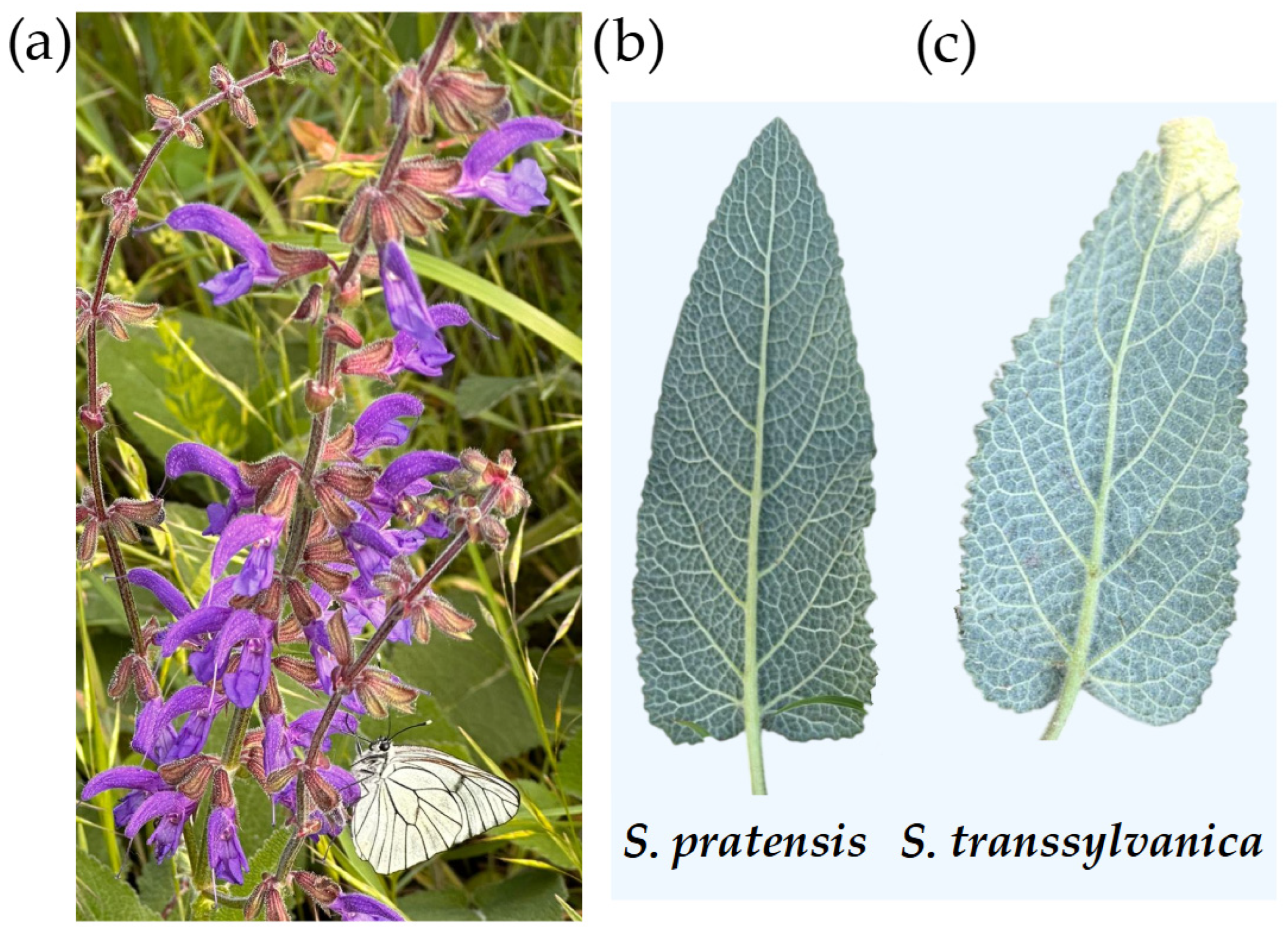
- S. transsylvanica (Schur ex Griseb. & Schenk) Schur: pubescent-tomentose stem, with 3–5 pairs of leaves; the underside of the leaves is grayish-white colored and tomentose; perennial, sporadic, through sunny meadows, on eroded soils, from the forest-steppe zone to the oak forest zone;
- S. pratensis L. (Romanian vernacular name: “salvie de câmp”): stem with 1–3 pairs of leaves; short hairy on the upper part and inflorescence with glandular hairs; underside (abaxial surface) of the leaves is green, hairy on the veins; perennial, frequent at forest edges, scrublands, meadows, grassy cliffs, from forest-steppe to beech forest.
2.3. Treatment of Plant Material
2.4. Extraction Protocols
2.4.1. Classical Extraction
2.4.2. Ultrasound-Assisted Extraction
2.5. Optimization of Hydroethanolic UAE
2.5.1. Experimental Design
2.5.2. Optimization Protocol
2.6. Phytochemical Screening
2.7. Antioxidant Capacity
2.8. HPLC-MS Analysis of Phenolic Compounds
2.8.1. HPLC-MS Protocol and Conditions
2.8.2. Quantification and Validation
2.9. LC-MS Analysis of Lipidic Metabolites
2.9.1. Phytosterols
2.9.2. Tocopherols
2.10. Antimicrobial Activity
2.10.1. Diffusion Method
2.10.2. Determination of the Minimum Inhibitory Concentrations
2.11. Statistical Analysis and Software
3. Results and Discussion
3.1. Experimental Design and Summary of Fit
3.2. Influence of Extraction Variables
3.3. Optimization and Validation of Hydroethanolic UAE
3.4. Extraction Yields
3.5. Phytochemical Screening
3.6. Antioxidant Activity
3.7. HPLC-MS Analysis of Phenolic Metabolites
3.7.1. Phenolic Acids
3.7.2. Flavones, Flavonols, and Coumarins
3.8. HPLC-MS Analysis of Lipidic Metabolites
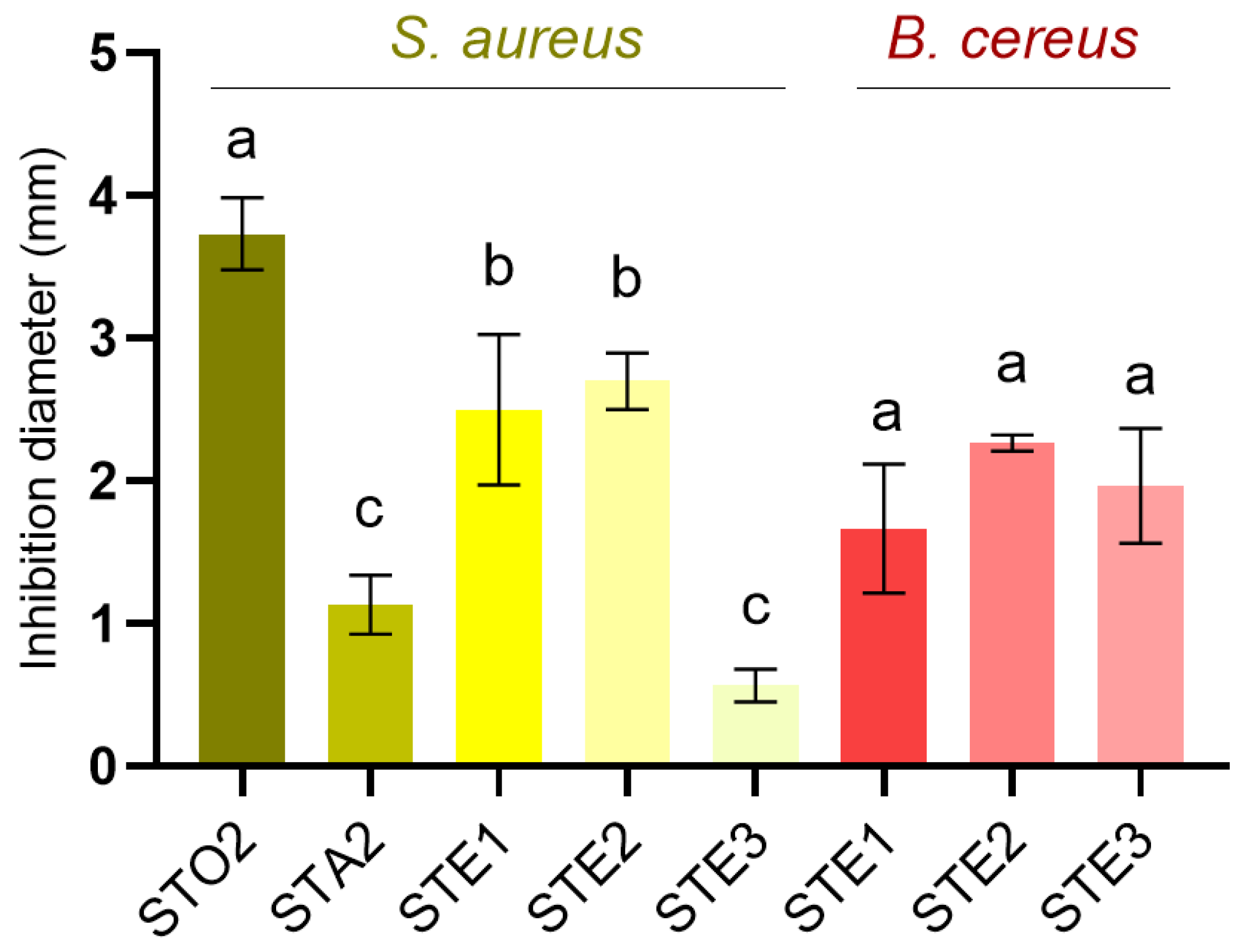
3.9. Antimicrobial Potential
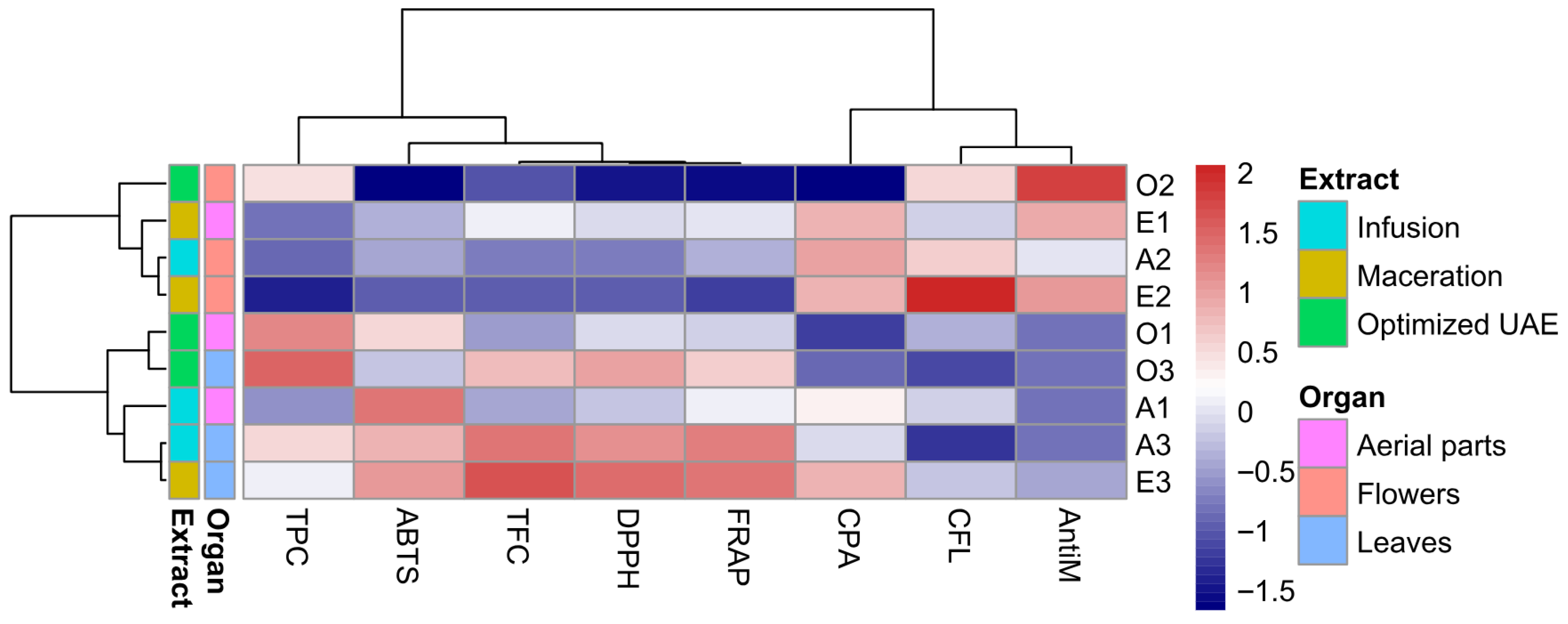
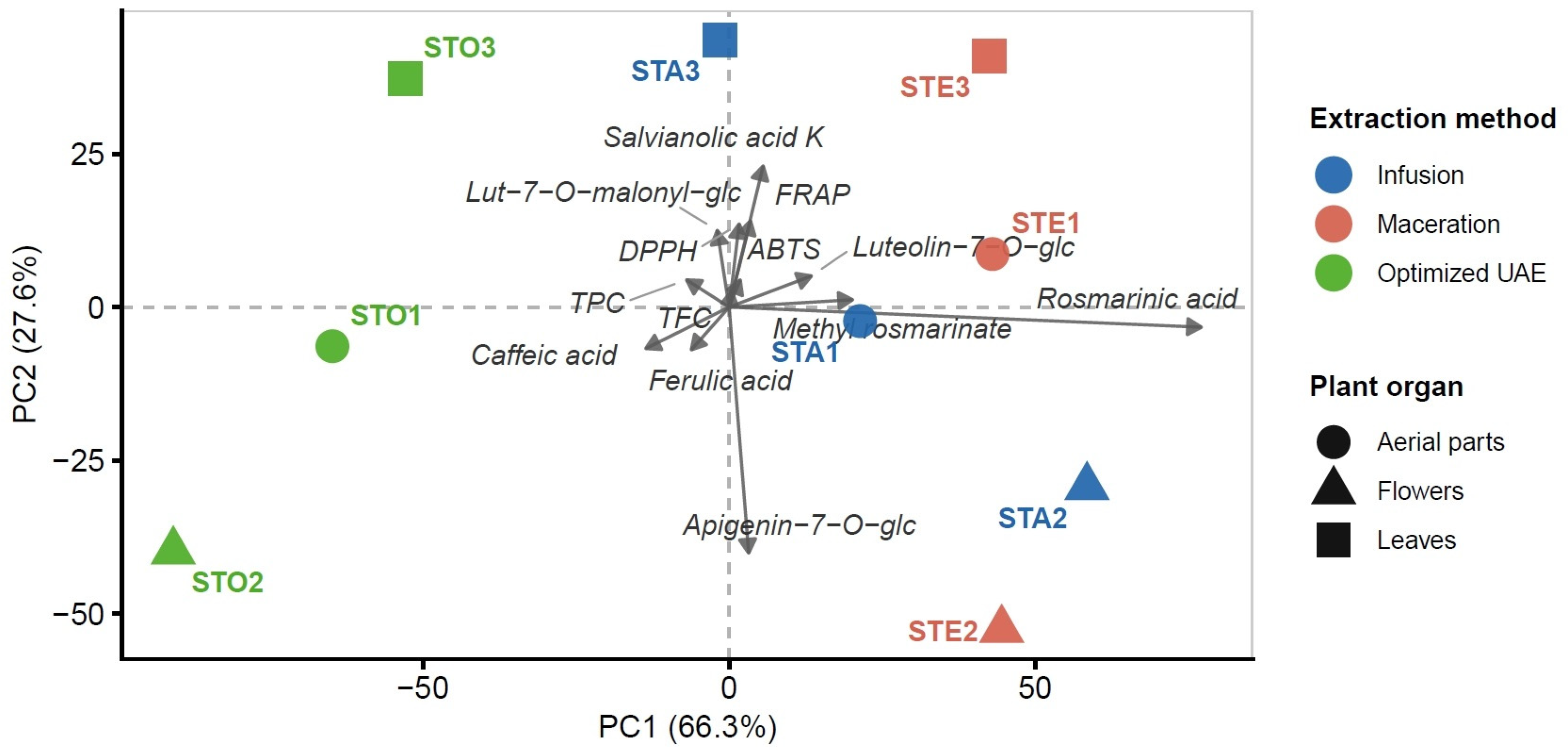
3.10. Multivariate and Correlations Analyses
3.11. Study Limitations and Prospects
4. Conclusions
Supplementary Materials
Author Contributions
Funding
Institutional Review Board Statement
Data Availability Statement
Acknowledgments
Conflicts of Interest
Abbreviations
| ABTS | 2,2′-azino-bis(3-ethylbenzothiazoline-6-sulfonic acid) radical scavenging assay |
| ANOVA | Analysis of variance |
| APCI | Atmospheric pressure chemical ionization |
| ATCC | American Type Culture Collection |
| CFL | Cumulative flavonoids |
| DoE | Design of experiments |
| DPPH | 2,2-diphenyl-1-picrylhydrazyl radical scavenging assay |
| dw | Dry weight (after lyophilization) |
| ESI | Electrospray ionization |
| FRAP | Ferric reducing antioxidant power |
| GAE | Gallic acid equivalents |
| HPLC-MS | High-performance liquid chromatography–mass spectrometry |
| LC-MS | Liquid chromatography–mass spectrometry |
| LOD | Limit of detection |
| LOQ | Limit of quantification |
| MIC | Minimum inhibitory concentration |
| MRM | Multiple reaction monitoring |
| m/v | Mass to volume ratio |
| ND | Not detected |
| PCA | Principal component analysis |
| QE | Quercetin equivalents |
| QTOF | Quadrupole time-of-flight (mass spectrometry) |
| RSM | Response surface methodology |
| RSP | Response surface plot |
| SD | Standard deviation |
| SIM | Selected ion monitoring |
| STA | Aqueous extract (infusion) of S. transsylvanica |
| STE | Hydroethanolic extract (macerate) of S. transsylvanica |
| STO | Optimized ultrasound-assisted extract of S. transsylvanica |
| TE | Trolox equivalents |
| TFC | Total flavonoid content |
| TPC | Total phenolic content |
| UAE | Ultrasound-assisted extraction |
| UV | Ultraviolet |
| v/v | Volume to volume ratio |
References
- Nicolescu, A.; Frumuzachi, O.; Mocan, A. Ethnobotanical Diversity of the Genus Salvia L. (Lamiaceae): From Medicinal and Culinary Applications to Cultural Importance of Sage Species across the Globe. J. Ethnopharmacol. 2026, 359, 121049. [Google Scholar] [CrossRef] [PubMed]
- Butură, V. Enciclopedie de Etnobotanică Românească; Editura Științifică și Enciclopedică: București, Romania, 1979. [Google Scholar]
- Petran, M.; Dragos, D.; Gilca, M. Historical Ethnobotanical Review of Medicinal Plants Used to Treat Children Diseases in Romania (1860s–1970s). J. Ethnobiol. Ethnomed. 2020, 16, 15. [Google Scholar] [CrossRef] [PubMed]
- Nicolescu, A.; Babotă, M.; Ilea, M.; Dias, M.I.; Calhelha, R.C.; Gavrilaș, L.; Rocchetti, G.; Crișan, G.; Mocan, A.; Barros, L.; et al. Potential Therapeutic Applications of Infusions and Hydroalcoholic Extracts of Romanian Glutinous Sage (Salvia glutinosa L.). Front. Pharmacol. 2022, 13, 975800. [Google Scholar] [CrossRef]
- Tohma, H.; Köksal, E.; Kılıç, Ö.; Alan, Y.; Yılmaz, M.; Gülçin, İ.; Bursal, E.; Alwasel, S. RP-HPLC/MS/MS Analysis of the Phenolic Compounds, Antioxidant and Antimicrobial Activities of Salvia L. Species. Antioxidants 2016, 5, 38. [Google Scholar] [CrossRef]
- Martins, N.; Barros, L.; Santos-Buelga, C.; Henriques, M.; Silva, S.; Ferreira, I.C.F.R. Evaluation of Bioactive Properties and Phenolic Compounds in Different Extracts Prepared from Salvia officinalis L. Food Chem. 2015, 170, 378–385. [Google Scholar] [CrossRef]
- Lu, Y.; Yeap Foo, L. Polyphenolics of Salvia—A Review. Phytochemistry 2002, 59, 117–140. [Google Scholar] [CrossRef]
- Anagnostou, M.; Tomou, E.-M.; Krigas, N.; Skaltsa, H. Phenolic Constituents of Greek Native Salvia Species: A Comprehensive Review. Phytochem. Rev. 2025, 24, 3443–3522. [Google Scholar] [CrossRef]
- Shekarchi, M.; Hajimehdipoor, H.; Saeidnia, S.; Gohari, A.R.; Hamedani, M.P. Comparative Study of Rosmarinic Acid Content in Some Plants of Labiatae Family. Pharmacogn. Mag. 2012, 8, 37. [Google Scholar] [CrossRef]
- Janicsák, G.; Zupkó, I.; Máthe, I.; Hohmann, J. Comparative Study of the Antioxidant Activities of Eleven Salvia Species. Nat. Prod. Commun. 2010, 5, 227–230. [Google Scholar] [CrossRef]
- Walch, S.; Tinzoh, L.; Zimmermann, B.; Stühlinger, W.; Lachenmeier, D. Antioxidant Capacity and Polyphenolic Composition as Quality Indicators for Aqueous Infusions of Salvia officinalis L. (Sage Tea). Front. Pharmacol. 2011, 2, 79. [Google Scholar] [CrossRef] [PubMed]
- Randjelović, M.; Branković, S.; Miladinović, B.; Milutinović, M.; Živanović, S.; Mihajilov-Krstev, T.; Kitić, D. The Benefits of Salvia sclarea L. Ethanolic Extracts on Gastrointestinal and Respiratory Spasms. S. Afr. J. Bot. 2022, 150, 621–632. [Google Scholar] [CrossRef]
- Ivanov, M.; Božunović, J.; Gašić, U.; Drakulić, D.; Stevanović, M.; Rajčević, N.; Stojković, D. Bioactivities of Salvia nemorosa L. Inflorescences Are Influenced by the Extraction Solvents. Ind. Crops Prod. 2022, 175, 114260. [Google Scholar] [CrossRef]
- Veličković, D.T.; Randjelović, N.V.; Ristić, M.S.; Šmelcerović, A.A.; Veličković, A.S. Chemical Composition and Antimicrobial Action of the Ethanol Extracts of Salvia pratensis L., Salvia glutinosa L. and Salvia aethiopis L. J. Serbian Chem. Soc. 2002, 67, 639–646. [Google Scholar] [CrossRef]
- Bălășoiu, R.M.; Biță, A.; Stănciulescu, E.C.; Rău, G.; Bejenaru, C.; Bejenaru, L.E.; Pisoschi, C.G. UHPLC/MS Assessment of Polyphenolic Acids and Radical Scavenging Activity of Salvia Species from the South-West of Romania Flora. Farmacia 2023, 71, 697–703. [Google Scholar] [CrossRef]
- Ciocârlan, V. Flora Ilustrată a României: Pteridophyta et Spermatophyta, 3rd ed.; Editura Ceres: București, Romania, 2009. [Google Scholar]
- Moughan, J.; McGinn, K.J.; Jones, L.; Rich, T.C.G.; Waters, E.; de Vere, N. Biological Flora of the British Isles: Salvia pratensis. J. Ecol. 2021, 109, 4171–4190. [Google Scholar] [CrossRef]
- Nachychko, V.O.; Sosnovsky, Y.V. On the Romanian Endemic Species of Salvia (Lamiaceae) and Its Natural Hybrids: Nomenclatural and Taxonomic Aspects. Phytotaxa 2020, 434, 270–280. [Google Scholar] [CrossRef]
- Mocan, A.; Babotă, M.; Pop, A.; Fizeșan, I.; Diuzheva, A.; Locatelli, M.; Carradori, S.; Campestre, C.; Menghini, L.; Sisea, C.R.; et al. Chemical Constituents and Biologic Activities of Sage Species: A Comparison between Salvia officinalis L., S. glutinosa L. and S. transsylvanica (Schur Ex Griseb. & Schenk) Schur. Antioxidants 2020, 9, 480. [Google Scholar] [CrossRef] [PubMed]
- Brudiu, M.-D.; Nicolescu, A.; Paschoalinotto, B.H.; Dias, M.I.; Crișan, G.; Mocan, A. Temporal Phenolic Profile and Bioactivity of Endemic Salvia transsylvanica (Transylvanian Sage) During Flowering. Antioxidants 2026, 15, 417. [Google Scholar] [CrossRef]
- Osorio-Tobón, J.F. Recent Advances and Comparisons of Conventional and Alternative Extraction Techniques of Phenolic Compounds. J. Food Sci. Technol. 2020, 57, 4299–4315. [Google Scholar] [CrossRef]
- Bitwell, C.; Indra, S.S.; Luke, C.; Kakoma, M.K. A Review of Modern and Conventional Extraction Techniques and Their Applications for Extracting Phytochemicals from Plants. Sci. Afr. 2023, 19, e01585. [Google Scholar] [CrossRef]
- Irakli, M.; Bouloumpasi, E.; Christaki, S.; Skendi, A.; Chatzopoulou, P. Modeling and Optimization of Phenolic Compounds from Sage (Salvia fruticosa L.) Post-Distillation Residues: Ultrasound—Versus Microwave-Assisted Extraction. Antioxidants 2023, 12, 549. [Google Scholar] [CrossRef]
- Bendicho, C.; De La Calle, I.; Pena, F.; Costas, M.; Cabaleiro, N.; Lavilla, I. Ultrasound-Assisted Pretreatment of Solid Samples in the Context of Green Analytical Chemistry. TrAC. Trends Anal. Chem. 2012, 31, 50–60. [Google Scholar] [CrossRef]
- Veličković, D.T.; Nikolova, M.T.; Ivancheva, S.V.; Stojanović, J.B.; Veljković, V.B. Extraction of Flavonoids from Garden (Salvia officinalis L.) and Glutinous (Salvia glutinosa L.) Sage by Ultrasonic and Classical Maceration. J. Serbian Chem. Soc. 2007, 72, 73–80. [Google Scholar] [CrossRef]
- Nicolescu, A.; Babotă, M.; Aranda Cañada, E.; Ines Dias, M.; Añibarro-Ortega, M.; Cornea-Cipcigan, M.; Tanase, C.; Radu Sisea, C.; Mocan, A.; Barros, L.; et al. Association of Enzymatic and Optimized Ultrasound-Assisted Aqueous Extraction of Flavonoid Glycosides from Dried Hippophae rhamnoides L. (Sea buckthorn) Berries. Ultrason. Sonochem. 2024, 108, 106955. [Google Scholar] [CrossRef]
- Bezerra, M.A.; Santelli, R.E.; Oliveira, E.P.; Villar, L.S.; Escaleira, L.A. Response Surface Methodology (RSM) as a Tool for Optimization in Analytical Chemistry. Talanta 2008, 76, 965–977. [Google Scholar] [CrossRef]
- Villalva, M.; Santoyo, S.; Salas-Pérez, L.; Siles-Sánchez, M.d.L.N.; Rodríguez García-Risco, M.; Fornari, T.; Reglero, G.; Jaime, L. Sustainable Extraction Techniques for Obtaining Antioxidant and Anti-Inflammatory Compounds from the Lamiaceae and Asteraceae Species. Foods 2021, 10, 2067. [Google Scholar] [CrossRef]
- Wang, L.; Sun, Z.; Wang, L.; Tian, S. Optimization of Ultrasonic-Assisted Extraction of Polyphenols from Salvia deserta Schang Flowers Based on Response Surface Methodology and Deep Neural Network and Analysis of Its in Vitro Antioxidant Activities. Ind. Crops Prod. 2024, 213, 118389. [Google Scholar] [CrossRef]
- Mollaei, S.; Koutahi, P.; Farnia, P. Effect of Ultrasonic Pretreatment on the Yield and Antioxidant Property of Salvia nemorosa. Biomed. Biotechnol. Res. J. 2025, 9, 188–194. [Google Scholar] [CrossRef] [PubMed]
- Yu, Z.-X.; Zhang, Y.-Y.; Zhao, X.-X.; Yu, L.; Chen, X.-B.; Wan, H.-T.; He, Y.; Jin, W.-F. Simultaneous Optimization of Ultrasonic-Assisted Extraction of Danshen for Maximal Tanshinone IIA and Salvianolic Acid B Yields and Antioxidant Activity: A Comparative Study of the Response Surface Methodology and Artificial Neural Network. Ind. Crops Prod. 2021, 161, 113199. [Google Scholar] [CrossRef]
- Cedillo-Portillo, J.J.; Villastrigo-López, W.Y.; Castañeda-Facio, A.O.; Esparza-González, S.C.; Múzquiz-Ramos, E.M.; Sáenz-Galindo, A. Salvia rosmarinus Spenn. Main Applications and Ultrasonic Extraction of Secondary Metabolites: A General Review. Rev. Mex. Ing. Bioméd. 2024, 45, 35–61. [Google Scholar] [CrossRef]
- Mihailović, N.; Ćirić, A.; Srećković, N.; Mihailović, V.; Joksović, L.; Kreft, S. Optimization of Ultrasonic-Assisted Extraction of Phenolic Compounds From Salvia verticillata L. Root Using Response Surface Methodology. In Proceedings of the 2nd International Symposium on Biotechnology, Kragujevac, Serbia, 14–15 March 2024; pp. 447–452. [Google Scholar]
- Data Analytics AB MODDE® 12 User Guide; Sartorius Stedim: Umeå, Sweden, 2017.
- Nicolescu, A.; Babotă, M.; Zhang, L.; Bunea, C.I.; Gavrilaș, L.; Vodnar, D.C.; Mocan, A.; Crișan, G.; Rocchetti, G. Optimized Ultrasound-Assisted Enzymatic Extraction of Phenolic Compounds from Rosa canina L. Pseudo-Fruits (Rosehip) and Their Biological Activity. Antioxidants 2022, 11, 1123. [Google Scholar] [CrossRef]
- Nicolescu, A.; Bunea, C.I.; Mocan, A. Total Flavonoid Content Revised: An Overview of Past, Present, and Future Determinations in Phytochemical Analysis. Anal. Biochem. 2025, 700, 115794. [Google Scholar] [CrossRef]
- Gligor, O.; Clichici, S.; Moldovan, R.; Muntean, D.; Vlase, A.-M.; Nadăș, G.C.; Filip, G.A.; Vlase, L.; Crișan, G. Influences of Different Extraction Techniques and Their Respective Parameters on the Phytochemical Profile and Biological Activities of Xanthium spinosum L. Extracts. Plants 2022, 12, 96. [Google Scholar] [CrossRef]
- Vlase, A.-M.; Toiu, A.; Tomuță, I.; Vlase, L.; Muntean, D.; Casian, T.; Fizeșan, I.; Nadăș, G.C.; Novac, C.Ș.; Tămaș, M.; et al. Epilobium Species: From Optimization of the Extraction Process to Evaluation of Biological Properties. Antioxidants 2022, 12, 91. [Google Scholar] [CrossRef]
- Safta, D.A.; Vlase, A.-M.; Pop, A.; Cherfan, J.; Carpa, R.; Iurian, S.; Bogdan, C.; Vlase, L.; Moldovan, M.-L. Optimized Sambucus nigra L., Epilobium hirsutum L., and Lythrum salicaria L. Extracts: Biological Effects Supporting Their Potential in Wound Care. Antioxidants 2025, 14, 521. [Google Scholar] [CrossRef] [PubMed]
- Matuschek, E.; Brown, D.F.J.; Kahlmeter, G. Development of the EUCAST Disk Diffusion Antimicrobial Susceptibility Testing Method and Its Implementation in Routine Microbiology Laboratories. Clin. Microbiol. Infect. 2014, 20, O255–O266. [Google Scholar] [CrossRef] [PubMed]
- Urcan, A.C.; Criste, A.D.; Dezmirean, D.S.; Bobiș, O.; Bonta, V.; Burtescu, R.F.; Olah, N.-K.; Cornea-Cipcigan, M.; Mărgăoan, R. Enhancing Antioxidant and Antimicrobial Activities in Bee-Collected Pollen through Solid-State Fermentation: A Comparative Analysis of Bioactive Compounds. Antioxidants 2024, 13, 292. [Google Scholar] [CrossRef] [PubMed]
- Puia, A.; Pandrea, S.-L.; Cruceru, J.; Puia, I.C.; Chedea, V.S.; Ciont, C.; Pop, O.L.; Leopold, L.F.; Ranga, F.; Urcan, A.C.; et al. Phenolic Compounds with Antimicrobial Properties in Mushrooms Frequently Encountered in Temperate Deciduous Forests. Life 2025, 15, 1653. [Google Scholar] [CrossRef]
- Kolde, R. Pheatmap: Pretty Heatmaps. Available online: https://cran.r-project.org/web/packages/pheatmap/index.html (accessed on 10 February 2026).
- Wickham, H.; Chang, W.; Henry, L.; Pedersen, T.L.; Takahashi, K.; Wilke, C.; Woo, K.; Yutani, H.; Dunnington, D.; van den Brand, T. Ggplot2: Create Elegant Data Visualisations Using the Grammar of Graphics. Available online: https://cran.r-project.org/web/packages/ggplot2/index.html (accessed on 1 March 2026).
- Dent, M.; Fuchs-Godec, R.; Pedisić, S.; Grbin, D.; Dragović-Uzelac, V.; Ježek, D.; Bosiljkov, T. Polyphenols from Sage Leaves (Salvia officinalis L.): Environmentally Friendly Extraction under High Hydrostatic Pressure and Application as a Corrosion Inhibitor for Tinplate. Separations 2024, 11, 158. [Google Scholar] [CrossRef]
- Cacace, J.E.; Mazza, G. Mass Transfer Process during Extraction of Phenolic Compounds from Milled Berries. J. Food Eng. 2003, 59, 379–389. [Google Scholar] [CrossRef]
- Alsaud, N.; Farid, M. Insight into the Influence of Grinding on the Extraction Efficiency of Selected Bioactive Compounds from Various Plant Leaves. Appl. Sci. 2020, 10, 6362. [Google Scholar] [CrossRef]
- Chakraborty, S.; Deka, G.; Dutta, H. Effect of Particle Size, Probe Type, Position and Glassware Geometry on Laboratory-Scale Ultrasonic Extraction of Citrus Maxima Flavedo. Food Phys. 2025, 2, 100040. [Google Scholar] [CrossRef]
- Chemat, F.; Rombaut, N.; Sicaire, A.-G.; Meullemiestre, A.; Fabiano-Tixier, A.-S.; Abert-Vian, M. Ultrasound Assisted Extraction of Food and Natural Products. Mechanisms, Techniques, Combinations, Protocols and Applications. A Review. Ultrason. Sonochem. 2017, 34, 540–560. [Google Scholar] [CrossRef]
- Frumuzachi, O.; Nicolescu, A.; Babotă, M.; Mocan, A.; Sisea, C.-R.; Hera, O.; Sturzeanu, M.; Rohn, S.; Lucini, L.; Crișan, G.; et al. D-Optimal Design-Based Ultrasound-Assisted Extraction Optimization and Extensive Bio-Structural Analysis of Phenolic Compounds from Romanian Cornelian Cherry (Cornus mas L.) Genotypes. Food Bioprocess Technol. 2025, 18, 7915–7932. [Google Scholar] [CrossRef]
- Bernatoniene, J.; Cizauskaite, U.; Ivanauskas, L.; Jakstas, V.; Kalveniene, Z.; Kopustinskiene, D.M. Novel Approaches to Optimize Extraction Processes of Ursolic, Oleanolic and Rosmarinic Acids from Rosmarinus officinalis Leaves. Ind. Crops Prod. 2016, 84, 72–79. [Google Scholar] [CrossRef]
- Chadni, M.; Isidore, E.; Lagalle, F.; Langlait, M.; Dosso, A.; Ioannou, I. Optimization of the Supercritical Extraction of Rosmarinic Acid from Clary Sage Residue and the Antioxidant Activity of the Extracts. J. Supercrit. Fluids 2023, 193, 105830. [Google Scholar] [CrossRef]
- Corrêa-Ferreira, M.L.; Noleto, G.R.; Oliveira Petkowicz, C.L. Artemisia absinthium and Artemisia vulgaris: A Comparative Study of Infusion Polysaccharides. Carbohydr. Polym. 2014, 102, 738–745. [Google Scholar] [CrossRef]
- Mascoloti Spréa, R.; Caleja, C.; Pinela, J.; Finimundy, T.C.; Calhelha, R.C.; Kostić, M.; Sokovic, M.; Prieto, M.A.; Pereira, E.; Amaral, J.S.; et al. Comparative Study on the Phenolic Composition and in Vitro Bioactivity of Medicinal and Aromatic Plants from the Lamiaceae Family. Food Res. Int. 2022, 161, 111875. [Google Scholar] [CrossRef]
- Moshari-Nasirkandi, R.; Alirezalu, A.; Chamanabad, H.R.M.; Amato, J.; Alipour, H.; Asghari, A.; Moshari-Nasirkandi, A. Screening of Native Wild Salvia nemorosa Populations for Chemical Compositions, Antioxidant Activity and UHPLC-HRMS Profiling. Sci. Rep. 2024, 14, 32064. [Google Scholar] [CrossRef]
- Farhat, M.B.; Chaouch-Hamada, R.; Sotomayor, J.A.; Landoulsi, A.; Jordán, M.J. Antioxidant Potential of Salvia officinalis L. Residues as Affected by the Harvesting Time. Ind. Crops Prod. 2014, 54, 78–85. [Google Scholar] [CrossRef]
- Li, B.; Zhang, C.; Peng, L.; Liang, Z.; Yan, X.; Zhu, Y.; Liu, Y. Comparison of Essential Oil Composition and Phenolic Acid Content of Selected Salvia Species Measured by GC–MS and HPLC Methods. Ind. Crops Prod. 2015, 69, 329–334. [Google Scholar] [CrossRef]
- Su, C.; Pham, T.T.T.; Cheng, H. Aqueous Enzymatic Extraction of Rosmarinic Acid from Salvia officinalis: Optimisation Using Response Surface Methodology. Phytochem. Anal. 2020, 31, 575–582. [Google Scholar] [CrossRef]
- Thakur, R.; Kumar, A.; Negi, A. Multivariate Optimization of Extraction Methods for Enhanced Rosmarinic Acid Yield in Salvia rosmarinus and Salvia sclarea. Orient. J. Chem. 2025, 6, 1956. [Google Scholar] [CrossRef]
- Hashempour, H.; Mohammadnejad, M.; Moharrami, S. Development of Cold Plasma Pretreatment Ultrasound-Assisted Extraction for Enhancing Phenolic Acids Extractability from Salvia sclarea. Microchem. J. 2024, 207, 112052. [Google Scholar] [CrossRef]
- Picos-Salas, M.A.; Heredia, J.B.; Leyva-López, N.; Ambriz-Pérez, D.L.; Gutiérrez-Grijalva, E.P. Extraction Processes Affect the Composition and Bioavailability of Flavones from Lamiaceae Plants: A Comprehensive Review. Processes 2021, 9, 1675. [Google Scholar] [CrossRef]
- Nikolova, M.; Aneva, I. European Species of Genus Salvia: Distribution, Chemodiversity and Biological Activity. In Salvia Biotechnology; Springer International Publishing: Cham, Switzerland, 2017; pp. 1–30. [Google Scholar]
- Abreu, M.E.; Müller, M.; Alegre, L.; Munné-Bosch, S. Phenolic Diterpene and A-tocopherol Contents in Leaf Extracts of 60 Salvia Species. J. Sci. Food Agric. 2008, 88, 2648–2653. [Google Scholar] [CrossRef]
- Pierozan, M.K.; Pauletti, G.F.; Rota, L.; Santos, A.C.A.d.; Lerin, L.A.; di Luccio, M.; Mossi, A.J.; Atti-Serafini, L.; Cansian, R.L.; Oliveira, J.V. Chemical Characterization and Antimicrobial Activity of Essential Oils of Salvia L. Species. Ciênc. Tecnol. Aliment. 2009, 29, 764–770. [Google Scholar] [CrossRef]
- Stagos, D.; Portesis, N.; Spanou, C.; Mossialos, D.; Aligiannis, N.; Chaita, E.; Panagoulis, C.; Reri, E.; Skaltsounis, L.; Tsatsakis, A.M.; et al. Correlation of Total Polyphenolic Content with Antioxidant and Antibacterial Activity of 24 Extracts from Greek Domestic Lamiaceae Species. Food Chem. Toxicol. 2012, 50, 4115–4124. [Google Scholar] [CrossRef]
- Veličković, A.S.; Ristić, M.S.; Veličković, D.T.; Ilić, S.N.; Mitić, N.D. The Possibilities of the Application of Some Species of Sage (Salvia L.) as Auxiliaries in the Treatment of Some Diseases. J. Serbian Chem. Soc. 2003, 68, 435–445. [Google Scholar] [CrossRef]
- Veličković, D.T.; Karabegović, I.T.; Stojičević, S.S.; Lazić, M.L.; Marinković, V.D.; Veljković, V.B. Comparison of Antioxidant and Antimicrobial Activities of Extracts Obtained from Salvia glutinosa L. and Salvia officinalis L. Hem. Ind. 2011, 65, 599–605. [Google Scholar] [CrossRef]
- Bălășoiu, R.M.; Biță, A.; Stănciulescu, E.C.; Bălășoiu, M.; Bejenaru, C.; Bejenaru, L.E.; Pisoschi, C.G. In Vitro Antimicrobial Activity of Some Extracts of Salvia Spp. Harvested from the Oltenia flora Using Different Solvents. Curr. Health Sci. J. 2023, 49, 397–402. [Google Scholar] [CrossRef]
- Pei, Z.-J.; Li, C.; Dai, W.; Lou, Z.; Sun, X.; Wang, H.; Khan, A.A.; Wan, C. The Anti-Biofilm Activity and Mechanism of Apigenin-7-O-Glucoside Against Staphylococcus aureus and Escherichia coli. Infect. Drug Resist. 2023, 16, 2129–2140. [Google Scholar] [CrossRef]
- Khan, F.; Bamunuarachchi, N.I.; Tabassum, N.; Kim, Y.-M. Caffeic Acid and Its Derivatives: Antimicrobial Drugs toward Microbial Pathogens. J. Agric. Food Chem. 2021, 69, 2979–3004. [Google Scholar] [CrossRef]
- Kępa, M.; Miklasińska-Majdanik, M.; Wojtyczka, R.D.; Idzik, D.; Korzeniowski, K.; Smoleń-Dzirba, J.; Wąsik, T.J. Antimicrobial Potential of Caffeic Acid against Staphylococcus aureus Clinical Strains. BioMed Res. Int. 2018, 2018, 7413504. [Google Scholar] [CrossRef] [PubMed]
- Mosić, M.; Dramićanin, A.; Ristivojević, P.; Milojković-Opsenica, D. Extraction as a Critical Step in Phytochemical Analysis. J. AOAC Int. 2020, 103, 365–372. [Google Scholar] [CrossRef] [PubMed]
- Upton, R.; David, B.; Gafner, S.; Glasl, S. Botanical Ingredient Identification and Quality Assessment: Strengths and Limitations of Analytical Techniques. Phytochem. Rev. 2020, 19, 1157–1177. [Google Scholar] [CrossRef]
- Yang, L.; Wen, K.-S.; Ruan, X.; Zhao, Y.-X.; Wei, F.; Wang, Q. Response of Plant Secondary Metabolites to Environmental Factors. Molecules 2018, 23, 762. [Google Scholar] [CrossRef]
- Hazrati, S.; Beidaghi, P.; Beyraghdar Kashkooli, A.; Hosseini, S.J.; Nicola, S. Effect of Harvesting Time Variations on Essential Oil Yield and Composition of Sage (Salvia officinalis). Horticulturae 2022, 8, 149. [Google Scholar] [CrossRef]
- Maleš, I.; Dragović-Uzelac, V.; Jerković, I.; Zorić, Z.; Pedisić, S.; Repajić, M.; Garofulić, I.E.; Dobrinčić, A. Non-Volatile and Volatile Bioactives of Salvia officinalis L., Thymus serpyllum L. and Laurus nobilis L. Extracts with Potential Use in the Development of Functional Beverages. Antioxidants 2022, 11, 1140. [Google Scholar] [CrossRef]



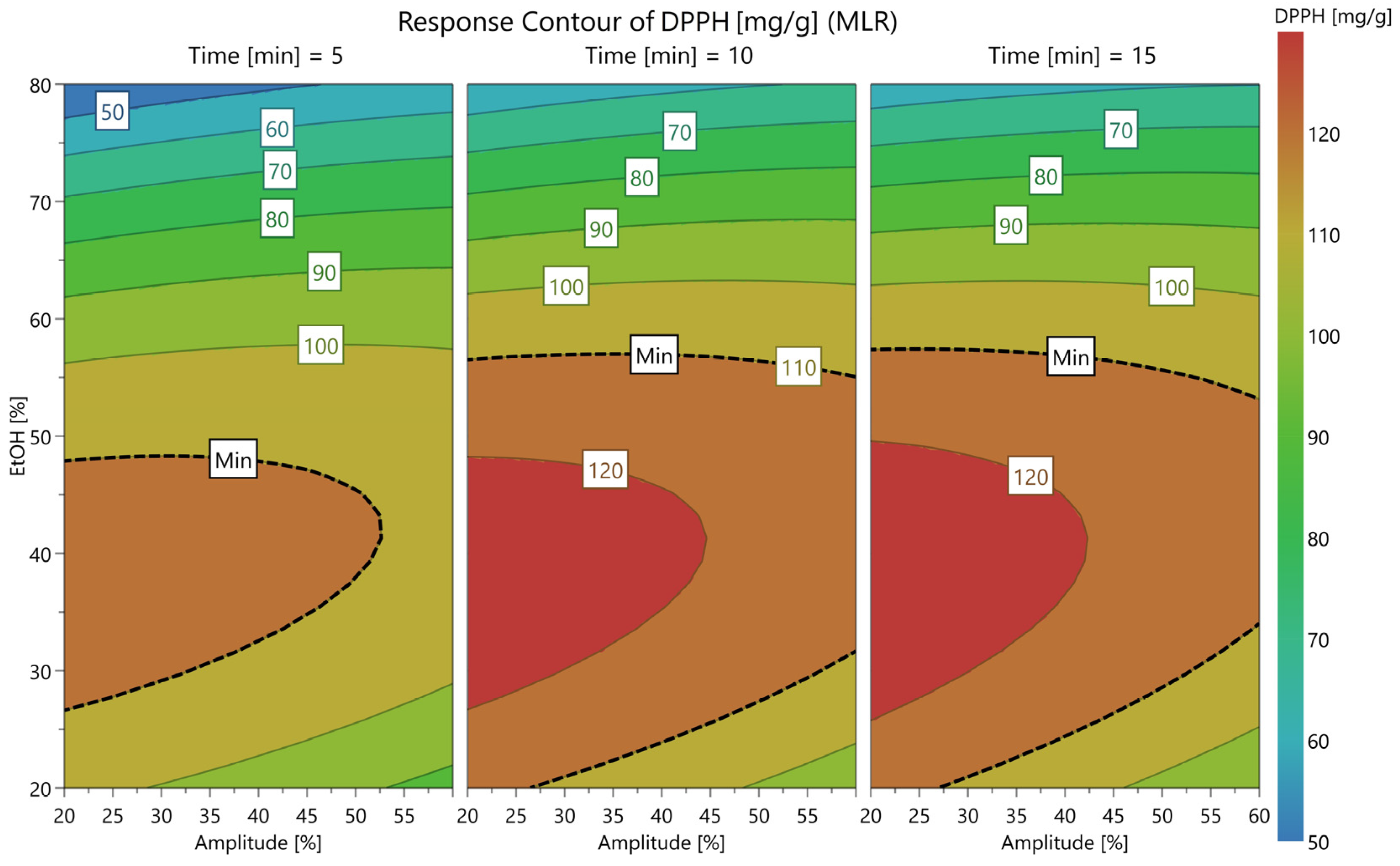
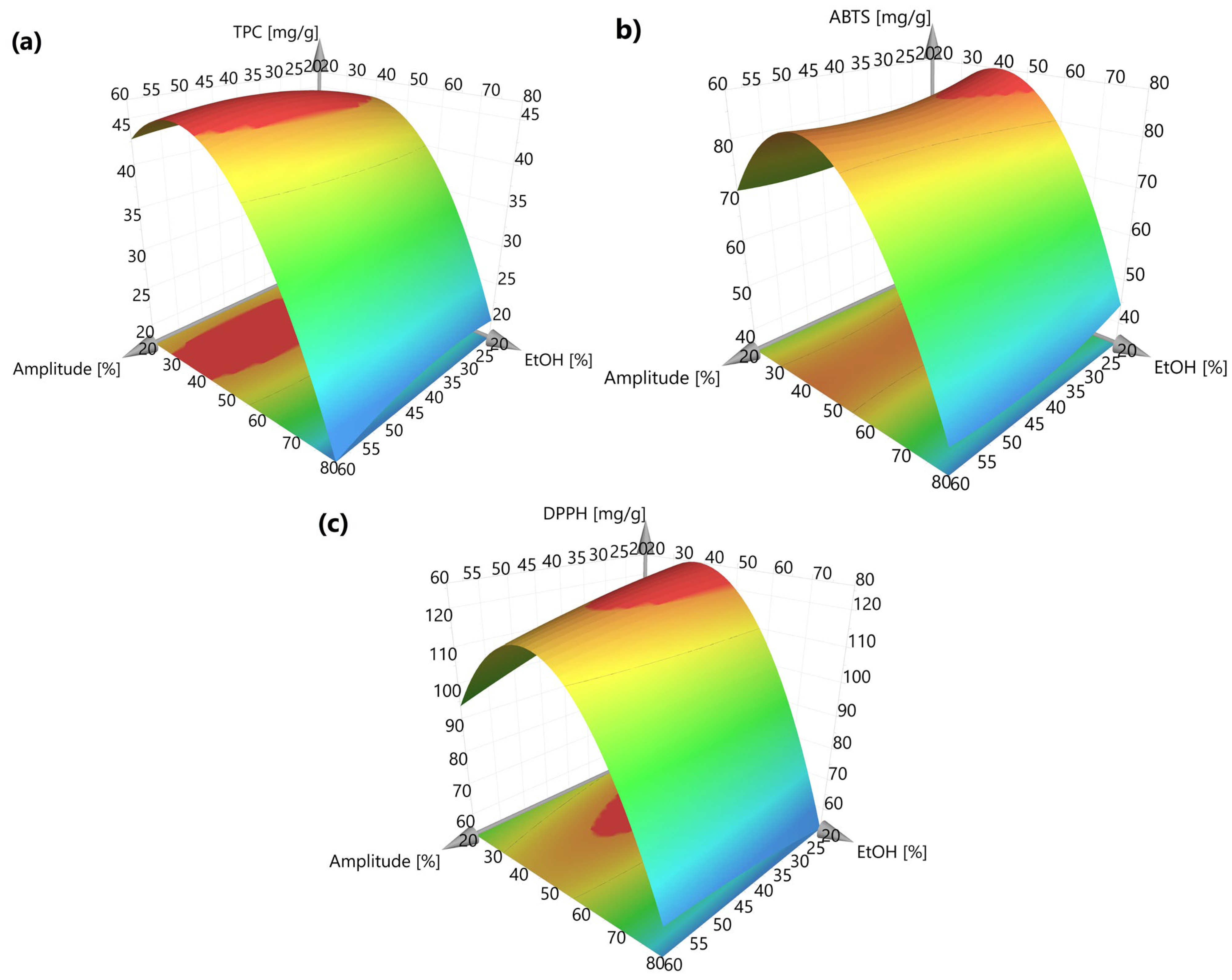
| No. | US Amp. (%) 1 X1 | EtOH (%) X2 | Time (min) X3 | TPC (mg GAE/g) Y1 | ABTS (mg TE/g) Y2 | DPPH (mg TE/g) Y3 |
|---|---|---|---|---|---|---|
| 1. | 20 (−) | 20 (−) | 5 (−) | 40.84 | 71.95 | 102.10 |
| 2. | 60 (+) | 20 (−) | 5 (−) | 44.36 | 67.51 | 85.87 |
| 3. | 20 (−) | 20 (−) | 15 (+) | 39.73 | 74.16 | 114.74 |
| 4. | 60 (+) | 20 (−) | 15 (+) | 41.21 | 66.52 | 93.53 |
| 5. | 60 (+) | 80 (+) | 5 (−) | 15.00 | 37.39 | 50.90 |
| 6. | 20 (−) | 80 (+) | 15 (+) | 20.53 | 41.19 | 57.75 |
| 7. | 60 (+) | 80 (+) | 15 (+) | 18.73 | 38.94 | 60.92 |
| 8. | 20 (−) | 50 (0) | 5 (−) | 43.80 | 84.50 | 108.49 |
| 9. | 20 (−) | 80 (+) | 10 (0) | 19.26 | 46.34 | 44.90 |
| 10. | 40 (0) | 80 (+) | 5 (−) | 18.06 | 40.30 | 50.94 |
| 11. | 60 (+) | 50 (0) | 10 (0) | 43.24 | 87.24 | 113.20 |
| 12. | 40 (0) | 50 (0) | 15 (+) | 45.78 | 85.68 | 107.35 |
| 13. | 40 (0) | 20 (−) | 10 (0) | 45.62 | 72.62 | 101.24 |
| 14. | 40 (0) | 50 (0) | 10 (0) | 43.82 | 83.05 | 127.92 |
| 15. | 40 (0) | 50 (0) | 10 (0) | 44.49 | 76.40 | 114.52 |
| 16. | 40 (0) | 50 (0) | 10 (0) | 40.69 | 77.50 | 119.60 |
| Response | Experimental Value | Precision (CV) 1 | Predicted Value | Relative Recovery 2 |
|---|---|---|---|---|
| TPC (mg GAE/g) | 50.52 ± 2.38 | 4.71% | 45.51 | 111.01 ± 3.70% |
| ABTS (mg TE/g) | 90.97 ± 1.29 | 1.41% | 87.10 | 104.44 ± 1.45% |
| DPPH (mg TE/g) | 149.18 ± 3.48 | 2.34% | 125.55 | 118.87 ± 3.77% |
| No. | Compound | Concentration in Each Sample (μg/g dw) 1 | ||||||||
|---|---|---|---|---|---|---|---|---|---|---|
| STA1 | STA2 | STA3 | STE1 | STE2 | STE3 | STO1 | STO2 | STO3 | ||
| 1. | 1-O-Caffeoyl-beta-D-glucose | 13.577 | 14.698 | 14.254 | 13.964 | 13.433 | 18.565 | 9.996 | 10.074 | 14.304 |
| 2. | 3,4-Dihydroxyphenyllactic acid | 131.701 | 131.813 | 130.441 | 108.709 | 91.338 | 152.050 | 32.145 | 17.789 | 50.763 |
| 3. | 3,4-Dihydroxyphenyllactic acid-O-glucoside | 21.621 | 25.893 | 9.075 | 27.057 | 30.869 | 11.068 | 22.703 | 26.585 | 10.141 |
| 4. | 3-Hydroxybenzoic acid | 4.511 | 5.079 | 4.266 | 5.788 | 4.877 | 5.962 | 5.289 | 5.369 | 5.845 |
| 5. | 3-O-/4-O-Methyl gallic acid | 0.900 | 1.074 | 0.695 | ND | ND | ND | 1.602 | 2.054 | 0.906 |
| 6. | Caffeic acid | 169.405 | 170.159 | 161.285 | 360.419 | 363.467 | 284.486 | 461.728 | 631.918 | 389.733 |
| 7. | Caffeoyl-malic acid | 13.627 | 10.513 | 19.762 | 12.658 | 8.500 | 22.649 | ND | ND | 10.416 |
| 8. | cis-Ferulic acid | 3.100 | 3.500 | 3.100 | 4.300 | 4.900 | 5.000 | 5.079 | 6.762 | 4.877 |
| 9. | Coniferyl aldehyde | 1.647 | 1.527 | 0.406 | 1.210 | 0.903 | 0.616 | 1.125 | 0.786 | 0.363 |
| 10. | Ferulic acid | 65.320 | 77.186 | 53.105 | 154.478 | 191.956 | 102.191 | 162.833 | 250.385 | 130.796 |
| 11. | Gallic acid | 0.742 | 2.327 | ND | 0.581 | 0.585 | 0.372 | 0.068 | 0.090 | 0.055 |
| 12. | Methyl rosmarinate 2 | 677.904 | 825.857 | 637.304 | 764.414 | 796.414 | 860.529 | 383.390 | 363.235 | 487.382 |
| 13. | p-Coumaric acid | 19.492 | 22.800 | 21.187 | 40.907 | 42.084 | 40.176 | 27.087 | 33.794 | 31.884 |
| 14. | Protocatechuic acid | 34.471 | 49.015 | 17.162 | 44.577 | 61.792 | 26.190 | 22.661 | 29.333 | 17.239 |
| 15. | Protocatechuic acid-4-O-glucoside | 36.850 | 30.091 | 41.398 | 46.245 | 34.841 | 52.218 | 37.097 | 34.288 | 49.815 |
| 16. | Rosmarinic acid | 17,203.334 | 19,157.293 | 15,969.454 | 18,340.477 | 18,420.000 | 17,937.073 | 13,110.343 | 11,864.021 | 13,544.513 |
| 17. | Salicylic acid | 23.699 | 25.063 | 16.427 | 36.592 | 37.484 | 25.794 | 24.116 | 25.825 | 18.673 |
| 18. | Salvianolic acid K | 497.593 | 272.023 | 802.377 | 455.849 | 189.384 | 887.752 | 282.732 | 131.909 | 635.414 |
| 19. | Sinapaldehyde | 1.268 | 1.197 | 0.091 | 0.700 | 0.300 | 0.200 | 0.300 | 0.200 | ND |
| 20. | Syringaldehyde | 1.604 | 1.901 | ND | 1.680 | 1.634 | 0.600 | 0.936 | 0.626 | 0.431 |
| 21. | Syringic acid | 8.490 | 14.918 | 2.722 | 10.360 | 16.508 | 3.126 | 4.726 | 8.957 | 1.871 |
| 22. | Vanillic acid | 6.403 | 9.256 | 2.947 | 9.341 | 10.816 | 5.857 | 6.512 | 9.787 | 3.895 |
| 23. | Vanillic acid-4-O-glucoside | 10.854 | 9.598 | 11.783 | 14.228 | 10.671 | 15.156 | 11.855 | 10.705 | 13.893 |
| Cumulative phenolic acids (CPA) | 18,948.111 | 20,862.780 | 17,919.241 | 20,454.532 | 20,332.753 | 20,457.629 | 14,614.321 | 13,464.492 | 15,423.208 | |
| No. | Compound | Concentration in Each Sample (μg/g dw) 1 | ||||||||
|---|---|---|---|---|---|---|---|---|---|---|
| STA1 | STA2 | STA3 | STE1 | STE2 | STE3 | STO1 | STO2 | STO3 | ||
| 1. | Apigenin | 7.763 | 12.658 | 0.697 | 54.923 | 122.665 | 5.221 | 14.360 | 29.196 | 1.319 |
| 2. | Apigenin 7-O-glucoside | 1025.400 | 1575.622 | 74.388 | 447.436 | 2130.265 | 224.162 | 940.078 | 1613.698 | 77.204 |
| 3. | Apigenin-7-O-(3″-acetyl)-glucoside | 3.100 | 7.200 | ND | 4.372 | 10.151 | ND | ND | ND | ND |
| 4. | Apigenin-7-O-(6″-acetyl)-glucoside | 13.460 | 28.053 | 3.975 | 13.670 | 25.205 | 5.027 | 11.176 | 24.176 | 4.418 |
| 5. | Eupatorin | 7.974 | 20.744 | ND | 24.404 | 56.869 | ND | 11.053 | 27.965 | ND |
| 6. | Genkwanin | 1.755 | 3.822 | ND | 11.519 | 29.492 | 0.278 | 3.429 | 7.767 | 0.200 |
| 7. | Hispidulin | 0.392 | 0.510 | 0.449 | 7.074 | 4.390 | 6.980 | 0.926 | 1.154 | 1.063 |
| 8. | Hyperoside | 9.079 | 8.005 | 4.163 | 14.271 | 12.190 | 10.029 | 4.316 | 2.297 | 4.074 |
| 9. | Isoquercitrin | 58.411 | 57.493 | 33.100 | 94.398 | 95.877 | 92.450 | 46.271 | 40.331 | 36.578 |
| 10. | Luteolin | 36.093 | 59.603 | 6.063 | 154.711 | 237.337 | 116.325 | 45.030 | 79.966 | 18.273 |
| 11. | Luteolin-7-O-(6″-O-malonyl)-glucoside | 282.751 | 261.091 | 413.192 | 240.999 | 198.604 | 369.422 | 262.497 | 221.442 | 454.393 |
| 12. | Luteolin-7-O-glucoside | 577.535 | 570.259 | 573.916 | 933.508 | 841.791 | 1101.898 | 503.964 | 511.915 | 593.246 |
| 13. | Quercetin-3-O-neohesperidoside | 3.542 | 4.618 | 2.561 | 4.485 | 5.182 | 4.056 | 3.285 | 3.698 | 3.051 |
| 14. | Esculin | 3.955 | 2.986 | 5.555 | 4.782 | 3.309 | 6.752 | 3.226 | 2.628 | 5.517 |
| 15. | Esculetin | 6.954 | 5.745 | 7.253 | 15.528 | 14.385 | 13.104 | 12.515 | 16.492 | 12.636 |
| Cumulative flavonoids 1–13 (CFL) | 2027.255 | 2609.678 | 1112.505 | 2005.769 | 3770.019 | 1935.848 | 1846.387 | 2563.604 | 1193.821 | |
| Extract 1 | Concentration (μg/g dw) | Concentration (ng/g dw) | ||||
|---|---|---|---|---|---|---|
| Brassicasterol | Stigmasterol | Beta-Sitosterol | Campesterol | γ-Tocopherol | δ-Tocopherol | |
| STE1 | 459.3 ± 22.9 b | 409.8 ± 4.1 b | 5658.6 ± 452.6 b | 120.2 ± 4.8 b | 1302.2 ± 117.1 b | 822.2 ± 73.9 a |
| STE2 | 936.4 ± 56.1 a | 348.4 ± 17.4 c | 6986.5 ± 628.7 a | 147.3 ± 7.3 a | 361.5 ± 21.6 c | 873.5 ± 17.4 a |
| STE3 | 18.7 ± 0.3 d | 475.1 ± 28.5 a | 5397.2 ± 161.9 c | 65.8 ± 3.2 c | 3690.5 ± 221.4 a | 705.1 ± 42.3 b |
| STO1 | ND | ND | 135.6 ± 5.4 f | 4.4 ± 0.1 e | ND | ND |
| STO2 | 18.9 ± 0.9 c | ND | 2611.0 ± 18.2 d | 7.3 ± 0.2 d | ND | ND |
| STO3 | ND | ND | 2053.0 ± 2.1 e | ND | ND | ND |
Disclaimer/Publisher’s Note: The statements, opinions and data contained in all publications are solely those of the individual author(s) and contributor(s) and not of MDPI and/or the editor(s). MDPI and/or the editor(s) disclaim responsibility for any injury to people or property resulting from any ideas, methods, instructions or products referred to in the content. |
© 2026 by the authors. Licensee MDPI, Basel, Switzerland. This article is an open access article distributed under the terms and conditions of the Creative Commons Attribution (CC BY) license.
Share and Cite
Brudiu, M.-D.; Nicolescu, A.; Moroșan, A.G.; Urcan, A.C.; Vlase, L.; Vlase, A.-M.; Mocan, A.; Crișan, G. Optimized Ultrasound-Assisted Extraction Reveals Salvia transsylvanica as a Rosmarinic Acid-Rich Endemic Sage with Antioxidant Potential. Antioxidants 2026, 15, 561. https://doi.org/10.3390/antiox15050561
Brudiu M-D, Nicolescu A, Moroșan AG, Urcan AC, Vlase L, Vlase A-M, Mocan A, Crișan G. Optimized Ultrasound-Assisted Extraction Reveals Salvia transsylvanica as a Rosmarinic Acid-Rich Endemic Sage with Antioxidant Potential. Antioxidants. 2026; 15(5):561. https://doi.org/10.3390/antiox15050561
Chicago/Turabian StyleBrudiu, Maria-Doroteia, Alexandru Nicolescu, Adrian Gabriel Moroșan, Adriana Cristina Urcan, Laurian Vlase, Ana-Maria Vlase, Andrei Mocan, and Gianina Crișan. 2026. "Optimized Ultrasound-Assisted Extraction Reveals Salvia transsylvanica as a Rosmarinic Acid-Rich Endemic Sage with Antioxidant Potential" Antioxidants 15, no. 5: 561. https://doi.org/10.3390/antiox15050561
APA StyleBrudiu, M.-D., Nicolescu, A., Moroșan, A. G., Urcan, A. C., Vlase, L., Vlase, A.-M., Mocan, A., & Crișan, G. (2026). Optimized Ultrasound-Assisted Extraction Reveals Salvia transsylvanica as a Rosmarinic Acid-Rich Endemic Sage with Antioxidant Potential. Antioxidants, 15(5), 561. https://doi.org/10.3390/antiox15050561