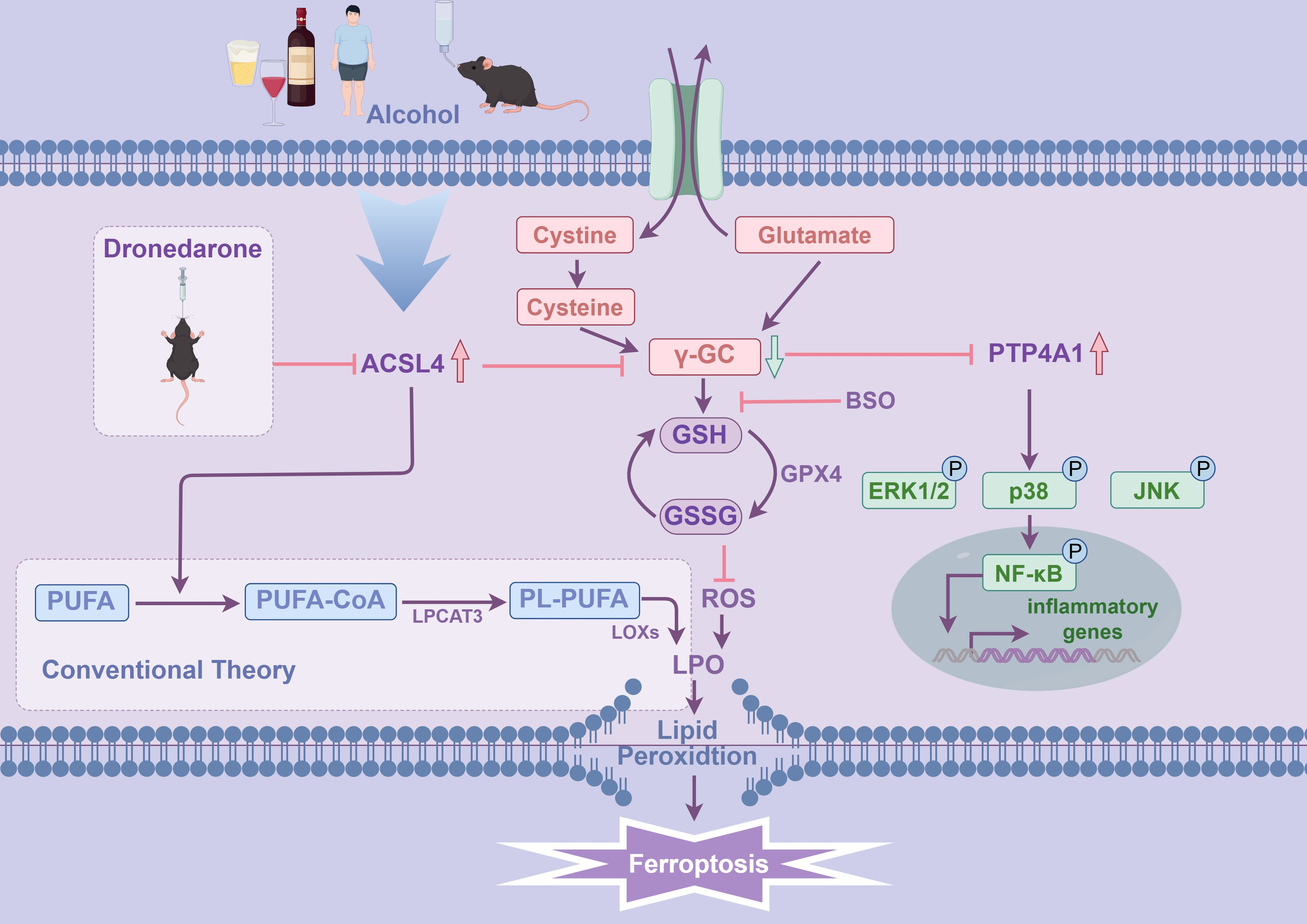



Hepatic ACSL4 Loss Boosts Endogenous Gamma-Glutamylcysteine to Alleviate Alcoholic Liver Disease
Abstract
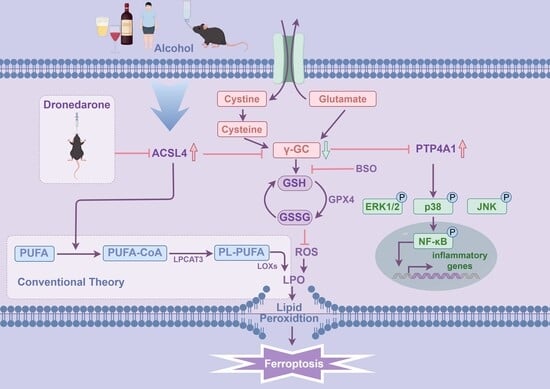
1. Introduction
2. Materials and Methods
2.1. Mouse Experiments
2.2. Cell Culture
2.3. Metabolic Studies in Mice
2.4. Histopathological Analysis
2.5. Primary Mouse Hepatocyte Isolation
2.6. Cell Treatment
2.7. Flow Cytometry
2.8. Bulk RNA-Sequencing Analysis
2.9. Approved Compound Library Screening
2.10. Molecular Docking
2.11. Cellular Thermal Shift Assay (CETSA)
2.12. Microscale Thermophoresis Assay (MST)
2.13. Seahorse Analysis of Oxygen Consumption Rate (OCR)
2.14. Statistical Analysis
3. Results
3.1. ACSL4 Expression Is Positively Correlated with ALD Progression
3.2. Hepatocyte-Specific Acsl4 Knockdown Alleviates Alcohol-Induced Liver Pathology and Inflammation in Mice
3.3. Hepatocyte-Specific Acsl4 Ablation Alleviates Hepatic Steatosis in Alcoholic Liver Disease
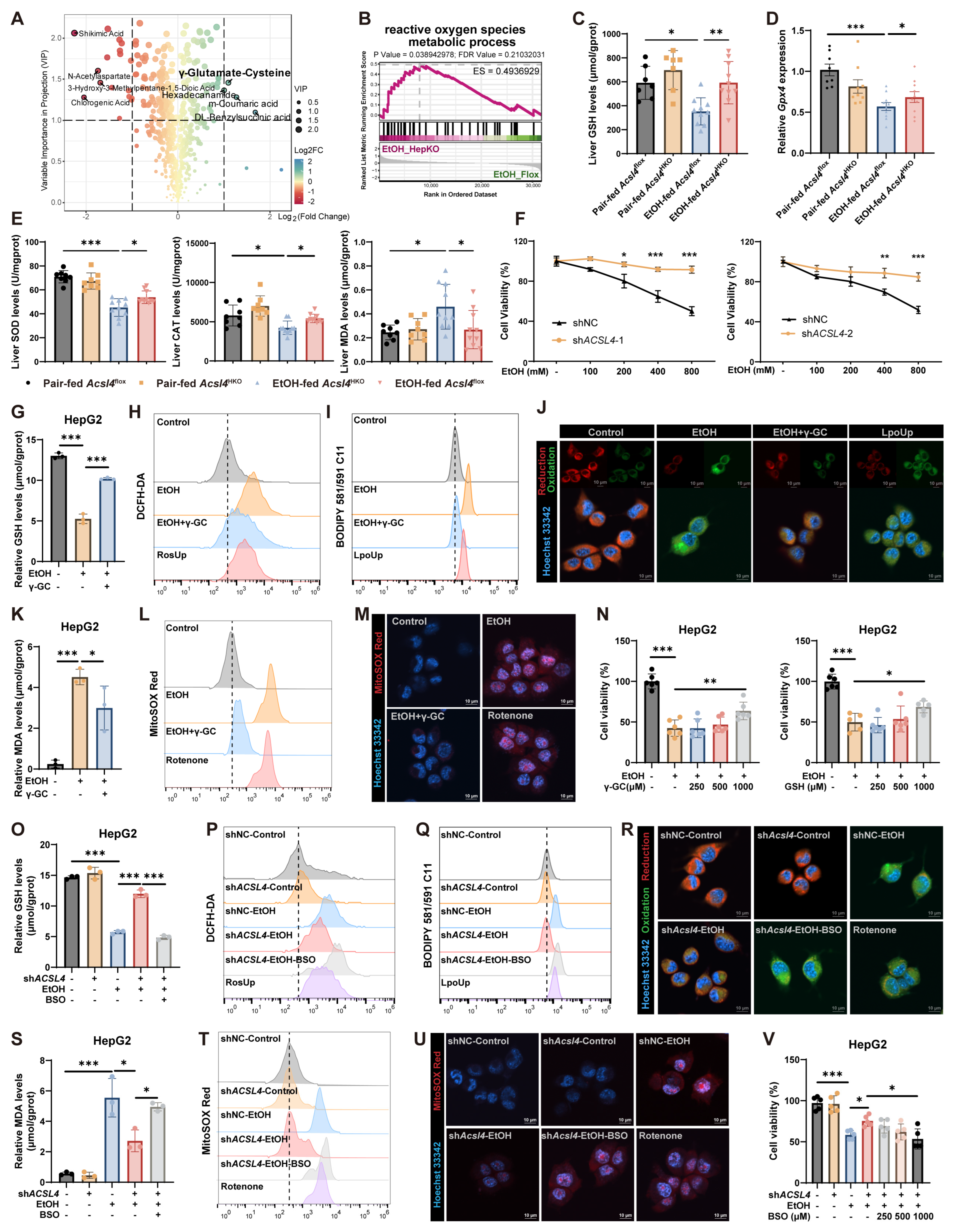
3.4. ACSL4 Regulates Alcohol-Induced Oxidative Stress Through Metabolite γ-GC
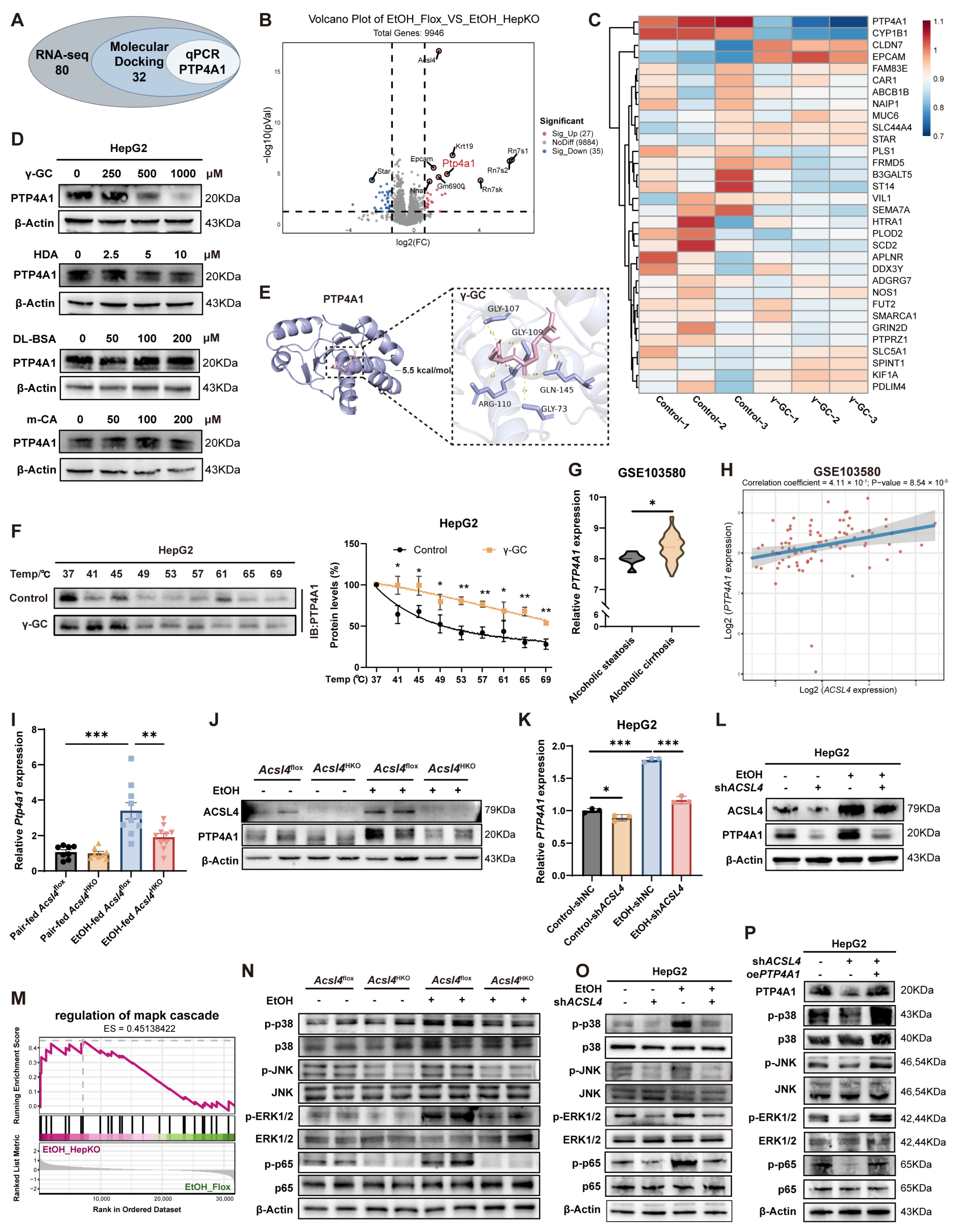
3.5. γ-GC Binds to PTP4A1 and Suppresses the Downstream MAPK-NF-κB Signaling Pathway
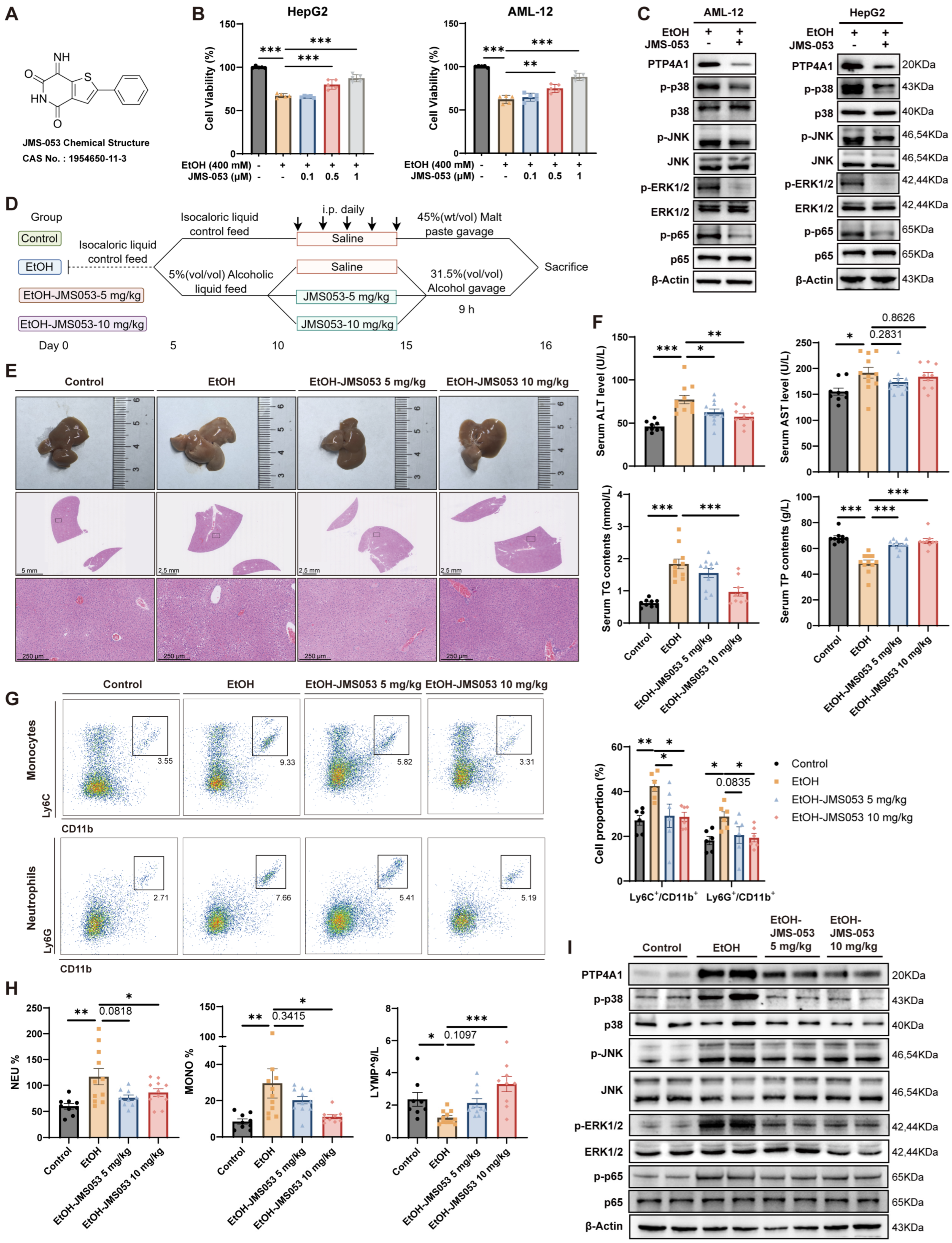
3.6. The PTP4A1 Inhibitor JMS-053 Protects Against Alcohol-Induced Liver Injury by Impeding the MAPK Signaling Pathway
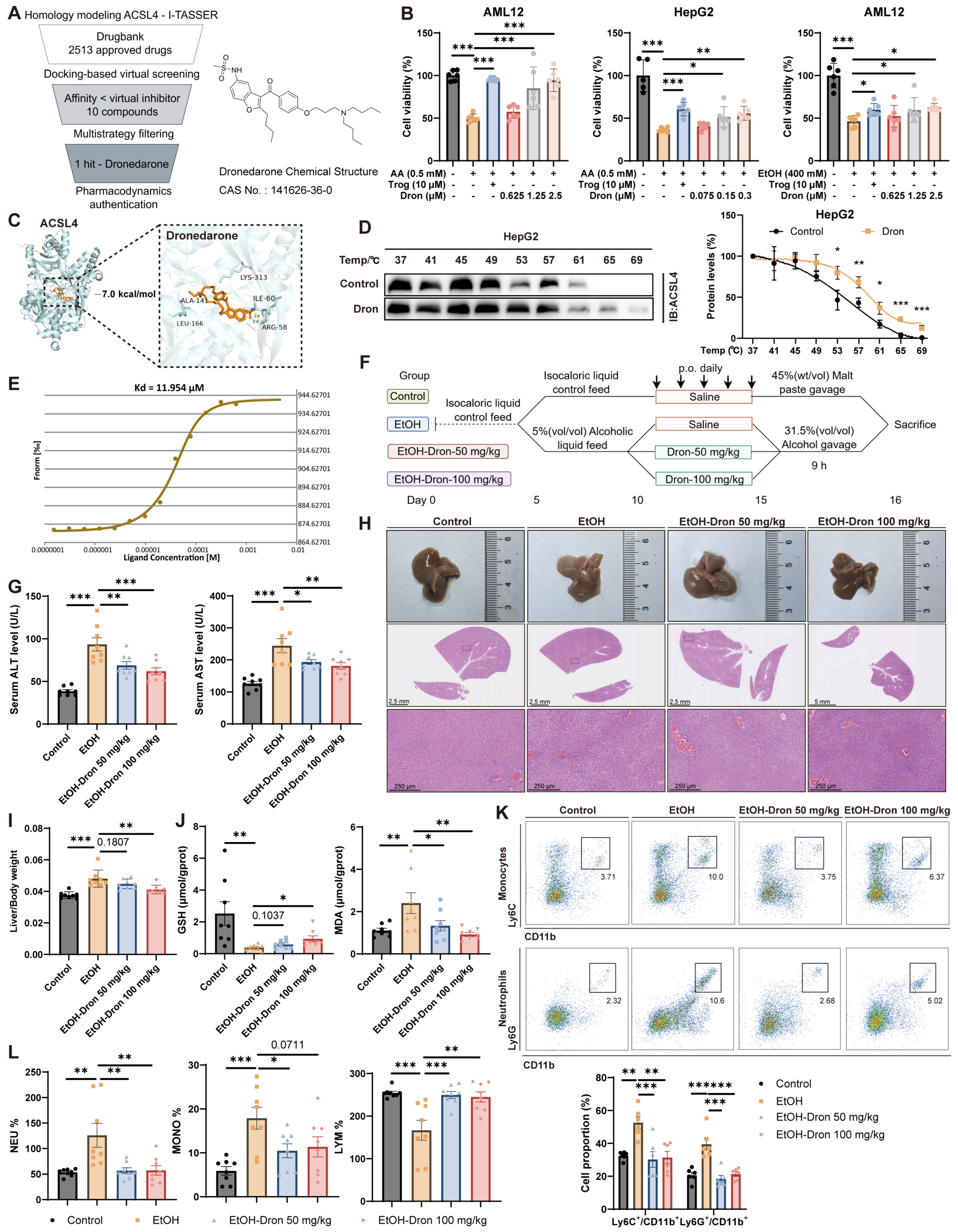
3.7. Targeting ACSL4 with Dronedarone Effectively Alleviates the Progression of Alcoholic Liver Disease
4. Discussion
Supplementary Materials
Author Contributions
Funding
Institutional Review Board Statement
Data Availability Statement
Acknowledgments
Conflicts of Interest
Abbreviations
| ALD | Alcoholic Liver Disease |
| ACSL4 | Acyl-CoA Synthetase Long Chain Family Member 4 |
| γ-GC | Gamma-Glutamylcysteine |
| PTP4A1 | Protein Tyrosine Phosphatase Type IVA member 1 |
| AH | Alcoholic Hepatitis |
| HCC | Hepatocellular Carcinoma |
| ROS | Reactive Oxygen Species |
| PUFA | Polyunsaturated Fatty Acids |
| LPO | Toxic Lipid Peroxide |
| AA | Arachidonic Acid |
| MASLD | Metabolic Dysfunction-associated Steatotic Liver Disease |
| ALT | Alanine Aminotransferase |
| AST | Aspartate Aminotransferase |
| TG | Triglycerides |
| TCHO | Total Cholesterol |
| CBC | Complete Blood Count |
| MDA | Malondialdehyde |
| SOD | Superoxide Dismutase |
| CAT | Catalase |
| GSH | Glutathione |
| H&E | Hematoxylin and Eosin |
| MPO | Myeloperoxidase |
| IHC | Immunohistochemistry |
| WSI | Whole-slide Scanned Images |
| CCK8 | Cell Counting Kit-8 |
| LDH | Lactate Dehydrogenase |
| CETSA | Cellular Thermal Shift Assay |
| MST | Microscale Thermophoresis |
| OCR | Oxygen Consumption Rate |
| GEO | Gene Expression Omnibus |
| GO | Gene Ontology |
| DEG | Differentially Expressed Gene |
| KEGG | Kyoto Encyclopedia of Genes and Genomes |
| TCGA | The Cancer Genome Atlas |
| PMH | Primary Mouse Hepatocyte |
| PA | Palmitic Acid |
| OA | Oleic Acid |
| GSEA | Gene Set Enrichment Analysis |
| BSO | Buthionine Sulfoximine |
| HDA | Hexadecanamide |
| m-CA | m-Coumaric Acid |
| DL-BSA | DL-Benzylsuccinic Acid |
| Co-IP | Co-Immunoprecipitation |
| PTP | Protein Tyrosine Phosphatase |
| TP | Total Protein |
| MAPK | Mitogen-Activated Protein Kinase |
| NF-κB | Nuclear Factor Kappa-B |
References
- Gao, B.; Bataller, R. Alcoholic liver disease: Pathogenesis and new therapeutic targets. Gastroenterology 2011, 141, 1572–1585. [Google Scholar] [CrossRef]
- Park, S.H.; Kim, D.J. Global and regional impacts of alcohol use on public health: Emphasis on alcohol policies. Clin. Mol. Hepatol. 2020, 26, 652–661. [Google Scholar] [CrossRef] [PubMed]
- Singal, A.K.; Mathurin, P. Diagnosis and Treatment of Alcohol-Associated Liver Disease: A Review. JAMA 2021, 326, 165–176. [Google Scholar] [CrossRef] [PubMed]
- Lu, S.C.; Martínez-Chantar, M.L.; Mato, J.M. Methionine adenosyltransferase and S-adenosylmethionine in alcoholic liver disease. J. Gastroenterol. Hepatol. 2006, 21, S61–S64. [Google Scholar] [CrossRef]
- Maddrey, W.C.; Boitnott, J.K.; Bedine, M.S.; Weber, F.L., Jr.; Mezey, E.; White, R.I., Jr. Corticosteroid therapy of alcoholic hepatitis. Gastroenterology 1978, 75, 193–199. [Google Scholar] [CrossRef] [PubMed]
- Akriviadis, E.; Botla, R.; Briggs, W.; Han, S.; Reynolds, T.; Shakil, O. Pentoxifylline improves short-term survival in severe acute alcoholic hepatitis: A double-blind, placebo-controlled trial. Gastroenterology 2000, 119, 1637–1648. [Google Scholar] [CrossRef]
- Ji, C.; Chan, C.; Kaplowitz, N. Predominant role of sterol response element binding proteins (SREBP) lipogenic pathways in hepatic steatosis in the murine intragastric ethanol feeding model. J. Hepatol. 2006, 45, 717–724. [Google Scholar] [CrossRef]
- Fullerton, M.D.; Galic, S.; Marcinko, K.; Sikkema, S.; Pulinilkunnil, T.; Chen, Z.P.; O’Neill, H.M.; Ford, R.J.; Palanivel, R.; O’Brien, M.; et al. Single phosphorylation sites in Acc1 and Acc2 regulate lipid homeostasis and the insulin-sensitizing effects of metformin. Nat. Med. 2013, 19, 1649–1654. [Google Scholar] [CrossRef]
- Galli, A.; Pinaire, J.; Fischer, M.; Dorris, R.; Crabb, D.W. The transcriptional and DNA binding activity of peroxisome proliferator-activated receptor alpha is inhibited by ethanol metabolism. A novel mechanism for the development of ethanol-induced fatty liver. J. Biol. Chem. 2001, 276, 68–75. [Google Scholar] [CrossRef]
- You, M.; Matsumoto, M.; Pacold, C.M.; Cho, W.K.; Crabb, D.W. The role of AMP-activated protein kinase in the action of ethanol in the liver. Gastroenterology 2004, 127, 1798–1808. [Google Scholar] [CrossRef]
- Golej, D.L.; Askari, B.; Kramer, F.; Barnhart, S.; Vivekanandan-Giri, A.; Pennathur, S.; Bornfeldt, K.E. Long-chain acyl-CoA synthetase 4 modulates prostaglandin E2 release from human arterial smooth muscle cells. J. Lipid Res. 2011, 52, 782–793. [Google Scholar] [CrossRef]
- Kuwata, H.; Nakatani, E.; Shimbara-Matsubayashi, S.; Ishikawa, F.; Shibanuma, M.; Sasaki, Y.; Yoda, E.; Nakatani, Y.; Hara, S. Long-chain acyl-CoA synthetase 4 participates in the formation of highly unsaturated fatty acid-containing phospholipids in murine macrophages. Biochim. Biophys. Acta Mol. Cell Biol. Lipids 2019, 1864, 1606–1618. [Google Scholar] [CrossRef] [PubMed]
- Doll, S.; Proneth, B.; Tyurina, Y.Y.; Panzilius, E.; Kobayashi, S.; Ingold, I.; Irmler, M.; Beckers, J.; Aichler, M.; Walch, A.; et al. ACSL4 dictates ferroptosis sensitivity by shaping cellular lipid composition. Nat. Chem. Biol. 2017, 13, 91–98. [Google Scholar] [CrossRef] [PubMed]
- Duan, J.; Wang, Z.; Duan, R.; Yang, C.; Zhao, R.; Feng, Q.; Qin, Y.; Jiang, J.; Gu, S.; Lv, K.; et al. Therapeutic targeting of hepatic ACSL4 ameliorates NASH in mice. Hepatology 2022, 75, 140–153. [Google Scholar] [CrossRef] [PubMed]
- Cui, Y.; Zhang, Y.; Zhao, X.; Shao, L.; Liu, G.; Sun, C.; Xu, R.; Zhang, Z. ACSL4 exacerbates ischemic stroke by promoting ferroptosis-induced brain injury and neuroinflammation. Brain Behav. Immun. 2021, 93, 312–321. [Google Scholar] [CrossRef]
- Tuo, Q.Z.; Liu, Y.; Xiang, Z.; Yan, H.F.; Zou, T.; Shu, Y.; Ding, X.L.; Zou, J.J.; Xu, S.; Tang, F.; et al. Thrombin induces ACSL4-dependent ferroptosis during cerebral ischemia/reperfusion. Signal Transduct. Target. Ther. 2022, 7, 59. [Google Scholar] [CrossRef]
- Li, Y.; Feng, D.; Wang, Z.; Zhao, Y.; Sun, R.; Tian, D.; Liu, D.; Zhang, F.; Ning, S.; Yao, J.; et al. Ischemia-induced ACSL4 activation contributes to ferroptosis-mediated tissue injury in intestinal ischemia/reperfusion. Cell Death Differ. 2019, 26, 2284–2299. [Google Scholar] [CrossRef]
- Wang, Y.; Zhang, M.; Bi, R.; Su, Y.; Quan, F.; Lin, Y.; Yue, C.; Cui, X.; Zhao, Q.; Liu, S.; et al. ACSL4 deficiency confers protection against ferroptosis-mediated acute kidney injury. Redox Biol. 2022, 51, 102262. [Google Scholar] [CrossRef]
- Bertola, A.; Mathews, S.; Ki, S.H.; Wang, H.; Gao, B. Mouse model of chronic and binge ethanol feeding (the NIAAA model). Nat. Protoc. 2013, 8, 627–637. [Google Scholar] [CrossRef]
- Bertola, A. Mouse Model of Alcoholic Steatohepatitis. Methods Mol. Biol. 2020, 2164, 145–157. [Google Scholar] [CrossRef]
- Namachivayam, A.; Valsala Gopalakrishnan, A. A review on molecular mechanism of alcoholic liver disease. Life Sci. 2021, 274, 119328. [Google Scholar] [CrossRef] [PubMed]
- Jaeschke, H. Neutrophil-mediated tissue injury in alcoholic hepatitis. Alcohol 2002, 27, 23–27. [Google Scholar] [CrossRef] [PubMed]
- Jeon, S.; Carr, R. Alcohol effects on hepatic lipid metabolism. J. Lipid Res. 2020, 61, 470–479. [Google Scholar] [CrossRef] [PubMed]
- Cederbaum, A.I.; Lu, Y.; Wu, D. Role of oxidative stress in alcohol-induced liver injury. Arch. Toxicol. 2009, 83, 519–548. [Google Scholar] [CrossRef] [PubMed]
- Liu, Y.; Chen, Z.; Li, B.; Yao, H.; Zarka, M.; Welch, J.; Sachdev, P.; Bridge, W.; Braidy, N. Supplementation with γ-glutamylcysteine (γ-GC) lessens oxidative stress, brain inflammation and amyloid pathology and improves spatial memory in a murine model of AD. Neurochem. Int. 2021, 144, 104931. [Google Scholar] [CrossRef]
- Alonso, A.; Sasin, J.; Bottini, N.; Friedberg, I.; Friedberg, I.; Osterman, A.; Godzik, A.; Hunter, T.; Dixon, J.; Mustelin, T. Protein tyrosine phosphatases in the human genome. Cell 2004, 117, 699–711. [Google Scholar] [CrossRef]
- Bai, Y.; Luo, Y.; Liu, S.; Zhang, L.; Shen, K.; Dong, Y.; Walls, C.D.; Quilliam, L.A.; Wells, C.D.; Cao, Y.; et al. PRL-1 protein promotes ERK1/2 and RhoA protein activation through a non-canonical interaction with the Src homology 3 domain of p115 Rho GTPase-activating protein. J. Biol. Chem. 2011, 286, 42316–42324. [Google Scholar] [CrossRef]
- Min, S.H.; Kim, D.M.; Heo, Y.S.; Kim, Y.I.; Kim, H.M.; Kim, J.; Han, Y.M.; Kim, I.C.; Yoo, O.J. New p53 target, phosphatase of regenerating liver 1 (PRL-1) downregulates p53. Oncogene 2009, 28, 545–554. [Google Scholar] [CrossRef][Green Version]
- Urwyler, O.; Izadifar, A.; Vandenbogaerde, S.; Sachse, S.; Misbaer, A.; Schmucker, D. Branch-restricted localization of phosphatase Prl-1 specifies axonal synaptogenesis domains. Science 2019, 364, eaau9952. [Google Scholar] [CrossRef]
- Chen, L.; Yuan, J.; Li, H.; Ding, Y.; Yang, X.; Yuan, Z.; Hu, Z.; Gao, Y.; Wang, X.; Lu, H.; et al. Trans-cinnamaldehyde attenuates renal ischemia/reperfusion injury through suppressing inflammation via JNK/p38 MAPK signaling pathway. Int. Immunopharmacol. 2023, 118, 110088. [Google Scholar] [CrossRef]
- Huang, P.; Han, J.; Hui, L. MAPK signaling in inflammation-associated cancer development. Protein Cell 2010, 1, 218–226. [Google Scholar] [CrossRef] [PubMed]
- Rehm, J. The risks associated with alcohol use and alcoholism. Alcohol Res. Health 2011, 34, 135–143. [Google Scholar] [PubMed]
- Addolorato, G.; Abenavoli, L.; Dallio, M.; Federico, A.; Germani, G.; Gitto, S.; Leandro, G.; Loguercio, C.; Marra, F.; Stasi, E. Alcohol associated liver disease 2020: A clinical practice guideline by the Italian Association for the Study of the Liver (AISF). Dig. Liver Dis. 2020, 52, 374–391. [Google Scholar] [CrossRef] [PubMed]
- Saberi, B.; Dadabhai, A.S.; Jang, Y.Y.; Gurakar, A.; Mezey, E. Current Management of Alcoholic Hepatitis and Future Therapies. J. Clin. Transl. Hepatol. 2016, 4, 113–122. [Google Scholar] [CrossRef]
- Xu, M.; Chang, B.; Mathews, S.; Gao, B. New drug targets for alcoholic liver disease. Hepatol. Int. 2014, 8, 475–480. [Google Scholar] [CrossRef]
- Osna, N.A.; Rasineni, K.; Ganesan, M.; Donohue, T.M., Jr.; Kharbanda, K.K. Pathogenesis of Alcohol-Associated Liver Disease. J. Clin. Exp. Hepatol. 2022, 12, 1492–1513. [Google Scholar] [CrossRef]
- Zhou, Z.; Ye, T.J.; Bonavita, G.; Daniels, M.; Kainrad, N.; Jogasuria, A.; You, M. Adipose-Specific Lipin-1 Overexpression Renders Hepatic Ferroptosis and Exacerbates Alcoholic Steatohepatitis in Mice. Hepatol. Commun. 2019, 3, 656–669. [Google Scholar] [CrossRef]
- You, M.; Jogasuria, A.; Taylor, C.; Wu, J. Sirtuin 1 signaling and alcoholic fatty liver disease. Hepatobiliary Surg. Nutr. 2015, 4, 88–100. [Google Scholar] [CrossRef]
- Zhou, J.; Shi, Y.; Yang, C.; Lu, S.; Zhao, L.; Liu, X.; Zhou, D.; Luo, L.; Yin, Z. γ-glutamylcysteine alleviates insulin resistance and hepatic steatosis by regulating adenylate cyclase and IGF-1R/IRS1/PI3K/Akt signaling pathways. J. Nutr. Biochem. 2023, 119, 109404. [Google Scholar] [CrossRef]
- Zhou, J.; Yan, X.; Bi, X.; Lu, S.; Liu, X.; Yang, C.; Shi, Y.; Luo, L.; Yin, Z. γ-Glutamylcysteine rescues mice from TNBS-driven inflammatory bowel disease through regulating macrophages polarization. Inflamm. Res. 2023, 72, 603–621. [Google Scholar] [CrossRef]
- Bi, A.; Wang, Y.; Chen, L.; Yin, Z.; Luo, L. γ-Glutamylcysteine attenuates amyloid-β oligomers-induced neuroinflammation in microglia via blocking NF-κB signaling pathway. Chem.-Biol. Interact. 2022, 363, 110019. [Google Scholar] [CrossRef] [PubMed]
- Ostman, A.; Hellberg, C.; Böhmer, F.D. Protein-tyrosine phosphatases and cancer. Nat. Rev. Cancer 2006, 6, 307–320. [Google Scholar] [CrossRef] [PubMed]
- Sacchetti, C.; Bai, Y.; Stanford, S.M.; Di Benedetto, P.; Cipriani, P.; Santelli, E.; Piera-Velazquez, S.; Chernitskiy, V.; Kiosses, W.B.; Ceponis, A.; et al. PTP4A1 promotes TGFβ signaling and fibrosis in systemic sclerosis. Nat. Commun. 2017, 8, 1060. [Google Scholar] [CrossRef] [PubMed]
- Duciel, L.; Monraz Gomez, L.C.; Kondratova, M.; Kuperstein, I.; Saule, S. The Phosphatase PRL-3 Is Involved in Key Steps of Cancer Metastasis. J. Mol. Biol. 2019, 431, 3056–3067. [Google Scholar] [CrossRef]
- Hardy, S.; Kostantin, E.; Hatzihristidis, T.; Zolotarov, Y.; Uetani, N.; Tremblay, M.L. Physiological and oncogenic roles of the PRL phosphatases. FEBS J. 2018, 285, 3886–3908. [Google Scholar] [CrossRef]
- Peng, Y.; Du, K.; Ramirez, S.; Diamond, R.H.; Taub, R. Mitogenic up-regulation of the PRL-1 protein-tyrosine phosphatase gene by Egr-1. Egr-1 activation is an early event in liver regeneration. J. Biol. Chem. 1999, 274, 4513–4520. [Google Scholar] [CrossRef]
- Tonks, N.K. Redox redux: Revisiting PTPs and the control of cell signaling. Cell 2005, 121, 667–670. [Google Scholar] [CrossRef]
- Gjörloff-Wingren, A.; Saxena, M.; Han, S.; Wang, X.; Alonso, A.; Renedo, M.; Oh, P.; Williams, S.; Schnitzer, J.; Mustelin, T. Subcellular localization of intracellular protein tyrosine phosphatases in T cells. Eur. J. Immunol. 2000, 30, 2412–2421. [Google Scholar] [CrossRef]
- Sun, J.P.; Luo, Y.; Yu, X.; Wang, W.Q.; Zhou, B.; Liang, F.; Zhang, Z.Y. Phosphatase activity, trimerization, and the C-terminal polybasic region are all required for PRL1-mediated cell growth and migration. J. Biol. Chem. 2007, 282, 29043–29051. [Google Scholar] [CrossRef]
- Baker, J.A.; Li, J.; Zhou, D.; Yang, M.; Cook, M.N.; Jones, B.C.; Mulligan, M.K.; Hamre, K.M.; Lu, L. Analyses of differentially expressed genes after exposure to acute stress, acute ethanol, or a combination of both in mice. Alcohol 2017, 58, 139–151. [Google Scholar] [CrossRef]


Disclaimer/Publisher’s Note: The statements, opinions and data contained in all publications are solely those of the individual author(s) and contributor(s) and not of MDPI and/or the editor(s). MDPI and/or the editor(s) disclaim responsibility for any injury to people or property resulting from any ideas, methods, instructions or products referred to in the content. |
© 2026 by the authors. Licensee MDPI, Basel, Switzerland. This article is an open access article distributed under the terms and conditions of the Creative Commons Attribution (CC BY) license.
Share and Cite
Duan, R.; Wang, X.-Y.; Zhou, X.; Ding, J.-W.; Yang, Z.-S.; Li, Z.-L.; Wang, Y.-Y.; Yu, J.-X.; Duan, J.-J. Hepatic ACSL4 Loss Boosts Endogenous Gamma-Glutamylcysteine to Alleviate Alcoholic Liver Disease. Antioxidants 2026, 15, 438. https://doi.org/10.3390/antiox15040438
Duan R, Wang X-Y, Zhou X, Ding J-W, Yang Z-S, Li Z-L, Wang Y-Y, Yu J-X, Duan J-J. Hepatic ACSL4 Loss Boosts Endogenous Gamma-Glutamylcysteine to Alleviate Alcoholic Liver Disease. Antioxidants. 2026; 15(4):438. https://doi.org/10.3390/antiox15040438
Chicago/Turabian StyleDuan, Ran, Xin-Yi Wang, Xue Zhou, Jing-Wen Ding, Zhi-Sen Yang, Zhi-Lin Li, Yue-Yu Wang, Jia-Xin Yu, and Jing-Jing Duan. 2026. "Hepatic ACSL4 Loss Boosts Endogenous Gamma-Glutamylcysteine to Alleviate Alcoholic Liver Disease" Antioxidants 15, no. 4: 438. https://doi.org/10.3390/antiox15040438
APA StyleDuan, R., Wang, X.-Y., Zhou, X., Ding, J.-W., Yang, Z.-S., Li, Z.-L., Wang, Y.-Y., Yu, J.-X., & Duan, J.-J. (2026). Hepatic ACSL4 Loss Boosts Endogenous Gamma-Glutamylcysteine to Alleviate Alcoholic Liver Disease. Antioxidants, 15(4), 438. https://doi.org/10.3390/antiox15040438