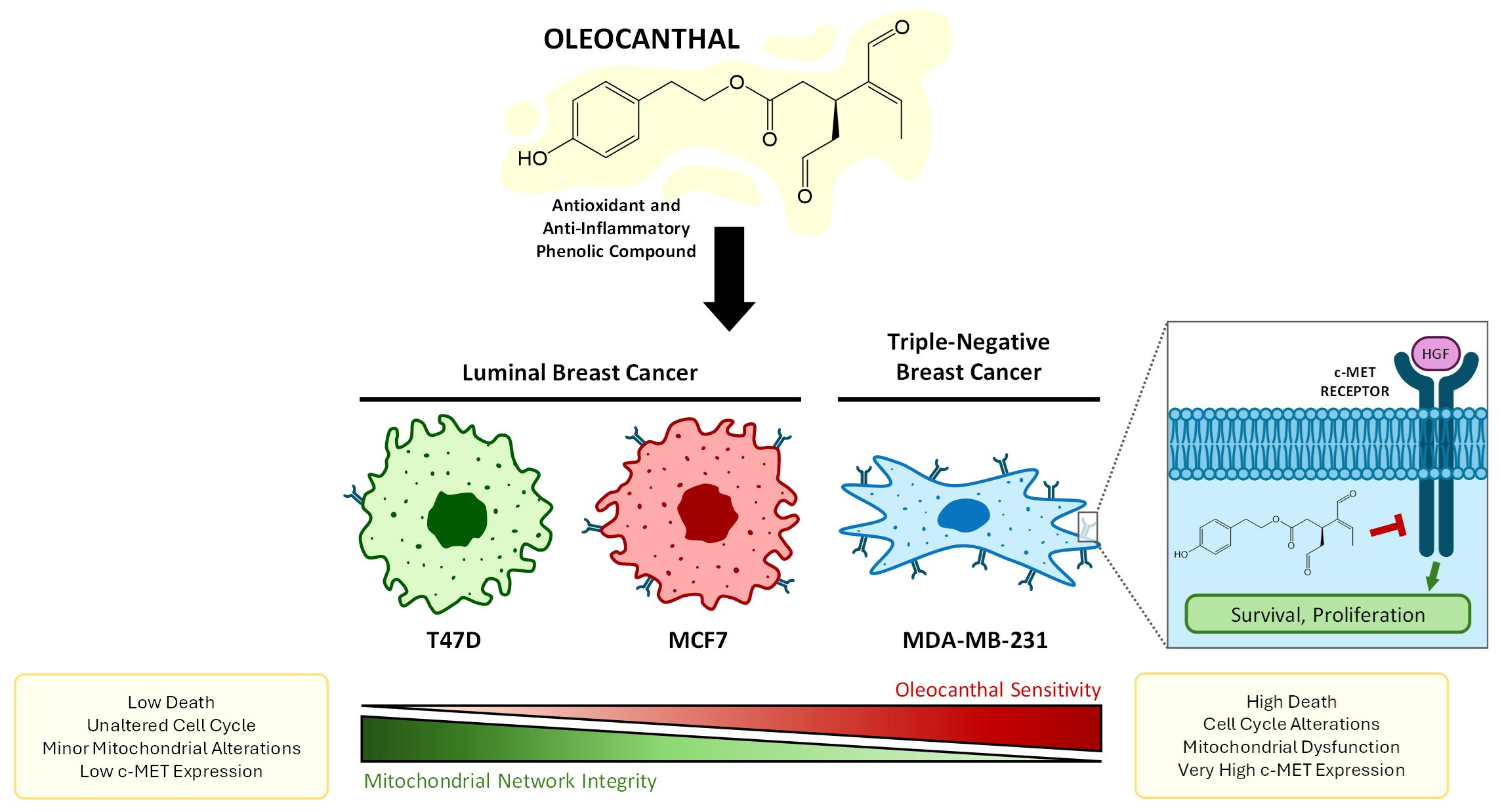
Oleocanthal Induces Mitochondrial Dysfunction in Breast Cancer Cell Lines Depending on c-MET Expression

 ,
,  ,
,  ,
,  and
and 
Abstract
1. Introduction
2. Materials and Methods
2.1. Reagents
2.2. Cell Culture
2.3. Viability Assays
2.4. Flow Cytometry
2.5. Western Blotting
2.6. Mitochondrial Function Assessment
2.7. Confocal Microscopy
2.8. MET Gene Expression Analysis
2.9. Survival Analysis
2.10. Statistical Analysis
3. Results
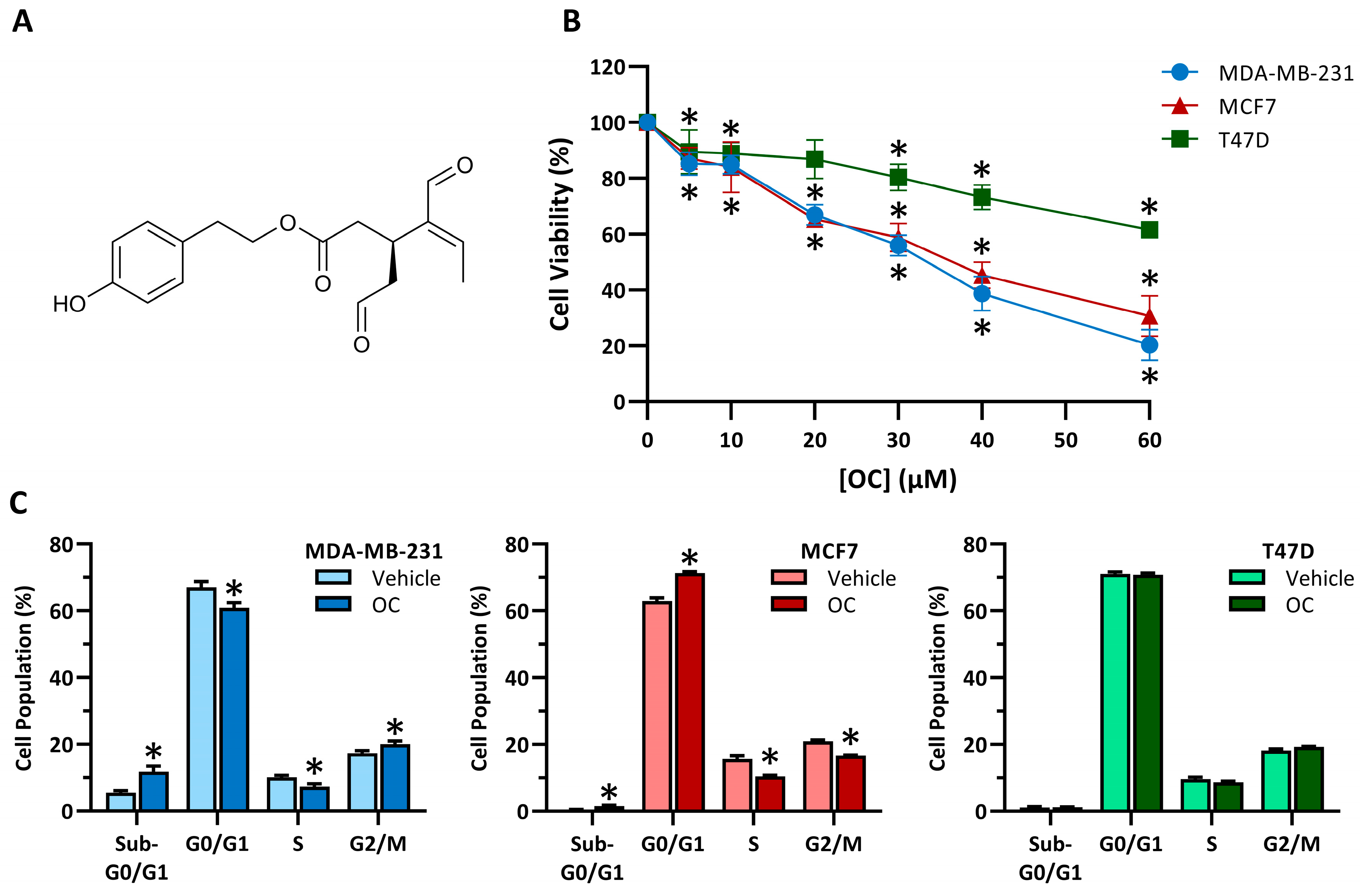
3.1. Oleocanthal Reduces Cell Viability and Alters Cell Cycle Progression in Breast Cancer Cell Lines
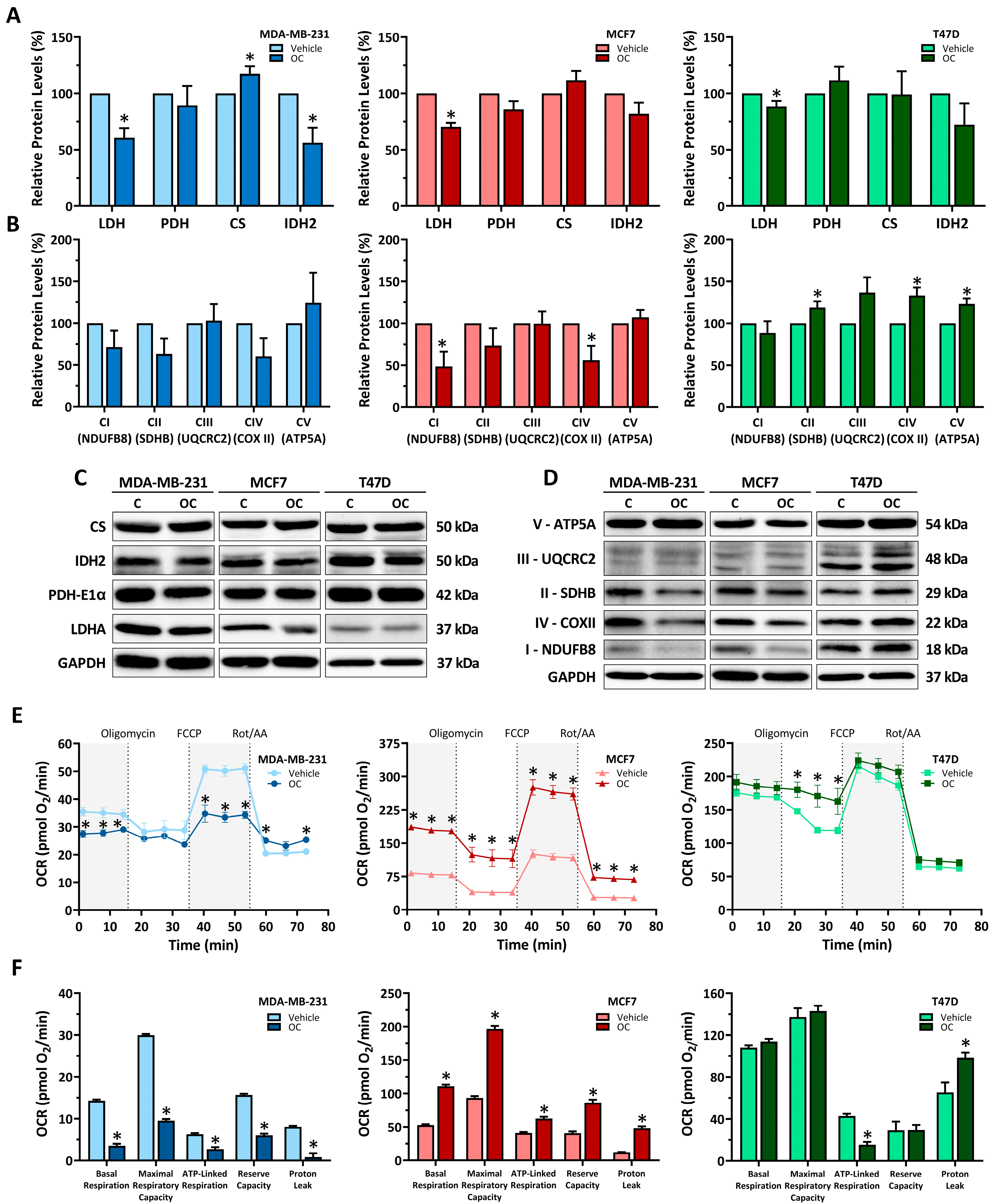
3.2. Oleocanthal Induces Metabolic Rewiring and Disturbs Mitochondrial Function in Breast Cancer Cell Lines
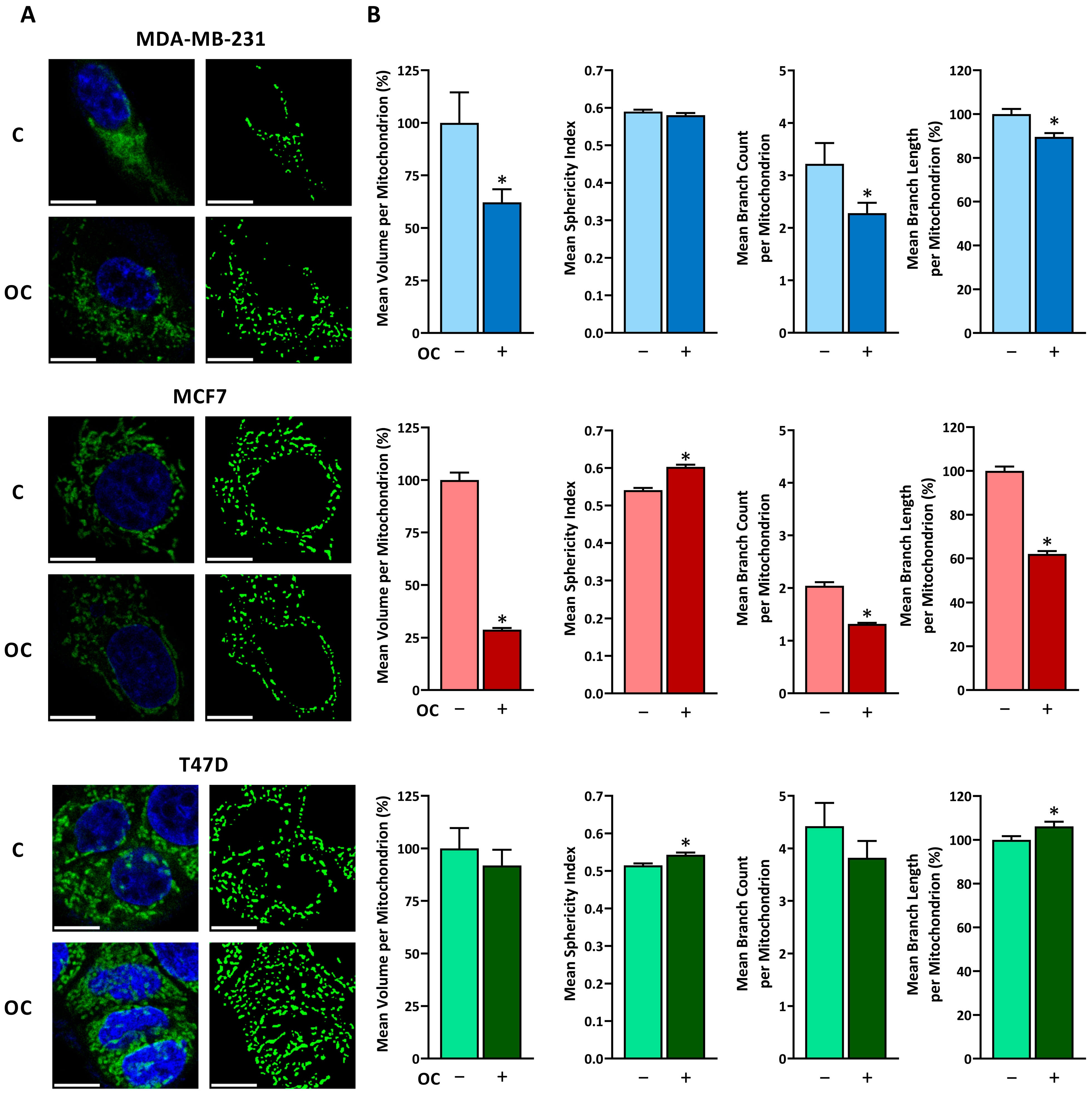
3.3. Oleocanthal Alters Mitochondrial Network Dynamics in Breast Cancer Cell Lines
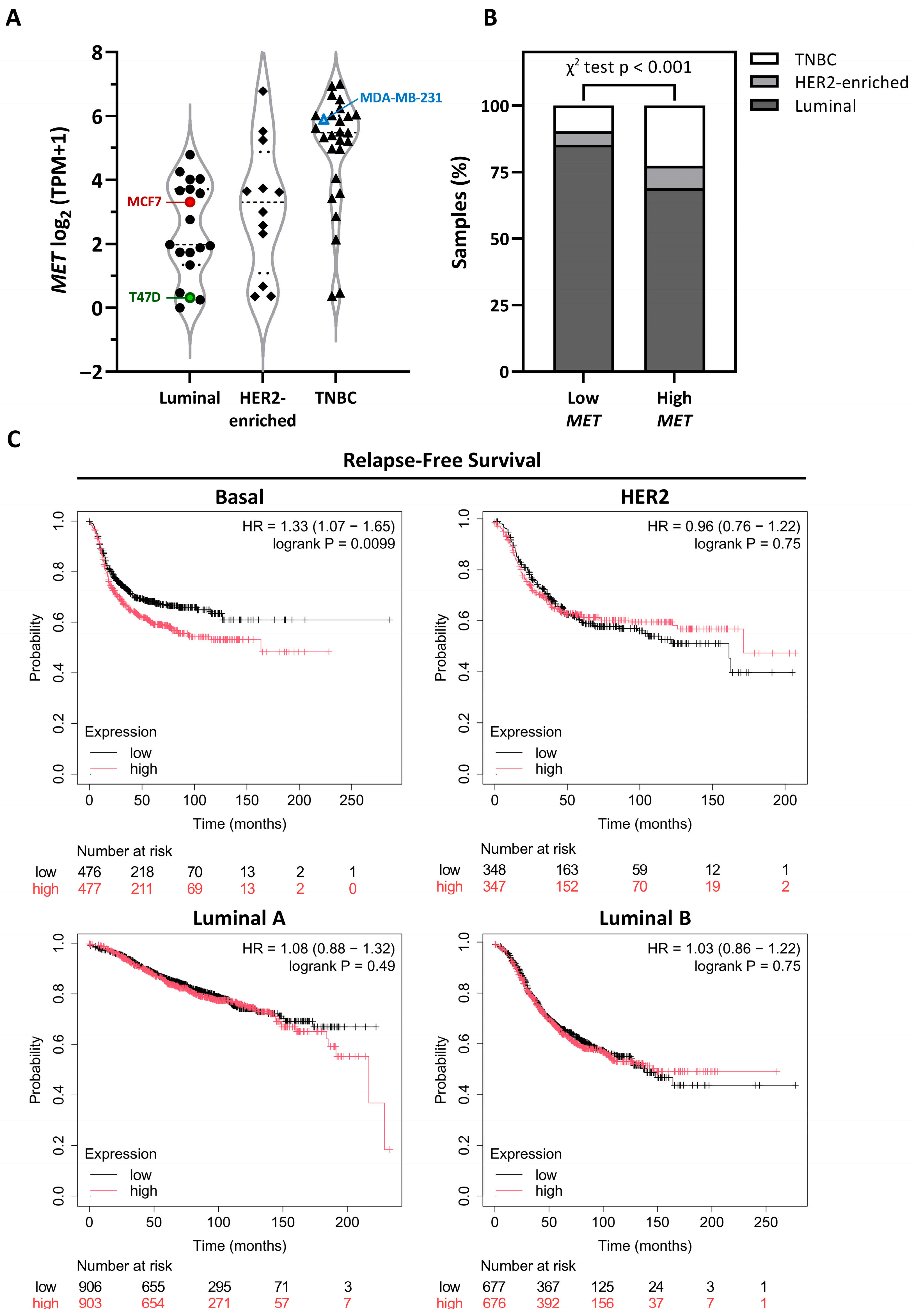
3.4. MET Expression Correlates with Oleocanthal Sensitivity in Breast Cancer Cell Lines and Predicts Poor Outcome in Basal-like Breast Cancer Patients
4. Discussion
5. Conclusions
Supplementary Materials
Author Contributions
Funding
Data Availability Statement
Acknowledgments
Conflicts of Interest
Abbreviations
| ATP5A | ATP Synthase F1 Subunit A |
| COX1 | Cyclooxygenase 1 |
| COX2 | Cyclooxygenase 2 |
| COXII | Cytochrome c Oxidase Subunit II |
| CS | Citrate Synthase |
| DMEM | Dulbecco’s Modified Eagle Medium |
| ER | Estrogen Receptor |
| EVOO | Extra Virgin Olive Oil |
| FBS | Fetal Bovine Serum |
| HER2 | Human Epidermal Growth Factor Receptor 2 |
| HGF/SF | Hepatocyte Growth Factor/Scatter Factor |
| HGFR | Hepatocyte Growth Factor Receptor |
| HIF-1α | Hypoxia-Inducible Factor 1-alpha |
| IDH2 | Isocitrate Dehydrogenase 2 |
| LDH | Lactate Dehydrogenase |
| MAPK | Mitogen-Activated Protein Kinase |
| MD | Mediterranean Diet |
| NDUFB8 | NADH Dehydrogenase [Ubiquinone] Subunit B8 |
| NF-κB | Nuclear factor kappa B |
| NSAID | Non-Steroidal Anti-Inflammatory Drug |
| OC | Oleocanthal |
| OCR | Oxygen Consumption Rate |
| OXPHOS | Oxidative Phosphorylation |
| PBS | Phosphate-Buffered Saline |
| PDH | Pyruvate Dehydrogenase |
| PI3K | Phosphoinositide-3-Kinase |
| PR | Progesterone Receptor |
| RFS | Relapse-Free Survival |
| ROS | Reactive Oxygen Species |
| RTK | Receptor Tyrosine Kinase |
| SDHB | Succinate Dehydrogenase Subunit B |
| STAT3 | Signal Transducer and Activator of Transcription 3 |
| TNBC | Triple-Negative Breast Cancer |
| UQCRC2 | Ubiquinol–Cytochrome c Reductase Core Protein 2 |
References
- Zhang, Y.; Ji, Y.; Liu, S.; Li, J.; Wu, J.; Jin, Q.; Liu, X.; Duan, H.; Feng, Z.; Liu, Y.; et al. Global Burden of Female Breast Cancer: New Estimates in 2022, Temporal Trend and Future Projections up to 2050 Based on the Latest Release from GLOBOCAN. J. Natl. Cancer Cent. 2025, 5, 287–296. [Google Scholar] [CrossRef] [Scilit] [PubMed]
- Armenta-Guirado, B.I.; González-Rocha, A.; Mérida-Ortega, Á.; López-Carrillo, L.; Denova-Gutiérrez, E. Lifestyle Quality Indices and Female Breast Cancer Risk: A Systematic Review and Meta-Analysis. Adv. Nutr. 2023, 14, 685–709. [Google Scholar] [CrossRef] [Scilit] [PubMed]
- Xiao, Y.; Xia, J.; Li, L.; Ke, Y.; Cheng, J.; Xie, Y.; Chu, W.; Cheung, P.; Kim, J.H.; Colditz, G.A.; et al. Associations between Dietary Patterns and the Risk of Breast Cancer: A Systematic Review and Meta-Analysis of Observational Studies. Breast Cancer Res. 2019, 21, 16. [Google Scholar] [CrossRef] [Scilit] [PubMed]
- Glassman, I.; Le, N.; Asif, A.; Goulding, A.; Alcantara, C.A.; Vu, A.; Chorbajian, A.; Mirhosseini, M.; Singh, M.; Venketaraman, V. The Role of Obesity in Breast Cancer Pathogenesis. Cells 2023, 12, 2061. [Google Scholar] [CrossRef] [Scilit]
- Tsai, H.H.; Yu, J.C.; Hsu, H.M.; Chu, C.H.; Chang, T.M.; Hong, Z.J.; Feng, A.C.; Fu, C.Y.; Hsu, K.F.; Dai, M.S.; et al. The Risk of Breast Cancer between Western and Mediterranean Dietary Patterns. Nutrients 2023, 15, 2057. [Google Scholar] [CrossRef] [Scilit]
- Turati, F.; Carioli, G.; Bravi, F.; Ferraroni, M.; Serraino, D.; Montella, M.; Giacosa, A.; Toffolutti, F.; Negri, E.; Levi, F.; et al. Mediterranean Diet and Breast Cancer Risk. Nutrients 2018, 10, 326. [Google Scholar] [CrossRef] [Scilit]
- Moral, R.; Escrich, E. Influence of Olive Oil and Its Components on Breast Cancer: Molecular Mechanisms. Molecules 2022, 27, 477. [Google Scholar] [CrossRef] [Scilit]
- Toledo, E.; Salas-Salvado, J.; Donat-Vargas, C.; Buil-Cosiales, P.; Estruch, R.; Ros, E.; Corella, D.; Fito, M.; Hu, F.B.; Aros, F.; et al. Mediterranean Diet and Invasive Breast Cancer Risk Among Women at High Cardiovascular Risk in the PREDIMED Trial: A Randomized Clinical Trial. JAMA Intern. Med. 2015, 175, 1752–1760. [Google Scholar] [CrossRef] [Scilit]
- Donat-Vargas, C.; Guerrero-Zotano, Á.; Lope, V.; Bermejo, B.; Casas, A.; Baena-Cañada, J.M.; Antolín, S.; Sánchez-Rovira, P.; Antón, A.; Garcia-Saénz, J.Á.; et al. Type Does Matter. Use VIRGIN Olive Oil as Your Preferred Fat to Reduce Your Risk of Breast Cancer: Case-Control EpiGEICAM Study. Eur. J. Clin. Nutr. 2022, 76, 1343–1346. [Google Scholar] [CrossRef] [Scilit]
- Lucci, P.; Bertoz, V.; Pacetti, D.; Moret, S.; Conte, L. Effect of the Refining Process on Total Hydroxytyrosol, Tyrosol, and Tocopherol Contents of Olive Oil. Foods 2020, 9, 292. [Google Scholar] [CrossRef] [Scilit]
- Jannati, S.; Patel, A.; Patnaik, R.; Banerjee, Y. Oleocanthal as a Multifunctional Anti-Cancer Agent: Mechanistic Insights, Advanced Delivery Strategies, and Synergies for Precision Oncology. Int. J. Mol. Sci. 2025, 26, 5521. [Google Scholar] [CrossRef] [Scilit] [PubMed]
- Marrero, A.D.; Quesada, A.R.; Martínez-Poveda, B.; Medina, M.Á. Anti-Cancer, Anti-Angiogenic, and Anti-Atherogenic Potential of Key Phenolic Compounds from Virgin Olive Oil. Nutrients 2024, 16, 1283. [Google Scholar] [CrossRef] [Scilit] [PubMed]
- Medoro, A.; Scapagnini, G.; Hu, F.B.; Davinelli, S. Neuroprotective Effects of Olive Oil and Its Phenolic Compounds on Neuroinflammation: A Systematic Review. Nutr. Neurosci. 2025, 1–21. [Google Scholar] [CrossRef] [Scilit] [PubMed]
- Montedoro, G.; Servili, M.; Baldioli, M.; Selvaggini, R.; Miniati, E.; Macchioni, A. Simple and Hydrolyzable Compounds in Virgin Olive Oil. 3. Spectroscopic Characterizations of the Secoiridoid Derivatives. J. Agric. Food Chem. 1993, 41, 2228–2234. [Google Scholar] [CrossRef] [Scilit]
- Beauchamp, G.K.; Keast, R.S.J.; Morel, D.; Lin, J.; Pika, J.; Han, Q.; Lee, C.H.; Smith, A.B.; Breslin, P.A.S. Phytochemistry: Ibuprofen-like Activity in Extra-Virgin Olive Oil. Nature 2005, 437, 45–46. [Google Scholar] [CrossRef] [Scilit]
- Smith, A.B.; Han, Q.; Breslin, P.A.S.; Beauchamp, G.K. Synthesis and Assignment of Absolute Configuration of (−)-Oleocanthal: A Potent, Naturally Occurring Non-Steroidal Anti-Inflammatory and Anti-Oxidant Agent Derived from Extra Virgin Olive Oils. Org. Lett. 2005, 7, 5075–5078. [Google Scholar] [CrossRef] [Scilit]
- Montoya, T.; Castejón, M.L.; Sánchez-Hidalgo, M.; González-Benjumea, A.; Fernández-Bolaños, J.G.; Alarcón De-La-Lastra, C. Oleocanthal Modulates LPS-Induced Murine Peritoneal Macrophages Activation via Regulation of Inflammasome, Nrf-2/HO-1, and MAPKs Signaling Pathways. J. Agric. Food Chem. 2019, 67, 5552–5559. [Google Scholar] [CrossRef] [Scilit]
- Akl, M.R.; Ayoub, N.M.; Mohyeldin, M.M.; Busnena, B.A.; Foudah, A.I.; Liu, Y.Y.; Ei Sayed, K.A. Olive Phenolics as C-Met Inhibitors: (−)-Oleocanthal Attenuates Cell Proliferation, Invasiveness, and Tumor Growth in Breast Cancer Models. PLoS ONE 2014, 9, e97622. [Google Scholar] [CrossRef] [Scilit]
- Ayoub, N.M.; Siddique, A.B.; Ebrahim, H.Y.; Mohyeldin, M.M.; El Sayed, K.A. The Olive Oil Phenolic (−)-Oleocanthal Modulates Estrogen Receptor Expression in Luminal Breast Cancer in Vitro and in Vivo and Synergizes with Tamoxifen Treatment. Eur. J. Pharmacol. 2017, 810, 100–111. [Google Scholar] [CrossRef] [Scilit]
- Elnagar, A.Y.; Sylvester, P.W.; El Sayed, K.A. (−)-Oleocanthal as a c-Met Inhibitor for the Control of Metastatic Breast and Prostate Cancers. Planta Med. 2011, 77, 1013–1019. [Google Scholar] [CrossRef] [Scilit]
- Cusimano, A.; Balasus, D.; Azzolina, A.; Augello, G.; Emma, M.R.; Di Sano, C.; Gramignoli, R.; Strom, S.C.; McCubrey, J.A.; Montalto, G.; et al. Oleocanthal Exerts Antitumor Effects on Human Liver and Colon Cancer Cells through ROS Generation. Int. J. Oncol. 2017, 51, 533–544. [Google Scholar] [CrossRef] [Scilit]
- Pei, T.; Meng, Q.; Han, J.; Li, H.S.L.; Song, R.; Sun, B.; Pan, S.; Liang, D.; Liu, L. (−)-Oleocanthal Inhibits Growth and Metastasis by Blocking Activation of STAT3 in Human Hepatocellular Carcinoma. Oncotarget 2016, 7, 43475–43491. [Google Scholar] [CrossRef] [Scilit] [PubMed]
- Tarun, M.T.I.; Elsayed, H.E.; Ebrahim, H.Y.; El Sayed, K.A. The Olive Oil Phenolic S-(−)-Oleocanthal Suppresses Colorectal Cancer Progression and Recurrence by Modulating SMYD2-EZH2 and c-MET Activation. Nutrients 2025, 17, 397. [Google Scholar] [CrossRef] [Scilit] [PubMed]
- Peri, S.; Ruzzolini, J.; Urciuoli, S.; Versienti, G.; Biagioni, A.; Andreucci, E.; Peppicelli, S.; Bianchini, F.; Bottari, A.; Calorini, L.; et al. An Oleocanthal-Enriched EVO Oil Extract Induces the ROS Production in Gastric Cancer Cells and Potentiates the Effect of Chemotherapy. Antioxidants 2022, 11, 1762. [Google Scholar] [CrossRef] [Scilit] [PubMed]
- Fogli, S.; Arena, C.; Carpi, S.; Polini, B.; Bertini, S.; Digiacomo, M.; Gado, F.; Saba, A.; Saccomanni, G.; Breschi, M.C.; et al. Cytotoxic Activity of Oleocanthal Isolated from Virgin Olive Oil on Human Melanoma Cells. Nutr. Cancer 2016, 68, 873–877. [Google Scholar] [CrossRef] [Scilit]
- Gu, Y.; Wang, J.; Peng, L. (−)-Oleocanthal Exerts Anti-Melanoma Activities and Inhibits STAT3 Signaling Pathway. Oncol. Rep. 2017, 37, 483–491. [Google Scholar] [CrossRef] [Scilit]
- Ho-Yen, C.M.; Jones, J.L.; Kermorgant, S. The Clinical and Functional Significance of C-Met in Breast Cancer: A Review. Breast Cancer Res. 2015, 17, 52. [Google Scholar] [CrossRef] [Scilit]
- Guo, T.; Zhu, Y.; Gan, C.S.; Lee, S.S.; Zhu, J.; Wang, H.; Li, X.; Christensen, J.; Huang, S.; Kon, O.L.; et al. Quantitative Proteomics Discloses MET Expression in Mitochondria as a Direct Target of MET Kinase Inhibitor in Cancer Cells. Mol. Cell. Proteomics 2010, 9, 2629–2641. [Google Scholar] [CrossRef] [Scilit]
- Wang, J.; Mirzapoiazova, T.; Carol Tan, Y.H.; Pang, K.M.; Pozhitkov, A.; Wang, Y.; Wang, Y.; Mambetsariev, B.; Wang, E.; Nasser, M.W.; et al. Inhibiting Crosstalk between MET Signaling and Mitochondrial Dynamics and Morphology: A Novel Therapeutic Approach for Lung Cancer and Mesothelioma. Cancer Biol. Ther. 2018, 19, 1023–1032. [Google Scholar] [CrossRef] [Scilit]
- Pastorio, C.; Torres-Rusillo, S.; Ortega-Vidal, J.; Jiménez-López, M.C.; Iañez, I.; Salido, S.; Santamaría, M.; Altarejos, J.; Molina, I.J. (−)-Oleocanthal Induces Death Preferentially in Tumor Hematopoietic Cells through Caspase Dependent and Independent Mechanisms. Food Funct. 2022, 13, 11334–11341. [Google Scholar] [CrossRef] [Scilit]
- Leo, M.; Mancini, C.; Lori, G.; Delre, P.; Ferraris, I.; Lucchini, F.; Molinario, A.; Leri, M.; Castellaneta, A.; Losito, I.; et al. Secoiridoid-Enriched Extra Virgin Olive Oil Extracts Enhance Mitochondrial Activity and Antioxidant Response in Colorectal Cancer Cells: The Role of Oleacein and Oleocanthal in PPARγ Interaction. Free Radic. Biol. Med. 2025, 235, 56–72. [Google Scholar] [CrossRef] [Scilit]
- Hanahan, D.; Weinberg, R.A. Hallmarks of Cancer: The Next Generation. Cell 2011, 144, 646–674. [Google Scholar] [CrossRef] [Scilit]
- Du, H.; Xu, T.; Yu, S.; Wu, S.; Zhang, J. Mitochondrial Metabolism and Cancer Therapeutic Innovation. Signal Transduct. Target. Ther. 2025, 10, 245. [Google Scholar] [CrossRef] [Scilit] [PubMed]
- Pons, D.G.; Nadal-Serrano, M.; Blanquer-Rossello, M.M.; Sastre-Serra, J.; Oliver, J.; Roca, P. Genistein Modulates Proliferation and Mitochondrial Functionality in Breast Cancer Cells Depending on ERalpha/ERbeta Ratio. J. Cell. Biochem. 2014, 115, 949–958. [Google Scholar] [CrossRef] [Scilit] [PubMed]
- Alorda-Clara, M.; Torrens-Mas, M.; Morla-Barcelo, P.M.; Roca, P.; Sastre-Serra, J.; Pons, D.G.; Oliver, J. High Concentrations of Genistein Decrease Cell Viability Depending on Oxidative Stress and Inflammation in Colon Cancer Cell Lines. Int. J. Mol. Sci. 2022, 23, 7526. [Google Scholar] [CrossRef] [Scilit] [PubMed]
- Torrens-Mas, M.; Hernández-López, R.; Oliver, J.; Roca, P.; Sastre-Serra, J. Sirtuin 3 Silencing Improves Oxaliplatin Efficacy through Acetylation of MnSOD in Colon Cancer. J. Cell. Physiol. 2018, 233, 6067–6076. [Google Scholar] [CrossRef] [Scilit]
- Chaudhry, A.; Shi, R.; Luciani, D.S. A Pipeline for Multidimensional Confocal Analysis of Mitochondrial Morphology, Function, and Dynamics in Pancreatic β-Cells. Am. J. Physiol. Endocrinol. Metab. 2020, 318, E87–E101. [Google Scholar] [CrossRef] [Scilit]
- Arafeh, R.; Shibue, T.; Dempster, J.M.; Hahn, W.C.; Vazquez, F. The Present and Future of the Cancer Dependency Map. Nat. Rev. Cancer 2024, 25, 59–73. [Google Scholar] [CrossRef] [Scilit]
- Curtis, C.; Shah, S.P.; Chin, S.F.; Turashvili, G.; Rueda, O.M.; Dunning, M.J.; Speed, D.; Lynch, A.G.; Samarajiwa, S.; Yuan, Y.; et al. The Genomic and Transcriptomic Architecture of 2,000 Breast Tumours Reveals Novel Subgroups. Nature 2012, 486, 346–352. [Google Scholar] [CrossRef] [Scilit]
- Pereira, B.; Chin, S.F.; Rueda, O.M.; Vollan, H.K.M.; Provenzano, E.; Bardwell, H.A.; Pugh, M.; Jones, L.; Russell, R.; Sammut, S.J.; et al. The Somatic Mutation Profiles of 2,433 Breast Cancers Refine Their Genomic and Transcriptomic Landscapes. Nat. Commun. 2016, 7, 11479. [Google Scholar] [CrossRef] [Scilit]
- Györffy, B.; Lanczky, A.; Eklund, A.C.; Denkert, C.; Budczies, J.; Li, Q.; Szallasi, Z. An Online Survival Analysis Tool to Rapidly Assess the Effect of 22,277 Genes on Breast Cancer Prognosis Using Microarray Data of 1,809 Patients. Breast Cancer Res. Treat. 2010, 123, 725–731. [Google Scholar] [CrossRef] [Scilit] [PubMed]
- Papakonstantinou, A.; Koumarianou, P.; Rigakou, A.; Diamantakos, P.; Frakolaki, E.; Vassilaki, N.; Chavdoula, E.; Melliou, E.; Magiatis, P.; Boleti, H. New Affordable Methods for Large-Scale Isolation of Major Olive Secoiridoids and Systematic Comparative Study of Their Antiproliferative/Cytotoxic Effect on Multiple Cancer Cell Lines of Different Cancer Origins. Int. J. Mol. Sci. 2023, 24, 3. [Google Scholar] [CrossRef] [Scilit] [PubMed]
- Papakonstantinou, A.; Koumarianou, P.; Diamantakos, P.; Melliou, E.; Magiatis, P.; Boleti, H. A Systematic Ex-Vivo Study of the Anti-Proliferative/Cytotoxic Bioactivity of Major Olive Secoiridoids’ Double Combinations and of Total Olive Oil Phenolic Extracts on Multiple Cell-Culture Based Cancer Models Highlights Synergistic Effects. Nutrients 2023, 15, 2538. [Google Scholar] [CrossRef] [Scilit] [PubMed]
- Hanahan, D. Hallmarks of Cancer: New Dimensions. Cancer Discov. 2022, 12, 31–46. [Google Scholar] [CrossRef] [Scilit]
- Ruzzolini, J.; Peppicelli, S.; Bianchini, F.; Andreucci, E.; Urciuoli, S.; Romani, A.; Tortora, K.; Caderni, G.; Nediani, C.; Calorini, L. Cancer Glycolytic Dependence as a New Target of Olive Leaf Extract. Cancers 2020, 12, 317. [Google Scholar] [CrossRef] [Scilit]
- Arundhathi, J.R.D.; Mathur, S.R.; Gogia, A.; Deo, S.V.S.; Mohapatra, P.; Prasad, C.P. Metabolic Changes in Triple Negative Breast Cancer-Focus on Aerobic Glycolysis. Mol. Biol. Rep. 2021, 48, 4733–4745. [Google Scholar] [CrossRef] [Scilit]
- Pelicano, H.; Zhang, W.; Liu, J.; Hammoudi, N.; Dai, J.; Xu, R.H.; Pusztai, L.; Huang, P. Mitochondrial Dysfunction in Some Triple-Negative Breast Cancer Cell Lines: Role of MTOR Pathway and Therapeutic Potential. Breast Cancer Res. 2014, 16, 434. [Google Scholar] [CrossRef] [Scilit]
- Chen, L.; Zhang, J.; Lyu, Z.; Chen, Y.; Ji, X.; Cao, H.; Jin, M.; Zhu, J.; Yang, J.; Ling, R.; et al. Positive Feedback Loop between Mitochondrial Fission and Notch Signaling Promotes Survivin-Mediated Survival of TNBC Cells. Cell Death Dis. 2018, 9, 1050. [Google Scholar] [CrossRef] [Scilit]
- Wang, Y.; Harada-Shoji, N.; Kitamura, N.; Yamazaki, Y.; Ebata, A.; Amari, M.; Watanabe, M.; Miyashita, M.; Tada, H.; Abe, T.; et al. Mitochondrial Dynamics as a Novel Treatment Strategy for Triple-Negative Breast Cancer. Cancer Med. 2024, 13, e6987. [Google Scholar] [CrossRef] [Scilit]
- Humphries, B.A.; Cutter, A.C.; Buschhaus, J.M.; Buschhaus, J.M.; Chen, Y.C.; Chen, Y.C.; Chen, Y.C.; Qyli, T.; Palagama, D.S.W.; Eckley, S.; et al. Enhanced Mitochondrial Fission Suppresses Signaling and Metastasis in Triple-Negative Breast Cancer. Breast Cancer Res. 2020, 22, 60. [Google Scholar] [CrossRef] [Scilit]
- Lunetti, P.; Di Giacomo, M.; Vergara, D.; De Domenico, S.; Maffia, M.; Zara, V.; Capobianco, L.; Ferramosca, A. Metabolic Reprogramming in Breast Cancer Results in Distinct Mitochondrial Bioenergetics between Luminal and Basal Subtypes. FEBS J. 2019, 286, 688–709. [Google Scholar] [CrossRef] [Scilit] [PubMed]
- Xu, X.; Pang, Y.; Fan, X. Mitochondria in Oxidative Stress, Inflammation and Aging: From Mechanisms to Therapeutic Advances. Signal Transduct. Target. Ther. 2025, 10, 190. [Google Scholar] [CrossRef] [Scilit] [PubMed]
- León-González, A.J.; Auger, C.; Schini-Kerth, V.B. Pro-Oxidant Activity of Polyphenols and Its Implication on Cancer Chemoprevention and Chemotherapy. Biochem. Pharmacol. 2015, 98, 371–380. [Google Scholar] [CrossRef] [Scilit] [PubMed]
- Dzah, C.S.; Zhang, H.; Gobe, V.; Asante-Donyinah, D.; Duan, Y. Anti- and pro-Oxidant Properties of Polyphenols and Their Role in Modulating Glutathione Synthesis, Activity and Cellular Redox Potential: Potential Synergies for Disease Management. Adv. Redox Res. 2024, 11, 100099. [Google Scholar] [CrossRef] [Scilit]
- Sastre-Serra, J.; Ahmiane, Y.; Roca, P.; Oliver, J.; Pons, D.G. Xanthohumol, a Hop-Derived Prenylflavonoid Present in Beer, Impairs Mitochondrial Functionality of SW620 Colon Cancer Cells. Int. J. Food Sci. Nutr. 2019, 70, 396–404. [Google Scholar] [CrossRef] [Scilit]
- Sarmiento-Salinas, F.L.; Perez-Gonzalez, A.; Acosta-Casique, A.; Ix-Ballote, A.; Diaz, A.; Treviño, S.; Rosas-Murrieta, N.H.; Millán-Perez-Peña, L.; Maycotte, P. Reactive Oxygen Species: Role in Carcinogenesis, Cancer Cell Signaling and Tumor Progression. Life Sci. 2021, 284, 119942. [Google Scholar] [CrossRef] [Scilit]
- Pons, D.G.; Torrens-Mas, M.; Nadal-Serrano, M.; Sastre-Serra, J.; Roca, P.; Oliver, J. The Presence of Estrogen Receptor β Modulates the Response of Breast Cancer Cells to Therapeutic Agents. Int. J. Biochem. Cell Biol. 2015, 66, 85–94. [Google Scholar] [CrossRef] [Scilit]
- Nadal-Serrano, M.; Sastre-Serra, J.; Pons, D.G.; Miró, A.M.; Oliver, J.; Roca, P. The ERalpha/ERbeta Ratio Determines Oxidative Stress in Breast Cancer Cell Lines in Response to 17beta-Estradiol. J. Cell. Biochem. 2012, 113, 3178–3185. [Google Scholar] [CrossRef] [Scilit]
- Martinez-Bernabe, T.; Sastre-Serra, J.; Ciobu, N.; Oliver, J.; Pons, D.G.; Roca, P. Estrogen Receptor Beta (ERβ) Maintains Mitochondrial Network Regulating Invasiveness in an Obesity-Related Inflammation Condition in Breast Cancer. Antioxidants 2021, 10, 1371. [Google Scholar] [CrossRef] [Scilit]
- Keiler, A.M.; Zierau, O.; Bernhardt, R.; Scharnweber, D.; Lemonakis, N.; Termetzi, A.; Skaltsounis, L.; Vollmer, G.; Halabalaki, M. Impact of a Functionalized Olive Oil Extract on the Uterus and the Bone in a Model of Postmenopausal Osteoporosis. Eur. J. Nutr. 2014, 53, 1073–1081. [Google Scholar] [CrossRef] [Scilit]
- Keiler, A.M.; Djiogue, S.; Ehrhardt, T.; Zierau, O.; Skaltsounis, L.; Halabalaki, M.; Vollmer, G. Oleocanthal Modulates Estradiol-Induced Gene Expression Involving Estrogen Receptor α. Planta Med. 2015, 81, 1263–1269. [Google Scholar] [CrossRef] [Scilit]
- Andermarcher, E.; Surani, M.A.; Gherardi, E. Co-Expression of the HGF/SF and c-Met Genes during Early Mouse Embryogenesis Precedes Reciprocal Expression in Adjacent Tissues during Organogenesis. Dev. Genet. 1996, 18, 254–266. [Google Scholar] [CrossRef] [Scilit]
- Niranjan, B.; Buluwela, L.; Yant, J.; Perusinghe, N.; Atherton, A.; Phippard, D.; Dale, T.; Gusterson, B.; Kamalati, T. HGF/SF: A Potent Cytokine for Mammary Growth, Morphogenesis and Development. Development 1995, 121, 2897–2908. [Google Scholar] [CrossRef] [Scilit] [PubMed]
- Kamalati, T.; Niranjan, B.; Yant, J.; Buluwela, L. HGF/SF in Mammary Epithelial Growth and Morphogenesis: In Vitro and in Vivo Models. J. Mammary Gland Biol. Neoplasia 1999, 4, 69–77. [Google Scholar] [CrossRef] [Scilit] [PubMed]
- Siddique, A.B.; Kilgore, P.C.S.R.; Tajmim, A.; Singh, S.S.; Meyer, S.A.; Jois, S.D.; Cvek, U.; Trutschl, M.; El Sayed, K.A. (−)-Oleocanthal as a Dual c-MET-COX2 Inhibitor for the Control of Lung Cancer. Nutrients 2020, 12, 1749. [Google Scholar] [CrossRef] [Scilit]
- Cirmi, S.; Celano, M.; Lombardo, G.E.; Maggisano, V.; Procopio, A.; Russo, D.; Navarra, M. Oleacein Inhibits STAT3, Activates the Apoptotic Machinery, and Exerts Anti-Metastatic Effects in the SH-SY5Y Human Neuroblastoma Cells. Food Funct. 2020, 11, 3271–3279. [Google Scholar] [CrossRef] [Scilit]
- Bertucci, F.; Finetti, P.; Cervera, N.; Esterni, B.; Hermitte, F.; Viens, P.; Birnbaum, D. How Basal Are Triple-Negative Breast Cancers? Int. J. Cancer 2008, 123, 236–240. [Google Scholar] [CrossRef] [Scilit]
- Zagouri, F.; Bago-Horvath, Z.; Rössler, F.; Brandstetter, A.; Bartsch, R.; Papadimitriou, C.A.; Dimitrakakis, C.; Tsigginou, A.; Papaspyrou, I.; Giannos, A.; et al. High MET Expression Is an Adverse Prognostic Factor in Patients with Triple-Negative Breast Cancer. Br. J. Cancer 2013, 108, 1100–1105. [Google Scholar] [CrossRef] [Scilit]
- Inanc, M.; Ozkan, M.; Karaca, H.; Berk, V.; Bozkurt, O.; Duran, A.O.; Ozaslan, E.; Akgun, H.; Tekelioglu, F.; Elmali, F. Cytokeratin 5/6, c-Met Expressions, and PTEN Loss Prognostic Indicators in Triple-Negative Breast Cancer. Med. Oncol. 2014, 31, 801. [Google Scholar] [CrossRef] [Scilit]
- Yan, S.; Jiao, X.; Zou, H.; Li, K. Prognostic Significance of C-Met in Breast Cancer: A Meta-Analysis of 6010 Cases. Diagn. Pathol. 2015, 10, 62. [Google Scholar] [CrossRef] [Scilit]
- Tacchini, L.; Dansi, P.; Matteucci, E.; Desiderio, M.A. Hepatocyte Growth Factor Signalling Stimulates Hypoxia Inducible Factor-1 (HIF-1) Activity in HepG2 Hepatoma Cells. Carcinogenesis 2001, 22, 1363–1371. [Google Scholar] [CrossRef] [Scilit] [PubMed]
- Pennacchietti, S.; Michieli, P.; Galluzzo, M.; Mazzone, M.; Giordano, S.; Comoglio, P.M. Hypoxia Promotes Invasive Growth by Transcriptional Activation of the Met Protooncogene. Cancer Cell 2003, 3, 347–361. [Google Scholar] [CrossRef] [Scilit] [PubMed]
- Liu, Q.; Guan, C.; Liu, C.; Li, H.; Wu, J.; Sun, C. Targeting Hypoxia-Inducible Factor-1alpha: A New Strategy for Triple-Negative Breast Cancer Therapy. Biomed. Pharmacother. 2022, 156, 113861. [Google Scholar] [CrossRef] [Scilit] [PubMed]
- Qusa, M.H.; Abdelwahed, K.S.; Siddique, A.B.; El Sayed, K.A. Comparative Gene Signature of (−)-Oleocanthal Formulation Treatments in Heterogeneous Triple Negative Breast Tumor Models: Oncological Therapeutic Target Insights. Nutrients 2021, 13, 1706. [Google Scholar] [CrossRef] [Scilit]
- Karousi, P.; Kontos, C.K.; Papakotsi, P.; Kostakis, I.K.; Skaltsounis, A.L.; Scorilas, A. Next-Generation Sequencing Reveals Altered Gene Expression and Enriched Pathways in Triple-Negative Breast Cancer Cells Treated with Oleuropein and Oleocanthal. Funct. Integr. Genom. 2023, 23, 299. [Google Scholar] [CrossRef] [Scilit]
- López-yerena, A.; Vallverdú-queralt, A.; Mols, R.; Augustijns, P.; Lamuela-raventós, R.M.; Escribano-ferrer, E. Absorption and Intestinal Metabolic Profile of Oleocanthal in Rats. Pharmaceutics 2020, 12, 134. [Google Scholar] [CrossRef] [Scilit]
- López-Yerena, A.; Vallverdú-Queralt, A.; Jáuregui, O.; Garcia-Sala, X.; Lamuela-Raventós, R.M.; Escribano-Ferrer, E. Tissue Distribution of Oleocanthal and Its Metabolites after Oral Ingestion in Rats. Antioxidants 2021, 10, 688. [Google Scholar] [CrossRef] [Scilit]
- Nikou, T.; Karampetsou, K.V.; Koutsoni, O.S.; Skaltsounis, A.L.; Dotsika, E.; Halabalaki, M. Pharmacokinetics and Metabolism Investigation of Oleocanthal. J. Nat. Prod. 2024, 87, 530–543. [Google Scholar] [CrossRef] [Scilit]
- Rojas Gil, A.P.; Kodonis, I.; Ioannidis, A.; Nomikos, T.; Dimopoulos, I.; Kosmidis, G.; Katsa, M.E.; Melliou, E.; Magiatis, P. The Effect of Dietary Intervention With High-Oleocanthal and Oleacein Olive Oil in Patients With Early-Stage Chronic Lymphocytic Leukemia: A Pilot Randomized Trial. Front. Oncol. 2022, 11, 810249. [Google Scholar] [CrossRef] [Scilit]
- Mohyeldin, M.M.; Akl, M.R.; Ebrahim, H.Y.; Dragoi, A.M.; Dykes, S.; Cardelli, J.A.; El Sayed, K.A. The Oleocanthal-Based Homovanillyl Sinapate as a Novel c-Met Inhibitor. Oncotarget 2016, 7, 32247–32273. [Google Scholar] [CrossRef] [Scilit]
- Qusa, M.H.; Siddique, A.B.; Nazzal, S.; El Sayed, K.A. Novel Olive Oil Phenolic (−)-Oleocanthal (+)-Xylitol-Based Solid Dispersion Formulations with Potent Oral Anti-Breast Cancer Activities. Int. J. Pharm. 2019, 569, 118596. [Google Scholar] [CrossRef] [Scilit]
- Tajmim, A.; Siddique, A.B.; El Sayed, K. Optimization of Taste-Masked (−)-Oleocanthal Effervescent Formulation with Potent Breast Cancer Progression and Recurrence Suppressive Activities. Pharmaceutics 2019, 11, 515. [Google Scholar] [CrossRef] [Scilit]


Disclaimer/Publisher’s Note: The statements, opinions and data contained in all publications are solely those of the individual author(s) and contributor(s) and not of MDPI and/or the editor(s). MDPI and/or the editor(s) disclaim responsibility for any injury to people or property resulting from any ideas, methods, instructions or products referred to in the content. |
© 2026 by the authors. Licensee MDPI, Basel, Switzerland. This article is an open access article distributed under the terms and conditions of the Creative Commons Attribution (CC BY) license.
Share and Cite
Quetglas-Llobera, S.; Morla-Barcelo, P.M.; Roca, P.; Sastre-Serra, J.; Nadal-Serrano, M. Oleocanthal Induces Mitochondrial Dysfunction in Breast Cancer Cell Lines Depending on c-MET Expression. Antioxidants 2026, 15, 410. https://doi.org/10.3390/antiox15040410
Quetglas-Llobera S, Morla-Barcelo PM, Roca P, Sastre-Serra J, Nadal-Serrano M. Oleocanthal Induces Mitochondrial Dysfunction in Breast Cancer Cell Lines Depending on c-MET Expression. Antioxidants. 2026; 15(4):410. https://doi.org/10.3390/antiox15040410
Chicago/Turabian StyleQuetglas-Llobera, Sergi, Pere Miquel Morla-Barcelo, Pilar Roca, Jorge Sastre-Serra, and Mercedes Nadal-Serrano. 2026. "Oleocanthal Induces Mitochondrial Dysfunction in Breast Cancer Cell Lines Depending on c-MET Expression" Antioxidants 15, no. 4: 410. https://doi.org/10.3390/antiox15040410
APA StyleQuetglas-Llobera, S., Morla-Barcelo, P. M., Roca, P., Sastre-Serra, J., & Nadal-Serrano, M. (2026). Oleocanthal Induces Mitochondrial Dysfunction in Breast Cancer Cell Lines Depending on c-MET Expression. Antioxidants, 15(4), 410. https://doi.org/10.3390/antiox15040410