Green-Synthesized Copper and Copper Oxide Nanoparticles: Structural Characterization and Evaluation of Biological Activity

 ,
, 
 , , ,
, , ,  , and
, and
Abstract
1. Introduction
2. Biosynthesis of Copper Nanoparticles Using Plant Extracts
2.1. Role of Phytochemicals in Reduction and Stabilization
2.2. Diversity of Plant Species and Extract Types
2.3. Influence of Reaction Conditions
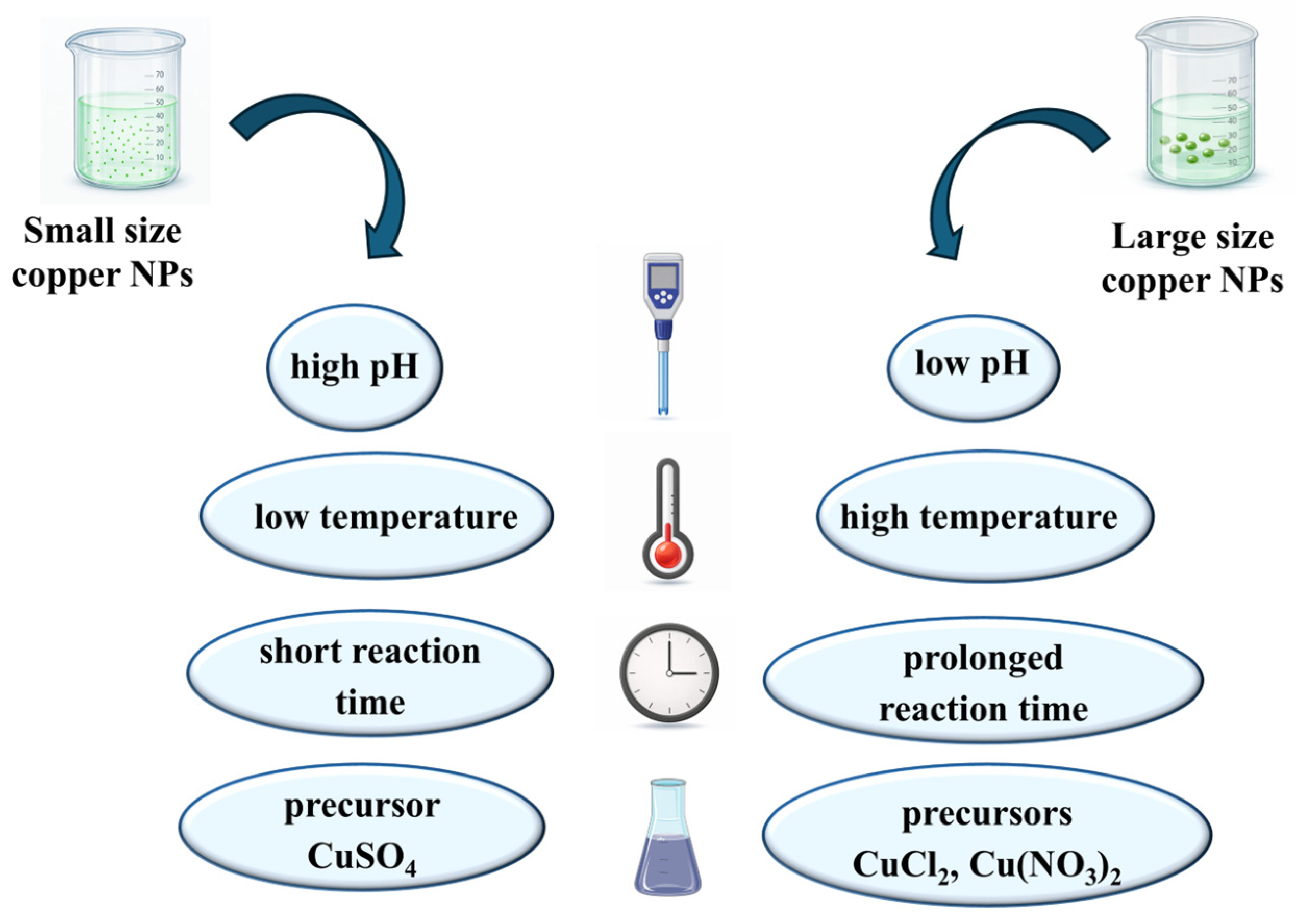
2.3.1. pH and Temperature
2.3.2. Influence of Reaction Time and Storage Stability
2.3.3. Plant Extract and Precursor Concentration
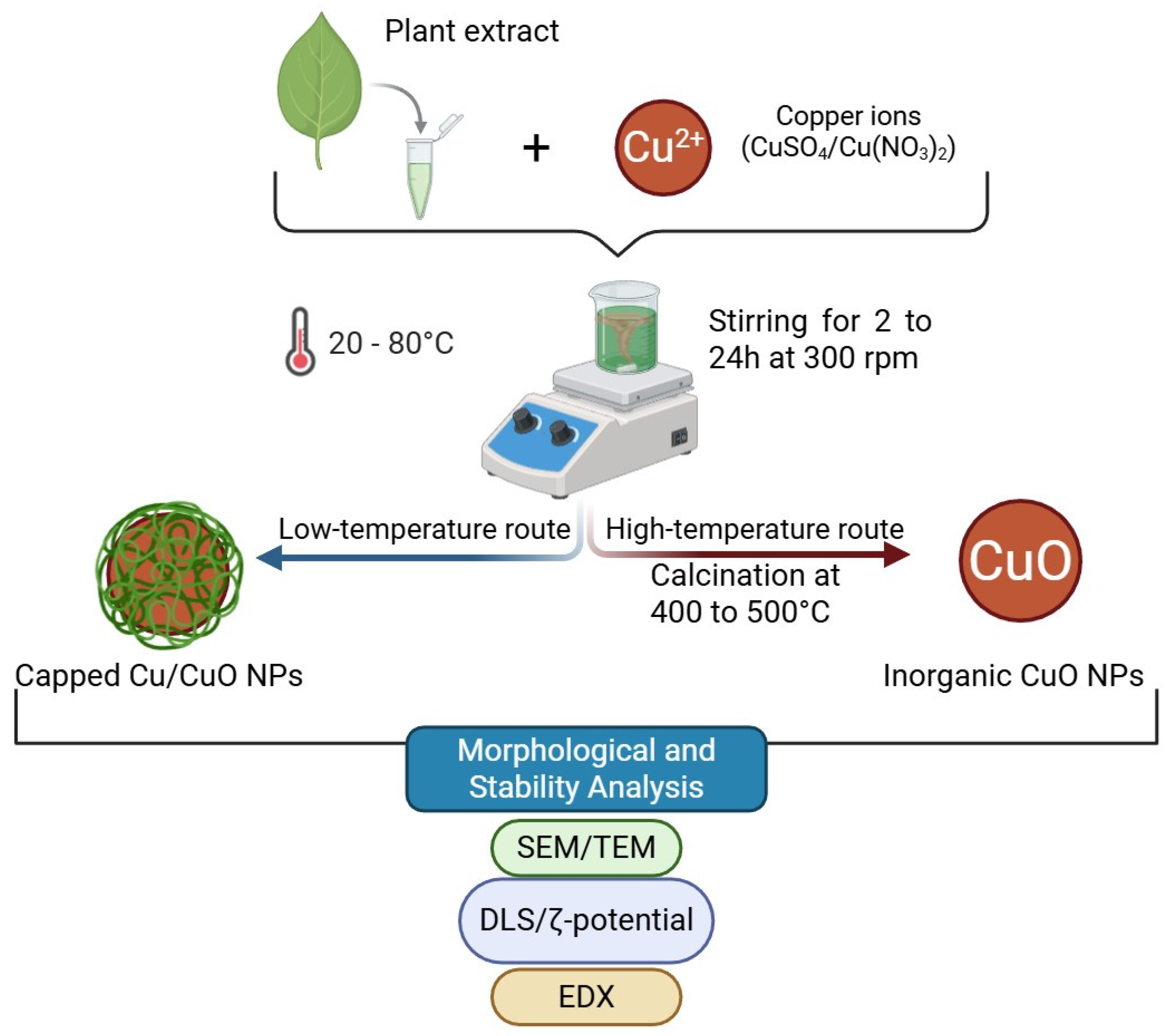
2.4. Formation of Metallic vs. Oxide Nanoparticles
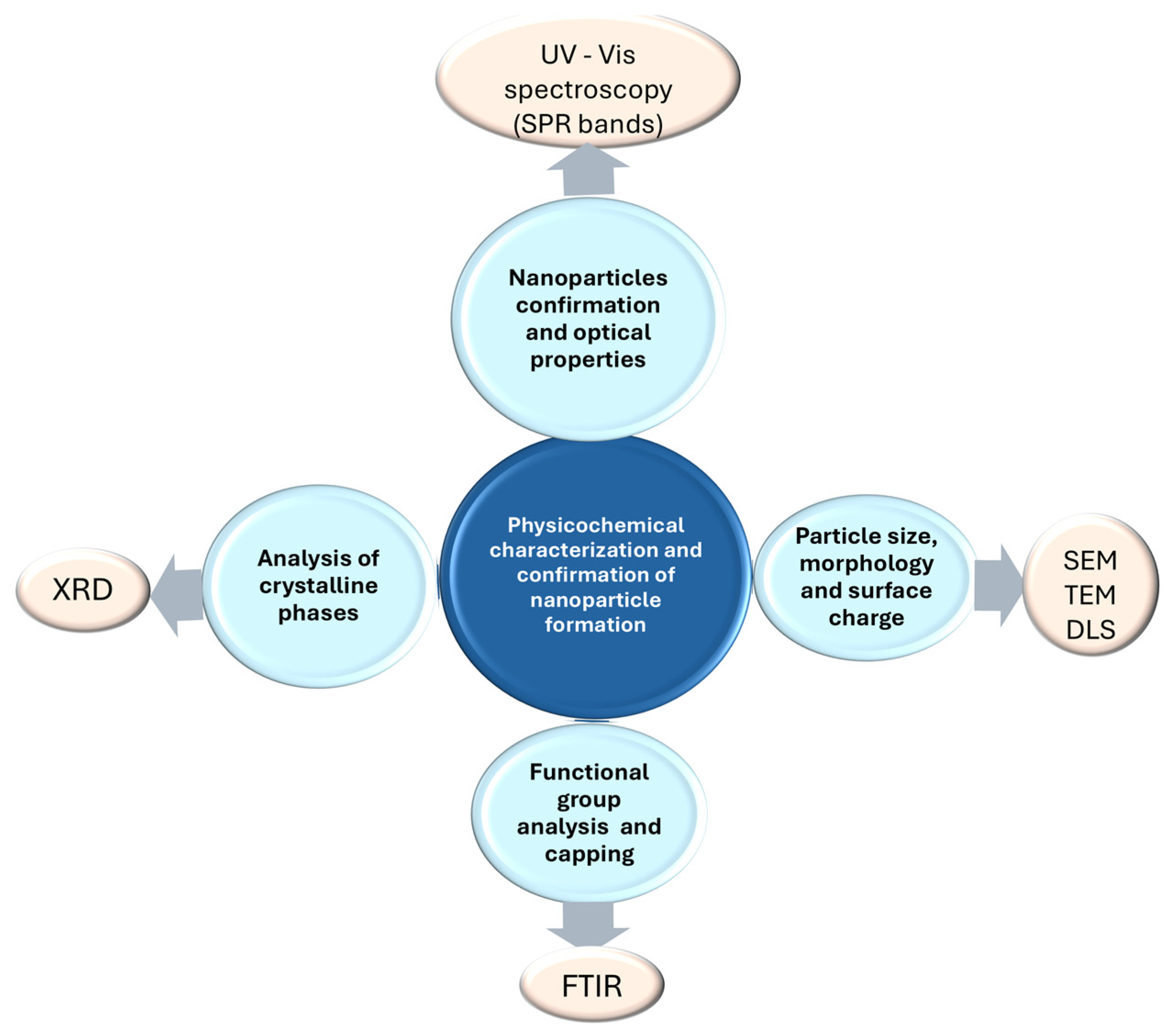
3. Physicochemical Characterization and Confirmation of Nanoparticle Formation
3.1. UV–Vis Spectroscopy and Surface Plasmon Resonance
3.2. XRD Confirmation of Crystalline Phases
3.3. Particle Size, Morphology and Surface Charge
3.4. FTIR and Phytochemical Capping
4. In Vitro Biological Activities of Plant-Mediated Cu-Based Nanoparticles
4.1. Antioxidant Activity and Radical Scavenging
4.2. Antibacterial and Antifungal Activity In Vitro
4.3. Cytotoxicity and Anticancer Effects In Vitro
5. In Vivo Biological Effects of Plant-Mediated Cu-Based Nanoparticles
5.1. Cutaneous Wound Healing and Infection Control
5.2. In Vivo Antimicrobial and Wound-Related Infection Outcomes
5.3. In Vivo Anticancer and Systemic Effects
5.4. Copper Nanoparticles and Plant Physiology In Vivo
6. Conclusions
Author Contributions
Funding
Institutional Review Board Statement
Informed Consent Statement
Data Availability Statement
Acknowledgments
Conflicts of Interest
Abbreviations
| CuNPs | Copper nanoparticles |
| CuO NPs | Copper oxide nanoparticles |
| SPR | Surface Plasmon Resonance |
| UV–Vis | Ultraviolet–Visible spectroscopy |
| FTIR | Fourier Transform Infrared spectroscopy |
| XRD | X-ray Diffraction |
| SEM | Scanning Electron Microscopy |
| TEM | Transmission Electron Microscopy |
| EDX | Energy-Dispersive X-ray Spectroscopy |
| DLS | Dynamic Light Scattering |
| MIC | Minimum Inhibitory Concentration |
| MBC | Minimum Bactericidal Concentration |
| MFC | Minimum Fungicidal Concentration |
| IC50 | Half Maximal Inhibitory Concentration |
| DPPH | 2,2-Diphenyl-1-picrylhydrazyl |
| SAED | Selected Area Electron Diffraction |
| HUVECs | Human Umbilical Vein Endothelial Cells |
| ALT | Alanine Aminotransferase |
| ALP | Alkaline Phosphatase |
| ROS | Reactive Oxygen Species |
References
- Vodyashkin, A.; Stoinova, A.; Kezimana, P. Promising Biomedical Systems Based on Copper Nanoparticles: Synthesis, Characterization, and Applications. Colloids Surf. B Biointerfaces 2024, 237, 113861. [Google Scholar] [CrossRef]
- Raju, S.K.; Karunakaran, A.; Kumar, S.; Sekar, P.; Murugesan, M.; Karthikeyan, M. Biogenic Synthesis of Copper Nanoparticles and Their Biological Applications: An Overview. Int. J. Pharm. Pharm. Sci. 2022, 14, 8–26. [Google Scholar] [CrossRef]
- Chakraborty, N.; Banerjee, J.; Chakraborty, P.; Banerjee, A.; Chanda, S.; Ray, K.; Acharya, K.; Sarkar, J. Green Synthesis of Copper/Copper Oxide Nanoparticles and Their Applications: A Review. Green Chem. Lett. Rev. 2022, 15, 187–215. [Google Scholar] [CrossRef]
- Gebreslassie, Y.T.; Gebremeskel, F.G. Green and Cost-Effective Biofabrication of Copper Oxide Nanoparticles: Exploring Antimicrobial and Anticancer Applications. Biotechnol. Rep. 2024, 41, e00828. [Google Scholar] [CrossRef] [PubMed]
- Ladomersky, E.; Petris, M.J. Copper Tolerance and Virulence in Bacteria. Metallomics 2015, 7, 957–964. [Google Scholar] [CrossRef]
- Rani, A.; Sharma, J.; Sangwan, G.; Prasad, S. Copper Complexes and Its Role in Biological Activity. Asian J. Chem. 2024, 36, 2705–2716. [Google Scholar] [CrossRef]
- Krasnovskaya, O.; Naumov, A.; Guk, D.; Gorelkin, P.; Erofeev, A.; Beloglazkina, E.; Majouga, A. Copper Coordination Compounds as Biologically Active Agents. Int. J. Mol. Sci. 2020, 21, 3965. [Google Scholar] [CrossRef]
- Crisan, M.C.; Teodora, M.; Lucian, M. Copper Nanoparticles: Synthesis and Characterization, Physiology, Toxicity and Antimicrobial Applications. Appl. Sci. 2021, 12, 141. [Google Scholar] [CrossRef]
- Harishchandra, B.D.; Pappuswamy, M.; Pu, A.; Shama, G.; A, P.; Arumugam, V.A.; Periyaswamy, T.; Sundaram, R. Copper Nanoparticles: A Review on Synthesis, Characterization and Applications. Asian Pac. J. Cancer Biol. 2020, 5, 201–210. [Google Scholar] [CrossRef]
- Bhagat, M.; Anand, R.; Sharma, P.; Rajput, P.; Sharma, N.; Singh, K. Review—Multifunctional Copper Nanoparticles: Synthesis and Applications. ECS J. Solid State Sci. Technol. 2021, 10, 063011. [Google Scholar] [CrossRef]
- Ying, S.; Guan, Z.; Ofoegbu, P.C.; Clubb, P.; Rico, C.; He, F.; Hong, J. Green Synthesis of Nanoparticles: Current Developments and Limitations. Environ. Technol. Innov. 2022, 26, 102336. [Google Scholar] [CrossRef]
- Siddiqi, K.S.; Husen, A. Current Status of Plant Metabolite-Based Fabrication of Copper/Copper Oxide Nanoparticles and Their Applications: A Review. Biomater. Res. 2020, 24, 11. [Google Scholar] [CrossRef]
- Antonio-Pérez, A.; Durán-Armenta, L.F.; Pérez-Loredo, M.G.; Torres-Huerta, A.L. Biosynthesis of Copper Nanoparticles with Medicinal Plants Extracts: From Extraction Methods to Applications. Micromachines 2023, 14, 1882. [Google Scholar] [CrossRef]
- Singh, D.; Jain, D.; Rajpurohit, D.; Jat, G.; Kushwaha, H.S.; Singh, A.; Mohanty, S.R.; Al-Sadoon, M.K.; Zaman, W.; Upadhyay, S.K. Bacteria Assisted Green Synthesis of Copper Oxide Nanoparticles and Their Potential Applications as Antimicrobial Agents and Plant Growth Stimulants. Front. Chem. 2023, 11, 1154128. [Google Scholar] [CrossRef]
- Noor, S.; Shah, Z.; Javed, A.; Ali, A.; Hussain, S.B.; Zafar, S.; Ali, H.; Muhammad, S.A. A Fungal Based Synthesis Method for Copper Nanoparticles with the Determination of Anticancer, Antidiabetic and Antibacterial Activities. J. Microbiol. Methods 2020, 174, 105966. [Google Scholar] [CrossRef]
- Nasri, N.; Mansouri-Tehrani, H.-A.; Dini, G.; Keyhanfar, M. Synthesis of Alga-Coated Copper Oxide Nanoparticles with Potential Applications in Shrimp Farming. Fish. Shellfish. Immunol. 2024, 151, 109754. [Google Scholar] [CrossRef]
- Assefa, E.T.; Shumi, G.; Gendo, K.M.; Kenasa, G.; Roba, N. Review on green synthesis, characterization, and antibacterial activity of CuO nanoparticles using biomolecules of plant extract. Results Chem. 2024, 8, 101606. [Google Scholar] [CrossRef]
- Jha, S.K.; Jha, A. Plant Extract Mediated Synthesis of Metal Nanoparticles, Their Characterization and Applications: A Green Approach. Curr. Green Chem. 2021, 8, 185–202. [Google Scholar] [CrossRef]
- Guo, Y.; Xu, Y.; Bao, Q.; Shen, C.; Ni, D.; Hu, P.; Shi, J. Endogenous Copper for Nanocatalytic Oxidative Damage and Self-Protection Pathway Breakage of Cancer. ACS Nano 2021, 15, 16286–16297. [Google Scholar] [CrossRef] [PubMed]
- Vincent, J.; Lau, K.S.; Evyan, Y.C.-Y.; Chin, S.X.; Sillanpää, M.; Chia, C.H. Biogenic Synthesis of Copper-Based Nanomaterials Using Plant Extracts and Their Applications: Current and Future Directions. Nanomaterials 2022, 12, 3312. [Google Scholar] [CrossRef] [PubMed]
- Banger, A.; Kumari, A.; Jangid, N.K.; Jadoun, S.; Srivastava, A.; Srivastava, M. A Review on Green Synthesis and Characterisation of Copper Nanoparticles Using Plant Extracts for Biological Applications. Environ. Technol. Rev. 2025, 14, 94–126. [Google Scholar] [CrossRef]
- Letchumanan, D.; Sok, S.P.M.; Ibrahim, S.; Nagoor, N.H.; Arshad, N.M. Plant-Based Biosynthesis of Copper/Copper Oxide Nanoparticles: An Update on Their Applications in Biomedicine, Mechanisms, and Toxicity. Biomolecules 2021, 11, 564. [Google Scholar] [CrossRef]
- Ameta, R.K.; Malik, P.; Korgaokar, S.; Vanzara, P.; Soni, K. Contemporary Advances in the Plant Resources Mediated Synthesis of Copper Oxide Nanoparticles: Insights on Structure-Function-Workability Understanding. Plant Nano Biol. 2024, 7, 100065. [Google Scholar] [CrossRef]
- Dhir, S.; Verma, R.; Bhatt, S.; Garg, V.; Dutt, R. Green Synthesis, Characterization, and Biomedical Applications of Copper and Copper Oxide Nanoparticles of Plant Origin. Curr. Drug Ther. 2023, 18, 391–406. [Google Scholar] [CrossRef]
- Dey, A.; Manna, S.; Chattopadhyay, S.; Mondal, D.; Chattopadhyay, D.; Raj, A.; Das, S.; Bag, B.G.; Roy, S. Azadirachta Indica Leaves Mediated Green Synthesized Copper Oxide Nanoparticles Induce Apoptosis through Activation of TNF-α and Caspases Signaling Pathway against Cancer Cells. J. Saudi Chem. Soc. 2019, 23, 222–238. [Google Scholar] [CrossRef]
- Matei, A.; Craciun, G.; Romanitan, C.; Pachiu, C.; Tucureanu, V. Biosynthesis and Characterization of Copper Oxide Nanoparticles. Eng. Proc. 2023, 37, 54. [Google Scholar]
- Tatar, D.K.; Jha, J.M. Biosynthesis and Characterization of CuO Nanoparticles Using Mehandi and Neem Leaf Extract and Its Relevance as a Nanofluid for Heat Transfer. J. Cryst. Growth 2023, 605, 127063. [Google Scholar] [CrossRef]
- Cuong, H.N.; Pansambal, S.; Ghotekar, S.; Oza, R.; Thanh Hai, N.T.; Viet, N.M.; Nguyen, V.-H. New Frontiers in the Plant Extract Mediated Biosynthesis of Copper Oxide (CuO) Nanoparticles and Their Potential Applications: A Review. Environ. Res. 2022, 203, 111858. [Google Scholar] [CrossRef]
- Din, M.I.; Arshad, F.; Hussain, Z.; Mukhtar, M. Green Adeptness in the Synthesis and Stabilization of Copper Nanoparticles: Catalytic, Antibacterial, Cytotoxicity, and Antioxidant Activities. Nanoscale Res. Lett. 2017, 12, 638. [Google Scholar] [CrossRef]
- Ginting, B.; Maulana, I.; Karnila, I. Biosynthesis Copper Nanoparticles Using Blumea Balsamifera Leaf Extracts: Characterization of Its Antioxidant and Cytotoxicity Activities. Surf. Interfaces 2020, 21, 100799. [Google Scholar] [CrossRef]
- Das, P.E.; Abu-Yousef, I.A.; Majdalawieh, A.F.; Narasimhan, S.; Poltronieri, P. Green Synthesis of Encapsulated Copper Nanoparticles Using a Hydroalcoholic Extract of Moringa Oleifera Leaves and Assessment of Their Antioxidant and Antimicrobial Activities. Molecules 2020, 25, 555. [Google Scholar] [CrossRef]
- Ghosh, M.K.; Sahu, S.; Gupta, I.; Ghorai, T.K. Green Synthesis of Copper Nanoparticles from an Extract of Jatropha Curcas Leaves: Characterization, Optical Properties, CT-DNA Binding and Photocatalytic Activity. RSC Adv. 2020, 10, 22027–22035. [Google Scholar] [CrossRef]
- Amaliyah, S.; Pangesti, D.P.; Masruri, M.; Sabarudin, A.; Sumitro, S.B. Green Synthesis and Characterization of Copper Nanoparticles Using Piper Retrofractum Vahl Extract as Bioreductor and Capping Agent. Heliyon 2020, 6, e04636. [Google Scholar] [CrossRef]
- Alshammari, S.O.; Mahmoud, S.Y.; Farrag, E.S. Synthesis of Green Copper Nanoparticles Using Medicinal Plant Krameria sp. Root Extract and Its Applications. Molecules 2023, 28, 4629. [Google Scholar] [CrossRef]
- Shanmugapriya, J.; Reshma, C.A.; Srinidhi, V.; Harithpriya, K.; Ramkumar, K.M.; Umpathy, D.; Gunasekaran, K.; Subashini, R. Green Synthesis of Copper Nanoparticles Using Withania Somnifera and Its Antioxidant and Antibacterial Activity. J. Nanomater. 2022, 2022, 7967294. [Google Scholar] [CrossRef]
- Shubhashree, K.R.; Reddy, R.; Gangula, A.K.; Nagananda, G.S.; Badiya, P.K.; Ramamurthy, S.S.; Aramwit, P.; Reddy, N. Green Synthesis of Copper Nanoparticles Using Aqueous Extracts from Hyptis suaveolens (L.). Mater. Chem. Phys. 2022, 280, 125795. [Google Scholar] [CrossRef]
- Dehnoee, A.; Javad Kalbasi, R.; Zangeneh, M.M.; Delnavazi, M.-R.; Zangeneh, A. Characterization, Anti-Lung Cancer Activity, and Cytotoxicity of Bio-Synthesized Copper Nanoparticles by Thymus Fedtschenkoi Leaf Extract. J. Clust. Sci. 2024, 35, 863–874. [Google Scholar] [CrossRef]
- Atri, A.; Echabaane, M.; Bouzidi, A.; Harabi, I.; Soucase, B.M.; Ben Chaâbane, R. Green Synthesis of Copper Oxide Nanoparticles Using Ephedra Alata Plant Extract and a Study of Their Antifungal, Antibacterial Activity and Photocatalytic Performance under Sunlight. Heliyon 2023, 9, e13484. [Google Scholar] [CrossRef]
- Wang, G.; Ahmeda, A.; Malek, Z.; Mansooridara, S.; Zangeneh, A.; Zangeneh, M.M. Chemical Characterization and Therapeutic Properties of Achillea Biebersteinii Leaf Aqueous Extract Synthesized Copper Nanoparticles against Methamphetamine-induced Cell Death in PC12: A Study in the Nanotechnology and Neurology Fields. Appl. Organomet. Chem. 2020, 34, e5488. [Google Scholar] [CrossRef]
- Moroda, M.D.; Leta Deressa, T.; Tiwikrama, A.H.; Chala, T.F. Green Synthesis of Copper Oxide Nanoparticles Using Rosmarinus Officinalis Leaf Extract and Evaluation of Its Antimicrobial Activity. Next Mater. 2025, 7, 100337. [Google Scholar] [CrossRef]
- Bagheshzadeh, P.; Amini, E.; Baniasadi, F.; Tavana, S.; Mohammadikish, M. Green Synthesis of Copper Nanoparticles Using Rosmarinus Officinalis L. Extract Improves the Developmental Competence of Mouse Oocytes during in Vitro Maturation. Reprod. Sci. 2025, 32, 1241–1261. [Google Scholar] [CrossRef]
- Malaikozhundan, B.; Lakshmi, V.N.; Krishnamoorthi, R. Copper Oxide Nanoparticles Using Mentha Spicata Leaves as Antibacterial, Antibiofilm, Free Radical Scavenging Agent and Efficient Photocatalyst to Degrade Methylene Blue Dyes. Mater. Today Commun. 2022, 33, 104348. [Google Scholar] [CrossRef]
- Baral, J.; Pokharel, N.; Dhungana, S.; Tiwari, L.; Khadka, D.; Pokhrel, M.R.; Poudel, B.R. Green Synthesis of Copper Oxide Nanoparticles Using Mentha (Mint) Leaves Characterization and Its Antimicrobial Properties with Phytochemicals Screening. J. Nepal. Chem. Soc. 2025, 45, 111–121. [Google Scholar] [CrossRef]
- Ahmed, M.E.; Jameel, S.K.; Alhammer, A.H. Antibacterial Effect and MexA Efflux Pump Inhibition by Green-Synthesized Copper Nanoparticles from Mentha Piperita. Mol. Biol. Rep. 2025, 52, 913. [Google Scholar] [CrossRef] [PubMed]
- Gholami, M.; Azarbani, F.; Hadi, F.; Murthy, H.C.A. Eco-Friendly Synthesis of Copper Nanoparticles Using Mentha Pulegium Leaf Extract: Characterisation, Antibacterial and Cytotoxic Activities. Mater. Technol. 2022, 37, 1523–1531. [Google Scholar] [CrossRef]
- Duman, F.; Ocsoy, I.; Kup, F.O. Chamomile Flower Extract-Directed CuO Nanoparticle Formation for Its Antioxidant and DNA Cleavage Properties. Mater. Sci. Eng. C 2016, 60, 333–338. [Google Scholar] [CrossRef]
- Sarwar, N.; Humayoun, U.B.; Kumar, M.; Zaidi, S.F.A.; Yoo, J.H.; Ali, N.; Jeong, D.I.; Lee, J.H.; Yoon, D.H. Citric Acid Mediated Green Synthesis of Copper Nanoparticles Using Cinnamon Bark Extract and Its Multifaceted Applications. J. Clean. Prod. 2021, 292, 125974. [Google Scholar] [CrossRef]
- Hemmati, S.; Ahmeda, A.; Salehabadi, Y.; Zangeneh, A.; Zangeneh, M.M. Synthesis, Characterization, and Evaluation of Cytotoxicity, Antioxidant, Antifungal, Antibacterial, and Cutaneous Wound Healing Effects of Copper Nanoparticles Using the Aqueous Extract of Strawberry Fruit and l-Ascorbic Acid. Polyhedron 2020, 180, 114425. [Google Scholar] [CrossRef]
- Jahan, I.; Erci, F.; Isildak, I. Facile Microwave-Mediated Green Synthesis of Non-Toxic Copper Nanoparticles Using Citrus Sinensis Aqueous Fruit Extract and Their Antibacterial Potentials. J. Drug Deliv. Sci. Technol. 2021, 61, 102172. [Google Scholar] [CrossRef]
- Ghaffar, A.; Kiran, S.; Rafique, M.A.; Iqbal, S.; Nosheen, S.; Hou, Y.; Afzal, G.; Bashir, M.; Aimun, U. Citrus Paradisi Fruit Peel Extract Mediated Green Synthesis of Copper Nanoparticles for Remediation of Disperse Yellow 125 Dye. Desalination Water Treat. 2021, 212, 368–375. [Google Scholar] [CrossRef]
- Priya, M.; Venkatesan, R.; Deepa, S.; Sana, S.S.; Arumugam, S.; Karami, A.M.; Vetcher, A.A.; Kim, S.-C. Green Synthesis, Characterization, Antibacterial, and Antifungal Activity of Copper Oxide Nanoparticles Derived from Morinda Citrifolia Leaf Extract. Sci. Rep. 2023, 13, 18838. [Google Scholar] [CrossRef] [PubMed]
- Ituen, E.; Ekemini, E.; Lin, Y.; Li, R.; Singh, A. Mitigation of Microbial Biodeterioration and Acid Corrosion of Pipework Steel Using Citrus Reticulata Peels Extract Mediated Copper Nanoparticles Composite. Int. Biodeterior. Biodegrad. 2020, 149, 104935. [Google Scholar] [CrossRef]
- Długosz, O.; Chwastowski, J.; Banach, M. Hawthorn Berries Extract for the Green Synthesis of Copper and Silver Nanoparticles. Chem. Pap. 2020, 74, 239–252. [Google Scholar] [CrossRef]
- Chandraker, S.K.; Lal, M.; Ghosh, M.K.; Tiwari, V.; Ghorai, T.K.; Shukla, R. Green Synthesis of Copper Nanoparticles Using Leaf Extract of Ageratum Houstonianum Mill. and Study of Their Photocatalytic and Antibacterial Activities. Nano Express 2020, 1, 010033. [Google Scholar] [CrossRef]
- Murthy, H.C.A.; Desalegn, T.; Kassa, M.; Abebe, B.; Assefa, T. Synthesis of Green Copper Nanoparticles Using Medicinal Plant Hagenia Abyssinica (Brace) JF. Gmel. Leaf Extract: Antimicrobial Properties. J. Nanomater. 2020, 2020, 3924081. [Google Scholar] [CrossRef]
- Andualem, W.W.; Sabir, F.K.; Mohammed, E.T.; Belay, H.H.; Gonfa, B.A. Synthesis of Copper Oxide Nanoparticles Using Plant Leaf Extract of Catha Edulis and Its Antibacterial Activity. J. Nanotechnol. 2020, 2020, 2932434. [Google Scholar] [CrossRef]
- Essa, H.L.; Abdelfattah, M.S.; Marzouk, A.S.; Shedeed, Z.; Guirguis, H.A.; El-Sayed, M.M.H. Biogenic Copper Nanoparticles from Avicennia Marina Leaves: Impact on Seed Germination, Detoxification Enzymes, Chlorophyll Content and Uptake by Wheat Seedlings. PLoS ONE 2021, 16, e0249764. [Google Scholar] [CrossRef] [PubMed]
- Benhammada, A.; Trache, D. Green Synthesis of CuO Nanoparticles Using Malva Sylvestris Leaf Extract with Different Copper Precursors and Their Effect on Nitrocellulose Thermal Behavior. J. Therm. Anal. Calorim. 2022, 147, 1–16. [Google Scholar] [CrossRef]
- Benassai, E.; Del Bubba, M.; Ancillotti, C.; Colzi, I.; Gonnelli, C.; Calisi, N.; Salvatici, M.C.; Casalone, E.; Ristori, S. Green and Cost-Effective Synthesis of Copper Nanoparticles by Extracts of Non-Edible and Waste Plant Materials from Vaccinium Species: Characterization and Antimicrobial Activity. Mater. Sci. Eng. C 2021, 119, 111453. [Google Scholar] [CrossRef]
- Ashok, B.; Hariram, N.; Siengchin, S.; Rajulu, A.V. Modification of Tamarind Fruit Shell Powder with in Situ Generated Copper Nanoparticles by Single Step Hydrothermal Method. J. Bioresour. Bioprod. 2020, 5, 180–185. [Google Scholar] [CrossRef]
- Chawla, P.; Kumar, N.; Bains, A.; Dhull, S.B.; Kumar, M.; Kaushik, R.; Punia, S. Gum Arabic Capped Copper Nanoparticles: Synthesis, Characterization, and Applications. Int. J. Biol. Macromol. 2020, 146, 232–242. [Google Scholar] [CrossRef] [PubMed]
- Joshi, A.; Sharma, A.; Bachheti, R.K.; Husen, A.; Mishra, V.K. Plant-Mediated Synthesis of Copper Oxide Nanoparticles and Their Biological Applications. In Nanomaterials and Plant Potential; Husen, A., Iqbal, M., Eds.; Springer International Publishing: Cham, Switzerland, 2019; pp. 221–237. [Google Scholar]
- Akarken, G.; Cengiz, U.; Bektaş, T.E. Hydrothermal Synthesis of CuO Nanoparticles: Tailoring Morphology and Particle Size Variations for Enhanced Properties. J. Adv. Res. Nat. Appl. Sci. 2024, 10, 329–336. [Google Scholar] [CrossRef]
- Zhao, H.; Su, H.; Ahmeda, A.; Sun, Y.; Li, Z.; Zangeneh, M.M.; Nowrozi, M.; Zangeneh, A.; Moradi, R. Biosynthesis of Copper Nanoparticles Using Allium Eriophyllum Boiss Leaf Aqueous Extract; Characterization and Analysis of Their Antimicrobial and Cutaneous Wound-healing Potentials. Appl. Organomet. Chem. 2022, 36, e5587. [Google Scholar] [CrossRef]
- Alsoltani, K.; Harbbi, K.H. Effect of the Synthesis Time on Structural Properties of Copper Oxide. Ibn AL-Haitham J. Pure Appl. Sci. 2023, 36, 181–190. [Google Scholar] [CrossRef]
- Zeraati, F.; Johari, N.; Rafati, F. Exploring Reduction Time and Precursor Effects on Cu Nanoparticle Size in A Nontoxic Chemical Reduction Method. Sci. Iran. 2025. [Google Scholar] [CrossRef]
- Awwad, A.; Amer, M. Biosynthesis of Copper Oxide Nanoparticles Using Ailanthus Altissima Leaf Extract and Antibacterial Activity. Chem. Intern. 2020, 6, 210–217. [Google Scholar] [CrossRef]
- Berra, D.; Laouini, S.E.; Benhaoua, B.; Ouahrani, M.R.; Berrani, D.; Rahal, A. Green synthesis of copper oxide nanoparticles by Pheonix dactylifera L leaves extract. Dig. J. Nanomater. Bios 2018, 13, 1231–1238. [Google Scholar]
- Salem, S.S.; Yousef, A.; Abd El Hamid, E.S.; Ibrahim, S.; Elbawab, R.H. Evaluation of Eco-Friendly Copper Oxide Nanoparticles for Anticancer Activity and Antibacterial Effects against Streptococcus Mutans Using Molecular Docking. Sci. Rep. 2025, 15, 40921. [Google Scholar] [CrossRef]
- Engku Razali, E.N.Z.; Othman, S.A. Characterization of Synthesized Copper Nanoparticles from Curcuma Longa: A Preliminary Review. J. Res. Nanosci. Nanotechnol. 2023, 9, 42–53. [Google Scholar] [CrossRef]
- Mohamed, E.A. Green Synthesis of Copper & Copper Oxide Nanoparticles Using the Extract of Seedless Dates. Heliyon 2020, 6, e03123. [Google Scholar] [CrossRef]
- Patel, C. LASIS-Assisted Copper Nanoparticle Synthesis and Characterization, along with UV-Visible Spectroscopy. Int. J. Sci. Res. Sci. Eng. Technol. 2024, 11, 6–12. [Google Scholar] [CrossRef]
- Ismail, M.I.M. Green Synthesis and Characterizations of Copper Nanoparticles. Mater. Chem. Phys. 2020, 240, 122283. [Google Scholar] [CrossRef]
- Kaur, H.; Kumar, S.; Bouzid, G. Exploring the Role of Different Phytochemicals on the Morphological Variations of Metal and Metal Oxide Nanomaterials for Biomedical Application. Interactions 2024, 245, 234. [Google Scholar] [CrossRef]
- Keabadile, O.P.; Aremu, A.O.; Elugoke, S.E.; Fayemi, O.E. Green and Traditional Synthesis of Copper Oxide Nanoparticles—Comparative Study. Nanomaterials 2020, 10, 2502. [Google Scholar] [CrossRef] [PubMed]
- Hassan, E.; Gahlan, A.A.; Gouda, G.A. Biosynthesis Approach of Copper Nanoparticles, Physicochemical Characterization, Cefixime Wastewater Treatment, and Antibacterial Activities. BMC Chem. 2023, 17, 71. [Google Scholar] [CrossRef]
- Gonçalves Martins, T.A.; Botelho Junior, A.B.; De Moraes, V.T.; Espinosa, D.C.R. Study of pH Influence in the Synthesis of Copper Nanoparticles Using Ascorbic Acid as Reducing and Stabilizing Agent. In Proceedings of the TMS 2020 149th Annual Meeting & Exhibition Supplemental Proceedings; The Minerals, Metals & Materials Society, Ed.; The Minerals, Metals & Materials Series; Springer International Publishing: Cham, Switzerland, 2020; pp. 1547–1557. [Google Scholar]
- Woźniak-Budych, M.J.; Staszak, K.; Staszak, M. Copper and Copper-Based Nanoparticles in Medicine—Perspectives and Challenges. Molecules 2023, 28, 6687. [Google Scholar] [CrossRef] [PubMed]
- Kumar, S.; Tripathy, S.K.; Kaushik, N. A Review on Green Synthesis of Copper Nanoparticles Using Plant Extracts: Methods, Characterization, and Applications. Pharm. Nanotechnol. 2025, 13, 110118. [Google Scholar] [CrossRef]
- Nagpure, A.S.; Mohture, V.M.; Kayarkar, A. Green Synthesis of Highly Dispersed Cu Metal Nanoparticles Catalysts. Inorg. Chem. Commun. 2022, 146, 110118. [Google Scholar] [CrossRef]
- Chand Mali, S.; Raj, S.; Trivedi, R. Biosynthesis of Copper Oxide Nanoparticles Using Enicostemma Axillare (Lam.) Leaf Extract. Biochem. Biophys. Rep. 2019, 20, 100699. [Google Scholar] [CrossRef] [PubMed]
- Zangeneh, M.M.; Ghaneialvar, H.; Akbaribazm, M.; Ghanimatdan, M.; Abbasi, N.; Goorani, S.; Pirabbasi, E.; Zangeneh, A. Novel Synthesis of Falcaria Vulgaris Leaf Extract Conjugated Copper Nanoparticles with Potent Cytotoxicity, Antioxidant, Antifungal, Antibacterial, and Cutaneous Wound Healing Activities under in Vitro and in Vivo Condition. J. Photochem. Photobiol. B 2019, 197, 111556. [Google Scholar] [CrossRef]
- Jabeen, A.; Khan, A.; Ahmad, P.; Khalid, A.; Majeed, Z.; Anjum, Z.; Modafer, Y.; Jefri, O.A.; Alanazi, A.M.; Saeedi, A.M.; et al. Biomedical and Photocatalytic Dye Degradation Studies of Cymbopogon Citratus Mediated Copper Oxide Nanoparticles (CuO NPs). J. Drug Deliv. Sci. Technol. 2023, 87, 104795. [Google Scholar] [CrossRef]
- Veisi, H.; Karmakar, B.; Tamoradi, T.; Hemmati, S.; Hekmati, M.; Hamelian, M. Biosynthesis of CuO Nanoparticles Using Aqueous Extract of Herbal Tea (Stachys lavandulifolia) Flowers and Evaluation of Its Catalytic Activity. Sci. Rep. 2021, 11, 1983. [Google Scholar] [CrossRef]
- Nzilu, D.M.; Madivoli, E.S.; Makhanu, D.S.; Wanakai, S.I.; Kiprono, G.K.; Kareru, P.G. Green Synthesis of Copper Oxide Nanoparticles and Its Efficiency in Degradation of Rifampicin Antibiotic. Sci. Rep. 2023, 13, 14030. [Google Scholar] [CrossRef]
- Gebrie, H.T.; Assege, M.A.; Meshesha, D.S.; Tebeje, B.A.; Moges, G.W.; Wodajo, A.T.; Manahelohe, G.M.; Belew, A.A. Biosynthesis and Characterization of Copper Oxide Nanoparticles from Plumbago zeylanica Leaf Extract for Antibacterial and Antioxidant Activities. Sci. Rep. 2025, 15, 30656. [Google Scholar] [CrossRef] [PubMed]
- Rehana, D.; Mahendiran, D.; Kumar, R.S.; Rahiman, A.K. Evaluation of Antioxidant and Anticancer Activity of Copper Oxide Nanoparticles Synthesized Using Medicinally Important Plant Extracts. Biomed. Pharmacother. 2017, 89, 1067–1077. [Google Scholar] [CrossRef]
- Abdelazeim, S.A.; Shehata, N.I.; Aly, H.F.; Shams, S.G.E. Amelioration of Oxidative Stress-Mediated Apoptosis in Copper Oxide Nanoparticles-Induced Liver Injury in Rats by Potent Antioxidants. Sci. Rep. 2020, 10, 10812. [Google Scholar] [CrossRef]
- Saddik, M.S.; Alsharif, F.M.; El-Mokhtar, M.A.; Al-Hakkani, M.F.; El-Mahdy, M.M.; Farghaly, H.S.; Abou-Taleb, H.A. Biosynthesis, Characterization, and Wound-Healing Activity of Phenytoin-Loaded Copper Nanoparticles. AAPS PharmSciTech 2020, 21, 175. [Google Scholar] [CrossRef]
- Sandoval, C.; Ríos, G.; Sepúlveda, N.; Salvo, J.; Souza-Mello, V.; Farías, J. Effectiveness of Copper Nanoparticles in Wound Healing Process Using In Vivo and In Vitro Studies: A Systematic Review. Pharmaceutics 2022, 14, 1838. [Google Scholar] [CrossRef] [PubMed]
- Benguigui, M.; Weitz, I.S.; Timaner, M.; Kan, T.; Shechter, D.; Perlman, O.; Sivan, S.; Raviv, Z.; Azhari, H.; Shaked, Y. Copper Oxide Nanoparticles Inhibit Pancreatic Tumor Growth Primarily by Targeting Tumor Initiating Cells. Sci. Rep. 2019, 9, 12613. [Google Scholar] [CrossRef] [PubMed]
- Noman, M.; Ahmed, T.; Shahid, M.; Niazi, M.B.K.; Qasim, M.; Kouadri, F.; Abdulmajeed, A.M.; Alghanem, S.M.; Ahmad, N.; Zafar, M.; et al. Biogenic Copper Nanoparticles Produced by Using the Klebsiella Pneumoniae Strain NST2 Curtailed Salt Stress Effects in Maize by Modulating the Cellular Oxidative Repair Mechanisms. Ecotoxicol. Environ. Saf. 2021, 217, 112264. [Google Scholar] [CrossRef]
- Van Nguyen, D.; Nguyen, H.M.; Le, N.T.; Nguyen, K.H.; Nguyen, H.T.; Le, H.M.; Nguyen, A.T.; Dinh, N.T.T.; Hoang, S.A.; Van Ha, C. Copper Nanoparticle Application Enhances Plant Growth and Grain Yield in Maize Under Drought Stress Conditions. J. Plant Growth Regul. 2022, 41, 364–375. [Google Scholar] [CrossRef]
- Varympopi, A.; Dimopoulou, A.; Theologidis, I.; Karamanidou, T.; Kaldeli Kerou, A.; Vlachou, A.; Karfaridis, D.; Papafotis, D.; Hatzinikolaou, D.G.; Tsouknidas, A.; et al. Bactericides Based on Copper Nanoparticles Restrain Growth of Important Plant Pathogens. Pathogens 2020, 9, 1024. [Google Scholar] [CrossRef] [PubMed]
- Lopez-Lima, D.; Mtz-Enriquez, A.I.; Carrión, G.; Basurto-Cereceda, S.; Pariona, N. The Bifunctional Role of Copper Nanoparticles in Tomato: Effective Treatment for Fusarium Wilt and Plant Growth Promoter. Sci. Hortic. 2021, 277, 109810. [Google Scholar] [CrossRef]



| System/Extract | Nominal Phase | SPR Band (nm) | XRD Main Reflections | Size (TEM/SEM or DLS) | Zeta Potential | Notable Features |
|---|---|---|---|---|---|---|
| Krameria sp. root extract CuNPs [34] | Mostly Cu0 (fcc) | 406–410 nm; optimal at 426 nm | (111), (200), (220) planes of fcc Cu | 5.2–7.7 nm (TEM) | Not reported | Spherical/oval, very small size; strong SPR; intense bioactivity (antioxidant and antimicrobial) |
| Seedless date extract Cu/Cu2O NPs [71] | Cu0 + Cu2O | Single band at 576 nm | Cu peaks at 2θ = 43.27°, 50.41°, 74.17° | 78 nm hydrodynamic diameter (DLS) | +41 mV | Roughly spherical; highly stable colloid; strong positive charge |
| Morinda citrifolia leaf extract CuO NPs [51] | CuO (monoclinic) | 256 nm | CuO pattern; average crystallite ~29 nm | 20–50 nm (TEM); 29.2 nm mean (SEM) | Not reported | Spherical, polydisperse; EDX: Cu 65%, O 23%, C 12% |
| Falcaria vulgaris leaf extract CuNPs [78,82] | Cu-based (likely Cu0/Cu2O) | Not specified | Confirmed crystalline by XRD | ~20 nm (TEM/FE-SEM) | Not reported | Strong antioxidant, antifungal, antibacterial and wound-healing activity |
| System/Extract and Target | Assay and Conditions | Key Quantitative Outcome | Interpretation |
|---|---|---|---|
| Krameria CuNPs vs. S. aureus, E. coli [34] | Well diffusion on Mueller–Hinton agar; CuNPs 1–256 µg/mL; chloramphenicol 30 µg/mL | At 256 µg/mL CuNPs: 44.1 mm (S. aureus), 43.4 mm (E. coli); chloramphenicol 46.2 mm. Extract MIC 128 µg/mL gave zones 1.5 mm (S. aureus), 4.7 mm (E. coli). | CuNPs essentially match a broad-spectrum antibiotic in zone size at sub-mg/mL concentrations; extract alone is far less active. |
| Krameria CuNPs vs. A. alternata, F. oxysporum [34] | Agar well diffusion; CuNPs 10–160 µg/mL; fluconazole control | Extract zones: 13 mm (A. alternata), 11 mm (F. oxysporum). CuNPs significantly higher zones at 10–20 µg/mL; significance vs. extract lost at 160 µg/mL. | Low-dose CuNPs outperform extract and reach activity comparable to fluconazole for A. alternata; concentration–response not strictly linear at high doses. |
| Morinda citrifolia CuO vs. bacteria [51] | Well diffusion; CuO NPs 15–25 µL; streptomycin control | At 25 µL: zones 13.6 ± 1.1 mm (B. subtilis), 13.2 ± 0.2 mm (S. aureus), 13.1 ± 1.2 mm (E. coli). | Moderate antibacterial activity; less dramatic than Krameria system, likely due to larger particle size (20–50 nm) and oxide state (CuO). |
| Morinda citrifolia CuO vs. fungi [51] | Well diffusion; CuO NPs 15–25 µL; fluconazole control | Zones: 13.1 ± 1.1 mm (A. flavus), 14.7 ± 0.7 mm (A. niger), 16.2 ± 1.4 mm (P. frequentans); A. niger zone similar to fluconazole. | CuO NPs more potent against fungi than bacteria; comparable to fluconazole for A. niger, indicating potential as antifungal agents. |
| Falcaria vulgaris CuNPs vs. mixed bacteria [82] | MIC/MBC; various bacterial strains | MIC 2–8 mg/mL; MBC 4–16 mg/mL. | Broad-spectrum antibacterial activity, albeit at higher mg/mL doses, likely reflecting high organic content and partially aggregated dispersions. |
| Falcaria vulgaris CuNPs vs. fungi [82] | MIC/MFC; various fungal strains | MIC 2–4 mg/mL; MFC 4–8 mg/mL. | Strong antifungal activity with similar or slightly lower MIC/MFC than for bacteria, consistent with observed wound infection control in vivo. |
| System/Model | Dose/ Formulation | Duration | Key Quantitative or Semi-Quantitative Outcomes | Reference |
|---|---|---|---|---|
| Falcaria vulgaris CuNP ointment in rat full-thickness skin wounds | 0.2% CuNP ointment vs. 0.2% CuSO4, 0.2% plant extract, 3% tetracycline, base, and untreated controls | 10 days topical treatment | CuNPs significantly increased wound contracture, vessel count, hexosamine, hydroxyproline, hexuronic acid, fibrocytes and fibrocyte/fibroblast ratio (p ≤ 0.01); significantly reduced wound area, total cells, neutrophils, lymphocytes vs. all other groups; MIC 2–8 mg/mL and MBC 4–16 mg/mL against bacteria; MIC 2–4 mg/mL and MFC 4–8 mg/mL against fungi in vitro. | [82] |
| Topical CuNPs in rat wound models (review summary) | CuNPs ~20–80 nm embedded in hydrogels or ointments | Typically 14–21 days | Faster wound closure vs. controls (often 60–80% vs. 30–50% closure at day 14); enhanced angiogenesis; no significant changes in liver function markers (ALT, ALP, albumin, total protein). | [78] |
| Phenytoin-loaded CuNPs (licorice-based) in rat excisional wounds | Phenytoin-loaded CuNP ointment vs. phenytoin alone, CuNPs alone, and base | Study duration not fully specified in abstract (multi-day course) | Enhanced wound contraction and re-epithelialization; improved histological architecture; reduced inflammatory infiltration compared with all comparators; CuNPs also demonstrated antioxidant and antimicrobial effects in vitro. | [89] |
| Thymus-fedtschenkoi CuNPs: lung cancer and cytotoxicity | CuNPs; in vitro data: HUVEC viability intact up to 1000 µg/mL | In vitro exposure | Significant growth inhibition of NCI-H661, NCI-H1975, NCI-H1573, NCI-H1563 lung cancer lines; no cytotoxic effect on HUVECs up to 1000 µg/mL, suggesting a broad safety margin in non-malignant endothelial cells. | [37] |
| Copper-based photothermal nanoformulation (CuS + doxorubicin) in Ehrlich tumour-bearing mice | CuS nanoparticles combined with doxorubicin; 808 nm laser irradiation, 1.0 W/cm2 | 5 days post-injection | Tumour inhibition rate ~68% in treated mice; mechanism involves photothermal hyperthermia and chemotherapeutic release. | [78] |
| CuNPs in chronic wound healing (systematic review) | Various CuNP-containing dressings | Typically 14–21 days | In infected or diabetic wounds, Cu-containing dressings showed higher % wound closure at day 14 and 21 (often 60–80%) compared with conventional dressings (30–50%); improved granulation and epithelialization reported across multiple models. | [90] |
Disclaimer/Publisher’s Note: The statements, opinions and data contained in all publications are solely those of the individual author(s) and contributor(s) and not of MDPI and/or the editor(s). MDPI and/or the editor(s) disclaim responsibility for any injury to people or property resulting from any ideas, methods, instructions or products referred to in the content. |
© 2026 by the authors. Licensee MDPI, Basel, Switzerland. This article is an open access article distributed under the terms and conditions of the Creative Commons Attribution (CC BY) license.
Share and Cite
Lungu, I.I.; Stefanache, A.; Anton, N.; Lungu, A.; Platon, V.-M.; Mitran, A.-M.; Cioanca, O.; Mircea, C.; Hancianu, M. Green-Synthesized Copper and Copper Oxide Nanoparticles: Structural Characterization and Evaluation of Biological Activity. Antioxidants 2026, 15, 339. https://doi.org/10.3390/antiox15030339
Lungu II, Stefanache A, Anton N, Lungu A, Platon V-M, Mitran A-M, Cioanca O, Mircea C, Hancianu M. Green-Synthesized Copper and Copper Oxide Nanoparticles: Structural Characterization and Evaluation of Biological Activity. Antioxidants. 2026; 15(3):339. https://doi.org/10.3390/antiox15030339
Chicago/Turabian StyleLungu, Ionut Iulian, Alina Stefanache, Nicoleta Anton, Andreea Lungu, Vera-Maria Platon, Andreea-Maria Mitran, Oana Cioanca, Cornelia Mircea, and Monica Hancianu. 2026. "Green-Synthesized Copper and Copper Oxide Nanoparticles: Structural Characterization and Evaluation of Biological Activity" Antioxidants 15, no. 3: 339. https://doi.org/10.3390/antiox15030339
APA StyleLungu, I. I., Stefanache, A., Anton, N., Lungu, A., Platon, V.-M., Mitran, A.-M., Cioanca, O., Mircea, C., & Hancianu, M. (2026). Green-Synthesized Copper and Copper Oxide Nanoparticles: Structural Characterization and Evaluation of Biological Activity. Antioxidants, 15(3), 339. https://doi.org/10.3390/antiox15030339