Article

Oxygen Depletion and the Role of Cellular Antioxidants in FLASH Radiotherapy: Mechanistic Insights from Monte Carlo Radiation-Chemical Modeling

by
Israth Rabeya
,
Jintana Meesungnoen
and
Jean-Paul Jay-Gerin
*
Department of Medical Imaging and Radiation Sciences, Faculty of Medicine and Health Sciences, Université de Sherbrooke, 3001, 12th Avenue Nord, Sherbrooke, QC J1H 5N4, Canada
*
Author to whom correspondence should be addressed.
Antioxidants 2025, 14(4), 406; https://doi.org/10.3390/antiox14040406

Submission received: 25 February 2025 / Revised: 17 March 2025 / Accepted: 27 March 2025 / Published: 28 March 2025
(This article belongs to the Special Issue Oxidative Stress, Antioxidants, and Mechanisms in FLASH Radiotherapy)

Abstract

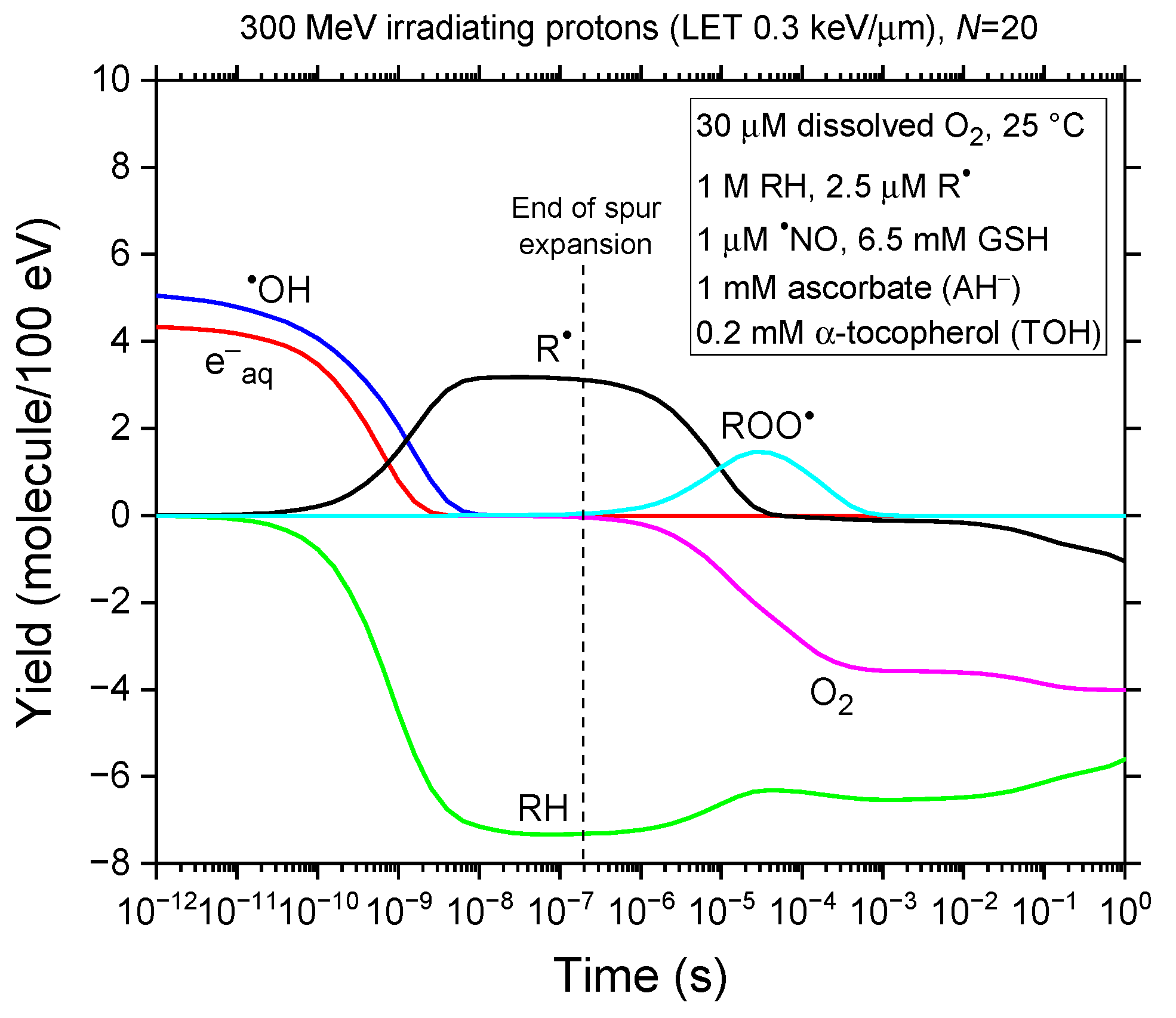
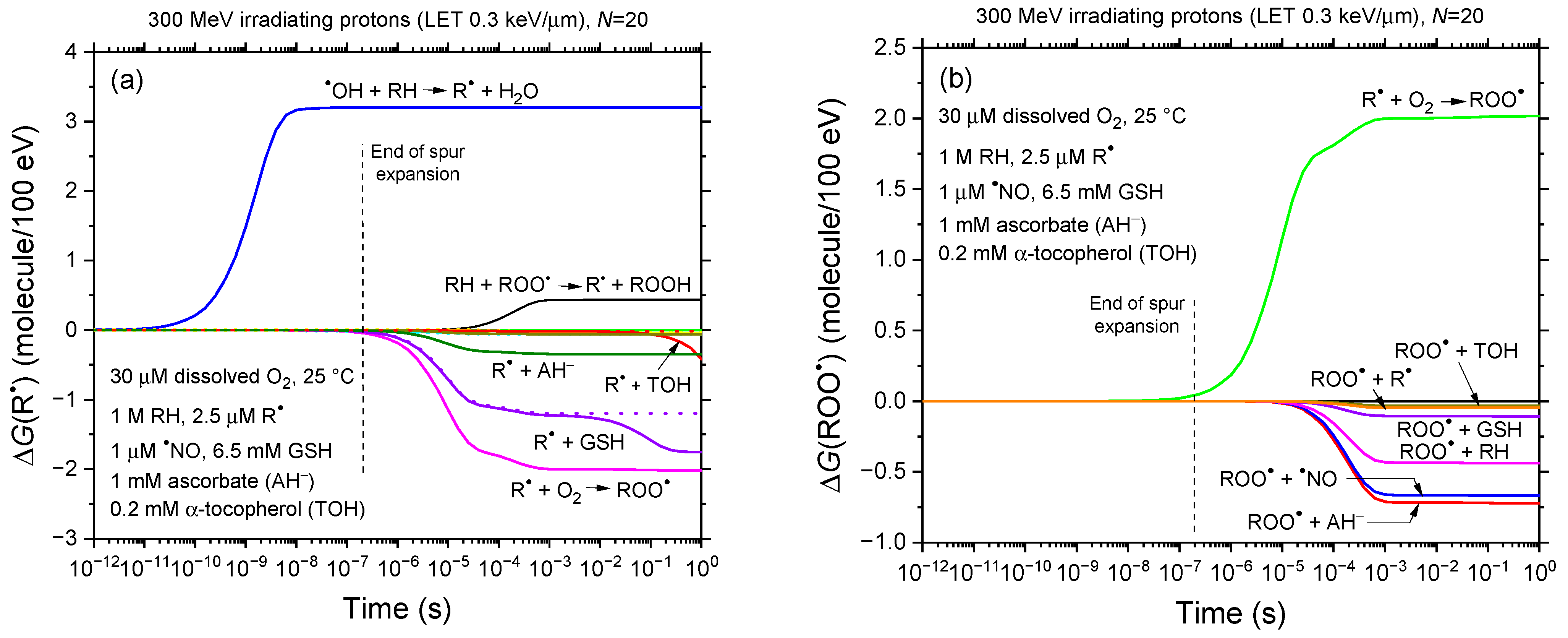
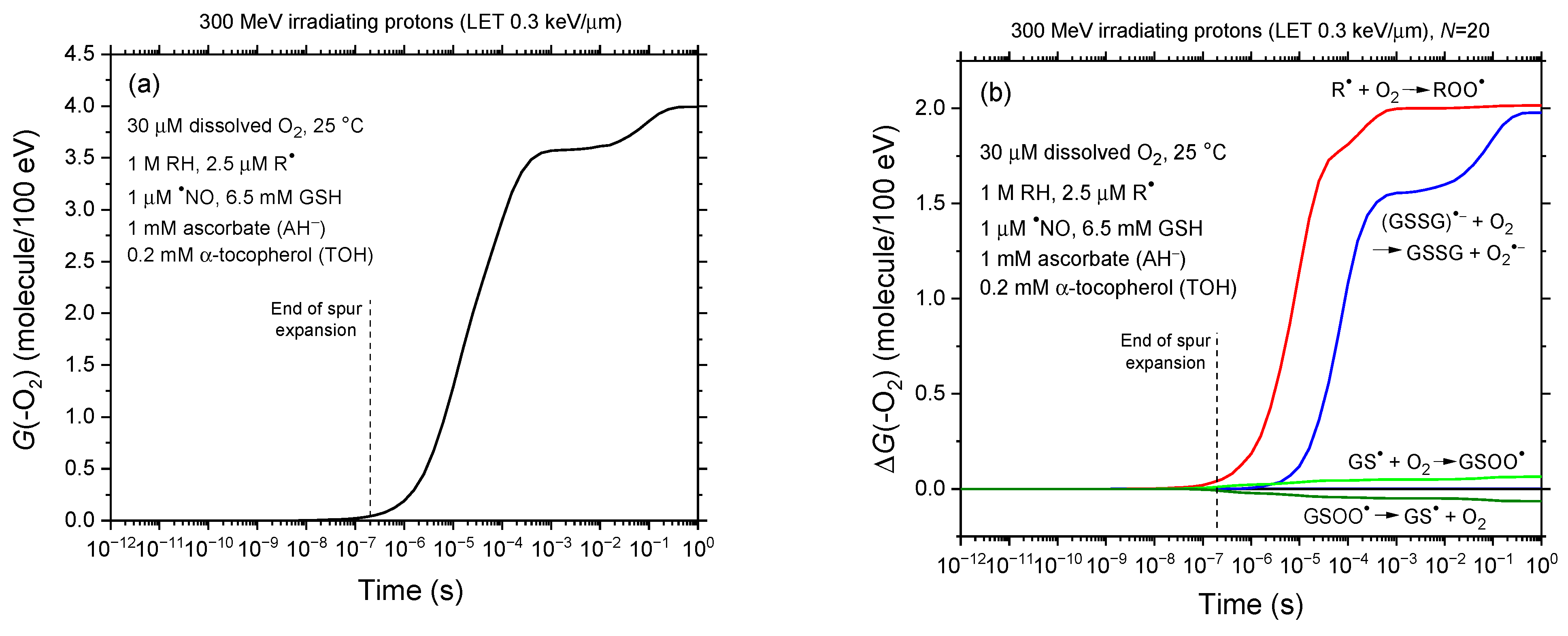
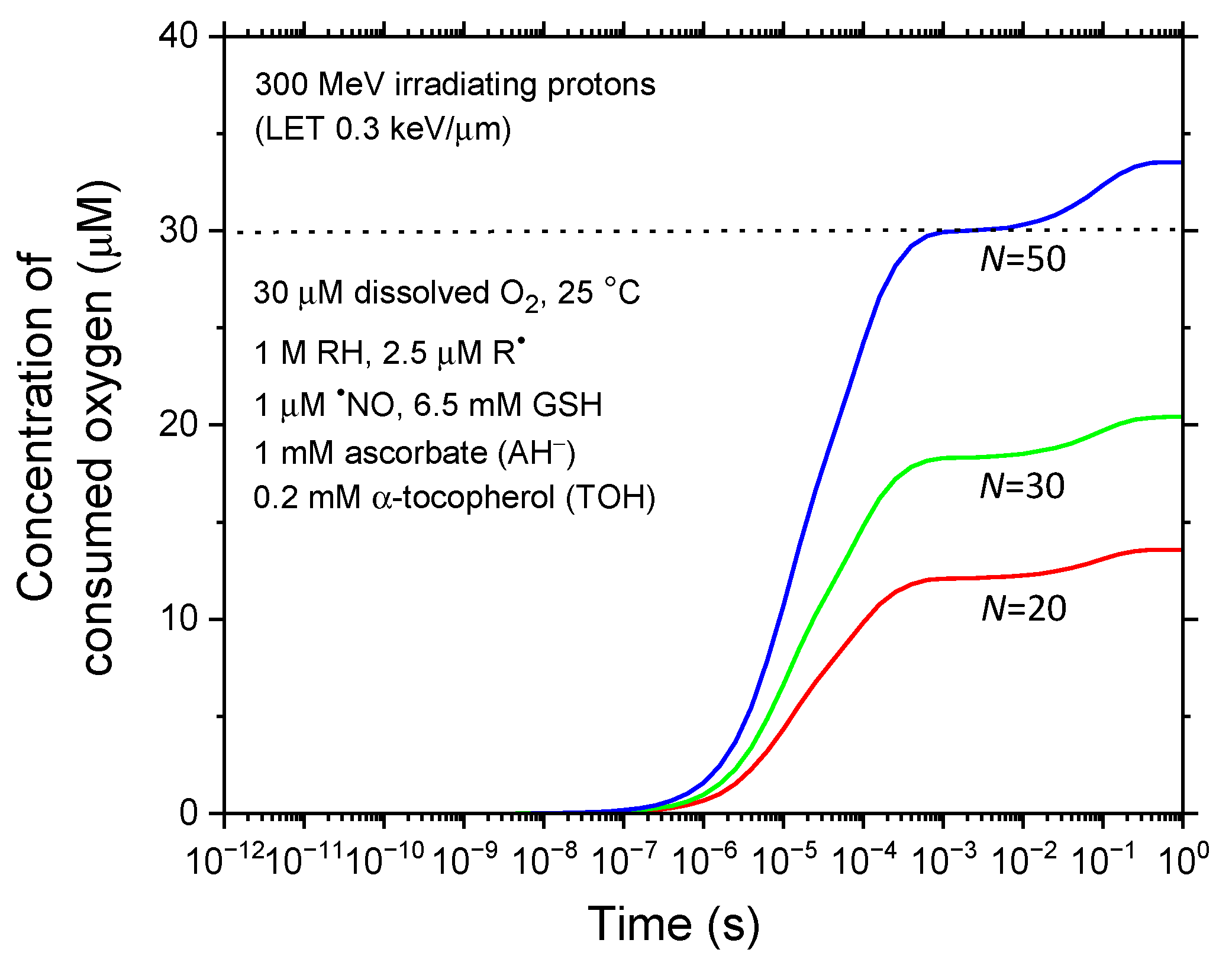
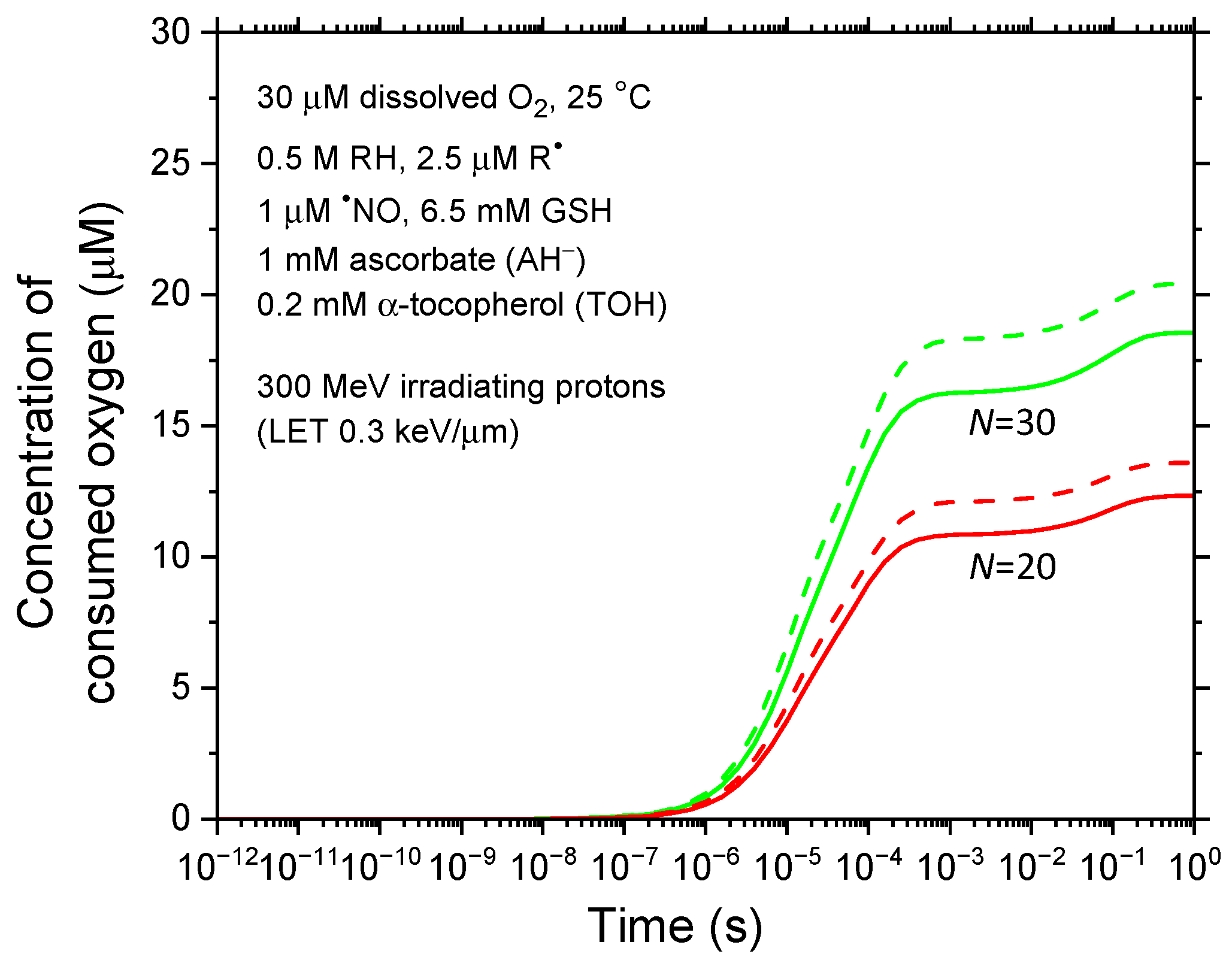
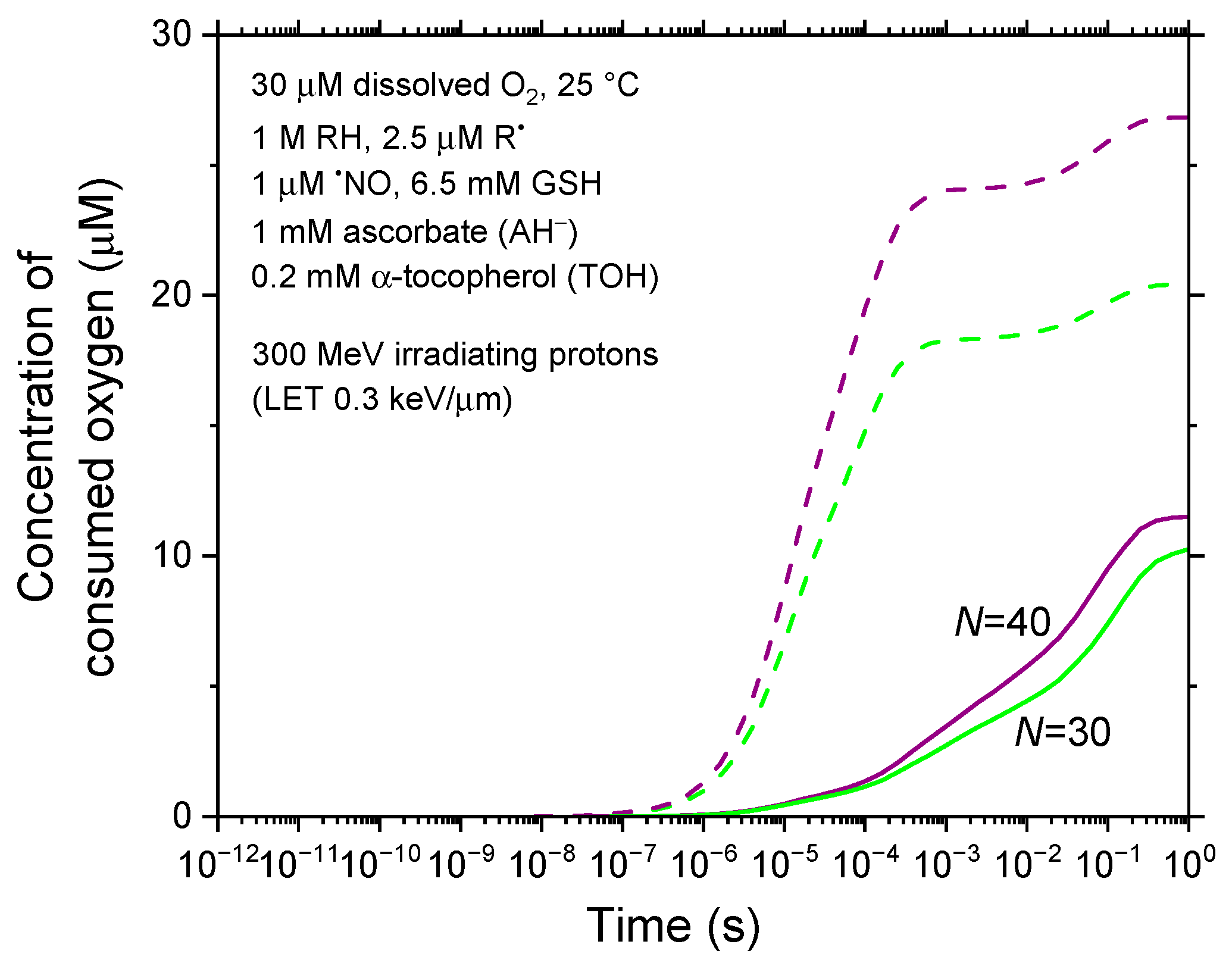
FLASH radiotherapy is a novel irradiation modality that employs ultra-high mean dose rates exceeding 40–150 Gy/s, far surpassing the typical ~0.03 Gy/s used in conventional radiotherapy. This advanced technology delivers high doses of radiation within milliseconds, effectively targeting tumors while minimizing damage to the surrounding healthy tissues. However, the precise mechanism that differentiates responses between tumor and normal tissues is not yet understood. This study primarily examines the ROD hypothesis, which posits that oxygen undergoes transient radiolytic depletion following a radiation pulse. We developed a computational model to investigate the effects of dose rate on radiolysis in an aqueous environment that mimics a confined cellular space subjected to instantaneous pulses of energetic protons. This study employed the multi-track chemistry Monte Carlo simulation code, IONLYS-IRT, which has been optimized to model this radiolysis in a homogeneous and aerated medium. This medium is composed primarily of water, alongside carbon-based biological molecules (RH), radiation-induced bio-radicals (R), glutathione (GSH), ascorbate (AH), nitric oxide (NO), and α-tocopherol (TOH). Our model closely monitors the temporal variations in these components, specifically focusing on oxygen consumption, from the initial picoseconds to one second after exposure. Simulations reveal that cellular oxygen is transiently depleted primarily through its reaction with R radicals, consistent with prior research, but also with glutathione disulfide radical anions (GSSG●−) in roughly equal proportions. Notably, we show that, contrary to some reports, the peroxyl radicals (ROO) formed are not neutralized by recombination reactions. Instead, these radicals are rapidly neutralized by antioxidants present in irradiated cells, with AH and NO proving to be the most effective in preventing the propagation of harmful peroxidation chain reactions. Moreover, our model identifies a critical dose rate threshold below which the FLASH effect, as predicted by the ROD hypothesis, cannot fully manifest. By comparing our findings with existing experimental data, we determine that the ROD hypothesis alone cannot entirely explain the observed FLASH effect. Our findings indicate that antioxidants might significantly contribute to the FLASH effect by mitigating radiation-induced cellular damage and, in turn, enhancing cellular radioprotection. Additionally, our model lends support to the hypothesis that transient oxygen depletion may partially contribute to the FLASH effect observed in radiotherapy. However, our findings indicate that this mechanism alone is insufficient to fully explain the phenomenon, suggesting the involvement of additional mechanisms or factors and warranting further investigation.
Keywords: FLASH radiotherapy (FLASH-RT); cell water radiolysis; high dose rate; peroxyl radicals; glutathione; ascorbate; nitric oxide; α-tocopherol; Monte Carlo multi-track chemical modeling; radiation chemical yields (G values); radiolytic oxygen depletion (ROD) hypothesis FLASH radiotherapy (FLASH-RT); cell water radiolysis; high dose rate; peroxyl radicals; glutathione; ascorbate; nitric oxide; α-tocopherol; Monte Carlo multi-track chemical modeling; radiation chemical yields (G values); radiolytic oxygen depletion (ROD) hypothesis