Review

Tetrahydrobiopterin: Beyond Its Traditional Role as a Cofactor

by
Tuany Eichwald
1,2,
Lucila de Bortoli da Silva
1,
Ananda Christina Staats Pires
1,3,
Laís Niero
1,
Erick Schnorrenberger
1,
Clovis Colpani Filho
1,
Gisele Espíndola
1,3,
Wei-Lin Huang
2,
Gilles J. Guillemin
3,
José E. Abdenur
2,† and
Alexandra Latini
1,2,*,†
1
Laboratório de Bioenergética e Estresse Oxidativo—LABOX, Departamento de Bioquímica, Centro de Ciências Biológicas, Universidade Federal de Santa Catarina, Florianópolis 88037-100, SC, Brazil
2
Laboratory for Energy Metabolism, Division of Metabolic Disorders, CHOC Children’s Hospital, Orange, CA 92868, USA
3
Neuroinflammation Group, Department of Biomedical Sciences, Faculty of Medicine and Health Sciences, Macquarie University, Sydney, NSW 2109, Australia
*
Author to whom correspondence should be addressed.
These authors contributed equally to this work.
Antioxidants 2023, 12(5), 1037; https://doi.org/10.3390/antiox12051037

Submission received: 28 March 2023 / Revised: 19 April 2023 / Accepted: 25 April 2023 / Published: 3 May 2023

Abstract

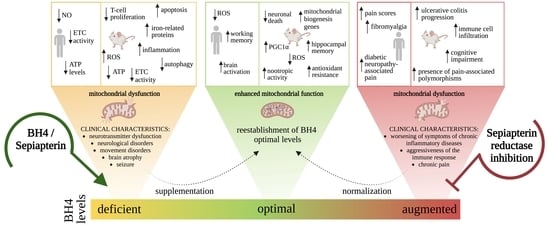
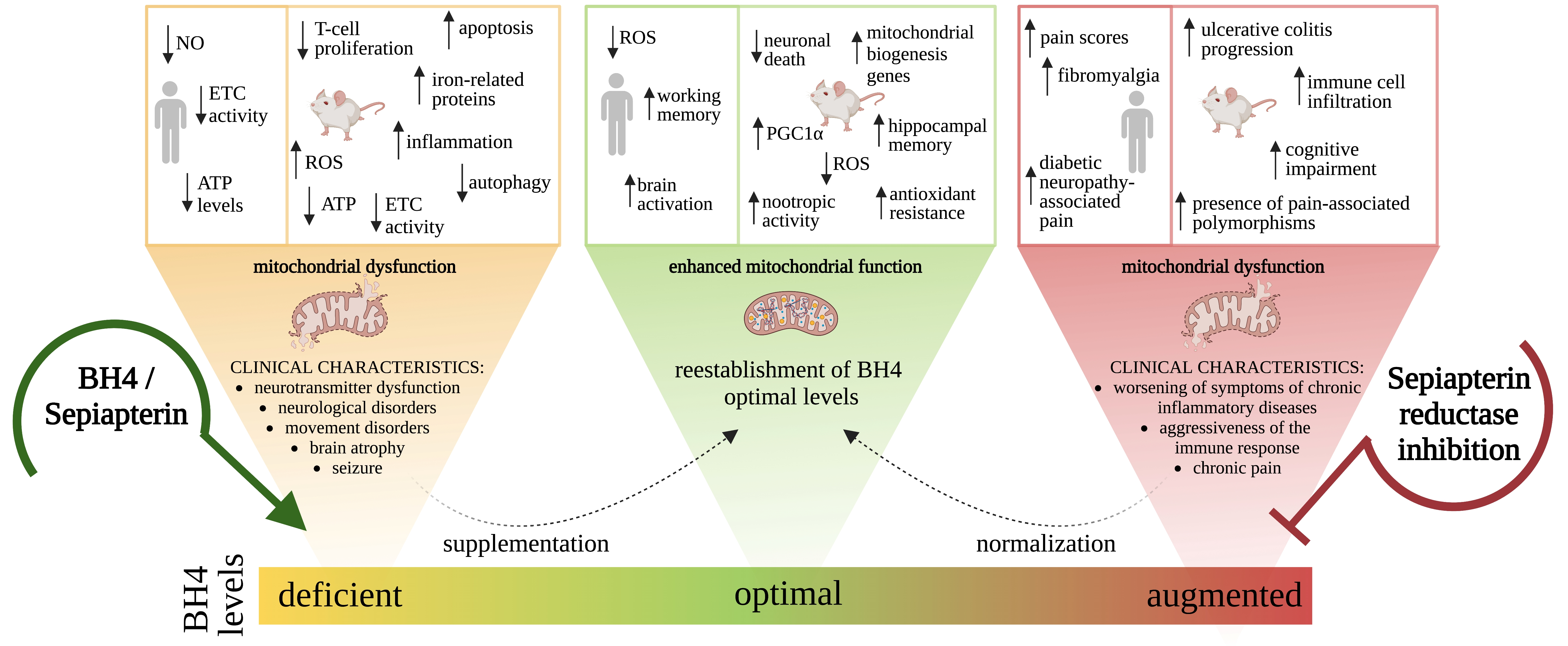
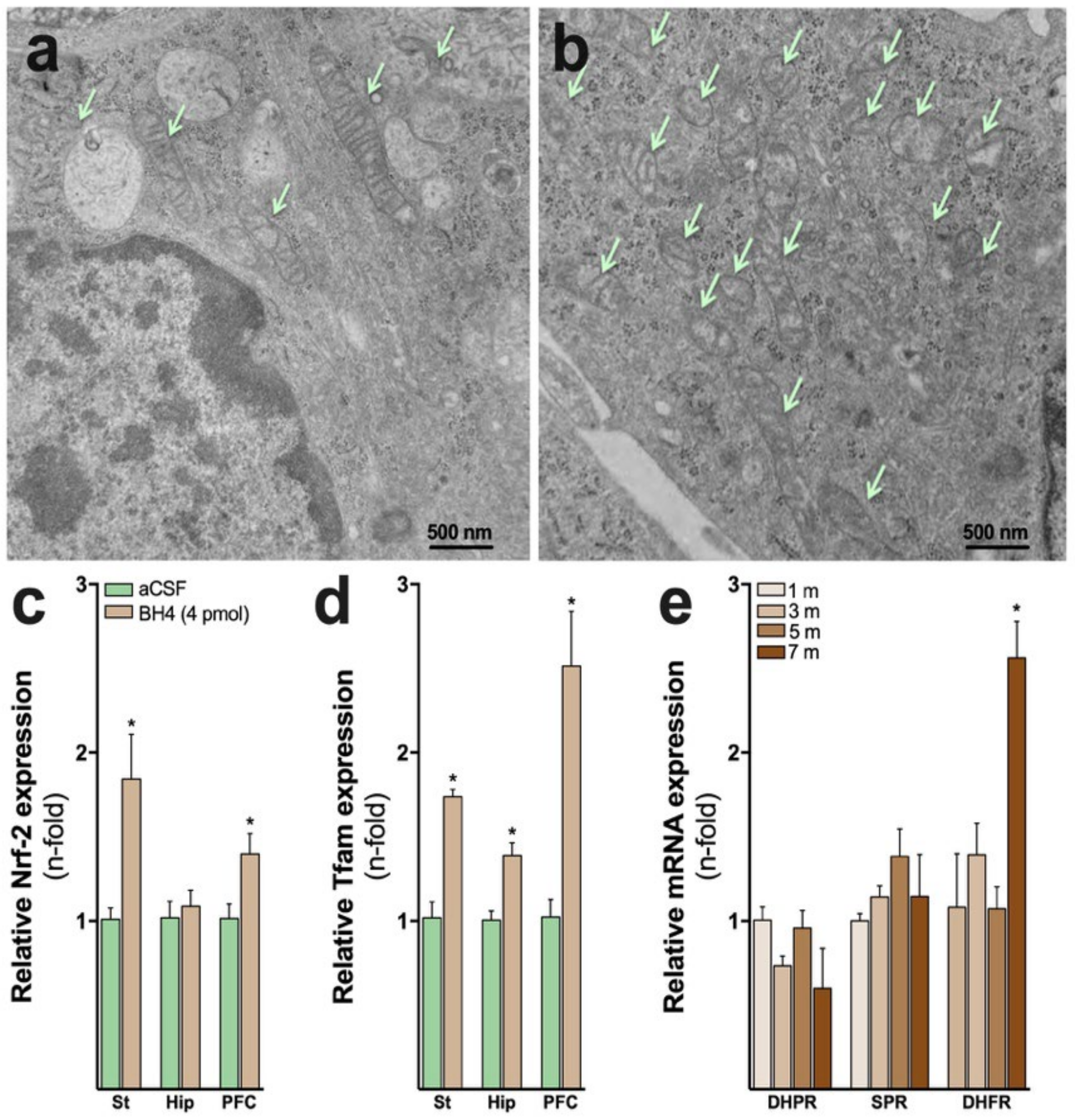
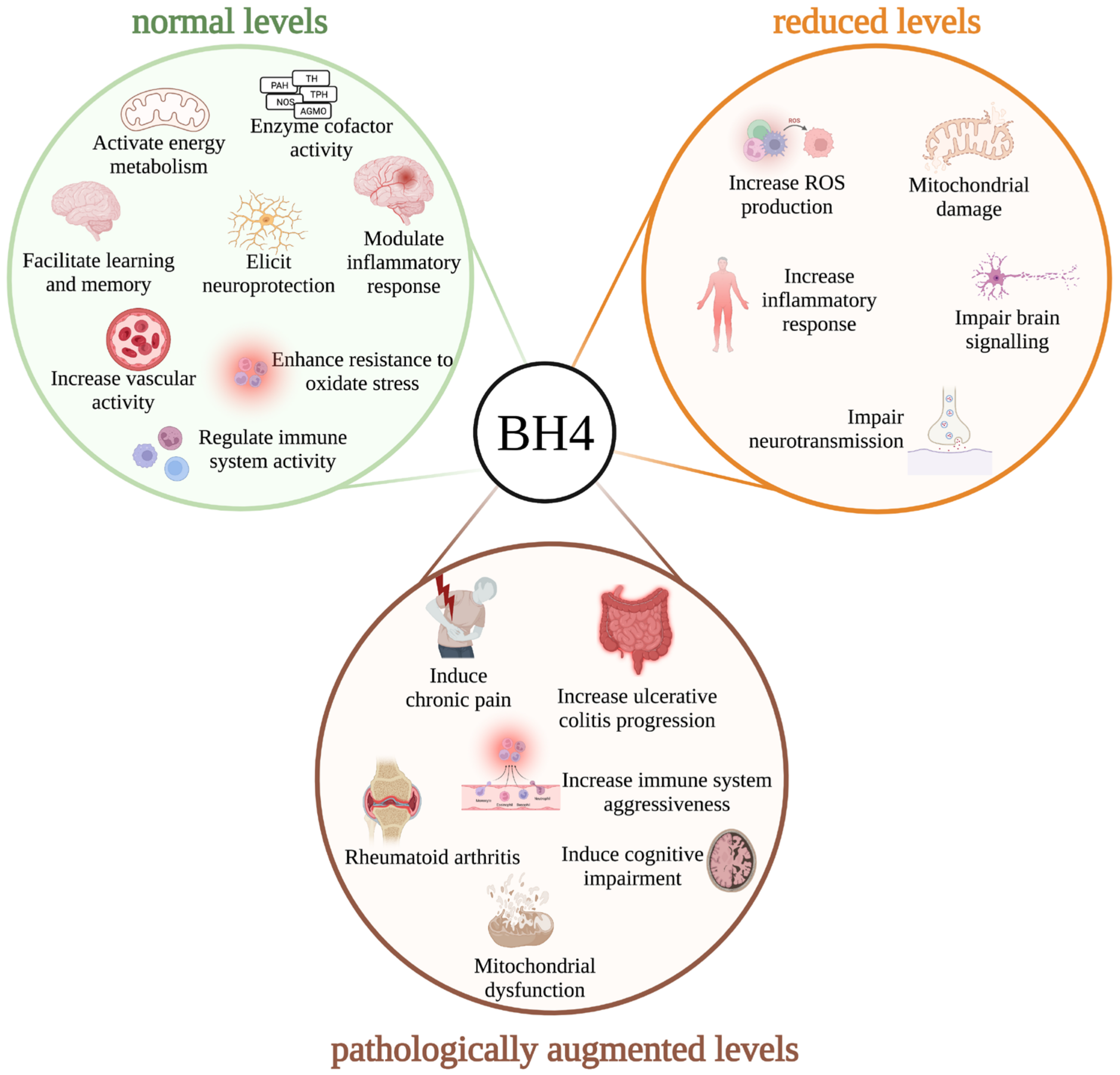
Tetrahydrobiopterin (BH4) is an endogenous cofactor for some enzymatic conversions of essential biomolecules, including nitric oxide, and monoamine neurotransmitters, and for the metabolism of phenylalanine and lipid esters. Over the last decade, BH4 metabolism has emerged as a promising metabolic target for negatively modulating toxic pathways that may result in cell death. Strong preclinical evidence has shown that BH4 metabolism has multiple biological roles beyond its traditional cofactor activity. We have shown that BH4 supports essential pathways, e.g., to generate energy, to enhance the antioxidant resistance of cells against stressful conditions, and to protect from sustained inflammation, among others. Therefore, BH4 should not be understood solely as an enzyme cofactor, but should instead be depicted as a cytoprotective pathway that is finely regulated by the interaction of three different metabolic pathways, thus assuring specific intracellular concentrations. Here, we bring state-of-the-art information about the dependency of mitochondrial activity upon the availability of BH4, as well as the cytoprotective pathways that are enhanced after BH4 exposure. We also bring evidence about the potential use of BH4 as a new pharmacological option for diseases in which mitochondrial disfunction has been implicated, including chronic metabolic disorders, neurodegenerative diseases, and primary mitochondriopathies.
Keywords: antioxidant; neopterin; sepiapterin; mitochondrial enhancer; memory; inflammation; oxidative stress antioxidant; neopterin; sepiapterin; mitochondrial enhancer; memory; inflammation; oxidative stress
Graphical Abstract