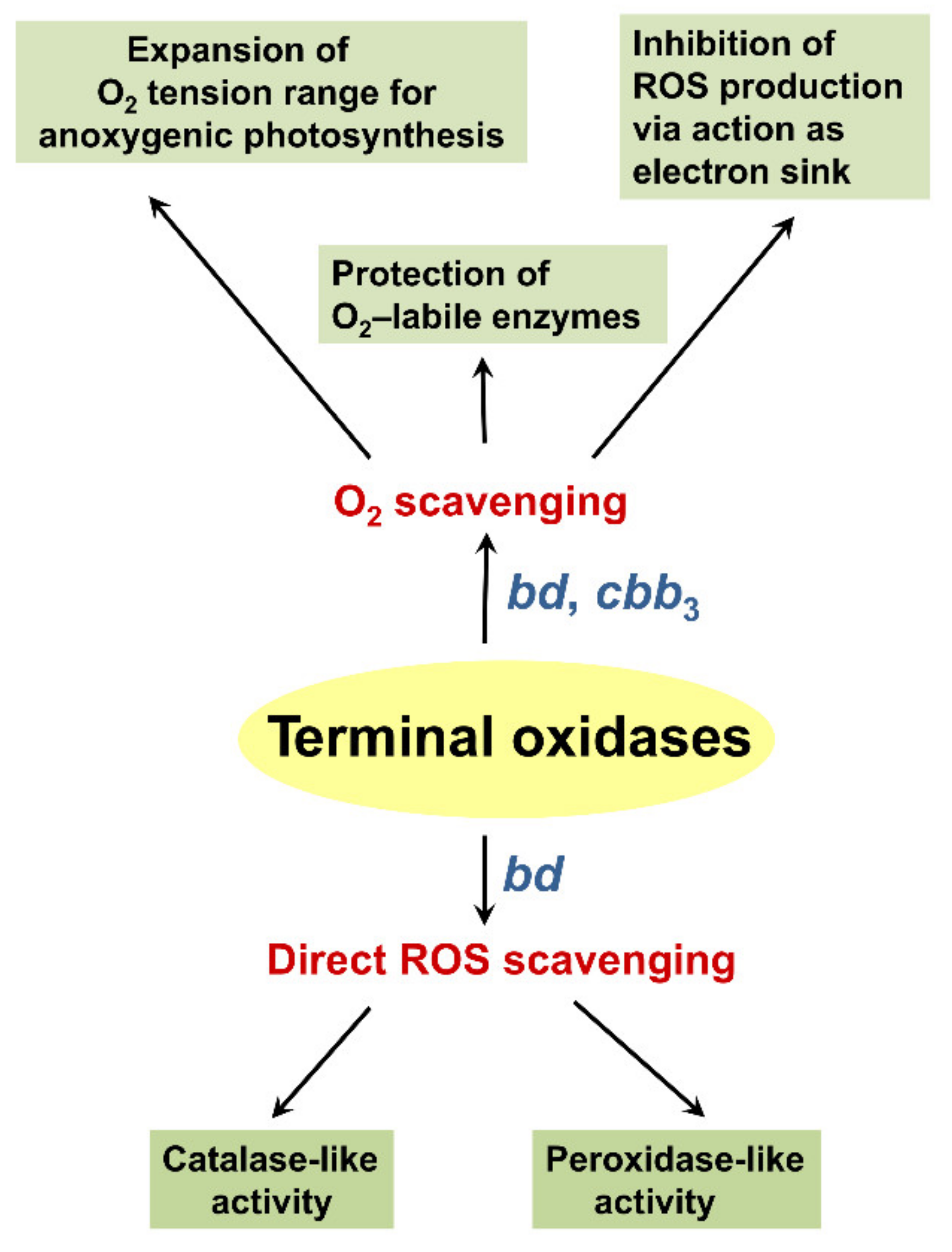
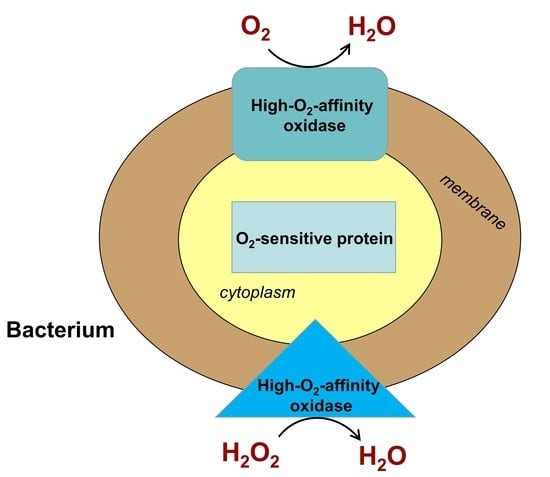
ROS Defense Systems and Terminal Oxidases in Bacteria


Abstract
Share and Cite
Borisov, V.B.; Siletsky, S.A.; Nastasi, M.R.; Forte, E. ROS Defense Systems and Terminal Oxidases in Bacteria. Antioxidants 2021, 10, 839. https://doi.org/10.3390/antiox10060839
Borisov VB, Siletsky SA, Nastasi MR, Forte E. ROS Defense Systems and Terminal Oxidases in Bacteria. Antioxidants. 2021; 10(6):839. https://doi.org/10.3390/antiox10060839
Chicago/Turabian StyleBorisov, Vitaliy B., Sergey A. Siletsky, Martina R. Nastasi, and Elena Forte. 2021. "ROS Defense Systems and Terminal Oxidases in Bacteria" Antioxidants 10, no. 6: 839. https://doi.org/10.3390/antiox10060839
APA StyleBorisov, V. B., Siletsky, S. A., Nastasi, M. R., & Forte, E. (2021). ROS Defense Systems and Terminal Oxidases in Bacteria. Antioxidants, 10(6), 839. https://doi.org/10.3390/antiox10060839