Biomarkers for Predicting Clinical Deterioration in Schizophrenia-Spectrum Disorders: A Systematic Review

 ,
,  and
and 
Abstract
1. Introduction
2. Materials and Methods
2.1. Search Strategy and Study Selection
2.2. Quality Assessment
2.3. Synthesis Approach
3. Results
3.1. Overview of Included Studies
3.2. Neurophysiological Biomarkers
3.3. Blood-Based Inflammatory and Neuroendocrine Biomarkers
3.4. Gene Expression and Neuroimaging Biomarkers
3.5. Digital Phenotyping and Ecological Biomarkers
4. Discussion
4.1. The Relapse Prediction Challenge: A Different Problem from CHR Prediction
4.2. Neurophysiological Markers: The Most Mature Evidence Base
4.3. Inflammatory Biomarkers: Clinical Tractability with Interpretive Complexity
4.4. Digital Phenotyping: Ecological Promise, Methodological Infancy
4.5. Limitations and Future Priorities
4.6. Limitations of the Review Process
4.7. Toward Clinical Implementation: What Is Needed?
5. Conclusions
Author Contributions
Funding
Institutional Review Board Statement
Informed Consent Statement
Data Availability Statement
Conflicts of Interest
Abbreviations
Appendix A

| Section/Topic | Item | Checklist Item | Reported | Location in Manuscript |
|---|---|---|---|---|
| TITLE | ||||
| Title | 1 | Identify the report as a systematic review. | Yes | Title page |
| ABSTRACT | ||||
| Abstract | 2 | See the PRISMA 2020 for Abstracts checklist. | Yes | Abstract |
| INTRODUCTION | ||||
| Rationale | 3 | Describe the rationale for the review in the context of existing knowledge. | Yes | Introduction, paragraphs 3–5 |
| Objectives | 4 | Provide an explicit statement of the objective(s) or question(s) the review addresses. | Yes | Introduction, final paragraph |
| METHODS | ||||
| Eligibility criteria | 5 | Specify the inclusion and exclusion criteria for the review and how studies were grouped for the syntheses. | Yes | Section 2.1 |
| Information sources | 6 | Specify all databases, registers, websites, organizations, reference lists and other sources searched or consulted to identify studies. Specify the date when each source was last searched or consulted. | Yes | Section 2.1 (PubMed, Scopus, Web of Science, PsycINFO, Embase; through March 2026) |
| Search strategy | 7 | Present the full search strategies for all databases and registers, including any filters applied, so that they could be repeated. | Yes | Section 2.1 (terms listed); full string in Table A2 |
| Selection process | 8 | Specify the methods used to decide whether a study met the inclusion criteria of the review, including how many reviewers screened each record and each report retrieved for eligibility, whether they worked independently, and if applicable, details of automation tools used in the process. | Yes | Section 2.1 (two independent reviewers V.R., L.R.; disagreements resolved by G.Ma.) |
| Data collection process | 9 | Specify the methods used to collect data from reports, including how many reviewers collected data from each report, whether they worked independently, any processes for obtaining or confirming data from study investigators, and if applicable, details of automation tools used in the process. | Yes | Section 2.1 (standardized extraction forms; two reviewers) |
| Data items | 10a | List and define all outcomes for which data were sought. Specify whether all results that were compatible with each outcome domain in each study were sought, and if not, the methods used to decide which results to collect. | Yes | Section 2.1 |
| Data items | 10b | List and define all other variables for which data were sought (e.g., participant and intervention characteristics, funding sources). | Yes | Section 2.1 |
| Study risk of bias assessment | 11 | Specify the methods used to assess risk of bias in the included studies, including details of the tool(s) used, how many reviewers assessed each study and whether they worked independently, and if applicable, details of automation tools used in the process. | Yes | Section 2.2 (NOS and PROBAST; domain-specific quality criteria) |
| Effect measures | 12 | Specify for each outcome the effect measure(s) (e.g., risk ratio, mean difference) used in the synthesis or presentation of results. | Yes | Section 2.3 (narrative synthesis; effect sizes reported where available) |
| Synthesis methods | 13a | Describe the processes used to decide which studies were eligible for each synthesis (e.g., tabulating the study intervention characteristics and comparing against the planned groups specified in the eligibility criteria). | Yes | Section 2.3 |
| Synthesis methods | 13b | Describe any methods required to prepare the data for presentation or synthesis, such as handling of missing summary statistics, or data conversions. | Yes | Section 2.3 |
| Synthesis methods | 13c | Describe any methods used to tabulate or visually display results of individual studies and syntheses. | Yes | Section 2.3; Table 2 and Table 3 |
| Synthesis methods | 13d | Describe any methods used to synthesize results and provide a rationale for the choice(s). If meta-analysis was performed, describe the model(s), method(s) to identify the presence and extent of statistical heterogeneity, and software package(s) used. | Yes | Section 2.3 (narrative synthesis chosen due to substantial methodological heterogeneity) |
| Synthesis methods | 13e | Describe any methods used to explore possible causes of heterogeneity among study results (e.g., subgroup analysis, meta-regression). | Yes | Section 2.3 (heterogeneity discussed narratively; no meta-regression feasible) |
| Synthesis methods | 13f | Describe any sensitivity analyses conducted to assess robustness of the synthesized results. | N/A | Not applicable (narrative synthesis) |
| Reporting bias assessment | 14 | Describe any methods used to assess risk of bias due to missing results in a synthesis (arising from reporting biases). | Partial | Section 4.5; publication bias discussed narratively |
| Certainty assessment | 15 | Describe any methods used to assess certainty (or confidence) in the body of evidence for an outcome. | Yes | Section 2.2 (NOS ≥ 7 = high quality; PROBAST risk-of-bias domains) |
| RESULTS | ||||
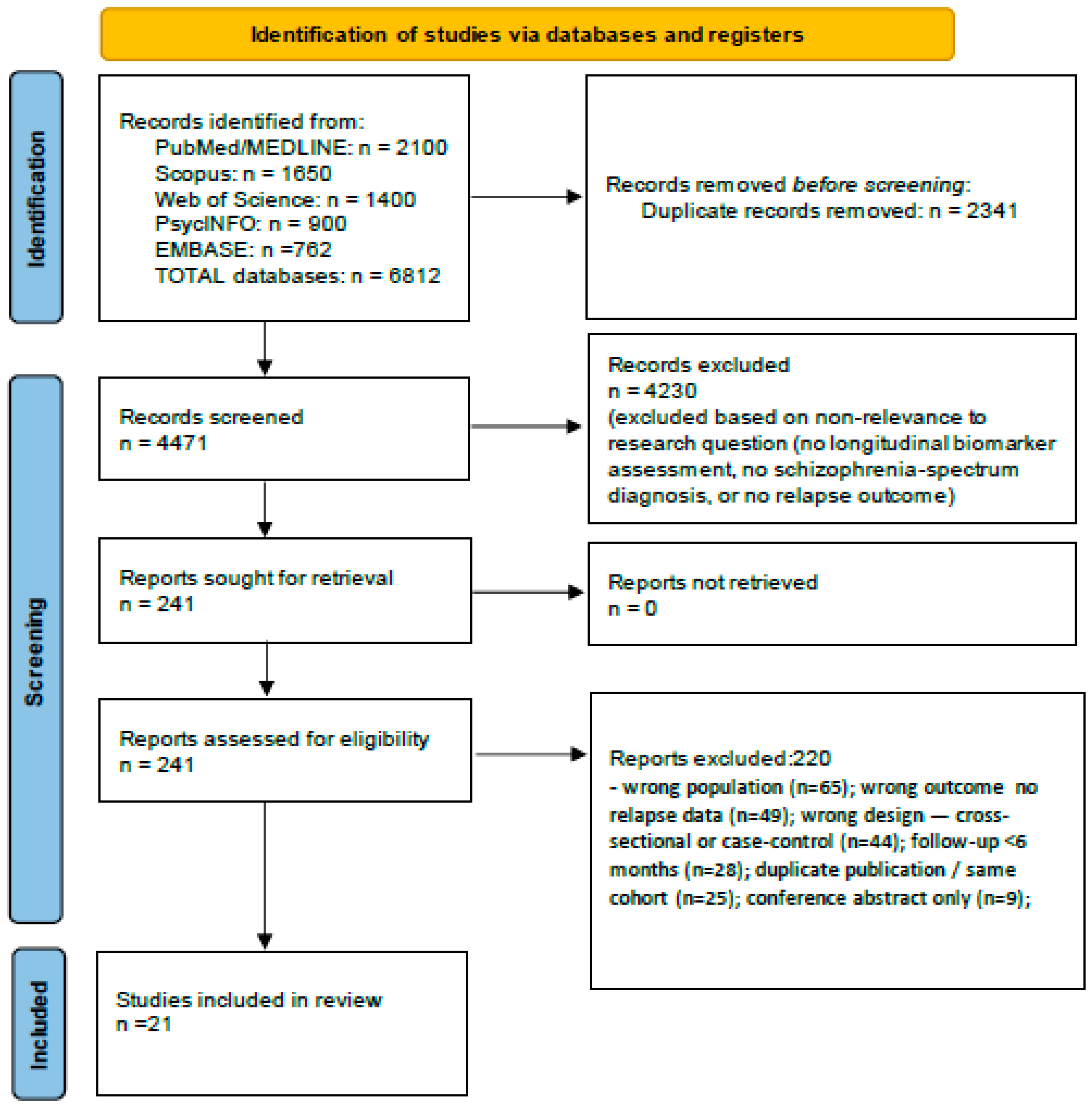
| Study selection | 16a | Describe the results of the search and selection process, including findings of any searches of other sources to identify studies, from initial number of records identified to final number of studies included, preferably using a flow diagram. | Yes | Section 2.1; PRISMA flow diagram |
| Study selection | 16b | Cite studies that might appear to meet the inclusion criteria but which were excluded, and explain why they were excluded. | Yes | Section 3.1 (exclusion reasons); excluded studies list available on request |
| Study characteristics | 17 | Cite each included study and present its characteristics. | Yes | Section 3.2, Section 3.3, Section 3.4 and Section 3.5; Table 1 (main); Table A3 |
| Risk of bias in studies | 18 | Present assessments of risk of bias for each included study. | Yes | Table 4 (quality assessment; NOS and PROBAST ratings) |
| Results of individual studies | 19 | For all outcomes, present, for each study: (a) summary statistics for each group (where appropriate) and (b) an effect estimate and its precision (e.g., a confidence interval), preferably using structured tables or plots. | Yes | Table 2 and Table 3; narrative in Section 3.2, Section 3.3, Section 3.4 and Section 3.5 |
| Results of syntheses | 20a | For each synthesis, briefly summarize the characteristics and risk of bias among contributing studies. | Yes | Section 3.2, Section 3.3, Section 3.4 and Section 3.5; Table 4 |
| Results of syntheses | 20b | Present results of all statistical syntheses conducted. If meta-analysis was carried out, present for each the summary estimate and its precision and measures of statistical heterogeneity. | N/A | Narrative synthesis; no meta-analysis performed |
| Results of syntheses | 20c | Present results of all investigations of possible causes of heterogeneity among study results. | Yes | Section 4 (Discussion) |
| Results of syntheses | 20d | Present results of all sensitivity analyses conducted to assess the robustness of the synthesized results. | N/A | Not applicable |
| Reporting biases | 21 | Present assessments of risk of bias due to missing results (arising from reporting biases) for each synthesis assessed. | Partial | Section 4.5 (discussed narratively) |
| Certainty of evidence | 22 | Present assessments of certainty (or confidence) in the body of evidence for each outcome assessed. | Yes | Section 4; Conclusions |
| DISCUSSION | ||||
| Discussion | 23a | Provide a general interpretation of the results in the context of other evidence. | Yes | Section 4.1, Section 4.2, Section 4.3, Section 4.4, Section 4.5 and Section 4.6 |
| Discussion | 23b | Discuss any limitations of the evidence included in the review. | Yes | Section 4.5 |
| Discussion | 23c | Discuss any limitations of the review processes used. | Yes | Section 4.5 |
| Discussion | 23d | Discuss implications of the results for practice, policy, and future research. | Yes | Section 4.5 and Section 4.6; Conclusions |
| OTHER INFORMATION | ||||
| Registration and protocol | 24a | Provide registration information for the review, including register name and registration number, or state that the review was not registered. | Yes | Section 2.1 (PROSPERO CRD42026XXXXXX—placeholder) |
| Registration and protocol | 24b | Indicate where the review protocol can be accessed, or state that a protocol was not prepared. | Partial | PROSPERO registration (see above) |
| Registration and protocol | 24c | Describe and explain any amendments to information provided at registration or in the protocol. | N/A | No amendments |
| Support | 25 | Describe sources of financial or other support for the review, and the role of the funders or sponsors in the review. | Yes | To be completed at submission |
| Competing interests | 26 | Declare any competing interests of review authors. | Yes | To be completed at submission |
| Availability of data, code and other materials | 27 | Report which of the following are publicly available and where they can be found: template data collection forms; data extracted from included studies; data used for all analyses; analytic code; any other materials used in the review. | Partial | Available from corresponding author on reasonable request |
| Database | Full Search String |
|---|---|
| PubMed/MEDLINE | (schizophrenia[MeSH] OR “schizoaffective disorder”[MeSH] OR “psychotic disorder”[MeSH] OR psychosis[tiab] OR schizophrenia[tiab]) AND (stabilized[tiab] OR remission[tiab] OR “maintenance treatment”[tiab] OR outpatient[tiab]) AND (relapse[tiab] OR recurrence[tiab] OR rehospitalization[tiab] OR “symptom exacerbation”[tiab] OR decompensation[tiab]) AND (biomarker[tiab] OR EEG[tiab] OR ERP[tiab] OR “mismatch negativity”[tiab] OR MMN[tiab] OR P300[tiab] OR “event-related potential”[tiab] OR MRI[tiab] OR neuroimaging[tiab] OR “brain volume”[tiab] OR “cortical thickness”[tiab] OR “gray matter”[tiab] OR cytokine[tiab] OR interleukin[tiab] OR “C-reactive protein”[tiab] OR cortisol[tiab] OR prolactin[tiab] OR inflammatory[tiab] OR “gene expression”[tiab] OR proteomic[tiab] OR “digital phenotyping”[tiab] OR smartphone[tiab] OR “passive sensing”[tiab] OR “ecological momentary assessment”[tiab]) AND (“1990”[PDAT]:”2026”[PDAT]) |
| Scopus | TITLE-ABS-KEY((schizophrenia OR “schizoaffective disorder” OR “psychotic disorder” OR psychosis) AND (stabilized OR remission OR “maintenance treatment” OR outpatient) AND (relapse OR recurrence OR rehospitalization OR “symptom exacerbation” OR decompensation) AND (biomarker OR EEG OR ERP OR “mismatch negativity” OR MMN OR P300 OR “event-related potential” OR MRI OR neuroimaging OR “brain volume” OR “cortical thickness” OR “gray matter” OR cytokine OR interleukin OR “C-reactive protein” OR cortisol OR prolactin OR inflammatory OR “gene expression” OR proteomic OR “digital phenotyping” OR smartphone OR “passive sensing” OR “ecological momentary assessment”)) AND PUBYEAR > 1989 AND PUBYEAR < 2026 |
| Web of Science | TS = ((schizophrenia OR “schizoaffective disorder” OR “psychotic disorder” OR psychosis) AND (stabilized OR remission OR “maintenance treatment” OR outpatient) AND (relapse OR recurrence OR rehospitalization OR “symptom exacerbation” OR decompensation) AND (biomarker OR EEG OR ERP OR “mismatch negativity” OR MMN OR P300 OR “event-related potential” OR MRI OR neuroimaging OR “brain volume” OR “cortical thickness” OR “gray matter” OR cytokine OR interleukin OR “C-reactive protein” OR cortisol OR prolactin OR inflammatory OR “gene expression” OR proteomic OR “digital phenotyping” OR smartphone OR “passive sensing” OR “ecological momentary assessment”)) AND PY = (1990–2026) |
| PsycINFO | (schizophrenia OR schizoaffective OR psychotic OR psychosis) AND (stabilized OR remission OR maintenance OR outpatient) AND (relapse OR recurrence OR rehospitalization OR exacerbation OR decompensation) AND (biomarker OR EEG OR ERP OR “mismatch negativity” OR P300 OR neuroimaging OR MRI OR cytokine OR interleukin OR “C-reactive protein” OR cortisol OR prolactin OR inflammatory OR “gene expression” OR “digital phenotyping” OR smartphone OR “passive sensing” OR “ecological momentary assessment”)—limited to peer-reviewed journals, 1990–2026 |
| Embase | (‘schizophrenia’/exp OR ‘schizoaffective disorder’/exp OR ‘psychotic disorder’/exp OR psychosis:ti,ab) AND (stabilized:ti,ab OR remission:ti,ab OR ‘maintenance treatment’:ti,ab OR outpatient:ti,ab) AND (relapse:ti,ab OR recurrence:ti,ab OR rehospitalization:ti,ab OR ‘symptom exacerbation’:ti,ab OR decompensation:ti,ab) AND (biomarker:ti,ab OR EEG:ti,ab OR ‘mismatch negativity’:ti,ab OR MMN:ti,ab OR P300:ti,ab OR MRI:ti,ab OR neuroimaging:ti,ab OR cytokine:ti,ab OR interleukin:ti,ab OR ‘C-reactive protein’:ti,ab OR cortisol:ti,ab OR prolactin:ti,ab OR inflammatory:ti,ab OR ‘gene expression’:ti,ab OR ‘digital phenotyping’:ti,ab OR smartphone:ti,ab OR ‘passive sensing’:ti,ab OR ‘ecological momentary assessment’:ti,ab) AND [1990–2026]/py |
| PICOS Domain | Criterion | Specification | Decision |
|---|---|---|---|
| Population (P) | Diagnosis | Individuals meeting DSM-IV/5 or ICD-10/11 criteria for a schizophrenia-spectrum disorder: schizophrenia, schizoaffective disorder, schizophreniform disorder, or unspecified psychotic disorder | Include |
| Population (P) | Clinical status at entry | Clinical stabilization defined by ≥6 months of treatment, absence of acute psychotic episode, or standardized remission criteria | Include |
| Population (P) | Age | Any age (adults and adolescents) | Include |
| Population (P) | Setting | Outpatient, community, or post-hospitalization follow-up settings | Include |
| Population (P) | Treatment-resistant | Studies exclusively examining treatment-resistant populations without a stabilized comparison group | Exclude |
| Population (P) | First-episode only (no stabilized follow-up) | Studies exclusively examining first-episode psychosis without follow-up into the stabilized phase | Exclude |
| Index Test/Predictor (I) | Neurophysiological | EEG/ERP measures including MMN (duration, frequency, pitch, double-deviant), P300, N100, P50 gating at any assessment timepoint | Include |
| Index Test/Predictor (I) | Neuroimaging | Structural MRI (gray matter volume, cortical thickness, subcortical volumes), functional MRI, diffusion tensor imaging, PET | Include |
| Index Test/Predictor (I) | Blood-based | Cytokines (IL-6, TNF-α, IL-1β, IFN-γ, IL-10), CRP, cortisol/cortisol awakening response, prolactin, other neuroendocrine markers | Include |
| Index Test/Predictor (I) | Molecular/genomic | Peripheral gene expression profiling, polygenic risk score (PRS), telomere length, epigenetic markers | Include |
| Index Test/Predictor (I) | Digital phenotyping | Passive smartphone sensing (GPS, accelerometry, screen time, social communication), wearable devices (HRV, activity, sleep), ecological momentary assessment (EMA) | Include |
| Index Test/Predictor (I) | Assessment timing | Baseline biomarker assessment (single timepoint) or serial assessments during follow-up | Include |
| Comparator (C) | Comparator | Patients who do not relapse during the follow-up period; healthy controls (where used in biomarker validation) | Include |
| Outcome (O) | Primary outcome | Psychotic relapse as a primary or secondary outcome, operationalized through: hospitalization records, structured clinical interview thresholds (e.g., PANSS increase ≥25% or score ≥4 on P1/P2/P3), or expert consensus using standardized criteria | Include |
| Outcome (O) | Secondary outcomes | Time to relapse, number of relapses, treatment response (partial outcome), functional deterioration as relapse proxy | Include |
| Outcome (O) | Outcome not assessed | Studies that do not report relapse or a relapse-equivalent outcome (e.g., purely cross-sectional biomarker studies with no prospective follow-up) | Exclude |
| Study Design (S) | Design—include | Longitudinal prospective cohort studies with biomarker assessment at baseline or serially and prospective relapse outcome ascertainment | Include |
| Study Design (S) | Follow-up duration | Minimum 6 months of prospective follow-up after baseline biomarker assessment | Include |
| Study Design (S) | Case-control | Case–control studies without prospective relapse outcome prediction (i.e., retrospective biomarker comparison between relapsers and non-relapsers ascertained post hoc) | Exclude |
| Study Design (S) | Conference abstracts | Conference abstracts, letters, editorials, and narrative reviews without peer-reviewed empirical data | Exclude |
| Study Design (S) | Language | No language restriction; all peer-reviewed publications included regardless of language | Include |
| Study Design (S) | Publication date | January 1990 through March 2026 | Include |
| Low Risk/High Quality | Moderate Risk | High Risk/Low Quality | Not Applicable | ||||
|---|---|---|---|---|---|---|---|
| Study | Participant Selection | Biomarker Assessment | Outcome Definition | APD Confounding | Adherence Control | Validation | Overall |
| Bodatsch [19] | |||||||
| Hamilton [23] | |||||||
| Nakajima [24] | |||||||
| Hamilton [25] | |||||||
| Giordano [26] | |||||||
| Light & Braff [27] | |||||||
| Higashima [28] | |||||||
| Kim [29] | |||||||
| De Wilde [30] | |||||||
| Van Tricht [31] | |||||||
| Duncan [32] | |||||||
| Brockhaus-Dumke [33] | |||||||
| Khandaker [34] | |||||||
| Stojanovic [35] | |||||||
| Mondelli [36] | |||||||
| Gassó [37] | |||||||
| Pawelczyk [38] | |||||||
| Landi [39] | |||||||
| De Nijs [40] | |||||||
| Adler [41] | |||||||
| Garyfalli [42] |
References
- Zipursky, R.B.; Menezes, N.M.; Streiner, D.L. Risk of symptom recurrence with medication discontinuation in first-episode psychosis: A systematic review. Schizophr. Res. 2014, 152, 408–414. [Google Scholar] [CrossRef]
- Wiersma, D.; Nienhuis, F.J.; Slooff, C.J.; Giel, R. Natural Course of Schizophrenic Disorders: A 15-Year Followup of a Dutch Incidence Cohort. Schizophr. Bull. 1998, 24, 75–85. [Google Scholar] [CrossRef]
- Andreasen, N.C. Hypofrontality in Neuroleptic-Naive Patients and in Patients With Chronic Schizophrenia: Assessment With Xenon 133 Single-Photon Emission Computed Tomography and the Tower of London. Arch. Gen. Psychiatry 1992, 49, 943. [Google Scholar] [CrossRef] [PubMed]
- Leucht, S.; Leucht, C.; Huhn, M.; Chaimani, A.; Mavridis, D.; Helfer, B.; Samara, M.; Rabaioli, M.; Bächer, S.; Cipriani, A.; et al. Sixty Years of Placebo-Controlled Antipsychotic Drug Trials in Acute Schizophrenia: Systematic Review, Bayesian Meta-Analysis, and Meta-Regression of Efficacy Predictors. Am. J. Psychiatry 2017, 174, 927–942. [Google Scholar] [CrossRef]
- Lacro, J.P.; Dunn, L.B.; Dolder, C.R.; Leckband, S.G.; Jeste, D.V. Prevalence of and Risk Factors for Medication Nonadherence in Patients With Schizophrenia: A Comprehensive Review of Recent Literature. J. Clin. Psychiatry 2002, 63, 892–909. [Google Scholar] [CrossRef]
- Ricci, V.; Sarni, A.; Barresi, M.; Remondino, L.; Martinotti, G.; Maina, G. Cannabis and suicide risk in first-episode psychosis: Mechanisms, interactions, and intervention strategies. Asian J. Psychiatry 2025, 110, 104624. [Google Scholar] [CrossRef] [PubMed]
- Ricci, V.; Sarni, A.; De Berardis, D.; Fraccalini, T.; Martinotti, G.; Maina, G. Symptomatic Predictors of Suicidal Behavior in Early Psychosis: Systematic Review. J. Psychiatr. Pract. 2025, 31, 125–138. [Google Scholar] [CrossRef]
- Wunderink, L.; Nieboer, R.M.; Wiersma, D.; Sytema, S.; Nienhuis, F.J. Recovery in Remitted First-Episode Psychosis at 7 Years of Follow-up of an Early Dose Reduction/Discontinuation or Maintenance Treatment Strategy: Long-term Follow-up of a 2-Year Randomized Clinical Trial. JAMA Psychiatry 2013, 70, 913. [Google Scholar] [CrossRef]
- Van Os, J.; Kenis, G.; Rutten, B.P.F. The environment and schizophrenia. Nature 2010, 468, 203–212. [Google Scholar] [CrossRef] [PubMed]
- Howes, O.D.; Bukala, B.R.; Beck, K. Schizophrenia: From neurochemistry to circuits, symptoms and treatments. Nat. Rev. Neurol. 2024, 20, 22–35. [Google Scholar] [CrossRef]
- Naatanen, R.; Kujala, T.; Kreegipuu, K.; Carlson, S.; Escera, C.; Baldeweg, T.; Ponton, C. The mismatch negativity: An index of cognitive decline in neuropsychiatric and neurological diseases and in ageing. Brain 2011, 134, 3435–3453. [Google Scholar] [CrossRef]
- Müller, N.; Weidinger, E.; Leitner, B.; Schwarz, M.J. The role of inflammation in schizophrenia. Front. Neurosci. 2015, 9, 372. [Google Scholar] [CrossRef]
- Gardiner, E.J.; Cairns, M.J.; Liu, B.; Beveridge, N.J.; Carr, V.; Kelly, B.; Scott, R.J.; Tooney, P.A. Gene expression analysis reveals schizophrenia-associated dysregulation of immune pathways in peripheral blood mononuclear cells. J. Psychiatr. Res. 2013, 47, 425–437. [Google Scholar] [CrossRef]
- Ricci, V.; Martinotti, G.; Mosca, A.; Maina, G. Biomarkers for predicting transition from at-risk mental state to psychosis: A systematic review. Neurosci. Biobehav. Rev. 2026, 184, 106612. [Google Scholar] [CrossRef]
- Fusar-Poli, P. Predicting Psychosis: Meta-analysis of Transition Outcomes in Individuals at High Clinical Risk. Arch. Gen. Psychiatry 2012, 69, 220. [Google Scholar] [CrossRef] [PubMed]
- Vita, A.; De Peri, L.; Deste, G.; Barlati, S.; Sacchetti, E. The Effect of Antipsychotic Treatment on Cortical Gray Matter Changes in Schizophrenia: Does the Class Matter? A Meta-analysis and Meta-regression of Longitudinal Magnetic Resonance Imaging Studies. Biol. Psychiatry 2015, 78, 403–412. [Google Scholar] [CrossRef] [PubMed]
- Insel, T.R. Rethinking schizophrenia. Nature 2010, 468, 187–193. [Google Scholar] [CrossRef]
- Martinotti, G.; Piro, T.; Ciraselli, N.; Persico, L.; Inserra, A.; Pettorruso, M.; Maina, G.; Ricci, V. Structural and Functional Neuroimaging Biomarkers as Predictors of Psychosis Conversion in Ultra-High Risk Individuals: A Systematic Review. Brain Sci. 2026, 16, 112. [Google Scholar] [CrossRef] [PubMed]
- Bodatsch, M.; Ruhrmann, S.; Wagner, M.; Müller, R.; Schultze-Lutter, F.; Frommann, I.; Brinkmeyer, J.; Gaebel, W.; Maier, W.; Klosterkötter, J.; et al. Prediction of Psychosis by Mismatch Negativity. Biol. Psychiatry 2011, 69, 959–966. [Google Scholar] [CrossRef]
- Smyrnis, A.; Theleritis, C.; Ferentinos, P.; Smyrnis, N. Psychotic relapse prediction via biomarker monitoring: A systematic review. Front. Psychiatry 2024, 15, 1463974. [Google Scholar] [CrossRef]
- Page, M.J.; McKenzie, J.E.; Bossuyt, P.M.; Boutron, I.; Hoffmann, T.C.; Mulrow, C.D.; Shamseer, L.; Tetzlaff, J.M.; Akl, E.A.; Brennan, S.E.; et al. The PRISMA 2020 statement: An updated guideline for reporting systematic reviews. J. Clin. Epidemiol. 2021, 134, 178–189. [Google Scholar] [CrossRef]
- Lo, C.K.-L.; Mertz, D.; Loeb, M. Newcastle-Ottawa Scale: Comparing reviewers’ to authors’ assessments. BMC Med. Res. Methodol. 2014, 14, 45. [Google Scholar] [CrossRef]
- Hamilton, H.K.; Roach, B.J.; Bachman, P.M.; Belger, A.; Carrión, R.E.; Duncan, E.; Johannesen, J.K.; Light, G.A.; Niznikiewicz, M.A.; Addington, J.; et al. Mismatch Negativity in Response to Auditory Deviance and Risk for Future Psychosis in Youth at Clinical High Risk for Psychosis. JAMA Psychiatry 2022, 79, 780. [Google Scholar] [CrossRef] [PubMed]
- Nakajima, S.; Higuchi, Y.; Tateno, T.; Sasabayashi, D.; Mizukami, Y.; Nishiyama, S.; Takahashi, T.; Suzuki, M. Duration Mismatch Negativity Predicts Remission in First-Episode Schizophrenia Patients. Front. Psychiatry 2021, 12, 777378. [Google Scholar] [CrossRef]
- Hamilton, H.K.; Roach, B.J.; Bachman, P.M.; Belger, A.; Carrión, R.E.; Duncan, E.; Johannesen, J.K.; Light, G.A.; Niznikiewicz, M.A.; Addington, J.; et al. Mismatch Negativity as an Index of Auditory Short-Term Plasticity: Associations with Cortisol, Inflammation, and Gray Matter Volume in Youth at Clinical High Risk for Psychosis. Clin. EEG Neurosci. 2025, 56, 46–59. [Google Scholar] [CrossRef] [PubMed]
- Giordano, G.M.; Giuliani, L.; Perrottelli, A.; Bucci, P.; Di Lorenzo, G.; Siracusano, A.; Brando, F.; Pezzella, P.; Fabrazzo, M.; Altamura, M.; et al. Mismatch Negativity and P3a Impairment through Different Phases of Schizophrenia and Their Association with Real-Life Functioning. J. Clin. Med. 2021, 10, 5838. [Google Scholar] [CrossRef]
- Light, G.A.; Braff, D.L. Stability of Mismatch Negativity Deficits and Their Relationship to Functional Impairments in Chronic Schizophrenia. Am. J. Psychiatry 2005, 162, 1741–1743. [Google Scholar] [CrossRef]
- Higashima, M.; Nagasawa, T.; Kawasaki, Y.; Oka, T.; Sakai, N.; Tsukada, T.; Koshino, Y. Auditory P300 amplitude as a state marker for positive symptoms in schizophrenia: Cross-sectional and retrospective longitudinal studies. Schizophr. Res. 2003, 59, 147–157. [Google Scholar] [CrossRef] [PubMed]
- Kim, M.; Lee, T.H.; Kim, J.-H.; Hong, H.; Lee, T.Y.; Lee, Y.; Salisbury, D.F.; Kwon, J.S. Decomposing P300 into correlates of genetic risk and current symptoms in schizophrenia: An inter-trial variability analysis. Schizophr. Res. 2018, 192, 232–239. [Google Scholar] [CrossRef]
- De Wilde, O.M.; Bour, L.J.; Dingemans, P.M.; Koelman, J.H.T.M.; Boerée, T.; Linszen, D.H. P300 deficits are present in young first-episode patients with schizophrenia and not in their healthy young siblings. Clin. Neurophysiol. 2008, 119, 2721–2726. [Google Scholar] [CrossRef]
- Van Tricht, M.J.; Nieman, D.H.; Koelman, J.T.M.; Mensink, A.J.M.; Bour, L.J.; Van Der Meer, J.N.; Van Amelsvoort, T.A.; Linszen, D.H.; De Haan, L. Sensory gating in subjects at ultra high risk for developing a psychosis before and after a first psychotic episode. World J. Biol. Psychiatry 2015, 16, 12–21. [Google Scholar] [CrossRef]
- Duncan, E.; Roach, B.J.; Massa, N.; Hamilton, H.K.; Bachman, P.M.; Belger, A.; Carrion, R.E.; Johannesen, J.K.; Light, G.A.; Niznikiewicz, M.A.; et al. Auditory N100 amplitude deficits predict conversion to psychosis in the North American Prodrome Longitudinal Study (NAPLS-2) cohort. Schizophr. Res. 2022, 248, 89–97. [Google Scholar] [CrossRef] [PubMed]
- Brockhaus-Dumke, A.; Schultze-Lutter, F.; Mueller, R.; Tendolkar, I.; Bechdolf, A.; Pukrop, R.; Klosterkoetter, J.; Ruhrmann, S. Sensory Gating in Schizophrenia: P50 and N100 Gating in Antipsychotic-Free Subjects at Risk, First-Episode, and Chronic Patients. Biol. Psychiatry 2008, 64, 376–384. [Google Scholar] [CrossRef]
- Khandaker, G.M.; Pearson, R.M.; Zammit, S.; Lewis, G.; Jones, P.B. Association of Serum Interleukin 6 and C-Reactive Protein in Childhood With Depression and Psychosis in Young Adult Life: A Population-Based Longitudinal Study. JAMA Psychiatry 2014, 71, 1121. [Google Scholar] [CrossRef] [PubMed]
- Stojanovic, A.; Martorell, L.; Montalvo, I.; Ortega, L.; Monseny, R.; Vilella, E.; Labad, J. Increased serum interleukin-6 levels in early stages of psychosis: Associations with at-risk mental states and the severity of psychotic symptoms. Psychoneuroendocrinology 2014, 41, 23–32. [Google Scholar] [CrossRef]
- Mondelli, V.; Ciufolini, S.; Belvederi Murri, M.; Bonaccorso, S.; Di Forti, M.; Giordano, A.; Marques, T.R.; Zunszain, P.A.; Morgan, C.; Murray, R.M.; et al. Cortisol and Inflammatory Biomarkers Predict Poor Treatment Response in First Episode Psychosis. Schizophr. Bull. 2015, 41, 1162–1170. [Google Scholar] [CrossRef] [PubMed]
- Gassó, P.; Rodríguez, N.; Martínez-Pinteño, A.; Mezquida, G.; Ribeiro, M.; González-Peñas, J.; Zorrilla, I.; Martínez-Sadurni, L.; Rodriguez-Jimenez, R.; Corripio, I.; et al. A longitudinal study of gene expression in first-episode schizophrenia; exploring relapse mechanisms by co-expression analysis in peripheral blood. Transl. Psychiatry 2021, 11, 539. [Google Scholar] [CrossRef] [PubMed]
- Pawelczyk, T.; Szymanska, B.; Grancow, M.; Kotlicka-Antczak, M.; Pawelczyk, A. Telomere length in blood cells is related to the chronicity, severity, and recurrence rate of schizophrenia. Neuropsychiatr. Dis. Treat. 2015, 11, 1493–1503. [Google Scholar] [CrossRef]
- Landi, I.; Kaji, D.A.; Cotter, L.; Van Vleck, T.; Belbin, G.; Preuss, M.; Loos, R.J.F.; Kenny, E.; Glicksberg, B.S.; Beckmann, N.D.; et al. Prognostic value of polygenic risk scores for adults with psychosis. Nat. Med. 2021, 27, 1576–1581. [Google Scholar] [CrossRef]
- De Nijs, J.; Burger, T.J.; Janssen, R.J.; Kia, S.M.; Van Opstal, D.P.J.; De Koning, M.B.; De Haan, L.; GROUP Investigators; Alizadeh, B.Z.; Bartels-Velthuis, A.A.; et al. Individualized prediction of three- and six-year outcomes of psychosis in a longitudinal multicenter study: A machine learning approach. npj Schizophr. 2021, 7, 34. [Google Scholar] [CrossRef]
- Adler, D.A.; Ben-Zeev, D.; Tseng, V.W.-S.; Kane, J.M.; Brian, R.; Campbell, A.T.; Hauser, M.; Scherer, E.A.; Choudhury, T. Predicting Early Warning Signs of Psychotic Relapse From Passive Sensing Data: An Approach Using Encoder-Decoder Neural Networks. JMIR Mhealth Uhealth 2020, 8, e19962. [Google Scholar] [CrossRef] [PubMed]
- Garyfalli, V.; Kalisperakis, E.; Smyrnis, A.; Lazaridi, M.; Karantinos, T.; Mantas, A.; Filntisis, P.P.; Efthymiou, N.; Zlatintsi, A.; Maragos, P.; et al. Smartwatch-Derived Digital Phenotypes Relate to Psychopathology Dimensions in Patients With Psychotic Spectrum Disorders: Longitudinal Observational Study. JMIR Ment. Health 2025, 12, e75774. [Google Scholar] [CrossRef]
- Tourjman, V.; Kouassi, É.; Koué, M.-È.; Rocchetti, M.; Fortin-Fournier, S.; Fusar-Poli, P.; Potvin, S. Antipsychotics’ effects on blood levels of cytokines in schizophrenia: A meta-analysis. Schizophr. Res. 2013, 151, 43–47. [Google Scholar] [CrossRef]
- Ciufolini, S.; Gayer-Anderson, C.; Fisher, H.L.; Marques, T.R.; Taylor, H.; Di Forti, M.; Zunszain, P.; Morgan, C.; Murray, R.M.; Pariante, C.M.; et al. Cortisol awakening response is decreased in patients with first-episode psychosis and increased in healthy controls with a history of severe childhood abuse. Schizophr. Res. 2019, 205, 38–44. [Google Scholar] [CrossRef]
- Bloomfield, M.A.P.; Mouchlianitis, E.; Morgan, C.J.A.; Freeman, T.P.; Curran, H.V.; Roiser, J.P.; Howes, O.D. Salience attribution and its relationship to cannabis-induced psychotic symptoms. Psychol. Med. 2016, 46, 3383–3395. [Google Scholar] [CrossRef]
- Dickerson, F.; Stallings, C.; Origoni, A.; Boronow, J.; Yolken, R. Elevated serum levels of C-reactive protein are associated with mania symptoms in outpatients with bipolar disorder. Prog. Neuro-Psychopharmacol. Biol. Psychiatry 2007, 31, 952–955. [Google Scholar] [CrossRef]
- Miller, T.J.; McGlashan, T.H.; Rosen, J.L.; Cadenhead, K.; Ventura, J.; McFarlane, W.; Perkins, D.O.; Pearlson, G.D.; Woods, S.W. Prodromal Assessment With the Structured Interview for Prodromal Syndromes and the Scale of Prodromal Symptoms: Predictive Validity, Interrater Reliability, and Training to Reliability. Schizophr. Bull. 2003, 29, 703–715. [Google Scholar] [CrossRef] [PubMed]
- Upthegrove, R.; Manzanares-Teson, N.; Barnes, N.M. Cytokine function in medication-naive first episode psychosis: A systematic review and meta-analysis. Schizophr. Res. 2014, 155, 101–108. [Google Scholar] [CrossRef] [PubMed]

| First Author | Biomarker Domain | Tool Used | Score/Rating | APD (Antipsychotic Drug) Confounding Controlled? | Relapse Definition Standardized? | Adherence Measured/ Controlled? | Validation | Key Quality Issues |
|---|---|---|---|---|---|---|---|---|
| Bodatsch et al. [19] | Neurophysiological (MMN) | NOS | 7 (High) | Yes (antipsychotic-naive) | Yes (BLIPS/CAARMS criteria) | Not applicable (naive) | None (single site, prospective) | Small N (n = 62); no external validation |
| Hamilton et al. [23] | Neurophysiological (MMN) | NOS + PROBAST | 8 (High)/Low risk | Partial (unmedicated subsample) | Yes (SIPS/CAARMS) | Partial | Cross-site leave-one-out (NAPLS-2) | Medication modulates MMN; subsample analysis limits generalizability |
| Nakajima et al. [24] | Neurophysiological (dMMN/fMMN) | NOS | 5 (Moderate) | No | Partial (PANSS threshold) | Not reported | None | Very small N (n = 30); no independent validation; remission not relapse |
| Hamilton et al. [25] | Neurophysiological + Inflammatory | NOS + PROBAST | 7 (High)/Low risk | Partial | Yes (SIPS/CAARMS) | Partial | Cross-site (NAPLS-2 subsample) | Subsample for bloods (n = 57); CHR population only |
| Giordano et al. [26] | Neurophysiological (MMN, P3a) | NOS | 5 (Moderate) | Not addressed | Not applicable (functioning) | Not applicable | None | Cross-sectional; no relapse outcome; multicenter but cross-sectional design |
| Light & Braff [27] | Neurophysiological (MMN) | NOS | 4 (Moderate) | Not addressed | Not applicable (functioning proxy) | Not reported | None | N = 10 per group; pilot; functioning outcome only |
| Higashima et al. [28] | Neurophysiological (P300) | NOS | 5 (Moderate) | Not addressed (treated) | Partial (PANSS change) | Not reported | None | Mixed cross-sectional and longitudinal; P300 state-sensitive; medication not controlled |
| Kim et al. [29] | Neurophysiological (P300-ITV) | NOS | 4 (Moderate) | Not addressed | Not applicable (cross-sectional) | Not applicable | None | Cross-sectional; novel decomposition without longitudinal validation |
| De Wilde et al. [30] | Neurophysiological (P300) | NOS | 5 (Moderate) | Not addressed | Not applicable (cross-sectional) | Not applicable | None | Cross-sectional endophenotype study; no relapse prediction |
| Van Tricht et al. [31] | Neurophysiological (P50, N1, P2) | NOS + PROBAST | 6 (Moderate)/Moderate risk | Mixed (some medication-naive) | Yes (CAARMS) | Not reported | None | Small converter subgroup (n = 18); gating measures less stable than MMN |
| Duncan et al. [32] | Neurophysiological (N100) | NOS + PROBAST | 8 (High)/Low risk | Partial | Yes (SIPS/CAARMS) | Partial | Cross-site (NAPLS-2) | CHR population; extends MMN literature to N100 |
| Brockhaus-Dumke et al. [33] | Neurophysiological (P50, N100) | NOS | 7 (High) | Yes (antipsychotic-free or naive) | Yes (BLIPS/CAARMS) | Not applicable (naive/free) | None | Negative finding for gating as conversion predictor; important null result |
| Khandaker et al. [34] | Inflammatory (IL-6, CRP) | NOS | 8 (High) | Yes (population cohort, drug-naive) | Yes (ICD-10 at age 18) | Not applicable (population) | External (birth cohort, population representative) | Population cohort; childhood inflammatory exposure; psychosis not stabilized relapse |
| Stojanovic et al. [35] | Inflammatory (IL-6, CRP) | NOS | 5 (Moderate) | Not addressed | Partial (clinical assessment) | Not reported | None | Very small ARMS group (n = 17); underpowered for conversion comparison |
| Mondelli et al. [36] | Inflammatory + Neuroendocrine | NOS + PROBAST | 7 (High)/Low risk | Partial (naive at baseline) | Partial (structured at 12 weeks) | Partial | None (single site) | Short follow-up (12 weeks); treatment response not relapse per se |
| Gassó et al. [37] | Molecular (gene expression) | NOS + PROBAST | 7 (High)/Moderate risk | Partial (treatment documented) | Partial (clinical) | Partial | Internal (bootstrap); no external cohort | Novel WGCNA approach; no external validation; 2EPs single center |
| Pawelczyk et al. [38] | Molecular (telomere length) | NOS | 4 (Moderate) | Not addressed | Not applicable (cross-sectional) | Not applicable | None | Cross-sectional at acute exacerbation; chronicity marker, not prospective predictor |
| Landi et al. [39] | Molecular (PRS) | NOS + PROBAST | 8 (High)/Low risk | Not applicable (genomic) | Partial (clinical outcomes) | Not applicable | External (two multi-ethnic cohorts) | Negative finding; large N; demonstrates PRS does not add over clinical variables |
| De Nijs et al. [40] | Neuroimaging (ML, multimodal) | NOS + PROBAST | 7 (High)/Low risk | Partial (APD use as predictor) | Yes (structured GAF) | Partial | Leave-one-site-out cross-validation | Machine learning; no neuroimaging predictor survived; highlights clinical variable dominance |
| Adler et al. [41] | Digital phenotyping | NOS | 6 (Moderate) | Not applicable (behavioral) | Partial (clinical consensus) | Not applicable | None (single study) | Small relapsing group (n = 18); high IQR (interquartile range;) personalization challenge |
| Garyfalli et al. [42] | Digital phenotyping (smartwatch) | NOS | 6 (Moderate) | Not applicable (physiological sensing) | Partial (PANSS monthly) | Not applicable | None | Small N (n = 38); dimensional not event outcomes; wearable compliance issues |
| First Author (Year) | Population | Population Stage | N | Diagnosis | Biomarker Domain | Follow-Up | Relapse Definition | Primary Outcome | Key Finding |
|---|---|---|---|---|---|---|---|---|---|
| Bodatsch et al. [19] | CHR (antipsychotic-naive) | CHR | 62 | At-risk mental state | Neurophysiological (MMN) | 32 mo (median) | Transition to psychosis | Psychosis conversion | Reduced duration MMN in converters vs. non-converters; Cox model stratified two risk classes with different survival curves |
| Hamilton et al. [32] | CHR-P + HC (NAPLS-2, multisite) | CHR | 580 CHR + 241 HC | CHR for psychosis | Neurophysiological (MMN) | 24 mo | Transition to psychosis (SIPS/CAARMS) | Psychosis conversion (n = 77) | MMN reduced in converters (d = 0.27–0.43); double-deviant MMN predicted earlier conversion (HR = 1.40; 95% CI 1.03–1.90) in unmedicated subsample |
| Nakajima et al. [24] | First-episode schizophrenia + HC | FEP | 30 + 22 HC | Schizophrenia (first episode) | Neurophysiological (dMMN/fMMN) | ~3 years | Symptomatic remission (PANSS threshold) | Symptomatic remission | Non-remitters showed lower baseline dMMN amplitude and prolonged latency; baseline dMMN predicted PANSS and SCoRS scores at follow-up |
| Hamilton et al. [25] | CHR-P (NAPLS-2 subsample) | CHR | 303 (57 with blood draws) | CHR for psychosis | Neurophysiological + Inflammatory (MMN, cortisol, cytokines) | 24 mo | Transition to psychosis (SIPS/CAARMS) | Psychosis conversion | Deficient MMN correlated with higher cortisol, pro-inflammatory cytokines, and smaller gray matter volume specifically in future converters |
| Giordano et al. [26] | Established schizophrenia (4 illness duration groups) + HC | Established SZ | 117 + 61 HC | Schizophrenia (ICD/DSM) | Neurophysiological (p-MMN, d-MMN, P3a) | Cross-sectional (functioning outcomes) | Real-life functioning (SFS) | Functional outcomes | MMN reduced regardless of illness duration; p-MMN linked to Work skills domain; P3a reduced only in the longest-duration group (19–32 years) |
| Light & Braff [27] | Chronic schizophrenia + HC | Established SZ | 10 + 10 HC | Chronic schizophrenia | Neurophysiological (MMN) | 1–2 years (2 assessments) | Functional status (longitudinal proxy) | Functional status | MMN deficits stable across both timepoints with large effect sizes; associated with poor functioning at both assessments; symptom ratings less consistent |
| Higashima et al. [28] | Schizophrenia/schizophreniform | Established SZ | 93 (cross-sect.) + 20 (longit.) | Schizophrenia/schizophreniform | Neurophysiological (P300) | ~238 days (longitudinal) | Positive symptom change (PANSS) | Change in positive syndrome scores | P300 correlated negatively with positive symptoms cross-sectionally; ΔP300 correlated with Δpositive symptoms longitudinally; left posterior temporal strongest |
| Kim et al. [29] | Schizophrenia, GHR, CHR, HC | Mixed | 45 SZ + 32 GHR + 32 CHR + 52 HC | Schizophrenia; high-risk groups | Neurophysiological (P300 inter-trial variability) | Cross-sectional | Not applicable (cross-sectional) | Group differences in P300 components; negative symptoms; cognition | ITV elevated specifically in CHR and SZ, not in GHR or HC; higher ITV associated with more negative symptoms and worse cognition in the SZ group |
| De Wilde et al. [30] | First-episode schizophrenia + siblings + HC | FEP | 53 FEP + 27 siblings + 28 HC | First-episode schizophrenia | Neurophysiological (P300) | Cross-sectional | Not applicable (cross-sectional) | Endophenotype assessment | P300 amplitude reduced in patients but not in unaffected siblings relative to controls; P300 latency did not differ across groups |
| Van Tricht et al. (2015) [31] | Ultra-high risk (18 converters) + HC | CHR | 61 UHR + 28 HC | UHR for psychosis | Neurophysiological (P50, N1, P2 gating) | 18 mo (2 assessments) | Transition to psychosis (CAARMS) | Psychosis conversion | Smaller N1 difference score in converters at baseline; post-conversion reductions in N1 and P2; gating modestly predictive of transition |
| Duncan et al. [32] | CHR (NAPLS-2) | CHR | 552 CHR + 236 HC | CHR for psychosis | Neurophysiological (N100) | 24 mo | Transition to psychosis (SIPS/CAARMS) | Psychosis conversion (n = 73) | Smaller N100 at Cz in converters; predicted conversion likelihood and shorter time-to-conversion for standard and novel stimuli independently |
| Brockhaus-Dumke et al. [33] | At-risk, prodromal, FEP, chronic SZ, HC | Mixed | 18 AR + 21 prodromal + 46 FEP + 20 chronic + 46 HC | CHR; first-episode; chronic schizophrenia | Neurophysiological (P50, N100 gating) | ~2 years (converters) | Transition to psychosis (BLIPS/CAARMS) | Psychosis conversion (truly prodromal group) | P50 impaired across all clinical groups; N100 suppression reduced only in prodromal and FEP; at-risk converters vs. non-converters: no significant difference on any gating parameter |
| Khandaker et al. [34] | Population birth cohort (ALSPAC) | General population | ~4500 | General population (psychosis at age 18) | Blood-based inflammatory (IL-6, CRP) | ~9 years (age 9 to 18) | Psychotic disorder or experiences at age 18 (ICD-10) | Psychotic outcomes at age 18 | Top tertile IL-6 at age 9: OR 1.81 for psychotic experiences (95% CI 1.01–3.28); OR 2.40 for psychotic disorder (0.88–6.22); CRP not independently predictive after full adjustment |
| Stojanovic et al. [35] | ARMS + psychotic disorder + HC | Mixed | 17 ARMS + 77 psychosis + 25 HC | At-risk; psychotic disorder (ICD-10) | Blood-based inflammatory (IL-6, CRP, fibrinogen) | 26 mo | Transition to psychosis (in ARMS group) | Psychosis conversion (6/17 ARMS) | Higher IL-6 in ARMS vs. HC (persistent after excluding cannabis users); converters showed higher median IL-6 (0.61 vs. 0.35 pg/mL)—non-significant (underpowered); IL-6 correlated with negative symptoms |
| Mondelli et al. [36] | First-episode psychosis + HC | FEP | 68 FEP + 57 HC | First-episode psychosis (DSM-IV) | Blood-based inflammatory + neuroendocrine (cortisol, IL-6, IFN-γ) | 12 weeks | Treatment response (structured assessment at 12 weeks) | Response vs. non-response at 12 weeks | Non-responders: lower cortisol awakening response (d = 0.6), higher IL-6 (d = 1.0), higher IFN-γ (d = 0.9) at baseline; differences persisted at 12-week follow-up |
| Gassó et al. [37] | First-episode schizophrenia (2EPs Project) | FEP | 91 baseline; 67 follow-up | Schizophrenia (first-episode) | Molecular (gene expression—WGCNA) | 3 years stable or at relapse | Relapse (structured clinical assessment) | Relapse vs. 3-year stability | DarkTurquoise module (TCF4 network) dysregulated at relapse; DarkRed baseline expression associated with greater relapse risk and earlier onset (p = 0.045); ubiquitin-proteasome pathway implicated |
| Pawelczyk et al. [38] | Early + chronic schizophrenia | Established SZ | 42 early + 44 chronic | Schizophrenia (ICD-10) | Molecular (telomere length) | Cross-sectional (acute exacerbation) | Not applicable (cross-sectional; correlates of chronicity) | Symptom severity; episode count; hospitalizations | Telomere length correlated with symptom severity, number of episodes, and hospitalizations; regression model (illness group, sex, age, episode burden) explained R2 = 0.512 of variance |
| Landi et al. [39] | Two multi-ethnic cohorts | Established SZ | 8541 | Adults with psychotic disorder | Molecular (polygenic risk score) | Prospective (variable) | Various clinical outcomes | PRS added predictive value over clinical variables? | SZ PRS did not improve predictive model performance across any outcome or ancestral background; clinical interview variables were dominant predictors |
| De Nijs et al. [40] | Established psychotic illness (multicenter) | Established SZ | 523 | Psychotic disorder (variable duration) | Neuroimaging (machine learning on multimodal baseline data) | 3 and 6 years | Symptomatic and global outcomes (GAF) | 3- and 6-year symptomatic/global outcomes | Prediction accuracy 62–68%; leave-one-site-out cross-validation; only clinical variables (GAF, symptoms, antipsychotic use, QoL) emerged as dominant predictors—no neuroimaging biomarker contributed |
| Adler et al. [41] | Schizophrenia spectrum (CrossCheck study) | Established SZ | 60 (42 non-relapsing, 18 relapsing) | Schizophrenia spectrum | Digital phenotyping (passive smartphone sensing) | Variable (20,137 person-days) | Relapse (clinical consensus assessment) | Relapse detection (30-day pre-relapse window) | Autoencoder sensitivity 0.25 (IQR 0.15–1.00), specificity 0.88 (IQR 0.14–0.96); 108% increase in behavioral anomalies in near-relapse period; individual-level features with medium-to-large effect sizes in multiply-relapsing participants |
| Garyfalli et al. [42] | Psychotic spectrum (e-Prevention study) | Established SZ | 38 | Psychotic spectrum disorders | Digital phenotyping (smartwatch passive sensing) | Up to 26 months (>740 monthly observations) | PANSS 5-factor dimension scores (monthly) | Psychopathology dimension scores | ↑ Positive symptoms: ↓ HRV heart rate variability during sleep. ↑ Negative symptoms: ↓ motor activity (wakefulness). ↑ Depression/excitement: ↑ motor activity during sleep, ↑ normalized HR. ↑ Cognitive symptoms: ↓ Heart rate variability (HRV) wakefulness |
| First Author | ERP Component | Population | N | Follow-Up | Outcome | Key Quantitative Finding | APD Confound Addressed? | Comment/Limitations |
|---|---|---|---|---|---|---|---|---|
| Bodatsch et al. [19] | Duration MMN | CHR (antipsychotic-naive) | 62 | 32 mo | Psychosis conversion | Converters < non-converters at frontocentral electrodes; Cox model: two risk classes with different survival curves | Yes (drug-naive) | Landmark CHR study; small N; no stabilized SZ population |
| Hamilton et al. [25] | MMN (duration, frequency, double-deviant) | CHR-P (NAPLS-2, multisite) | 821 | 24 mo | Psychosis conversion (n = 77) | d = 0.27 (full sample); d = 0.43 (unmedicated, double-deviant); HR = 1.40 (95% CI 1.03–1.90) in unmedicated subsample | Partial (unmedicated subsample analyzed separately) | Largest prospective MMN study; multisite; medication modulates effect size |
| Nakajima et al. [24] | dMMN, fMMN | First-episode schizophrenia | 30 + 22 HC | ~3 years | Symptomatic remission | Non-remitters lower dMMN amplitude and prolonged latency at baseline; baseline dMMN predicted PANSS and SCoRS (logistic regression) | Not explicitly | Small N; no independent validation; remission not relapse as outcome |
| Hamilton et al. [25] | MMN (multimodal) | CHR-P (NAPLS-2 subsample) | 303 (57 with bloods) | 24 mo | Psychosis conversion | Deficient MMN correlated with higher cortisol, IL-6, smaller gray matter volume in future converters only | Partial | Integrative cross-domain study; links MMN to inflammation and structure; CHR not stabilized SZ |
| Giordano et al. [26] | p-MMN, d-MMN, P3a | Established schizophrenia (4 illness duration groups) | 117 + 61 HC | Cross-sectional (functioning) | Real-life functioning (SFS) | MMN reduced regardless of duration; p-MMN specifically associated with ‘Work skills’ domain; P3a reduced only in longest duration group | Not addressed | Cross-sectional; no relapse outcome; functioning proxy |
| Light & Braff [27] | MMN | Chronic schizophrenia | 10 + 10 HC | 1–2 years (2 timepoints) | Functional status | Large effect sizes stable across both timepoints; MMN predicted functioning at both assessments; symptom ratings less consistent | Not addressed (chronic, treated) | Very small N; no formal relapse prediction; demonstrates trait-stability of MMN |
| Higashima et al. [28] | Auditory P300 | Schizophrenia/schizophreniform | 93 (X-sect.) + 20 (longit.) | ~238 days (longitudinal) | Change in positive syndrome scores | P300 correlated negatively with positive symptoms cross-sectionally; ΔP300 correlated with ΔPositive symptoms longitudinally; left posterior temporal strongest | Not addressed (treated) | P300 state-sensitive; medication effects likely; positive symptoms only |
| Kim et al. [29] | P300 (amplitude + inter-trial variability) | SZ, GHR, CHR, HC | 161 total | Cross-sectional | Group comparison; negative symptoms; cognition | ITV elevated in CHR and SZ, not in GHR or HC; higher ITV associated with more negative symptoms and worse cognition in SZ group | Not addressed | Cross-sectional; ITV as novel P300 decomposition; no relapse or follow-up data |
| De Wilde et al. [30] | P300 (amplitude + latency) | FEP + siblings + HC | 108 total | Cross-sectional | Endophenotype (group comparison) | P300 reduced in patients, not in unaffected siblings; latency did not differ | Not addressed | Cross-sectional; endophenotype focus; no longitudinal or relapse outcome |
| Van Tricht et al. [31] | P50, N1, P2 gating | UHR (18 converters) | 61 UHR + 28 HC | 18 mo (2 assessments) | Psychosis conversion | Smaller N1 difference score in converters at baseline; post-conversion reductions in N1 and P2; gating modestly predictive | Not addressed (mixed medication status) | Small N in converter subgroup; gating less robust than MMN as predictor |
| Duncan et al. [32] | N100 | CHR-P (NAPLS-2) | 788 total | 24 mo | Psychosis conversion (n = 73) | Smaller N100 at Cz predicted conversion likelihood and shorter time-to-conversion for standard and novel stimuli independently | Partial | Large multisite study; N100 as complement to MMN; converters identified prospectively |
| Brockhaus-Dumke et al. [33] | P50, N100 gating | AR, truly prodromal, FEP, chronic SZ, HC | 151 total | ~2 years (converters) | Psychosis conversion | P50 impaired across all clinical groups; N100 suppression reduced in prodromal and FEP; at-risk converters vs. non-converters: no significant difference on any parameter | Yes (antipsychotic-free or naive groups) | Gating did not discriminate CHR converters; highlights limits of gating for transition prediction |
| First Author | Biomarker Domain | Population | N | Follow-Up | Outcome | Key Quantitative Finding | APD Confound Addressed? | Comment/Limitations |
|---|---|---|---|---|---|---|---|---|
| Khandaker et al. [34] | Inflammatory (IL-6, CRP) | Population birth cohort (ALSPAC) | ~4500 | ~9 years | Psychotic experiences/disorder at 18 | Top tertile IL-6 at age 9: OR 1.81 for psychotic experiences (95% CI 1.01–3.28); OR 2.40 for psychotic disorder (0.88–6.22); CRP not independently predictive | Yes (drug-naive; population sample) | Population cohort; drug-naive; childhood IL-6 measured; psychosis not remission/relapse context |
| Stojanovic et al. [35] | Inflammatory (IL-6, CRP, fibrinogen) | ARMS + psychotic disorder + HC | 17 ARMS + 77 psychosis + 25 HC | 26 mo | Transition (in ARMS) | Higher IL-6 in ARMS vs. HC (persistent after excluding cannabis users); converters (6/17) showed higher median IL-6 (0.61 vs 0.35 pg/mL)—non-significant (underpowered) | Not addressed | Very small ARMS subgroup (n = 17); non-significant conversion comparison; IL-6 correlated with negative symptoms |
| Mondelli et al. [36] | Inflammatory + neuroendocrine (cortisol, IL-6, IFN-γ) | First-episode psychosis | 68 FEP + 57 HC | 12 weeks | Treatment response (responders vs. non-responders) | Non-responders: lower CAR (cortisol awakening response) (d = 0.6, p = 0.03); higher IL-6 (d = 1.0, p = 0.003); higher IFN-γ (d = 0.9, p = 0.02); differences persisted at 12 weeks | Partial (antipsychotic-naive at baseline) | Treatment response not relapse per se; 12-week follow-up relatively short; inflammatory and HPA axis markers complementary |
| Gassó et al. [37] | Molecular (gene expression—WGCNA) | First-episode schizophrenia (2EPs) | 91 baseline; 67 follow-up | 3 years/at relapse | Relapse vs. 3-year stable | DarkTurquoise module (TCF4 network) semi-conserved at relapse; DarkRed baseline expression associated with relapse risk and earlier onset (p = 0.045); ubiquitin-proteasome pathway implicated | Partial (antipsychotic treatment documented) | Novel molecular approach; co-expression network analysis; no external validation; 2EPs single-center cohort |
| Pawelczyk et al. [38] | Molecular (telomere length) | Early + chronic schizophrenia | 42 early + 44 chronic | Cross-sectional (acute) | Chronicity markers (episode count, hospitalizations) | Telomere length correlated with severity, episodes, hospitalizations; regression model R2 = 0.512 incorporating illness group, sex, age, episode burden | Not addressed (treated) | Cross-sectional; acute exacerbation context; telomere length as chronicity not prospective relapse predictor |
| Landi et al. [39] | Molecular (polygenic risk score) | Two multi-ethnic cohorts | 8541 | Prospective (variable) | Various clinical outcomes | SZ PRS did not improve predictive model performance over clinical interview variables in any outcome or ancestral background | Not applicable (genomic) | Negative finding; largest genomic study reviewed; PRS may capture lifetime risk not state-dependent relapse vulnerability |
| De Nijs et al. [40] | Neuroimaging (ML on multimodal data) | Established psychotic illness (multicenter) | 523 | 3 and 6 years | Symptomatic + global outcomes (GAF) | Accuracy 62.2–64.7% (symptomatic); 63.5–67.6% (global); leave-one-site-out CV; only clinical variables (GAF, symptoms, antipsychotic use, QoL) emerged—no neuroimaging predictor contributed | Not addressed | Machine learning approach; no neurobiological variable survived feature elimination; highlights limits of neuroimaging for individualized prediction |
| Adler et al. [41] | Digital phenotyping (passive smartphone sensing) | Schizophrenia spectrum (CrossCheck) | 60 (42 non-relapsing, 18 relapsing) | Variable (20,137 person-days) | Relapse (clinical assessment) | Autoencoder: sensitivity 0.25 (IQR 0.15–1.00), specificity 0.88 (IQR 0.14–0.96); 108% increase in behavioral anomalies in near-relapse window; individual-level features with medium-to-large effect sizes in multiply-relapsing participants | Not applicable (behavioral monitoring) | Small relapsing group (n = 18); wide IQR indicates high individual variability; personalization approach needed |
| Garyfalli et al. [42] | Digital phenotyping (smartwatch passive sensing) | Psychotic spectrum (e-Prevention) | 38 | Up to 26 months (>740 monthly observations) | PANSS 5-factor dimension scores (monthly) | ↑ Positive symptoms: ↓ HRV during sleep. ↑ Negative symptoms: ↓ motor activity (wakefulness). ↑ Depression/excitement: ↑ motor activity during sleep, ↑ normalized HR sleep. ↑ Cognitive symptoms: ↓ HRV wakefulness | Not applicable (physiological sensing) | Small N; dimensional outcomes not relapse events; no external validation; long-term wearable compliance challenging |
Disclaimer/Publisher’s Note: The statements, opinions and data contained in all publications are solely those of the individual author(s) and contributor(s) and not of MDPI and/or the editor(s). MDPI and/or the editor(s) disclaim responsibility for any injury to people or property resulting from any ideas, methods, instructions or products referred to in the content. |
© 2026 by the authors. Licensee MDPI, Basel, Switzerland. This article is an open access article distributed under the terms and conditions of the Creative Commons Attribution (CC BY) license.
Share and Cite
Ricci, V.; Sarni, A.; Barresi, M.; Remondino, L.; Martinotti, G.; Maina, G. Biomarkers for Predicting Clinical Deterioration in Schizophrenia-Spectrum Disorders: A Systematic Review. Brain Sci. 2026, 16, 550. https://doi.org/10.3390/brainsci16060550
Ricci V, Sarni A, Barresi M, Remondino L, Martinotti G, Maina G. Biomarkers for Predicting Clinical Deterioration in Schizophrenia-Spectrum Disorders: A Systematic Review. Brain Sciences. 2026; 16(6):550. https://doi.org/10.3390/brainsci16060550
Chicago/Turabian StyleRicci, Valerio, Alessandro Sarni, Marialuigia Barresi, Lorenzo Remondino, Giovanni Martinotti, and Giuseppe Maina. 2026. "Biomarkers for Predicting Clinical Deterioration in Schizophrenia-Spectrum Disorders: A Systematic Review" Brain Sciences 16, no. 6: 550. https://doi.org/10.3390/brainsci16060550
APA StyleRicci, V., Sarni, A., Barresi, M., Remondino, L., Martinotti, G., & Maina, G. (2026). Biomarkers for Predicting Clinical Deterioration in Schizophrenia-Spectrum Disorders: A Systematic Review. Brain Sciences, 16(6), 550. https://doi.org/10.3390/brainsci16060550