Inhibition of Astrocytic JMJD3 Attenuates Neuroinflammation-Mediated Blood–Brain Barrier Disruption and Improves Functional Recovery After Intracerebral Hemorrhage in Mice
 , , ,
, , ,
Highlights
- Histone demethylase JMJD3 is highly upregulated in murine astrocytes after intracerebral hemorrhage (ICH) in vitro and in vivo and correlates with neuroinflammation.
- JMJD3 inhibition by GSK-J4 attenuates astrocytic neuroinflammation and preserves blood–brain barrier integrity in acute mouse ICH model, likely via MMP-9 suppression.
- Astrocytic JMJD3 is a key regulator of neuroinflammation after ICH and represents a potential therapeutic target in the acute phase.
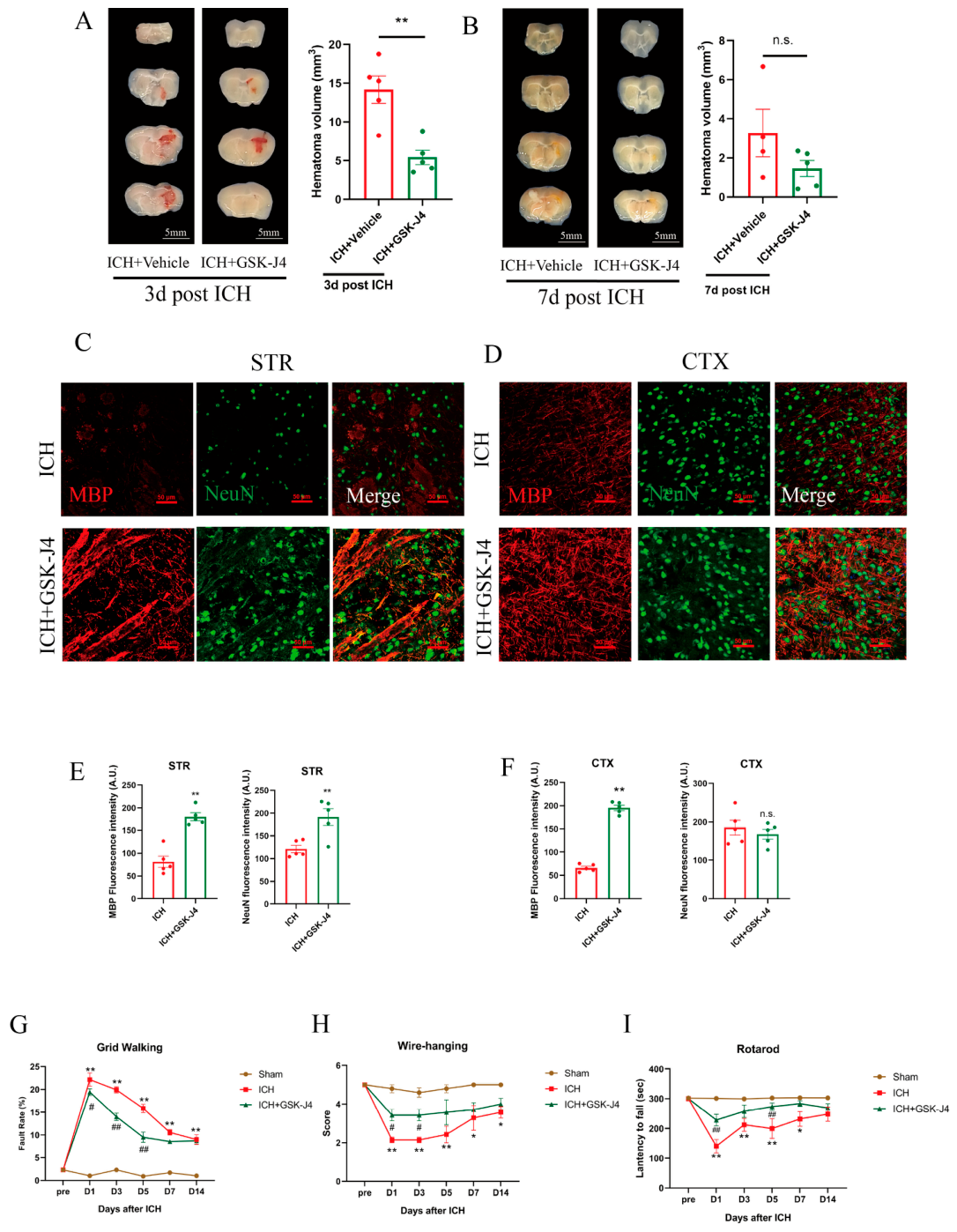
- GSK-J4 confers histological and functional neuroprotection in acute ICH mice, highlighting its therapeutic potential.
Abstract
1. Introduction
2. Materials and Methods
2.1. Drugs and Reagents
2.2. Cell Culture and In Vitro Intervention
2.3. RNA Sequencing and Bioinformatic Analysis
2.4. Quantitative Real-Time Polymerase Chain Reaction (RT-qPCR)
2.5. Enzyme-Linked Immunosorbent Assay (ELISA) Detection
2.6. Animals and Ethical Statement
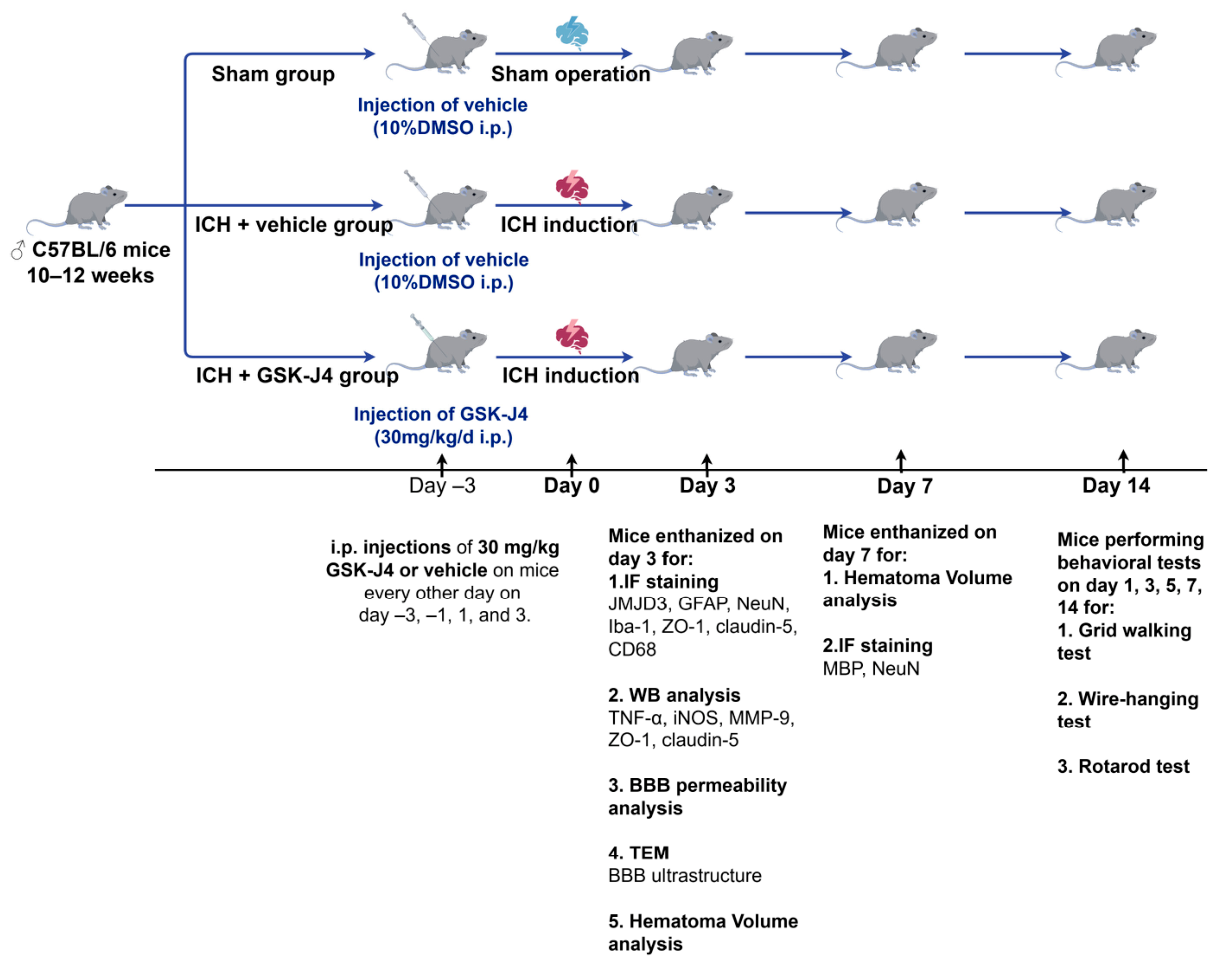
2.7. In Vivo Experimental Grouping and Drug Administration
2.8. In Vivo Stereotaxic ICH Model Establishment
2.9. Immunofluorescence Staining
- To evaluate JMJD3 expression in different cerebral cell types at 72 h post-ICH, sections were double-stained for JMJD3 (1:100) and either GFAP (astrocyte marker, 1:600), NeuN (neuron marker, 1:800), or Iba-1 (microglia marker, 1:500);
- To assess BBB disruption at 72 h post-ICH, sections were double-stained for CD31(endothelial marker, 1:100) and either ZO-1 (1:100) or claudin-5 (1:200);
- To evaluate the phagocytic microglia at 3 days post-ICH, sections were double-stained for CD68 (phagocytic activity marker, 1:1000) and Iba-1 (1:500);
- To evaluate the mean white matter intensity and mean neuronal intensity at 7 days post-ICH, sections were double-stained with a myelin sheath marker (MBP, 1:100) and NeuN (1:800).
2.10. Quantitative Image Analyses of Fluorescence
2.10.1. Method for Quantification of JMJD3 Expression in Different Brain Cell Types
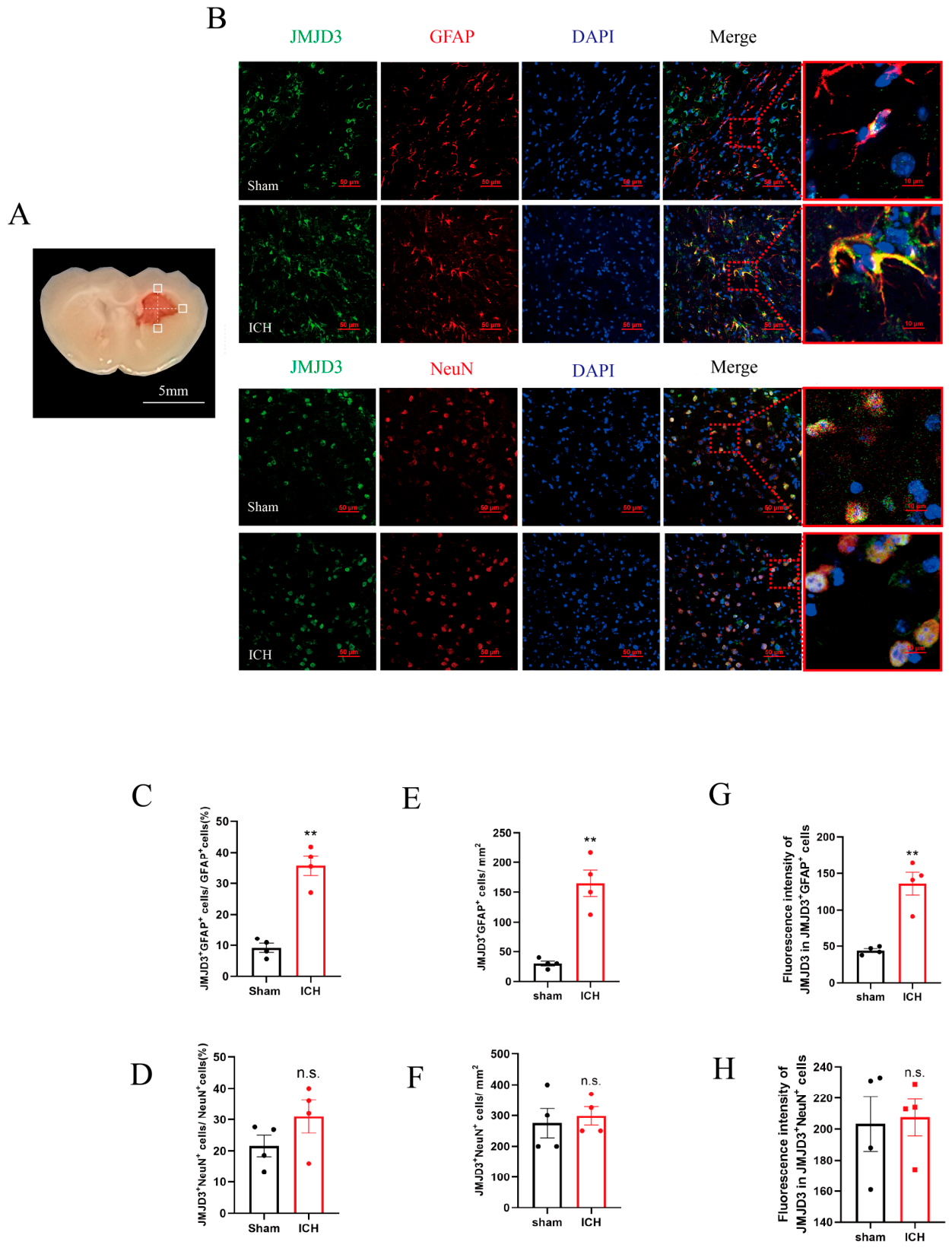
- Percentage of JMJD3+ astrocytes (or neurons) relative to the total number of astrocytes (or neurons) (%) to determine the proportion of a given cell type expressing JMJD3;
- Number of JMJD3+ astrocytes (or neurons) per unit area (per mm2) to quantify the spatial density of JMJD3-expressing-cells;
- MFI of JMJD3 in astrocytes (or neurons), measured with ImageJ (version 1.53t) and defined as the total fluorescence density within all JMJD3+ cells (astrocytes or neurons) divided by the total area of the corresponding JMJD3+ cell population (a.u.), was used to assess the single-cell expression level.
2.10.2. Method for Quantification of Tight Junction Protein Expression in BBB
2.10.3. Method for Quantification of Phagocytic Microglia
2.10.4. Method for Quantification of White Matter and Neuronal Recovery
2.11. Hematoma Volume Analysis
2.12. Western Blot Analysis
2.13. Evaluation of BBB Permeability
2.14. Transmission Electron Microscopy (TEM)
2.15. Behavioral Assessments
2.15.1. Grid Walking Test
2.15.2. Wire-Hanging Test
2.15.3. Rotarod Test
2.16. Statistical Analysis
3. Results
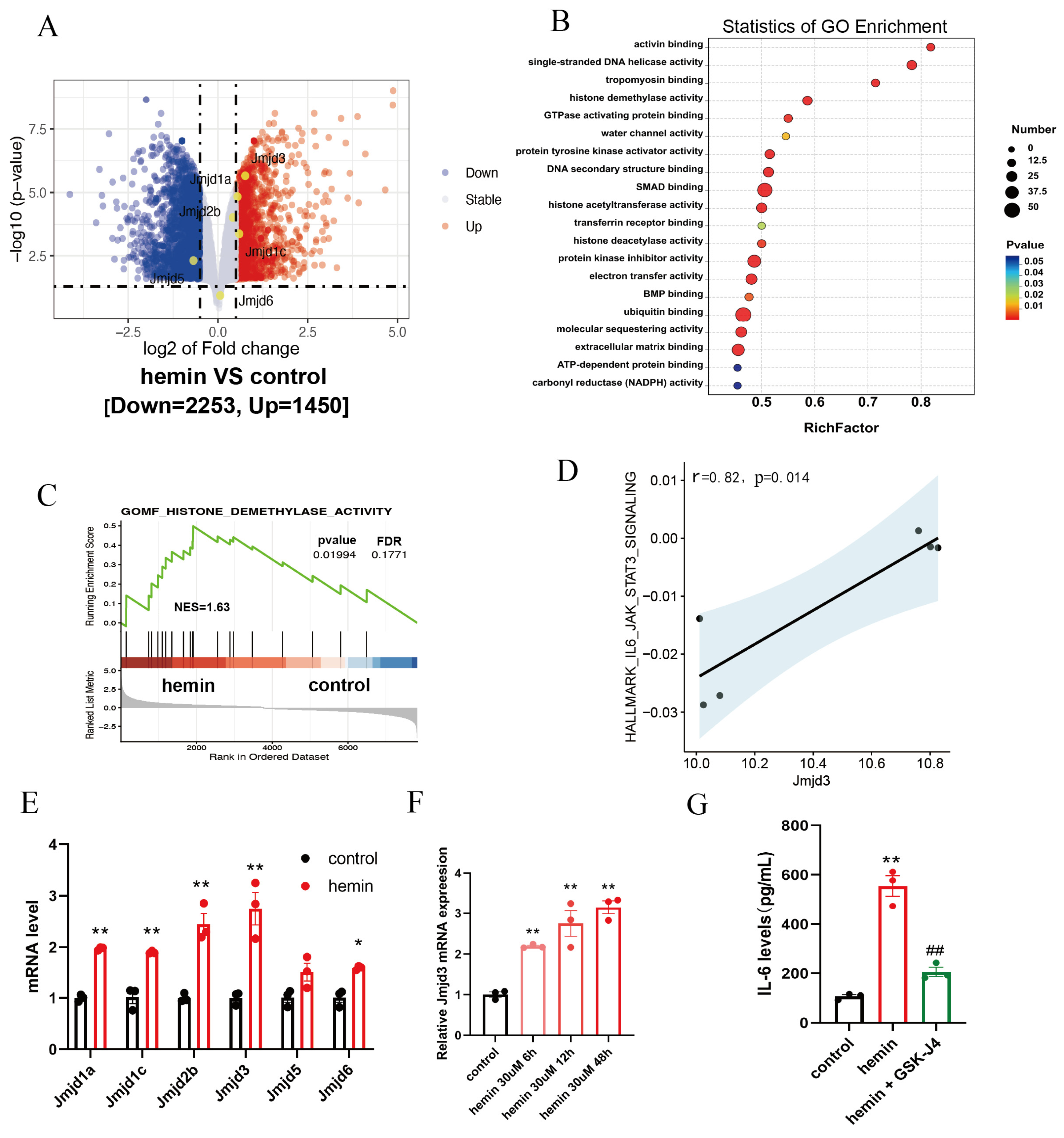
3.1. Jmjd3 Is Upregulated in Hemin-Induced Astrocyte and Correlates with Neuroinflammatory Signaling In Vitro
3.2. JMJD3 Is Upregulated in Astrocytes in the Perihematomal Region Following Acute ICH In Vivo
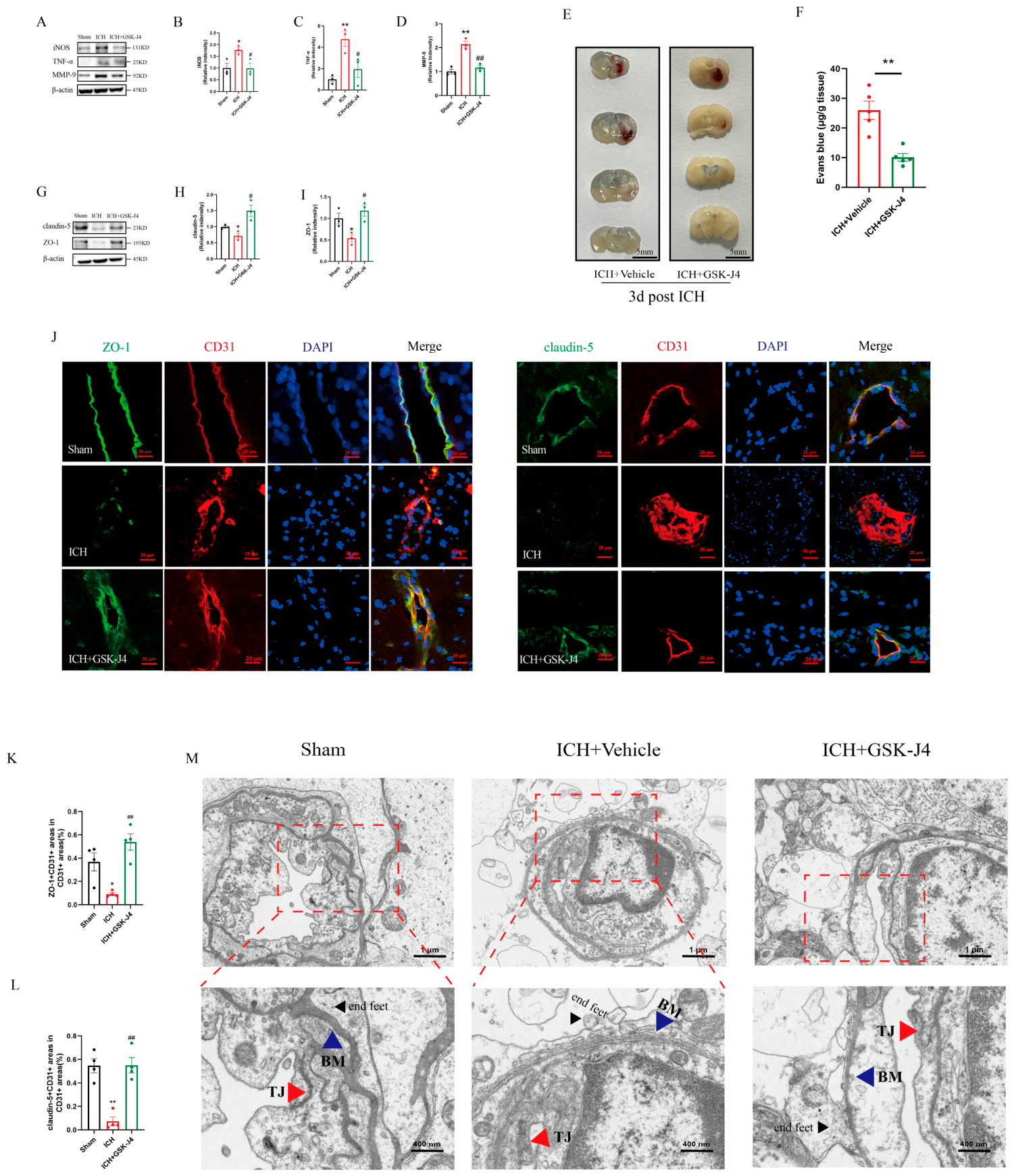
3.3. JMJD3 Inhibition Attenuates Neuroinflammation and Subsequently Preserves Blood–Brain Barrier Integrity in ICH Mice
3.4. JMJD3 Inhibition Accelerates Hematoma Resolution, Promotes Histological Recovery, and Improves Acute Sensorimotor Functions in ICH Mice
4. Discussion
4.1. Astrocytic JMJD3: A Common Epigenetic Regulator in CNS Injuries
4.2. Therapeutic Values of GSK-J4 on Neuroinflammation and BBB Disruption After ICH
4.3. GSK-J4 Attenuates on Neuroinflammation-Mediated BBB Disruption After ICH: The Role of MMP-9
4.4. GSK-J4 Promotes Histological and Neurological Recovery in ICH: By Accelerating Hematoma Resolution in Acute Phase
4.5. Translational Implications and Limitations
5. Conclusions
Supplementary Materials
Author Contributions
Funding
Institutional Review Board Statement
Informed Consent Statement
Data Availability Statement
Conflicts of Interest
Abbreviations
| JMJD3 | Jumonji C domain-containing protein 3 |
| ICH | intracerebral hemorrhage |
| BBB | blood–brain barrier |
| PAR | protease-activated receptor |
| DAMP | damage-associated molecular pattern |
| IL-1β | interleukin-1β |
| TNF-α | tumor necrosis factor-α |
| C1q | complement 1q |
| IL-15 | interleukin-15 |
| CCL2 | C-C motif chemokine ligand 2 |
| CCL5 | C-C motif chemokine ligand 5 |
| NO | nitric oxide |
| iNOS | inducible nitric oxide synthase |
| MMP-9 | matrix metalloproteinase-9 |
| KMT | histone lysine(K) methyltransferase |
| KDM | histone lysine(K) demethylase |
| H3K27me3 | histone H3 at lysine(K) 27 trimethylation |
| CNS | central nervous system |
| TBI | traumatic brain injury |
| SCI | spinal cord injury |
| SAH | subarachnoid hemorrhage |
| LPS | Lipopolysaccharide |
| DMSO | dimethyl sulfoxide |
| IL-6 | interleukin-6 |
| DEG | differentially expressed gene |
| GSEA | gene set enrichment analysis |
| GSVA | gene set variation analysis |
| ELISA | enzyme-linked immunosorbent assay |
| RT-qPCR | quantitative reverse transcription polymerase chain reaction |
| WB | Western blot |
| IF | immunofluorescence |
| TEM | transmission electron microscopy |
| SEM | standard error of the mean |
| ChIP | chromatin immunoprecipitation |
| GFAP | glial fibrillary acidic protein |
| NeuN | neuron-specific nuclear protein |
| CD31 | platelet endothelial cell adhesion molecule 1 |
| ZO-1 | zonula occludens protein-1 |
| MBP | myelin basic protein |
| TJ | tight junction |
| BM | basement membrane |
| ROI | region of interest |
| MFI | mean fluorescence intensity |
| OGD/R | oxygen-glucose deprivation/reoxygenation |
| Gapdh | glyceraldehyde-3-phosphate dehydrogenase |
| WMI | white matter injury |
References
- GBD 2019 Stroke Collaborators. Global, regional, and national burden of stroke and its risk factors, 1990–2019: A systematic analysis for the Global Burden of Disease Study 2019. Lancet Neurol. 2021, 20, 795–820. [Google Scholar] [CrossRef]
- Yu, W.; Che, C.; Yang, Y.; Zhao, Y.; Liu, J.; Chen, A.; Shi, J. Bioactive Self-Assembled Nanoregulator Enhances Hematoma Resolution and Inhibits Neuroinflammation in the Treatment of Intracerebral Hemorrhage. Adv. Sci. (Weinh.) 2025, 12, e2408647. [Google Scholar] [CrossRef]
- Jiang, Z.; Yang, H.; Ni, W.; Gao, X.; Pei, X.; Jiang, H.; Su, J.; Weng, R.; Fei, Y.; Gao, Y.; et al. Attenuation of neuronal ferroptosis in intracerebral hemorrhage by inhibiting HDAC1/2: Microglial heterogenization via the Nrf2/HO1 pathway. CNS Neurosci. Ther. 2024, 30, e14646. [Google Scholar] [CrossRef]
- Wan, J.; Ren, H.; Wang, J. Iron toxicity, lipid peroxidation and ferroptosis after intracerebral haemorrhage. Stroke Vasc. Neurol. 2019, 4, 93–95. [Google Scholar] [CrossRef]
- Aronowski, J.; Zhao, X. Molecular pathophysiology of cerebral hemorrhage: Secondary brain injury. Stroke 2011, 42, 1781–1786. [Google Scholar] [CrossRef] [PubMed]
- Liu, Y.; Bai, Q.; Yong, V.W.; Xue, M. EMMPRIN Promotes the Expression of MMP-9 and Exacerbates Neurological Dysfunction in a Mouse Model of Intracerebral Hemorrhage. Neurochem. Res. 2022, 47, 2383–2395. [Google Scholar] [CrossRef]
- Shlosberg, D.; Benifla, M.; Kaufer, D.; Friedman, A. Blood-brain barrier breakdown as a therapeutic target in traumatic brain injury. Nat. Rev. Neurol. 2010, 6, 393–403. [Google Scholar] [CrossRef]
- Liddelow, S.A.; Barres, B.A. Reactive Astrocytes: Production, Function, and Therapeutic Potential. Immunity 2017, 46, 957–967. [Google Scholar] [CrossRef]
- Bai, Q.; Xue, M.; Yong, V.W. Microglia and macrophage phenotypes in intracerebral haemorrhage injury: Therapeutic opportunities. Brain 2020, 143, 1297–1314. [Google Scholar] [CrossRef] [PubMed]
- Wan, Y.; Holste, K.G.; Hua, Y.; Keep, R.F.; Xi, G. Brain edema formation and therapy after intracerebral hemorrhage. Neurobiol. Dis. 2023, 176, 105948. [Google Scholar] [CrossRef] [PubMed]
- Anderson, M.A.; Burda, J.E.; Ren, Y.; Ao, Y.; O’Shea, T.M.; Kawaguchi, R.; Coppola, G.; Khakh, B.S.; Deming, T.J.; Sofroniew, M.V. Astrocyte scar formation aids central nervous system axon regeneration. Nature 2016, 532, 195–200. [Google Scholar] [CrossRef]
- Li, X.; Chen, G. CNS-peripheral immune interactions in hemorrhagic stroke. J. Cereb. Blood Flow. Metab. 2023, 43, 185–197. [Google Scholar] [CrossRef]
- Pessoa, B.; Hayashide, L.S.; Dias, G.; Pontes, B.; Pinto, R.S.; Diniz, L.P. Senescent Astrocytes: A New Player in Brain Aging and Cognitive Decline. Brain Sci. 2026, 16, 76. [Google Scholar] [CrossRef]
- Jia, P.; Peng, Q.; Fan, X.; Zhang, Y.; Xu, H.; Li, J.; Sonita, H.; Liu, S.; Le, A.; Hu, Q.; et al. Immune-mediated disruption of the blood-brain barrier after intracerebral hemorrhage: Insights and potential therapeutic targets. CNS Neurosci. Ther. 2024, 30, e14853. [Google Scholar] [CrossRef] [PubMed]
- Diaz-Castro, B.; Robel, S.; Mishra, A. Astrocyte Endfeet in Brain Function and Pathology: Open Questions. Annu. Rev. Neurosci. 2023, 46, 101–121. [Google Scholar] [CrossRef]
- Matusova, Z.; Hol, E.M.; Pekny, M.; Kubista, M.; Valihrach, L. Reactive astrogliosis in the era of single-cell transcriptomics. Front. Cell Neurosci. 2023, 17, 1173200. [Google Scholar]
- He, J.; Qin, Z.; Cai, Y.; Liu, H.; Wang, T.; Hu, Q.; Xu, Y.; Yang, P.; Wu, X.; Qu, Y.; et al. USP11-PGAM5 Axis Promotes Neurotoxic Astrocyte Reactivity by Aggravating the mtDNA-cGAS-STING Pathway After Intracerebral Hemorrhage. Adv. Sci. (Weinh.) 2025, 13, e14283. [Google Scholar] [CrossRef]
- Cheng, Y.; Xi, G.; Jin, H.; Keep, R.F.; Feng, J.; Hua, Y. Thrombin-induced cerebral hemorrhage: Role of protease-activated receptor-1. Transl. Stroke Res. 2014, 5, 472–475. [Google Scholar] [CrossRef]
- Scimemi, A. Astrocytes and the Warning Signs of Intracerebral Hemorrhagic Stroke. Neural Plast. 2018, 2018, 7301623. [Google Scholar] [CrossRef] [PubMed]
- Zhou, S.; Liu, C.; Wang, J.; Ye, J.; Lian, Q.; Gan, L.; Deng, S.; Xu, T.; Guo, Y.; Li, W.; et al. CCL5 mediated astrocyte-T cell interaction disrupts blood-brain barrier in mice after hemorrhagic stroke. J. Cereb. Blood Flow. Metab. 2024, 44, 367–383. [Google Scholar] [CrossRef] [PubMed]
- Zhang, W.; Wu, Q.; Hao, S.; Chen, S. The hallmark and crosstalk of immune cells after intracerebral hemorrhage: Immunotherapy perspectives. Front. Neurosci. 2022, 16, 1117999. [Google Scholar] [CrossRef] [PubMed]
- Murray, T.E.; Richards, C.M.; Robert-Gostlin, V.N.; Bernath, A.K.; Lindhout, I.A.; Klegeris, A. Potential neurotoxic activity of diverse molecules released by astrocytes. Brain Res. Bull. 2022, 189, 80–101. [Google Scholar] [CrossRef]
- Choi, M.S.; Kim, Y.E.; Lee, W.J.; Choi, J.W.; Park, G.H.; Kim, S.D.; Jeon, S.J.; Go, H.S.; Shin, S.M.; Kim, W.K.; et al. Activation of protease-activated receptor1 mediates induction of matrix metalloproteinase-9 by thrombin in rat primary astrocytes. Brain Res. Bull. 2008, 76, 368–375. [Google Scholar] [CrossRef]
- Qu, L.; Yin, T.; Zhao, Y.; Lv, W.; Liu, Z.; Chen, C.; Liu, K.; Shan, S.; Zhou, R.; Li, X.; et al. Histone demethylases in the regulation of immunity and inflammation. Cell Death Discov. 2023, 9, 188. [Google Scholar] [CrossRef]
- Hyun, K.; Jeon, J.; Park, K.; Kim, J. Writing, erasing and reading histone lysine methylations. Exp. Mol. Med. 2017, 49, e324. [Google Scholar] [CrossRef]
- Huang, J.; Wang, X.S.; Gao, T.; Wang, X.; Yu, M.Y.; Song, H.X.; Wang, B.Y.; Li, L.M.; Zeng, Q.; Zhang, H.N. Astrocyte KDM4A mediates chemokines and drives neutrophil infiltration to aggravate cerebral ischemia and reperfusion injury. J. Cereb. Blood Flow. Metab. 2024, 44, 491–507. [Google Scholar] [CrossRef]
- Liu, D.; Jin, S.; Cui, J. The TRIM14-USP14-BRCC3 complex epigenetically regulates inflammation through inhibiting OPTN-mediated autophagic degradation of KDM4D. Autophagy 2022, 18, 2001–2002. [Google Scholar] [CrossRef]
- Cavalcanti, F.; Gonzalez-Rey, E.; Delgado, M.; Falo, C.P.; Mestre, L.; Guaza, C.; O’Valle, F.; Lufino, M.M.P.; Xaus, J.; Mascaro, C.; et al. Efficacy of Vafidemstat in Experimental Autoimmune Encephalomyelitis Highlights the KDM1A/RCOR1/HDAC Epigenetic Axis in Multiple Sclerosis. Pharmaceutics 2022, 14, 1420. [Google Scholar] [CrossRef]
- Du, J.; Liang, X.; Wang, D.; Wang, Z.; Shen, R. Mechanism of KDM4A in Regulating Microglial Polarization in Ischemic Stroke. Appl. Biochem. Biotechnol. 2025, 197, 3871–3889. [Google Scholar] [CrossRef] [PubMed]
- Banerjee, S.; Hsu, Y.T.; Nguyen, D.H.; Yeh, S.H.; Liou, K.C.; Liu, J.J.; Liou, J.P.; Chuang, J.Y. Development of BACE2-IN-1/tranylcypromine-based compounds to induce steroidogenesis-dependent neuroprotection. Biomed. Pharmacother. 2025, 183, 117851. [Google Scholar] [CrossRef] [PubMed]
- Berry, W.L.; Janknecht, R. KDM4/JMJD2 histone demethylases: Epigenetic regulators in cancer cells. Cancer Res. 2013, 73, 2936–2942. [Google Scholar] [CrossRef]
- Kim, D.; Kim, K.I.; Baek, S.H. Roles of lysine-specific demethylase 1 (LSD1) in homeostasis and diseases. J. Biomed. Sci. 2021, 28, 41. [Google Scholar] [CrossRef] [PubMed]
- Abu-Hanna, J.; Patel, J.A.; Anastasakis, E.; Cohen, R.; Clapp, L.H.; Loizidou, M.; Eddama, M.M.R. Therapeutic potential of inhibiting histone 3 lysine 27 demethylases: A review of the literature. Clin. Epigenetics 2022, 14, 98. [Google Scholar] [CrossRef]
- Li, X.; Chen, R.Y.; Shi, J.J.; Li, C.Y.; Liu, Y.J.; Gao, C.; Gao, M.R.; Zhang, S.; Lu, J.F.; Cao, J.F.; et al. Emerging role of Jumonji domain-containing protein D3 in inflammatory diseases. J. Pharm. Anal. 2024, 14, 100978. [Google Scholar] [CrossRef]
- Radhakrishnan, M.; Undru, A.; Patel, S.; Sharma, P.; Kumar, A.; Chakravarty, S. Transcriptomic Profiling Reveals Sex-Specific Epigenetic Dynamics Involving kdm6b and H3K27 Methylation in Cerebral Ischemia-Induced Neurogenesis and Recovery. Neuromolecular Med. 2024, 26, 49. [Google Scholar] [CrossRef]
- Lee, K.; Na, W.; Lee, J.Y.; Na, J.; Cho, H.; Wu, H.; Yune, T.Y.; Kim, W.S.; Ju, B.G. Molecular mechanism of Jmjd3-mediated interleukin-6 gene regulation in endothelial cells underlying spinal cord injury. J. Neurochem. 2012, 122, 272–282. [Google Scholar] [CrossRef] [PubMed]
- Shentu, Y.; Tian, Q.; Yang, J.; Liu, X.; Han, Y.; Yang, D.; Zhang, N.; Fan, X.; Wang, P.; Ma, J.; et al. Upregulation of KDM6B contributes to lipopolysaccharide-induced anxiety-like behavior via modulation of VGLL4 in mice. Behav. Brain Res. 2021, 408, 113305. [Google Scholar] [CrossRef] [PubMed]
- Wu, H.; Wang, R.; Qin, X.; Liu, D.; Wang, W.; Xu, J.; Jiang, H.; Pan, F. Effects of chronic stress on depressive-like behaviors and JMJD3 expression in the prefrontal cortex and hippocampus of C57BL/6 and ob/ob mice. J. Psychiatr. Res. 2021, 133, 142–155. [Google Scholar] [CrossRef]
- Feng, P.; Zhang, A.; Su, M.; Cai, H.; Wang, X.; Zhang, Y. Dexmedetomidine inhibits apoptosis of astrocytes induced by oxygen-glucose deprivation via targeting JAK/STAT3 signal pathway. Brain Res. 2021, 1750, 147141. [Google Scholar] [CrossRef]
- Wrede, A.H.; McNamara, M.C.; Baldwin, R.; Luo, J.; Montazami, R.; Kanthasamy, A.; Hashemi, N.N. Characterization of Astrocytic Response after Experiencing Cavitation In Vitro. Glob. Chall. 2020, 4, 1900014. [Google Scholar] [CrossRef]
- Park, C.S.; Lee, J.Y.; Bu, Y.; Yune, T.Y. Carvacrol improves neurological function by inhibiting TRPM7-mediated BBB disruption and hemorrhage after TBI. Acta Neuropathol. Commun. 2025, 13, 262. [Google Scholar] [CrossRef]
- Fernandes, G.S.; Singh, R.D.; Kim, K.K. Generation of a Pure Culture of Neuron-like Cells with a Glutamatergic Phenotype from Mouse Astrocytes. Biomedicines 2022, 10, 928. [Google Scholar] [CrossRef]
- An, P.; Zhao, X.C.; Liu, M.J.; You, Y.Q.; Li, J.Y.; Gong, H.S. Dexmedetomidine Alleviates Intracerebral Hemorrhage-Induced Anxiety-Like Behaviors in Mice Through the Inhibition of TRPV4 Opening. Front. Pharmacol. 2022, 13, 852401. [Google Scholar] [CrossRef] [PubMed]
- Jun, Z.; Xinmeng, J.; Yue, L.; Zhi, W.; Yan, Z.; Tieyi, Y.; Jiangan, T. Jumonji domain containing-3 (JMJD3) inhibition attenuates IL-1beta-induced chondrocytes damage in vitro and protects osteoarthritis cartilage in vivo. Inflamm. Res. 2020, 69, 657–666. [Google Scholar] [CrossRef]
- Davis, F.M.; Tsoi, L.C.; Melvin, W.J.; denDekker, A.; Wasikowski, R.; Joshi, A.D.; Wolf, S.; Obi, A.T.; Billi, A.C.; Xing, X.; et al. Inhibition of macrophage histone demethylase JMJD3 protects against abdominal aortic aneurysms. J. Exp. Med. 2021, 218, e20201839. [Google Scholar] [CrossRef]
- Wang, S.; Ren, X.; Wang, J.; Peng, Q.; Niu, X.; Song, C.; Li, C.; Jiang, C.; Zang, W.; Zille, M.; et al. Blocking autofluorescence in brain tissues affected by ischemic stroke, hemorrhagic stroke, or traumatic brain injury. Front. Immunol. 2023, 14, 1168292. [Google Scholar] [CrossRef]
- Deng, S.; Sherchan, P.; Jin, P.; Huang, L.; Travis, Z.; Zhang, J.H.; Gong, Y.; Tang, J. Recombinant CCL17 Enhances Hematoma Resolution and Activation of CCR4/ERK/Nrf2/CD163 Signaling Pathway After Intracerebral Hemorrhage in Mice. Neurotherapeutics 2020, 17, 1940–1953. [Google Scholar] [CrossRef]
- Zhang, Z.; Lu, T.; Li, S.; Zhao, R.; Li, H.; Zhang, X.; Li, Y.; Xia, Y.; Ni, G. Acupuncture Extended the Thrombolysis Window by Suppressing Blood-Brain Barrier Disruption and Regulating Autophagy-Apoptosis Balance after Ischemic Stroke. Brain Sci. 2024, 14, 399. [Google Scholar] [CrossRef] [PubMed]
- Zhang, Z.; Ji, R.; Liu, Z.; Jiang, Z.; Chu, M.; Wang, Y.; Zhao, J. hUMSC-Exosomes suppress TREM1-p38 MAPK signaling via HMGB1-dependent mechanisms to reprogram microglial function and promote neuroprotection in ischemic stroke. J. Nanobiotechnology 2025, 23, 572. [Google Scholar] [CrossRef] [PubMed]
- Shi, Z.; Mao, L.; Chen, S.; Du, Z.; Xiang, J.; Shi, M.; Wang, Y.; Wang, Y.; Chen, X.; Xu, Z.X.; et al. Reversing Persistent PTEN Activation after Traumatic Brain Injury Fuels Long-Term Axonal Regeneration via Akt/mTORC1 Signaling Cascade. Adv. Sci. (Weinh.) 2025, 12, e2410136. [Google Scholar] [CrossRef]
- Jambhekar, A.; Anastas, J.N.; Shi, Y. Histone Lysine Demethylase Inhibitors. Cold Spring Harb. Perspect. Med. 2017, 7, a026484. [Google Scholar] [CrossRef]
- Baby, S.; Shinde, S.D.; Kulkarni, N.; Sahu, B. Lysine-Specific Demethylase 1 (LSD1) Inhibitors: Peptides as an Emerging Class of Therapeutics. ACS Chem. Biol. 2023, 18, 2144–2155. [Google Scholar] [CrossRef]
- Choi, J.Y.; Yoon, S.S.; Kim, S.E.; Ahn Jo, S. KDM4B histone demethylase and G9a regulate expression of vascular adhesion proteins in cerebral microvessels. Sci. Rep. 2017, 7, 45005. [Google Scholar] [CrossRef]
- Wang, L.; Liu, L.; Han, C.; Jiang, H.; Ma, K.; Guo, S.; Xia, Y.; Wan, F.; Huang, J.; Xiong, N.; et al. Histone Deacetylase 4 Inhibition Reduces Rotenone-Induced Alpha-Synuclein Accumulation via Autophagy in SH-SY5Y Cells. Brain Sci. 2023, 13, 670. [Google Scholar] [CrossRef]
- Gold, S.; Shilatifard, A. Epigenetic therapies targeting histone lysine methylation: Complex mechanisms and clinical challenges. J. Clin. Investig. 2024, 134, e183391. [Google Scholar] [CrossRef]
- Lee, J.Y.; Na, W.H.; Choi, H.Y.; Lee, K.H.; Ju, B.G.; Yune, T.Y. Jmjd3 mediates blood-spinal cord barrier disruption after spinal cord injury by regulating MMP-3 and MMP-9 expressions. Neurobiol. Dis. 2016, 95, 66–81. [Google Scholar] [CrossRef]
- Park, C.S.; Lee, J.Y.; Seo, K.J.; Kim, I.Y.; Ju, B.G.; Yune, T.Y. TRPM7 Mediates BSCB Disruption After Spinal Cord Injury by Regulating the mTOR/JMJD3 Axis in Rats. Mol. Neurobiol. 2024, 61, 662–677. [Google Scholar] [CrossRef] [PubMed]
- Zhang, H.; Wang, J.; Huang, J.; Shi, T.; Ma, X.; Luo, X.; Li, X.; Li, M. Inhibiting Jumoji domain containing protein 3 (JMJD3) prevent neuronal apoptosis from stroke. Exp. Neurol. 2018, 308, 132–142. [Google Scholar] [CrossRef] [PubMed]
- Das, N.D.; Jung, K.H.; Choi, M.R.; Yoon, H.S.; Kim, S.H.; Chai, Y.G. Gene networking and inflammatory pathway analysis in a JMJD3 knockdown human monocytic cell line. Cell Biochem. Funct. 2012, 30, 224–232. [Google Scholar] [CrossRef]
- Yu, S.; Chen, X.; Xiu, M.; He, F.; Xing, J.; Min, D.; Guo, F. The regulation of Jmjd3 upon the expression of NF-kappaB downstream inflammatory genes in LPS activated vascular endothelial cells. Biochem. Biophys. Res. Commun. 2017, 485, 62–68. [Google Scholar] [CrossRef] [PubMed]
- Li, Q.; Zhou, B.; Su, M.; Liao, P.; Lei, F.; Li, X.; Liao, D.; Zhang, X.; Jiang, R. Visualization and Characterization of the Brain Regional Heterogeneity of Astrocyte-Astrocyte Structural Interactions by Using Improved Iontophoresis with Dual-Fluorescent Dyes. Brain Sci. 2023, 13, 1644. [Google Scholar] [CrossRef]
- Wijayatunge, R.; Chen, L.F.; Cha, Y.M.; Zannas, A.S.; Frank, C.L.; West, A.E. The histone lysine demethylase Kdm6b is required for activity-dependent preconditioning of hippocampal neuronal survival. Mol. Cell Neurosci. 2014, 61, 187–200. [Google Scholar] [CrossRef]
- Heinemann, B.; Nielsen, J.M.; Hudlebusch, H.R.; Lees, M.J.; Larsen, D.V.; Boesen, T.; Labelle, M.; Gerlach, L.O.; Birk, P.; Helin, K. Inhibition of demethylases by GSK-J1/J4. Nature 2014, 514, E1–E2. [Google Scholar] [CrossRef]
- Park, C.S.; Lee, J.Y.; Yune, T.Y. Imatinib prevents blood-spinal cord barrier disruption by inhibiting PDGFR-mediated JMJD3 expression and activation after spinal cord injury. Fluids Barriers CNS 2025, 22, 76. [Google Scholar] [CrossRef]
- Guan, X.; Li, M.; Li, H.; Guo, Z.; Ullah, M.S.; Liu, X.; Wu, M.; Yu, W. The role of MMPs in intracerebral hemorrhage. Front. Cell Dev. Biol. 2025, 13, 1667228. [Google Scholar] [CrossRef]
- Min, H.; Hong, J.; Cho, I.H.; Jang, Y.H.; Lee, H.; Kim, D.; Yu, S.W.; Lee, S.; Lee, S.J. TLR2-induced astrocyte MMP9 activation compromises the blood brain barrier and exacerbates intracerebral hemorrhage in animal models. Mol. Brain 2015, 8, 23. [Google Scholar] [CrossRef] [PubMed]
- Liu, C.; Guo, Y.; Deng, S.; Zhou, S.; Wu, S.; Chen, T.; Shi, X.; Mamtilahun, M.; Xu, T.; Liu, Z.; et al. Hemorrhagic stroke-induced subtype of inflammatory reactive astrocytes disrupts blood-brain barrier. J. Cereb. Blood Flow. Metab. 2024, 44, 1102–1116. [Google Scholar] [CrossRef] [PubMed]
- Feng, D.; Zhou, J.; Liu, H.; Wu, X.; Li, F.; Zhao, J.; Zhang, Y.; Wang, L.; Chao, M.; Wang, Q.; et al. Astrocytic NDRG2-PPM1A interaction exacerbates blood-brain barrier disruption after subarachnoid hemorrhage. Sci. Adv. 2022, 8, eabq2423. [Google Scholar] [CrossRef] [PubMed]
- Miraglia, M.C.; Scian, R.; Samartino, C.G.; Barrionuevo, P.; Rodriguez, A.M.; Ibanez, A.E.; Coria, L.M.; Velasquez, L.N.; Baldi, P.C.; Cassataro, J.; et al. Brucella abortus induces TNF-alpha-dependent astroglial MMP-9 secretion through mitogen-activated protein kinases. J. Neuroinflammation 2013, 10, 47. [Google Scholar] [CrossRef]
- Yang, C.C.; Hsiao, L.D.; Tseng, H.C.; Kuo, C.M.; Yang, C.M. Pristimerin Inhibits MMP-9 Expression and Cell Migration Through Attenuating NOX/ROS-Dependent NF-kappaB Activation in Rat Brain Astrocytes Challenged with LPS. J. Inflamm. Res. 2020, 13, 325–341. [Google Scholar] [CrossRef]
- Yang, C.M.; Hsieh, H.L.; Yu, P.H.; Lin, C.C.; Liu, S.W. IL-1beta Induces MMP-9-Dependent Brain Astrocytic Migration via Transactivation of PDGF Receptor/NADPH Oxidase 2-Derived Reactive Oxygen Species Signals. Mol. Neurobiol. 2015, 52, 303–317. [Google Scholar] [CrossRef]
- Zhang, Z.; Ru, D.; Liu, Z.; Guo, Z.; Zhu, L.; Zhang, Y.; Chu, M.; Wang, Y.; Zhao, J. Integrative Multiomics Profiling of Mouse Hippocampus Reveals Transcriptional Upregulation of Interferon-Stimulated Genes Through PU.1 Regulator in Microglial Activation Induced by Chronic Cerebral Hypoperfusion. MedComm (2020) 2025, 6, e70157. [Google Scholar] [CrossRef]
- Du, Y.; Li, G.; Lin, Y.; Ji, Z.; Shi, Y.; Zhang, X.; Zhou, N.; Zhang, J.; Kang, K.; Zhao, X.; et al. Spatiotemporal multi-omics profiling of secondary brain injury after intracerebral hemorrhage in an optimized autologous blood-induced mouse model with human tissue validation. Exp. Neurol. 2026, 398, 115650. [Google Scholar] [CrossRef] [PubMed]
- Mai, L.M.; Joundi, R.A.; Katsanos, A.H.; Selim, M.; Shoamanesh, A. Pathophysiology of Intracerebral Hemorrhage: Recovery Trajectories. Stroke 2025, 56, 783–793. [Google Scholar] [CrossRef] [PubMed]
- Liu, J.; Liu, L.; Wang, X.; Jiang, R.; Bai, Q.; Wang, G. Microglia: A Double-Edged Sword in Intracerebral Hemorrhage From Basic Mechanisms to Clinical Research. Front. Immunol. 2021, 12, 675660. [Google Scholar] [CrossRef] [PubMed]
- Tao, T.; Liu, G.J.; Shi, X.; Zhou, Y.; Lu, Y.; Gao, Y.Y.; Zhang, X.S.; Wang, H.; Wu, L.Y.; Chen, C.L.; et al. DHEA Attenuates Microglial Activation via Induction of JMJD3 in Experimental Subarachnoid Haemorrhage. J. Neuroinflammation 2019, 16, 243. [Google Scholar] [CrossRef]
- Salminen, A.; Kaarniranta, K.; Hiltunen, M.; Kauppinen, A. Histone demethylase Jumonji D3 (JMJD3/KDM6B) at the nexus of epigenetic regulation of inflammation and the aging process. J. Mol. Med. (Berl) 2014, 92, 1035–1043. [Google Scholar] [CrossRef]
- Luan, Y.; Zhang, H.; Liu, Y.; Zhou, J.; Li, W.; Ma, K.; Zheng, X.; Huang, C.; Chen, X.; Lu, H.; et al. Inverse and dynamic levels of H3K4me3 and H3K27me3 regulate mouse postnatal dental gyrus development. Cell Death Differ. 2025, 33, 219–235. [Google Scholar] [CrossRef]
- Benyoucef, A.; Palii, C.G.; Wang, C.; Porter, C.J.; Chu, A.; Dai, F.; Tremblay, V.; Rakopoulos, P.; Singh, K.; Huang, S.; et al. UTX inhibition as selective epigenetic therapy against TAL1-driven T-cell acute lymphoblastic leukemia. Genes Dev. 2016, 30, 508–521. [Google Scholar] [CrossRef]
- Watarai, H.; Okada, M.; Kuramoto, K.; Takeda, H.; Sakaki, H.; Suzuki, S.; Seino, S.; Oizumi, H.; Sadahiro, M.; Kitanaka, C. Impact of H3K27 Demethylase Inhibitor GSKJ4 on NSCLC Cells Alone and in Combination with Metformin. Anticancer Res. 2016, 36, 6083–6092. [Google Scholar] [CrossRef]



| Gene Name | Primer Forward (5′ to 3′) | Primer Reverse (3′ to 5′) |
|---|---|---|
| Jmjd3 | ACCCGACCTCTTACATCCCC | GGAGCAGGTTTGAGCACCAT |
| Jmjd1a | TCAGAGCTAGAGTCGGCTGG | CCAACTTTCTCCGAGCGTGA |
| Jmjd1c | CGACTGGGACACGGGTCTA | GTCTGGCTAGGGTCCTTCCT |
| Jmjd2b | CCAATGCTGTACGTGTTGCC | TGACGCCGGCTCTTTTTGAT |
| Jmjd5 | CATCTGTGGACTCTGTGGGAA | TCCTGACAGACTGACTCTGAT |
| Jmjd6 | CATCACTGCCACCCAGAAGACTG | AGTCCATTTCTCCTGTGCGG |
| Gapdh | CATCACTGCCACCCAGAAGACTG | ATGCCAGTGAGCTTCCCGTTCAG |
Disclaimer/Publisher’s Note: The statements, opinions and data contained in all publications are solely those of the individual author(s) and contributor(s) and not of MDPI and/or the editor(s). MDPI and/or the editor(s) disclaim responsibility for any injury to people or property resulting from any ideas, methods, instructions or products referred to in the content. |
© 2026 by the authors. Licensee MDPI, Basel, Switzerland. This article is an open access article distributed under the terms and conditions of the Creative Commons Attribution (CC BY) license.
Share and Cite
Zhang, Q.; Ru, D.; Fang, J.; Zeng, J.; Yuan, Q.; Du, Z.; Wu, G.; Zhu, J.; Hu, J. Inhibition of Astrocytic JMJD3 Attenuates Neuroinflammation-Mediated Blood–Brain Barrier Disruption and Improves Functional Recovery After Intracerebral Hemorrhage in Mice. Brain Sci. 2026, 16, 454. https://doi.org/10.3390/brainsci16050454
Zhang Q, Ru D, Fang J, Zeng J, Yuan Q, Du Z, Wu G, Zhu J, Hu J. Inhibition of Astrocytic JMJD3 Attenuates Neuroinflammation-Mediated Blood–Brain Barrier Disruption and Improves Functional Recovery After Intracerebral Hemorrhage in Mice. Brain Sciences. 2026; 16(5):454. https://doi.org/10.3390/brainsci16050454
Chicago/Turabian StyleZhang, Quan, Dewen Ru, Jiang Fang, Jun Zeng, Qiang Yuan, Zhuoying Du, Gang Wu, Jianhong Zhu, and Jin Hu. 2026. "Inhibition of Astrocytic JMJD3 Attenuates Neuroinflammation-Mediated Blood–Brain Barrier Disruption and Improves Functional Recovery After Intracerebral Hemorrhage in Mice" Brain Sciences 16, no. 5: 454. https://doi.org/10.3390/brainsci16050454
APA StyleZhang, Q., Ru, D., Fang, J., Zeng, J., Yuan, Q., Du, Z., Wu, G., Zhu, J., & Hu, J. (2026). Inhibition of Astrocytic JMJD3 Attenuates Neuroinflammation-Mediated Blood–Brain Barrier Disruption and Improves Functional Recovery After Intracerebral Hemorrhage in Mice. Brain Sciences, 16(5), 454. https://doi.org/10.3390/brainsci16050454