Article

Speech Sound Production in Adults with Dyslexia

by
Sabrina Turker
1,2,*,
Natalia Kartushina
3 and
Narly Golestani
1,4,5
1
Brain and Language Lab, Department of Behavioral and Cognitive Biology, University of Vienna, 1030 Vienna, Austria
2
Research Group Cognition & Plasticity, Max Planck Institute for Human Cognitive and Brain Sciences, 04103 Leipzig, Germany
3
Department of Linguistics and Scandinavian Studies, University of Oslo, NO-0317 Oslo, Norway
4
Institute of Developmental and Educational Psychology, Faculty of Psychology, University of Vienna, 1090 Vienna, Austria
5
Department of Psychology, Faculty of Psychology and Educational Sciences, University of Geneva, 1205 Geneva, Switzerland
*
Author to whom correspondence should be addressed.
Brain Sci. 2026, 16(5), 448; https://doi.org/10.3390/brainsci16050448

Submission received: 24 March 2026 / Revised: 13 April 2026 / Accepted: 21 April 2026 / Published: 23 April 2026
(This article belongs to the Special Issue Current Advances in Developmental Dyslexia)

Abstract

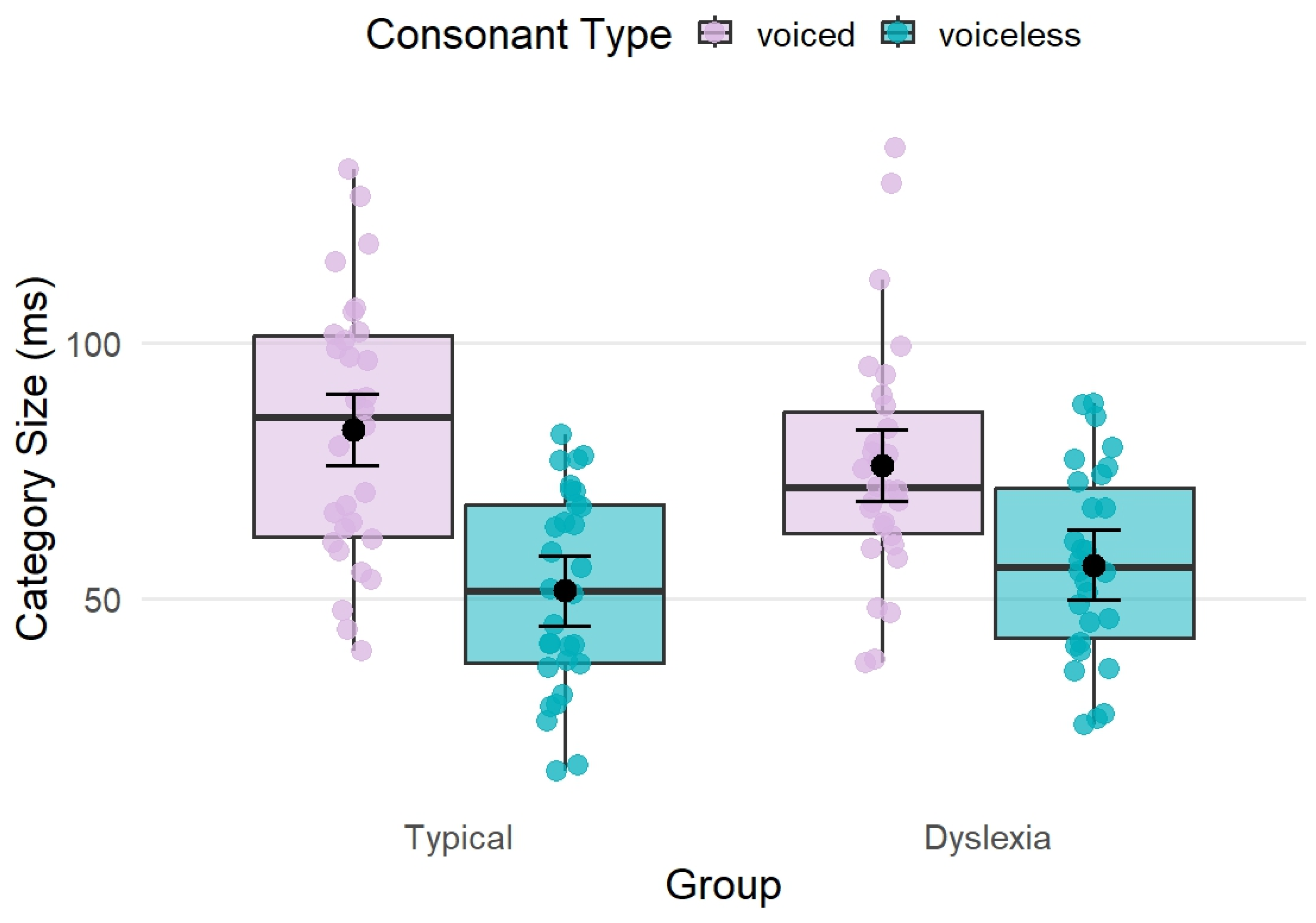
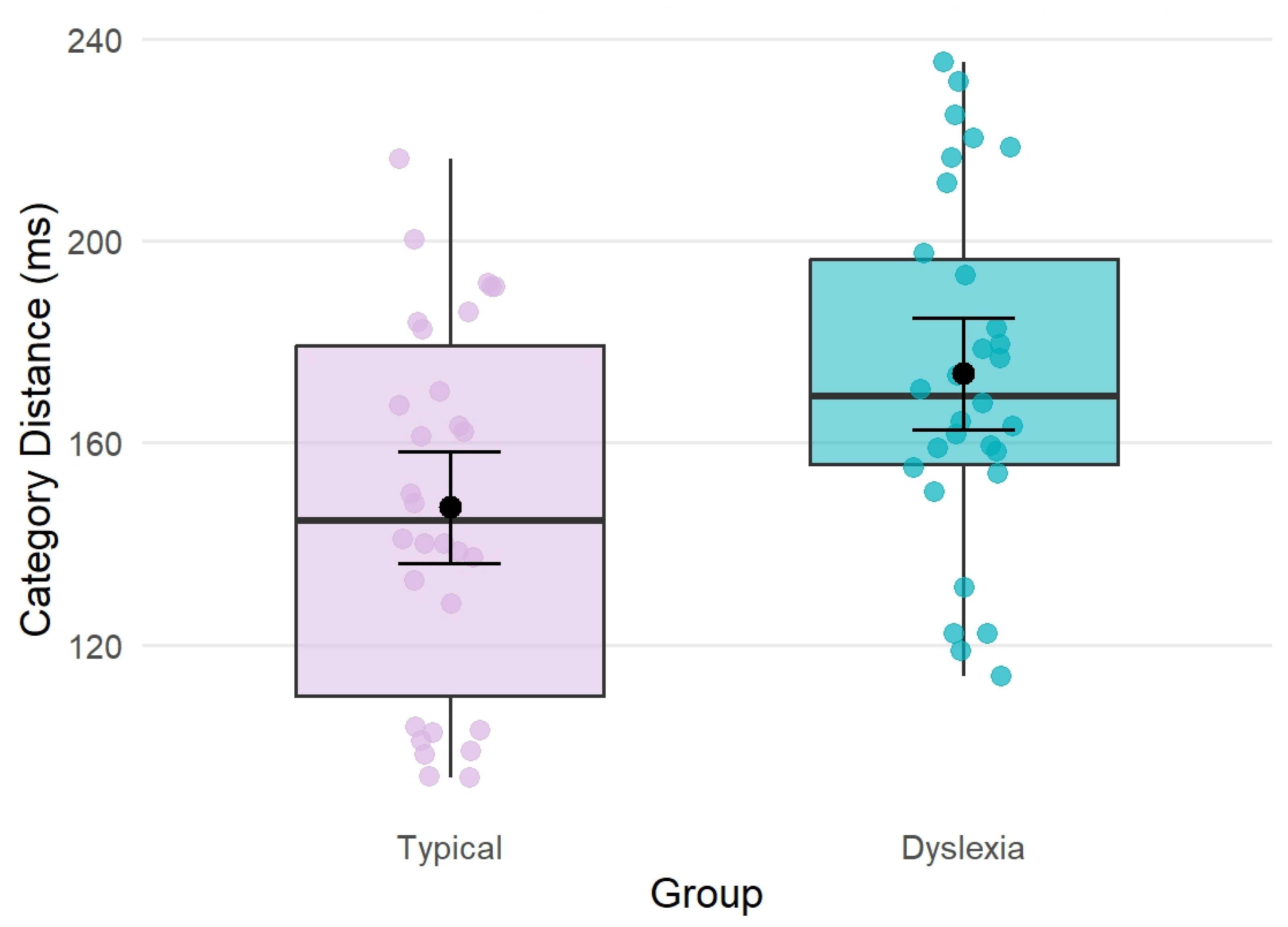
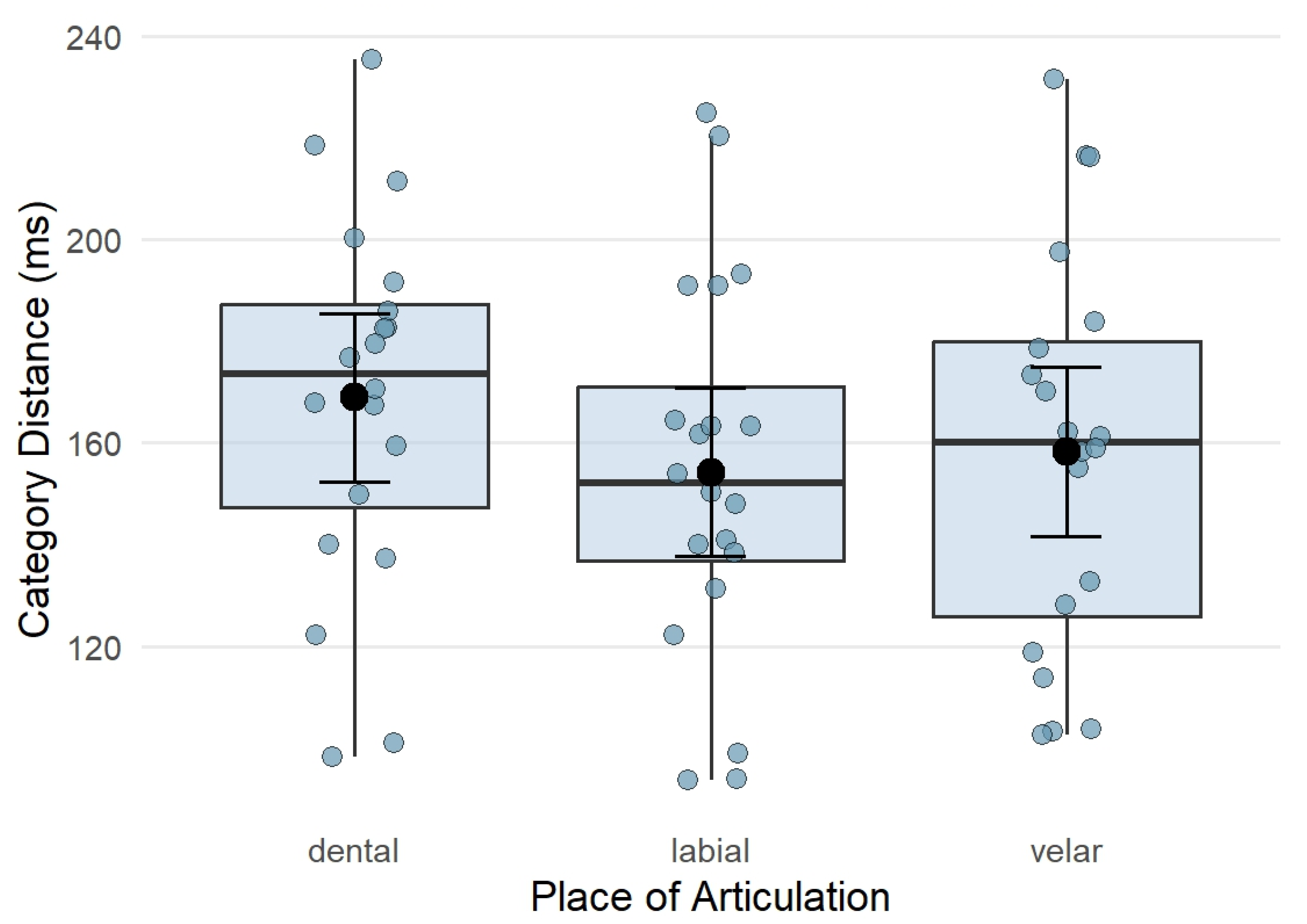
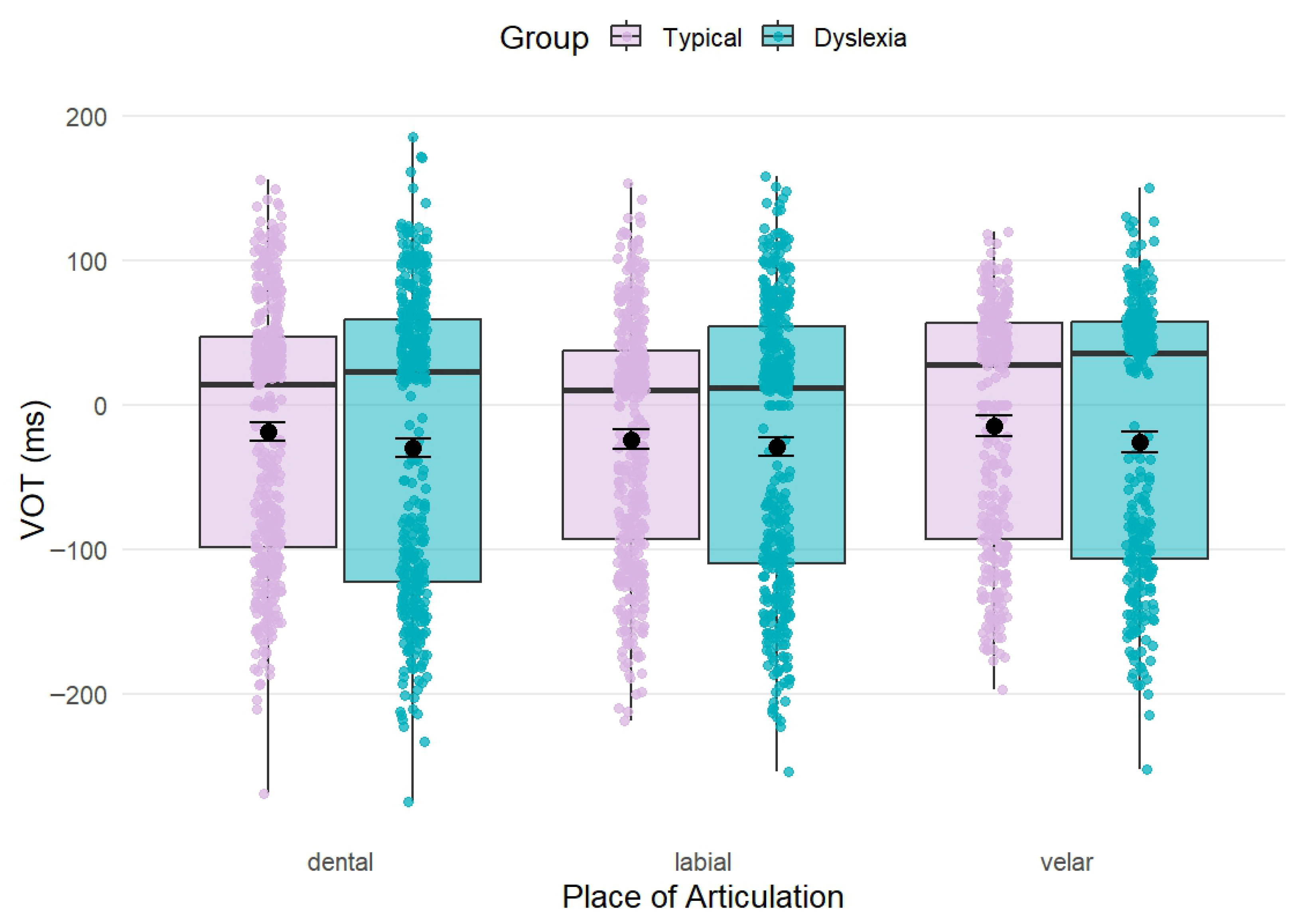
Background: Dyslexia is a reading disorder that is associated with phonological processing and awareness difficulties. However, little is known about phonetic production in dyslexia. Whereas individual differences in speech sound perception were linked to native and foreign speech sound production in typical readers, this remains to be explored in dyslexia. Given the phonetic processing deficits frequently encountered in dyslexia, we aimed to pinpoint potential differences in the acoustic realization of native phonemic production in adults with dyslexia. Methods: Ten adults with dyslexia and ten age-matched typical readers produced 24 native-language minimal voiced–voiceless word pairs across three places of articulation (labial, dental, velar) in a reading task. Acoustic analyses addressed phonemic category size, between-category distance, and voice onset time (VOT). Pseudoword reading performance served as an index of phonological decoding ability. Results: For category size, we observed a trend-level group-by-type interaction (p = 0.059, η2 = 0.04): both groups showed larger category sizes for voiced than voiceless consonants, but this difference was numerically larger in typical readers. Between-category distance showed a marginal group effect (p = 0.089, η2 = 0.14), with larger differences between categories in dyslexia. VOT showed the expected effect of voicing, but no group differences. Conclusions: Our results indicate broadly preserved speech production in dyslexia, alongside subtle differences in category separation and size in dyslexia, marked by considerable inter-individual variability.
Keywords: developmental dyslexia; speech production; auditory processing; speech perception; phonemic category size developmental dyslexia; speech production; auditory processing; speech perception; phonemic category size