Article

Cognitive Behavioral Therapy Reduces Symptom Severity and Normalizes Neurophysiological and Attentional Reactivity in Anorexia Nervosa: A Randomized Controlled Trial


by
Eda Yılmazer
1,
Metin Çınaroğlu
2,*,
Selami Varol Ülker
3 and
Gökben Hızlı Sayar
4
1
Psychology Department, Faculty of Social Science, Beykoz University, Istanbul 34805, Türkiye
2
Psychology Department, Faculty of Administrative and Social Science, İstanbul Nişantaşı University, Maslak Mah. Taşyoncası Sok. No: 1V ve No:1Y Sarıyer, Istanbul 34398, Türkiye
3
Faculty of Humanities and Social Sciences, Üsküdar University, Istanbul 34662, Türkiye
4
Medical School, Üsküdar University, Istanbul 34662, Türkiye
*
Author to whom correspondence should be addressed.
Brain Sci. 2026, 16(3), 309; https://doi.org/10.3390/brainsci16030309

Submission received: 3 February 2026 / Revised: 27 February 2026 / Accepted: 12 March 2026 / Published: 13 March 2026
(This article belongs to the Section Neuropsychiatry)

Abstract

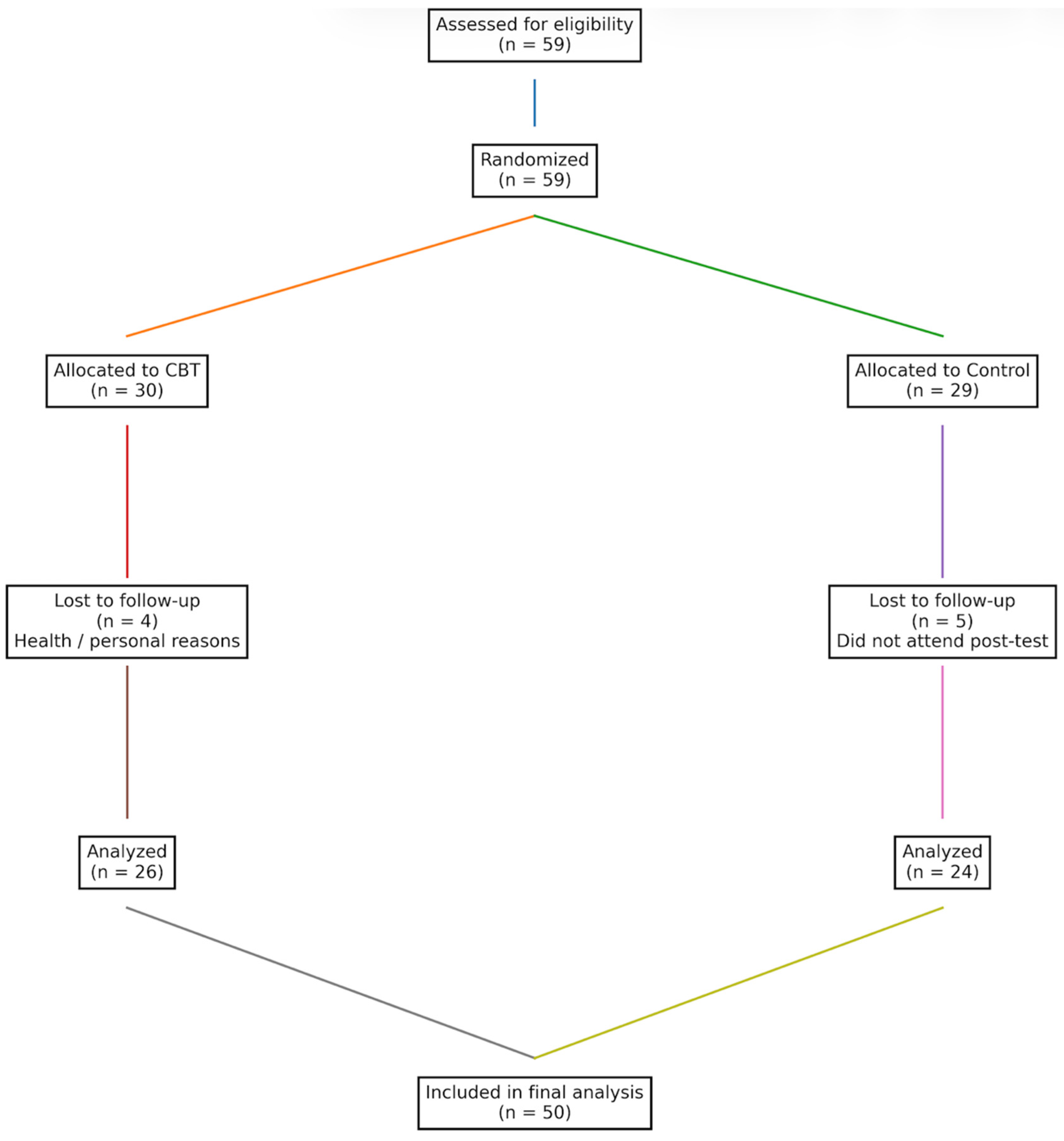
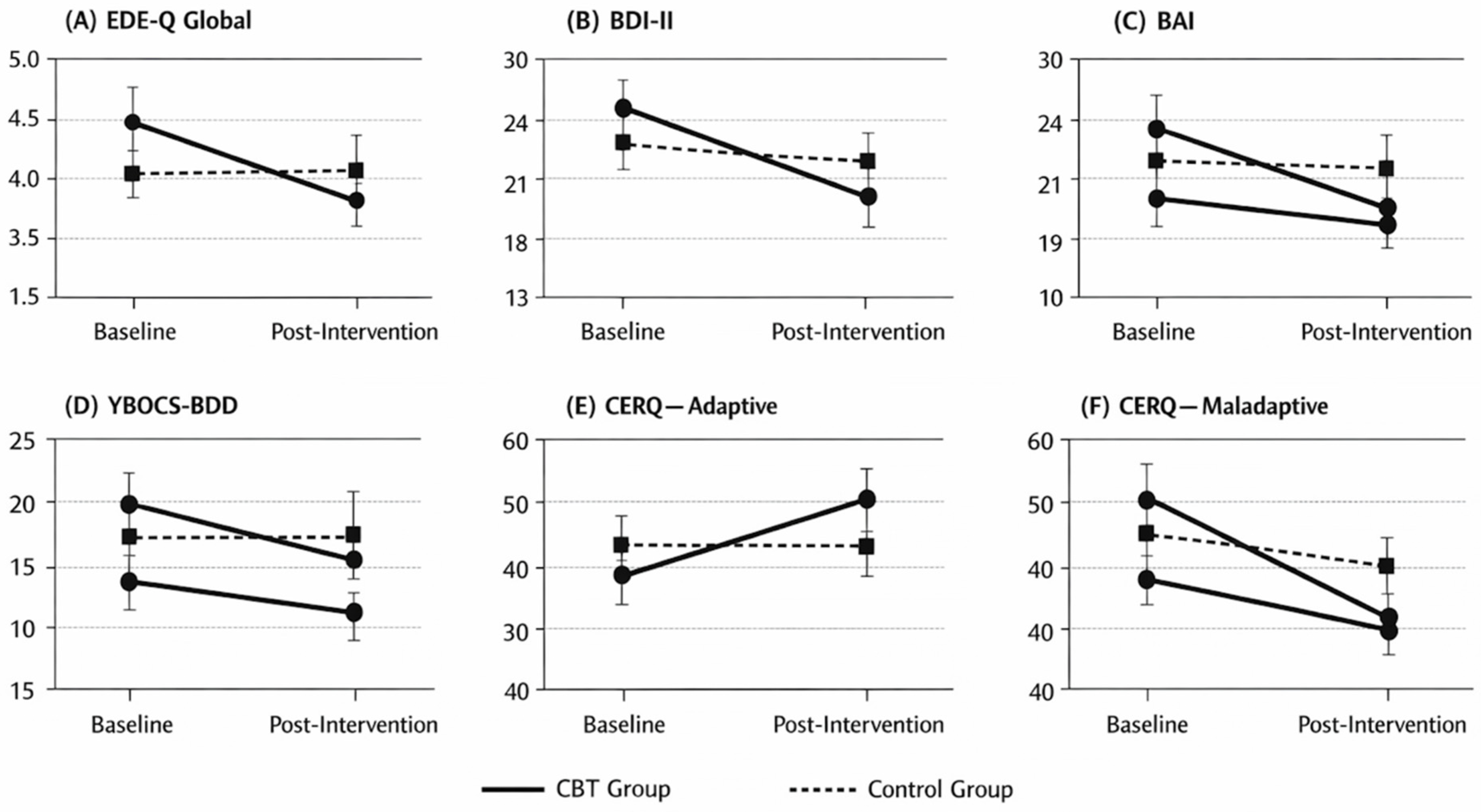
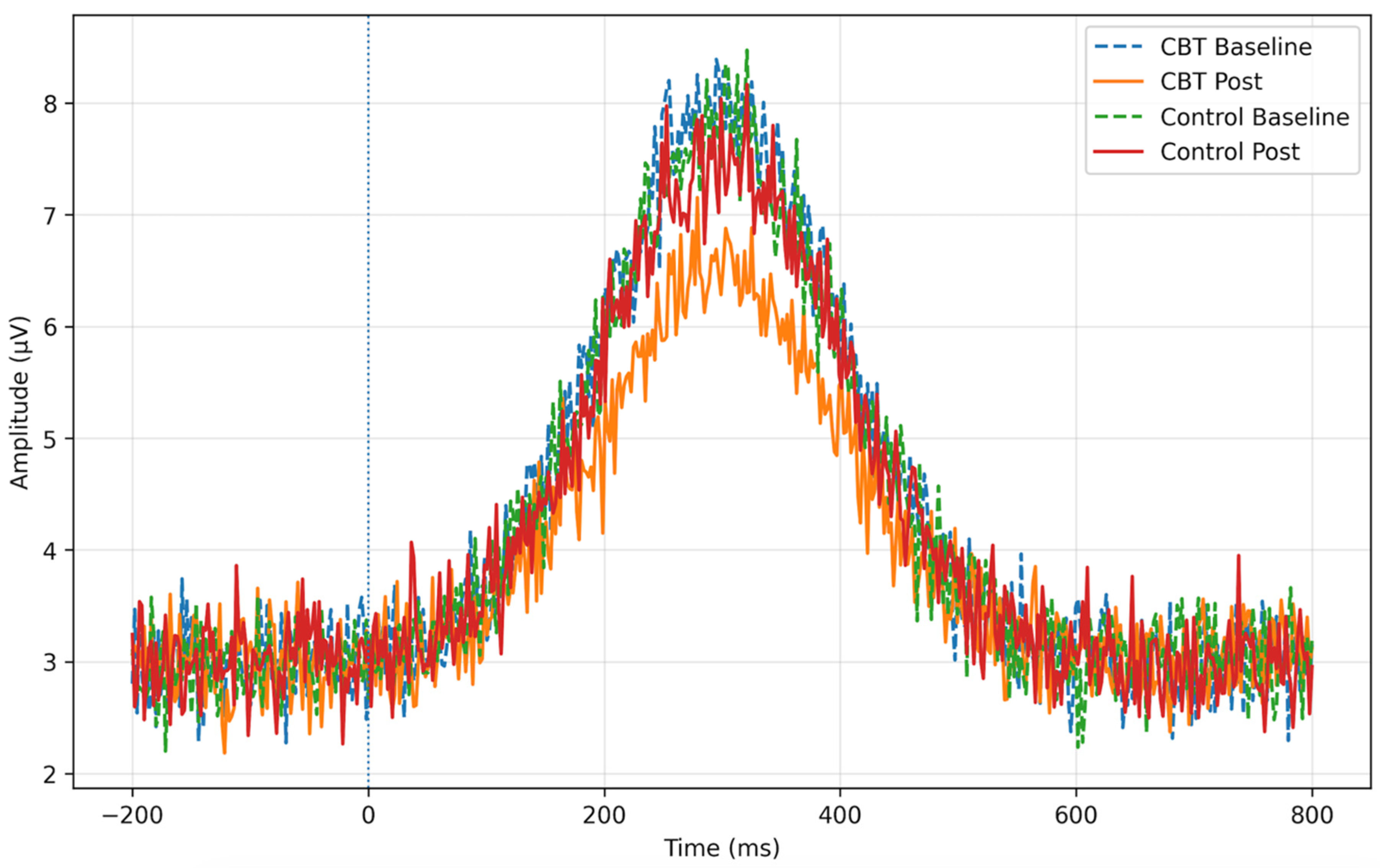
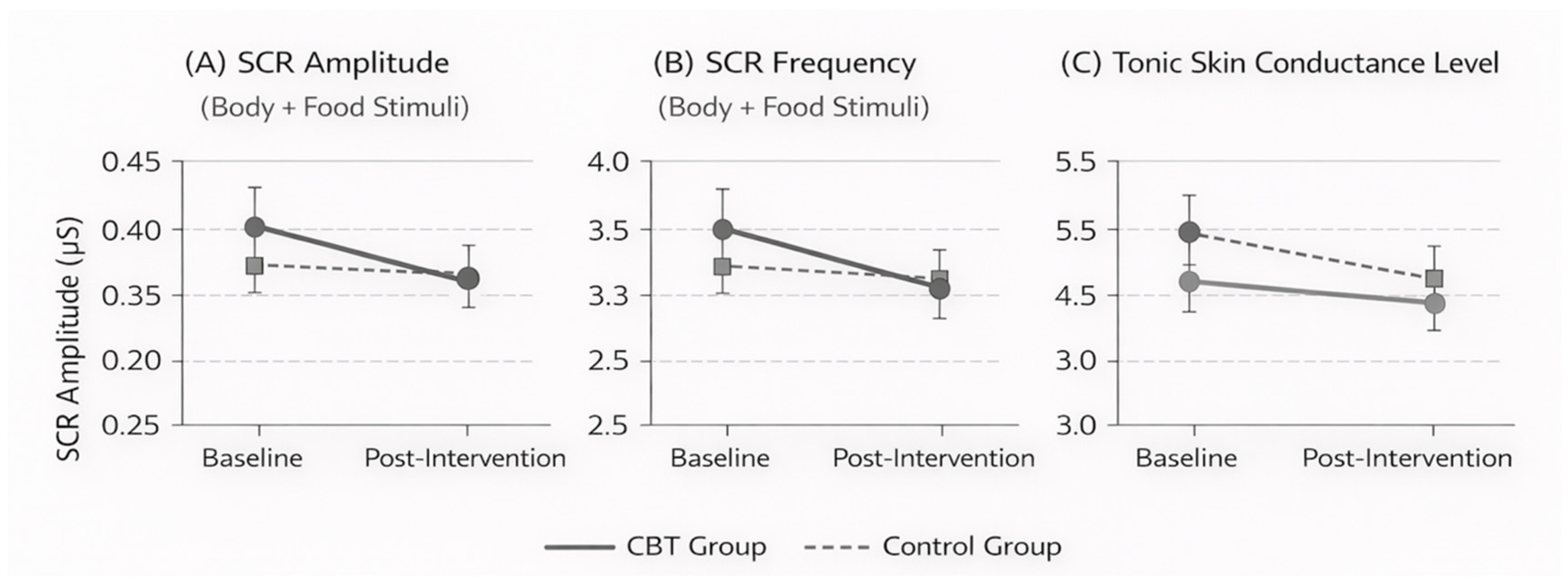
Background: Anorexia nervosa (AN) is a severe psychiatric disorder marked by restrictive eating, distorted body image, and high relapse rates. While cognitive-behavioral therapy (CBT) is a widely used treatment, its mechanisms of action in AN remain incompletely understood, particularly beyond self-reported symptom change. This study investigated the effects of a 12-week CBT intervention on both clinical and multimodal laboratory-based outcomes in women with restrictive-type AN. Methods: In a two-arm, pre–post randomized controlled trial (ClinicalTrials.gov: NCT07037017), 59 women with restrictive-type AN were randomized to a CBT intervention (n = 30) or no-treatment control (n = 29). A total of 50 participants (CBT: 26; control: 24) completed baseline and post-intervention assessments and were included in analyses. Outcomes included psychometric measures (eating disorder symptoms, depression, anxiety, body image-related obsessive–compulsive symptoms, and cognitive emotion regulation) and laboratory-based indices: electroencephalography (EEG), galvanic skin response (GSR), and eye-tracking during exposure to food- and body-related stimuli. Group × Time effects were analyzed using repeated-measures mixed-effects models, and statistical analyses were conducted using SPSS (Version 31; IBM Corp., Armonk, NY, USA). Results: Significant Group × Time interactions indicated greater improvements in the CBT group across all psychometric outcomes, including reduced eating disorder symptom severity (p < 0.001, ηp2 = 0.28) and increased adaptive emotion regulation. CBT participants also showed significant reductions in EEG P300 and late positive potential (LPP) amplitudes to body-related stimuli, increased frontal alpha asymmetry, decreased visual fixation on salient body and food cues, and attenuated GSR reactivity (all p < 0.05). Exploratory correlations revealed that symptom improvements were associated with reductions in neurophysiological and attentional reactivity. Conclusions: To our knowledge, this is the first RCT in AN to demonstrate that CBT not only improves self-reported outcomes but also modulates neurophysiological and attentional processes implicated in the maintenance of the disorder. Multimodal laboratory assessments provided mechanistic insight into treatment effects and may inform personalized intervention strategies. CBT appears to facilitate recovery through both cognitive–emotional and physiological recalibration.
Keywords: anorexia nervosa; cognitive behavioral therapy; EEG; eye-tracking; galvanic skin response; attentional bias; emotion regulation; randomized controlled trial; eating disorders anorexia nervosa; cognitive behavioral therapy; EEG; eye-tracking; galvanic skin response; attentional bias; emotion regulation; randomized controlled trial; eating disorders