Article

Neural Complexity of Implicit Attitudes Predicts Exercise Behavior in Hypertensive Patients: An EEG Entropy Study


1
School of Nursing, Chinese Academy of Medical Sciences & Peking Union Medical College, Beijing 100144, China
2
Center for Cognitive and Brain Sciences, Institute of Collaborative Innovation, University of Macau, Macau 999078, China
3
Institute of Biomedical Engineering, Chinese Academy of Medical Sciences & Peking Union Medical College, Tianjin 300192, China
*
Author to whom correspondence should be addressed.
Brain Sci. 2026, 16(2), 244; https://doi.org/10.3390/brainsci16020244

Submission received: 23 January 2026 / Revised: 19 February 2026 / Accepted: 20 February 2026 / Published: 22 February 2026
(This article belongs to the Section Behavioral Neuroscience)

Abstract

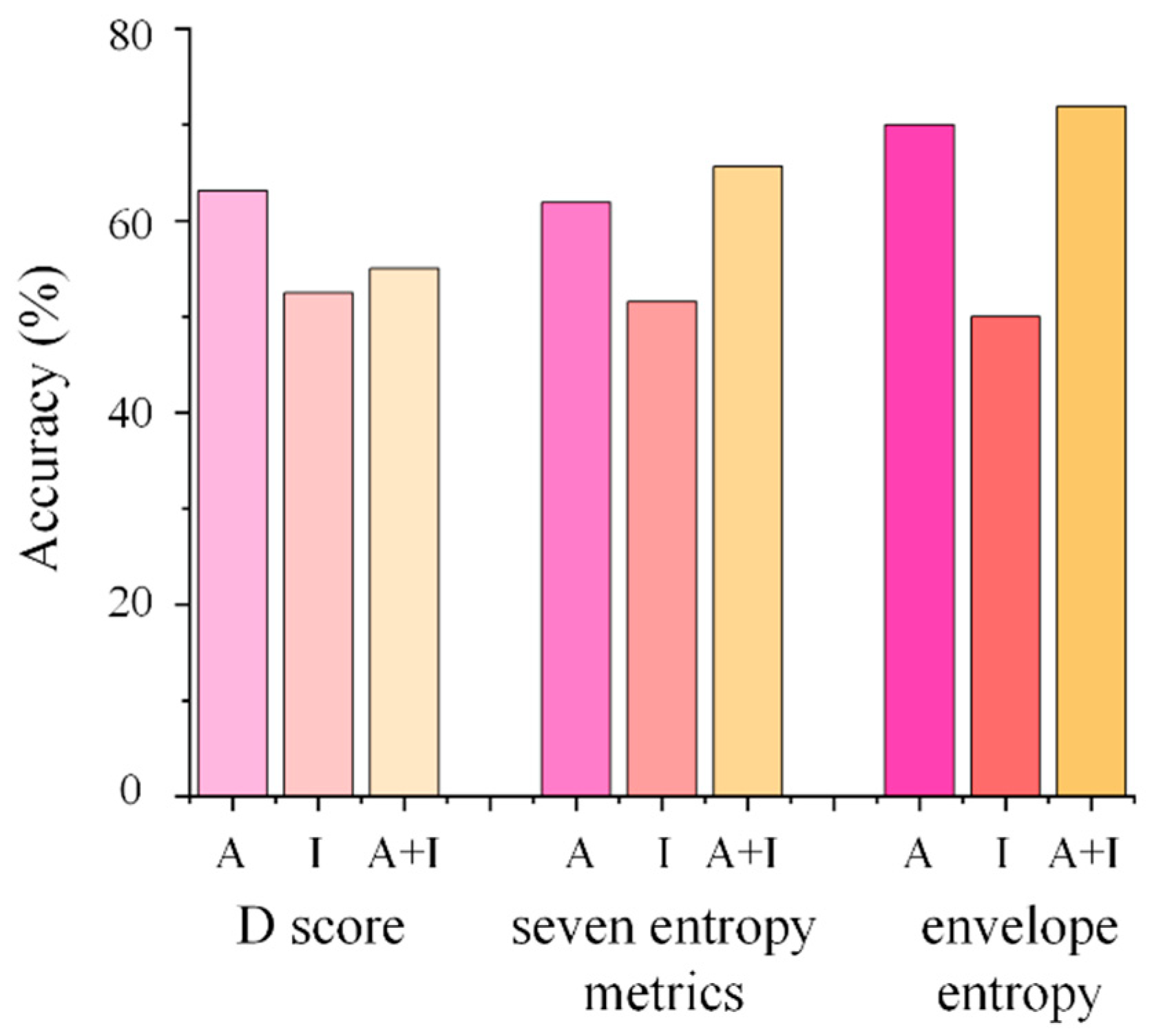
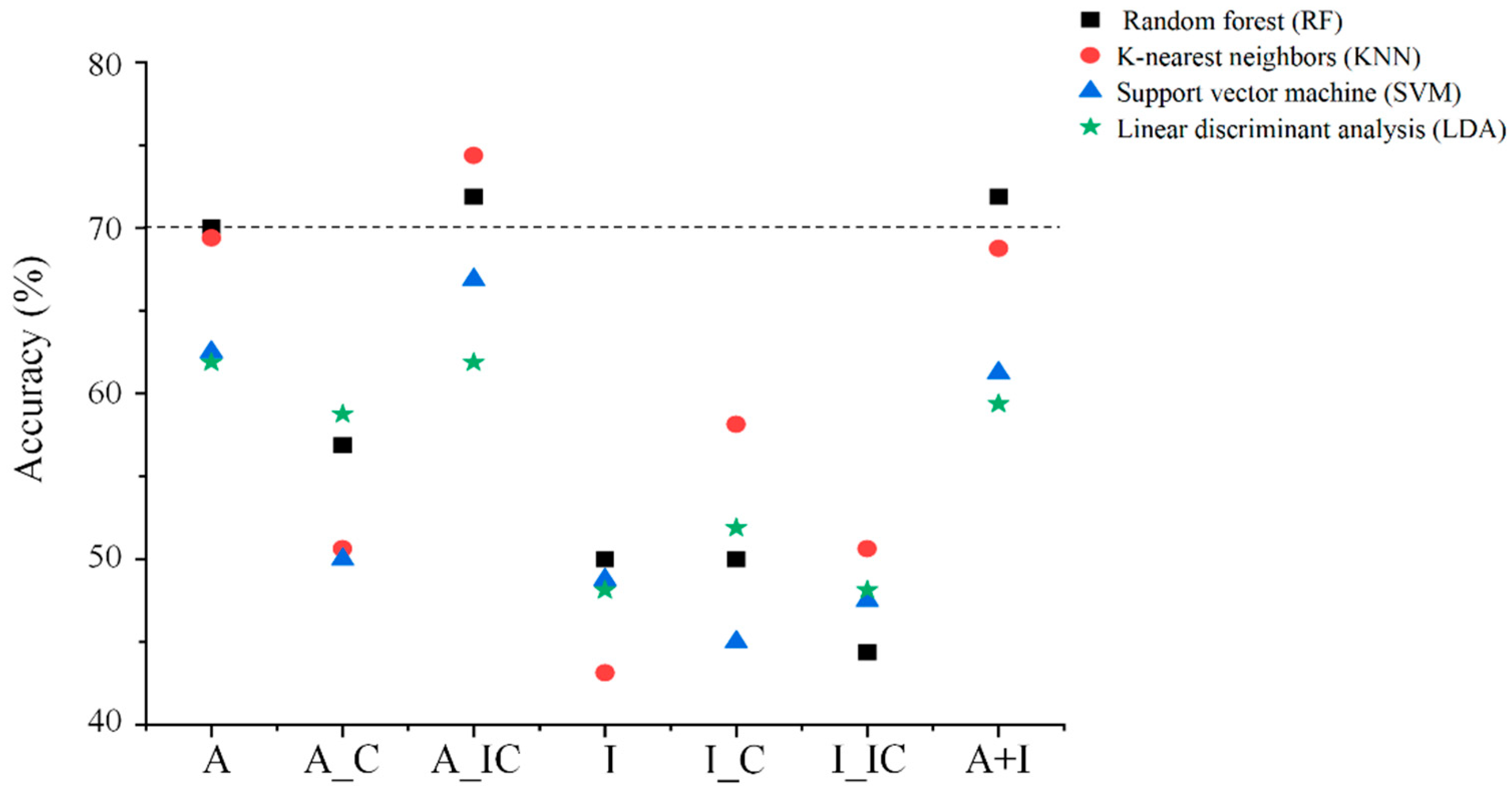
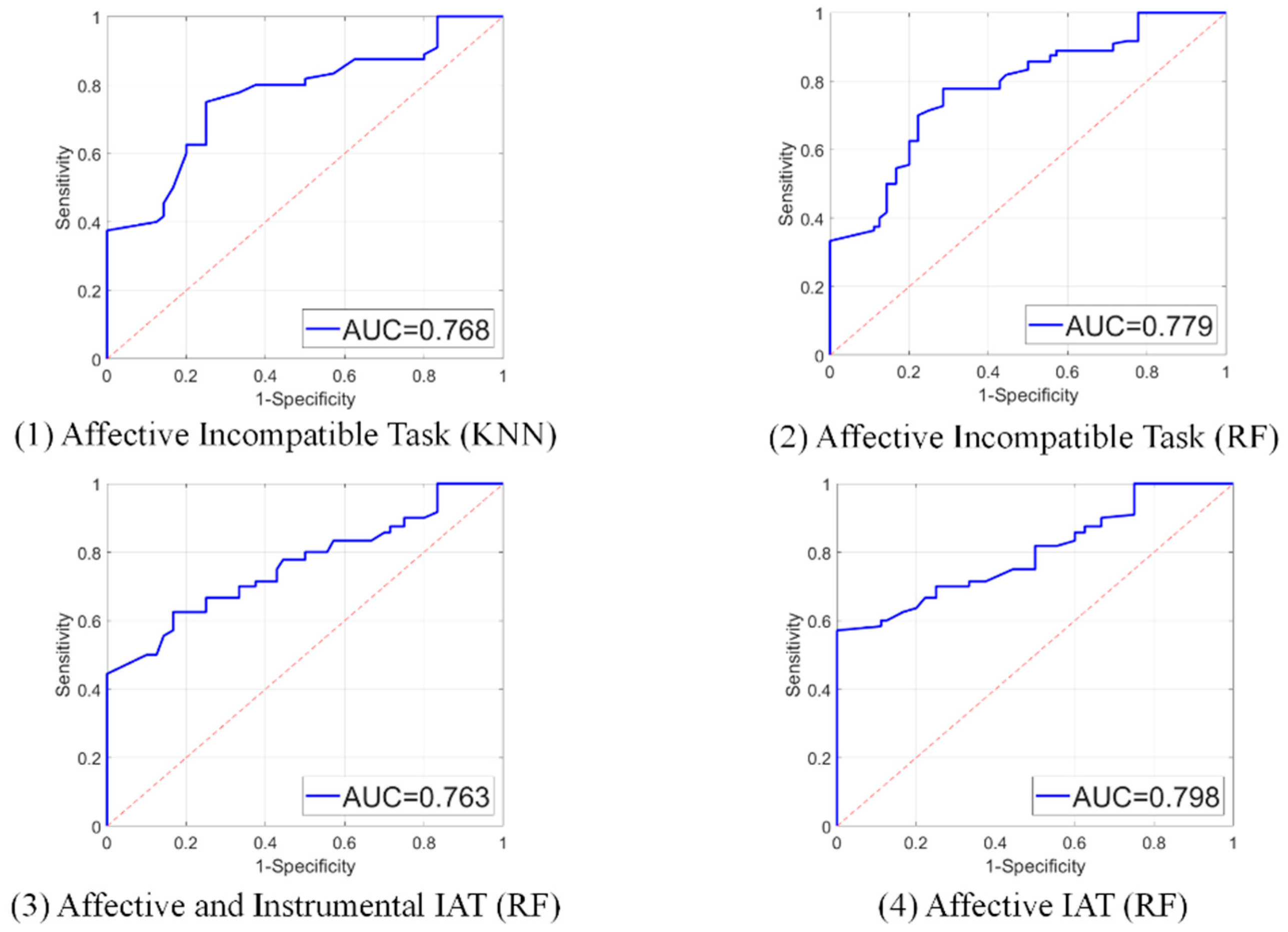
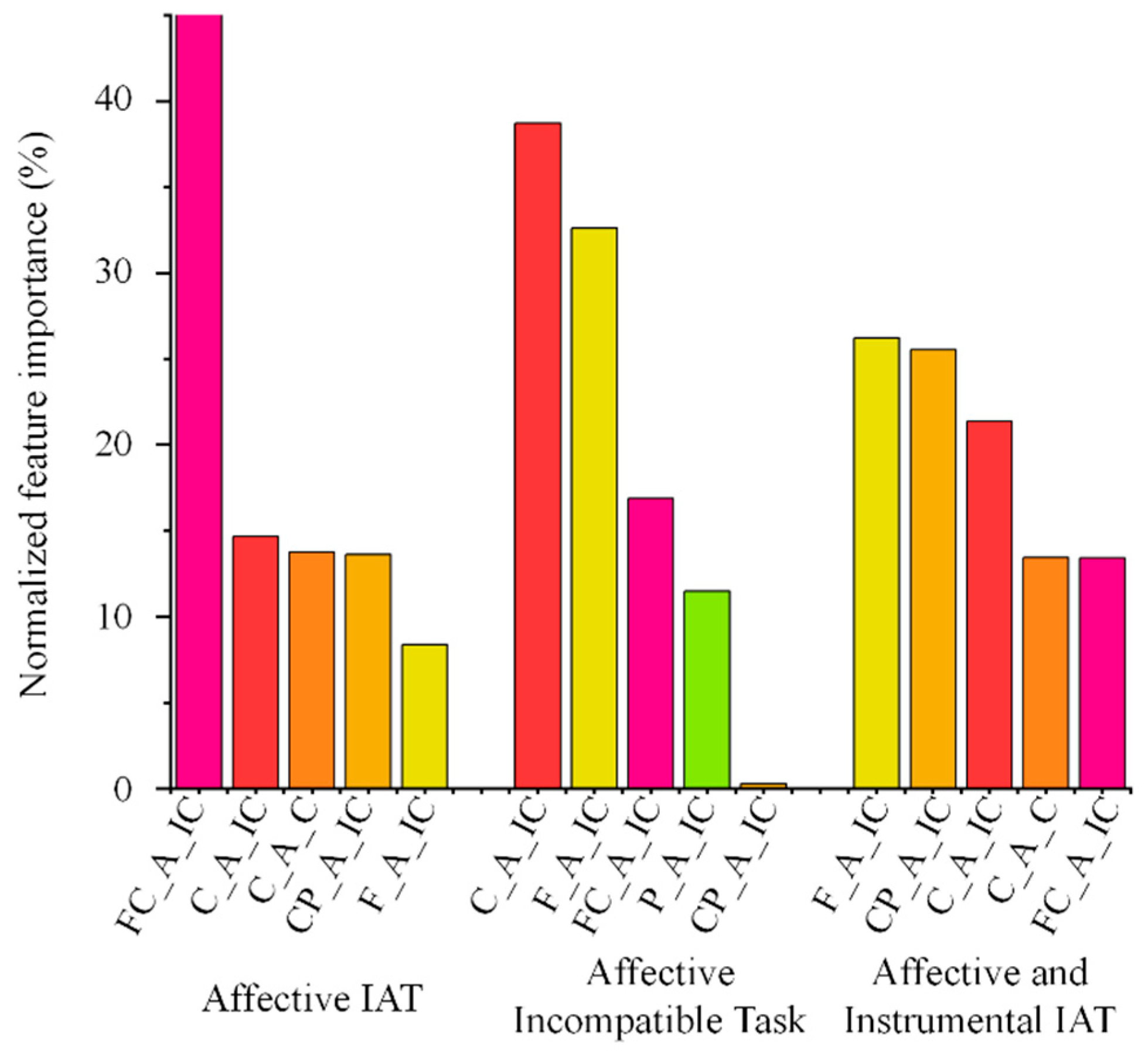
Background: Exercise is a key component in managing hypertension, yet adherence remains low. Beyond deliberate decision-making, implicit attitudes also play an important role in exercise behavior as automatic and unconscious evaluative processes. Traditional studies mostly rely on reaction time measures, which are susceptible to practice effects and fail to capture dynamic neural processing. Objectives: This study aimed to examine whether the EEG entropy derived from implicit attitude processing can better predict exercise behavior than traditional reaction time measures in patients with hypertension. Methods: Fifty-seven hypertensive patients completed affective and instrumental implicit association tests (IATs) with EEG recording. Seven entropy features were extracted. Multiple machine learning algorithms were applied to compare the predictive performance of reaction time with EEG entropy features. The random forest model was used to analyze the importance ranking of features from different brain regions. Results: EEG entropy outperformed reaction times in distinguishing exercisers from non-exercisers. Affective implicit attitudes consistently demonstrated stronger accuracy than instrumental attitudes. Envelope entropy showed the most robust and significant group differences. For the random forest (RF) classifier of envelope entropy, classification accuracies were 71.9% for the affective IAT (incompatible task only), and 71.9% for the model combining affective and instrumental IAT features. Frontal and central regions contributed most to classification. Conclusions: EEG entropy, particularly envelope entropy during affective IAT-incompatible tasks, provides superior discrimination of exercise behavior than reaction time measures. This suggests that exercise behavior is closely linked to the neural complexity underlying affective conflict processing. These findings advance our understanding of the neural dynamic patterns linking implicit attitudes and exercise behavior and suggest EEG entropy as a promising tool for assessing and intervening exercise behavior.
Keywords: implicit attitude; exercise; entropy; EEG implicit attitude; exercise; entropy; EEG