Visitor Characteristics and Museum Fatigue: A Case Study at the ETRU Museum in Rome
 , , ,
, , ,  , and
, and
Highlights
- The emergence of museum fatigue leads to decreased viewing time, but also to increased heart rate.
- While viewing time trends are consistent between individuals, heart rate trends are different depending on individual characteristics.
- Heart rate may be employed as an implicit measure of museum fatigue.
- Physiological measures must be considered when investigating individual characteristics linked to museum fatigue.
Abstract
1. Introduction
2. Materials and Methods
2.1. Participants
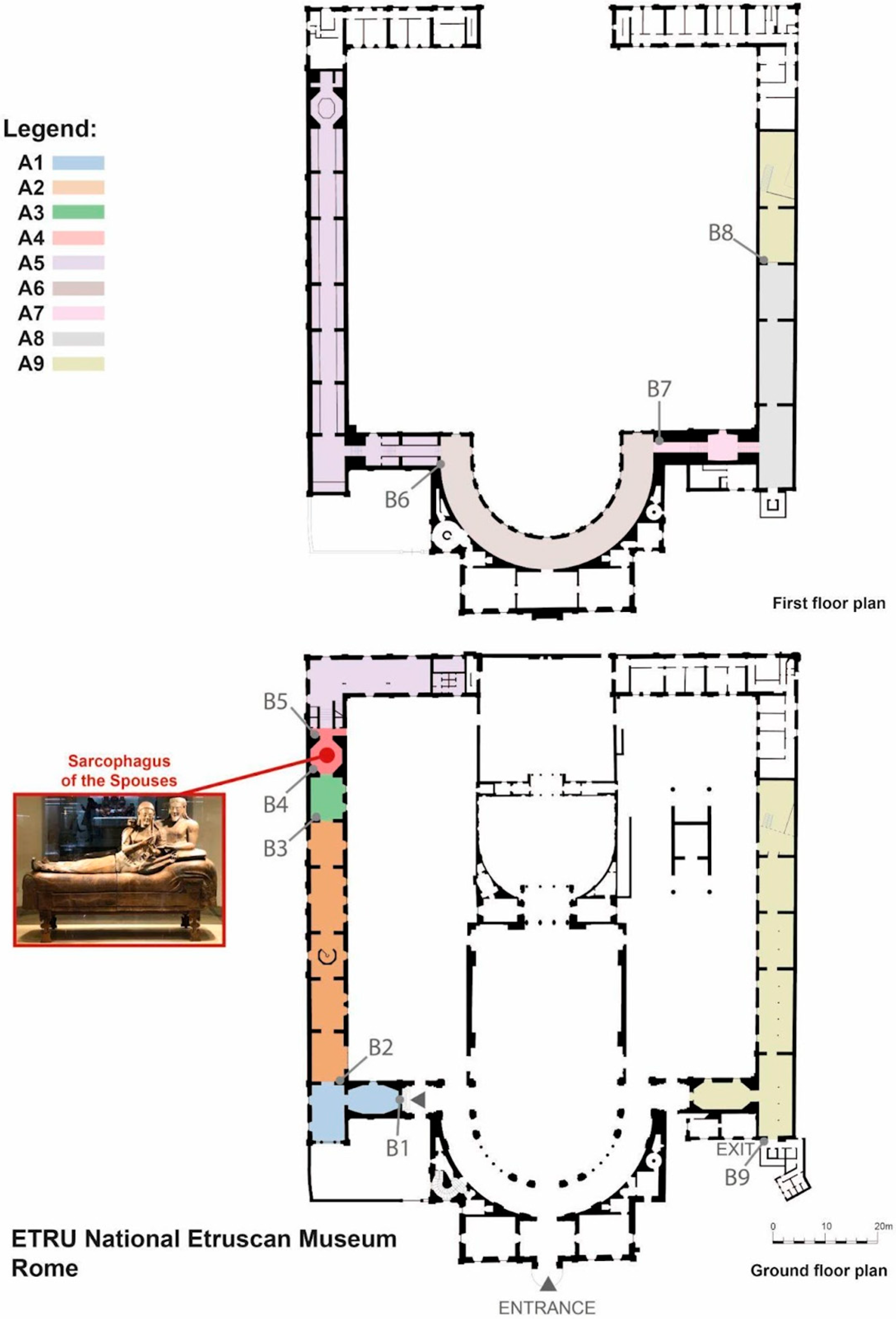
2.2. Museum Visit
2.3. Outcome Measures
2.4. Experimental Procedure
2.5. Data Analysis
3. Results
3.1. Clustering Analysis Results
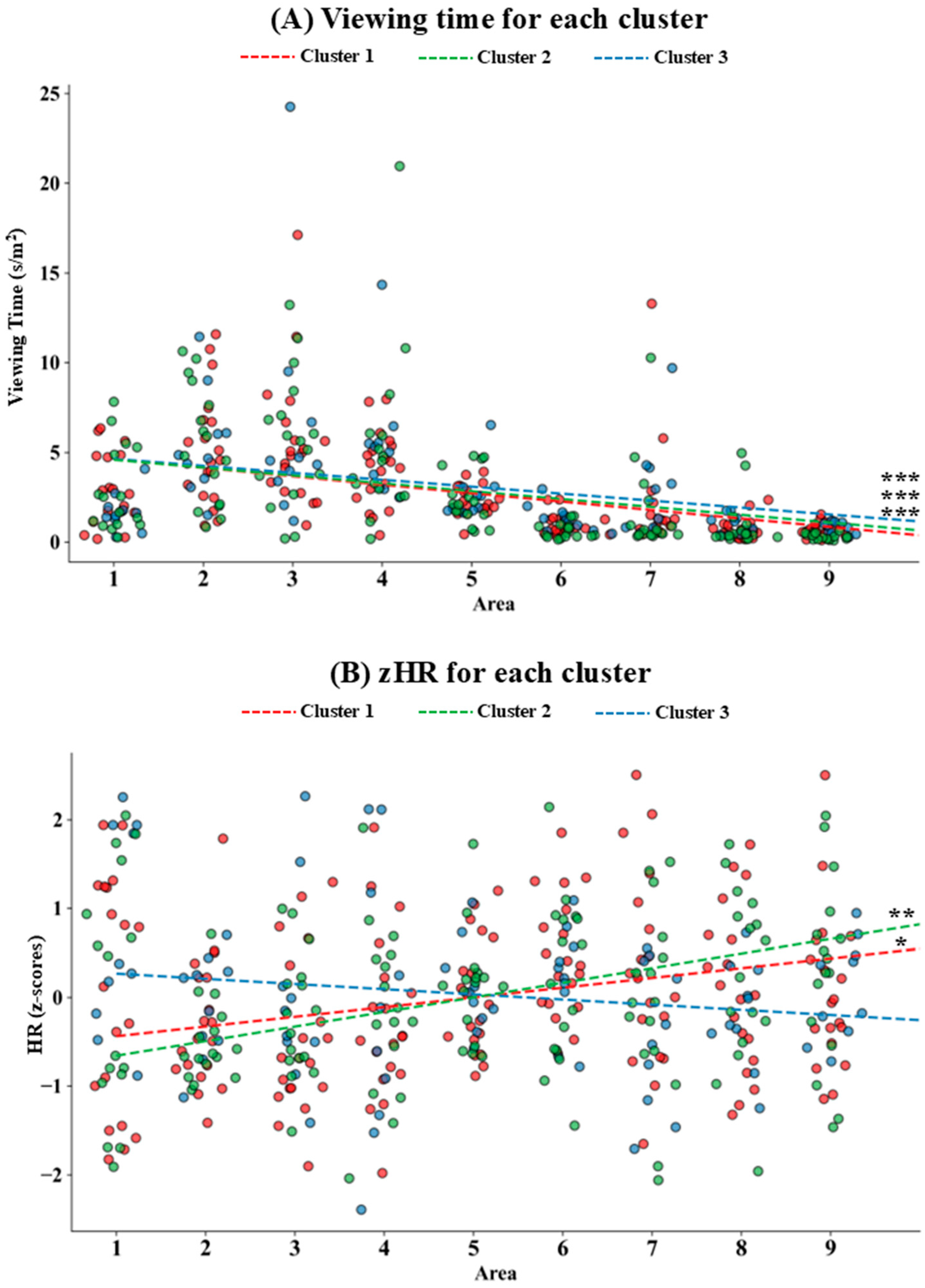
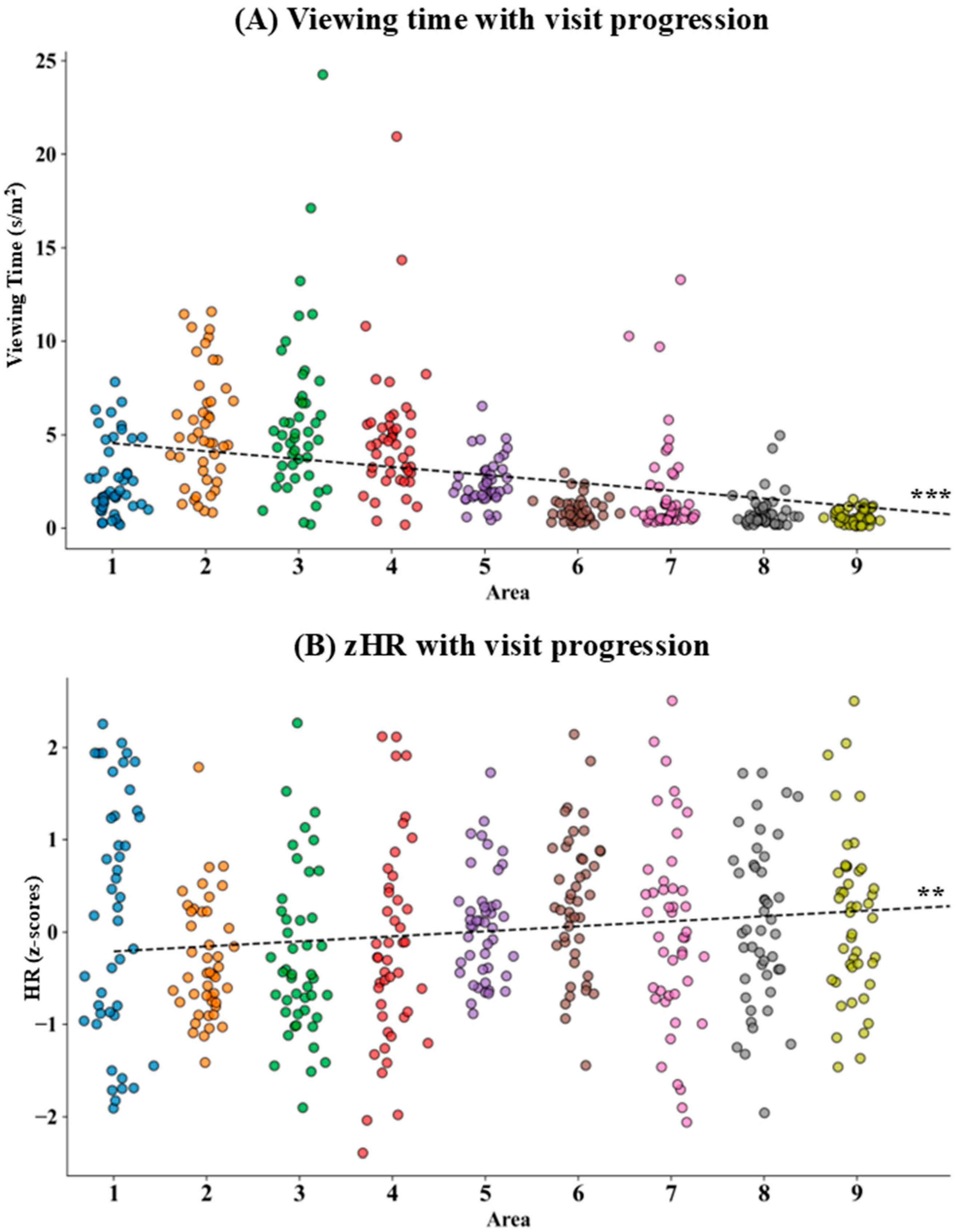
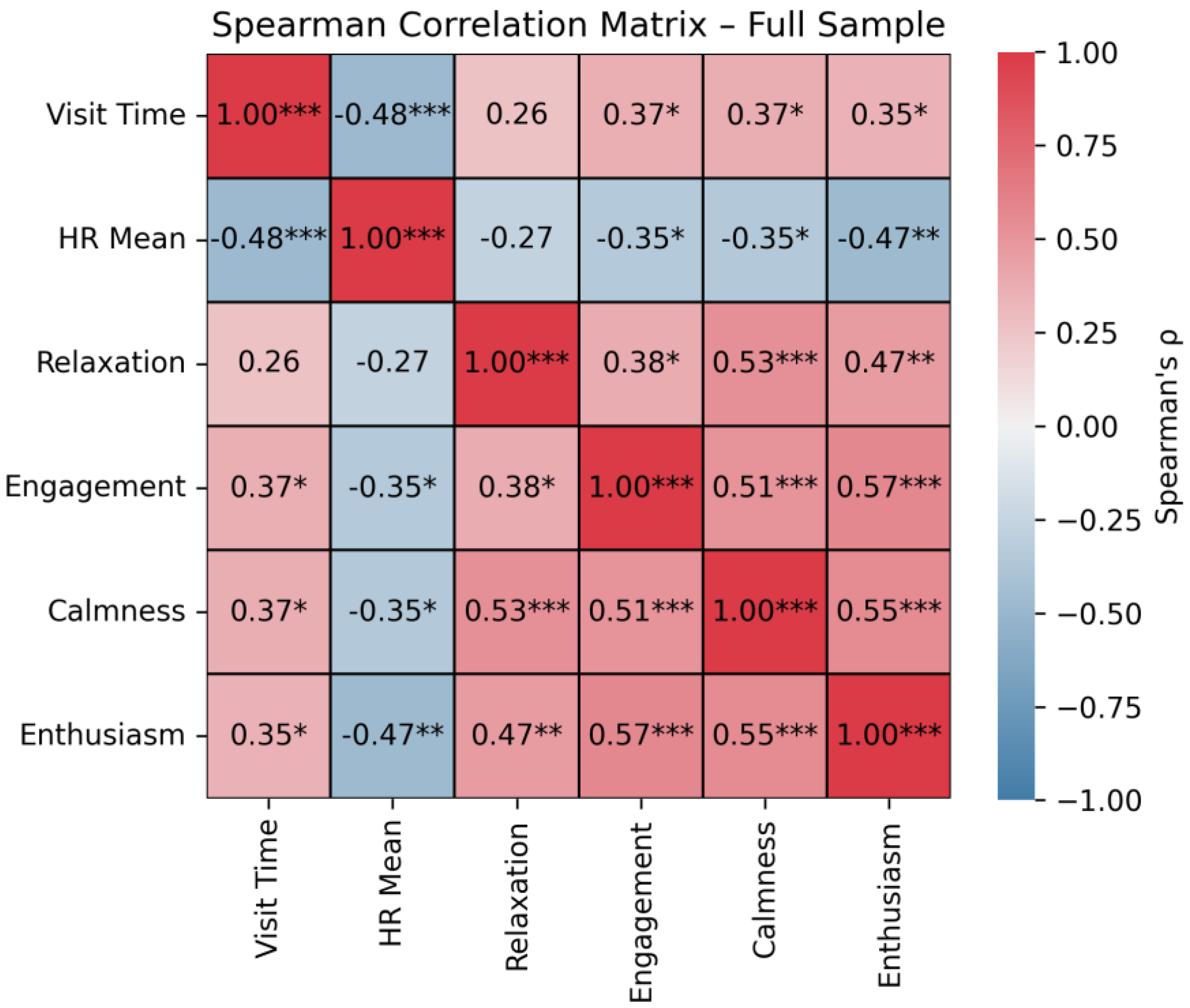
3.2. General Results
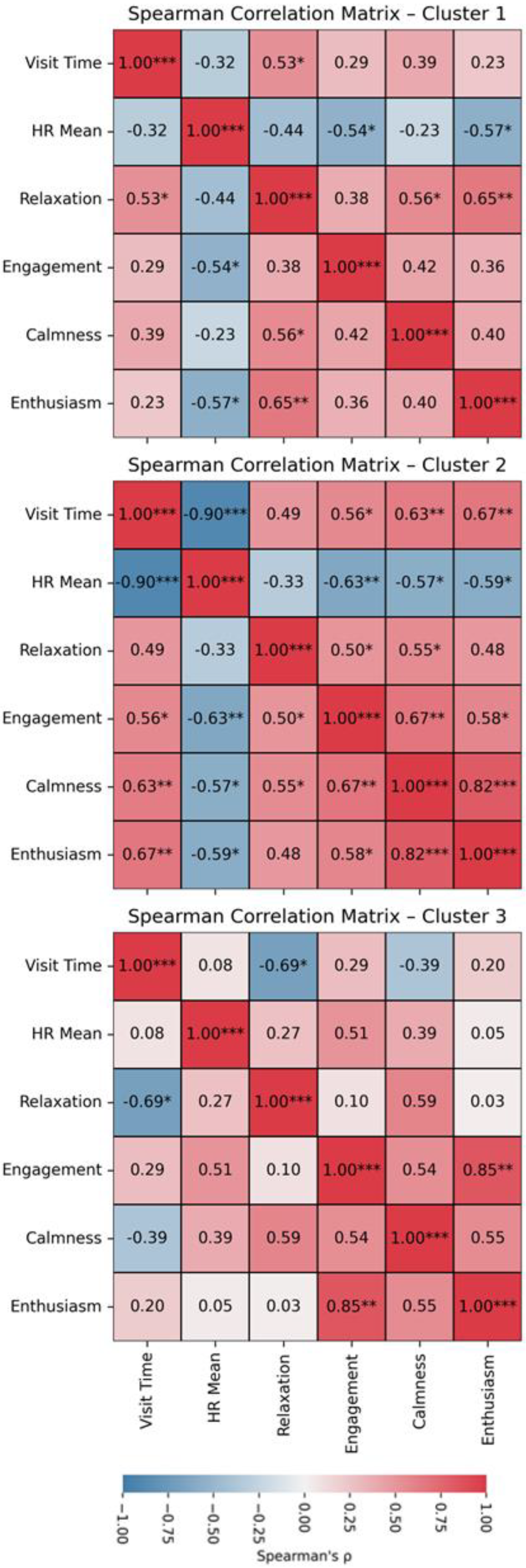
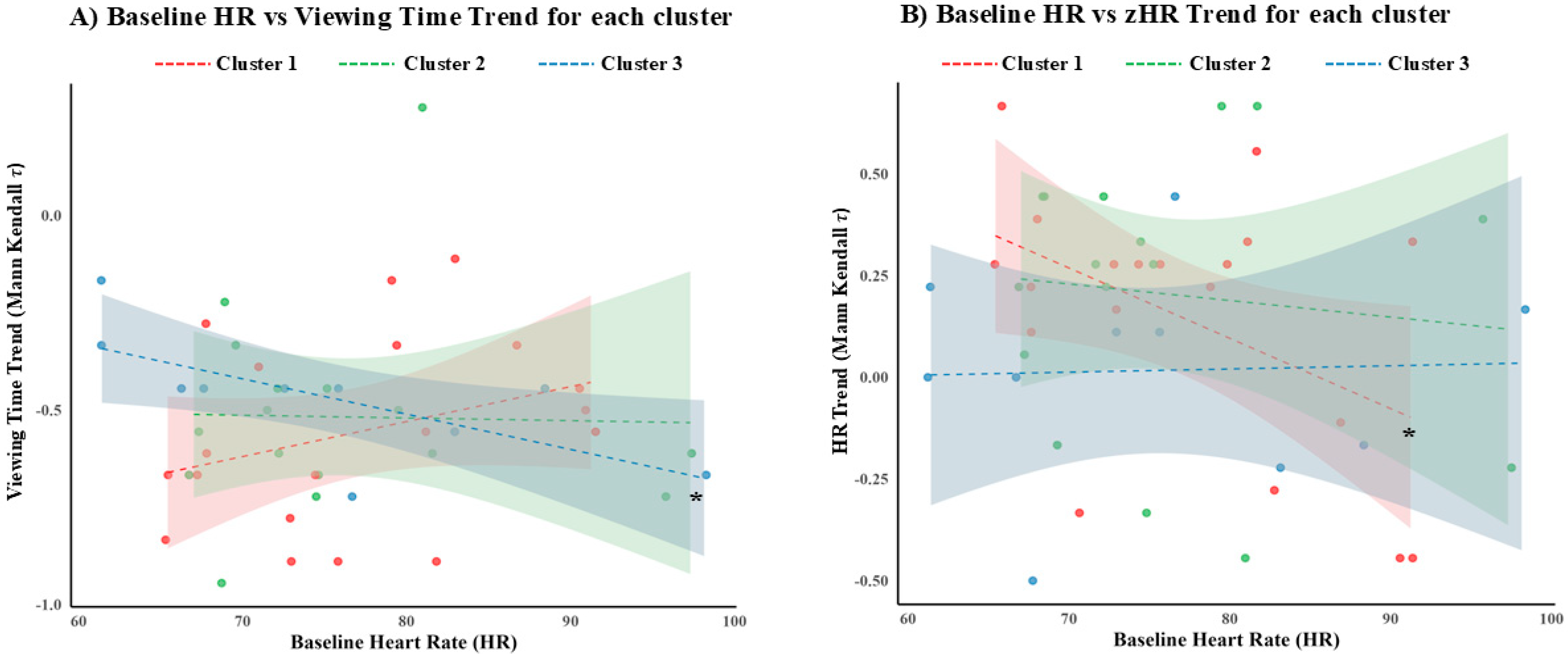
3.3. Cluster Results
4. Discussion
4.1. The Presence of Museum Fatigue During the Visit at ETRU
4.2. Heart Rate as an Implicit Measure of Museum Fatigue
4.3. The Role of Personal Factors in Modulating the Emergence of Museum Fatigue
4.4. Practical Implications
5. Conclusions
Author Contributions
Funding
Institutional Review Board Statement
Informed Consent Statement
Data Availability Statement
Acknowledgments
Conflicts of Interest
Abbreviations
| AR | Augmented Reality |
| BLE | Bluetooth Low Energy |
| BVP | Blood Volume Pulse |
| HCA | Hierarchical Cluster Analysis |
| HR | Heart Rate |
| MCA | Multiple Correspondence Analysis |
Appendix A

| Participant | Viewing Time Trend (τ) | zHR Trend (τ) | Viewing Time-zHR Correlation (ρ) | Viewing Time-zHR Correlation (p) |
|---|---|---|---|---|
| Cluster 1 | ||||
| 1 | −0.78 | 0.17 | −0.08 | 0.83 |
| 4 | −0.56 | 0.33 | −0.45 | 0.22 |
| 6 | −0.50 | −0.44 | 0.28 | 0.46 |
| 11 | −0.89 | 0.28 | −0.15 | 0.70 |
| 13 | −0.67 | 0.28 | −0.47 | 0.21 |
| 16 | −0.83 | 0.28 | −0.57 | 0.11 |
| 17 | −0.44 | −0.44 | 0.23 | 0.55 |
| 18 | −0.56 | 0.33 | −0.58 | 0.10 |
| 20 | −0.11 | −0.28 | −0.55 | 0.12 |
| 23 | −0.89 | 0.56 | −0.85 | 0.00 |
| 24 | −0.89 | 0.28 | −0.35 | 0.36 |
| 26 | −0.17 | 0.22 | 0.23 | 0.55 |
| 27 | −0.61 | 0.39 | −0.82 | 0.01 |
| 33 | −0.33 | −0.11 | −0.03 | 0.93 |
| 34 | −0.67 | 0.22 | −0.48 | 0.19 |
| 36 | −0.33 | 0.28 | −0.27 | 0.49 |
| 45 | −0.28 | 0.11 | −0.10 | 0.80 |
| 57 | −0.39 | −0.33 | −0.15 | 0.70 |
| 58 | −0.67 | 0.67 | −0.80 | 0.01 |
| Cluster 2 | ||||
| 8 | −0.67 | 0.33 | −0.18 | 0.64 |
| 9 | −0.33 | −0.17 | 0.40 | 0.29 |
| 10 | −0.61 | −0.22 | 0.10 | 0.80 |
| 41 | −0.50 | 0.28 | −0.67 | 0.05 |
| 42 | 0.28 | −0.44 | −0.17 | 0.67 |
| 43 | −0.44 | 0.22 | −0.68 | 0.04 |
| 44 | −0.61 | 0.44 | −0.33 | 0.38 |
| 48 | −0.94 | 0.44 | −0.70 | 0.04 |
| 49 | −0.72 | 0.39 | −0.23 | 0.55 |
| 50 | −0.22 | 0.44 | 0.15 | 0.70 |
| 53 | −0.50 | 0.67 | −0.47 | 0.21 |
| 54 | −0.61 | 0.67 | −0.52 | 0.15 |
| 55 | −0.67 | 0.22 | −0.62 | 0.08 |
| 56 | −0.44 | 0.28 | −0.85 | 0.00 |
| 60 | −0.72 | −0.33 | 0.17 | 0.67 |
| 61 | −0.56 | 0.06 | 0.00 | 1.00 |
| Cluster 3 | ||||
| 15 | −0.44 | −0.50 | 0.03 | 0.93 |
| 19 | −0.44 | 0.00 | −0.37 | 0.33 |
| 25 | −0.56 | −0.22 | 0.48 | 0.19 |
| 31 | −0.17 | 0.22 | −0.37 | 0.33 |
| 32 | −0.33 | 0.00 | 0.02 | 0.97 |
| 35 | −0.72 | 0.44 | −0.87 | 0.00 |
| 37 | −0.44 | −0.17 | 0.35 | 0.36 |
| 38 | −0.44 | 0.11 | −0.30 | 0.43 |
| 52 | −0.67 | 0.17 | −0.12 | 0.77 |
References
- Bitgood, S. Museum Fatigue: A Critical Review. Visit. Stud. 2009, 12, 93–111. [Google Scholar] [CrossRef]
- Davey, G. What is museum fatigue? Visit. Stud. Today 2005, 8, 17–21. [Google Scholar]
- Gilman, B.I. Museum Fatigue. Sci. Mon. 1916, 2, 62–74. [Google Scholar]
- Kim, M.; Dillon, J.; Song, J. The Factors and Features of Museum Fatigue in Science Centres Felt by Korean Students. Res. Sci. Educ. 2020, 50, 419–436. [Google Scholar] [CrossRef]
- D’Agostino, G.; Serra, H.; Zavattaro, C. The emotional impact of cultural heritage on the public: Physiological and psychological effects of multisensorial experiences. In Design for Inclusion; AHFE International: New York, NY, USA, 2023; Volume 75, pp. 103–113. [Google Scholar] [CrossRef]
- Miao, J.; Bahauddin, A.; Feng, J. Museum Fatigue: Spatial Design Narrative Strategies of the Mawangdui Han Tomb. Buildings 2024, 14, 3852. [Google Scholar] [CrossRef]
- Dierking, L.D.; Falk, J.H. Family behavior and learning in informal science settings: A review of the research. Sci. Educ. 1994, 78, 57–72. [Google Scholar] [CrossRef]
- Porter, M.C.B. Behavior of the Average Visitor in the Peabody Museum of Natural History; Yale University: New Haven, CT, USA, 1938; Available online: https://npshistory.com/publications/interpretation/vis-behavior.pdf (accessed on 12 December 2025).
- Robinson, E.S.; Sherman, I.C.; Curry, L.E.; Jayne, H.H.F. The Behavior of the Museum Visitor; New Series; Publications of the American Association of Museums: Washington, DC, USA, 1928; p. 72. [Google Scholar]
- Marino, M. Prehistoric Journey: Summative Evaluation Report; Denver Museum of Natural History: Denver, CO, USA, 1996. [Google Scholar]
- Antón, C.; Camarero, C.; Garrido, M.-J. A journey through the museum: Visit factors that prevent or further visitor satiation. Ann. Tour. Res. 2018, 73, 48–61. [Google Scholar] [CrossRef]
- Jeong, J.-H.; Lee, K.-H. The physical environment in museums and its effects on visitors’ satisfaction. Build. Environ. 2006, 41, 963–969. [Google Scholar] [CrossRef]
- Mitas, O.; Mitasova, H.; Millar, G.; Boode, W.; Neveu, V.; Hover, M.; van den Eijnden, F.; Bastiaansen, M. More is Not Better: The Emotional Dynamics of an Excellent Experience. J. Hosp. Tour. Res. 2022, 46, 78–99. [Google Scholar] [CrossRef]
- Tröndle, M.; Greenwood, S.; Bitterli, K.; van den Berg, K. The effects of curatorial arrangements. Mus. Manag. Curatorship 2014, 29, 140–173. [Google Scholar] [CrossRef]
- Tröndle, M.; Tschacher, W. Art Affinity Influences Art Reception (in the Eye of the Beholder). Empir. Stud. Arts 2016, 34, 74–102. [Google Scholar] [CrossRef]
- Tschacher, W.; Greenwood, S.; Kirchberg, V.; Wintzerith, S.; Van Den Berg, K.; Tröndle, M. Physiological correlates of aesthetic perception of artworks in a museum. Psychol. Aesthet. Creat. Arts 2012, 6, 96–103. [Google Scholar] [CrossRef]
- Dreyer, J.; Bergmann, J.M.; Köhler, K.; Hochgraeber, I.; Pinkert, C.; Roes, M.; Thyrian, J.R.; Wiegelmann, H.; Holle, B. Differences and commonalities of home-based care arrangements for persons living with dementia in Germany—A theory-driven development of types using multiple correspondence analysis and hierarchical cluster analysis. BMC Geriatr. 2022, 22, 723. [Google Scholar] [CrossRef]
- Cirillo, E.; Zavattaro, C.; Gammeri, R.; Serra, H.; Ricci, R.; Berti, A. Feeling touch through a mirror: The role of vision and body ownership in generating non-veridical tactile experiences. Cortex 2025, 187, 16–28. [Google Scholar] [CrossRef]
- Guo, Z.; Gao, S.; Wu, F. Research on the Features of Physiological Data Effectively Representing Cognitive Engagement. In 2023 3rd International Conference on Educational Technology (ICET); IEEE: New York, NY, USA; pp. 105–109. [CrossRef]
- Serrell, B. Paying Attention: The Duration and Allocation of Visitors’ Time in Museum Exhibitions. Curator Mus. J. 2010, 40, 108–113. [Google Scholar] [CrossRef]
- Corbetta, M.; Shulman, G.L. Control of goal-directed and stimulus-driven attention in the brain. Nat. Rev. Neurosci. 2002, 3, 201–215. [Google Scholar] [CrossRef] [PubMed]
- Bitgood, S. Attention and Value: Keys to Understanding Museum Visitors; Routledge: New York, NY, USA, 2016. [Google Scholar] [CrossRef]
- Gammeri, R.; Lucisano, S.; Zavattaro, C.; Serra, H.; Cirillo, E.; Schintu, S.; Berti, A.; Boldreghini, M.; Albera, A.; Albera, R.; et al. Altered orienting of visuospatial attention in patients with vestibular disorders. Cortex 2025, 188, 69–80. [Google Scholar] [CrossRef]
- Bitgood, S.; McKerchar, T.L.; Dukes, S. Looking Back at Melton: Gallery Density and Visitor Attention. Visit. Stud. 2013, 16, 217–225. [Google Scholar] [CrossRef]
- Galak, J.; Redden, J.P. The Properties and Antecedents of Hedonic Decline. Annu. Rev. Psychol. 2018, 69, 1–25. [Google Scholar] [CrossRef]
- McAlister, L. A Dynamic Attribute Satiation Model of Variety-Seeking Behavior. J. Consum. Res. 1982, 9, 141–150. [Google Scholar] [CrossRef]
- Nelson, L.D.; Meyvis, T. Interrupted Consumption: Disrupting Adaptation to Hedonic Experiences. J. Mark. Res. 2008, 45, 654–664. [Google Scholar] [CrossRef]
- Steenkamp, J.-B.E.M.; Baumgartner, H. The Role of Optimum Stimulation Level in Exploratory Consumer Behavior. J. Consum. Res. 1992, 19, 434–448. [Google Scholar] [CrossRef]
- Yin, J.; Zhu, S.; MacNaughton, P.; Allen, J.G.; Spengler, J.D. Physiological and cognitive performance of exposure to biophilic indoor environment. Build. Environ. 2018, 132, 255–262. [Google Scholar] [CrossRef]
- Dawson, M.E.; Schell, A.M.; Filion, D.L. The electrodermal system. In Handbook of Psychophysiology; Cambridge University Press: Cambridge, UK, 2007; pp. 200–223. [Google Scholar]
- Shaffer, F.; Ginsberg, J.P. An Overview of Heart Rate Variability Metrics and Norms. Front. Public Health 2017, 5, 258. [Google Scholar] [CrossRef]
- Serra, H.; Zavattaro, C.; Eid, M.; Farina, P.; Abbatescianna, D.; Cirillo, E.; Gammeri, R.; Celi, L.; Scariot, V.; Ricci, R. Biophilic interventions in real and virtual environments reduce stress during cognitively demanding tasks. Sci. Rep. 2025, 15, 39642. [Google Scholar] [CrossRef]
- Siennicka, A.; Quintana, D.S.; Fedurek, P.; Wijata, A.; Paleczny, B.; Ponikowska, B.; Danel, D.P. Resting heart rate variability, attention and attention maintenance in young adults. Int. J. Psychophysiol. 2019, 143, 126–131. [Google Scholar] [CrossRef] [PubMed]

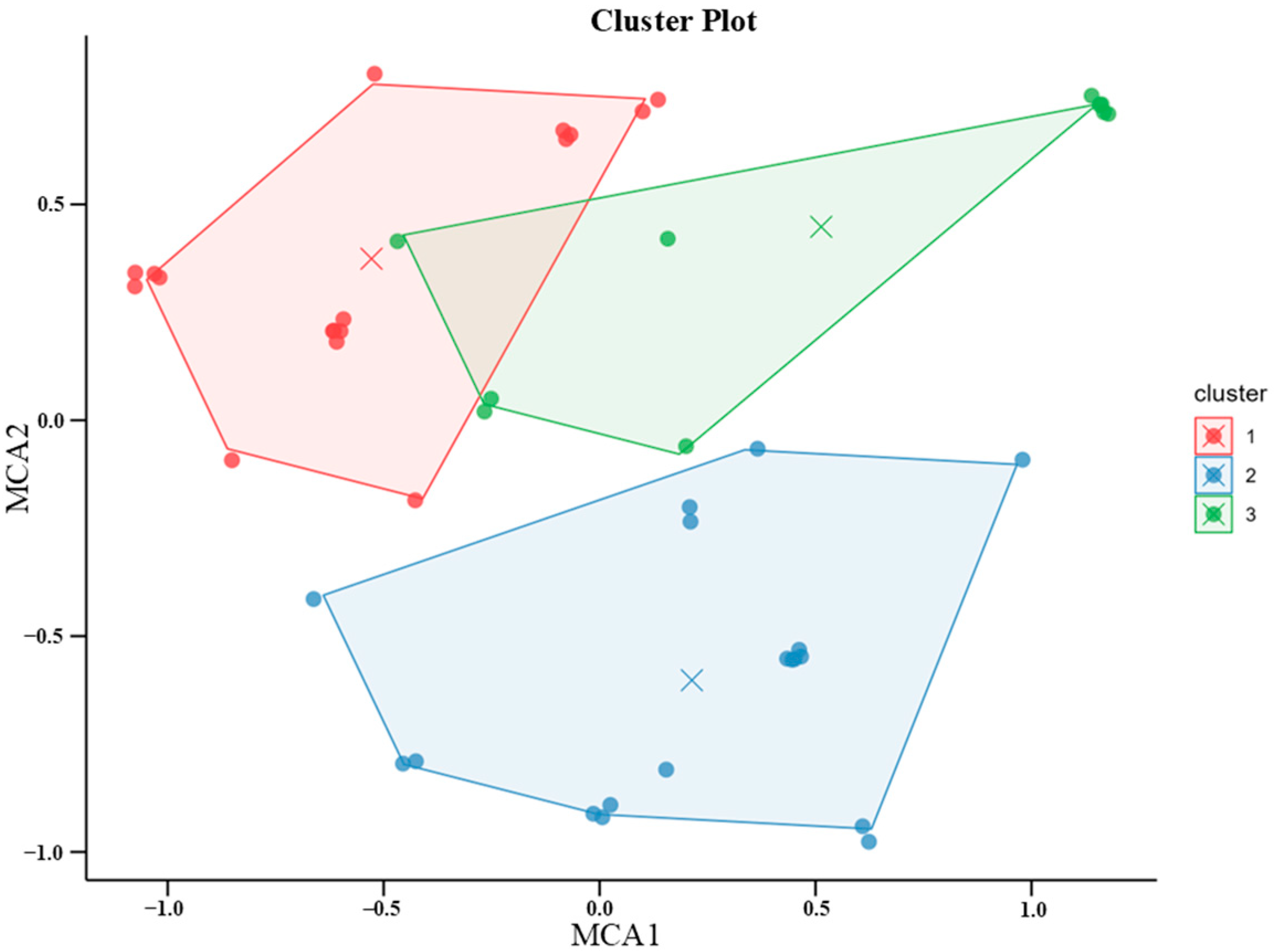


| Demographic Variable | n | % |
|---|---|---|
| Sex | ||
| Female | 29 | 35.56 |
| Male | 16 | 64.44 |
| Age | ||
| Young (18–35) | 17 | 37.78 |
| Adult (36–64) | 15 | 33.33 |
| Old (65+) | 13 | 28.89 |
| Education | ||
| Middle/High school | 19 | 42.22 |
| Bachelor’s/Master’s Degree | 26 | 57.78 |
| Public | ||
| Non-public | 10 | 22.22 |
| Public | 16 | 35.56 |
| Museumgoers | 19 | 42.22 |
| Area | Surface (m2) |
|---|---|
| A1 | 118.8 |
| A2 | 301 |
| A3 | 49 |
| A4 | 36.8 |
| A5 | 515.5 |
| A6 | 515.9 |
| A7 | 58.1 |
| A8 | 271.8 |
| A9 | 554.36 |
| Total | 2421.24 |
| Demographic Variable | Cluster 1 | Cluster 2 | Cluster 3 | |||
|---|---|---|---|---|---|---|
| n | % | n | % | n | % | |
| Sex | ||||||
| Female | 15 | 78.95 | 8 | 50.00 | 6 | 60.00 |
| Male | 4 | 21.05 | 8 | 50.00 | 4 | 40.00 |
| Age | ||||||
| Young (18–35) | 5 | 26.32 | 10 | 62.50 | 2 | 20.00 |
| Adult (36–64) | 12 | 63.16 | 6 | 37.50 | 3 | 30.00 |
| Old (65+) | 3 | 10.52 | 2 | 20.00 | 4 | 50.00 |
| Education | ||||||
| Middle/High school | 11 | 57.89 | 2 | 12.50 | 6 | 60.00 |
| Bachelor’s/Master’s Degree | 8 | 42.11 | 14 | 87.50 | 4 | 40.00 |
| Public | ||||||
| Non-public | 0 | 0.00 | 0 | 0.00 | 10 | 100.00 |
| Public | 15 | 78.95 | 1 | 6.25 | 0 | 0.00 |
| Museumgoers | 4 | 21.05 | 15 | 93.75 | 0 | 0.00 |
Disclaimer/Publisher’s Note: The statements, opinions and data contained in all publications are solely those of the individual author(s) and contributor(s) and not of MDPI and/or the editor(s). MDPI and/or the editor(s) disclaim responsibility for any injury to people or property resulting from any ideas, methods, instructions or products referred to in the content. |
© 2026 by the authors. Licensee MDPI, Basel, Switzerland. This article is an open access article distributed under the terms and conditions of the Creative Commons Attribution (CC BY) license.
Share and Cite
Zavattaro, C.; Cirillo, E.; Serra, H.; D’Agostino, G.; Dabove, P.; Benente, M.; Minucciani, V.; Berti, A.; Ricci, R. Visitor Characteristics and Museum Fatigue: A Case Study at the ETRU Museum in Rome. Brain Sci. 2026, 16, 225. https://doi.org/10.3390/brainsci16020225
Zavattaro C, Cirillo E, Serra H, D’Agostino G, Dabove P, Benente M, Minucciani V, Berti A, Ricci R. Visitor Characteristics and Museum Fatigue: A Case Study at the ETRU Museum in Rome. Brain Sciences. 2026; 16(2):225. https://doi.org/10.3390/brainsci16020225
Chicago/Turabian StyleZavattaro, Claudio, Emanuele Cirillo, Hilary Serra, Gianluca D’Agostino, Paolo Dabove, Michela Benente, Valeria Minucciani, Anna Berti, and Raffaella Ricci. 2026. "Visitor Characteristics and Museum Fatigue: A Case Study at the ETRU Museum in Rome" Brain Sciences 16, no. 2: 225. https://doi.org/10.3390/brainsci16020225
APA StyleZavattaro, C., Cirillo, E., Serra, H., D’Agostino, G., Dabove, P., Benente, M., Minucciani, V., Berti, A., & Ricci, R. (2026). Visitor Characteristics and Museum Fatigue: A Case Study at the ETRU Museum in Rome. Brain Sciences, 16(2), 225. https://doi.org/10.3390/brainsci16020225