Controlling Biogenesis and Engineering of Exosomes to Inhibit Growth and Promote Death in Glioblastoma Multiforme



Abstract
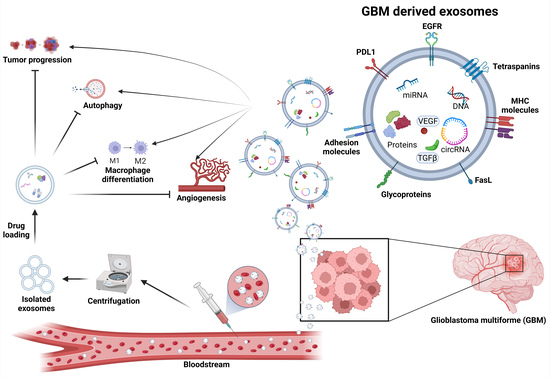
1. Introduction
2. EVs as Crucial Players in Cell Communications and Functions
2.1. Exosomes
2.2. Exosome Isolation
2.3. Exosome Cargo Loading Techniques
3. Exosomes Play Critical Roles in Therapy Resistance in GBM
3.1. Angiogenesis in Conferring Therapy Resistance in GBM
3.2. miRNAs in Conferring Therapy Resistance in GBM
3.3. Autophagy in the Context of GBM
3.3.1. Exosomes Use Multiple Mechanisms to Induce Autophagy in GBM
3.3.2. Exosomes and Autophagy Connection
4. Blocking Exosome Biogenesis as a Treatment of GBM
4.1. Exosome Biogenesis Inhibitors
4.2. Exosome Release Inhibitors
4.3. Other Exosome Inhibitors
5. Engineering of Exosomes for Use as Vehicles for Drug Delivery to GBM
5.1. Exosomes for Delivery of Inhibitors of Angiogenesis to GBM
5.2. Exosomes for Delivery of Autophagy Inhibitors to GBM
5.3. Exosomes for Delivering Chemotherapeutic Drugs to GBM for Induction of Apoptosis
6. Conclusions and Future Directions
Author Contributions
Funding
Institutional Review Board Statement
Informed Consent Statement
Data Availability Statement
Acknowledgments
Conflicts of Interest
References
- Vasile, F.; Dossi, E.; Rouach, N. Human Astrocytes: Structure and functions in the healthy brain. Brain Struct. Funct. 2017, 222, 2017–2029. [Google Scholar] [CrossRef] [PubMed]
- Weller, M.; Wen, P.Y.; Chang, S.M.; Dirven, L.; Lim, M.; Michelle, M.; Reifenberger, G. Glioma. Nat. Res. Dis. Primers 2024, 10, 33. [Google Scholar] [CrossRef] [PubMed]
- Miller, K.D.; Ostrom, Q.T.; Kruchko, C.; Patil, N.; Tihan, T.; Cioffi, G.; Fuchs, H.E.; Waite, K.A.; Jemal, A.; Siegel, R.L.; et al. Brain and Other Central Nervous System Tumor Statistics, 2021. CA Cancer J. Clin. 2021, 71, 381–406. [Google Scholar] [CrossRef] [PubMed]
- Brennan, C.W.; Verhaak, R.G.W.; McKenna, A.; Campos, B.; Noushmehr, H.; Salama, S.R.; Zheng, S.; Chakravarty, D.; Sanborn, J.Z.; Berman, S.H.; et al. The Somatic Genomic Landscape of Glioblastoma. Cell 2013, 155, 462–477. [Google Scholar] [CrossRef] [PubMed]
- Brat, D.J.; Kenneth, A.; Colman, H.; Holland, E.C.; Louis, D.N.; Jenkins, R.B.; Kleinschmidt-DeMasters, B.K.; Perry, A.; Reifenberger, G.; Stupp, R.; et al. cIMPACT-NOW update 3: Recommended diagnostic criteria for “Diffuse astrocytic glioma, IDH-wildtype, with molecular features of glioblastoma, WHO grade IV”. Acta Neuropathol. 2018, 136, 805–810. [Google Scholar] [CrossRef] [PubMed]
- Yuan, Z.; Li, J.; Na, Q. Recent advances in biomimetic nanodelivery systems for the treatment of glioblastoma. Colloids Surf. B Biointerfaces 2025, 252, 114668. [Google Scholar] [CrossRef] [PubMed]
- Lukas, R.V.; Wainwright, D.A.; Ladomersky, E.; Sachdev, S.; Sonabend, A.M.; Stupp, R. Newly Diagnosed Glioblastoma: A Review on Clinical Management. Oncology 2019, 33, 91–100. [Google Scholar] [PubMed]
- Chen, Y.; Ding, K.; Zheng, S.; Gao, S.; Xu, X.; Wu, H.; Zhou, F.; Wang, Y.; Xu, J.; Wang, C.; et al. Post-translational modifications in DNA damage repair: Mechanisms underlying temozolomide resistance in glioblastoma. Oncogene 2025, 44, 1781–1792. [Google Scholar] [CrossRef] [PubMed]
- Wu, J.; Li, Y.; Hu, X.; Huang, S.; Luo, S.; Tang, T.; Xiang, D. Exosomes and biomimetic nanovesicles-mediated anti-glioblastoma therapy: A head-to-head comparison. J. Control. Release 2021, 336, 510–521. [Google Scholar] [CrossRef] [PubMed]
- Wang, R.; Liang, Q.; Zhang, X.; Di, Z.; Wang, X.; Di, L. Tumor-derived exosomes reversing TMZ resistance by synergistic drug delivery for glioma-targeting treatment. Colloids Surf. B Biointerfaces 2022, 215, 112505. [Google Scholar] [CrossRef] [PubMed]
- D’Arcy, M.S. Cell death: A review of the major forms of apoptosis, necrosis and autophagy. Cell Biol. Int. 2019, 43, 582–592. [Google Scholar] [CrossRef] [PubMed]
- Onorati, A.V.; Cycynski, M.; Ojha, R.; Amaravadi, R.K. Targeting autophagy in cancer. Cancer 2018, 124, 3307–3318. [Google Scholar] [CrossRef] [PubMed]
- Tang, J.; Karbhari, N.; Campain, J.L. Therapeutic Targets in Glioblastoma: Molecular Pathways, Emerging Strategies, and Future Directions. Cells 2025, 14, 494. [Google Scholar] [CrossRef] [PubMed]
- Banks, W.A. From blood-brain barrier to blood-brain interface: New opportunities for CNS drug delivery. Nat. Rev. Drug Discov. 2016, 15, 275–292. [Google Scholar] [CrossRef] [PubMed]
- Delello Di Filippo, L.; Azambuja, J.H.; Paes Dutra, J.A.; Luiz, M.T.; Duarte, J.L.; Nicoleti, L.R.; Olalla Saad, S.T.; Chorili, M. Improving temozolomide biopharmaceutical properties in glioblastoma multiforme (GBM) treatment using GBM-targeting nanocarriers. Eur. J. Pharm. Biopharm. 2021, 168, 76–89. [Google Scholar] [CrossRef] [PubMed]
- Elsharkasy, O.M.; Nordin, J.Z.; Hagey, D.W.; de Jong, O.G.; Schiffelers, R.M.; Andaloussi, S.E.; Vader, P. Extracellular Vesicles as Drug Delivery Systems: Why and How? Adv. Drug Deliv. Rev. 2020, 159, 332–343. [Google Scholar] [CrossRef] [PubMed]
- Selvamuthukumar, S.; Anandam, S.; Krishnamoorthy, K.; Rajappan, M. Nanosponges: A novel class of drug delivery system—Review. J. Pharm. Pharm. Sci. 2012, 15, 103–111. [Google Scholar] [PubMed]
- van der Meel, R.; Fens, M.H.; Vader, P.; van Solinge, W.W.; Eniola-Adofeso, O.; Schiffelers, R.M. Extracellular vesciles as drug delivery systems: Lessons from the liposome field. J. Control. Release 2014, 195, 72–85. [Google Scholar] [CrossRef] [PubMed]
- Sercombe, L.; Veerati, T.; Moheimani, F.; Wu, S.Y.; Sood, A.K.; Hua, S. Advances and Challenges of Liposome Assisted Drug Delivery. Front. Pharmacol. 2015, 6, 286. [Google Scholar] [CrossRef] [PubMed]
- Mukherjee, S.; Pillai, P.P. Current insights on extracellular vesicle-mediated glioblastoma progression: Implications in drug resistance and epithelial-mesenchymal transition. Biochem. Biophys. Acta Gen. Subj. 2022, 1866, 130065. [Google Scholar] [CrossRef] [PubMed]
- de Lima Fernandes, C.F.; Coelho, B.P.; da Silva Souza, M.C.; Boccacino, J.M.; Soares, S.R.; Alves de Araújo, J.P.; Melo-Escobar, M.I.; Lopes, M.H. Extracellular Vesicles throughout Development: A Potential Roadmap for emerging glioblastoma therapies. Semin. Cell Dev. Biol. 2023, 133, 32–41. [Google Scholar] [CrossRef] [PubMed]
- Khidr, W.A.; Alfarttoosi, K.H.; Taher, W.M.; Al-Nuaimi, A.M.A.; Jawad, M.J. A review of the role of tumor-derived exosomes in cancers treatment and progression. Int. Immunopharmacol. 2025, 157, 114782. [Google Scholar] [CrossRef] [PubMed]
- Hessvik, N.P.; Llorente, A. Current knowledge on exosome biogenesis and release. Cell. Mol. Life Sci. 2018, 75, 193–208. [Google Scholar] [CrossRef] [PubMed]
- Xu, R.; Greening, D.W.; Zhu, H.J.; Takahashi, N.; Simpson, R.J. Extracellular vesicle isolation and characterization: Toward clinical application. J. Clin. Investig. 2016, 126, 1152–1162. [Google Scholar] [CrossRef] [PubMed]
- An, Z.; Aksoy, O.; Zheng, T.; Fan, Q.W.; Weiss, W.A. Epidermal growth factor receptor and EGFRvIII in glioblastoma: Signaling pathways and targeted therapies. Oncogene 2018, 37, 1561–1575. [Google Scholar] [CrossRef] [PubMed]
- Man, K.; Brunet, M.Y.; Jones, M.C.; Cox, S.C. Engineered Extracellular Vesicles: Tailored-Made Nanomaterials for Medical Applications. Nanomaterials 2020, 10, 1838. [Google Scholar] [CrossRef] [PubMed]
- Hao, W.; Sun, N.; Fan, Y.; Chen, M.; Liu, Q.; Yang, M.; Yang, Y.; Gao, C. Targeted ferroptosis–immunotherapy synergy: Enhanced antiglioma efficacy with hybrid nanovesicles comprising NK cell-derived exosomes and RSL3-loaded liposomes. ACS Appl. Mater. Interfaces 2024, 16, 28193–28208. [Google Scholar] [CrossRef] [PubMed]
- Wang, M.; Zheng, Y.; Hao, Q.; Mao, G.; Dai, Z.; Zhai, Z.; Lin, S.; Liang, B.; Kang, H.; Ma, X. Hypoxic BMSC-derived exosomal miR-210-3p promotes progression of triple-negative breast cancer cells via NFIX-Wnt/β-catenin signaling axis. J. Transl. Med. 2024, 22, 594. [Google Scholar] [CrossRef] [PubMed]
- Ricklefs, F.L.; Wollmann, K.; Salviano-Silva, A.; Drexler, R.; Maire, C.L.; Kaul, M.G.; Reimer, R.; Schüller, U.; Heine-mann, S.; Kolbe, K.; et al. Circulating extracellular vesicles as biomarker for diagnosis, prognosis, and monitoring in glioblastoma patients. Neuro Oncol. 2024, 26, 1280–1291. [Google Scholar] [CrossRef] [PubMed]
- Osti, D.; Del Bene, M.; Rappa, G.; Santos, M.; Matafora, V.; Richichi, C.; Faletti, S.; Beznoussenko, G.V.; Mironov, A.; Bachi, A.; et al. Clinical Significance of Extracellular Vesicles in Plasma from Glioblastoma Patients. Clin. Cancer Res. 2019, 25, 266–276. [Google Scholar] [CrossRef] [PubMed]
- Saleh, A.F.; Lázaro-Ibáñez, E.; Forsgard, M.A.-M.; Shatnyeva, O.; Osteikoetxea, X.; Karlsson, F.; Heath, N.; Ingelsten, M.; Rose, J.; Harris, J.; et al. Extracellular Vesicles Induce Minimal Hepatotoxicity and Immunogenicity. Nanoscale 2019, 11, 6990–7001. [Google Scholar] [CrossRef] [PubMed]
- Javdani-Mallak, A.; Mowla, S.J.; Rostami, A.; Karimi, M.H.; Houshmand, M.; Saeedi, M.; Derakhshan, S.; Hakimi, A.M.; Azad, E.; Hashemi, S.S.; et al. Tumor-derived exosomes and their application in cancer treatment. J. Transl. Med. 2025, 23, 429. [Google Scholar] [CrossRef] [PubMed]
- Arya, S.B.; Collie, S.P.; Parent, C.A. The ins-and-outs of exosome biogenesis, secretion, and internalization. Trends Cell Biol. 2023, 33, 859–872. [Google Scholar] [CrossRef] [PubMed]
- Xu, K.; Feng, H.; Zhao, R.; Huang, Y. Targeting tetraspanins at cell interfaces: Functional modulation and exosome-based drug delivery for precise disease treatment. ChemMedChem 2025, 20, e202400664. [Google Scholar] [CrossRef] [PubMed]
- Villarroya-Beltri, C.; Baixauli, F.; Mittelbrunn, M.; Fernández-Delgado, I.; Torralba, D.; Moreno-Gonzalo, O.; Baldanta, S.; Enrich, C.; Guerra, S.; Sánchez-Madrid, F. ISGylation controls exosome secretion by promoting lysosomal degradation of MVB proteins. Nat. Commun. 2016, 7, 13588. [Google Scholar] [CrossRef] [PubMed]
- Xue, R.; Meng, H.; Yin, J.; Xia, J.; Hu, Z.; Liu, H. The role of calmodulin vs. synaptotagmin in exocytosis. Front. Mol. Neurosci. 2021, 14, 691363. [Google Scholar] [CrossRef] [PubMed]
- Liu, C.; Liu, D.; Wang, S.; Gan, L.; Yang, X.; Ma, C. Identification of the SNARE complex that mediates the fusion of multivesicular bodies with the plasma membrane in exosome secretion. J. Extracell. Vesicles 2023, 12, e12356. [Google Scholar] [CrossRef] [PubMed]
- Pescosolido, M.F.; Ouyang, Q.; Liu, J.S.; Morrow, E.M. Live-imaging detection of multivesicular body-plasma membrane fusion and exosome release in cultured primary neurons. Methods Mol. Biol. 2023, 2683, 213–220. [Google Scholar] [PubMed]
- Kimiz-Gebologlu, I.; Oncel, S.S. Large-scale production and therapeutic evaluation of exosomes for cancer treatment. Thorac. Res. Pract. 2025, 26, 28–30. [Google Scholar] [PubMed]
- Dash, M.; Palaniyandi, K.; Ramalingam, S.; Sahabudeen, S.; Raja, N.S. Exosomes isolated from two different cell lines using three different isolation techniques show variation in physical and molecular characteristics. Biochim. Biophys. Acta Biomembr. 2021, 1863, 183490. [Google Scholar] [CrossRef] [PubMed]
- Helwa, I.; Cai, J.; Drewry, M.D.; Zimmerman, A.; Dinkins, M.B.; Khaled, M.L.; Seremwe, M.; Dismuke, W.M.; Bieberich, E.; Stamer, W.D.; et al. A comparative study of serum exosome isolation using differential ultracentrifugation and three commercial reagents. PLoS ONE 2017, 12, e0170628. [Google Scholar] [CrossRef] [PubMed]
- Lai, J.J.; Chau, Z.L.; Chen, S.-Y.; Hill, J.J.; Korpany, K.V.; Liang, N.-W.; Lin, L.-H.; Lin, Y.-H.; Liu, J.K.; Liu, Y.-C.; et al. Exosome processing and characterization approaches for research and technology development. Adv. Sci. 2022, 9, e2103222. [Google Scholar] [CrossRef] [PubMed]
- Xu, M.; Yang, Q.; Sun, X.; Wang, Y. Recent advancements in the loading and modification of therapeutic exosomes. Front. Bioeng. Biotechnol. 2020, 8, 586130. [Google Scholar] [CrossRef] [PubMed]
- Zeng, H.; Guo, S.; Ren, X.; Wu, Z.; Liu, S.; Yao, X. Current strategies for exosome cargo loading and targeting delivery. Cells 2023, 12, 1416. [Google Scholar] [CrossRef] [PubMed]
- Janas, T.; Janas, M.M.; Sapoń, K.; Janas, T. Mechanisms of RNA loading into exosomes. FEBS Lett. 2015, 589, 1391–1398. [Google Scholar] [CrossRef] [PubMed]
- Vader, P.; Mol, E.A.; Pasterkamp, G.; Schiffelers, R.M. Extracellular vesicles for drug delivery. Adv. Drug Deliv. Rev. 2016, 106, 148–156. [Google Scholar] [CrossRef] [PubMed]
- Oshchepkova, A.; Zenkova, M.; Vlassov, V. Extracellular vesicles for therapeutic nucleic acid delivery: Loading strategies and challenges. Int. J. Mol. Sci. 2023, 24, 7287. [Google Scholar] [CrossRef] [PubMed]
- Ahmed, W.; Mushtaq, A.; Ali, S.; Khan, N.; Liang, Y.; Duan, L. Engineering approaches for exosome cargo loading and targeted delivery: Biological versus chemical perspectives. ACS Biomater. Sci. Eng. 2024, 10, 5960–5976. [Google Scholar] [CrossRef] [PubMed]
- Chandran, V.I.; Gopala, S.; Venkat, E.H.; Kjolby, M.; Nejsum, P. Extracellular vesicles in glioblastoma: A challenge and an opportunity. NPJ Precis. Oncol. 2024, 8, 103. [Google Scholar] [CrossRef] [PubMed]
- Zhou, J.; Liu, X.; Dong, Q.; Li, J.; Niu, W.; Liu, T. Extracellular vesicle-bound VEGF in oral squamous cell carcinoma and its role in resistance to bevacizumab therapy. Cancer Cell Int. 2024, 24, 296. [Google Scholar] [CrossRef] [PubMed]
- Treps, L.; Perret, R.; Edmond, S.; Ricard, D.; Gavard, J. Glioblastoma stem-like cells secrete the pro-angiogenic VEGF-A factor in extracellular vesicles. J. Extracell. Vesicles 2017, 6, 1359479. [Google Scholar] [CrossRef] [PubMed]
- Choi, D.; Montermini, L.; Kim, D.-K.; Meehan, B.; Roth, F.P.; Rak, J. The impact of oncogenic EGFRvIII on the proteome of extracellular vesicles released from glioblastoma cells. Mol. Cell. Proteom. 2018, 17, 1948–1964. [Google Scholar] [CrossRef] [PubMed]
- Yekula, A.; Hsia, T.; Kitchen, R.R.; Chakrabortty, S.K.; Yu, W.; Batool, S.M.; Lewis, B.; Szeglowski, A.J.; Weissleder, R.; Lee, H.; et al. Longitudinal analysis of serum-derived extracellular vesicle RNA to monitor dacomitinib treatment response in EGFR-amplified recurrent glioblastoma patients. Neurooncol. Adv. 2023, 5, vdad104. [Google Scholar] [CrossRef] [PubMed]
- George, J.; Banik, N.L.; Ray, S.K. Combination of hTERT knockdown and IFN-gamma treatment inhibited angiogenesis and tumor progression in glioblastoma. Clin. Cancer Res. 2009, 15, 7186–7195. [Google Scholar] [CrossRef] [PubMed]
- Khathayer, F.; Ray, S.K. Diosgenin as a novel alternative therapy for inhibition of growth, invasion, and angiogenesis abilities of different glioblastoma cell lines. Neurochem. Res. 2020, 45, 2336–2351. [Google Scholar] [CrossRef] [PubMed]
- Al-Sammarraie, N.; Ray, S.K. Applications of CRISPR-Cas9 technology to genome editing in glioblastoma multiforme. Cells 2021, 10, 2342. [Google Scholar] [CrossRef] [PubMed]
- Koch, S.; Claesson-Welsh, L. Signal transduction by vascular endothelial growth factor receptors. Cold Spring Harb. Perspect. Med. 2012, 2, a006502. [Google Scholar] [CrossRef] [PubMed]
- Mukherji, S.K. Bevacizumab (Avastin). AJNR Am. J. Neuroradiol. 2010, 31, 235–236. [Google Scholar] [CrossRef] [PubMed]
- Tian, Y.; Gao, X.; Yang, X.; Chen, S.; Ren, Y. VEGFA contributes to tumor property of glioblastoma cells by promoting differentiation of myeloid-derived suppressor cells. BMC Cancer 2024, 24, 1040. [Google Scholar] [CrossRef] [PubMed]
- Wang, Z.; Yuan, Y.; Ji, X.; Xiao, X.; Li, Z.; Yi, X.; Zhu, Y.; Guo, T.; Wang, Y.; Chen, L.; et al. The Hippo-TAZ axis mediates vascular endothelial growth factor C in glioblastoma-derived exosomes to promote angiogenesis. Cancer Lett. 2021, 513, 1–13. [Google Scholar] [CrossRef] [PubMed]
- Plouffe, S.W.; Lin, K.C.; Moore, J.L.; Tan, F.E.; Ma, S.; Ye, Z.; Qiu, Y.; Ren, B.; Guan, K.-L. The Hippo pathway effector proteins YAP and TAZ have both distinct and overlapping functions in the cell. J. Biol. Chem. 2018, 293, 11230–11240. [Google Scholar] [CrossRef] [PubMed]
- Sun, H.; Miao, C.; Liu, W.; Qiao, X.; Yang, W.; Li, L.; Li, C. TGF-β1/TβRII/Smad3 signaling pathway promotes VEGF expression in oral squamous cell carcinoma tumor-associated macrophages. Biochem. Biophys. Res. Commun. 2018, 497, 583–590. [Google Scholar] [CrossRef] [PubMed]
- Li, B.; Chen, J.; Wu, Y.; Luo, H.; Ke, Y. Decrease of circARID1A retards glioblastoma invasion by modulating miR-370-3p/TGFBR2 pathway. Int. J. Biol. Sci. 2022, 18, 5123–5135. [Google Scholar] [CrossRef] [PubMed]
- Gareev, I.; Beylerli, O.; Liang, Y.; Xiang, H.; Liu, C.; Xu, X.; Yuan, C.; Ahmad, A.; Yang, G. The role of microRNAs in therapeutic resistance of malignant primary brain tumors. Front. Cell Dev. Biol. 2021, 9, 740303. [Google Scholar] [CrossRef] [PubMed]
- Chakrabarti, M.; Ray, S.K. Direct transfection of miR-137 mimics is more effective than DNA demethylation of miR-137 promoter to augment anti-tumor mechanisms of delphinidin in human glioblastoma U87MG and LN18 cells. Gene 2015, 573, 141–152. [Google Scholar] [CrossRef] [PubMed]
- Chakrabarti, M.; Ray, S.K. Anti-tumor activities of luteolin and silibinin in glioblastoma cells: Overexpression of miR-7-1-3p augmented luteolin and silibinin to inhibit autophagy and induce apoptosis in glioblastoma in vivo. Apoptosis 2016, 21, 312–328. [Google Scholar] [CrossRef] [PubMed]
- Chakrabarti, M.; Klionsky, D.J.; Ray, S.K. miR-30e blocks autophagy and acts synergistically with proanthocyanidin for inhibition of AVEN and BIRC6 to increase apoptosis in glioblastoma stem cells and glioblastoma SNB19 cells. PLoS ONE 2016, 11, e0158537. [Google Scholar] [CrossRef] [PubMed]
- Xue, J.; Yang, M.; Hua, L.-H.; Wang, Z.-P. miRNA-191 functions as an oncogene in primary glioblastoma by directly targeting NDST1. Eur. Rev. Med. Pharmacol. Sci. 2019, 23, 6242–6249. [Google Scholar] [PubMed]
- Muñoz-Hidalgo, L.; San-Miguel, T.; Megías, J.; Serna, E.; Calabuig-Fariñas, S.; Monleón, D.; Gil-Benso, R.; Cerdá-Nicolás, M.; López-Ginés, C. The status of EGFR modulates the effect of miRNA-200c on ZEB1 expression and cell migration in glioblastoma cells. Int. J. Mol. Sci. 2020, 22, 368. [Google Scholar] [CrossRef] [PubMed]
- Liu, H.; Wei, Z.; Shi, K.; Zhang, Y.; Li, J. miRNA-130a-3p/CPEB4 axis modulates glioblastoma growth and progression. Technol. Cancer Res. Treat. 2023, 22, 15330338231218218. [Google Scholar] [CrossRef] [PubMed]
- Alamdari-Palangi, V.; Amini, R.; Karami, H. miRNA-7 enhances erlotinib sensitivity of glioblastoma cells by blocking the IRS-1 and IRS-2 expression. J. Pharm. Pharmacol. 2020, 72, 531–538. [Google Scholar] [CrossRef] [PubMed]
- Yang, J.-T.; Lee, I.-N.; Huang, C.; Huang, H.-C.; Wu, Y.-P.; Chong, Z.-Y.; Chen, J.-C. ADAM17 confers temozolomide resistance in human glioblastoma cells and miR-145 regulates its expression. Int. J. Mol. Sci. 2023, 24, 7703. [Google Scholar] [CrossRef] [PubMed]
- Chao, T.-F.; Xiong, H.-H.; Liu, W.; Chen, Y.; Zhang, J.-X. miR-21 mediates the radiation resistance of glioblastoma cells by regulating PDCD4 and hMSH2. J. Huazhong Univ. Sci. Technolog. Med. Sci. 2013, 33, 525–529. [Google Scholar] [CrossRef] [PubMed]
- Shaikh, M.A.J.; Altamimi, A.S.A.; Afzal, M.; Gupta, G.; Singla, N.; Gilhotra, R.; Almalki, W.H.; Kazmi, I.; Alzarea, S.I.; Prasher, P.; et al. Unraveling the impact of miR-21 on apoptosis regulation in glioblastoma. Pathol. Res. Pract. 2024, 254, 155121. [Google Scholar] [CrossRef] [PubMed]
- Sun, X.; Ma, X.; Wang, J.; Zhao, Y.; Wang, Y.; Bihl, J.C.; Chen, Y.; Jiang, C. Glioma stem cells-derived exosomes promote the angiogenic ability of endothelial cells through miR-21/VEGF signal. Oncotarget 2017, 8, 36137–36148. [Google Scholar] [CrossRef] [PubMed]
- Berthois, Y.; Delfino, C.; Metellus, P.; Fina, F.; Nanni-Metellus, I.; Al Aswy, H.; Pirisi, V.; Ouafik, L.; Boudouresque, F. Differential expression of miR200a-3p and miR21 in grade II-III and grade IV gliomas: Evidence that miR200a-3p is regulated by O6-methylguanine methyltransferase and promotes temozolomide responsiveness. Cancer Biol. Ther. 2014, 15, 938–950. [Google Scholar] [CrossRef] [PubMed]
- Huang, S.; Zhang, P.; Yin, N.; Xu, Z.; Liu, X.; Wu, A.; Zhang, X.; Li, Z.; Zhang, Z.; Zhong, T.; et al. Glioblastoma stem cell-derived exosomal miR-374b-3p promotes tumor angiogenesis and progression through inducing M2 macrophages polarization. iScience 2024, 27, 109270. [Google Scholar] [CrossRef] [PubMed]
- Yang, J.-K.; Yang, J.-P.; Tong, J.; Jing, S.-Y.; Fan, B.; Wang, F.; Sun, G.-Z.; Jiao, B.-H. Exosomal miR-221 targets DNM3 to induce tumor progression and temozolomide resistance in glioma. J. Neuro-Oncol. 2017, 131, 255–265. [Google Scholar] [CrossRef] [PubMed]
- Munoz, J.L.; Bliss, S.A.; Greco, S.J.; Ramkissoon, S.H.; Ligon, K.L.; Rameshwar, P. Delivery of functional anti-miR-9 by mesenchymal stem cell-derived exosomes to glioblastoma multiforme cells conferred chemosensitivity. Mol. Ther. Nucleic Acids 2013, 2, e126. [Google Scholar] [CrossRef] [PubMed]
- Chen, X.; Yang, F.; Zhang, T.; Wang, W.; Xi, W.; Li, Y.; Zhang, D.; Huo, Y.; Zhang, J.; Yang, A.; et al. miR-9 promotes tumorigenesis and angiogenesis and is activated by MYC and OCT4 in human glioma. J. Exp. Clin. Cancer Res. 2019, 38, 99. [Google Scholar] [CrossRef] [PubMed]
- Yin, J.; Zeng, A.; Zhang, Z.; Shi, Z.; Yan, W.; You, Y. Exosomal transfer of miR-1238 contributes to temozolomide-resistance in glioblastoma. eBioMedicine 2019, 42, 238–251. [Google Scholar] [CrossRef] [PubMed]
- Zeng, A.; Wei, Z.; Yan, W.; Yin, J.; Huang, X.; Zhou, X.; Li, R.; Shen, F.; Wu, W.; Wang, X.; et al. Exosomal transfer of miR-151a enhances chemosensitivity to temozolomide in drug-resistant glioblastoma. Cancer Lett. 2018, 436, 10–21. [Google Scholar] [CrossRef] [PubMed]
- Wang, J.; Li, T.; Wang, B. Exosomal transfer of miR-25-3p promotes the proliferation and temozolomide resistance of glioblastoma cells by targeting FBXW7. Int. J. Oncol. 2021, 59, 64. [Google Scholar] [CrossRef] [PubMed]
- Singh, N.; Miner, A.; Hennis, L.; Mittal, S. Mechanisms of temozolomide resistance in glioblastoma: A comprehensive review. Cancer Drug Resist. 2021, 4, 17–43. [Google Scholar] [CrossRef] [PubMed]
- Zhao, K.; Wang, L.; Li, T.; Zhu, M.; Zhang, C.; Chen, L.; Zhao, P.; Zhou, H.; Yu, S.; Yang, X.; et al. The role of miR-451 in the switching between proliferation and migration in malignant glioma cells: AMPK signaling, mTOR modulation and Rac1 activation required. Int. J. Oncol. 2017, 50, 1989–1999. [Google Scholar] [CrossRef] [PubMed]
- Manea, A.J.; Ray, S.K. Regulation of autophagy as a therapeutic option in glioblastoma. Apoptosis 2021, 26, 574–599. [Google Scholar] [CrossRef] [PubMed]
- Visintin, R.; Ray, S.K. Intersections of ubiquitin-proteosome system and autophagy in promoting growth of glioblastoma multiforme: Challenges and opportunities. Cells 2022, 11, 4063. [Google Scholar] [CrossRef] [PubMed]
- Taylor, M.A.; Das, B.C.; Ray, S.K. Targeting autophagy for combating chemoresistance and radioresistance in glioblastoma. Apoptosis 2018, 23, 563–575. [Google Scholar] [CrossRef] [PubMed]
- Taylor, M.A.; Khathayer, F.; Ray, S.K. Quercetin and sodium butyrate synergistically increase apoptosis in rat C6 and human T98G glioblastoma cells through inhibition of autophagy. Neurochem. Res. 2019, 44, 1715–1725. [Google Scholar] [CrossRef] [PubMed]
- Guerra-Andrés, M.; Fernández, Á.F.; Fontanil, T. Exosomes, autophagy, and cancer: A complex triad. Int. J. Cancer 2025, 157, 405–415. [Google Scholar] [CrossRef] [PubMed]
- Zheng, Y.; Liu, L.; Wang, Y.; Xiao, S.; Mai, R.; Zhu, Z.; Cao, Y. Glioblastoma stem cell (GSC)-derived PD-L1-containing exosomes activates AMPK/ULK1 pathway mediated autophagy to increase temozolomide-resistance in glioblastoma. Cell Biosci. 2021, 11, 63. [Google Scholar] [CrossRef] [PubMed]
- Xu, J.; Zhang, J.; Zhang, Z.; Gao, Z.; Qi, Y.; Qiu, W.; Pan, Z.; Guo, Q.; Li, B.; Zhao, S.; et al. Hypoxic glioma-derived exosomes promote M2-like macrophage polarization by enhancing autophagy induction. Cell Death Dis. 2021, 12, 373. [Google Scholar] [CrossRef] [PubMed]
- Liu, D.-X.; Li, P.-P.; Guo, J.-P.; Li, L.-L.; Guo, B.; Jiao, H.-B.; Wu, J.-H.; Chen, J.-M. Exosomes derived from HBV-associated liver cancer promote chemoresistance by upregulating chaperone-mediated autophagy. Oncol. Lett. 2019, 17, 323–331. [Google Scholar] [CrossRef] [PubMed]
- Ma, Y.; Yuwen, D.; Chen, J.; Zheng, B.; Gao, J.; Fan, M.; Xue, W.; Wang, Y.; Li, W.; Shu, Y.; et al. Exosomal transfer of cisplatin-induced miR-425-3p confers cisplatin resistance in NSCLC through activating autophagy. Int. J. Nanomed. 2019, 14, 8121–8132. [Google Scholar] [CrossRef] [PubMed]
- Zhang, K.; Chen, J.; Li, C.; Yuan, Y.; Fang, S.; Liu, W.; Qian, Y.; Ma, J.; Chang, L.; Chen, F.; et al. Exosome-mediated transfer of SNHG7 enhances docetaxel resistance in lung adenocarcinoma. Cancer Lett. 2022, 526, 142–154. [Google Scholar] [CrossRef] [PubMed]
- Song, M.; Wang, Y.; Shang, Z.-F.; Liu, X.-D.; Xie, D.-F.; Wang, Q.; Guan, H.; Zhou, P.-K. Bystander autophagy mediated by radiation-induced exosomal miR-7-5p in non-targeted human bronchial epithelial cells. Sci. Rep. 2016, 6, 30165. [Google Scholar] [CrossRef] [PubMed]
- Mirzaei, Z.; Barati, T.; Ebrahimi, A.; Mansoori Derakhshan, S.; Shekari Khaniani, M. The role of miR-7-5p in cancer: Function, prognosis, diagnosis, and therapeutic implications. Mol. Biol. Rep. 2024, 52, 12. [Google Scholar] [CrossRef] [PubMed]
- Wang, H.; Feng, J.; Ao, F.; Tang, Y.; Xu, P.; Wang, M.; Huang, M. Tumor-derived exosomal microRNA-7-5p enhanced by verbascoside inhibits biological behaviors of glioblastoma in vitro and in vivo. Mol. Ther. Oncolytics 2021, 20, 569–582. [Google Scholar] [CrossRef] [PubMed]
- Dong, S.-B.; Xiao, D.; Liu, J.-Y.; Bi, H.-M.; Zheng, Z.-R.; Wang, L.-D.; Yang, X.-W.; Tian, G.-Z.; Zhao, H.-Y.; Piao, D.-R.; et al. Fluorescence polarization assay improves the rapid detection of human brucellosis in China. Infect. Dis. Poverty 2021, 10, 46. [Google Scholar] [CrossRef] [PubMed]
- Majidi, S.; Reid, M.W.; Fogel, J.; Anderson, B.; Klingensmith, G.J.; Cain, C.; Berget, C.; Raymond, J.K. Psychosocial outcomes in young adolescents with type 1 diabetes participating in shared medical appointments. Pediatr. Diabetes 2021, 22, 787–795. [Google Scholar] [CrossRef] [PubMed]
- Zhu, Z.; Zhang, H.; Chen, B.; Liu, X.; Zhang, S.; Zong, Z.; Gao, M. PD-L1-mediated immunosuppression in glioblastoma is associated with the infiltration and M2-polarization of tumor-associated macrophages. Front. Immunol. 2020, 11, 588552. [Google Scholar] [CrossRef] [PubMed]
- Gonzalez, C.D.; Resnik, R.; Vaccaro, M.I. Secretory autophagy and its relevance in metabolic and degenerative disease. Front. Endocrinol. 2020, 11, 266. [Google Scholar] [CrossRef] [PubMed]
- Zubkova, E.; Kalinin, A.; Bolotskaya, A.; Beloglazova, I.; Menshikov, M. Autophagy-dependent secretion: Crosstalk between autophagy and exosome biogenesis. Curr. Issues Mol. Biol. 2024, 46, 2209–2235. [Google Scholar] [CrossRef] [PubMed]
- Oshima, R.; Hasegawa, T.; Tamai, K.; Sugeno, N.; Yoshida, S.; Kobayashi, J.; Kikuchi, A.; Baba, T.; Futatsugi, A.; Sato, I.; et al. ESCRT-0 dysfunction compromises autophagic degradation of protein aggregates and facilitates ER stress-mediated neurodegeneration via apoptotic and necroptotic pathways. Sci. Rep. 2016, 6, 24997. [Google Scholar] [CrossRef] [PubMed]
- Morita, E.; Sandrin, V.; Chung, H.-Y.; Morham, S.G.; Gygi, S.P.; Rodesch, C.K.; Sundquist, W.I. Human ESCRT and ALIX proteins interact with proteins of the midbody and function in cytokinesis. EMBO J. 2007, 26, 4215–4227. [Google Scholar] [CrossRef] [PubMed]
- Kim, J.H.; Lee, C.-H.; Baek, M.-C. Dissecting exosome inhibitors: Therapeutic insights into small-molecule chemicals against cancer. Exp. Mol. Med. 2022, 54, 1833–1843. [Google Scholar] [CrossRef] [PubMed]
- Pericoli, G.; Galardi, A.; Paolini, A.; Petrilli, L.L.; Pepe, G.; Palma, A.; Colletti, M.; Ferretti, R.; Giorda, E.; Levi Mortera, S.; et al. Inhibition of exosome biogenesis affects cell motility in heterogeneous sub-populations of paediatric-type diffuse high-grade gliomas. Cell Biosci. 2023, 13, 207. [Google Scholar] [CrossRef] [PubMed]
- Peng, Y.; Zhao, M.; Hu, Y.; Guo, H.; Zhang, Y.; Huang, Y.; Zhao, L.; Chai, Y.; Wang, Z. Blockade of exosome generation by GW4869 inhibits the education of M2 macrophages in prostate cancer. BMC Immunol. 2022, 23, 37. [Google Scholar] [CrossRef] [PubMed]
- Guo, Q.; Fan, Y.; Wang, Q.; Li, B.; Qiu, W.; Qi, Y.; Pan, Z.; Zhang, S.; Zhao, S.; Yang, K.; et al. Glioblastoma upregulates SUMOylation of hnRNP A2/B1 to eliminate the tumor suppressor miR-204-3p, accelerating angiogenesis under hypoxia. Cell Death Dis. 2023, 14, 147. [Google Scholar] [CrossRef] [PubMed]
- Wu, Q.; Chen, S.; Xie, X.; Yan, H.; Feng, X.; Su, G.; Zhang, Z. Glioblastoma-derived exosomes (GBM-Exo) regulate microglial M2 polarization via the RAC1/AKT/NRF2 pathway. J. Neuro-Oncol. 2025, 172, 447–460. [Google Scholar] [CrossRef] [PubMed]
- van Solinge, T.S.; Abels, E.R.; van de Haar, L.L.; Hanlon, K.S.; Maas, S.L.N.; Schnoor, R.; de Vrij, J.; Breakefield, X.O.; Broekman, M.L.D. Versatile role of Rab27a in glioma: Effects on release of extracellular vesicles, cell viability, and tumor progression. Front. Mol. Biosci. 2020, 7, 554649. [Google Scholar] [CrossRef] [PubMed]
- Mrowczynski, O.D.; Madhankumar, A.B.; Sundstrom, J.M.; Zhao, Y.; Imamura Kawasawa, Y.; Slagle-Webb, B.; Mau, C.; Payne, R.A.; Rizk, E.B.; Zacharia, B.E.; et al. Exosomes impact survival to radiation exposure in cell line models of nervous system cancer. Oncotarget 2018, 9, 36083–36101. [Google Scholar] [CrossRef] [PubMed]
- Chen, H.; Zhao, L.; Meng, Y.; Qian, X.; Fan, Y.; Zhang, Q.; Wang, C.; Lin, F.; Chen, B.; Xu, L.; et al. Sulfonylurea receptor 1-expressing cancer cells induce cancer-associated fibroblasts to promote non-small cell lung cancer progression. Cancer Lett. 2022, 536, 215611. [Google Scholar] [CrossRef] [PubMed]
- Koch, R.; Aung, T.; Vogel, D.; Chapuy, B.; Wenzel, D.; Becker, S.; Sinzig, U.; Venkataramani, V.; von Mach, T.; Jacob, R.; et al. Nuclear trapping through inhibition of exosomal export by indomethacin increases cytostatic efficacy of doxorubicin and pixantrone. Clin. Cancer Res. 2016, 22, 395–404. [Google Scholar] [CrossRef] [PubMed]
- Kumar, A.; Kumar, P.; Sharma, M.; Kim, S.; Singh, S.; Kridel, S.J.; Deep, G. Role of extracellular vesicles secretion in paclitaxel resistance of prostate cancer cells. Cancer Drug Resist. 2022, 5, 612–624. [Google Scholar] [CrossRef] [PubMed]
- Kosgodage, U.S.; Trindade, R.P.; Thompson, P.R.; Inal, J.M.; Lange, S. Chloramidine/bisindolylmaleimide-I-mediated inhibition of exosome and microvesicle release and enhanced efficacy of cancer chemotherapy. Int. J. Mol. Sci. 2017, 18, 1007. [Google Scholar] [CrossRef] [PubMed]
- Wang, Y.; Wang, X.; Wang, X.; Wu, D.; Qi, J.; Zhang, Y.; Wang, K.; Zhou, D.; Meng, Q.-M.; Nie, E.; et al. Imipramine impedes glioma progression by inhibiting YAP as a Hippo pathway independent manner and synergizes with temozolomide. J. Cell. Mol. Med. 2021, 25, 9350–9363. [Google Scholar] [CrossRef] [PubMed]
- Gazzerro, P.; Proto, M.C.; Gangemi, G.; Malfitano, A.M.; Ciaglia, E.; Pisanti, S.; Santoro, A.; Laezza, C.; Bifulco, M. Pharmacological actions of statins: A critical appraisal in the management of cancer. Pharmacol. Rev. 2012, 64, 102–146. [Google Scholar] [CrossRef] [PubMed]
- Fuentes-Fayos, A.C.; G-García, M.E.; Pérez-Gómez, J.M.; Montero-Hidalgo, A.J.; Martín-Colom, J.; Doval-Rosa, C.; Blanco-Acevedo, C.; Torres, E.; Toledano-Delgado, Á.; Sánchez-Sánchez, R.; et al. Metformin and simvastatin exert additive antitumour effects in glioblastoma via senescence-state: Clinical and translational evidence. eBioMedicine 2023, 90, 104484. [Google Scholar] [CrossRef] [PubMed]
- Samiei, E.; Seyfoori, A.; Toyota, B.; Ghavami, S.; Akbari, M. Investigating programmed cell death and tumor invasion in a three-dimensional (3D) microfluidic model of glioblastoma. Int. J. Mol. Sci. 2020, 21, 3162. [Google Scholar] [CrossRef] [PubMed]
- Dastghaib, S.; Shojaei, S.; Mostafavi-Pour, Z.; Sharma, P.; Patterson, J.B.; Samali, A.; Mokarram, P.; Ghavami, S. Simvastatin induces unfolded protein response and enhances temozolomide-induced cell death in glioblastoma cells. Cells 2020, 9, 2339. [Google Scholar] [CrossRef] [PubMed]
- Bruinsmann, F.A.; Alves, A.C.S.; Dias, A.F.; Silva, L.F.L.; Visioli, F.; Pohlmann, A.R.; Figueiró, F.; Sonvico, F.; Guterres, S.S. Nose-to-brain delivery of simvastatin mediated by chitosan-coated lipid-core nanocapsules allows for the treatment of glioblastoma in vivo. Int. J. Pharm. 2022, 616, 121563. [Google Scholar] [CrossRef] [PubMed]
- Rojas, C.; Barnaeva, E.; Thomas, A.G.; Hu, X.; Southall, N.; Marugan, J.; Datta Chaudhuri, A.; Yoo, S.-W.; Hin, N.; Stepanek, O.; et al. DPTIP, a newly identified potent brain penetrant neutral sphingomyelinase 2 inhibitor, regulates astrocyte-peripheral immune communication following brain inflammation. Sci. Rep. 2018, 8, 17715. [Google Scholar] [CrossRef] [PubMed]
- Ray, S.K. Currently evaluated calpain and caspase inhibitors for neuroprotection in experimental brain ischemia. Curr. Med. Chem. 2006, 13, 3425–3440. [Google Scholar] [CrossRef] [PubMed]
- Ray, S.K.; Samantaray, S.; Smith, J.A.; Matzelle, D.D.; Das, A.; Banik, N.L. Inhibition of cysteine proteases in acute and chronic spinal cord injury. Neurotherapeutics 2011, 8, 180–186. [Google Scholar] [CrossRef] [PubMed]
- Cai, L.; Li, Q.; Li, W.; Wang, C.; Tu, M.; Zhu, Z.; Su, Z.; Lu, X. Calpain suppresses cell growth and invasion of glioblastoma multiforme by producing the cleavage of filamin A. Int. J. Clin. Oncol. 2020, 25, 1055–1066. [Google Scholar] [CrossRef] [PubMed]
- Stillger, M.N.; Chen, C.-Y.; Lai, Z.W.; Li, M.; Schäfer, A.; Pagenstecher, A.; Nimsky, C.; Bartsch, J.W.; Schilling, O. Changes in calpain-2 expression during glioblastoma progression predisposes tumor cells to temozolomide resistance by minimizing DNA damage and p53-dependent apoptosis. Cancer Cell Int. 2023, 23, 49. [Google Scholar] [CrossRef] [PubMed]
- Jorfi, S.; Ansa-Addo, E.A.; Kholia, S.; Stratton, D.; Valley, S.; Lange, S.; Inal, J. Inhibition of microvesiculation sensitizes prostate cancer cells to chemotherapy and reduces docetaxel dose required to limit tumor growth in vivo. Sci. Rep. 2015, 5, 13006. [Google Scholar] [CrossRef] [PubMed]
- Parolini, I.; Federici, C.; Raggi, C.; Lugini, L.; Palleschi, S.; De Milito, A.; Coscia, C.; Iessi, E.; Logozzi, M.; Molinari, A.; et al. Microenvironmental pH is a key factor for exosome traffic in tumor cells. J. Biol. Chem. 2009, 284, 34211–34222. [Google Scholar] [CrossRef] [PubMed]
- Song, H.J.; Jiang, X.; Henry, L.; Nguyen, M.H.; Park, H. Proton pump inhibitors and risk of liver cancer and mortality in patients with chronic liver disease: A systematic review and meta-analysis. Eur. J. Clin. Pharmacol. 2020, 76, 851–866. [Google Scholar] [CrossRef] [PubMed]
- Matboli, M.; Abd ElGwad, A.; Hasanin, A.H.; El-Tawdi, A.; Habib, E.K.; Elmansy, R.A.; Ibrahim, D.; Shehata, H.; Tash, F. Pantoprazole attenuates tumorigenesis via inhibition of exosomal secretion in a rat model of hepatic precancerous lesion induced by diethylnitrosamine and 2-acetamidofluorene. J. Cell. Biochem. 2019, 120, 14946–14959. [Google Scholar] [CrossRef] [PubMed]
- Galardi, A.; De Bethlen, A.; Di Paolo, V.; Lampis, S.; Mastronuzzi, A.; Di Giannatale, A. Recent advancements on the use of exosomes as drug carriers for the treatment of glioblastoma. Life 2023, 13, 964. [Google Scholar] [CrossRef] [PubMed]
- Khatami, S.H.; Karami, N.; Taheri-Anganeh, M.; Taghvimi, S.; Tondro, G.; Khorsand, M.; Soltani Fard, E.; Sedighimehr, N.; Kazemi, M.; Rahimi Jaberi, K.; et al. Exosomes: Promising delivery tools for overcoming blood–brain barrier and glioblastoma therapy. Mol. Neurobiol. 2023, 60, 4659–4678. [Google Scholar] [CrossRef] [PubMed]
- Mousavikia, S.N.; Darvish, L.; Bahreyni Toossi, M.T.; Azimian, H. Exosomes: Their role in the diagnosis, progression, metastasis, and treatment of glioblastoma. Life Sci. 2024, 350, 122743. [Google Scholar] [CrossRef] [PubMed]
- Mehdizadeh, S.; Mamaghani, M.; Hassanikia, S.; Pilehvar, Y.; Ertas, Y.N. Exosome-powered neuropharmaceutics: Unlocking the blood–brain barrier for next-gen therapies. J. Nanobiotechnol. 2025, 23, 329. [Google Scholar] [CrossRef] [PubMed]
- Wang, Y.; Huo, Y.; Zhao, C.; Liu, H.; Shao, Y.; Zhu, C.; An, L.; Chen, X.; Chen, Z. Engineered exosomes with enhanced stability and delivery efficiency for glioblastoma therapy. J. Control. Release 2024, 368, 170–183. [Google Scholar] [CrossRef] [PubMed]
- Liang, S.-F.; Zuo, F.-F.; Yin, B.-C.; Ye, B.-C. Delivery of siRNA based on engineered exosomes for glioblastoma therapy by targeting STAT3. Biomater. Sci. 2022, 10, 1582–1590. [Google Scholar] [CrossRef] [PubMed]
- Erkan, E.P.; Senfter, D.; Madlener, S.; Jungwirth, G.; Ströbel, T.; Saydam, N.; Saydam, O. Extracellular vesicle-mediated suicide mRNA/protein delivery inhibits glioblastoma tumor growth in vivo. Cancer Gene Ther. 2017, 24, 38–44. [Google Scholar] [CrossRef] [PubMed]
- Hong, S.; You, J.Y.; Paek, K.; Park, J.; Kang, S.J.; Han, E.H.; Choi, N.; Chung, S.; Rhee, W.J.; Kim, J.A. Inhibition of tumor progression and M2 microglial polarization by extracellular vesicle-mediated microRNA-124 in a 3D microfluidic glioblastoma microenvironment. Theranostics 2021, 11, 9687–9704. [Google Scholar] [CrossRef] [PubMed]
- Chu, L.; Sun, Y.; Zhao, Y.; Wang, A.; Sun, Y.; Duan, X.; Li, N.; Xia, H.; Liu, W.; Sun, K. Exosome-mediated delivery platform of biomacromolecules into the brain: Cetuximab in combination with doxorubicin for glioblastoma therapy. Int. J. Pharm. 2024, 660, 124262. [Google Scholar] [CrossRef] [PubMed]
- Kooijmans, S.A.A.; Gómez Aleza, C.; Roffler, S.R.; van Solinge, W.W.; Vader, P.; Schiffelers, R.M. Display of GPI-anchored anti-EGFR nanobodies on extracellular vesicles promotes tumour cell targeting. J. Extracell. Vesicles 2016, 5, 31053. [Google Scholar] [CrossRef] [PubMed]
- Patnam, S.; Singh, A.D.; Ali, M.S.; Thakur, B.K.; Rengan, A.K.; Manda, S.V. Development and in vitro characterization of milk-derived extracellular vesicle–mithramycin formulations for potential glioma therapy. Mol. Pharm. 2025, 22, 2881–2894. [Google Scholar] [CrossRef] [PubMed]
- Salarpour, S.; Forootanfar, H.; Pournamdari, M.; Ahmadi-Zeidabadi, M.; Esmaeeli, M.; Pardakhty, A. Paclitaxel incorporated exosomes derived from glioblastoma cells: Comparative study of two loading techniques. DARU J. Pharm. Sci. 2019, 27, 533–539. [Google Scholar] [CrossRef] [PubMed]
- Pourmasoumi, P.; Abdouss, M.; Farhadi, M.; Jameie, S.B.; Khonakdar, H.A. Co-delivery of temozolomide and quercetin with folic acid-conjugated exosomes in glioblastoma treatment. Nanomedicine 2024, 19, 2271–2287. [Google Scholar] [CrossRef] [PubMed]
- Song, L.L.; Tang, Y.P.; Qu, Y.Q.; Yun, Y.X.; Zhang, R.L.; Wang, C.R.; Wong, V.K.W.; Wang, H.M.; Liu, M.H.; Qu, L.Q.; et al. Exosomal delivery of rapamycin modulates blood–brain barrier penetration and VEGF axis in glioblastoma. J. Control. Release 2025, 381, 113605. [Google Scholar] [CrossRef] [PubMed]
- Shao, X.; Hua, S.; Feng, T.; Ocansey, D.K.W.; Yin, L. Hypoxia-regulated tumor-derived exosomes and tumor progression: A focus on immune evasion. Int. J. Mol. Sci. 2022, 23, 11789. [Google Scholar] [CrossRef] [PubMed]
- Manea, A.J.; Ray, S.K. Advanced bioinformatics analysis and genetic technologies for targeting autophagy in glioblastoma multiforme. Cells 2023, 12, 897. [Google Scholar] [CrossRef] [PubMed]
- Xia, Y.; Ling, X.; Hu, G.; Zhu, Q.; Zhang, J.; Li, Q.; Zhao, B.; Wang, Y.; Deng, Z. Small extracellular vesicles secreted by human iPSC-derived MSC enhance angiogenesis through inhibiting STAT3-dependent autophagy in ischemic stroke. Stem Cell Res. Ther. 2020, 11, 313. [Google Scholar] [CrossRef] [PubMed]
- Bisht, A.; Avinash, D.; Sahu, K.K.; Patel, P.; Gupta, G.D.; Kurmi, B.D. A comprehensive review on doxorubicin: Mechanisms, toxicity, clinical trials, combination therapies and nanoformulations in breast cancer. Drug Deliv. Transl. Res. 2025, 15, 102–133. [Google Scholar] [CrossRef] [PubMed]
- Chakrabarti, M.; Ray, S.K. Synergistic anti-tumor actions of luteolin and silibinin prevented cell migration and invasion and induced apoptosis in glioblastoma SNB19 cells and glioblastoma stem cells. Brain Res. 2015, 1629, 85–93. [Google Scholar] [CrossRef] [PubMed]
- Khathayer, F.; Taylor, M.A.; Ray, S.K. Synergism of 4HPR and SAHA increases anti-tumor actions in glioblastoma cells. Apoptosis 2020, 25, 217–232. [Google Scholar] [CrossRef] [PubMed]
- George, J.; Banik, N.L.; Ray, S.K. Combination of taxol and Bcl-2 siRNA induces apoptosis in human glioblastoma cells and inhibits invasion, angiogenesis and tumour growth. J. Cell. Mol. Med. 2009, 13, 4205–4218. [Google Scholar] [CrossRef] [PubMed]
- George, J.; Banik, N.L.; Ray, S.K. Survivin knockdown and concurrent 4-HPR treatment controlled human glioblastoma in vitro and in vivo. Neuro-Oncology 2010, 12, 1088–1101. [Google Scholar] [CrossRef] [PubMed]
- Sánchez-Vizcaíno Mengual, E.; Cordero, L.; Pinto, H. Human Blood Exosomes: Isolation and Characterization Methods, Variability, and the Need for Standardized Protocols—A Review. Biomedicines 2025, 13, 2970. [Google Scholar] [CrossRef] [PubMed]
- Heidarzadeh, M.; Gürsoy-Özdemir, Y.; Kaya, M.; Eslami Abriz, A.; Zarebkohan, A.; Rahbarghazi, R.; Sokullu, E. Exosomal delivery of therapeutic modulators through the blood-brain barrier; promise and pitfalls. Cell Biosci. 2021, 11, 142. [Google Scholar] [CrossRef] [PubMed]
- Yadav, K.; Vijayalakshmi, R.; Kumar Sahu, K.; Sure, P.; Chahal, K.; Yadav, R.; Sucheta; Dubey, A.; Jha, M.; Pradhan, M. Exosome-based macromolecular neurotherapeutic drug delivery approaches in overcoming the blood-brain barrier for treating brain disorders. Eur. J. Pharm. Biopharm. 2024, 199, 114298. [Google Scholar] [CrossRef] [PubMed]
- Ray, S.K. Combination therapy for combating brain tumor stem cells. Clin. Exp. Pharmacol. 2012, 2, e112. [Google Scholar] [CrossRef]
- Ray, S.K. The transcription regulator Krüppel-like factor 4 and its dual roles of oncogene in glioblastoma and tumor suppressor in neuroblastoma. Forum Immunopathol. Dis. Ther. 2016, 7, 127–139. [Google Scholar] [CrossRef] [PubMed]
- Kim, H.I.; Park, J.; Zhu, Y.; Wang, X.; Han, Y.; Zhang, D. Recent advances in extracellular vesicles for therapeutic cargo delivery. Exp. Mol. Med. 2024, 56, 836–849. [Google Scholar] [CrossRef] [PubMed]
- Schwarz, G.; Ren, X.; Xie, W.; Guo, H.; Jiang, Y.; Zhang, J. Engineered exosomes: A promising drug delivery platform with therapeutic potential. Front. Mol. Biosci. 2025, 12, 1583992. [Google Scholar] [CrossRef] [PubMed]




| miRNA | Role and Expression | Target(s) | Impact of miRNA in GBM | Results of miRNA Alteration | Reference |
|---|---|---|---|---|---|
| miR-130a-3p | TS-miR and decreased | Cytoplasmic polyadenylation element binding protein 4 (CPEB4) | Increased CPEB4 caused GBM growth and migration | Increased miR-130a-3p inhibited proliferation, migration, and EMT, while increased sensitivity to TMZ | [70] |
| miR-7 | TS-miR and decreased | Insulin receptor substrate (IRS)-1 and IRS-2 | Increased IRS-1 and IRS-2 proteins promoting Akt pathway and growth | miRNA-7 and erlotinib synergistically inhibited cell survival and augmented apoptotic death in U373MG cells | [71] |
| miR-145 | TS-miR and decreased | A Disintegrin And Metalloprotease 17 (ADAM17) | Upregulated ADAM17 correlating with GBM growth and TMZ resistance | Increased miR-145 inhibited ADAM17 and enhanced TMZ sensitivity | [72] |
| miR-21 | Onco-miR and increased | Programmed cell death protein 4 (PDCD4) and human MutS homolog 2 (hMSH2) | Suppressed PDCD4 and hMSH2 contributing to radiation resistance | miR-21 knockdown increased PDCD4 and hMSH2, which contributed to apoptosis and G2 arrest of T98G cells | [73] |
| miR-21 | Onco-miR and increased | PTEN (phosphatase and tensin homolog), PDCD4, RECK (reversion-inducing cysteine-rich protein with Kazal motifs), and STAT3 (signal transducer activator of transcription 3) | Increased VEGF binding to VEGFR2 for angiogenesis | Decreased miR-21 caused decreases in angiogenesis and cell proliferation in GBM | [74,75] |
| miR-200a | TS-miR and deceased | MGMT | Inhibits MGMT activity | Increasing its expression inhibits MGMT and reverses TMZ resistance | [76] |
| miR-374b-3p | Onco-miR | PTEN | Enhances tumor angiogenesis by inducing M2 polarization of tumor-associated macrophages (TAMs) | Targeting miR-374b-3p expression may serve as a potential therapy against angiogenesis in GBM and GSCs | [77] |
| miR-221 | Onco-miR and increased | Dynamin 3 (DNM3) | Causes tumor progression and TMZ resistance | RELA increases miR-221, which decreases DNM3 and tumor growth, but inhibition of miR-221 decreased cell proliferation, migration, and TMZ resistance | [78] |
| miR-9 | Onco-miR and increased | Collagen type XVIII alpha 1 chain (COL18A1), thrombospondin 2 (THBS2), patched 1 (PTCH1) and egl-9 family hypoxia inducible factor 3 (PHD3) | Causes MDR1overexpression and chemoresistance | Delivery of anti-miR-9 to the resistant GBM cells reverses the expression of MDR1 and sensitizes GBM cells to TMZ | [79,80] |
| miR-1238 | Onco-miR and increased | Caveolin-1 (CAV1) | Increases EGFR and PI3k/Akt/mTOR pathways | Inhibition of miR-1238 leads to increased levels of CAV1 and caspase-3 due to chemosensitivity to TMZ | [81] |
| miR-151a | TS-miR and decreased | X-ray repair cross-complementing protein 4 (XRCC4) | Promotes XRCC4-mediated DNA repair and TMZ resistance | Restored miR-151a expression sensitizes TMZ-resistant GBM cells via inhibiting XRCC4-mediated DNA repair | [82] |
| miR-25-3p | Onco-miR and increased | F-box and WD repeat domain-containing-7 (FBXW7) | Promoted c-Myc and cyclin E expression by downregulating FBXW7 | Overexpression of miR-25-3p facilitates cell proliferation and TMZ resistance of sensitive GBM cells | [83] |
| Cancer Model | Exosomes | Mechanisms | Results | Reference |
|---|---|---|---|---|
| GBM | GSCs derived programmed death-ligand 1 containing exosomes (PD-L1-Exos) | PD-L1-Exos activated AMPK/ULK1 pathway mediated protective autophagy | Enhanced TMZ resistance in GBM in vitro and in vivo | [91] |
| Glioma | Hypoxic glioma-derived exosomes (HGD-Exos) | HGD-Exos markedly facilitated autophagy and M2-like macrophage polarization | M2-like macrophage polarization occurred via the IL-6-pSTAT3-miR-155-3p-autophagy-pSTAT3 positive feedback loop, likely causing immunosuppressive microenvironment | [92] |
| Hepatitis B virus (HBV) associated liver cancer | Exosomes from HBV-infected liver cancer cells | HBV-associated liver cancer exosomes activated CMA pathway | Exosomes from HBV-infected liver cancer cells decrease apoptosis when treated with oxaliplatin | [93] |
| Patients with non-small cell lung cancer (NSCLC) | Circulating exosomal miR-425-3p from NSCLC patients | Cisplatin induced c-Myc to bind to exosomal miR-425-3p promoter and transactivated its expression, facilitating autophagy activation | Exosomal miR-425-3p facilitated autophagic activation in the recipient cells by targeting AKT1, eventually leading to chemoresistance | [94] |
| Lung adenocarcinoma (LUAD) cells | Exosomes containing long noncoding RNA (lncRNA) small nucleolar RNA host gene 7 (SNHG7) from docetaxel-resistant LUAD cells | SNHG7 promoted autophagy, activated PI3K/AKT pathway to promote M2 macrophage polarization to induce ubiquitination and degradation of PTEN | Exosomal SNHG7 transmitted from docetaxel-resistant LUAD cells to parental LUAD cells enabled docetaxel resistance | [95] |
| Inhibitor | Inhibition of Exosomal Process | Inhibition of Molecule or Process | Effects of Inhibition | Results in Cancer | Cancer | Reference |
|---|---|---|---|---|---|---|
| TAK981 | Biogenesis | Inhibition of UMOylation of hnRNP A2/B1 inhibited the exosome-sorting process of miR-204-3p | Inhibition of miR-204-3p blocked tube formation of vascular endothelial cells | Inhibited angiogenesis and tumor growth | GBM | [109] |
| NSC23766 | Biogenesis | Inhibition of exosome-derived RAC1 activation | Inhibition of RAC1 inhibited AKT activation and NRF2 nuclear translocation | Inhibition of RAC1/AKT/NRF2 pathway inhibited M2 polarization of microglia | GBM | [110] |
| Short hairpin RNA (shRNA) | Release | sh Ras-associated protein 27a (shRab27a) knocked down Rab27a mRNA | Inhibition of docking of MVBs to plasma membrane | Decreased release of small EVs and growth in GL261 cells | GBM | [111] |
| GW4869 | Biogenesis | Inhibition of the enzyme neutral sphingomyelinase (nSMase) | Inhibition of sSMase blocked ceramide production for lipid membrane | Inhibition of secretion of exosomes impaired cell motility (migration and invasion) | Pediatric-type diffuse high-grade gliomas (PDHGG) | [107] |
| Simvastatin and Heparin | Biogenesis | Inhibition of HMG-CoA reductase | Inhibited radiation derived exosome uptake in recipient cells | Inhibition of radiation derived exosome uptake inhibited cell proliferation and survival | GBM | [112] |
| Glibenclamide | Biogenesis | Inhibition of sulfonylurea receptor 1 (SUR1) | Inhibition of SUR1 blocked KH-type splicing regulatory protein (KHSRP) phosphorylation | SUR1-inhibited exosomes impaired tumor growth and CAF (cancer associated fibroblasts) accumulation | Non-small cell lung carcinoma (NSCLC) | [113] |
| Indomethacin | Biogenesis | Inhibited cyclooxygenases (COX-1 and COX-2) | Repression of exosomal ATP-transporter A3 (ABCA3) expression | Depletion of ABCA3 augmented subcellular accumulation and prolonged nuclear retention of cytotoxic drugs (doxorubicin and pixantrone) | Diffuse large B-cell lymphoma (DLBCL) | [114] |
| GW4869 | Biogenesis | Impeded macrophages from differentiating into M2 cells | Inhibition of Akt and STAT3 signaling pathways | Inhibition of M2 differentiation inhibited tumor growth | Prostate cancer | [108] |
| Imipramine | Biogenesis | Inhibition of acid spingomyelinase (aSMase) | Blocked exosome biogenesis | Sensitized the resistant cancer cells to chemotherapy | Prostate cancer | [115] |
| Chloramidine and bisindolylmaleimide-I | Release | PKC | Blocked externalization of phosphatidylserine | Enhanced efficacy of chemotherapeutic drug-mediated apoptosis | Prostate cancer | [116] |
| Source of Exosomes (Exos) or EVs | Purification of Exos or EVs | Drug | Drug Loading into Exos or EVs | Engineered Exos or EVs Delivery to GBM Model | Mechanisms of Drug Action | Results Showing Drug Efficacy | Reference |
|---|---|---|---|---|---|---|---|
| Oligopeptide-modified Exos (Pep2-Exos) derived from BV2 mouse microglia | Ultrafiltration | Doxorubicin (DOX) | Co-incubation | U87MG cells xenotransplanted in brains of BALB/c nude mice to establish orthotopic model | Pep2 cysteine residues cross-link to DOX in hydrophilic core of exosome but GSH breaks these bonds once the target is reached and DOX is released | Intravenous injection of Pep2-Exos-DOX in orthotopic mouse model resulted in efficient BBB penetration for efficacy and no obvious toxicity against liver, spleen, kidney, and heart | [136] |
| Exos from human leukemia monocytic cell line THP-1 | Ultrafiltration | Anti-STAT3 siRNA | Co-incubation | Orthotopic U87MG xenografts | Exos loaded with Angiopep-2 (An2) functionalized STAT3 and siRNA (Exos-An2-siRNA) blocks STAT3 activation | Efficient STAT3 silencing increased apoptosis in orthotopic U87MG xenografts with limited side effects and significant enhancement of median survival time (MST) | [137] |
| HEK293T-derived EVs | Ultrafiltration | Cytosine deaminase (CD) fused to uracil phosphoribosyltransferase (UPRT) | Co-incubation | U87MG implanted into the flanks of nude SCID mice | Therapeutic CD-UPRT-EVs convert 5-fluorocytosine to 5-fluorouracil | Therapeutic CD-UPRT induced defective DNA replication and apoptosis | [138] |
| HEK293T-derived EVs | ExoQuick method and ultrafiltration | miRNA-124 | Lipofecion and co-incubation | U373MG cells and microglia co-culture in a 3D microfluidic system | miR-124-EVsdecreased mRNA levels of tumor progression and markers of M2 microglial polarization | miR-124 EVs suppressed mRNA levels of tumor progression and M2 microglial polarization markers | [139] |
| Exos from rat GBM C6 cells | Ultracentrifugation | Cetuximab (CTX) in combination with doxorubicin (DOX) | Post-insertion method | C6 model in rats | CTX-Exo-DOX crossed BBB and significantly decreased Bcl-2 and increased Bax and cleaved caspase-3 for apoptosis in GBM cells | CTX-Exo-DOX significantly inhibited proliferation of tumor cells and prolonged survival time of tumor-bearing rats | [140,141] |
| Milk-derived (mEVs) | 3000 polyethylene glycol (PEG) precipitation method | Mithramycin (Mit-A) | Freeze–thaw method | U87MG and LN229 cells | Mit-A shows anti-tumor activity by binding to GC rich sequences of DNA, blocking SP family transcription factors to gene promoters, but it causes systemic hepatotoxicity and other side effects | The mEV (Mit-A) formulation transported Mit-A more effectively than free Mit-A, significantly inhibited glioma cell growth, and migration, and induced apoptosis due to inhibited SP1 pathway that could increase Myc, P21, and VEGF | [142] |
| U87MG derived Exos | Centrifugation | Paclitaxel (PTX) | Two methods (incubating and sonication) | U87MG cells | PTX acts as a mitotic inhibitor (microtubule stabilizing agent) for anti-cancer effects, but cannot pass through BBB | PTX-Exos significantly inhibited cell growth compared to free PTX | [143] |
| Exos conjugated with folic acid (FA) | Ultracentrifugation | Temozolomide (TMZ) and quercetin (QCT) | Sonication-assisted method | U87MG and U251MG in vitro and in vivo | Combination of drugs inhibited the PI3K/Akt/mTOR pathway | TMZ-QCT-Exos-FA caused significant tumor size reduction, increased apoptosis, reduced angiogenesis | [144] |
| Exos from murine mesenchymal stem cells (MSCs) | Ultracentrifugation | Rapamycin (Rapa) | Real-time incubation method | U87MG cells | Exo-encapsulated Rapa (Exo-Rapa) inhibited elongation of protein synthesis | Exo-Rapa enhanced BBB penetration, increased cell cycle arrest, inhibited cell proliferation, decreased tumor size, and reduced angiogenesis | [145] |
Disclaimer/Publisher’s Note: The statements, opinions and data contained in all publications are solely those of the individual author(s) and contributor(s) and not of MDPI and/or the editor(s). MDPI and/or the editor(s) disclaim responsibility for any injury to people or property resulting from any ideas, methods, instructions or products referred to in the content. |
© 2026 by the authors. Licensee MDPI, Basel, Switzerland. This article is an open access article distributed under the terms and conditions of the Creative Commons Attribution (CC BY) license.
Share and Cite
Alapati, S.; Ray, S.K. Controlling Biogenesis and Engineering of Exosomes to Inhibit Growth and Promote Death in Glioblastoma Multiforme. Brain Sci. 2026, 16, 130. https://doi.org/10.3390/brainsci16020130
Alapati S, Ray SK. Controlling Biogenesis and Engineering of Exosomes to Inhibit Growth and Promote Death in Glioblastoma Multiforme. Brain Sciences. 2026; 16(2):130. https://doi.org/10.3390/brainsci16020130
Chicago/Turabian StyleAlapati, Srikar, and Swapan K. Ray. 2026. "Controlling Biogenesis and Engineering of Exosomes to Inhibit Growth and Promote Death in Glioblastoma Multiforme" Brain Sciences 16, no. 2: 130. https://doi.org/10.3390/brainsci16020130
APA StyleAlapati, S., & Ray, S. K. (2026). Controlling Biogenesis and Engineering of Exosomes to Inhibit Growth and Promote Death in Glioblastoma Multiforme. Brain Sciences, 16(2), 130. https://doi.org/10.3390/brainsci16020130