Review

VGF and Its Derived Peptides in Amyotrophic Lateral Sclerosis

1
NEF-Laboratory, Department of Biomedical Sciences, University of Cagliari, 09042 Cagliari, Italy
2
Unit of Biology and Genetics, Department of Biomedical Sciences, University of Cagliari, 09042 Cagliari, Italy
3
Department of Medical Sciences and Public Health, University of Cagliari, 09042 Cagliari, Italy
4
Department of Life and Environmental Sciences, University of Cagliari, 09042 Cagliari, Italy
5
ALS Interdivisional Center, 09042 Cagliari, Italy
*
Author to whom correspondence should be addressed.
Brain Sci. 2025, 15(4), 329; https://doi.org/10.3390/brainsci15040329

Submission received: 31 January 2025 / Revised: 10 March 2025 / Accepted: 19 March 2025 / Published: 22 March 2025

Abstract

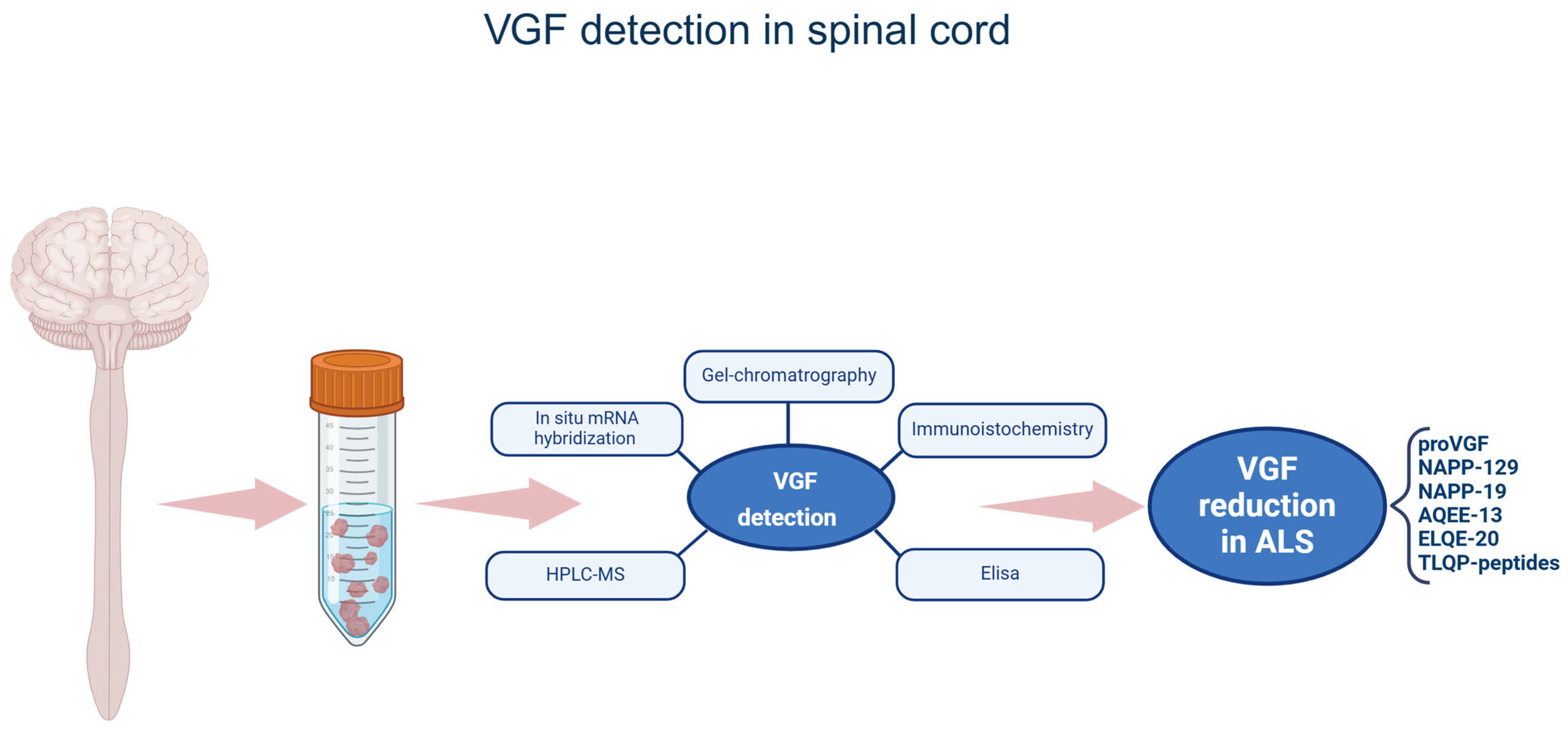
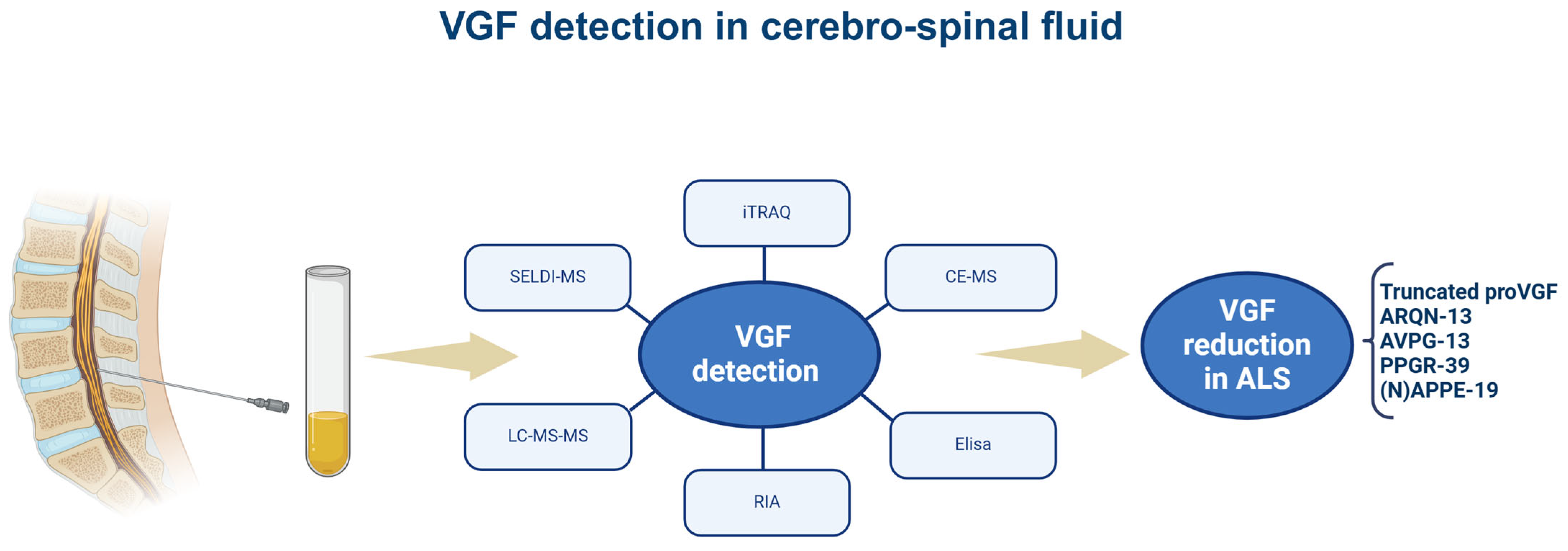
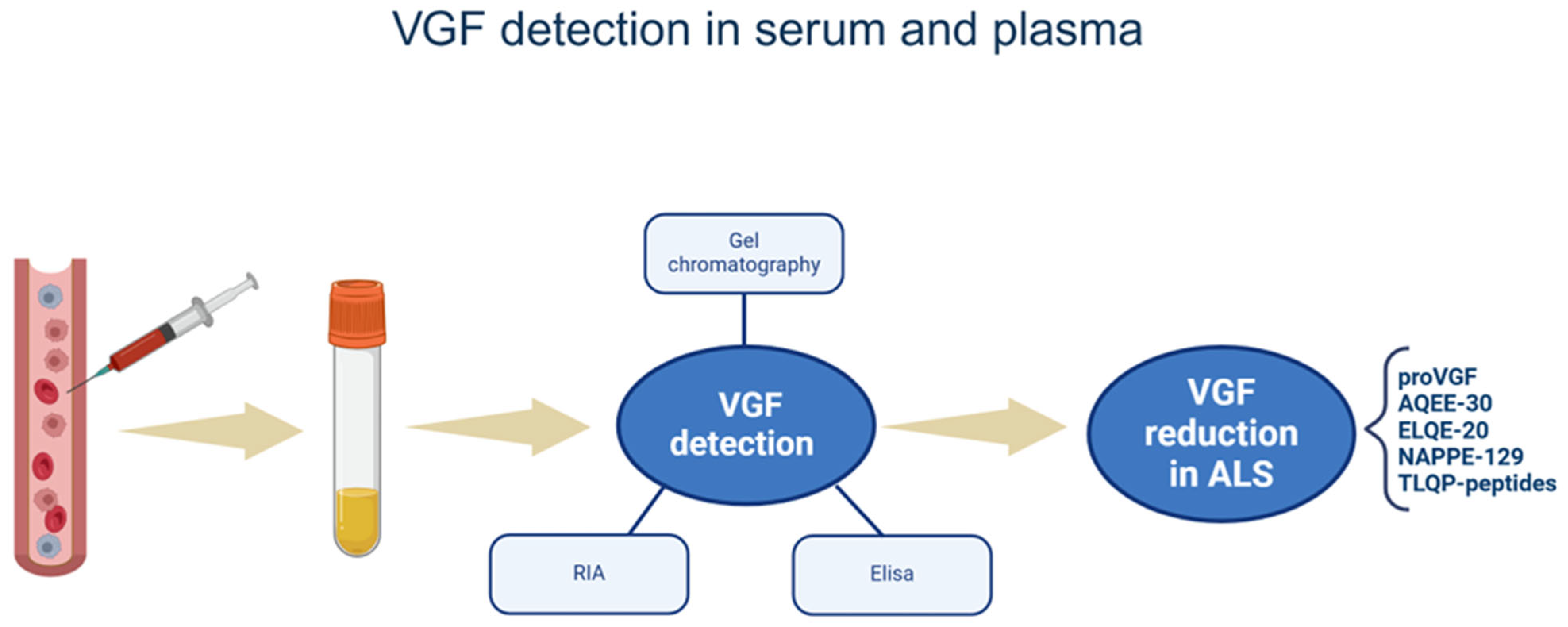
Amyotrophic lateral sclerosis (ALS) is a neurodegenerative disease characterized by a progressive degeneration in the neurons of the frontal cortex, spinal cord, and brainstem, altering the correct release of neurotransmitters. The disease affects every muscle in the body and could cause death three to five years after symptoms first occur. There is currently no efficient treatment to stop the disease’s progression. The lack of identification of potential therapeutic strategies is a consequence of the delayed diagnosis due to the absence of accurate ALS early biomarkers. Indeed, neurotransmitters altered in ALS are not measurable in body fluids at quantities that allow for testing, making their use as diagnostic tools a challenge. Contrarily, neuroproteins and neuropeptides are chemical messengers produced and released by neurons, and most of them have the potential to enter bodily fluids. To find out new possible ALS biomarkers, the research of neuropeptides and proteins is intensified using mass spectrometry and biochemical-based assays. Neuropeptides derived from the proVGF precursor protein act as signaling molecules within neurons. ProVGF and its derived peptides are expressed in the nervous and endocrine systems but are also widely distributed in body fluids such as blood, urine, and cerebrospinal fluid, making them viable options as disease biomarkers. To highlight the proVGF and its derived peptides’ major roles as ALS diagnostic biomarkers, this review provides an overview of the VGF peptide alterations in spinal cord and body fluids and outlines the limitations of the reported investigations.
Keywords: ALS; neuropeptide; proteins; biomarkers; proVGF ALS; neuropeptide; proteins; biomarkers; proVGF