Article

Quality Control after Intracochlear Intralabyrinthine Schwannoma Resection and Cochlear Implantation
1
Department of Otolaryngology, Head and Neck Surgery, Medical School OWL, Bielefeld University, Klinikum Bielefeld Mitte, Teutoburger Str. 50, 33604 Bielefeld, Germany
2
Department of Radiology, Medical School OWL, Bielefeld University, Klinikum Bielefeld Mitte, 33604 Bielefeld, Germany
*
Author to whom correspondence should be addressed.
Brain Sci. 2021, 11(9), 1221; https://doi.org/10.3390/brainsci11091221

Submission received: 14 August 2021 / Revised: 10 September 2021 / Accepted: 12 September 2021 / Published: 16 September 2021
(This article belongs to the Section Sensory and Motor Neuroscience)

Abstract

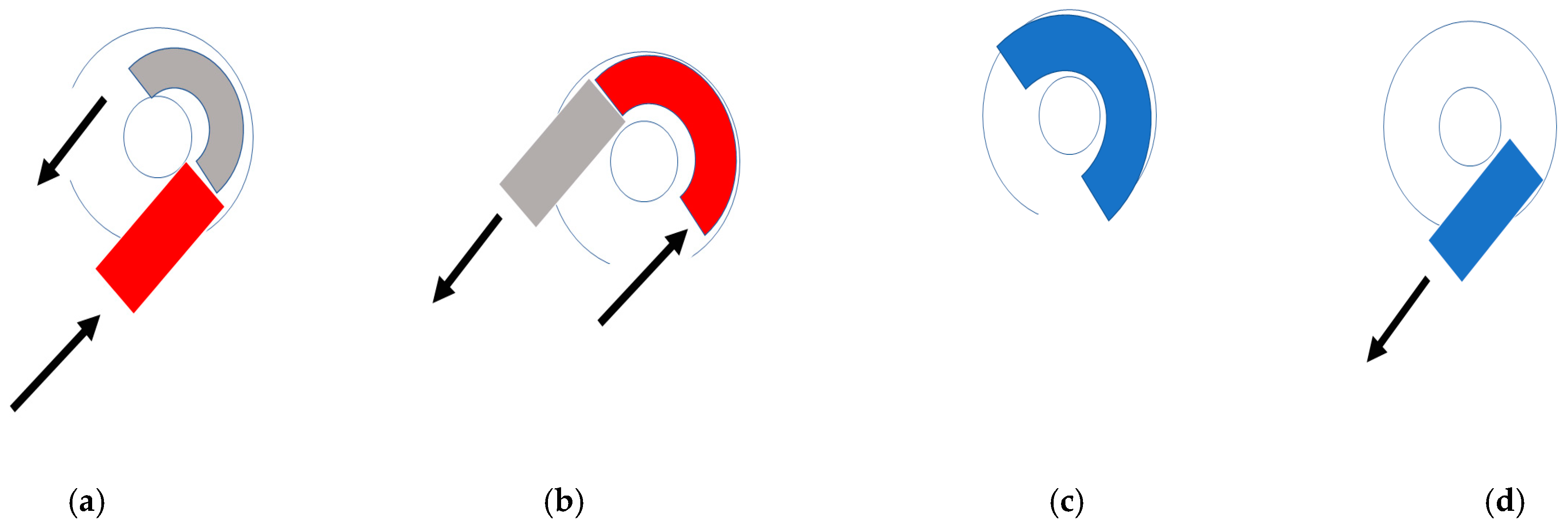
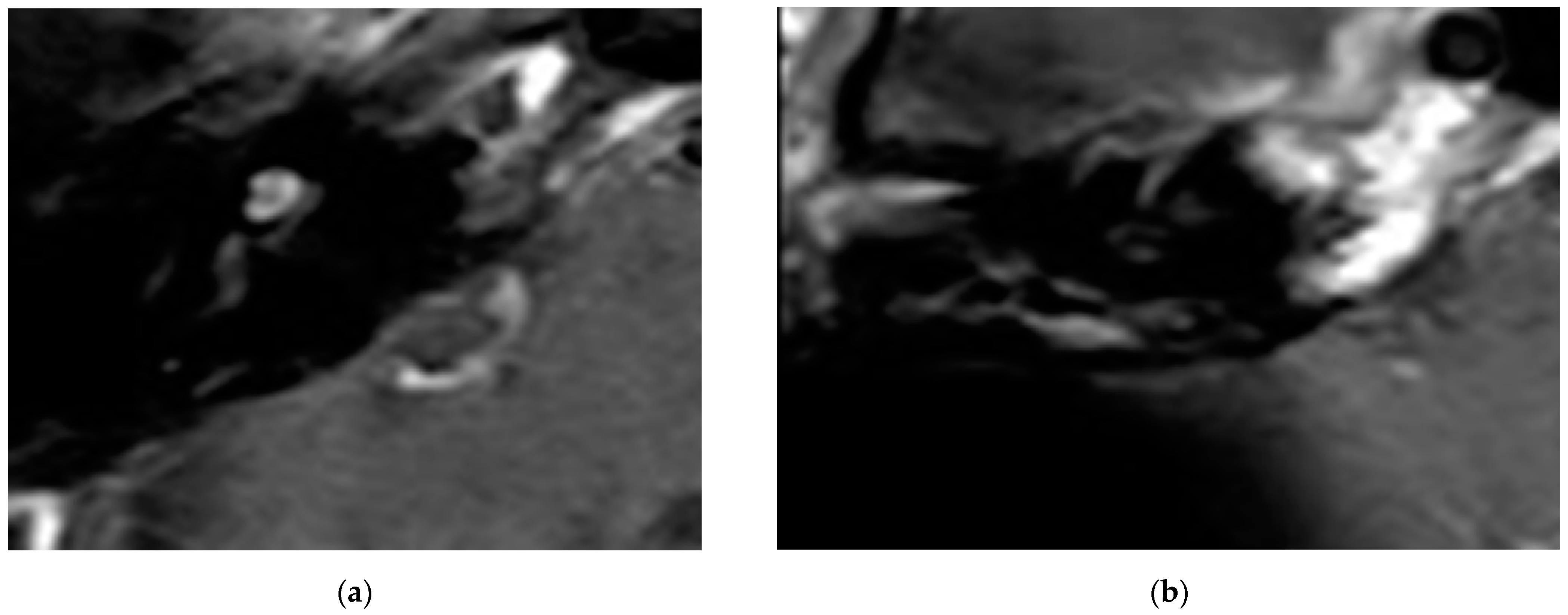
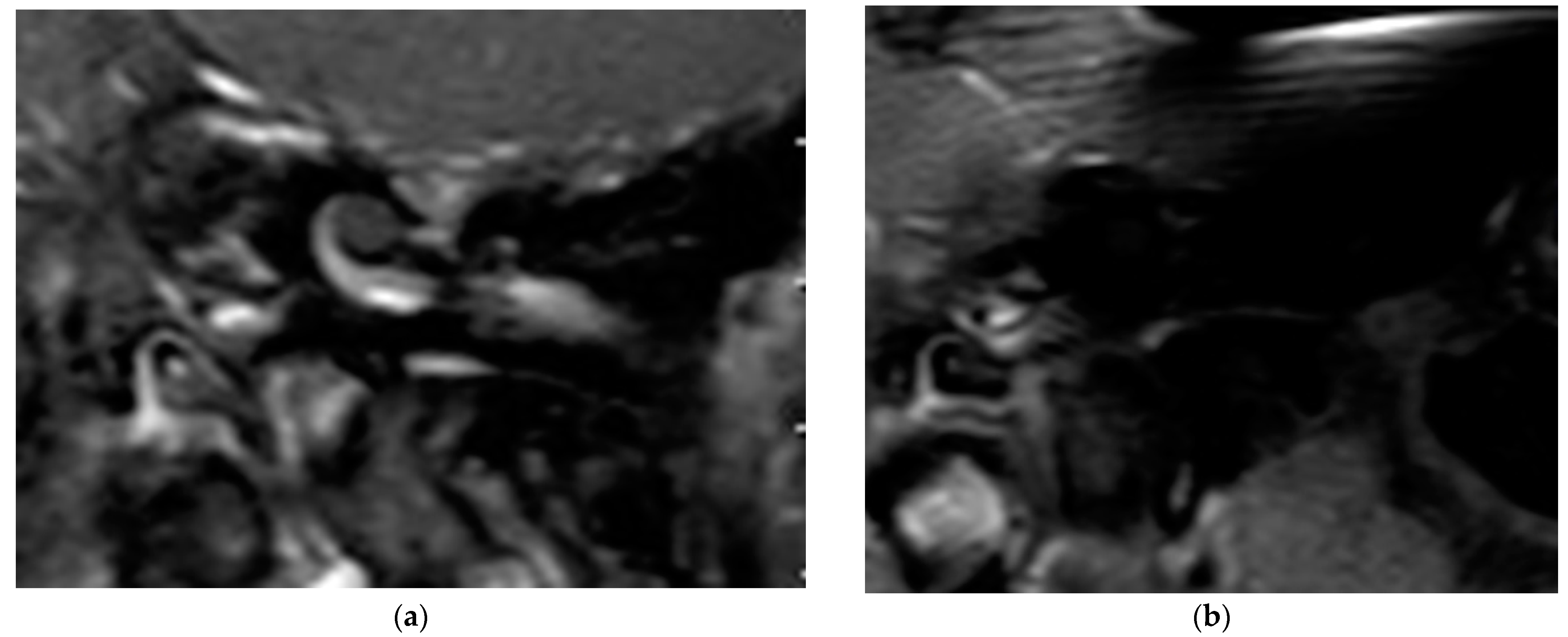
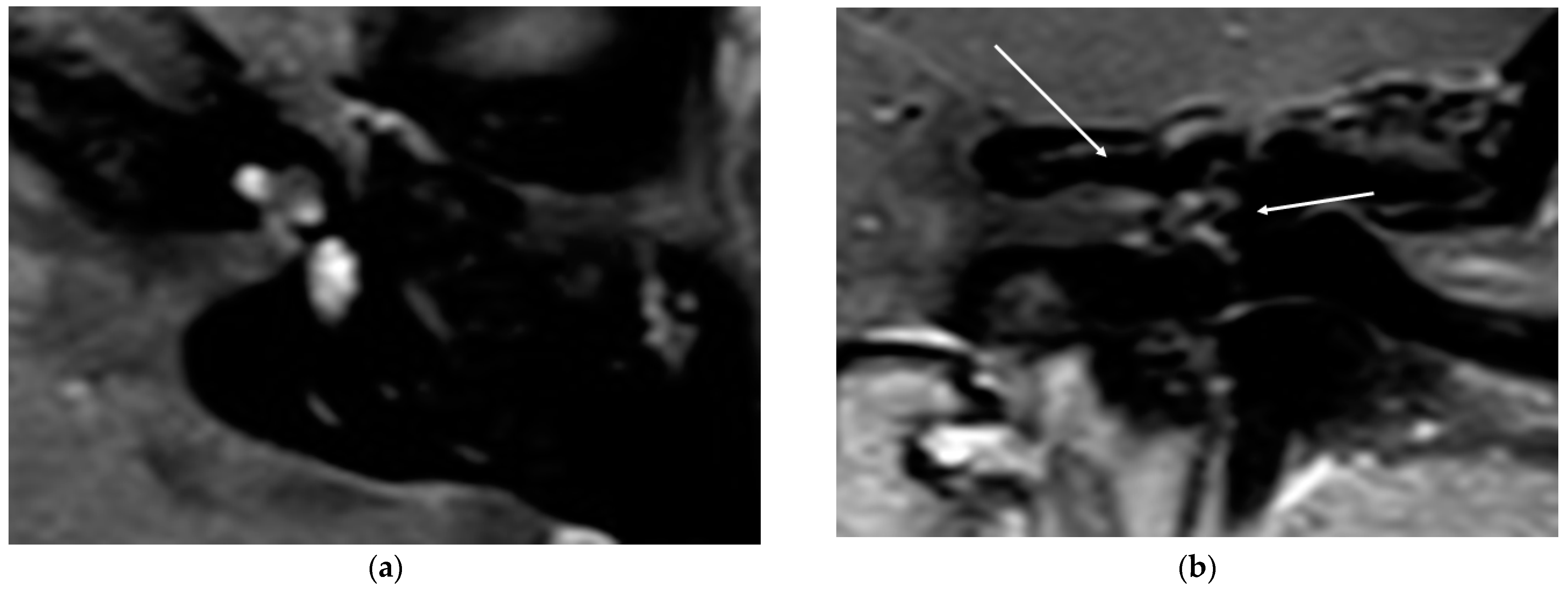
Background: The combination of intralabyrinthine schwannoma (ILS) removal and cochlear implantation is the standard of care after surgical resection for audiological rehabilitation. Intracochlear ILS is not only the most frequent tumor in this group of schwannomas, but it is also, to some degree, surgically the most challenging because of its position behind the modiolus. Recent developments in the knowledge of implant position, implant magnet choice, and magnetic resonance imaging (MRI) sequences make an MRI follow-up after surgical removal possible. Thus far, no results are known about the surgical success and residual rate of these kind of tumors. The aim of the present study was to perform an early MRI follow-up for the evaluation of residual or recurrent intracochlear ILS after surgical removal and cochlear implantation. Methods: In a retrospective study, we evaluated seven patients after an intracochlear ILS removal and single-stage cochlear implantation with a mean period of 13.4 months post surgery with a 3T T1 GAD 2 mm sequence for a residual ILS. Patients were operated on using an individualized technique concept. Results: In six out of seven cases, 3 T T1 GAD 2 mm MRI follow-up showed no residual or recurrent tumor. In one case, a T1 signal indicated a tumor of the upper inner auditory canal (IAC) at the MRI follow up. Conclusion: MRI follow-up as a quality control tool after ILS removal and cochlear implantation is highly important to exclude residual tumors. Long-term MRI evaluation results are needed and can be obtained under consideration of implant position, implant magnet, and MRI sequence choice. A preoperative MRI slice thickness less than 2 mm can be recommended to visualize possible modiolar and IAC expansion.
Keywords: MRI; cochlear implant; intracochlear intralabyrinthine schwannoma MRI; cochlear implant; intracochlear intralabyrinthine schwannoma