Article

Body Concept and Quality of Life in Patients with Idiopathic Dystonia

1
Department of Neurology, Hannover Medical School, 30625 Hannover, Germany
2
Center for Systems Neuroscience, 30625 Hannover, Germany
3
Department of Psychosomatic Medicine and Psychotherapy, Hannover Medical School, 30625 Hannover, Germany
4
Department of Neurosurgery, Hannover Medical School, 30625 Hannover, Germany
*
Author to whom correspondence should be addressed.
These authors contributed equally to this paper.
Brain Sci. 2020, 10(8), 488; https://doi.org/10.3390/brainsci10080488

Submission received: 1 July 2020 / Revised: 22 July 2020 / Accepted: 26 July 2020 / Published: 28 July 2020

Abstract

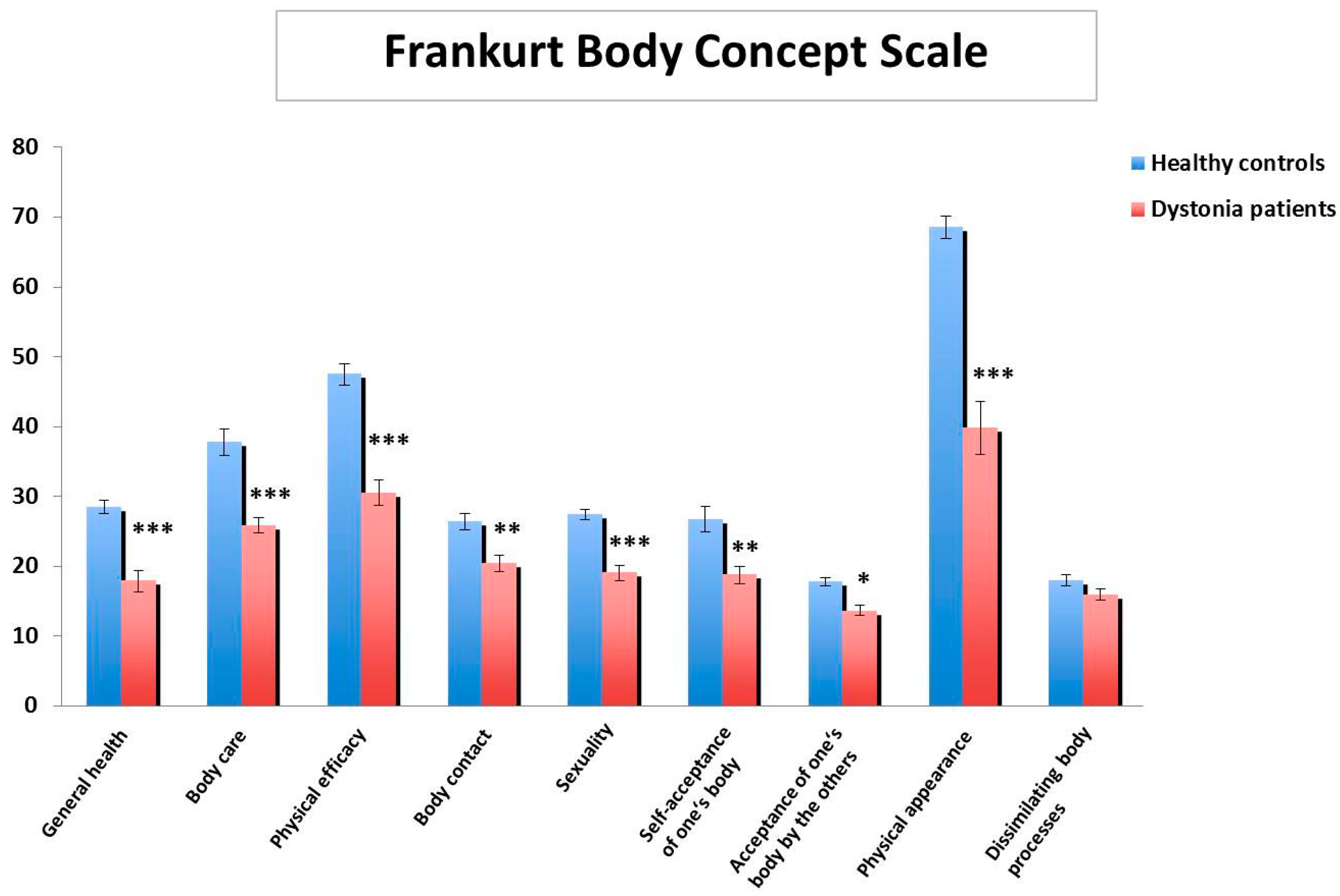
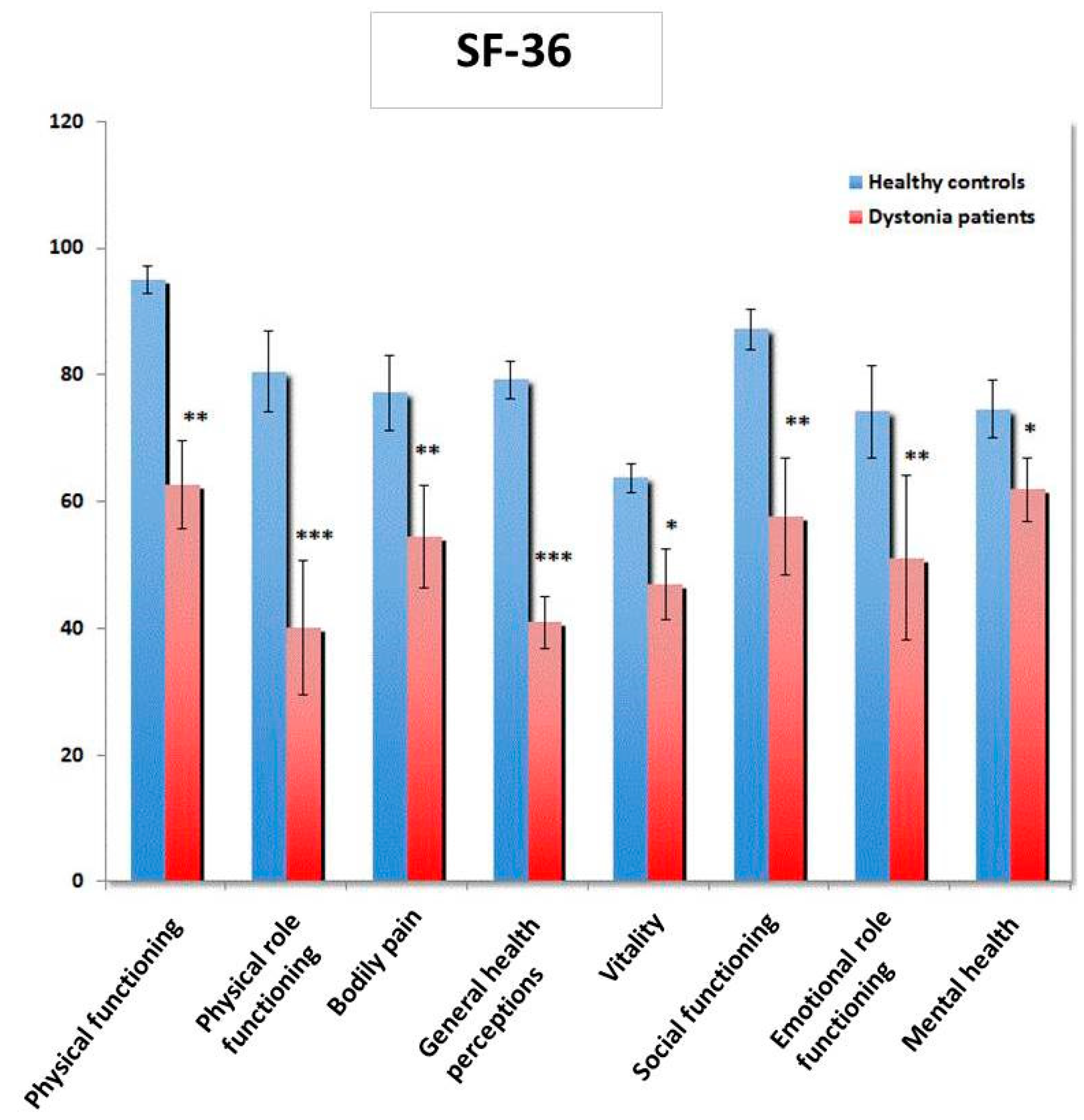
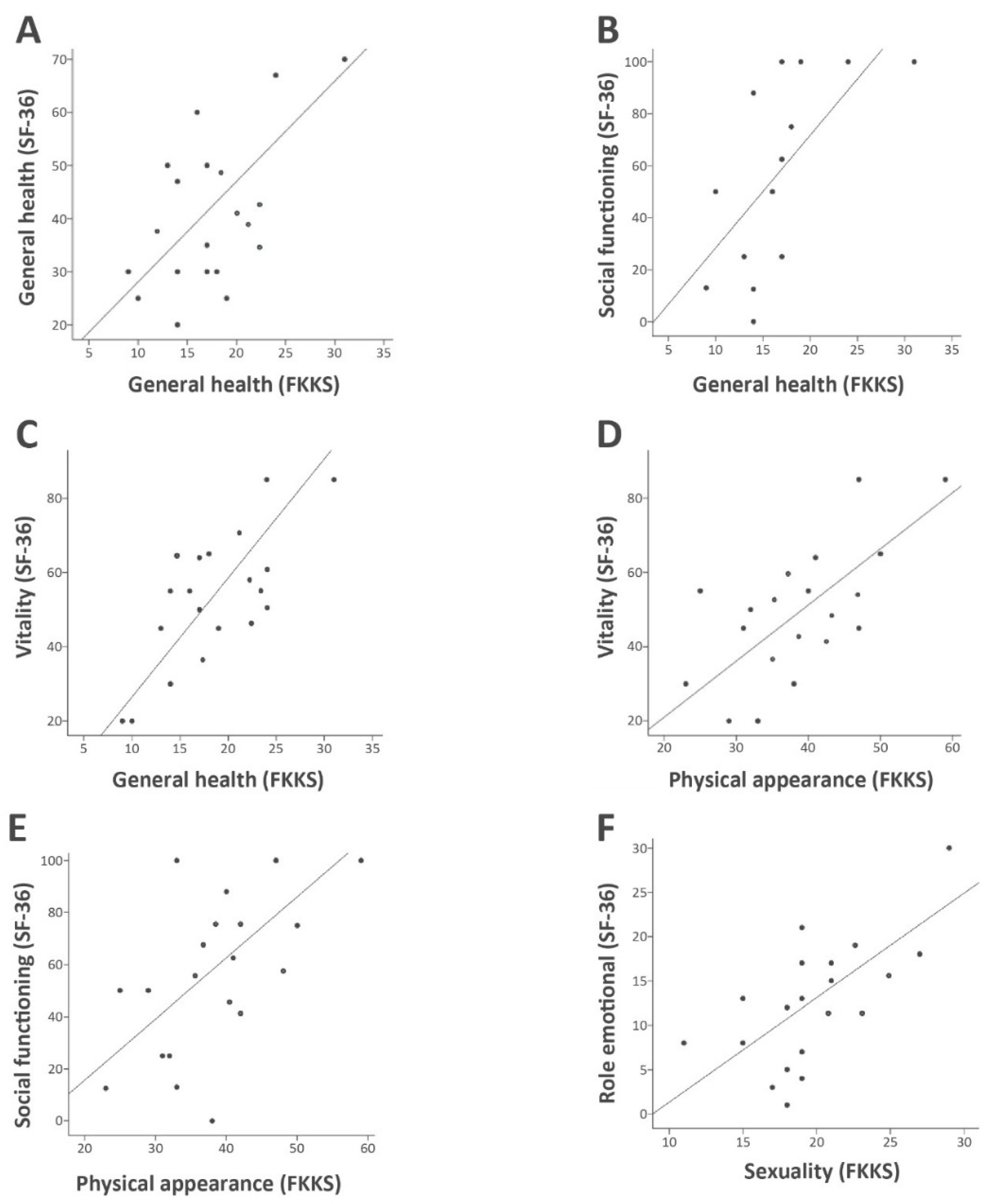
Patients with dystonia experience unusual postures and disfigurement. The aim of the study was to examine changes in the body concept in relation to quality of life and severity of dystonia. Our cohort consisted of 20 patients with idiopathic dystonia resistant to medical therapy who were planned for pallidal deep brain stimulation. The results were compared to 25 healthy controls. The patients were assessed with Frankfurt Body Concept Scale, Short Form 36 (SF-36) Health Survey, Hamilton Depression Scale, Beck Depression Inventory, Social Phobia Inventory and Social Interaction Anxiety Scale. The disease severity was evaluated with Burke–Fahn–Marsden Dystonia Rating Scale and Toronto Western Spasmodic Torticollis Rating Scale. Patients with dystonia had a significantly impaired body concept in eight out of nine subscales in comparison to healthy controls. The differences were most pronounced for the subscales general health, body care, physical efficacy, sexuality and physical appearance (p < 0.001). Furthermore, all eight subscales of SF-36 exhibited significantly lower values in patients with dystonia compared to controls. We also found significant positive correlations between SF-36 and body concept subscales. Impairment of body concept was not associated with disease severity or levels of social anxiety symptoms. However, there was a significant association between self-rated depression and disease severity. Our patients suffered from increased depression and social anxiety symptoms except social interaction anxiety. We conclude that patients with dystonia have significant body concept impairment that interferes with quality of life in both physical and emotional domains. Future studies should focus on assessing these symptoms after adequate therapeutic management of motor symptoms.
Keywords: dystonia; body concept; quality of life; depression dystonia; body concept; quality of life; depression