Article

An IVTIFN–TOPSIS Based Computational Approach for Pipe Materials Selection


1
Faculty of Geosciences and Environmental Engineering, Southwest Jiaotong University, Chengdu 611756, China
2
Sichuan Province Cyclic Economy Research Centre, Southwest University of Science and Technology, Mianyang 621010, China
*
Author to whom correspondence should be addressed.
Appl. Sci. 2019, 9(24), 5457; https://doi.org/10.3390/app9245457
Submission received: 15 November 2019 / Revised: 4 December 2019 / Accepted: 10 December 2019 / Published: 12 December 2019
(This article belongs to the Section Civil Engineering)

Abstract

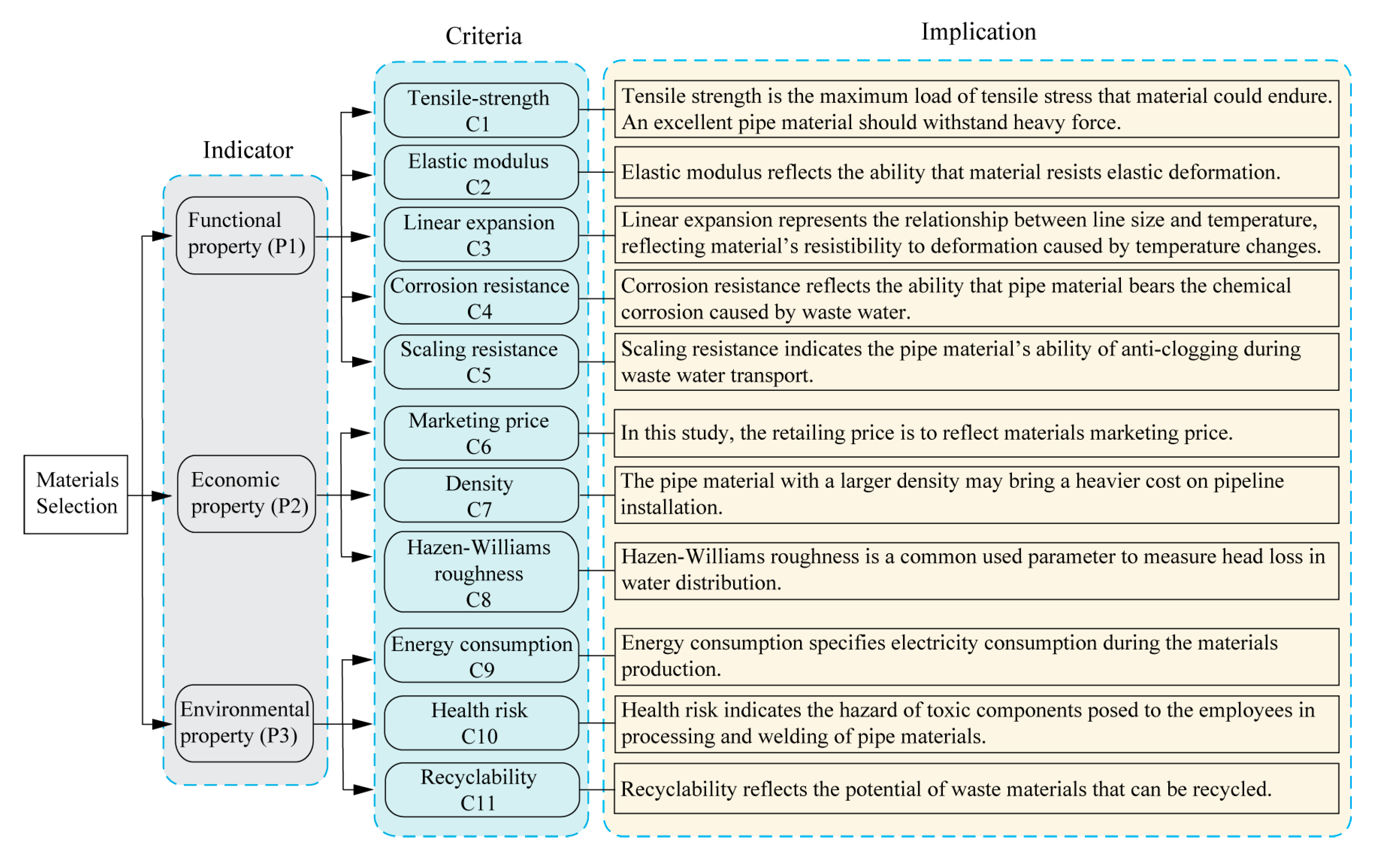
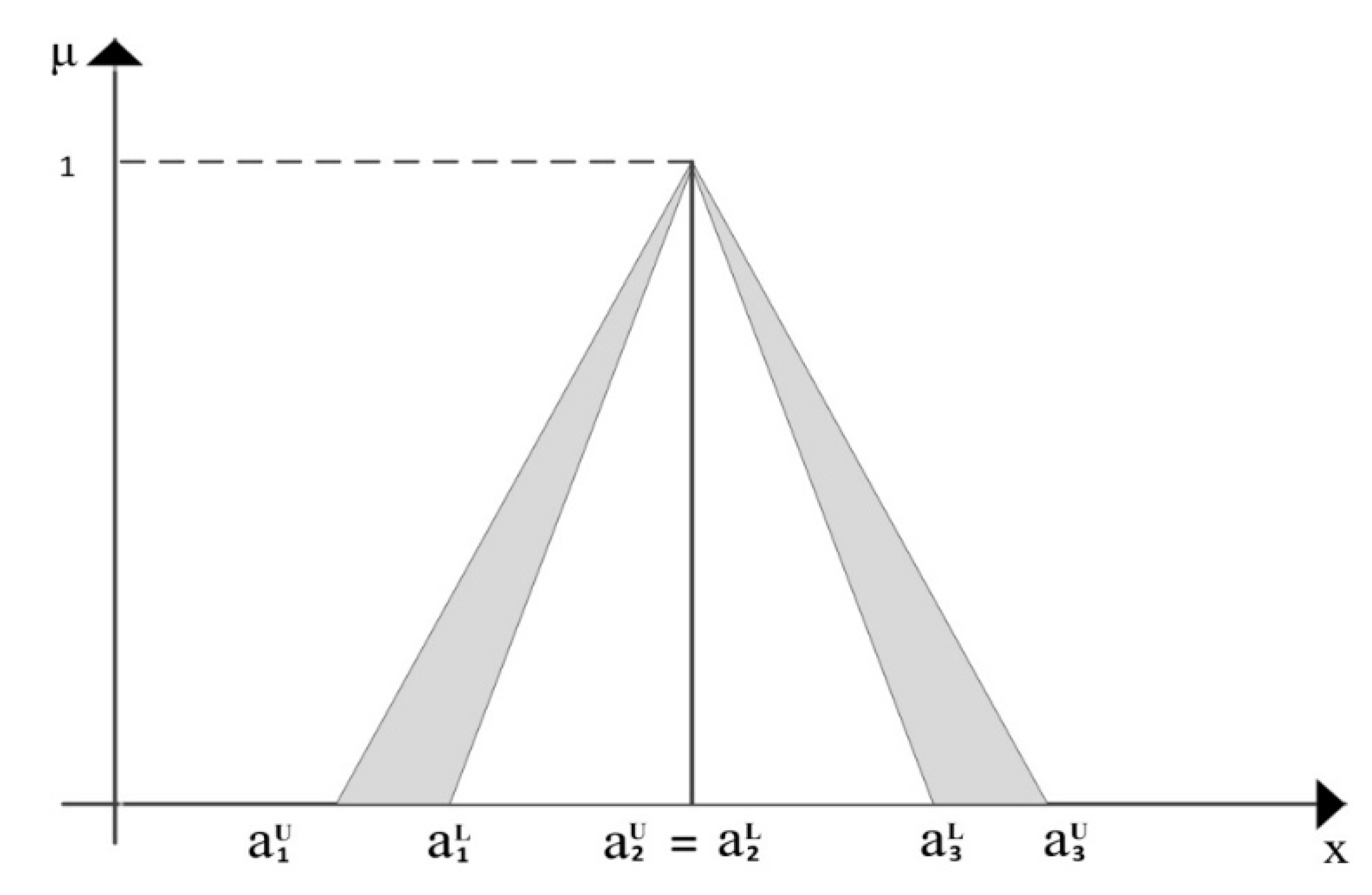
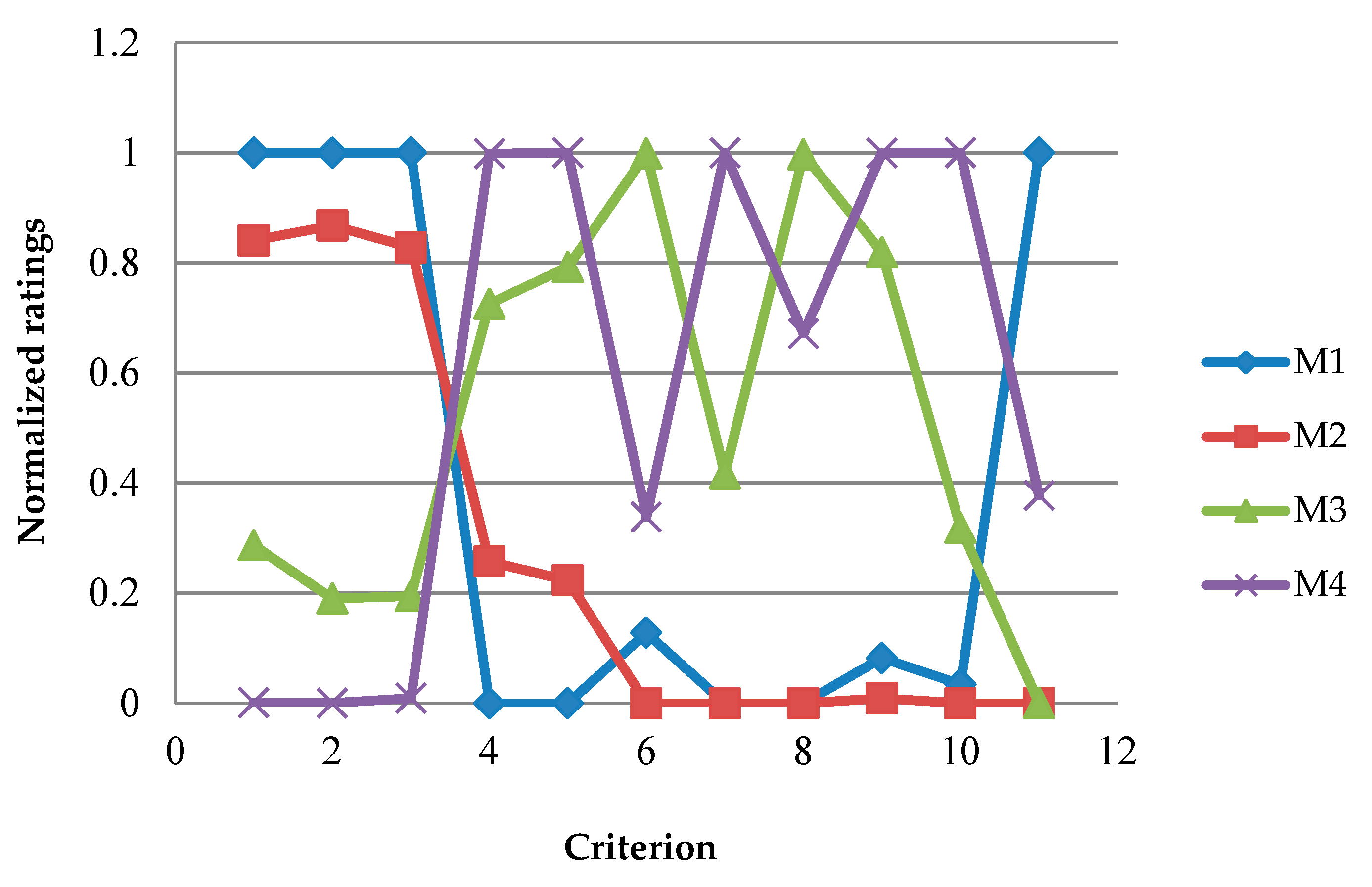
This paper proposes a multicriteria decision-making (MCDM) approach, coupling intervalued trapezoidal intuitionistic fuzzy number (IVTIFN) with the technique for order preference by similarity to ideal solution (TOPSIS) to facilitate the selection of pipe materials. Their integration can maximize the advantage in better expressing decision maker’s preference on the proposed evaluation criteria by using a bounded limit instead of an exact value, to rank material alternatives based upon their functional, economic and environmental attributes. To reduce possible information overlapping resulted from the criteria, Mahalanobis distance is incorporated into IVTIFN–TOPSIS to improve the selection results. An illustrative example is provided to verify the proposed approach and demonstrate its practical application, in which four common alternative materials, including carbon steel, galvanized steel, polyvinyl chloride (PVC) and high-density polyethylenes (HDPE), are subject to precise selection to determine their adaptability in waste-water piping. The selection result indicates that the plastic materials are superior to the metal materials. In particular, HDPE is the optimal material alternative for waste-water collection and transport.
Keywords: materials selection; pipe material; multicriteria decision making; IVTIFN; TOPSIS; Mahalanobis distance materials selection; pipe material; multicriteria decision making; IVTIFN; TOPSIS; Mahalanobis distance