Article

Development of UVB LED Lighting System Based on UV Dose Calculation Algorithm to Meet Individual Daily UV Dose

1
Department of Computer Science & Engineering, Kongju National University, Cheonan 31080, Korea
2
Smart Natural Space Research Center, Kongju National University, Cheonan 31080, Korea
*
Author to whom correspondence should be addressed.
Appl. Sci. 2019, 9(12), 2479; https://doi.org/10.3390/app9122479
Submission received: 24 April 2019 / Revised: 12 June 2019 / Accepted: 14 June 2019 / Published: 18 June 2019
(This article belongs to the Section Applied Physics General)

Abstract

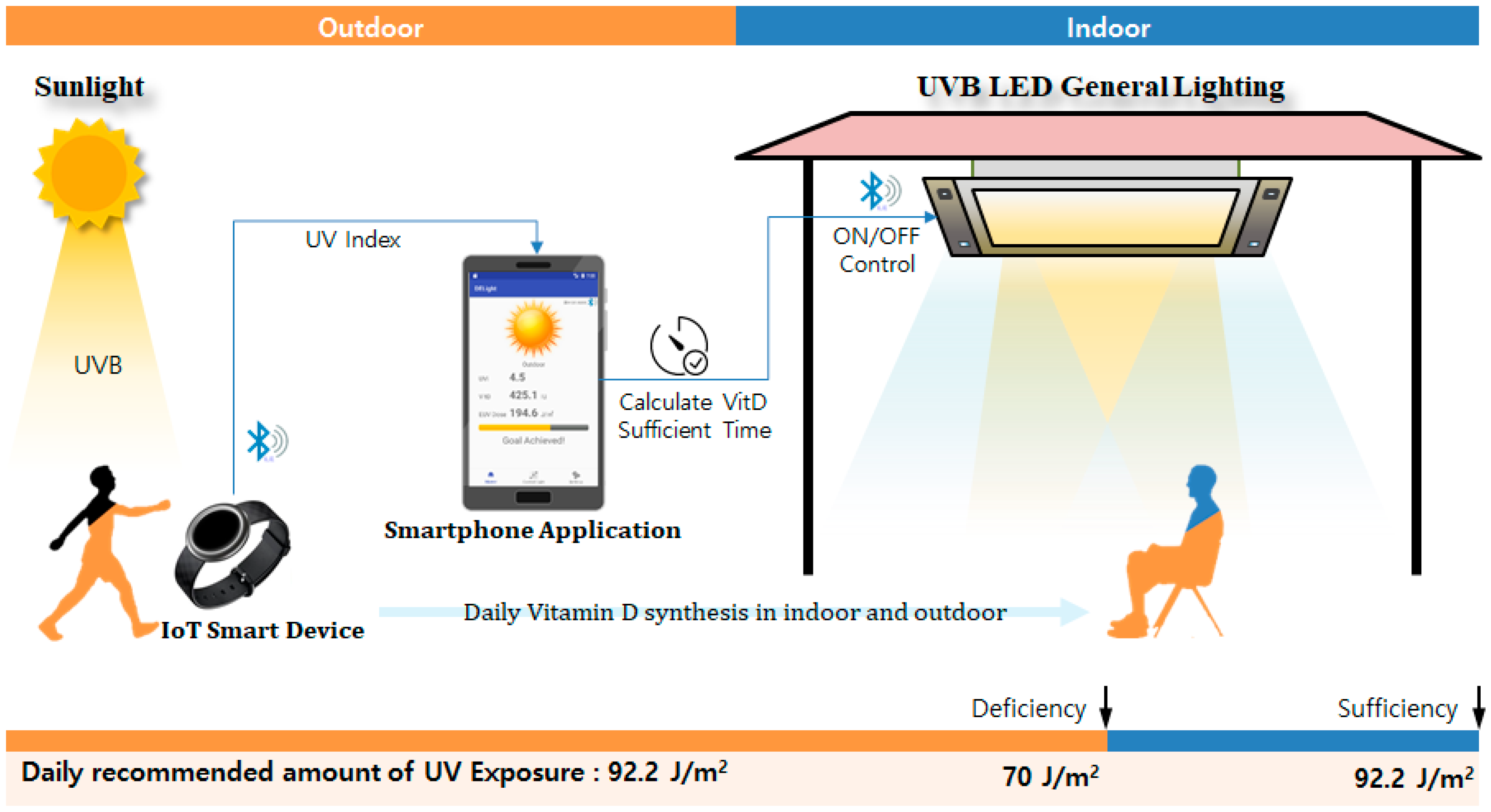
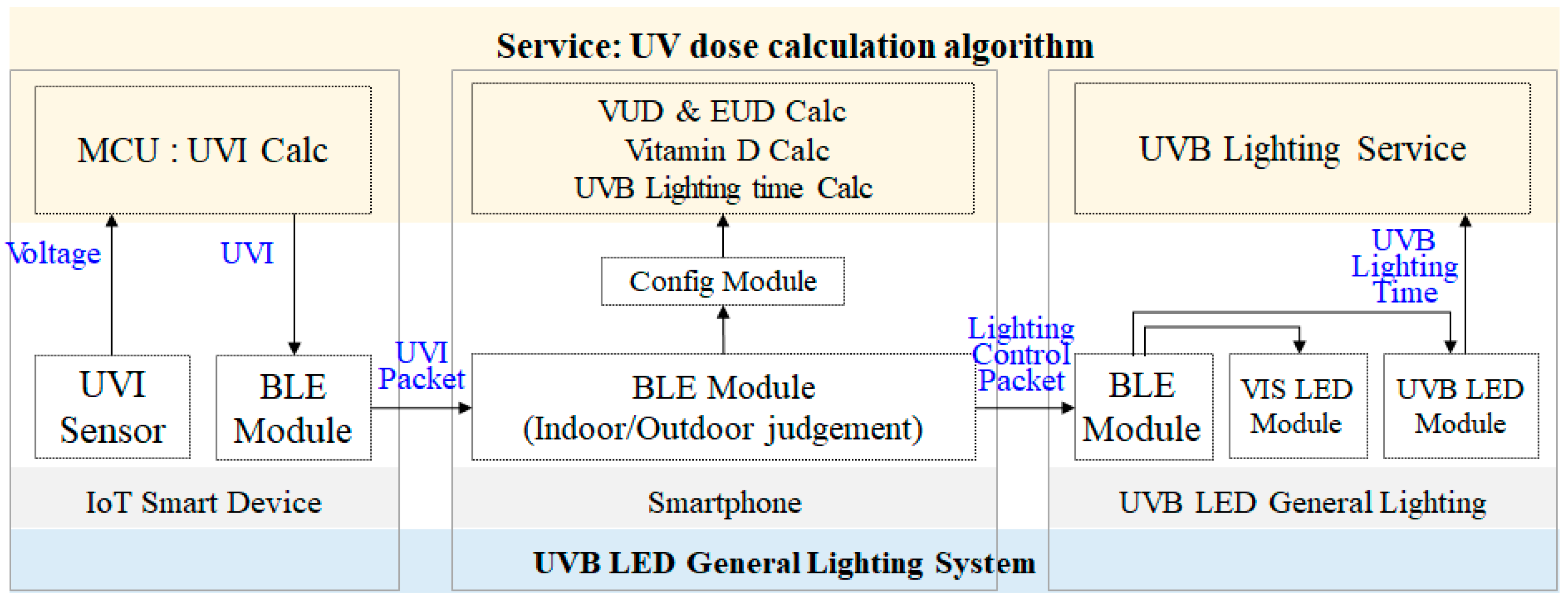
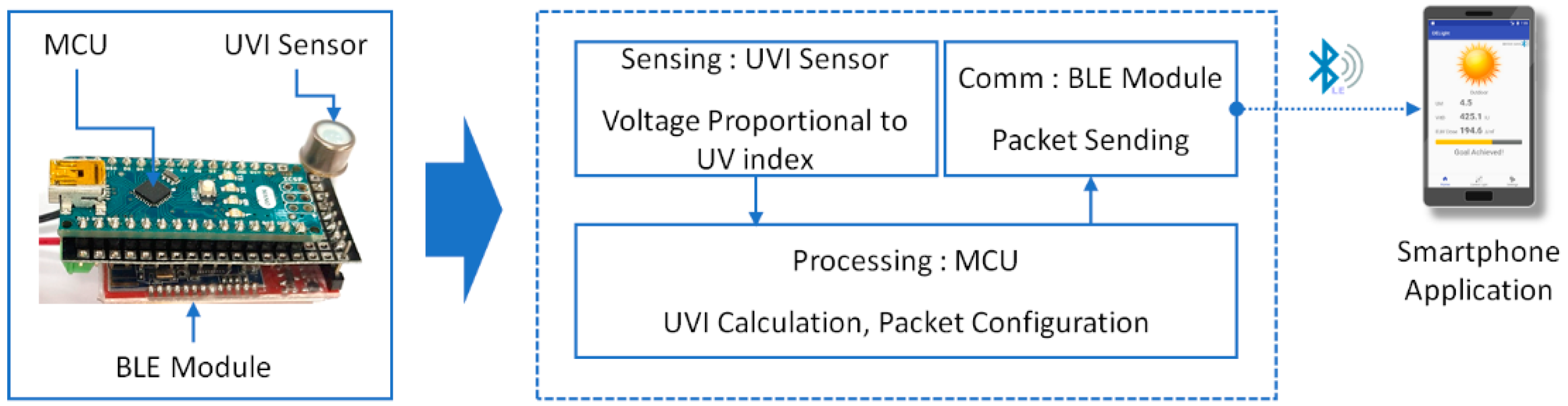
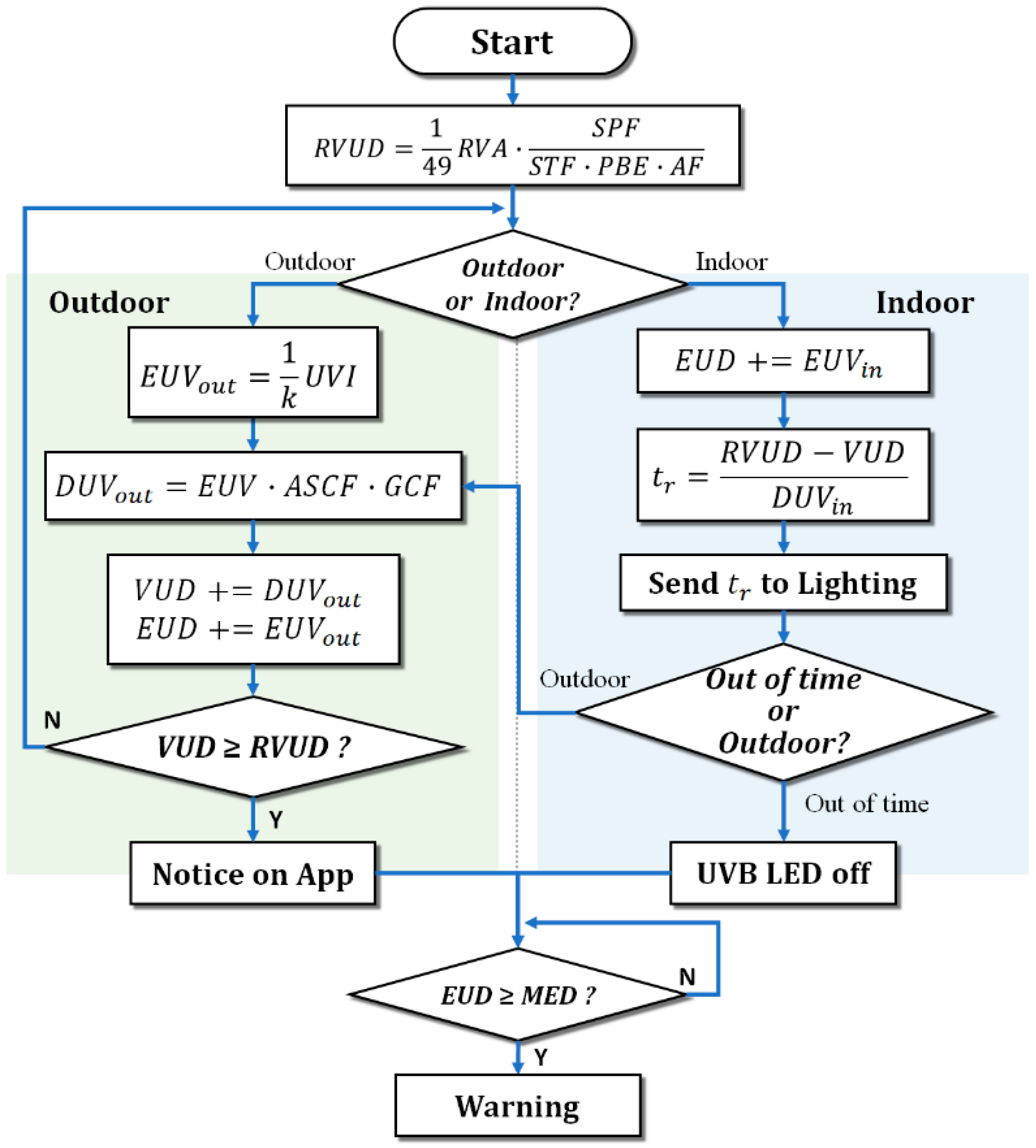
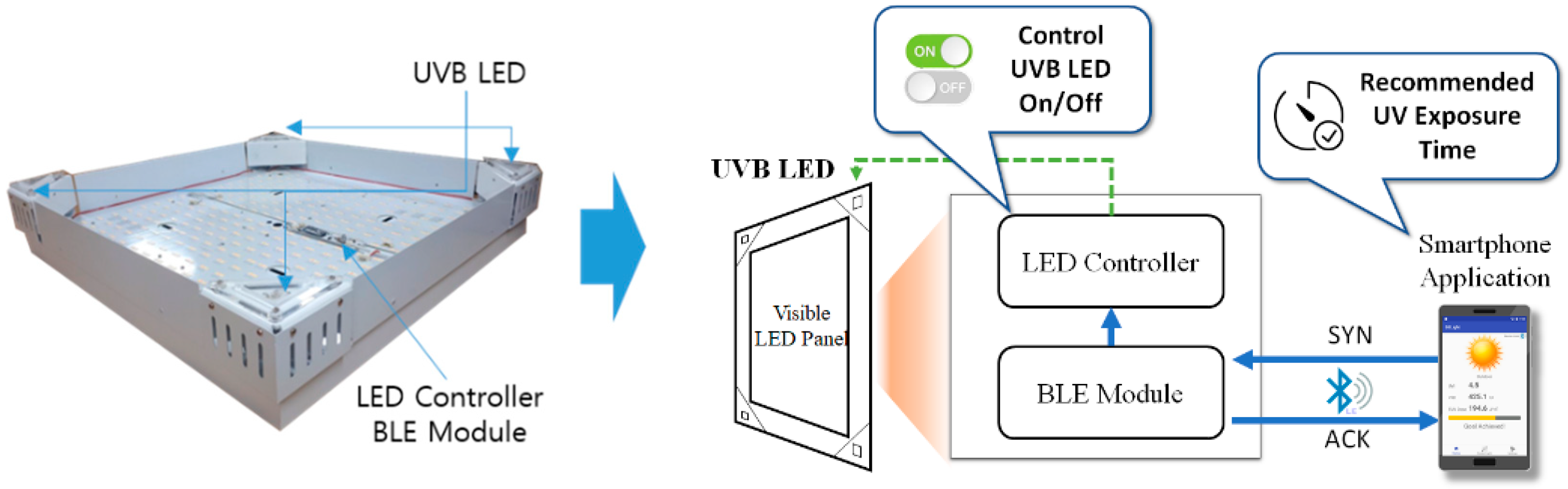
Ultraviolet B (UVB) in sunlight is known to promote health when humans are exposed to optimum sunlight. Proper exposure to ultraviolet B is essential to produce vitamin D in the body, which is a particularly important factor for health. However, there has been an increase recently in the number of people who are lacking sunlight exposure due to staying indoors. Avoiding ultraviolet (UV) rays leads to health deterioration. To solve this problem, a portable ultraviolet measuring device that provides users with the UV intensity information of outdoor sunlight has been developed while UVB Light Emitting Diode (LED) lighting technologies capable of providing UVB radiation have been studied. However, existing technologies are mere methods for providing information on ultraviolet rays and artificially exposing to ultraviolet rays, and there is a risk for the UV radiation amount to not meet the daily required UV dose. Therefore, in this paper, a UVB LED general lighting system based on a UV exposure calculation algorithm that supports users’ daily required UV dose is proposed. The proposed system is composed of an IoT (Internet of Things) UV measuring device that measures the UV dose indoors, as well as outdoors, UVB LED general lighting which can safely provide UVB doses at indoors, and a smartphone which provides information on the cumulative UV dose and the estimated amount of vitamin D while it controls UVB LED general lighting. In addition, it is possible to support users’ vitamin D synthesis by providing as much UV light as its shortage through UVB LED general lighting, based on an individual’s UV exposure amount through outdoor sunlight, using a smartphone implementing a UV dose calculation algorithm. In order to confirm the performance of the proposed system, a simulation was conducted assuming that users with skin types 2 and 3 performed outdoor activities within 30 min and entered the room. The result confirmed that the proposed lighting can provide users of all ages with the UV dose required per day.
Keywords: UVB LED general lighting system; vitamin D UV dose calculation algorithm; daily recommended vitamin D UV dose; UVB LED; UV measurement device UVB LED general lighting system; vitamin D UV dose calculation algorithm; daily recommended vitamin D UV dose; UVB LED; UV measurement device