Article

Enhanced Model-Based Predictive Control System Based on Fuzzy Logic for Maintaining Thermal Comfort in IoT Smart Space


Department of Computer Engineering, Jeju National University, Jeju 63243, Korea
*
Author to whom correspondence should be addressed.
Appl. Sci. 2018, 8(7), 1031; https://doi.org/10.3390/app8071031
Submission received: 28 May 2018 / Revised: 20 June 2018 / Accepted: 21 June 2018 / Published: 24 June 2018

Abstract

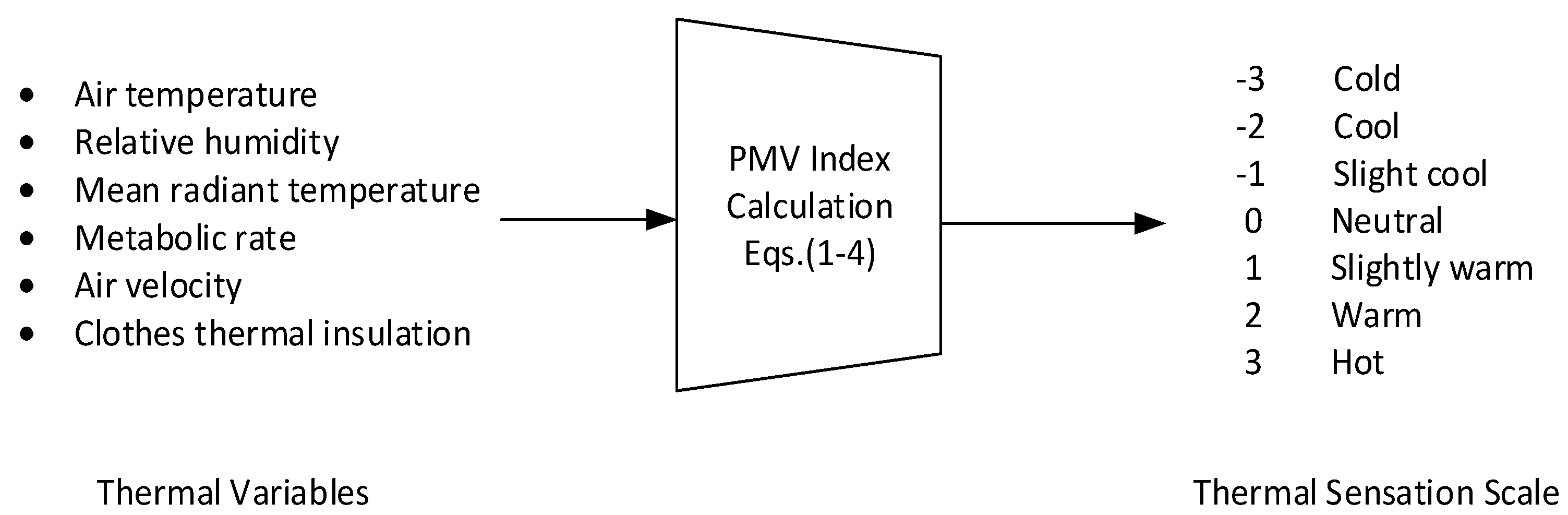
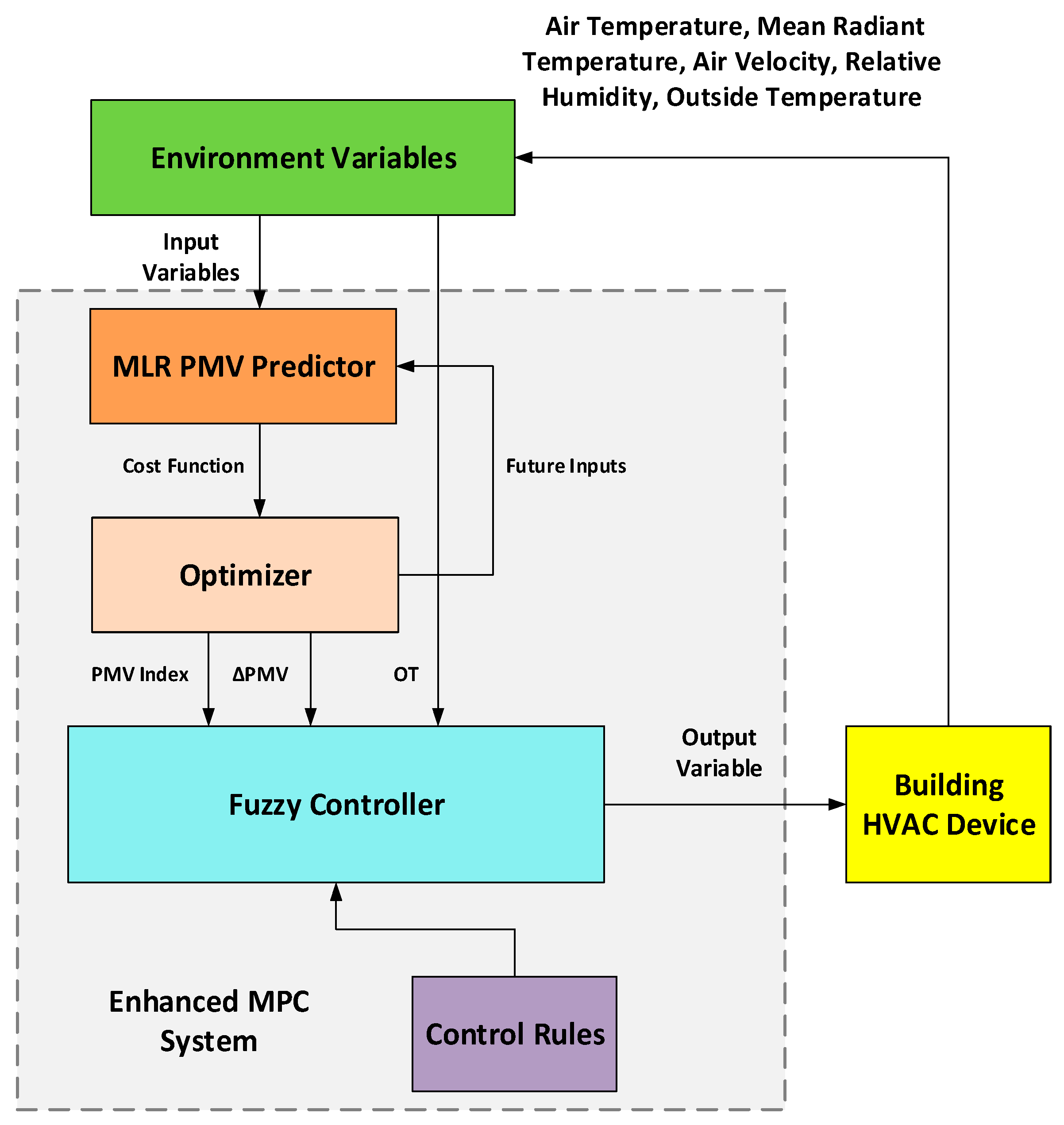
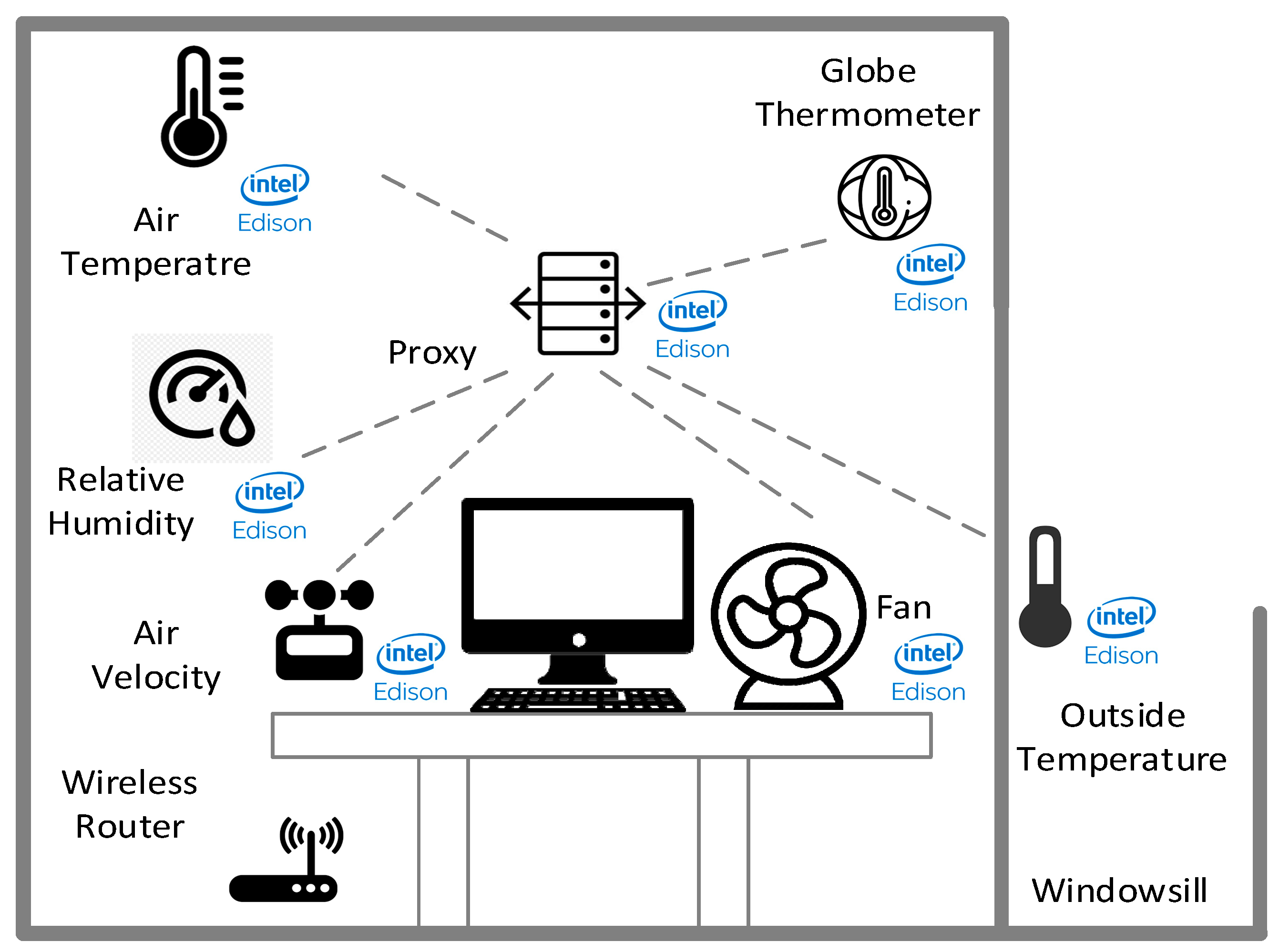
Researchers have reached a consensus on the thermal discomfort known as the major cause of sick building syndrome, which hurts people’s health and working efficiency greatly. As a result, the thermal environment satisfaction is important and thus many studies have been dedicated to thermal comfort over the past few decades. Predicted Mean Vote (PMV) is one of the globally used standards to express users’ comfort satisfaction with the given thermal moderate environments. It has been widely used in most of the Heating, Ventilation and Air Conditioning (HVAC) systems to maintain this standard of thermal comfort for occupants of buildings. However, the PMV model is developed on indoor experimental data without taking into account conditions of outdoor space, which greatly affects the performance of the existing HVAC systems and varies with the seasons. In this paper, an enhanced Model-based Predictive Control practical system for maintaining the indoor thermal comfort is demonstrated, including a multiple linear regression predictive model and an innovative fuzzy controller considering both the PMV index and the outdoor environment conditions. To verify the usability of the designed system, an Internet of Things (IoT) smart space prototype was chosen and experimentally tested in a building in Jeju, Korea. Moreover, thermal comfort regulation performances using the proposed approach have been compared with the existing one. The results of our work indicate that the proposed solution is capable of optimizing the thermal comfort condition according to seasonality and outperforms the conventional approaches in different performance indexes.
Keywords: Internet of Things; PMV; MPC; fuzzy control; thermal comfort; HVAC; smart space Internet of Things; PMV; MPC; fuzzy control; thermal comfort; HVAC; smart space