Article

Polyimide Encapsulation of Spider-Inspired Crack-Based Sensors for Durability Improvement


1
Department of Mechanical Engineering, Ajou University, San 5, Woncheon-Dong, Yeongtong-Gu, Suwon 443-749, Korea
2
Department of Mechanical and Aerospace Engineering, Seoul National University, Seoul 151-742, Korea
3
Global Frontier Center for Multiscale Energy Systems, Seoul National University, Seoul 151-742, Korea
4
Department of Mechanical Engineering, Incheon National University, Incheon 406-772, Korea
*
Authors to whom correspondence should be addressed.
These authors contributed equally to this work.
Appl. Sci. 2018, 8(3), 367; https://doi.org/10.3390/app8030367
Submission received: 2 January 2018 / Revised: 27 February 2018 / Accepted: 1 March 2018 / Published: 3 March 2018

Abstract

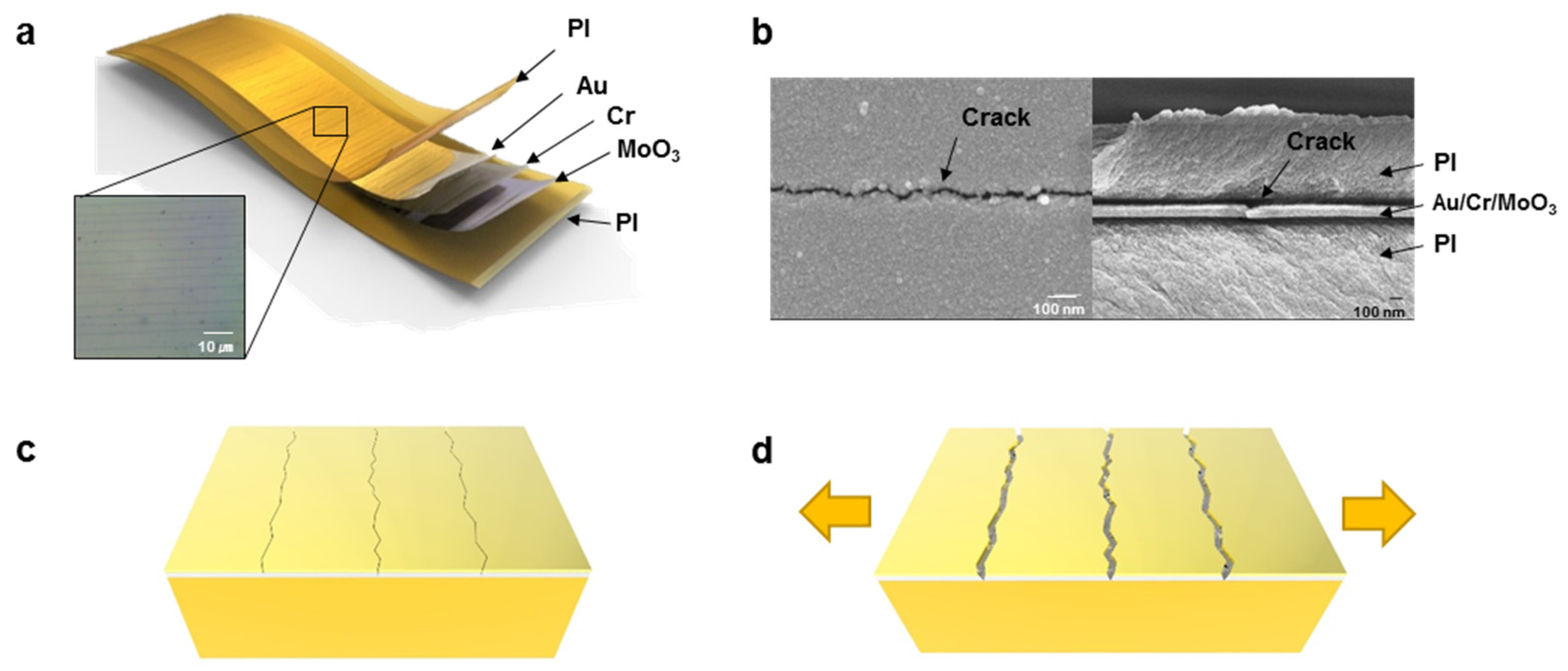
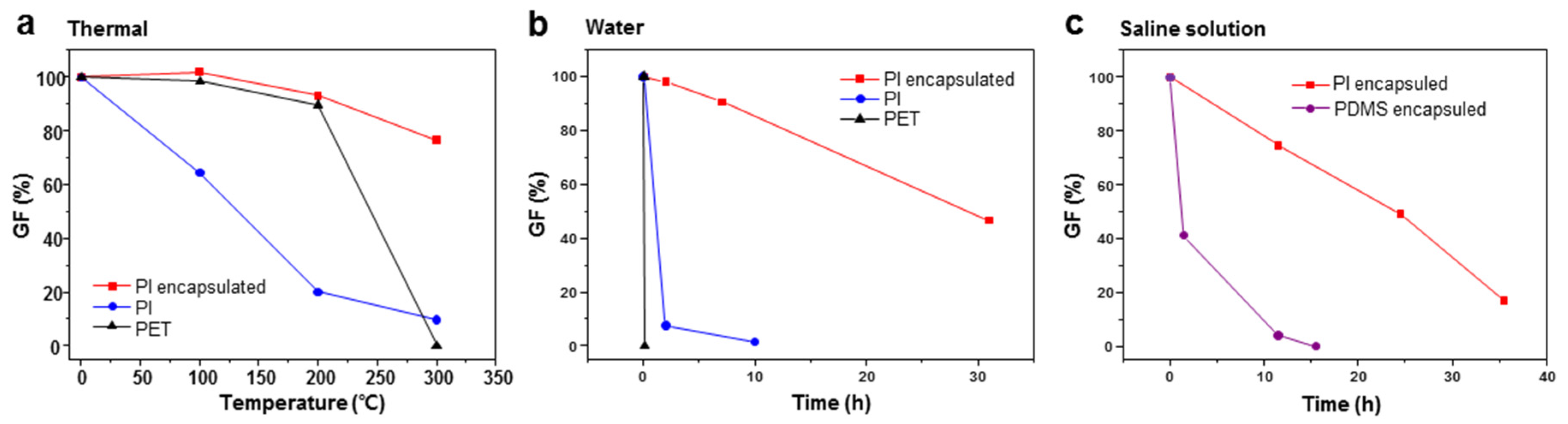
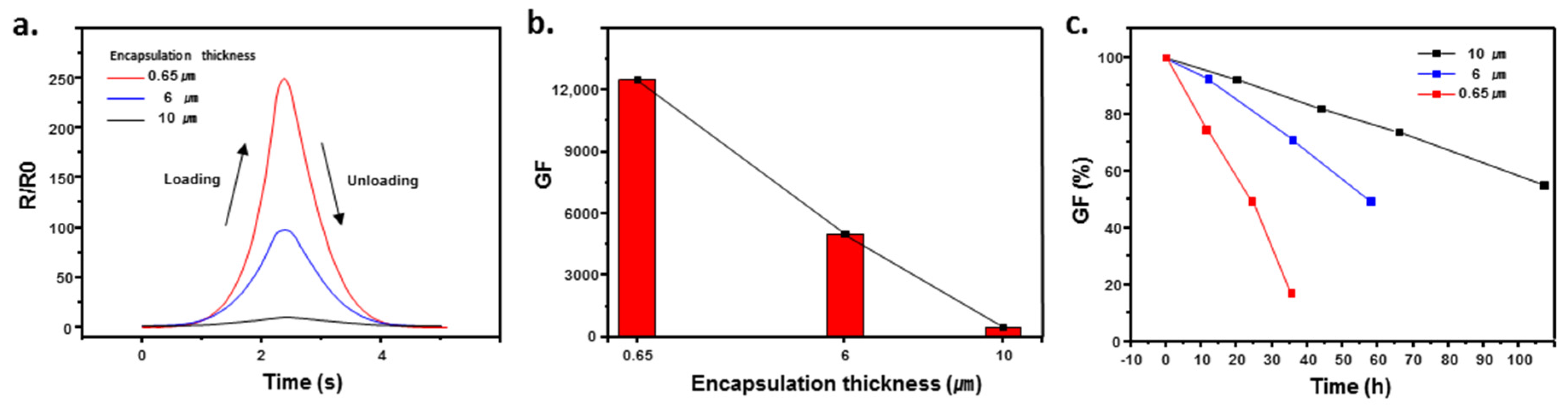
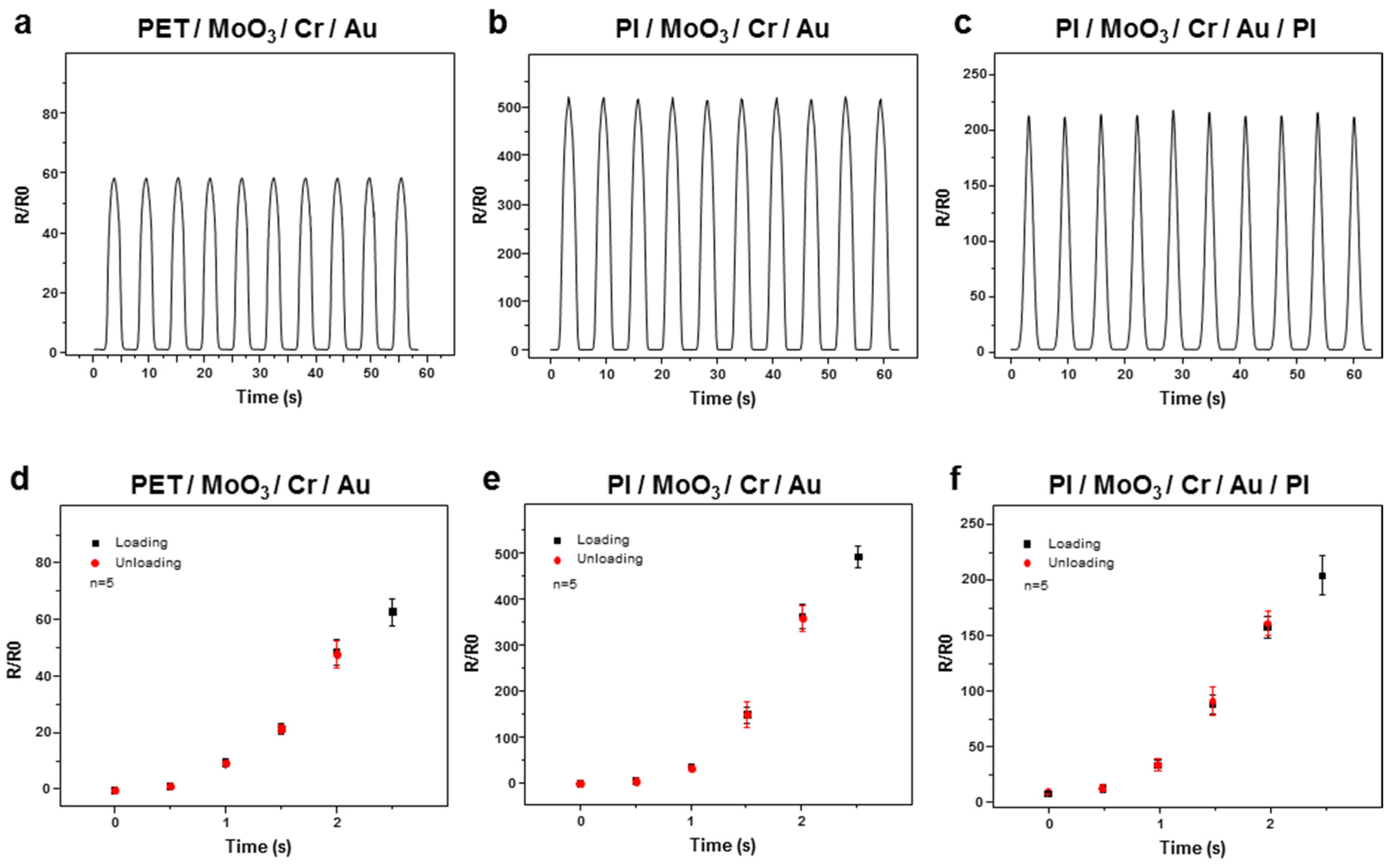
In mechanical sensory systems, encapsulation is one of the crucial issues to take care of when it comes to protection of the systems from external damage. Recently, a new type of a mechanical strain sensor inspired by spider’s slit organ has been reported, which has incredibly high sensitivity, flexibility, wearability, and multifunctional sensing abilities. In spite of many of these advantages, the sensor is still vulnerable in harsh environments of liquids and/or high temperature, because it has heat-vulnerable polyethylene terephthalate (PET) substrate without any encapsulation layer. Here, we present a mechanical crack-based strain sensor with heat, water and saline solution resistance by alternating the substrate from polyester film to polyimide film and encapsulating the sensor with polyimide. We have demonstrated the ability of the encapsulated crack-based sensor against heat, water, saline solution damage through experiments. Our sensor exhibited reproducibility and durability with high sensitivity to strain (gauge factor above 10,000 at strain of two percent). These results show a new potential of the crack-based sensory system to be used as a wearable voice/motion/pulse sensing device and a high-temperature strain sensor.
Keywords: strain sensor; thin metal film; spider inspired; crack; encapsulation strain sensor; thin metal film; spider inspired; crack; encapsulation