Article

Research on Operation–Planning Double-Layer Optimization Design Method for Multi-Energy Microgrid Considering Reliability


Key Laboratory of Smart Grid, Tianjin University, Tianjin 300000, China
*
Author to whom correspondence should be addressed.
Appl. Sci. 2018, 8(11), 2062; https://doi.org/10.3390/app8112062
Submission received: 13 September 2018 / Revised: 13 October 2018 / Accepted: 22 October 2018 / Published: 25 October 2018
(This article belongs to the Special Issue Microgrids)

Abstract

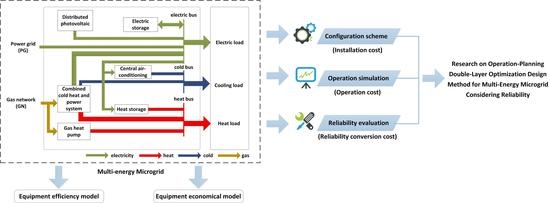
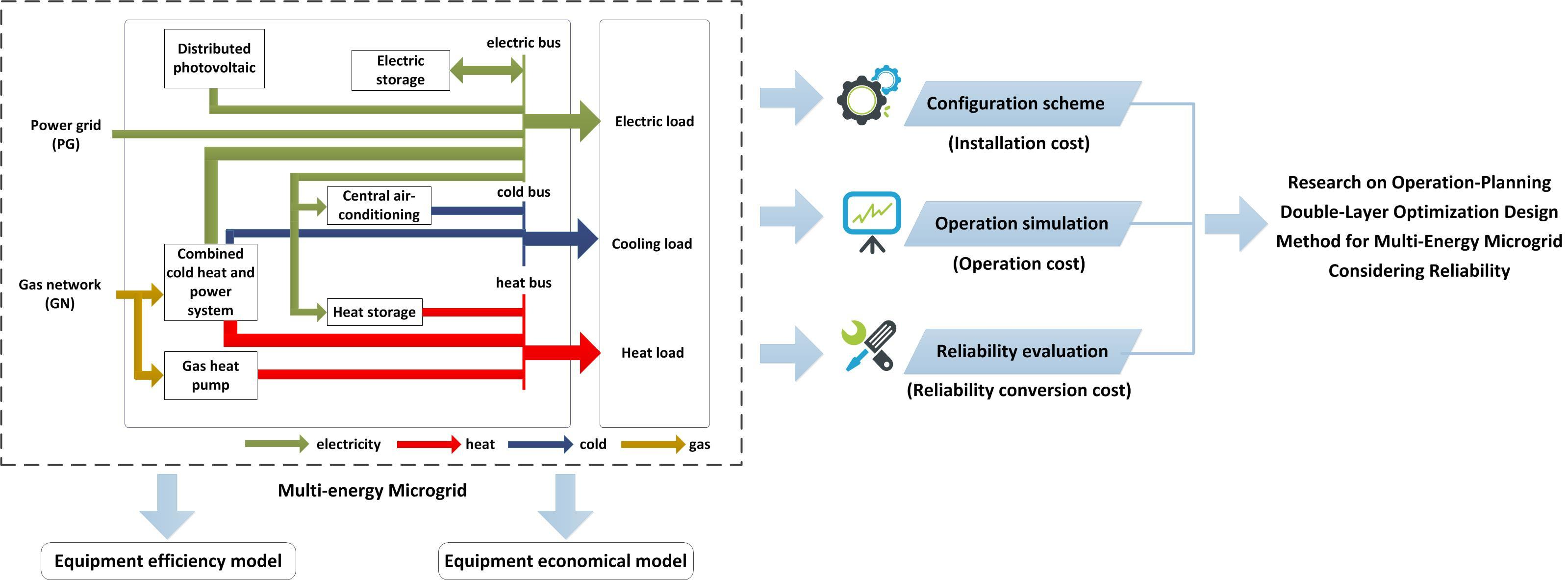
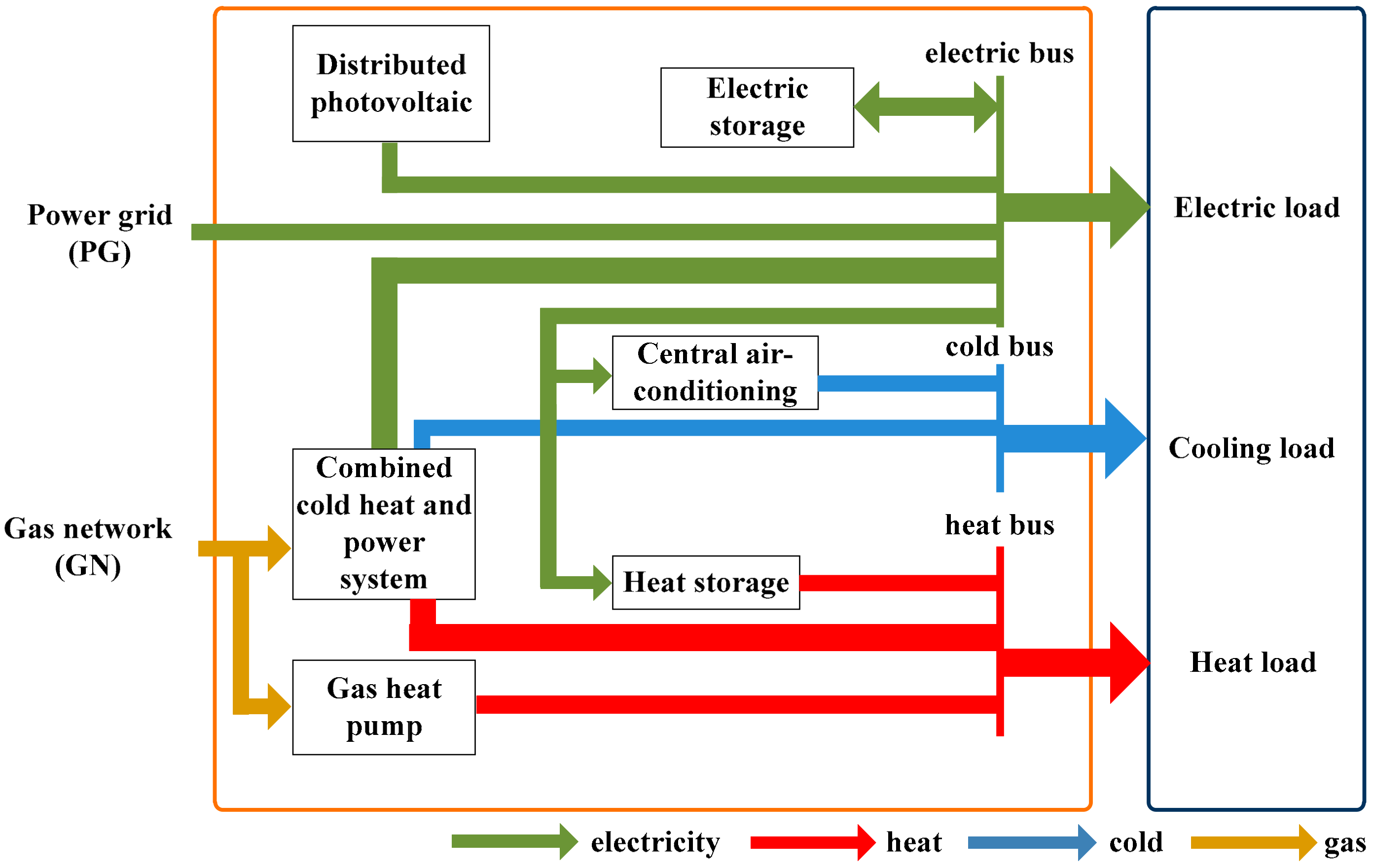
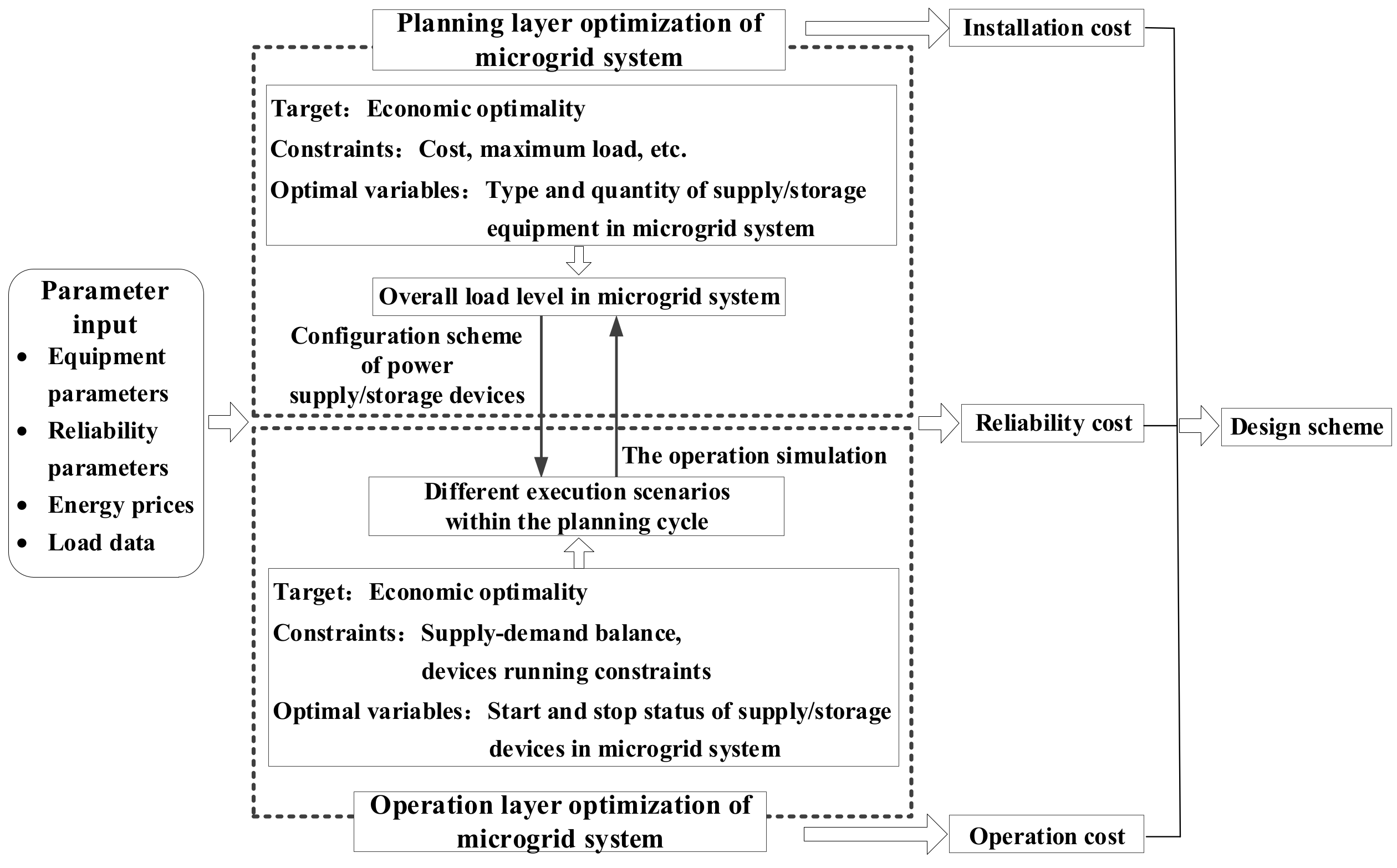
A multi-energy microgrid has multiple terminal resources and multiple distributed components for energy production, conversion, and storage. By using this grid, an interconnected network with optimized multiple energy sources can be formed. This type of grid can minimize energy waste while laying the critical foundation for an energy Internet. The multi-energy microgrid must be formed properly to ensure multi-energy coupling and complement. However, critical technologies (e.g., reliability assessment) and configuration planning methods now need further research. In this study, a novel method for the reliability evaluation of a multi-energy supply is proposed, and an operation–planning double-layer optimization design method is investigated that considers reliability. On that basis, the effects of different configuration schemes on economy and reliability are quantitatively analyzed. First, the coupling relationship between multi-energy carriers in a typical multi-energy microgrid is analyzed; subsequently, the energy efficiency and economical models of the key equipment in the grid system are determined. Monte Carlo simulation and the Failure Mode and Effect Analysis (FMEA) method are applied to evaluate the reliability with sorted indicators. A double-layer optimization model is built for a multi-energy microgrid with the optimal configuration. The impact of configuration on the reliability and economical performance of the microgrid system is quantitatively analyzed based on actual calculations. The results obtained here are relative to the capacity, configuration, operation, and energy supply reliability of the multi-energy microgrid, and may serve as the feasible guidelines for future integrated energy systems.
Keywords: multi-energy microgrid; energy hub; optimal planning; reliability multi-energy microgrid; energy hub; optimal planning; reliability
Graphical Abstract