Article

Mapping Relevant Parameters for Efficient Operation of Low-Temperature Heating Systems in Nordic Single-Family Dwellings

1
Division of Fluid and Climate Technology, School of Architecture and the Built Environment, KTH Royal Institute of Technology, SE-100 44 Stockholm, Sweden
2
Bravida Holding AB, Mikrofonvägen 28, 126 37 Hägersten, Sweden
3
Uponor AB, Hackstavägen 1, 721 32 Västerås, Sweden
4
Center for the Built Environment, Department of Architecture, University of California, Berkeley, CA 94720, USA
*
Author to whom correspondence should be addressed.
Appl. Sci. 2018, 8(10), 1973; https://doi.org/10.3390/app8101973
Submission received: 10 September 2018 / Revised: 29 September 2018 / Accepted: 15 October 2018 / Published: 18 October 2018
(This article belongs to the Special Issue New Heating and Cooling Concepts)

Abstract

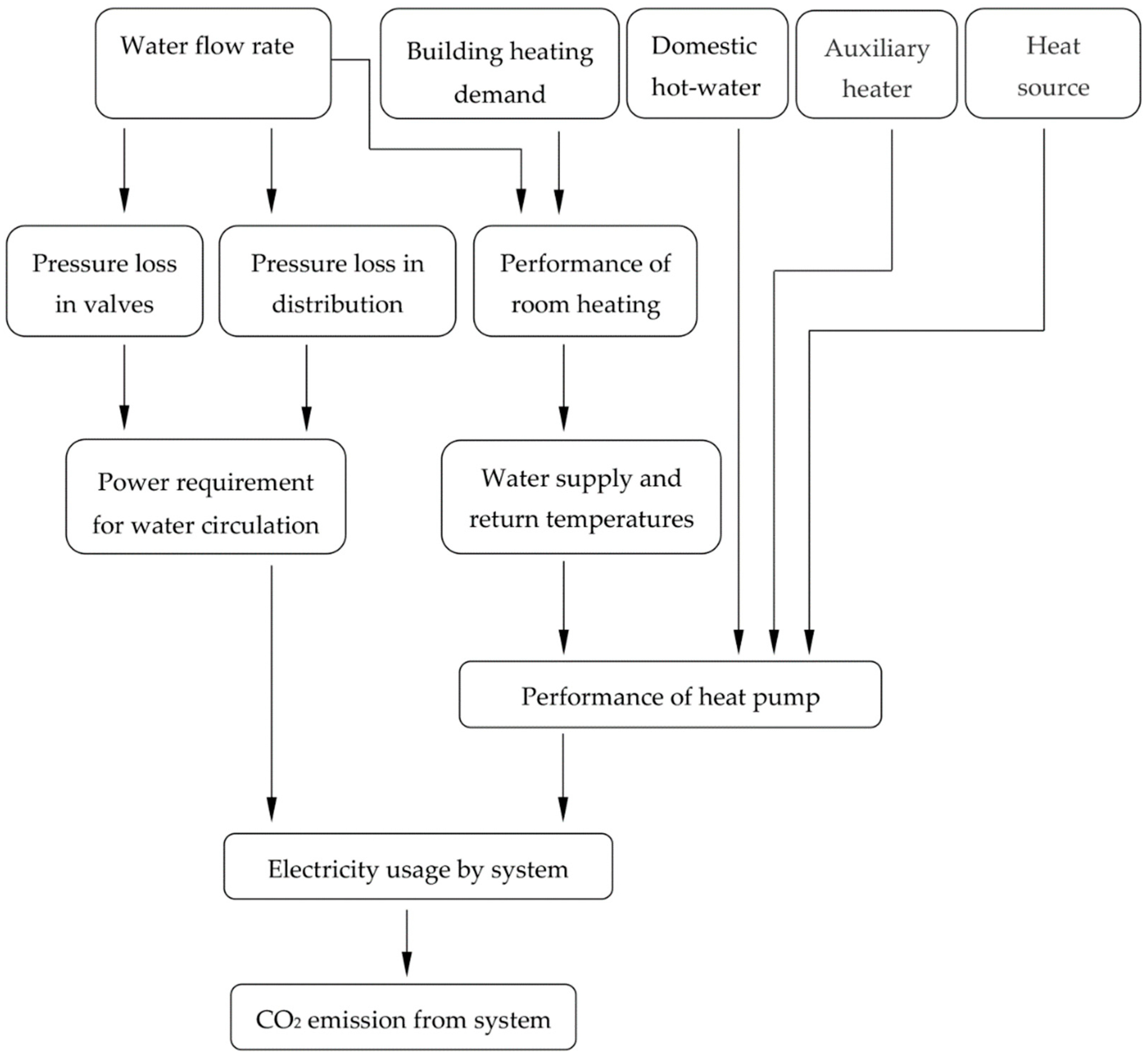
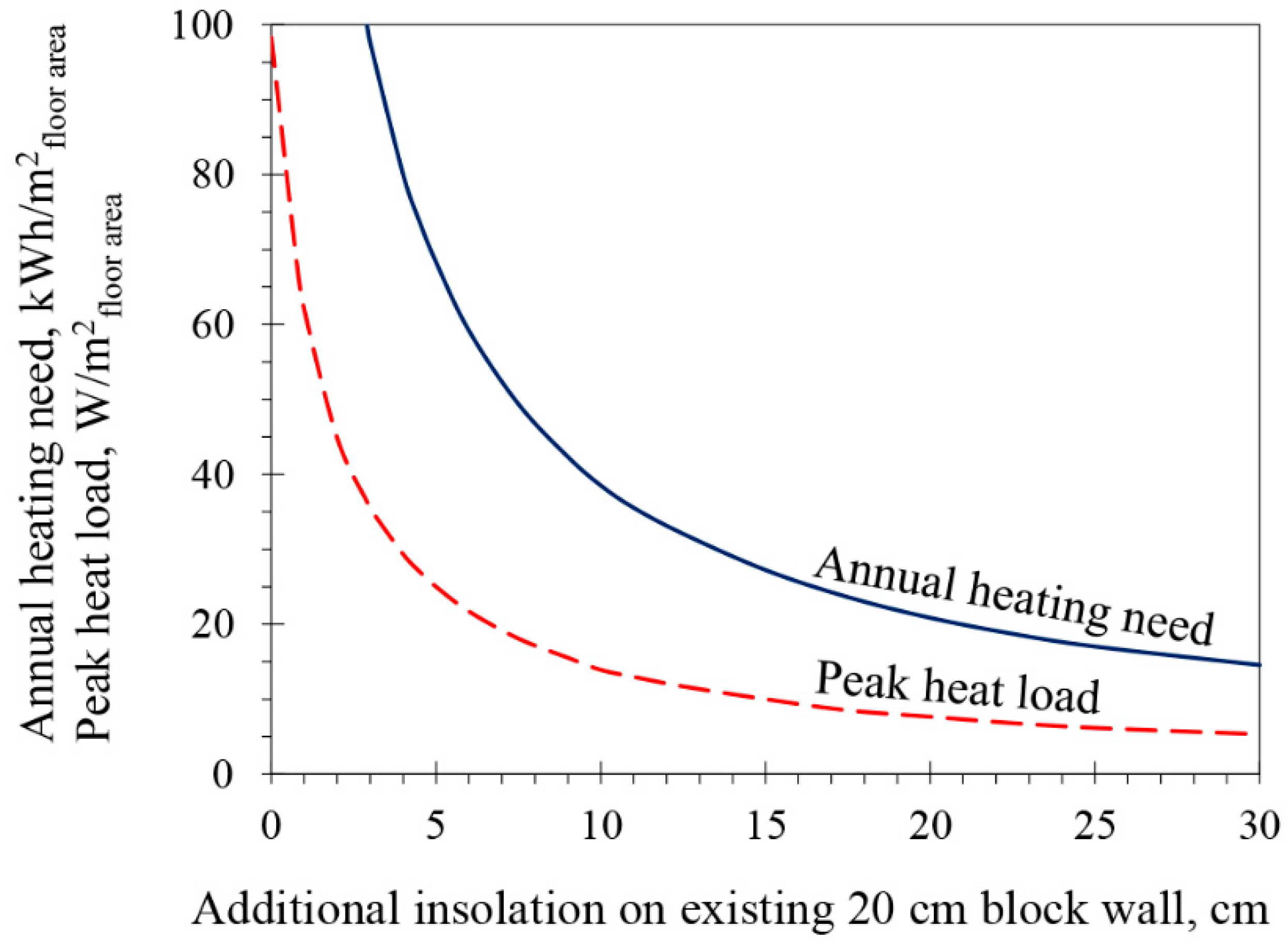
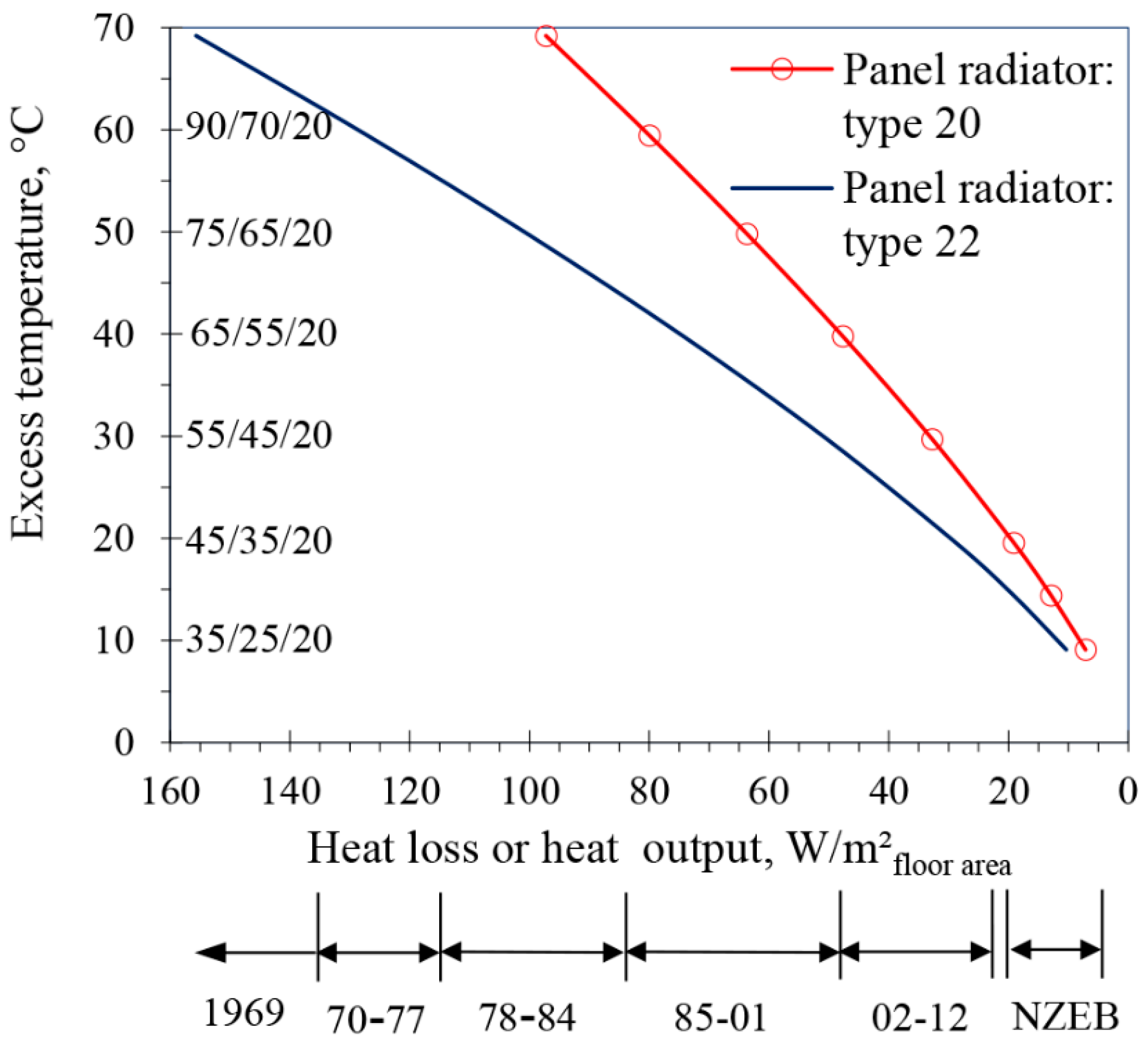
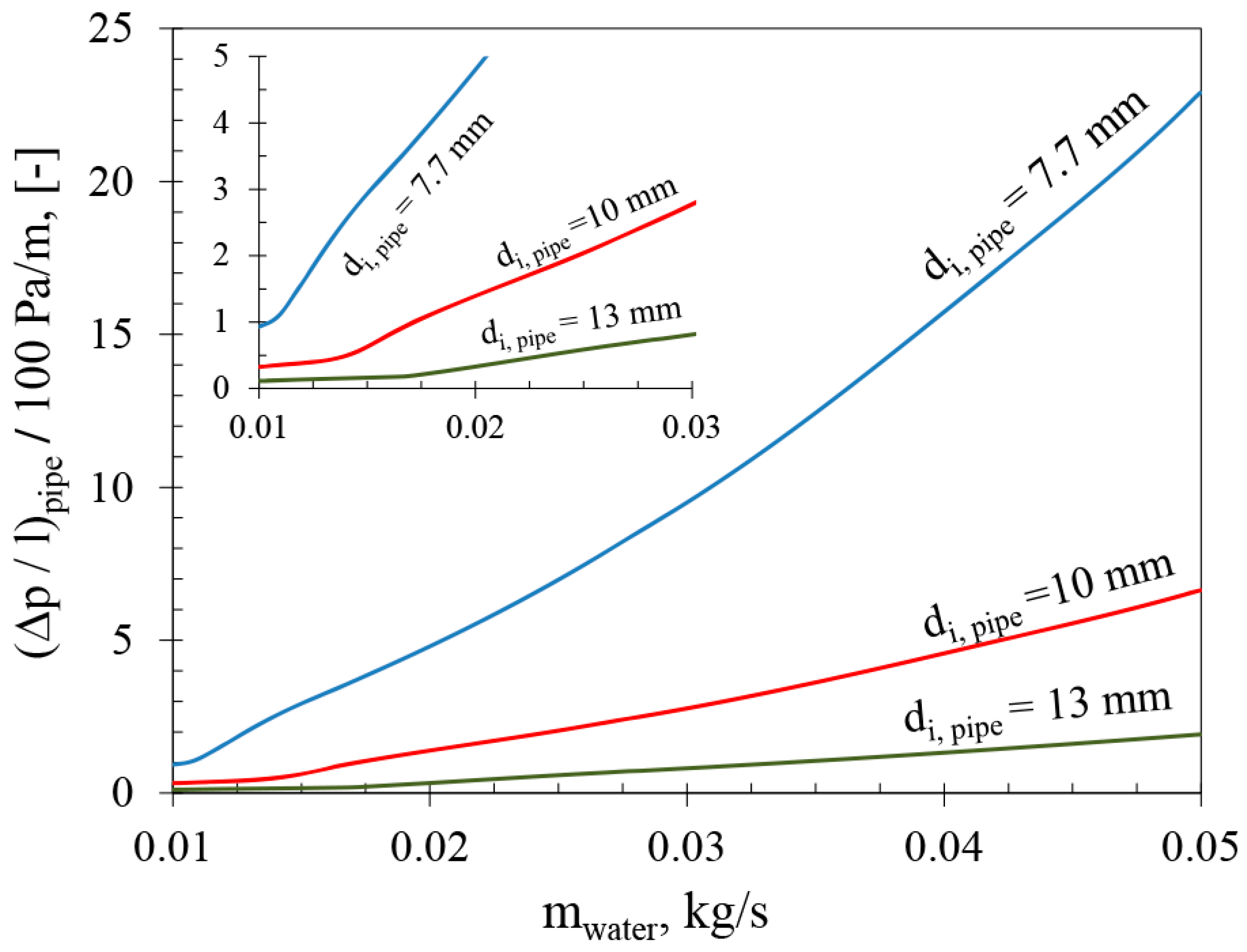
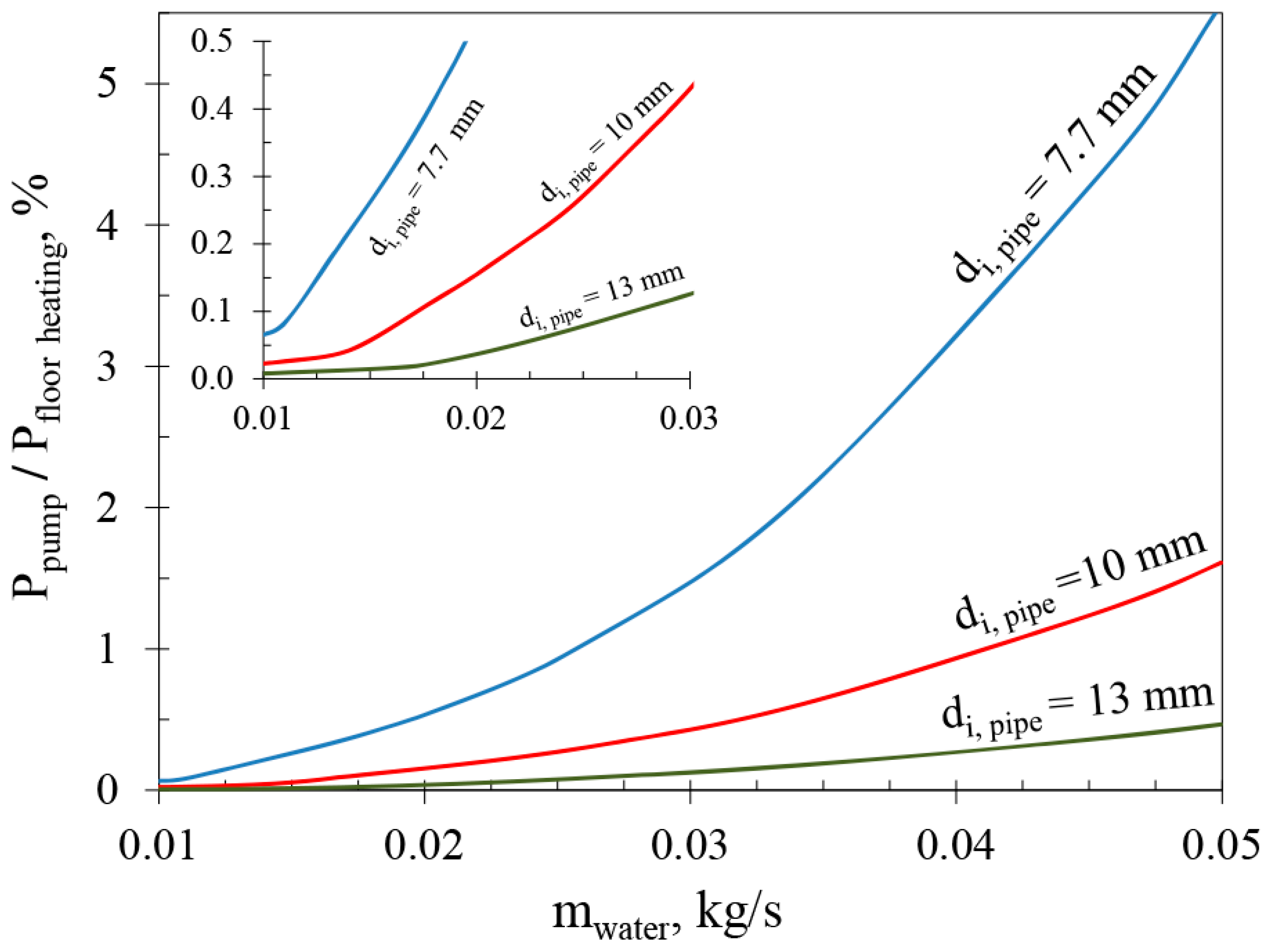
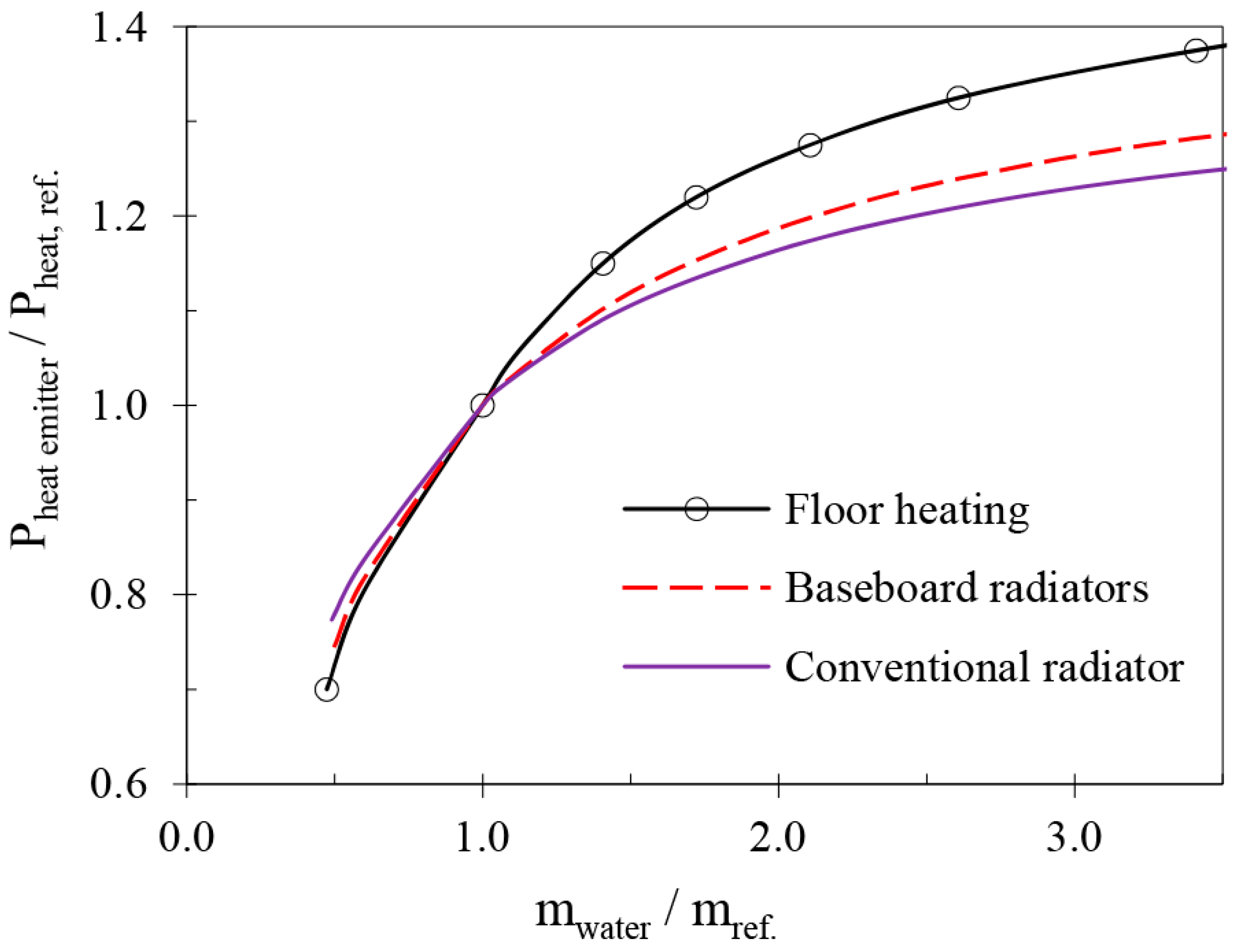
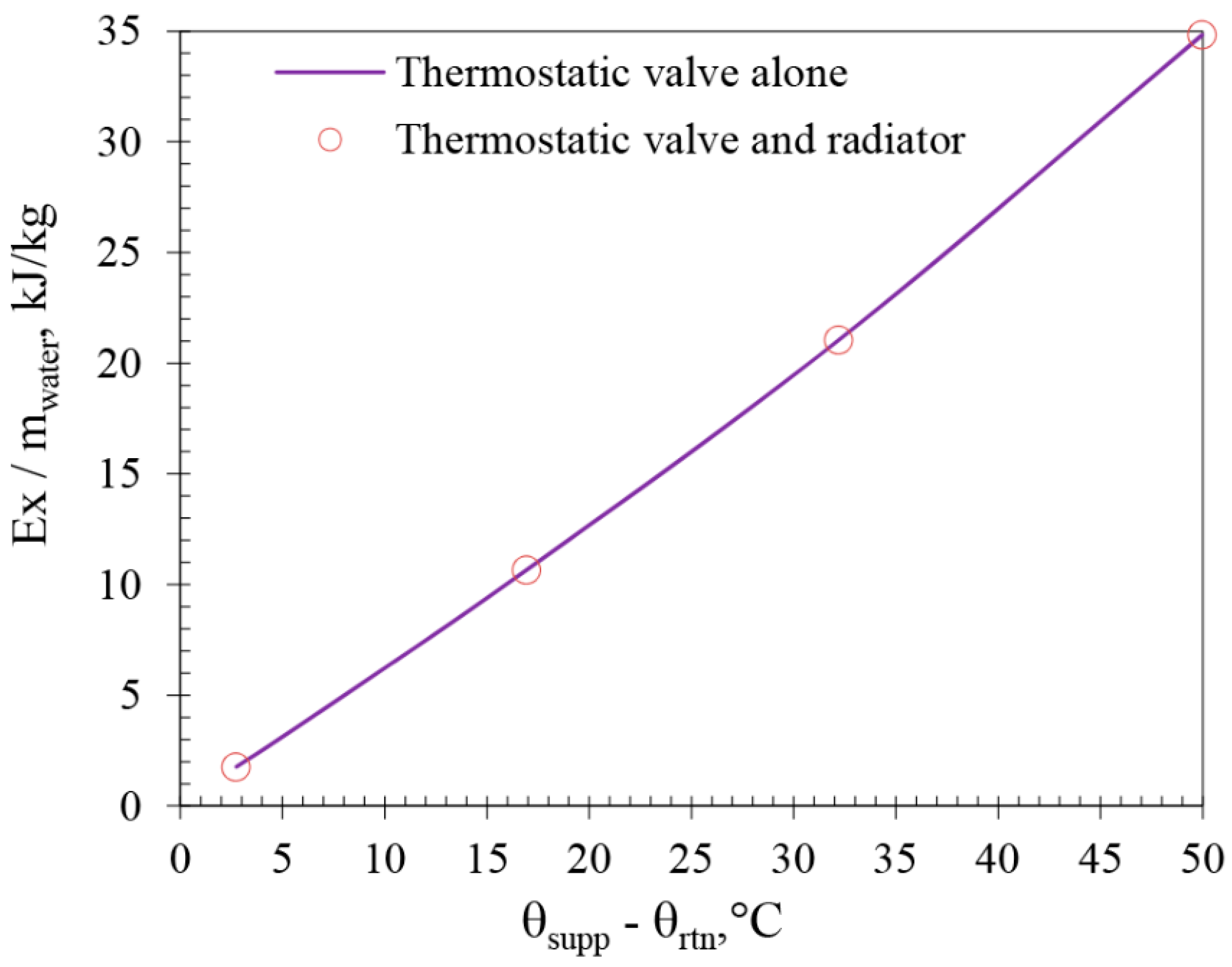
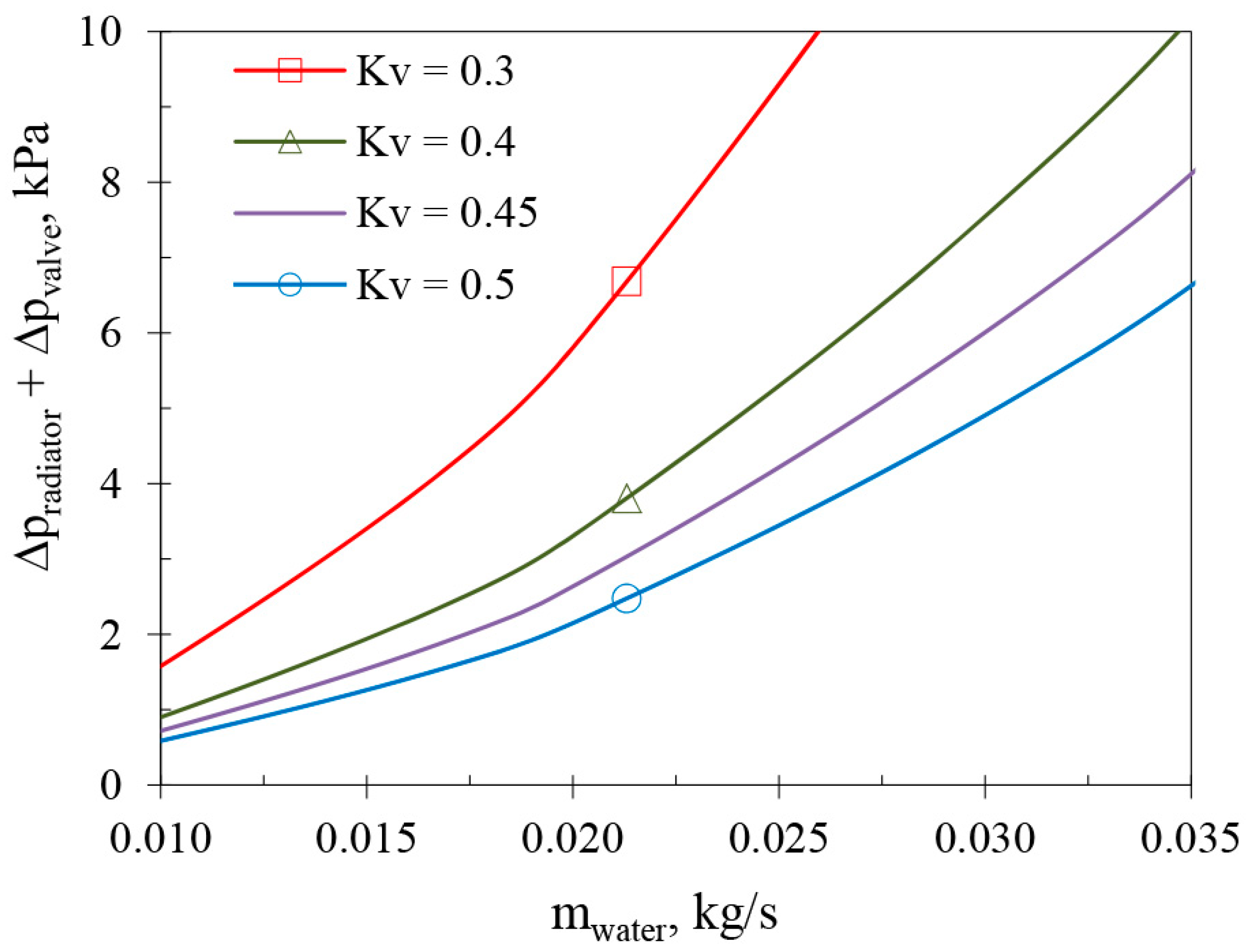
The aim of this study was to map the parameters that have the greatest impact on the environmental impact of heating systems usually used in Nordic single-family dwellings. The study focused on mapping the technical requirements for efficient operation of heating systems in a broader context. The results suggest that the ability of a heating system to be operated with a low-temperature water supply depends to a large extent on the heating demand of a building. It was shown that an increase in the water flow rate in hydronic circuits would significantly increase the thermal efficiency from analyzed heating systems. This increase would not increase the pumping power need, nor would it create noise problems in distribution network if the distribution pipes and thermostatic valves were properly selected. However, this increase in water flow rate improved the efficiency of considered closed-loop heat pump. It was further shown that the efficiency of the heat pump could be additionally improved by halving the energy needs for the domestic hot-water and circulators. The main conclusion from this study is that exergy usage, CO2 emission and thereby environmental impact are significantly lower for heating systems that are operated with small temperature drops.
Keywords: low-temperature heating; energy efficiency; CO2 emissions; heat pump; hydraulic losses; system analysis low-temperature heating; energy efficiency; CO2 emissions; heat pump; hydraulic losses; system analysis