Study on Cutting Mechanism of TBM Double Disc Cutters and Mineralogical Response in Deep Mine Hard Rock

 , and
, and
Featured Application
Abstract
1. Introduction
2. Numerical Modeling Method
2.1. Fundamentals of FDEM
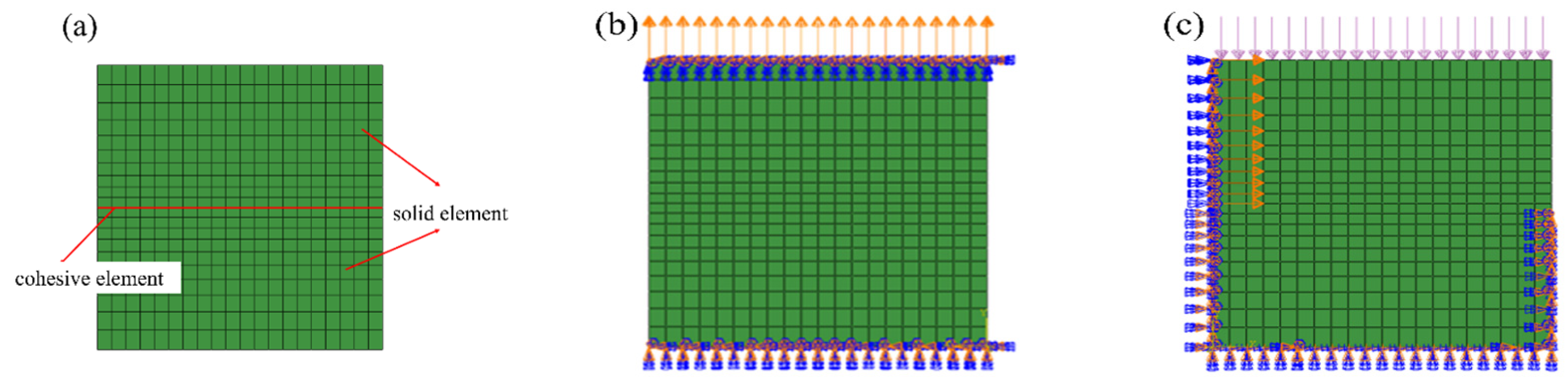
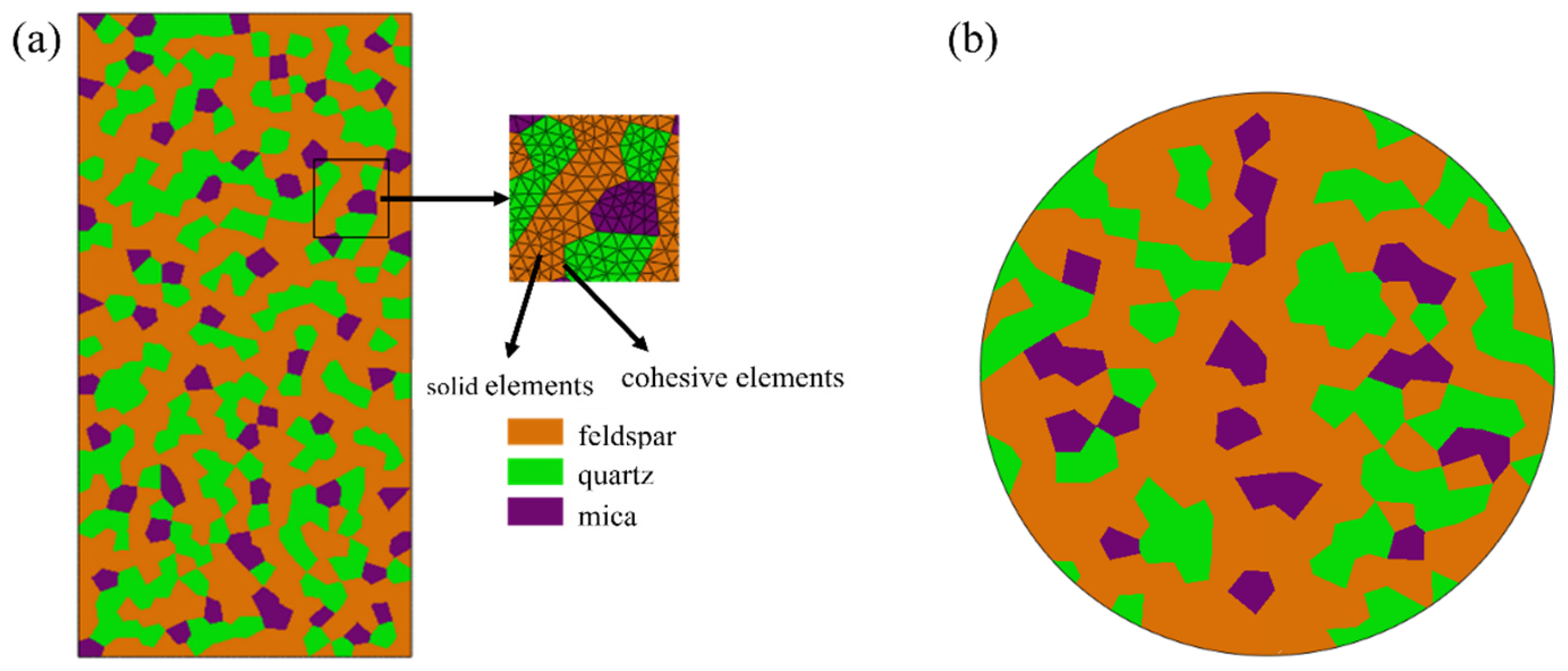
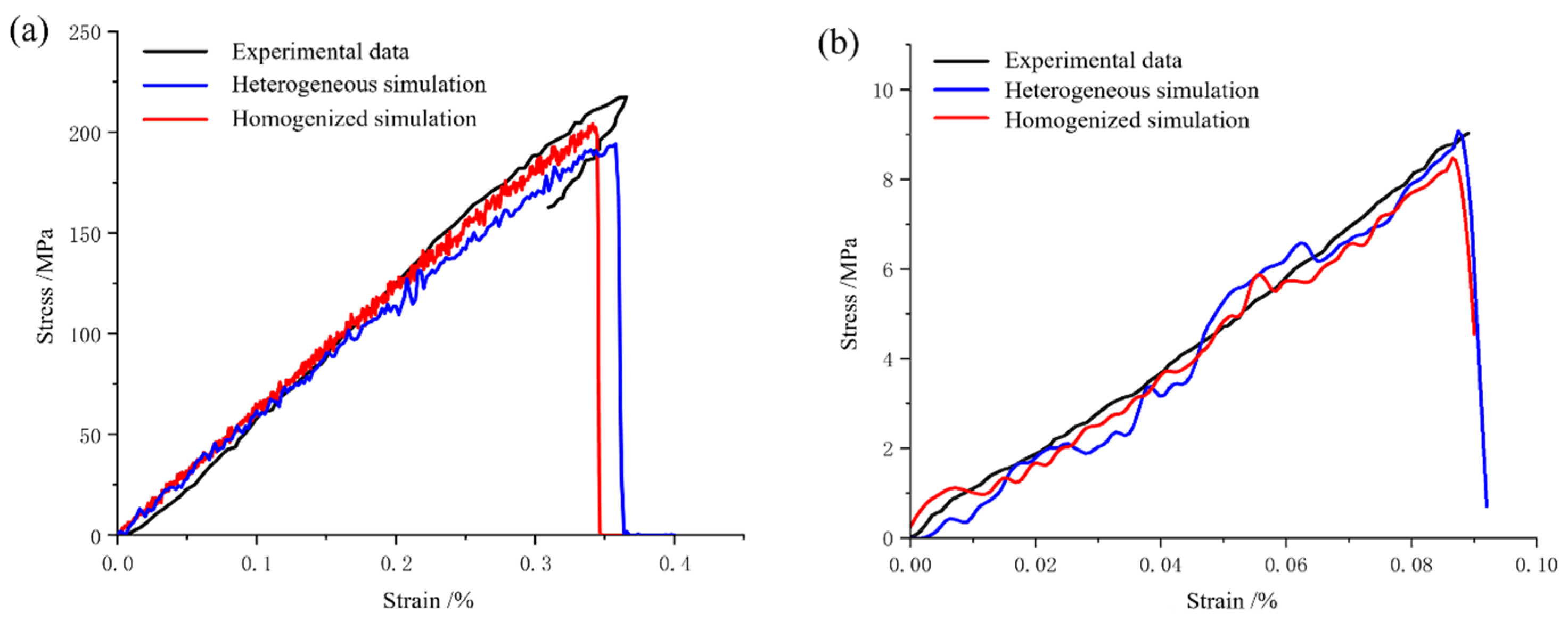
2.2. Parameter Calibration and Model Construction
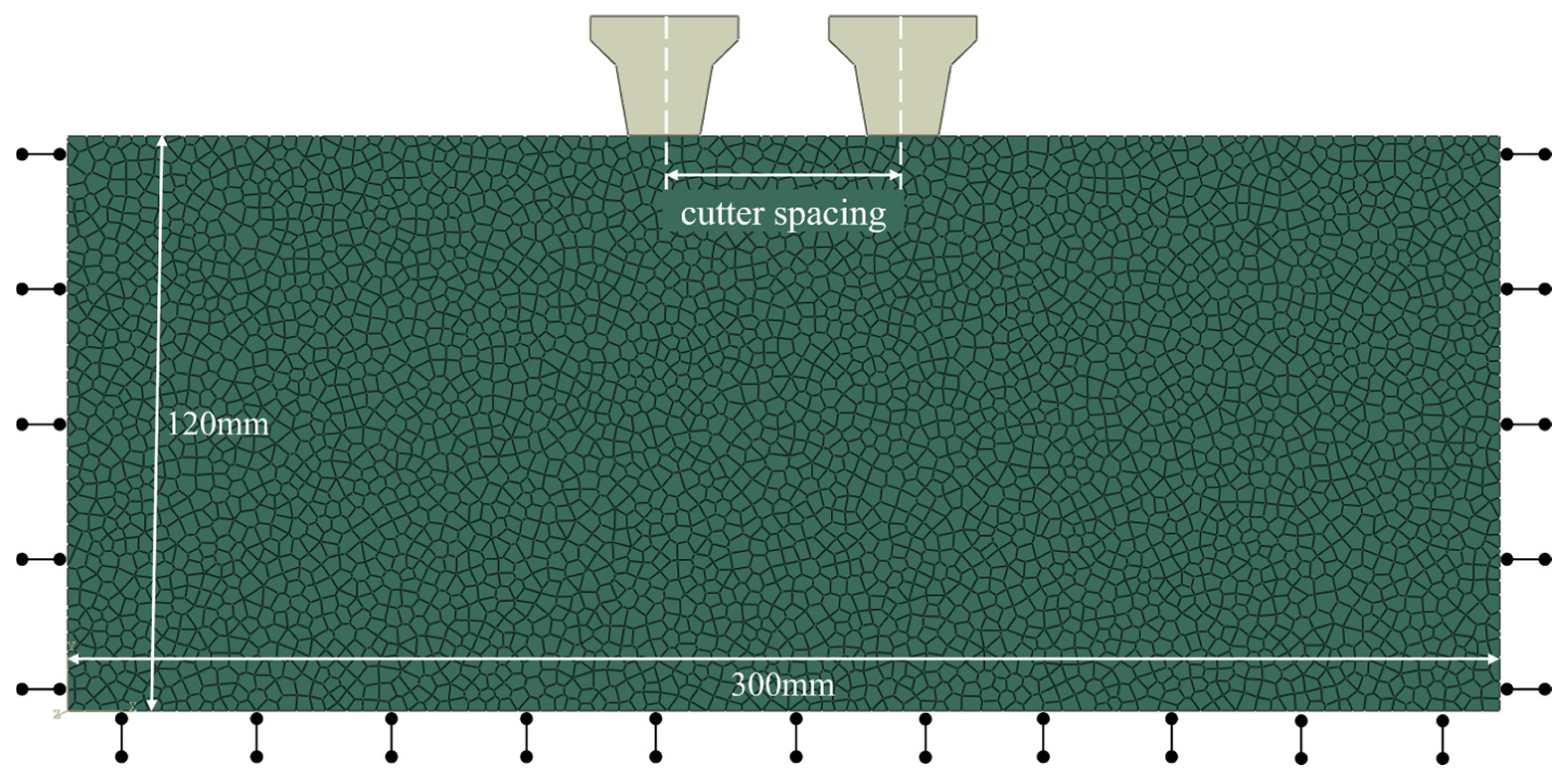
2.3. TBM Double-Disc Cutter Model
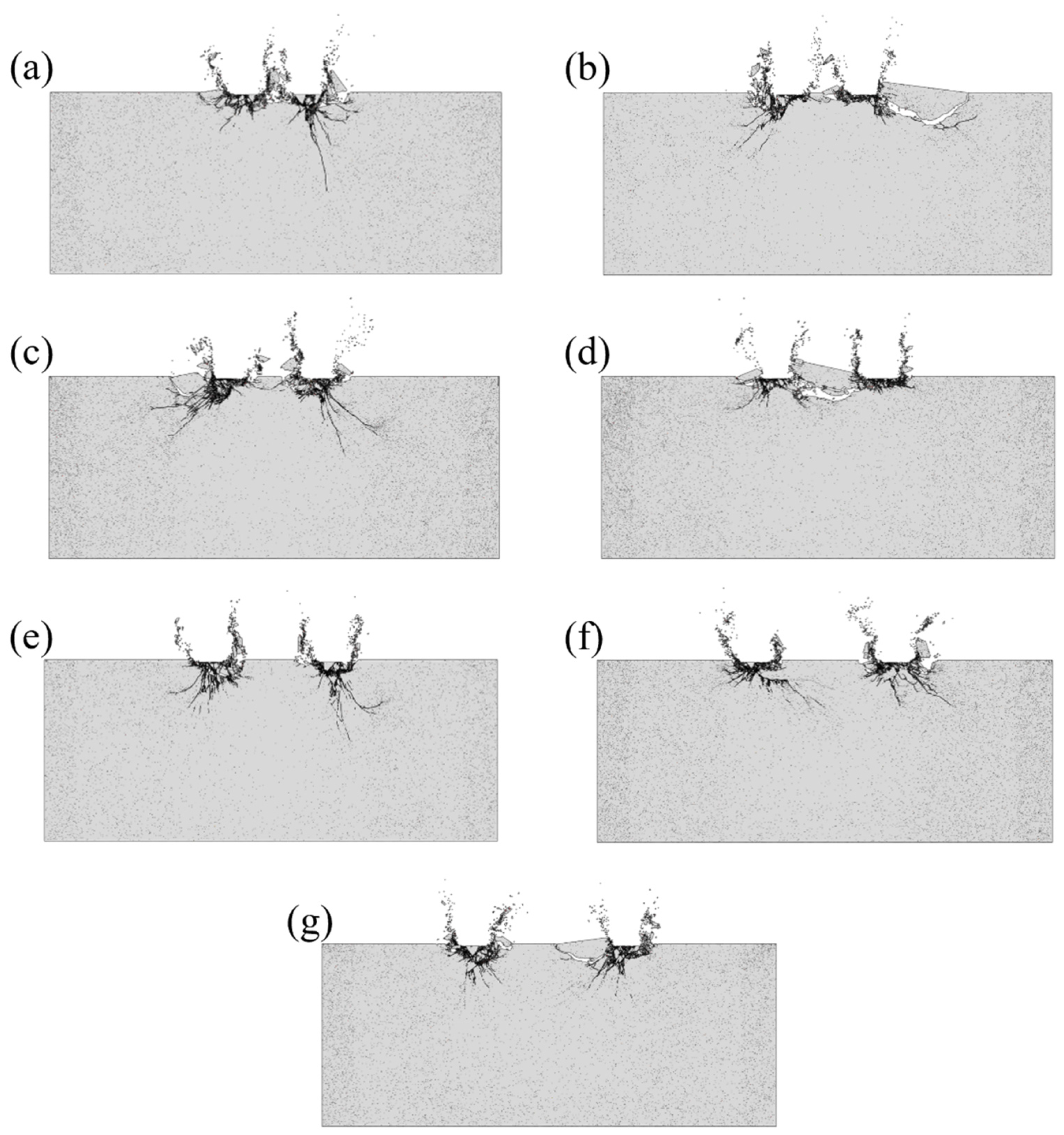
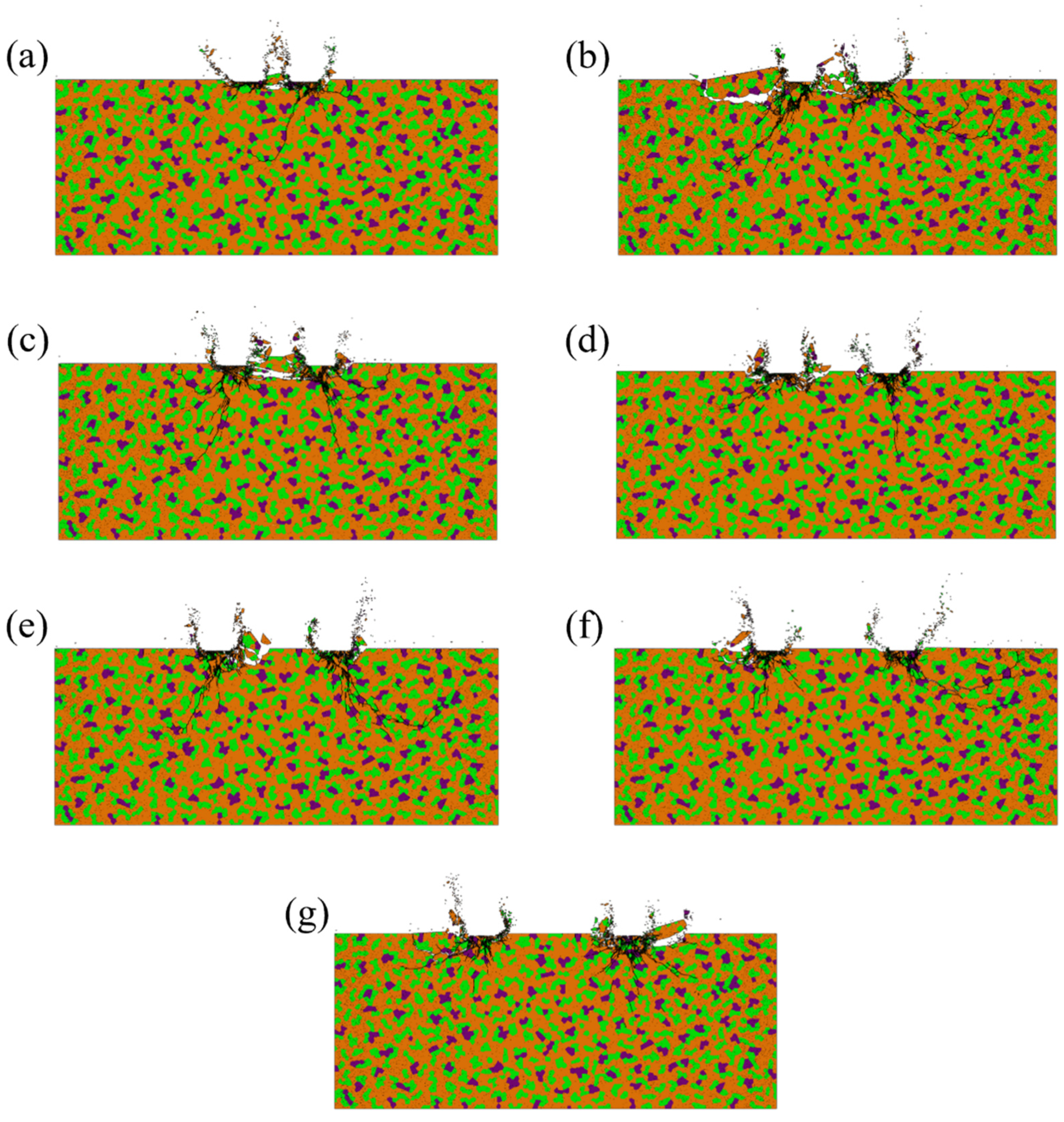
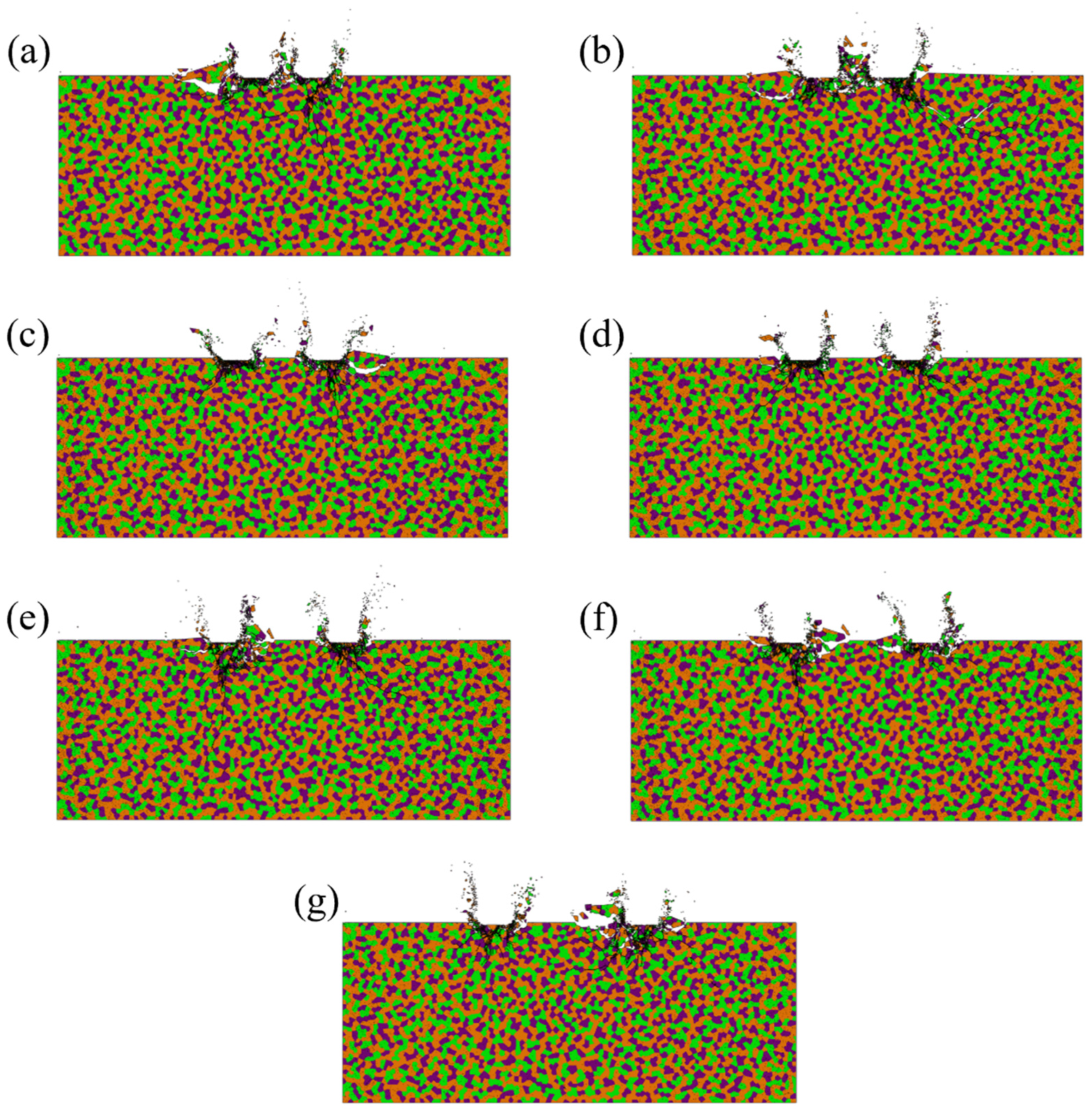
3. Fracture Characteristics
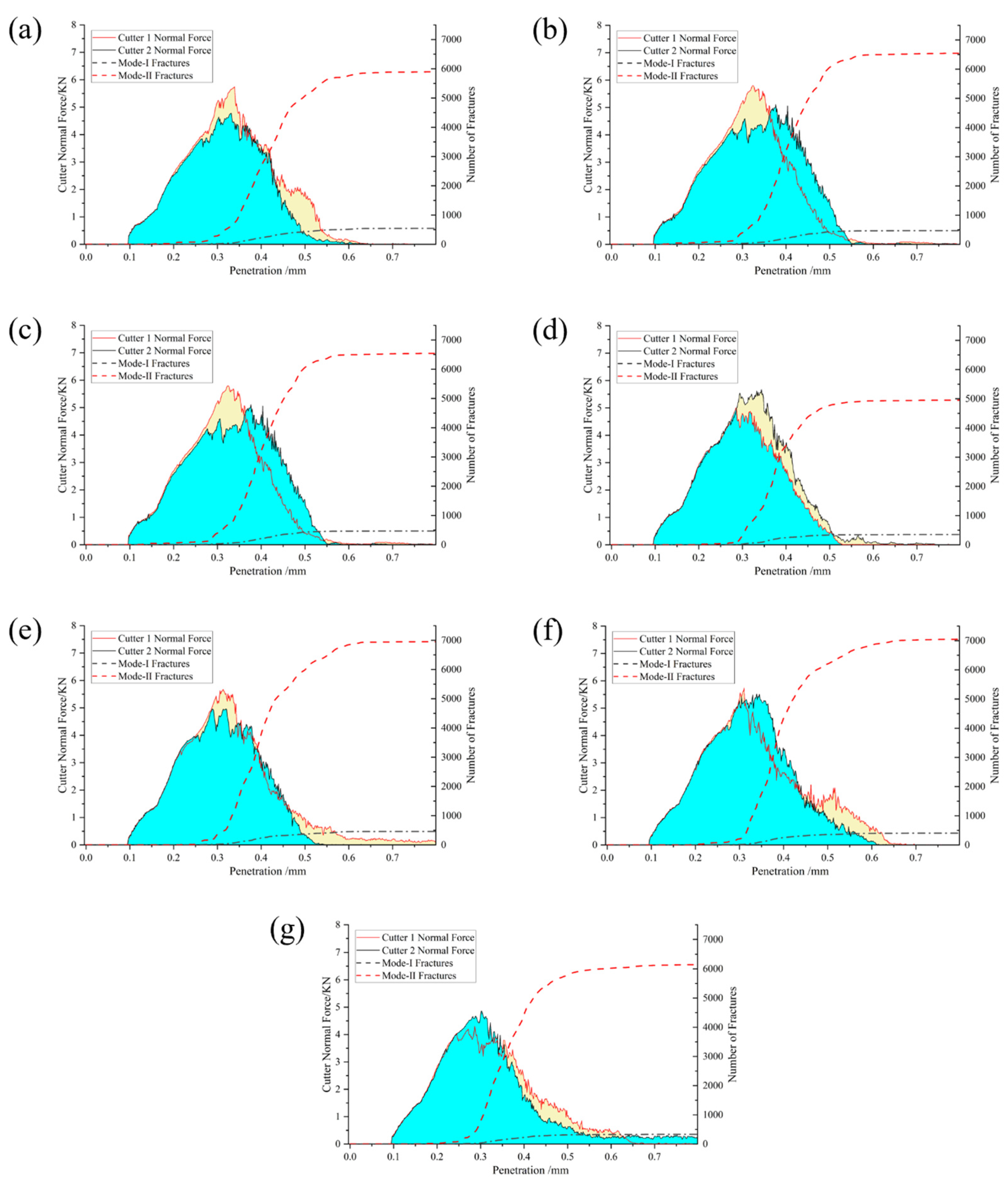
4. Crack Evolution and Fragmentation Volume
5. Energy Effects and Efficiency of Rock Breaking
6. Discussion
7. Conclusions
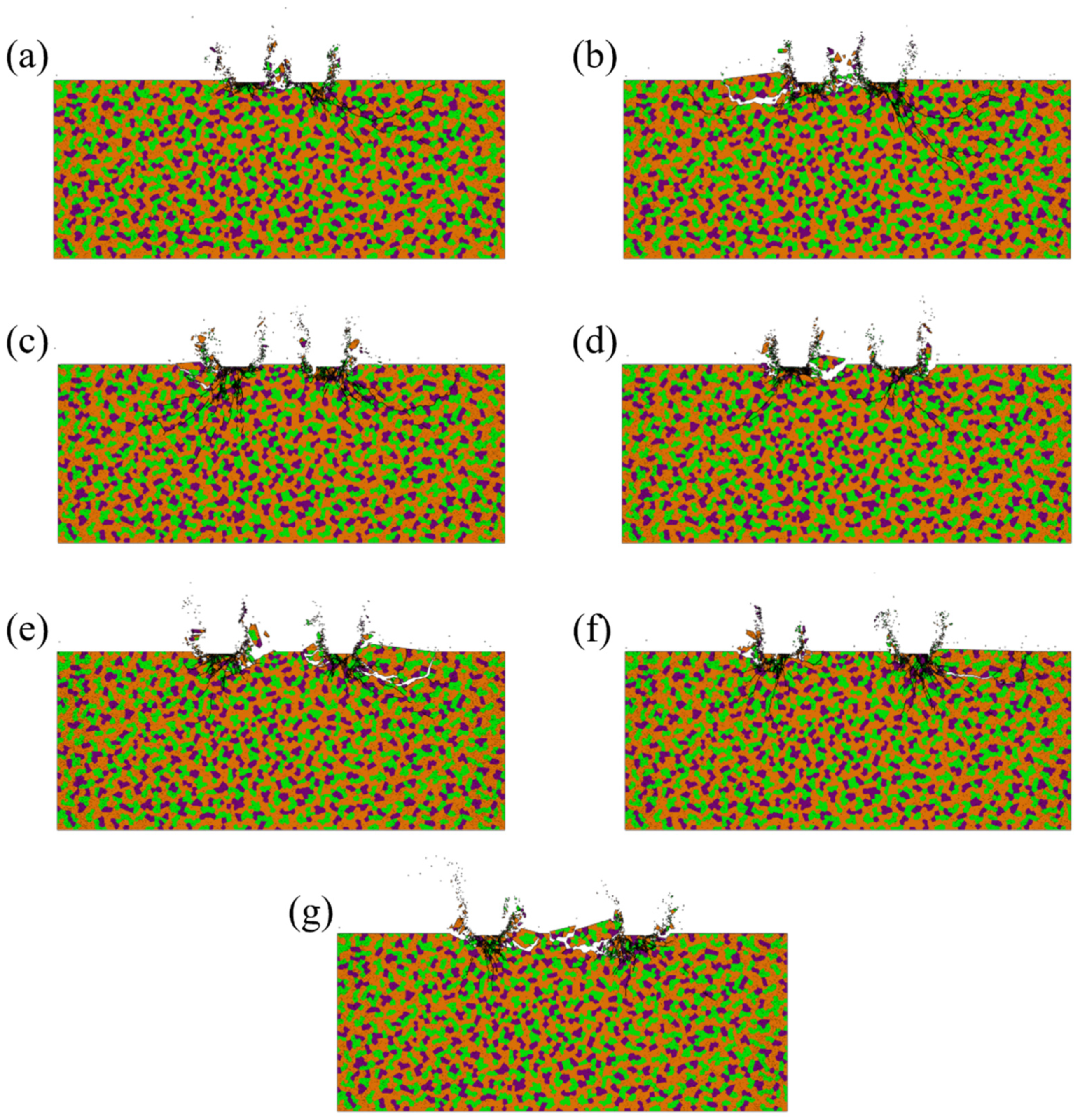
- During the TBM double-disc cutter rock-breaking process, cutter spacing and mineral composition are the key factors determining crack evolution patterns and fragmentation performance. Within a favorable spacing range (approximately 50–70 mm), lateral cracks induced by adjacent cutters can fully coalesce, leading to relatively high fragmentation volume and rock-breaking efficiency.
- Mineral composition exerts a significant regulatory effect on crack types and energy consumption. With increasing feldspar content, the proportion of Mode I cracks rises, crack coalescence becomes easier, and both total energy and fragmentation volume increase significantly; in contrast, higher mica content elevates the proportion of Mode II cracks and reduces crack propagation capacity, thereby decreasing energy utilization efficiency.
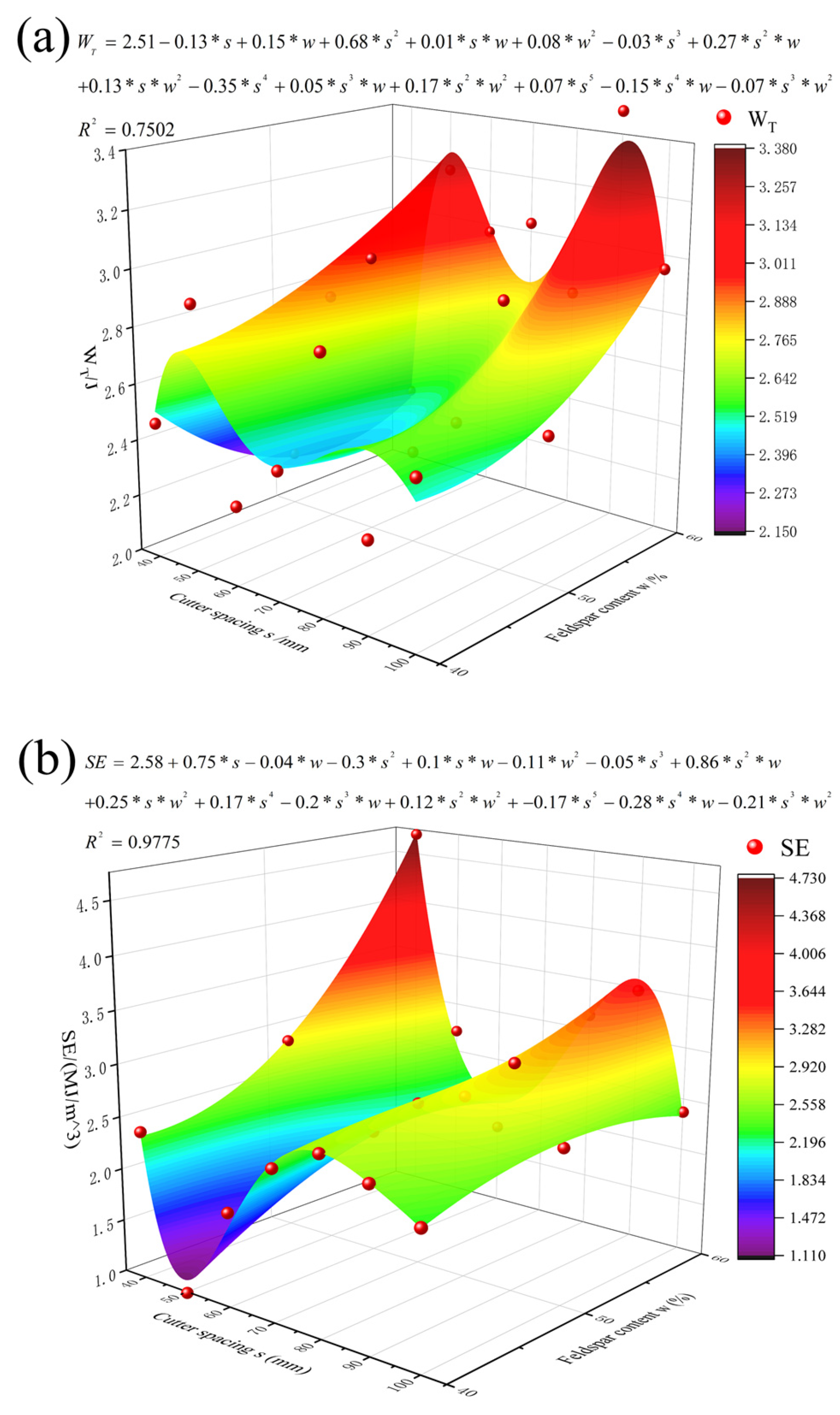
- In terms of total energy, rocks with different feldspar contents exhibit similar trends under double-cutter action, with total energy generally ranging between 2.2 and 3.4 mJ and reaching a peak at medium cutter spacing (approximately 50–70 mm). As feldspar content increases, the overall energy level rises, with rocks containing 60% feldspar showing the highest energy demand and those with 40% feldspar the lowest. This indicates that cutter spacing primarily controls whether cracks can fully propagate, whereas mineral composition governs the magnitude of energy consumption during crack extension.
- In terms of rock-breaking efficiency, the SE usually reaches its minimum at medium cutter spacing, corresponding to relatively high efficiency, while excessively small or large spacing increases energy consumption. Higher feldspar content enhances rock brittleness and facilitates crack coalescence, but overly small spacing tends to cause crushing and ineffective breakage. Higher mica content strengthens weak-plane guidance, increases crack deflection and the proportion of Mode II fractures, and reduces overall efficiency. From an engineering perspective, cutter spacing should be reasonably controlled according to the mineral composition and structural characteristics of the surrounding rock: in brittle rock masses, excessively small spacing should be avoided to reduce crushing energy consumption while ensuring crack coalescence; in rock masses with well-developed weak planes, both energy consumption and crack propagation capacity should be considered to select an appropriate spacing, thereby achieving a balance between rock-breaking efficiency and construction stability.
Author Contributions
Funding
Institutional Review Board Statement
Informed Consent Statement
Data Availability Statement
Acknowledgments
Conflicts of Interest
References
- Hu, G.; Zhao, H.; Fu, J.; Xue, J.; Xia, Y. Impact fracture failure analysis and mechanism study of a TBM disc cutter ring. Eng. Fail. Anal. 2024, 163, 108508. [Google Scholar] [CrossRef]
- Fu, J.; Xia, Y.; Zhang, L.; Lin, L.; Zhang, X.; Zhao, S. Failure analysis on the fracture of disc cutter in EPB shield machine. Eng. Fail. Anal. 2020, 108, 104341. [Google Scholar] [CrossRef]
- Jin, D.; Yuan, D.; Li, X.; Su, W. Probabilistic analysis of the disc cutter failure during TBM tunneling in hard rock. Tunn. Undergr. Space Technol. 2021, 109, 103744. [Google Scholar] [CrossRef]
- Zhou, G.; Wang, X.; Wang, D.; Luo, M.; Hao, Z.; Wu, W. Study on rock-breaking efficiency evaluation of TBM disc cutters based on rostami prediction equations. Front. Earth Sci. 2023, 11, 1178127. [Google Scholar] [CrossRef]
- Liu, B.; Yang, H.; Karekal, S. Reliability analysis of TBM disc cutters under different conditions. Undergr. Space 2021, 6, 142–152. [Google Scholar] [CrossRef]
- Lan, H.; Martin, C.D.; Hu, B. Effect of heterogeneity of brittle rock on micromechanical extensile behavior during compression loading. J. Geophys. Res. 2010, 115, 2009JB006496. [Google Scholar] [CrossRef]
- Pan, J.; Ma, Y.; Zhang, L.; Feng, X.; Ren, F.; Cai, M.; Xi, X. Effects of temperature on pure mode-I and mode-II fracture behaviors and acoustic emission characteristics of granite using a grain-based model. Theor. Appl. Fract. Mech. 2024, 133, 104637. [Google Scholar] [CrossRef]
- Zhang, X.-P.; Ji, P.-Q.; Peng, J.; Wu, S.-C.; Zhang, Q. A grain-based model considering pre-existing cracks for modelling mechanical properties of crystalline rock. Comput. Geotech. 2020, 127, 103776. [Google Scholar] [CrossRef]
- Hu, L.; Wang, F.; Meng, Y.; Jiang, F. Inverse analysis of micro-mechanical parameters of rock-forming minerals based on nano-indentation technology. Phys. Scr. 2023, 98, 055003. [Google Scholar] [CrossRef]
- Lei, M.; Dang, F.-N.; Xue, H.; He, M. Evaluation Method of Granite Multiscale Mechanical Properties Based on Nanoindentation Technology. Geofluids 2021, 2021, 6745900. [Google Scholar] [CrossRef]
- Liu, X.-Y.; Xu, D.-P.; Li, S.-J.; Qiu, S.-L.; Jiang, Q. An Insight into the Mechanical and Fracture Characterization of Minerals and Mineral Interfaces in Granite Using Nanoindentation and Micro X-Ray Computed Tomography. Rock Mech. Rock Eng. 2023, 56, 3359–3375. [Google Scholar] [CrossRef]
- Zhou, Y.; Lv, W.; Li, B.; Liang, Q.; Wang, S. A realistic 3D grain-based modeling approach for reproducing the mechanical and failure behavior of brittle granites. Int. J. Rock Mech. Min. Sci. 2025, 185, 105981. [Google Scholar] [CrossRef]
- Potyondy, D.O.; Cundall, P.A. A bonded-particle model for rock. Int. J. Rock Mech. Min. Sci. 2004, 41, 1329–1364. [Google Scholar] [CrossRef]
- He, J. Review of advances in numerical simulation of concrete under low-temperature conditions. Acad. J. Sci. Technol. 2024, 13, 118–122. [Google Scholar] [CrossRef]
- Kazi, A.A.; Antao, D.; Staack, D.; Tai, B.L. Numerical investigation of the effect of pre-induced cracks on hard rock cutting using finite element analysis. Rock Mech. Rock Eng. 2024, 57, 7997–8011. [Google Scholar] [CrossRef]
- Menon, S.; Song, X.; Bhowmick, S. Three-dimensional modeling of fracture in quasi-brittle materials using plasticity and cohesive finite elements. Int. J. Fract. 2021, 228, 45–63. [Google Scholar] [CrossRef]
- Jiang, H.; Meng, D. 3D numerical modelling of rock fracture with a hybrid finite and cohesive element method. Eng. Fract. Mech. 2018, 199, 280–293. [Google Scholar] [CrossRef]
- Munjiza, A. The Combined Finite-Discrete Element Method, 1st ed.; Wiley: Hoboken, NJ, USA, 2004. [Google Scholar] [CrossRef]
- Wu, Z.; Ma, L.; Fan, L. Investigation of the characteristics of rock fracture process zone using coupled FEM/DEM method. Eng. Fract. Mech. 2018, 200, 355–374. [Google Scholar] [CrossRef]
- Wu, Z.; Ji, X.; Liu, Q.; Fan, L. Study of microstructure effect on the nonlinear mechanical behavior and failure process of rock using an image-based-FDEM model. Comput. Geotech. 2020, 121, 103480. [Google Scholar] [CrossRef]
- Wang, T.; Yan, C.; Zheng, H. Investigation on rock breaking and optimum spacing of TBM cutters under confining stress using a continuum-discontinuum method. Eng. Anal. Bound. Elem. 2024, 165, 105775. [Google Scholar] [CrossRef]
- Wang, T.; Yan, C.; Zheng, H.; Ke, W.; Ali, S. Optimum spacing and rock breaking efficiency of TBM double disc cutters penetrating in water-soaked mudstone with FDEM. Tunn. Undergr. Space Technol. 2023, 138, 105174. [Google Scholar] [CrossRef]
- Lisjak, A.; Liu, Q.; Zhao, Q.; Mahabadi, O.K.; Grasselli, G. Numerical simulation of acoustic emission in brittle rocks by two-dimensional finite-discrete element analysis. Geophys. J. Int. 2013, 195, 423–443. [Google Scholar] [CrossRef]
- Lv, Y.; Li, H.; Zhu, X.; Liu, W. Discrete element method simulation of random voronoi grain-based models. Clust. Comput. 2017, 20, 335–345. [Google Scholar] [CrossRef]
- Liu, Q.; Deng, P. A numerical investigation of element size and loading/unloading rate for intact rock in laboratory-scale and field-scale based on the combined finite-discrete element method. Eng. Fract. Mech. 2019, 211, 442–462. [Google Scholar] [CrossRef]
- Guo, L.; Xiang, J.; Latham, J.-P.; Izzuddin, B. A numerical investigation of mesh sensitivity for a new three-dimensional fracture model within the combined finite-discrete element method. Eng. Fract. Mech. 2016, 151, 70–91. [Google Scholar] [CrossRef]
- Lin, L.; Mao, Q.; Xia, Y.; Zhu, Z.; Yang, D.; Guo, B.; Lan, H. Experimental study of specific matching characteristics of tunnel boring machine cutter ring properties and rock. Wear 2017, 378–379, 1–10. [Google Scholar] [CrossRef]
- Li, X.-F.; Zhang, X.-P.; Tang, S.-H.; Xie, W.-Q.; Yang, X.-M.; Liu, Q.-S. Study of Cerchar abrasive parameters of monomineralic rocks and its application for evaluating cutting efficiency. Int. J. Rock Mech. Min. Sci. 2024, 183, 105895. [Google Scholar] [CrossRef]
- Ge, Y.; Liu, Y.; Lin, P.; Xu, Z. Effects of rock properties on the wear of TBM disc cutter: A case study of the yellow river diversion project, China. Int. J. Geomech. 2022, 22, 04022011. [Google Scholar] [CrossRef]
- Gao, K.; Wang, X.; Wei, H.; Wang, S.; Xu, W.; Li, X.; Sun, L.; Jiang, H. Abrasivity database of different genetic rocks based on CERCHAR abrasivity test. Sci. Data 2024, 11, 630. [Google Scholar] [CrossRef]
- Hu, L.; Wang, F.; Jiang, F.; Huang, G. Study on the influence of mineral composition on the mechanical properties of granite based on FDEM-GBM method. Simul. Model. Pract. Theory 2023, 129, 102834. [Google Scholar] [CrossRef]
- Munjiza, A.A.; Knight, E.E.; Rougier, E. Large Strain Finite Element Method: A Practical Course; John Wiley & Sons: Hoboken, NJ, USA, 2015; ISBN 978-1-118-40532-4. [Google Scholar]
- Yan, C.; Zheng, H. A two-dimensional coupled hydro-mechanical finite-discrete model considering porous media flow for simulating hydraulic fracturing. Int. J. Rock Mech. Min. Sci. 2016, 88, 115–128. [Google Scholar] [CrossRef]
- Camanho, P.P.; Dávila, C.G. NASA/TM-2002-211737; Mixed-Mode Decohesion Finite Elements for the Simulation of Delamination in Composite Materials. Langley Research Center: Hampton, VA, USA, 2002.
- Munjiza, A.; Owen, D.R.J.; Bicanic, N. A combined finite-discrete element method in transient dynamics of fracturing solids. Eng. Comput. 1995, 12, 145–174. [Google Scholar] [CrossRef]
- Farahmand, K.; Diederichs, M.S. Implementation of a cohesive crack model in grain-based DEM technique for simulating fracture in quasi-brittle geomaterial. In Proceedings of the 68th Canadian Geotechnical Conference and the 7th Canadian Permafrost Conference, Quebec City, QC, Canada, 20–23 September 2015. [Google Scholar] [CrossRef]
- Sarhosis, V.; Bagi, K.; Lemos, J.V.; Milani, G. (Eds.) Computational Modeling of Masonry Structures Using the Discrete Element Method; IGI Global: Hershey, PA, USA, 2016. [Google Scholar] [CrossRef]
- Turon, A.; Camanho, P.P.; Costa, J.; Renart, J. Accurate simulation of delamination growth under mixed-mode loading using cohesive elements: Definition of interlaminar strengths and elastic stiffness. Compos. Struct. 2010, 92, 1857–1864. [Google Scholar] [CrossRef]
- Pan, C.; Li, X.; He, L.; Li, J. Study on the effect of micro-geometric heterogeneity on mechanical properties of brittle rock using a grain-based discrete element method coupling with the cohesive zone model. Int. J. Rock Mech. Min. Sci. 2021, 140, 104680. [Google Scholar] [CrossRef]
- Qi, S.; Lan, H.; Martin, D.; Huang, X. Factors controlling the difference in brazilian and direct tensile strengths of the lac du bonnet granite. Rock Mech. Rock Eng. 2020, 53, 1005–1019. [Google Scholar] [CrossRef]
- Liu, G.; Cai, M.; Huang, M. Mechanical properties of brittle rock governed by micro-geometric heterogeneity. Comput. Geotech. 2018, 104, 358–372. [Google Scholar] [CrossRef]
- Martin, C.D.; Chandler, N.A. The progressive fracture of lac du bonnet granite. Int. J. Rock Mech. Min. Sci. Geomech. Abstr. 1994, 31, 643–659. [Google Scholar] [CrossRef]
- Åkesson, U. Characterisation of Micro Cracks Caused by Core-Disking; SKB Rapport P-08-103; Swedish Nuclear Fuel and Waste Management Co.: Stockholm, Sweden, 2008; Available online: https://skb.se/publikation/1931358 (accessed on 2 March 2026).
- Miao, S.; Pan, P.-Z.; Zhao, X.; Shao, C.; Yu, P. Experimental study on damage and fracture characteristics of beishan granite subjected to high-temperature treatment with DIC and AE techniques. Rock Mech. Rock Eng. 2021, 54, 721–743. [Google Scholar] [CrossRef]








| Element Type | Properties | Value |
|---|---|---|
| Solid elements | Density ρ/(kg⋅m−3) | 2700 |
| Young’s modulus E/GPa | 70 | |
| Poisson’s ratio ν | 0.25 | |
| Cohesive elements | Normal and tangential penalty stiffness kn(ks)/(MPa⋅mm−1) | 2500 |
| The maximum normal and tangential traction force tn0(ts0tt0)/MPa | 25 | |
| Mode-I and Mode-II fracture energy Gnc(Gsc)/(J⋅m−2) | 500 |
| Property | Value |
|---|---|
| Density /(kg⋅m−3) | 2630 |
| Young’s modulus E/GPa | 69 ± 5.8 |
| Poisson’s ratio ν | 0.25 |
| Uniaxial compressive strength σc/Mpa | 200 ± 22 |
| Tensile strength σt/Mpa | 8.8 ± 0.7 |
| Grain size/mm−1 | 3 |
| Material Model | Mineral | /(kg⋅m−3) | Young’s Modulus E/GPa | Poisson’s Ratio ν | Internal Friction Angle β/° | Dilation Angle ψ/° | Cohesion d/MPa |
|---|---|---|---|---|---|---|---|
| Homogenized | 2.63 | 70 | 0.22 | 67 | 34 | 43 | |
| Heterogeneous | Quartz | 2.65 | 100 | 0.07 | 71 | 18 | 48 |
| Feldspar | 2.6 | 60 | 0.18 | 70 | 21 | 45 | |
| Mica | 3.05 | 30 | 0.3 | 67 | 20 | 15 |
| Material Model | Mineral | Normal Penalty Stiffness kn /(MPa⋅mm−1) | Stiffness Ratio k | The Maximum Normal Traction Force tn0/MPa | Tangential Traction Force ts0tt0/MPa | Mode-I Fracture Energy Gnc /(J⋅m−2) | Mode-II Fracture Energy Gsc /(J⋅m−2) |
|---|---|---|---|---|---|---|---|
| Homogenized | 1 × 10⁶ | 1 | 9.5 | 295 | 150 | 450 | |
| Heterogeneous | Quartz | 1.64 × 10⁶ | 1 | 17.68 | 315 | 140 | 280 |
| Feldspar | 1.3 × 10⁶ | 1 | 16.58 | 319.6 | 200 | 400 | |
| Mica | 8.1 × 10⁵ | 1 | 9.2 | 260.6 | 240 | 480 | |
| Qz-qz | 8.2 × 10⁵ | 1 | 15.9 | 295 | 105 | 210 | |
| Fsp-fsp | 7.5 × 10⁵ | 1 | 9.2 | 250.64 | 150 | 300 | |
| Mica-mica | 4.5 × 10⁵ | 1 | 6.5 | 212.04 | 180 | 360 | |
| Qz-fsp | 1.3 × 10⁶ | 1 | 15.85 | 298 | 100 | 200 | |
| Qz-mica | 8.1 × 10⁵ | 1 | 10.9 | 283.6 | 110 | 240 | |
| Fsp–mica | 7 × 10⁵ | 1 | 7.9 | 240.4 | 40 | 288 |
| Case | Mineral Composition |
|---|---|
| Case 1 | Homogeneous |
| Case 2 | Feldspar 40%–Mica 30%–Quartz 30% |
| Case 3 | Feldspar 50%–Mica 20%–Quartz 30% |
| Case 4 | Feldspar 60%–Mica 10%–Quartz 30% |
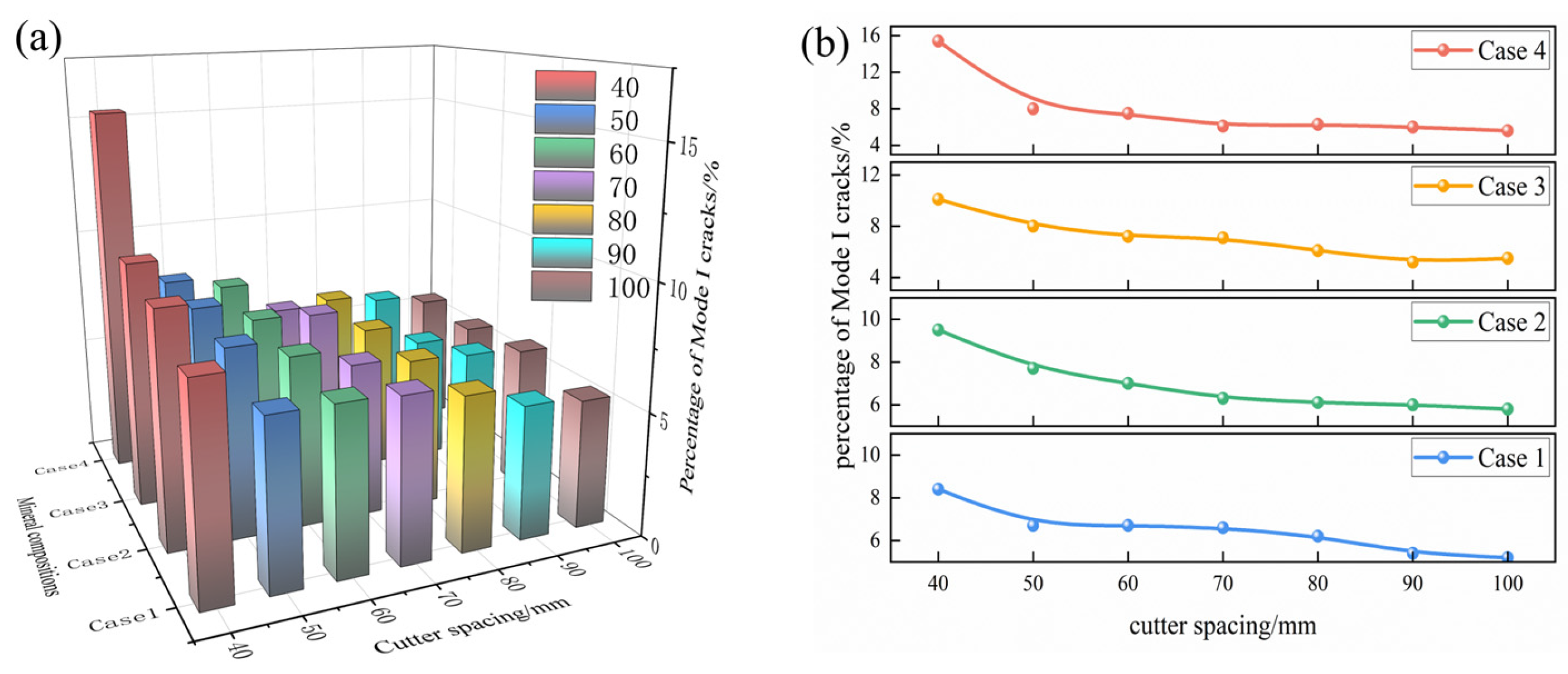
| Material Model | Cutter Spacing/mm | Mode I Cracks | Mode II Cracks | Total Cracks | Mode I Proportion/% | Mode II Proportion/% |
|---|---|---|---|---|---|---|
| Case 1 | 40 | 544 | 5898 | 6442 | 8.4 | 91.6 |
| 50 | 469 | 6543 | 7102 | 6.7 | 93.3 | |
| 60 | 531 | 7429 | 7960 | 6.7 | 93.3 | |
| 70 | 351 | 4952 | 5303 | 6.6 | 93.4 | |
| 80 | 458 | 6951 | 7409 | 6.2 | 93.8 | |
| 90 | 405 | 7048 | 7453 | 5.4 | 94.6 | |
| 100 | 334 | 6145 | 6479 | 5.2 | 94.8 | |
| Case 2 | 40 | 565 | 5354 | 5919 | 9.5 | 90.5 |
| 50 | 603 | 7252 | 7855 | 7.7 | 92.3 | |
| 60 | 524 | 6976 | 7500 | 7 | 93 | |
| 70 | 339 | 5045 | 5384 | 6.3 | 93.7 | |
| 80 | 412 | 6350 | 6762 | 6.1 | 93.9 | |
| 90 | 358 | 5588 | 5946 | 6 | 94 | |
| 100 | 375 | 6134 | 6509 | 5.8 | 94.2 | |
| Case 3 | 40 | 454 | 4041 | 4495 | 10.1 | 89.9 |
| 50 | 579 | 6693 | 7272 | 8 | 92 | |
| 60 | 388 | 5009 | 5397 | 7.2 | 92.8 | |
| 70 | 391 | 5147 | 5538 | 7.1 | 92.9 | |
| 80 | 375 | 5821 | 6196 | 6.1 | 93.9 | |
| 90 | 353 | 6418 | 6771 | 5.2 | 94.8 | |
| 100 | 340 | 5798 | 6138 | 5.5 | 94.5 | |
| Case 4 | 40 | 578 | 3176 | 3754 | 15.4 | 84.6 |
| 50 | 575 | 6622 | 7197 | 8 | 92 | |
| 60 | 473 | 5874 | 6347 | 7.5 | 92.5 | |
| 70 | 324 | 4972 | 5296 | 6.1 | 93.9 | |
| 80 | 406 | 6068 | 6474 | 6.3 | 93.7 | |
| 90 | 350 | 5530 | 5880 | 6 | 94 | |
| 100 | 369 | 6188 | 6557 | 5.6 | 94.4 |
| Material Model | Cutter Spacing/mm | Volume of Rock Fragments/mm3 |
|---|---|---|
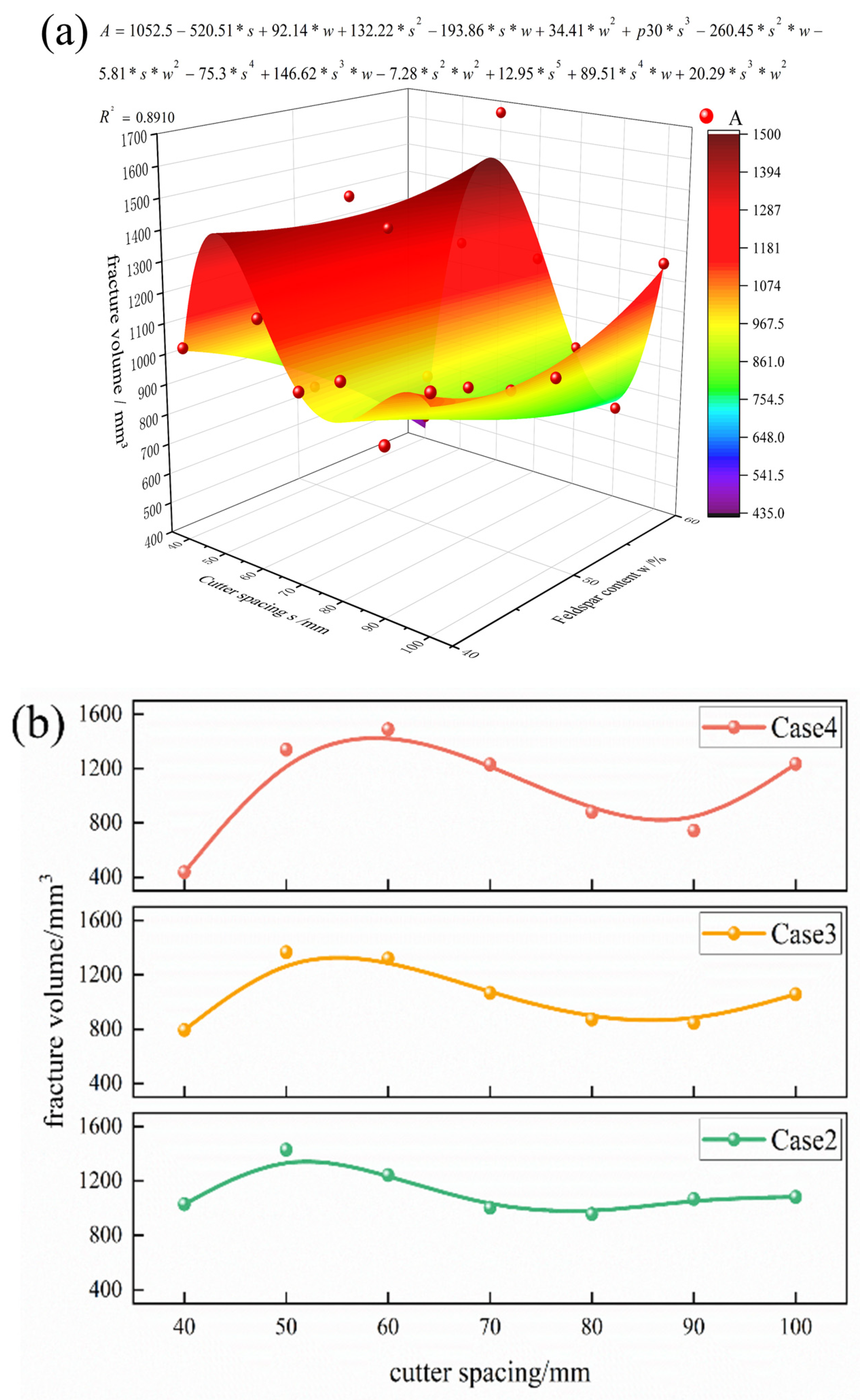
| Case 2 | 40 | 1028.9 |
| 50 | 1429.5 | |
| 60 | 1243 | |
| 70 | 1002.1 | |
| 80 | 955.94 | |
| 90 | 1066.8 | |
| 100 | 1082.7 | |
| Case 3 | 40 | 794.33 |
| 50 | 1366.6 | |
| 60 | 1320.5 | |
| 70 | 1066.6 | |
| 80 | 870.36 | |
| 90 | 845.81 | |
| 100 | 1057.5 | |
| Case 4 | 40 | 437.57 |
| 50 | 1339.7 | |
| 60 | 1490.2 | |
| 70 | 1230.4 | |
| 80 | 879.94 | |
| 90 | 743.8 | |
| 100 | 1233.6 |
Disclaimer/Publisher’s Note: The statements, opinions and data contained in all publications are solely those of the individual author(s) and contributor(s) and not of MDPI and/or the editor(s). MDPI and/or the editor(s) disclaim responsibility for any injury to people or property resulting from any ideas, methods, instructions or products referred to in the content. |
© 2026 by the authors. Licensee MDPI, Basel, Switzerland. This article is an open access article distributed under the terms and conditions of the Creative Commons Attribution (CC BY) license.
Share and Cite
Meng, X.; Tan, W.; Guo, Y.; Liu, L.; Wu, S.; Jia, H.; Guo, Q. Study on Cutting Mechanism of TBM Double Disc Cutters and Mineralogical Response in Deep Mine Hard Rock. Appl. Sci. 2026, 16, 4534. https://doi.org/10.3390/app16094534
Meng X, Tan W, Guo Y, Liu L, Wu S, Jia H, Guo Q. Study on Cutting Mechanism of TBM Double Disc Cutters and Mineralogical Response in Deep Mine Hard Rock. Applied Sciences. 2026; 16(9):4534. https://doi.org/10.3390/app16094534
Chicago/Turabian StyleMeng, Xiangkai, Wenhui Tan, Yunhong Guo, Libo Liu, Siwei Wu, Hanwen Jia, and Qifeng Guo. 2026. "Study on Cutting Mechanism of TBM Double Disc Cutters and Mineralogical Response in Deep Mine Hard Rock" Applied Sciences 16, no. 9: 4534. https://doi.org/10.3390/app16094534
APA StyleMeng, X., Tan, W., Guo, Y., Liu, L., Wu, S., Jia, H., & Guo, Q. (2026). Study on Cutting Mechanism of TBM Double Disc Cutters and Mineralogical Response in Deep Mine Hard Rock. Applied Sciences, 16(9), 4534. https://doi.org/10.3390/app16094534