1. Introduction
In recent years, research and field trials have shown that placing compressors inside wellbores near reservoirs yields economic benefits surpassing those of conventional surface boosting technologies. As the core module of downhole boosting systems, axial compressors exhibit excellent adaptability to harsh downhole environments, featuring a wide operating range, strong compatibility with complex fluids, and high energy conversion efficiency. Such advantages make them a critical component for addressing the challenges of low-permeability, low-pressure, and small-flow rate reservoir development.
Axial compressors have long dominated high-flow, high-power application scenarios—including aircraft engines, large gas turbines, and wind tunnels—due to their robust flow-handling capacity, moderate single-stage pressure ratio, high efficiency, and compact axial dimensions [
1]. However, traditional axial compressors face inherent limitations when scaled down for micro-applications and ultra-low flow rate conditions: their relatively low stage loading, significantly increased end losses from short blades, and high sensitivity to flow fluctuations (which easily trigger rotating stall and surge) restrict their performance [
2]. With the growing demand for efficient, compact, and adaptable pressurization equipment in emerging fields such as downhole boosting, micro-power systems, and precision environmental control, developing micro-axial compressors tailored to confined spaces (e.g., wellbores) and low-permeability, small-flow reservoirs has become a key technical trend for enhancing overall system performance.
Existing research on micro-axial compressors has primarily focused on aircraft engines and ground-based gas turbines, with limited attention to structural and aerodynamic designs adapted to wellbore environments. Liao et al. proposed an integral design theory for small high-pressure fans, simplifying the radial equilibrium equation via Taylor expansion and integrating a diffusion factor loss model with blade height/clearance corrections [
3]. Experimental validation showed that the design achieved a pressure of 4480 Pa (exceeding the target by 28%) and an efficiency of 78%, close to predicted values; this provides a foundational framework for the parametric design of micro-compressors in this study (referenced in
Section 2.1 for initial blade parameter setting). Guo et al. optimized stator aerodynamic performance by adjusting flow path curvature: changing the tip flow path from inclined to horizontal reduced the root peak Mach number by 13.8%, while a downstream trailing edge expansion design weakened radial flow, making the surface Mach number distribution approximate to that of a controlled diffusion airfoil (uniformity improved by 20%) [
4]. This optimization strategy informed the stator flow path modification in our blade optimization process (referenced in
Section 3.2 for first-stage stator camber line adjustment).
Song et al. was used to observe spanwise non-uniformity in stator wakes, finding that turbulence intensity at the root and tip was 15% higher than in the mainstream; when the flow rate dropped to a critical value, the root region became fully low-speed, turbulence intensity surged by 80%, and the wake center shifted by 4.3% pitch toward the suction side [
5]. This insight guided our analysis of flow separation mechanisms in the initial compressor model (referenced in
Section 3.2 for diagnosing root low-speed regions in rotor/stator flow fields). Staedter et al. achieved breakthroughs in micro-turbojet engine performance through full 3D optimization of compressors (enhancing mid-span to tip loading) and turbines (load factor 0.309), resulting in an average compressor stage pressure ratio of 1.64 [
6]. This load distribution optimization method was adapted for our multi-stage compressor blade loading adjustment (referenced in
Section 3.1 for determining optimization priorities of mid-span to tip regions).
Wu S et al. optimized the inter-stage load distribution of a five-stage compressor based on the Smith chart (high loading in middle stages and low loading in the first and last stages), achieving a design point efficiency of 0.871 and a margin of 26.2% [
7]. Their inter-stage matching strategy is referenced in
Section 3.4 to verify the three-stage rotor–stator aerodynamic coordination of our compressor. He et al. used Kulite sensors and high-frequency probes to reveal the rotational speed dependence of inter-stage interference in small-scale compressors: at high speeds, interference was limited to the first-stage rotor trailing edge (superimposed frequency amplitude <5% fundamental frequency), while at medium and low speeds, interference extended to the leading edge. This finding was cited in
Section 3.3 to explain the slight pressure ratio fluctuation at 55,000 rpm (off-design speed) [
8].
Neumeier et al. used parametric modeling (Workbench) to identify the U-shaped curve law of circumferential dovetail tenon stress, deriving the quadratic function σ = 0.1dsh
2 − 3.2dsh + 160 (R
2 > 0.94) for average working surface stress [
9]. This structural stress calculation method is referenced in
Section 2.1 to ensure the mechanical stability of our compressor’s blade-tenon connection.
Grieb et al. used the nonlinear harmonic method to study tip clearance flow in multi-stage axial compressors, identifying an optimal clearance that maximizes stall margin [
10]. This is referenced in
Section 3.5 to explain the stable pressure ratio maintenance of our compressor under different flow rates.
Zhao et al. conducted thermodynamic and dynamic investigations of ultra-high-pressure diaphragm compressors, providing insights into high-pressure compression mechanisms that supported our selection of methane as the simulation medium (referenced in
Section 2.2 for confirming the compressible fluid property settings) [
11]. Yang et al. combined numerical simulation and experimental research to analyze the thermodynamic characteristics of hyper-compressors; their experimental validation method is referenced in
Section 3.3 to design the performance test scheme for our optimized compressor [
12]. Gao et al. proposed a self-air-cooling reciprocating compressor design; while our study focuses on axial compressors, their thermal management analysis is referenced in
Section 2.2 to justify the 364 K downhole temperature setting [
13].
Rusanov studied the thermodynamic features of metal hydride thermal sorption compressors, providing a comparative reference for our analysis of axial compressor energy conversion efficiency (referenced in
Section 3.5 for evaluating isentropic efficiency advantages) [
14]. Li et al. developed an ejector-based detection system for compressor thermodynamic measurement; their performance testing methodology is referenced in
Section 3.3 to establish the pressure ratio-mass flow test protocol [
15]. Li et al. analyzed the thermodynamic performance of linear compressors using R1234yf, offering a framework for our refrigerant (methane) thermodynamic property calculation (referenced in
Section 2.3 for setting SST turbulence model parameters) [
16].
Zhao et al. applied a fluid–structure interaction model to analyze boil-off gas compressors, highlighting the importance of multi-physical field coupling: this is referenced in
Section 3.4 to explain the streamline evolution mechanism during compressor startup [
17]. Sharma et al. conducted thermodynamic analysis of two-stage metal hydride hydrogen compressors, providing a multi-stage compression efficiency comparison benchmark (referenced in
Section 3.3 for evaluating the three-stage pressure ratio advantage of our design) [
18]. Ma et al. studied the impact of surface roughness on axial compressor blade performance under different altitudes: this is referenced in
Section 2.1 to set the blade surface roughness coefficient in our 3D model [
19].
Zhang et al. numerically found that increasing hub clearance reduces compressor efficiency but improves flow stability, while expanding and shrinking non-uniform clearances have opposite effects on compressor loss, unsteady flow and stall characteristics [
20]. Pinelli studied forced response in multi-stage aeroderivative axial compressors, providing a basis for our unsteady flow characteristic analysis (referenced in
Section 3.4 for interpreting the 59th-order mode excitation at medium speeds) [
21].
Cai et al. designed passive magnetic mechanisms for axial gas force balance in miniature scroll compressors: their force balance design concept is referenced in
Section 2.1 to ensure the rotor’s dynamic balance in our micro-compressor [
22]. Li et al. coupled a stability-enhancing mechanism with self-recirculating injection in axial compressors: this stability control method is referenced in
Section 3.5 to explain our compressor’s wide stable operating range [
23]. Yokoyama simulated flow and sound around small axial fans with casing slits: their computational domain setting method is referenced in
Section 2.3 to define our compressor’s inlet/outlet boundary conditions [
24].
Kim corrected a one-dimensional axial compressor model using measurement data: this model correction approach is referenced in
Section 3.3 to calibrate our numerical simulation results against theoretical pressure ratio calculations [
25].
As the core module of downhole boosting equipment, the flow path and blade design of micro-axial compressors directly determine their overall performance. To address the technical gaps in wellbore-adapted designs, this paper proposes a micro-axial compressor structure tailored for downhole boosting. Blade parameterization is used for design selection, combined with CFturbo for real-time optimization and CFX for performance comparison and validation, aiming to develop a high-efficiency, compact micro-axial compressor suitable for low-permeability, low-pressure, and small-flow rate downhole conditions.
In summary, while prior studies have advanced axial compressor design for aerospace and ground-based applications, limited attention has been paid to micro-scale compressors tailored for downhole boosting. The unique constraints of wellbore environments—tight radial space, low-flow pressurization demands, and variable downhole conditions—remain unaddressed in the existing literature. This work bridges this gap by proposing a compact three-stage micro-axial compressor specifically designed for downhole installation, employing a flow-diagnosis-driven optimization method to enhance aerodynamic performance under realistic wellbore conditions.
3. Blade Parameter Optimization Based on CFturbo
3.1. Optimization Method and Process Overview
Given the stringent requirements for compressor efficiency and stability in the downhole environment, computationally expensive automated optimization algorithms were abandoned in favor of a problem-oriented sequential optimization method based on flow field diagnostics. A closed-loop process of “simulation–diagnosis–optimization–validation” was adopted. By making geometric adjustments to the blades based on identified flow problems, performance was enhanced.
CFD calculations were performed on the initial model to obtain detailed flow field information. Focus was placed on analyzing Mach number and entropy generation contours at the 85% span section to accurately diagnose key issues leading to efficiency loss, such as leading-edge shock and flow separation. Based on the diagnostic results, specific optimization targets were formulated (e.g., “weaken blade leading-edge shock”). Subsequently, relevant geometric parameters (such as blade inlet angle, camber line, and leading-edge shape) were adjusted purposefully in CFturbo to improve the flow structure. The modified model was then re-simulated using CFD, and flow field contours before and after optimization were compared to assess the effectiveness of the measures. Through multiple iterations, the flow problems were significantly improved, and the optimization process converged.
3.2. Internal Flow Field Analysis
This optimization analysis was based on Mach number distribution and entropy generation contours at the 85% span section, conducting multiple rounds of design and numerical simulation in CFturbo. By observing the state of the Mach number and entropy generation contours, targeted adjustments were made to the blades.
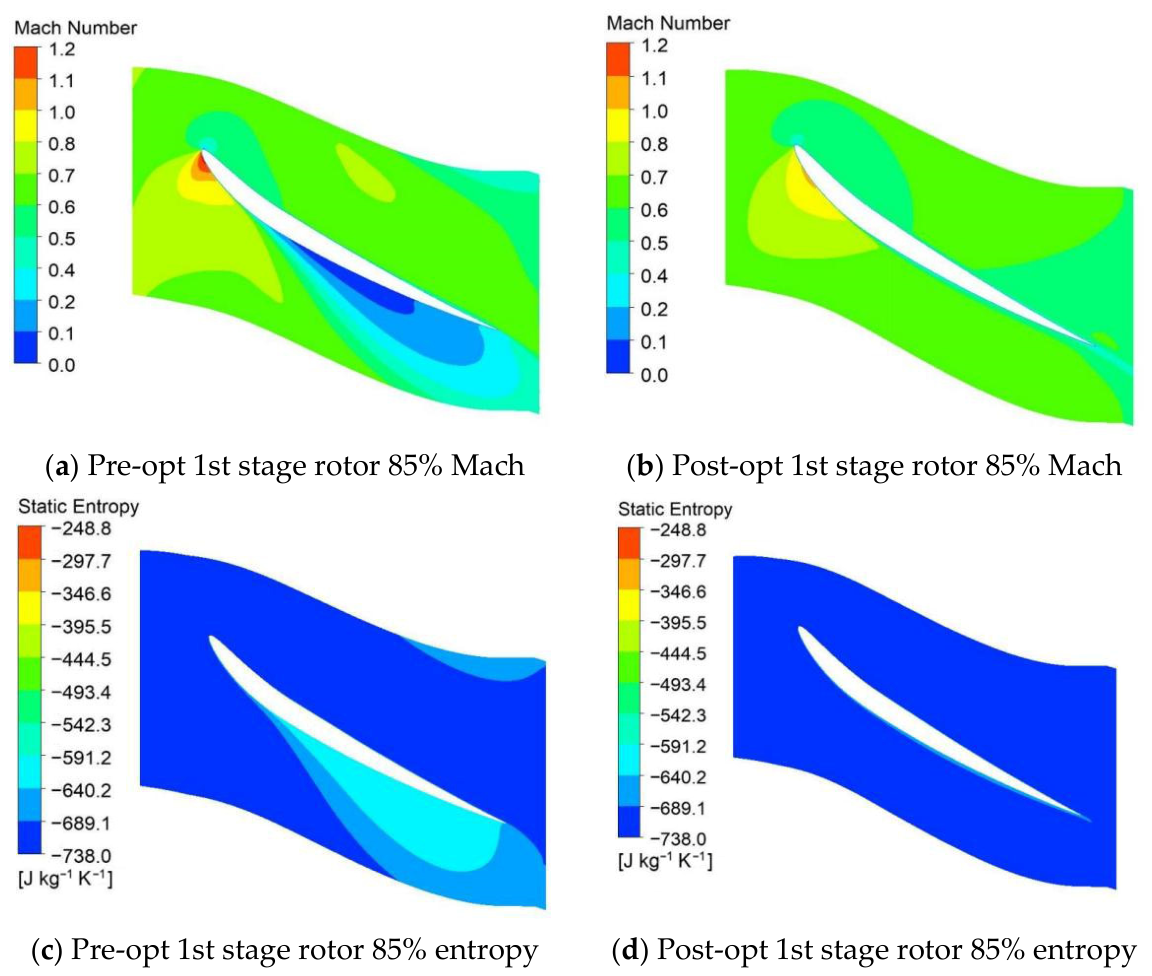
From the contour plots
Figure 6a,c of the first-stage rotor, it was found that before optimization, there was a significant high-Mach-number shock phenomenon at the leading edge of the blade suction side, along with obvious flow separation on the suction surface covering a large range, approximately 30% to 100% of the relative chord length. This phenomenon was also reflected in the entropy distribution, showing a large area of high entropy generation on the suction surface. Through continuous adjustment and optimization of the blade structure, this phenomenon was essentially completely eliminated. Specifically, as the shock weakened, the impact intensity of the airflow at the blade leading edge decreased, reducing energy loss. The reduction in the flow separation area stabilized the boundary-layer flow, avoiding vortex losses caused by separation. After multiple iterations, as is shown in
Figure 6b, the Mach number distribution at 85% span became more uniform, shock strength was controlled within an acceptable range, overall entropy generation levels decreased, and the blade’s aerodynamic performance was significantly improved, laying a good foundation for subsequent stage design. By comparing
Figure 6c,d, changes in the entropy generation contours further confirmed the optimization effect: large areas of high entropy generation contracted to localized small regions, indicating smoother airflow over the blade surface and significantly reduced aerodynamic losses.
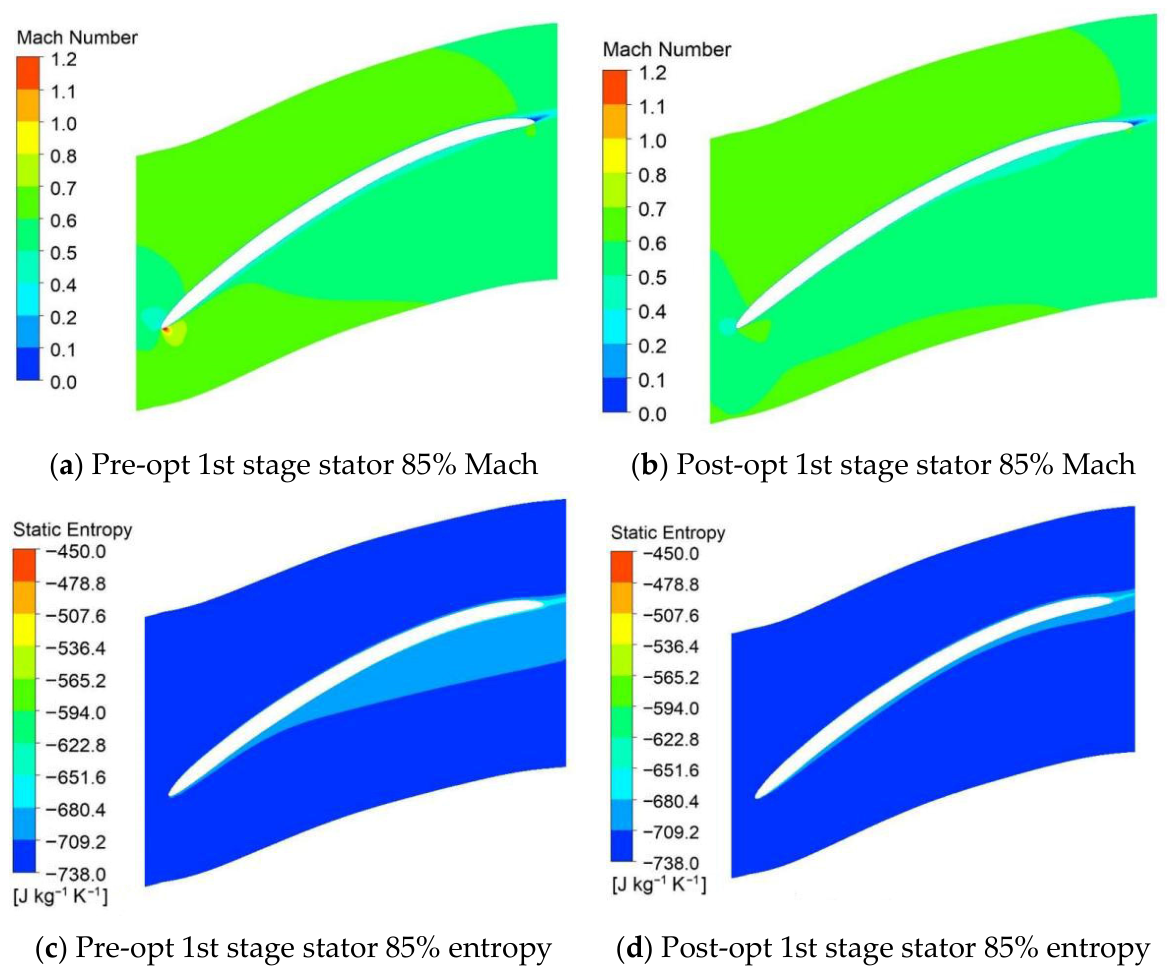
In the initial aerodynamic design, as is shown in
Figure 7a,c, a distinct high-Mach-number shock structure was observed in the leading-edge region of the first-stage stator, along with significant entropy generation over 30% to 100% of the pressure-side relative chord length, indicating noticeable flow separation and boundary-layer reattachment in this region. This led to increased kinetic energy loss and adversely affected the stability of the downstream rotor flow field. Through targeted aerodynamic optimization, the leading-edge radius was moderately increased to alleviate local acceleration and suppress shock generation, and the camber line configuration and thickness distribution were finely reconstructed, effectively improving the pressure-side flow attachment and reducing irreversible losses caused by separation. As illustrated in
Figure 7b,d, the optimized results showed significantly weakened leading-edge shock strength, more uniform pressure-side velocity distribution, and a clear reduction in the extent and magnitude of the entropy generation region, resulting in a more stable overall flow structure. This optimization not only improved the stator’s own aerodynamic efficiency but also significantly enhanced the inlet flow conditions for the downstream rotor, thereby improving the inter-stage aerodynamic matching and energy transfer efficiency, providing effective support for enhancing the overall performance of the multi-stage compressor.
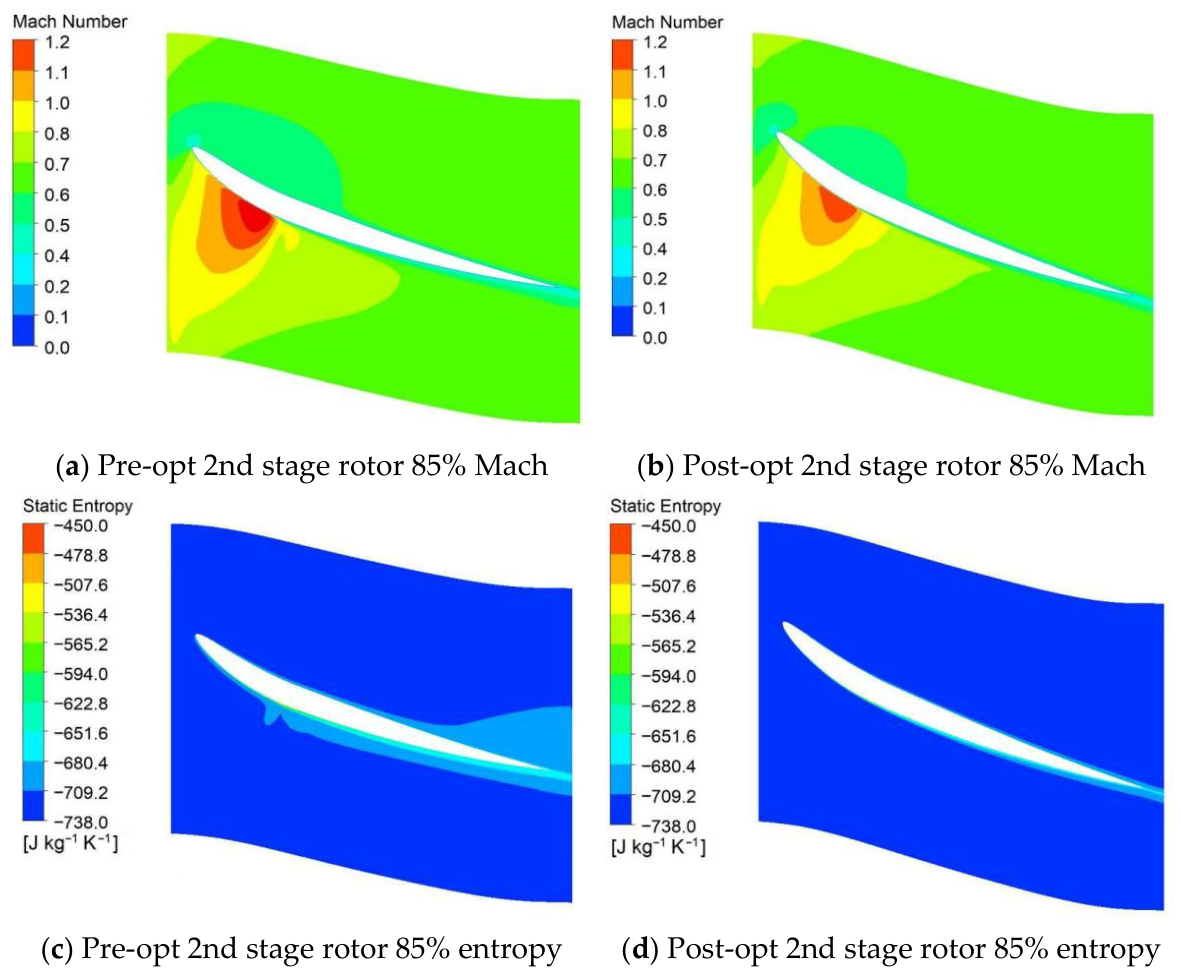
From the
Figure 8a,c, it can be observed that in the initial design, the second-stage rotor blade suction side leading edge exhibited a significant high-intensity shock phenomenon, while the entropy distribution indicated some degree of flow separation in both the suction and pressure-side boundary layers. To improve this flow state, the optimization focused on coordinated adjustment of the blade’s leading-edge curvature and inlet geometric angle, effectively reducing the shock intensity by decreasing the local flow turning angle at the leading edge and improving the boundary-layer development history. As shown in
Figure 8b,d, the optimized flow field results showed that the strong normal shock at the suction-side leading edge transformed into a weak oblique shock system, and shock-induced boundary-layer separation was effectively suppressed, with peak entropy generation reduced compared to before optimization. Simultaneously, the pressure-side boundary-layer velocity gradient decreased significantly, and the accumulation of low-energy fluid in the near-wall region was noticeably alleviated. This optimization effectively eliminated the leading-edge high-Mach-number region and boundary-layer separation, significantly enhancing aerodynamic performance and laying an important foundation for improving the work capacity and anti-stall margin of the downstream rotor.
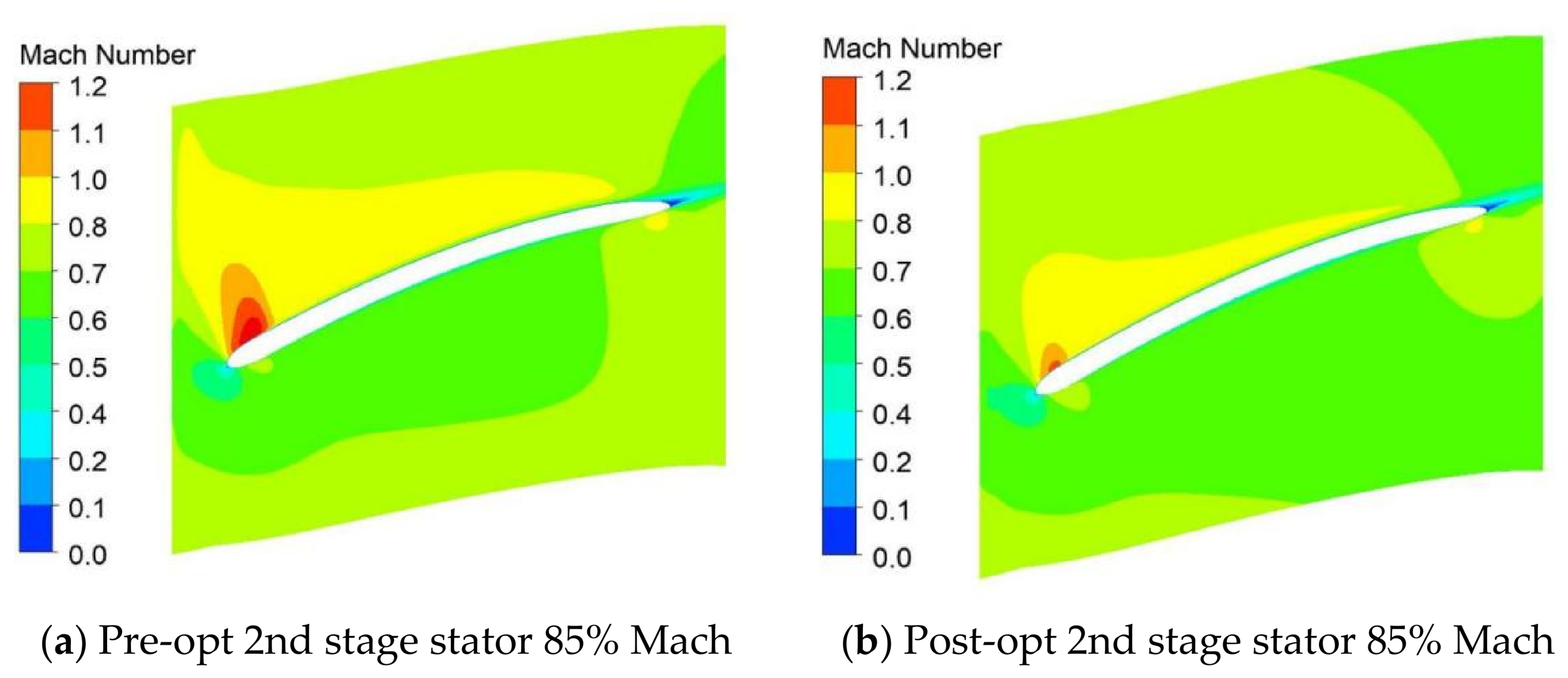
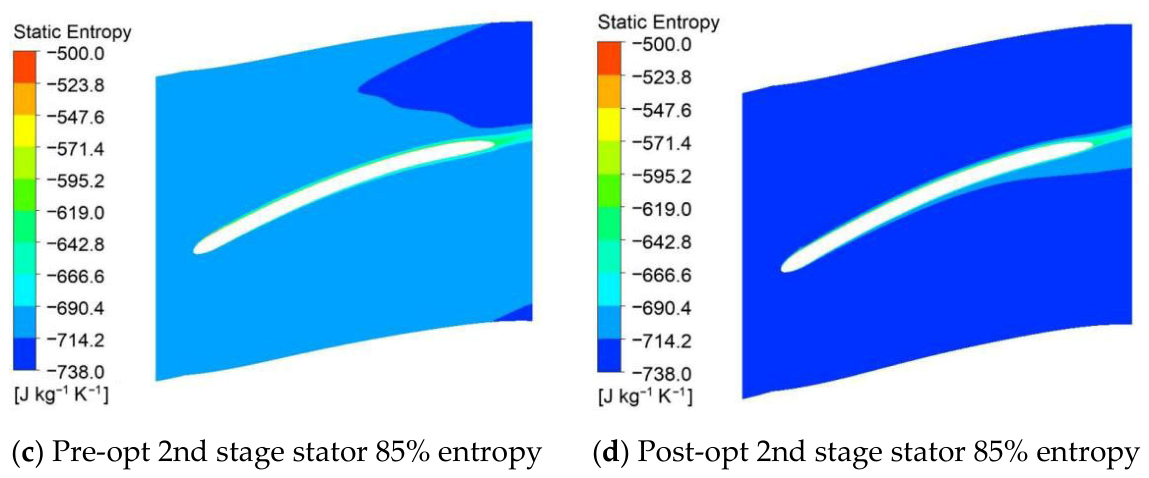
From the
Figure 9a,c, it can be seen that a region of high Mach number flow exists at the leading edge of the second-stage stator, indicating the possible presence of a strong local shock. Meanwhile, the entropy generation contours show significant high-entropy regions within the blade passage, reflecting irreversible losses due to flow separation or shock/boundary layer interaction, indicating a relatively disordered flow state.
Figure 9b demonstrates that after aerodynamic optimization, the extent of the leading-edge high-Mach-number region was substantially reduced, indicating weakened shock strength or improved shock structure, leading to smoother airflow;
Figure 9d demonstrates that the entropy generation within the passage also decreased significantly, indicating reduced flow losses and improved flow characteristics. To further evaluate the optimization effect, a quantitative analysis was performed on the second-stage stator, showing a decrease in the total pressure loss coefficient compared to before optimization, consistent with the observed weakening of the shock structure and reduction in the boundary-layer separation extent.
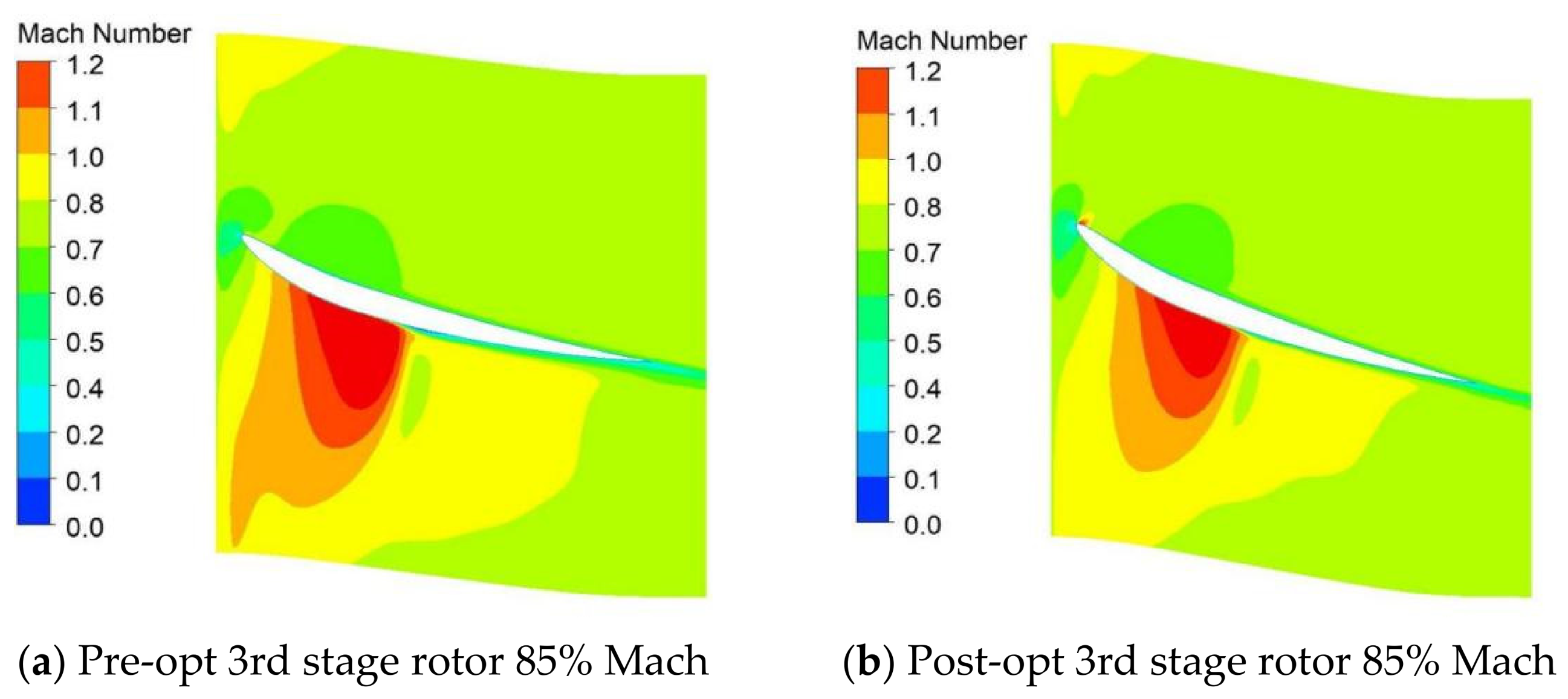
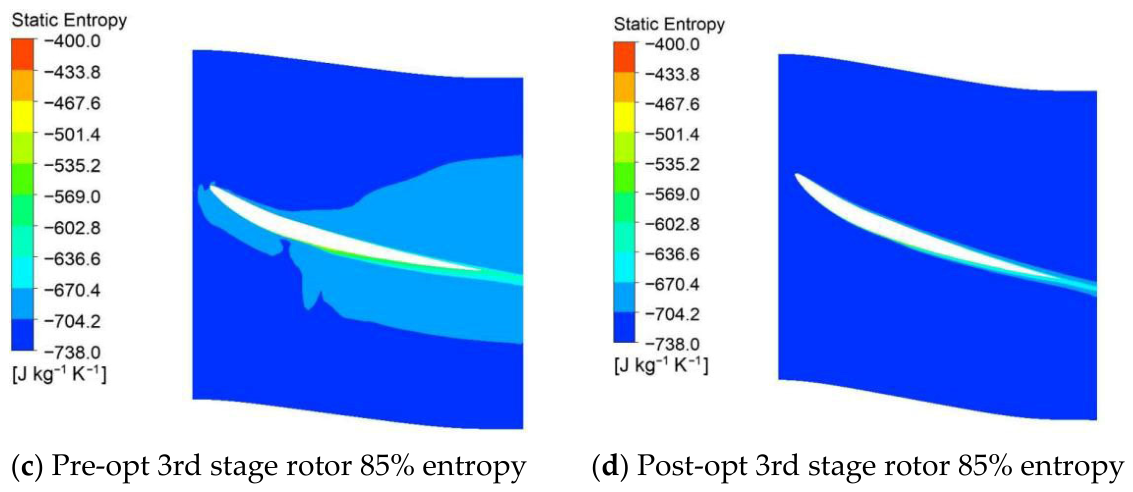
As shown in the
Figure 10a,c, the initial third-stage rotor suffered from strong shock and flow separation problems. A large-area, high-intensity shock was present on the suction side near the leading edge, and separated flow covered most of the suction surface from about 30% of the chord to the trailing edge, reducing the effective flow area and drastically increasing flow losses. As is shown in
Figure 10b,d, after optimization, the flow separation area on the suction surface significantly contracted, and the flow separation on the pressure surface was basically suppressed, resulting in a more uniform airflow velocity distribution over the entire blade surface. This indicates that the optimization measures effectively adjusted the aerodynamic load distribution, reducing local flow acceleration and adverse pressure gradients, thereby decreasing the likelihood of boundary-layer separation. Further observation revealed that the streamlines within the optimized blade passage were smoother, corroborating the reduced entropy generation and indicating a substantial improvement in the aerodynamic performance of the third-stage rotor, laying a good foundation for the efficient and stable operation of the entire compressor.
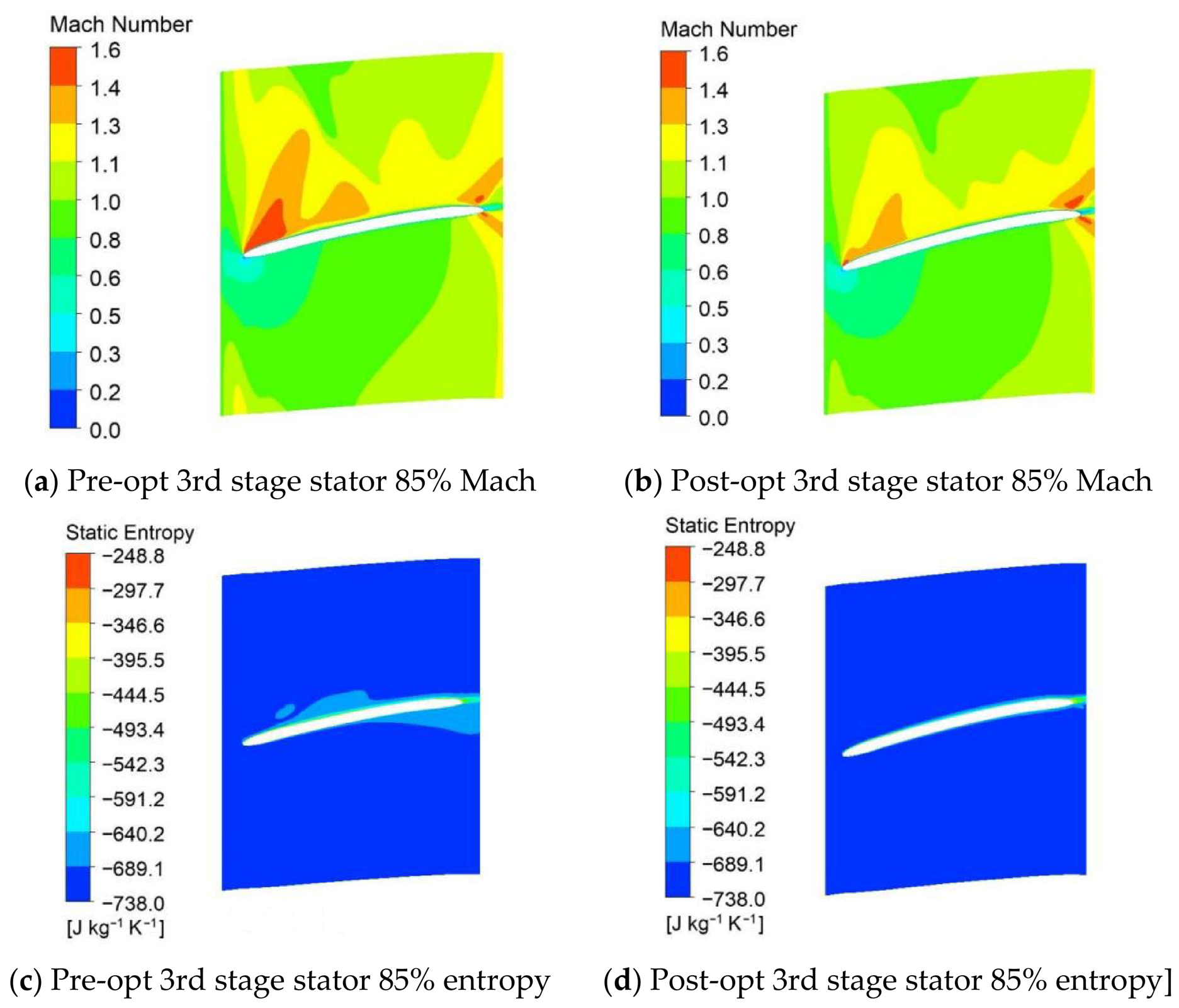
As shown in the
Figure 11a,c, contour analysis revealed that a significant strong shock existed at the leading edge of the third-stage stator blades, indicating a degree of flow blockage in this region. Additionally, a strong shock and high-Mach-number phenomenon were also present at the trailing edge. Furthermore, a region of high entropy generation was observed in the blade boundary layer. As is shown in
Figure 10b,d, after optimization, the high-Mach-number flow region at the leading edge was reduced, and the entropy generation region decreased significantly. The strong shock intensity was noticeably weakened, effectively alleviating the leading-edge flow blockage, and the strong shock phenomenon at the trailing edge essentially disappeared, with the high-Mach-number region substantially reduced. This indicates that the optimization measures, by adjusting the leading-edge shape and trailing edge structure, improved the airflow attachment on the blade surface, and reduced the interaction between the shock and the boundary layer, thereby decreasing local energy losses.
It should be noted that while Mach number and entropy contours provide valuable qualitative comparisons, those based solely on contour visualization are inherently limited. To address this limitation and offer a more rigorous evaluation of the optimization outcomes, the comparative data in
Table 4 indicate that the aerodynamic performance of the three-stage stators is significantly improved after closed-loop optimization based on flow field diagnosis. For the first-stage stator, the loss coefficient decreases from 0.1847 to 0.1494, representing a reduction of 19.1%, while the isentropic efficiency increases from 71.83% to 74.24%. For the second-stage stator, the loss coefficient drops from 0.0818 to 0.0765, a decrease of 6.5%, and the efficiency rises from 81.98% to 83.36%. For the third-stage stator, the loss coefficient falls from 0.1205 to 0.1186, with a reduction of 1.6%, and the efficiency increases from 83.02% to 85.04%. In terms of inter-stage distribution, the first stage exhibits the highest loss (0.1494) after optimization, followed by the third stage (0.1186), and the second stage has the lowest loss (0.0765). This distribution conforms to the typical characteristics of multi-stage axial compressors, namely large shock wave and tip clearance losses in the first stage, moderate endwall secondary flow losses in the last stage, and optimal flow matching in the intermediate stages. Meanwhile, the efficiency increases gradually with the stage number (74.24% → 83.36% → 85.04%), which demonstrates that the flow rectification of the front stages provides a more uniform inlet flow field for the downstream stages. Overall, the adopted optimization measures effectively reduce irreversible flow losses. The improvement in efficiency is highly consistent with the reduction in flow loss, which verifies the effectiveness of the proposed blade profiling and load matching strategy.
3.3. Analysis of Gas Compression Performance Changes
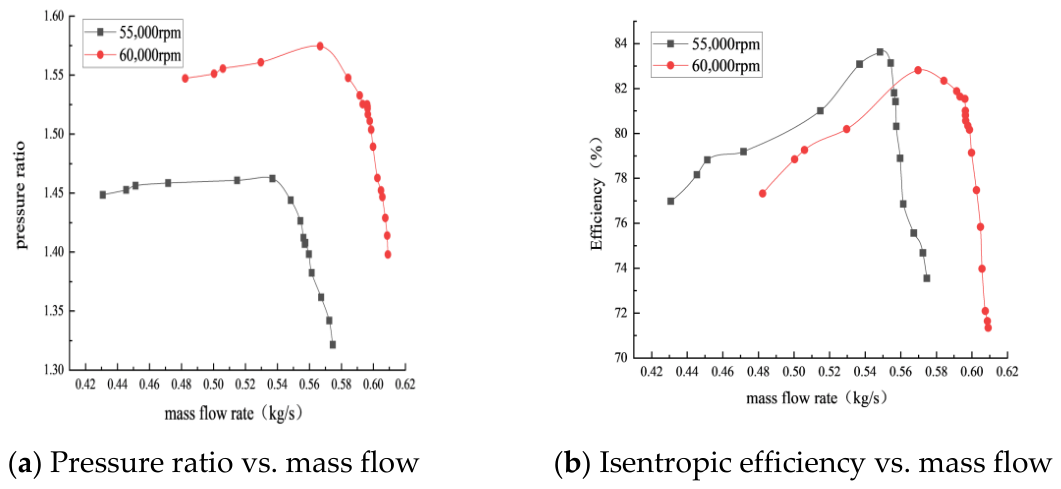
To verify the final performance of the optimized design, numerical simulation of the optimized compressor was conducted, systematically evaluating its gas compression performance. Under a fixed inlet total pressure of 1.33 MPa, for two operating conditions, 60,000 rpm (design speed) and 55,000 rpm (off-design speed), the pressure ratio–mass flow and isentropic efficiency–mass flow characteristic curves were obtained by varying the outlet back pressure (from 0.7 MPa to near-surge conditions), as shown in the figure.
The overall trend shows that as the mass flow rate increases, the pressure ratio gradually decreases, while the isentropic efficiency shows an “inverted U-shaped” distribution, first increasing and then decreasing, representing the compressor’s pressure boosting capability and stable operating range. The performance curves for the 60,000 rpm condition are comprehensively superior to those for the 55,000 rpm condition. Key performance parameters are compared in
Table 5. The isentropic efficiency values are essentially the same at both speeds, indicating that the rotational speed has minimal impact on the peak energy conversion efficiency. This suggests that the design can achieve nearly optimal efficiency at both speeds, that efficiency optimization is weakly linked to speed, and that the compressor has excellent energy utilization efficiency. The pressure ratio is generally maintained above 1.45, meeting pressurization requirements under small flow rate conditions.
Figure 12a shows the mass flow–pressure ratio curves of the compressor at different speeds. Increasing the speed from 55,000 rpm to 60,000 rpm resulted in an overall increase in the pressure ratio. The mass flow–pressure ratio curve for the 55,000 rpm condition initially shows a small rising segment. After the surge point (0.59 kg/s, 1.54), the pressure ratio increases slightly with increasing flow rate. This is because near the surge boundary, some gas stalls due to the high-speed rotation of the blades; a slight increase in flow rate can stabilize the flow path, creating a mild “choking” effect, while increasing the flow rate and velocity through the un-stalled passages, converting dynamic pressure to static pressure and causing a small increase in outlet total pressure until the peak. The pressure ratio then transitions from the peak into a decreasing trend with increasing flow rate. The latter part of the curve shows an almost linear decrease in the pressure ratio with increasing flow rate, due to the continuously increasing negative incidence angle, which reduces the aerodynamic loading and work capacity of the blades. The overall trend of the mass flow–pressure ratio curve at 60,000 rpm is similar to that at 55,000 rpm, both showing an initial increase followed by a decrease in the pressure ratio with increasing flow rate. However, the rising segment is steeper at higher speeds because the higher rotational speed results in a greater impeller circumferential speed, enabling faster energy transfer to the gas. Therefore, when the mass flow increases, the energy per unit mass of gas is higher, leading to a greater increase in pressure ratio with flow rate.
Figure 12b shows the mass flow–isentropic efficiency curves of the compressor at different speeds, showing an overall trend of rapid initial rise, reaching a peak, and then declining, with efficiencies all above 76%. Compressor efficiency depends on flow losses during energy conversion, which are closely related to the match between flow rate and rotational speed. At the surge boundary, efficiency is very low. As the flow rate increases, efficiency rises because when the flow rate is below the design condition, the airflow poorly matches the compressor impeller geometry, resulting in low energy conversion efficiency. As the flow rate increases, the flow state gradually approaches the design condition. At 60,000 rpm, the design flow rate of the compressor is larger. When the flow rate increases, the effect of the best efficiency point is more pronounced, the high-efficiency region corresponds to a flow range further to the right, and losses decrease faster; hence, the efficiency rise slope is steeper.
3.4. Analysis of Streamline Evolution and Unsteady Flow Characteristics
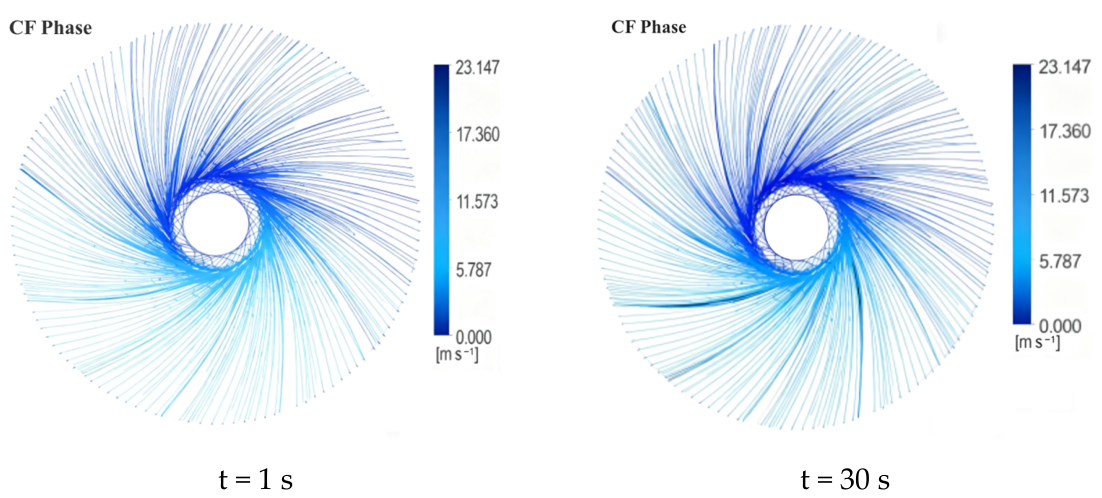
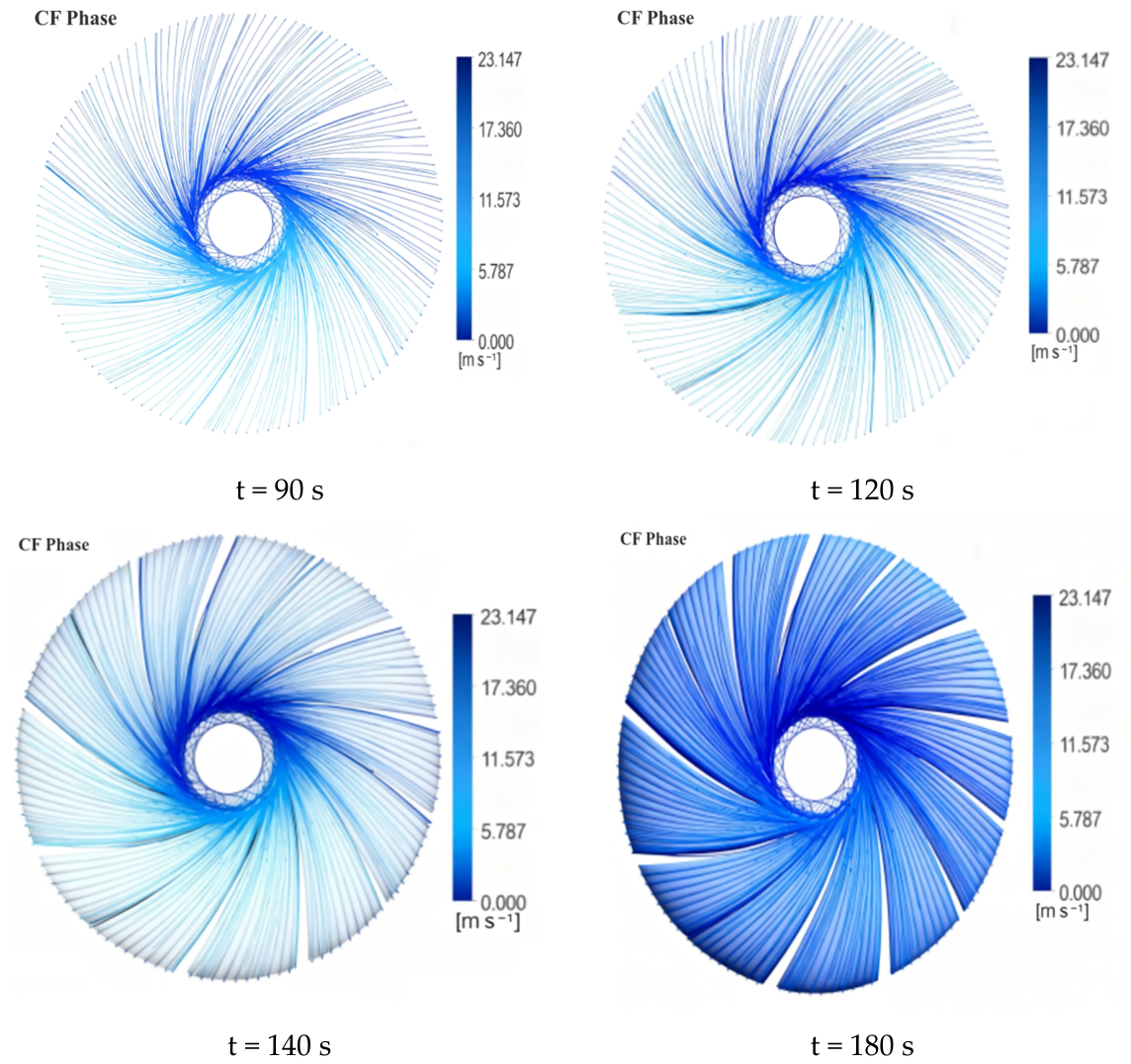
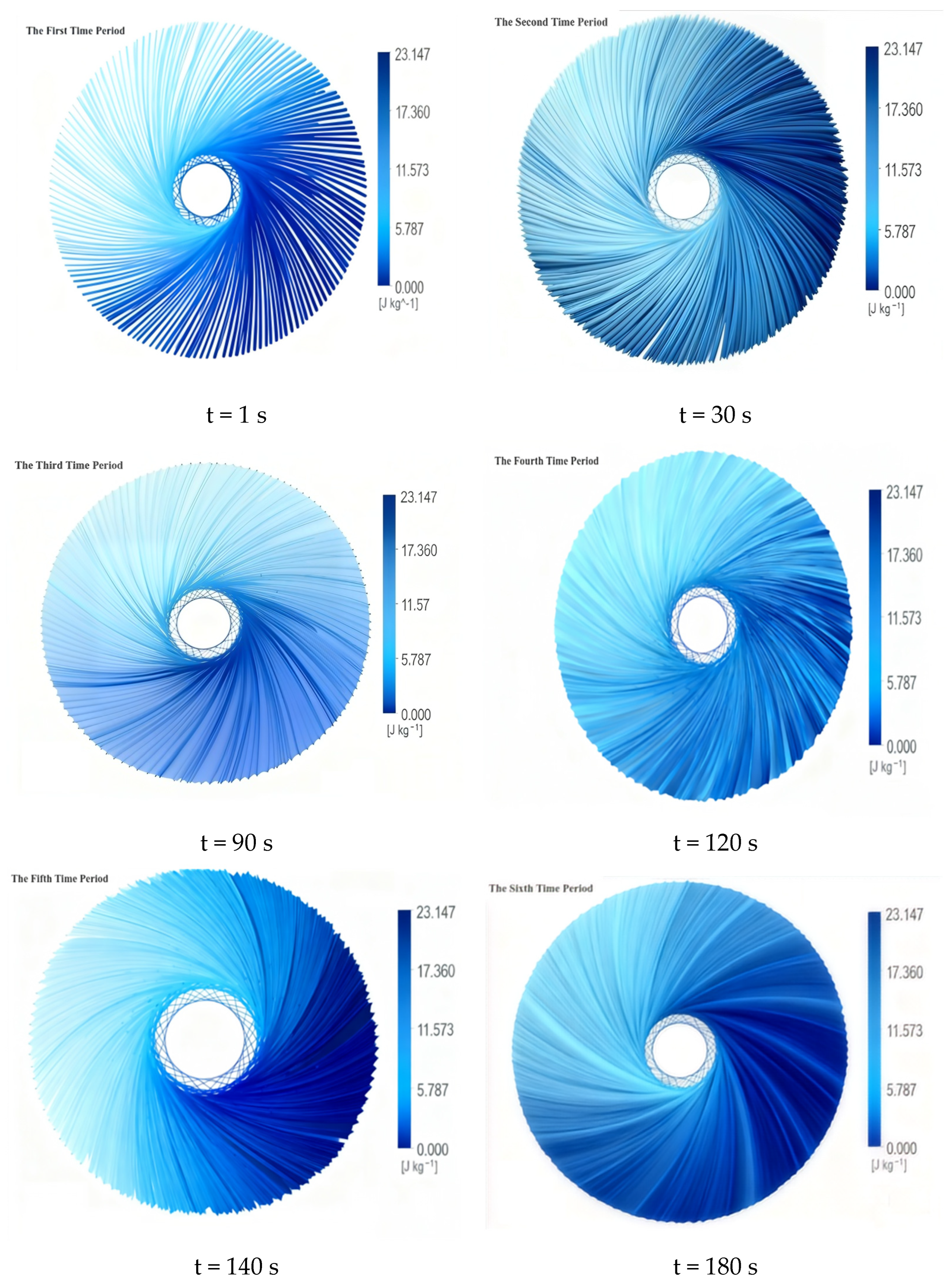
To deeply investigate the internal flow mechanisms of the micro-axial compressor during startup and stable operation, this study employed the ANSYS CFX platform with the SST turbulence model to perform high-precision unsteady numerical simulations of the three-stage rotor–stator structure under design conditions (inlet total pressure of 1.33 MPa, total temperature of 365 K, and medium: methane). By extracting and analyzing streamline distributions and flow parameters at six characteristic time points (t = 1 s, 30 s, 90 s, 120 s, 140 s, and 180 s), the dynamic evolution of the internal flow from startup transient to stable operation was systematically revealed.
As shown in
Figure 13 (t = 1 s), at the initial startup phase, the rotational speed is low and the airflow has not yet fully developed, resulting in obvious unsteady characteristics of the flow field. Due to the mismatched inflow angle of the airflow at the leading edge of the first-stage rotor blades, local flow separation occurs in the region of 10–20% relative chord length on the suction surface, forming a small-scale separation zone. Intermittent vortices exist in the flow passages of the second-stage and third-stage stator blades, indicating unstable boundary-layer development and failure of the airflow to fully adhere to the blade profiles. At this time, the average airflow velocity is only 14.2 m/s, with significant low-velocity regions in the flow passages leading to large flow losses, and the isentropic efficiency is merely 68.5%.
As shown in
Figure 13 (t = 30 s), as the speed increased towards the design value, the flow field gradually stabilized. The leading-edge separation zone on the first-stage rotor completely disappeared, with streamlines smoothly following the blade profile. Vortices in the second-stage stator passage mostly dissipated, and streamline distribution became more uniform. The separation zone on the third-stage rotor suction surface reduced to 5–8% relative chord length. The average flow velocity increased to 62.8 m/s, isentropic efficiency reached 81.7%, and the “C”-shaped structure formed by tip leakage was clear without significant interference to the main flow.
As shown in
Figure 13 (t = 90 s–180 s), entering the stable operation phase, the flow field further optimized. By t = 180 s, the leading-edge shock on the first-stage rotor stabilized at the 10% relative chord position, weak and non-diffusing. Streamlines in the second- and third-stage stator passages were highly parallel, with no separation or vortices. Only a very weak flow mixing zone existed downstream of the third-stage stator trailing edge, not affecting the internal flow. The average flow velocity stabilized at 70.3 m/s, the pressure ratio reached 1.57, and the isentropic efficiency maintained the peak level of 83.6%, indicating that the compressor achieved efficient and stable gas pressurization under design conditions.
3.5. Dynamic Response of Flow Field Parameters and Performance Evolution
To quantify the changes in key aerodynamic parameters during flow field evolution, this study extracted airflow velocity, pressure ratio, isentropic efficiency, and flow characteristic parameters at six time nodes, systematically analyzing the compressor’s response mechanism to flow patterns at different operational stages.
As shown in
Figure 14 (t = 1 s), during initial startup, due to low speed and high flow inertia, flow separation and secondary flows existed in the flow field, resulting in an average flow velocity of only 14.2 m/s, a pressure ratio of 1.12, and a low isentropic efficiency of 68.5%. Flow losses primarily originated from leading-edge separation and passage vortices.
As shown in
Figure 14 (t = 30 s–120 s), as the speed increased into the design range, the airflow kinetic energy enhanced, boundary-layer development stabilized, and flow separation regions significantly reduced. By t = 120 s, the average flow velocity increased to 65.4 m/s, the pressure ratio improved to 1.51, and isentropic efficiency reached 82.3%. The tip leakage flow formed a stable structure with limited interference to the main flow.
As shown in
Figure 14 (t = 140 s–180 s), during the long-term stable operation phase, the flow parameters fully matched the blade geometry, and the flow field reached its optimal state. By t = 180 s, the average flow velocity further increased to 70.3 m/s, the pressure ratio reached 1.57, and isentropic efficiency stabilized at 83.6%. The shock position was fixed and its strength was controllable, with no flow separation phenomena, indicating excellent aerodynamic performance and operational stability of the compressor.
4. Conclusions and Prospects
This research systematically investigated the design and unsteady performance of a micro downhole axial compressor. Through parametric design and flow field diagnostic optimization, combined with high-fidelity unsteady numerical simulations, the following conclusions are drawn.
Optimization design significantly improves aerodynamic performance: Using a flow field diagnostic-based sequential optimization method, targeted adjustments were made to the blade’s leading-edge shape, camber line, and thickness distribution, effectively weakening the leading-edge shock strength and suppressing boundary-layer separation. The optimized compressor achieved a pressure ratio of 1.57 and an isentropic efficiency of 83.6% at the design speed, both superior to the initial design targets.
Unsteady flow field reveals stability mechanisms: The flow field undergoes a dynamic evolution from disorder to stability during compressor startup. At t = 1 s, flow separation and passage vortices lead to low efficiency. As speed increases, the flow field gradually homogenizes. By the long-term stable phase at t = 180 s, streamlines fully conform to the blade profile, the shock structure is stable, and no separation occurs, achieving efficient pressurization.
Significant improvement in inter-stage matching and leakage control: The three-stage rotor–stator structure exhibits good inter-stage aerodynamic matching. The tip leakage flow forms a controlled “C”-shaped loop during stable operation without significant interference to the main flow. By optimizing tip clearance and blade loading distribution, leakage losses were further reduced, enhancing operational stability.
Good adaptability to downhole environment: Under simulated real downhole conditions, the compressor demonstrated a wide stable operating range at both rotational speeds, with surge point pressure ratios of 1.45 and 1.55, and choke mass flow rates of 0.59 kg/s and 0.64 kg/s, respectively, meeting the pressurization requirements for low-permeability, low-pressure, and small-flow-rate reservoirs.