Effect of Dietary Goji Berry (Lycium barbarum) Supplementation on Quality and Storage Stability of Rabbit Meat

 ,
,  , ,
, ,  , , , ,
  , , ,
, , ,  ,
,  and
and 
Featured Application
Abstract
1. Introduction
2. Materials and Methods
2.1. Animals and Diets
2.2. Chemical Analyses of Pelleted Feed
2.3. Carcass Composition and Meat Sampling
2.4. Chemical Analyses of LTL Muscle at Dissection
2.4.1. Proximate Composition
2.4.2. Glutathione Analysis
2.4.3. Fatty Acid Profile
2.5. Analyses to Estimate Shelf Life of Meat During Storage
2.5.1. Physical Analyses
2.5.2. Microbiological Analyses
2.5.3. Chemical Analyses
Thiobarbituric Acid Reactive Substances (TBARSs)
Thiol and Carbonyl Content
Total Volatile Basic Nitrogen (TVB-N) by Conway’s Microdiffusion Method
Biogenic Amines (BAs)
2.6. Statistical Analysis
3. Results and Discussion
3.1. Effect of Diet on Carcass Composition
3.2. Chemical Composition of the Longissimus Thoracis et Lumborum Muscle at Dissection
3.2.1. Effect of Diet on Proximate Composition and GSH in Liver
3.2.2. Effect of Diet on Fatty Acid Profile
3.2.3. Nutritional and Metabolic Indices Obtained from Fatty Acids of LTL Muscle
3.3. Shelf Life of Meat During Storage
3.3.1. Physical Quality Parameters During Storage
3.3.2. Microbiological Results in Longissimus Thoracis et Lumborum Raw Meat During Storage
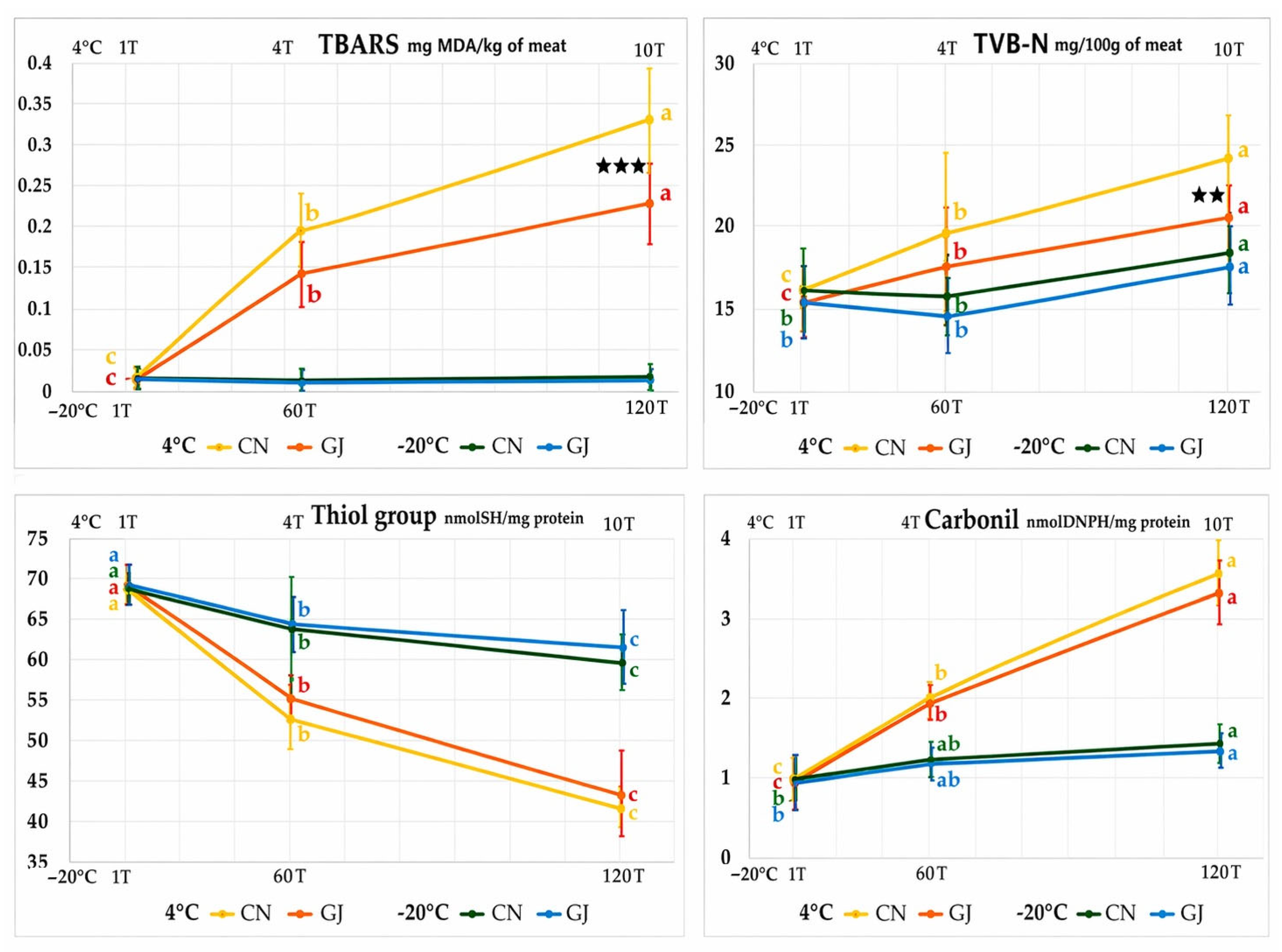
3.3.3. Chemical Analysis Results During Storage
TBARSs, TVB-N, and Thiol and Carbonyl Groups During Storage
Biogenic Amines (BA) Content
3.3.4. Principal Component Analysis of Quality Parameters During Storage
4. Conclusions
Supplementary Materials
Author Contributions
Funding
Institutional Review Board Statement
Data Availability Statement
Acknowledgments
Conflicts of Interest
References
- Gómez, I.; Janardhanan, R.; Ibañez, F.C.; Beriain, M.J. The effects of processing and preservation technologies on meat quality: Sensory and nutritional aspects. Foods 2020, 9, 1416. [Google Scholar] [CrossRef]
- Huang, X.; Ahn, D.U. Lipid oxidation and its implications to meat quality and human health. Food Sci. Biotechnol. 2019, 28, 1275–1285. [Google Scholar] [CrossRef]
- Jairath, G.; Singh, P.K.; Dabur, R.S.; Rani, M.; Chaudhari, M. Biogenic amines in meat and meat products and its public health significance: A review. J. Food Sci. Technol. 2015, 52, 6835–6846. [Google Scholar] [CrossRef]
- Huang, H.; Li, Y.; Liang, J.; Finkelman, F.D. Molecular Regulation of Histamine Synthesis. Front. Immunol. 2018, 9, 1392. [Google Scholar] [CrossRef] [PubMed]
- Triki, M.; Herrero, A.M.; Jiménez-Colmenero, F.; Ruiz-Capillas, C. Quality Assessment of Fresh Meat from Several Species Based on Free Amino Acid and Biogenic Amine Contents during Chilled Storage. Foods 2018, 7, 132. [Google Scholar] [CrossRef]
- Nakyinsige, K.; Sazili, A.Q.; Aghwan, Z.A.; Zulkifli, I.; Goh, Y.M.; Abu Bakar, F.; Sarah, S.A. Development of microbial spoilage and lipid and protein oxidation in rabbit meat. Meat Sci. 2015, 108, 125–131. [Google Scholar] [CrossRef] [PubMed]
- Ponnampalam, E.N.; Kiani, A.; Santhiravel, S.; Holman, B.W.B.; Lauridsen, C.; Dunshea, F.R. The importance of dietary antioxidants on oxidative stress, meat and milk production, and their preservative aspects in farm animals: Antioxidant action, animal health, and product quality—Invited Review. Animals 2022, 12, 3279. [Google Scholar] [CrossRef]
- Gonçalves, A.C.; Pinto, A.R.; Cima, A.; Olo-Fontinha, E.; Martins, J.C.L.; Garcia, J.; Lemos, A.; Saavedra, M.J.; Pintado, M.M.; Alves, M.J. Plant-derived bioactive compounds: One health perspective. Appl. Sci. 2026, 16, 327. [Google Scholar] [CrossRef]
- Contò, M.; Castrica, M.; Rinaldi, S.; Failla, S. Natural bioactive compounds as feed additives: Strategies for sustainable and functional livestock production. Appl. Sci. 2026, 16, 2344. [Google Scholar] [CrossRef]
- Vidović, B.B.; Milinčić, D.D.; Marčetić, M.D.; Djuriš, J.D.; Ilić, T.D.; Kostić, A.Ž.; Pešić, M.B. Health benefits and applications of goji berries in functional food products development: A review. Antioxidants 2022, 11, 248. [Google Scholar] [CrossRef]
- Ma, R.-H.; Zhang, X.-X.; Ni, Z.-J.; Thakur, K.; Wang, W.; Yan, Y.-M.; Cao, Y.-L.; Zhang, J.-G.; Rengasamy, K.R.R.; Wei, Z.-J. Lycium barbarum (Goji) as functional food: A review of its nutrition, phytochemical structure, biological features, and food industry prospects. Crit. Rev. Food Sci. Nutr. 2022, 63, 10621–10635. [Google Scholar] [CrossRef]
- Shi, X.; Wang, X.; Zheng, Y.; Fu, L. Advances in the study of bioactive compounds and nutraceutical properties of goji berry (Lycium barbarum L.). Appl. Sci. 2025, 15, 262. [Google Scholar] [CrossRef]
- Teixeira, F.; Silva, A.M.; Delerue-Matos, C.; Rodrigues, F. Lycium barbarum berries (solanaceae) as source of bioactive compounds for healthy purposes: A review. Int. J. Mol. Sci. 2023, 24, 4777. [Google Scholar] [CrossRef] [PubMed]
- Skenderidis, P.; Leontopoulos, S.; Lampakis, D. Goji Berry: Health promoting properties. Nutraceuticals 2022, 2, 32–48. [Google Scholar] [CrossRef]
- Wang, J.; Li, S.; Zhang, H.; Zhang, X. A review of Lycium barbarum polysaccharides: Extraction, purification, structural-property relationships, and bioactive molecular mechanisms. Carbohydr. Res. 2024, 544, 109230. [Google Scholar] [CrossRef]
- Jia, L.; Li, W.; Li, J.; Li, Y.; Song, H.; Luan, Y.; Qi, H.; Ma, L.; Lu, X.; Yang, Y. Lycium barbarum polysaccharide attenuates high-fat diet-induced hepatic steatosis by up-regulating SIRT1 expression and deacetylase activity. Sci. Rep. 2016, 6, 36209. [Google Scholar] [CrossRef] [PubMed]
- Chung, C.-J.; Chuang, Y.-C.; Lin, C.-S.; Wu, Y.-S.; Lin, H.-H.; Hung, P.-Y.; Lin, Y.-L.; Liao, K.-W. Lycium Chinense polysaccharide suppressed hypertrophy and hyperplasia in adipocytes through regulating lipid and glucose metabolism. ACS Food Sci. Technol. 2021, 1, 1014–1022. [Google Scholar] [CrossRef]
- Videla, L.A.; Hernandez-Rodas, M.C.; Metherel, A.H.; Valenzuela, R. Influence of the nutritional status and oxidative stress in the desaturation and elongation of n-3 and n-6 polyunsaturated fatty acids: Impact on non-alcoholic fatty liver disease. Prostaglandins Leukot. Essent. Fat. Acids 2022, 181, 102441. [Google Scholar] [CrossRef]
- Crepaldi, L.D.; Mariano, I.R.; Trondoli, A.J.P.C.; Moreno, F.N.; Piovan, S.; Formigoni, M.; Salgueiro-Pagadigorria, C.L.; de Godoi, V.A.F.; Brito, M.d.N.; Garcia, R.F. Goji berry (Lycium barbarum) extract improves biometric, plasmatic and hepatic parameters of rats fed a high-carbohydrate diet. J. Pharm. Pharmacol. 2018, 6, 877–889. [Google Scholar] [CrossRef][Green Version]
- Janke, F.; Trindade, F.M.R.; Penteado, J.O.; Nogueira, C.C.; Uecker, J.N.; Schneider, J.P.; Ávila, C.N.; Rincón, J.A.A.; de Barros, C.C.; Jaskulski, I.B.; et al. Influence of Lycium barbarum extract intake on oxidative stress in wistar rats. Braz. Arch. Biol. Technol. 2022, 65, 22210114. [Google Scholar] [CrossRef]
- Yin, Y.; Wang, F.; Yang, M.; Tan, B.; Yin, Y.; Chen, J.; Yang, Z. Lycium barbarum polysaccharides as antibiotic substitutes improve growth performance, serum immunity, antioxidant status, and intestinal health for weaned piglets. Front. Microbiol. 2022, 12, 819993. [Google Scholar] [CrossRef] [PubMed]
- Long, L.N.; Kang, B.J.; Jiang, Q.; Chen, J.S. Effects of dietary Lycium barbarum polysaccharides on growth performance, digestive enzyme activities, antioxidant status, and immunity of broiler chickens. Poult. Sci. 2020, 99, 744–751. [Google Scholar] [CrossRef] [PubMed]
- Castrica, M.; Menchetti, L.; Balzaretti, C.M.; Branciari, R.; Ranucci, D.; Cotozzolo, E.; Vigo, D.; Curone, G.; Brecchia, G.; Miraglia, D. Impact of dietary supplementation with goji berries (Lycium barbarum) on microbiological quality, physico-chemical, and sensory characteristics of rabbit meat. Foods 2020, 9, 1480. [Google Scholar] [CrossRef]
- Menchetti, L.; Brecchia, G.; Branciari, R.; Barbato, O.; Fioretti, B.; Codini, M.; Bellezza, E.; Trabalza-Marinucci, M.; Miraglia, D. The effect of Goji berries (Lycium barbarum) dietary supplementation on rabbit meat quality. Meat Sci. 2020, 161, 108018. [Google Scholar] [CrossRef]
- Cremonesi, P.; Curone, G.; Biscarini, F.; Cotozzolo, E.; Menchetti, L.; Riva, F.; Marongiu, M.L.; Castiglioni, B.; Barbato, O.; Munga, A.; et al. Dietary Supplementation with Goji Berries (Lycium barbarum) Modulates the Microbiota of Digestive Tract and Caecal Metabolites in Rabbits. Animals 2022, 12, 121. [Google Scholar] [CrossRef]
- Kumar, P.; Sharma, N.; Narnoliya, L.K.; Verma, A.K.; Umaraw, P.; Mehta, N.; Ismail-Fitry, M.R.; Kaka, U.; Yong-Meng, G.; Lee, S.J.; et al. Improving quality and consumer acceptance of rabbit meat: Prospects and challenges. Meat Sci. 2025, 219, 109660. [Google Scholar] [CrossRef]
- Ribeiro, J.S.; Santos, M.J.M.C.; Silva, L.K.R.; Pereira, L.C.L.; Santos, I.A.; da Silva Lannes, S.C.; da Silva, M.V. Natural antioxidants used in meat products: A brief review. Meat Sci. 2019, 148, 181–188. [Google Scholar] [CrossRef] [PubMed]
- de Blas, C.; Wiseman, J.; Carabano, R.; Abad-Guamán, R.; Allain, D.; Badiola, I.; Blas, E.; Cervera, C.; Zotte, A.D.; Carmona, J.F. Nutrition of the Rabbit, 3rd ed.; CAB International: Oxford, UK, 2020; pp. 243–254. [Google Scholar]
- Association of Official Analytical Chemists. AOAC Official Methods of Analysis, 22nd ed.; Association of Official Analytical Chemists: Gaithersburg, MD, USA, 2023. [Google Scholar]
- Van Soest, P.J.V.; Wine, R.H. Use of detergents in the analysis of fibrous feeds. IV. Determination of plant cell-wall constituents. J. AOAC Int. 1967, 50, 50–55. [Google Scholar] [CrossRef]
- Blasco, A.; Ouhayoun, J. Harmonization of criteria and terminology in rabbit meat research. Revised Proposal. World Rabbit. Sci. 1996, 4, 93–99. [Google Scholar] [CrossRef]
- Nuhu, F.; Gordon, A.; Sturmey, R.; Seymour, A.-M.; Bhandari, S. Measurement of Glutathione as a Tool for Oxidative Stress Studies by High Performance Liquid Chromatography. Molecules 2020, 25, 4196. [Google Scholar] [CrossRef]
- Niero, G.; De Marchi, M.; Masi, A.; Penasa, M.; Cassandro, M. Short communication: Characterization of soluble thiols in bovine milk. J. Dairy Sci. 2015, 98, 6014–6017. [Google Scholar] [CrossRef]
- Failla, S.; Buttazzoni, L.; Zilio, D.M.; Contò, M.; Renzi, G.; Castellini, C.; Amato, M.G. An index to measure the activity attitude of broilers in extensive system. Poult. Sci. 2021, 100, 101279. [Google Scholar] [CrossRef]
- Ulbricht, T.L.V.; Sauthgate, D.A.T. Coronary heart disease: Seven dietary factors. Lancet 1991, 338, 985–991. [Google Scholar] [CrossRef] [PubMed]
- Arakawa, K.; Sagai, M. Species differences in lipid peroxide levels in lung tissue and investigation of their determining factors. Lipids 1986, 21, 769–775. [Google Scholar] [CrossRef]
- Vessby, B.; Gustafsson, I.B.; Tengblad, S.; Berglund, L. Indices of fatty acid desaturase activity in healthy human subjects: Effects of different types of dietary fat. Br. J. Nutr. 2013, 110, 871–879. [Google Scholar] [CrossRef]
- Mota-Martorell, N.; Andrés-Benito, P.; Martín-Gari, M.; Galo-Licona, J.D.; Sol, J.; Fernández-Bernal, A.; Portero-Otín, M.; Ferrer, I.; Jove, M.; Pamplona, R. Selective brain regional changes in lipid profiles with human aging. GeroScience 2022, 44, 763–783. [Google Scholar] [CrossRef]
- Ripoll, G.; Albertí, P.; Panea, B.; Failla, S.; Hocquette, J.F.; Dunner, S.; Sañudo, C.; Olleta, J.L.; Christensen, M.; Ertbjerg, P.; et al. Colour variability of beef in young bulls from fifteen European breeds. Int. J. Food Sci. Technol. 2018, 53, 2777–2785. [Google Scholar] [CrossRef]
- Valerio, F.; Skandamis, P.N.; Failla, S.; Contò, M.; Di Biase, M.; Bavaro, A.R.; Pirovano, M.P.; Lavermicocca, P. Microbiological and physicochemical parameters for predicting quality of fat and low-fat raw ground beef during refrigerated aerobic storage. J. Food Sci. 2020, 85, 465–476. [Google Scholar] [CrossRef]
- Siang, N.C.; Kim, L.L. Determination of chemical properties of meat: Determination of trimethylamine oxide (TMAO-N), trimethylamine (TMA-N), total volatile basic nitrogen (VB-N) by Conway’s microdiffusion method (1% boric acid and 0.02N hydrochloric acid). In Laboratory Manual on Analytical Methods and Procedures for Fish and Fish Products, 2nd ed.; Miwa, K., Low, S.J., Eds.; Marine Fisheries Research Department, Southeast Asian Fisheries Development Center: Singapore, 1992; pp. B-3.1–B-3.7. [Google Scholar]
- Learey, J.J.; Crawford-Clark, S.; Bowen, B.J.; Barrow, C.J.; Adcock, J.L. Detection of biogenic amines in pet food ingredients by RP-HPLC with automated dansyl chloride derivatization. J. Sep. Sci. 2018, 41, 4430–4436. [Google Scholar] [CrossRef] [PubMed]
- Jajić, I.; Krstović, S.; Glamočić, D.; Jakšić, S.; Abramović, B. Validation of an HPLC method for the determination of amino acids in feed. J. Serbian Chem. Soc. 2013, 78, 839–850. [Google Scholar] [CrossRef]
- Zhan, C.; Li, M.; Li, D.; Li, P.; Zhang, Q.; Wu, M.; Zhong, G.; Xu, X. Metabolomics and Transcriptomics Reveal the Effects of Fermented Lycium barbarum (Goji) Berry Residue on Muscle Nutrition and Flavor Quality in Fattening Tan Sheep. Metabolites 2026, 16, 39. [Google Scholar] [CrossRef]
- Kakici, I.; Gezer, C. goji berry (Lycium barbarum) consumption is related with decrease in serum lipids and body fat in healthy individuals. J. Berry Res. 2025, 16, 3–12. [Google Scholar] [CrossRef]
- Asantewaa, G.; Tuttle, E.T.; Ward, N.P.; Kang, Y.P.; Kim, Y.; Kavanagh, M.E.; Girnius, N.; Chen, Y.; Rodriguez, K.; Hecht, F.; et al. Glutathione synthesis in the mouse liver supports lipid abundance through NRF2 repression. Nat. Commun. 2024, 15, 6152. [Google Scholar] [CrossRef]
- Zubiri-Gaitán, A.; Blasco, A.; Ccalta, R.; Satué, K.; Hernández, P. Intramuscular Fat Selection in Rabbits Modifies the Fatty Acid Composition of Muscle and Liver Tissues. Animals 2022, 12, 893. [Google Scholar] [CrossRef]
- Drouin, G.; Rioux, V.; Legrand, P. The n-3 docosapentaenoic acid (DPA): A new player in the n-3 long chain polyunsaturated fatty acid family. Biochimie 2019, 159, 36–48. [Google Scholar] [CrossRef] [PubMed]
- Rodríguez, M.; Rebollar, P.G.; Mattioli, S.; Castellini, C. n-3 PUFA Sources (Precursor/Products): A Review of Current Knowledge on Rabbit. Animals 2019, 9, 806. [Google Scholar] [CrossRef] [PubMed]
- Salsinha, A.S.; Machado, M.; Rodríguez-Alcalá, L.M.; Gomes, A.M.; Pintado, M. Bioactive lipids: Chemistry, biochemistry, and biological properties. In Bioactive Lipids; Academic Press: Cambridge, MA, USA, 2023; pp. 1–35. [Google Scholar] [CrossRef]
- He, Q.; Chen, Y.; Wang, Z.; He, H.; Yu, P. Cellular uptake, metabolism and sensing of long-chain fatty acids. Front. Biosci. 2023, 28, 10. [Google Scholar] [CrossRef]
- Bishehkolaei, M.; Pathak, Y. Influence of omega n-6/n-3 ratio on cardiovascular disease and nutritional interventions. Hum. Nutr. Metab. 2024, 37, 200275. [Google Scholar] [CrossRef]
- Kumar, S.A.; Kim, H.J.; Jayasena, D.D.; Jo, C. On-Farm and Processing Factors Affecting Rabbit Carcass and Meat Quality Attributes. Food Sci. Anim. Res. 2023, 43, 197–219. [Google Scholar] [CrossRef] [PubMed]
- Chen, J.; Liu, H. Nutritional Indices for Assessing Fatty Acids: A Mini-Review. Int. J. Mol. Sci. 2020, 21, 5695. [Google Scholar] [CrossRef]
- Dalle Zotte, A.; Cullere, M.; Martins, C.; Alves, S.P.; Freire, J.P.B.; Falcão-e-Cunha, L.; Bessa, R.J.B. Incorporation of Black Soldier Fly (Hermetia illucens L.) larvae fat or extruded linseed in diets of growing rabbits and their effects on meat quality traits including detailed fatty acid composition. Meat Sci. 2018, 146, 50–58. [Google Scholar] [CrossRef] [PubMed]
- Castrica, M.; Contò, M.; Fehri, N.E.; Curone, G.; Balzaretti, C.M.; Andoni, E.; Quattrone, A.; Vigo, D.; Agradi, S.; Menchetti, L.; et al. Quality and Microbial Changes in Omega-3-Enriched Rabbit Meat Packaged with an Active Absorbent Pad in MAP. Foods 2025, 14, 404. [Google Scholar] [CrossRef]
- Loukil, I.; Mutch, D.M.; Plourde, M. Genetic association between FADS and ELOVL polymorphisms and the circulating levels of EPA/DHA in humans: A scoping review. Genes Nutr. 2024, 19, 11. [Google Scholar] [CrossRef]
- Banaszak, M.; Górna, I.; Drzymała-Czyż, S. Fatty Acid Profile and Desaturase Activity in Obesity: Roles, Mechanisms, and Clinical Relevance. Metabolites 2025, 15, 595. [Google Scholar] [CrossRef]
- Wang, D.; Li, X.; Zhang, P.; Cao, Y.; Zhang, K.; Qin, P.; Guo, Y.; Li, Z.; Tian, Y.; Kang, X.; et al. ELOVL gene family plays a virtual role in response to breeding selection and lipid deposition in different tissues in chicken (Gallus gallus). BMC Genom. 2022, 23, 705. [Google Scholar] [CrossRef]
- Cullere, M.; Dalle Zotte, A.; Tasoniero, G.; Giaccone, V.; Szendrő, Z.; Szín, M.; Odermatt, M.; Gerencsér, Z.; Dal Bosco, A.; Matics, Z. Effect of diet and packaging system on the microbial status, pH, color and sensory traits of rabbit meat evaluated during chilled storage. Meat Sci. 2018, 141, 36–43. [Google Scholar] [CrossRef]
- Hughes, J.M.; Clarke, F.M.; Purslow, P.P.; Warner, R.D. Meat color is determined not only by chromatic heme pigments but also by the physical structure and achromatic light scattering properties of the muscle. Comp. Rev. Food Sci. Food Saf. 2020, 19, 44–63. [Google Scholar] [CrossRef]
- Villegas-Cayllahua, E.A.; Dutra, D.R.; Dias, A.V.L.; Domenici, T.D.; Castilha, L.D.; Borba, H. Effect of Freezing for up to 120 Days on the Physicochemical Characteristics of Hamburgers Made from Botucatu Rabbit Does Slaughtered at Different Ages. Animals 2025, 15, 1805. [Google Scholar] [CrossRef]
- Khatun, A.; Das, S.C.; Ray, B.C.; Ahmed, T.; Hashem, M.A.; Khairunnesa, M.; Roy, B.C. Effects of feeding phytobiotics on growth performance, breast meat quality, blood biochemical indices, and liver enzymes of broiler chickens. Eur. Poult. Sci. 2023, 87, 1–13. [Google Scholar] [CrossRef]
- Deng, Y.; Nie, Q.; Zhou, Y.; Wang, W.; Wu, Z.; Ji, L.; Zhang, J.; Zhou, D. Research progress in processing technology of rabbit meat. Food Bioeng. 2024, 3, 314–322. [Google Scholar] [CrossRef]
- Pathare, P.B.; Opara, U.L.; Al-Said, F.A.J. Colour Measurement and Analysis in Fresh and Processed Foods: A Review. Food Bioprocess Technol. 2013, 6, 36–60. [Google Scholar] [CrossRef]
- Wang, Z.; Tu, J.; Zhou, H.; Lu, A.; Xu, B. A comprehensive insight into the effects of microbial spoilage, myoglobin autoxidation, lipid oxidation, and protein oxidation on the discoloration of rabbit meat during retail display. Meat Sci. 2021, 172, 108359. [Google Scholar] [CrossRef]
- Nychas, G.J.E.; Skandamis, P.N.; Tassou, C.C.; Koutsoumanis, K.P. Meat spoilage during distribution. Meat Sci. 2008, 78, 77–89. [Google Scholar] [CrossRef]
- EFSA Panel on Biological Hazards (BIOHAZ). Scientific Opinion on Scientific Opinion on risk based control of biogenic amine formation in fermented foods. EFSA J. 2011, 9, 2393. [Google Scholar] [CrossRef]
- Bleicher, J.; Ebner, E.E.; Bak, K.H. Formation and Analysis of Volatile and Odor Compounds in Meat—A Review. Molecules 2022, 27, 6703. [Google Scholar] [CrossRef]
- Kolbeck, S.; Reetz, L.; Hilgarth, M.; Vogel, R.F. Quantitative oxygen consumption and respiratory activity of meat spoiling bacteria upon high oxygen modified atmosphere. Front. Microbiol. 2019, 10, 2398. [Google Scholar] [CrossRef] [PubMed]
- Reséndiz-Cruz, V.; García-López, E.; Ramírez-Bribiesca, J.E.; Hernández-Sánchez, D.; Guerrero-Legarreta, I.; Mota-Rojas, D.; Sánchez-Torres, J.E.; Cruz-Monterrosa, R.G. Profile of Nitrogenous compounds and Bacterial proliferation in Rabbit meat stored cold with three types of packaging. Rev. Cient. Fac. Cienc. Vet. Univ. Zulia 2022, 32, 1–6. [Google Scholar] [CrossRef]
- Morales, P.; Aguirre, J.; Troncoso, M.; Figueroa, G. Comparison of in vitro and in situ antagonism assays as tools for the selection of bio-preservative lactic acid bacteria (LAB) in poultry meat. LWT 2020, 118, 108846. [Google Scholar] [CrossRef]
- Zhao, D.; Shah, N.P. Synergistic application of black tea extracts and lactic acid bacteria in protecting human colonocytes against oxidative damage. J. Agric. Food Chem. 2016, 64, 2238–2246. [Google Scholar] [CrossRef] [PubMed]
- Dave, D.; Ghaly, A.E. Meat spoilage mechanisms and preservation techniques: A critical review. Am. J. Agric. Biol. Sci. 2011, 6, 486–510. [Google Scholar] [CrossRef]
- Protti, M.; Gualandi, I.; Mandrioli, R.; Zappoli, S.; Tonelli, D.; Mercolini, L. Analytical profiling of selected antioxidants and total antioxidant capacity of goji (Lycium spp.) berries. J. Pharm. Biomed. Anal. 2017, 143, 252–260. [Google Scholar] [CrossRef]
- Dalle Zotte, A.; Celia, C.; Szendrő, Z. Herbs and spices inclusion as feedstuff or additive in growing rabbit diets and as additive in rabbit meat: A review. Livest. Sci. 2016, 189, 82–90. [Google Scholar] [CrossRef]
- Leygonie, C.; Britz, T.J.; Hoffman, L.C. Impact of freezing and thawing on the quality of meat: Review. Meat Sci. 2012, 91, 93–98. [Google Scholar] [CrossRef]
- Wang, Z.; He, Z.; Zhang, D.; Li, H.; Wang, Z. Using oxidation kinetic models to predict the quality indices of rabbit meat under different storage temperatures. Meat Sci. 2020, 162, 108042. [Google Scholar] [CrossRef] [PubMed]
- Katiyo, W.; de Kock, H.L.; Coorey, R.; Buys, E.M. Sensory implications of chicken meat spoilage in relation to microbial and physicochemical characteristics during refrigerated storage. LWT 2020, 128, 109468. [Google Scholar] [CrossRef]
- Cremers, C.M.; Jakob, U. Oxidant sensing by reversible disulfide bond formation. J. Biol. Chem. 2013, 288, 26489–26496. [Google Scholar] [CrossRef] [PubMed]
- Qiao, J.; Cai, W.; Wang, K.; Haubruge, E.; Dong, J.; El-Seedi, H.R.; Xu, X.; Zhang, H. New insights into identification, distribution, and health benefits of polyamines and their derivatives. J. Agric. Food Chem. 2024, 72, 5089–5106. [Google Scholar] [CrossRef]
- Ruiz-Capillas, C.; Herrero, A.M. Impact of biogenic amines on food quality and safety. Foods 2019, 8, 62. [Google Scholar] [CrossRef]
- del Rio, B.; Redruello, B.; Linares, D.M.; Ladero, V.; Ruas-Madiedo, P.; Fernandez, M.; Martin, M.C.; Alvarez, M.A. Spermine and spermidine are cytotoxic towards intestinal cell cultures, but are they a health hazard at concentrations found in foods? Food Chem. 2018, 269, 321–326. [Google Scholar] [CrossRef]
- del Rio, B.; Redruello, B.; Linares, D.M.; Ladero, V.; Ruas-Madiedo, P.; Fernandez, M.; Martin, M.C.; Alvarez, M.A. The biogenic amines putrescine and cadaverine show in vitro cytotoxicity at concentrations that can be found in foods. Sci. Rep. 2019, 9, 120. [Google Scholar] [CrossRef] [PubMed]
- Linares, D.M.; del Rio, B.; Redruello, B.; Ladero, V.; Martin, M.C.; Fernandez, M.; Ruas-Madiedo, P.; Alvarez, M.A. Comparative analysis of the in vitro cytotoxicity of the dietary biogenic amines tyramine and histamine. Food Chem. 2016, 197, 658–663. [Google Scholar] [CrossRef]
- Tsafack, P.B.; Tsopmo, A. Effects of bioactive molecules on the concentration of biogenic amines in foods and biological systems. Heliyon 2022, 8, e10456. [Google Scholar] [CrossRef]
- Chmiel, M.; Świder, O.; Padewska, D.; Hać-Szymańczuk, E.; Adamczak, L.; Cegiełka, A.; Florowski, T.; Pietrzak, D.; Szymańska, I.; Bryła, M.; et al. Microbial spoilage dynamics, free amino acid profile alterations, and biogenic amine accumulation in beef under different packaging systems during extended storage. Appl. Sci. 2025, 15, 9882. [Google Scholar] [CrossRef]
- Sallan, S.; Yılmaz Oral, Z.F.; Kaya, M. A review on the role of lactic acid bacteria in the formation and reduction of volatile nitrosamines in fermented sausages. Foods 2023, 12, 702. [Google Scholar] [CrossRef]
- Dadáková, E.; Pelikánová, T.; Kalač, P. Concentration of biologically active polyamines in rabbit meat, liver and kidney after slaughter and their changes during meat storage and cooking. Meat Sci. 2012, 90, 796–800. [Google Scholar] [CrossRef]
- Krausová, P.; Kalač, P.; Křížek, M.; Pelikánová, T. Changes in the content of biologically active polyamines during storage and cooking of pig liver. Meat Sci. 2007, 77, 269–274. [Google Scholar] [CrossRef]
- Kozová, M.; Kalač, P.; Pelikánová, T. Contents of biologically active polyamines in chicken meat, liver, heart and skin after slaughter and their changes during meat storage and cooking. Food Chem. 2009, 116, 419–425. [Google Scholar] [CrossRef]
- Dadáková, E.; Pelikánová, T.; Kalač, P. Concentration of biologically active polyamines in meat and liver of sheep and lambs after slaughter and their changes in mutton during storage and cooking. Meat Sci. 2011, 87, 119–124. [Google Scholar] [CrossRef] [PubMed]




| Ingredients (%) | CN | GJ |
|---|---|---|
| Dried goji berries | - | 3.00 |
| Corn grain | 20.00 | 19.00 |
| Barley | 18.00 | 17.50 |
| Soybean meal | 12.00 | 11.00 |
| Wheat bran | 15.00 | 14.50 |
| Alfalfa hay | 30.00 | 30.00 |
| Sunflower oil | 1.00 | 1.00 |
| Cane molasses | 2.00 | 2.00 |
| Calcium carbonate | 0.90 | 0.90 |
| 1 Premix vitamin | 0.50 | 0.50 |
| Lysine | 0.23 | 0.23 |
| Met + Cys | 0.15 | 0.15 |
| L Threonine | 0.07 | 0.07 |
| Sodium chloride | 0.15 | 0.15 |
| Chemical compounds (g/100 g of pellet) | ||
| Dry matter | 89.58 | 89.28 |
| Ash | 7.12 | 7.15 |
| Crude protein | 17.01 | 16.98 |
| Ether extract (EE) | 3.56 | 3.58 |
| Crude fibre | 13.66 | 13.21 |
| N-free extract (NFE) | 48.23 | 48.36 |
| NDF | 32.01 | 32.18 |
| ADF | 15.97 | 16.14 |
| ADL | 3.11 | 3.13 |
| Digestible energy (Kcal/kg) | 2234.4 | 2235.2 |
| CN | GJ | Significance | |
|---|---|---|---|
| CCW g | 1218.28 ± 64.81 | 1265.90 ± 56.14 | * |
| FLP% | 28.17 ± 0.89 | 27.31 ± 0.76 | ** |
| TTP% | 34.52 ± 0.68 | 35.05 ± 0.78 | * |
| HPP% | 37.30 ± 0.87 | 37.63 ± 1.04 | ns |
| Meat% | 75.73 ± 0.36 | 76.25 ± 0.41 | ** |
| Bone% | 21.54 ± 0.46 | 21.48 ± 0.32 | ns |
| Fat% | 2.73 ± 0.42 | 2.27 ± 0.31 | ** |
| Meat/bone | 3.51 ± 0.09 | 3.55 ± 0.07 | ns |
| CN | GJ | Significance | |
|---|---|---|---|
| Moisture % | 76.50 ± 0.33 | 76.70 ± 0.49 | ns |
| Crude protein % | 21.23 ± 0.34 | 21.18 ± 0.51 | ns |
| Crude fat % | 1.22 ± 0.14 | 1.07 ± 0.13 | * |
| Ash % | 1.06 ± 0.09 | 1.05 ± 0.08 | ns |
| GSH (µg/g of liver) | 153.43 ± 28.51 | 193.82 ± 55.74 | ns ¥ |
| % | CN | GJ | Significance |
|---|---|---|---|
| ∑ SFA | 40.44 ± 1.48 | 38.09 ± 1.62 | ** |
| 16:0 | 29.77 ± 1.05 | 28.63 ± 1.29 | * |
| 18:0 | 6.93 ± 0.39 | 6.82 ± 0.47 | ns |
| ∑ Branch + odd | 1.69 ± 0.15 | 1.62 ± 0.20 | ns |
| ∑ MUFA | 30.85 ± 1.14 | 30.31 ± 0.92 | ns |
| 18:1 n-9 | 22.72 ± 0.90 | 22.53 ± 0.76 | ns |
| ∑ MUFA trans | 0.43 ± 0.07 | 0.39 ± 0.09 | ns |
| ∑ PUFA n-6 | 22.67 ± 0.55 | 24.82 ± 1.61 | *** |
| 18:2 n-6 | 18.69 ± 0.53 | 19.12 ± 0.74 | ns ¥ |
| LC-PUFA n-6 | 3.98 ± 0.61 | 5.60 ± 1.08 | *** |
| ∑ PUFA n-3 | 2.42 ± 0.16 | 3.21 ± 0.18 | *** |
| 18:3 n-3 | 1.32 ± 0.14 | 1.40 ± 0.13 | ns |
| LC-PUFA n-3 | 1.10 ± 0.18 | 1.81 ± 0.21 | *** |
| ∑ PUFA | 25.09 ± 0.56 | 28.03 ± 1.68 | *** |
| ∑ CLA | 0.09 ± 0.03 | 0.08 ± 0.03 | ns |
| n-6/n-3 | 9.43 ± 0.71 | 7.74 ± 0.51 | *** |
| CN | GJ | Significance | |
|---|---|---|---|
| Δ9 n-7 | 1.25 ± 0.16 | 1.09 ± 0.20 | * |
| Δ9 n-9 | 3.65 ± 0.33 | 3.69 ± 0.37 | ns |
| Δ6 n-6 | 0.47 ± 0.07 | 0.50 ± 0.08 | ns |
| Δ6 n-3 | 0.29 ± 0.06 | 0.34 ± 0.07 | * |
| Δ5 n-6 | 18.37 ± 2.77 | 21.76 ± 2.96 | ** |
| Δ5 n-3 | 0.28 ± 0.03 | 0.32 ± 0.08 | ns |
| ELOVL6 | 0.23 ± 0.01 | 0.24 ± 0.03 | ns |
| ELOVL2–5 n-6 | 0.97 ± 0.22 | 1.13 ± 0.27 | * |
| ELOVL2–5 n-3 | 5.10 ± 0.92 | 7.32 ± 2.04 | *** |
| ΔE 1 T–4 T | ΔE 1 T–10 T | ΔE 4 T–10 T | |
| CN | 3.54 ± 1.66 a | 4.08 ± 1.70 a | 2.21 ± 1.24 b |
| GJ | 1.90 ± 0.73 b | 3.55 ± 1.89 a | 2.50 ± 1.74 ab |
| Significance between diets | ** | ns | ns |
| ΔE 1 T–60 T | ΔE 1 T–120 T | ΔE 60 T–120 T | |
| CN | 2.43 ± 1.23 | 3.31 ± 1.99 | 2.66 ± 1.70 |
| GJ | 3.39 ± 1.61 ab | 4.76 ± 1.57 a | 2.70 ± 1.45 b |
| Significance between diets | ns ¥ | * | ns |
| Diet | Time | TVC | Pseudomonas spp. | Brochothrix thermosphacta | Lactobacillus spp. | Enterobacteriaceae |
|---|---|---|---|---|---|---|
| CN | 1 T | 3.01 ± 0.52 c | 1.87 ± 0.62 c | <DL * | 1.82 ± 0.46 | <DL * |
| 4 T | 4.79 ± 0.53 b | 4.42 ± 0.81 b | 2.96 ± 0.64 b | 1.85 ± 0.49 | 2.17 ± 0.73 b | |
| 10 T | 8.96 ± 0.15 a | 9.15 ± 0.29 aA | 6.72 ± 0.94 a | 2.32 ± 0.32 B | 4.41 ± 0.97 a | |
| GJ | 1 T | 2.80 ± 0.55 c | 2.31 ± 0.75 b | 1.39 ± 0.89 b | 1.91 ± 0.60 b | 1.73 ± 0.17 b |
| 4 T | 4.72 ± 1.09 b | 3.86 ± 1.94 b | 3.23 ± 1.52 b | 2.78 ± 0.84 b | 1.76 ± 0.36 b | |
| 10 T | 7.96 ± 1.39 a | 6.29 ± 2.96 aB | 6.47 ± 1.74 a | 4.30 ± 1.85 aA | 4.84 ± 1.20 a | |
| Sign. between diets | ns | *** | ns ¥ | * | ns | |
| Sign. among storage times | *** | *** | *** | ** | * | |
| Sign. interaction | ns | *** | * | ** | * | |
| CN | 1 T | 3.01 ± 0.52 | 1.87 ± 0.62 | <DL * | 1.82 ± 0.46 a | <DL |
| 60 T | 2.48 ± 0.61 | 1.74 ± 0.55 | 1.35 ± 0.37 b | 1.51 ± 0.32 b | <DL | |
| 120 T | 2.27 ± 0.50 | 1.59 ± 0.58 | 1.50 ± 0.28 a | 1.53 ± 0.39 ab | <DL | |
| GJ | 1 T | 2.80 ± 0.54 a | 2.31 ± 0.75 | 1.39 ± 0.89 | 1.91 ± 0.60 a | 1.73 ± 0.17 |
| 60 T | 2.27 ± 0.57 ab | 2.41 ± 0.49 | 1.76 ± 0.66 | 1.16 ± 0.22 b | 1.26 ± 0.45 | |
| 120 T | 1.92 ± 1.00 b | 2.19 ± 0.38 | 1.87 ± 0.54 | 1.42 ± 0.44 b | 1.37 ± 0.43 | |
| Sign. between diets | ns | ns | * | * | ns ¥ | |
| Sign. among storage times | * | ns | ns | *** | ns | |
| Sign. interaction | * | ns | * | * | ns | |
| Diet | Time | Cadaverine mg/kg | Histamine mg/kg | Spermine mg/kg |
|---|---|---|---|---|
| CN | 1 T | 33.43 ± 3.30 b | 65.03 ± 4.83 b | 63.87 ± 2.75 b |
| 4 T | 39.62 ± 2.68 b | 75.68 ± 5.67 b | 83.69 ± 5.68 a | |
| 10 T | 100.51 ± 6.17 aB | 178.20 ± 8.51 a | 61.71 ± 6.58 bA | |
| GJ | 1 T | 37.00 ± 3.26 b | 53.00 ± 4.28 c | 56.40 ± 6.74 b |
| 4 T | 53.30 ± 5.29 b | 85.42 ± 5.10 b | 88.53 ± 6.34 a | |
| 10 T | 150.36 ± 11.39 aA | 185.29 ± 6.66 a | 44.81 ± 3.96 bB | |
| Sign. between diets | * | ns | * | |
| Sign. among storage times | *** | ns ¥ | *** | |
| Sign. interaction | ** | ** | *** | |
| CN | 1 T | 33.43 ± 3.30 a | 65.03 ± 4.83 a | 63.87 ± 2.75 |
| 60 T | 14.54 ± 1.28 b | 38.81 ± 4.77 b | 56.46 ± 4.01 | |
| 120 T | 14.27 ± 2.28 b | 25.76 ± 3.36 c | 45.92 ± 1.51 | |
| GJ | 1 T | 37.00 ± 3.26 a | 53.00 ± 4.28 a | 56.40 ± 6.74 |
| 60 T | 7.29 ± 1.21 c | 31.37 ± 2.07 c | 40.74 ± 1.88 | |
| 120 T | 20.09 ± 1.97 b | 45.12 ± 5.00 b | 37.42 ± 6.32 | |
| Sign. between diets | ns | ns ¥ | ns | |
| Sign. among storage times | *** | *** | ns | |
| Sign. interaction | * | ** | ns | |
Disclaimer/Publisher’s Note: The statements, opinions and data contained in all publications are solely those of the individual author(s) and contributor(s) and not of MDPI and/or the editor(s). MDPI and/or the editor(s) disclaim responsibility for any injury to people or property resulting from any ideas, methods, instructions or products referred to in the content. |
© 2026 by the authors. Licensee MDPI, Basel, Switzerland. This article is an open access article distributed under the terms and conditions of the Creative Commons Attribution (CC BY) license.
Share and Cite
Di Biase, M.; Castrica, M.; Contò, M.; Valerio, F.; Cifarelli, V.; Pulpito, M.; Rinaldi, S.; Di Giovanni, S.; De Felice, E.; Quattrone, A.; et al. Effect of Dietary Goji Berry (Lycium barbarum) Supplementation on Quality and Storage Stability of Rabbit Meat. Appl. Sci. 2026, 16, 4167. https://doi.org/10.3390/app16094167
Di Biase M, Castrica M, Contò M, Valerio F, Cifarelli V, Pulpito M, Rinaldi S, Di Giovanni S, De Felice E, Quattrone A, et al. Effect of Dietary Goji Berry (Lycium barbarum) Supplementation on Quality and Storage Stability of Rabbit Meat. Applied Sciences. 2026; 16(9):4167. https://doi.org/10.3390/app16094167
Chicago/Turabian StyleDi Biase, Mariaelena, Marta Castrica, Michela Contò, Francesca Valerio, Valentina Cifarelli, Mara Pulpito, Simona Rinaldi, Sabrina Di Giovanni, Elena De Felice, Alda Quattrone, and et al. 2026. "Effect of Dietary Goji Berry (Lycium barbarum) Supplementation on Quality and Storage Stability of Rabbit Meat" Applied Sciences 16, no. 9: 4167. https://doi.org/10.3390/app16094167
APA StyleDi Biase, M., Castrica, M., Contò, M., Valerio, F., Cifarelli, V., Pulpito, M., Rinaldi, S., Di Giovanni, S., De Felice, E., Quattrone, A., Andoni, E., Barbato, O., Menchetti, L., Brecchia, G., & Failla, S. (2026). Effect of Dietary Goji Berry (Lycium barbarum) Supplementation on Quality and Storage Stability of Rabbit Meat. Applied Sciences, 16(9), 4167. https://doi.org/10.3390/app16094167