Article

Deformation Mechanism Analysis of the Bank Slope Accumulation Body of a Certain Arch Dam

1
Yongshan Xiluodu Power Plant, Three Gorges Jinsha River Chuanyun Hydropower Development Co., Ltd., Zhaotong 657300, China
2
Hubei Key Laboratory of Operation Safety of High Dam and Large Reservoir, Yichang 443103, China
3
China Institute of Water Resources and Hydropower Research, Beijing 100038, China
*
Author to whom correspondence should be addressed.
Appl. Sci. 2026, 16(9), 4129; https://doi.org/10.3390/app16094129
Submission received: 30 March 2026 / Revised: 17 April 2026 / Accepted: 21 April 2026 / Published: 23 April 2026
(This article belongs to the Special Issue Recent Advancements in Soil Mechanics and Geotechnical Engineering)

Abstract

The primary objective of this research is to quantitatively isolate the complex driving factors of slope deformation and explicitly reveal the long-term creep mechanism induced by early excavation unloading, thereby providing a theoretical basis for long-term stability evaluation. To achieve this, this study adopts a combined approach of multivariate statistical regression and numerical simulation inversion based on long-sequence monitoring data. First, a multivariate statistical regression model incorporating time-dependent, rainfall, temperature, valley width, and excavation components was constructed to quantitatively separate the contribution weights of each factor. Second, by introducing a rock–soil creep constitutive model, a refined finite element model was established to perform back-analysis of creep parameters and numerical simulation. The results indicate that two large-scale slope-cutting excavations were the direct triggers for the deformation, resulting in shear dislocation of the deep ancient sliding zone and superficial slippage. The dominant factors exhibit distinct phasic and spatial differences: before impoundment, the time-dependent component was absolutely dominant (>80%); after impoundment, low-elevation areas were significantly affected by valley width shrinkage (>60%), while high-elevation areas remained dominated by time-dependent deformation (>74%). Numerical simulation confirmed that the nature of the deformation is “excavation unloading-induced creep along the ancient sliding zone,” and the simulation results considering creep effects accurately reproduced the actual deformation characteristics observed in situ. It is concluded that the rheological effects induced by early excavation unloading are central to the control of long-term stability.

1. Introduction

The studied super-high arch dam, a 300 m-class concrete double-curvature arch dam, is one of the representative high arch dam projects worldwide. Undertaking multiple tasks such as power generation, flood control, sediment retention, and improving downstream navigation conditions, the project faces complex geological and engineering problems that pose challenging research topics for both academic and engineering communities. Among them, the thick overburden accumulation body on the dam’s bank slope, characterized by its large scale, complex structure, and continuous deformation during project construction and reservoir impoundment, is directly related to the fundamental safety of the dam hub and surrounding areas [1], making it a persistent focus in the field of high dam engineering at home and abroad.
The deformation of the accumulation body is not a simple superficial sliding but a complex spatiotemporal evolution process involving the coupling of multiple factors such as excavation unloading, reservoir water level fluctuations, and rainfall infiltration [2,3]. Since the start of power station construction, scholars have conducted extensive research on the deformation and stability of reservoir bank slopes. Some studies have utilized on-site monitoring and physical models to explore the failure mechanisms of accumulation bodies under specific triggering conditions [4,5,6]. Meanwhile, advanced numerical methods and back-analysis techniques have been successfully applied to evaluate the structural stability of hydropower station slopes and inverse critical geotechnical parameters [7,8,9]. However, most existing studies have primarily focused on short-term stability evaluations or qualitative analyses of single triggering factors. With the continuous operation of the super-high arch dam, the accumulation body is subjected to the long-term coupled effects of early excavation unloading, periodic reservoir water level fluctuations, and progressive soil creep. Recently, time-dependent stability and long-term deformation prediction using statistical, machine learning, and multi-objective inversion methods have drawn increasing attention [10,11,12]. Nevertheless, there is still a critical lack of research on the quantitative separation of these multiple influencing factors based on decades-long historical monitoring data.
Therefore, to address this key scientific issue and ensure the long-term safe operation of the project, this study aims to realize the quantitative separation of deformation factors and the back-analysis of creep parameters through a comprehensive method of “numerical simulation + statistical regression.” Specifically, the main novelties and contributions of this research are highlighted as follows:
(1) Quantitative separation based on long-term data: Unlike previous studies relying on short-term records or qualitative single-factor analysis, this study leverages a rare, decades-long sequence of in situ data to quantitatively isolate the exact contribution weights of highly coupled factors (excavation unloading, valley width shrinkage, and time-dependent effects).
(2) Explicit revelation of the long-term creep mechanism: By introducing a rock–soil creep constitutive model into the back-analysis, this research explicitly reveals that the fundamental nature of the continuous deformation is not instantaneous plastic failure, but rather long-term soil creep driven by historical construction excavation unloading.

2. Analysis Methods

Combining numerical simulation with monitoring data, and forward analysis with inversion analysis, this study adopts statistical regression, numerical simulation, and other methods, following the idea of monitoring analysis, simulation inversion, and mechanism research.

2.1. Statistical Regression Method

Accumulation bodies are mostly loose soil–rock mixtures formed through multiple stages of sedimentation, and their internal structure may include soil–rock materials of different particle sizes, densities, and moisture contents. This multi-material composite nature makes the deformation and stability of accumulation bodies more complex when subjected to changes in external conditions. Generally, the deformation of high slopes is mainly affected by natural conditions such as time effect, rainfall, and temperature, as well as geological conditions such as stratum lithology, geological structure, and slope structure [13]. In addition to the above factors, the deformation of accumulation bodies also needs to consider more complex influences such as excavation and valley width deformation [14]. For example, accumulation bodies may contain weak zones or interlayers, which are prone to sliding when affected by rainfall or water level changes, leading to overall or local deformation and instability; the deformation of accumulation bodies may also be affected by excavation activities, which change the original mechanical equilibrium state of the accumulation body, may lead to stress redistribution and deformation concentration, and increase the possibility of instability; valley width deformation after reservoir impoundment may also have an impact on the stability of accumulation bodies.
Through the analysis of the deformation observation data of the accumulation body, it is known that the deformation of the accumulation body is affected by time effect, rainfall, temperature, valley width deformation, excavation, and other factors. Therefore, based on classic slope monitoring models [15,16], a multivariate statistical regression model for the deformation of the measuring points of the accumulation body is established. The deformation of the accumulation body δ can be composed of a time-dependent component δθ, a rainfall component δP, a temperature component δT, a valley width component δu, and an excavation component δK, namely
δ = δ θ + δ P + δ T + δ u + δ K
(1) Time-Dependent Component δθ
The time-varying component reflects the trend of the accumulation body’s deformation over time. It includes the deformation of the accumulation body under long-term action due to creep, material softening, and other factors. Considering the nonlinear characteristics of the time-related component, a combination of linear and nonlinear terms is used to capture the deformation behavior on different time scales. Therefore, the time-dependent component can be expressed as
δ θ = a 1 θ + a 2 ( 1 e a 3 θ )
where θ is the cumulative number of observation days divided by 100; a1, a2, and a3 are the regression coefficients of the deformation component caused by the time effect, which can be obtained by regression analysis.
(2) Rainfall Component δP
Rainfall infiltration raises the groundwater level and changes the water content of the accumulation body, thereby affecting its deformation with a certain time lag. The average rainfall in the early stage of the observation day can be selected as the rainfall factor. The rainfall impact is generally within 15 days. Therefore, the deformation component caused by rainfall changes can be expressed as
δ P = i = 1 5 e i P i
where ei is the regression coefficient caused by rainfall changes, and Pi is the average rainfall 1, 2, 5, 10, and 15 days before, corresponding to i from 1 to 5.
(3) Temperature Component δT
Since temperature changes periodically, it can be simulated by the periodic term form of sine and cosine functions. Therefore, the deformation component caused by temperature changes can be expressed as
δ T = b 1 sin 2 π t 365 + b 2 cos 2 π t 365 + b 3 sin 4 π t 365 + b 4 cos 4 π t 365
where t is the cumulative number of days; b1, b2, b3, and b4 are the regression coefficients of the deformation component caused by temperature changes, which can be obtained by regression analysis. The first two terms represent the main annual periodic changes. When t increases from 0 to 365, and sin2πt/365, cos2πt/365 will increase from 0 to , completing a full cycle. The latter two terms introduce seasonal changes representing twice the period, sin4πt/365 and cos4πt/365, and simulate the semi-annual cycle temperature changes.
(4) Valley Width Deformation Component δu
The surface deformation of the accumulation body is affected by the overall valley width shrinkage deformation after impoundment in 2013, and there is a valley width deformation factor in the deformation of the accumulation body surface towards the valley center. Since the contraction deformation of the left and right banks towards the valley is basically equivalent, half of the measured valley width deformation of the bedrock since May 2013 is selected as the independent variable for multivariate statistical regression analysis to separate the valley width influence component in the surface deformation of the accumulation body. The deformation component caused by valley width deformation can be expressed as
δ u = g     0.5 u 1
where g is the regression coefficient caused by the change in impoundment level, and u1 is the measured time-series valley width deformation value, taking the measured deformation value of the VDL01-VDR01 survey line at the elevation of 749 m closest to the accumulation body.
(5) Excavation Component δK
The causes of the upper deformation of the accumulation body caused by excavation unloading are complex. Due to the large deformation caused by excavation unloading, the unloading component is not caused by the deformation of intact rock mass, but mainly by the opening, closing, redistribution of fractures and weak structural planes in the mountain, the compression and dislocation of weak structural planes, or the rebound deformation of the upper part caused by the excavation of the lower part [17].
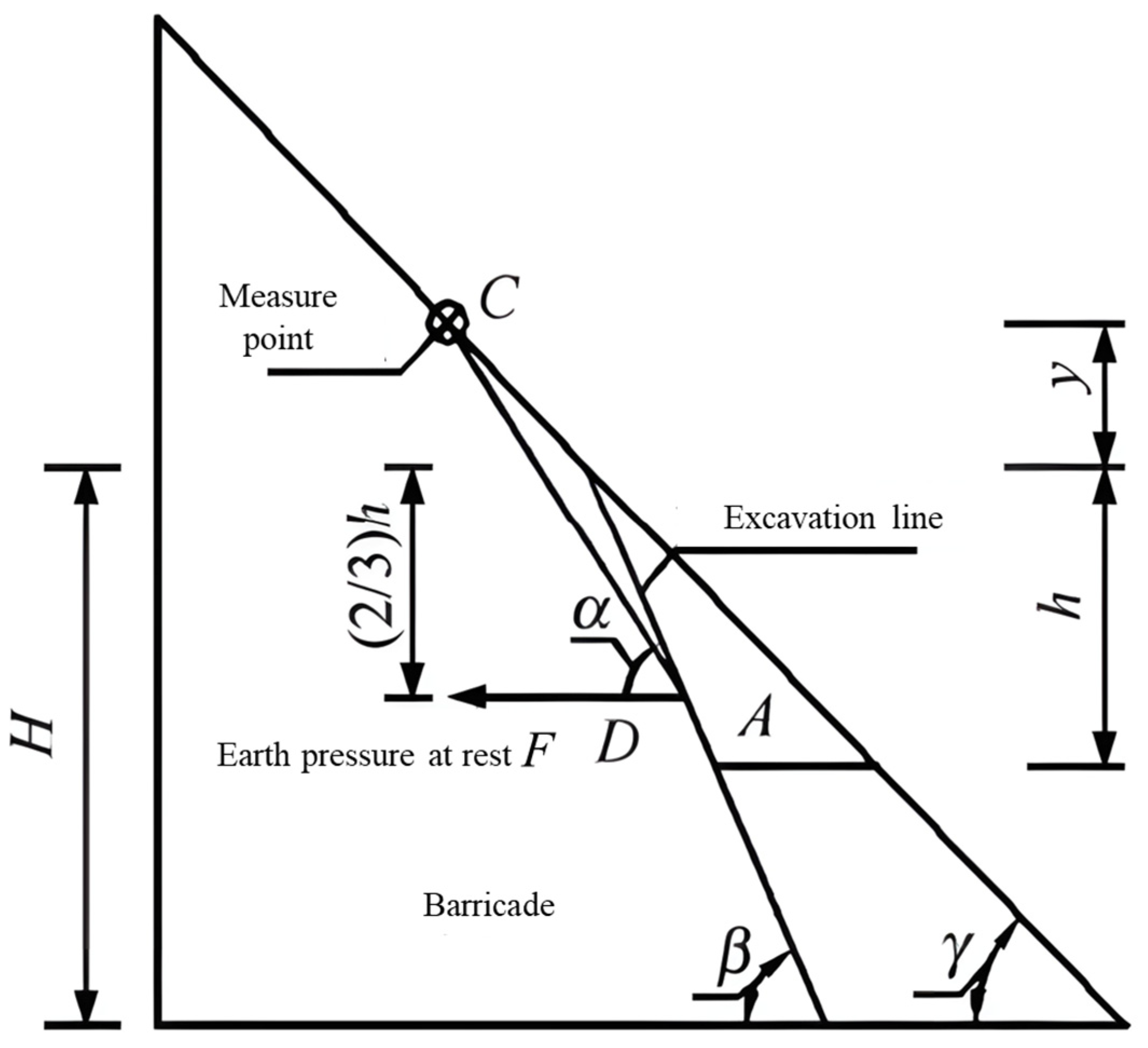
The rebound deformation at the point of action of F will cause the rebound deformation of the measuring point. To simplify the calculation, it is assumed that the rebound deformation decays as a negative power function with the distance between the measuring point and the point of action of the concentrated force F [16], as shown by CD in Figure 1, where is the distance between the measuring point and the point of action of the concentrated force F. Combining the constant term, the excavation component of the unloading rebound stroke under the simplified elastic theory can be obtained δK as
δ K = f 1 h 2 l f 2
(6) Construction of Regression Model
In summary, according to the deformation characteristics of the accumulation body and considering the influence of the initial measured values, the statistical regression model for the deformation of the accumulation body is obtained as
δ = a 0 + a 1 θ + a 2 ( 1 e a 3 θ ) + i = 1 5 e i P i + b 1 sin 2 π t 365 + b 2 cos 2 π t 365 + b 3 sin 4 π t 365 + b 4 cos 4 π t 365 + g 0.5 u 1 + f 1 h 2 l f 2
(7) Time-Series Analysis Optimization
Preprocess the data, including data cleaning to eliminate records with missing values, identifying and handling outliers, data transformation, and special processing of time-series data. Extract representative time series and deformation values of each measuring point in each direction for a certain period of time. Combined with the analysis of monitoring data, the deformation data without monitoring records during this period can be obtained by interpolation between the preceding and following time points.
To optimize the parameter identification process, the Levenberg–Marquardt algorithm combined with the general global optimization method is used for numerical regression calculation. Regularization technology is introduced into the algorithm to control the model complexity and prevent overfitting, thereby improving the efficiency and stability of parameter solution.

2.2. Numerical Analysis Method

The nonlinear finite element analysis method is used to calculate and analyze the deformation and stability of the accumulation body [18]. The material nonlinearity of rock and soil mass is simulated by a visco-elasto-plastic constitutive model satisfying the Mohr–Coulomb yield criterion.
(1) Elasto-Plastic Constitutive Model
According to classical elasto-plastic solid mechanics [19], the constitutive relationship of general materials can be written as
ε = D ep 1 σ
or
σ = D ep ε
where {σ} and {ε} are the stress and strain arrays of the material, respectively, and [Dep] is the elasto-plastic matrix.
The iterative formula of the finite element equilibrium equation is
K 0 δ 1 = F + R i = 1 K 0 Δ δ i = F e ve B T D ep i 1 δ i = δ i - 1 + Δ δ i i = 2 , 3 , 4 ε 1 ε 0
where {R} is the unbalanced force.
In elasto-plastic nonlinear analysis, it is necessary to solve nonlinear equations to obtain deformation, strain, stress, and other values under a certain load condition. Generally, the incremental method, the iterative method, and the mixed method, combining the above two methods, are used. For large-scale nonlinear problems, efficient solution methods such as the frontal method, sparse matrix method, and PCG method (preconditioned conjugate gradient method) must be appropriately adopted [19].
The condition for a material to enter the plastic state from the initial elastic state is the yield condition or yield criterion. Because the Mohr–Coulomb (M-C) criterion effectively captures the shear failure characteristics of rock–soil mixtures and its parameters (cohesion c and internal friction angle φ) can be reliably obtained through conventional laboratory tests, it is widely adopted in geotechnical engineering. Therefore, the Mohr–Coulomb yield criterion is used to simulate the nonlinearity of rock and soil mass:
J 2 cos θ σ sin θ σ 3 sin φ + 1 3 I 1 sin φ c cos φ = 0
where I1 is the first invariant of the stress tensor, J2 is the second invariant of the deviatoric stress tensor, and θσ is the Lode angle of stress; c and φ are the cohesion and internal friction angle, respectively.
(2) Rock–Soil Creep Model
Creep refers to the phenomenon that the force and deformation of a substance change slowly with time under constant external conditions. Creep characteristics are one of the important mechanical properties of rock and soil mass. Under long-term load, the stress–strain state and deformation failure law of rock and soil mass change with time, showing obvious time dependence. Conducting research on the creep characteristics of rock and soil mass is of great significance for explaining their time-dependent mechanical behavior. In recent years, China’s engineering construction scale has been expanding, geological conditions have become increasingly complex, and engineering failure cases have occurred frequently. Among these cases, the creep of rock and soil mass is often an important cause of large deformation and even unstable failure of underground engineering, foundations, slopes, etc. Therefore, the creep characteristics of rock and soil mass should be fully considered in engineering design and construction.
The influencing factors of rock and soil creep include stress level, water content, temperature, etc., among which the effect of force is the main one. In long-term research, scholars have proposed various mathematical and physical models to describe the stress–strain–time relationship of rock and soil mass [20], namely creep constitutive models. For example, the Maxwell model, the Kelvin model, the Burger model, and the Nishihara model [21]. These models describe the creep behavior of rock and soil mass from various angles, such as elasticity, plasticity, and viscosity, and can reflect the deformation characteristics of rock and soil mass in different creep stages and accurately predict the deformation development trend [22]. The creep behavior of rock and soil mass can be expressed using the following empirical mathematical model [20,21]:
ε c = Δ σ i = 1 N ϕ i σ 1 e r i t τ
where εc is the creep strain of rock and soil mass; ∅(σ) is the creep coefficient at σ stress level, ri is the convergence rate parameter, τ is the initial time of action, and (tτ) is the load holding time.

3. Analysis of Deformation Data of the Accumulation Body

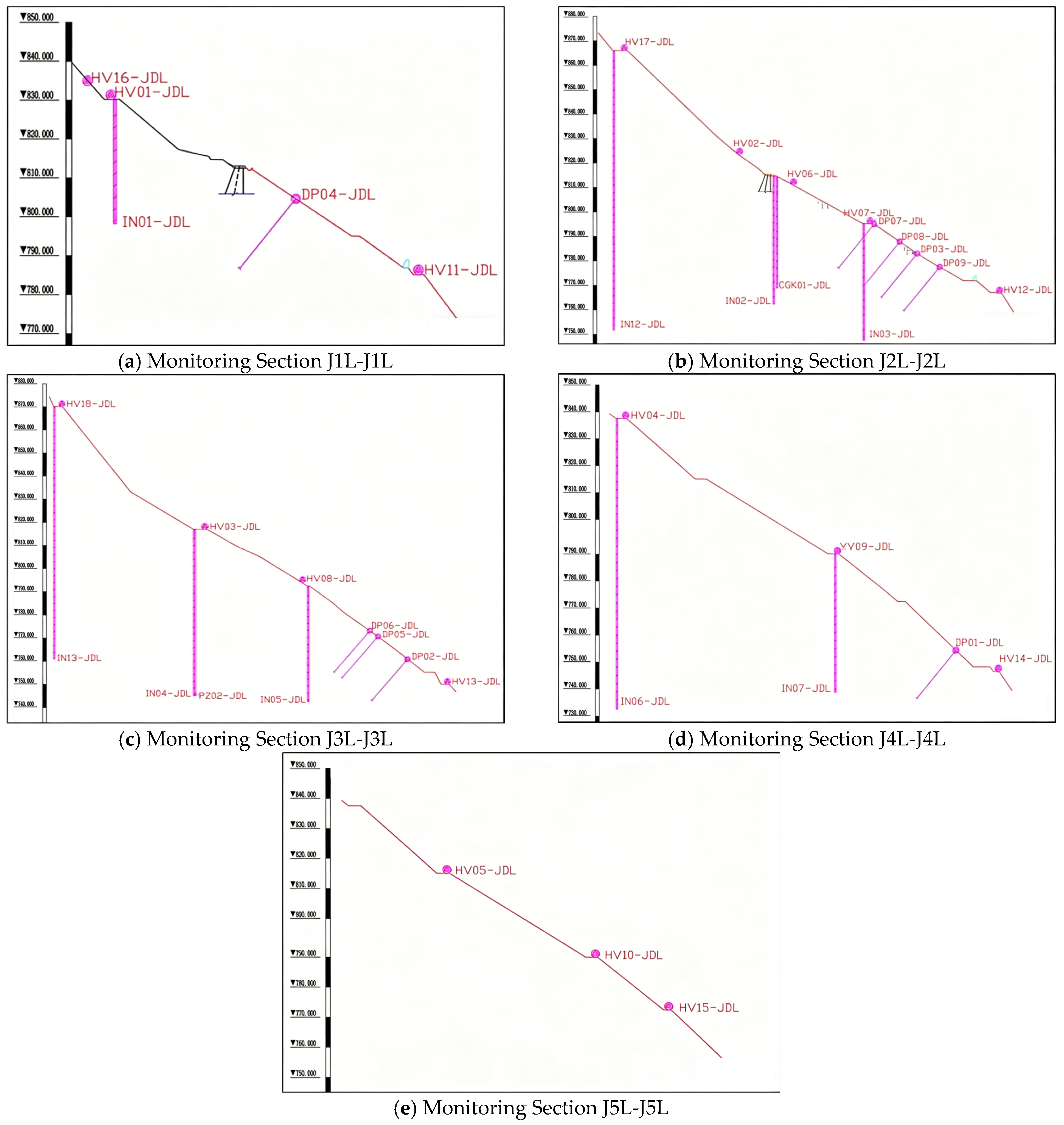
To provide a clear spatial context for the monitoring data, Figure 2 illustrates the layout of monitoring instruments across various zones of the accumulation body. The figure presents representative cross-sections (from J1L-J1L to J5L-J5L), explicitly detailing the specific locations, elevations, and relative spatial relationships of both the surface displacement monitoring points (HV series) and deep inclinometers (IN series). Clarifying this spatial distribution is crucial for understanding the subsequent analysis of deformation characteristics and the variations in dominant triggering factors at different elevations.

3.1. Evolution Law of Surface Deformation

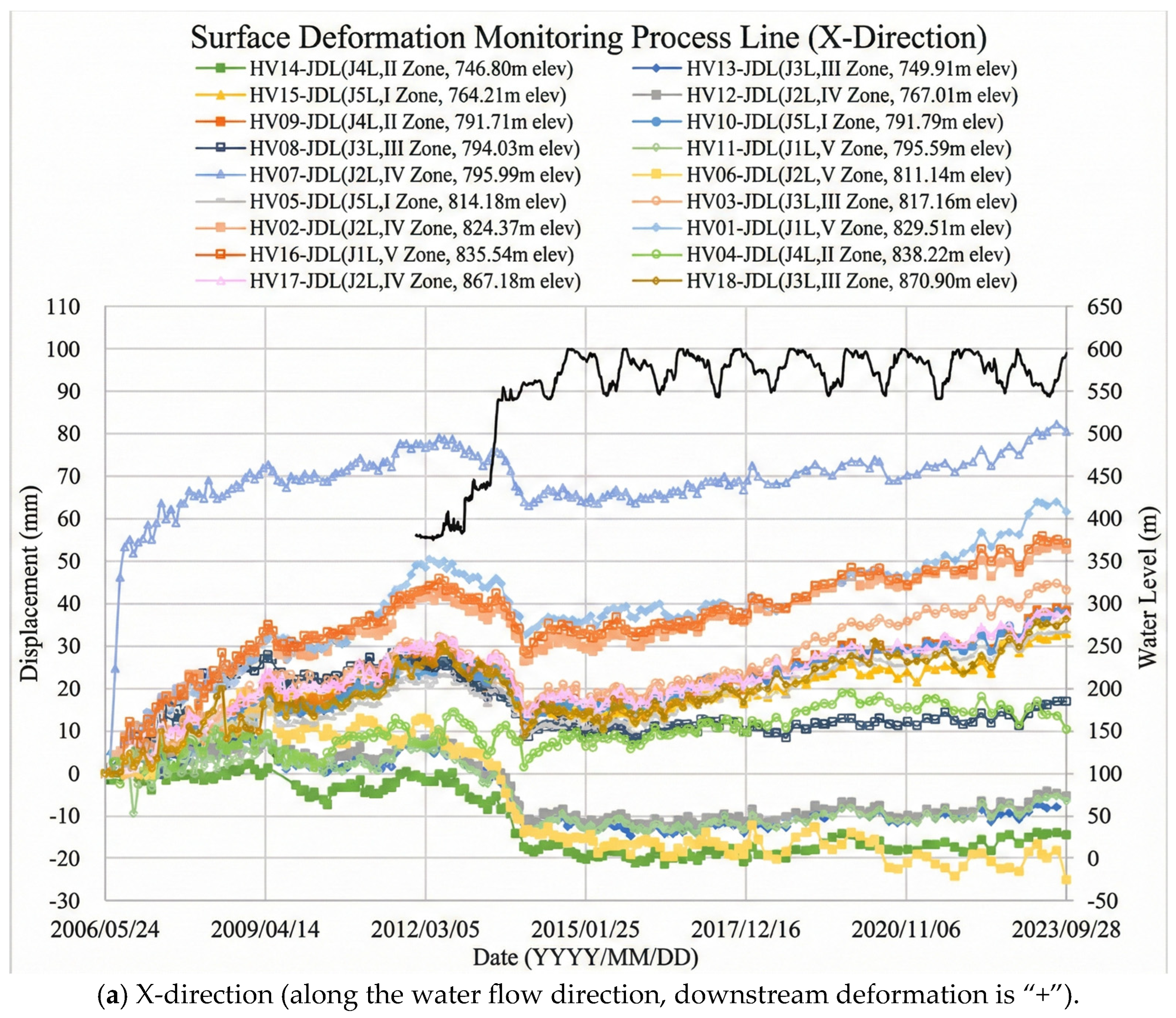
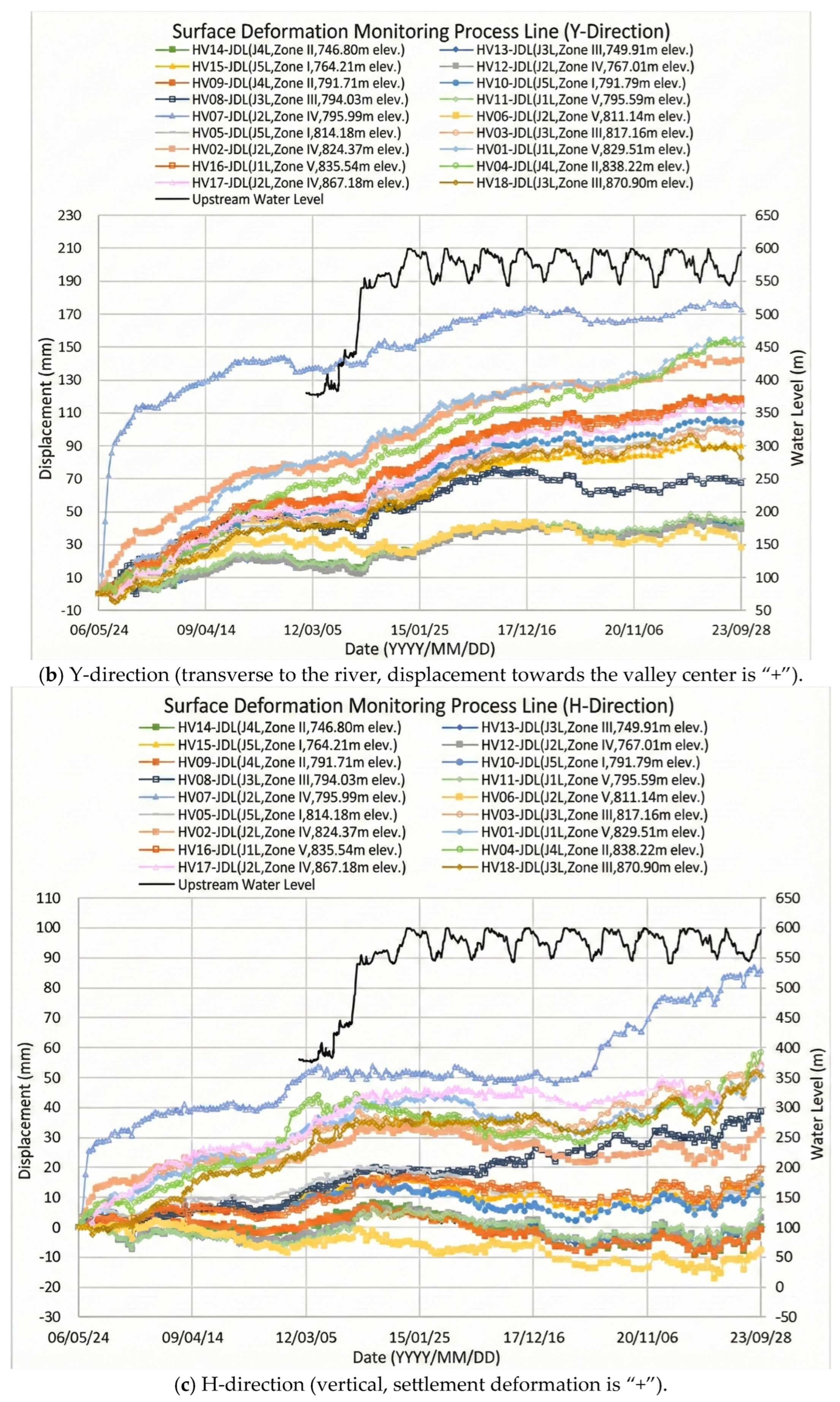
Figure 3 shows the monitoring process curves of the surface deformation measuring points of the accumulation body in various directions, where the X-direction is along the water flow direction, with deformation downstream denoted as “+”, the Y-direction is transverse to the river, with displacement towards the valley center denoted as “+”, and the H-direction is vertical, with settlement deformation denoted as “+”. It can be seen that before 2012 (construction period), the accumulation body deformed downstream in the X-direction (along the river), towards the valley center in the Y-direction (transverse to the river), and mainly underwent settlement deformation in the H-direction (vertical), with a few cases of uplift deformation; during the initial impoundment period from the end of 2012 to December 2013, the accumulation body rapidly deformed upstream in the X-direction (along the river), the deformation rate towards the valley center in the Y-direction (transverse to the river) increased, and it mainly underwent settlement deformation in the H-direction (vertical) with a few cases of uplift deformation, and the deformation rate was basically consistent with that during the hydropower station construction period; after December 2013 (impoundment operation period), before 2018, the accumulation body gradually deformed downstream in the X-direction (along the river), gradually towards the valley center in the Y-direction (transverse to the river), and slightly uplifted in the H-direction (vertical); during 2018–2019, the accumulation body deformed upstream in the X-direction (along the river), towards the bank slope in the Y-direction (transverse to the river), and significantly uplifted in the H-direction (vertical); after 2019, the downstream deformation of the accumulation body in the X-direction (along the river) increased, the deformation towards the valley center in the Y-direction (transverse to the river) gradually resumed, and the settlement deformation in the H-direction (vertical) increased.

3.2. Characteristics of Deep Deformation

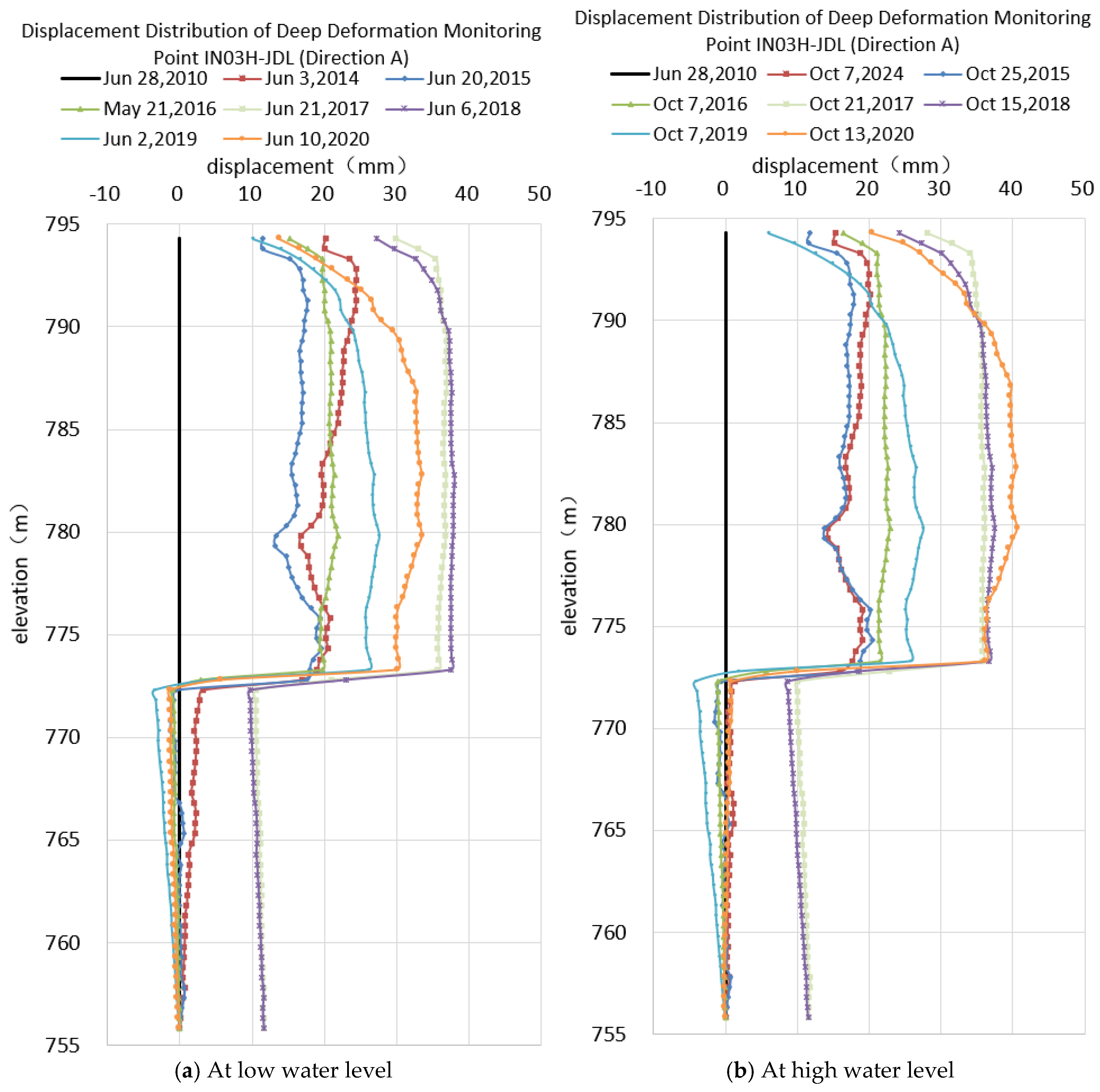
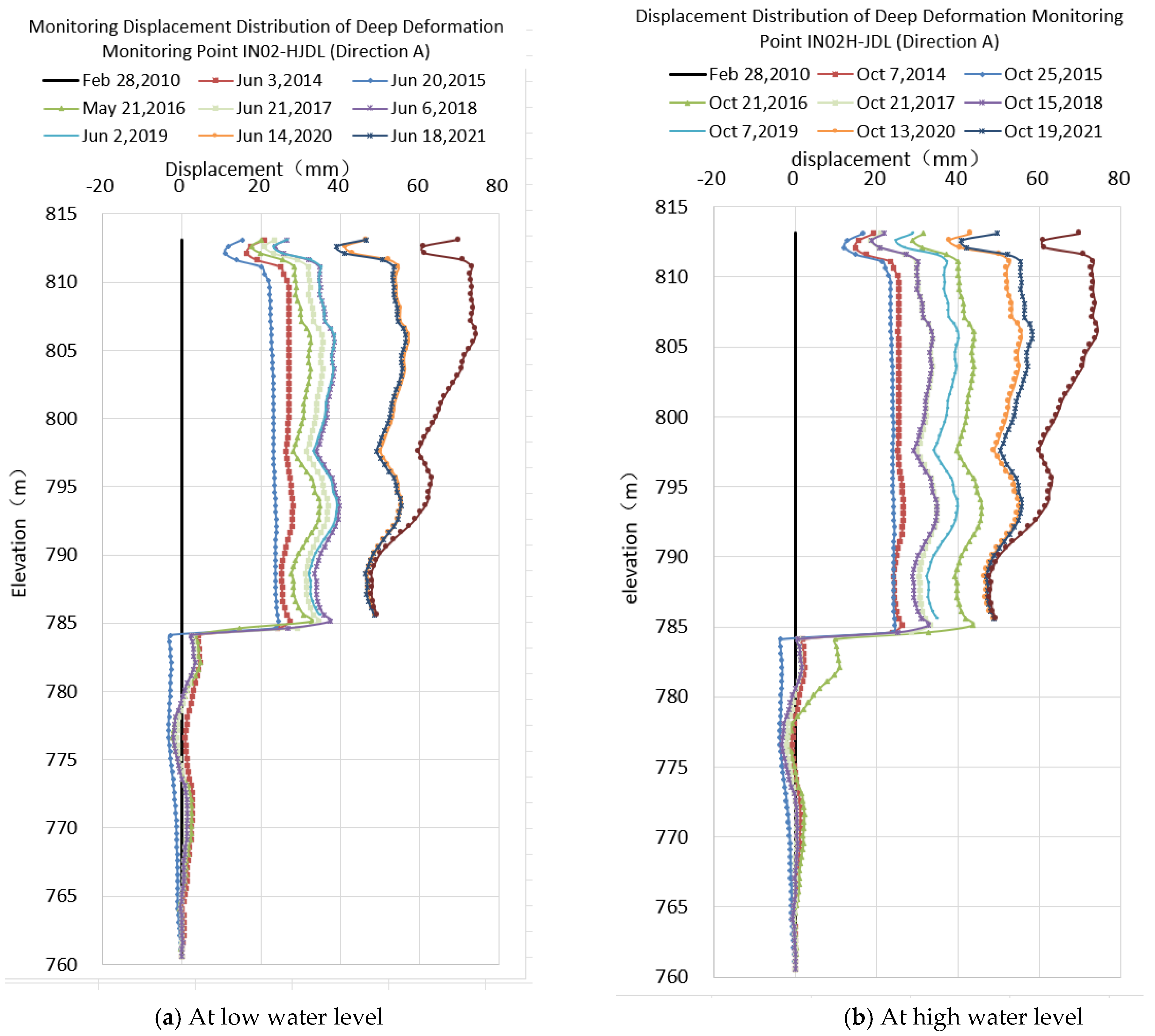
Figure 4 and Figure 5 show the transverse deformation distribution diagrams of typical inclinometer holes (IN02-JDL, IN03-JDL) under different water levels, with displacement towards the free face (valley) denoted as “+”. It can be seen that the distribution law of transverse deformation along the depth is basically consistent under different water levels, and water level changes have little effect on the deep transverse deformation of the accumulation body; obvious shear dislocation occurs near the interface between the overburden and the bedrock (ancient sliding zone), such as at the elevation of 784.1–784.6 m (hole depth of 29.0–29.5 m) of the IN02-JDL inclinometer hole and at the elevation of 772.3–773.3 m (hole depth of 21.5–22.5 m) of the IN03-JDL inclinometer hole, indicating a sliding mechanism controlled by the deep weak zone.

4. Analysis of Deformation Causes and Influence Weights of the Accumulation Body

4.1. Analysis of Deformation Triggers

Before analyzing the specific triggers, it is necessary to clarify the in situ environmental conditions. The studied project is located in a typical alpine gorge region in Southwest China, characterized by a complex geological environment and a subtropical monsoon climate. The area experiences distinct wet and dry seasons, with the annual rainfall primarily concentrated between May and October. These specific topographical and climatic conditions significantly influence the hydro-mechanical behavior of the accumulation body.
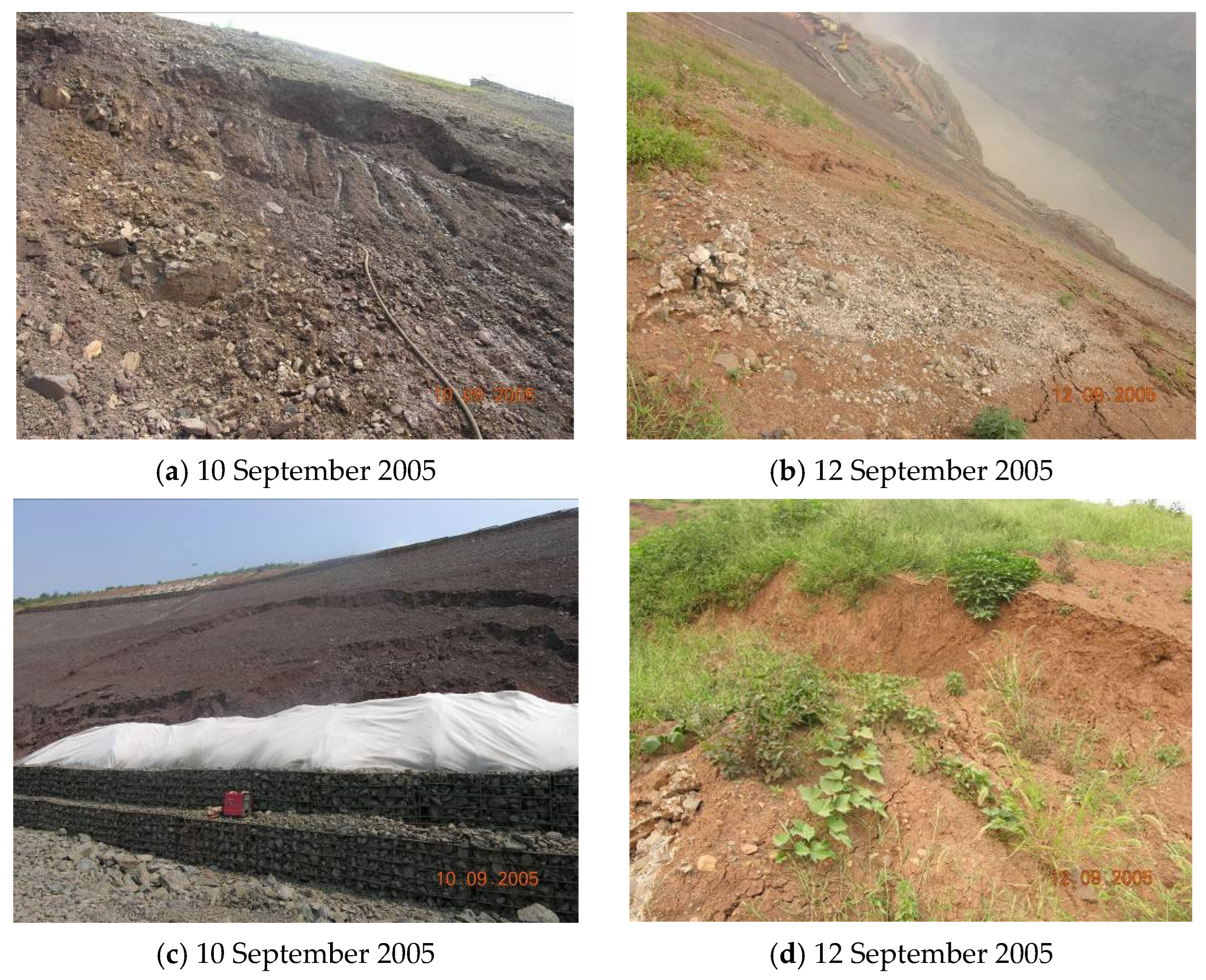
After tens of thousands of years of geological tectonic movement, it can be considered that the accumulation body (original terrain) before construction excavation was stable. However, due to severe unloading and tensile cracking of the rock mass at the front edge of the accumulation body, many dangerous rock masses are distributed on the slope surface, with signs of local soil sliding and traction deformation. The lower part is equipped with hub structures such as the dam, power station intake, and stilling basin. To ensure the safety of engineering construction and operation, systematic slope-retreat excavation was carried out on the middle and lower parts of the accumulation body slope, forming an excavated slope of the accumulation body with a width of about 530 m along the river and an excavation height of about 90 m. Due to the large amount of slope-cutting work and inconvenient construction access during the first slope-cutting excavation, the slope surface protection and support could not be carried out in a timely manner. At the same time, affected by rainfall, blasting vibration, and groundwater, creep-slip and tensile cracking deformation occurred locally in the slope-cutting part of the slope, which gradually developed into arc-shaped shallow surface sliding. As shown in Figure 6, arc-shaped through cracks appeared at the trailing edge of the slope, and shear-out deformation occurred at the leading edge, indicating that the stability of the surface proluvial deposits deteriorated rapidly.
After the first slope cutting, an arc-shaped shallow sliding appeared on the slope surface. To inhibit the development of deformation, engineering treatments were carried out on the deformation of the accumulation body, including the installation of steel pipe piles, concrete slope protection, soil anchors, frame beams, concrete retaining walls, and anchor cables, as well as systematic slope cutting. At the same time, drainage ditches and drainage tunnels were set up to reduce the impact of surface water and groundwater on the deformation of the accumulation body. After the completion of a series of treatment and reinforcement projects, inclinometer pipes were added to the accumulation body to monitor its deformation.
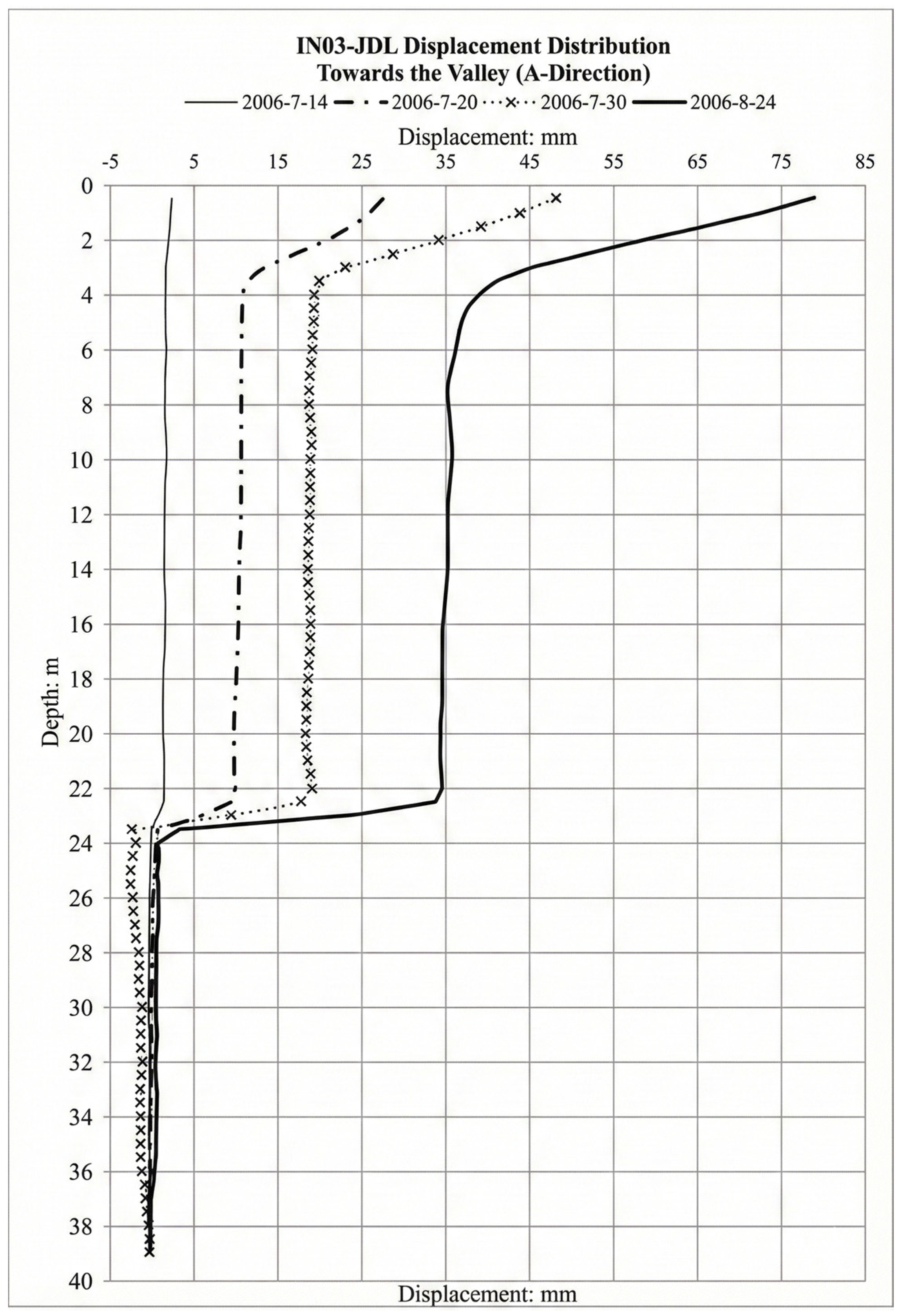
As shown in Figure 7, there are obvious deformation mutation points in the accumulation body. At a shallow depth of about 3.5 m, the deformation increases sharply from 5–35 mm in the lower part to 25–80 mm. At a depth of about 23.5–28.5 m, the deformation increases sharply from 1–3 mm in the lower bedrock to about 5–35 mm. This indicates that although the second slope cutting partially improved the surface stability, it further weakened the deep support, leading to the accumulation of dislocations in the deep sliding zone.
Subsequently, after a series of drainage and reinforcement engineering measures including slope top drainage and top fixing, slope surface frame beams, soil anchors, pre-stressed anchor cables, vegetation greening, drainage, slope toe facing reinforcement, protective retaining walls, drainage tunnels set in the bedrock, and systematic drainage holes in the tunnels, no further deformation signs were found on the surface of the accumulation body according to surface inspections. Currently, the monitoring results of surface deformation and deep deformation also indicate that the deformation tends to converge.
In summary, early construction excavation unloading is the fundamental cause of the deformation of the accumulation body. The material composition of the accumulation body is complex, consisting of proluvial deposits, glacial–fluvial deposits, ancient landslide bodies, ancient sliding zone soil, sandy shale, and basalt from top to bottom. The proluvial deposits have low strength. The two slope-cutting excavations significantly changed the slope morphology, leading to the exposure of soil that was originally underground, resulting in unloading, redistribution of the natural stress field, loosening of the soil structure, and intensified local voids. Excavation unloading caused shear stress concentration at the slope toe, inducing the surface proluvial deposits to slide along the glacial–fluvial deposit interface, while the deep bedrock–overburden interface (ancient sliding zone) produced shear deformation due to unloading relaxation. The support measures (anchors + drainage holes) adopted after the second slope cutting partially inhibited surface deformation but did not completely block the deep sliding trend, and the deformation showed a “stable creep” characteristic. It was not until the addition of anchor cable reinforcement measures that the deep deformation rate of the accumulation body was effectively inhibited, but the deformation of the accumulation body still did not converge.
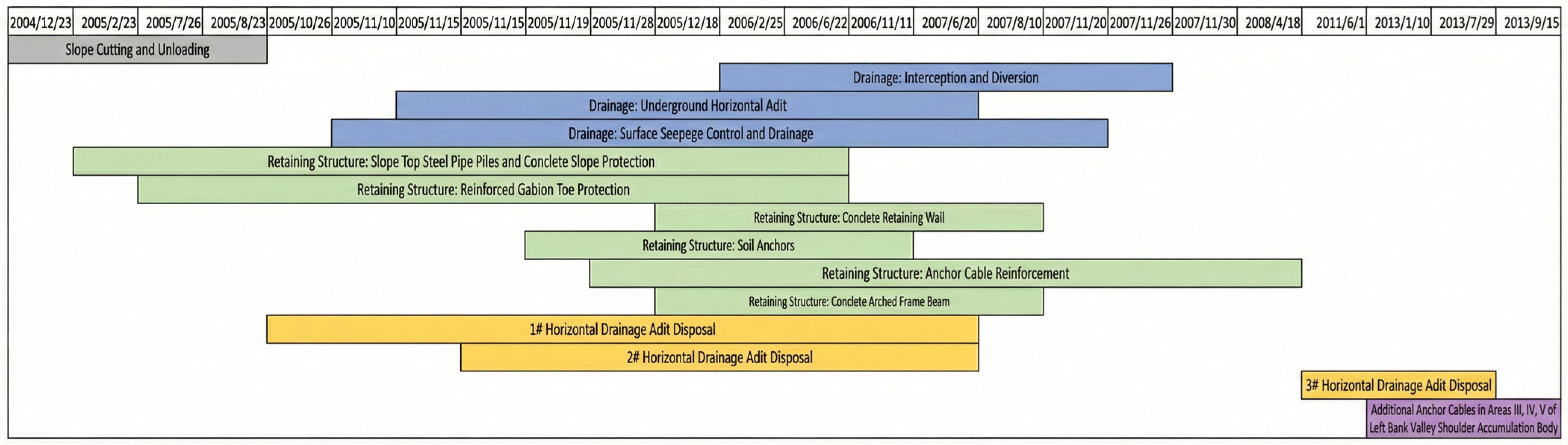
The detailed chronological sequence of the construction and reinforcement process is explicitly illustrated in the Gantt chart (Figure 12, detailed in Section 5.2). To ensure our analyses logically intersect with these engineering events, the subsequent multivariate statistical regression and deformation evaluations are strictly segmented based on these critical milestones, specifically dividing the data periods into pre-impoundment (dominated by the excavation and reinforcement stages) and post-impoundment (affected by water level fluctuations).

4.2. Weight Separation Based on Statistical Regression

Since the deformation of the accumulation body is affected by multiple factors such as excavation, rainfall, and temperature, statistical regression analysis of deformation was carried out to further clarify the dominant factors of the accumulation body deformation [15].
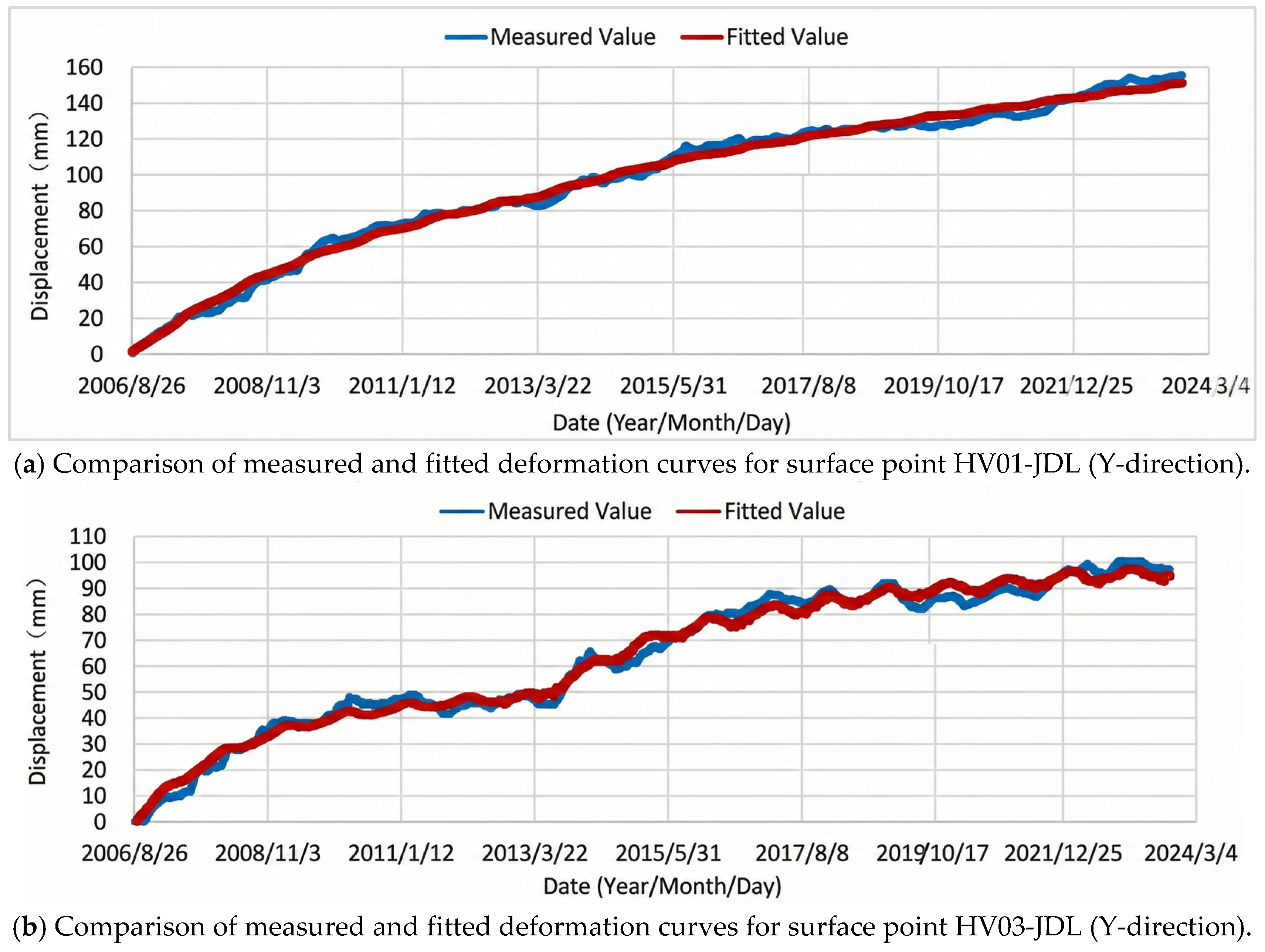
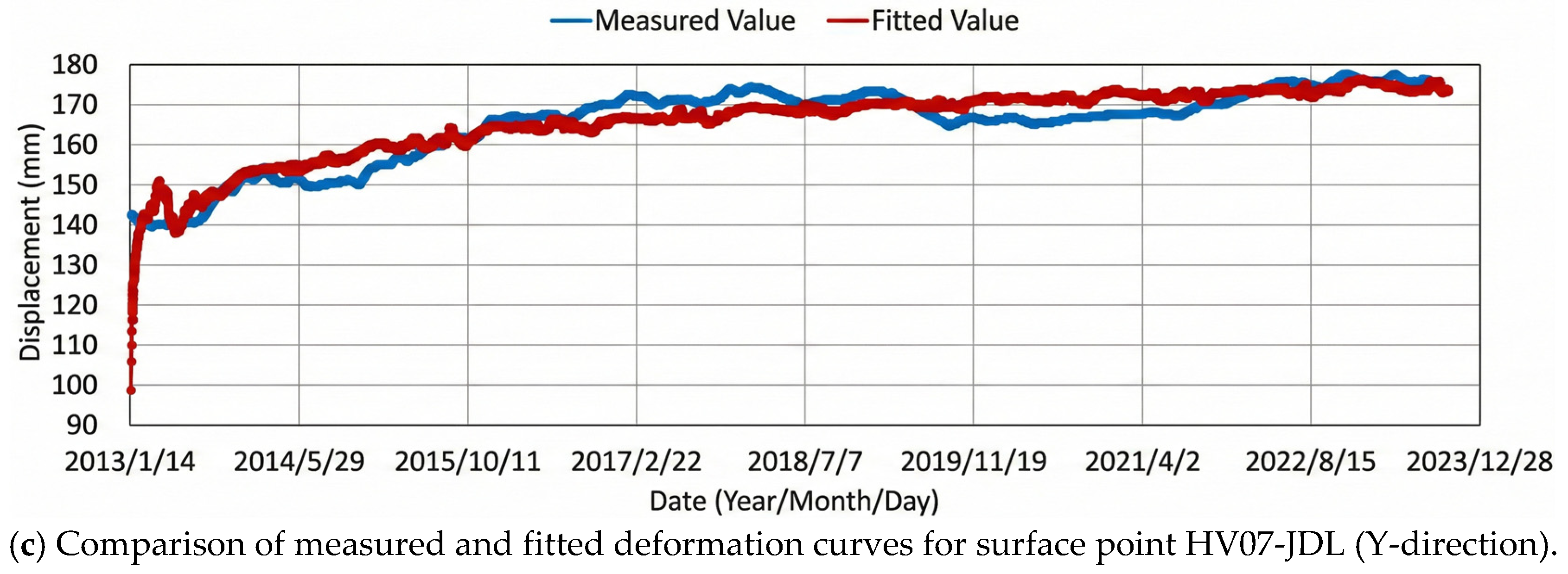
The regression model constructed in Section 2.1 was used to conduct regression analysis on the measured deformation data. The regression fitting curves are in good agreement with the measured values (Figure 8), indicating that the model has high goodness of fit and can be used for subsequent deformation component decomposition and weight analysis.
Statistical regression analysis shows that the influence degree of each factor on the deformation of the accumulation body varies among different measuring points. Through statistical analysis of the regression results of each typical measuring point (Table 1 and Table 2), it is found that before impoundment, the time-dependent component accounts for the largest proportion, exceeding 80%. After impoundment, all excavations of the accumulation body have been completed, and there are no new excavation activities, so the proportion of the excavation component is 0. After impoundment, the surface deformation of the accumulation body begins to be affected by valley width shrinkage. At low elevations, the valley width component accounts for the largest proportion, exceeding 60%, and the time-dependent component accounts for 13–39%. At high elevations, the time-dependent component accounts for the largest proportion, exceeding 74%, followed by the valley width component, accounting for 6–24%.
Comprehensive statistical regression analysis results show that the influence degree of each factor on the deformation of the accumulation body is as follows: before impoundment, time-dependent component > excavation component > rainfall component > temperature component. After impoundment, at low elevations: valley width component > time-dependent component > rainfall component > temperature component; at high elevations: time-dependent component > valley width component > rainfall component > temperature component. The time-dependent deformation component can be further divided into two parts: the creep component of rock and soil mass along the ancient sliding zone caused by excavation unloading, and the material weakening component of rock and soil mass. It is clear that throughout the whole process from construction to dam impoundment and operation, the time-dependent deformation component is the dominant factor in the deformation of the accumulation body, with an influence weight of more than 60%.

5. Analysis of the Deformation Nature of the Accumulation Body

5.1. Analysis of Groundwater Level Influence

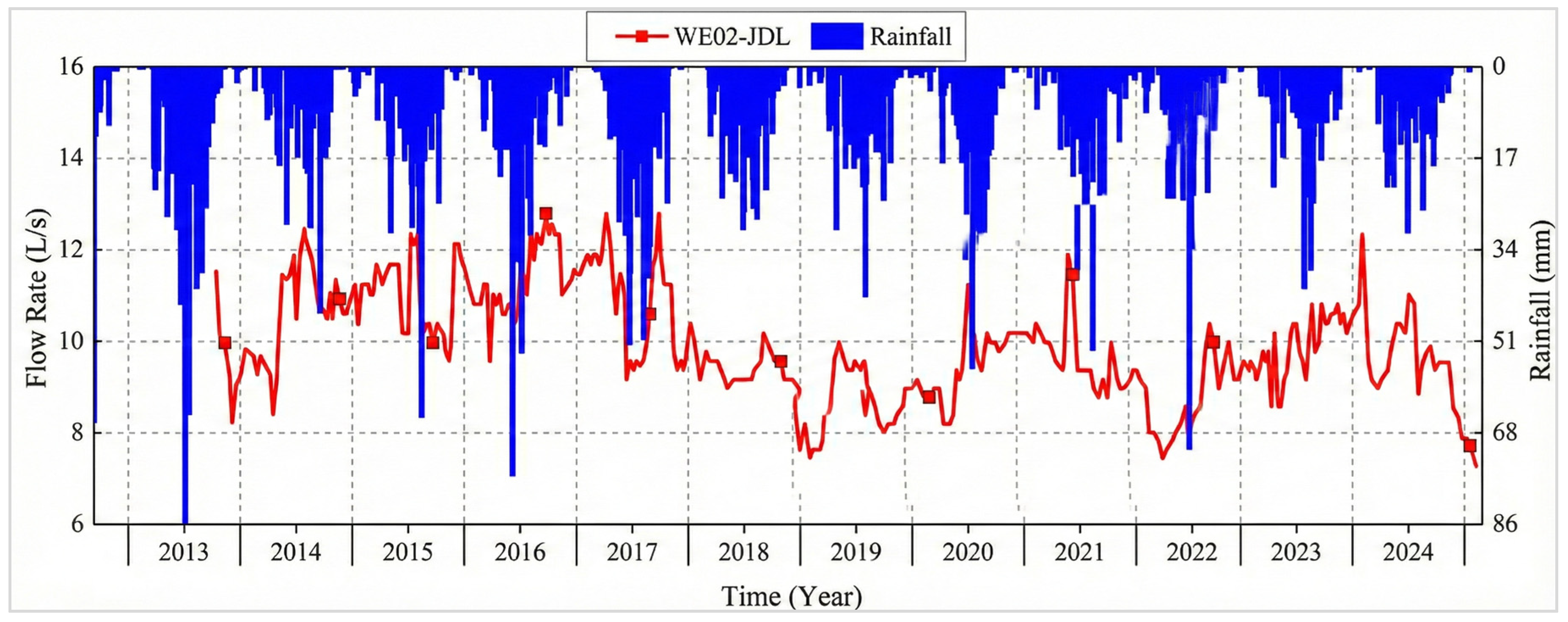
Up to now, the total seepage flow of the weir (WE02-JDL) in the drainage tunnel of the accumulation body is 7.28 L/s. Since 2013, the annual average seepage flow has been between 8.62 and 11.38 L/s, with an annual variation range of 1.42–4.46 L/s. The seepage flow is generally stable, the slope drainage is smooth, and rainfall has little effect on the seepage flow.
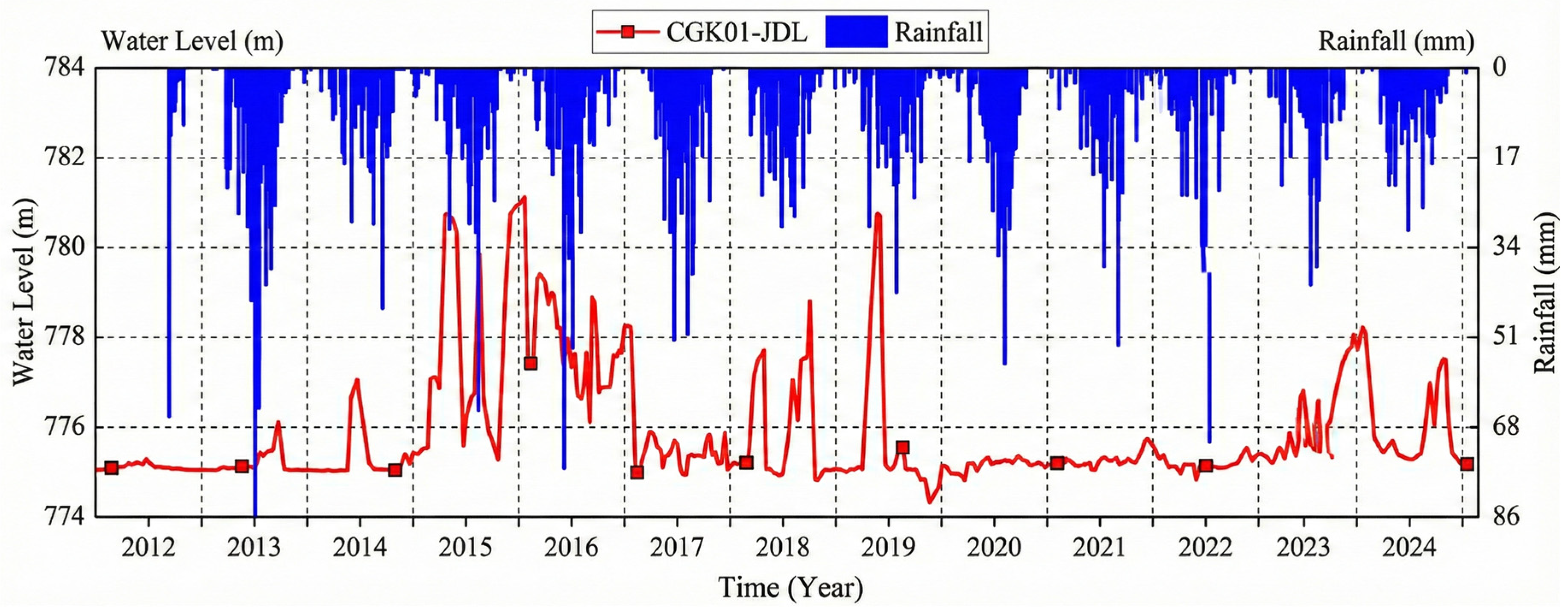
The monitoring results of the weir and long-term observation holes are shown in Figure 9 and Figure 10. The current water level of the long-term observation hole (CGK01-JDL) on the front slope of the accumulation body is 775.14 m. From 2008 to now, the annual average water level has been between 774.67 and 778.08 m, with an annual variation range of 0.53–6.35 m. The water level is generally stable, and the rainfall influence is not obvious. Moreover, as shown in Figure 3, the dislocation zone of the IN02-JDL inclinometer pipe near the long-term observation hole (CGK01-JDL) is mainly between 784.1 and 784.6 m, which is higher than the groundwater level. It can be judged that the time-dependent component is not mainly caused by the weakening of rock and soil mass due to rainfall infiltration, but by material creep caused by excavation unloading.

5.2. Simulation Model and Parameter Back-Analysis

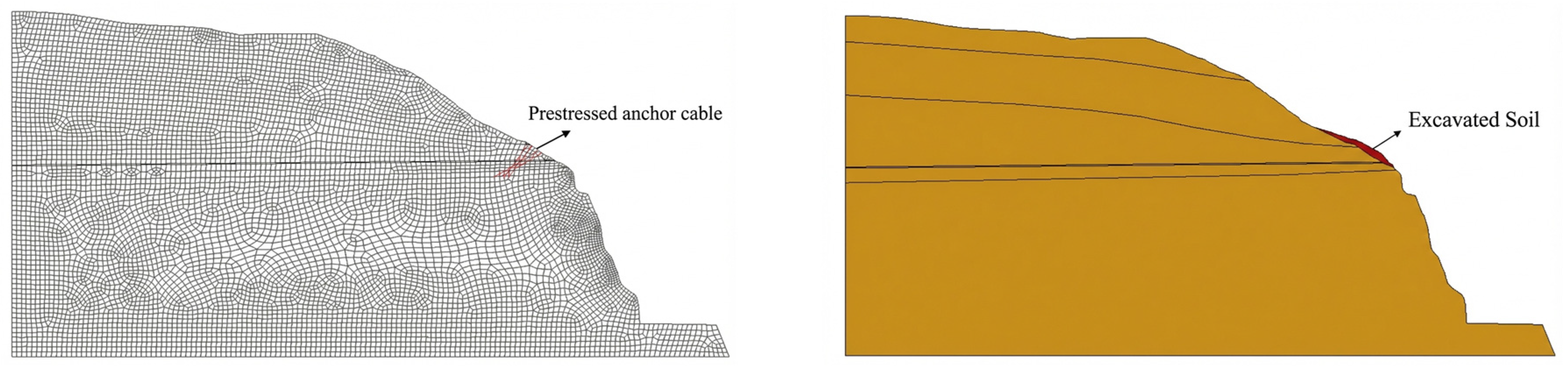
To further clarify the deformation nature of the accumulation body, a two-dimensional finite element model of the accumulation body was constructed. For the simulation calculation, the engineering treatment area of the accumulation body was selected, and two-dimensional finite element mesh models of typical sections in four zones were established. The accumulation body is divided from the surface to the interior into proluvial deposits, glacial–fluvial deposits, ancient landslide bodies, ancient sliding zone soil, sandy shale, and basalt. The model considers the excavation and slope-cutting process, as well as engineering treatment measures such as facing concrete, concrete retaining walls, anchors, and anchor cables, as shown in Figure 11.
To explicitly define the physical and geometric framework of the numerical model, the detailed geological information derived from the site investigation—including stratum codes, varying thicknesses, and lithological descriptions—is summarized in Table 3.
To accurately establish the numerical model of the left bank accumulation body, a rock–soil creep model was introduced to conduct back-analysis of the creep parameters of the left bank accumulation body. The rock–soil creep formula used in the calculation is as follows:
C t , τ = A 1 1 e k 1 t τ
where A 1   a n d   k 1 are creep parameters.
The creep parameters of each soil layer in each zone obtained by back-analysis are shown in Table 4.
The back-analysis strictly simulated the construction process and construction time, such as excavation, slope cutting, and reinforcement treatment of the accumulation body according to the construction stage (Figure 12). The back-analysis calculation conditions are as follows:
(1) Simulate the excavation and slope-cutting process of the accumulation body according to the construction period, and complete the slope cutting and load reduction on 23 August 2005;
(2) Simulate the slope reinforcement and support process, and complete the pouring of support structures such as concrete slope protection and concrete facing retaining walls in August 2007;
(3) Simulate the anchor cable reinforcement process, complete the first batch of anchor cable reinforcement on 18 April 2008, and complete the additional anchor cable reinforcement on 15 September 2013.
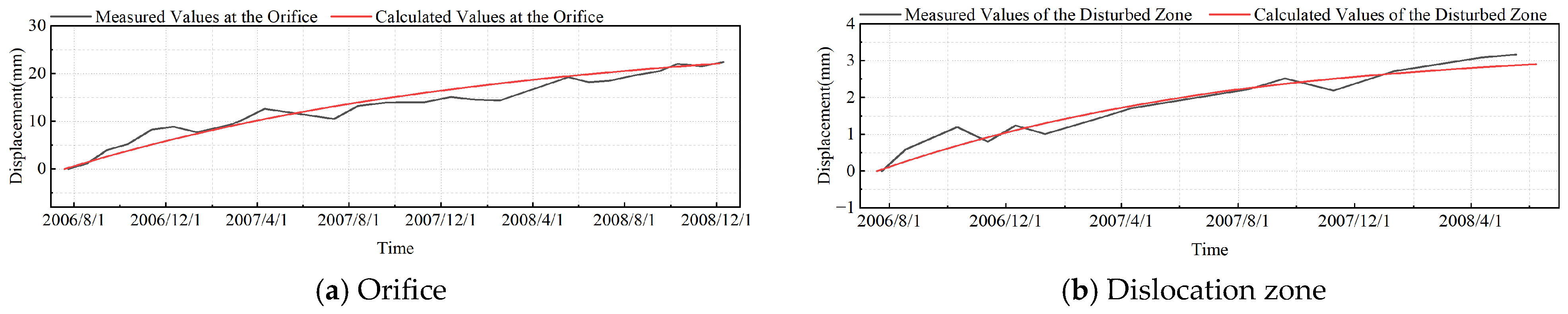
First, the back-analysis of creep deformation of the accumulation body in Zone II during the construction stage was carried out. The calculated values of typical surface points and typical points of the ancient sliding zone of the accumulation body numerical model corresponding to the IN07-JDL inclinometer pipe were compared with the measured data of the inclinometer pipe orifice (corresponding to the accumulation body surface) and the dislocation zone (corresponding to the accumulation body ancient sliding zone), as shown in Figure 13. It can be seen that both the numerical calculation results of surface deformation and the calculation results of the dislocation zone are in good agreement with the measured values, proving that the selected creep parameters are reasonable.
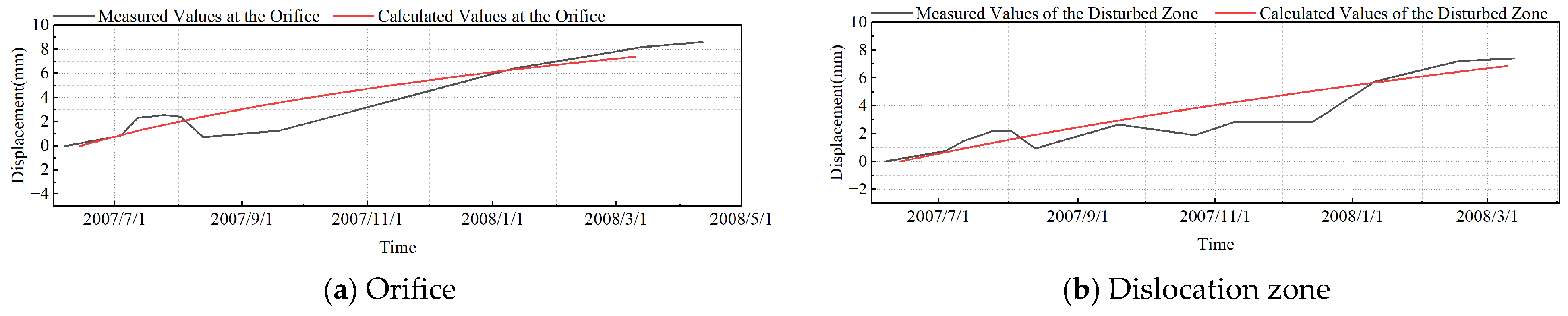
The back-analysis of creep deformation of the accumulation body in Zone III during the construction stage was carried out. The calculated values of typical surface points and typical points of the ancient sliding zone of the accumulation body numerical model corresponding to the IN05-JDL inclinometer pipe were compared with the measured data of the inclinometer pipe orifice (corresponding to the accumulation body surface) and the dislocation zone (corresponding to the accumulation body ancient sliding zone), as shown in Figure 14. It can be seen that both the numerical calculation results of surface deformation and the calculation results of the dislocation zone are in good agreement with the measured values, proving that the selected creep parameters are reasonable.
The back-analysis of the creep deformation of the left bank valley shoulder accumulation body in Zone IV during the construction stage was carried out. The calculated values of typical surface points and typical points of the ancient sliding zone of the accumulation body numerical model corresponding to the IN03-JDL inclinometer pipe were compared with the measured data of the inclinometer pipe orifice (corresponding to the accumulation body surface) and the dislocation zone (corresponding to the accumulation body ancient sliding zone), as shown in Figure 15. Both the numerical calculation results of surface deformation and the calculation results of the dislocation zone are in good agreement with the measured values, proving that the selected creep parameters are reasonable.
The back-analysis of the creep deformation of the left bank valley shoulder accumulation body in Zone V during the construction stage was carried out. The calculated values of typical surface points and typical points of the ancient sliding zone of the accumulation body numerical model corresponding to the IN01-JDL inclinometer pipe were compared with the measured data of the inclinometer pipe orifice (corresponding to the accumulation body surface) and the dislocation zone (corresponding to the accumulation body ancient sliding zone), as shown in Figure 16. It can be seen that both the numerical calculation results of surface deformation and the calculation results of the dislocation zone are in good agreement with the measured values, proving that the selected creep parameters are reasonable.

5.3. Determination of Deformation Nature

Based on the soil sampling test results, the recommended values of physical and mechanical parameters of rock and soil mass are given. Based on the numerical method and the characteristics of each stratum model construction, to better simulate the actual deformation of the accumulation body, the numerical analysis of the deformation mechanism and the back-analysis of creep parameters of the accumulation body in this chapter will be slightly adjusted on the basis of the recommended values according to the back-analysis results of deformation monitoring data. The physical and mechanical parameters of the rock and soil mass of the accumulation body are shown in Table 5.
The model adopts a phased simulation of construction excavation. The corresponding elements are removed at one time according to the excavation scope and excavation time in the actual project. During the excavation process, the initial stress of the corresponding area is released synchronously to simulate the unloading effect.
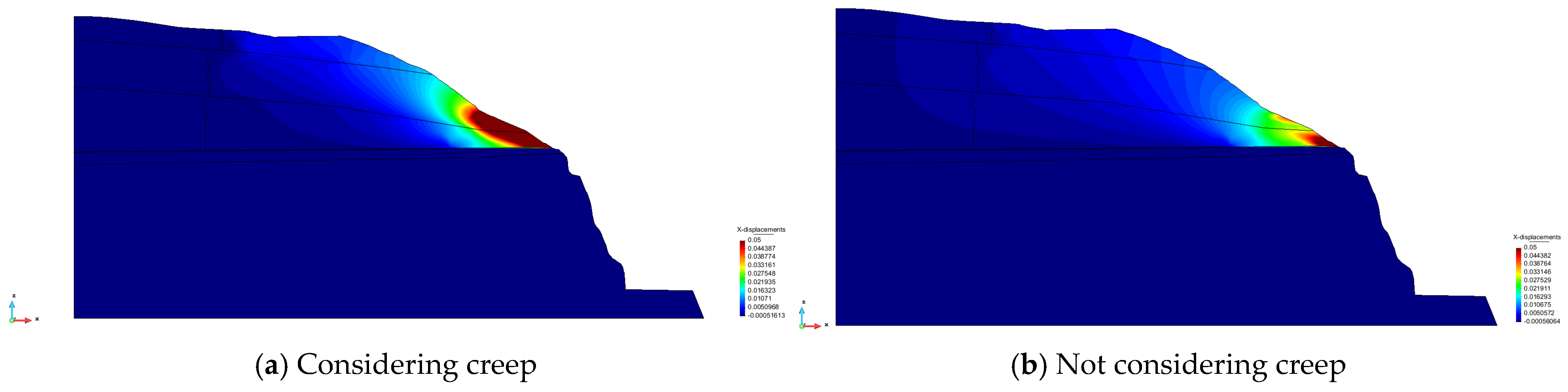
The deformation fields of the accumulation body 6 months after construction excavation were calculated under two working conditions: considering and not considering the soil creep effect. As show in Figure 17, the results show that when the creep effect is considered, the deformation amount and distribution range are more consistent with the measured situation.
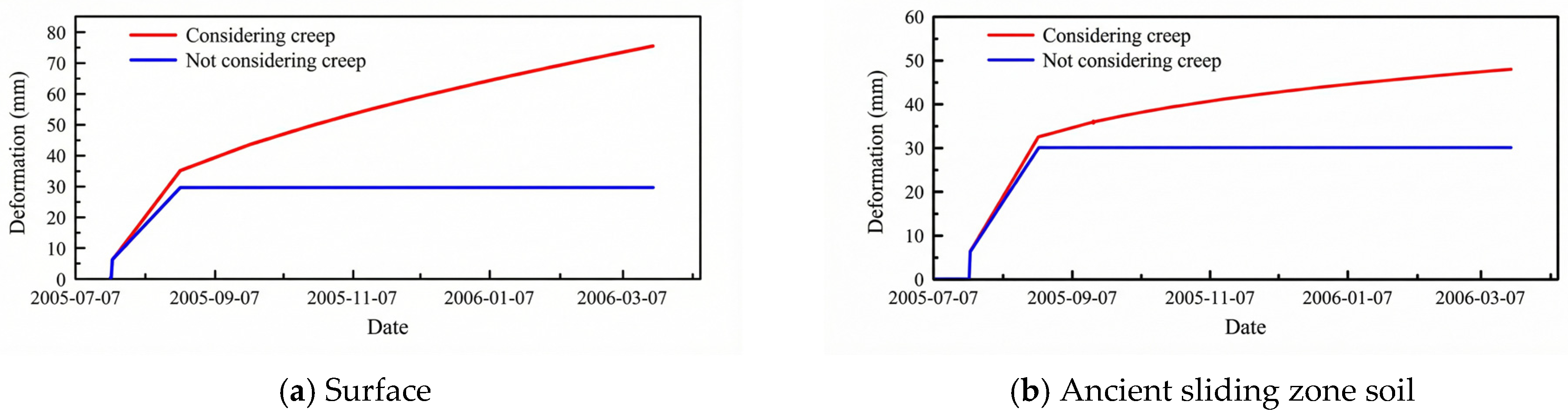
By comparing the transverse deformation process curves of typical points on the surface and ancient sliding zone of the accumulation body under the two working conditions, as shown in Figure 18, the deformation nature can be clearly revealed: when soil creep is considered, the deformation continues to develop after excavation, and the rate gradually slows down, which is consistent with the “stable creep” characteristic observed in actual monitoring; while when creep is not considered, the deformation only increases instantaneously in the early stage of excavation and then remains stable, failing to reflect the time-dependent deformation.
In summary, in the numerical simulation calculation, introducing the creep model and considering the soil material creep effect can more truly reflect the deformation of the accumulation body after excavation unloading. Combined with the above analysis, it can be judged that the deformation nature of the accumulation body is mainly the soil material creep deformation caused by early construction excavation unloading.

6. Conclusions

Combining monitoring data analysis, multivariate statistical regression, and numerical simulation, this study systematically investigates the deformation causes and mechanisms of the accumulation body. The main conclusions are as follows:
(1) Deformation triggering and evolution mechanism: The deformation of the accumulation body has obvious “excavation unloading” triggering characteristics. The two slope-cutting excavations broke the original slope balance, inducing shear dislocation of the deep ancient sliding zone (bedrock–overburden interface), and then causing traction sliding of the upper soil. Temporally, the deformation shows an evolution law of “instantaneous rebound–adjustment–stable creep.”
(2) Quantitative weights of influencing factors: The weights of various influencing factors were quantitatively identified based on the multivariate statistical regression model. The analysis shows that throughout the whole cycle from engineering construction to reservoir operation, the time-dependent deformation component is absolutely dominant (weight > 60%), and this component is mainly derived from creep deformation caused by excavation unloading. The importance of influencing factors changes dynamically with the engineering stage (before/after impoundment) and the elevation of measuring points. The back-analysis of rock and soil creep parameters shows that the back-analysis of rock and soil creep deformation in Zones II–V of the accumulation body during the construction stage shows that the calculated deformation values at the orifices and dislocation zones of each zone are in good agreement with the measured values, proving that the selected creep parameters of rock and soil mass in each zone are reasonable, providing a reliable parameter basis for subsequent anti-sliding stability.
(3) Determination of deformation nature: By comparing the numerical simulation results, the elasto-plastic model alone cannot explain the continuous deformation after excavation, while the calculation results after introducing the creep constitutive model are highly consistent with the measured “stable growth” curve. This confirms that the deformation nature of the accumulation body is “long-term creep of rock and soil mass induced by excavation unloading.”
The clear “excavation unloading–creep” dominant mechanism clarified in this study is of great significance for similar projects. Adopting timely and effective pre-reinforcement measures during the excavation stage is crucial for controlling the long-term deformation of the accumulation body.

Author Contributions

Methodology, W.B. and Y.Z.; Formal analysis, H.C.; Resources, D.T.; Writing—original draft, W.B.; Writing—review & editing, W.B., Y.Z. and H.C.; Supervision, D.T. and H.Z.; Project administration, C.H.; Funding acquisition, C.H. and H.Z. All authors have read and agreed to the published version of the manuscript.

Funding

This study was supported by the scientific research project of Three Gorges Jinsha River Chuanyun Hydropower Development Co., Ltd. Yongshan Xiluodu Power Plant No. 4123020004.

Institutional Review Board Statement

Not applicable.

Informed Consent Statement

Not applicable.

Data Availability Statement

The data presented in this study are available on request from the corresponding author. The data are not publicly available due to the confidentiality requirements of the hydropower project.

Conflicts of Interest

Authors Chunyao Hou, Dawen Tan, Hongyi Zhang were employed by the company Three Gorges Jinsha River Chuanyun Hydropower Development Co., Ltd. The remaining authors declare that the research was conducted in the absence of any commercial or financial relationships that could be construed as a potential conflict of interest. The authors declare that this study received funding from Three Gorges Jinsha River Chuanyun Hydropower Development Co., Ltd. The funder had the following involvement with the study: providing the in situ monitoring data and engineering background, but had no role in the study design, data analysis, interpretation of the results, writing of the manuscript, or the decision to publish the results.

References

  1. Yang, X. Analysis of Deformation Characteristics and Support Measures of Excavated Slopes in Accumulation Bodies. Master’s Thesis, Chengdu University of Technology, Chengdu, China, 2008. [Google Scholar]
  2. Cui, Y.; Wei, J.; Deng, J.; Zheng, H.; Wang, D.; Yao, L. Deformation Mechanism Analysis and Stability Evaluation of Left Bank Valley Shoulder Accumulation Body of Xiluodu Hydropower Station. Chin. J. Rock Mech. Eng. 2013, 32, 3821–3828. [Google Scholar]
  3. Xu, X.; Wang, J.; Huang, R. Study on Deformation and Failure Mechanism of Left Bank Dam Front Accumulation Body of Zipingpu Water Control Project. Chin. J. Rock Mech. Eng. 2008, 2642–2650. [Google Scholar]
  4. Fan, D. Deformation Mechanism Analysis of Excavated Slope of Left Bank Valley Shoulder Accumulation Body of Xiluodu Hydropower Station. Master’s Thesis, Chengdu University of Technology, Chengdu, China, 2008. [Google Scholar]
  5. Sun, X.; Li, X.; Zheng, B.; He, J.; Mao, T. Study on the progressive fracturing in soil and rock mixture under uniaxial compression conditions by CT scanning. Eng. Geol. 2020, 279, 105884. [Google Scholar] [CrossRef]
  6. Jiang, L.; Gao, S.; Yin, X.; Qin, H. Characteristics of excavation unloading deformation and reinforcement force estimation method considering stress compensation for differential weathering slopes in valley areas. Bull. Eng. Geol. Environ. 2026, 85, 288. [Google Scholar] [CrossRef]
  7. Ma, K.; Li, Y.; Liu, G.; He, G.; Sha, C.; Peng, Y. Stability analysis of Xiluodu Hydropower Station right bank slope based on discontinuous deformation analysis method. Eng. Comput. 2022, 39, 2869–2894. [Google Scholar] [CrossRef]
  8. Dai, W.; Dai, Y.; Xie, J.; Shen, S.; Shen, G.; Wang, Y. Enhancing Bayesian probabilistic back-analysis efficiency using multi-type surface and subsurface monitoring data: Case study of the Baihetan left bank slope. Comput. Geotech. 2025, 182, 107174. [Google Scholar] [CrossRef]
  9. Pan, M.; Jiang, S.H.; Liu, X.; Song, G.-Q.; Huang, J. Sequential probabilistic back analyses of spatially varying soil parameters and slope reliability prediction under rainfall. Eng. Geol. 2024, 328, 107372. [Google Scholar] [CrossRef]
  10. Zou, Z.; Luo, T.; Zhang, S.; Duan, H.; Li, S.; Wang, J.; Deng, Y.; Wang, J. A novel method to evaluate the time-dependent stability of reservoir landslides: Exemplified by Outang landslide in the Three Gorges Reservoir. Landslides 2023, 20, 1731–1746. [Google Scholar] [CrossRef]
  11. Jiang, S.; Gao, Y.; Wei, W.; Jiang, Q. Long-term deformation mechanism of reservoir bank slope using multi-objective inversion: A case study at Duonuo reservoir. Comput. Geotech. 2025, 186, 107423. [Google Scholar] [CrossRef]
  12. Liu, Y.; Zhuang, W.; Gao, C.; Wei, C.; Xue, L.; Yang, Q. Creep parameter inversion and long-term deformation prediction of a near-dam slope considering spatio-temporal deformation data during construction and impoundment period. Eng. Geol. 2025, 351, 108043. [Google Scholar] [CrossRef]
  13. Chang, H. Study on Stability Control Scheme of East Slope in the First Mining Area of Jungar Open-Pit Coal Mine. Master’s Thesis, Liaoning Technical University, Fuxin, China, 2024. [Google Scholar]
  14. Xin, C.; Zhao, Y. Analysis of Valley Width Deformation Impact on High Arch Dams Considering Unsaturated Seepage. J. Waterw. Harb. Eng. 2021, 36–45. [Google Scholar]
  15. Chen, X.; Zhang, Q.; Liu, D.; Hu, J.; Cai, D. Statistical Regression Analysis Model for Slope Deformation and Its Application. Chin. J. Rock Mech. Eng. 2008, 3673–3679. [Google Scholar]
  16. Li, Y.; Li, B.; Li, Y. Establishment of Prediction Model and Early Warning Classification in Slope Real-Time Monitoring System. Min. Res. Dev. 2014, 34, 68–72. [Google Scholar]
  17. Li, C.; Jiang, Q.; Zhou, C.; Qi, Z. Slope Stability Prediction Model Considering Deformation Mechanism. Rock Soil Mech. 2011, 32, 545–550. [Google Scholar]
  18. Zhang, G. SAPTIS: Development and Application of Structural Multi-Field Simulation and Nonlinear Analysis Software (Part One). Water Resour. Hydropower Technol. 2013, 44, 31–35+44. [Google Scholar]
  19. Pan, Y. Research on Finite Element Simulation Analysis Method for Complex Structure Arch Dams. Master’s Thesis, Wuhan University, Wuhan, China, 2004. [Google Scholar]
  20. Ai, Z.; Bian, Q.; Zhao, K. Introduction to Rock and Soil Creep Tests and Their Applications. J. China Three Gorges Univ. (Nat. Sci. Ed.) 2006, 518–521. [Google Scholar]
  21. He, Y. Study on Creep Mechanism and Instability Prediction of Slopes. Master’s Thesis, Chongqing University, Chengdu, China, 2005. [Google Scholar]
  22. Cheng, L.; Liu, Y.; Yang, Q.; Pan, Y.W.; Lv, Z. Mechanism and numerical simulation of reservoir slope deformation during impounding of high arch dams based on nonlinear FEM. Comput. Geotech. 2017, 81, 143–154. [Google Scholar] [CrossRef]
Figure 1. Schematic diagram for the calculation of the excavation component induced by unloading rebound.
Applsci 16 04129 g001
Figure 2. Layout plan of monitoring instruments in various zones of the accumulation body.
Applsci 16 04129 g002
Figure 3. Monitoring process curves of surface deformation measuring points.
Applsci 16 04129 g003aApplsci 16 04129 g003b
Figure 4. Deformation distribution map of IN02-JDL in direction A (transverse to the river) at high and low water levels (displacement towards the free face (valley) is denoted as “+”).
Applsci 16 04129 g004
Figure 5. Deformation distribution map of IN03-JDL in direction A (transverse to the river) at high and low water levels (displacement towards the free face (valley) is denoted as “+”).
Applsci 16 04129 g005
Figure 6. On-site images of deformation signs on the accumulation body induced by the first slope-cutting excavation. The specific timestamps (e.g., 10 September 2005) indicate the rapid progression of trailing-edge tension cracks and leading-edge superficial slippage.
Applsci 16 04129 g006
Figure 7. Displacement distribution map of inclined tube along the valley direction.
Applsci 16 04129 g007
Figure 8. Comparison between measured values and regression fitting values.
Applsci 16 04129 g008aApplsci 16 04129 g008b
Figure 9. Process curves of weir seepage flow and rainfall of the accumulation body.
Applsci 16 04129 g009
Figure 10. Process curves of the water level of the long-term observation hole and rainfall in the accumulation body.
Applsci 16 04129 g010
Figure 11. 2D numerical model of the accumulation body.
Applsci 16 04129 g011
Figure 12. Gantt chart of the construction process for the accumulation body.
Applsci 16 04129 g012
Figure 13. Comparison between measured values and calculated values of IN07-JDL in Zone II.
Applsci 16 04129 g013
Figure 14. Comparison between measured values and calculated values of IN05-JDL in Zone III.
Applsci 16 04129 g014
Figure 15. Comparison between measured values and calculated values of IN03-JDL in Zone IV.
Applsci 16 04129 g015
Figure 16. Comparison between measured values and calculated values of IN01-JDL in Zone V.
Applsci 16 04129 g016
Figure 17. Transverse deformation contour map of the accumulation body section 6 months after construction excavation.
Applsci 16 04129 g017
Figure 18. Transverse deformation process curves of typical points in section 6 months after construction excavation.
Applsci 16 04129 g018
Table 1. Proportion of each component in the multivariate statistical regression of surface deformation in transverse to the river (Y-direction) (before impoundment).
Measuring PointProportion of Time-Dependent Component (%)Proportion of Temperature Component (%)Proportion of Rainfall Component (%)Proportion of Valley Width Component (%)Proportion of Excavation Component (%)
HV01-JDL88.54–91.630.71–1.210.22–1.0709.92–11.35
HV03-JDL84.40–89.100.91–2.170.50–1.61012.54–13.46
HV04-JDL81.93–86.160.81–1.310.30–1.16014.54–16.98
HV07-JDL81.17–82.560.63–1.130.35–1.13017.85–18.56
HV09-JDL90.78–94.040.83–1.120.78–1.7307.22–9.27
HV11-JDL83.54–88.390.54–1.140.23–1.56014.64–16.58
HV13-JDL79.59–83.480.49–1.610.51–1.71017.93–18.97
HV15-JDL85.23–88.201.11–1.390.72–2.25013.62–14.37
Table 2. Proportion of each component in the multivariate statistical regression of surface deformation in transverse to the river (Y-direction) (after impoundment).
Measuring PointProportion of Time-Dependent Component (%)Proportion of Temperature Component (%)Proportion of Rainfall Component (%)Proportion of Valley Width Component (%)Proportion of Excavation Component (%)
HV01-JDL74.57–78.170.42–1.530.12–0.7820.11–24.350
HV03-JDL13.12–15.580.47–1.510.21–1.3185.86–88.640
HV04-JDL92.81–96.100.11–1.820.10–0.746.33–9.740
HV07-JDL23.64–28.280.23–1.710.51–1.4972.79–78.010
HV09-JDL30.28–39.970.37–1.430.27–1.3160.28–69.240
HV11-JDL20.28–22.330.18–1.160.32–1.5877.82–82.450
HV13-JDL14.74–16.770.15–1.750.19–1.3783.26–85.150
HV15-JDL19.91–21.860.92–1.440.37–1.5179.18–81.370
Table 3. Detailed geological profile and thickness of the accumulation body strata.
StratumThickness (m)Geological Description
Proluvial deposits45.00–78.06Old glacial boulder and crushed rock soil composed of T1j marl, etc. High mud content with a dense structure.
Glacial–fluvial deposits15.00–81.57Similar composition to the above, but with a higher content of block stones, poor sorting, and a relatively dense structure.
Ancient landslide body82.00–87.21Basalt containing a boulder-crushed rock layer and a breccia sand layer. Calcareous contact cementation, relatively dense, locally loose with voids, showing stratification.
Ancient sliding zone soil6.00–59.29Severely disintegrated fragments of T1t, T1f, and P2x sandy shale and limestone. (Note: The ancient sliding zone is located at the base of this layer).
Xuanwei Formation (Sandy shale)9.46–19.68Light gray silty fine sandstone and bauxite; intact rock mass.
Emeishan Basalt>10.00Basalt; intact rock mass.
Table 4. Inverted parameter values.
StratumZone IIZone IIIZone IVZone V
k1A1k1A1k1A1k1A1
Proluvial deposits0.0015 5   × 1050.0015 5   × 1050.002 1   × 1050.0025 2   × 105
Glacial–fluvial deposits0.0015 1   × 1020.0035 8   × 1040.01 1.2   × 1060.0025 4   × 104
Ancient landslide body0.0015 1.5   × 1040.0015 1.5   × 1040.005 1   × 1050.0030 6   × 105
Ancient sliding zone soil0.0015 2.5   × 1060.0013 2.8   × 1060.006 1   × 1050.0005 6   × 106
Table 5. Physical and mechanical parameters of rock and soil mass used in numerical simulation.
StratumNatural Unit WeightShear Strength IndexElastic Modulus
Natural StateSaturated State
kN/m3c/(kPa)φ/(°)c/(kPa)φ/(°)MPa
Proluvial deposits19.03319 70
Glacial–fluvial deposits20.53028 100
Ancient landslide body20.03527 90
Ancient sliding zone soil18.5 201910
Proluvial deposits25.030031 1000
Glacial–fluvial deposits28.0100045 15,000
Disclaimer/Publisher’s Note: The statements, opinions and data contained in all publications are solely those of the individual author(s) and contributor(s) and not of MDPI and/or the editor(s). MDPI and/or the editor(s) disclaim responsibility for any injury to people or property resulting from any ideas, methods, instructions or products referred to in the content.