1. Introduction
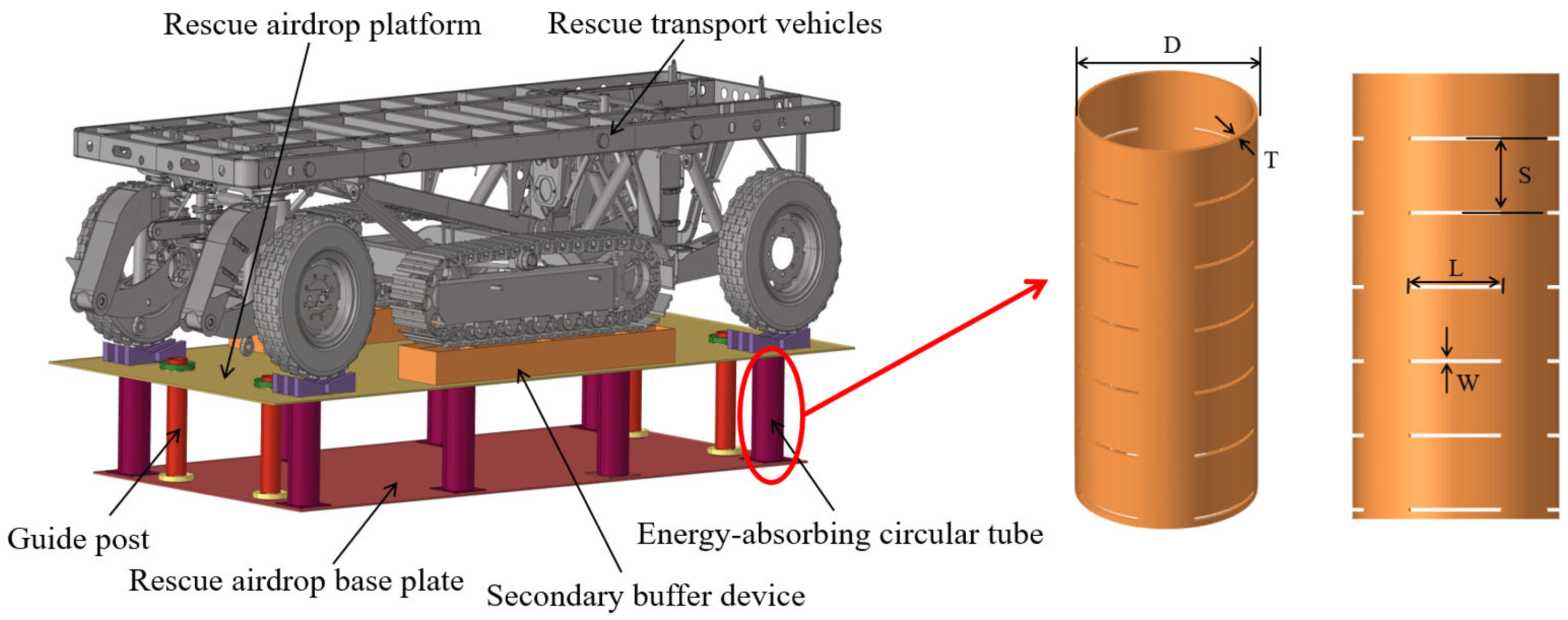
In recent years, with the increase in extreme weather events and frequent natural disasters, airdrop rescue vehicles have effectively overcome the limitations of ground-based rescue when disasters disrupt ground transportation, providing critical support for emergency rescue efforts in disaster-stricken areas. To prevent damage to internal equipment caused by the sudden impact and overload during direct landing, airdrop landing cushioning and energy absorption devices are required.
Common airborne absorbing landing cushioning devices include retro-rockets [
1,
2], inflatable airbags [
3,
4,
5,
6], and thin-walled structural cushioning devices [
7,
8,
9,
10]. To meet the application requirements in terms of stable energy absorption and ease of assembly/disassembly, thin-walled metal structures emerge as an excellent choice. Among these, thin-walled circular tubes are widely adopted as energy-absorbing buffers in rail vehicles, automobiles, and aerospace applications due to their simplicity, high strength, high stiffness, light weight, low cost, ease of fabrication, and stable, reliable energy absorption characteristics. This study employs such a thin-walled tube as the energy-absorbing device.
To control the axial crushing of thin-walled circular tubes, researchers have introduced initial defects including corrugations [
11,
12,
13,
14], grooves [
15,
16], stiffeners [
17], and guide holes [
18,
19]. Daneshi et al. found that slotting reduces the buckling force non-uniformity and improves deformation control [
20,
21,
22]. Natarajan et al. [
23] studied groove depth effects on impact resistance. Wang et al. [
24] proposed an enhanced machine learning method for geometric analysis. Montazeri et al. [
25] simulated slotted tubes and validated them experimentally. Feli et al. [
26] showed that increasing the notch width reduces the peak force and specific energy absorption. Overall, existing studies have systematically investigated the energy absorption characteristics of slotted circular tubes from multiple perspectives, including structural design, numerical simulation, and optimization methods, providing important guidance for optimizing the notch shape and parameters of thin-walled circular tubes in this study.
Based on the above research, researchers have further conducted systematic investigations into theoretical formulations. Alexander et al. [
27] established an energy absorption theory for circular tubes, derived an MCF expression, and proposed the static plastic hinge concept, laying the theoretical foundation for thin-walled tube crashworthiness. Abramowicz and Wierzbicki [
28,
29,
30] proposed the “superfolded element” theory for square tubes under axial loading. Xie et al. used multivariate nonlinear regression and backpropagation neural networks to predict energy absorption patterns. Giannopoulos et al. [
31] considered alternative energy absorption schemes inspired by microstructural design, which offer new insights into energy absorption mechanisms. Yao et al. [
32] employed dimensional analysis to relate the deformation displacement, energy absorption, and MCF to the impact mass and velocity. Duan et al. [
33] developed a theoretical model for curved collapse, derived a bending deformation and energy absorption formula, and validated it experimentally. Xiang et al. [
34] proposed a variable-thickness cylindrical tube, derived an MCF formula via analytical modeling, and validated it experimentally. Zhang et al. derived a crushing load prediction formula based on simplified folded-plate theory and validated it numerically. Overall, the existing studies have established various theoretical prediction formulas based on the MCF, which have been validated through experimental and numerical methods. However, these studies are primarily focused on plain circular tubes, and their applicability to slotted thin-walled tubes still requires further investigation.
In recent years, dimensional analysis or machine learning methods have offered new approaches to predicting the energy absorption characteristics of slotted tubes. Dimensional analysis can transform multivariate problems into relationships involving a few dimensionless numbers via the Buckingham π theorem, exponentially reducing the number of experimental runs and computational complexity [
35,
36,
37], and it is widely applied in engineering [
38,
39,
40,
41]. However, dimensional analysis has limitations, such as ambiguous functional forms, empirical variable selection, and difficulties in modeling nonlinear systems, requiring parameter calibration. Data-driven approaches overcome these limitations by learning complex mappings, identifying key variables, and addressing high-dimensional coupling effects. Wu et al. [
42] developed an LSTM-based model for mean crushing force prediction with errors below 5%. Kuleyin et al. [
43] employed data-driven models to predict the mechanical behavior of thin-walled tubes under impact loading, and Wu et al. [
44] applied machine learning to predict deformation modes during quasi-static compression. Together, these studies show that data-driven methods can effectively complement traditional analytical and numerical approaches. They can also incorporate dimensional constraints to ensure physical plausibility, offering advantages in resolving calibration challenges [
45].
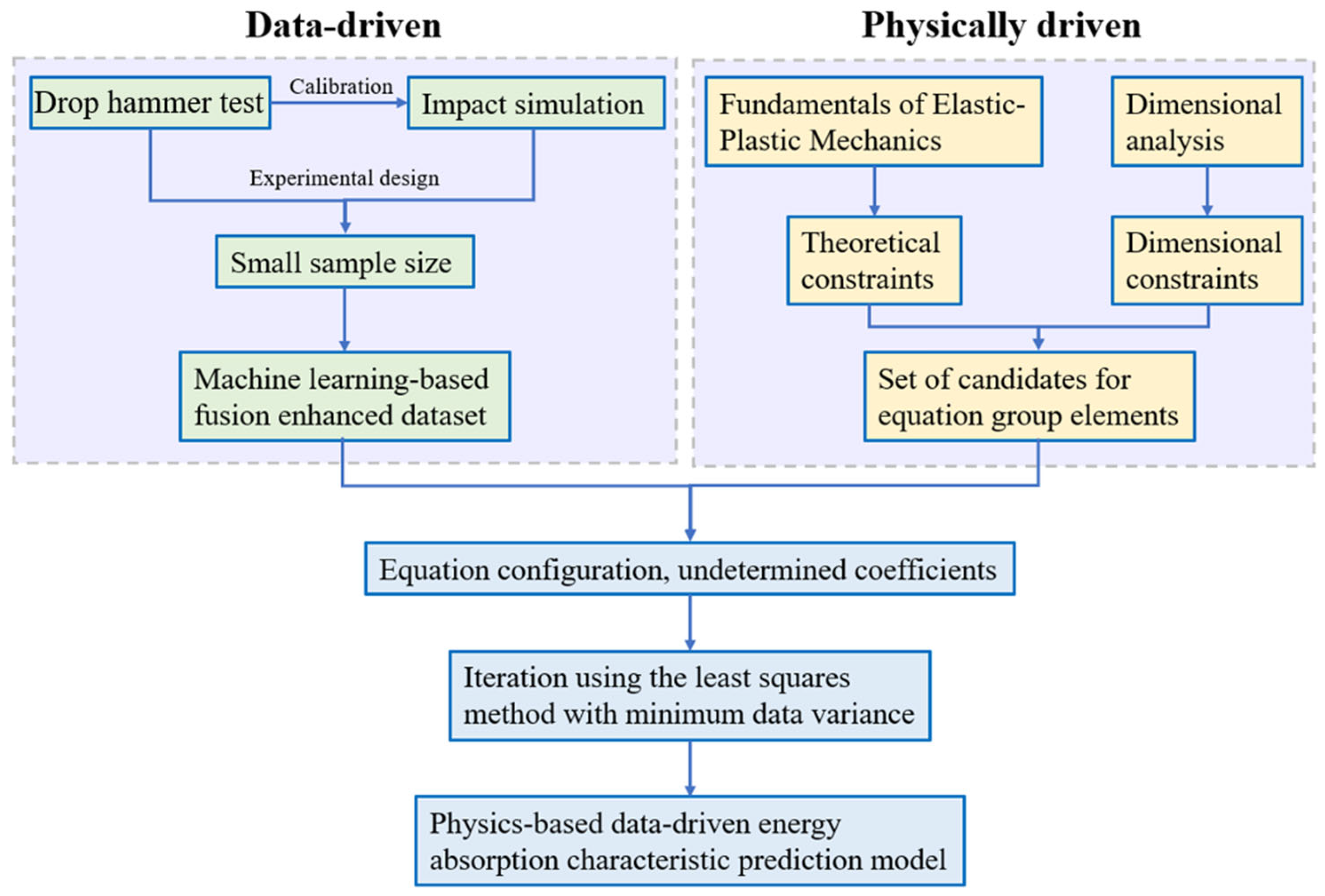
Therefore, this paper proposes a physics–data-driven approach to predicting the energy absorption characteristics of slotted circular tubes, validated in airdrop scenarios. Compared with conventional methods that rely on extensive numerical simulations, the proposed approach expands the dataset through data-driven techniques, significantly reducing the computational cost. Meanwhile, a predictive formula for the MCF is derived based on dimensional analysis, enabling a transition from simulation to equation design, thereby substantially improving optimization and design efficiency.
The subsequent sections of this paper are structured into stages:
Section 2 first outlines the engineering application background of this study;
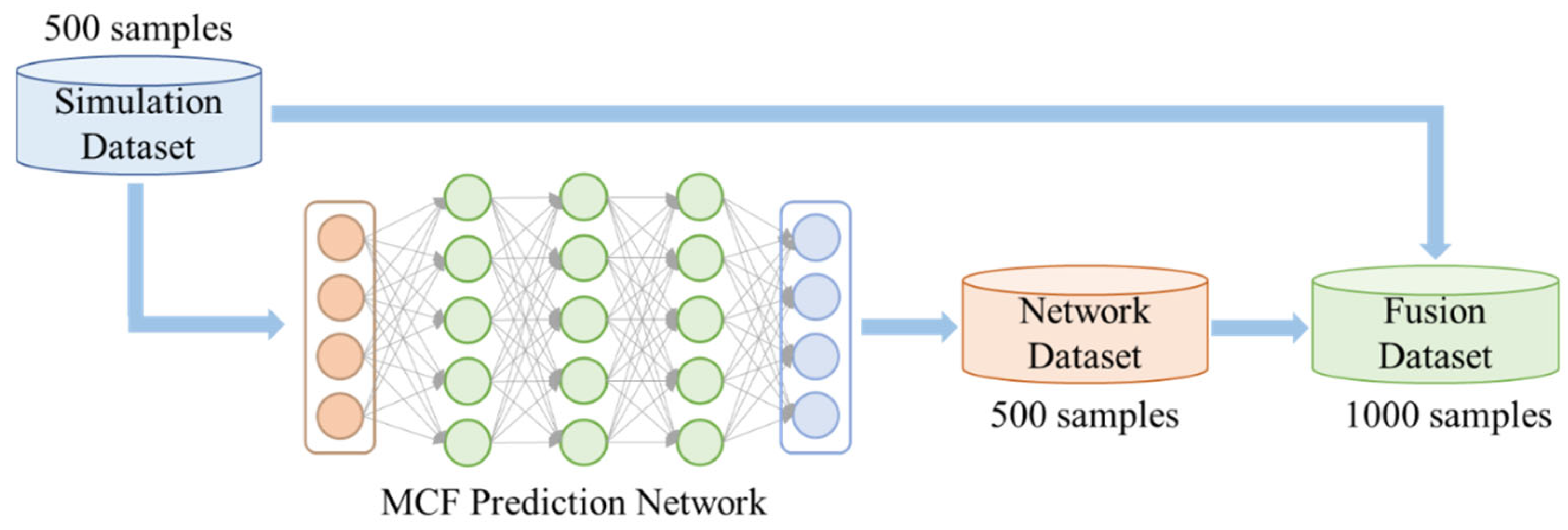
Section 3 uses experimental design methods to construct a sample set and obtains the dataset of this paper through MLP neural network enhancement.
Section 4 screens candidate equations through dimensional analysis and then uses weighted graphs to transform the problem into a graph optimization task. An adaptive differential algorithm is introduced to derive the average extrusion force formula for slotted thin-walled circular tubes, which is then optimized using a genetic algorithm.
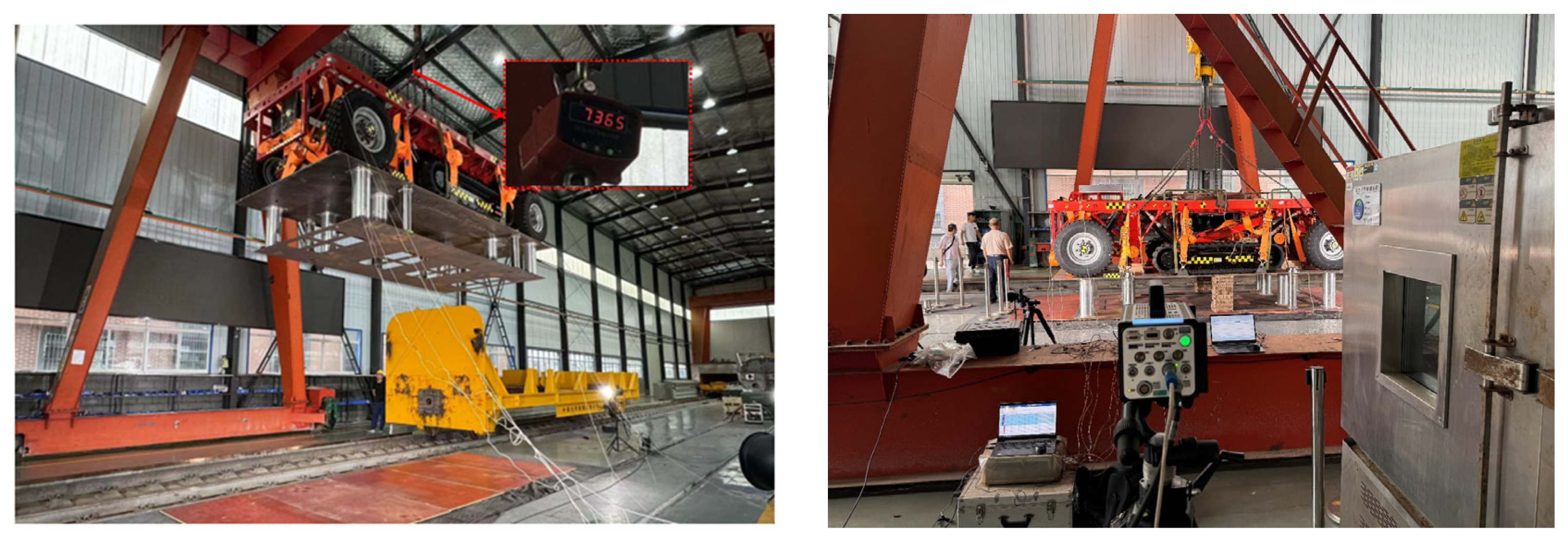
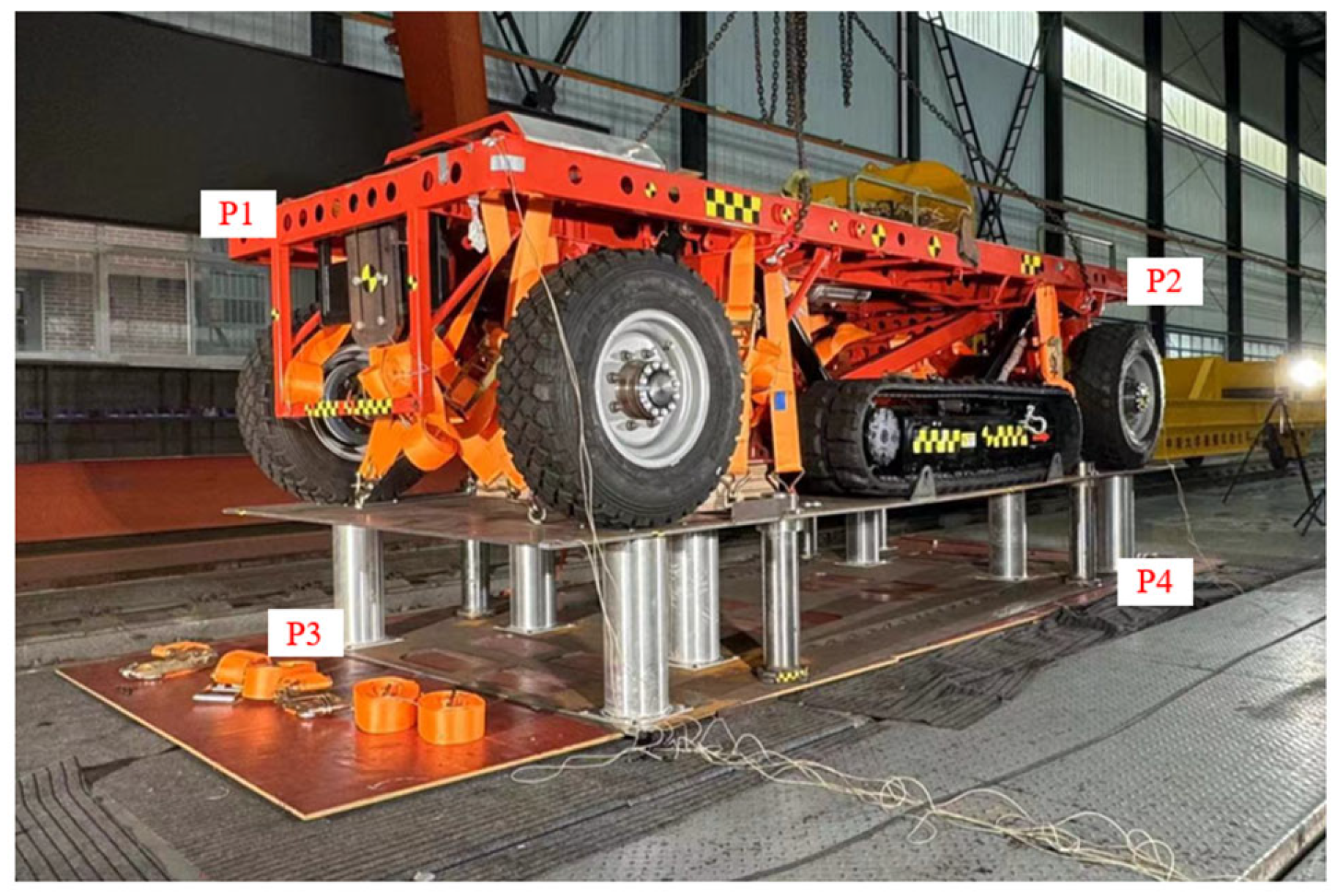
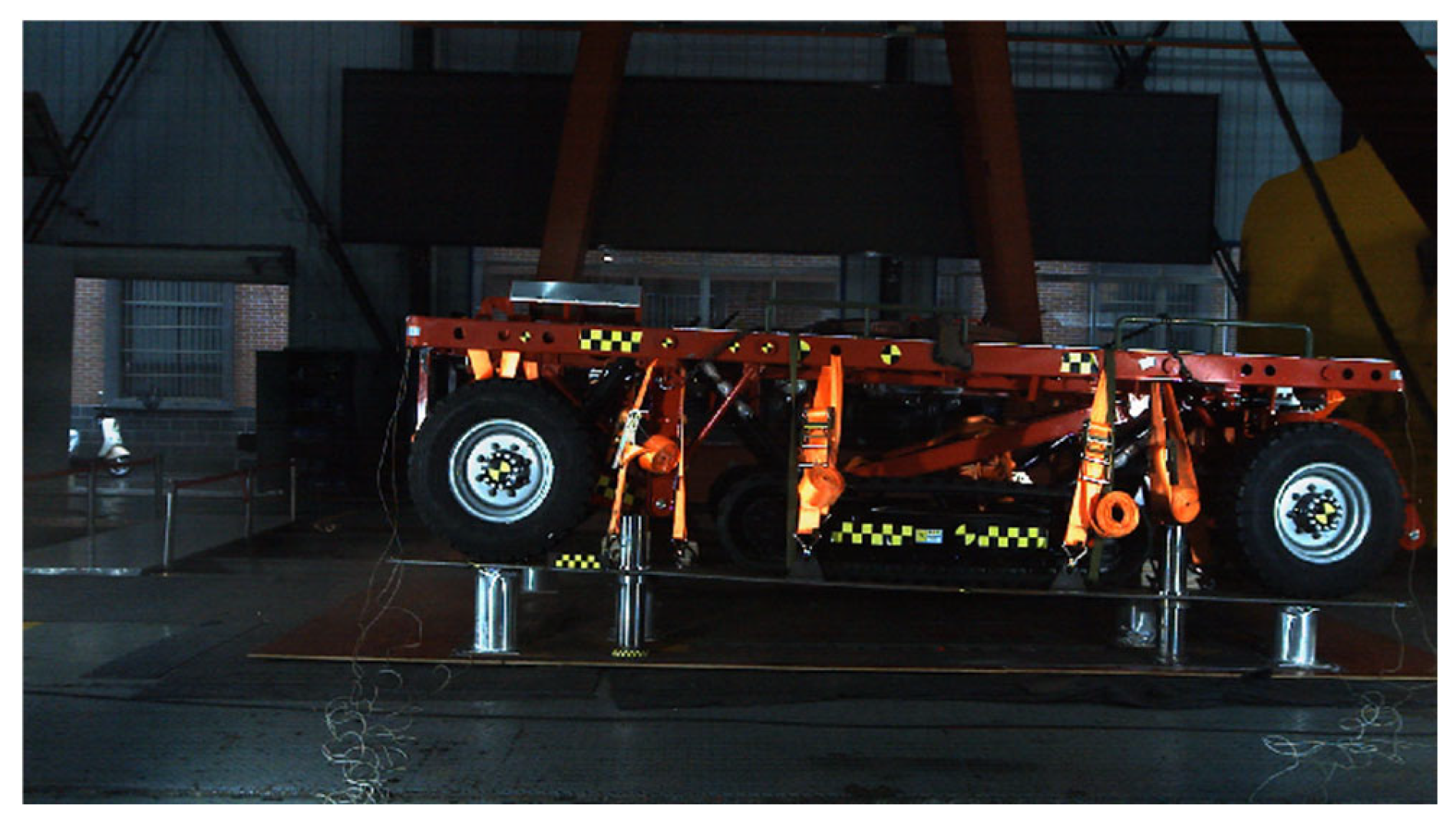
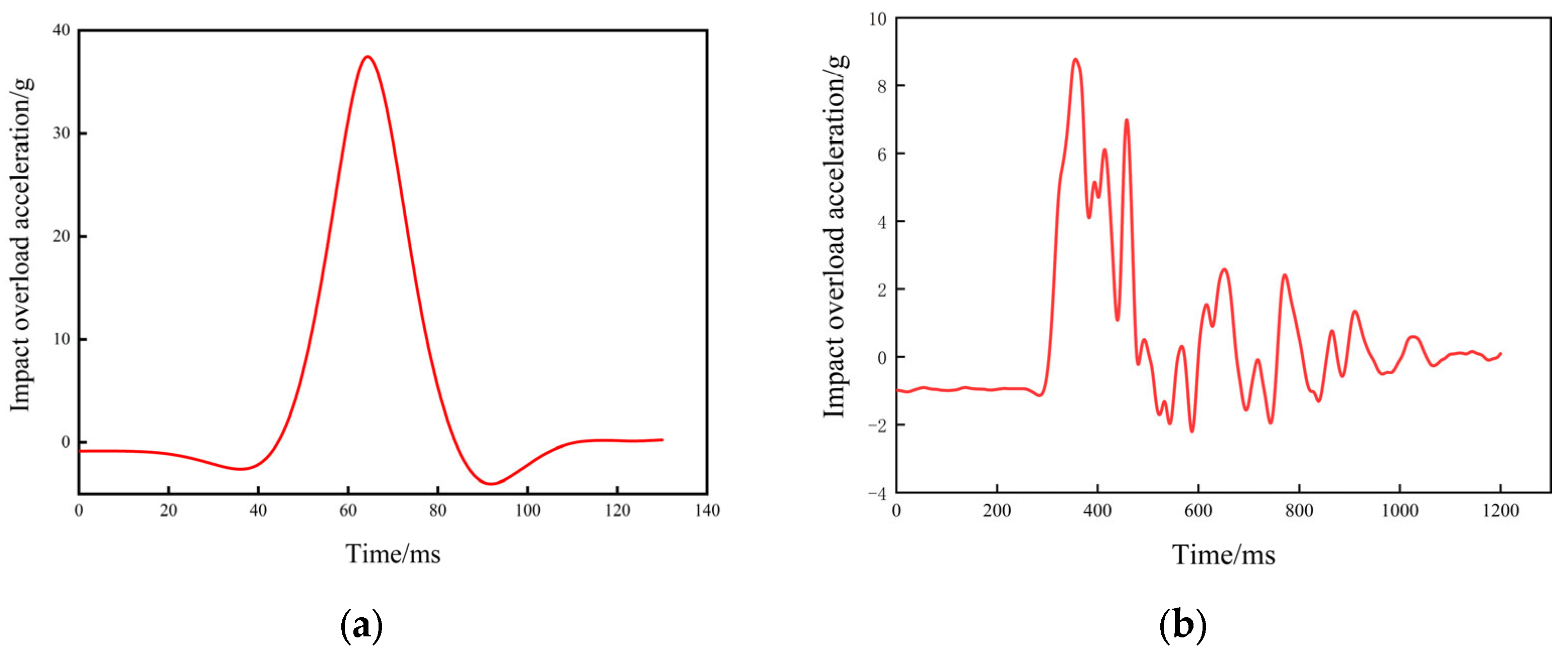
Section 5 uses a single-objective optimization method to obtain the optimal solution that meets the engineering requirements. The solution is verified through simulations and actual rescue vehicle airdrop tests, fully verifying the effectiveness of the proposed method in predicting the energy absorption characteristics of slotted thin-walled circular tubes. Finally,
Section 6 summarizes the research results.
4. Physics–Data-Driven Prediction of Energy Absorption Characteristics of Slotted Thin-Walled Circular Tubes
4.1. Determination of Candidate Sets for Prediction Equation Based on Dimensional Analysis
Dimensionless analysis is commonly used to test models when the equations related to process parameters are unknown. This paper employs this method to establish predictive formulas between the dimensionless MCF and material properties and geometric parameters. To obtain an approximate relationship between the MCF, material properties, and geometric parameters, since the elastic modulus has a minimal influence during plastic deformation, the yield stress is selected as the material parameter. The geometric parameters considered are the circular tube diameter (D), circular tube thickness (T), slot length (L), slot width (W), and slot spacing (S).
The Buckingham π theory serves as the foundation for most dimensionless analyses. According to this theory, any complete physical relationship can be expressed as a set of independent dimensionless products [
44]:
Assume that
is an independent fundamental physical quantity in group
s. Then, there will be a set of real numbers
, and the formula can be expressed as
Equation (5) can also be converted to
We select the MCF, yield stress, circular tube diameter
D, thickness
T, slot length
L, slot width
W, and slot spacing
S, which can represent the collision results for parameter analysis. Assuming that the MCF is a function of the above physical variables, which describe the geometric shape and material properties of the structure, the following equation can be written:
According to the requirement of dimensionality, it can be seen that the equation can be expressed in dimensionless form. In order to select a suitable dimension group (DG, collectively referred to as the π group), each physical variable is multiplied by its power to obtain a special dimensionless group:
Since DG must be dimensionless, the values of the exponential parameters
a, b, c, d, e, f, and
g can be expressed using two basic dimensions for each physical quantity (the two basic dimensions used here are force
F and length
L). Substituting the results into Equation (8) yields
According to the Buckingham π theory, when the number of physical variables is 7 and the fundamental dimension is 2, Equation (9) can be expressed using 5 dimensionless groups. Since DG is dimensionless, we can obtain
Let
a = 1,
b = −1,
c = −1, and
d = −1; then, we can obtain
e =
f =
g = 0. Therefore, the first dimensionless group can be expressed as
Similarly, if we set
a = 0,
b = 0,
c = 1, and
d = −1, we can obtain
e =
f =
g = 0. Therefore, the second dimensionless group can be expressed as
Similarly, other dimensionless groups can be obtained, as shown in Equation (12):
Since any two geometric parameters can be constructed into a dimensionless array, the set of equation system candidates can be generated from all possible dimensionless arrays. Here, we simplify the problem appropriately. Considering that the theoretical prediction model for thin-walled circular tubes indicates that the average load is primarily associated with material stress, the wall thickness, and the diameter, the most significant dimensionless array is
. Therefore, this dimensionless array is used as a fixed equation system element. The remaining dimensionless arrays can be constructed through arbitrary combinations of geometric parameters and serve as variable candidate equation system elements. In this paper, all possible dimensionless combinations of the geometric parameters
D,
T,
L,
W, and
S were systematically considered, resulting in a total of
possible parameter combinations. Thus, these 10 dimensionless arrays constitute the candidate set for equation system elements. Based on the aforementioned dimensional analysis process, the equation structure can be represented as follows:
In the equation, k, a, b, c, and d are all undetermined parameters.
4.2. Configuration Coding Based on Weighted Graph
After determining the basic form of the equation configuration described above, the first task is to address the encoding representation of the equation variables to facilitate computer processing. In the aforementioned equations, the equation system elements are symbolic variables, while the undetermined coefficients are numerical variables. Therefore, an encoding method capable of simultaneously representing variables of two different dimensions is required.
In our previous research, weighted graphs were used to construct a unified representation of structural topological/shape/size variables, and this approach has proven to be an effective method. Therefore, this paper adopts the concept of weighted graphs to encode the variables of the equation configuration.
A graph
with a number on its edge is called a weighted graph. The weight can be understood as a mathematical abstraction that represents an attribute belonging to an edge in the weighted graph. In this problem, the variable symbols {1,
D,
T,
L,
W,
H} are chosen as the vertex matrix
, and the equation elements can be treated as the adjacent combination of two arbitrary vertices, which is defined as the edge of the graph
E(
G). The matrix
D = (
dij) with size
n ×
n is called a weighted adjacency matrix, where
Obviously, the element can be treated as the power exponent belonging to the equation element formed by a particular combination of variables i and j.
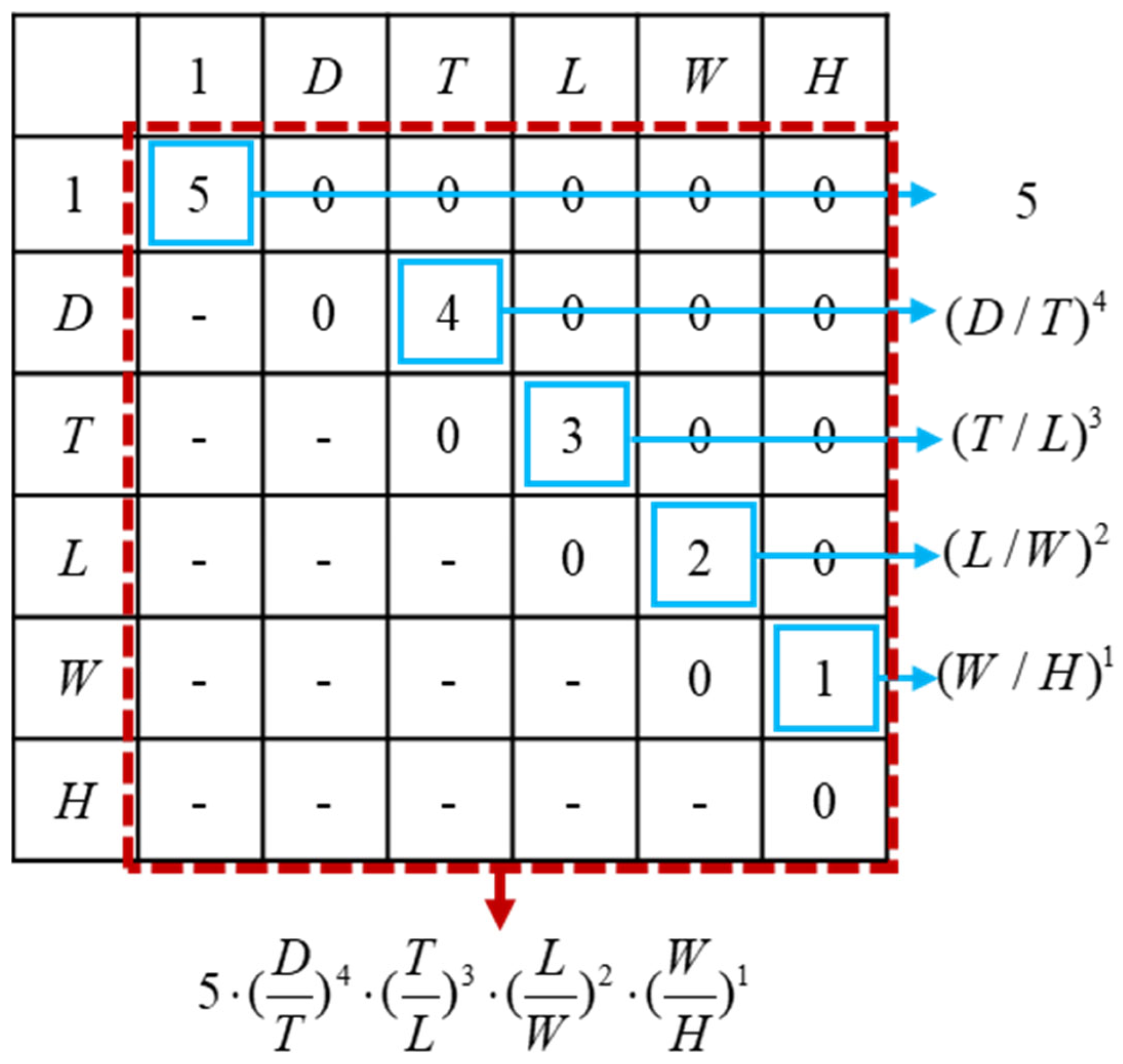
An example explanation is displayed in detail in
Figure 10. As mentioned in the previous section, the right side of the prediction equation includes a total of five unknown terms, which means that there should be five nonzero elements in the weighted adjacency matrix. For each nonzero element, the row and column in which it is located determine the variable combination that constitutes the term of the equation, and its value represents the corresponding power exponent. Therefore, according to the location and value information indicated in the above weighted adjacency matrix, the term combinations of the prediction equation are well represented and organized by the weighted graph model.
4.3. Determination of Coefficients Based on Dual Self-Adaptive Differential Evolution
4.3.1. Algorithm Description
Based on the weighted graph obtained from weighted graph encoding using the preceding equation, the optimization problem of the platform force prediction formula can be regarded as a graph optimization iterative solution problem. This paper adopts a novel genetic algorithm (GA) with dual-adaptive mutation operators, named DSADE, and applies it to the graph optimization problem [
49].
The differential evolution (DE) algorithm was first proposed by Storn and Price (Storn 1996) and has been widely studied and extended due to its simple structure and strong global search capabilities [
50]. To achieve rapid convergence in the DSADE algorithm adopted in this paper, the “DE/target-to-best” strategy is introduced in the mutation phase, and a dual-adaptive mechanism is employed to dynamically adjust the parameters, thereby enhancing the algorithm’s search efficiency and robustness [
51,
52,
53]. Additionally, an elite retention strategy is introduced in the selection phase to accelerate the convergence speed. Previous studies have also shown that this method has good application effects in complex optimization problems [
54,
55,
56,
57]. However, the DSADE algorithm has certain limitations. Like most evolutionary algorithms, it does not guarantee convergence to the global optimum for nonconvex or highly nonlinear objective functions and is sensitive to the initial population size and adaptive parameter bounds.
Overall, the graph optimization process of DSADE includes five steps: initialization, mutation, crossover, selection, and convergence determination. In practical applications, the core parameters must first be set, including the population size (NP), scaling factor (F), and crossover probability (CR). In this study, the population size was set to 27, the maximum number of generations was set to 1000, the mutation strategy was set to 3, and the crossover fraction was set to 0.8.
4.3.2. Basic Iteration
Considering the randomness of the optimization results, the process is performed 10 times to obtain the optimal value. The results are shown in
Table 9. It can be seen that the RMSEs of the optimization results are basically the same, but the expressions have different configurations and coefficients.
To visually demonstrate the optimization results, we combine like terms in the expression, as shown in Equation (15). The optimized expressions are basically consistent.
In order to analyze the influence of the DSADE parameters on the optimization results, different variation strategies and crossover probabilities were selected for parameter analysis.
4.3.3. Parameter Analysis
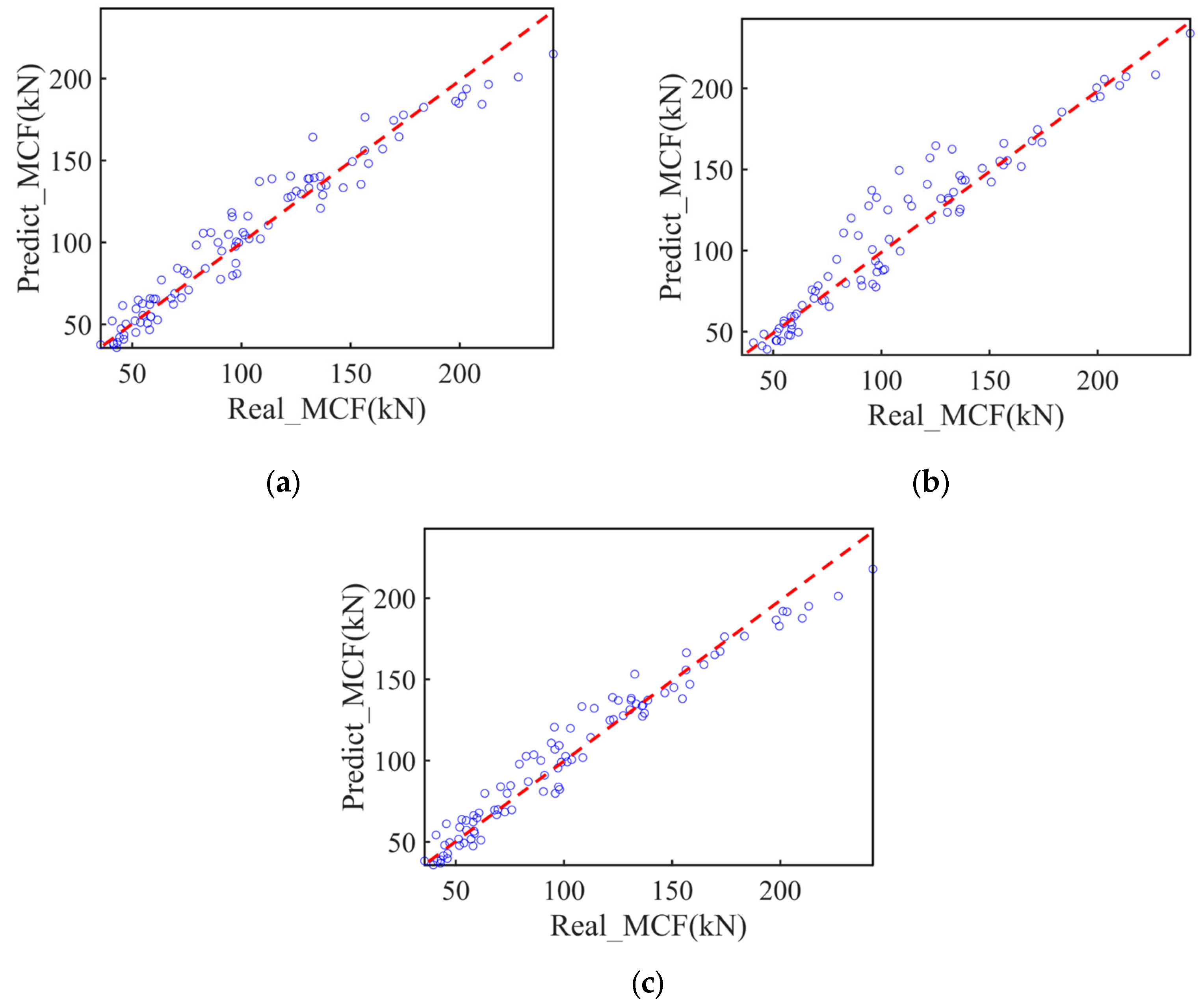
Iterative optimization is performed using three different mutation strategies under the condition that other parameters remain unchanged. Each variation strategy is optimized 10 times to obtain the optimal solution, as shown in
Table 10. The expression is shown in Equations (16)–(18), respectively.
As shown in the results in
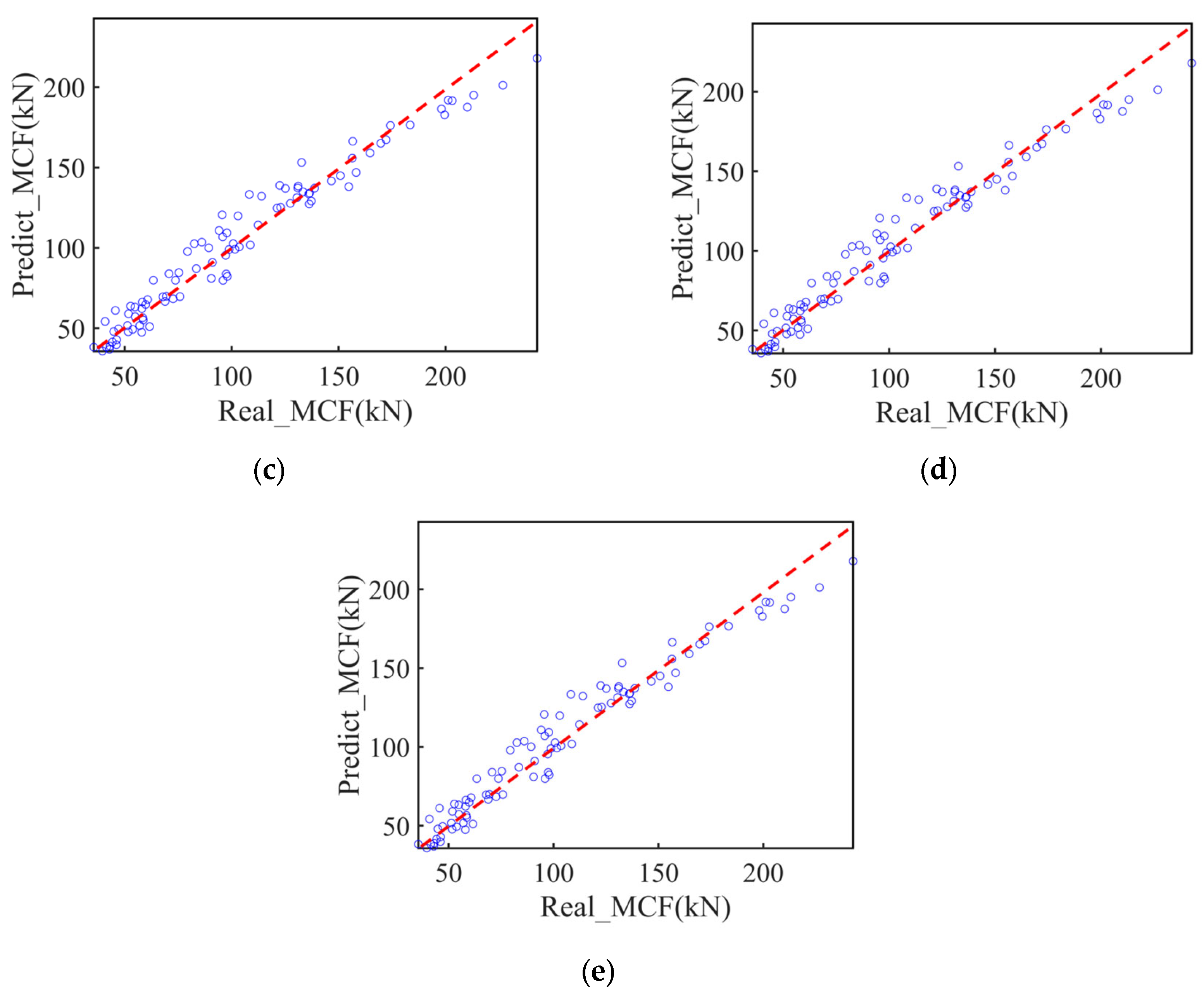
Figure 11 and
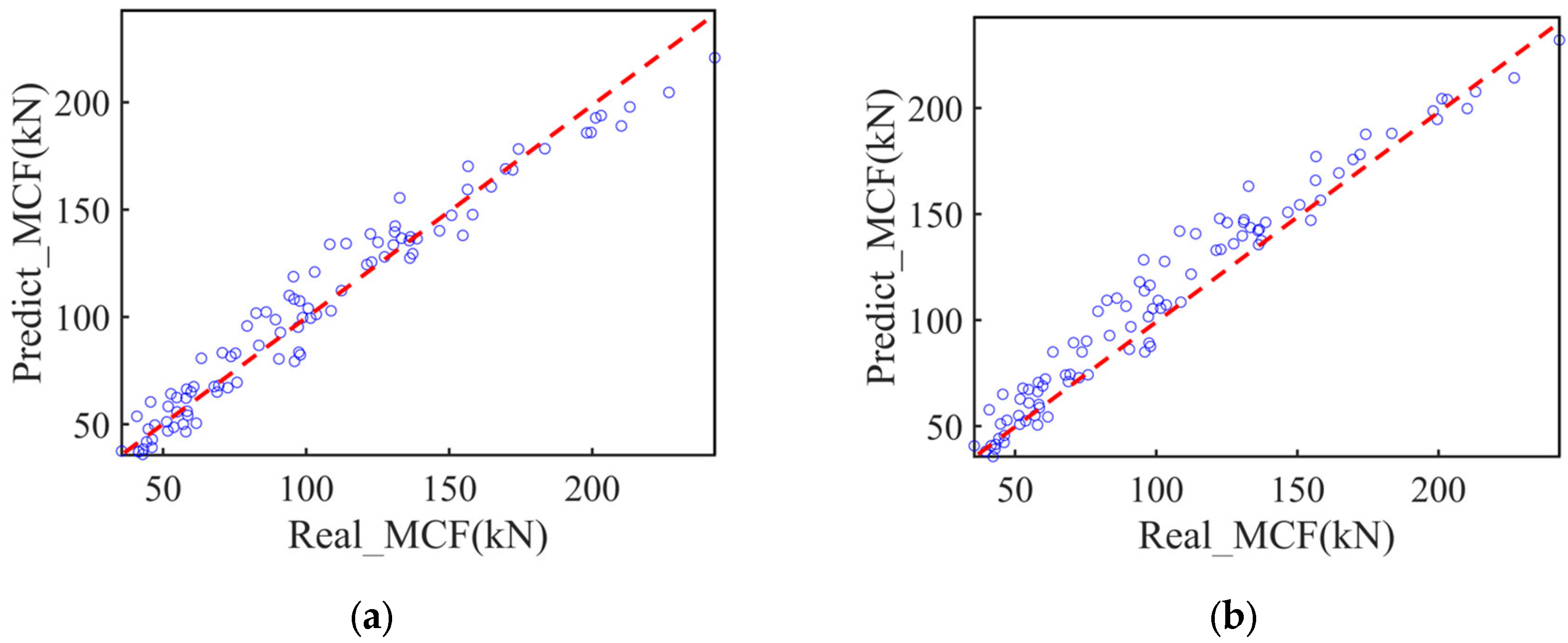
Table 11, the best results from the iterative optimization were obtained when using mutation strategy 3. Each crossover is optimized 10 times to obtain the optimal solution, as shown in
Table 12. The expression is shown in Equations (19)–(23), respectively.
As shown in the results in
Figure 12 and
Table 13, it can be determined that the prediction formula for the circular tube platform force exhibits the smallest prediction error when the mutation strategy is set to 3 and the crossover probability is 0.9. Therefore, the final prediction formula for the circular tube MCF is as follows:
To verify the validity of Equation (24), a dimensional analysis was first conducted. The results indicate that the dimensional terms are expressed in mm
2 and the stress in MPa, satisfying the requirement of dimensional consistency. Subsequently, the experimental parameters listed in
Table 4 were substituted into the equation for calculation, and the results were compared with the experimental data, as shown in
Table 14. The comparison demonstrates that the calculated MCF agrees well with the experimental results, confirming the accuracy and reliability of the proposed equation.
6. Conclusions
This study employed experimental and numerical simulation methods to predict the average buckling force of slotted thin-walled circular tubes using formulae. Based on a validated finite element model, a parameter study and design guidelines for slotted thin-walled circular tubes as energy-absorbing structures was established, yielding the following conclusions:
- (1)
The physics–data-driven method proposed in this paper constructs a dataset through numerical simulation, DOE, and neural network enhancement and effectively reduces the complexity of multi-parameter optimization by combining dimensional analysis and weighted graph coding. Finally, an adaptive differential algorithm is used to establish a prediction formula for the MCF in slotted thin-walled circular tubes, verifying the efficiency and feasibility of this method in predicting energy absorption characteristics.
- (2)
The derived MCF formula for slotted thin-walled circular tubes underwent genetic algorithm optimization and refinement, yielding a highly accurate formula applicable to slotted circular tubes. Predictions from this formula exhibited relative errors below 5% compared to experimental and simulation results, demonstrating the proposed theoretical model’s ability to accurately predict the axial crushing behavior of slotted circular tubes.
- (3)
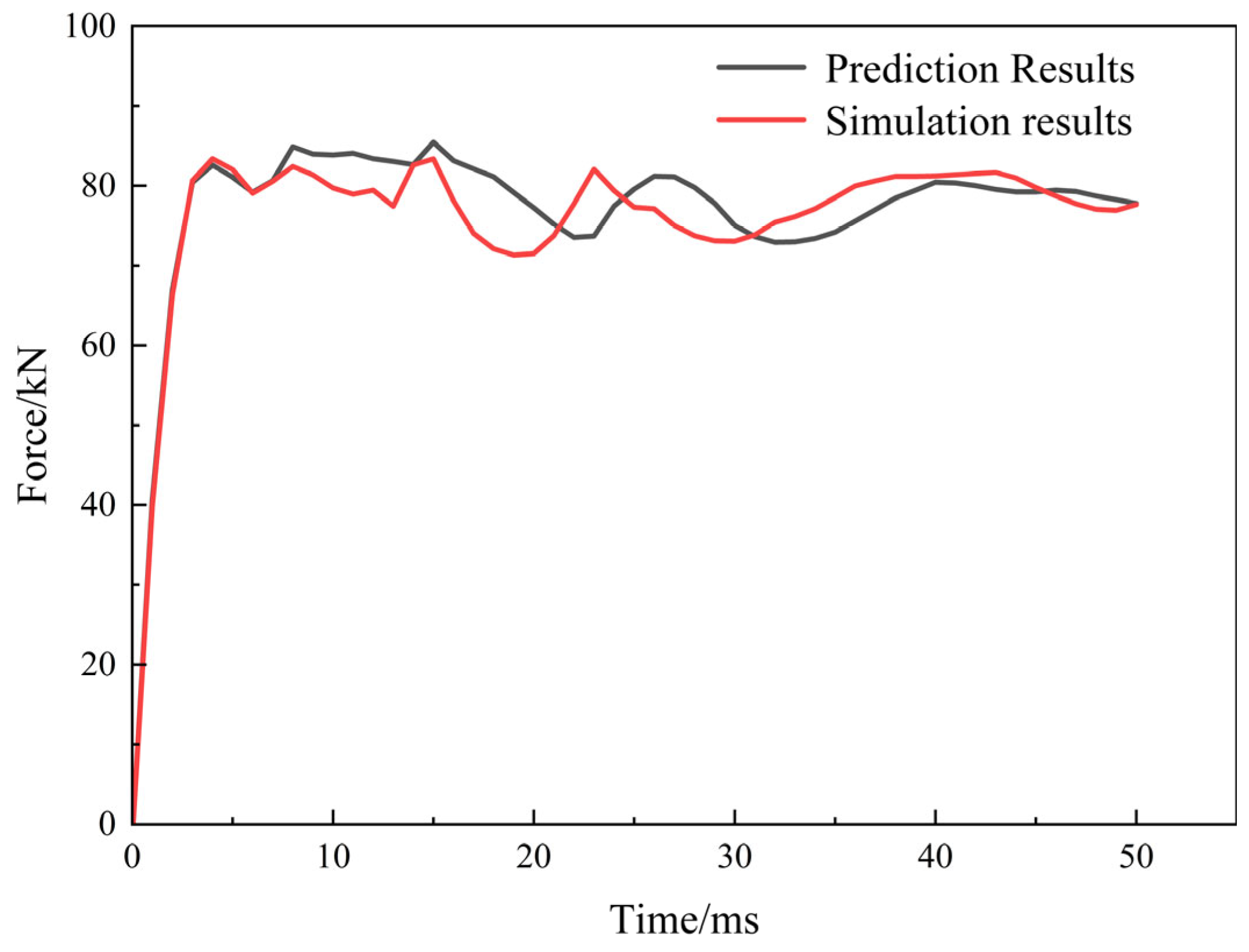
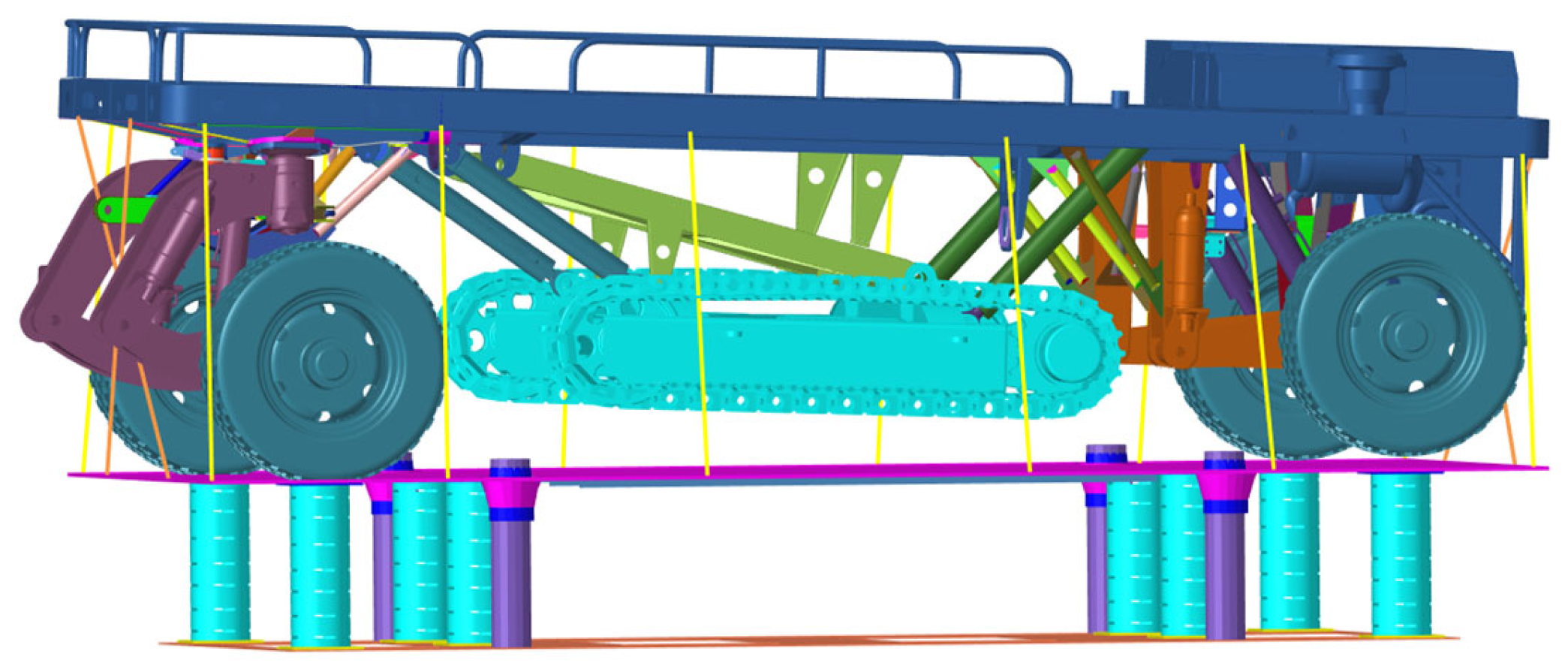
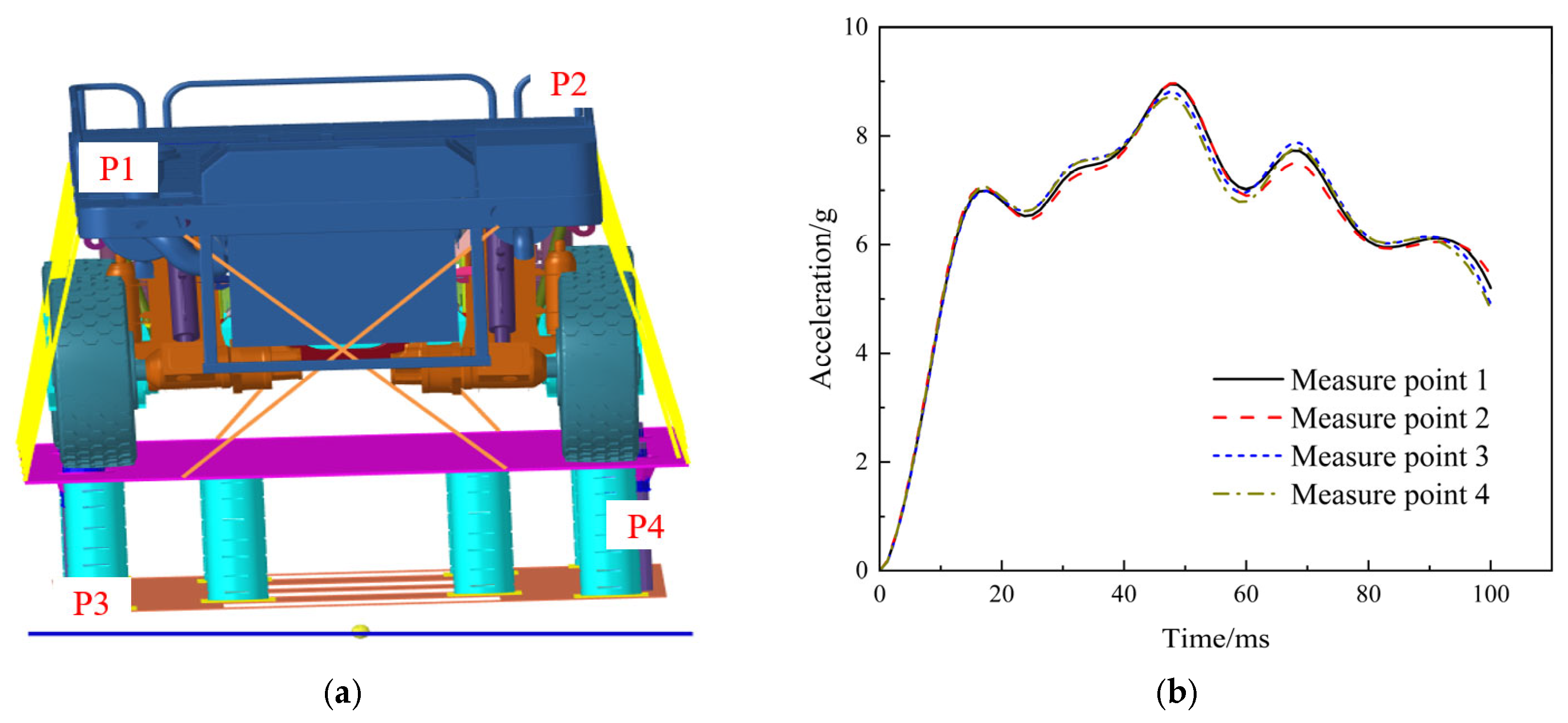
Based on the predicted MCF formula, single-objective optimization was applied to design corresponding geometric parameters and slotting patterns for the circular tube, addressing the engineering challenge of rescue vehicle airdrops. The designed tube underwent validation through simulated vehicle airdrop tests. By integrating airdrop requirements with data collected via high-speed cameras and accelerometers, the reliability of the prediction formula and optimization results was further confirmed, demonstrating significant implications for the design of airdrop energy-absorbing cushioning devices.
Although the proposed physics–data-driven method demonstrates good accuracy and efficiency in predicting the energy absorption characteristics of slotted thin-walled circular tubes, certain limitations remain. First, the parameter ranges considered in this study covered common engineering applications, and the dataset was constructed using DOE and data augmentation. However, when the structural parameters significantly exceed the training range, the prediction accuracy may be affected, and the applicability of the model requires further validation. Second, a systematic sensitivity analysis of the input parameters has not been conducted, making it difficult to fully reveal the physical contributions and underlying mechanisms of each dimensionless term regarding the model output.
Future work will focus on the following aspects. First, the dataset will be further expanded by incorporating test data with a wider range of geometric dimensions and loading conditions in order to improve the robustness and generalization capabilities of the model. Second, global sensitivity analysis methods will be introduced to quantitatively evaluate the effects of the input parameters and their interactions on the energy absorption characteristics, thereby revealing the underlying mechanisms.