1. Introduction
Cloud observation is one of the important elements in aviation weather reporting; when the cloud base is very low, visual references along the runway will be obscured andthe airport may need to implement low visibility procedures. Laser ceilometers are commonly installed at the runway ends of an airport for point measurements and real-time reporting of cloud base heights to the air traffic controllers and pilots. Manual observations of clouds are used in the regular meteorological reports (METARs) as prepared by the aviation weather observers. For objective reporting of cloud base heights and cloud amounts in a panoramic view, instrumental methods are still rather limited. There have been attempts to automate cloud amount reporting using time series of data from the ceilometer [
1] and combination of cloud with several measuring instruments [
2]. A more recent attempt to estimate cloud amount from three independent instruments could be found in Utrillas et al. [
3].
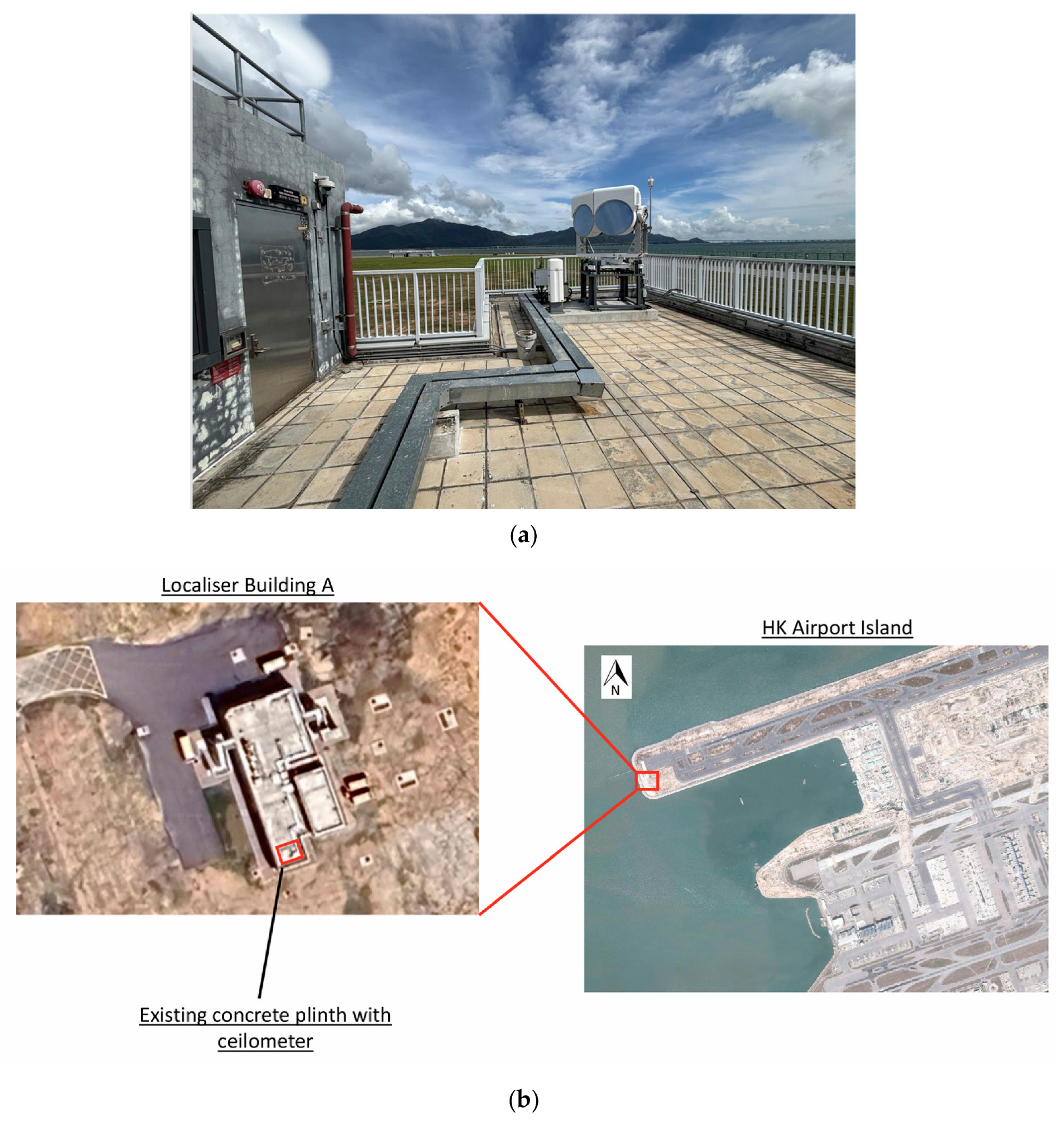
Since June 2025, a Ka-band cloud radar has been installed at Hong Kong International Airport (HKIA) (22.3192° N, 113.8779° E, 14 m above sea level). It is co-located with a laser ceilometer at the western end of the northern runway, where a substantial proportion of arriving aircraft approach the airport (
Figure 1). This represents an initial effort to acquire additional meteorological observations of clouds with the ultimate aim of automating cloud observations in some viewing angles by combining cloud radar observations with data from ceilometers and a ground-based microwave radiometer; cloud amounts and cloud types as identified by artificial intelligence methods as applied to real-time weather photos; and measurements from geo-stationary meteorological satellites. In contemporary research, cloud radars are usually configured to point towards the zenith to produce time–height plots of radar variables, and such observations have been widely used in studies of cloud properties in conjunction with multiple ground-based remote-sensing instruments [
4,
5,
6,
7], as well as in cloud-type identification [
8,
9]. Cloud radar, together with in situ measurements, such as those from a light optical aerosol counter [
10], mounted visibility sensors, and spectrometer probes [
11], can also help infer droplet size distributions during fog events, their evolution, and the potential extension of visibility observations through the use of cloud radar measurements. In addition, airborne cloud radar can be used to obtain high-resolution observations of cloud structures aloft over different regions [
12,
13].
Cloud observations at HKIA are challenging because cloud formation and evolution depend on winds blowing across the mountains and valleys of Lantau Island from the south, as well as cloud development over the surrounding seas. Previous attempts have been made to use ceilometers to report cloud amount by following the algorithm developed by KNMI (e.g., Chan and Yeung [
14]), but the comparison results with human observations are not particularly impressive. The cloud radar is hoped to provide additional information. For this purpose, the radar has been configured to make a specially designed scanning strategy, with the aim of observing the clouds in the various elevation and azimuth angles with respect to the instrument. This represents a novel approach to using a cloud radar for three-dimensional observations in the context of an operational airport. Details of the scanning strategy are provided in the following section.
This paper aims at summarizing some initial observations of the newly installed cloud radar. Quantitative comparison is made by comparing with the co-located ceilometer in cloud base observation, and an initial attempt is made in the cloud top observation by comparison, e.g., with the cloud liquid water content (CLWC) profiles from a microwave radiometer [
15,
16]. Following that, some novel observations from the cloud radar are reported, including (1) observation of supercooled liquid water in the outer cloud band associated with a late-season tropical cyclone over the South China Sea; (2) applications of cloud radar of observing low visibility weather, such as rain and mist at the airport, by combining with Doppler velocity data from the cloud radar to show the convergence of the airflow, which may favor the occurrence of the low visibility weather; and (3) applications of the cloud radar in severe weather, including low-level windshear in a boundary layer jet during continental cold air outbreak (together with spectrum width observations from the cloud radar) and heavy rain nowcasting. The cloud radar in use has dual polarization (dual pol) capability, and in this paper, the dual pol parameters were not investigated in depth. This is an area for future research.
2. Technical Specifications, Siting, and Set-Up of the Cloud Radar
The Ka-band Doppler cloud radar, manufactured by RPG, Meckenheim, Germany, is a Frequency-Modulated Continuous-Wave radar with an operating frequency of 35 GHz. The data of each beam is configured to comprise 2 chirps: the first chirp covers the range within 1600 m with resolution of 45 m, and it has a beam width of 5.8 MHz with a maximum Doppler velocity of 27.5 m/s and a resolution of 0.11 m/s; the second chirp covers the range from 1600 m to 10,000 m with resolution of 80 m, having a beam width of 1.2 MHz with a maximum Doppler velocity of 19.0 m/s and a resolution of 0.15 m/s. The minimum detectable signal is −45 dBZ. Data is available every 1 s with a scanning speed of 5 degrees per second. The available products also include spectrum width and other dual pol parameters, such as differential reflectivity (ZDR), differential phase shift, slanted linear depolarization ratio, etc.
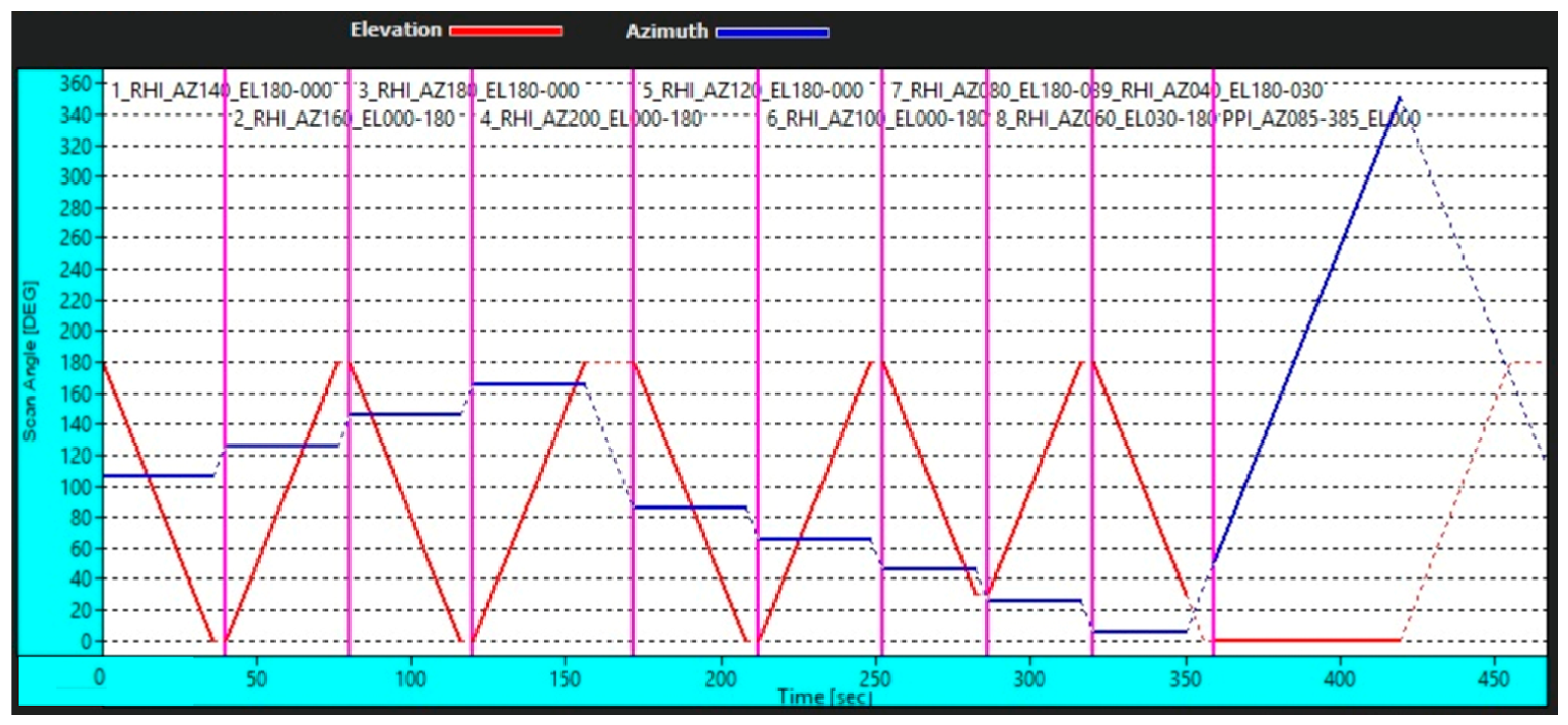
The cloud radar is co-located with a laser ceilometer CL31 on the rooftop of a localizer building at HKIA. The primary objectives of the cloud radar include the provision of a three-dimensional picture of the cloud distributions in the sky dome of the airport, with the aim of automated cloud reporting in the future. With these objectives in mind, unlike most research which points the radar beam directly towards the zenith, our scanning strategy aims to provide a “volume scan” that covers the sky view as broadly as possible. In October 2025, the scan strategy was settled down with the current form, which comprises (a) range height indicator (RHI) scans (each around 1 min and having a near-full-range scanning with the elevation angle changing from 0 degree in the sea direction to around 135 degrees in the airport island direction, not reaching the ground of the airport due to radio interference and radiation safety considerations) at 9 azimuth angles, nearly covering the hemisphere of the airport for cloud observations in the sky dome; and (b) a single plan position indicator (PPI) scan with an elevation angle of 0.02 degrees (around 2 min) with respect to the horizon in preparation of generating visibility maps and in monitoring low-level winds. The scan strategy is shown in
Figure 2. Including housekeeping tasks within a scan cycle, one complete cycle takes about 10–11 min. The zenith data is derived by averaging at most 4 beams in the RHI scans that are closest to zenith and within 3 degrees from the zenith. If there are no data points within this range, the whole RHI scan is neglected. The zenith data is used for direct comparison with the measurements from the vertically pointing instruments, such as laser ceilometer and ground-based microwave radiometer; however, their temporal resolution is much lower, about one minute per vertical column, compared with a traditional vertically pointing cloud radar. The cloud radar measurements were also compared with Doppler velocity measurements from a X-band weather radar located at Sha Lo Wan (22.2908° N, 113.8990° E, with an antenna height of 34 m above sea level) and a C-band weather radar located at Brother’s Point (22.3585° N, 114.0210° E, with an antenna height of 86 m above sea level), both dedicated for the airport. However, unlike conventional surveillance radar, the resolution of the cloud radar relative to range is not fine enough to apply quality control with radial velocity to filter terrain and noise [
17,
18]. It is known that there have been approaches developed to related various cloud radar parameters for filtering of non-meteorological objects [
19,
20,
21]; their applicability will be studied for our scan strategy in the future, and for the cloud base recognition in this study, both reflectivity and ZDR were applied to avoid mistaking noise for clouds.
3. Cloud Base Height and Cloud Top Height Observations
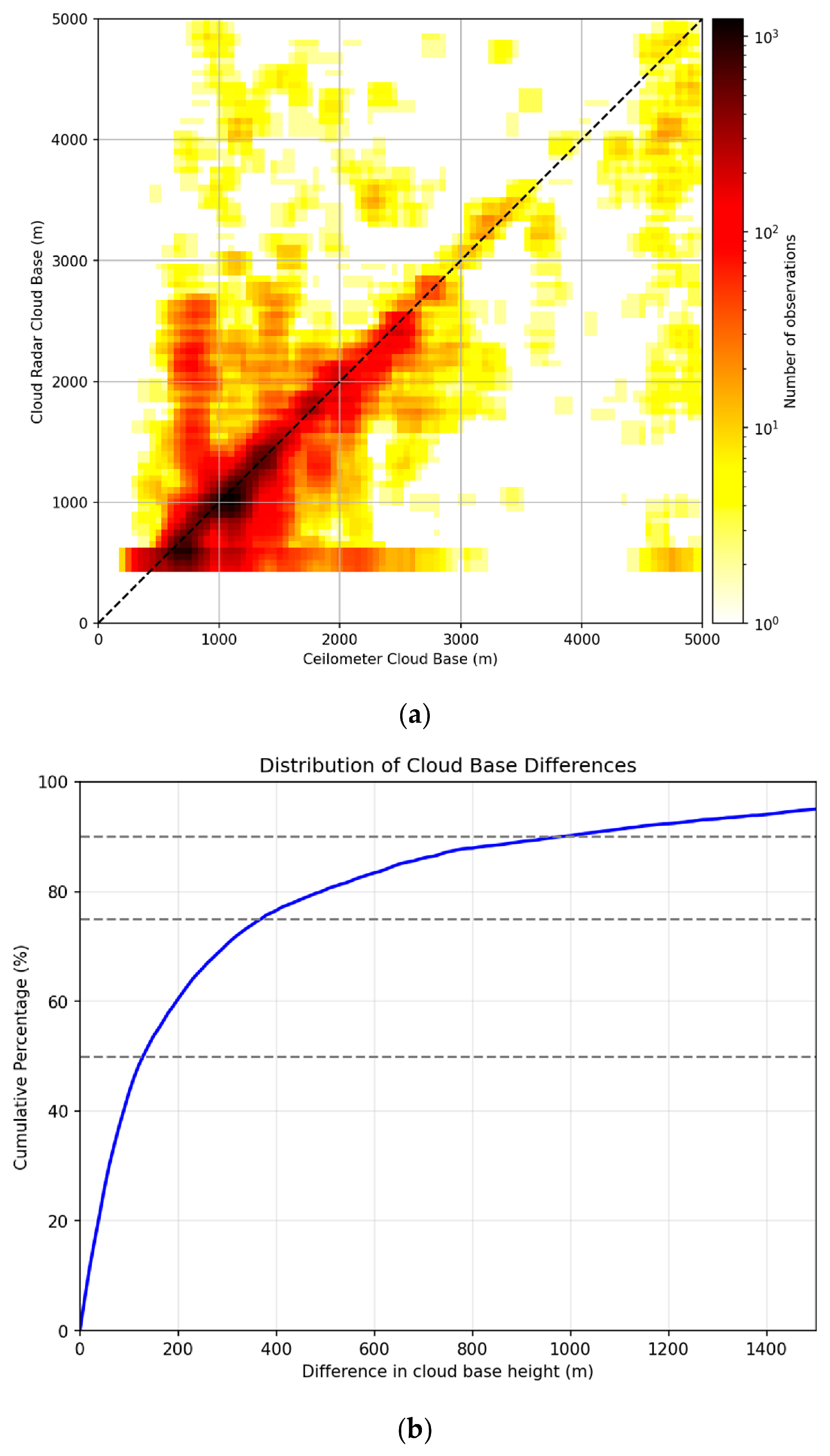
As a quantitative evaluation of the performance of the cloud radar, its cloud base measurements were compared with those from the co-located ceilometer. The comparison of the two sets of data is shown in
Figure 3a in the form of a “heat map”, which is based on the number of observations within ±100 m from the center of each height value (i.e., number of data points in a 200 m × 200 m box). The study period includes January to February 2026, which is the winter time of Hong Kong, and clouds are generated in the northeast monsoon as well as return flow from the northern part of the South China Sea. Heavy rain or tropical cyclones did not occur over the HKIA during the period.
The cloud base height measurement from the ceilometer is available every 10 s and is the direct output from the instrument. For the cloud radar, reference is made to the methodology adopted in Oh et al. [
22] with modifications:
- (a)
Cloud layers with reflectivity values > −30 dBZ are searched, and the cloud should be at least 150 m thick; small “gaps” within a cloud layer are allowed; the base of the lowest valid cloud layer is searched as the cloud base of a particular instance, with the minimum cloud layer being set at 500 m to avoid noise near surface;
- (b)
In rain, the cloud base would not be determined as the reflectivity signals would cover the cloud base. Rain is determined by the following reflectivity conditions: mean reflectivity below 1000 m > −8 dBZ, or maximum reflectivity below 1000 m > 0 dBZ, or maximum reflectivity below 500 m > −10 dBZ. Past research shows typical reflectivity values for non-precipitating liquid cloud reflectivity values is below −20 dBZ for stratocumulus [
23], and a typical threshold for precipitating and non-precipitating warm clouds is −15 dBZ [
24];
- (c)
ZDR being used for noise filtering, with the cloud layer under the following conditions to be discarded: mean ZDR < 1.0 dB, and 90th percentile ZDR < 2.0 dB (to allow some noise in a continuous cloud layer, the cloud radar cannot detect large droplets and it would be under rain even if so);
- (d)
The jumpiness of cloud base in the past 15 min being monitored to determine whether the current cloud base is credible (acceptable jumps within 1000 m or 2 standard deviations); and
- (e)
The minimum cloud layer set at 500 m to avoid noise near surface.
As compared with Oh et al. [
22], conditions (b), (d), and (e) are newly introduced to improve the quality control in our comparison; also, a 1.5km reflectivity thickness in (a) would well exceed winter stratocumulus clouds in Hong Kong, and a signal-to-noise (SNR) ratio of 5 dB for noise filtering in their study is replaced by ZDR values in (c) as SNR is not a direct output by the cloud radar.
Following the aforementioned methodology and within the study period, cloud radar data availability is about 94% for the zenith data (with downtime no more than 10 min), whereas the ceilometer data availability is 100%. The total number of cloud radar cloud base record is 12,775, with low clouds (cloud base height ≤ 2000 m) occurring for about 75% and medium to high clouds (cloud base height > 2000 m) occurring for about 25%. For ceilometer, the number of records is 141,217, with low clouds occurring for about 64% and high clouds occurring for about 36%. In the heat map, cloud base observations of the cloud radar are matched to the closest ceilometer data within an interval of 2 min, with both being ≤5000 m. The number of paired data points is 10,941, representing about 85.64% of the available cloud radar data in the study period.
It can be seen that the two datasets show generally satisfactory agreement, values mainly concentrated along the diagonal. For the entire dataset, the coefficient of determination and root-mean-square-difference values are 0.409 and 670 m, respectively; the fitting has moderate correlation, but still subject to other contributing factors. The root-mean-square-differences are reasonably small.
It is noted from
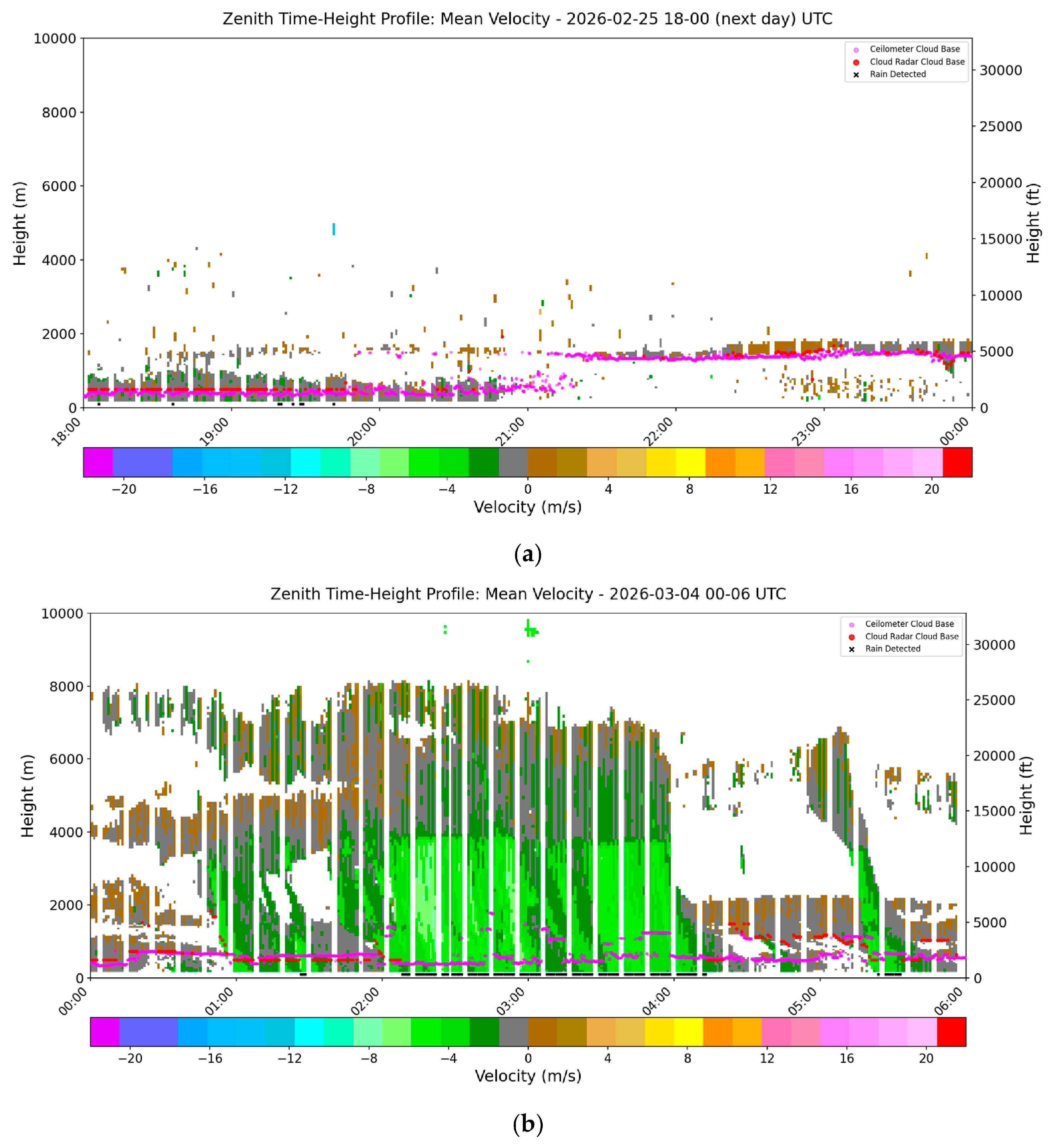
Figure 3a that, for some data points, one instrument shows a rather wide range of cloud-base heights (approximately 500 m to 3000 m), whereas the other shows a relatively constant value (around 500 m for the cloud radar and generally around 700 m for the ceilometer). This may occur when the cloud layer detected by the ceilometer is very thin and is either neglected by the cloud radar algorithm or cannot be distinguished from noise. In such cases, the cloud radar may instead detect a higher cloud layer aloft. Alternatively, the cloud radar may underestimate the cloud-base height in light rain when condition (b) is not satisfied. The actual cloud layer may be higher, as indicated by the ceilometer, while the cloud radar detects signals from raindrops at lower levels. Examples of such differences are shown in
Figure 4. In
Figure 4a, when the sky was persistently covered by generally low clouds, the readings from the two instruments were more stable and showed good agreement, although the very thin cloud layer at 21:00–22:00 UTC was largely not detected by the cloud radar. By contrast, in
Figure 4b, after rain (i.e., after about 04:20 UTC on that day), the two instruments appear to yield systematically different interpretations of the “cloud-base height”. Taking 05:30–06:00 UTC as an example, the cloud-base height reported by the weather observer in the 06:00 UTC SYNOP at HKIA was 1000 to 1500 ft, which is more consistent with the ceilometer readings. However, it should be noted that ceilometer data is used operationally at the airport and may therefore be referenced in cloud reporting, whereas the cloud radar is still on a trial basis and has not yet been included in the suite of reference instruments used by observers. A fading edge in the cloud radar signal was also consistently detected near 3000 ft from 04:00 to 06:00 UTC. Therefore, further comparison studies and refinement of the cloud-base-height algorithm based on cloud-radar data are still required to enable the outputs from the various instruments to be combined more appropriately in operational cloud reporting.
Another way to examine the two-month comparison dataset is through a cumulative plot, as shown in
Figure 3b. The percentages of data points with the difference of cloud base height measurements falling within different thresholds are calculated (the cloud base height ≤ 5000 m requirement is not applied as in
Figure 3a), namely around 50% within 130 m, around 75% within 370 m, and 90% within 980 m (refer to the dashed lines in
Figure 3b).
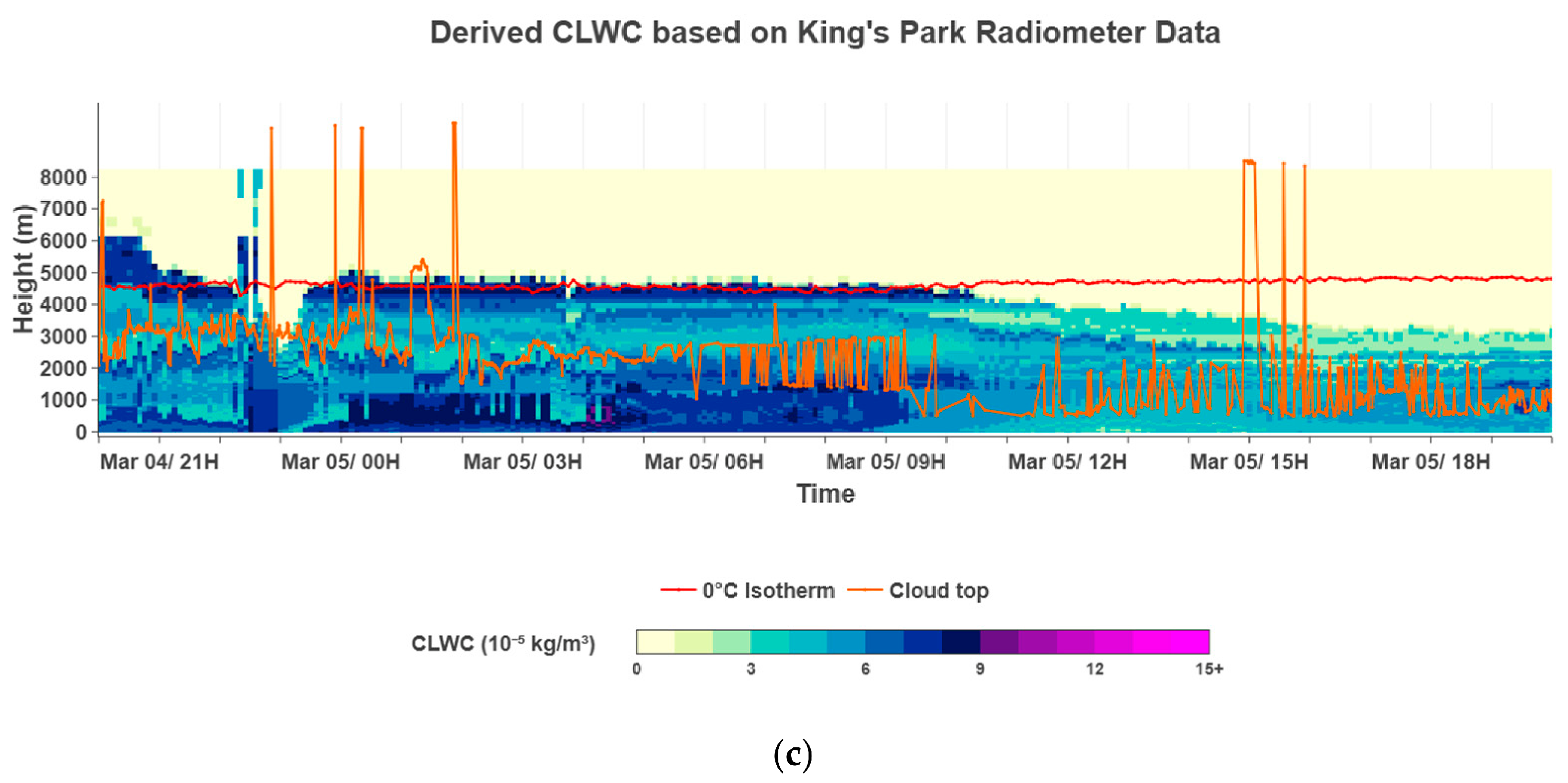
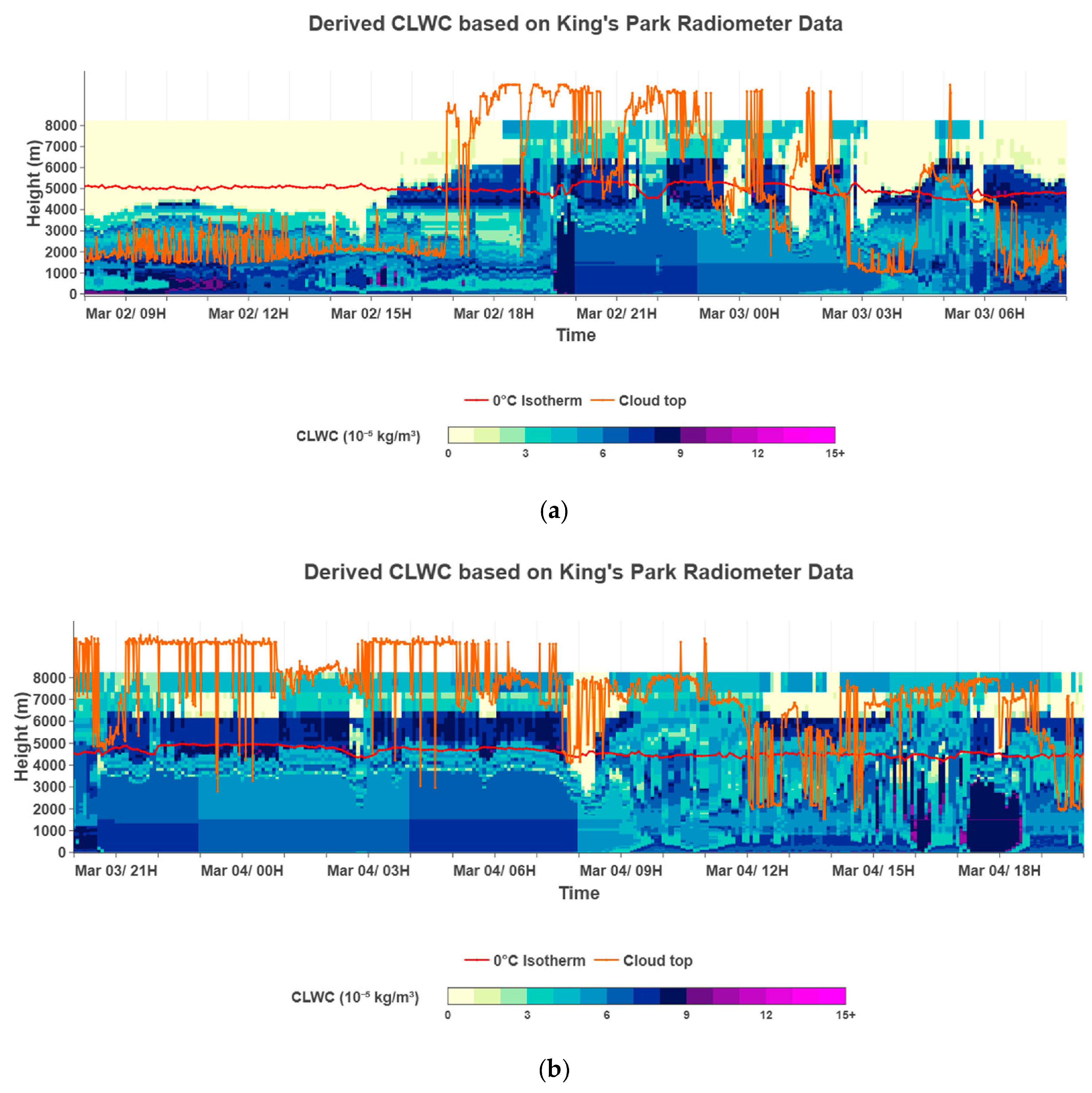
An attempt has also been made to determine the cloud top height from the cloud radar data and to compare with the corresponding estimate from the CLWC profiles of the microwave radiometer. The comparison has just started and further tunings of the cloud top height algorithms would still be required, and thus, the comparison is only demonstrated in a heavy rain case as an example.
Figure 5 shows an example of the time series of cloud top height as obtained from the zenith data of the cloud radar as overlaid on the time-height plot of CLWC from the microwave radiometer near the city center of Hong Kong during a rainstorm event in Hong Kong in early March 2026, including the setting-in of the rain in Hong Kong (
Figure 5a), during the rainstorm (
Figure 5b), and cessation of rain in Hong Kong (
Figure 5c). This time the cloud top detection requirement is relaxed to the highest layer of cloud with reflectivity > −40 dBZ and thickness of 150 m. From this example, before and after the rain, the cloud top is mostly located at the maximum value of CLWC in the vertical profile in the lower to middle troposphere. With the onset of rain and during the rain, the cloud top height became much higher in convection, together with the moistening up of the whole troposphere (data only up to 8 km is available for CLWC profiles). During this period, the cloud top height was well above the CLWC maximum values because the content of liquid water reduced as temperatures became much lower than zero degrees Celsius. Still, limited supercooled liquid water is not uncommon at 0 to −20 degrees Celsius [
25,
26], and could be present in temperatures down to −40 degrees [
26,
27,
28]. Temporary cessation of rain in between the heavy rain events may be associated with short-term decrease in cloud top height, together with the lowering of the top height of the CLWC column. This is associated with the departure of deep-layered convective clouds, but remnant high clouds may still be intermittently present near the convections due to convective outflow. Qualitatively, the vertical variation in the height of CLWC maximum/top level of CLWC profile as provided by the microwave radiometer is generally consistent with that of the cloud top height from the cloud radar. Long-term comparison of the two datasets would be necessary and the synergistic use of the data from the two instruments would be required through algorithm development in the automation of cloud observation.
4. Observation of Supercooled Liquid Water in Clouds Associated with a Tropical Cyclone
On the evening (local time) of 11 November 2025, Tropical Cyclone Fung-wong was located over the northeastern part of the South China Sea and weakened gradually from a severe tropical storm into a tropical storm when it interacted with a westerly trough in the middle troposphere. At the same time, in the lower troposphere, southern China was generally dominated by the northeast monsoon and the cooler and drier continental air was wrapped into the circulation of the tropical cyclone, leading to the gradual weakening of Fung-wong.
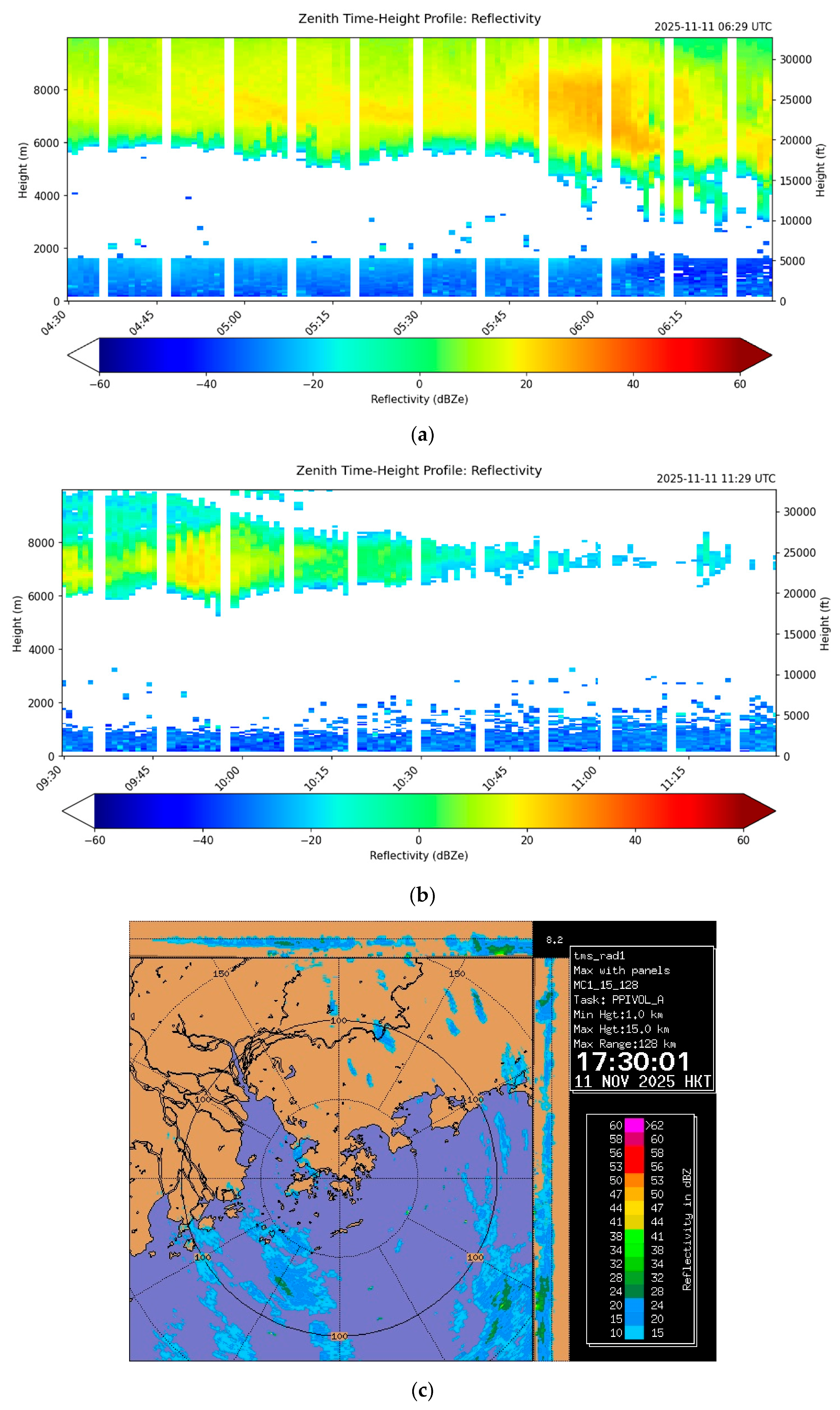
The outer rainband of Fung-wong moved to the west over southern China and covered the Pearl River Estuary. It appears to be rather high-level clouds in the meteorological satellite imagery with light rainfall recorded in Hong Kong. This feature can indeed be clearly identified in the zenith scan of the cloud radar. As shown in
Figure 6a,b, the clouds were located at a height of 6 km or above and thinned out gradually following their departure from Hong Kong and dissipation. On the other hand, heights below 6 km or so are relatively clear in terms of cloud radar reflectivity. Such observations are consistent with the “max” product from a S-band surveillance weather radar in Hong Kong (
Figure 6c). In the “max” product, on the left-hand panel, the reflectivity at a point at a particular height refers to the maximum of reflectivity at that height at all the data points from the east to the west in the radar imagery. Similar interpretation holds for the reflectivity at a point on the top panel (this time referring to the maximum reflectivity along the north-south line). The radar reflectivity is in fact elevated at height of 6 km or above.
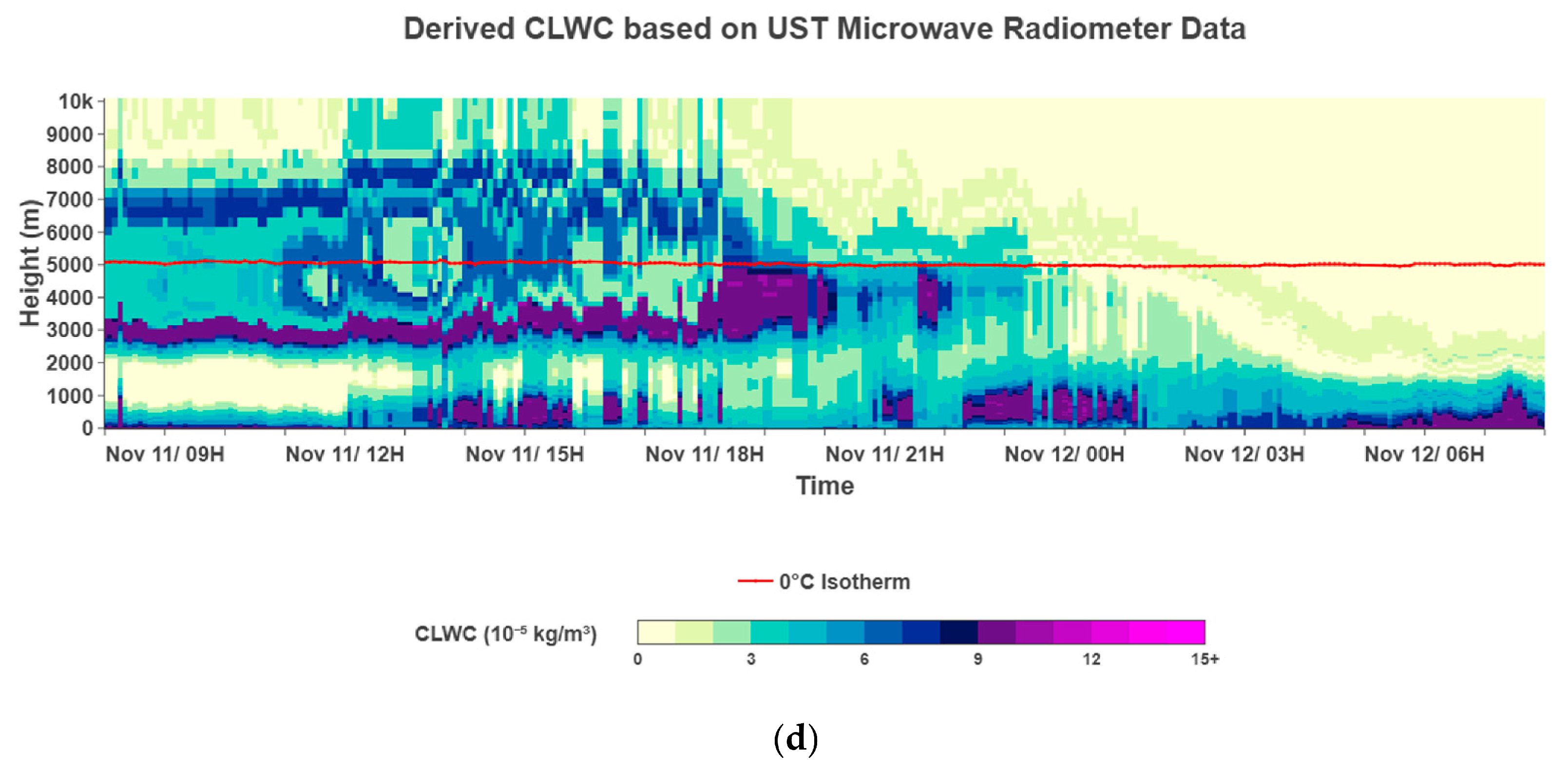
The microwave radiometer at the urban center of Hong Kong was not working at that time. The radiometer data at the eastern part of Hong Kong is used to construct the time–height cross-section of CLWC, and the results are shown in
Figure 6d. It can be seen that, apart from the liquid water within the atmospheric boundary layer, consistent with the corresponding signal in the zenith scan data of the cloud radar, there is an elevated layer of liquid cloud water between a height of around 3 km to 8 km above ground. In particular, the freezing level (red line) has a height of about 5 km and the liquid water above that height, which is consistent with the elevated signal of cloud radar reflectivity and weather radar reflectivity, may be supercooled. This example shows the capability of the cloud radar to pick up signal of supercooled liquid water or mixed phase clouds, resulting from the interaction between the outer circulation of a tropical cyclone and a westerly trough in late autumn (November of the year).
5. Low Visibility Weather Applications
A cold front moved across the coast of southern China on the morning of 17 February 2026. While easterly winds prevailed over Hong Kong, northerly winds affected inland areas of southern China. The northerlies progressed southwards gradually and converged with the prevailing easterly in Hong Kong, bringing about light rain or drizzle with low cloud base in Hong Kong (down to about 800 feet), a rather typical humid weather condition in the territory in the late winter/early spring under mixing of airmasses. The southward progression of the northerly to Hong Kong also signifies the domination of the northeast monsoon over the coastal area, and with the cooler and relatively drier air from the north gradually becoming thicker, the cloud base gradually rises, as shown in the cloud base height of around 3000 feet in the evening of that day in local time (Hong Kong time = UTC + 8 h).
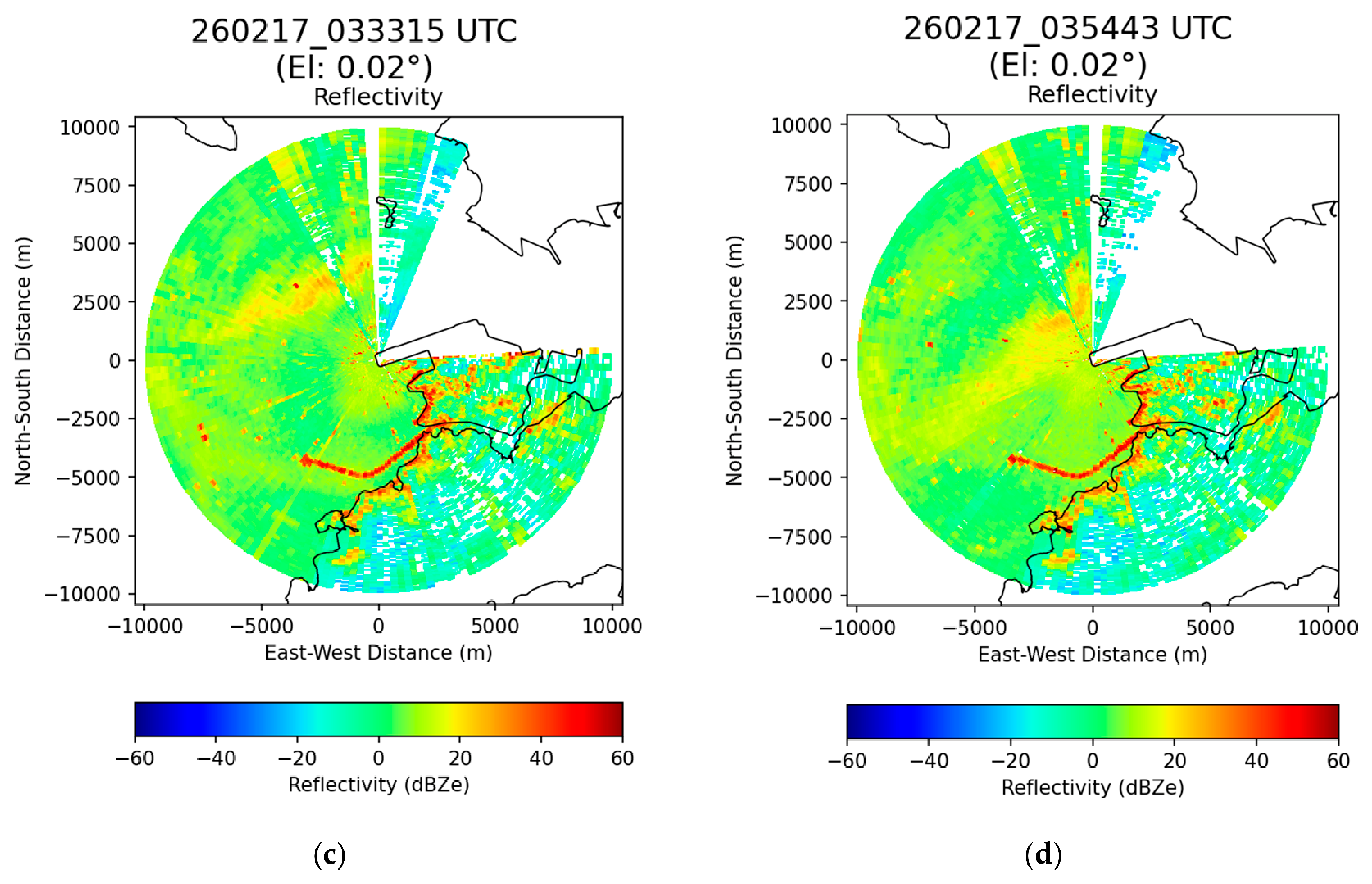
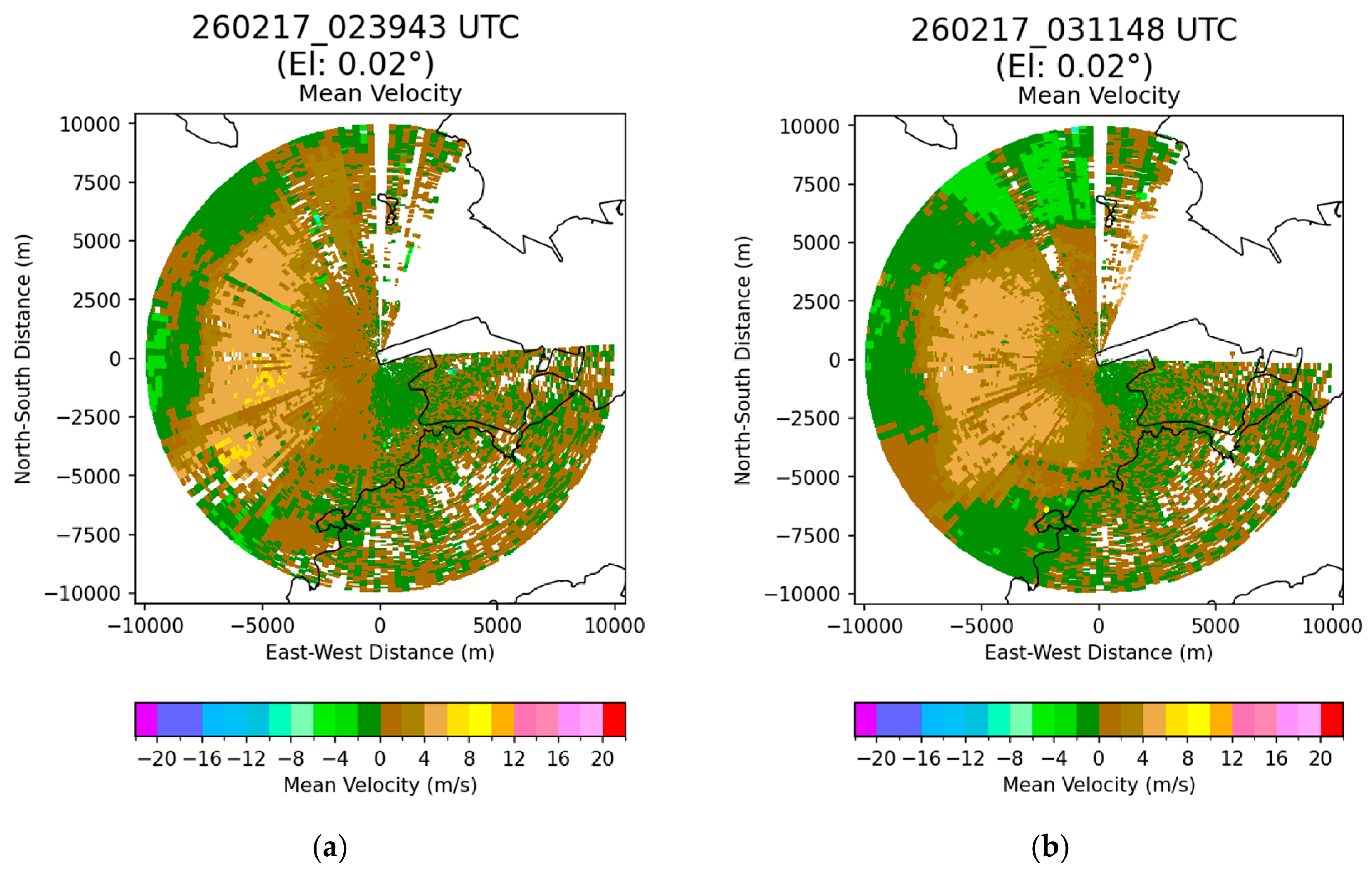
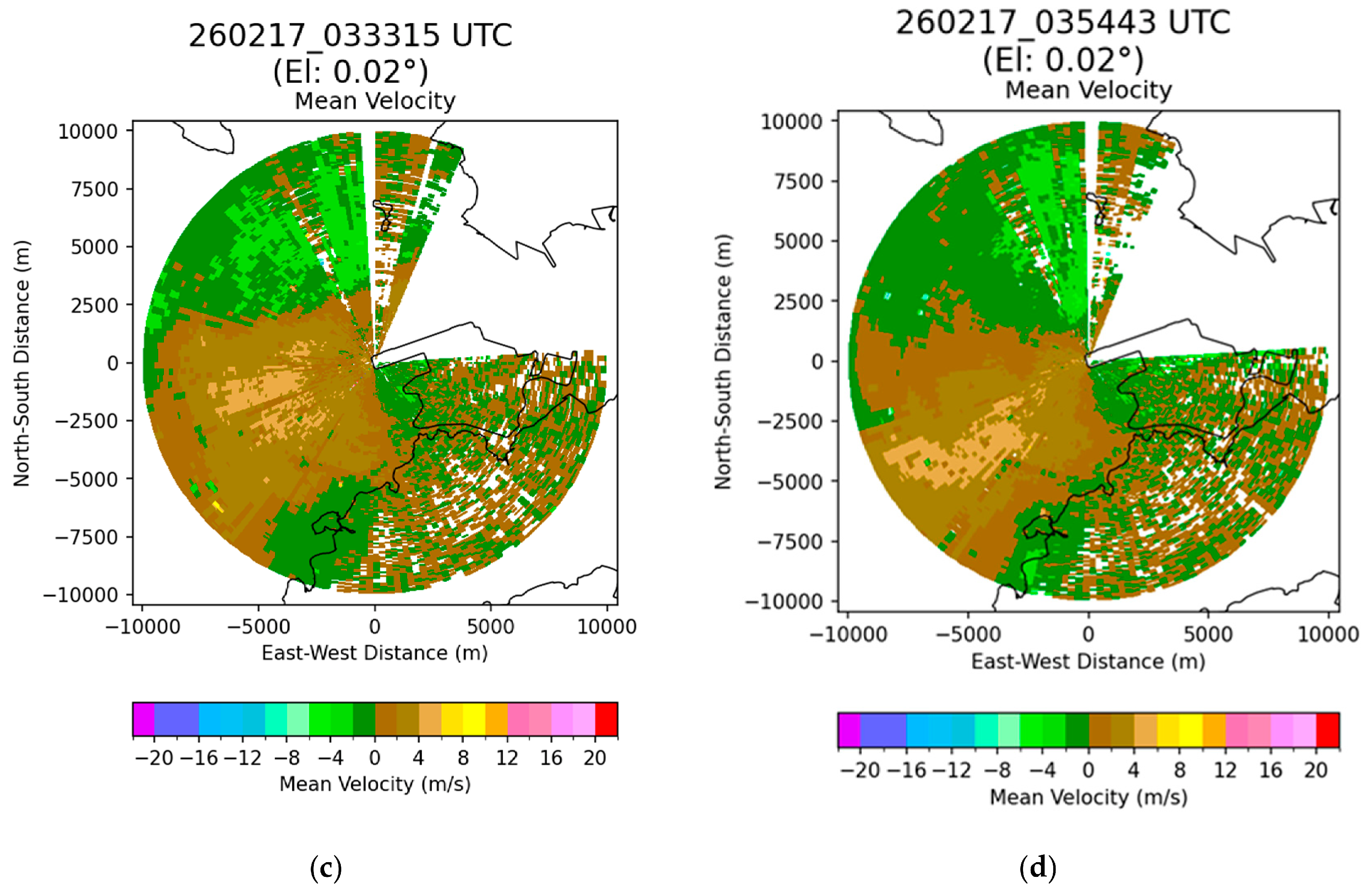
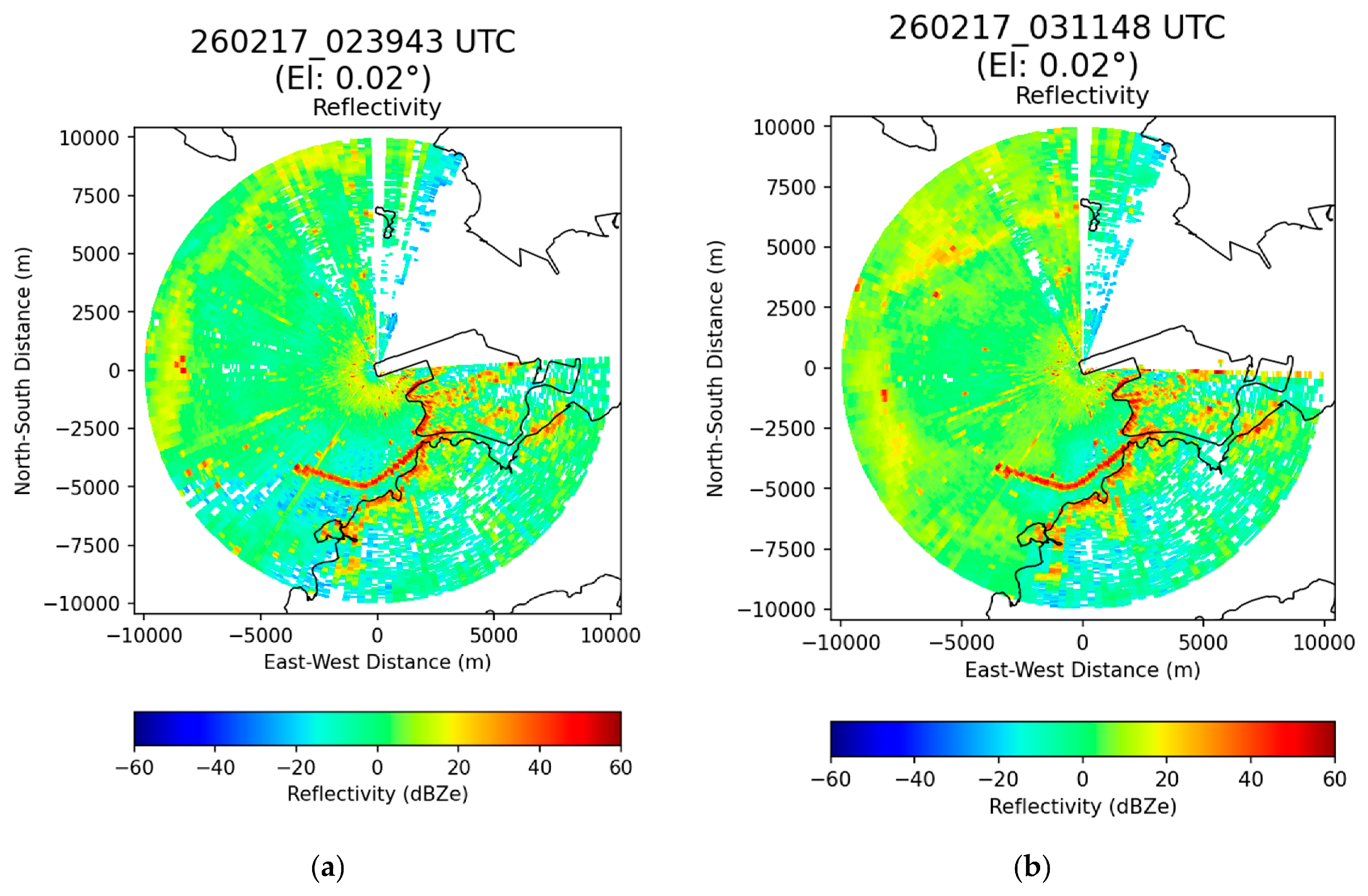
The cloud radar provides good signals for both Doppler velocity and reflectivity, as shown in
Figure 7 and
Figure 8, respectively. In
Figure 7, the prevailing easterly shows up as outbound flow (colored brown) in the western semi-circle of the PPI scan of the cloud radar, and inbound flow (colored green, representing the northerly) moved southward gradually towards the airport (with the sequence shown from
Figure 7a–d). At the location of the convergence between the easterly and the northerly, the reflectivity turns out to be higher (
Figure 8) and the band of higher value of reflectivity moved southward towards the airport (following the sequence in
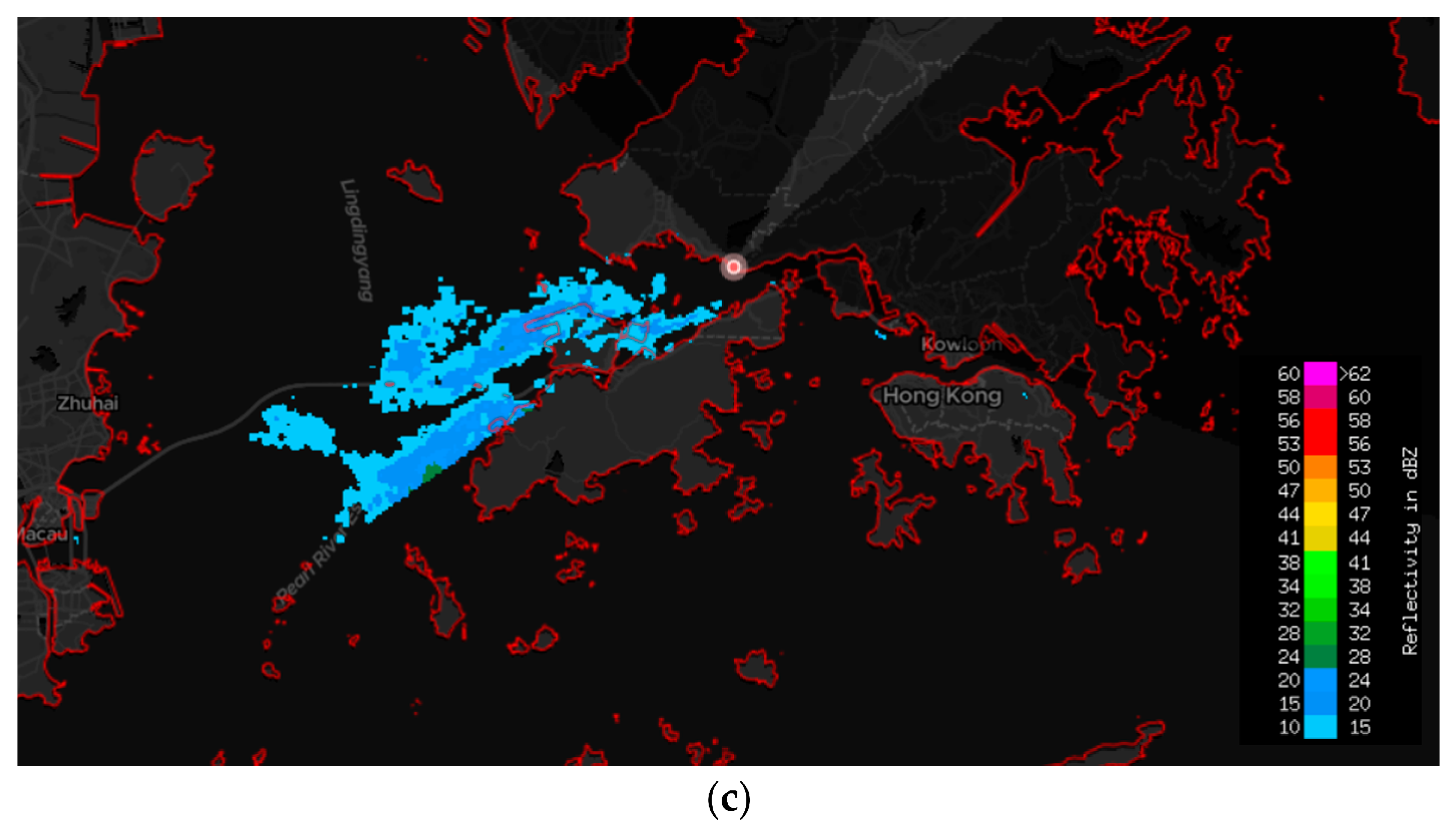
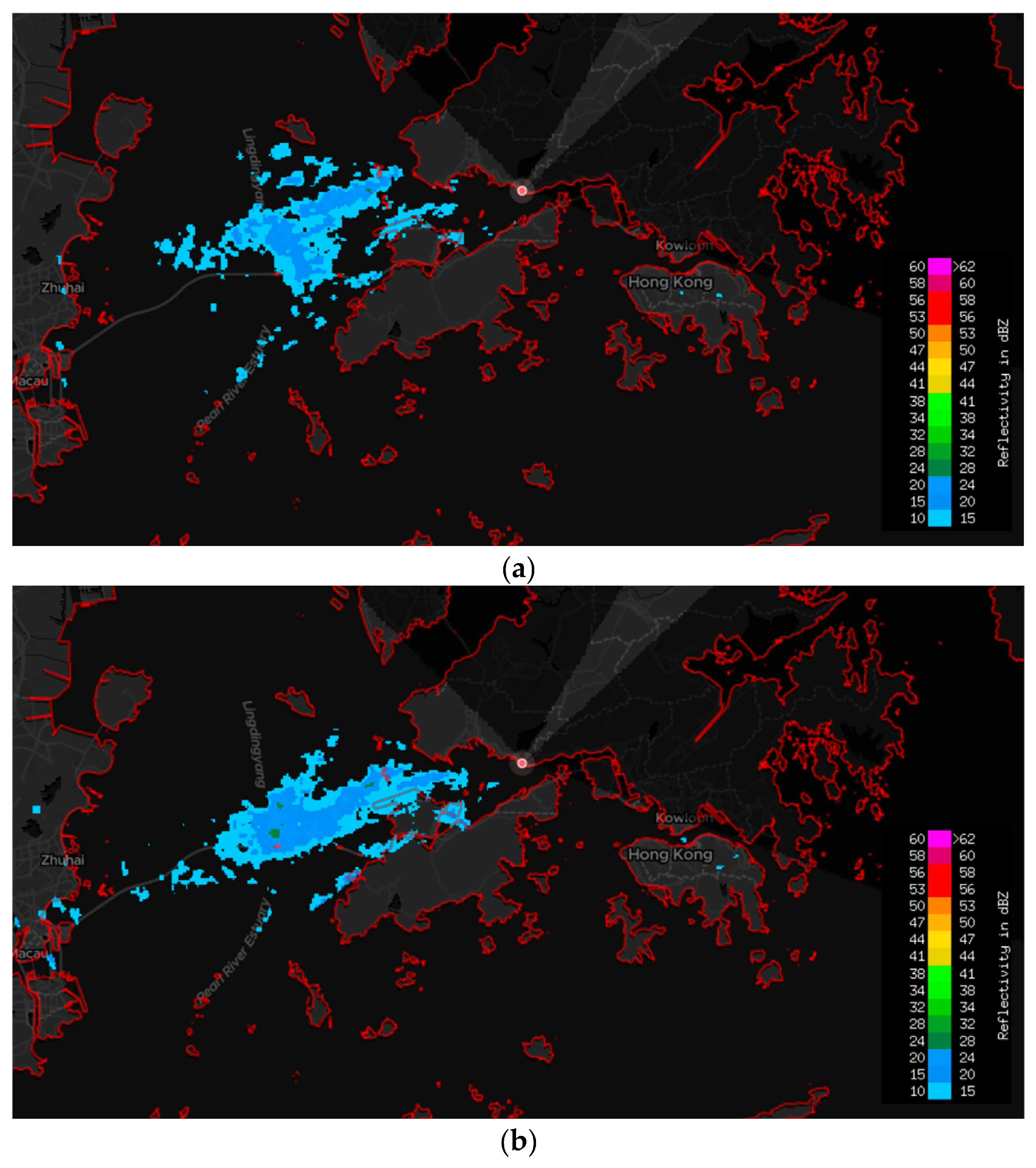
Figure 7a–d). The reflectivity data from the cloud radar is used to develop an algorithm to calculate visibility distribution in the airport region in the future. The southward spreading of higher reflectivity is consistent with the observations from the C-band radar facing the airport (the sequence in
Figure 9a–c). However, the C-band radar is more sensitive to heavier rain, and only the band of slightly heavier rain at the convergence between the northerly and easterly shows up in the weather radar picture. Compared to
Figure 9, the cloud radar provides much better coverage and depicts the velocity (
Figure 7) and reflectivity (
Figure 8) features nicely over a range of 10 km in the airport region.
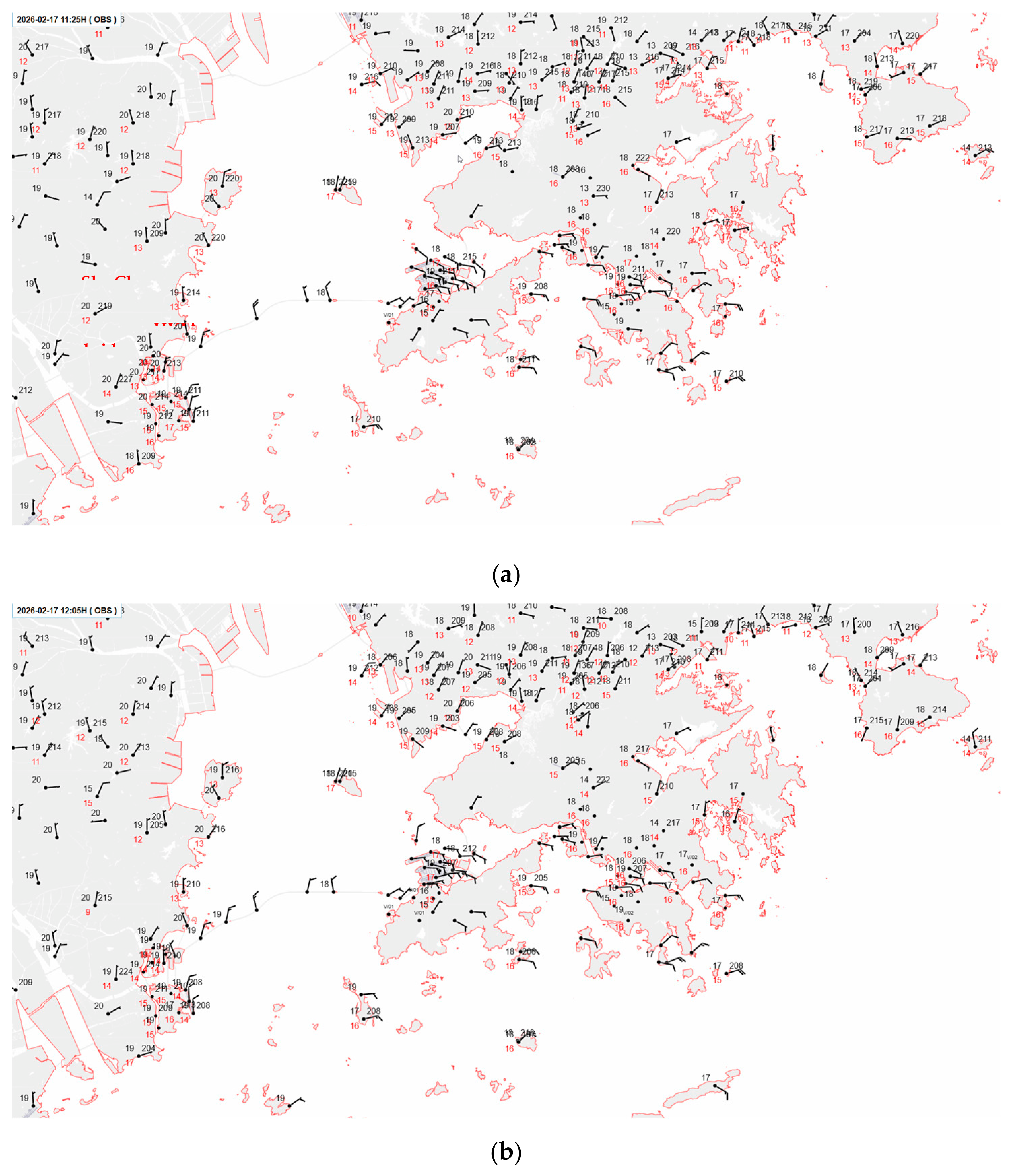
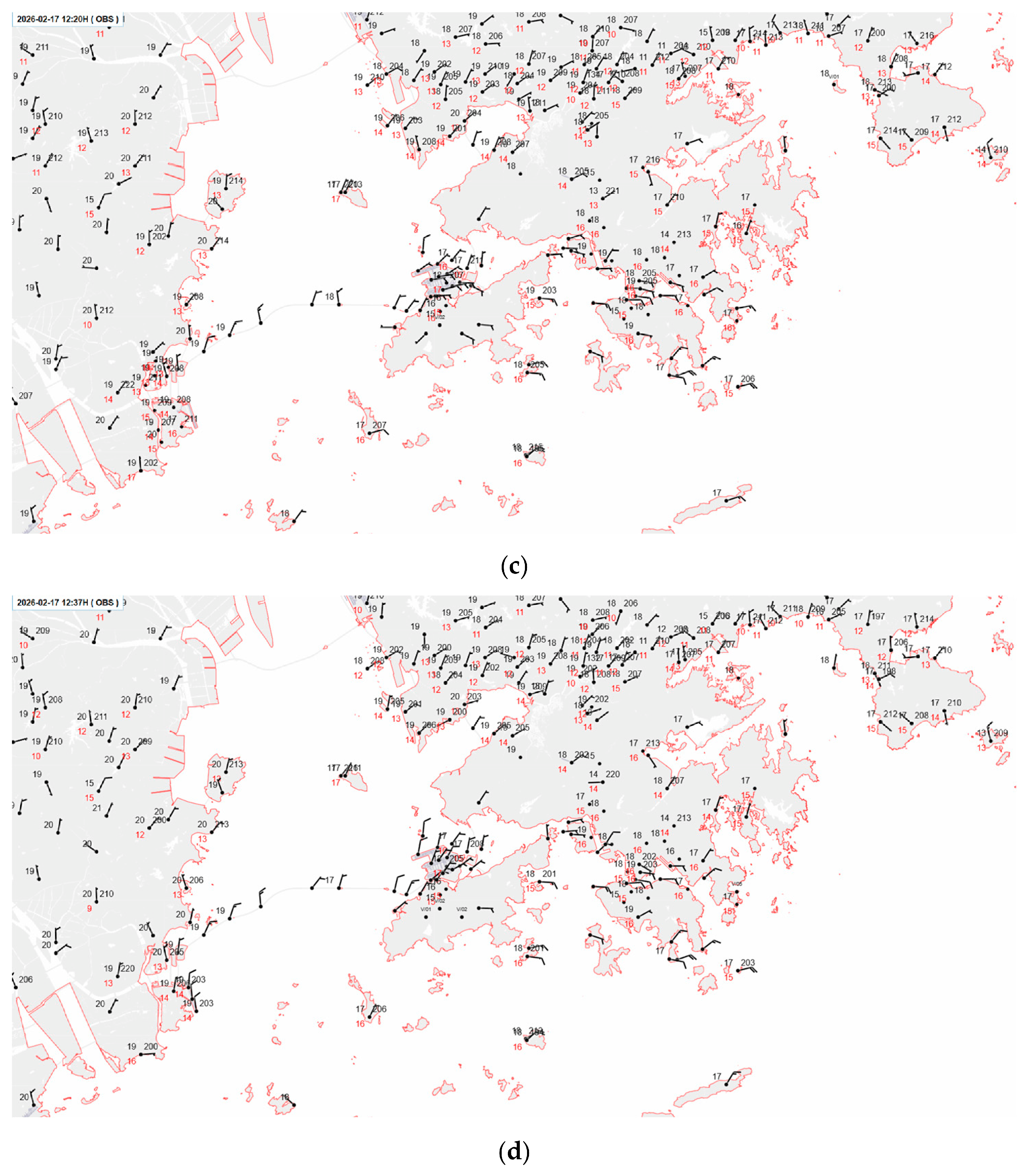
No systematic assessment has been made yet as to the accuracy of velocity measurement from the Doppler cloud radar. Based on this single case, the Doppler velocity field from this radar is generally consistent with the observations from the surface weather stations (sequence of events in
Figure 10a–d), showing the prevalence of easterlies in Hong Kong (
Figure 10a) and the gradual southward spreading of northerly over the Pearl River Estuary, affecting Sha Chau first (
Figure 10b), and then the northern runway of HKIA (
Figure 10c) and eventually covering the whole airport (
Figure 10d). With the addition of the Doppler velocity data from the cloud radar, the monitoring of the intrusion of the northerly winds becomes more effective.
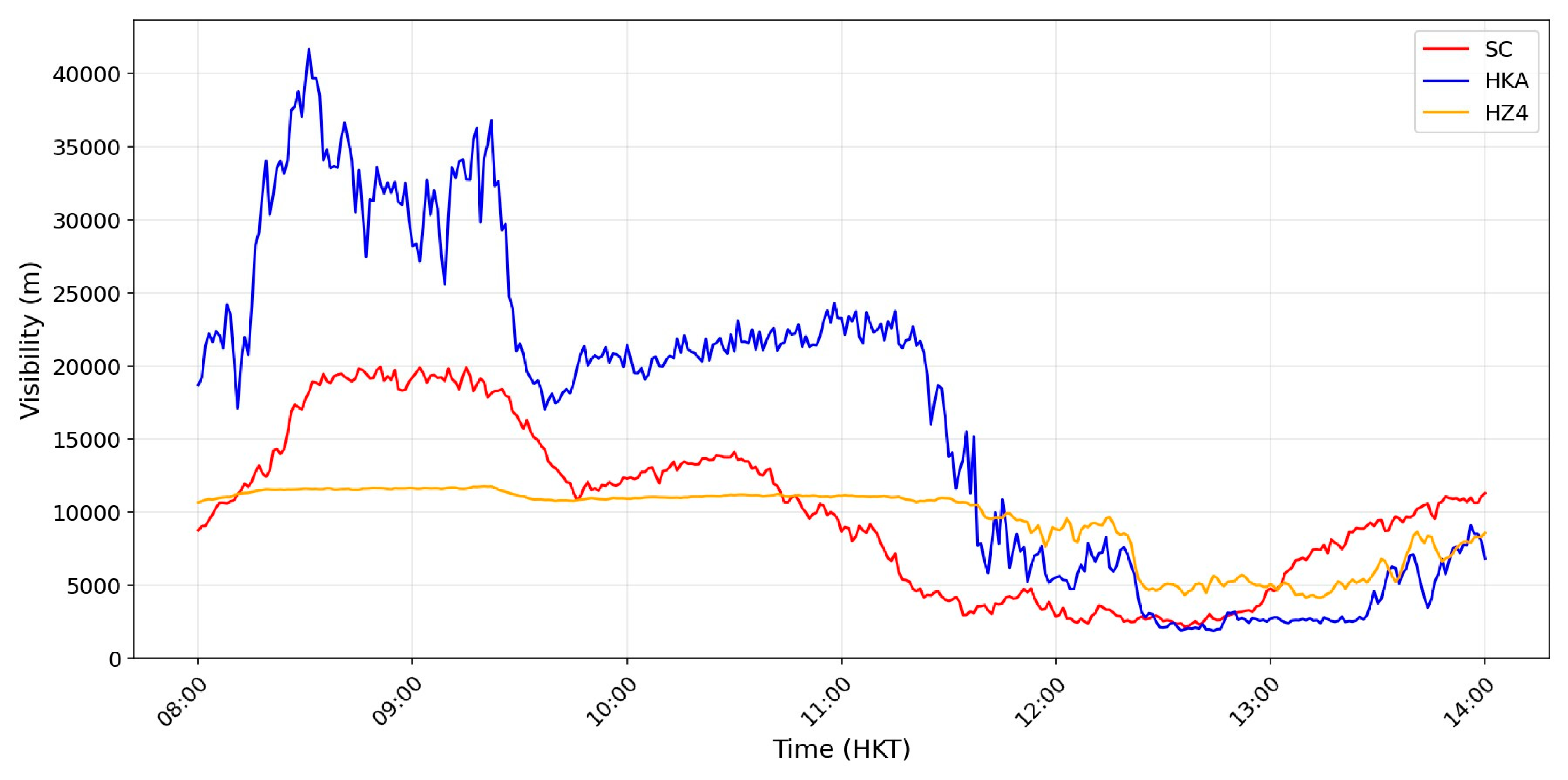
The arrival of the band of higher reflectivity from the cloud radar at HKIA is consistent with the drop of visibility in the region in light rain, as shown in the period from 11 a.m. (03 UTC) to 1 p.m. (05 UTC) of the day, with the drop first appearing at Sha Chau, then at the center of the southern runway of HKIA, and eventually over the bridge further southwards to the airport island (
Figure 11). Thus, the reflectivity data from the cloud radar has the potential for monitoring visibility change more quantitatively, by developing the visibility map algorithm based on cloud radar data in the future.
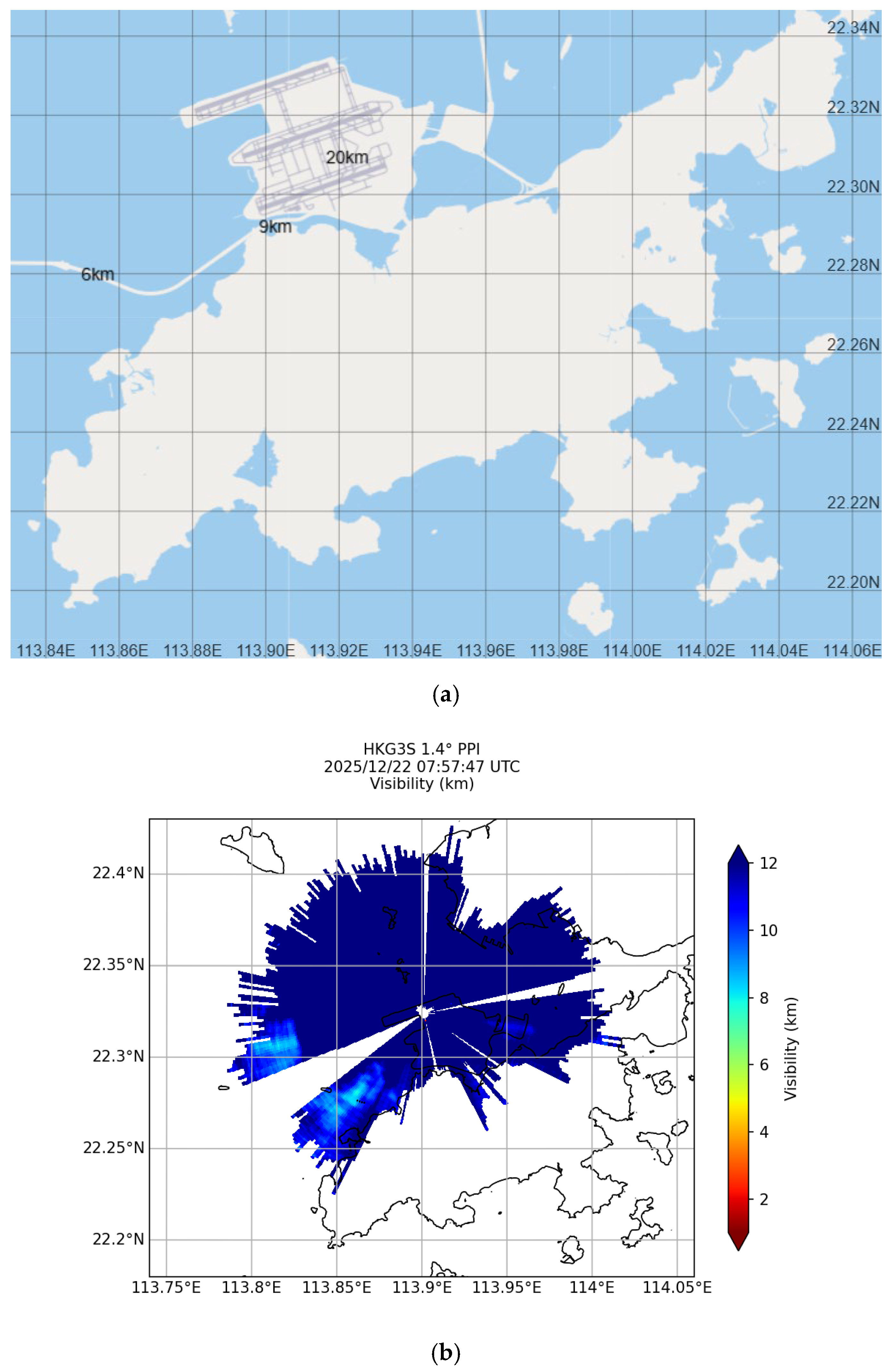
The cloud radar may also be used for monitoring visibility in the airport region in drier condition. An example is shown in
Figure 12a. Under the effect of thin haze/mist, the visibility dropped to around 5 km to the west of HKIA over the bridge, whereas it remained rather high over the airport itself (around 20 km). The rather sharp gradient of visibility is also shown in the visibility map based on the long-range Light Detection and Ranging (LIDAR) system (
Figure 12b, following the method described in [
29]).
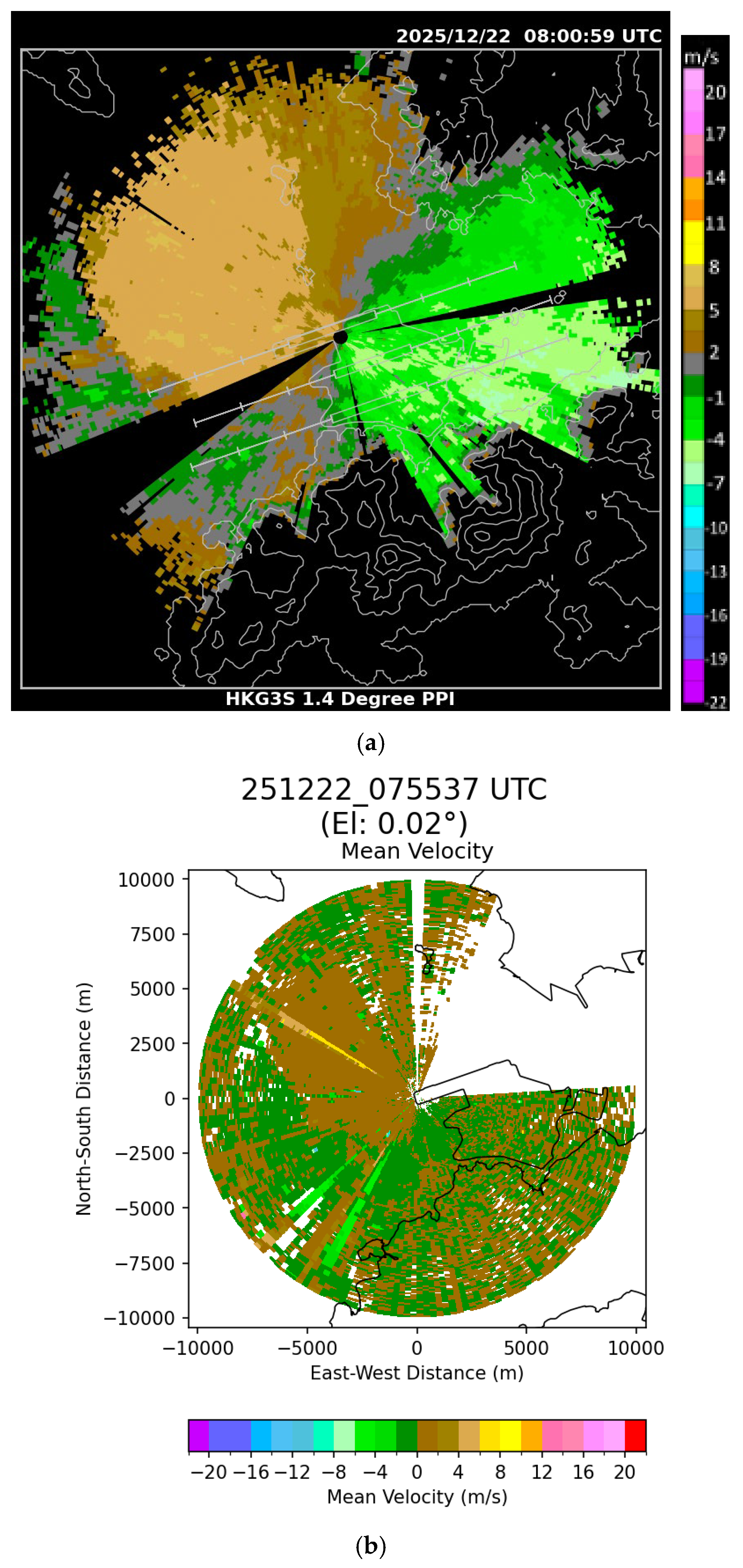
The lower visibility appears to be related to the setting in of westerly sea breeze, with the westerly winds bringing a higher aerosol loading from the west and favoring the accumulation of aerosols with the convergence between the easterly prevailing at HKIA and the westerly sea breeze, as shown in the Doppler velocity imagery from the long-range LIDAR (
Figure 13a). As the atmospheric boundary layer is rather dry, the reflectivity from the cloud radar does not provide a strong signal for the aerosol loading but the Doppler velocity still picks up the westerly sea breeze (inbound flow, in green) against the prevailing easterly (outbound flow, in brown), as shown in
Figure 13b. The cloud radar adds to the wind monitoring over the airport area and may be combined with other remote sensing instruments (such as LIDAR and C-band weather radar) as well as in situ observations (such as automatic weather stations) to build up a three-dimensional grid of velocity for areas inside and around HKIA.
6. Severe Weather Applications
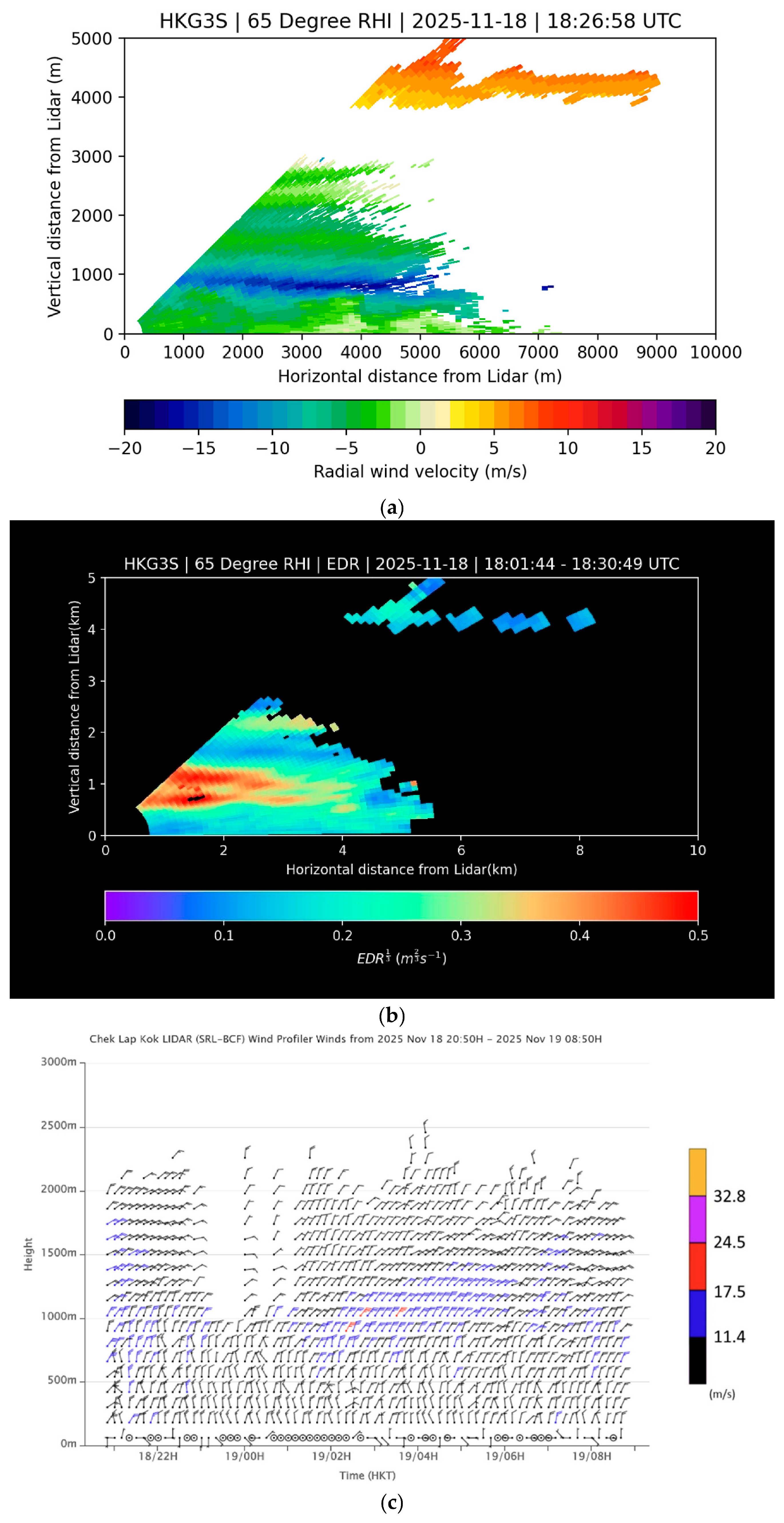
Continental cold air outbreak occurred on 18 November 2025, and this kind of outbreak is normally associated with the occurrence of a boundary-layer jet. For aircraft departing from HKIA with a larger rotation angle, it may fly through the jet and encounter low-level windshear and/or turbulence. In fact, at 18:25 UTC of 18 November 2025, an aircraft departing from the center runway of HKIA to the east reported encountering of windshear of ±20 knots at a height of about 1800 feet. LIDAR is effective in monitoring this kind of jet, as shown in the Doppler velocity of RHI scan (
Figure 14a) and the corresponding eddy dissipation rate (EDR) map (
Figure 14b). The jet also shows up in the vertical wind profiles from the boundary layer type radar wind profiler at the airport (
Figure 14c), and it persisted from early morning (around 2 a.m. of 19 November 2025) to late morning (around 9 a.m. of the same day), with northeasterly wind reaching strong force (wind barbs in blue) and occasional gale force (wind barb in red).
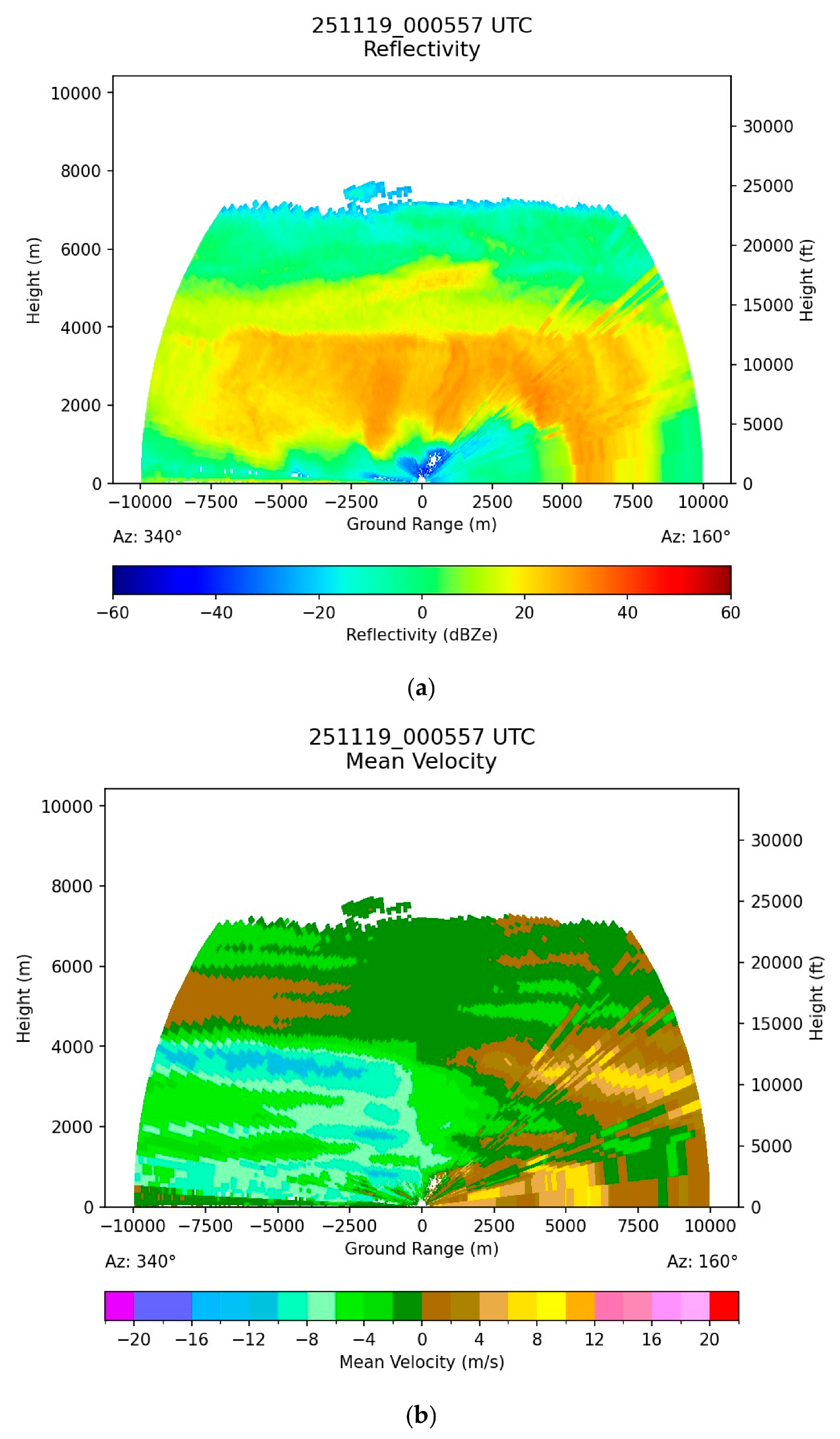
Earlier in the morning of 19 November 2025, the atmospheric boundary layer was still rather dry and the signal from the cloud radar was not persistent. Later on the day, the sky became cloudier with some rain, and cloud radar provided a much better signal to identify the spatial variation in the boundary layer jet, which could not be picked up by the LIDAR (due to rain) and radar wind profiler (with column measurement at a specific point only). An example is shown in
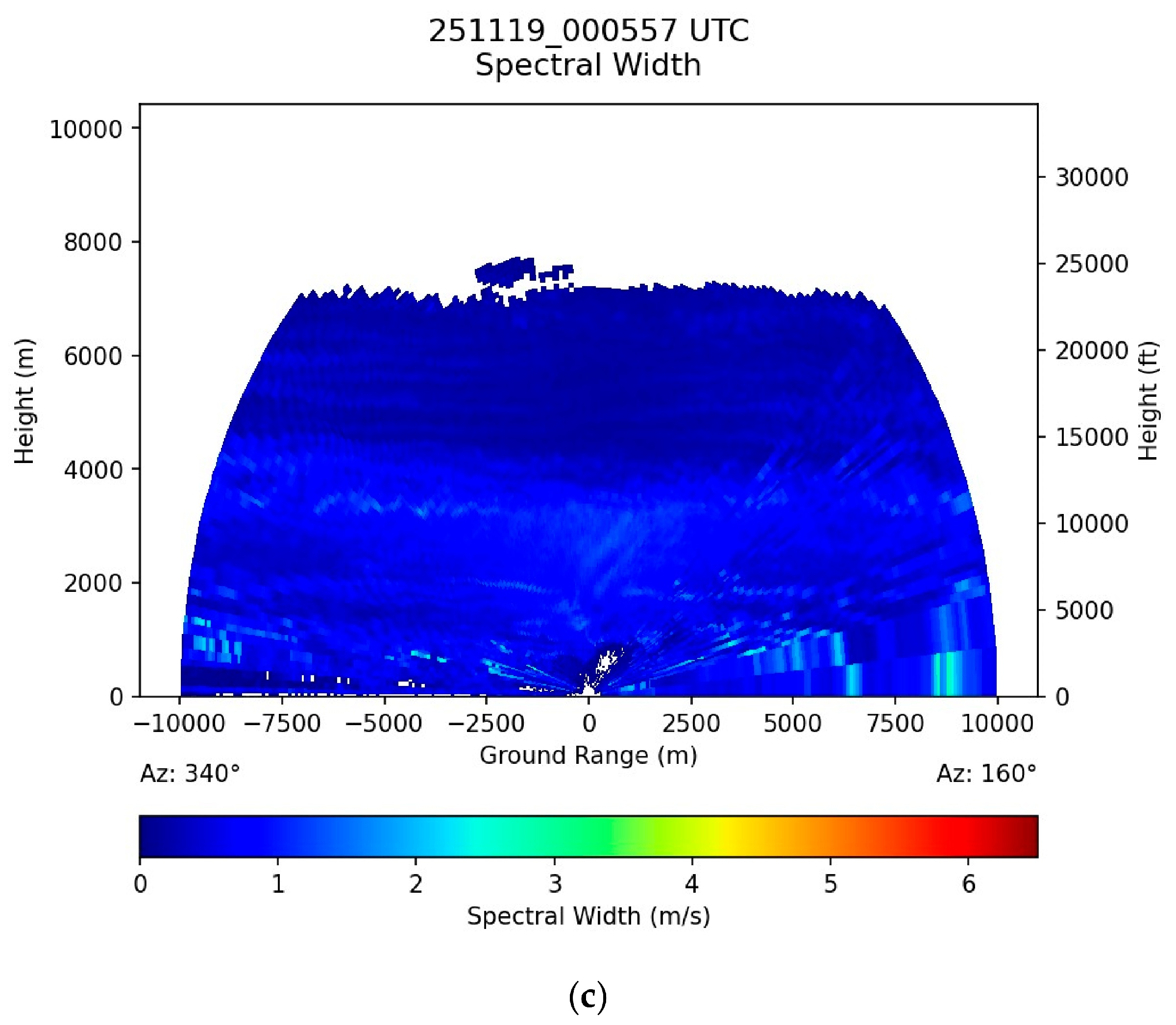
Figure 15, with RHI scan in roughly north–south orientation (azimuth angles from 340 degrees to 160 degrees, nearly perpendicular to the runway orientation of HKIA). In
Figure 15a, the reflectivity of the cloud radar shows the rather thick layer of clouds, with a height from around 1000 m to 4000 m above sea level, with drier air aloft. The cloud base shows some variations, with cloud water/rain descending but not reaching the ground (with a base height of about 700 to 800 m) and rain reaching the ground (near the southern end of the scan). Two jets show up within the cloud band (
Figure 15b), with the jet cores and the major cloud band descending slightly in height generally from the north to the south. The first jet core occurs at a height of about 4000 m, and the second one at heights from about 1000 m to 1500 m, consistent with the wind profiler observation (
Figure 14c) and the earlier measurement from the LIDAR (
Figure 14a). At the locations of the jet cores, the measured spectrum width from the cloud radar appears to be slightly larger (
Figure 15c). Another future research area for the cloud radar is to derive EDR based on its spectrum width data, in a way similar to the methodology used for conventional weather radars. The jet location information (from Doppler velocity of the cloud radar) and the EDR data (if available) are useful for monitoring windshear and turbulence to be encountered by departing aircraft in cloudy/rainy conditions.
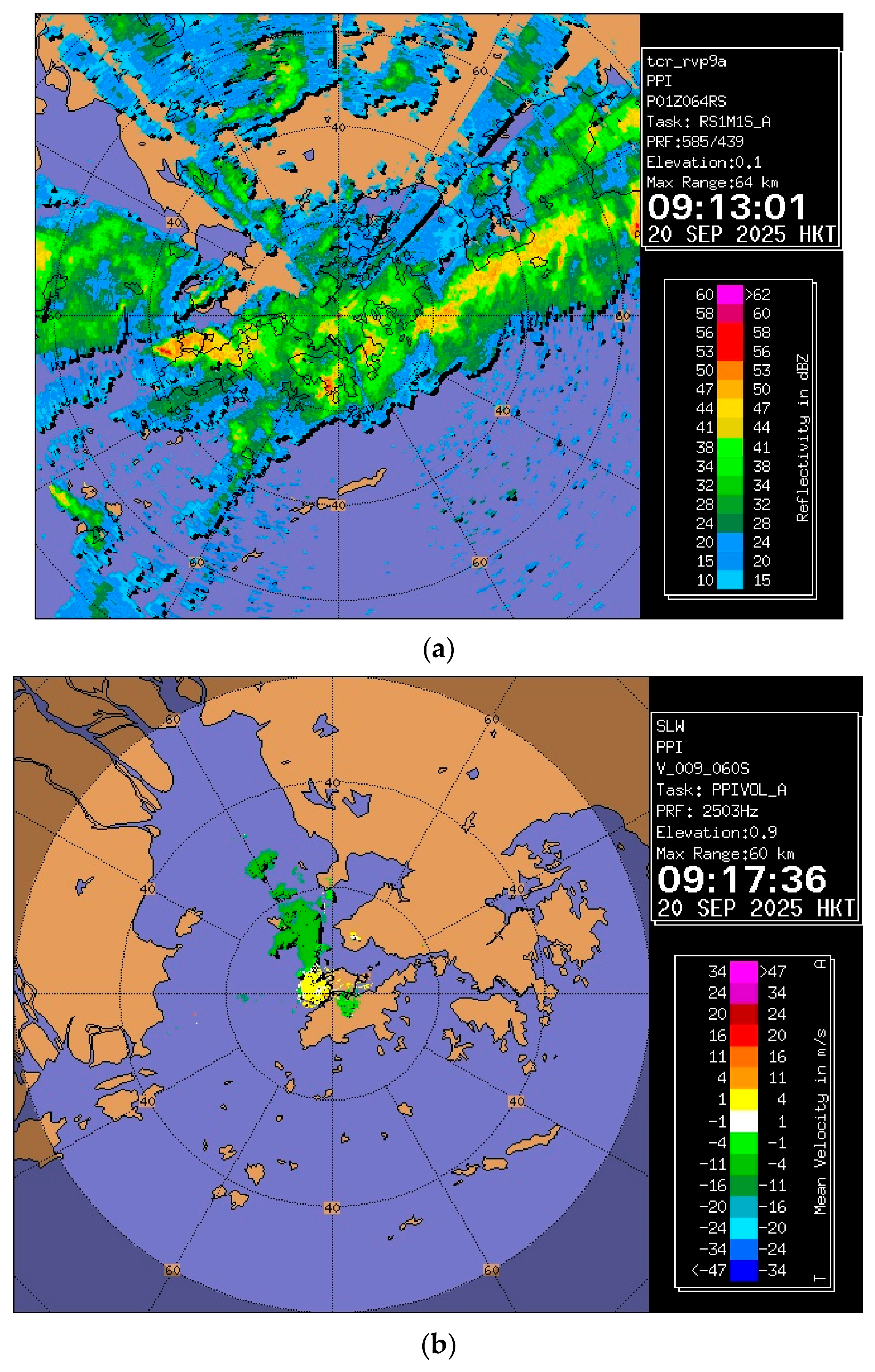
The cloud radar data is also useful for monitoring heavy rain. A persistent rain event at HKIA occurred in the morning of 20 September 2025. The reflectivity from the surveillance (S-band) weather radar in Hong Kong at that time shows the initation of heavy rain at a specific location to the northwest of HKIA (
Figure 16a), where the X-band Doppler weather radar specially deployed for the airport shows convergence of inbound flow (in green, for northerly) and outbound flow (in yellow, southerly), though with limited measurement range due to rapid attenuation of the signal from this radar in heavy rain (
Figure 16b). Heavy rain, once initiated, moved eastwards following the lower to middle tropospheric westerly and brought heavy rain just over HKIA. In fact, due to the rather persistent heavy rain, flooding occurred at the airport on that morning and damaged some underground equipment.
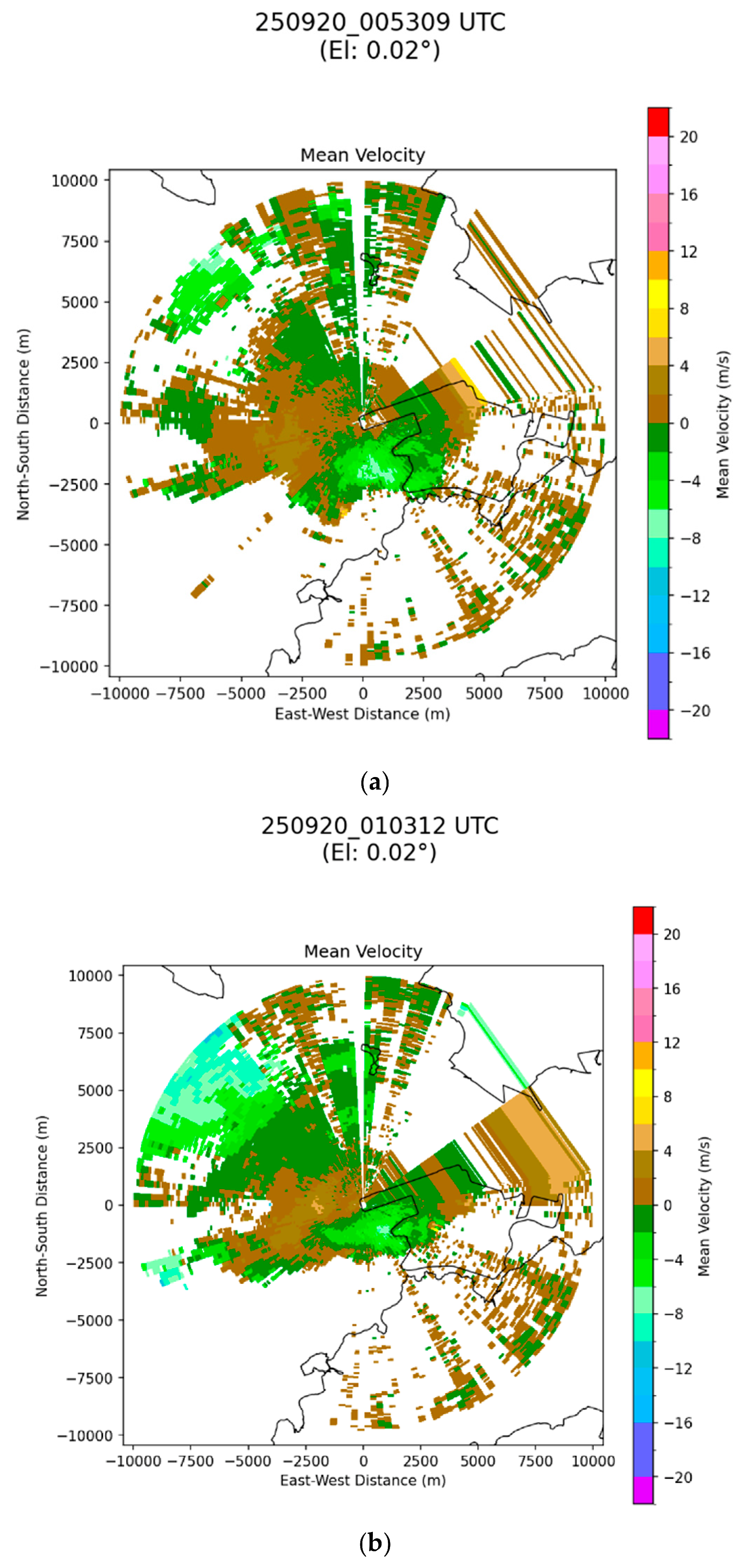
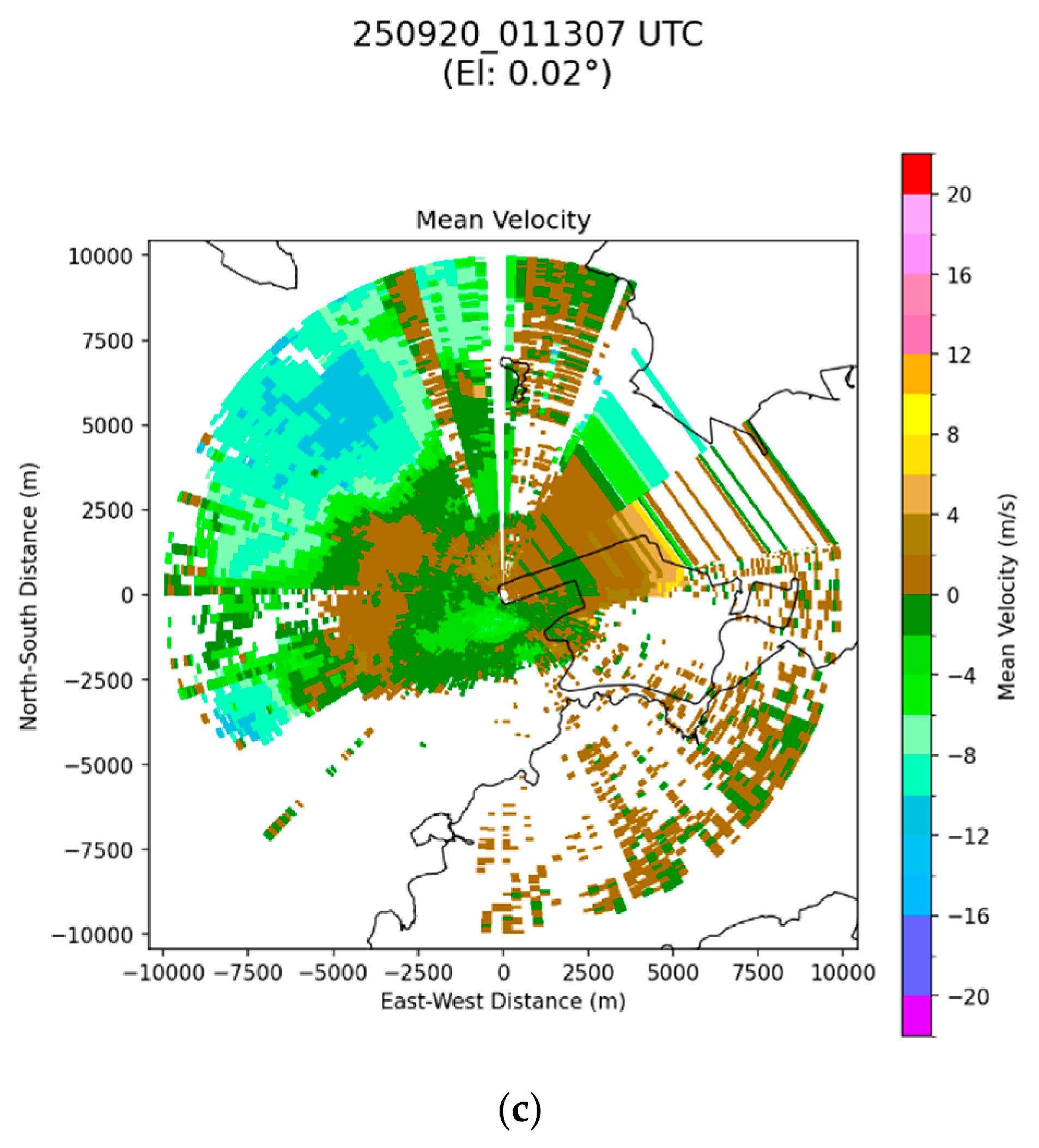
A sequence of Doppler velocity data from the cloud radar on that morning is shown in
Figure 17. Against the prevailing south to southeasterly flow at the airport (inbound flow of green to the south of the cloud radar, and outbound flow of brown to the north of the cloud radar), there seems to be signature of strong inbound flow to the northwest of HKIA over the Pearl River Estuary (in blue and green,
Figure 17a), which may be associated with the outflow from the rain further north. Such strong inbound flow spreads southwards gradually towards the airport (
Figure 17b), becomes much wider in spatial extent, and converges with the prevailing south to southeasterly flow at the airport area (
Figure 17c). Compared to the X-band weather observation (
Figure 16b), the cloud radar detects flow near the ground/sea surface (with an elevation angle as low as 0.02 degrees, whereas X-band weather radar has the lowest scan with the elevation angle of 0.9 degrees) and has a rather persistent velocity signal in the rain. The S-band radar, though providing wider spatial coverage, is situated on top of a mountain (around 500 m above sea level, with a PPI scan of 0.1 degrees above horizon) and does not show the airflow near the sea surface. This case demonstrates the unique advantage of the siting of cloud radar in monitoring convective weather, before the rain becomes heavy.
7. Conclusions
This paper summarizes the preliminary observations and applications of a Doppler cloud radar at an operational airport. The cloud radar is found to provide reasonable estimates of cloud-base height, compared with those from a co-located ceilometer, by identifying the lowest cloud layer that satisfies the thickness, reflectivity, and ZDR criteria. Although the cloud radar performs reasonably well for most periods, some cloud layers may not be detected if they are thin, discontinuous, or obscured by rain. Background noise in the radar measurements may also affect the accuracy of cloud-layer detection. As discussed in
Section 1, determining the “true” cloud base may require additional remote-sensing measurements, as suggested in many previous studies. In the analysis of a heavy rain case, this radar is found to yield reasonable values of cloud top height when compared with CLWC profiles from a microwave radiometer. It should also be noted that the cloud radar reflectivity may become saturated during heavy rain, when droplet sizes increase to more than about 10% of the wavelength of radar, because the Rayleigh scattering approximation will become less accurate [
30,
31,
32]. However, the velocity data should remain reliable as it is derived from the Doppler shift of the returned signal.
Applications of the cloud radar are presented in several selected weather scenarios. The radar is found to provide useful signals for clouds containing supercooled liquid within an outer cloud band associated with a late-season tropical cyclone. It can also be useful for monitoring the weather conditions under low visibility in light rain or drizzle as well as mist/haze, especially through its Doppler velocity data. Moreover, the velocity data, and in one case the spectrum width data, from the radar could be applied to the monitoring of severe weather such as windshear encountered by departing aircraft due to low-level jets and persistent initiation of heavy rain.
Various research works are in the pipeline for this instrument. Studies will be conducted on noise filtering of the cloud radar to distinguish true reflectivity in PPI and RHI scans as far as practicable, even though the data resolution is not as high as that of a conventional surveillance radar. Apart from its major application in the automation of cloud reporting, the use of the instrument to generate real-time visibility maps for mist/light rain situation (so that all-weather visibility map could be available in conjunction with the LIDAR-based visibility map in mist/haze) and to monitor low-level turbulence based on spectrum width data (as shown in the low-level jet case) will also be explored. The combined use of LIDAR, weather radars, and the cloud radar, together with other wind measuring equipment, to provide the three-dimensional wind field inside and around HKIA will also be an active area of research.