Article

Synergism of PTFE Nano-Particles and Surface Textures on the Tribological Performance of Cylindrical Roller Thrust Bearings Under Starved Lubrication


1
Equipment Reliability Institute, Shenyang University of Chemical Technology, Shenyang 110142, China
2
School of Mechanical Engineering, Shenyang Ligong University, Shenyang 110159, China
3
College of Mechanical and Automotive Engineering, Zhaoqing University, Zhaoqing 526061, China
4
School of Mechanical and Power Engineering, Shenyang University of Chemical Technology, Shenyang 110142, China
*
Authors to whom correspondence should be addressed.
Appl. Sci. 2026, 16(8), 3988; https://doi.org/10.3390/app16083988
Submission received: 28 March 2026 / Revised: 14 April 2026 / Accepted: 14 April 2026 / Published: 20 April 2026
(This article belongs to the Section Surface Sciences and Technology)

Abstract

Rolling bearings operate under complex contact conditions, and their tribological and dynamic behaviors are highly sensitive to their lubrication performance. Based on previous studies on surface texturing, three types of representative textures (wholly distributed dimples, locally distributed dimples, and grooves) with optimized parameters were fabricated on the shaft washers using the laser marking method. This was done to investigate the synergistic effect of surface textures and polytetrafluoroethylene (PTFE) nano-additives on the tribological and friction-induced vibration performance of cylindrical roller thrust bearings under starved lubrication. Lubricating oils containing various mass fractions (0.5 wt%, 1.0 wt%, and 3.0 wt%) of PTFE nano-additives were prepared and employed. The coefficients of friction (COFs), wear losses, worn morphologies, and time/frequency-domain vibration responses were analyzed. The results show that the appropriate integration of surface textures and solid lubricant additives can establish a highly effective synergy for rolling bearings under starved lubrication. PTFE nano-additives significantly improved the tribological performance of the smooth bearings and those with dimples (both wholly distributed and locally distributed), with the optimal performance observed at a mass fraction of 3.0 wt%. In contrast, the tribological performance of the groove-textured bearings noticeably deteriorated with the addition of PTFE nano-particles, especially at higher mass fractions. The bearing with wholly distributed dimples exhibited the best overall tribological performance at a mass fraction of 3.0 wt%, achieving a 61.8% reduction in the average COF, a 99.6% reduction in wear loss, and significantly suppressed vibration amplitudes.

1. Introduction

Bearings are fundamental components of rotating machinery. The performance limits of rolling bearings often define the operational ceiling of the entire machine. Their reliability, energy efficiency, and service life are key factors driving the technological advancement in equipment [1,2]. Under high loads and rotational speeds, the microscopic interactions between the rollers and the raceways involve a complex coupling of contact mechanics, tribology, lubrication chemistry, and system dynamics [3]. It has been reported that more than 50% of severe mechanical failures originate from lubricant film breakdown or excessive wear, and approximately 80% of mechanical component failures are attributable to wear, underscoring the direct influence of tribological performance on the operational efficiency and reliability [4,5]. Therefore, enhancing the lubrication performance of rolling bearings, extending their service life, and reducing friction-related energy consumption remain critical scientific and engineering challenges in bearing design and practical applications.
With the primary aim of reducing friction and wear, researchers worldwide have proposed and developed a wide range of technical strategies, including optimization of lubricant formulations, incorporation of nano- or solid-lubricant additives [6,7], application of surface coatings, and design of surface micro-textures on tribo-pairs [8,9]. Under full-film or starved-lubrication conditions, numerous studies have demonstrated that introducing micro-scale surface textures—such as dimples or grooves—onto the contact surfaces can significantly reduce their friction and wear performance, through mechanisms such as lubricant storage, debris collection, and enhancement of local load-carrying capacity [10,11,12]. Long et al. reported that when the diameter and depth of dimples were 250 µm and 8 µm, the coefficient of friction (COF) and wear loss of rolling bearing were reduced by 74.6% and 89.5%, respectively [13]. Chen et al. further indicated that full-surface texturing is not necessarily optimal. Instead, texturing the outer quarter of the raceway with appropriate distribution parameters resulted in the most effective friction and wear performance [14]. Additionally, Long et al. found that grooves can also offer pronounced tribological performance with suitable parameters [15].
The addition of solid lubricants to base oils to enhance friction-reduction and anti-wear performance has also emerged as a mature and effective strategy [6]. A variety of works have shown that an appropriate concentration of solid lubricant nano-additives, e.g., polytetrafluoroethylene (PTFE), can notably reduce the COF and wear volume due to their extremely low shear strength and excellent self-lubricating properties [7]. Liu et al. reported that 0.5 wt% PTFE@silica Janus nano-particles significantly reduced friction and wear under water-based lubrication conditions [16]. Ali et al. demonstrated that the addition of approximately 1.0 wt% PTFE nano-particles to vegetable oil effectively improved the friction and wear performance of the AISI 52100-AISI 1010 tribo-pair, and that its combination with antioxidant additives exhibited a synergistic effect under high-load conditions [17]. Furthermore, Dubey et al. investigated the tribological behavior of nano-PTFE used as a lubricant additive and found that a concentration of 3.0 wt% substantially enhanced the welding load, anti-wear, and friction-reducing performance of the lubricant [7]. However, further increases in concentration led to performance degradation due to particle agglomeration [7]. Saini et al. studied the extreme-pressure performance and interfacial mechanism of submicron PTFE particles in Group III base oil, revealing an optimal concentration of 6.0 wt%, at which the extreme-pressure performance improved by up to 392%, primarily attributed to PTFE decomposition and its reaction with the metal surface to form a chemically bonded FeF2 tribo-film [18].
In recent years, increasing attention has been given to the synergistic effects arising from the combination of surface textures and solid lubricant additives. Xie et al. investigated the synergistic lubrication behavior of micro-textures and MoS2 solid lubricants in GCr15/PTFE tribo-pairs, demonstrating that appropriately designed micro-textures can promote the formation of a continuous composite lubricating film composed of PTFE and MoS2 at the friction interface, thereby effectively stabilizing and reducing the COFs under varying load conditions [19]. Long et al. further examined the influence of micro-dimple parameters on the tribological performance of PTFE-40# steel tribo-pairs under full-film lubrication. By tailoring the micro-dimples’ dimensions, the COF and wear were markedly reduced, highlighting the effectiveness of surface texturing in enhancing the tribological performance of PTFE-based systems under full-film lubrication [20]. Nevertheless, the systematic study of the tribological behavior of textured rolling bearings using PTFE nano-particles as additives remains limited. The underlying mechanisms governing the synergistic effects on both tribological performance and friction-induced dynamic responses have yet to be fully elucidated [21,22,23].
Based on these considerations and building upon previous studies on surface texturing, three representative textures (i.e., wholly distributed dimples, locally distributed dimples and grooves), together with their corresponding optimal texture sizes, were fabricated on the shaft washers of 81107 cylindrical roller thrust bearings (CRTBs) using a laser marking system [13,14,15]. Three mass fractions (0.5 wt%, 1.0 wt%, and 3.0 wt%) of PTFE nano-particles were selected to investigate the synergism between the surface textures and PTFE nano-additives on the tribological properties as well as the friction-induced vibration responses of bearings [7,17,18]. The results would provide useful insights for the design of rolling bearings and high-performance lubricants.

2. Materials and Methods

2.1. PTFE Nano-Particles and Lubricating Oil Preparation

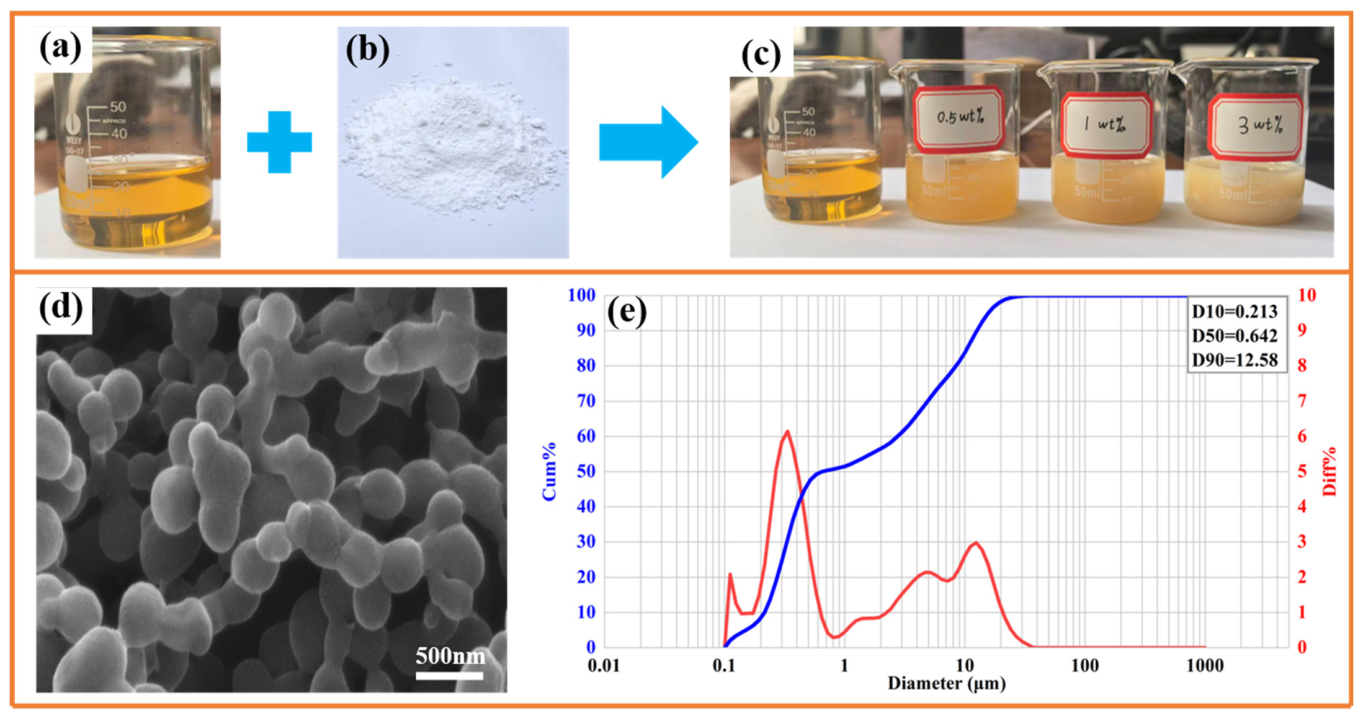
In this work, GTX 5W-30 SN (Castrol, London, UK, see Figure 1a) base oil was selected, with a dynamic viscosity of 14.45 mm2/s at 30 °C and a density of 0.8678 g/cm3. The polytetrafluoroethylene (PTFE) nano-powder (sourced from DuPont, Wilmington, DE, USA, see Figure 1b) was characterized by scanning electron microscopy (SEM, Apreo 2C, Thermo Scientific, Waltham, MA, USA). The SEM image indicated that the PTFE nano-particles were predominantly spherical or ellipsoidal (see Figure 1d). The particle size distribution was further analyzed using a laser particle size analyzer (BT-9300SE, Bettersize, Instruments Ltd., Dandong, Liaoning, China), indicating a median particle diameter (D50) of 0.642 µm and a specific surface area of 4585 m2/kg (see Figure 1e).
To prepare lubricating oils with different mass fractions of PTFE nano-particles, a precision electronic analytical balance (EX 225D, Ohaus Corporation, Parsippany, NJ, USA), a magnetic stirrer (MS-10L, Joanlab, Huzhou, Zhejiang, China), and a beaker were used. First, an appropriate amount of base oil was weighed using the analytical balance. According to Equation (1), if m is the mass of the PTFE nano-powder and M is the mass of base oil added, the mass fraction of the PTFE nano-particles, ω , can be calculated as follows [7]:
ω = m M   +   m
Alternatively, if the mass fraction is determined, the amount of nano-powder to be added can also be accurately calculated. Therefore, based on the mass fraction (0.5 wt%, 1.0 wt%, and 3.0 wt%) [24], the PTFE nano-powder was then weighed using the balance. After pouring it into the base oil, the lubricating oil was stirred for 3 h using the magnetic stirrer to ensure the uniform dispersion of the PTFE nano-particles in the base oil (see Figure 1c). To minimize the influence of PTFE nano-particle agglomeration, the prepared lubricating oil was additionally stirred for 1 h prior to each wear test. Previous studies suggest that PTFE nano-additives at relatively low concentrations (≤3.0 wt%) have limited influence on bulk viscosity [7,18]. Therefore, the rheological properties of the lubricants were not systematically evaluated in this study. To minimize agglomeration, the lubricants were thoroughly stirred and re-dispersed prior to each test.

2.2. Bearings and Textures

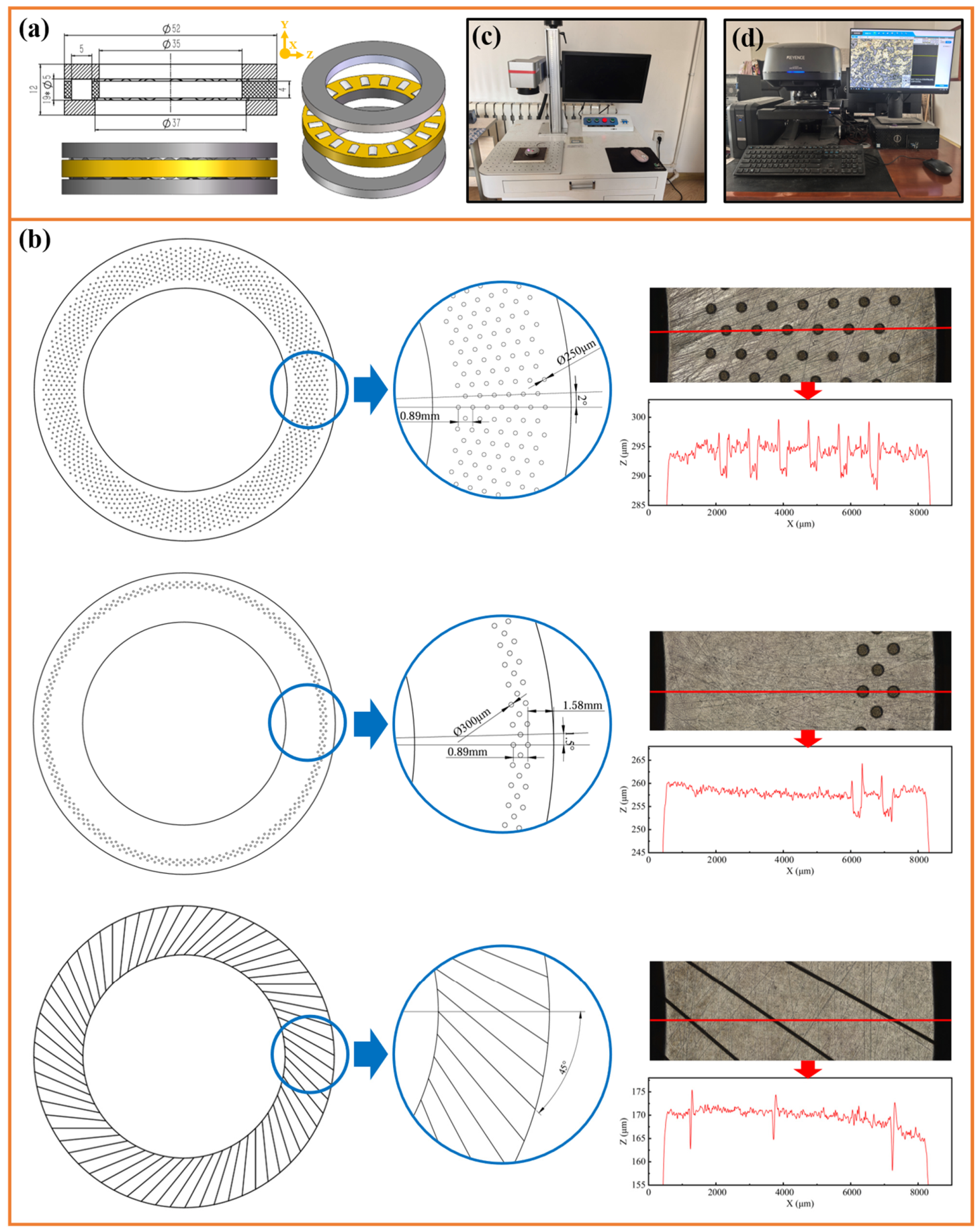
The 81107 cylindrical roller thrust bearing (YFB, Changzhou, China) consists of a shaft washer, a copper cage, 19 rollers, and a housing washer (see Figure 2a). The outer diameter of the two washers is 52 mm, with a thickness of 4 mm. The diameter and height of the rollers are both 5 mm. The inner diameter of the shaft washer is 35 mm, while the inner diameter of the housing washer is 37 mm. Among the four main components, the shaft washer, seat washer, and rollers are made of GCr15 bearing steel, with a surface hardness of 60 ± 1 HRC and a surface roughness of Ra 0.8 µm [11,12]. The cage is made of a copper alloy (ZCuZn40Pb2). To ensure the reliability of experimental data, all bearings used in this study were purchased from the same manufacturer and batch.
Based on the optimal texture parameters of three representative texture patterns researched by Long et al. [13,14,15], three texture patterns were designed on the raceways of the shaft washers of 81107 bearings (see Figure 2b): wholly distributed dimples, locally distributed dimples and grooves. After combining these with three mass fractions (0.5 wt%, 1.0 wt%, and 3.0 wt%) of PTFE nano-particles, 12 textured groups were established and labeled as S05–S16 (see Table 1). Four smooth groups lubricated with different lubricating oils were also introduced as references, labeled as S01–S04.
Textures were fabricated only on the raceway of the shaft washer using a laser marking machine (P1100-30w, Sepbase, Shenzhen, Guangdong, China, see Figure 2c) prior to each experiment [13,15]. The depth of all textures was 5 µm. Based on repeated trials and previous tests, the laser processing parameters are provided below in Table 1. The dimensions of the textures and their deviations from the design values are listed in Table S1 (see the Supplementary Material).

2.3. Tests and Methods

The tribological behavior of 81107 bearings was investigated using a vertical universal friction and wear test rig (MMW-1A, Huaxing Testing Machine Co., Ltd., Jinan, Shandong, China, see Figure S1 in the Supplementary Material). All tests were conducted under an axial load of 2400 N and a rotational speed of 250 r/min, with a total test duration of 5 h (18,000 s) [13,14,15]. To simulate severe service conditions, only 5 mg of lubricating oil was dispensed onto the shaft washer with the help of the balance before each test, and no additional lubricating oil was supplied during the testing process. This lubricant amount was selected based on our previous studies and the preliminary tests conducted prior to the formal experiments [13,14,15]. The bearing was then reassembled, manually rotated for 15 revolutions, and left stationary for 15 min before being mounted into the customized tribo-pair (see Figure S1 in the Supplementary Material). Before and after each test, the mass of each component was measured three times using the balance. Prior to weighing, the components were ultrasonically cleaned and dried with hot air. Wear loss for each test was calculated as the difference between the average mass of three measurements before the test and the average mass of three measurements after the test. To minimize errors arising from manual handling and random factors, each group was repeated three times using different bearings. The mass loss of each group was taken as the average of the three repeated tests. Finally, the worn surfaces of the shaft washers were characterized after the test using a 3D surface profilometer (VK-X1000, Keyence Corporation, Osaka, Japan, see Figure 2c). Detailed procedures and instrumentation can be found in the Supplementary Material (see Figure S2).
During testing, a triaxial piezoelectric sensor (1A314E, Donghua Testing Technology Co., Ltd., Shanghai, China; analog output: 0–5 V) and a high-precision multichannel data acquisition system (LMS SCM2E02, Siemens AG, Munich, Bavaria, Germany) were used to collect vibration signals in the X/tangential, Y/normal, and Z directions (see Figure 2a), with collections taken three times every 30 min. Each collection lasted 30 s, with a sampling frequency of 12.8 kHz, yielding 12,800 data points per second [12].

3. Results

3.1. Analysis of the Coefficients of Friction

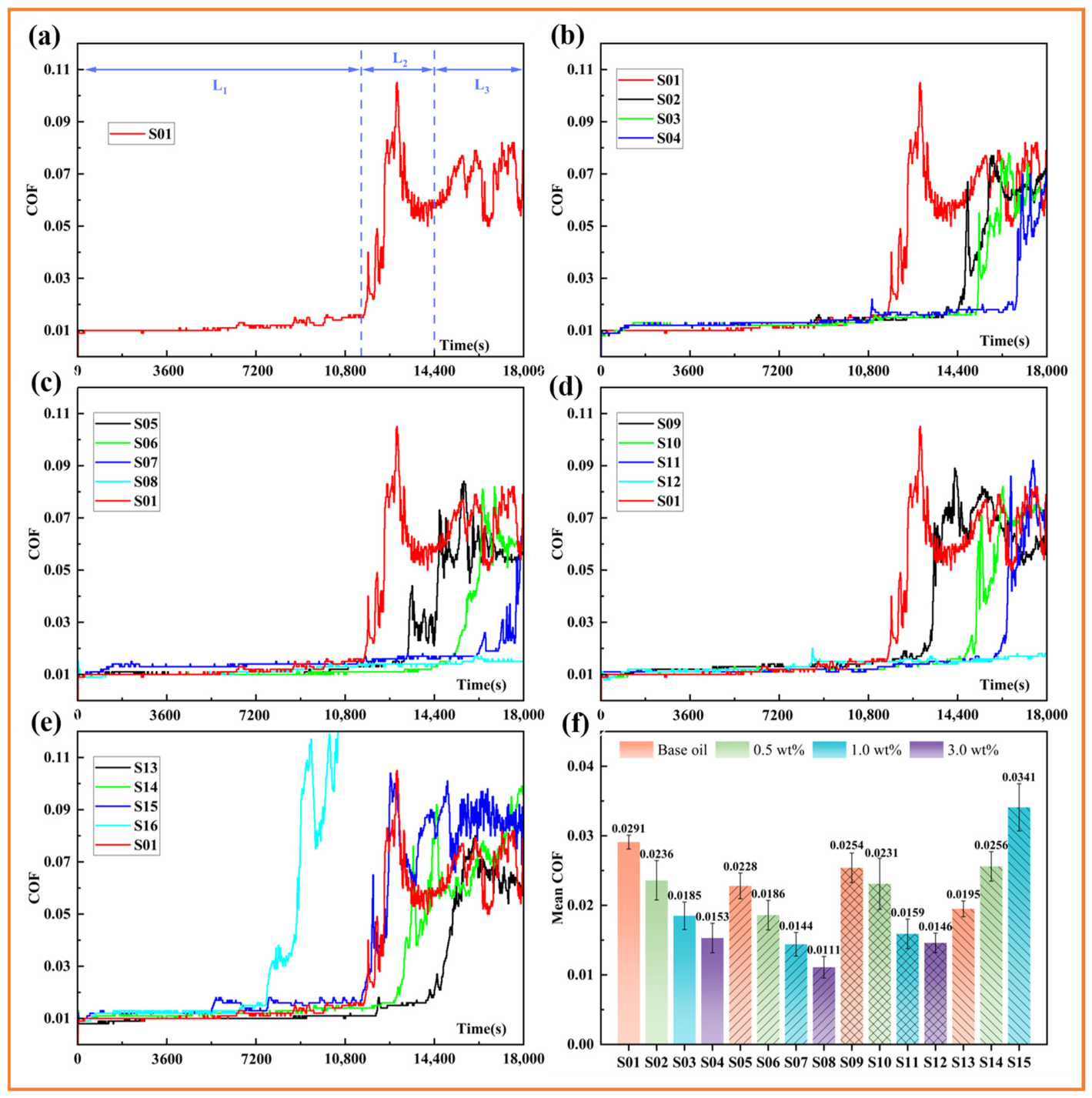
Figure 3 shows the COF curves and their average COFs for groups S01–S16. As shown in Figure 3a, taking the smooth group lubricated with base oil (i.e., S01) as an example, the evolution of the COF curve can be clearly divided into three stages: mild-wear stage (L1), rapid-rising stage (L2), and fluctuating-running stage (L3) [12]. The COF was very low in the mild-wear stage due to the lubricating oil added prior to the test. As the test progressed, the lubricating oil was rapidly depleted under the centrifugal force generated by the rotation of the shaft washer, causing the bearing to gradually enter the boundary lubrication regime [25]. Simultaneously, the temperature of the “shaft washer-rollers/cage-housing washer” system increased rapidly (see Figure S3 in the Supplementary Material) [12], and a large amount of copper debris was generated, resulting in a continuous increase in friction resistance and pronounced fluctuations in the COF curve.
For the smooth groups or those with dimples (both whole-distributed and locally distributed), as shown in Figure 3b–e, the longest mild-wear stages of the COF curves were generally observed when the mass fraction of PTFE nano-particles was 3.0 wt%. The COF curves of S08 and S12 were nearly two slowly rising straight lines in this case. Additionally, their average COFs decreased as the mass fractions increased (see Figure 3f). S04, S08, and S12 exhibited the smallest average COFs within their respective groups. Among the sixteen groups, the average COF of S08 was the smallest, 61.8% lower than that of the smooth group lubricated only with base oil (S01). The average COF of S12 was also reduced by 49.8% compared to S01.
In contrast, a different trend was observed for the groups with grooves (i.e., S13–S16). Their average COFs increased as the mass fractions rose. Both the COF curves and the average COF of S13 were the lowest among the four groups. Notably, when the mass fraction of PTFE nano-particles was 3.0 wt%, the COF curve of S16 increased sharply around the 7400th s, quickly exceeding the overload protection limit of the test rig, which led to the premature termination of the wear test. Therefore, no tribological data are available for S16.

3.2. Analysis of the Wear Losses and Worn Surfaces

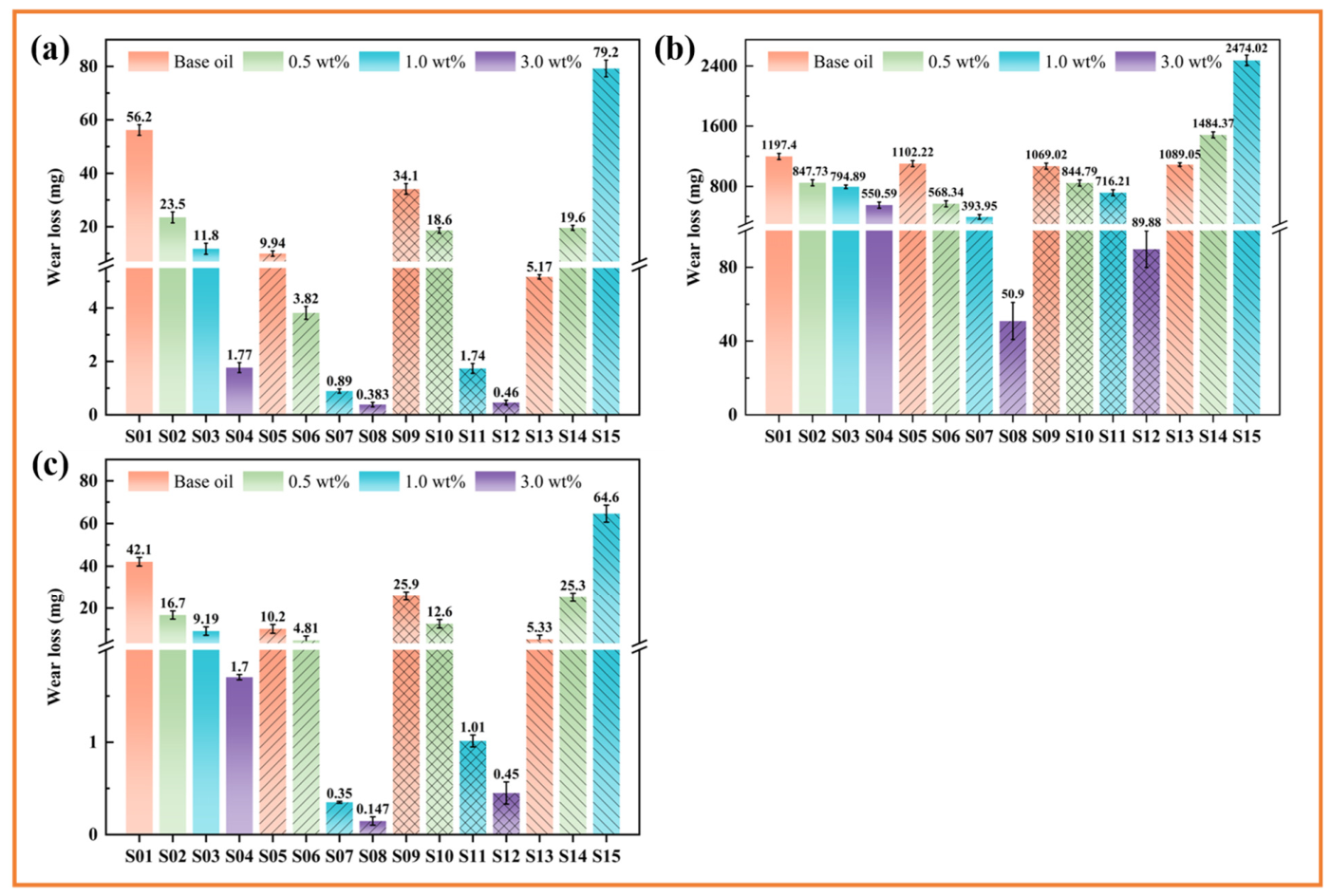
Figure 4 shows the wear losses of the main components (i.e., shaft washers, roller-cage assemblies, and housing washers) of bearings under starved lubrication. Similarly, the wear losses of the smooth groups, as well as those with wholly distributed and locally distributed dimples, all decreased with the increase in mass fractions (from 0% to 3.0%). The minimum mass loss was observed at a PTFE nano-particles concentration of 3.0 wt%. Among the sixteen groups, S08 exhibited the lowest wear losses: compared to the smooth group only lubricated with base oil (S01), its mass losses of the shaft washer, roll-cage assembly, and housing washer were significantly reduced by 99.3%, 95.7%, and 99.6%, respectively. For the groove-textured groups, the wear losses progressively increased with the increase in mass fractions of PTFE nano-particles instead.
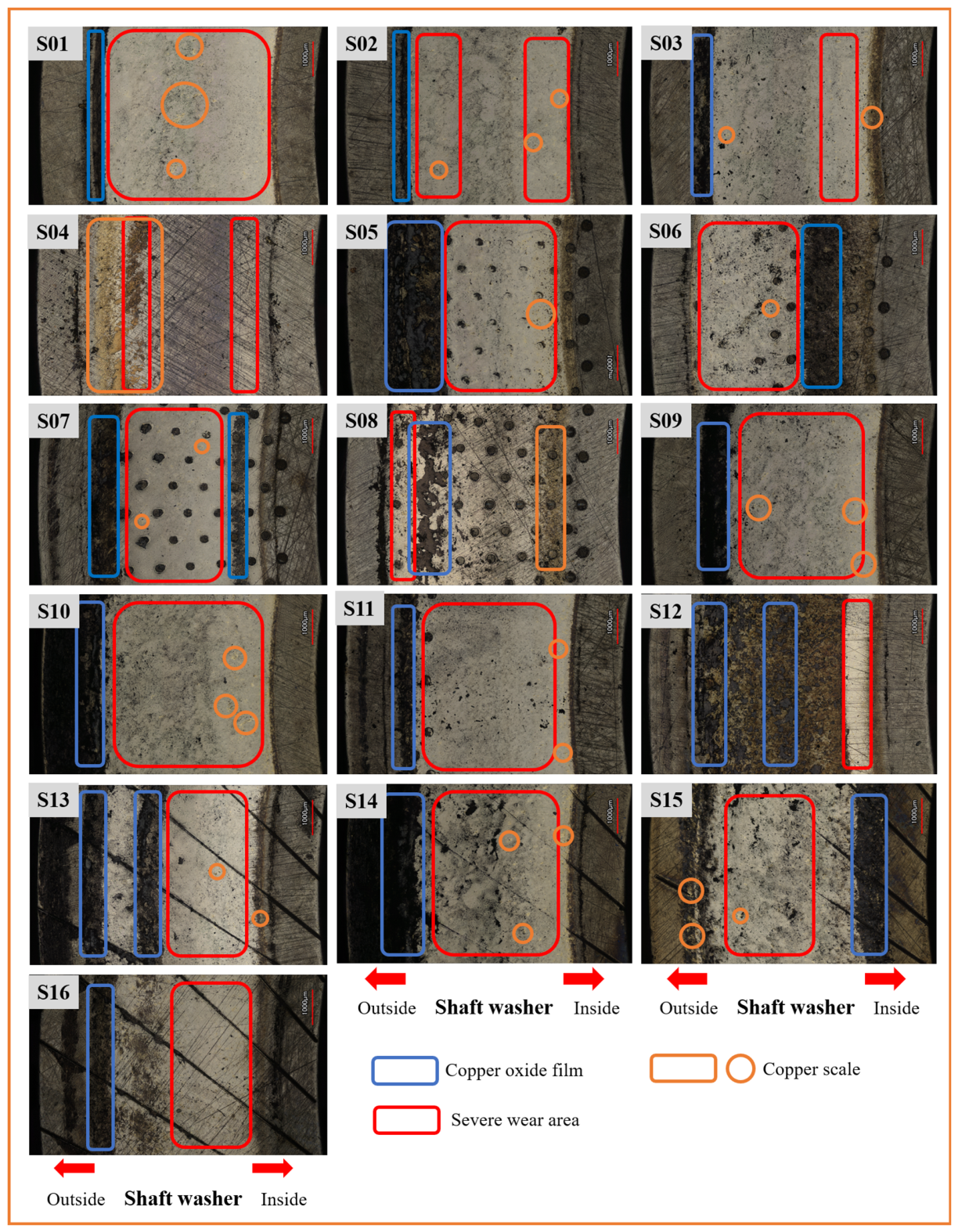
The uncleaned surfaces of the shaft washers after the wear tests are shown in Figure 5. Due to the boundary lubrication and even dry-wear conditions, severe wear of the copper cage generated a large amount of copper debris. The debris rapidly oxidized into black CuO under the high temperatures caused by frictional heat [26]. The CuO was then mixed with the degraded lubricating oil to form a black, paste-like transfer film, which primarily distributed near the outer sides of the shaft washers, with some unoxidized yellow copper debris remaining on the raceways [27,28].
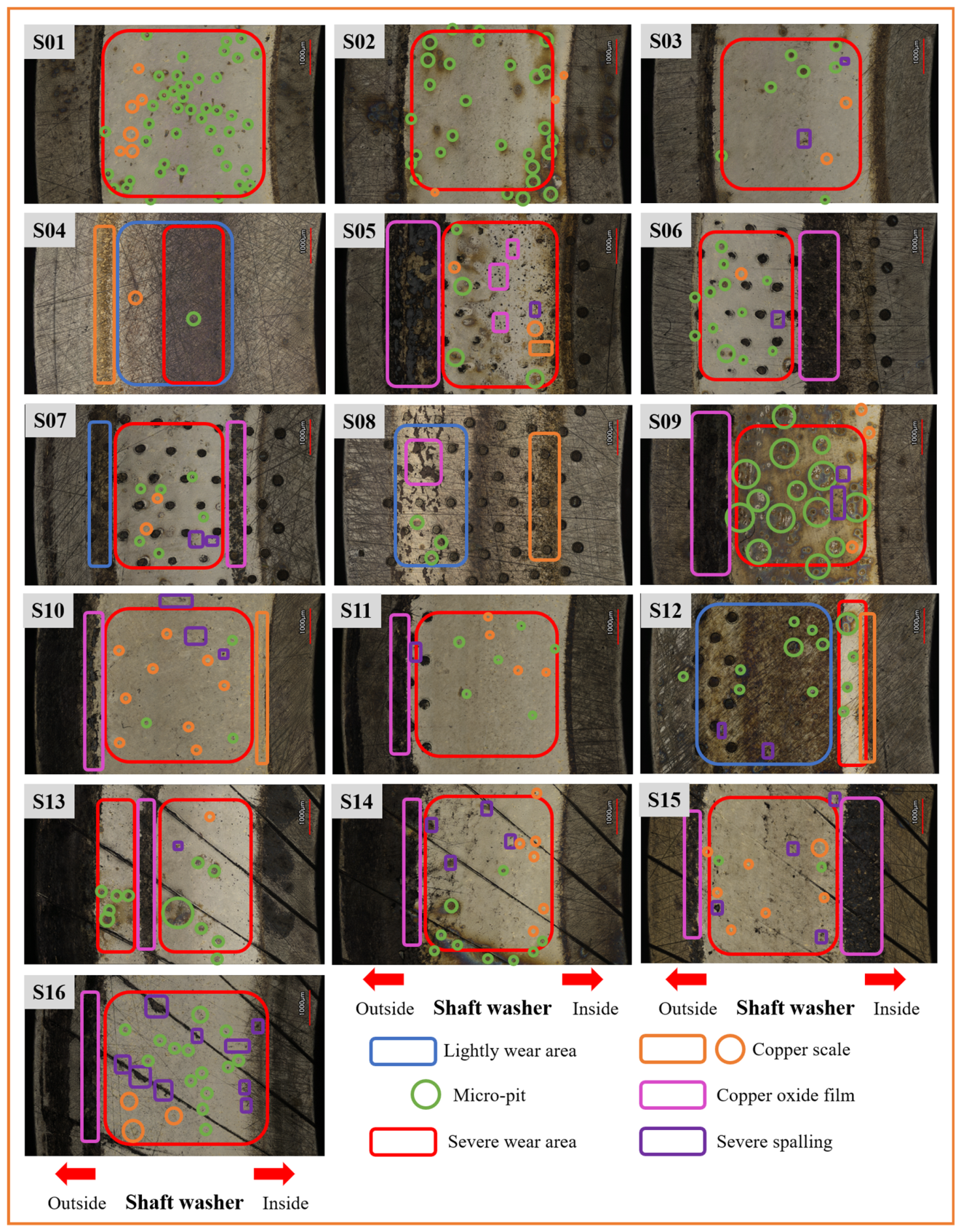
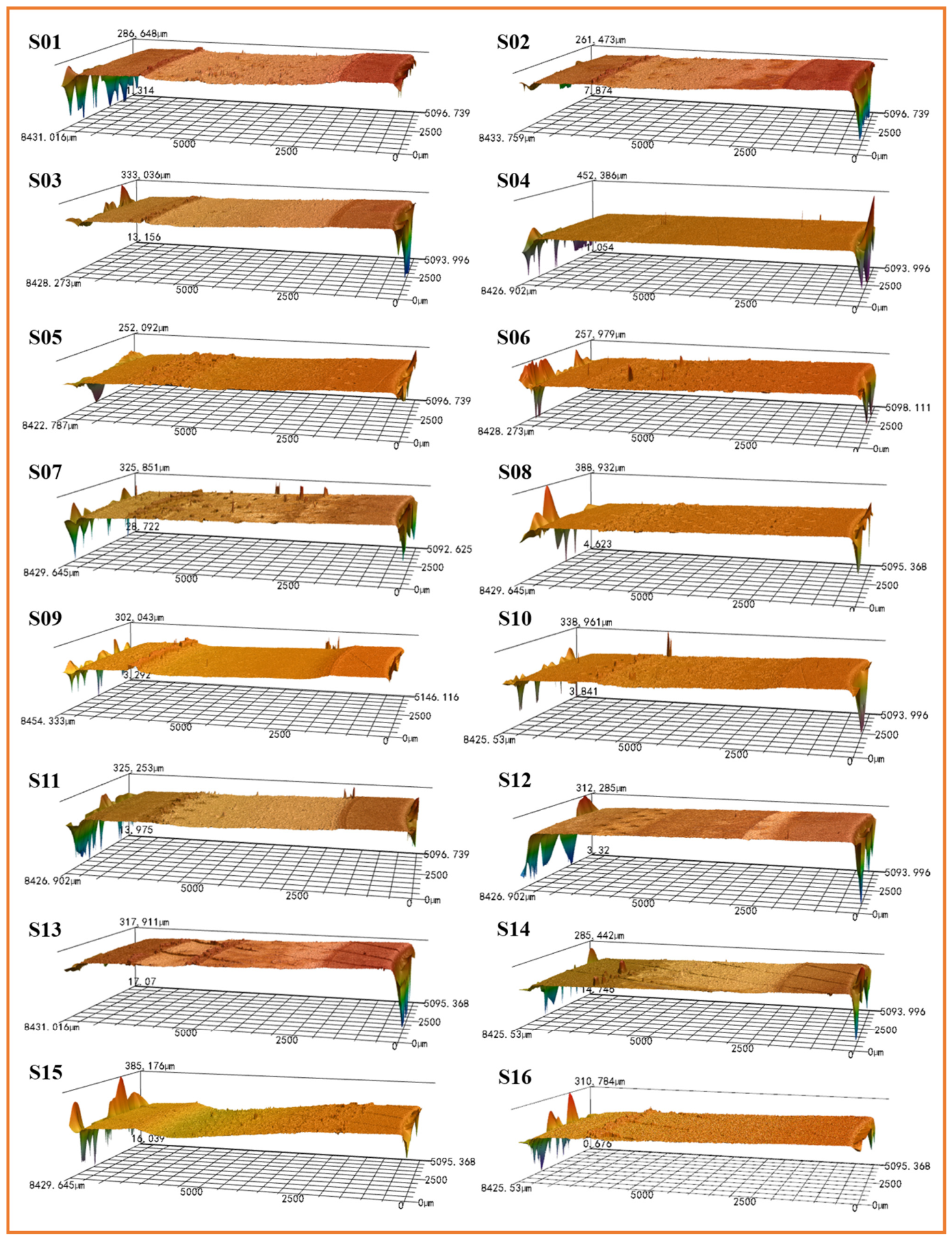
After ultrasonic cleaning, severe wear marks and material pitting were clearly observed on the raceways of the shaft washers (see Figure 6). Consistent with the previous tribological findings, the groups (S05–S12) with wholly distributed and locally distributed dimples exhibited pronounced improvements in wear resistance with the addition of PTFE nano-particles. S08 and S12 displayed much clearer dimple edges on the raceways, with shallower grooves and fewer pits, implying the enhanced load-carrying capacity and reduced asperity interactions. In contrast, the surfaces of the groove-textured groups were the opposite, and this phenomenon became more noticeable at higher mass fractions. For S15, more severe deterioration was observed, including deeper grooves and irregular material removal, indicating intensified abrasive and adhesive wear due to the accumulation of debris and PTFE particles within the grooves. Overall, dimple textures promote more stable contact and more effective debris accommodation, whereas grooves tend to exacerbate particle accumulation. The 3D worn morphologies indicated that the dominant failure mode in this study was severe abrasive wear (see Figure 7, enlarged by 600% in the height scale), accompanied by localized fatigue pitting [14,15,29].
It should be noted that the test for S16 was terminated prematurely after approximately 3 h due to the friction force exceeding the safety limit. Despite the shorter duration compared with the other groups, the worn surface of S16 exhibited severe localized damage (see Figure 6), including deep plowing grooves, material spalling, and irregular features. These characteristics indicated that the wear process in S16 was not mild or incomplete but was dominated by rapid, localized deterioration. The observed morphology also suggested that the contact interface underwent a sudden transition from relatively stable sliding to an unstable state characterized by intensified abrasive and adhesive wear.

3.3. Analysis of the Vibration Signals

During the rotation of the rolling bearing, vibrations arise not only from the bearing itself but also from external equipment transmitted to the bearing. Multiple excitation sources interact, shaping the bearing’s intrinsic vibration characteristics. For the bearing with textured raceway, repeated contact between the rollers and the textures induces additional periodic vibrations due to the variations in contact stiffness and stress distribution [12,29]. Furthermore, different textures lead to distinct contact stiffnesses and stress distributions, resulting in varying vibration characteristics. As for the thrust bearings, whether sliding or rolling, they can only withstand axial loads. Therefore, their vibration signals in the normal direction (the Y-axis in Figure 2a) are significantly higher than those in the tangential direction (the X-axis in Figure 2a). Consequently, only the vibration signals in the normal direction were researched and discussed below. The corresponding vibration signals in the tangential direction and their analysis can be found in the Supplementary Material.

3.3.1. Time-Domain Characteristics

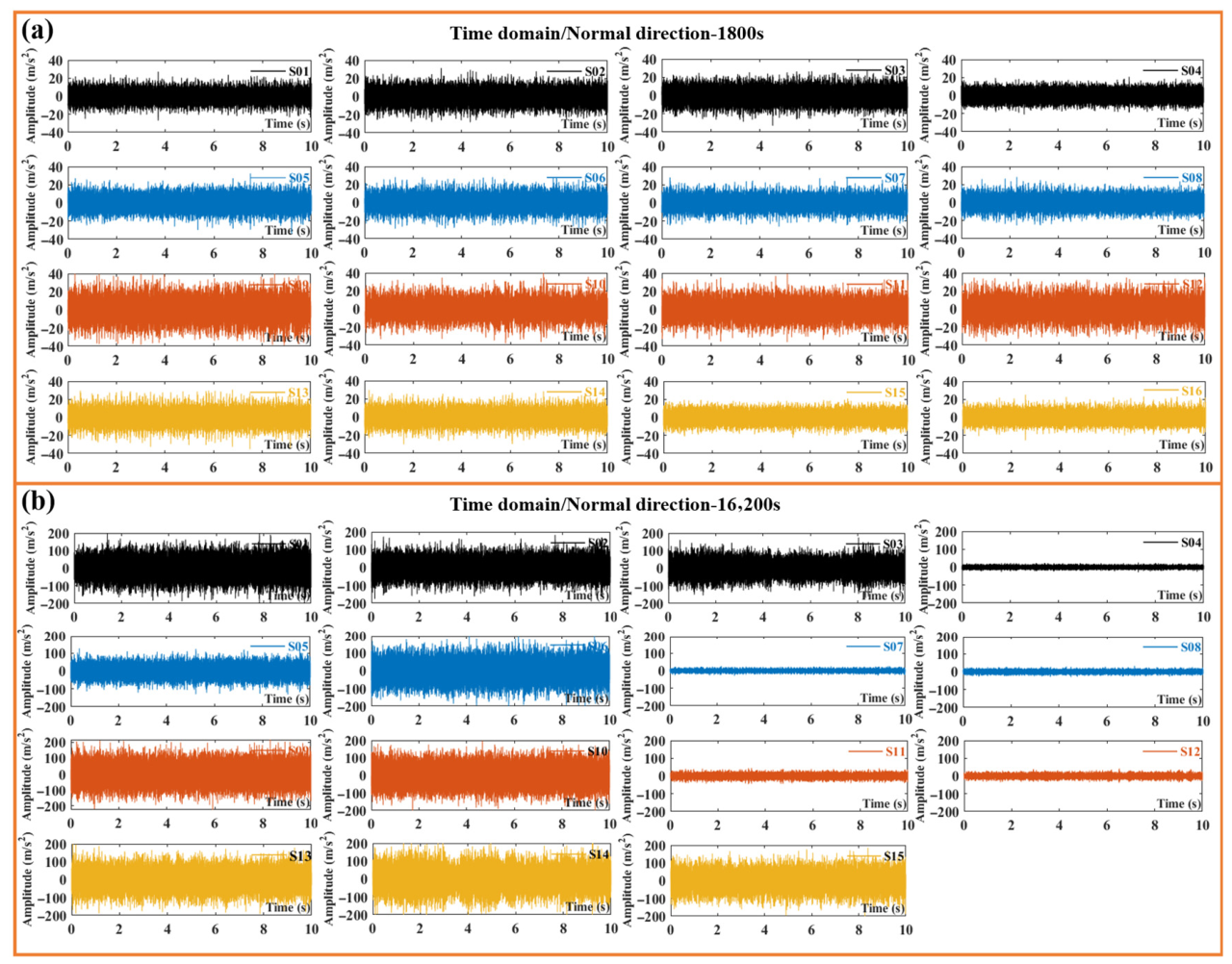
Earlier in the tests (from the 1800th s to the 1810th s), all groups were in mixed lubrication states. The signal amplitudes of the groups with locally distributed dimples (S09–S12) were significantly larger relative to the smooth groups, while the signal amplitudes of the groove-textured groups (S13–S16) were slightly smaller. The vibration amplitudes of the groups (S05–S08) with wholly distributed dimples were similar to those of the smooth groups (see Figure 8a). As the mass fraction of PTFE nano-particles increased, the vibration signal amplitudes generally showed a decreasing trend, particularly for S04 and S16.
At the later moments (from the 16,200th s to the 16,210th s), the vibration signals of all groups increased compared to their earlier stages (see Figure 8b). When lubricated with base oil, the group with wholly distributed dimples, i.e., S05, exhibited the best vibration-reduction performance, while the other three groups (S01, S09 and S13) showed comparable results. When the mass fraction of PTFE nano-particles was 0.5 wt%, the signal amplitudes of four groups (S02, S06, S10 and S14) noticeably increased. As the mass fraction of PTFE nano-particles increased to 1.0 wt%, the vibration signals of the groups with dimples (both wholly distributed and locally distributed, i.e., S07 and S11) significantly decreased to a level similar to their amplitudes in the early stages. The signal amplitudes of the smooth group (S03) and the group with grooves (S15) also slightly decreased compared to their signals as lubricated by base oil. When the mass fraction increased further to 3.0 wt%, except for the groove-textured group (S16), the signal amplitudes of the other three groups (S04, S08 and S12) were similar to their signals in the early stages, even though they were already in boundary lubrication or dry wear conditions, indicating the excellent vibration-reducing performance of PTFE nano-additives in this case.
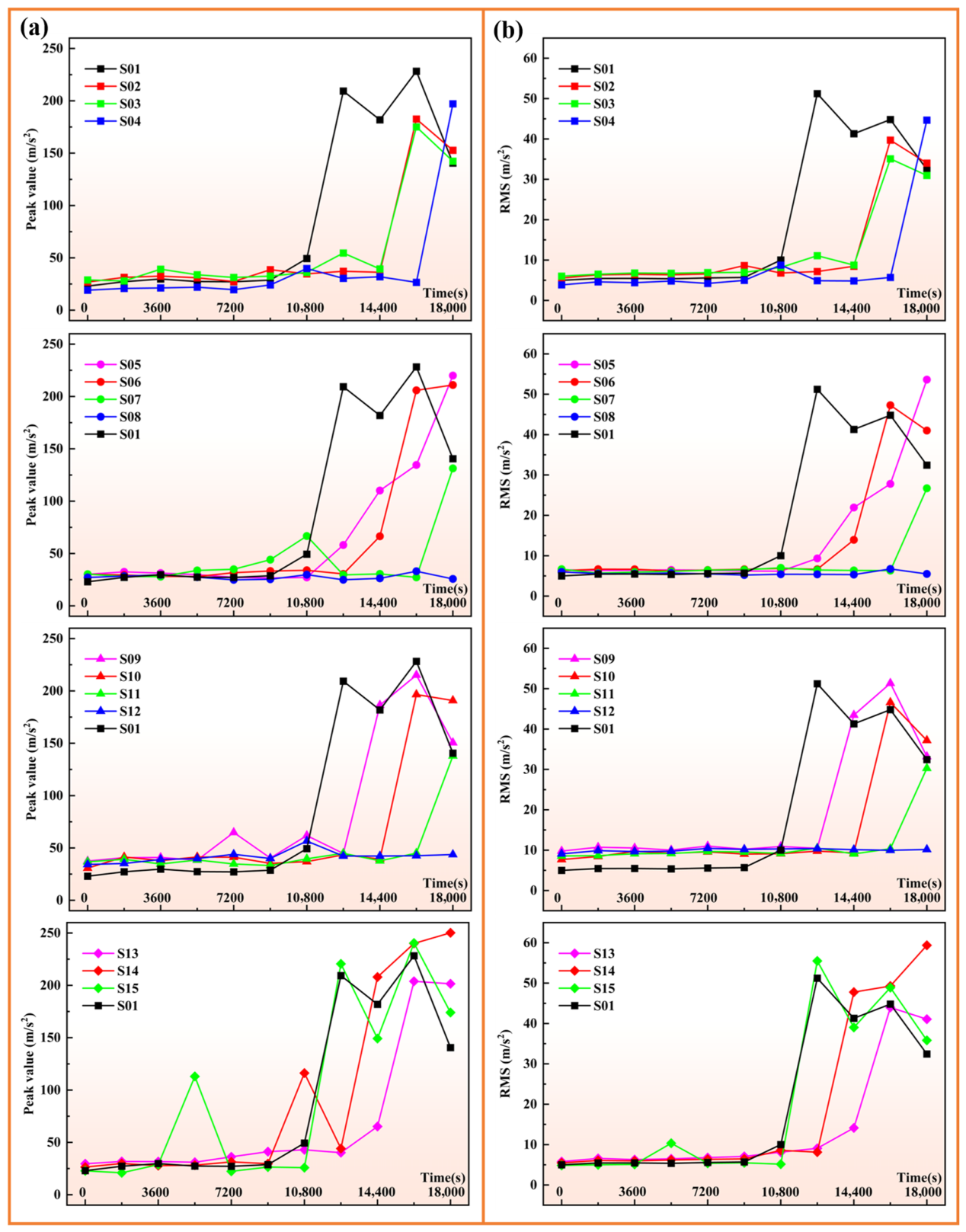
Figure 9 shows the peak value and the root mean square (RMS) curves of the time-domain vibration signals for S01–S15. The peak value and RMS curves of the smooth group lubricated only with base oil (S01) were lower than those of other groups before the 9000th s, particularly for those with locally distributed dimples (S09–S12). In the later stages, for the smooth groups and the groups with dimples, whether wholly distributed or locally distributed, their peak value and RMS curves increased much later than the curves of S01. The curves of S08 and S12 were essentially straight lines throughout the entire process. The curves of the groove-textured groups showed the opposite trend, consist with their tribological behavior.

3.3.2. Frequency-Domain Characteristics

Frequency-domain vibration signals are key analytical targets in equipment condition monitoring, as their compositions reveal the system’s inherent dynamic characteristics and potential fault information [12,29]. The low-frequency (LF, 0–300 Hz) band primarily reflects structural differences in the bearing system, while the high-frequency (HF, 1800–6400 Hz) band mainly indicates surface damage. The introduced textures predominantly affect the medium-frequency band (MF, 300–1800 Hz) [12,29]. Therefore, the typical vibration signal primarily consists of rotational frequency components and their harmonics, fault characteristic frequencies, natural frequencies and their modulated sidebands, as well as additional components arising from external factors.
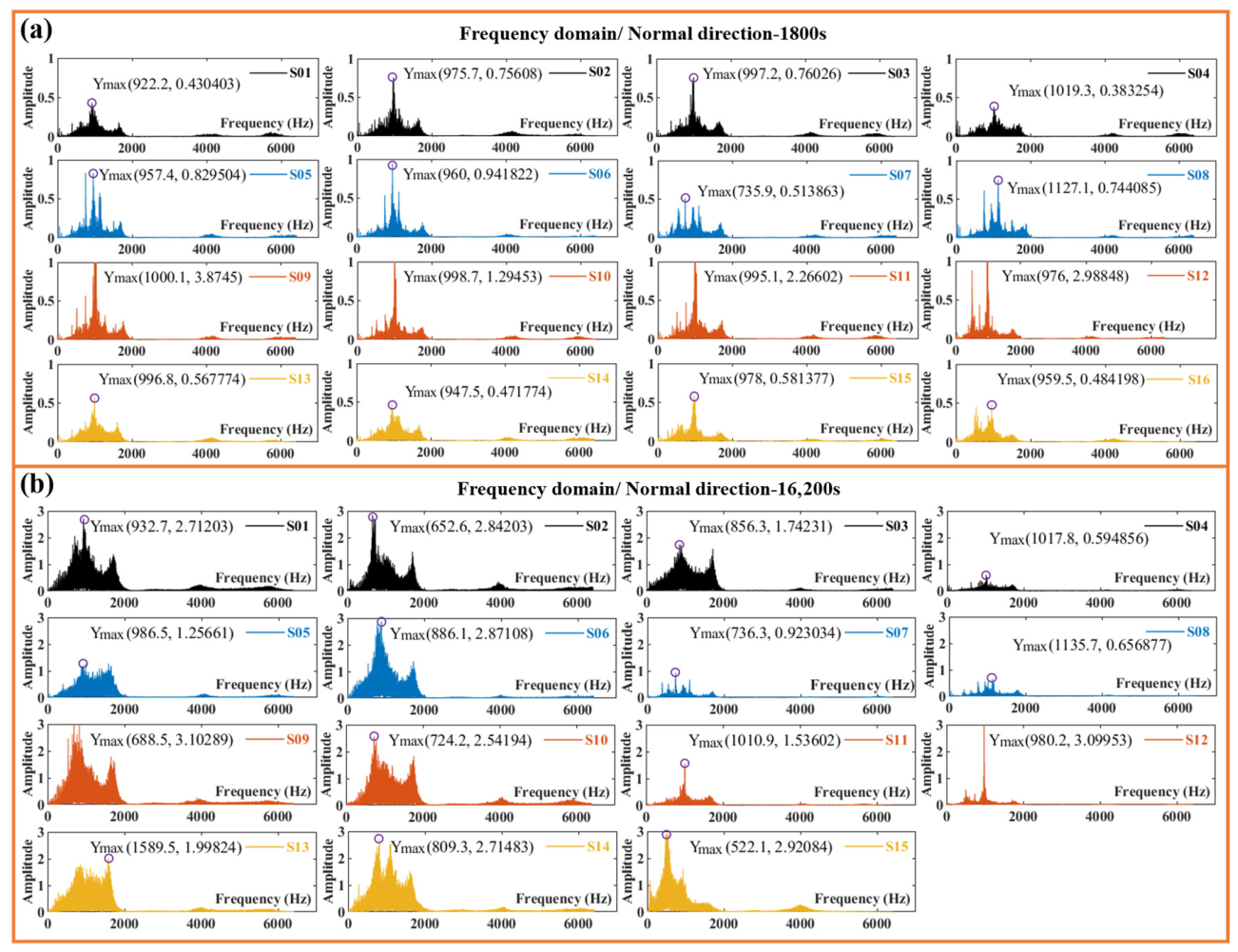
Figure 10 presents the frequency-domain vibration signals of S01–S15 in the normal direction. As shown in Figure 10a, at the 1800th s, more obvious frequency characteristic peaks were observed in the LF and MF bands for the groups with wholly distributed dimples, and their amplitudes were slightly higher than those of the smooth group under the same lubrication conditions. The signal amplitudes of the groove-textured groups were very small, indicating the good vibration-reducing ability of the grooves under starved lubrication. The vibration signals of the groups with locally distributed dimples were similar to those of the smooth groups, and their frequency peaks around 1000 Hz were much higher compared to those of other groups.
At the 16,200th s, similar to the time-domain vibration signals shown in Figure 8, the frequency-domain signal amplitudes of the smooth groups also decreased with the increase in PTFE nano-additives (see Figure 10b). The frequency-domain signals of the groups with dimples deteriorated at a mass fraction of 0.5 wt%, but were significantly suppressed at mass fractions of 1.0 wt% and 3.0 wt%. The groups with wholly distributed dimples still maintained prominent characteristic frequency peaks at the earlier time, indicating that the wear on the raceways was minimal and the tribological performance of the bearings was significantly improved. The characteristic frequency peaks around 1000 Hz of these groups with locally distributed dimples were still much higher than those of the other groups, and the frequency-domain peaks of the groove-textured groups increased with increasing mass fraction.
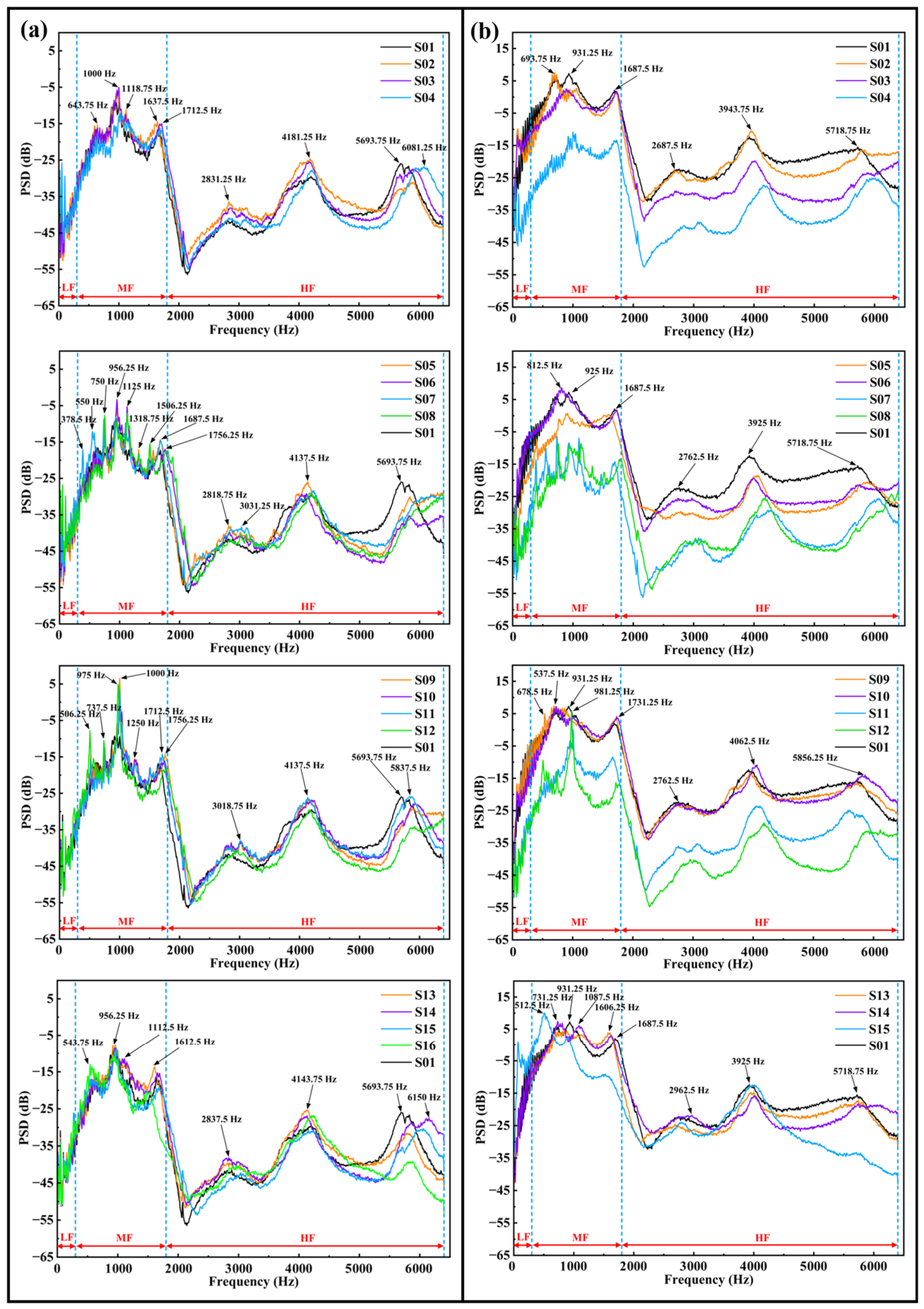
The power spectral density (PSD) curves (see Figure 11) of all groups were similar at the 1800th s, with only slightly differences observed in the frequency range above 5000 Hz. Distinct frequency peaks in the ML band of the groups with wholly distributed dimples and the prominent peaks around 500/740 Hz in the groups with locally distributed dimples were clearly reflected in the curves. Moreover, the PSD curves were relatively lower at a mass fraction of 3.0 wt%, except for the groove-textured group. At the 16,200th s, when the mass fraction was 0.5 wt%, the PSD curves of four groups (S02, S06, S10 and S14) were close to those of the groups lubricated with base oil. When the mass fraction increased to 1.0 wt%, the PSD curves of the groups with dimples significantly decreased, indicating suppressed vibration energy. When the mass fraction further increased to 3.0 wt%, the PSD curves of the smooth and the dimple-textured groups also showed a further significant reduction. The PSD curves of the grooved-textured groups were nearly identical.
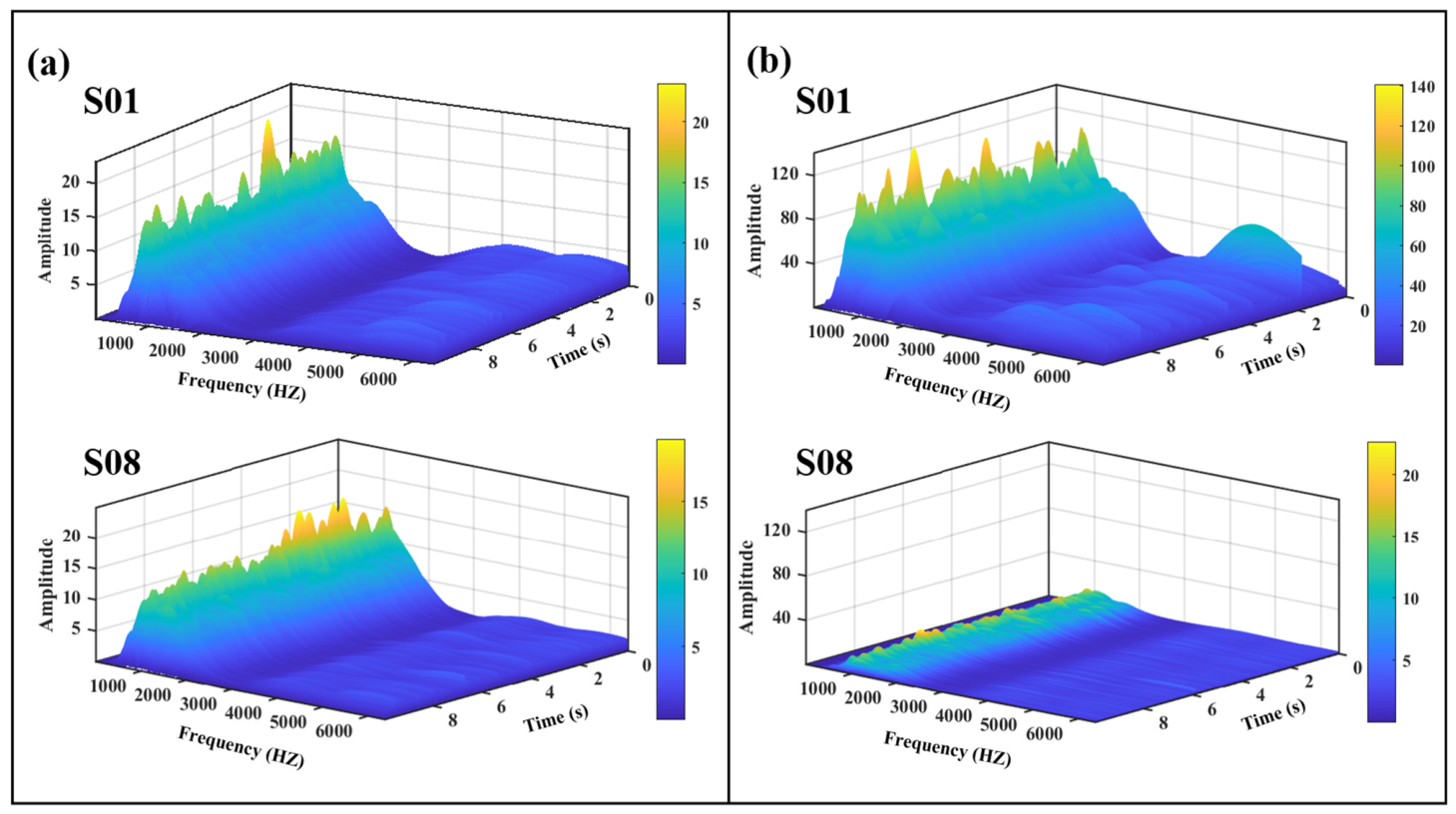
Through continuous wavelet transform (CWT), Figure 12 provides a more intuitive comparison of the time–frequency domain vibration signals for S01 and S08. A clear difference in energy distribution can be observed between the two groups. For S01, relatively high energy was distributed over a wide frequency range, particularly in the medium-frequency (300–1800 Hz) and high-frequency bands, whether in the early (from the 1800th s to the 1810th s) or the late (from the 16,200th s to the 16,210th s) stage. These high-energy components indicate frequent transient impacts and unstable contact conditions, consistent with severe surface damage and direct asperity interactions under starved lubrication. In contrast, S08 exhibits significantly lower energy levels across the entire frequency spectrum, especially in the late stage, with notably suppressed high-frequency components, demonstrating improved dynamic stability under starved lubrication conditions. This behavior can be attributed to the formation of a more stable PTFE transfer film that effectively buffers microscopic impacts [6,7].

4. Discussion

4.1. Influence of Different Mass Fractions of PTFE Nano-Particles

When lubricated solely with base oil, the textured groups (whether with wholly distributed dimples, locally distributed dimples, or grooves) exhibited significantly lower average COFs and wear losses compared to the smooth group (S01), particularly for S13. This is consistent with previous research findings [13,14,15] and aligns with the rationale for selecting these textures in this study. Their vibration signal amplitudes also slightly decreased in the later stages, especially for S05. This can be attributed to the fact that textures initially stored more lubricating oil at the beginning of the tests and gradually replenish it to the contact interfaces under starved lubrication conditions, thereby achieving a “secondary lubrication effect” and extending the mild-wear durations [11,12,13,14,15]. Additionally, the textures helped reduce residual metal debris on the raceways by collecting and storing it during bearing rotation, thereby reducing “three-body abrasive wear” in the “shaft washer-rollers/cage-housing washer” system and minimizing raceway wear. As a result, the wear resistance of the bearings improved, and the vibration signals in the later stages were reduced [12,30]. Due to the oil-starved condition, the additional hydrodynamic lubrication generated had little impact on the research results of this study [12,29].
When the mass fraction of PTFE nano-particles was 0.5 wt%, the vibration signal amplitudes of four groups increased slightly in their later stages. The average COFs and wear amounts of the smooth group (S02) were reduced compared to S01, which was lubricated with base oil. The tribological properties of the dimple-textured groups (i.e., S06 and S10) followed the same trend. This phenomenon can primarily be attributed to the long, well-ordered molecular chains of PTFE, which exhibit weak interlayer van der Waals forces and thus slide easily under frictional shear. As a result, PTFE readily transferred onto the raceways, forming a thin, strongly adherent, low-shear transfer film [30,31,32]. Sliding then occurred predominantly within this PTFE layer, thus significantly reducing both the COF of the “shaft washer-rollers/cage-housing washer” system and the wear rate of surface material. However, the stability of the transfer film was dynamic, requiring continuous replenishment of PTFE nano-particles from the lubricating oil to the contact interfaces. When the mass fraction was 0.5 wt%, the PTFE nano-particle concentration was insufficient to repair and thicken the film before it was removed, preventing the formation of a continuous, uniform layer [30]. The discontinuous film increased the unevenness of the raceways, causing the micro-protrusions between the rollers and the raceway to come into direct contact, generating high-shear forces and leading to a rapid increase in bearing temperature. As the temperature increased, the adhesion of copper debris further worsened the contact surfaces and led to severe adhesive wear of the raceways. Consequently, the vibration signals also became stronger in this case. The average COF and wear loss of the groove-textured group increased in comparison to S05.
When the mass fraction of PTFE nano-particles increased from 0.5 wt% to 1.0 wt%, the average COFs and wear amounts of the smooth group (S03) further decreased compared to S02, and their vibration signals in the later stages also decreased. The tribological performance of the dimple-textured groups (S07 and S11, both wholly distributed and locally distributed) showed similar trends. Furthermore, their vibration signals in the later stages reduced noticeably. In contrast, the friction and wear performance of the groove-textured group (S15) followed an opposite trend. When the mass fraction of PTFE nano-particles increased to 3.0 wt%, the average COF and wear losses of the smooth and dimple-textured groups (S04, S08 and S12) further decreased compared to the 1.0 wt% groups. Their vibration amplitudes in the later stage also continued to decrease. This can again be attributed to the extremely low shear strength and excellent self-lubricating performance of PTFE. As the mass fraction of PTFE nano-particles increased to 1.0 wt% or even 3.0 wt%, a more uniformly distributed transfer film gradually formed on the raceways. The transfer film effectively protected the raceways and reduced friction resistance. Additionally, the film absorbed and cushioned the impact energy, resulting in a substantial reduction in vibration amplitudes across the entire frequency spectrum. The tribological performance of S16 was poor. Due to the large friction force exceeding the safety threshold of the test rig, three repeated tests of S16 were unexpectedly stopped.

4.2. Influence of Different Texture Patterns

For the groups with wholly distributed dimples (S05–S08), compared to the smooth groups (S01–S04) under the same lubrication conditions, their average COFs and wear losses were lower, and they decreased noticeably with the increase in the mass fraction of PTFE nano-particles. This is because under oil-starved lubrication conditions, the dimples acted as “reservoirs” for lubricating oil at the beginning of the tests and trapped wear debris later [13,29]. In contrast to grooves, the enclosed geometry of the dimples significantly reduced the radial leakage of lubricating oil, thus prolonging the mild-wear stages. This is the key reason why their tribological performance was superior to that of the smooth groups. After the addition of PTFE nano-particles, PTFE particles did not merely undergo physical adsorption under frictional shear. Instead, initiating from the dimple edges, they experienced a dynamic “capture–rolling–spreading” process, gradually forming a continuous, dense, and strongly adherent transfer film [30,31,32]. When the mass fraction of nano-particles was low (e.g., 0.5 wt%), the transfer film formed on the surface was uneven and could not effectively protect the raceways. As the mass fraction of PTFE nano-particles increased (1.0 wt% and 3.0 wt%), the transfer film on the raceway surface became more uniform and thicker, offering better protection and isolation for the raceways. This effectively cushioned the microscopic impacts between the rollers and the raceway, suppressed the direct metal-to-metal contact, and enabled the system to transition from a high-noise, highly fluctuating boundary lubrication regime to a low-noise, stable lubrication state dominated by solid lubrication [30]. This is the reason why the tribological and subsequent friction-induced vibration performance of S07 and S08 improved significantly in the later stages.
For the groups with locally distributed dimples (S09–S12), under the same lubrication conditions, their average COFs and wear losses are slightly higher than those of the groups with wholly distributed dimples, but still significantly lower than those of the smooth groups. This is because their dimples were only located in the outer 1/3 of the raceway’s circular area, with an area ratio of just 44% [14]. Compared to the groups with wholly distributed dimples, the oil storage capacity of the raceways with locally distributed dimples was considerably lower, resulting in a weaker “secondary lubrication” effect, which led to shorter mild-wear durations, relatively poorer tribological performance, and slightly larger friction-induced vibration signals in the later stages.
The average COF and mass loss of the groove-textured group (S13) were the lowest among the four groups (S01, S05, S09 and S13) lubricated with base oil. This is because grooves facilitate the radial flow of lubricating oil and the storage of debris, compared to dimples, under the centrifugal force generated by the high-speed rotation of the shaft washer [15,26,33,34,35]. In addition, a groove deflection angle (GDA) of 45° can achieve better “secondary lubrication”, and the formed transfer film is more uniform [15]. However, as the PTFE mass fraction increased, the mild-wear durations of the groove-textured groups were significantly shortened, and S16 could not even complete the experiment, leading to their relatively higher average COFs and wear losses. This phenomenon can be attributed to the geometric characteristics of the grooves. Although they facilitated the radial movement of debris, the groove deflection angle (45°) caused debris to accumulate in the middle and outer positions of the grooves (see S13 in Figure 5). If the cage were made from a self-lubricating material (e.g., PA66) [15], this situation could be improved. However, with the copper cages used in this work, the accumulation of copper debris during testing led to severe abrasive and adhesive wear on the raceways (see S14 and S15 in Figure 5), thereby worsening the vibration amplitudes. The addition of PTFE nano-particles exacerbated this aggregation, and the accumulation became more severe with the increase in the mass fractions of PTFE nano-particles. This is the fundamental reason why the frictional and vibration performance of the groove-textured groups deteriorated as the mass fraction of PTFE nano-particles increased from 0% to 3.0 wt% [36,37,38,39].

5. Conclusions

Based on the experimental data obtained, the following conclusions can be drawn:
(1) When surface textures and PTFE nano-particles acted synergistically, their interaction was not a straightforward positive superposition. As illustrated by the results of the groove-textured groups—whose tribological behavior performed very well when lubricated with base oil but showed a reversal after the addition of PTFE nano-particles—the tribological response can change significantly. From this perspective, the dimple-textured groups exhibited better compatibility with PTFE nano-additives, whether they were wholly distributed or locally distributed.
(2) The friction-reducing performance and anti-wear resistance of the three types of textured groups were significantly improved when lubricated with base oil. Among S05, S09 and S13, S13 (the group with grooves) demonstrated the best tribological and vibrational performance in this case. Compared to the smooth group lubricated with only base oil (S01), its average COF and wear loss were reduced by 32.9% and 87.3%, respectively.
(3) After the addition of PTFE nano-particles, the tribological properties of the smooth and dimple-textured groups (both wholly distributed and locally distributed) improved substantially with increasing mass fractions, with the most significant improvement observed at a mass fraction of 3.0 wt%. In this work, S08, with wholly distributed dimples, provided the best tribological and vibrational performance at a PTFE concentration of 3.0 wt%. Compared to S01, its average COF was reduced by 61.8%, and the mass loss of the shaft washer was reduced by 99.6%, demonstrating the excellent tribological and vibrational performance of PTFE nano-additives.
(4) For the groove-textured groups, the addition of PTFE nano-particles gradually degraded their tribological properties, with further deterioration as the mass fraction increased. When the mass fraction of PTFE nano-particles reached 3.0 wt%, all three repeated tests of S16 failed.

Supplementary Materials

The following supporting information can be downloaded at: https://www.mdpi.com/article/10.3390/app16083988/s1, Figure S1: Wear testing rig; Figure S2: Experimental procedure; Figure S3: Temperature-time curve of S01–S15; Figure S4: Time-domain vibration signals of S01–S16 in the tangential direction; Figure S5: Time-domain vibration characteristics of S01–S15 in the tangential direction; Figure S6: Frequency -domain vibration signals of S01–S15 in the tangential direction; Figure S7: PSD curves of S01–S15 in the tangential direction; Figure S8: Time-frequency domain vibration signals of S01–S15 in the tangential direction; Table S1: Statistical deviation between designed and fabricated textures.

Author Contributions

R.L., F.G., R.H., S.G., W.H. and L.Z. conceived the idea, carried out the experiments, and analyzed the results. F.G. and R.L. wrote the manuscript, which was revised by L.Z. All authors have read and agreed to the published version of the manuscript.

Funding

R. Long greatly acknowledges the financial support from the Natural Science Foundation of Liaoning Province, China (No. 2023-MS-234), the Scientific Research Fund of Liaoning Provincial Education Department, China (No. LJ212510149017), the National Natural Science Foundation of China (No. 52275156), the National Natural Science Foundation of China Young Scientist Fund (No. 52402484) and the University-level Doctoral Special Research Start-up Fund Support Project (Shenyang Polytechnic College, China, No.szy2024bs002).

Data Availability Statement

Supplementary Material is available at https://doi.org/10.57760/sciencedb.33643. The original data used to support the findings of this study are available from the corresponding author upon request.

Conflicts of Interest

The authors declare no conflicts of interest.

References

  1. Holmberg, K.; Erdemir, A. Influence of tribology on global energy consumption, costs and emissions. Friction 2017, 5, 263–284. [Google Scholar] [CrossRef]
  2. Marian, M.; Weikert, T.; Tremmel, S. On friction reduction by surface modifications in the TEHL cam/Tappet- contact-experimental and numerical studies. Coatings 2019, 9, 843. [Google Scholar]
  3. Zhang, X.Y.; Shi, J.J.; Luo, Y.; Yu, Y.H.; Shen, C.Q.; Zhu, Z.K. Dynamic modeling and force-vibration mapping mechanism construction of rolling bearings considering cage flexibility and local faults. Meas. Sci. Technol. 2024, 35, 065005. [Google Scholar] [CrossRef]
  4. Luo, J.B.; Liu, M.; Ma, L.R. Origin of friction and the new frictionless technology—Superlubricity: Advancements and future outlook. Nano Energy 2021, 86, 106092. [Google Scholar] [CrossRef]
  5. Luo, J.B.; Zhou, X. Superlubricitive engineering—Future industry nearly getting rid of wear and frictional energy consumption. Friction 2020, 8, 643–665. [Google Scholar] [CrossRef]
  6. Wu, C.; Wu, Y.W.; Zhao, H.J.; Li, S.S.; Ni, J.; Li, X.L. Influence of hardness of nanoparticle additive in PTFE solid lubricant on tribological properties of GCr15 steel with bionic texture. Tribol. Int. 2023, 189, 108915. [Google Scholar] [CrossRef]
  7. Dubey, M.K.; Bijwe, J.; Ramakumar, S.S.V. Nano-PTFE: New entrant as a very promising EP additive. Tribol. Int. 2015, 87, 121–131. [Google Scholar] [CrossRef]
  8. Etsion, I.; Halperin, G.; Brizmer, V.; Kligerman, Y. Experimental investigation of laser surface textured parallel thrust bearings. Tribol. Lett. 2004, 17, 295–300. [Google Scholar] [CrossRef]
  9. Etsion, I.; Kligerman, Y.; Halperin, G. Analytical and experimental investigation of laser-textured mechanical seal faces. Tribol. Trans. 1999, 42, 511–516. [Google Scholar] [CrossRef]
  10. Wu, C.; Yang, K.; Ni, J.; Lu, S.; Yao, L.; Li, X. Investigations for vibration and friction torque behaviors of thrust ball bearing with self-driven textured guiding surface. Friction 2023, 11, 894–910. [Google Scholar] [CrossRef]
  11. Zhao, C.; Long, R.S.; Zhang, Y.M.; Wang, Y.B.; Wang, Y.Y. Influence of characteristic parameters on the tribological properties of vein-bionic textured cylindrical roller thrust bearings. Tribol. Int. 2022, 175, 107861. [Google Scholar] [CrossRef]
  12. Long, R.S.; Shang, Q.Y.; Sun, S.N.; Wang, S.W.; Ma, C.; Zhang, J.W.; Marian, M. Influence of Monstera riedrichsthalii bionic textures on the tribological and vibration behavior of rolling bearings. Friction 2025, 13, 9440949. [Google Scholar] [CrossRef]
  13. Long, R.S.; Shang, Q.Y.; Jin, Z.H.; Zhang, Y.M.; Ju, Z.C.; Li, M.H. Tribological behavior of laser textured rolling element bearings under starved lubrication. Ind. Lubr. Tribol. 2022, 74, 453–462. [Google Scholar] [CrossRef]
  14. Chen, Y.Z.; Long, R.S.; Jin, Z.H.; Zhao, C.; Wang, M. Influence of the distribution of pits on the friction and wear performance of textured rolling bearings under starved lubrication. Lubricants 2023, 11, 197. [Google Scholar] [CrossRef]
  15. Long, R.S.; Zhao, C.; Jin, Z.H.; Zhang, Y.M.; Pan, Z.; Sun, S.N.; Gao, W.H. Influence of groove dimensions on the tribological behavior of textured cylindrical roller thrust bearings under starved lubrication. Ind. Lubr. Tribol. 2021, 73, 971–979. [Google Scholar] [CrossRef]
  16. Liu, Y.F.; He, H.L.; Yang, M.; Zhang, R.Z.; Yu, S.T.; Yang, T.T.; Wang, W.Z.; Liang, F.X. Novel concept of nano-additive design: PTFE@ silica Janus nanoparticles for water lubrication. Friction 2024, 12, 258–270. [Google Scholar] [CrossRef]
  17. Ali, A.I.; Hamid, M.K.B.; Abas, M.A.B.; Bin Paiman, Z.; Opia, A.C.; Said, M.F.M.; Izmi, I. Investigation on lubricity effectiveness Ficus carica lubricant modified with PTFE and TBHQ as additives for steel-steel contact application. Tribol. Int. 2024, 194, 109489. [Google Scholar] [CrossRef]
  18. Saini, V.; Bijwe, J.; Seth, S.; Ramakumar, S.S. Interfacial interaction of PTFE sub-micron particles in oil with steel surfaces as excellent extreme-pressure additive. J. Mol. Liq. 2021, 325, 115238. [Google Scholar] [CrossRef]
  19. Xie, X.; Hua, X.J.; Li, J.H.; Cao, X.B.; Tian, Z.X.; Peng, R.; Yin, B.F.; Zhang, P.Y. Synergistic effect of micro-textures and MoS2 on the tribological properties of PTFE film against GCr15 bearing steel. J. Mech. Sci. Technol. 2021, 35, 2151–2160. [Google Scholar] [CrossRef]
  20. Long, R.S.; Hou, J.C.; Zhang, Y.M.; Shang, Q.Y.; Ma, C.; Pape, F.; Marian, M. From experimentation to optimization: Surface micro-texturing for low-friction and durable PTFE–steel interfaces under full film lubrication. Polymers 2024, 16, 3505. [Google Scholar]
  21. Rosenkranz, A.; Stratmann, A.; Gachot, C.; Burghardt, G.; Jacobs, G.; Mücklich, F. Improved wear behavior of cylindrical roller thrust bearings by three-beam laser interference. Adv. Eng. Mater. 2016, 18, 854–862. [Google Scholar]
  22. Vidyasagar, K.E.C.; Pandey, R.K.; Kalyanasundaram, D. Improvement of deep groove ball bearing’s performance using a bionic textured inner race. J. Bionic Eng. 2021, 18, 974–990. [Google Scholar] [CrossRef]
  23. Rosenkranz, A.; Grützmacher, P.G.; Gachot, C.; Costa, H.L. Surface texturing in machine elements− a critical discussion for rolling and sliding contacts. Adv. Eng. Mater. 2019, 21, 1900194. [Google Scholar] [CrossRef]
  24. Dubey, M.K.; Bijwe, J.; Ramakumar, S.S.V. PTFE based nano-lubricants. Wear 2013, 306, 80–88. [Google Scholar] [CrossRef]
  25. Grützmacher, P.G.; Rosenkranz, A.; Rammacher, S.; Gachot, C.; Mücklich, F. The influence of centrifugal forces on friction and wear in rotational sliding. Tribol. Int. 2017, 116, 256–263. [Google Scholar] [CrossRef]
  26. Lehmann, J.S.; Schwaiger, R.; Rinke, M.; Greiner, C. How tribo-oxidation alters the tribological properties of copper and its oxides. Adv. Mater. Interfaces 2021, 8, 2001673. [Google Scholar] [CrossRef]
  27. Urueña, J.M.; Pitenis, A.A.; Harris, K.L.; Sawyer, W.G. Evolution and wear of fluoropolymer transfer films. Tribol. Lett. 2015, 57, 9. [Google Scholar] [CrossRef]
  28. Alam, K.I.; Dorazio, A.; Burris, D.L. Polymers tribology exposed: Eliminating transfer film effects to clarify ultralow wear of PTFE. Tribol. Lett. 2020, 68, 67. [Google Scholar] [CrossRef]
  29. Long, R.S.; Sun, Y.H.; Zhang, Y.M.; Shang, Q.Y.; Ramteke, S.M.; Marian, M. Influence of micro-texture radial depth variations on the tribological and vibration characteristics of rolling bearings under starved lubrication. Tribol. Int. 2024, 194, 109545. [Google Scholar] [CrossRef]
  30. Ye, J.; Khare, H.S.; Burris, D.L. Transfer film evolution and its role in promoting ultra-low wear of a PTFE nanocomposite. Wear 2013, 297, 1095–1102. [Google Scholar] [CrossRef]
  31. Sun, W.; Ye, J.X.; Liu, X.J.; Liu, K. Atomistic insights into anti-wear mechanisms and protective tribofilm formation in polytetrafluoroethylene composites. J. Tribol. 2022, 144, 091701. [Google Scholar] [CrossRef]
  32. Wei, J.; Sun, W.; Liu, K.; Liu, X.J.; Zhang, K.S.; Zhang, Q.; Ye, J.X. How moisture driven mechanochemistry stabilizes transfer film adhesion and cohesion in ultralow wear PTFE composite. Wear 2023, 516, 204617. [Google Scholar] [CrossRef]
  33. Kinsale, L.K.; Kazemi, M.A.; Elliott, J.A.W.; Nobes, D.S. Transportation and deposition of spherical and irregularly shaped particles flowing through a porous network into a narrow slot. Exp. Therm Fluid Sci. 2019, 109, 109894. [Google Scholar] [CrossRef]
  34. Dai, J.J.; Grace, J.R. Blockage of constrictions by particles in fluid–solid transport. Int. J. Multiph. Flow 2010, 36, 78–87. [Google Scholar] [CrossRef]
  35. Guo, Q.G.; Zheng, L.; Zhong, Y.H.; Wang, S.K.; Ren, L.Q. Numerical simulation of hydrodynamic lubrication performance for continuous groove-textured surface. Tribol. Int. 2022, 167, 107411. [Google Scholar] [CrossRef]
  36. Boidi, G.; Tertuliano, I.S.; Profito, F.J.; de Rossi, W.; Machado, I.F. Effect of laser surface texturing on friction behaviour in elastohydrodynamically lubricated point contacts under different sliding-rolling conditions. Tribol. Int. 2020, 149, 105613. [Google Scholar] [CrossRef]
  37. Ji, J.H.; Guan, C.W.; Fu, Y.H. Effect of micro-dimples on hydrodynamic lubrication of textured sinusoidal roughness surfaces. Chin. J. Mech. Eng. 2018, 31, 67. [Google Scholar] [CrossRef]
  38. Sudeep, U.; Pandey, R.K.; Tandon, N. Effects of surface texturing on friction and vibration behaviors of sliding lubricated concentrated point contacts under linear reciprocating motion. Tribol. Int. 2013, 62, 198–207. [Google Scholar] [CrossRef]
  39. Long, R.S.; Ma, Q.; Jin, Z.H.; Zhang, Y.M.; Han, H.; Sun, S.N.; Du, X.Y. Tribological behavior of dimples textured rolling element bearings under stepped load and starved lubrication. Ind. Lubr. Tribol. 2022, 74, 876–883. [Google Scholar] [CrossRef]
Figure 1. PTFE nano-powder and the prepared lubricating oil: (a) Base oil; (b) photo of PTFE nano-powder; (c) lubricating oils with different mass fractions of PTFE nano-particles; (d) SEM image of PTFE nano-powder; (e) particle size distribution curve of PTFE nano-powder.
Applsci 16 03988 g001
Figure 2. Bearings, texture patterns and key equipment: (a) Bearing parameters; (b) three texture patterns and their cross-sectional profiles; (c) laser marking machine; (d) 3D surface profilometer.
Applsci 16 03988 g002
Figure 3. COF data: (a) COF curve of S01; (b) COF curves for S01–S04; (c) COF curves for S05–S08; (d) COF curves for S09–S12; (e) COF curves for S13–S16; (f) Average COFs for S01–S15.
Applsci 16 03988 g003
Figure 4. Wear losses of the main components of bearings: (a) Wear losses of the shaft washers; (b) wear losses of the cage-roller assemblies; (c) wear losses of the housing washers.
Applsci 16 03988 g004
Figure 5. Representative worn surfaces of the shaft washers of S01–S16 before ultrasonic cleaning.
Applsci 16 03988 g005
Figure 6. Representative worn surfaces of the shaft washers of S01–S16 after ultrasonic cleaning.
Applsci 16 03988 g006
Figure 7. Representative 3D worn morphology of the shaft washers of S01–S16 after ultrasonic cleaning.
Applsci 16 03988 g007
Figure 8. Representative time-domain vibration signals in the normal direction: (a) 1800th–1810th s; (b) 16,200th–16,210th s.
Applsci 16 03988 g008
Figure 9. Time-domain vibration characteristics of S01–S15 in the normal direction: (a) Peak value curves; (b) RMS curves.
Applsci 16 03988 g009
Figure 10. Representative frequency-domain vibration signal in the normal direction: (a) At the 1800th s; (b) at the 16,200th s.
Applsci 16 03988 g010
Figure 11. PSD curves of S01–S15 in the normal direction: (a) At the 1800th s; (b) at the 16,200th s.
Applsci 16 03988 g011
Figure 12. Time–frequency domain vibration signals of S01 and S08 in the normal direction: (a) from the 1800th s to the 1810th s; (b) from the 16,200th s to the 16,210th s.
Applsci 16 03988 g012
Table 1. Bearing groups and their parameters.
GroupBase Oil0.5 wt%1.0 wt%3.0 wt%Number of TexturesArea Ratio (%)
SmoothS01S02S03S04
Wholly distributed dimples *S05S06S07S0811704.94%
Locally distributed dimples *S09S10S11S123602.19%
Grooves **S13S14S15S16646.15%
*: All textures were marked two times, with a laser power of 28 W, a pulse frequency of 20 kHz and a scanning speed of 180 mm/s; **: All textures were marked 15 times, with a laser power of 30 W, a pulse frequency of 20 kHz and a scanning speed of 18 mm/s.
Disclaimer/Publisher’s Note: The statements, opinions and data contained in all publications are solely those of the individual author(s) and contributor(s) and not of MDPI and/or the editor(s). MDPI and/or the editor(s) disclaim responsibility for any injury to people or property resulting from any ideas, methods, instructions or products referred to in the content.