Article

Enhancing Dimensional Accuracy of Circular End Milling on CNC Machines Using Integrated Experimental Design Methods

Department of Electrical and Mechanical Technology, National Changhua University of Education, No. 1, Jin-De Road, Changhua 500, Taiwan
*
Author to whom correspondence should be addressed.
Appl. Sci. 2026, 16(8), 3918; https://doi.org/10.3390/app16083918
Submission received: 13 March 2026 / Revised: 10 April 2026 / Accepted: 12 April 2026 / Published: 17 April 2026

Featured Application

The optimization strategy and parameter combinations established in this study are specifically applicable to precision CNC milling operations involving circular geometries, such as the manufacturing of bearing bores, locating holes in mold bases, and circular pockets in automotive components. Furthermore, the identified critical influence of warm-up time serves as a practical operational guideline for minimizing thermal errors in both industrial production lines and vocational training environments.

Abstract

The present work examines methods for enhancing dimensional accuracy and circularity in CNC circular end milling processes. While conventional optimization often focuses solely on mechanical cutting parameters, this research integrates the Taguchi method, Response Surface Methodology (RSM), and Analysis of Variance (ANOVA) to explicitly quantify the impact of thermal equilibrium alongside cutting mechanics. The results reveal a novel finding: warm-up time is the dominant factor, contributing 41.01% to dimensional accuracy and 49.97% to circularity variation, significantly outweighing spindle speed and feed rate. The optimized parameter combination—comprising a specific warm-up protocol, depth of cut, and feed per tooth—improved dimensional accuracy by approximately 38% and circularity by 33%. This study provides a critical operational guideline for precision manufacturing: implementing a thermal stability protocol is a prerequisite for realizing the benefits of mechanical parameter optimization.

1. Introduction

Computer Numerical Control (CNC) technology is widely applied in the aerospace, automotive, and medical fields due to its high precision and efficiency. However, machining processes are inherently affected by backlash and thermal errors, leading to increased costs for finishing and scrap. The current research explores the optimization of end milling parameters for circular arc features, with a primary objective of enhancing machining precision. By identifying critical control factors and their interactions, the present work establishes a robust framework for improving dimensional and geometric reliability.
A comprehensive review of the literature reveals that precision is primarily influenced by spindle speed, feed rate, and cutting depth. Chen Chih-Hao [1] and Chen Chi-Hsuan [2] reported that reducing the feed rate can decrease circular arc errors, identifying a commonly cited optimal feed per tooth of approximately 0.05 mm/rev. Lu Huai-Hsun [3] confirmed that high-speed cutting can balance efficiency and quality, while Tseng Yen-Hsi [4] and Huang Chi-Hui [5] found that cutting speed and the number of tool teeth significantly affect precision. Regarding machining strategies, Silva [6] compared plunge milling with layer-by-layer milling, demonstrating that the layering method improves final precision. Jadhav [7] further suggested that a cutting depth of 0.5 mm is optimal.
Beyond fundamental parameters, scholars have proposed solutions from various perspectives, including error compensation [8], servo control [9,10], AI algorithms [11], tool system analysis [12], tool life prediction [13], fuzzy control [14], error models [15], finite element analysis [16,17], tool life variation [18], and human–machine collaboration [19]. Jacso [20] also noted that trochoidal milling can increase material removal rates. Furthermore, the Taguchi method has been widely validated for parameter optimization; researchers such as Hsiao [21], Lin [22], Naresh [23], Maurya [24], Jha [25], Sudeesh [26], Abdu [27], Amran [28], Shah [29], and Lin [30] have confirmed its effectiveness in improving surface roughness, tool life, and efficiency.
Recent studies have highlighted the importance of integrated optimization strategies in modern manufacturing systems [31,32]. Furthermore, as demonstrated by Bronis et al. [33], hole accuracy is fundamentally constrained by the machine tool’s kinematic system and thermal variations. However, most research remains confined to mechanical parameter tuning, often overlooking the dynamic interplay between the machine’s thermal state and geometric precision. To address this gap, this study integrates the Taguchi method to design an orthogonal array, combined with Response Surface Methodology (RSM) for statistical analysis.
The novel contribution of this work is threefold: (1) it challenges the conventional focus on cutting mechanics by identifying that thermal equilibrium (warm-up time) is the governing factor for circularity, contributing nearly 50% to the variance—a finding often underestimated in parameter-based optimization studies; (2) it explicitly quantifies the coupling effect between warm-up time and depth of cut using RSM, demonstrating that mechanical optimization alone is insufficient for high-precision circular geometries; and (3) it establishes a robust, empirically validated protocol that integrates thermal management into standard machining procedures.
To bridge existing research gaps, this study integrates the Taguchi method and Response Surface Methodology (RSM) to optimize CNC circular end milling. Beyond conventional mechanical parameters, the research explicitly quantifies the impact of machine thermal stability on dimensional accuracy and circularity. This approach establishes a robust framework for precision manufacturing, offering validated operational guidelines for both industrial production and vocational training.

2. Materials and Methods

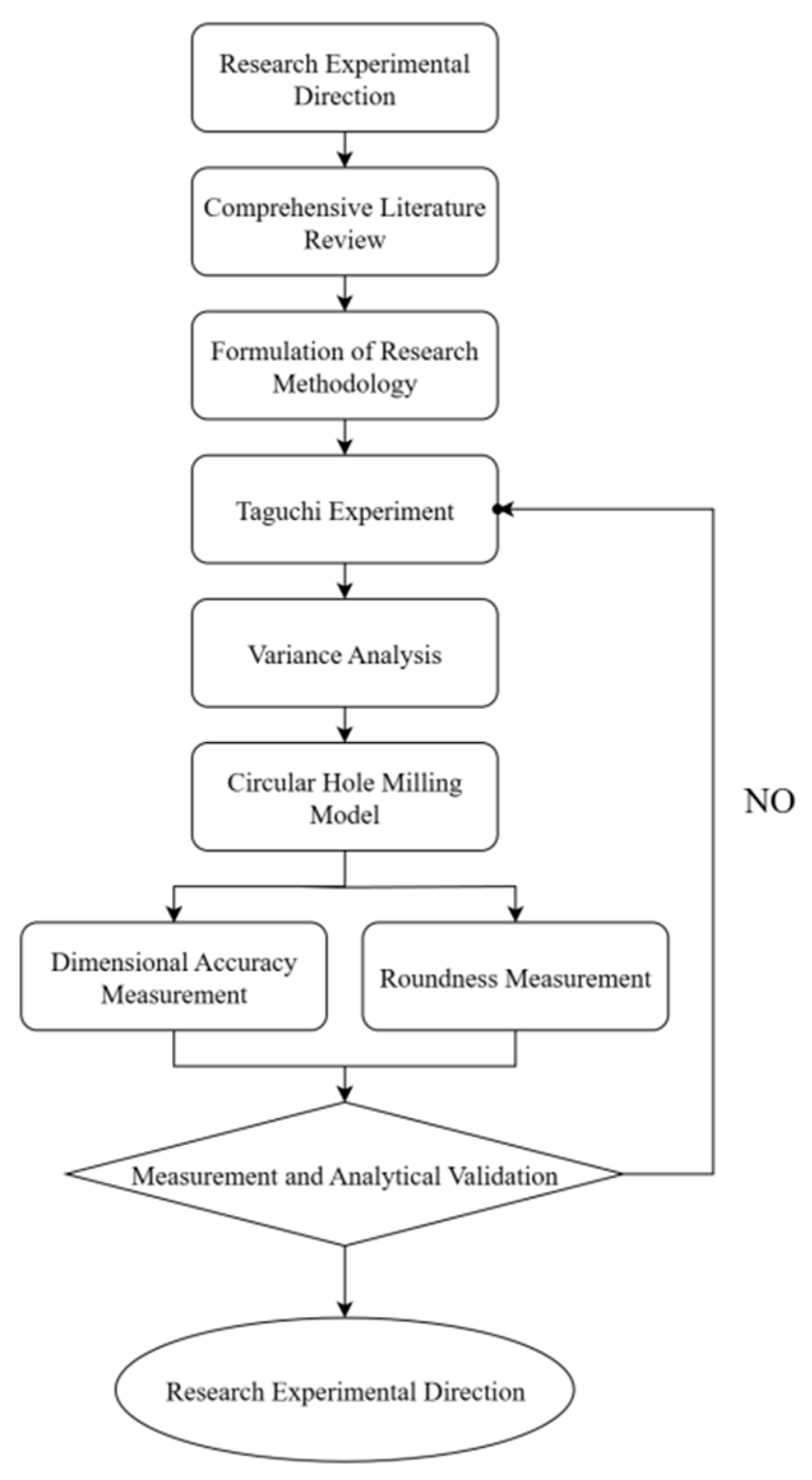
This paper is organized into four chapters, and the flowchart is presented in Figure 1.

2.1. Research Model

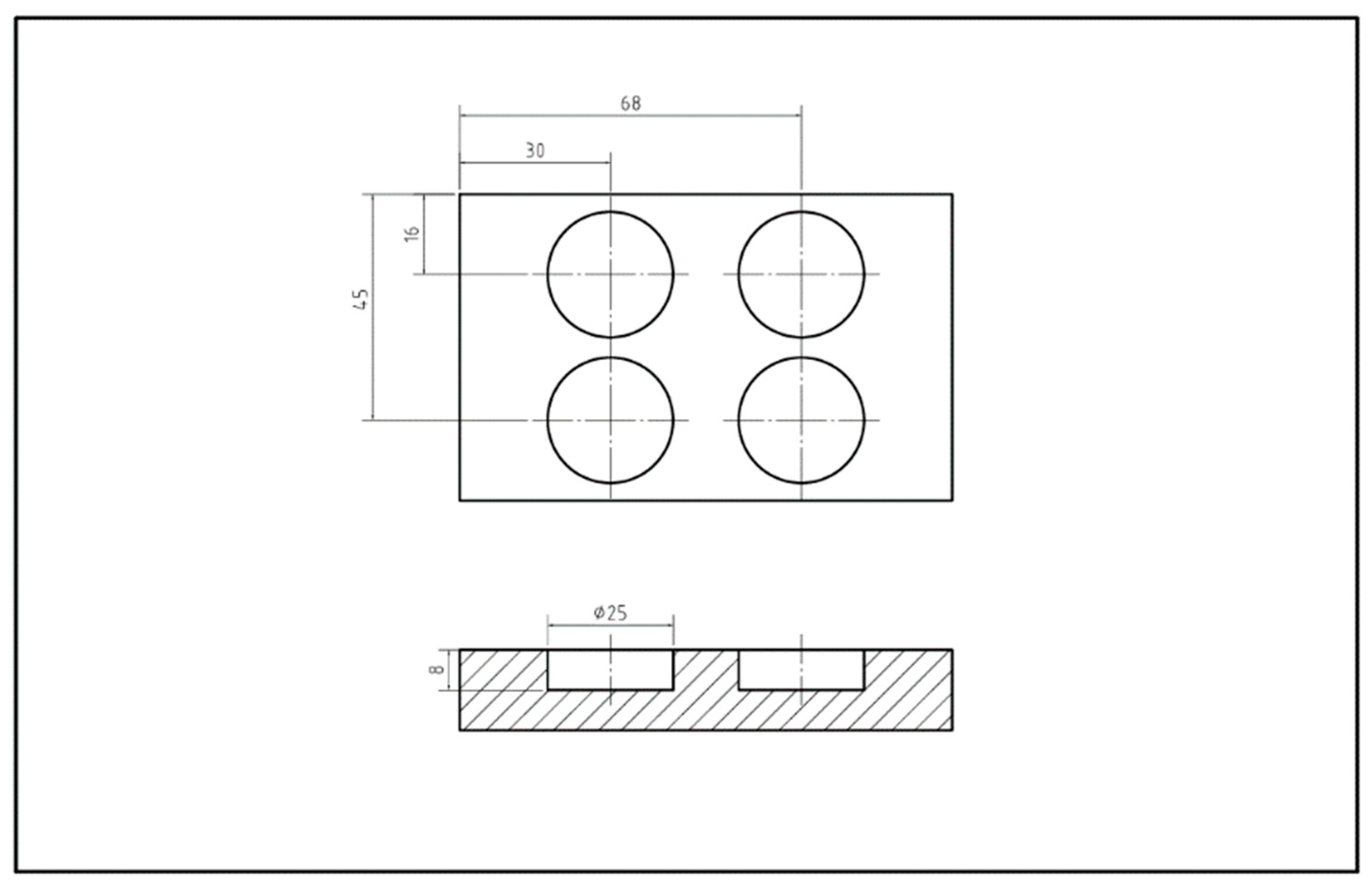
This study investigates dimensional deviation and circularity deformation caused by error factors during full circular milling on a numerical control milling machine. To optimize machining parameters and improve precision and circularity quality, a systematic analysis was conducted using the Taguchi method, RSM, and single-factor experiments. The model design and measurement methods will be explained separately. This study refers to the circular milling content of the Taiwan Technician Certificate, Level B Numerical Control Milling Test Question 202, and sets the milling model dimensions to a diameter of 25 mm and a depth of 8 mm (as shown in Figure 2). Master CAM software (version X9) was used for cutting path planning to ensure machining precision and stability. According to previous research results [34], full circular milling methods include helical interpolation, non-layered milling, and 1 mm layered milling. The experimental results indicated that 1 mm layered milling performed significantly better than other methods in terms of dimensional accuracy. Consequently, a layered cutting strategy was adopted for deep processing to enhance dimensional and geometric accuracy, thereby ensuring optimized machining quality.

2.2. Experimental Equipment

2.2.1. Numerical Control Equipment and Tooling

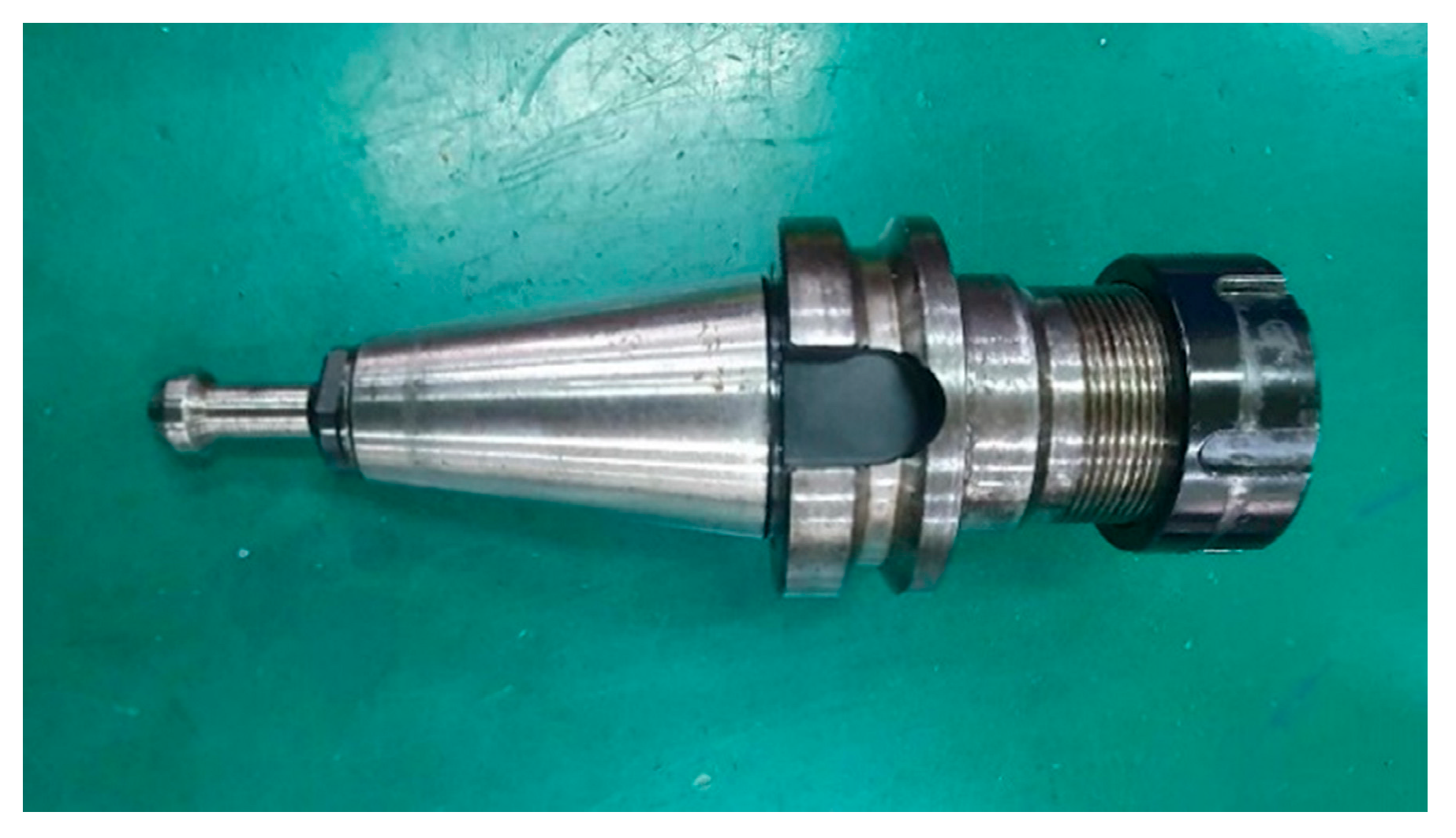
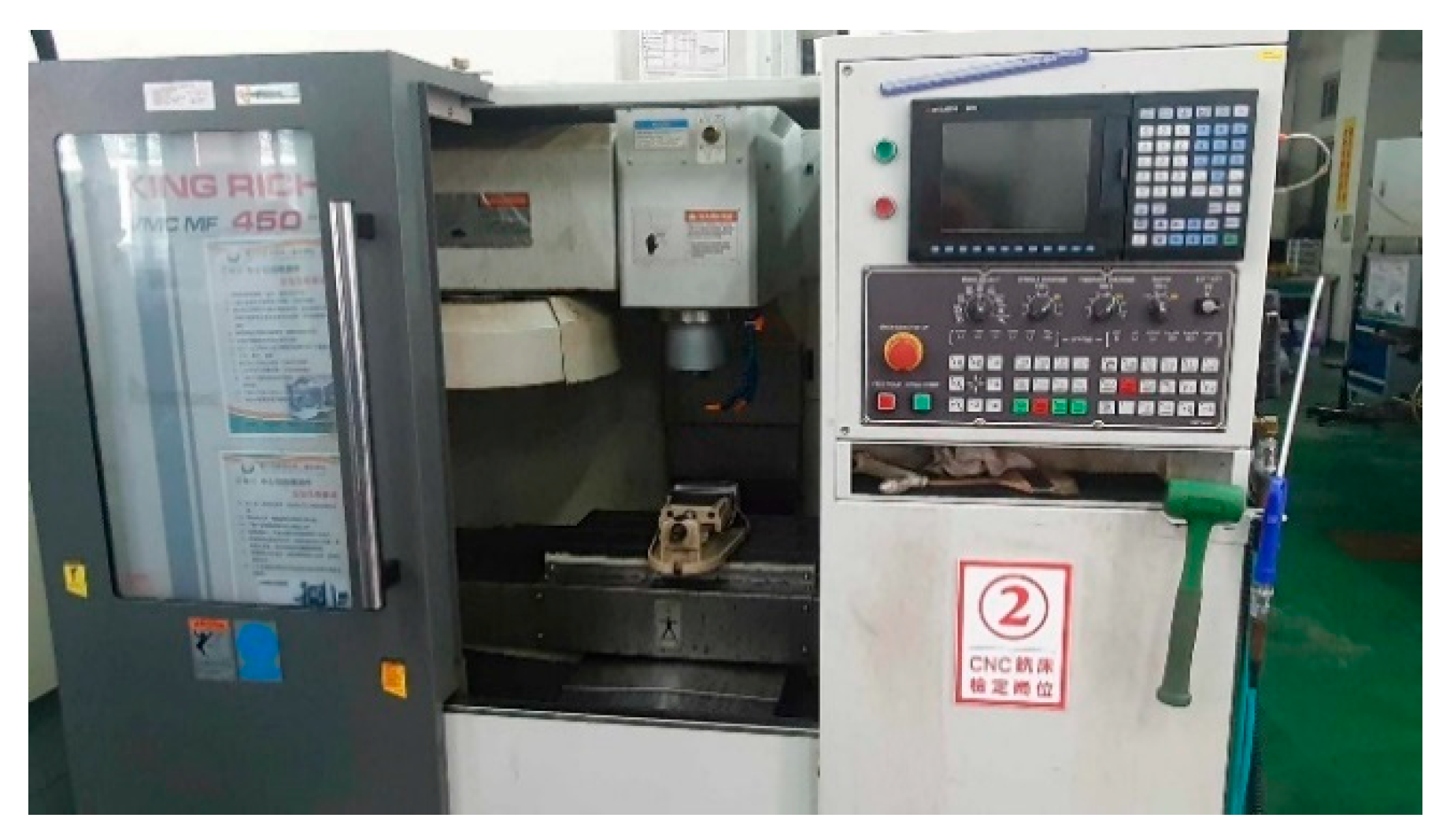
The experimental setup comprised a KR-MF450 numerical control milling machine (King Rich Company, Taiwan, China) manufactured by Ginyouji Company (Taiwan, China), equipped with a Mitsubishi M70 controller (Mitsubishi Electric Corporation, Tokyo, Japan), as shown in Figure 3. The workpiece material used was normalized medium carbon steel S45C (carbon content 0.45%) with a surface hardness of 170–210 HB. The machine includes a spindle mechanism with a BT40 tool holder and Z-axis movement function (Figure 4), a high-rigidity table mechanism, and a dedicated coolant circulation system. In this machining configuration, the tool rotates at programmed high speeds while the table precisely guides the tool along predetermined paths.
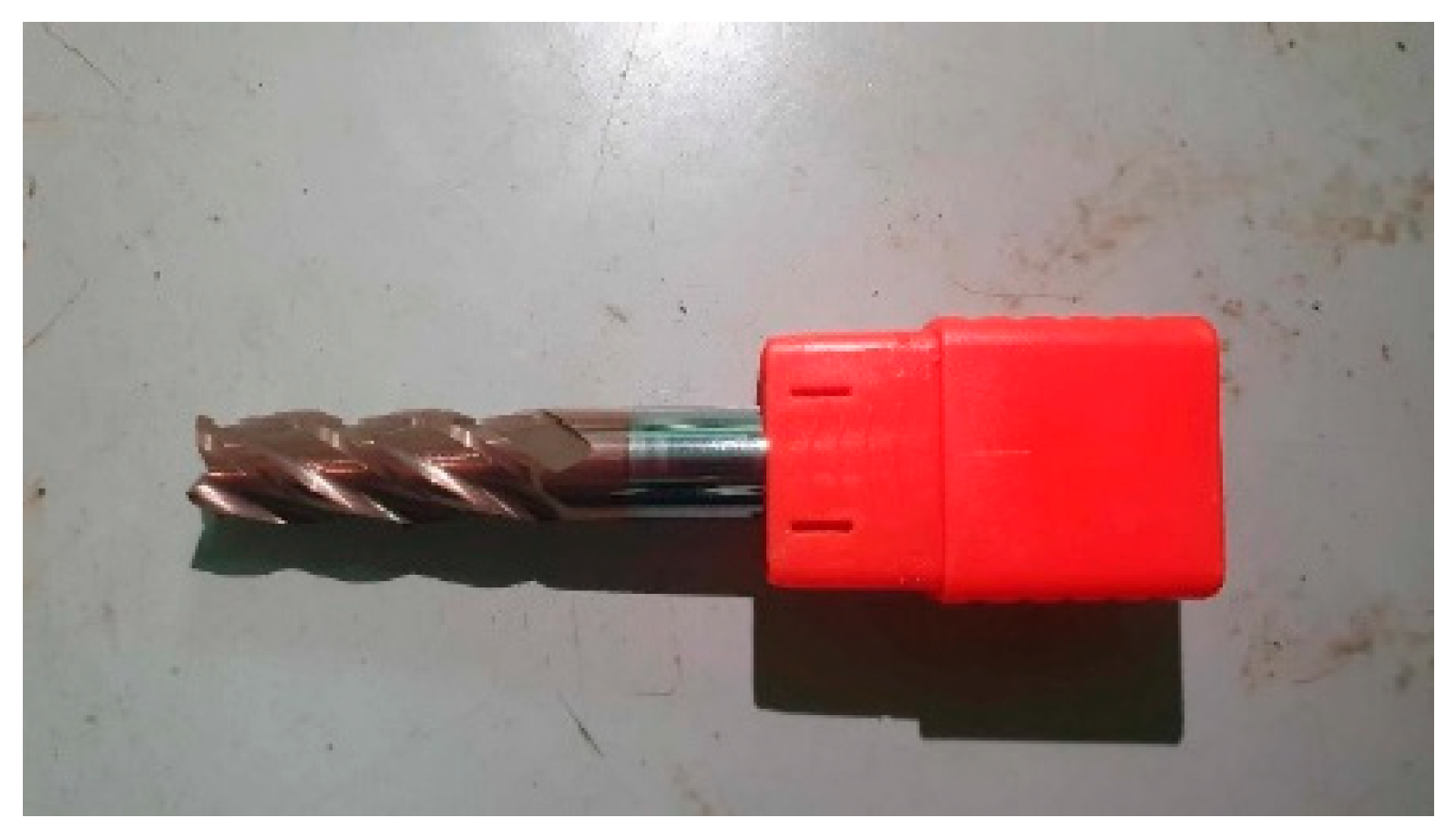
The machining operations utilized a high-performance Φ10 mm micro-grain tungsten carbide flat end mill manufactured by YEFAR (Changzhou, China) (Figure 5). To optimize surface integrity and minimize tool deflection during finishing, a 4-flute geometry with a 35° helix angle was selected. This tool, rated for materials up to HRC 55, ensures superior vibration suppression and wear resistance when machining the normalized S45C medium carbon steel workpieces, which exhibited a measured hardness range of 170–210 HB.

2.2.2. Master CAM Software and Settings

In Taiwan, prevalent Computer-Aided Manufacturing (CAM) software includes NX, CATIA, SolidCAM, and Master CAM software (version X9). Master CAM software (version X9) was selected for this study due to its extensive industrial application and its status as a standard platform in vocational education. Beyond tool path generation, this study specifically implemented a layered circular interpolation (contouring) strategy to enhance dimensional stability. Programmed via MasterCAM, this strategy utilizes G02/G03 commands to divide the total machining depth into discrete layers based on the Z-axis step down. This approach ensures a constant radial depth of cut and minimizes tool deflection, which is critical for achieving H7-level precision. The machining conditions were systematically adjusted through the software interface across four controllable factors: spindle speed, feed per tooth, radial depth of cut, and Z-axis step down.

2.2.3. Measuring Tools

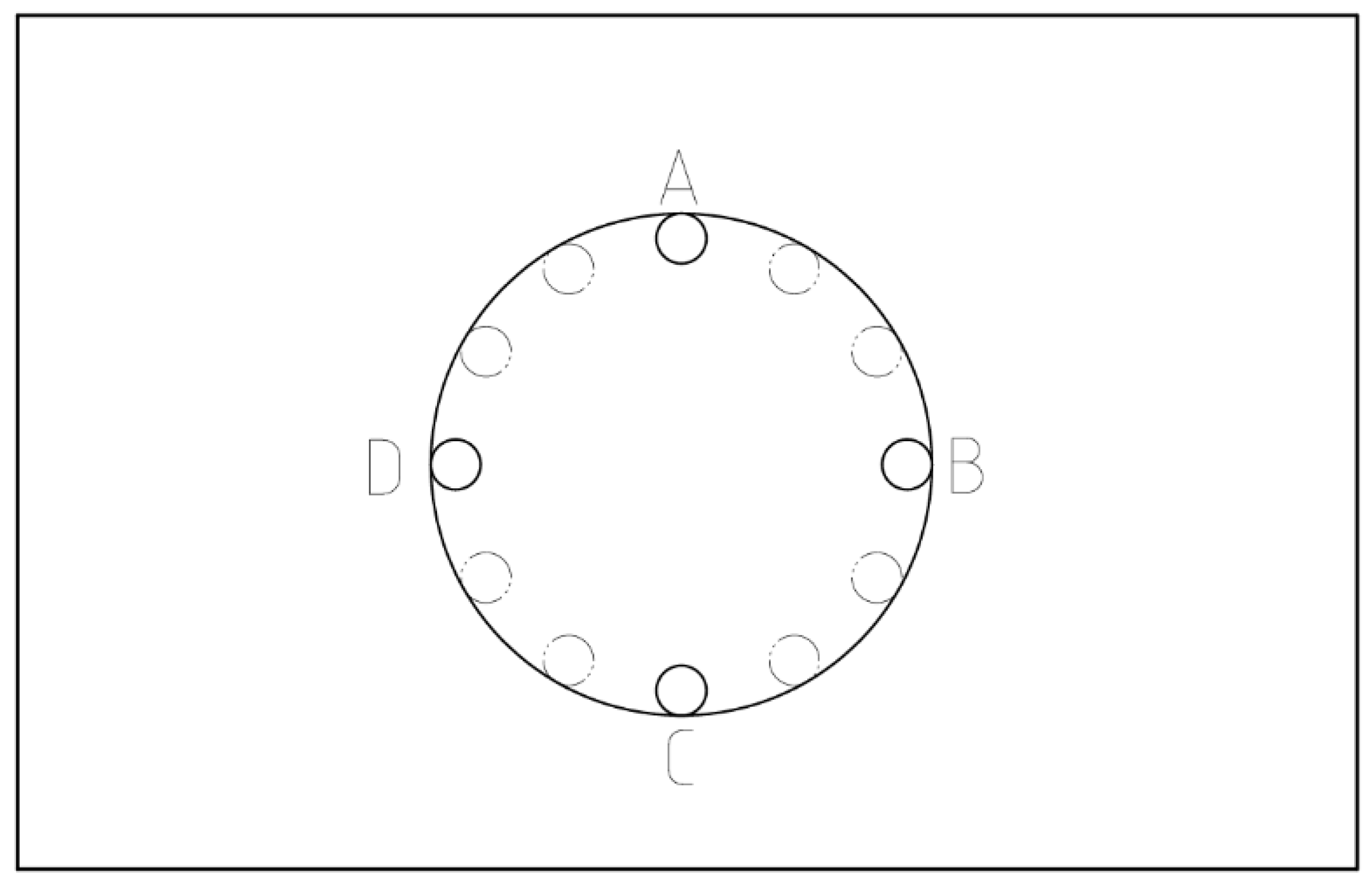
Hole diameters (size tolerance) were measured using a high-precision three-point internal micrometer (Mitutoyo 368-166; resolution: 0.005 mm; MPE: ±2 μm), while circularity (form tolerance) was evaluated using a Coordinate Measuring Machine (CMM, Mitutoyo Crysta-Apex S 74 (Mitutoyo Corporation, Kawasaki, Japan); resolution: 0.0001 mm). As illustrated in Figure 6, the micrometer measurement protocol involved taking readings at four distinct angular positions to capture potential geometric variations. To align with the Taiwan Level B Numerical Control Milling Technician Test, raw diameter data were converted into a “Dimensional Accuracy Score” (0–10 scale), as detailed in Table 1. It is crucial to clarify that this conversion is based on uniform deviation intervals, which mathematically preserves the relative proportional variance and monotonic trend of the original continuous measurements. Consequently, this transformation facilitates a robust Taguchi S/N ratio analysis, guaranteeing that the statistical identification of significant factors—and their relative impact—remains completely uncompromised.
To ensure metrological traceability and statistical validity, a rigorous calibration protocol was implemented for all instruments. The internal micrometer was calibrated using a certified standard setting ring before each experimental session to ensure measurement accuracy. The CMM underwent annual formal calibration in accordance with ISO 10360-2 standards [35]; additionally, a probe qualification procedure using a certified ruby reference sphere was performed prior to each inspection to compensate for the stylus tip’s geometric center and effective diameter.
Furthermore, as emphasized by Bronis et al. [33], geometric accuracy is fundamentally constrained by the machine tool’s kinematic system and thermal variations. To mitigate these factors and control measurement uncertainty, a rigorous protocol was implemented:
  • Calibration and Environment: The micrometer was calibrated using a standard setting ring before each session. All inspections were conducted in a climate-controlled laboratory (20 ± 1 °C) to ensure workpieces reached thermal equilibrium.
  • Consistency and Averaging: To minimize operator influence, all measurements across the 16 experimental runs were performed by a single experienced technician. Each feature (both diameter and circularity) was measured four times consecutively at the specified angular positions, totaling 64 diameter readings and 64 circularity values across the study. The arithmetic mean of these readings was recorded as the final value for statistical analysis.
This systematic approach ensures that the observed variations are inherently attributed to machining dynamics rather than metrological noise.

2.2.4. Statistical Analysis and Software

Statistical processing of the experimental data was conducted using Minitab® software (version 19). The analysis followed a two-stage approach: initially, Taguchi S/N ratio analysis and Analysis of Variance (ANOVA) were utilized to identify the dominant control factors. Subsequently, Response Surface Methodology (RSM) was applied to develop predictive models and determine optimal parameter combinations. Throughout these analyses, a significance level (α) of 0.05 was strictly maintained. Factors and model terms were considered statistically significant if their calculated p-values were less than 0.05, indicating a 95% confidence interval for the findings.

3. Results

This section evaluates the dimensional accuracy and circularity of the machined workpieces. To ensure measurement reliability and repeatability, each sample was meticulously assessed at four distinct angular positions using a three-point internal micrometer. The data presented for each experimental run comprise the statistical mean of these four measurements, alongside the sample standard deviation (SD) to quantify the dispersion of machining errors. As defined by the evaluation methodology, a smaller dimensional deviation indicates superior machining quality, thereby yielding a higher score.

3.1. Taguchi Method

The Taguchi method primarily examines the impact of design parameters on product quality by constructing orthogonal arrays with control factors and levels, combined with signal-to-noise (S/N) ratio analysis and Analysis of Variance (ANOVA), to identify the optimal parameter combination.

3.1.1. Taguchi Method of Dimensional Accuracy

This study examined five control factors that affect quality characteristics, with each factor having four levels. The parameters were selected based on the literature [1,2,3,4,5,6,7,8,9,10,11,12,13,14,15,16,17,18,19,20,21,22,23,24,25] and included depth of cut per pass, feed per tooth, spindle speed, radial depth of cut, and warm-up time. While various Design of Experiments (DoE) strategies, such as the full factorial design, are available to evaluate all possible parameter combinations, they are often impractical for industrial and shop-floor applications. In this study, investigating five control factors at four levels would require 4 5 = 1024 experimental runs under a full factorial design, which is highly resource-intensive and time-consuming. To address this limitation, the Taguchi method was deliberately selected. By utilizing an L 16 orthogonal array, this approach drastically reduces the required number of experiments to 16 while maintaining a high degree of statistical reliability in capturing the main effects of the selected control factors. The levels for each parameter were set according to their characteristics, as shown in Table 2.
After machining, specific dimensions of the workpiece were measured, and the deviations were converted into a score, as shown in Table 1. Based on these scores, the S/N ratio for each group was calculated using Equation (1), and the results are summarized in Table 3.
S / N L B = 10 log i = 1 n 1 y i 2 n
where n represents the total number of experiments, and y i represents the average data for each experiment.
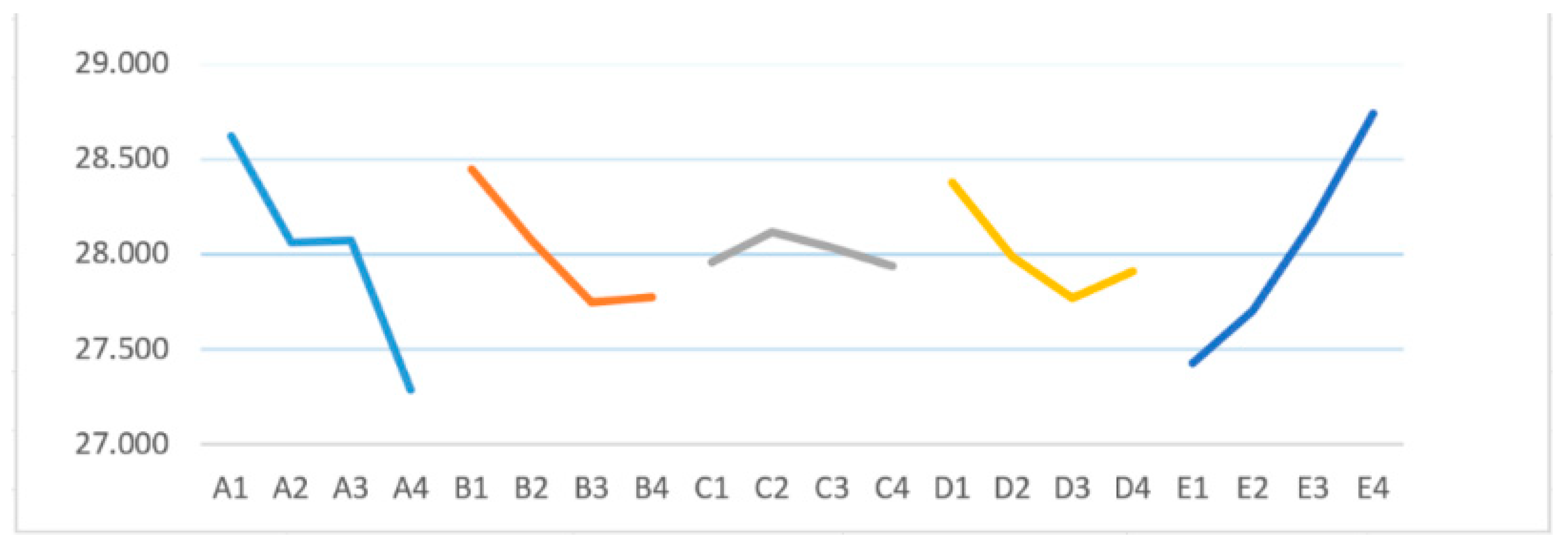
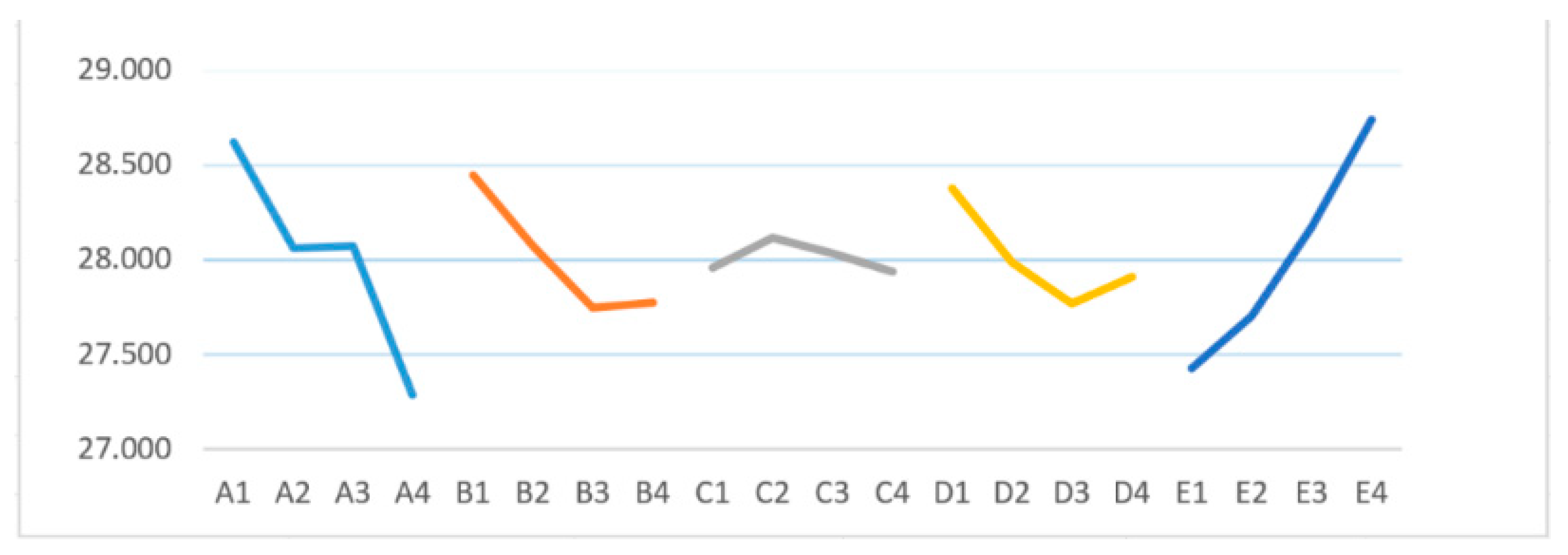
Based on the analysis of Table 4 and Figure 7, a higher S/N ratio indicates less interference and better dimensional accuracy. The optimal parameter combination in this study was a depth of cut per pass of 0.5 mm, a feed per tooth of 0.04 mm/t, a spindle speed of 3000 rpm, a radial depth of cut of 0.04 mm, and a warm-up time of 3 h. The factor effect values indicated that depth of cut per pass and warm-up time had the greatest impact on quality, while spindle speed had a relatively minor effect.

3.1.2. Taguchi Method of Circularity

This study set five control factors that affect quality characteristics, with each factor having four levels, as shown in Table 2. This section analyzes the circularity of the finished product after milling using a CMM. Since a smaller circularity error value is better, the “smaller-is-better” characteristic of the Taguchi method (Equation (2)) was used for quality analysis, and the results are summarized in Table 5.
S / N S B = 10 log i = 1 n y i 2 n
where n represents the total number of experiments, and y i represents the average data for each experiment.
Based on the analysis of Table 6 and Figure 8. Response diagram of factors to S/N ratio (Circularity), a higher S/N ratio for the “smaller-is-better” characteristic indicates lower interference and better circularity. The optimal parameter combination was a depth of cut per pass of 0.5 mm, a feed per tooth of 0.04 mm, a spindle speed of 3500 rpm, a radial depth of cut of 0.06 mm, and a warm-up time of 0 h. The influence analysis indicated that warm-up time (E) was the most significant factor, while spindle speed (C) and radial depth of cut (D) had relatively lower influence.

3.2. ANOVA

Analysis of Variance (ANOVA) is primarily used to evaluate the sources of error and the degree of influence of each control factor in experimental results, as well as to determine whether the errors are significant. Its second purpose is to test the significance of each factor on quality characteristics using the F-test. When the F-value is significantly large, it indicates that the differences between samples are not random and that the control factors have a significant impact on the experimental results.

3.2.1. ANOVA of Dimensional Accuracy

This section performs a two-stage analysis of variance (ANOVA) to determine the statistical significance of machining parameters on hole dimensional accuracy. The first stage (Table 7) consists of an initial full-factor ANOVA, which combines the control factor levels from Table 2 with the average dimensional accuracy and S/N ratio from Table 3.
As shown in Table 7, the saturated L 16 orthogonal array left zero degrees of freedom for the residual error, meaning a formal F-test could not be directly performed. The second stage (Table 8) is a pooled ANOVA procedure. In strict accordance with the classical Taguchi pooling method, the factor with the smallest variance, namely spindle speed (Factor C), was considered as experimental noise and pooled into the error term. This pooling process released three degrees of freedom, providing the necessary error variance to calculate the valid F-statistics presented in Table 8.
According to these refined results, warm-up time (Factor E) demonstrated the greatest impact on dimensional accuracy, accounting for 41.01% of the total variance. Depth of cut per pass (Factor A) was the second most significant contributor at 37.44%, while radial depth of cut (Factor D) was the least influential among the significant factors, accounting for 8.29%. Notably, all retained factors were statistically significant at a 95% confidence level.

3.2.2. ANOVA of Circularity

Following the same statistical procedure, a two-stage analysis of variance (ANOVA) was conducted to evaluate the influence of machining parameters on hole circularity. The first stage (Table 9) consists of an initial full-factor ANOVA, incorporating the factor levels and calculated S/N ratios for circularity.
Similarly, as observed in the initial full-factor ANOVA for circularity (Table 9), the saturated array resulted in zero degrees of freedom for the residual error. The second stage (Table 10) follows the standard Taguchi pooling procedure. In accordance with this rule, spindle speed (Factor C), which exhibited the smallest variance, was treated as experimental noise and pooled to estimate the error variance. This necessary procedure enabled the calculation of valid F-statistics, as presented in the pooled ANOVA (Table 10).
Based on these refined results, warm-up time (Factor E) demonstrated the most significant impact on circularity, contributing 49.97% to the total variance. This was followed by feed per tooth (Factor B) at 30.89% and depth of cut per pass (Factor A) at 13.53%. Radial depth of cut (Factor D) had the smallest influence, accounting for only 5.60%. Notably, with the exception of the radial depth of cut, all other retained factors exerted a statistically significant impact with a confidence level exceeding 90%.

3.3. RSM

Response Surface Methodology (RSM) was employed to model the interaction between the machining parameters and quality characteristics. Specifically, a standard rotatable Central Composite Design (CCD) was utilized. For the three significant factors (k = 3), the CCD comprised 20 experimental runs: 8 factorial points (±1), 6 center points (0), and 6 axial points. To ensure rotatability, the axial distance was set to α = 1.682 (where α =   2 k 4 ). Consequently, specific parameter values inherently extend beyond the standard factorial bounds (e.g., the + α points for depth of cut at 0.920 mm and warm-up time at 3.841 h).
Based on the CCD data, second-order polynomial regression models were developed. While the experimental space was initially normalized using a [−1, 0, +1] coding method, the final empirical equations were deliberately formulated in actual (uncoded) units using Minitab® software (version 19) to provide an intuitive representation for practical shop-floor applications. To ensure model robustness, a backward elimination process was employed to systematically remove statistically insignificant terms (p-value > 0.05), retaining only the significant main effects, quadratic terms, and two-way interactions.
Finally, the overall statistical validity of each model was rigorously evaluated. Analysis of Variance (ANOVA) and comprehensive residual analyses were conducted to verify model significance, predictive accuracy ( R 2 ), and adherence to fundamental statistical assumptions. The final predictive equations and their corresponding statistical validations for dimensional accuracy and circularity are detailed in Section 3.3.1 and Section 3.3.2, respectively.

3.3.1. RSM of Dimensional Accuracy

Based on the results of the dimensional accuracy analysis of variance in Section 3.2.1, this section excludes the less influential factors, spindle speed and radial depth of cut. The significant factors selected were X1 (depth of cut per pass), X2 (feed per tooth), and X3 (warm-up time). Their levels were set as shown in Table 11. Based on this design, 20 experiments were conducted (Table 12). A second-order regression model for dimensional accuracy scores was established using Minitab® software (version 19), and the regression coefficients are shown in Table 13.
According to the p-values in the last row of Table 13, a p-value less than 0.05 indicates a significant impact. The interaction between depth of cut per pass (X1) and warm-up time (X3) significantly influences the circularity response. A second-order regression model was developed using the least squares method, as shown in Equation (3).
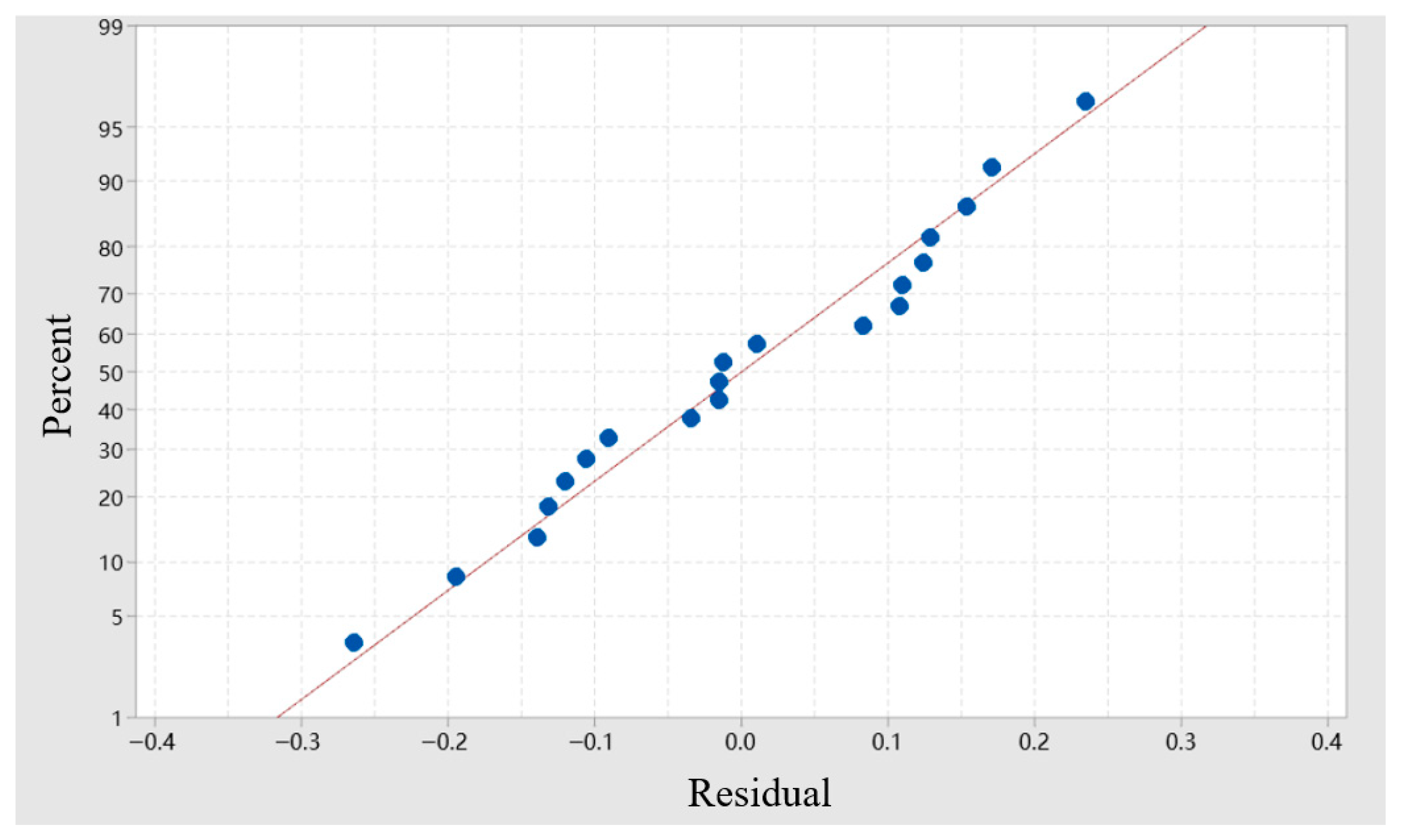
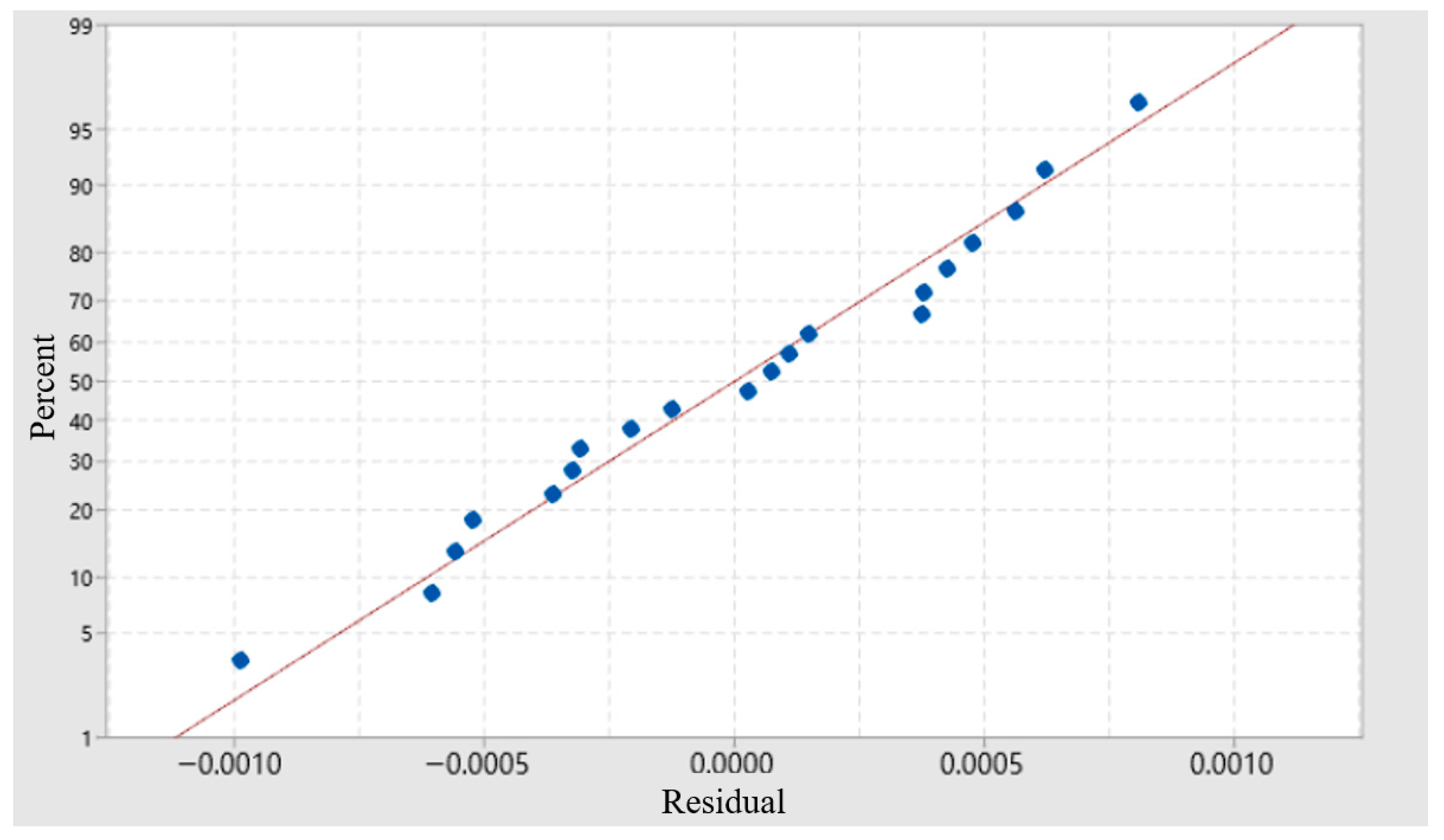
To ensure the robustness of the established model, its overall statistical validity was rigorously evaluated. Statistical analysis of the regression confirmed the comprehensive significance of the final model for dimensional accuracy (p-value < 0.05), supported by a high coefficient of determination ( R 2 = 93.83%). Furthermore, a comprehensive residual analysis was conducted. As illustrated in Figure 9, the normal probability plot and the residuals versus fitted values plot verified that the fundamental statistical assumptions of normality, independence, and constant variance (homoscedasticity) were satisfactorily met, thereby confirming the reliability of the predictive model.
Y = 1.62 + 1.35   X 1 + 33.6   X 2 + 2.91   X 3 2.299 X 1 2 471 X 2 2 0.31 X 3 2 + 6.3   X 1 X 2     0.25   X 1 X 3     3.12   X 2 X 3
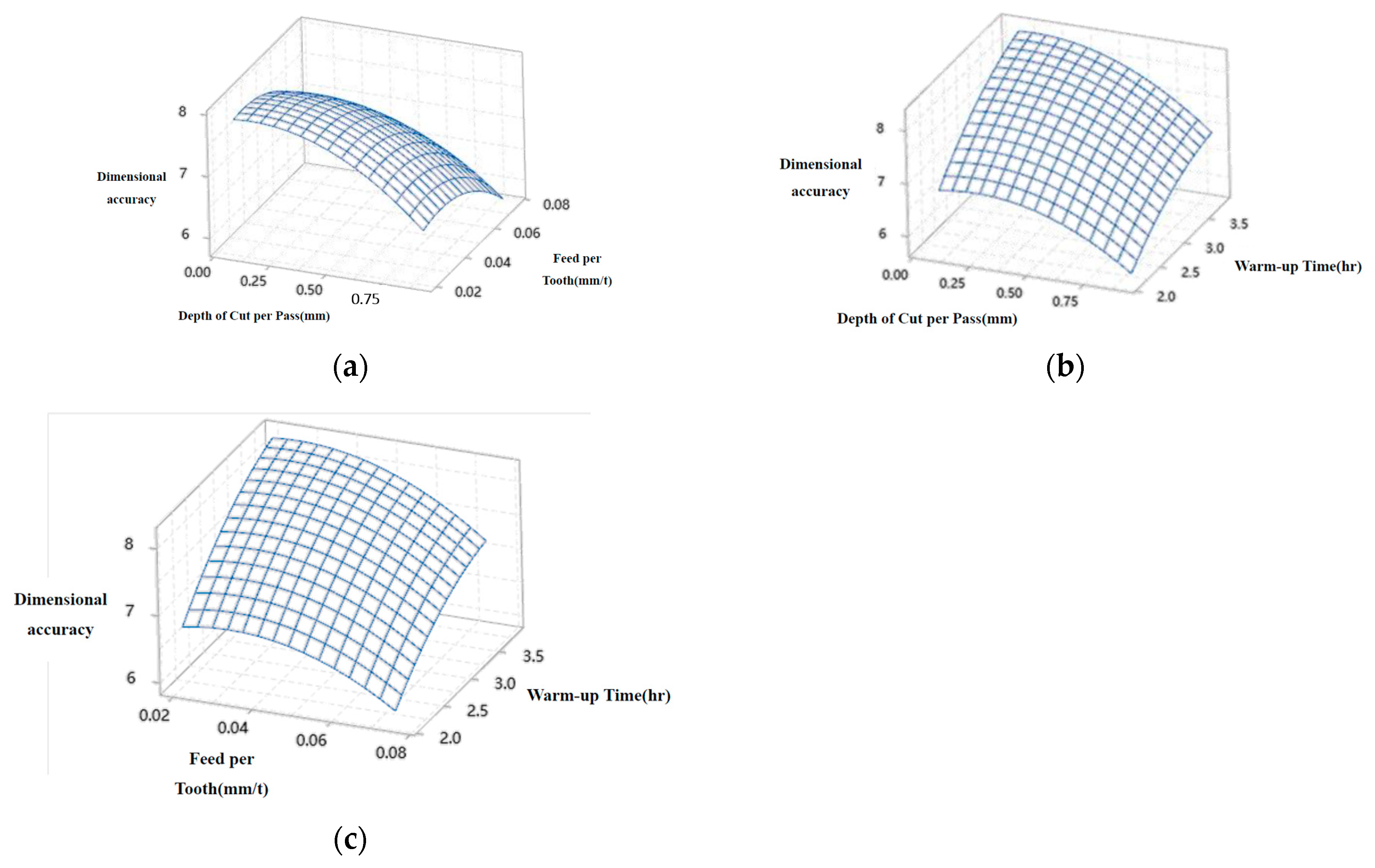
where Y represents the dimensional accuracy score, X1 is the depth of cut per pass, X2 is feed per tooth, and X3 is warm-up time. Using Minitab® software (version 19) analysis software, the response surface plots of factor interactions were generated (Figure 10). Figure 10a shows that when the feed per tooth (X2) and warm-up time (X3) are fixed, a smaller depth of cut per pass results in higher-dimensional accuracy. Figure 10b shows that when feed per tooth (X2) and depth of cut per pass (X1) are fixed, longer warm-up time improves dimensional accuracy. Figure 10c shows that when the depth of cut per pass (X1) and warm-up time (X3) are fixed, lower feed per tooth enhances dimensional accuracy.
While the developed second-order regression model demonstrates excellent explanatory power for the observed experimental space with a high coefficient of determination ( R 2 = 93.83%), the predictive coefficient ( R p r e d 2 ) is relatively lower at 60.38%. This divergence highlights a potential limitation in the model’s exact point-predictive capability for entirely new, unobserved data. In the context of high-speed CNC milling, this is primarily attributed to inherent, non-linear micro-variations during the machining process, such as localized thermal fluctuations, micro-vibrations, and dynamic tool wear. Nevertheless, the high R 2 and R a d j 2 values confirm that the model remains highly robust and reliable for its primary objective: mapping the response surface, identifying critical parameter interactions, and locating the optimal parameter regions for dimensional accuracy.

3.3.2. RSM of Dimensional Circularity

Based on the results of the circularity analysis of variance in Section 3.2.2, two analyses confirmed that spindle speed and radial depth of cut have a relatively minor influence. Therefore, the significant factors selected for the RSM were X1 (depth of cut per pass), X2 (feed per tooth), and X3 (warm-up time). The factor levels are presented in Table 14. Based on the 20 experimental designs in Table 15, a second-order regression model for dimensional accuracy scores was developed using Minitab® software (version 19), and the regression coefficients are provided in Table 16.
From the p-value in the last row of Table 16, a p-value less than 0.05 indicates statistical significance. The interaction between depth of cut per pass (X1) and warm-up time (X3) significantly affects the circularity response. A second-order regression model was established using the least squares, expressed in Equation (4).
Similarly, the statistical validity of the established second-order regression model for circularity was rigorously evaluated. Statistical analysis of the regression confirmed the model’s overall significance (p-value < 0.05), yielding an excellent coefficient of determination ( R 2 = 95.3%), which indicates that the model can explain 95.3% of the variation in circularity. A comprehensive residual analysis was also performed to validate this model. As presented in Figure 11, the normal probability plot and the residuals versus fitted values plot demonstrated that the core statistical assumptions—normality, independence, and constant variance (homoscedasticity)—were successfully satisfied. These diagnostic results confirm the robustness and predictive accuracy of the final model for form tolerance optimization.
Y = 1.91 + 1.25 X 1 + 18.5 X 2 + 2.76 X 3 0.723 X 1 2 200 X 2 2 0.176 X 3 2 + 2.40 X 1 X 2 + 0.015 X 1 X 3 1.25 X 2 X 3
where Y denotes circularity, X1 is the depth of cut per pass, X2 is feed per tooth, and X3 is warm-up time.
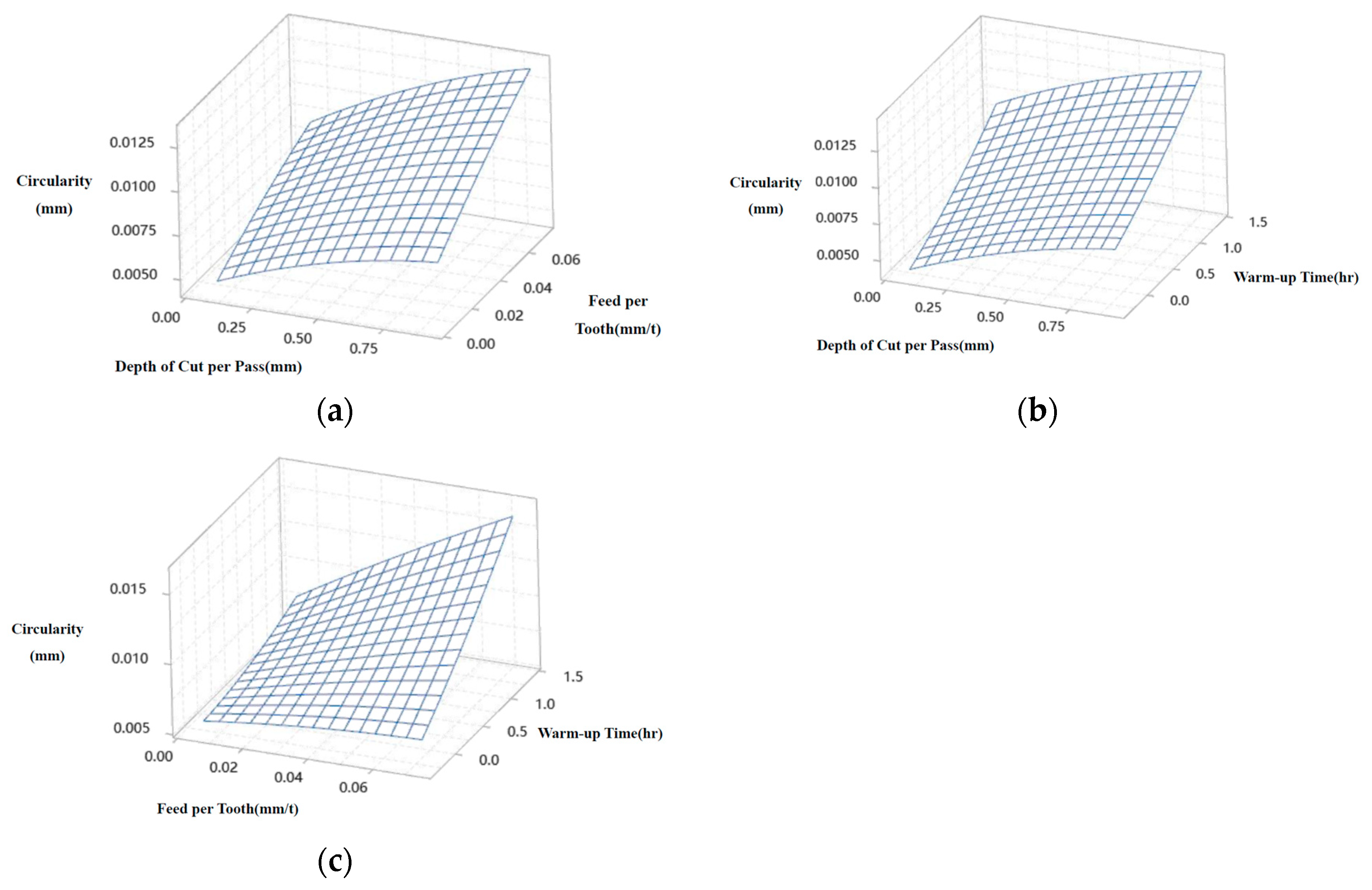
Using Minitab® software (version 19), response surface plots of the factor interactions were generated (Figure 12). Figure 12a shows that with a fixed feed per tooth (X2) and warm-up time (X3), a smaller depth of cut per pass yields better circularity. Figure 12b shows that with a fixed feed per tooth (X2) and depth of cut per pass (X1), longer warm-up time improves circularity. Figure 12c shows that with a fixed depth of cut per pass (X1) and warm-up time (X3), lower feed per tooth enhances circularity. The model achieved a high coefficient of determination (R2) of 95.82%, indicating that it explains 95.82% of the variations.
Similarly, while the circularity regression model achieves an excellent coefficient of determination ( R 2 = 95.37%), its predictive coefficient ( R p r e d 2 ) stands at 66.51%. Consistent with the dimensional accuracy model, this indicates that while the model perfectly captures the variance within the designed experimental boundaries, predicting exact form tolerance values for unobserved conditions is constrained by the dynamic and thermomechanical complexities of the CNC system. However, this limitation does not diminish the model’s practical utility. The strong statistical fit enables accurate visualization of the response surfaces and reliably identifies the parameter combination required to minimize circularity errors.

3.4. Single-Factor Analysis

Single-factor experiments investigate the relationship between a single factor and the experimental results by varying one factor while keeping all other factors constant.

3.4.1. Single-Factor Analysis for Dimensional Accuracy

Based on the optimal parameter combination for dimensional accuracy obtained from the Taguchi method in Section 3.1.1, and interaction effects identified in the Response Surface Methodology in Section 3.3.1, the ranges of each control factor were narrowed. A total of 25 single-factor experiments were conducted. By adjusting only one factor level at a time, the study aimed to determine whether the dimensional accuracy could reach its optimal combination. Through sequential adjustment, the optimal settings for each factor were identified, and the five-factor combination was validated. The experimental data are presented in Table 17. The results show that the optimal parameter combination is A1, B3, C3, D2, and E5, which correspond to a Z-axis depth of cut of 0.3 mm, a feed per tooth of 0.04 mm/t, a spindle speed of 3000 rpm, a radial depth of cut of 0.03 mm, and a warm-up time of 3.5 h, respectively. This combination was tested in Experiment 26, and its results will be compared and validated against other experimental methods in Section 3.5.1.

3.4.2. Single-Factor Analysis for Circularity

Based on the optimal parameter combination for circularity obtained from the Taguchi method in Section 3.1.2 and the interaction effects identified from the RSM in Section 3.3.2, the levels of each control factor were narrowed. Using the same approach described in Section 3.4.1, the optimal parameters for five factors were determined and validated. The experimental data are provided in Table 18. The best parameter combination is A2, B2, C1, D3, and E1, which correspond to a Z-axis depth of cut of 0.4 mm, a feed per tooth of 0.04 mm/t, a spindle speed of 3000 rpm, a radial depth of cut of 0.08 mm, and a warm-up time of 0 h, respectively. This combination was tested in Experiment 26, and its results will be compared and validated against other experimental methods in Section 3.5.2.

3.5. Verification and Analysis of Optimal Parameter Combinations

3.5.1. Dimensional Accuracy

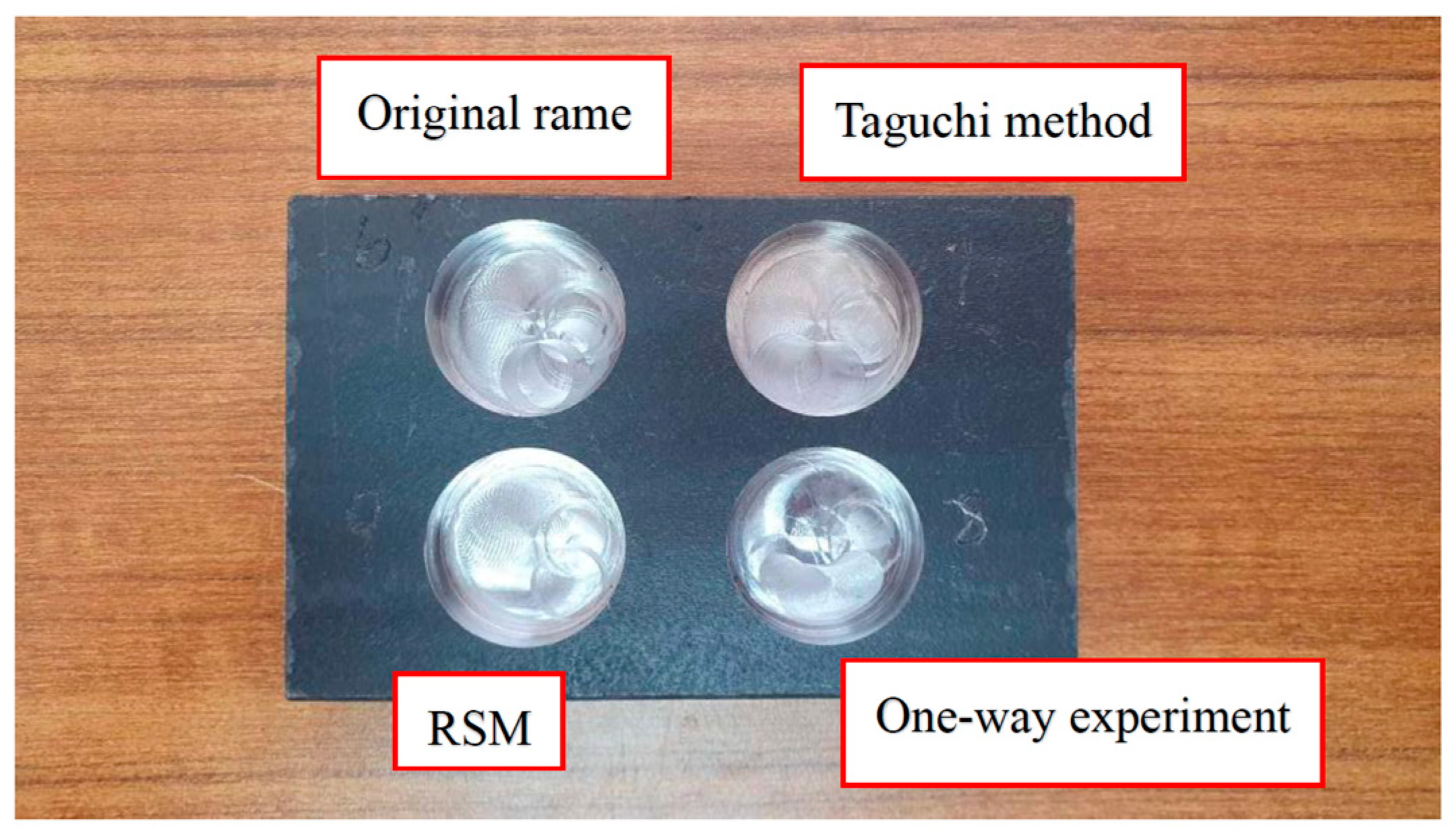
This study compared the improvement effect of the optimal parameter combination with the original settings, as well as the best data sets from the Taguchi method, RSM, and single-factor experiments. The parameters are summarized in Table 19, and the results are presented in Table 20. Dimensional accuracy was evaluated on a 10-point scale, where the dimensional percentage represents the ratio of the actual measured value to the target dimension. The machined model is shown in Figure 13. Machined models from each experiment for dimensional accuracy.

3.5.2. Circularity

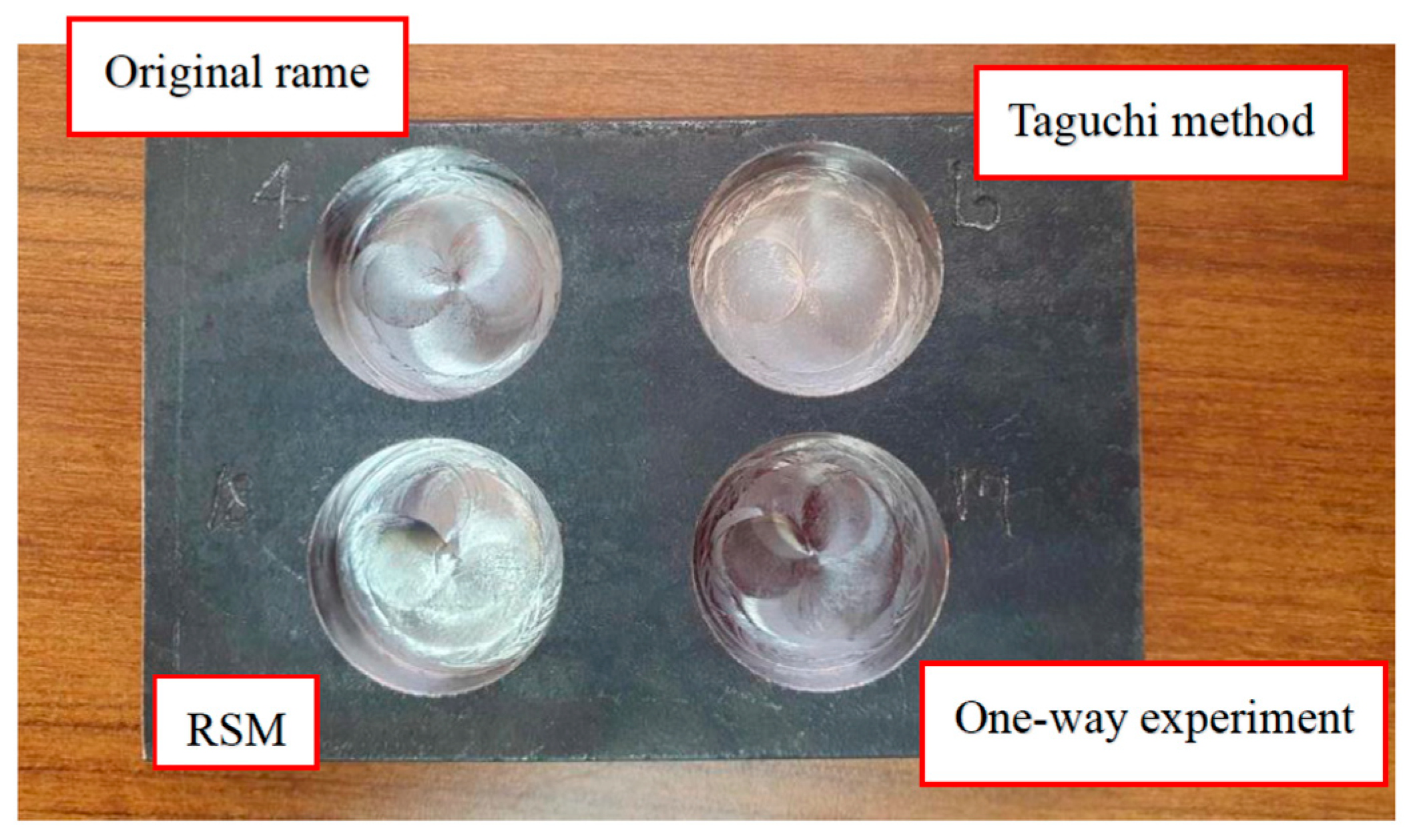
This study compared the difference between the optimal parameter combination and the original parameter combination, analyzing the best results obtained from the Taguchi method, RSM, and single-factor method. The parameters are presented in Table 21, and the experimental results are summarized in Table 22. Dimensional accuracy was evaluated on a 10-point scale, with the dimensional percentage representing the ratio of the actual measured value to the target dimension. The machined model is shown in Figure 14.

4. Discussion

4.1. The Critical Role of Thermal Equilibrium in Dimensional Precision

A pivotal finding of this study is the predominant but divergent influence of warm-up time on different geometric features, contributing 41.01% to dimensional accuracy variance and 49.97% to circularity variance. While conventional CNC optimization literature typically emphasizes mechanical cutting parameters such as spindle speed and feed rate [1,2,3,4,5], our ANOVA results demonstrate that thermal stability is a governing factor. However, as highlighted in broader machining literature, process parameters independently influence size and form tolerances; therefore, these responses must be interpreted separately:
  • Dimensional Accuracy (Size Tolerance): An extended warm-up period (3–3.5 h) significantly improves diametric accuracy. This phenomenon can be attributed to the thermal deformation characteristics of the machine tool structure. During high-speed rotation (3000–3500 rpm), friction-induced heat accumulation leads to axial drift if the system has not reached thermal equilibrium. Implementing a 3 h warm-up protocol facilitates the stabilization of machine components, thereby mitigating axial thermal displacement during the cutting process. This result empirically validates the theoretical observations by Van-The Than [8] regarding thermal errors, specifically quantifying their impact on reducing diametric deviations in circular end milling.
  • Circularity (Form Tolerance): Conversely, as reflected in the experimental results, the optimal circularity is achieved at 0 h of warm-up (a cold machine state). While extended heating stabilizes the axial dimension, it simultaneously induces non-uniform radial thermal expansion and potential spindle runout due to asymmetric heat accumulation. This non-uniform radial distortion negatively impacts the roundness of the machined trajectory, making a cold state more favorable for minimizing form errors.
This inherent conflict—where thermal equilibrium improves diametric size but degrades geometric form—necessitates a compromise when relying on single-objective analytical frameworks. For high-precision components requiring strict adherence to both size and form tolerances (e.g., H7 bearing bores), a single-objective approach is ultimately insufficient. Therefore, performing a multi-objective optimization—such as utilizing Gray Relational Analysis (GRA) or desirability functions—to systematically balance these conflicting objectives and identify a unified optimal parameter set remains a critical focus for future investigations.

4.2. Impact of Mechanical Parameters and Cutting Dynamics

Regarding mechanical settings, the Z-axis depth of cut and feed per tooth were identified as significant secondary determinants of machining quality.
  • Depth of Cut: The determined optimal setting of 0.5 mm aligns with findings by Jadhav [7], indicating that shallower cuts reduce cutting forces and minimize tool deflection. This reduction is critical for the normalized S45C steel (170–210 HB) used in this work to prevent dimensional deviations such as “undercutting” in circular profiles.
  • Feed per Tooth: The optimal feed rate of 0.04 mm/tooth is consistent with the recommendations (approx. 0.05 mm) of Chen et al. [2]. By utilizing the 4-flute YEFAR tool with a 35° helix angle, the lower feed rate effectively reduces the chip load per tooth. This specific geometry enhances the surface integrity of the circular arc and directly correlates with the improved circularity metrics observed in our results.

4.3. Comparative Analysis of Optimization Methodologies

The present work provides a comprehensive integration and comparison of three experimental design methodologies. Notably, the Taguchi method demonstrated superior robustness, achieving the highest dimensional accuracy score (8.625/10) and yielding a 38% improvement over the baseline.
  • Taguchi vs. RSM: Although Response Surface Methodology (RSM) offered a highly accurate predictive model and effectively visualized interaction effects (e.g., between depth of cut and warm-up time), the Taguchi method proved more effective in identifying the global optimum within a discrete parameter space.
  • Single-factor Experiments: While useful for delineating preliminary trends, single-factor experiments failed to account for parameter interactions, resulting in suboptimal performance compared to multivariate approaches.

4.4. Industrial Implications

For high-precision industrial applications, such as the manufacturing of mold bases or bearing bores requiring H7 tolerance, relying solely on mechanical cutting parameters is insufficient. The findings highlight that thermal management strategies, specifically defined warm-up cycles, must be integrated into Standard Operating Procedures (SOPs). Although a 3 h warm-up period requires a temporal investment, it significantly reduces the rejection rate for high-value components, offering a strategic trade-off that enhances overall production efficiency and quality assurance.

5. Conclusions

The present work presents a comprehensive experimental analysis of the dimensional accuracy and circularity of circular holes machined with a flat end mill. By employing the Taguchi method, ANOVA, RSM, and single-factor experiments, the effects of various parameter combinations were systematically evaluated and validated. The following conclusions and recommendations are drawn from the comprehensive experimental data:
  • The primary factors affecting dimensional accuracy are, in order of importance, warm-up time, Z-axis depth of cut, and feed per tooth.
  • The primary factors affecting circularity are, in order of importance, warm-up time, feed per tooth, and Z-axis depth of cut.
  • The optimal parameter combinations identified by all methods effectively improved hole quality, with dimensional accuracy improving approximately 24% to 38% and circularity improving approximately 15% to 33%.
  • Warm-up time had a positive effect on dimensional accuracy but was not necessarily beneficial for circularity, possibly due to uneven axial compensation introducing errors.
Finally, it should be noted that these optimization results were derived from a specific technological setup (a single machine tool, cutting tool, and workpiece material). Therefore, the current conclusions are strictly limited to this experimental configuration. To generalize these findings for broader industrial applications, particularly those requiring H7 tolerances, future validation across diverse machining environments and materials is necessary.

Author Contributions

Conceptualization, D.-C.C.; methodology, Y.-T.C. and Y.-C.C.; software, Y.-J.C.; validation, Y.-T.C.; formal analysis, D.-C.C.; investigation, Y.-C.C.; resources, D.-C.C.; data curation, Y.-C.C. and Y.-J.C.; writing—original draft preparation, Y.-T.C.; writing—review and editing, D.-C.C. All authors have read and agreed to the published version of the manuscript.

Funding

This research received no external funding.

Institutional Review Board Statement

Not applicable.

Informed Consent Statement

Not applicable.

Data Availability Statement

Data are contained within the article.

Conflicts of Interest

The authors declare no conflicts of interest.

References

  1. Chen, C.H. The Analysis of the Impact of CNC Controller Parameters on Actual Machining Paths. J. Mech. Ind. 2017, 408, 90–103. [Google Scholar]
  2. Chen, C.H. Study on Surface Roughness of Aluminum Alloy A6061 Machining by Adjusting CNC Controller Parameters Using the Taguchi Method. Master’s Thesis, National Changhua University of Education, Department of Mechatronics Engineering, Changhua, Taiwan, 2019. [Google Scholar]
  3. Lu, H.H.; Huang, N.C. Optimization of Cutting Parameters for High-Speed End Milling SKD61 Die Steel Using Principal Component Analysis and the Taguchi Method. J. Technol. 2007, 22, 325–333. [Google Scholar]
  4. Tseng, Y.H. Optimal Parameter Design of High-Speed CNC Milling Processes Using the Taguchi Method. Master’s Thesis, National Kaohsiung First University of Science and Technology, Department of Mechanical and Automation Engineering, Kaohsiung, Taiwan, 2003. [Google Scholar]
  5. Huang, J.H. Optimal Parameter Design for Five-Axis CNC Milling Processes Using the Taguchi Method. Master’s Thesis, National Taipei University of Technology, Graduate Institute of Manufacturing Technology, Taipei, Taiwan, 2008. [Google Scholar]
  6. Silva, F.J.G.; Martinho, R.P.; Magalhaes, L.L.; Fernandes, F.; Sales-Contini, R.C.M.; Durao, L.M.; Casais, R.C.B.; Sousa, V.F.C. A Comparative Study of Different Milling Strategies on Productivity, Tool Wear, Surface Roughness, and Vibration. J. Manuf. Mater. Process. 2024, 8, 115. [Google Scholar] [CrossRef]
  7. Jadhav, P.K.; Sahai, R.S.N.; Solanke, S.; Gawande, S.H. Multi-Objective Optimization of EN19 Steel Milling Parameters Using Taguchi, ANOVA, and TOPSIS Approaches. J. Alloys Metall. Syst. 2024, 7, 100102. [Google Scholar] [CrossRef]
  8. Lin, W.H.; Li, R.J.; Hsu, S.C.; Kao, Y.M. Analysis and Compensation Technology of Static Errors in Machine Tools. J. Mech. Ind. 2024, 492, 74–81. [Google Scholar]
  9. Wang, S.M.; Cheng, S.C.; Li, C.T.; Liao, H.W. Optimization and Adjustment of CNC Machine Tool Controller Parameters. J. Chung Yuan 2004, 32, 59–67. [Google Scholar]
  10. Dado, M.; Koleda, P.; Vlašic, F.; Salva, J. Investigation of the Applicability of Acoustic Emission Signals for Adaptive Control in CNC Wood Milling. Appl. Sci. 2025, 15, 6659. [Google Scholar] [CrossRef]
  11. Li, R.J.; Wu, P.H.; Tseng, Y.S.; Lin, T.C.; Mai, C.C. Development and Introduction of CNC Controller Inertia Estimation Technology. J. Mech. Ind. 2020, 444, 45–53. [Google Scholar]
  12. Chen, Y.R.; Wu, K.T.; Lin, J.W.; Shih, W.C.; Hung, J.P. The Impact of Cutting Tool Material on the Cutting Stability of Machine Tools. J. Technol. 2015, 30, 33–39. [Google Scholar]
  13. Yang, C.H. A Study on Tool Life in Finish Milling of S50C Medium Carbon Steel. Master’s Thesis, National Chung Hsing University, Graduate Institute of Mechanical Engineering, Taichung, Taiwan, 2012. [Google Scholar]
  14. Hung, C.J.; Chung, Y.N. Application of Fuzzy Control Law in Continuous Path Numerical Control Systems. Da-Yeh J. 1993, 2, 25–32. [Google Scholar]
  15. Zhang, Z.; Jiang, F.; Luo, M.; Wu, B.; Zhang, D.; Tang, K. Geometric Error Measuring, Modeling, and Compensation for CNC Machine Tools: A Review. Chin. J. Aeronaut. 2024, 37, 163–198. [Google Scholar] [CrossRef]
  16. Soori, M.; Asmael, M. Cutting Temperatures in Milling Operation of Difficult-to-Cut Materials. J. New Technol. Mater. 2021, 11, 47–56. [Google Scholar] [CrossRef]
  17. Vázquez, C.R.; Guajardo-Cuéllar, A. Prediction of Vertical Vibrations of a CNC Router Type Geometry. Appl. Sci. 2024, 14, 621. [Google Scholar] [CrossRef]
  18. Phokobye, S.N.; Desai, D.A.; Tlhabadira, I.; Sadiku, E.R.; Mutombo, K. Comparative Investigation and Optimization of Cutting Tools Performance During Milling Machining of Titanium Alloy (Ti6Al4V) Using Response Surface Methodology. Int. J. Adv. Manuf. Technol. 2024, 131, 3565–3577. [Google Scholar] [CrossRef]
  19. Daraba, D.; Pop, F.; Daraba, C. Digital Twin Used in Real-Time Monitoring of Operations Performed on CNC Technological Equipment. Appl. Sci. 2024, 14, 10088. [Google Scholar] [CrossRef]
  20. Jacso, A.; Sikarwar, B.S.; Phanden, R.K.; Singh, R.K.; Ramkumar, J.; Sahu, G.N. Optimisation of Tool Path Shape in Trochoidal Milling Using B-Spline Curves. Int. J. Adv. Manuf. Technol. 2022, 121, 3801–3816. [Google Scholar] [CrossRef]
  21. Hsiao, W.L.; Lin, C. A Study on the Surface Modification of Coatings by Electrical Discharge Machining Using the Taguchi Method. J. Kaohsiung Norm. Univ. 2009, 27, 17–34. [Google Scholar]
  22. Lin, W.F.; Lu, H. Application of Fuzzy-Taguchi Method for Optimizing Cutting Parameters in Heavy Side Milling Processes. J. Technol. 2006, 21, 111–116. [Google Scholar]
  23. Naresh, N.; Rajasekhar, K.; VijayaBhaskara Reddy, P. Parametric Analysis of GFRP Composites in CNC Milling Machine Using Taguchi Method. J. Mech. Civ. Eng. 2013, 6, 102–111. [Google Scholar] [CrossRef]
  24. Maurya, P.; Sharma, P.; Diwaker, B. Implementation of Taguchi Methodology to Optimization of CNC End Milling Process Parameters of AL6351-T6. Int. J. Mod. Eng. Res. 2012, 2, 3530–3533. [Google Scholar]
  25. Jha, S.K.; Singh, S.; Kumar, S.R. Experimental Analysis of CNC Turning Using Taguchi Method. In Proceedings of the Third International Conference on Advances in Mechanical Engineering, Delhi, India, 28–29 December 2012; Volume 2, pp. 92–96. [Google Scholar]
  26. Sudeesh, S.; Warriar, J.; Joy, K.; Sajul, U.; Sreeprasanth, M. Application of Taguchi Method for Optimization of Process Parameters in Spur Gear Milling Operation. Int. Res. J. Eng. Technol. 2018, 5, 3464–3474. [Google Scholar]
  27. Amran, M.A.; Amin, A.M. Optimizing Parameters of End Mill Cutting Tools for Milling Process. Res. Prog. Mech. Manuf. Eng. 2024, 5, 345–357. [Google Scholar]
  28. Shah, M.; Baloni, B.; Channiwala, S. Optimization of Centrifugal Pump Based on Impeller-Volute Interactions. Adv. Technol. Innov. 2022, 7, 216–227. [Google Scholar] [CrossRef]
  29. Abdu, H.M.; Taha, S.M.; Abd El-Mageed, A.M.; Wazeer, A.; Mahmoud, M.M. Modeling and Optimization of Process Parameters for Surface Roughness and Cutting Forces on End Milling Using RSM and Taguchi Method. J. Mod. Res. 2024, 1, 14–20. [Google Scholar] [CrossRef]
  30. Lin, M.-H.; Yang, C.-C.; Huang, B.-W.; Lin, J.-Y.; Chen, C.-Y. Design Modification and Analysis of Brushless Direct-Current Axial Fan Motor Stator Using Taguchi and One-Factor-at-a-Time Method. Int. J. Eng. Technol. Innov. 2025, 15, 44–56. [Google Scholar]
  31. Chang, Y.C.; Chen, D.C. Optimization Parameters for Full-Circle Milling on CNC Milling Machines Using the Taguchi Method. In Proceedings of the 40th Chinese Society of Mechanical Engineering, Changhua, Taiwan, 1–2 December 2023. [Google Scholar]
  32. Saleh, Y.K.P.; Ismail, R.; Jamari, J.; Jujur, I.N.; Budiantoro, P.A.; Ramayanti, S.; Winarso, R. Dimensional Assessment and Error Analysis of 3D CAD Models Manufactured with Bound Metal Deposition. Int. J. Eng. Technol. Innov. 2026, 16, 1–19. [Google Scholar] [CrossRef]
  33. Bronis, M.; Miko, E.; Nowakowski, L. Influence of the Kinematic System on the Geometrical and Dimensional Accuracy of Holes in Drilling. Materials 2021, 14, 4568. [Google Scholar] [CrossRef]
  34. Prihartanto, P.; Yuliani, M.; Purwanta, W.; Wiharja, W.; Hanif, M.; Yusuf, N.R.; Sopiah, N.; Hendrayanto, P.A.; Meilani, S.S. Optimizing Ammonia Removal from Secondary Aluminum Dross as a Potential Raw Material Substitution in the Cement Industry. Int. J. Eng. Technol. Innov. 2025, 15, 439–455. [Google Scholar] [CrossRef]
  35. ISO 10360-2:2009; Geometrical Product Specifications (GPS)—Acceptance and reverification tests for coordinate measuring machines (CMM)—Part 2: CMMs used for measuring linear dimensions. International Organization for Standardization: Geneva, Switzerland, 2009.
Figure 1. Research Flowchart.
Applsci 16 03918 g001
Figure 2. Research Model Diagram.
Applsci 16 03918 g002
Figure 3. CNC milling machine. Note: The Chinese text on the sign translates to CNC Milling Machine Certification Station.
Applsci 16 03918 g003
Figure 4. BT-40 Tool Holder.
Applsci 16 03918 g004
Figure 5. YEFAR Φ10 mm 4-flute Flat End Mill.
Applsci 16 03918 g005
Figure 6. Schematic Diagram of Three-Point Internal Micrometer Measurement. (A, B, C, and D represent the four primary measurement orientations at 0°, 90°, 180°, 270°).
Applsci 16 03918 g006
Figure 7. Response diagram of factors to S/N ratio (Dimensional accuracy). Note: Different colors are used to visually distinguish the five control factors (A, B, C, D, and E).
Applsci 16 03918 g007
Figure 8. Response diagram of factors to S/N ratio (Circularity). Note: Different colors are used to visually distinguish the five control factors (A, B, C, D, and E).
Applsci 16 03918 g008
Figure 9. Residual plots for the predictive regression model of dimensional accuracy. The blue dots represent the residual values of the experimental data, and the red line represents the normal distribution line.
Applsci 16 03918 g009
Figure 10. Factor contour diagram (Dimensional accuracy): (a) Surface Plot of Depth of Cut per Pass and Feed per Tooth; (b) Surface Plot of Depth of Cut per Pass and Warm-up Time; (c) Surface Plot of Feed per Tooth and Warm-up Time.
Applsci 16 03918 g010
Figure 11. Residual plots for the predictive regression model of circularity. The blue dots represent the residual values of the experimental data, and the red line represents the normal distribution line.
Applsci 16 03918 g011
Figure 12. Factor contour diagram (Dimensional Circularity): (a) Surface Plot of Depth of Cut per Pass and Feed per Tooth; (b) Surface Plot of Depth of Cut per Pass and Warm-up Time; (c) Surface Plot of Feed per Tooth and Warm-up Time.
Applsci 16 03918 g012
Figure 13. Machined models from each experiment for dimensional accuracy.
Applsci 16 03918 g013
Figure 14. Machined models from each experiment for circularity.
Applsci 16 03918 g014
Table 1. Converted Score or Grade.
Measuring DimensionsConverted Score or Grade
φ24.991–φ25.00010.0
φ24.981–φ24.9909.0
φ24.971–φ24.9808.0
φ24.961–φ24.9707.0
φ24.951–φ24.9606.0
φ24.941–φ24.9505.0
φ24.931–φ24.9404.0
φ24.921–φ24.9303.0
φ24.911–φ24.9202.0
φ24.901–φ24.9101.0
φ23.991–φ24.9000.0
Table 2. Control factor level.
Level 1Level 2Level 3Level 4
A. Depth of Cut per Pass (mm)0.51.01.52.0
B. Feed per Tooth (mm/t)0.040.060.080.10
C. Revolutions Per Minute (rpm)2500300035004000
D. Width of Cut (mm)0.040.060.080.10
E. Warm-up Time (h)0123
Table 3. Dimensional accuracy and S/N ratio of each group (Dimensional accuracy).
EXP.ABCDEDimensional Accuracy of FractionStandard Deviation (SD)S/N Ratio
1111116.8750.0025028.787
2122226.6250.0025028.465
3133336.5000.0040828.299
4144447.0000.0000028.943
5212347.1250.0025029.097
6221436.3750.0025028.131
7234126.1250.0025027.783
8243215.7500.0028927.235
9313426.3750.0025028.131
10324315.7500.0050027.235
11331246.6250.0025028.465
12342136.6250.0025028.465
13414236.1250.0025027.783
14423146.6250.0025028.465
15432415.2500.0028926.444
16441325.2500.0028926.444
Average6.312 28.045
Table 4. Response table of factors to S/N ratio (Dimensional accuracy).
ABCDE
Level 128.62428.44927.95728.37527.425
Level 228.06128.07428.11827.98727.706
Level 328.07427.74828.03227.76928.170
Level 427.28427.77227.93627.91228.742
Effect1.33930.70140.18170.60611.3174
Rank13542
Optimal combinationA1B1C2D1E4
Table 5. Dimensional accuracy and S/N ratio of each group (Circularity).
EXP.ABCDECircularity (mm)Standard Deviation (SD)S/N Ratio
1111110.00750.00007854.531
2122220.01220.00349150.296
3133330.01520.00125248.401
4144440.01130.00302850.970
5212340.01120.00055451.072
6221430.01460.00050448.750
7234120.01580.00062448.079
8243210.00800.00029353.936
9313420.01100.00176351.237
10324310.01330.00022749.589
11331240.01570.00349948.140
12342130.01650.00016147.686
13414230.01240.00049550.154
14423140.01260.00105350.025
15432410.01100.00034151.215
16441320.01410.00039649.028
Average0.0127 50.257
Table 6. Response table of factors to S/N ratio (Circularity).
ABCDE
Level 151.05051.74950.11250.08052.318
Level 250.45950.69050.06850.63249.660
Level 349.16348.95950.90049.52248.748
Level 450.10650.40549.69850.54350.052
Effect1.88662.79001.20171.10933.5701
Rank32415
Optimal combinationA1B1C3D2E1
Table 7. Initial full-factor ANOVA for S/N ratio of dimensional accuracy.
FactorSSDOFVariance
A. Depth of Cut per Pass (mm)3.63931.213
B. Feed per Tooth (mm/t)1.29030.430
C. Revolutions Per Minute (rpm)0.08230.027
D. Width of Cut (mm)0.80630.269
E. Warm-up Time (h)3.98731.329
Other000
Total9.804153.268
Table 8. Pooled ANOVA for S/N ratio of dimensional accuracy.
Second S/N Ratio Variation Analysis
FactorSSDOFVarianceF Statistic (F)ρ%ConfidenceSignificant
A.3.63931.21344.5537.44%99.50%Yes
B.1.29030.43015.7913.27%97.60%Yes
C.Pooled
D.0.80630.2699.868.29%95.40%No
E.3.98731.32948.841.01%99.50%Yes
Error0.08230.027Note: At least 95% confidence
Total9.804153
Table 9. Initial full-factor ANOVA for S/N ratio of Circularity.
FactorSSDOFVariance
A. Depth of Cut per Pass (mm)7.49332.498
B. Feed per Tooth (mm/t)17.07035.690
C. Revolutions Per Minute (rpm)3.06731.022
D. Width of Cut (mm)3.11031.037
E. Warm-up Time (h)27.63139.210
Other000
Total58.37101519.4570
Table 10. Pooled ANOVA for S/N ratio of Circularity.
Second S/N Ratio Variation Analysis
FactorSSDOFVarianceF Statistic (F)ρ%ConfidenceSignificant
A.7.49332.4982.4413.53%75.90%Yes
B.17.07035.695.5730.89%90.40%Yes
C.Pooled
D.3.11031.0371.015.60%50.40%No
E.27.63139.219.0149.97%94.80%Yes
Error3.06731.022 Note: At least 75% confidence
Total55.3041518.435
Table 11. Response Surface Method (RSM) Level Parameter Design (Dimensional accuracy).
Significant FactorUnit−10+1
X 1 Depth of Cut per Passmm0.250.500.75
X 2 Feed per Toothmm/t0.020.040.06
X 3 Warm-up Timeh2.53.03.5
Table 12. Design results of Response Surface Method (Dimensional accuracy).
EXP.Depth of Cut per Pass (mm)Feed per Tooth (mm/t)Warm-Up Time (h)Dimensional Accuracy of Fraction
10.5000.0603.0007.375
20.5000.0403.0007.750
30.0800.0403.0007.750
40.5000.0403.0007.875
50.5000.0403.8418.250
60.2500.0602.5007.125
70.5000.0743.0006.750
80.7500.0203.5007.250
90.5000.0403.0007.625
100.7500.0603.5007.000
110.5000.0403.0007.500
120.5000.0402.1596.625
130.2500.0203.5008.375
140.5000.0403.0007.625
150.5000.0403.0007.375
160.2500.0603.5007.625
170.7500.0602.5006.25
180.9200.0403.0006.750
190.2500.0202.5007.375
200.7500.0202.5006.750
Table 13. Regression model coefficients (Dimensional accuracy).
ItemEffectCoefficientCoefficient Standard DeviationT Valuep Value
Constant 7.5480.0723104.440.000
X1−1.179−0.5890.0935−6.310.000
X2−0.895−0.4470.0804−5.560.000
X31.3150.65730.09357.030.000
X1·X1−0.812−0.4060.141−2.880.016
X2 ·X2−0.676−0.3380.116−2.910.015
X3 ·X3−0.438−0.2190.141−1.550.152
X1·X20.140.070.150.470.005
X1·X3−0.176−0.0880.188−0.470.012
X2 ·X3−0.14−0.070.15−0.470.565
S = 0.187601; R-sq = 93.83%; R-sq(adj) = 88.28%; R-sq(pred) = 60.38%
Table 14. Response Surface Method (RSM) Level Parameter Design (Dimensional Circularity).
Significant FactorUnit−10+1
X 1 Depth of Cut per Passmm0.250.500.75
X 2 Feed per Toothmm/t0.020.040.06
X 3 Warm-up Timeh00.51
Table 15. Design results of Response Surface Method (Dimensional Circularity).
EXP.Depth of Cut per Pass (mm)Feed per Tooth (mm/t)Warm-Up Time (h)Dimensional
Circularity
10.2500.0201.0000.0064
20.5000.0400.5000.0088
30.5000.0400.5000.0090
40.2500.0200.0000.0052
50.5000.0400.5000.0086
60.7500.0201.0000.0102
70.2500.0600.0000.0065
80.5000.0400.0000.0072
90.5000.0400.5000.0092
100.5000.0401.3410.0121
110.5000.0060.5000.0072
120.0800.0400.5000.0067
130.5000.0400.5000.0095
140.9200.0400.5000.0108
150.7500.0200.0000.0065
160.5000.0400.5000.0096
170.2500.0601.0000.0120
180.7500.0600.0000.0098
190.5000.0740.5000.0109
200.7500.0601.0000.0140
Table 16. Regression model coefficients (Dimensional Circularity).
ItemEffectCoefficientCoefficient Standard DeviationT Valuep Value
Constant 0.0091240.00027133.670.000
X 1 0.0040620.0020310.0003026.720.000
X 2 0.0046860.0023430.0003027.750.000
X 3 0.0057740.0028870.0003029.550.000
X 1 · X 1 −0.001004−0.0005020.000495−1.010.334
X 2 · X 2 −0.000404−0.0002020.000495−0.410.692
X 3 · X 3 0.0007960.0003980.0004950.80.44
X 1 · X 2 0.000990.0004950.0006640.750.473
X 1 · X 3 0.0004240.0002120.0006640.320.756
X 2 · X 3 0.0035360.0017680.0006642.660.024
S = 0.0006643; R-sq = 95.37%; R-sq(adj) = 91.21%; R-sq(pred) = 66.51%
Table 17. Single-Factor Experiment (Dimensional Accuracy).
EXP.Depth of Cut per Pass (mm)Feed per Tooth (mm/t)Revolutions per Minute (rpm)Width of Cut (mm)Warm-Up Time (h)Dimensional Accuracy of Fraction
10.30.0430000.042.57.375
20.40.0430000.042.57.000
30.50.0430000.042.57.125
40.60.0430000.042.57.125
50.70.0430000.042.56.750
60.50.0230000.042.56.750
70.50.0330000.042.56.875
80.50.0430000.042.57.625
90.50.0530000.042.57.500
100.50.0630000.042.56.875
110.50.0425000.042.56.250
120.50.0427500.042.56.250
130.50.0430000.042.56.500
140.50.0432500.042.56.250
150.50.0435000.042.56.500
160.50.0430000.022.56.375
170.50.0430000.032.56.750
180.50.0430000.042.56.375
190.50.0430000.052.56.250
200.50.0430000.062.55.875
210.50.0430000.041.56.250
220.50.0430000.042.06.125
230.50.0430000.042.56.375
240.50.0430000.043.06.750
250.50.0430000.043.57.250
Table 18. Single-Factor Experiment (Circularity).
EXP.Depth of Cut per Pass (mm)Feed per Tooth (mm/t)Revolutions per Minute (rpm)Width of Cut (mm)Warm-Up Time (h)Circularity
10.30.0535000.081.00.0078
20.40.0535000.081.00.0068
30.50.0535000.081.00.0070
40.60.0535000.081.00.0070
50.70.0535000.081.00.0071
60.50.0335000.081.00.0077
70.50.0435000.081.00.0063
80.50.0535000.081.00.0064
90.50.0635000.081.00.0065
100.50.0735000.081.00.0079
110.50.0530000.081.00.0070
120.50.0532500.081.00.0073
130.50.0535000.081.00.0071
140.50.0537500.081.00.0074
150.50.0540000.081.00.0073
160.50.0535000.061.00.0075
170.50.0535000.071.00.0081
180.50.0535000.081.00.0071
190.50.0535000.091.00.0078
200.50.0535000.101.00.0079
210.50.0535000.080.00.0051
220.50.0535000.080.50.0062
230.50.0535000.081.00.0063
240.50.0535000.081.50.0068
250.50.0535000.082.00.0079
Table 19. Comparison of Optimal Experimental Combination Settings (Dimensional Accuracy).
Control FactorOriginal ParameterTaguchi MethodRSMOne-Way Experiment
110.50.40.3
20.050.040.0450.04
32500300030003500
40.150.040.040.03
50.0033.53.5
Table 20. Results of Experimental Parameter Combinations (Dimensional Accuracy).
Original ParameterTaguchi MethodRSMOne-Way Experiment
Dimensional Accuracy of Fraction6.2508.6258.1257.750
percent 86.25%81.25%77.50%
Table 21. Comparison of Optimal Experimental Combination Settings (Circularity).
Control FactorOriginal ParameterTaguchi MethodRSMOne-Way Experiment
110.50.250.4
20.050.040.040.04
32500350035003000
40.150.060.060.08
50000
Table 22. Results of Experimental Parameter Combinations (Circularity).
Original ParameterTaguchi MethodRSMOne-Way Experiment
Circularity0.0082 mm0.0055 mm0.0064 mm0.0069 mm
percent 32.93%21.95%15.85%
Disclaimer/Publisher’s Note: The statements, opinions and data contained in all publications are solely those of the individual author(s) and contributor(s) and not of MDPI and/or the editor(s). MDPI and/or the editor(s) disclaim responsibility for any injury to people or property resulting from any ideas, methods, instructions or products referred to in the content.