Article

Evaluating Handcrafted Image Descriptors for Defect Detection in the X-Ray Inspection of Turbine Blade Castings: A Feature Separability Study


by
Andrzej Burghardt
* and
Wojciech Łabuński
*
Department of Applied Mechanics and Robotics, Faculty of Mechanical Engineering and Aeronautics, Rzeszow University of Technology, 35-029 Rzeszów, Poland
*
Authors to whom correspondence should be addressed.
Appl. Sci. 2026, 16(8), 3905; https://doi.org/10.3390/app16083905

Submission received: 15 March 2026 / Revised: 1 April 2026 / Accepted: 16 April 2026 / Published: 17 April 2026

Abstract

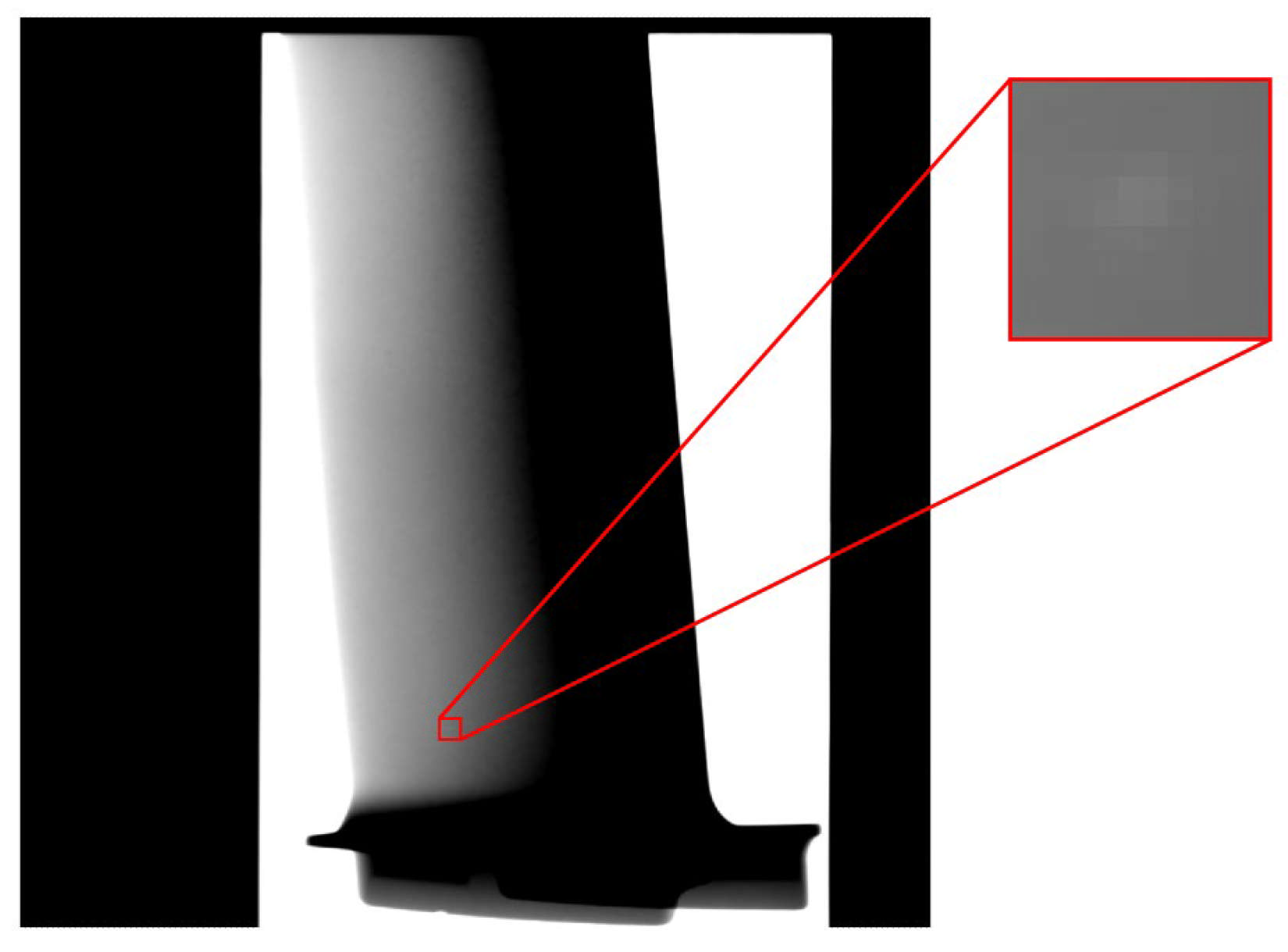
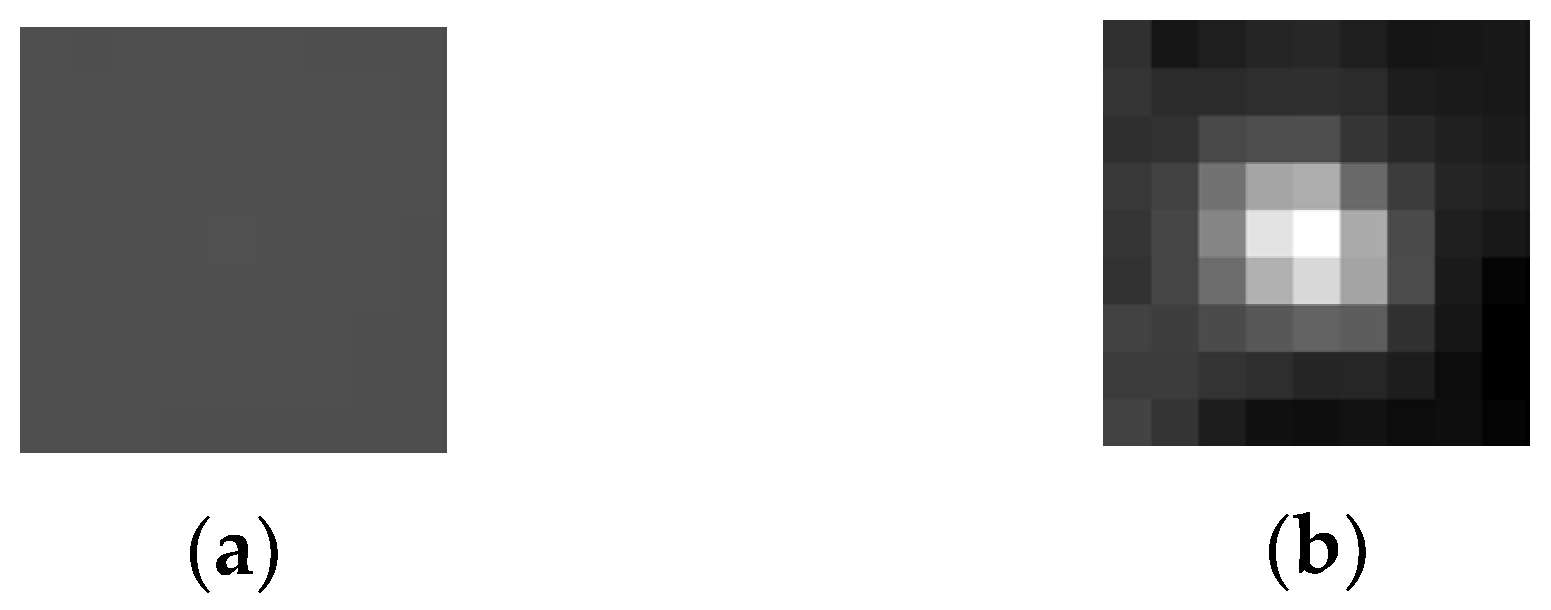
The industrial X-ray inspection of turbine blade castings requires reliable and auditable decision support, yet defect indications are subtle, and data availability is limited. This study quantitatively assesses the diagnostic potential of handcrafted image descriptors by evaluating class separability in feature space, independently of any trained classifier. The dataset comprises 1600 16-bit DICOM radiograms of 200 blades (eight views per blade), including 156 defective images with 207 localized defects. Standardized 32 × 32 ROI patches were sampled randomly in the vicinity of indications and from defect-free regions to reduce sample correlation and to emulate localization uncertainty. Feature vectors were extracted using five descriptor families—first-order statistics, GLCM/Haralick, FFT and wavelet (DWT) features, Gabor filters, and LBP—and the standardized z-score. Separability was ranked using complementary distribution-based and distance-based metrics grouped into three sets, and the results were min–max-normalized to enable TOP-5 comparisons. Spectral descriptors, particularly DWT wavelets and FFT combined with DWT, consistently achieved the highest scores in distributional metrics, supporting a lightweight screening profile. In contrast, richer combinations dominated multidimensional geometric metrics, indicating benefits from multi-perspective representations for offline analysis. The proposed metric-driven framework provides an interpretable basis for representation selection prior to classifier development under industrial constraints.
Keywords: aviation industry; engine blades; X-ray image; image processing; feature extraction; feature engineering; metrics; defect detection aviation industry; engine blades; X-ray image; image processing; feature extraction; feature engineering; metrics; defect detection