Investigation of the Dynamic Behavior of Flexible Fiber Free Ends During Vortex Spinning Process Based on an Enhanced Bead–Rod Model


Abstract
1. Introduction
2. Methodology
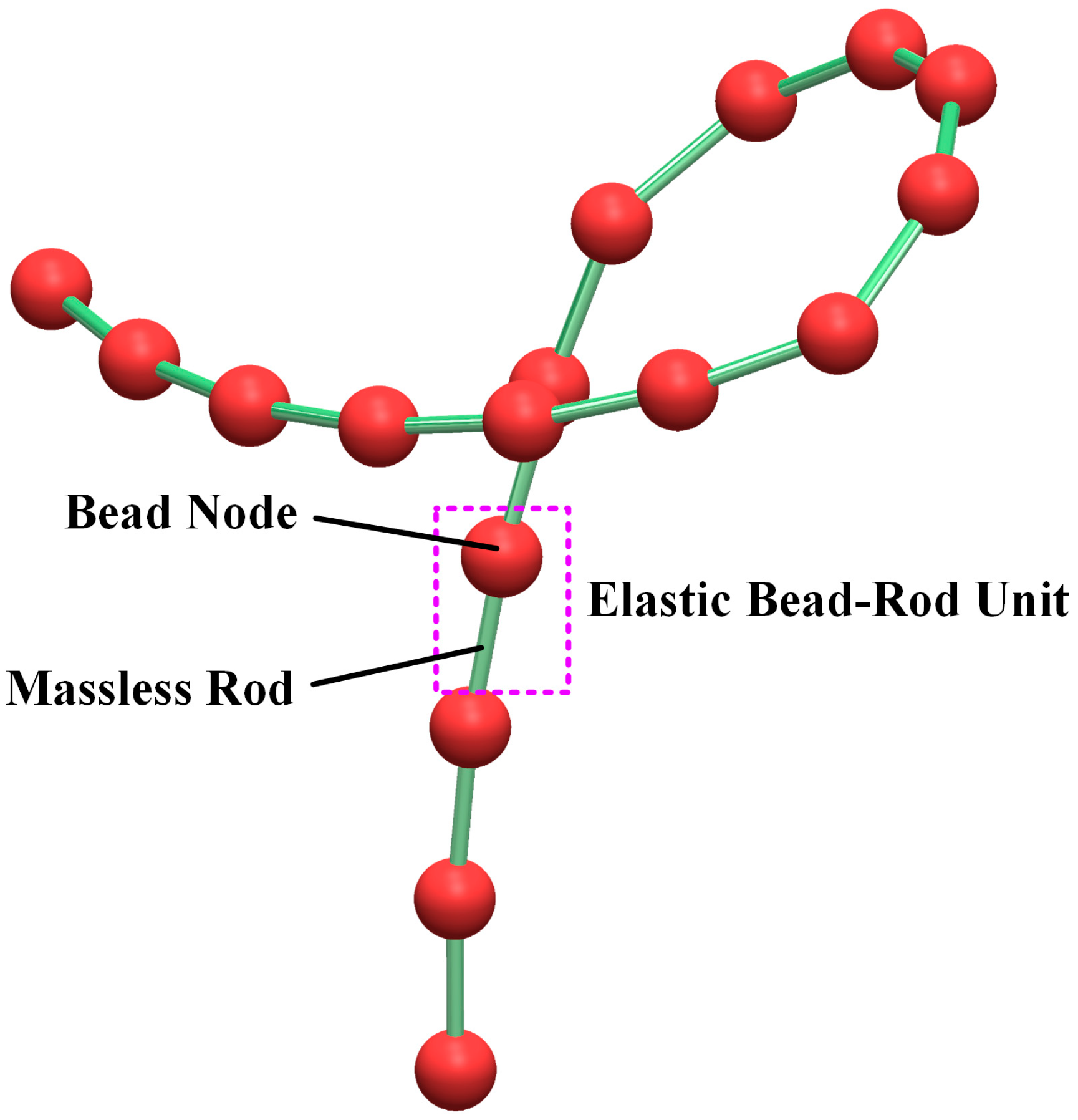
2.1. Fiber Model
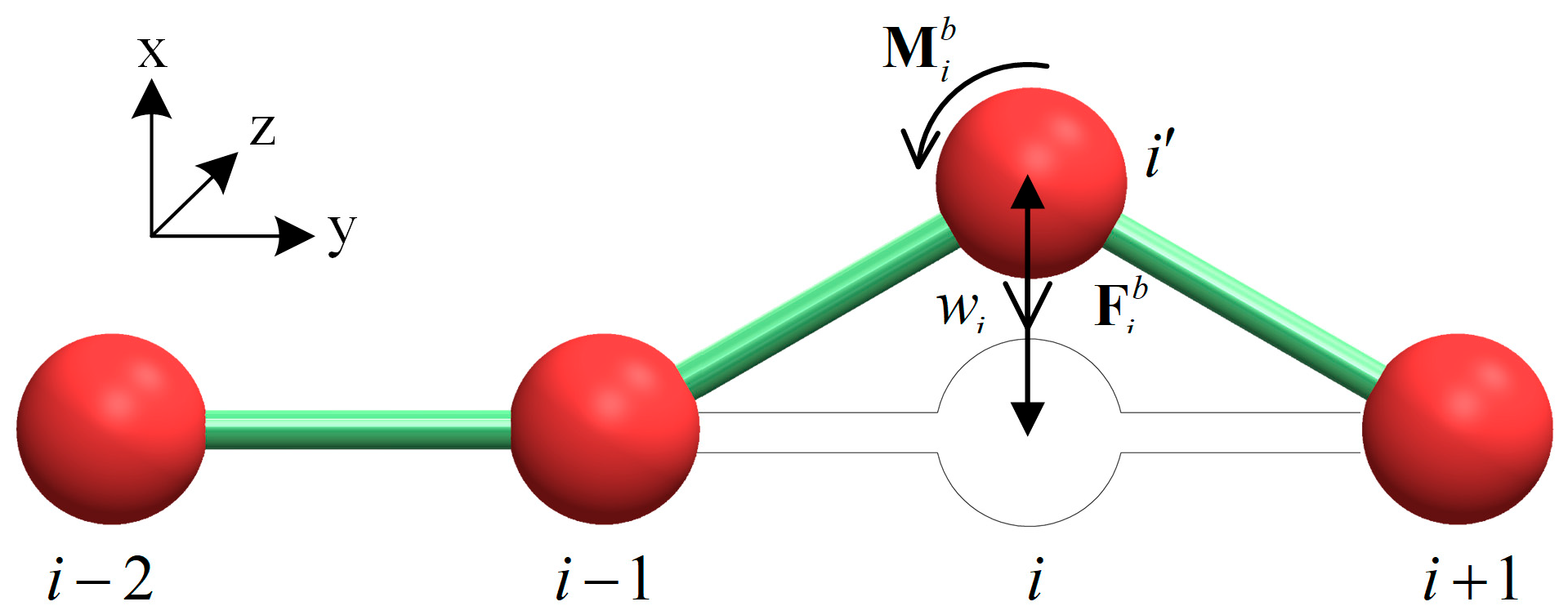
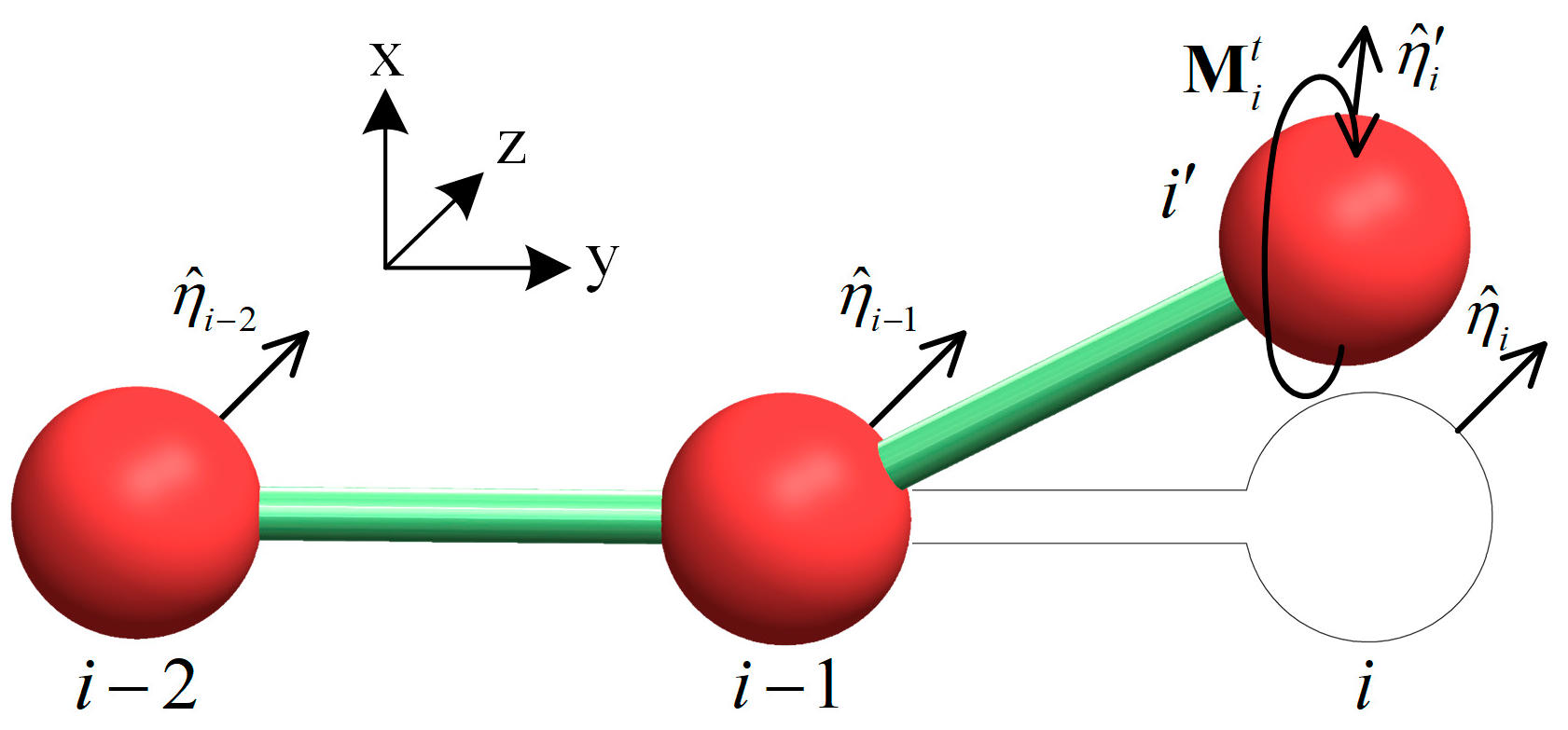
2.1.1. Internal Forces in Fiber Deformation Recovery
2.1.2. Fluid Forces
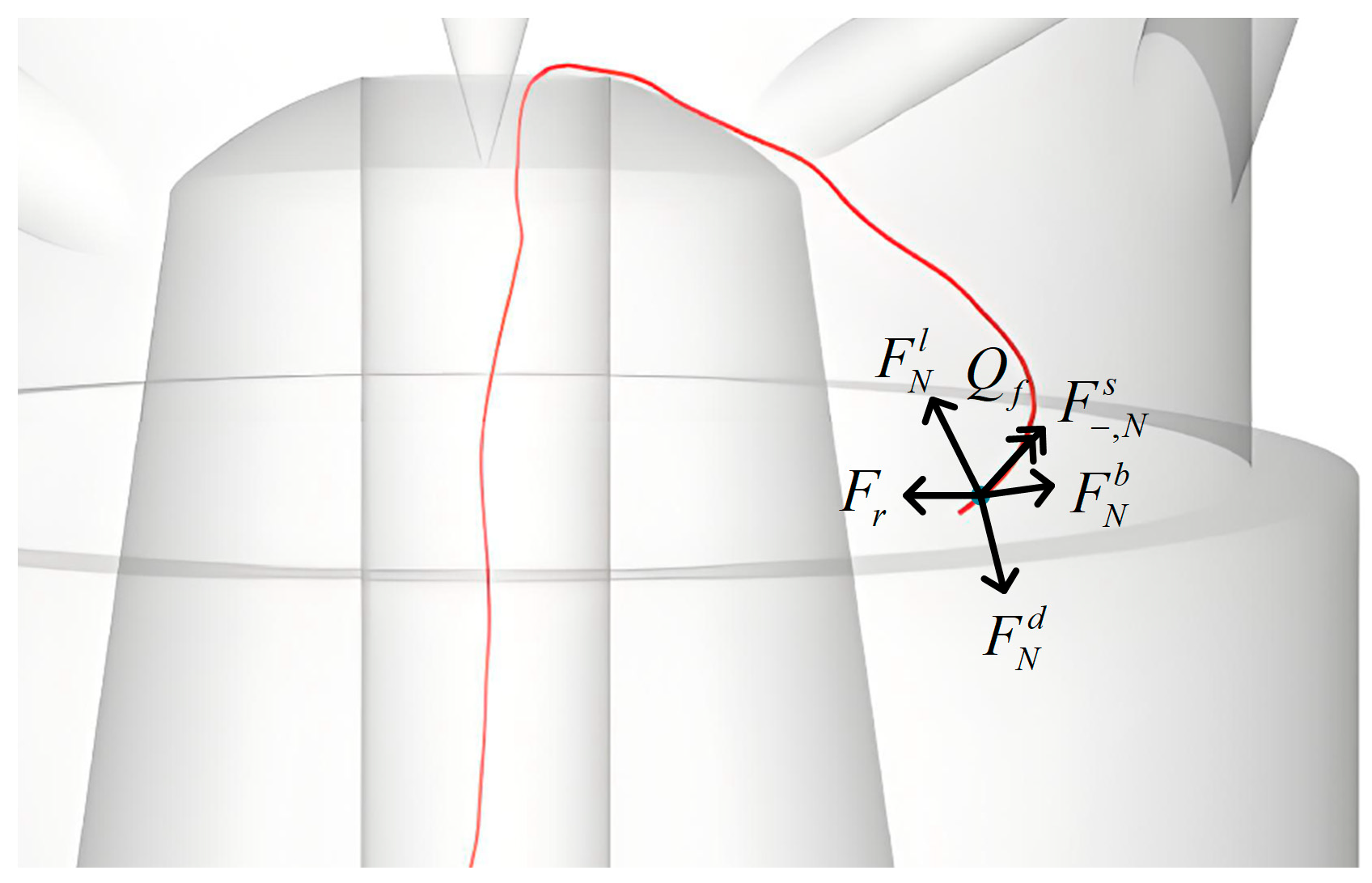
2.1.3. Fiber Equation of Motion and End-Point Force Analysis
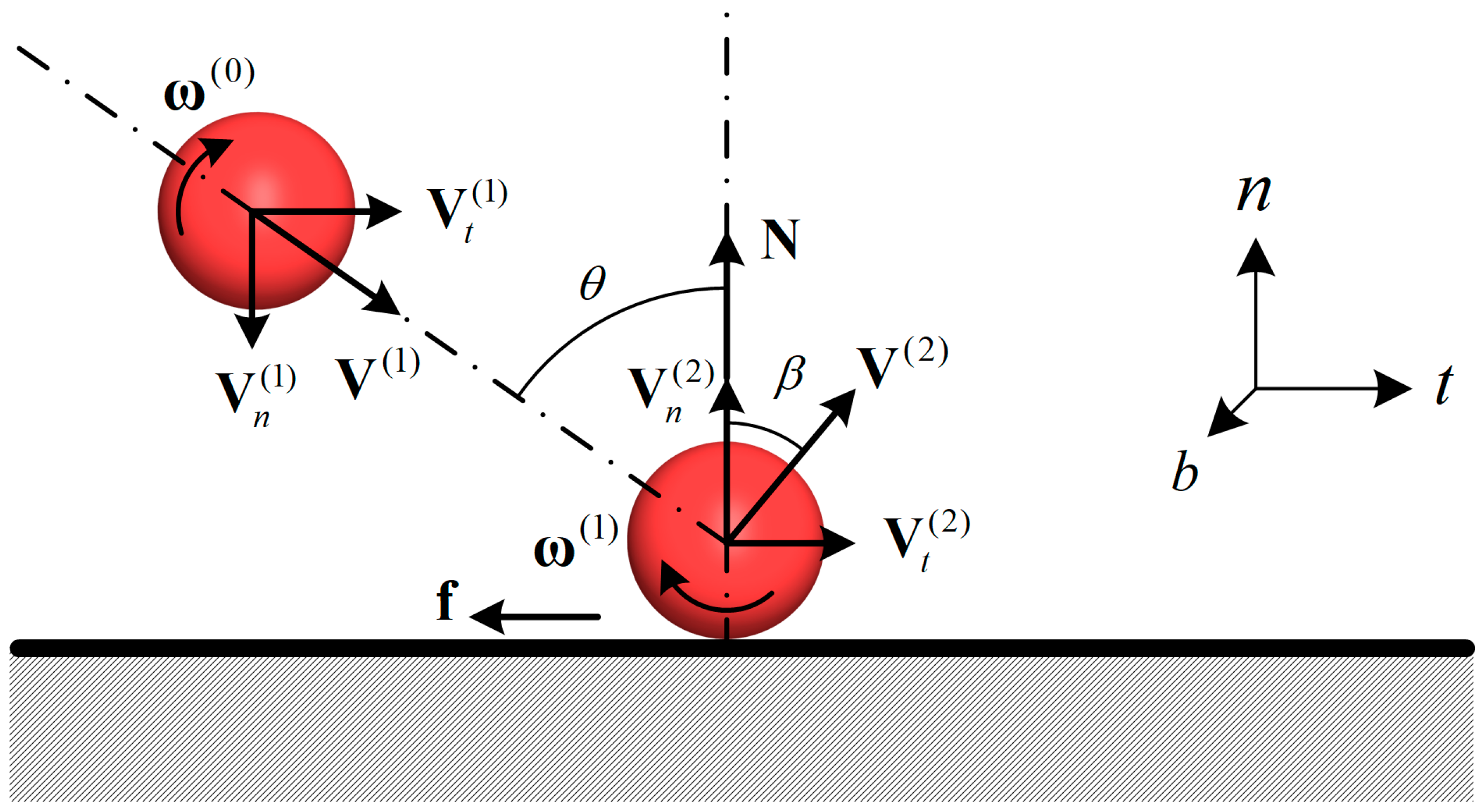
2.2. Fiber–Wall Contact Model
2.3. Fiber Motion Implementation Program
- Set the initial boundary conditions for the flow field to obtain a fully developed and stable turbulent flow field, thereby acquiring velocity field, density field, and vorticity field data.
- Given the material, geometry, and position information of the fiber, set the number of fiber elements and the coordinates of the bead nodes; specify the constraints and velocities acting on the fiber under the initial state.
- Calculate the fluid forces on each bead node, and compute the elastic restoring force and restoring torque for each bead node.
- Solve the equations for fiber motion to obtain the displacement and velocity of the bead node; then, update the fiber position.
- Monitor fiber contact, calculate the rebound velocity of the contact bead, and then update the fiber position.
- Repeat steps 2 through 5 until the iteration ends.
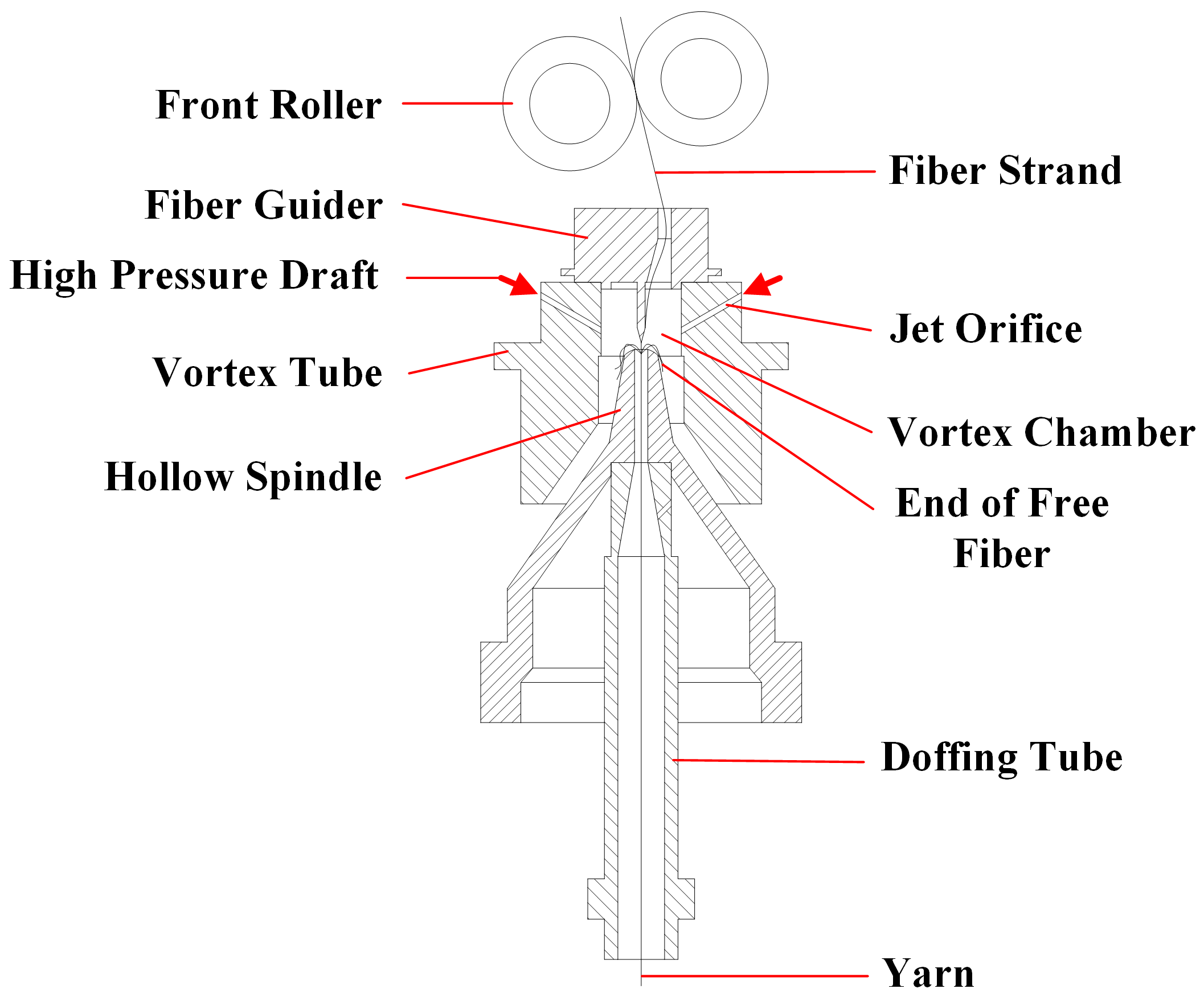
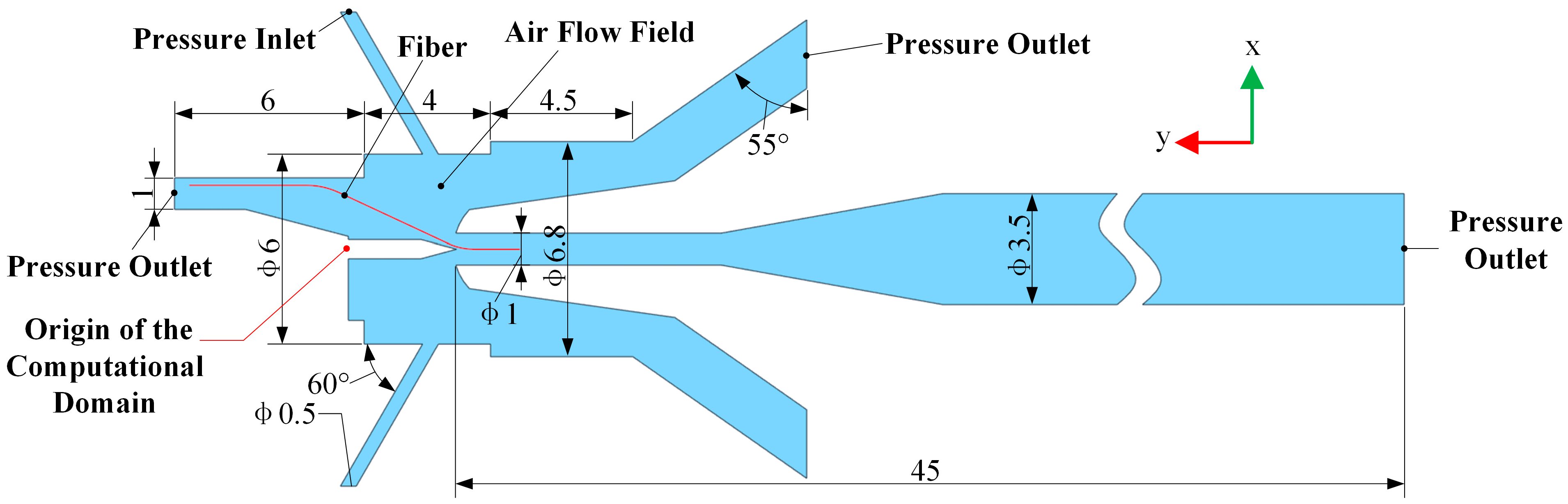
2.4. Nozzle Model and Computational Setup
3. Results
3.1. Parameter Sensitivity Analysis
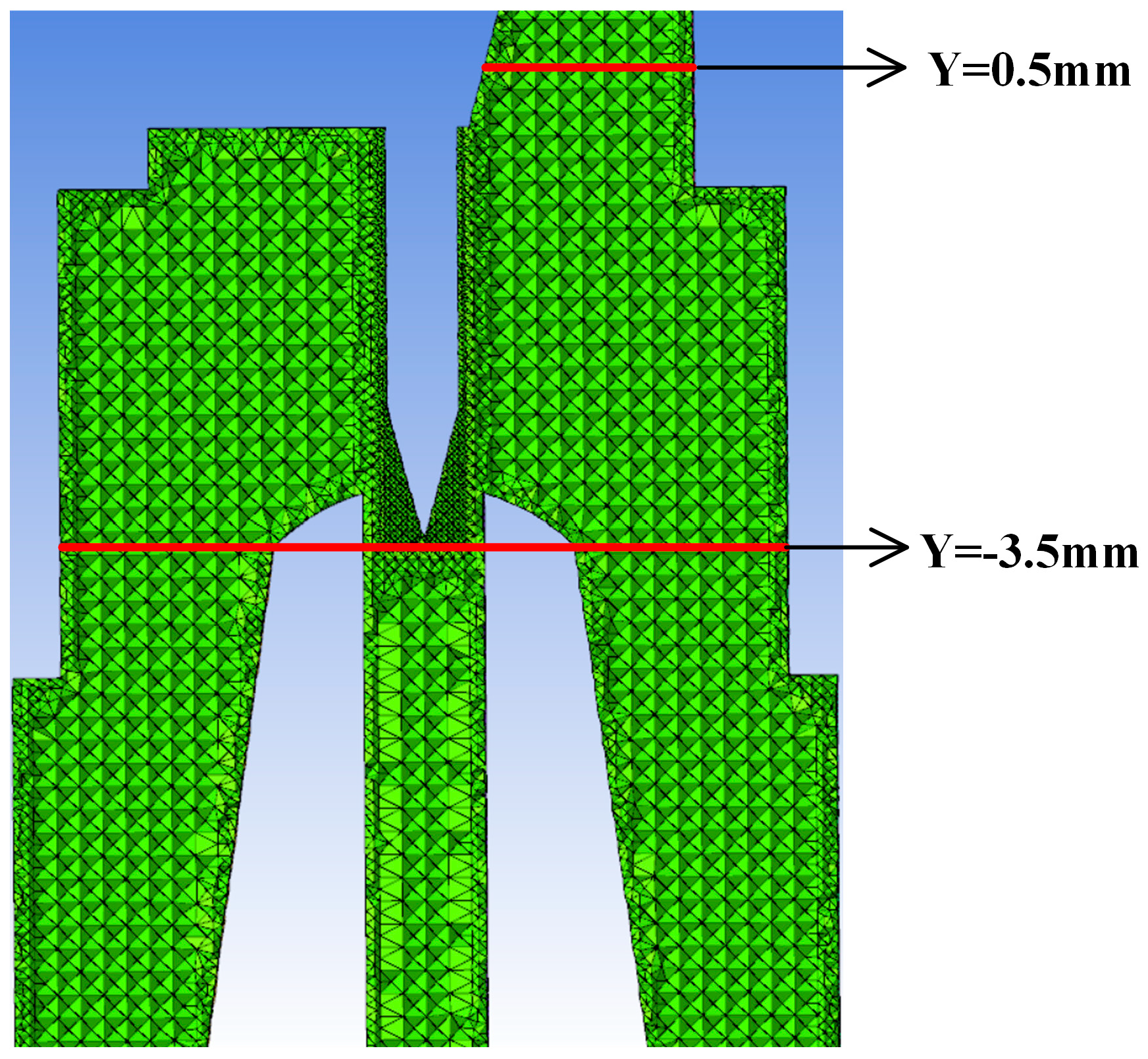
3.1.1. Mesh Sensitivity
3.1.2. Rod Element Length Sensitivity
3.2. Fiber Motion Simulation
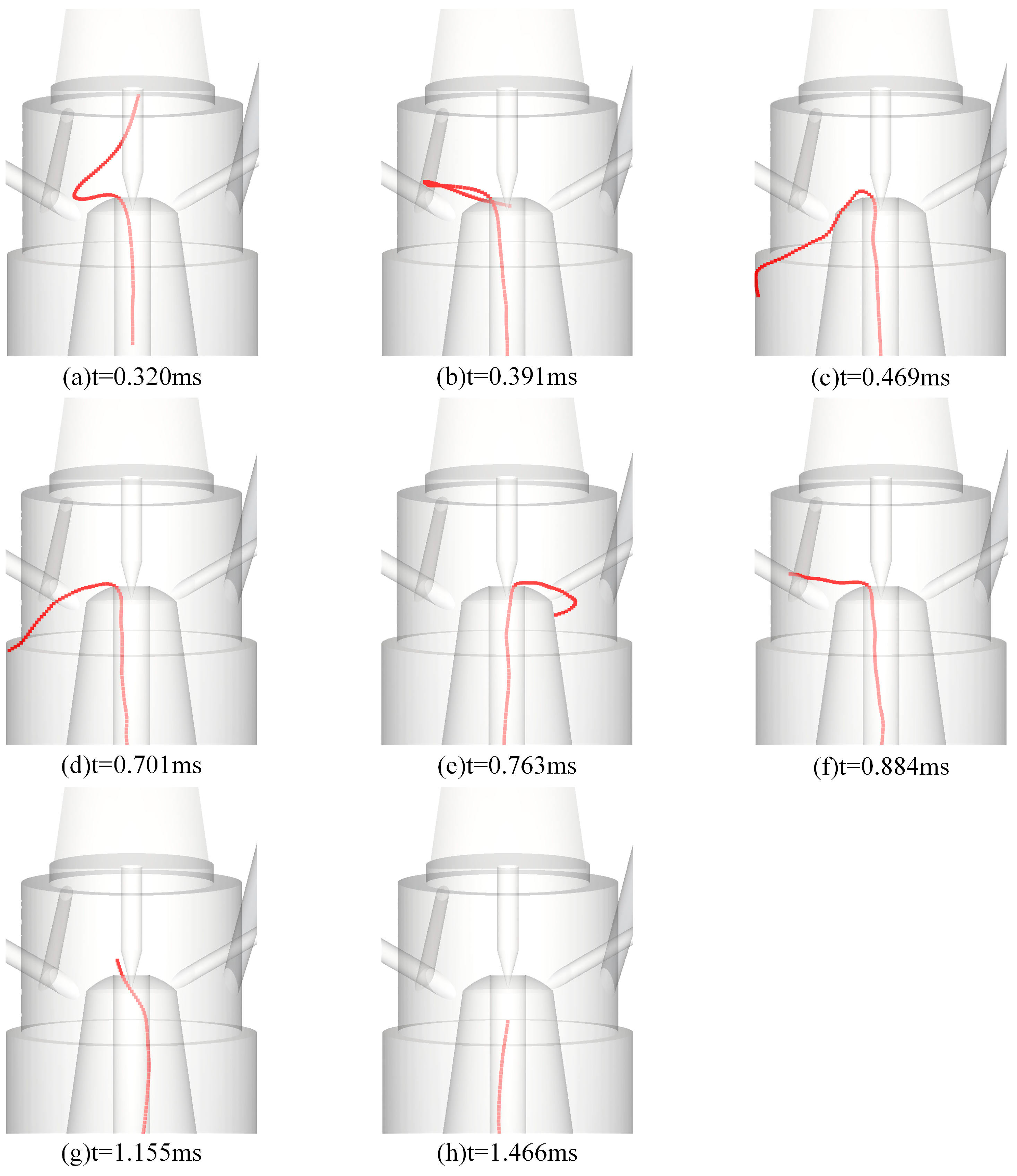
3.2.1. Motion Analysis
3.2.2. Velocity Analysis
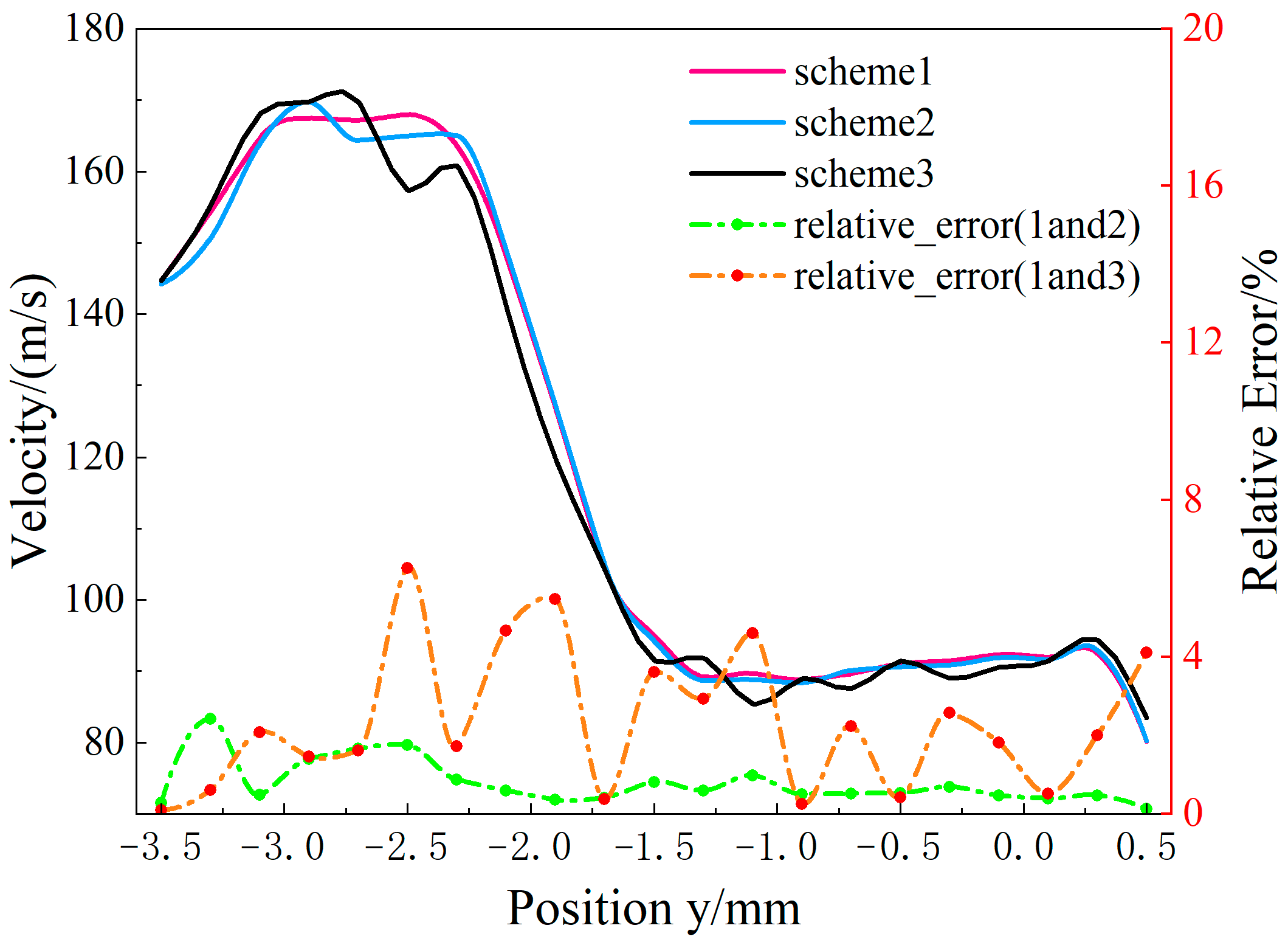
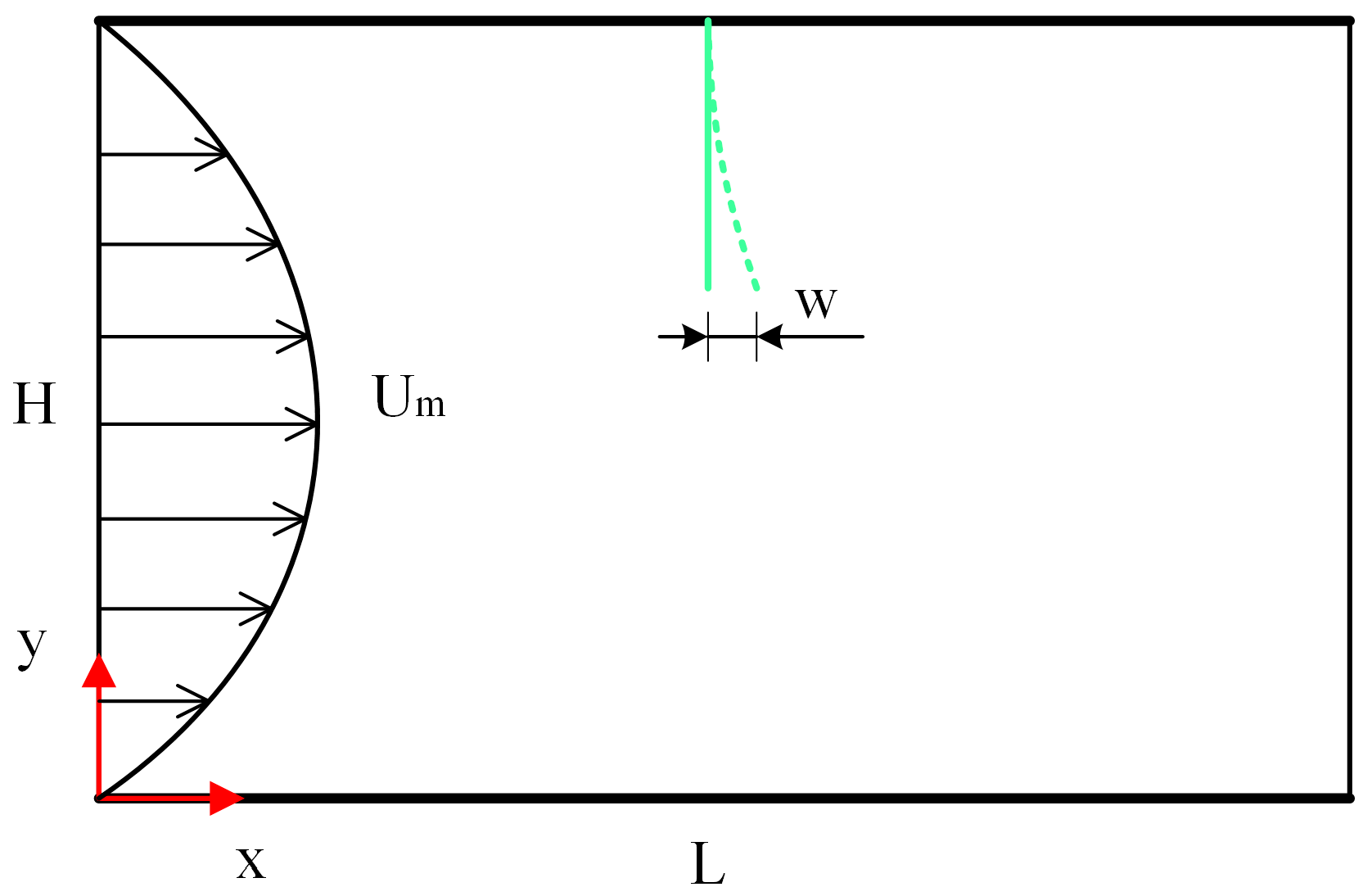
3.3. Simulation Result Verification
4. Influence of Nozzle Geometric Parameters on Fiber Motion
4.1. Effect of Distance Between Nozzle Outlet and Hollow Spindle
4.2. Effect of Nozzle Twisting Chamber Diameter
4.3. Effect of the Taper Angle of the Vortex Tube’s Conical Cavity
5. Conclusions and Prospects
- Based on the modified Stokes equation, a certain coupling effect exists between particles and the fluid, with inertial forces non-negligible and the influence of viscous forces diminished. Given that the characteristic dimensions of fibers are relatively small compared to the flow field, when studying single-fiber motion, it can be assumed that only unidirectional coupling exists between the fiber and airflow, and the deformation of the fiber does not affect the flow field configuration.
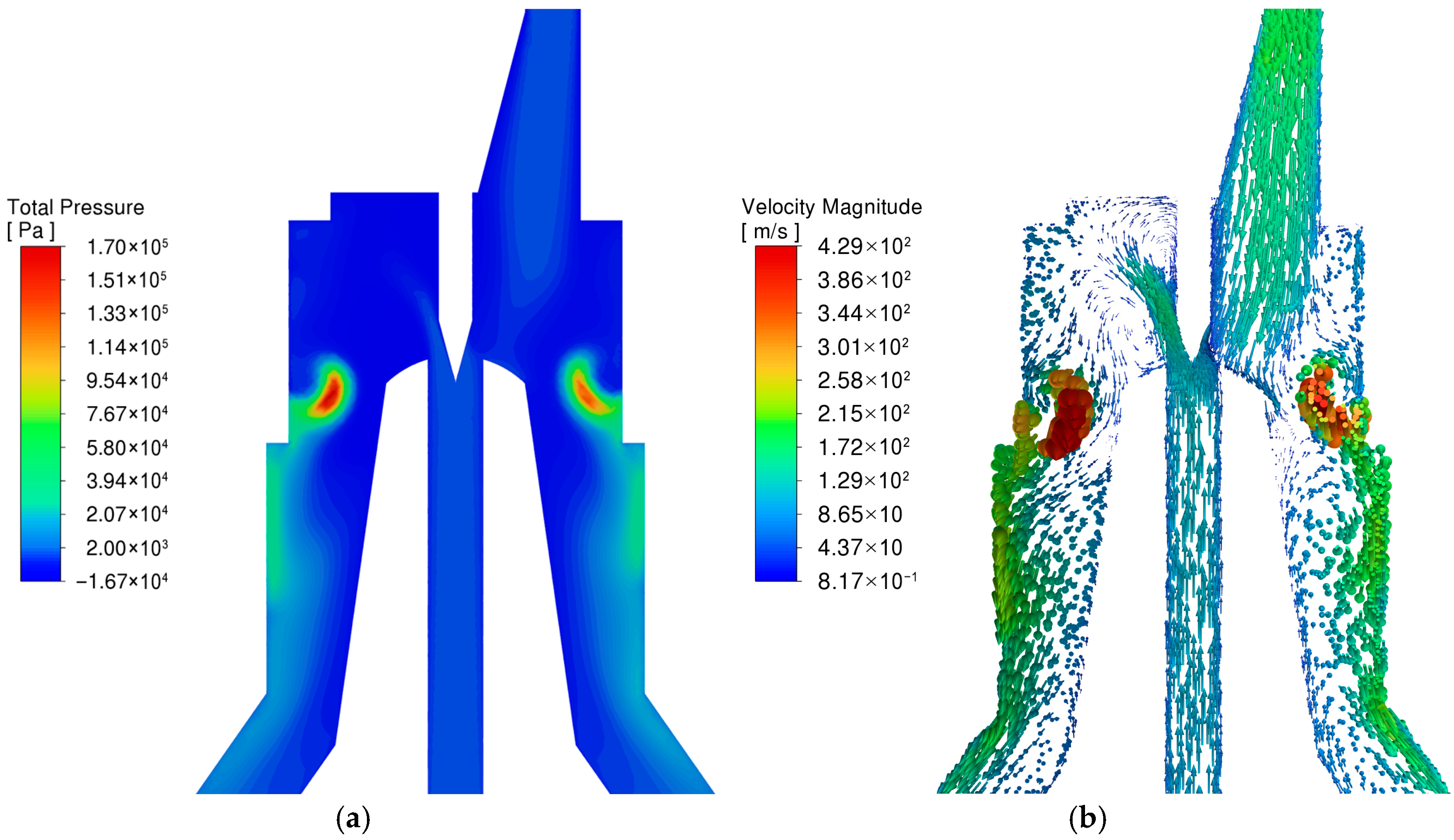
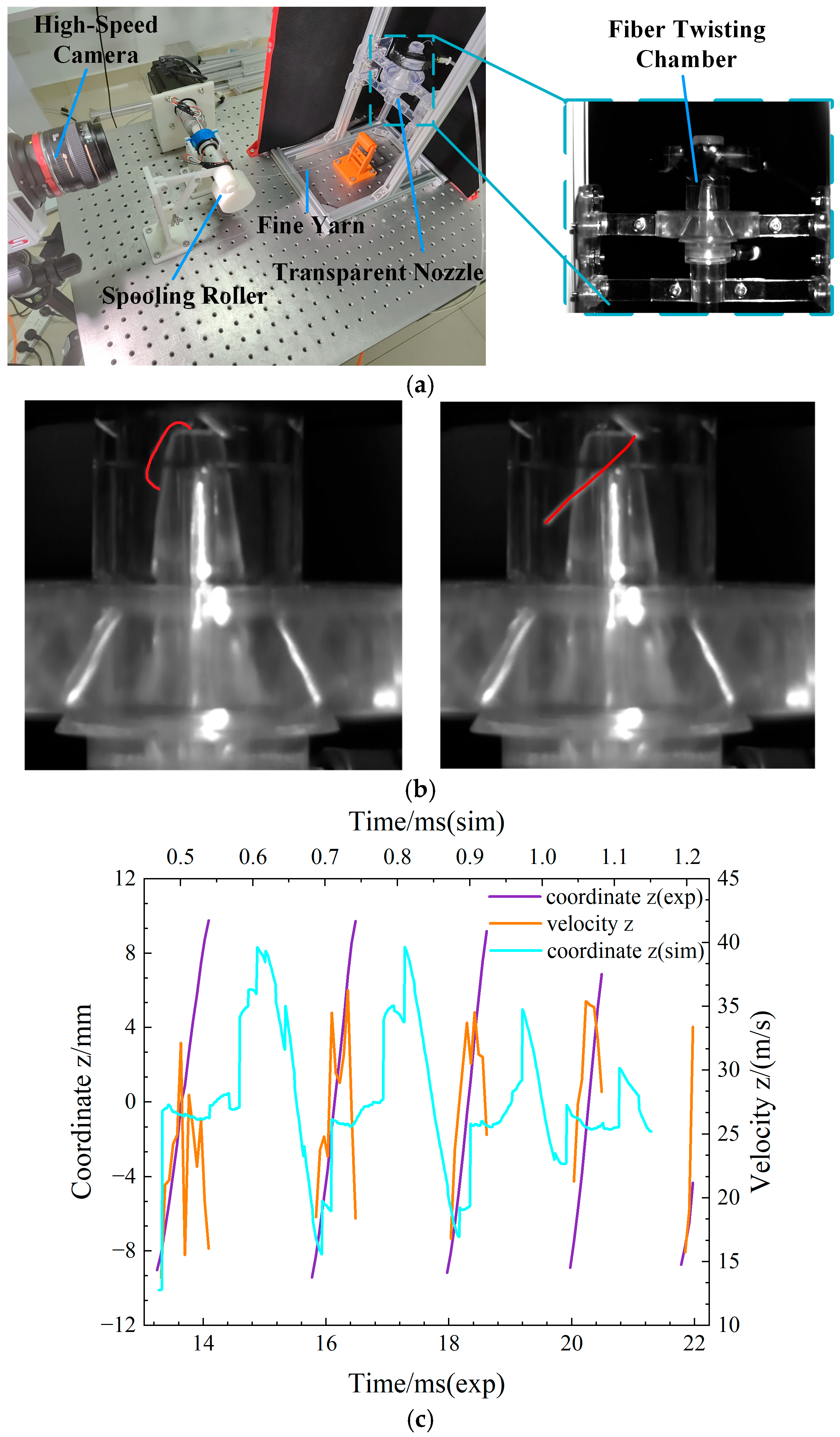
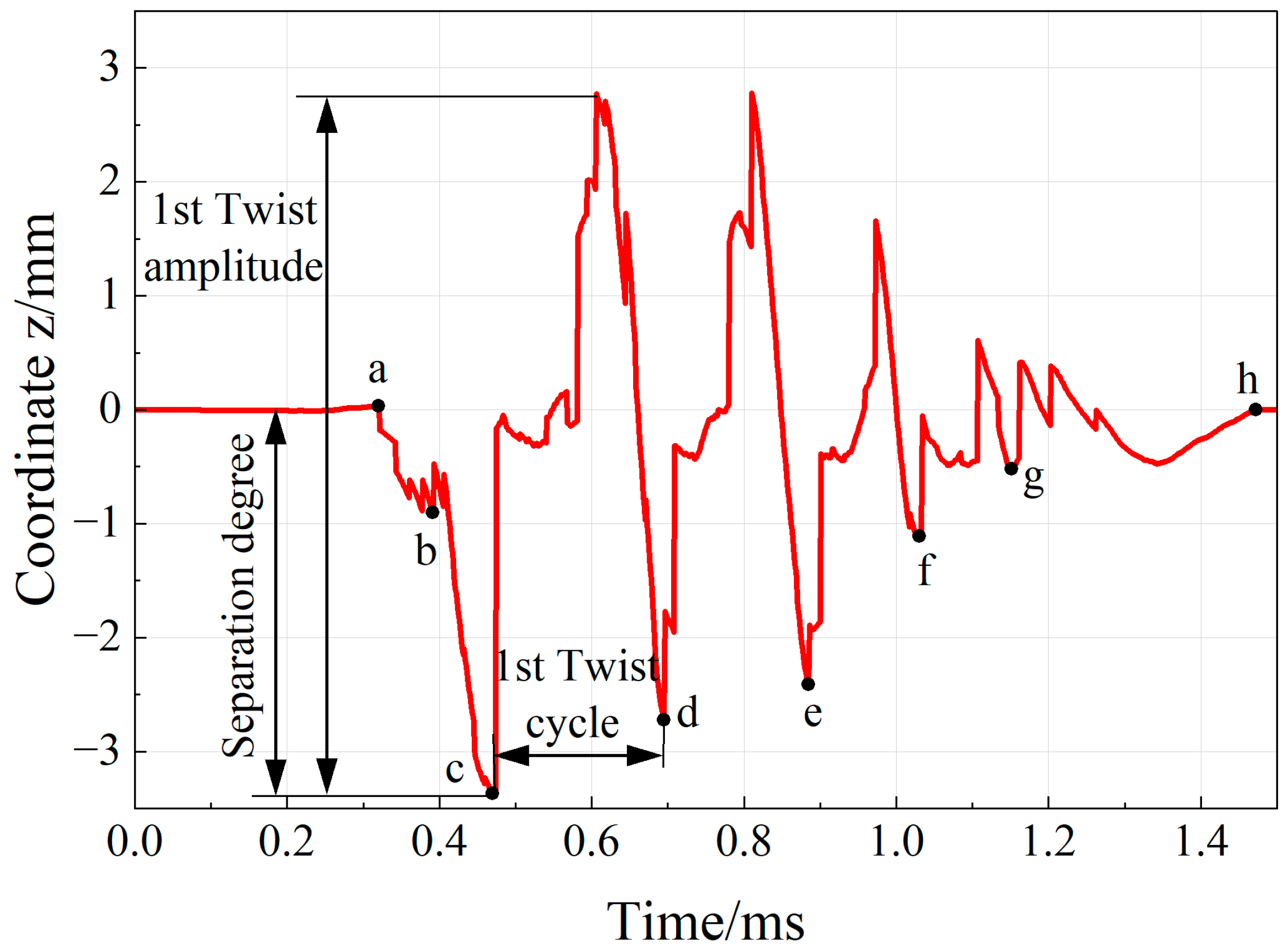
- Numerical simulation results indicate that during the spinning process, the separation, flattening, and twisting motions of free fibers after being drawn into the nozzle by negative pressure are the combined result of fiber inertial forces and rotating airflow. A countercurrent airflow exists at the hollow spindle inlet, causing fiber ends to migrate toward the spindle top later in the process and develop significant axial velocity. Excessive axial velocity is the primary cause of high fiber drop rates in vortex spinning machines.
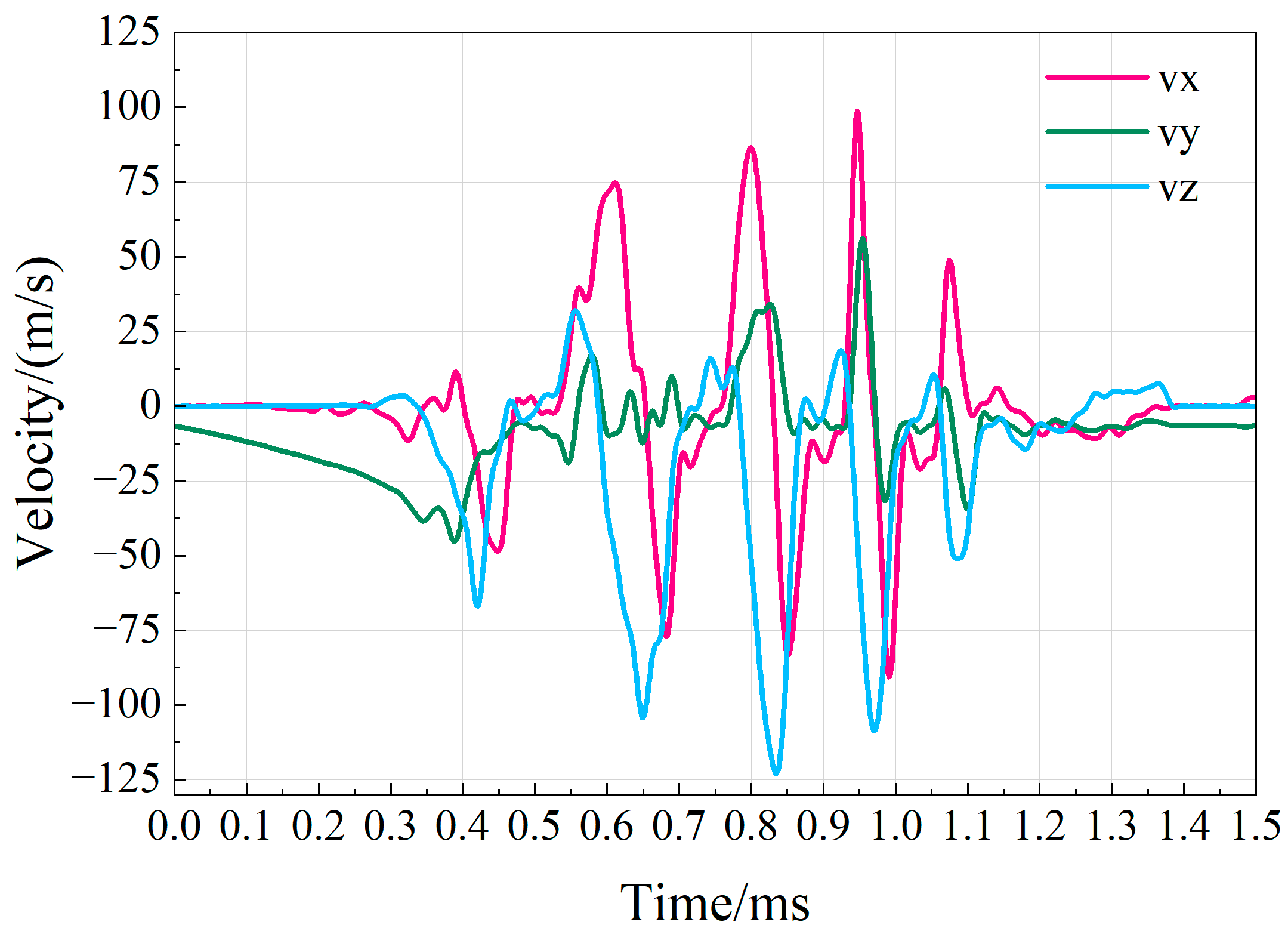
- The fiber end velocity exhibits periodic fluctuations. As the fiber end approaches the hollow spindle inlet, the amplitude of both x- and z-directional velocities increases, the period shortens, and the angular velocity rises, indicating that the flow field reaches its maximum velocity near the hollow spindle inlet. Closer to the flow field axis, the gas velocity decreases, causing the fiber velocity amplitude to first increase and then decrease.
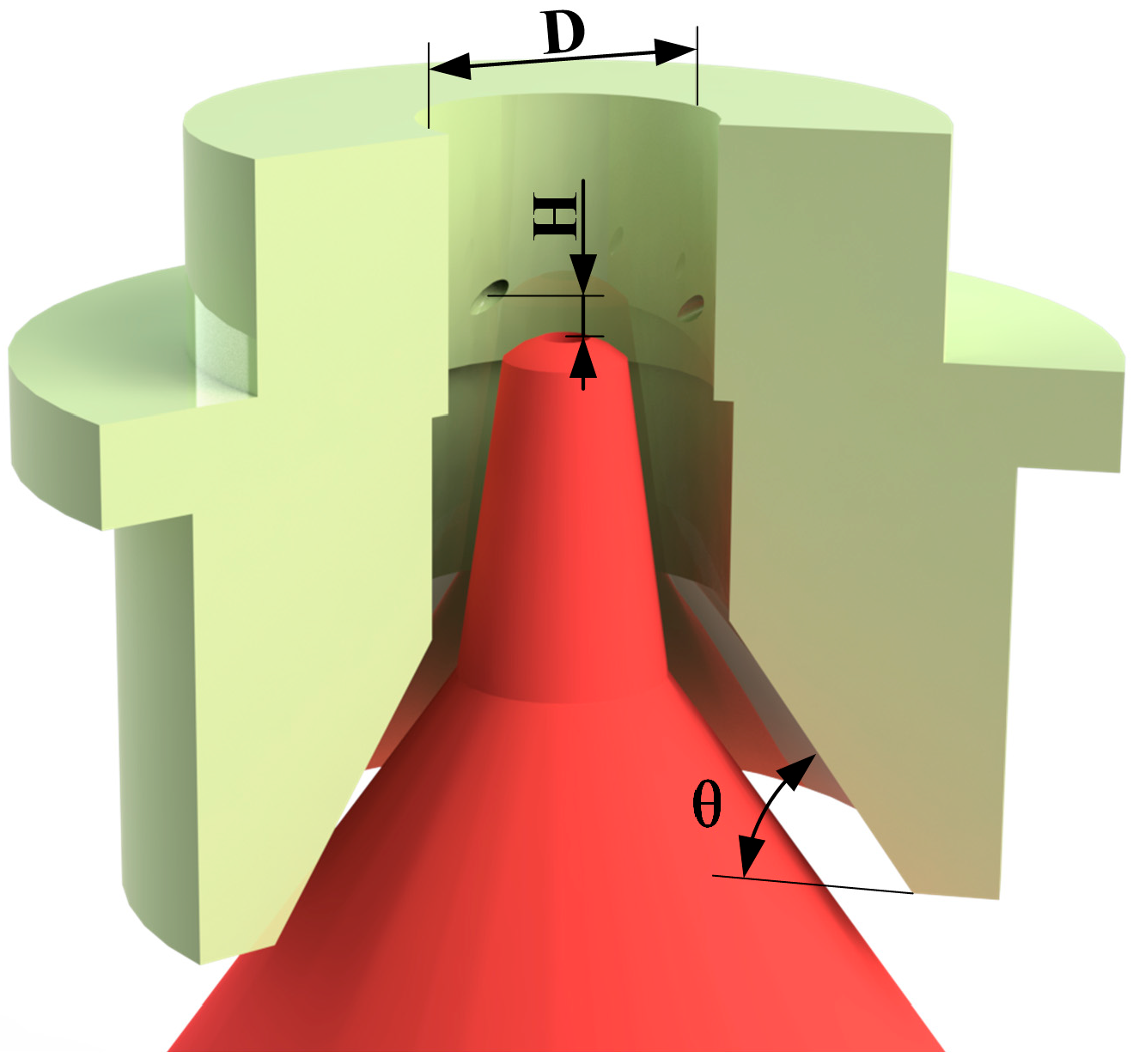
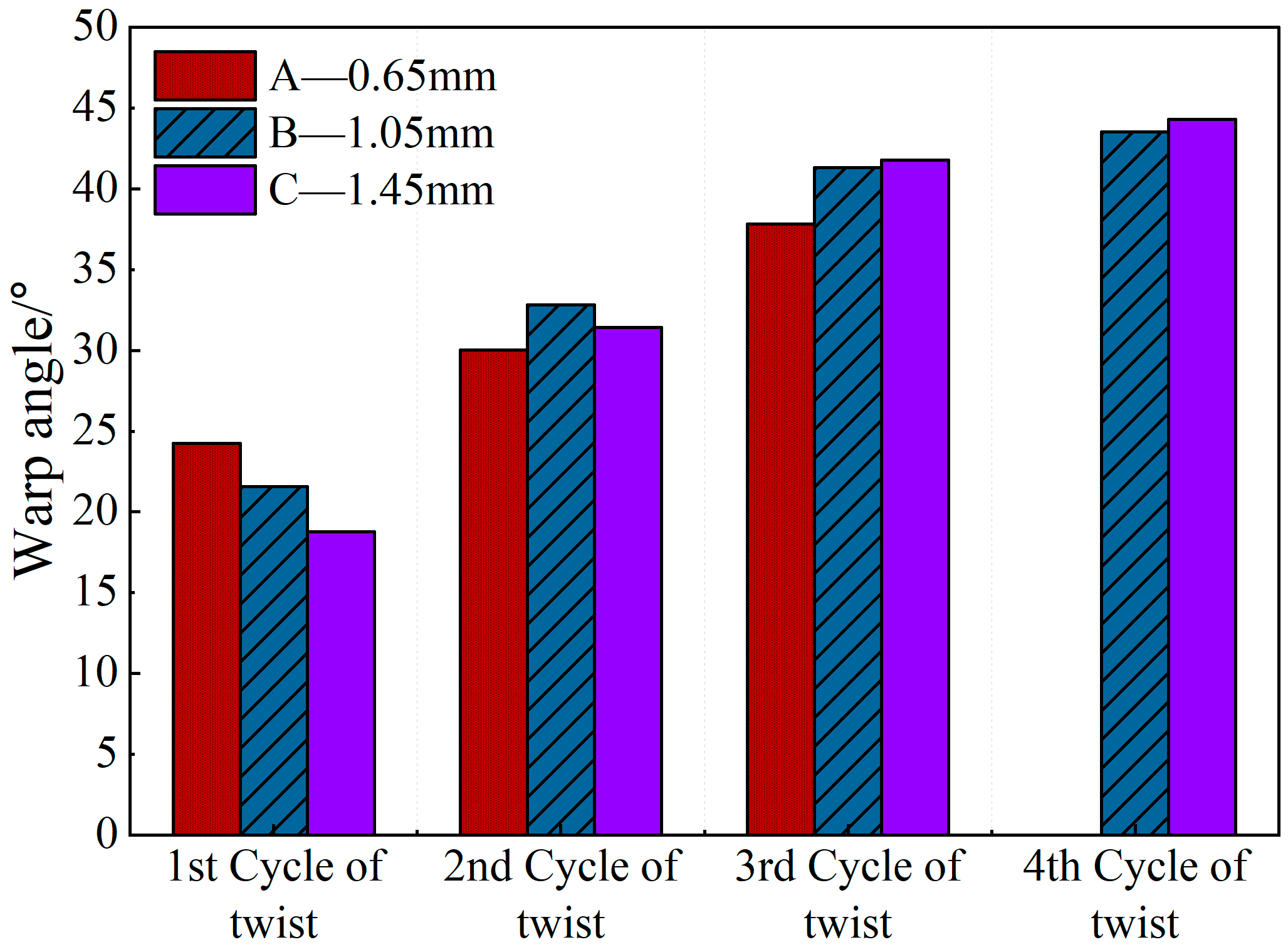
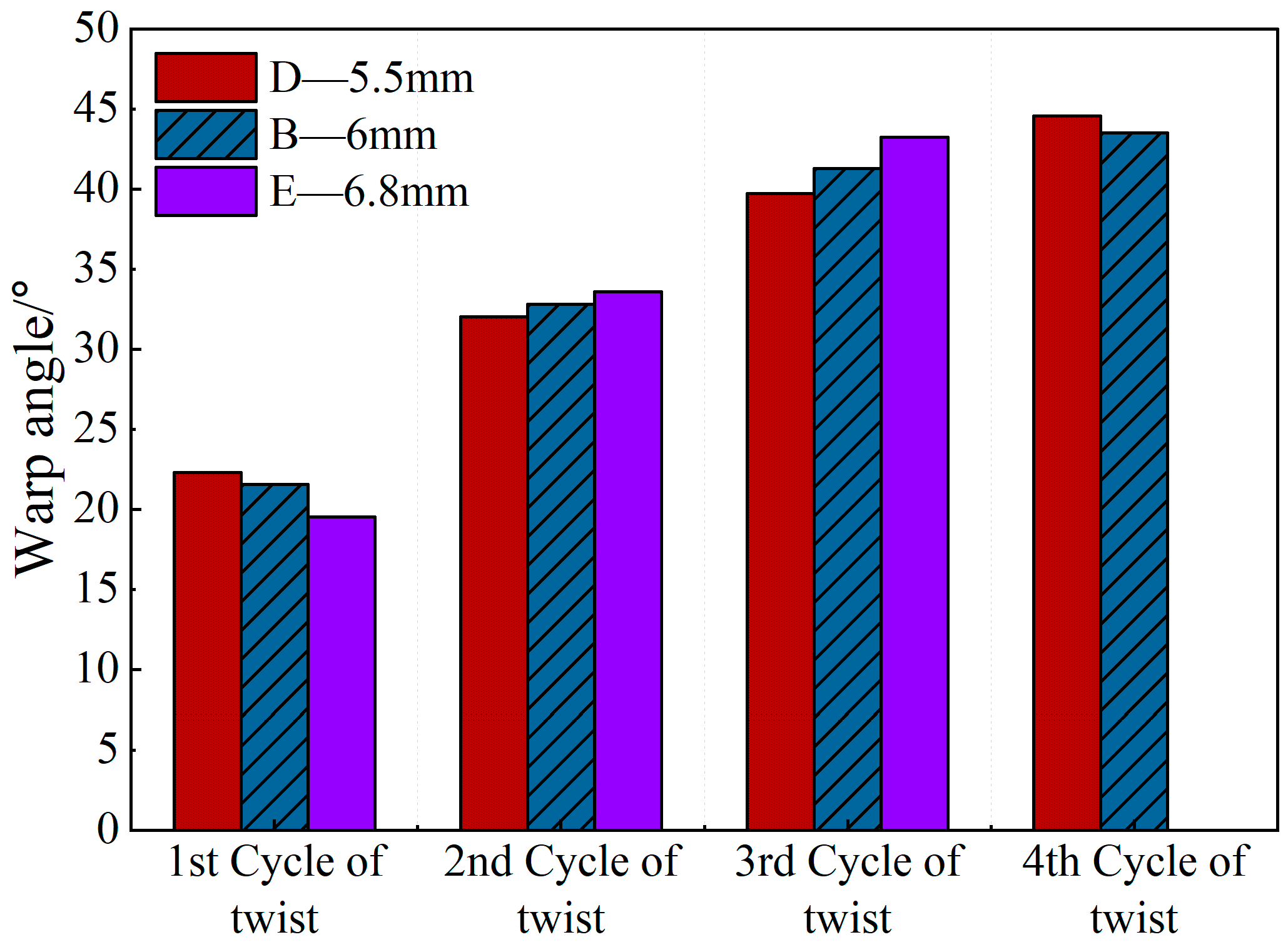
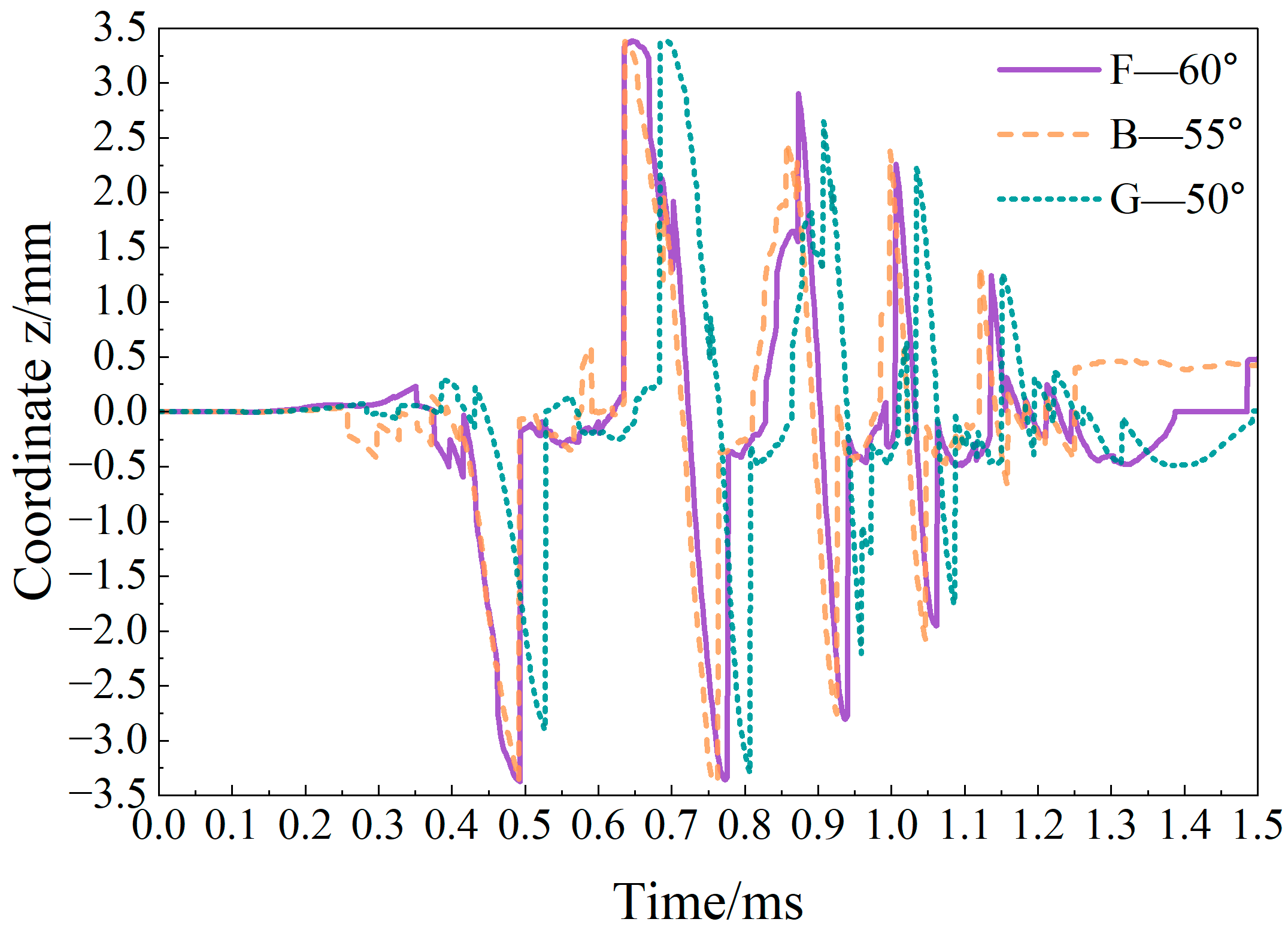
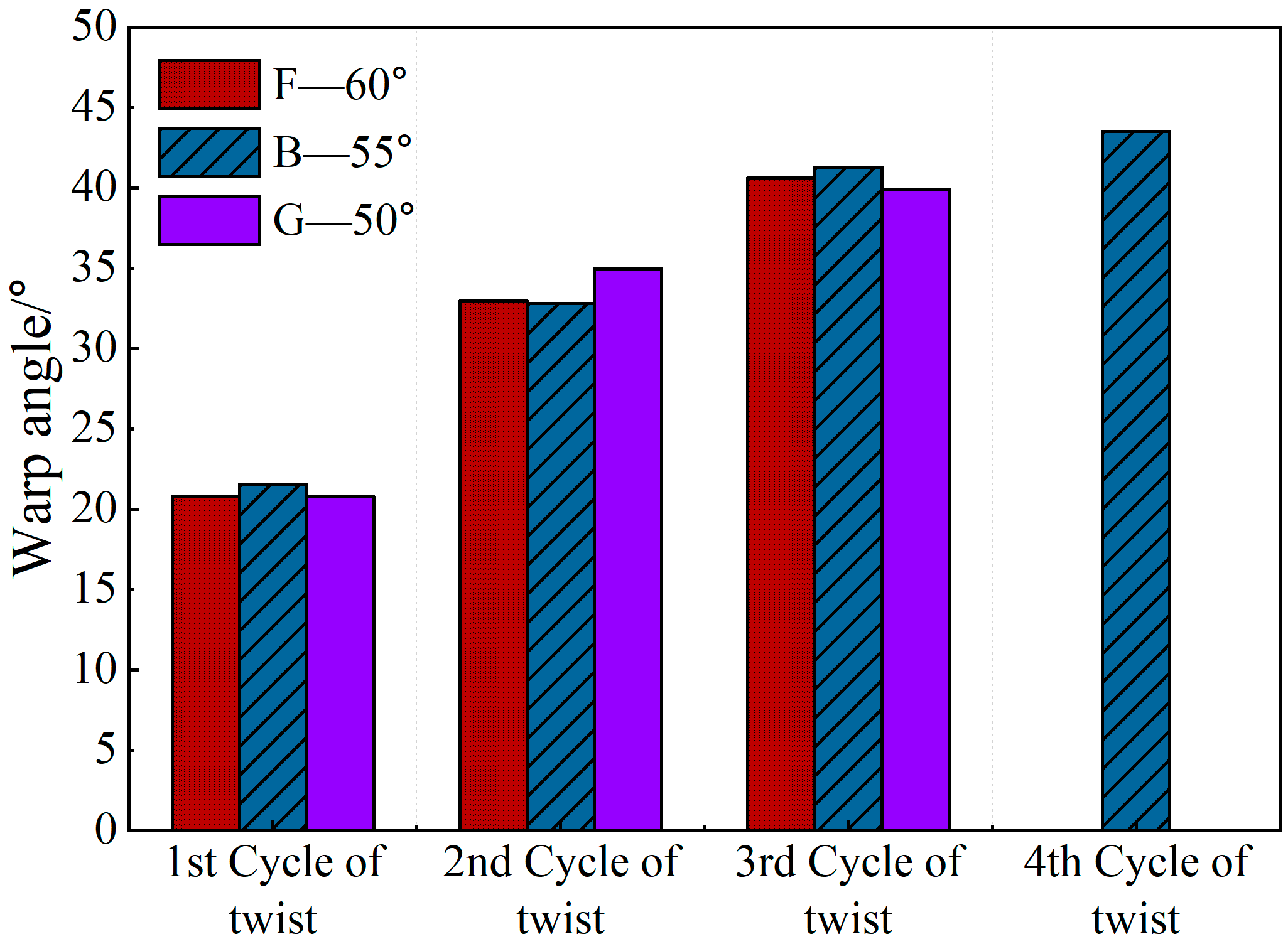
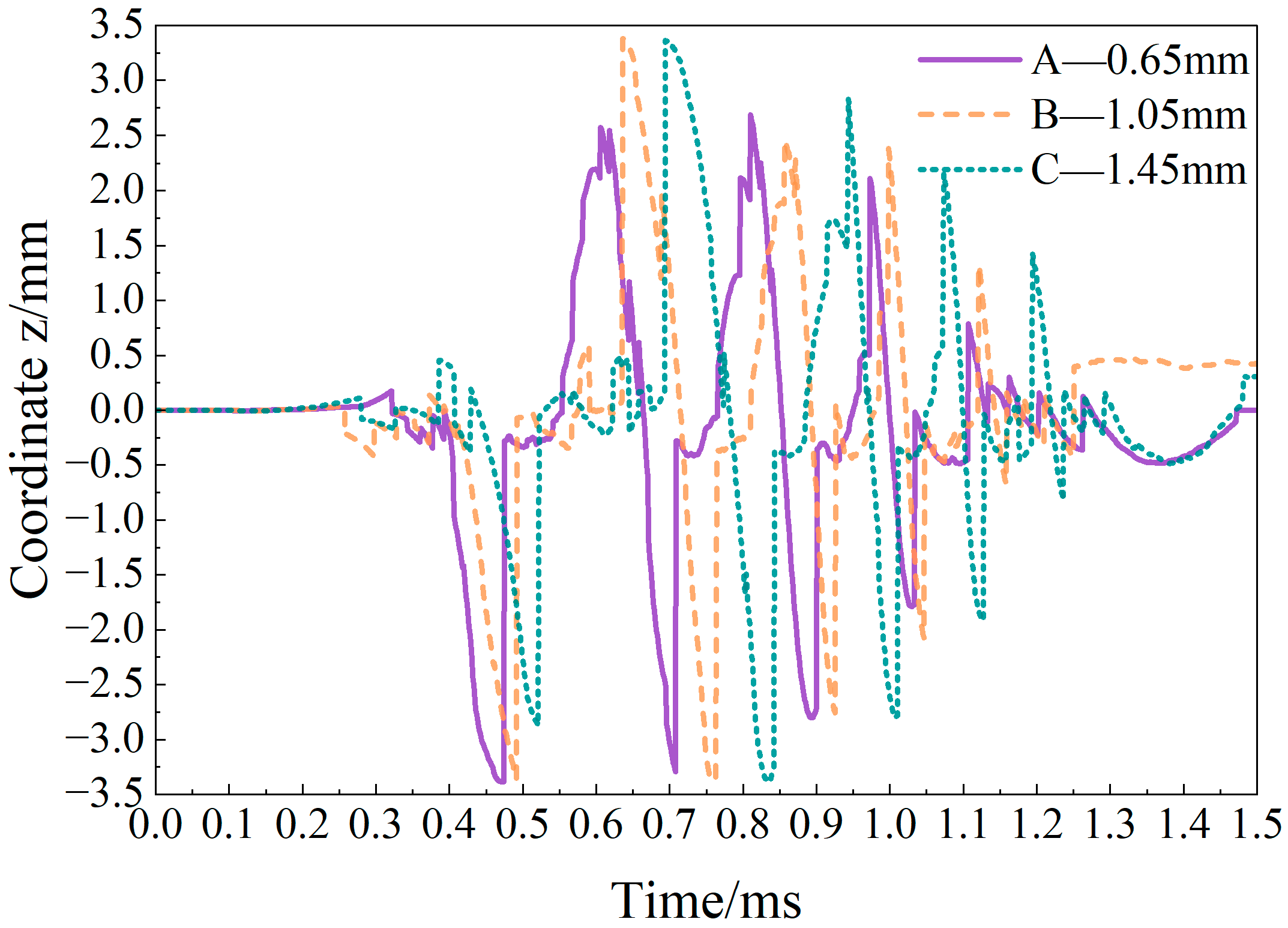
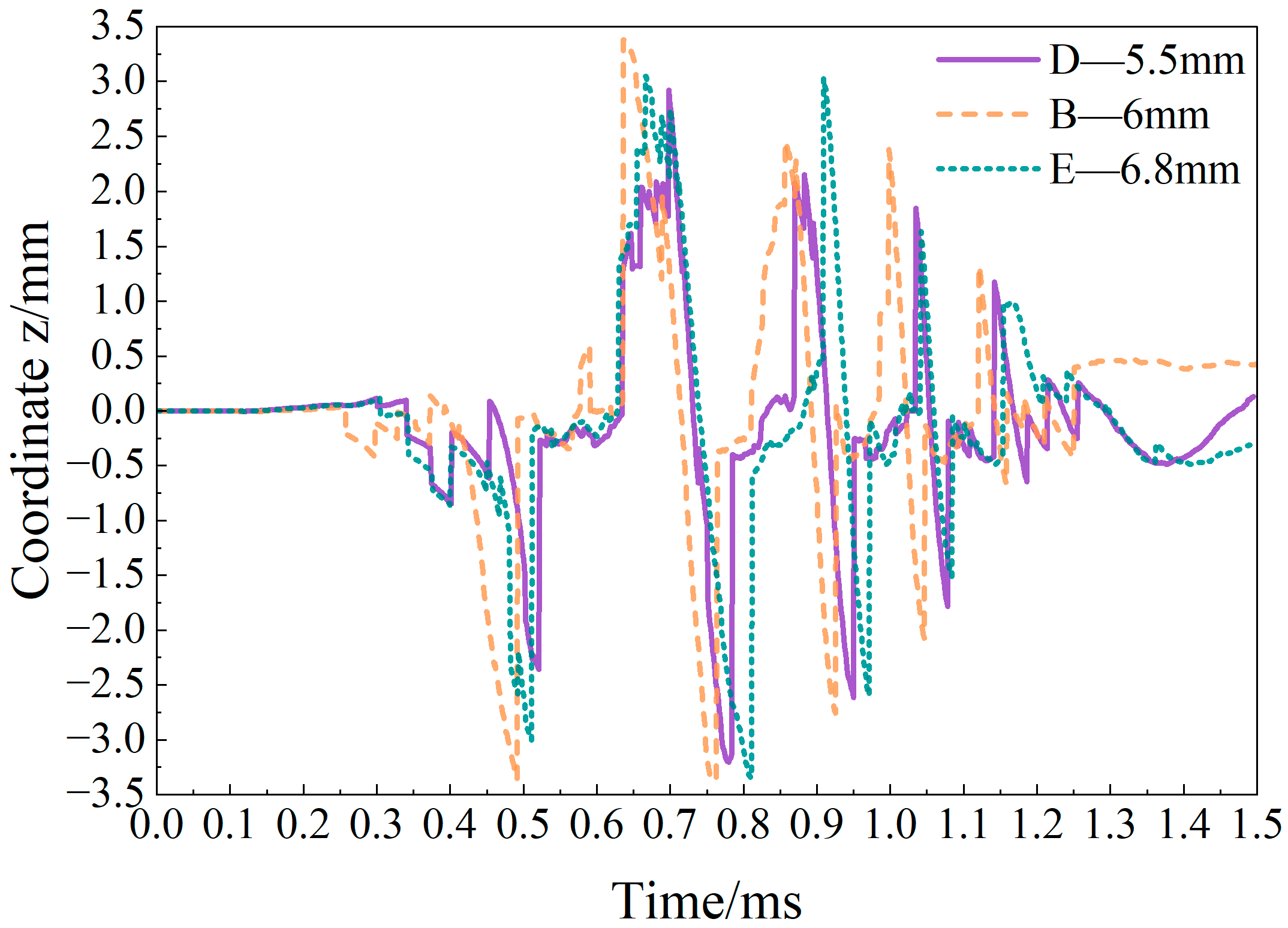
- Analysis of the fiber z-direction displacement curves under various operating conditions and the wrap angle formed during twisting reveals the optimal nozzle geometric parameters for achieving maximum strength in pure cotton vortex yarn: the distance between the jet orifice and hollow spindle is 1.05 mm, the nozzle twisting chamber diameter is 6 mm, and the taper angle of the vortex tube’s conical cavity is 35 degrees.
Author Contributions
Funding
Institutional Review Board Statement
Informed Consent Statement
Data Availability Statement
Acknowledgments
Conflicts of Interest
References
- Ahmed, H.A.; Afify, R.S.; Hassanin, A.H.; El-Hawary, I.A.; Mashaly, R.I. Numerical and experimental study of the influence of nozzle flow parameters on yarn production by jet-ring spinning. Alex. Eng. J. 2018, 57, 2975–2989. [Google Scholar] [CrossRef]
- Han, C.; Gao, W.; Chen, L. Study on the Trajectory of Free-End Fiber in Jet Vortex Spinning Based on the Elastic Thin-Rod Finite Element Model of Flexible Fiber. Autex Res. J. 2020, 20, 43–48. [Google Scholar] [CrossRef]
- Li, M.; Yu, C.; Shang, S. A numerical and experimental study on the effect of the orifice angle of vortex tube in vortex spinning machine. J. Text. Inst. 2013, 104, 1303–1311. [Google Scholar] [CrossRef]
- Xi, C.; Wang, J.; Wang, Y.; Chen, G.; Pei, Z. Numerical investigation on the dependence of air consumption on injector parameters of the vortex spinning system for producing viscose yarns. J. Text. Inst. 2025, 116, 921–935. [Google Scholar] [CrossRef]
- Peng, H.; Guo, J.; Ping, H.; Sun, Y.; Liu, G.; Liu, G. Numerical analysis of the fluid–structure interaction characteristics of a pontoon submerged floating tunnel. Ocean Eng. 2024, 301, 117660. [Google Scholar] [CrossRef]
- Pei, Z.; Yu, C. Numerical simulation of fiber motion in the nozzle of Murata vortex spinning machine. J. Text. Inst. 2011, 102, 281–292. [Google Scholar] [CrossRef]
- Wang, Q.; Lv, X.; Dang, S.; Liang, G.; Jiang, Y.; Zhao, T. Fiber movement during twisting in air vortex spinning. Text. Res. J. 2024, 94, 484–493. [Google Scholar] [CrossRef]
- Han, C.; Gao, W. Research on the motion law of fiber in the vortex field inside the nozzle based on ADINA fluid–structure coupling model. Int. J. Cloth. Sci. Technol. 2022, 34, 218–227. [Google Scholar] [CrossRef]
- Xue, B.; Wang, S.-P.; Peng, Y.-X.; Zhang, A.-M. A novel coupled Riemann SPH–RKPM model for the simulation of weakly compressible fluid–structure interaction problems. Ocean Eng. 2022, 266, 112447. [Google Scholar] [CrossRef]
- Wiegard, B.; König, M.; Lund, J.; Radtke, L.; Netzband, S.; Abdel-Maksoud, M.; Düster, A. Fluid-structure interaction and stress analysis of a floating wind turbine. Mar. Struct. 2021, 78, 102970. [Google Scholar] [CrossRef]
- Yu, C.; Lin, D.; Xu, N.; Wang, X.; Pu, K.; Wang, Z.; Zhao, G.; Geng, R.; Gong, S. DEM simulation of particle flow and separation in a vibrating flip-flow screen. Particuology 2023, 73, 113–127. [Google Scholar] [CrossRef]
- Zeng, Y.-C.; Yu, C.-W. A flexible fiber model for dynamic simulation of fibers in high speed air flows. Int. J. Nonlinear Sci. Numer. Simul. 2006, 7, 427–430. [Google Scholar] [CrossRef]
- Jeffery, G.B. The motion of ellipsoidal particles immersed in a viscous fluid. In Proceedings of the Royal Society of London. Series A, Containing Papers of a Mathematical and Physical Character; The Royal Society: London, UK, 1922; Volume 102, pp. 161–179. [Google Scholar] [CrossRef]
- Yamamoto, S.; Matsuoka, T. A method for dynamic simulation of rigid and flexible fibers in a flow field. J. Chem. Phys. 1993, 98, 644–650. [Google Scholar] [CrossRef]
- Joung, C.G.; Phan-Thien, N.; Fan, X.J. Direct simulation of flexible fibers. J. Non-Newton. Fluid Mech. 2001, 99, 1–36. [Google Scholar] [CrossRef]
- Dhas, D.J.; Marchioli, C. Orientational dynamics of long flexible fibers in wall-bounded turbulence. J. Fluids Eng. 2025, 147, 071102. [Google Scholar] [CrossRef]
- Dotto, D.; Marchioli, C. Orientation, distribution, and deformation of inertial flexible fibers in turbulent channel flow. Acta Mech. 2019, 230, 597–621. [Google Scholar] [CrossRef]
- Marchioli, C.; Rosti, M.E.; Verhille, G. Flexible fibers in turbulence. Annu. Rev. Fluid Mech. 2025, 58, 167–192. [Google Scholar] [CrossRef]
- Di Giusto, D.; Marchioli, C. Turbulence modulation by slender fibers. Fluids 2022, 7, 255. [Google Scholar] [CrossRef]
- Xiang, P.; Kuznetsov, A.V. Simulation of shape dynamics of a long flexible fiber in a turbulent flow in the hydroentanglement process. Int. Commun. Heat Mass Transf. 2008, 35, 529–534. [Google Scholar] [CrossRef]
- Païdoussis, M.P. Fluid-Structure Interactions Volume 2: Slender Structures and Axial Flow, 2nd ed.; Academic Press: London, UK, 2016; pp. 144–201. [Google Scholar]
- Païdoussis, M.P. The dynamics of cantilevered structures subject to axial flow. J. Fluids Struct. 2024, 125, 104075. [Google Scholar] [CrossRef]
- Guo, H.; Xua, B. A novel method for dynamic simulation of flexible fibers in a 3D swirling flow. Int. J. Nonlinear Sci. Numer. Simul. 2009, 10, 1473–1480. [Google Scholar] [CrossRef]
- Zeng, Y.C.; Yang, J.P.; Yu, C.W. Mixed Euler–Lagrange approach to modeling fiber motion in high speed air flow. Appl. Math. Model. 2005, 29, 253–261. [Google Scholar] [CrossRef]
- Pei, Z.; Yu, C. Numerical study on the effect of nozzle pressure and yarn delivery speed on the fiber motion in the nozzle of Murata vortex spinning. J. Fluids Struct. 2011, 27, 121–133. [Google Scholar] [CrossRef]
- Guo, H.F.; Bin-Gang, X. A 3D numerical model for a flexible fiber motion in compressible swirling airflow. Comput. Model. Eng. Sci. 2010, 61, 201. [Google Scholar]
- Vakil, A.; Green, S.I. Flexible fiber motion in the flow field of a cylinder. Int. J. Multiph. Flow 2011, 37, 173–186. [Google Scholar] [CrossRef]
- Bec, J.; Brouzet, C.; Henry, C. Enhanced transport of flexible fibers by pole vaulting in turbulent wall-bounded flow. Phys. Rev. Fluids 2024, 9, L062501. [Google Scholar] [CrossRef]
- Pei, Z.; Zhang, Y.; Zhou, J. A model for the particle-level simulation of multiple flexible fibers moving in a wall-bounded fluid flow. J. Fluids Struct. 2018, 80, 37–58. [Google Scholar] [CrossRef]
- Bral, A.; Peeters, J.; Daelemans, L.; Degroote, J. Development and validation of an actuator line method for fuzzy yarns in high-speed air flow. Int. J. Numer. Methods Eng. 2025, 126, e70108. [Google Scholar] [CrossRef]
- Lukerchenko, N.; Kvurt, Y.; Keita, I.; Chara, Z.; Vlasak, P. Drag force, drag torque, and Magnus force coefficients of rotating spherical particle moving in fluid. Part. Sci. Technol. 2012, 30, 55–67. [Google Scholar] [CrossRef]
- Yao, J.W.; Zhou, Z.Y.; Yan, L.L.; Wei, G.; Tang, P.J. Prediction model on tensile strength of air jet vortex spinning yarn and its verification. J. Text. Res. 2018, 39, 32–37. (In Chinese) [Google Scholar]
- Hartmann, J.; Koch, C.; Staudacher, S. Modeling Stochastical Particle Rebound Based on High-Velocity Experiments. J. Turbomach. 2025, 147, 041006. [Google Scholar] [CrossRef]
- Ren, C.G.; Chen, Z.S. Non central collision and rotation. Coll. Phys. 2004, 23, 34–36. (In Chinese) [Google Scholar]
- Guo, H.F.; Yu, C.W.; Xu, B.G.; Li, S.Y. Effect of the geometric parameters on a flexible fiber motion in a tangentially injected divergent swirling tube flow. Int. J. Eng. Sci. 2011, 49, 1033–1046. [Google Scholar] [CrossRef]
- Yu, Y.; Fang, L.; Zhou, B.; Cui, W.; Yin, S.; Song, K. Ventilation parameters’ impact on artificial tornado-based cylindrical vortex dust removal system performance. Adv. Powder Technol. 2025, 36, 104852. [Google Scholar] [CrossRef]
- Lawryshyn, Y.A. Statics and Dynamics of Pulp Fibres. Ph.D. Dissertation, University of Toronto, Toronto, ON, Canada, 1997. [Google Scholar]
- Li, M.L. Effects of Airflow and Fiber Motion on the Yarn Tenacity in Air-Jet Vortex Spinning. Ph.D. Dissertation, Donghua University, Shanghai, China, 2017. (In Chinese) [Google Scholar]
- Badhurshah, R.; Srinil, N. Vortex-Induced Vibrations of Lazy-Wave Cables by Using Multiple Wake Oscillators. In Proceedings of the International Conference on Offshore Mechanics and Arctic Engineering, Vancouver, BC, Canada, 22–27 June 2025. [Google Scholar]
- Deng, X.; Jiang, Z.-H.; Yan, C. Efficient ROUND schemes on non-uniform grids applied to discontinuous Galerkin schemes with Godunov-type finite volume sub-cell limiting. J. Comput. Phys. 2025, 522, 113575. [Google Scholar] [CrossRef]









| Fiber Particle | Nozzle | |
|---|---|---|
| Yield Strength (GPa) | 0.39–0.62 | - |
| Density (Kg/m3) | 1540 | - |
| Diameter (µm) | 20 | - |
| Young’s Modulus (GPa) | 8 | 320 |
| Poisson’s Ratio | 0 | 0.22 |
| Number of Rod Elements | 20 | 30 | 40 | 50 | 60 | Analytical Solution |
|---|---|---|---|---|---|---|
| Deflection | 29.4 | 25.8 | 25.6 | 24.4 | 25.1 | 24.8 |
| Error | 18.5 | 4.0% | 3.2% | 1.6% | 1.2% | - |
| Operating Conditions | /mm | /mm | /degree |
|---|---|---|---|
| A | 0.65 | 6.00 | 55 |
| B | 1.05 | 6.00 | 55 |
| C | 1.45 | 6.00 | 55 |
| D | 1.05 | 5.50 | 55 |
| E | 1.05 | 6.80 | 55 |
| F | 1.05 | 6.00 | 60 |
| G | 1.05 | 6.00 | 50 |
Disclaimer/Publisher’s Note: The statements, opinions and data contained in all publications are solely those of the individual author(s) and contributor(s) and not of MDPI and/or the editor(s). MDPI and/or the editor(s) disclaim responsibility for any injury to people or property resulting from any ideas, methods, instructions or products referred to in the content. |
© 2026 by the authors. Licensee MDPI, Basel, Switzerland. This article is an open access article distributed under the terms and conditions of the Creative Commons Attribution (CC BY) license.
Share and Cite
Peng, L.; Chen, X.; Qi, Y. Investigation of the Dynamic Behavior of Flexible Fiber Free Ends During Vortex Spinning Process Based on an Enhanced Bead–Rod Model. Appl. Sci. 2026, 16, 3843. https://doi.org/10.3390/app16083843
Peng L, Chen X, Qi Y. Investigation of the Dynamic Behavior of Flexible Fiber Free Ends During Vortex Spinning Process Based on an Enhanced Bead–Rod Model. Applied Sciences. 2026; 16(8):3843. https://doi.org/10.3390/app16083843
Chicago/Turabian StylePeng, Laihu, Xiangbin Chen, and Yubao Qi. 2026. "Investigation of the Dynamic Behavior of Flexible Fiber Free Ends During Vortex Spinning Process Based on an Enhanced Bead–Rod Model" Applied Sciences 16, no. 8: 3843. https://doi.org/10.3390/app16083843
APA StylePeng, L., Chen, X., & Qi, Y. (2026). Investigation of the Dynamic Behavior of Flexible Fiber Free Ends During Vortex Spinning Process Based on an Enhanced Bead–Rod Model. Applied Sciences, 16(8), 3843. https://doi.org/10.3390/app16083843