


Abstract
The construction sector is experiencing increasing demand for deep underground structures in urban environments, where excavations frequently intersect fractured aquifers. Such conditions pose significant risks to structural stability and long-term durability due to groundwater inflow and elevated hydrostatic pressures. This study investigates the influence of deep underground construction on fractured aquifer systems using the Abu Dhabi Plaza development in Kazakhstan as a case study. An integrated methodological approach combining hydrogeological monitoring, hydrochemical analysis, and engineering–geological testing was applied. Groundwater levels were monitored using observation wells, while triaxial and uniaxial compression tests were conducted to evaluate the mechanical properties of rock and soil materials. Hydraulic gradients, flow velocities, and hydrostatic pressures were estimated using Darcy’s law and the Boussinesq equation, supported by GIS-based spatial analysis. Groundwater mineralisation is consistently represented in this study by total dissolved solids (TDS), expressed in g/L. The results indicate that groundwater in the Quaternary aquifer is fresh to slightly mineralised, with TDS ranging from 0.47 to 1.50 g/L, whereas groundwater in the fractured Ordovician aquifer exhibits a more stable hydrochemical regime with TDS values of 0.72–0.73 g/L. Statistical analysis identifies two primary controls on groundwater chemistry: (i) natural geochemical processes associated with water–rock interaction and (ii) technogenic influences related to urban activities. Hydrodynamic calculations indicate a hydraulic gradient of approximately 0.136, a filtration velocity of about 0.35 m/day, well discharge reaching 0.11 L/s, and hydrostatic pressure ranging from 1.45 to 2.81 atm. Groundwater drawdown caused by excavation dewatering reached 29–30 m. The findings demonstrate that groundwater inflow is primarily controlled by fracture-controlled permeability and structural heterogeneity within the aquifer system. These results highlight the importance of integrated hydrogeological and hydrochemical assessment, in which TDS serves as the principal quantitative indicator of groundwater mineralisation, for the effective management of groundwater-related risks during deep underground construction.
1. Introduction
Rapid urban expansion and the increasing demand for land in major cities have led to a steady shift toward deep underground construction. Underground transportation systems, multi-level basements, metro tunnels, and deep foundations are now common components of modern urban infrastructure [1]. While these developments provide solutions to surface spatial limitations, they introduce complex interactions with subsurface hydrogeological systems [2,3]. Groundwater, a key component of the hydrological cycle, frequently occupies the same geological formations targeted for excavation. When construction intersects saturated strata, groundwater inflow may occur through fracture networks or porous media, generating hydrostatic and seepage pressures that can compromise structural integrity. Documented evidence shows that uncontrolled groundwater ingress can lead to structural damage, construction delays, and cost increases that may exceed 15 to 30% of initial excavation budgets, depending on inflow conditions and mitigation measures [4,5].
Excavation activities can also alter groundwater flow regimes, disrupt hydraulic equilibrium within aquifers, and modify recharge and discharge processes [6,7]. These changes may extend beyond the immediate construction zone and affect regional groundwater availability and urban water systems. As excavation depths in urban projects commonly exceed 20 to 50 m, the need for accurate characterisation of groundwater behaviour has become essential for engineering safety and sustainable development. In particular, predicting groundwater inflow and associated pressures remains a critical challenge in deep excavation projects where subsurface conditions are complex and highly variable.
The complexity of groundwater behaviour is further amplified in fractured rock aquifers, which exhibit strong spatial heterogeneity and anisotropic hydraulic properties compared to porous media systems [8,9]. In these environments, groundwater flow is primarily controlled by fracture characteristics such as density, aperture, connectivity, and orientation rather than matrix permeability [10]. As a result, groundwater inflow into excavations is often highly localised and difficult to predict. Observations from tunnel construction projects indicate that inflow rates in fractured zones can exceed several hundred cubic meters per hour under high-pressure conditions, leading to flooding incidents, instability, and construction delays [11,12,13]. In addition, excavation-induced disturbances in fractured aquifers may propagate hydraulic changes over distances of hundreds of meters, thereby influencing regional groundwater systems and increasing uncertainty in engineering design.
In addition to hydraulic factors, the physicochemical properties of groundwater are critical for assessing the long-term durability of underground structures. Groundwater chemistry is influenced by water–rock interactions such as mineral dissolution, ion exchange, and redox reactions, as well as anthropogenic inputs including industrial discharge, urban runoff, and agricultural activities [14,15,16,17,18]. The presence of aggressive ions, particularly sulfates and chlorides, can significantly accelerate concrete degradation and steel corrosion. For example, sulfate concentrations exceeding 250 to 500 mg/L and chloride concentrations above 250 mg/L, as specified in widely used guidelines such as those from the World Health Organisation and ASTM standards, are considered potentially harmful to construction materials [19,20,21]. These thresholds highlight the importance of incorporating hydrochemical analysis into engineering assessments to ensure structural durability and service life.
Despite advances in hydrogeological and hydrochemical research, these aspects are commonly treated as separate fields of study. Hydrogeological investigations typically focus on parameters such as permeability, groundwater levels, and inflow rates [22,23], while hydrochemical studies emphasise water quality, contamination sources, and environmental impacts. This separation limits the ability to evaluate the combined effects of groundwater flow and chemical aggressiveness on underground structures. Existing approaches rarely provide a unified framework that integrates both hydraulic behaviour and chemical composition, particularly in fractured aquifer systems characterised by high spatial variability. As a result, current predictive models cannot often simultaneously assess inflow magnitude and chemical risks consistently and quantitatively.
To address this limitation, this study develops an integrated hydrogeological and hydrochemical framework that links groundwater flow dynamics with chemical characteristics to improve risk prediction in deep excavation projects. The proposed approach combines fracture-controlled flow analysis, hydrochemical characterisation, and spatial hydrodynamic modelling constrained by field monitoring and laboratory data. This integration enables a quantitative evaluation of both groundwater inflow and chemical aggressiveness within a single analytical framework, representing a methodological advancement over previous studies that treat these factors independently. The framework is applied to the Abu Dhabi Plaza complex in Kazakhstan, which is characterised by fractured bedrock and a multi-layer aquifer system. The study aims to characterise the hydrogeological structure and groundwater dynamics, identify key hydrochemical processes and their implications for material durability, and determine the dominant factors controlling groundwater inflow into the excavation. The results provide improved predictive capability for groundwater-related risks and support the design of effective drainage, durability, and risk mitigation strategies in deep underground construction.
2. Materials and Methods
2.1. Study Area
The study was conducted at the Abu Dhabi Plaza multifunctional complex construction site in Astana, Kazakhstan. In the case study, urban development intersects a complex hydrogeological environment made up of fractured Palaeozoic bedrock and unconsolidated Quaternary sediments, whereby the complex is a sizable high-rise urban development with multiple towers connected to a deep multi-level subterranean structure used mostly for technical infrastructure and parking. The underground section of the complex reaches a depth of about 27 m below the surface of the earth, forming a four-story underground parking structure with a total underground height of about 17 m. The first level is 6.45 m high, while the three lower levels are each about 3.5 m high. In this case, groundwater behaviour is an important engineering consideration when building as the excavation crosses both fractured rock formations and loose alluvial deposits at these depths. In deep urban excavation projects where significant structural loads need to be transported through heterogeneous geological layers, the foundation system was developed as a combined pile-raft structure. The bored piles of the foundation, which range in length from 12 to 25 m and in diameter from 1.2 to 1.5 m, enable anchoring inside more capable bedrock strata and penetration through Quaternary sediments. Concrete piles were built using high-strength concrete classes B40 and B60 with sulfate-resistant cement to lessen potential deterioration brought on by chemically aggressive groundwater. From a hydrogeological point of view, the subterranean structure intersects a two-aquifer system made up of a deeper fractured Ordovician aquifer, made up of weathered sandstones and siltstones with gravelly and crushed rock material, as well as an upper aquifer within Quaternary sandy-gravel alluvial deposits with comparatively active groundwater exchange. At depths of roughly 15 to 35 m, this deeper aquifer displays fracture-controlled groundwater circulation in which flow paths are significantly impacted by structural discontinuities and fracture zones within the rock mass. This results in a hydrogeological system that is vertically connected and can transfer groundwater toward the excavation zone.
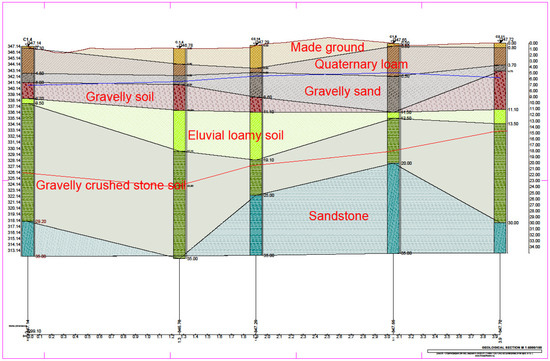
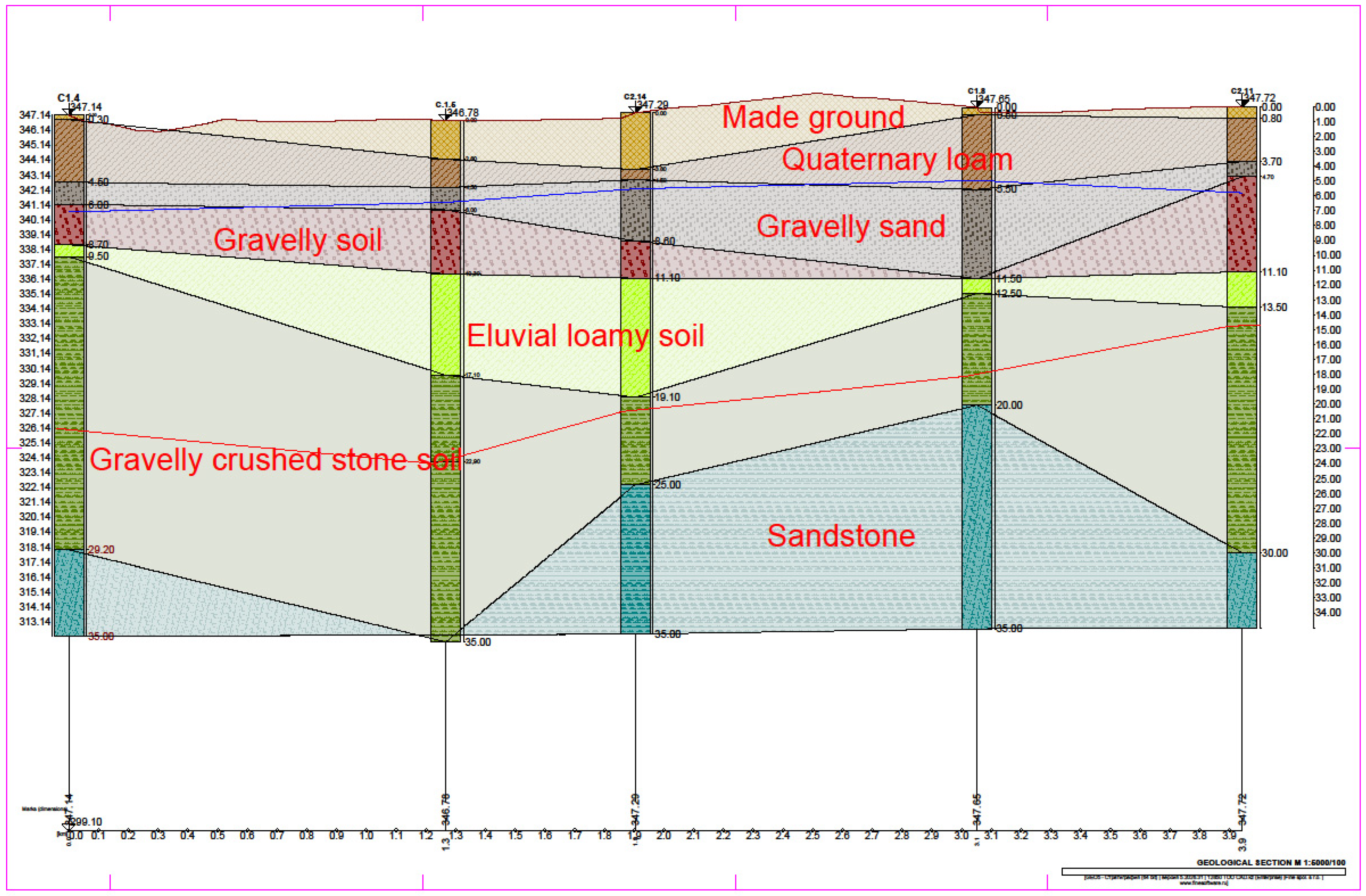
Accordingly, the site has a two-level aquifer system from a hydrogeological perspective, which includes a deeper fractured Ordovician aquifer where groundwater flow is primarily fracture-controlled, and an upper aquifer inside the permeable Quaternary layers that is characterised by active groundwater exchange. Observation wells placed in both horizons were used to monitor groundwater conditions during the pre-construction investigation stage. This allowed for the evaluation of hydraulic conditions and variations in groundwater levels before excavation (Figure 1).
Figure 1.
Engineering–geological cross-section beneath the Abu Dhabi Plaza building.
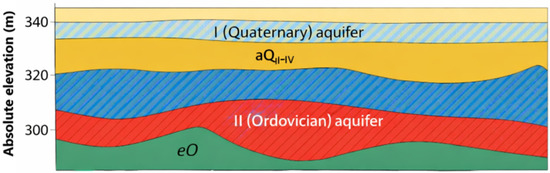
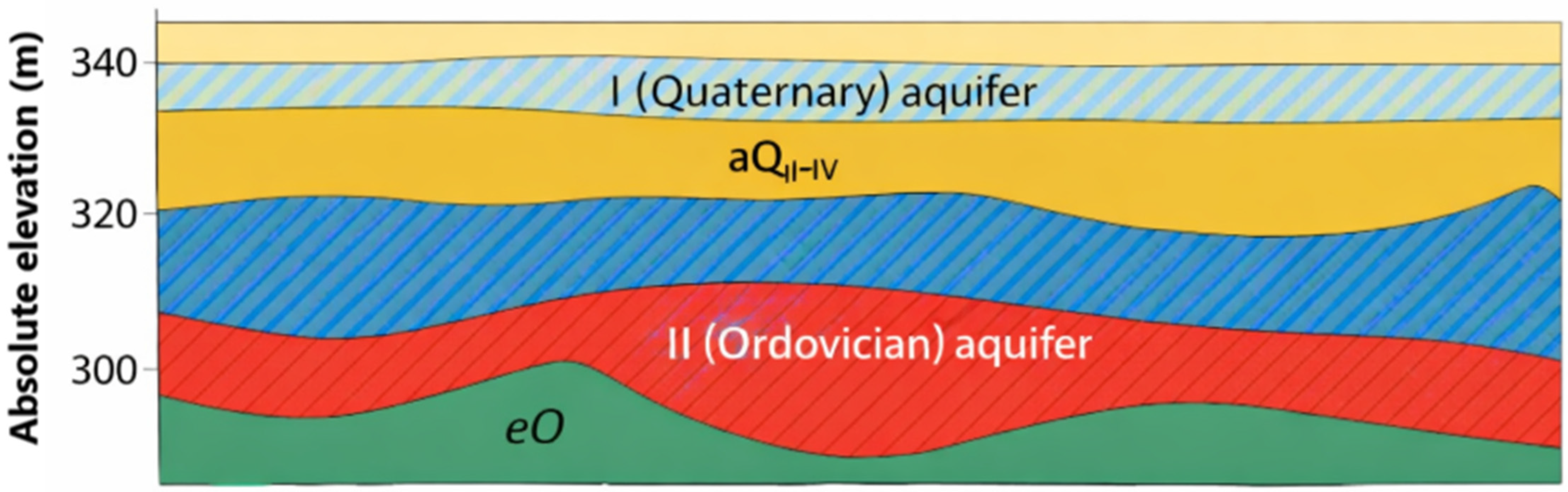
The blue contour delineates the spatial extent and geometry of the Quaternary aquifer within the study area. This unit is composed primarily of unconsolidated sediments of Quaternary age, which typically exhibit relatively high permeability compared to the underlying formations. As a result, the Quaternary aquifer plays a significant role in shallow groundwater storage and active flow dynamics. In contrast, the red contour represents the deeper Ordovician aquifer, which consists predominantly of consolidated bedrock of Ordovician age. This unit is characterised by lower primary porosity but may exhibit enhanced secondary permeability due to the presence of fractures and structural discontinuities. Consequently, groundwater flow within the Ordovician aquifer is primarily controlled by fracture networks rather than matrix properties. The distinction between these two aquifer systems is critical for understanding both vertical and lateral groundwater movement. The Quaternary aquifer functions mainly as a recharge and transmission zone, while the fractured Ordovician aquifer acts as a structurally controlled flow system with preferential pathways. The intervening low-permeability layers locally restrict vertical flow but do not fully prevent hydraulic connectivity between the two units. As illustrated in Figure 2, this hydrostratigraphic configuration defines the overall groundwater flow regime, where recharge from the shallow Quaternary deposits can propagate downward into the fractured bedrock system, contributing to groundwater inflow into the excavation. This interaction between lithology, structure, and hydraulic properties establishes the conceptual hydrogeological framework of the site and provides the basis for subsequent groundwater flow analysis and modelling.
Figure 2.
Hydrogeological cross-section for the territory of the “Abu Dhabi Plaza” complex. Note: aQ1–IV = Quaternary aquitard units I–IV (a sequence of low-permeability layers within Quaternary deposits), I (Quaternary aquifer) = First aquifer unit composed of Quaternary-age sediments, II (Ordovician aquifer) = Second aquifer unit composed of Ordovician-age bedrock, eO = Eroded or weathered surface of the Ordovician formation.
2.2. Field Hydrogeological Monitoring
To monitor groundwater conditions in both the deeper fractured Ordovician horizon and the shallow Quaternary aquifer, a network of observation wells placed across the building site was used for field hydrogeological monitoring. The water level measurements in the study were carried out regularly throughout the study phase and the initial stages of excavation. Moreover, electric water level meters with light and sound indicators were used for the measurements; with these meters, it was possible to identify the water’s surface after the probe made contact with groundwater inside the well casing. On the other hand, portable pressure loggers were also used in a number of wells to periodically confirm manual readings. To be more specific, the well was first examined for stability and blockages, the probe was gradually lowered until the signal indicated contact with water, and the depth to groundwater was noted in relation to the wellhead reference point. It is important to note that, to guarantee uniformity, measurements were taken again at brief intervals. After calibration, the electronic pressure loggers yielded readings with an accuracy of about ±0.5 cm, but the manual water level measurements had an accuracy of about ±1 cm.
2.3. Engineering–Geological Testing
In this study, the physical and mechanical properties of soils and weak rock materials were determined through a structured engineering–geological testing program designed to ensure reproducibility and reliability. Both disturbed and undisturbed samples were collected from boreholes at depths ranging from 5 m to 35 m, corresponding to the main stratigraphic units encountered in the excavation profile. A total of 42 samples were tested, including 26 soil samples and 16 rock or cemented soil specimens. Triaxial compression tests were conducted on cylindrical specimens with a standard size of 38 mm diameter and 76 mm height in accordance with ASTM D4767 [24]. The tests were performed under consolidated drained conditions with confining pressures of 100 kPa, 200 kPa, and 300 kPa to simulate in situ stress conditions. The loading rate was maintained at 0.5–1.0% axial strain per minute, and all tests were carried out at a controlled laboratory temperature of 20 ± 2 °C. Stress–strain behaviour, shear strength parameters, and deformation characteristics were recorded. Uniaxial compression tests on rock and cemented soil samples were conducted following ASTM D7012 [25]. Specimens were prepared with a height-to-diameter ratio of approximately 2:1, and loading was applied continuously until failure. Bulk density, natural moisture content, and unit weight were determined using standard laboratory procedures (ASTM D7263 [26] and ASTM D2216 [27]). Hydraulic conductivity values were obtained from laboratory permeability tests and supplemented with in situ estimates derived from pumping tests. To ensure data quality, each test was repeated at least twice, and average values were reported. Outliers were removed based on statistical consistency checks. The corrected physical, mechanical and filtration parameters are presented in Table 1, where previously identified numerical inconsistencies have been rectified to fall within realistic geotechnical ranges (Table 1).
Table 1.
Physical–mechanical and filtration characteristics of soils.
2.4. Hydrochemical Classification Framework (Natural and Technogenic Influence)
The interpretation of groundwater hydrochemical evolution was conducted using a dual-source classification framework designed to distinguish between natural (geogenic) and technogenic (anthropogenic) controls on groundwater chemistry. This framework supports the multivariate interpretation of hydrochemical variability and is based on routinely measured physicochemical and ionic parameters. The Natural Hydrochemical Model (NHM) represents groundwater chemistry primarily controlled by water–rock interaction processes within the aquifer system. These processes include mineral dissolution, ion exchange, and geochemical equilibrium reactions occurring during groundwater circulation. In contrast, the Technogenic Hydrochemical Model (THM) represents chemical modifications induced by external anthropogenic inputs, including agricultural runoff, wastewater infiltration, and urban or industrial contamination. The classification framework was developed using the major hydrochemical parameters measured during the study, including the major cations Ca2+, Mg2+, and Na+ + K+; the major anions HCO3−, SO42−, and Cl−; nitrogen species (NO3− and NH4+); and supporting physicochemical indicators such as pH and total dissolved solids (TDS). These parameters collectively describe the dominant hydrogeochemical processes governing groundwater composition.
Initial interpretation of groundwater sources was based on the relative enrichment patterns of these parameters. Samples characterised by dominance of Ca2+, Mg2+, and HCO3−, together with moderate TDS values, were interpreted as reflecting groundwater chemistry primarily controlled by natural geochemical processes and were assigned to the NHM category. In contrast, samples exhibiting elevated concentrations of Cl−, NO3−, or NH4+ were interpreted as influenced by anthropogenic inputs and were classified under the THM category. Samples that did not show a clear dominance of either group were classified as mixed-type systems, indicating the combined influence of geogenic and anthropogenic factors. To reduce interpretative subjectivity, quantitative criteria were applied for classification. Samples were assigned to the Natural Hydrochemical Model (NHM) when the combined proportion of geogenic ions (Ca2+ + Mg2+ + HCO3− + SO42−) exceeded 60% of the total ionic composition and when nitrate concentrations remained below 10 mg/L. Samples were classified as Technogenic Hydrochemical Model (THM) when anthropogenic indicators (Cl−, NO3−, and NH4+) exceeded 30% of the total ionic balance or when nitrate concentrations exceeded 10 mg/L, which is widely recognised as a threshold indicating anthropogenic influence in groundwater systems. Samples that did not satisfy either criterion were considered mixed-type waters, reflecting simultaneous geogenic and anthropogenic controls.
To further improve the robustness of the classification and minimise subjective interpretation, the framework was integrated with multivariate statistical methods, including principal component analysis (PCA) and hierarchical cluster analysis. Prior to analysis, all variables were standardised using z-score normalisation in order to remove differences in measurement scale among parameters. Principal components with eigenvalues greater than 1 were retained according to the Kaiser criterion, and varimax rotation was applied to enhance the interpretability of the component structure. Statistical significance of correlations among variables was evaluated at p < 0.05. The PCA loadings and cluster analysis results were subsequently used to validate the grouping structure and to identify the dominant factors controlling groundwater chemistry. These multivariate statistical outputs helped confirm the relationships between hydrochemical parameters and their respective controlling processes, thereby strengthening the reliability of the proposed classification framework. The approach assumes that major ion chemistry reflects the dominant hydrogeochemical processes operating at the aquifer scale and that anthropogenic influence is primarily expressed through enrichment in Cl−, NO3−, and NH4+. It further assumes that the selected suite of hydrochemical parameters adequately captures spatial variability in groundwater composition and that multivariate statistical techniques such as PCA and hierarchical clustering can provide consistent and reproducible identification of hydrochemical patterns.
2.5. Hydrochemical Analysis
Groundwater samples were collected from observation wells intersecting both the deeper fractured Ordovician aquifer and the shallow Quaternary aquifer. Prior to sampling, each well was purged until stabilisation of field parameters, specifically pH and electrical conductivity (EC), was achieved to ensure removal of stagnant water and to obtain representative samples reflecting in situ aquifer conditions. Samples were collected in pre-cleaned high-density polyethylene containers, immediately sealed, labelled, and transported to the laboratory under controlled temperature conditions (approximately 4 °C) to minimise physicochemical alteration. The hydrochemical analysis was conducted on a consistent and unified set of ten parameters used throughout the study and in all statistical analyses. These include major cations (Ca2+, Mg2+, Na+, and K+), major anions (HCO3−, SO42−, Cl−, NO3−, and NH4+), and supporting physicochemical indicators (pH and electrical conductivity-derived total dissolved solids (TDS)). These parameters were selected to comprehensively characterise groundwater composition and to ensure consistency across Tables, Figures, and multivariate analyses. Total dissolved solids (TDS), expressed in g/L, were used as the quantitative indicator of groundwater mineralisation throughout the study. TDS values were estimated from measured electrical conductivity using the widely accepted empirical relationship (Equation (1)).
Whereby, k is an empirical conversion factor dependent on the ionic composition of the water. For natural groundwater systems dominated by calcium–magnesium–bicarbonate and sulfate ions, typically ranges from 0.55 to 0.75. In this study, a representative value of was adopted, consistent with established hydrochemical practice. The calculated TDS values were subsequently converted to g/L and used consistently as the quantitative measure of groundwater mineralisation in all hydrochemical descriptions and statistical analyses. Although this conversion provides an approximation and may vary slightly depending on ionic composition, it is considered appropriate for comparative evaluation and multivariate statistical interpretation of groundwater systems. All hydrochemical parameters were analysed using standardised methods with explicit linkage between each parameter and its analytical technique. Major cations (Ca2+, Mg2+, Na+, and K+) were determined by atomic absorption spectrometry (AAS) in accordance with APHA (2017) [28]. Bicarbonate (HCO3−) concentrations were determined by acid–base titration following standard procedures described in APHA (2017) [28], while chloride (Cl−) was measured using argentometric titration in accordance with ISO 9297 [29]. Sulfate (SO42−) concentrations were determined using spectrophotometric methods, and nitrate (NO3−) concentrations were analysed using ultraviolet spectrophotometry, both following APHA (2017) protocols. Ammonium (NH4+) concentrations were measured using spectrophotometric colourimetric techniques in accordance with APHA (2017). The pH of groundwater samples was measured in situ using a calibrated glass electrode, and electrical conductivity (EC) was measured using a portable conductivity meter equipped with automatic temperature compensation, both in accordance with APHA (2017). The measured EC values were subsequently used to derive TDS as described above.
Total dissolved iron was determined as Fe3+ equivalent because groundwater samples were exposed to oxidising conditions during sampling and laboratory handling, under which ferrous iron (Fe2+) rapidly oxidises to ferric iron (Fe3+). As no field preservation procedures, such as immediate acidification or anaerobic sampling, were implemented to stabilise reduced iron species, Fe2+ concentrations were not determined separately. Due to the very low variability of Fe3+ in the dataset, this parameter was used only for descriptive hydrochemical interpretation and was explicitly excluded from all statistical and multivariate analyses to maintain strict consistency with the defined set of ten parameters used throughout the study. Quality assurance and quality control (QA/QC) procedures were implemented throughout the analytical workflow to ensure data reliability and reproducibility. Instrument calibration was performed using certified reference standards and multi-point calibration curves with correlation coefficients (R2) greater than 0.999. Analytical precision was assessed through duplicate sample analysis, with relative percent differences maintained below 5%. Field blanks and laboratory blanks were included to detect potential contamination. Ionic charge balance errors were calculated for each sample and maintained within ±5%, confirming the internal consistency and reliability of the hydrochemical dataset.
2.6. Hydrogeological Modeling
2.6.1. Transient Groundwater Flow Modeling
To accurately represent groundwater behaviour during excavation, a transient groundwater flow model was adopted to simulate the dynamic evolution of hydraulic head, flow velocity, and inflow rates associated with dewatering processes. Unlike steady-state approaches, this formulation accounts for time-dependent changes in groundwater conditions, which are critical in deep excavation projects where drawdown evolves continuously. The governing equation for two-dimensional unsteady groundwater flow is presented in Equation (2).
Whereby, is the storage coefficient, is hydraulic head, and are hydraulic conductivities along principal directions, and represents source or sink terms associated with pumping.
The model domain incorporates both the Quaternary aquifer and the fractured Ordovician aquifer. Boundary conditions were defined using observed groundwater levels from monitoring wells, while dewatering wells were represented as extraction nodes with specified discharge rates. This setup enables simulation of groundwater drawdown ranging from 9.71 m to 29.56 m observed during excavation.
2.6.2. Fracture-Controlled Hydraulic Parameterisation
To quantitatively represent groundwater flow in fractured rock, fracture-controlled permeability was incorporated into the model using a parameterisation based on fracture geometry and connectivity. The equivalent hydraulic conductivity of fractured media was estimated using the cubic law (Equation (2)).
whereby is fracture permeability, is fracture aperture, is fracture density, is fluid density, is gravitational acceleration, and is dynamic viscosity.
Fracture parameters, including density, spacing, and orientation, were derived from borehole logging and core observations. Aperture values were estimated using empirical correlations based on fracture type and weathering degree. These parameters were used to construct spatially variable hydraulic conductivity fields. To account for directional flow behaviour, anisotropic hydraulic conductivity tensors were implemented, reflecting the preferential orientation and connectivity of fracture networks. This approach establishes a quantitative relationship between fracture characteristics and groundwater flow, allowing improved estimation of localised inflow into the excavation.
2.6.3. Model Calibration and Validation
Model calibration was performed in a constrained manner using observed groundwater levels collected during selected stages of excavation and dewatering. Hydraulic conductivity and storage coefficient values were adjusted within literature-reported ranges for fractured aquifer systems to achieve consistency between simulated and observed hydraulic heads. Given the limited availability of continuous time-series pumping data, calibration was not implemented as a full inverse modelling procedure but rather as a manual, stage-based parameter adjustment process. Model performance was evaluated qualitatively and quantitatively by comparing simulated drawdown patterns with observed groundwater level distributions across monitoring wells. The model reproduced the general spatial trend of drawdown (9.71 m to 29.56 m), although local deviations were observed in zones of high fracture heterogeneity. No independent long-term dataset was available for rigorous statistical validation; therefore, the model is interpreted as a first-order representation of groundwater response under excavation-induced stress rather than a fully predictive transient simulation. This limitation is further considered in the discussion of uncertainty associated with hydraulic parameter estimation and transient flow behaviour.
2.7. GIS-Based Spatial Analysis
Hydroisohypse maps were developed using groundwater level data from monitoring wells to analyse the spatial distribution of hydraulic head and drawdown across the study area. Spatial interpolation was performed using kriging methods, which provide statistically optimised estimates and account for spatial correlation between data points. In addition to mapping hydraulic head, spatial analysis was extended to evaluate the variability of groundwater drawdown, which ranged from 9.71 m to 29.56 m across the site. To explain this heterogeneity, multiple controlling factors were incorporated into the analysis, including the spatial distribution of aquifer units, continuity and thickness of low-permeability layers, fracture zone density, layout and spacing of dewatering wells, and pumping rates. Correlation and regression analyses were conducted to quantify the relative influence of these factors on observed drawdown. The results indicate that areas with higher fracture density and closer proximity to pumping wells exhibited greater drawdown, while zones with thicker low-permeability layers showed reduced hydraulic response. Software tools, including Surfer (27.6.23), Statistica (13.5.0), GEO5 (2025.1) and AutoCAD (2024.1.2), were used to integrate geological, hydrogeological, and engineering data into a unified spatial framework. This multi-factor analysis provides a more comprehensive explanation of groundwater behaviour compared to approaches that attribute drawdown variability solely to permeability differences.
2.8. Statistical Analysis
Statistical analyses were conducted using Statistica 13 software. Pearson correlation analysis was applied to evaluate the strength and significance of linear relationships between hydrochemical parameters. Principal component analysis (PCA) with varimax rotation was performed on standardised (z-score normalised) variables to identify dominant geochemical factors controlling groundwater chemistry. Only components with eigenvalues greater than 1 were retained according to the Kaiser criterion. Hierarchical cluster analysis was carried out using Ward’s method with Euclidean distance to group both parameters and samples based on similarity in hydrochemical composition. Statistical significance of correlations and PCA loadings was evaluated at p < 0.05, ensuring robust interpretation of multivariate patterns.
3. Results
3.1. Hydrochemical Characteristics of Aquifers
The hydrochemical composition of groundwater in the Quaternary and Ordovician aquifers exhibits distinct statistical characteristics (Table 2). Groundwater mineralisation, represented in this study by total dissolved solids (TDS), shows clear differences between the two systems. In the Quaternary aquifer, TDS ranges from 0.47 to 1.50 g/L, with a mean value of 0.89 g/L and a standard deviation of 0.32 g/L, indicating moderate variability in dissolved solids concentration. In contrast, groundwater in the Ordovician aquifer exhibits a much narrower TDS range of 0.72–0.73 g/L, with a mean value of 0.727 g/L and a coefficient of variation of 0.9%, reflecting a relatively stable hydrochemical environment. Major ion concentrations in the Quaternary aquifer also display substantial variability. For example, combined sodium and potassium concentrations (Na+ + K+) vary from 44 to 536 mg/L (mean 213 mg/L), while sulfate (SO42−) concentrations range from 151 to 650 mg/L (mean 273 mg/L). This variability indicates active hydrochemical processes, including recharge, mixing, and interaction with surface-derived inputs. In comparison, the Ordovician aquifer exhibits considerably narrower concentration ranges for the same parameters, indicating lower geochemical variability within the fractured bedrock system. Statistical comparison using a two-sample t-test indicates that differences in Na+ + K+ and SO42− concentrations between the Quaternary and Ordovician aquifers are statistically significant (p < 0.05). Nitrogen species further differentiate the two hydrogeological units. In the Quaternary aquifer, nitrate (NO3−) concentrations reach a maximum value of 23.74 mg/L, with a mean value of 2.94 mg/L, whereas in the Ordovician aquifer concentrations remain below 0.44 mg/L. The difference in nitrate concentrations between the two aquifers is also statistically significant (p < 0.01), indicating a stronger influence of surface-derived or anthropogenic inputs in the shallow system. The higher variability and elevated concentrations of several dissolved constituents in the Quaternary aquifer indicate the influence of active recharge, groundwater mixing, and external inputs. In contrast, groundwater in the Ordovician aquifer is characterised by lower variability and a relatively stable chemical composition, suggesting that its hydrochemistry is primarily controlled by water–rock interaction and geochemical buffering within the fractured bedrock system.
Table 2.
Hydrochemical characteristics of the aquifers.
3.2. Statistical Structure of Groundwater Chemistry
3.2.1. Correlation and Cluster Analysis
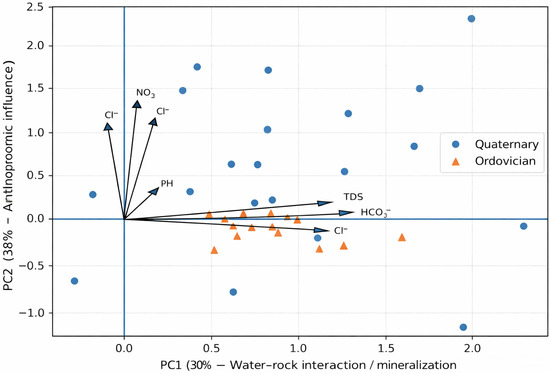
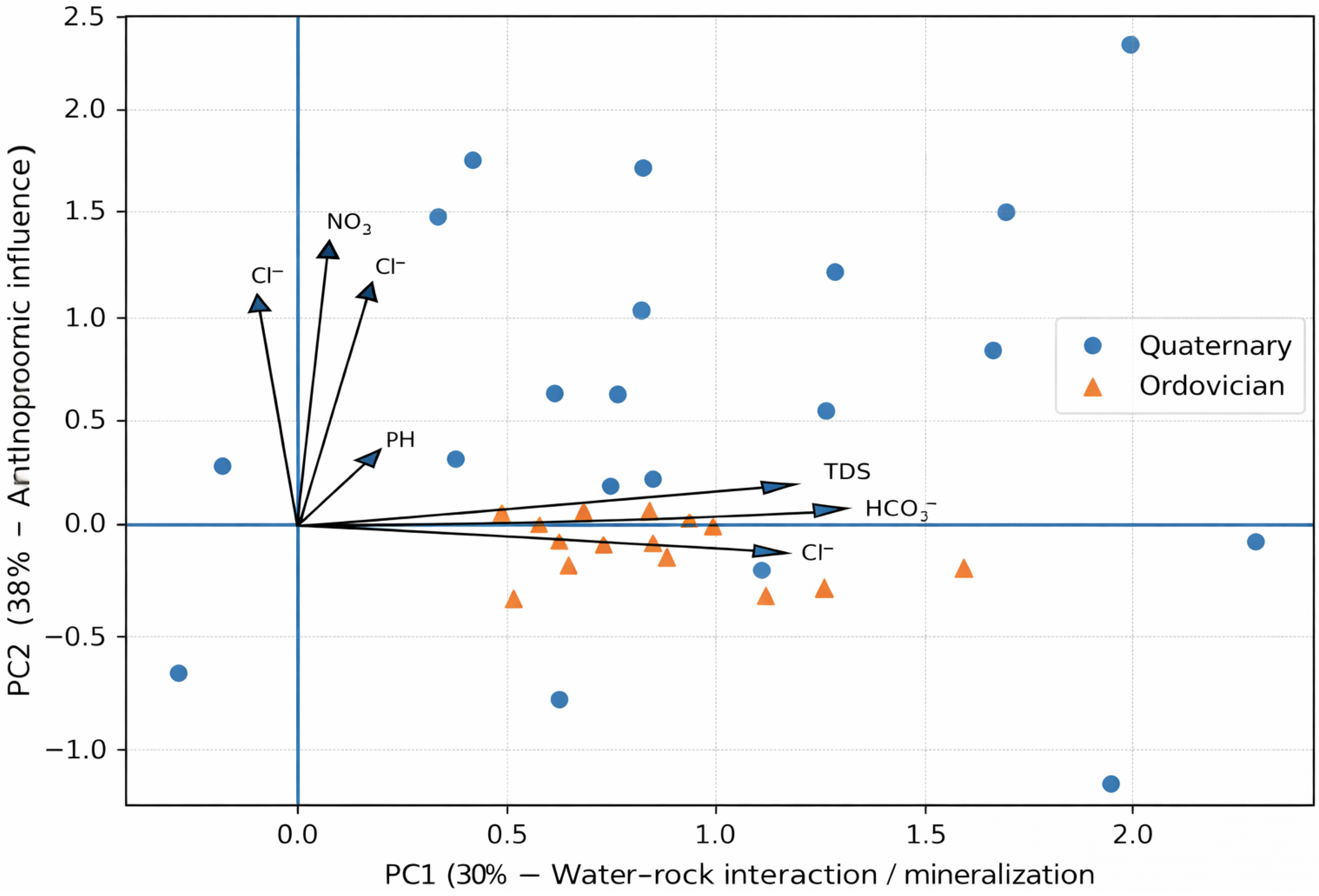
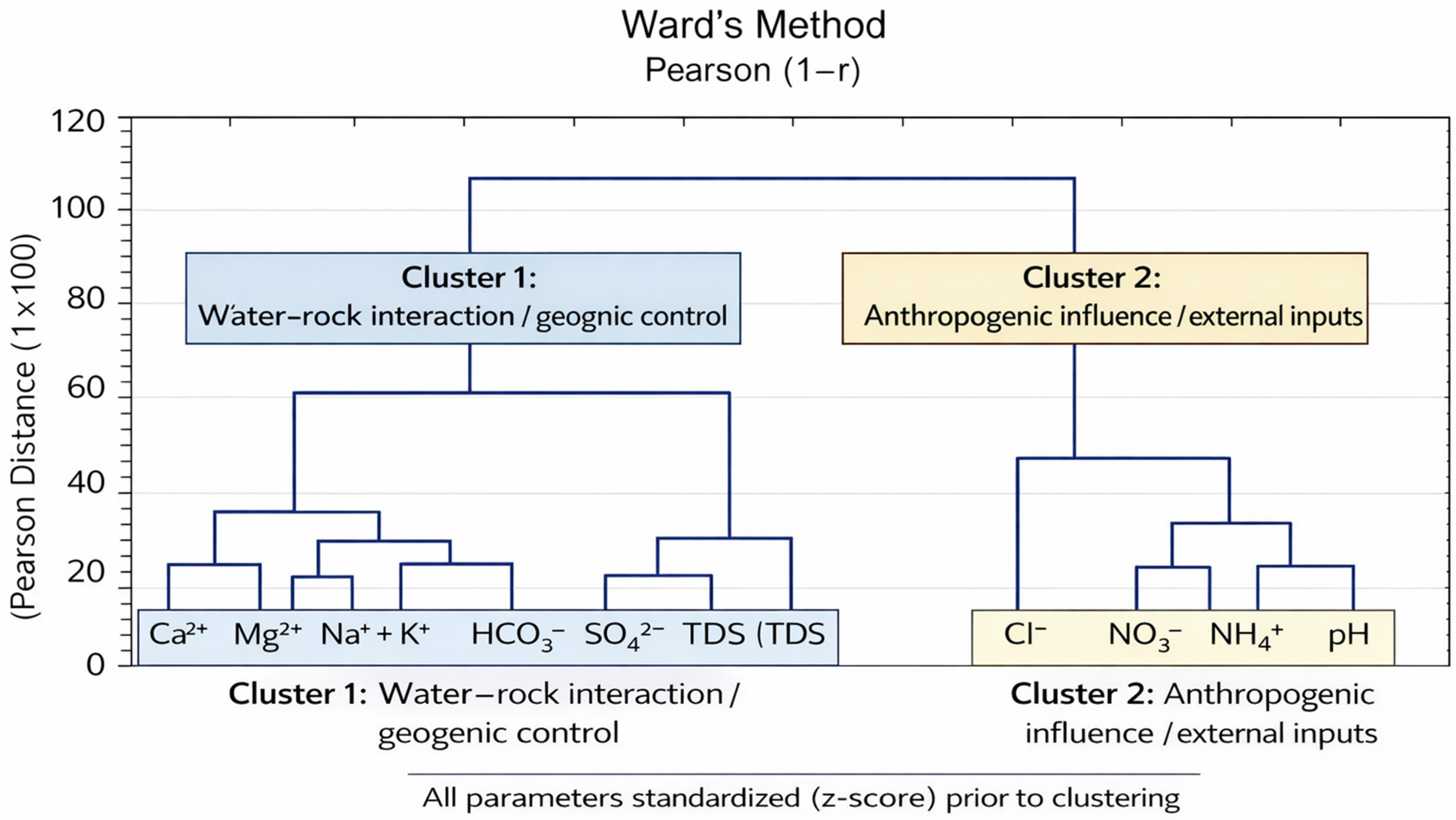
Pearson correlation analysis was conducted to quantify relationships among hydrochemical parameters in the Quaternary aquifer. Strong positive correlations were observed between Ca2+, Mg2+, SO42−, and TDS (r = 0.72–0.91, p < 0.01), indicating a common geochemical origin primarily associated with mineral dissolution processes and water–rock interaction. Hierarchical cluster analysis using Ward’s method grouped the parameters into two statistically distinct clusters (Figure 3). Cluster 1 comprises Ca2+, Mg2+, Na+ + K+, HCO3−, SO42−, and TDS, representing the natural hydrochemical background controlled predominantly by geochemical processes within the aquifer matrix. Cluster 2 includes Cl−, NO3−, NH4+, and pH, which show weaker correlations with TDS (r < 0.4) and higher coefficients of variation (CV > 50%), suggesting influence from variable external inputs, including recharge and anthropogenic sources, as well as redox-related processes. The multivariate statistical analysis was performed using a consistent set of ten hydrochemical parameters: Ca2+, Mg2+, Na+ + K+, HCO3−, SO42−, Cl−, NO3−, NH4+, pH, and TDS. All parameters were standardised using z-score normalisation prior to analysis to ensure equal weighting and to prevent dominance by variables with larger absolute concentration ranges. Parameters not included in this set, such as Fe3+, were excluded from multivariate analysis due to their low variability and limited contribution to the statistical structure (Table 3).
Figure 3.
PCA biplot with controlling factors of groundwater chemistry.
Table 3.
Pearson correlation matrix and cluster classification of hydrochemical parameters (Quaternary aquifer).
3.2.2. Principal Component Analysis (PCA)
Principal component analysis (PCA) was applied to identify the dominant factors controlling groundwater chemistry. The analysis was performed using a consistent set of ten hydrochemical parameters: Ca2+, Mg2+, Na+ + K+, HCO3−, SO42−, Cl−, NO3−, NH4+, pH, and total dissolved solids (TDS). All variables were standardised using z-score normalisation prior to analysis to ensure equal weighting and to eliminate the influence of differing units and concentration ranges. The PCA results reveal two principal components with eigenvalues greater than 1, which together explain approximately 68% of the total variance in the dataset (Figure 3). The first principal component (PC1), accounting for approximately 30% of the total variance, is characterised by strong positive loadings (>0.7) for Ca2+, Mg2+, SO42−, Na+ + K+, and TDS. This component represents natural geochemical processes primarily associated with mineral dissolution and water–rock interaction, which control the overall level of groundwater mineralisation. The second principal component (PC2), explaining approximately 38% of the total variance, is dominated by Cl−, NO3−, NH4+, and pH, and shows weak correlation with PC1. This component reflects the influence of external inputs, including recharge and anthropogenic sources, as well as redox-related processes affecting nitrogen species in groundwater. The separation of these components indicates that groundwater chemistry in the study area is controlled by the combined influence of natural hydrogeochemical evolution and external inputs. PC1 defines the geogenic baseline associated with mineralisation processes, while PC2 captures variability related to surface-derived and chemically reactive influences. This distinction provides a quantitative framework for interpreting the relative contributions of natural and anthropogenic factors to groundwater composition (Figure 3).
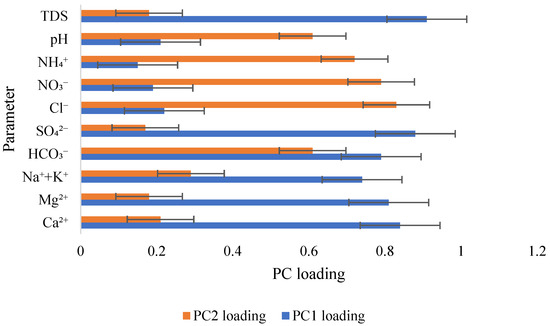
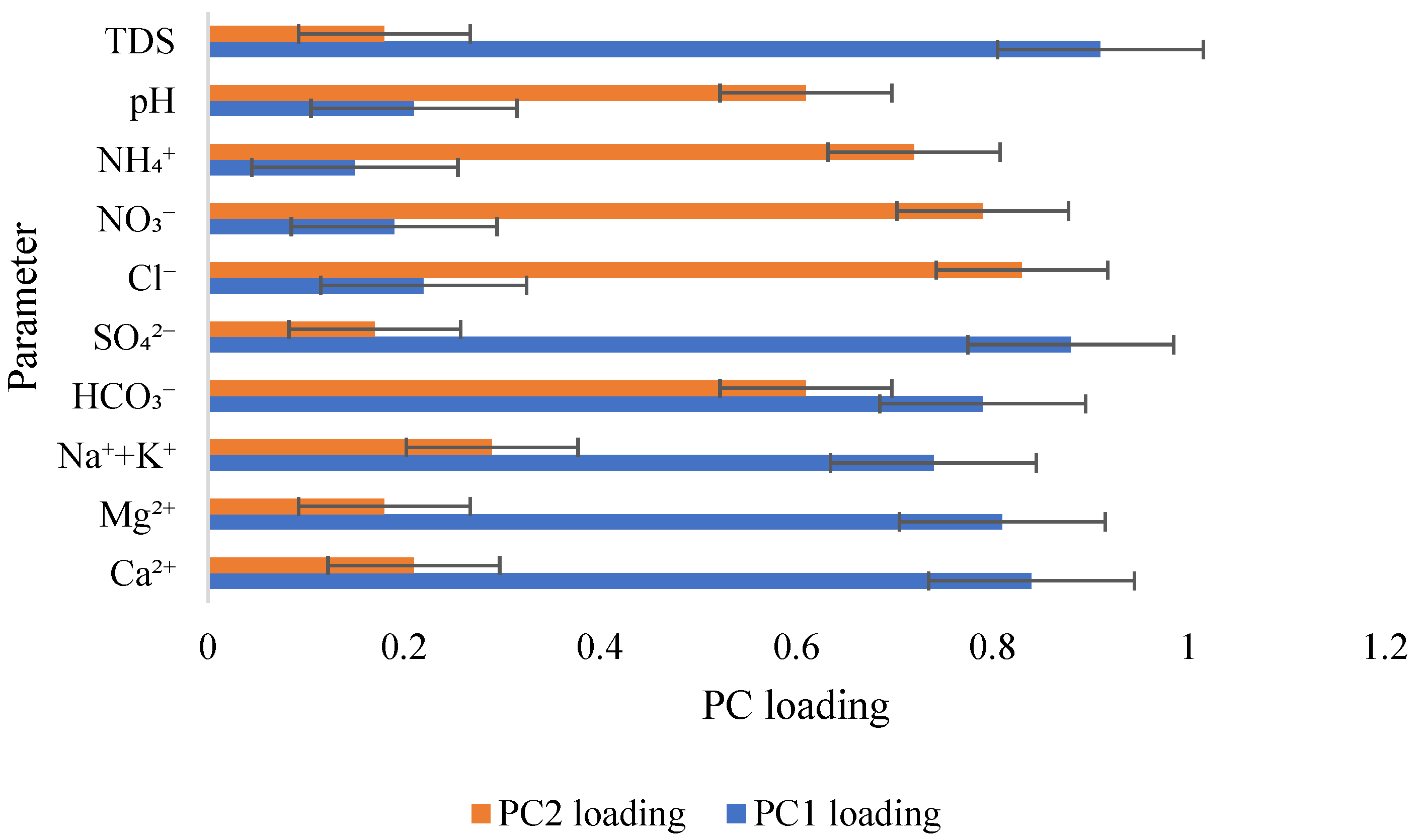
The principal component analysis (PCA) results presented in Figure 4 reveal two dominant factors controlling groundwater chemistry, together explaining 68.0% of the total variance. The first principal component (PC1), accounting for 30.4% of the variance, is strongly associated with high positive loadings of TDS (0.91), SO42− (0.88), Ca2+ (0.84), Mg2+ (0.81), and Na+ + K+ (0.74). This pattern indicates that PC1 primarily represents natural geochemical processes, reflecting water–rock interactions such as the dissolution of carbonate and sulfate minerals, which increase concentrations of major cations and overall dissolved solids. In contrast, the second principal component (PC2), explaining 37.6% of the variance, is characterised by strong positive loadings of Cl− (0.83), NO3− (0.79), NH4+ (0.72), HCO3− (0.61), and pH (0.61). These variables are commonly associated with anthropogenic inputs and redox-related processes, suggesting that PC2 reflects the influence of external contamination sources such as agricultural activities, domestic wastewater, and organic matter decomposition. The separation of these variables into two principal components therefore indicates that groundwater chemistry in the study area is controlled by a combination of natural geochemical processes and human-induced impacts (Figure 4).
Figure 4.
Principal component loadings and explained variance.
3.2.3. Definition of “Natural” and “Technogenic” Models
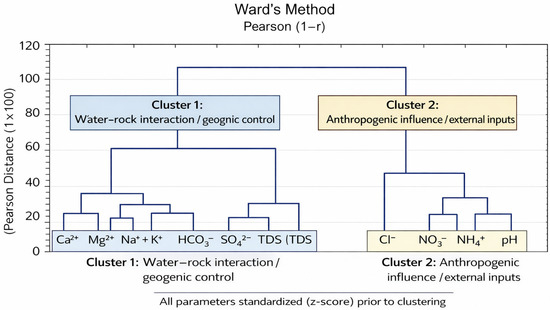
Hierarchical cluster analysis using Ward’s method identified two statistically distinct groupings of hydrochemical parameters in the Quaternary aquifer, reflecting different controlling processes (Figure 5). The first cluster includes Ca2+, Mg2+, Na++K+, HCO3−, SO42−, and TDS, which exhibit strong positive correlations (r = 0.72–0.91, p < 0.01) and relatively low variability (CV < 40%). This cluster represents the natural geochemical background, primarily controlled by water–rock interaction processes, including dissolution of carbonate and sulfate minerals and ion exchange within sandy–gravel deposits. The second cluster comprises Cl−, NH4+, NO3−, and pH, which show weaker correlations with TDS (r < 0.4) and higher variability (CV > 50%), indicating a different origin. These parameters are associated with processes independent of the aquifer matrix, including variable redox conditions and external inputs typical of shallow urban groundwater systems. This quantitative separation confirms that groundwater chemistry in the Quaternary aquifer is governed by the combined influence of natural geochemical processes and secondary technogenic factors.
Figure 5.
Cluster diagram of groundwater composition in the Quaternary aquifer.
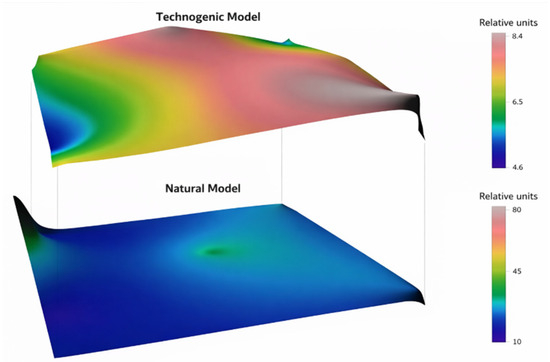
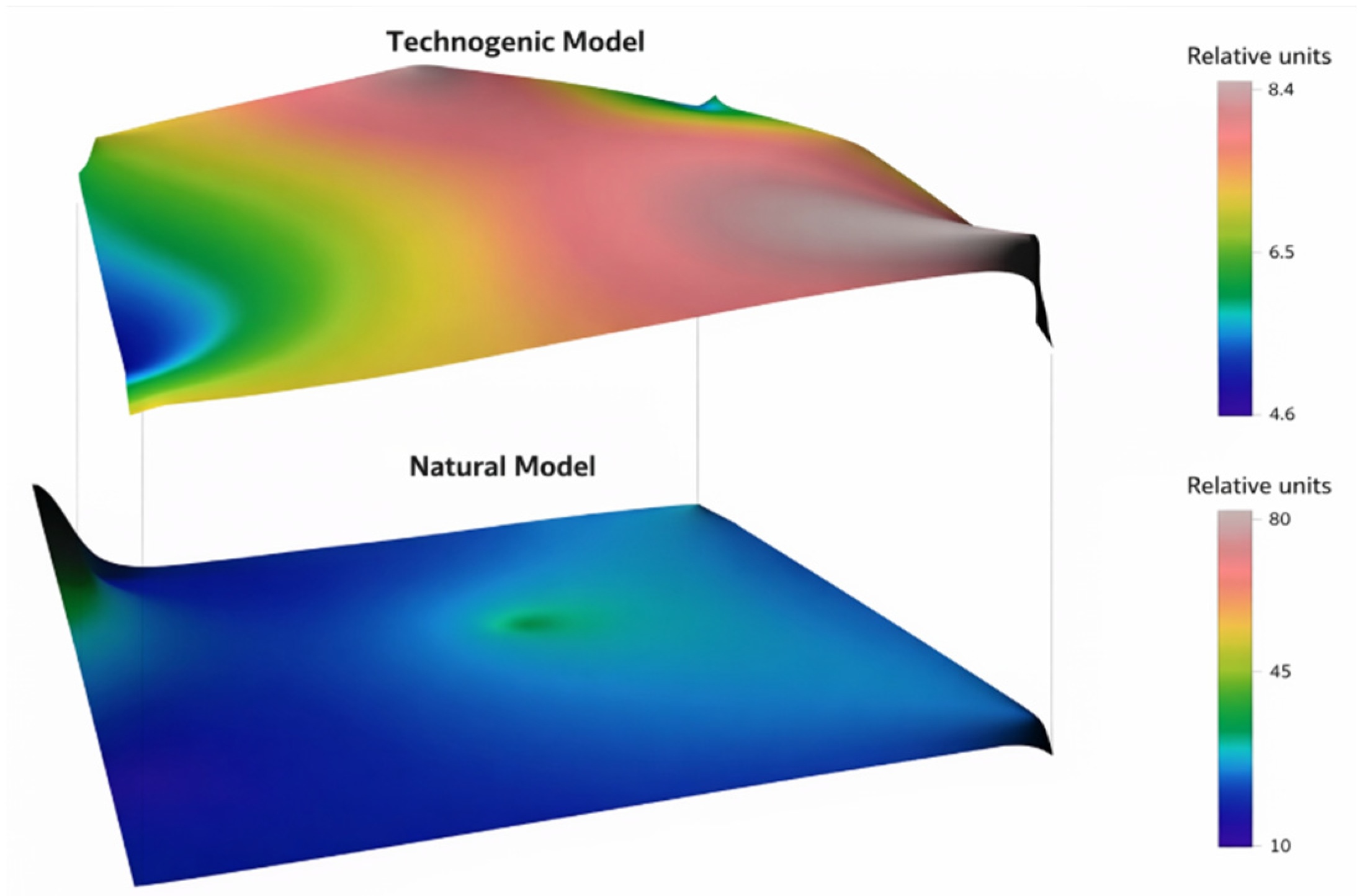
By breaking down the hydrochemical variables into main governing factors, factor analysis provides additional insight into the statistical structure of groundwater chemistry. The first factor, explaining approximately 30% of the variance, represents the natural geochemical component. It reflects the influence of equilibrium processes between groundwater and aquifer sediments, as well as mineral dissolution. Major ions and TDS are strongly associated with this factor. The second factor corresponds to a technogenic component, which is primarily linked to Cl−, NO3−, and NH4−. These variables are indicators of limited anthropogenic influence in the urban environment, as they exhibit a distribution pattern distinct from the natural geochemical indicators. The combined factor structure demonstrates that groundwater chemistry in the Quaternary aquifer is controlled by the interaction of natural geochemical processes and external anthropogenic influences (Figure 6).
Figure 6.
“Technogenic” and “Natural” models of the Quaternary aquifer within the territory of the “Abu Dhabi Plaza” complex.
3.3. Engineering–Geological Properties of Aquifer Rocks
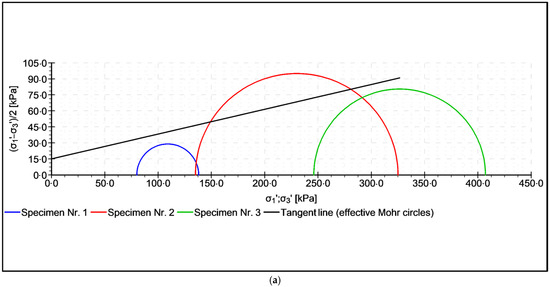
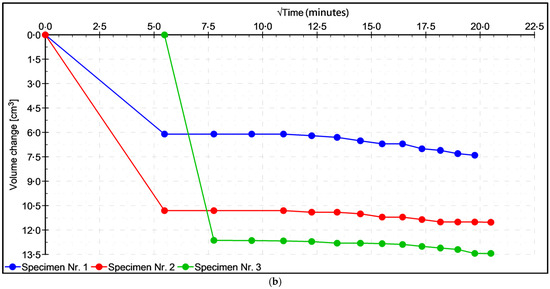
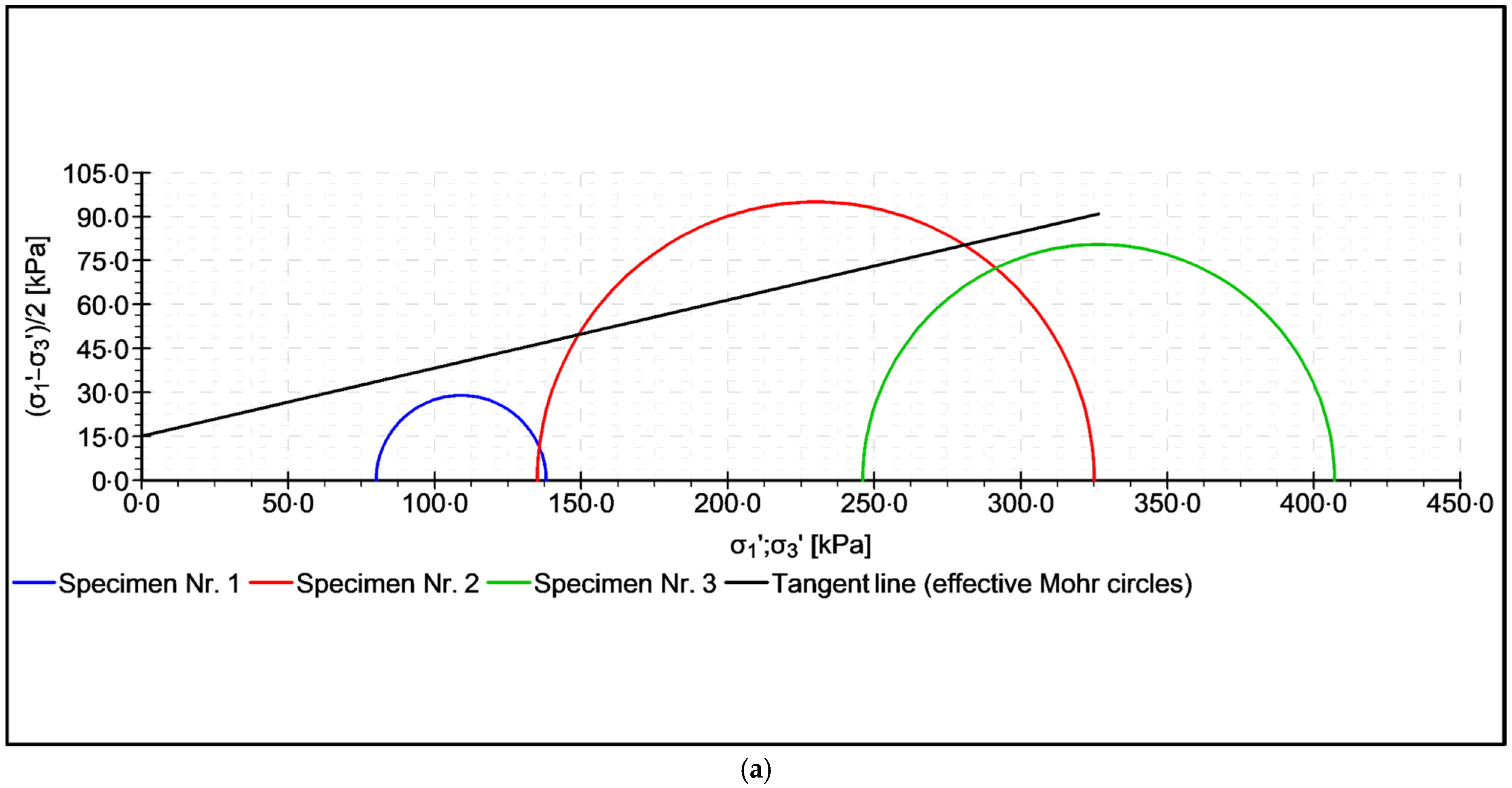
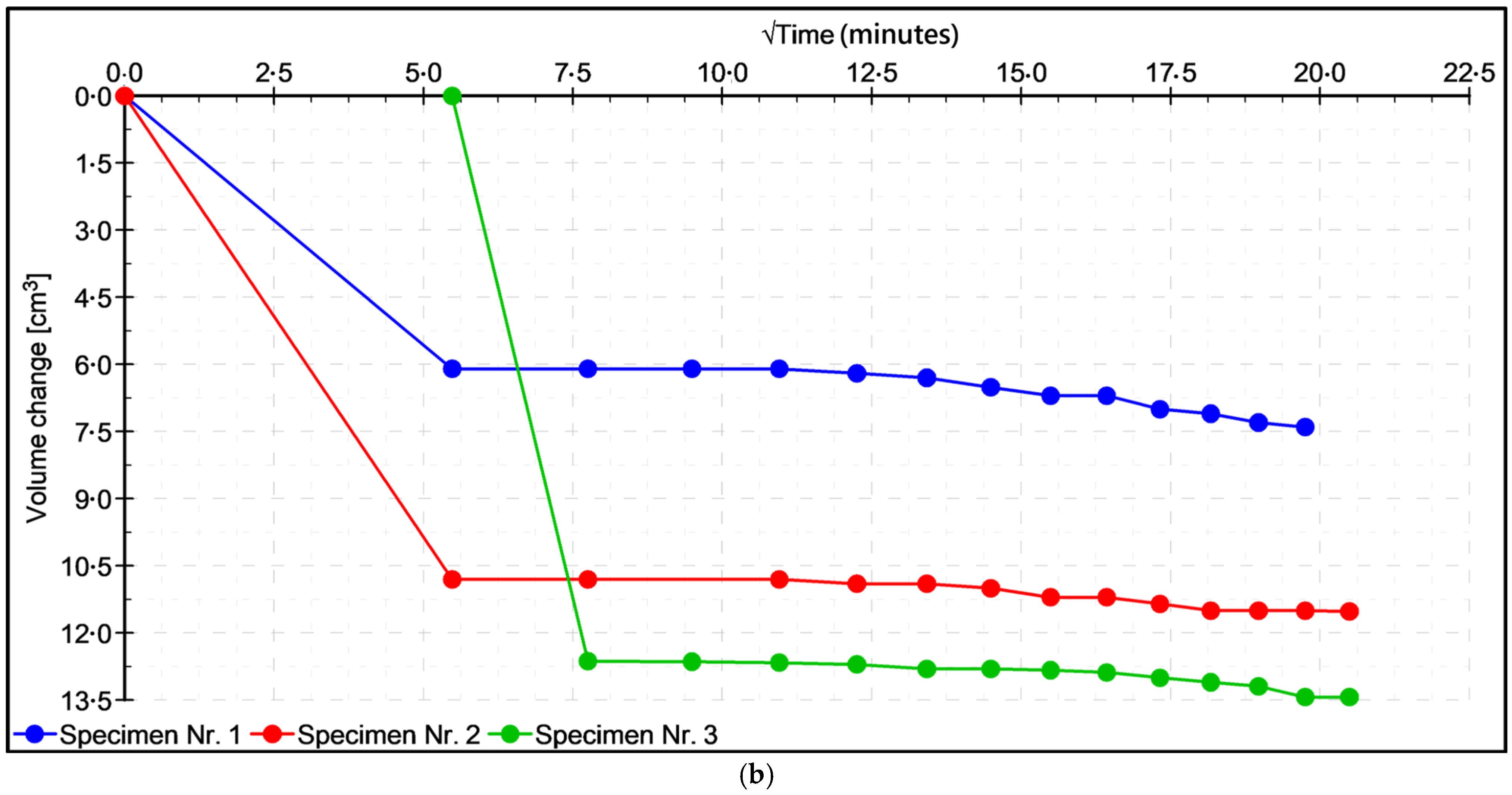
The gravelly soil’s triaxial compression findings (Figure 7) demonstrate a continuous rise in deviatoric stress as confining pressure increases without a sharp peak or abrupt failure. The observed gradual deformation seen in the stress–strain curves is typical of coarse due to the fact that granular deposits are mostly made up of sand and gravel fractions, whereby such a trend is indicative of a material whose cohesive bonding is less important than interparticle friction in the development of shear resistance. This interpretation is supported by the effective strength parameters obtained from the Mohr–Coulomb envelope, including the internal friction angle reaching about 30–33°, and the effective cohesion is almost zero. In actuality, this means that with increasing stress, the soil mass can bend without losing structural integrity. It is also important to note that, from a hydrogeological point of view, an open pore framework is produced by the lack of cohesiveness and the prevalence of granular connections. Whereby, as a result, water flows through the deposit very readily, and during loading or excavation, pore pressure can rapidly redistribute. The very high permeability and susceptibility to hydraulic disturbances of the Quaternary sandy-gravel aquifer are explained by these mechanical features (Figure 7).
Figure 7.
Results of the triaxial test of gravelly soil. Note: CU = consolidated undrained.
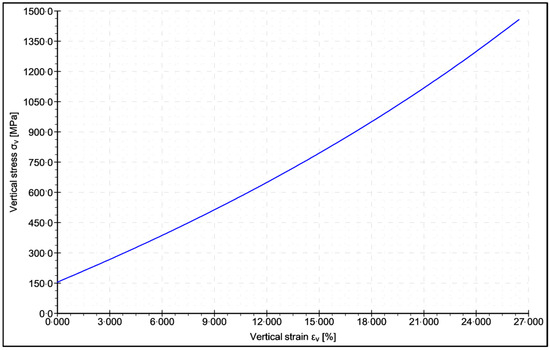
The uniaxial compression test results of the gravel-crushed stone soil show a progressive increase in compressive stress with increasing axial strain, leading to failure at an ultimate strength of roughly 1.46 MPa. Instead of an abrupt brittle break, the stress–strain relationship shows a ductile mode of deformation, where the structure of the material gradually changes before failure. This mechanical reaction is common in coarse clastic aggregates when the deformation process is dominated by frictional sliding and particle rearrangement. According to hydrogeology, water can move through the rock mass over intergranular routes since such a structure tends to maintain linked voids even during compression. As a result, the material retains a significant filtration capacity despite having a noticeable compressive strength. These mechanical characteristics inside the Ordovician aquifer imply that the connection of fractures and coarse interparticle gaps that provide preferential flow routes govern groundwater movement more so than the inherent strength of the rock fragments (Figure 8).
Figure 8.
Results of the uniaxial compression test of gravel–crushed stone soil.
3.4. Spatial Distribution of Groundwater Inflow
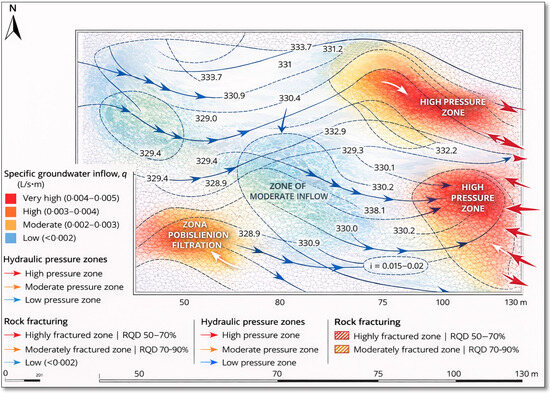
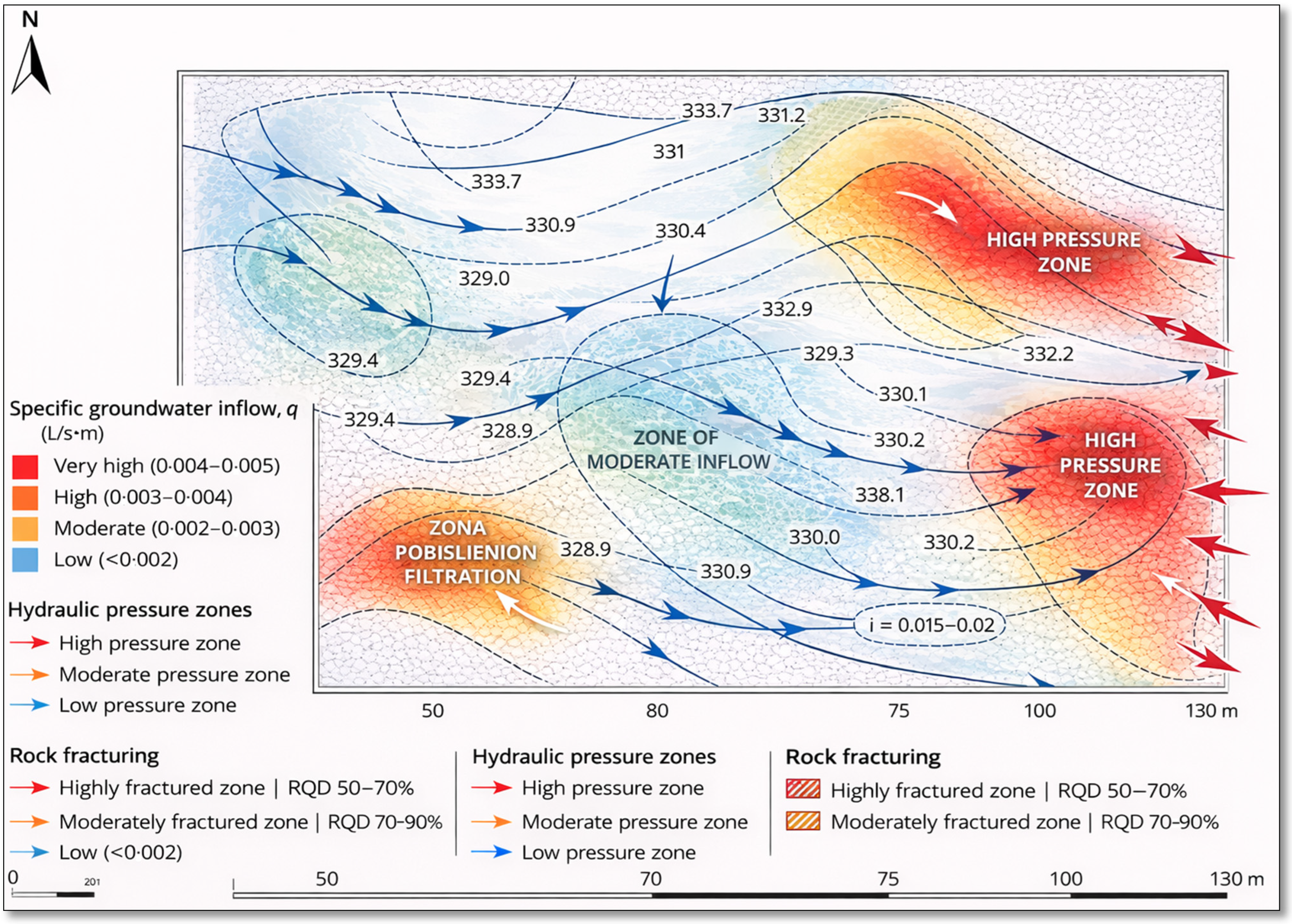
Water movement within the construction site is not uniform but rather concentrated in a number of localised sectors, according to the spatial pattern of specific groundwater influx. In the fragmented Ordovician rocks, the longest zones formed by the highest inflow values correlate to periods of enhanced permeability. These regions correspond to areas where the fracture network appears to be more developed, allowing groundwater to move through coarse intergranular voids and linked cracks instead of the actual rock matrix. According to field studies from multiple wells, the most active filtering happens at depths of around 20 to 23 m, where worn rock fragments and fragmented gravel-crushed deposits form open channels for water flow. Zones with reduced influx, on the other hand, perhaps indicate areas of the formation with few or poorly connected cracks. Consequently, these cracked intervals serve as the primary conduits feeding water toward the excavation region, and groundwater movement over the site follows structurally controlled routes (Figure 9).
Figure 9.
Spatial distribution of specific groundwater inflow, hydraulic head, and groundwater flow directions within the construction site.
3.5. Groundwater Flow Modelling
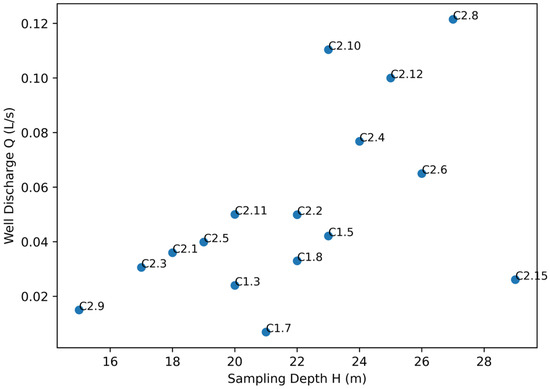
Several important parameters that regulate groundwater transport inside the broken Ordovician aquifer were estimated using hydrodynamic computations. It should be noted that a discernible pressure-driven flow into the excavation zone is indicated by the hydraulic gradient, which is calculated from the difference in hydraulic head between observation wells and reached about 0.136. The filtration velocity that results from combining this gradient with the measured hydraulic conductivity of the fractured carbonate rocks was approximately 0.35 m/day, indicating moderate but continuous groundwater movement across the fracture network. The calculated well discharge values can also be noted as varying significantly amongst wells, which is indicative of the aquifer’s uneven fracture growth. Also, it was observed that where the rock mass is more severely broken, the inflow increased dramatically in some places while remaining relatively minor in others. The hydrostatic pressure operating at the sampling depths was approximately between 1.45 and 2.81 atm, confirming constrained groundwater conditions and suggesting that excavation structures may be subject to severe pressure. Moreover, in fractured geological contexts where permeability was determined by the density and connectivity of fractures rather than by the characteristics of the rock matrix alone, such differences between wells are common (Figure 10).
Figure 10.
Well discharge vs. depth.
3.6. Hydraulic Head Distribution and Dewatering Effects
From the investigations, it was observed that groundwater levels significantly dropped as a result of the dewatering system’s operation, according to monitoring data from the observation wells. The measured data from Table 4 show that groundwater drawdown ranges from 9.71 m in well W103 and 9.73 m in well W113 to over 29 m in a number of wells, including W109N (29.56 m), W133 (29.53 m), and W137 (29.43 m). Also, large drops mainly ranging between 27 and 29 m can be seen in many wells within the fragmented Ordovician interval, such as W126 (28.11 m), W128 (28.32 m), and W139 (28.96 m). Conversely, wells located in less permeable areas, such as W106 (11.69 m) and W119 (13.94 m), exhibited lesser declines of about 11–14 m. The actual water levels varied from roughly 318.54 m (W109N) to roughly 337.47 m (W103) (Table 4).
Table 4.
Hydrodynamic parameters of observation wells and groundwater level drawdown values.
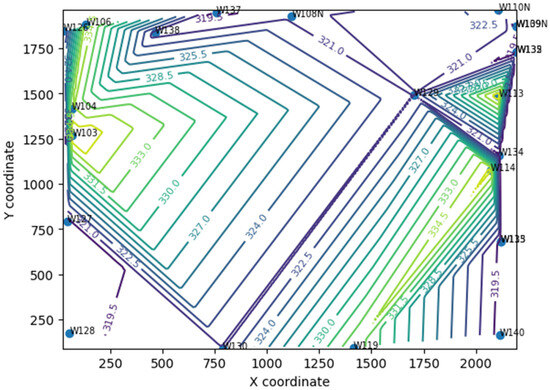
From the contour map of groundwater hydraulic head (Figure 11), a distinct depression cone connected to the dewatering system can be seen in the hydraulic head distribution obtained from the monitoring wells. The contour pattern shows that the middle portion of the site, especially close to wells like W109N (318.54 m) and W139 (318.73 m), has the lowest groundwater levels, approximately 318–321 m. Groundwater levels steadily rise away from this zone, reaching 334–337 m at wells farther from the pumping centre, such as W103 (337.47 m) and W113 (337.33 m). Groundwater flow is directed toward the pumping region by the distinct hydraulic gradient created by the almost 18–19 m difference throughout the site. The shape of the equipotential lines also implies that the fractured zones of the Ordovician aquifer, where permeability is higher and groundwater flows more easily toward the excavation, may be partially responsible for the flow.
Figure 11.
Contour map of groundwater hydraulic head constructed from monitoring well data.
4. Discussion
This study, which used the Abu Dhabi Plaza site in Kazakhstan as a case study, evaluated the hydrogeological implications of deep underground construction in fractured aquifers. The results indicate that fracture network geometry, particularly fracture connectivity, orientation, and aperture variability, plays a key role in controlling hydraulic conductivity and groundwater flow distribution at both local and regional scales. The observed spatial variability in groundwater response is consistent with established findings that fractured rock aquifers exhibit strongly anisotropic flow behaviour that cannot be adequately represented using uniform permeability assumptions, as previously reported for the Gyeongju nuclear waste site [30].
Comparative evidence from multi-well pumping tests in the Qitaihe region of northeastern China further supports the interpretation that flow redistribution in fractured systems is primarily governed by connected fracture networks rather than isolated high-permeability zones [31]. In addition, the literature on mountainous aquifer systems suggests that deep fracture pathways may hydraulically interact with shallow groundwater systems, contributing variably to baseflow depending on hydraulic gradients, topographic setting, and recharge conditions [32]. Within this context, the variability observed in inflow patterns at the study site is interpreted as being consistent with a coupled structural–hydraulic control system rather than a spatially uniform aquifer response.
The hydrogeological response is further complicated by the dynamic behaviour of fracture systems, which may evolve under seasonal recharge fluctuations and long-term stress redistribution. Such behaviour implies that inflow conditions are not static but may vary temporally, reinforcing the need for high-resolution characterisation and time-dependent modelling in engineering applications. However, the present study does not directly quantify fracture evolution processes; therefore, interpretations are made based on structural variability and established hydrogeological principles reported in the literature.
The interaction between hydrostatic pressure and fracture mechanics is also identified as a key controlling mechanism in fractured rock environments [33,34]. Experimental studies have demonstrated that elevated pore pressure conditions may promote fracture initiation and propagation, while confining stress may inhibit fracture growth, resulting in complex permeability evolution patterns [35,36]. In the present study, variations in rock quality designation (RQD) are used as an indirect indicator of fracture intensity, where lower RQD values are generally associated with increased discontinuity. While such associations provide qualitative insight into potential flow pathways, no direct mechanical testing was conducted in this study to quantify stress-dependent fracture propagation.
Furthermore, hydro-mechanical studies indicate that variations in pore water pressure can influence fracture aperture and rock mass deformation, thereby modifying local permeability fields [37]. Observed patterns in groundwater response at the site are therefore interpreted in light of these established hydro-mechanical coupling mechanisms, although no direct coupling model was implemented in this work. Reported changes in acoustic emission and fracture breakdown behaviour in similar lithologies also suggest that high-pressure conditions may enhance fracture interconnectivity [36], which provides a plausible explanatory context for the observed heterogeneity in flow behaviour.
From a hydrochemical perspective, the results indicate variability in groundwater composition that may have implications for infrastructure durability. Literature evidence shows that combined sulfate and chloride exposure can accelerate reinforcement corrosion and contribute to concrete deterioration through coupled chemical and physical degradation mechanisms [38]. Chloride ions may enhance electrochemical corrosion processes, while sulfate interactions can promote expansion-related microcracking, particularly under cyclic environmental conditions [39]. In this study, hydrochemical data are interpreted as indicators of potential aggressiveness rather than as direct causal drivers of structural degradation, since no long-term material exposure experiments were conducted.
Hydrochemical variability in fractured systems may also be influenced by preferential flow pathways, which can locally enhance solute transport. However, the present dataset does not allow quantification of transport rates or reaction kinetics; therefore, interpretations remain qualitative and based on concentration distributions and established hydrochemical behaviour reported in the literature. This limitation should be considered when extrapolating the results to predictive durability assessments.
Overall, the results suggest that inflow variability, pressure redistribution, and groundwater chemistry in fractured aquifers are governed by coupled structural and hydraulic heterogeneity. Similar findings have been reported in large-scale infrastructure projects such as those in the Lower Yangtze River plains, where integration of geological, hydraulic, and geotechnical variability was shown to be critical for predicting localised subsidence and hydraulic instability [40]. In the present study, the interpretation is based on observed spatial variability and supported by established literature, rather than on direct causal modelling.
Accordingly, the findings support the need for integrated monitoring and predictive modelling approaches in subterranean engineering applications. However, the study does not develop a fully coupled hydro-mechanical or hydrochemical simulation framework; therefore, conclusions are restricted to observational interpretation supported by comparative literature evidence. Drainage design, fracture treatment strategies such as grouting, and structural durability planning must therefore be informed by site-specific characterisation combined with ongoing monitoring to account for inherent system variability [41,42]. However, it is acknowledged that the use of steady-state Darcy- and Boussinesq-based formulations does not fully capture the inherently transient nature of dewatering in deep excavation systems, where hydraulic head, inflow rates, and flow velocities evolve dynamically with excavation depth and pumping intensity. The observed large drawdown range (29–30 m) suggests that the system likely undergoes non-linear and time-dependent responses, including delayed yield and fracture-controlled drainage behaviour, which are not explicitly resolved in the present analytical framework. The absence of formal calibration and time-dependent validation introduces uncertainty into the estimated hydraulic parameters; therefore, the results should be interpreted as first-order approximations constrained by field-observed boundary conditions rather than fully predictive simulations. Future studies should incorporate transient groundwater flow models, coupled hydro-mechanical formulations, and parameter inversion techniques calibrated against continuous monitoring data to better resolve the temporal evolution of hydraulic head and inflow behaviour during excavation.
The hydrochemical characteristics identified in the Quaternary aquifer have direct relevance for global sustainability frameworks, particularly United Nations Sustainable Development Goals such as SDG 6: Clean Water and Sanitation [43] and SDG 11: Sustainable Cities and Communities [44]. In relation to SDG 6, the results contribute to the assessment of water quality conditions relevant to Indicator 6.3.2, which evaluates the proportion of water bodies with good ambient water quality. The elevated concentrations of nitrate and chloride detected in the shallow Quaternary aquifer indicate a measurable influence of anthropogenic inputs and highlight the vulnerability of urban groundwater systems to contamination. Nitrate concentrations reaching 23.74 mg/L remain below but approach the drinking water guideline value of 50 mg/L established by the World Health Organization, suggesting the need for continued monitoring and preventive groundwater management to avoid potential deterioration of potable water resources [45]. From the perspective of SDG 11, which emphasises sustainable urban development and resilient infrastructure, the identification of technogenic hydrochemical signatures in shallow aquifers provides important information for urban planning and groundwater protection strategies. In rapidly urbanising environments, such hydrochemical assessments support evidence-based management of subsurface water resources and help reduce risks associated with urban groundwater pollution, thereby contributing to more sustainable and resilient urban water systems.
5. Conclusions
The results of this study indicate that groundwater flow behaviour in the investigated fractured aquifer system is strongly conditioned by the structural characteristics of the fracture network, particularly connectivity, orientation, and fracture density. Within the limits of the available dataset, the observed spatial variability in hydrogeological response suggests that simplified assumptions of uniform permeability are not sufficient to represent subsurface flow behaviour in such heterogeneous media. The interpretation of flow distribution patterns suggests that fracture-controlled anisotropy is a dominant organising mechanism governing preferential groundwater movement. However, this conclusion is based on observed spatial variability and established hydrogeological principles rather than direct hydraulic simulation or explicit hypothesis testing of fracture–flow coupling mechanisms. The hydrochemical observations indicate variability in solute composition across sampling locations, with elevated concentrations of aggressive ions such as sulfates and chlorides in specific zones. Based on well-established literature, such hydrochemical conditions are recognised as potentially contributing to long-term deterioration processes in reinforced concrete structures, particularly through coupled chloride-induced corrosion and sulfate-driven expansion mechanisms. In this study, these effects are interpreted as indicators of potential material aggressiveness rather than quantified rates of structural degradation, since no laboratory exposure or corrosion kinetics experiments were conducted. The findings further suggest that subsurface engineering performance in fractured aquifers is governed by the combined influence of structural heterogeneity, hydraulic pressure variability, and hydrochemical conditions. This integrated behaviour highlights the importance of adopting adaptive design strategies that account for spatial variability in both flow pathways and groundwater chemistry. However, the present study does not implement a fully coupled predictive numerical model; therefore, the conclusions remain interpretative and based on field observations supported by previously published studies. Accordingly, effective management of underground construction in fractured aquifer environments requires integrated approaches that combine detailed site characterisation, continuous monitoring, and engineering mitigation measures such as controlled drainage, fracture sealing, and dewatering optimisation. These measures should be adapted to site-specific hydrogeological conditions rather than applied uniformly across heterogeneous settings. The study emphasises the need to consider fractured aquifers as dynamic hydrogeological systems in which structural, hydraulic, and chemical factors interact. The conclusions presented here are derived from observed spatial variability and supported by existing scientific literature, and they should be interpreted within the limitations of the available dataset and the absence of explicit statistical hypothesis testing or mechanistic modelling.
Author Contributions
Conceptualization, A.M.; methodology, N.Z. and R.S.; software, T.M.; validation, N.Z., P.V.S., and R.S.; formal analysis, N.Z.; investigation, N.Z. and P.V.S.; resources, R.S. and P.V.S.; data curation, N.Z.; writing—original draft preparation, N.Z.; writing—review and editing, A.M. and T.M.; visualization, N.Z.; supervision, A.M. and R.S.; project administration, A.M.; funding acquisition, A.M. All authors have read and agreed to the published version of the manuscript.
Funding
This research received no external funding.
Institutional Review Board Statement
Not applicable.
Informed Consent Statement
Not applicable.
Data Availability Statement
Data available upon reasonable request.
Conflicts of Interest
The authors declare no conflicts of interest. The funders had no role in the design of the study; in the collection, analyses, or interpretation of data; in the writing of the manuscript; or in the decision to publish the results.
References
- Cui, J.; Nelson, J.D. Underground Transport: An Overview. Tunn. Undergr. Space Technol. 2019, 87, 122–126. [Google Scholar] [CrossRef] [Scilit]
- Meneses-Vega, B.; Paniconi, C.; Rivard, C.; Guarin-Martinez, L. A Multi-Model Study of the Subsurface and Surface Hydrodynamics of a 700 Km2 Watershed in Western Canada (Fox Creek Area, Alberta). J. Hydrol. Reg. Stud. 2025, 61, 102637. [Google Scholar] [CrossRef] [Scilit]
- Ntona, M.M.; Busico, G.; Mastrocicco, M.; Kazakis, N. Modeling Groundwater and Surface Water Interaction: An Overview of Current Status and Future Challenges. Sci. Total Environ. 2022, 846, 157355. [Google Scholar] [CrossRef] [Scilit]
- Jiang, T.; Pei, X.; Wang, W.; Li, L.; Guo, S. Effects of the Excavation of a Hydraulic Tunnel on Groundwater at the Wuyue Pumped Storage Power Station. Appl. Sci. 2023, 13, 5196. [Google Scholar] [CrossRef] [Scilit]
- Chen, Z.; He, C.; Zhang, Y.; Xu, Z.; Li, Z.; Yu, B. The Impact of Formation Heterogeneity on Water Discharge and Groundwater Depletion of an Excavated Tunnel. J. Hydrol. 2023, 627, 130403. [Google Scholar] [CrossRef] [Scilit]
- Jovičić, V.; Volk, B.; Logar, J. Conditions for the Sustainable Development of Underground Transport in the Ljubljana Basin. Sustainability 2018, 10, 2971. [Google Scholar] [CrossRef] [Scilit]
- Pujades, E.; Jing, M.; Lu, C.; Jurado, A. Underground Excavations Below the Water Table by the Cut-and-Cover Method. In Advances in Structural Integrity and Failure; IntechOpen: London, UK, 2023. [Google Scholar]
- Chen, G.; Li, H.; Li, X.; Zhang, L.; Yuan, P.; Ma, H.; Xu, Z.; Sui, W. Groundwater Flow Fields and Patterns in Heterogeneous Aquifer Induced by Mine Water Injection and Storage Under Different Well Configurations. Water 2025, 17, 3270. [Google Scholar] [CrossRef] [Scilit]
- Liu, Q.; Hu, R.; Hu, L.; Xing, Y.; Qiu, P.; Yang, H.; Fischer, S.; Ptak, T. Investigation of Hydraulic Properties in Fractured Aquifers Using Cross-Well Travel-Time Based Thermal Tracer Tomography: Numerical and Field Experiments. J. Hydrol. 2022, 609, 127751. [Google Scholar] [CrossRef] [Scilit]
- Zhou, C.-B.; Chen, Y.-F.; Hu, R.; Yang, Z. Groundwater Flow through Fractured Rocks and Seepage Control in Geotechnical Engineering: Theories and Practices. J. Rock Mech. Geotech. Eng. 2023, 15, 1–36. [Google Scholar] [CrossRef] [Scilit]
- Chen, J.; Zhang, D.; Su, M.; Liu, X.; Mi, X. Analysis of Tunnel Water Inrush Accidents Induced by Stratum Collapse Models. Deep Resour. Eng. 2025, 2, 100186. [Google Scholar] [CrossRef] [Scilit]
- Li, D.; Xu, H.; Jiang, T.; Ding, H.; Xiang, Y. Tunnel Water Burst Disaster Management Engineering Based on Artificial Intelligence Technology—Taking Yonglian Tunnel in Jiangxi Province as the Object in China. Water Supply 2023, 23, 3377–3391. [Google Scholar] [CrossRef] [Scilit]
- Aygar, E.B.; Gokceoglu, C. Problems Encountered during a Railway Tunnel Excavation in Squeezing and Swelling Materials and Possible Engineering Measures: A Case Study from Turkey. Sustainability 2020, 12, 1166. [Google Scholar] [CrossRef] [Scilit]
- Ma, B.; Huang, X.; Cui, X.; Liang, X.; Su, J.; Jin, M. Characterizing the Water–Rock Interactions and Groundwater Flow Processes in the Paleozoic to Cenozoic Strata Aquifer Systems with Contrasting Mineralogy at Basin Scale: Qingyi River, East China. J. Hydrol. 2023, 625, 129991. [Google Scholar] [CrossRef] [Scilit]
- Delaunay, N.; Marques, E.D.; Nummer, A.R.; Kutter, V.T.; Silva-Filho, E.V.; Lage, I.C. Hydrogeochemical Characterization and Indicators of Anthropogenic Influence in Groundwater around Guanabara Bay, Rio de Janeiro, Brazil. J. S. Am. Earth Sci. 2024, 148, 105175. [Google Scholar] [CrossRef] [Scilit]
- Li, Z.; Li, J.; Zhu, Y.; Li, Y.; Hao, Q. Anthropogenic Influences on the Hydrochemical Characteristics of the Groundwater in Xiamen City, China and Their Evolution. Water 2022, 14, 3377. [Google Scholar] [CrossRef] [Scilit]
- Benmerabet, N.; Sedrati, N.; Djabri, L. Hydrogeochemical Processes, Water–Rock Interactions, and the Suitability of Groundwater in a Semi-Arid Region, Northeastern Algeria. Water Supply 2025, 25, 404–423. [Google Scholar] [CrossRef] [Scilit]
- Liu, F.; Zou, J.; Liu, J.; Zhang, J.; Zhen, P. Factors Controlling Groundwater Chemical Evolution with the Impact of Reduced Exploitation. Catena 2022, 214, 106261. [Google Scholar] [CrossRef] [Scilit]
- Wani, T.I.; Rallapalli, S.; Singhal, A.; Robert, D.; Kodikara, J.; Pramanik, B.K.; Arya, S.B. Compounded Fuzzy Entropy-Based Derivation of Uncertain Critical Factors Causing Corrosion in Buried Concrete Sewer Pipeline. Npj Clean Water 2025, 8, 36. [Google Scholar] [CrossRef] [Scilit]
- Brindha, K.; Schneider, M. Impact of Urbanization on Groundwater Quality. In GIS and Geostatistical Techniques for Groundwater Science; Elsevier: Amsterdam, The Netherlands, 2019; pp. 179–196. [Google Scholar]
- Fu, T.; Li, C.; Wang, Z.; Qi, C.; Chen, G.; Fu, Y.; Su, Q.; Xu, X.; Liu, W.; Yu, H. Hydrochemical Characteristics and Quality Assessment of Groundwater in Guangxi Coastal Areas, China. Mar. Pollut. Bull. 2023, 188, 114564. [Google Scholar] [CrossRef] [Scilit]
- Iwatsuki, T.; Hagiwara, H.; Ohmori, K.; Munemoto, T.; Onoe, H. Hydrochemical Disturbances Measured in Groundwater during the Construction and Operation of a Large-Scale Underground Facility in Deep Crystalline Rock in Japan. Environ. Earth Sci. 2015, 74, 3041–3057. [Google Scholar] [CrossRef] [Scilit]
- Kim, B.; Roh, G.; Lee, J.; Yoon, J.; Lee, J. Characterizing the Hydraulic Conductivity of Soil Based on the Moving Average of Precipitation and Groundwater Level Using a Regional Database. AQUA—Water Infrastruct. Ecosyst. Soc. 2023, 72, 1459–1473. [Google Scholar] [CrossRef] [Scilit]
- ASTM D4767-11; Standard Test Method for Consolidated Undrained Triaxial Compression Test for Cohesive Soils. ASTM International: West Conshohocken, PA, USA, 2011.
- ASTM D7012-14; Standard Test Method for Compressive Strength and Elastic Moduli of Intact Rock Core Specimens under Varying States of Stress and Temperatures. ASTM International: West Conshohocken, PA, USA, 2014.
- ASTM D7263-09; Standard Test Methods for Laboratory Determination of Density (Unit Weight) of Soil Specimens. ASTM International: West Conshohocken, PA, USA, 2009.
- ASTM D2216-19; Standard Test Methods for Laboratory Determination of Water (Moisture) Content of Soil and Rock by Mass. ASTM International: West Conshohocken, PA, USA, 2019.
- APHA. Standard Methods for Examination of Water and Wastewater, 23rd ed.; American Public Health Association: Washington, DC, USA, 2017. [Google Scholar]
- ISO 9297:1989; Water Quality—Determination of Chloride—Silver Nitrate Titration with Chromate Indicator (Mohr’s Method). International Organization for Standardization (ISO): Geneva, Switzerland, 1989.
- Cheong, J.-Y.; Hamm, S.-Y.; Lim, D.-H.; Kim, S.-G. Hydraulic Parameter Generation Technique Using a Discrete Fracture Network with Bedrock Heterogeneity in Korea. Water 2017, 9, 937. [Google Scholar] [CrossRef] [Scilit]
- Lin, J.; Ma, R.; Sun, Z.; Tang, L. Assessing the Connectivity of a Regional Fractured Aquifer Based on a Hydraulic Conductivity Field Reversed by Multi-Well Pumping Tests and Numerical Groundwater Flow Modeling. J. Earth Sci. 2023, 34, 1926–1939. [Google Scholar] [CrossRef] [Scilit]
- Betterle, A.; Bellin, A. Morphological and Hydrogeological Controls of Groundwater Flows and Water Age Distribution in Mountain Aquifers and Streams. Water Resour. Res. 2024, 60, e2024WR037407. [Google Scholar] [CrossRef] [Scilit]
- Shen, B. Theories and Applications of FRACOD—A Fracture Mechanics Approach to Modern Rock Engineering Problems. Deep Resour. Eng. 2025, 2, 100210. [Google Scholar] [CrossRef] [Scilit]
- Lv, H.; Cheng, Z.; Song, G.; Ma, G.; Xie, F. Hydraulic Fracturing-Based Static Rock Burst Prevention in Thick and Hard Siltstone Roofs: A Multi-Scale Numerical and Field Investigation. Tunn. Undergr. Space Technol. 2026, 173, 107638. [Google Scholar] [CrossRef] [Scilit]
- Yu, Q.; Zhang, H.; Yang, R.; Cai, Z.; Liu, K. Effects of Confining Pressure and Hydrostatic Pressure on the Fracturing of Rock under Cyclic Electrohydraulic Shock Waves. Energies 2022, 15, 6032. [Google Scholar] [CrossRef] [Scilit]
- Zhao, H.; Liang, B.; Sun, W.; Hu, Z.; Ma, Y.; Liu, Q. Effects of Hydrostatic Pressure on Hydraulic Fracturing Properties of Shale Using X-Ray Computed Tomography and Acoustic Emission. J. Pet. Sci. Eng. 2022, 215, 110725. [Google Scholar] [CrossRef] [Scilit]
- Jiang, Z.; Feng, S.; Fu, S. Coupled Hydro-Mechanical Effect of a Fractured Rock Mass under High Water Pressure. J. Rock Mech. Geotech. Eng. 2012, 4, 88–96. [Google Scholar] [CrossRef] [Scilit]
- Tian, Y.; Liu, Y.; Xie, Y.-M.; Zhang, G.-Y.; Ye, H.-L.; Yan, D.-M.; Li, Y.-J.; Li, B.; Xue, H.-J.; Cai, Q. Coupled Effects of Chlorides and Sulfates on Steel Reinforcement Corrosion in Concrete Structures: A Comprehensive Review. Case Stud. Constr. Mater. 2025, 22, e04263. [Google Scholar] [CrossRef] [Scilit]
- Jia, X.; Li, F.; Wang, Z.; Gong, P. Combined Chloride-Sulfate Attack and Subsequent Damage from Salt-Freeze-Thaw Cycles on High Durability Concrete. J. Build. Eng. 2026, 117, 114843. [Google Scholar] [CrossRef] [Scilit]
- Xie, R.; Wang, X.; Xu, B.; Yin, L. Impacts of Aquifer Heterogeneity on Subsidence Resulting from Engineering Dewatering in the Lower Yangtze River Plains. J. Hydrol. Reg. Stud. 2024, 52, 101719. [Google Scholar] [CrossRef] [Scilit]
- Yazdi, J.; Heydari Mofrad, H.; Heydari Mofrad, M. Development of a Risk-Based Optimization Approach to Improve the Performance of Urban Drainage Systems. Hydrol. Sci. J. 2022, 67, 689–702. [Google Scholar] [CrossRef] [Scilit]
- Coffie-Anum, E.; Kuma, J.S.Y.; Ewusi, A.; Affam, M.; Ziggah, Y.Y.; Awuah-Offei, K. Derivation of Fractured Rock Hybrid Analytical Equation for Estimation of Groundwater Inflow into Mine Pit Using Major Fault Trigonometry. Hydrol. Sci. J. 2025, 70, 71–92. [Google Scholar] [CrossRef] [Scilit]
- Küfeoğlu, S. SDG-6 Clean Water and Sanitation. In Emerging Technologies: Value Creation for Sustainable Development; Springer International Publishing: Cham, Switzerland, 2022; pp. 289–304. [Google Scholar]
- Küfeoğlu, S. SDG-11: Sustainable Cities and Communities. In Emerging Technologies: Value Creation for Sustainable Development; Springer International Publishing: Cham, Switzerland, 2022; pp. 385–408. [Google Scholar]
- Ward, M.; Jones, R.; Brender, J.; De Kok, T.; Weyer, P.; Nolan, B.; Villanueva, C.; Van Breda, S. Drinking Water Nitrate and Human Health: An Updated Review. Int. J. Environ. Res. Public Health 2018, 15, 1557. [Google Scholar] [CrossRef] [Scilit]

Disclaimer/Publisher’s Note: The statements, opinions and data contained in all publications are solely those of the individual author(s) and contributor(s) and not of MDPI and/or the editor(s). MDPI and/or the editor(s) disclaim responsibility for any injury to people or property resulting from any ideas, methods, instructions or products referred to in the content. |
© 2026 by the authors. Licensee MDPI, Basel, Switzerland. This article is an open access article distributed under the terms and conditions of the Creative Commons Attribution (CC BY) license.