Data-Driven Process FMEA for Flexible Manufacturing Systems: Framework and Industrial Case Study

 , , , and
Abstract
1. Introduction and Background
1.1. Context and Motivation
1.2. The PFMEA Challenge in Flexible Manufacturing
1.3. Evolution of FMEA and Data-Driven Approaches
1.4. FMEA in Flexible Manufacturing and Quality Tool Integration
1.5. Research Gap, Objectives and Contributions
- How can outputs of classical quality tools and shop floor evidence be formally translated into PFMEA entries and ratings in flexible assembly systems?
- How can risk be aggregated across different manufacturing levels so that local failure evidence can support system-level decision making?
- How robust are PFMEA priorities under plausible rating uncertainty?
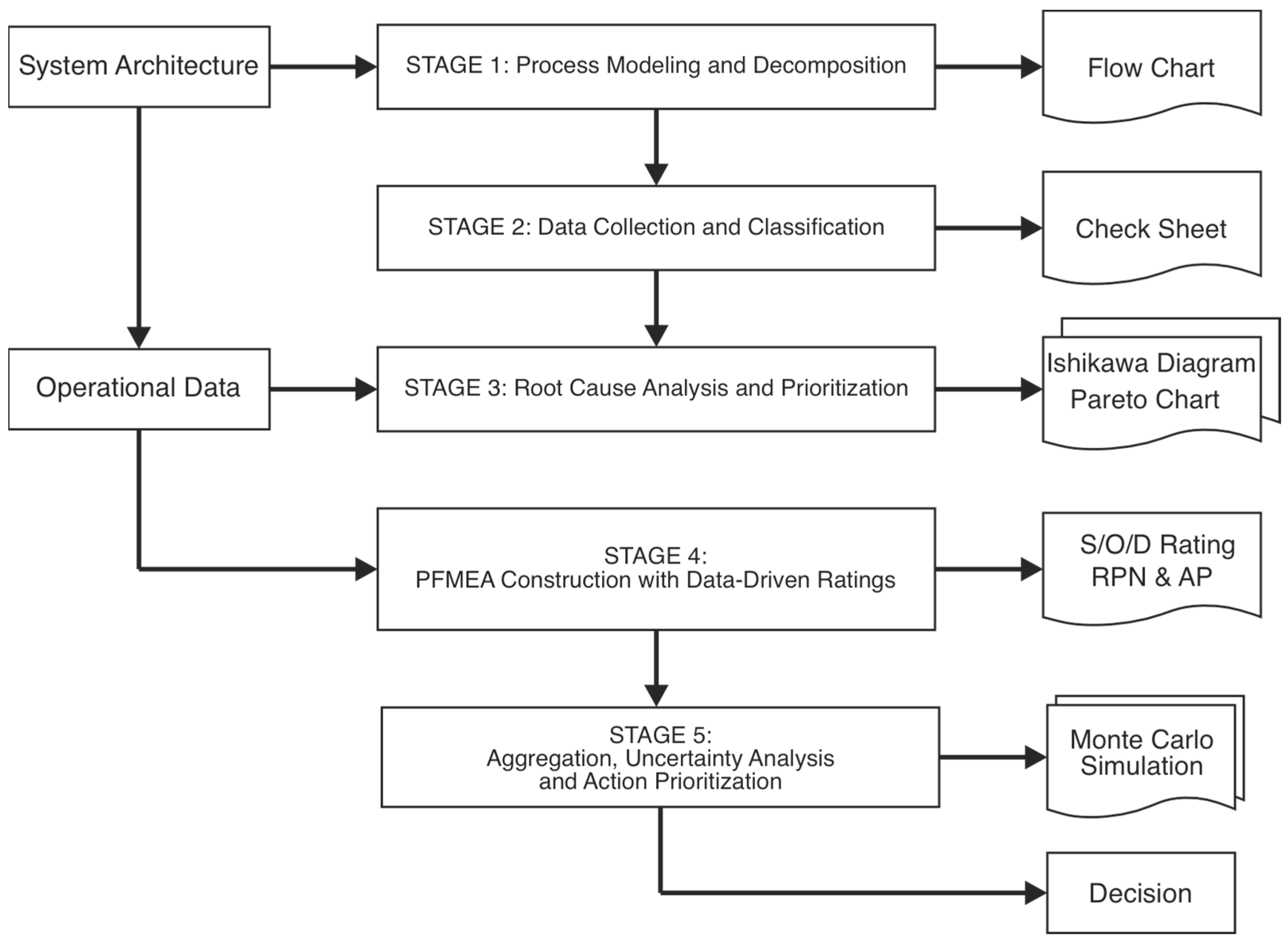
- Proposing a five-stage operational framework, linking process modeling, data collection, classical quality tool outputs, PFMEA construction, and uncertainty-aware prioritization;
- Introducing a traceable rating logic that maps occurrence and detection ratings to observed operational evidence and control architecture;
- Enabling hierarchical risk aggregation at the station and technology level;
- Applying an uncertainty-based robustness layer.
2. Research Methodology
2.1. Framework Overview and Design Principles
- Traceability: Each PFMEA rating (S, O, D) should be supported, to the greatest extent possible, by either operational evidence or explicitly documented expert judgment, with the basis of assignment preserved throughout the analysis;
- Aggregation: Individual failure events should be aggregated to failure modes, and failure modes should be aggregated to station level and technology level to enable strategic decision-making;
- Uncertainty Awareness: Rating uncertainty should be explicitly quantified and propagated through the analysis to support robust prioritization decisions.
- Stage 1—Process Modeling and Decomposition: The flexible assembly line is decomposed into distinct process steps using process flow charts. Each step is characterized by its primary function, inputs, outputs, and actuating technologies;
- Stage 2—Data Collection and Classification: Operational failure events are systematically collected using check sheets over a defined observation period. Events are classified by process step, failure type, and actuation technology;
- Stage 3—Root Cause Analysis and Prioritization: Cause-and-effect (Ishikawa) diagrams are constructed for dominant failure patterns. Pareto analysis identifies the stations and failure categories contributing to 80% of total events;
- Stage 4—PFMEA Construction with Data-Driven Ratings: For each identified failure mode, a PFMEA entry is created. Severity is assigned through a structured expert-supported procedure, occurrence is derived from observed event intensity, and detection is assigned using a rule-based evaluation of control architecture calibrated, where possible, by escape evidence. RPN is calculated, and AP is assigned using a simplified prioritization logic aligned with AIAG & VDA principles [5];
- Stage 5—Aggregation, Uncertainty Analysis, and Action Prioritization: Failure modes are aggregated by process step and actuation type. Monte Carlo simulation quantifies rating uncertainty and rank stability. Action priorities are established based on combined RPN, AP, and uncertainty metrics.
2.2. Classical Quality Tool Integration
- Process Flow Charts—used to visualize the sequence of operations across the flexible assembly line and to define process step boundaries. Each process step is treated as a unit of analysis in the PFMEA;
- Check Sheets—structured data collection forms used to systematically record failure events during production. Each entry includes timestamp, process step, failure symptom, suspected cause category (6M), downtime duration, scrap/rework outcome, and actuation type;
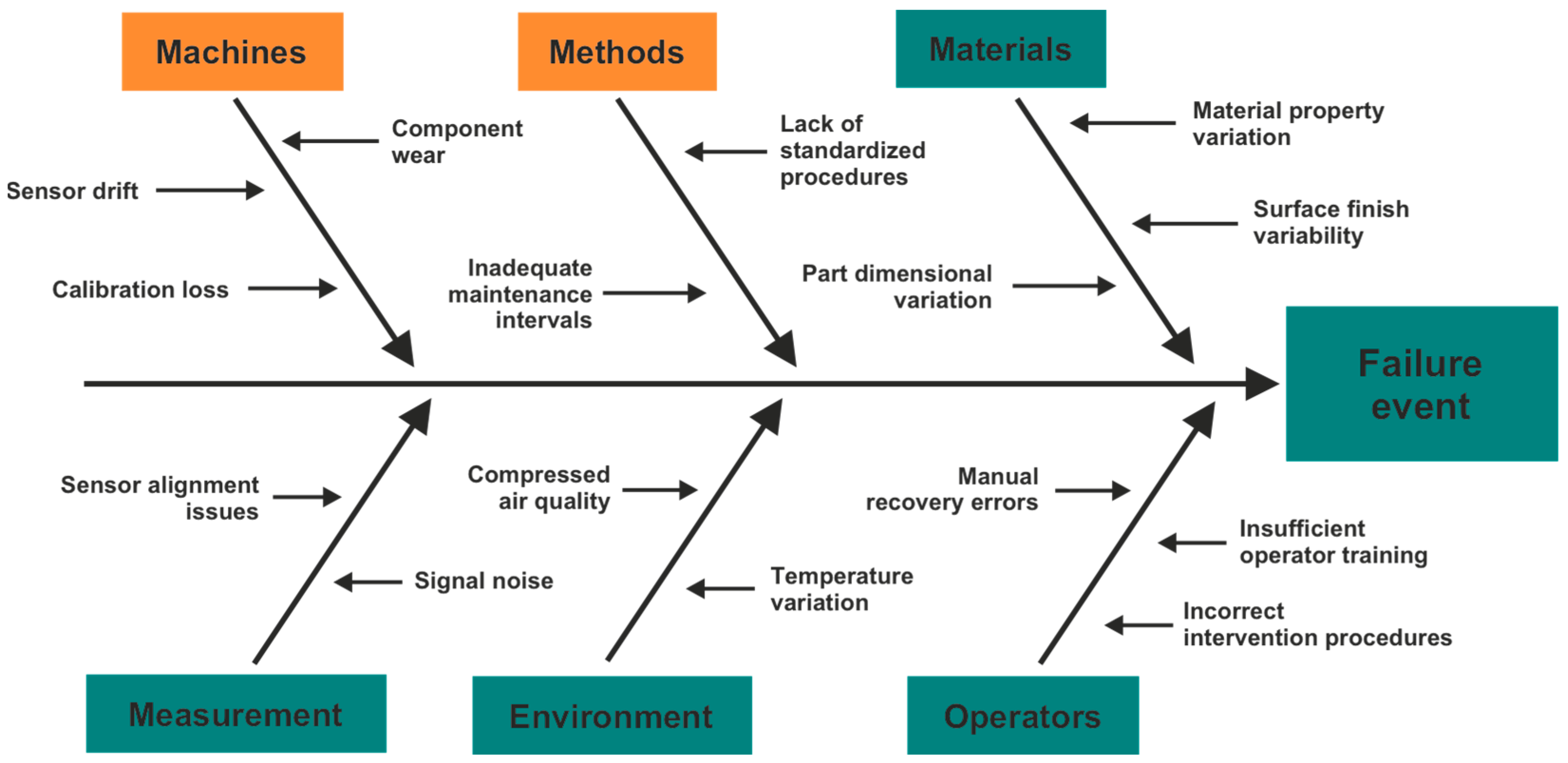
- Cause-and-Effect (Ishikawa) Diagrams—constructed for the most frequent failure modes identified through Pareto analysis. The 6M structure supports the organization of potential causes and their mapping to PFMEA “Potential Cause” entries;
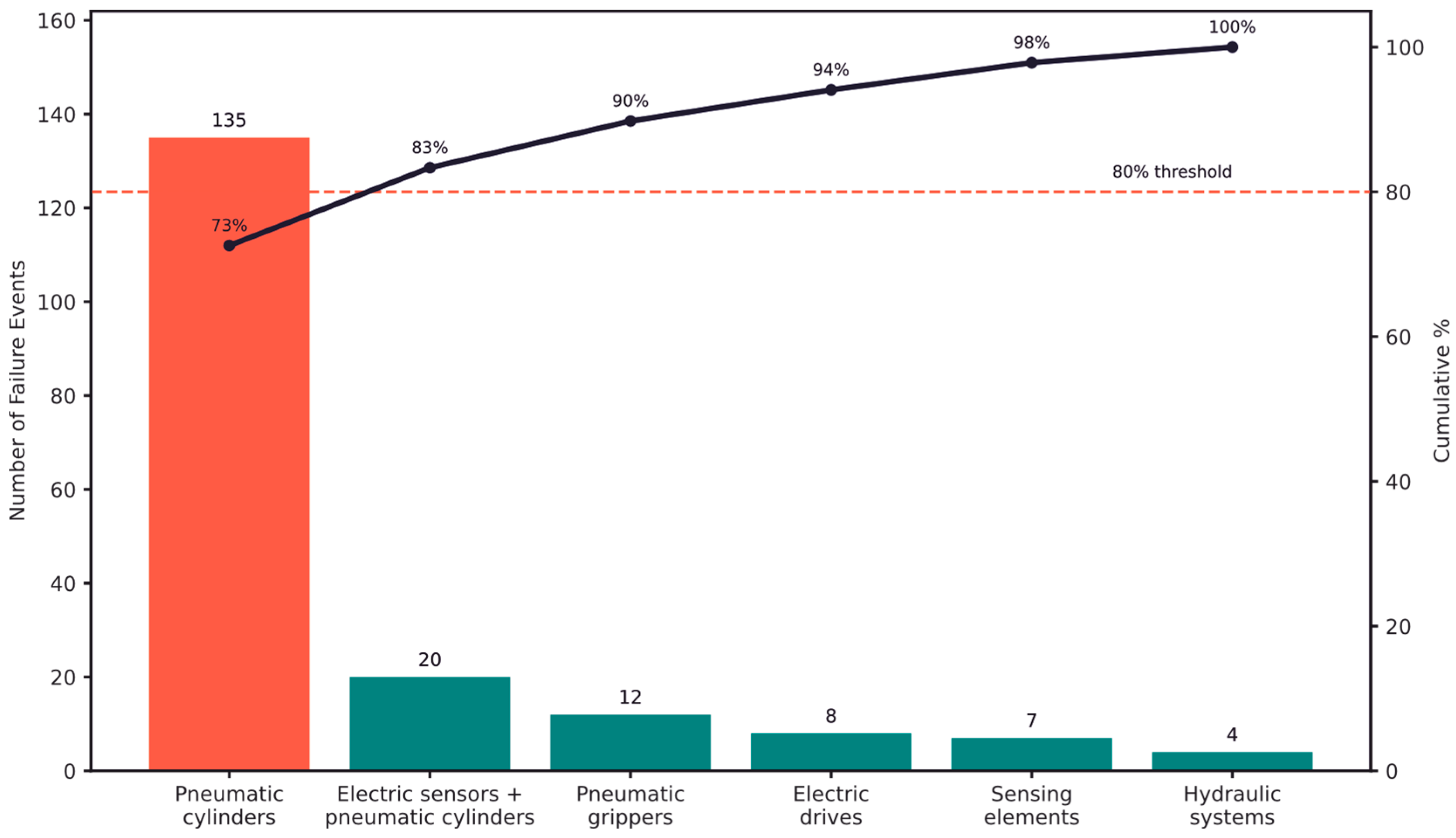
- Pareto Charts—applied at several analytical levels, including failure events by process step, actuation type, and cause category. The results support prioritization and define the scope of detailed PFMEA analysis.
2.3. Data-Driven PFMEA Procedure
2.3.1. PFMEA Structure and Fields
2.3.2. Severity Rating Methodology
2.3.3. Occurrence Rating Methodology
2.3.4. Detection Rating Methodology
2.3.5. Action Priority Assignment
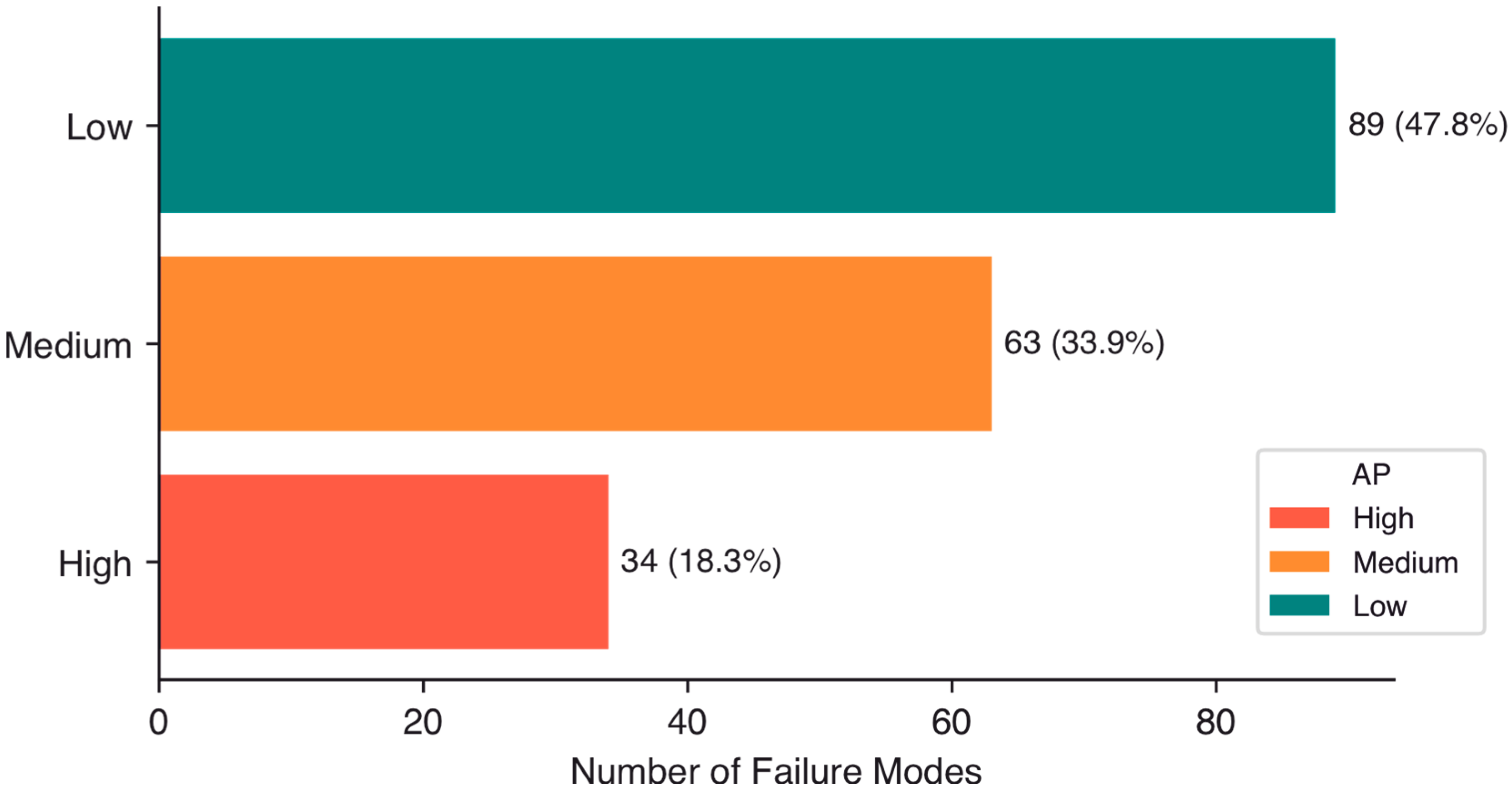
- High: S ≥ 9 (regardless of O and D), or (S ≥ 7 and O ≥ 6 and D ≥ 6). Immediate action required;
- Medium: S = 5–6 with elevated O or D, or high D with moderate S. Action recommended within planning cycle;
- Low: S ≤ 4 and O ≤ 4 and D ≤ 4. Monitor but no immediate action needed.
2.4. Uncertainty and Sensitivity Analysis
2.4.1. Monte Carlo Simulation Procedure
2.4.2. Robust Prioritization Rules
- Robust Critical Rule: A failure mode is classified as “robustly critical” if P(RPN > threshold) ≥ 0.9 under ±1 rating uncertainty;
- Leverage Rule: Prioritize actions that move the highest leverage rating first. Prefer controls expected to improve O or D by ≥ 2 steps;
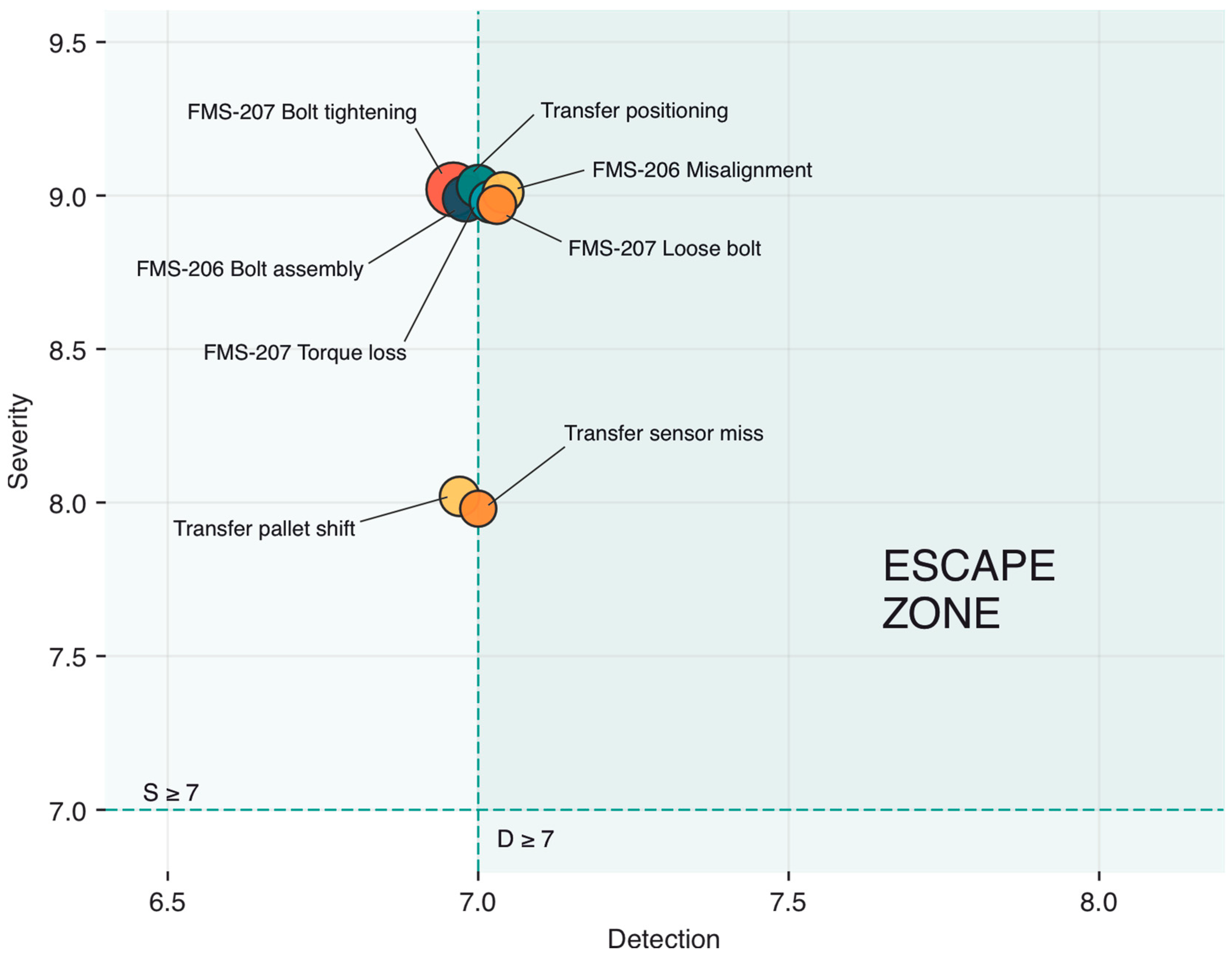
- Escape Risk Rule: Failure modes with high severity and high detection (poor detectability) represent escape risks and receive heightened priority.
2.5. Validation Scope
3. Case Study: FMS-200 Flexible Assembly Line
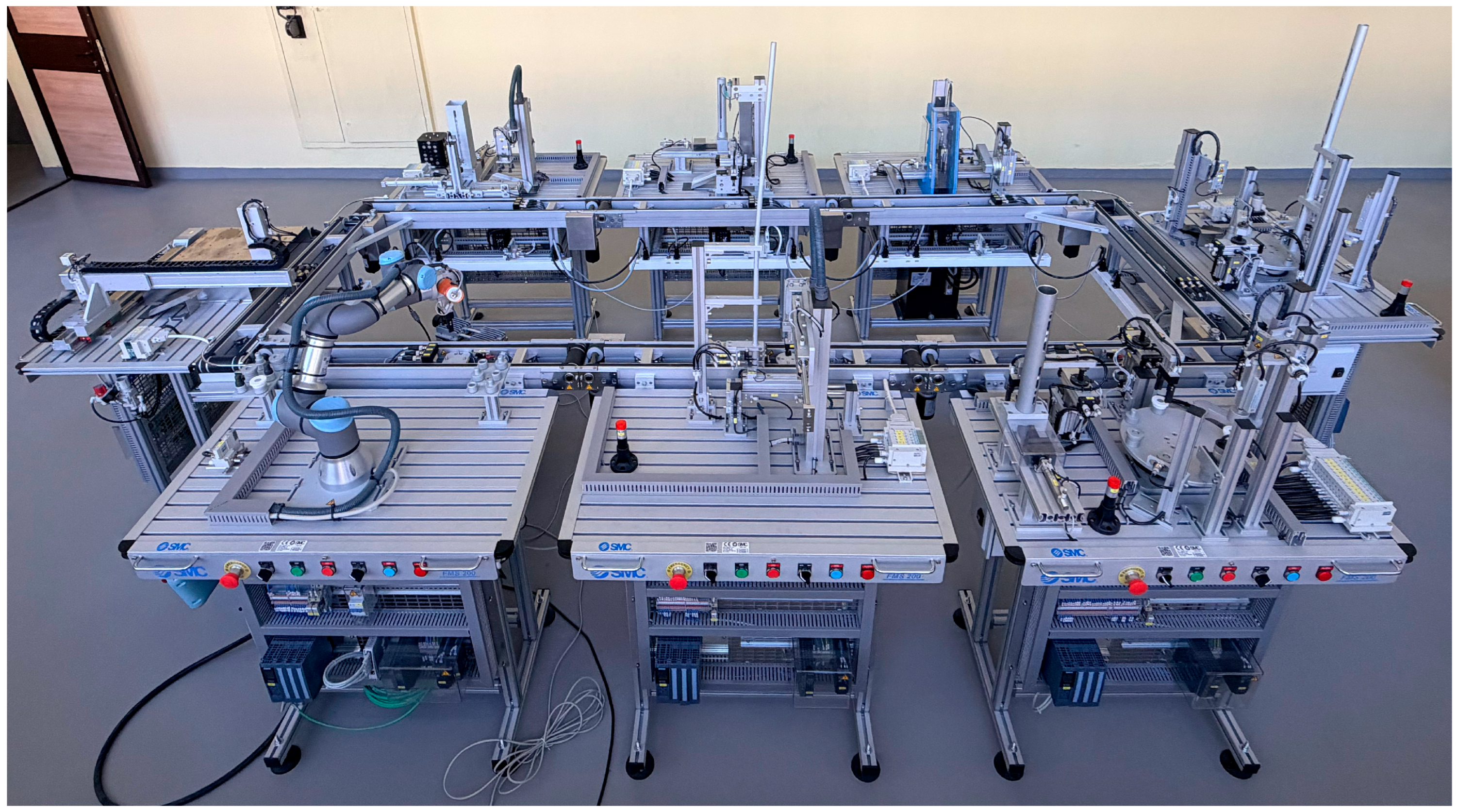
3.1. Line Architecture and Modular Design
3.2. Station Summary and Process Flow
3.3. Data Collection Procedure
3.4. Application of the Framework to FMS-200
4. Results
4.1. Classical Quality Tool Outputs
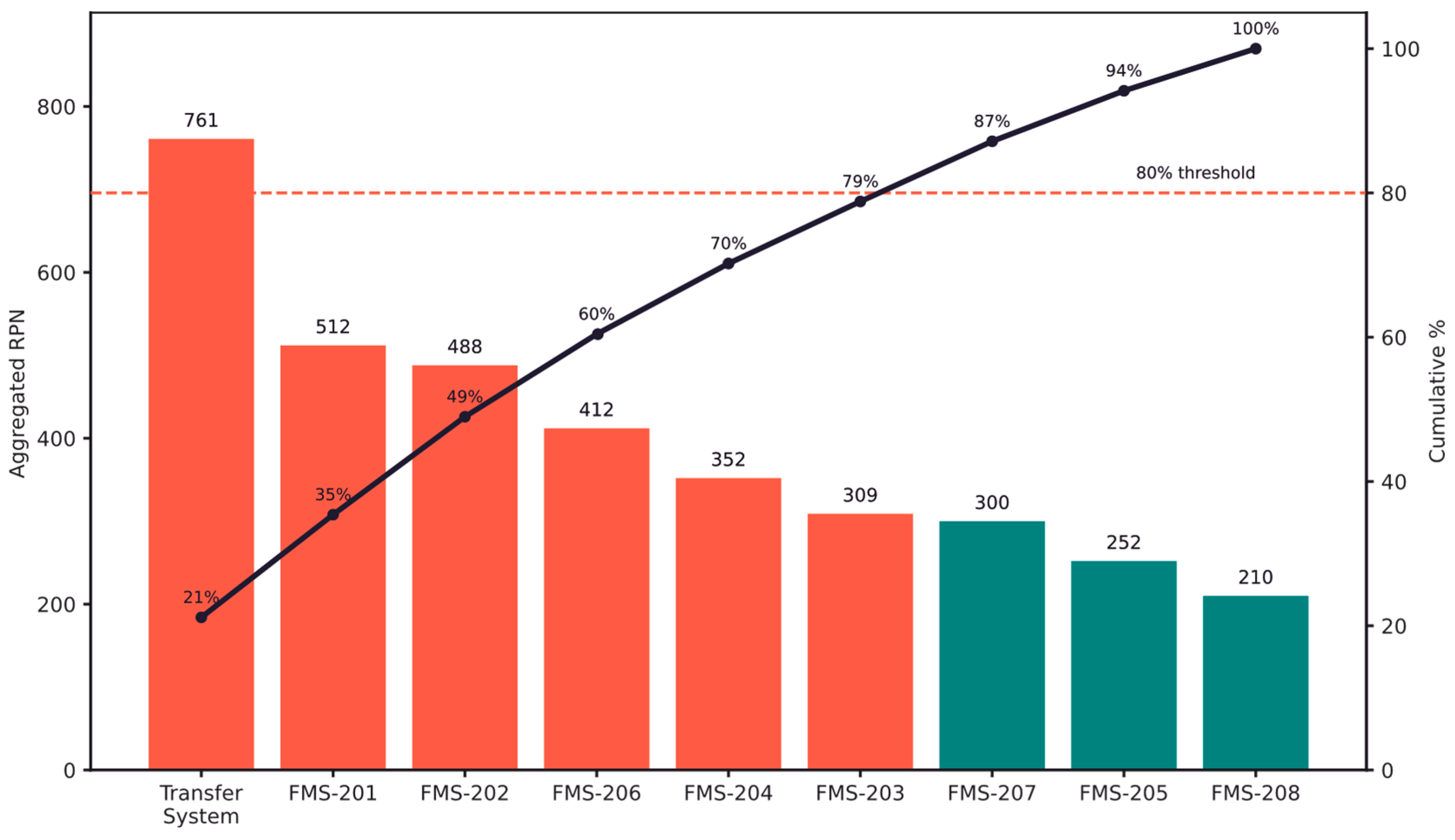
4.1.1. Pareto Analysis by Process Step
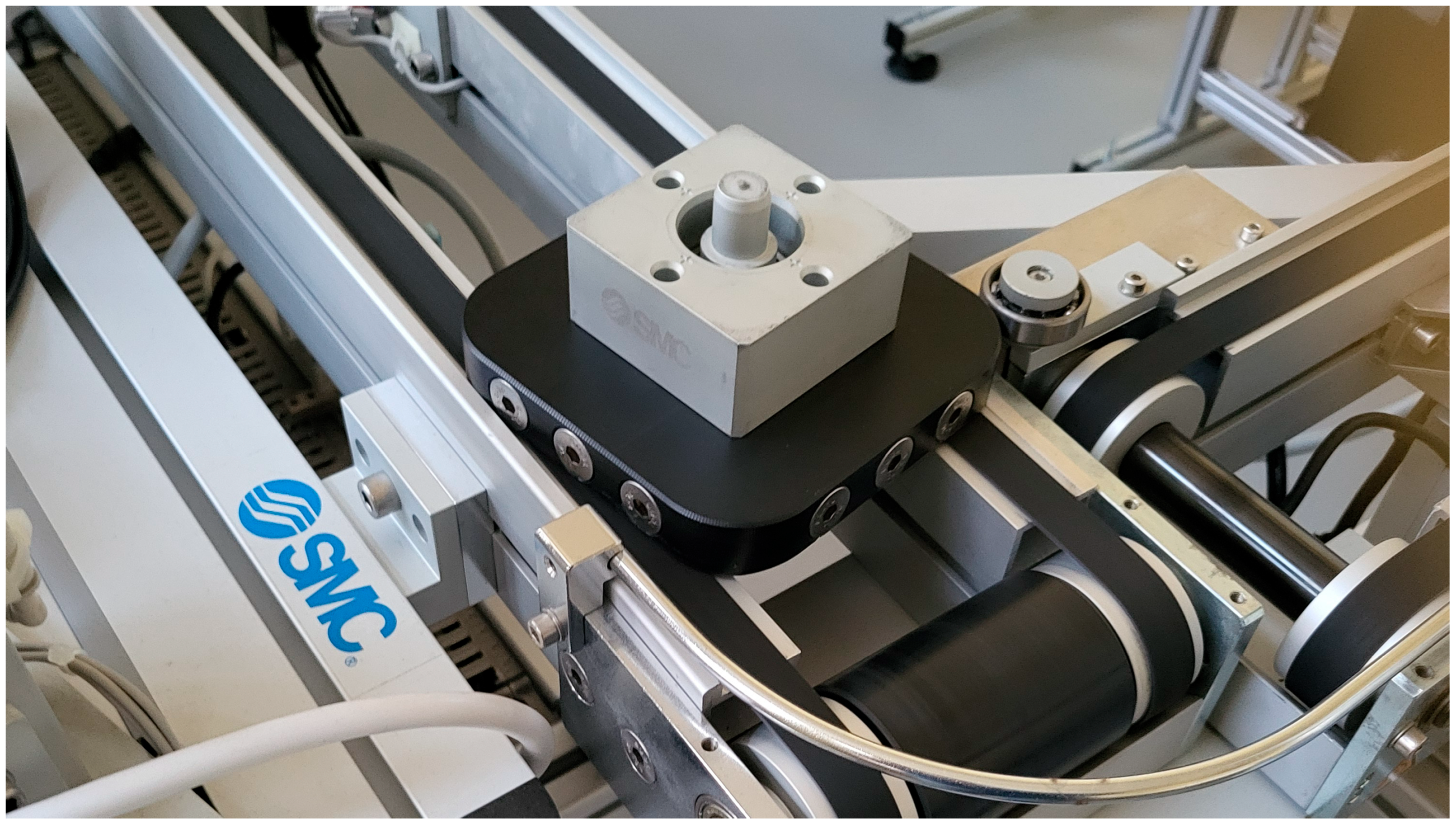
- Transfer System: 17 events—pallet positioning, stopper jams, sensor drift. Typical failure of the transfer system is shown in Figure 4.
- FMS-201 (Base loading): 18 events—inverted base detection, vacuum gripper failures.
- FMS-202 (Bearing placement): 18 events—bearing height out-of-size, gripper jamming.
- FMS-206 (Bolt feeding): 17 events—bolt missing, orientation failure, pallet repositioning errors.
4.1.2. Pareto Analysis by Actuation Type
4.1.3. Cause-And-Effect Analysis
4.2. PFMEA Findings
4.2.1. PFMEA Structure and Scope
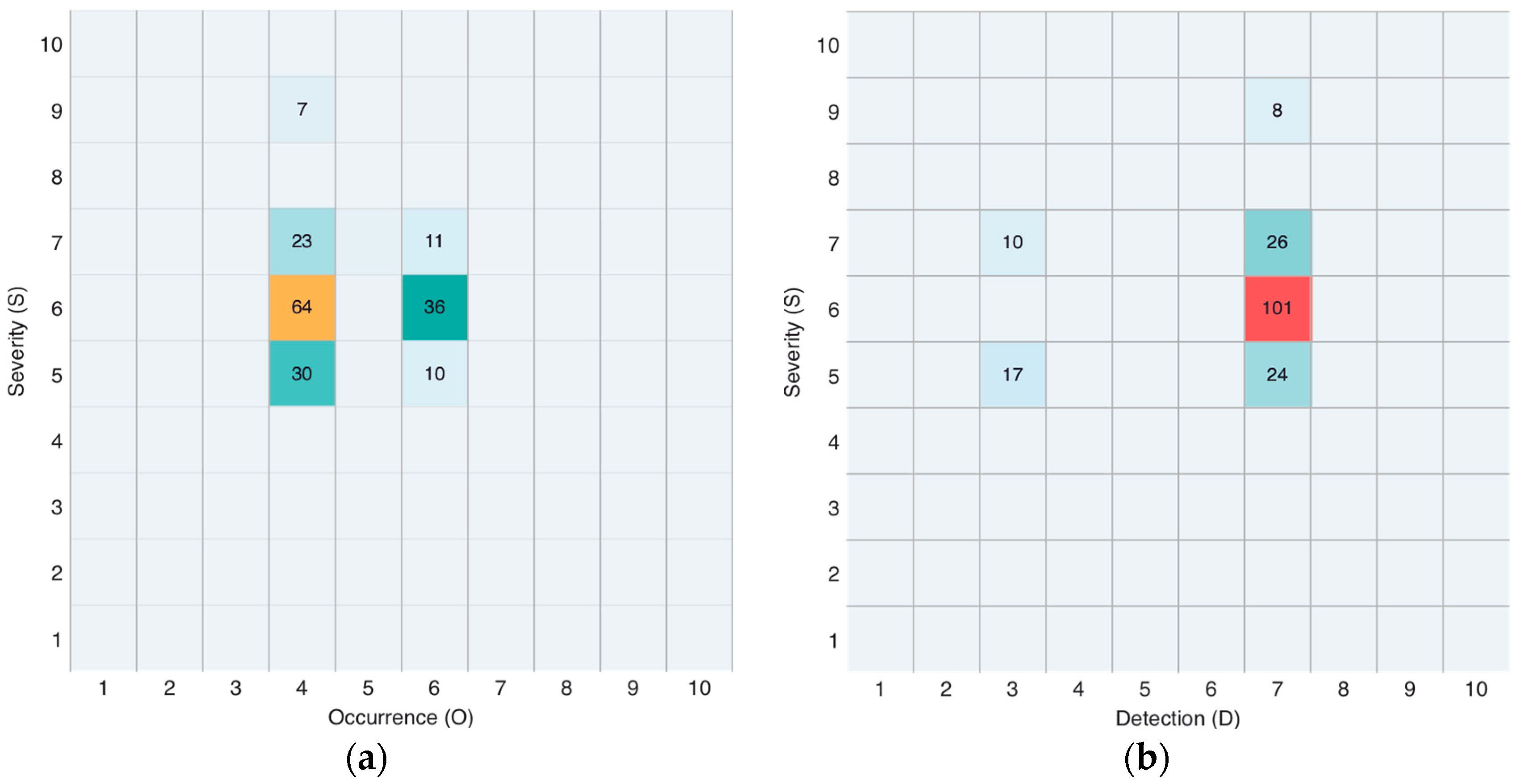
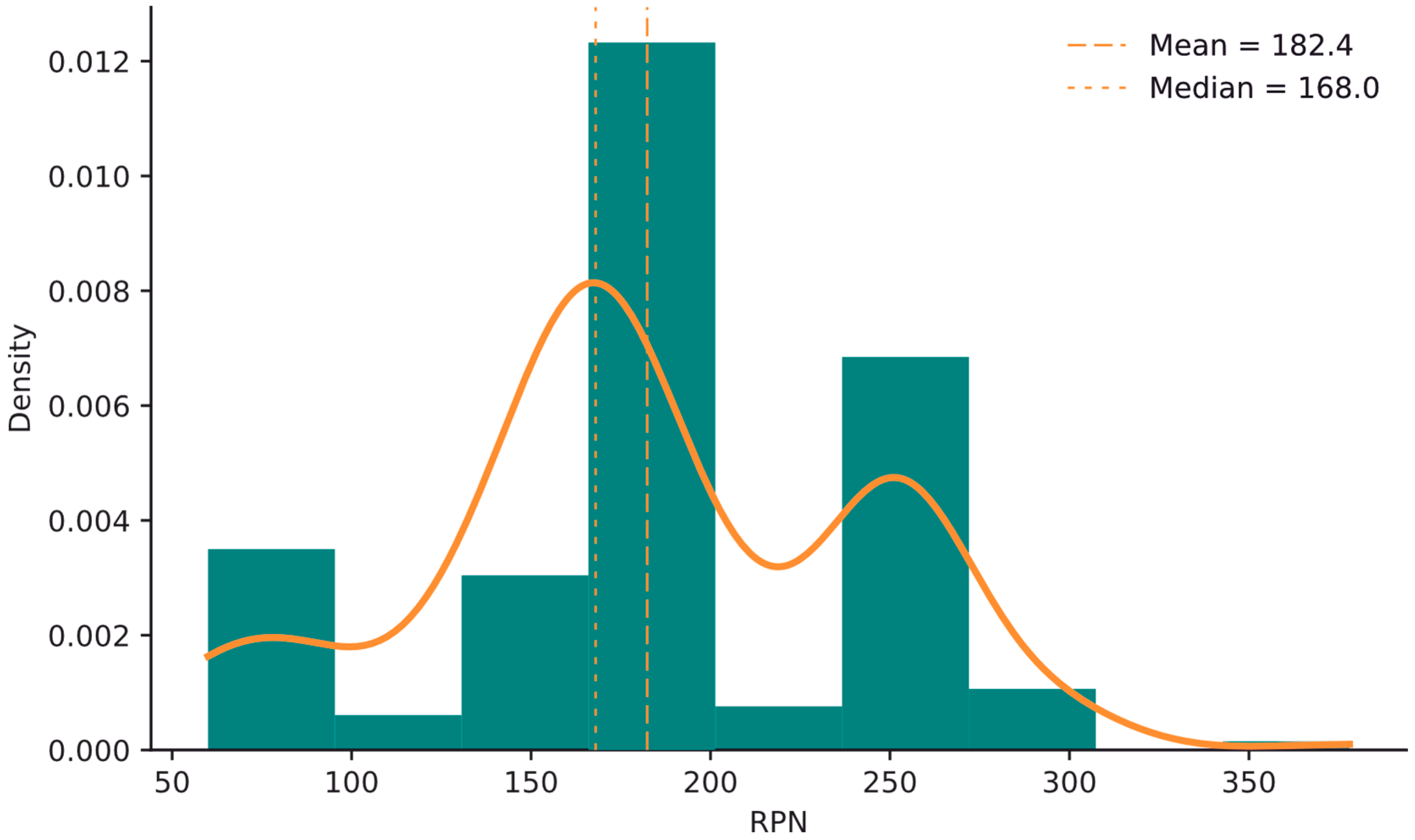
4.2.2. RPN Distribution and High-Priority Modes
4.2.3. Action Priority Distribution
4.3. Risk Aggregation by Station and Technology
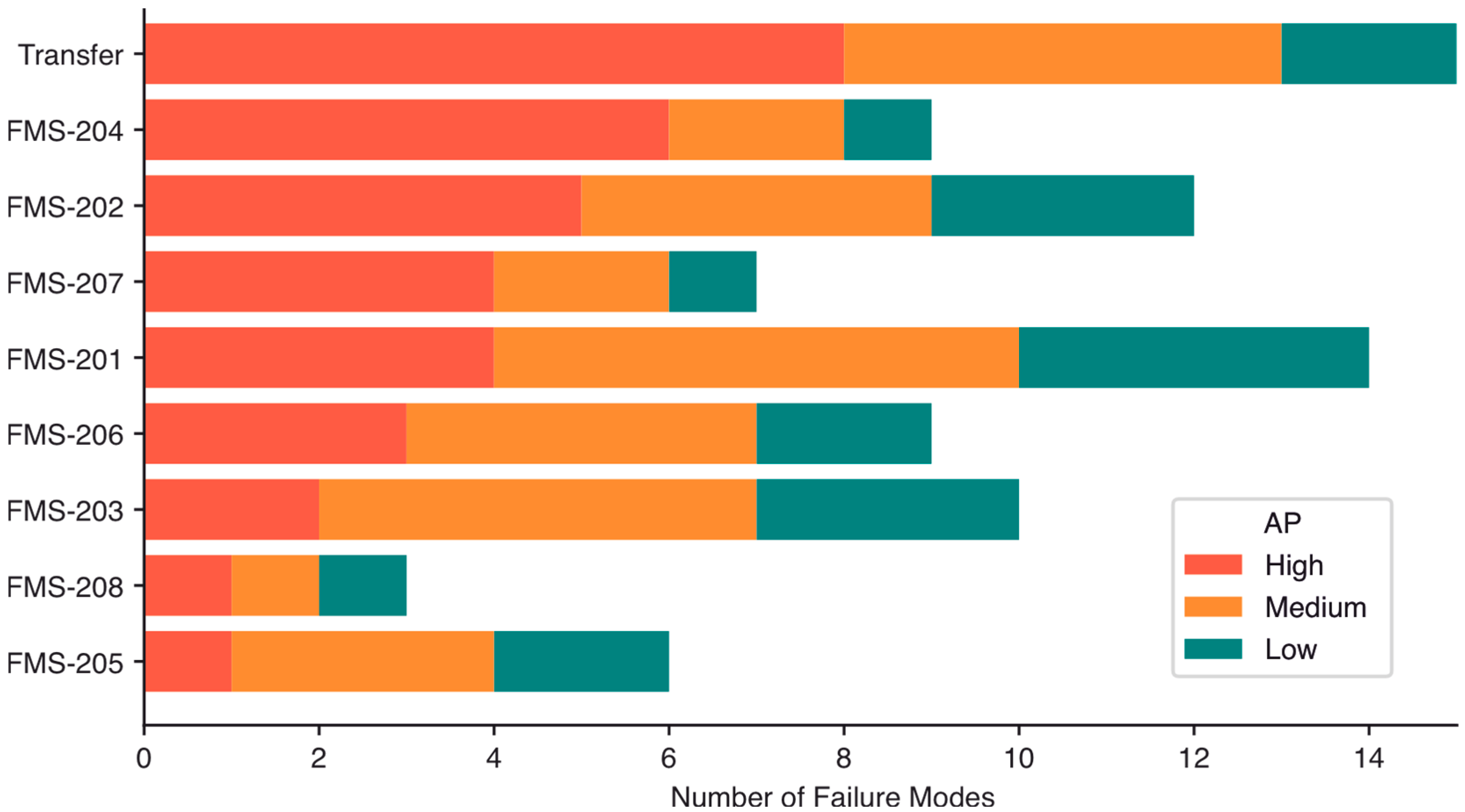
4.3.1. Station-Level Risk Profile
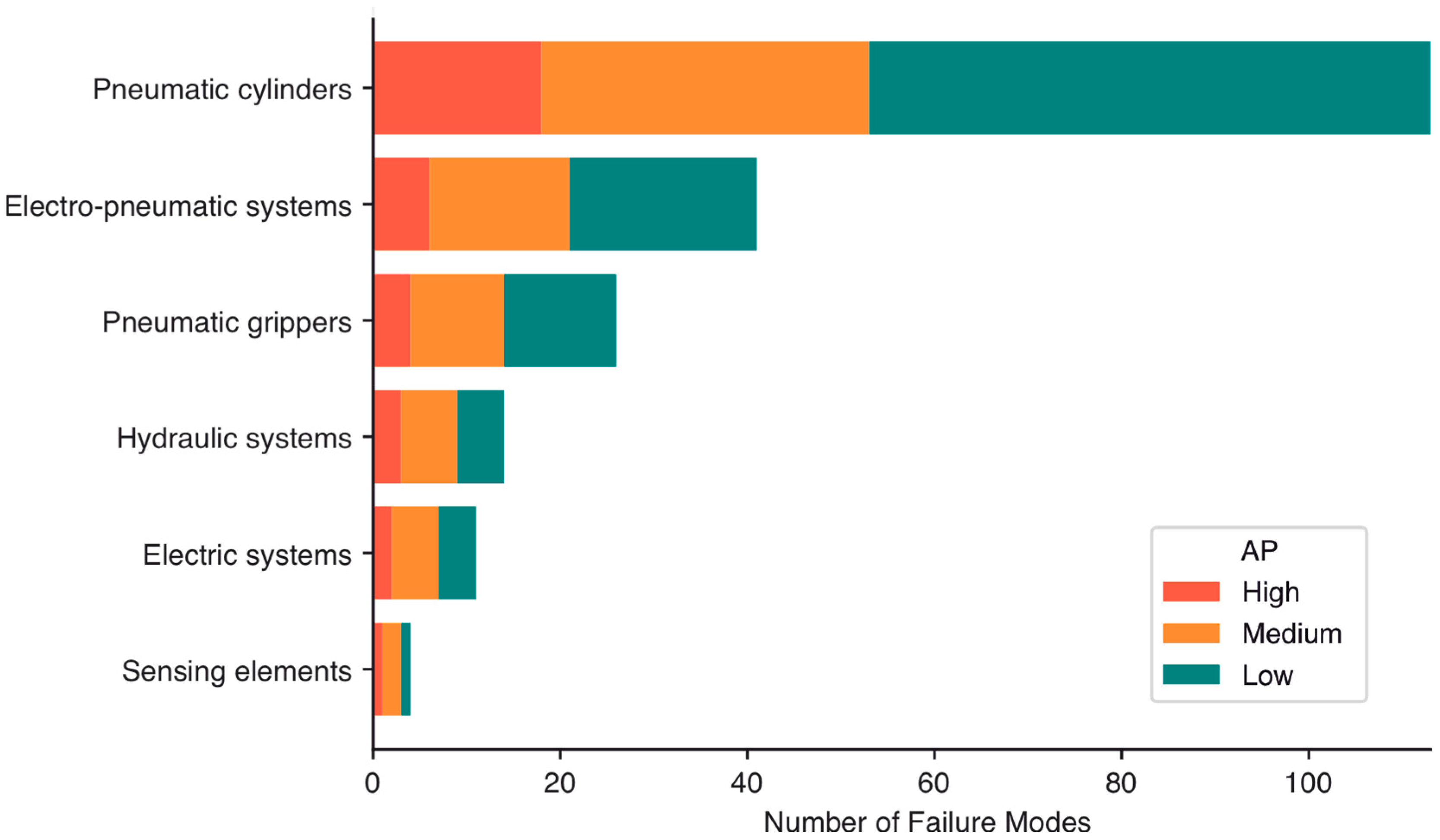
4.3.2. Technology-Level Risk Profile
4.4. Uncertainty Analysis and Rank Stability
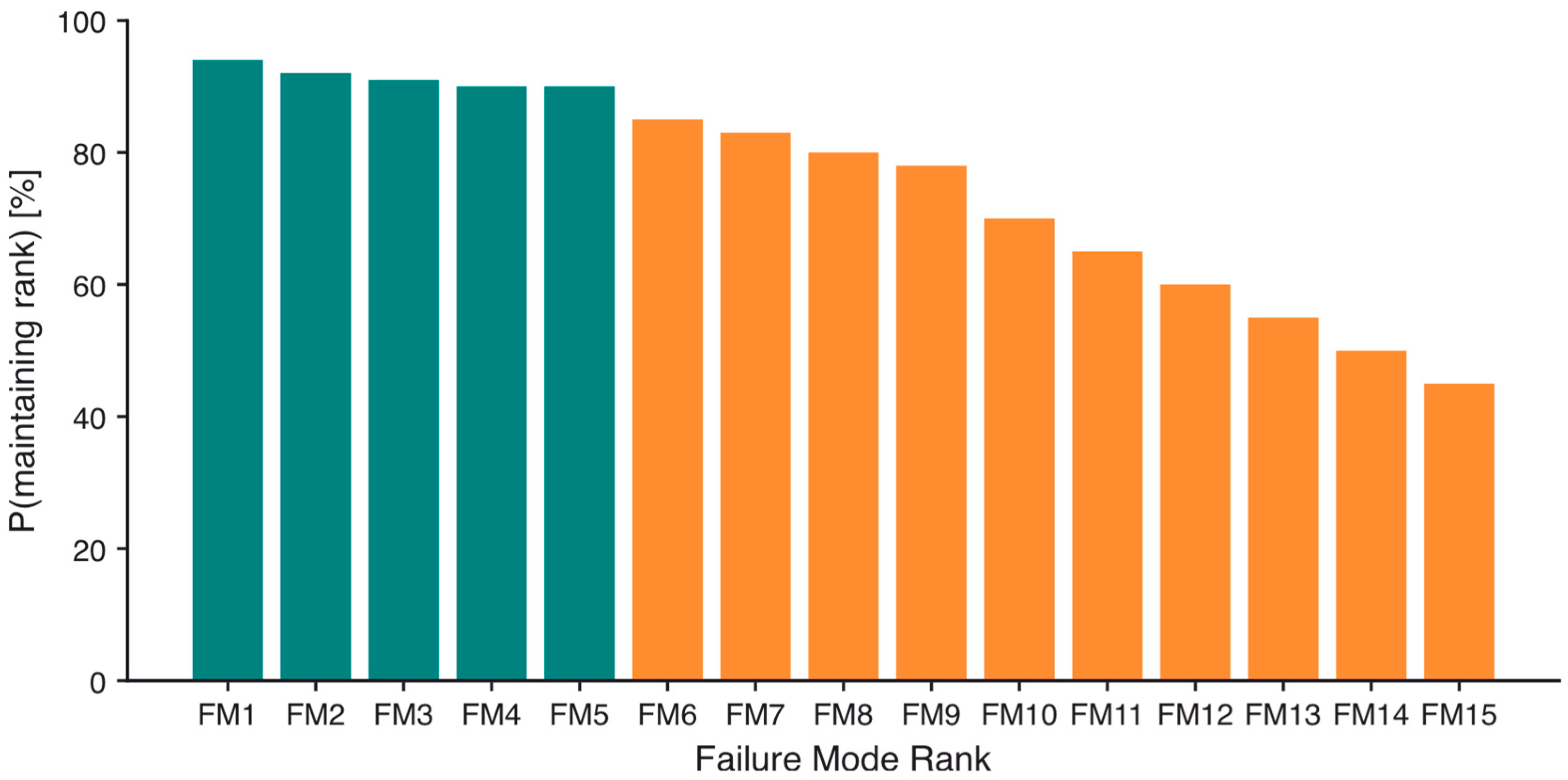
4.4.1. Monte Carlo Simulation Results
4.4.2. Escape Risk Identification
5. Discussion
5.1. Mapping Dominant Risk to Physical Mechanisms
5.2. Advantages of the Proposed Framework
5.3. Action Strategy: From PFMEA Outputs to Engineered Controls
5.3.1. Immediate Actions (High Priority, Target: 0–3 Months)
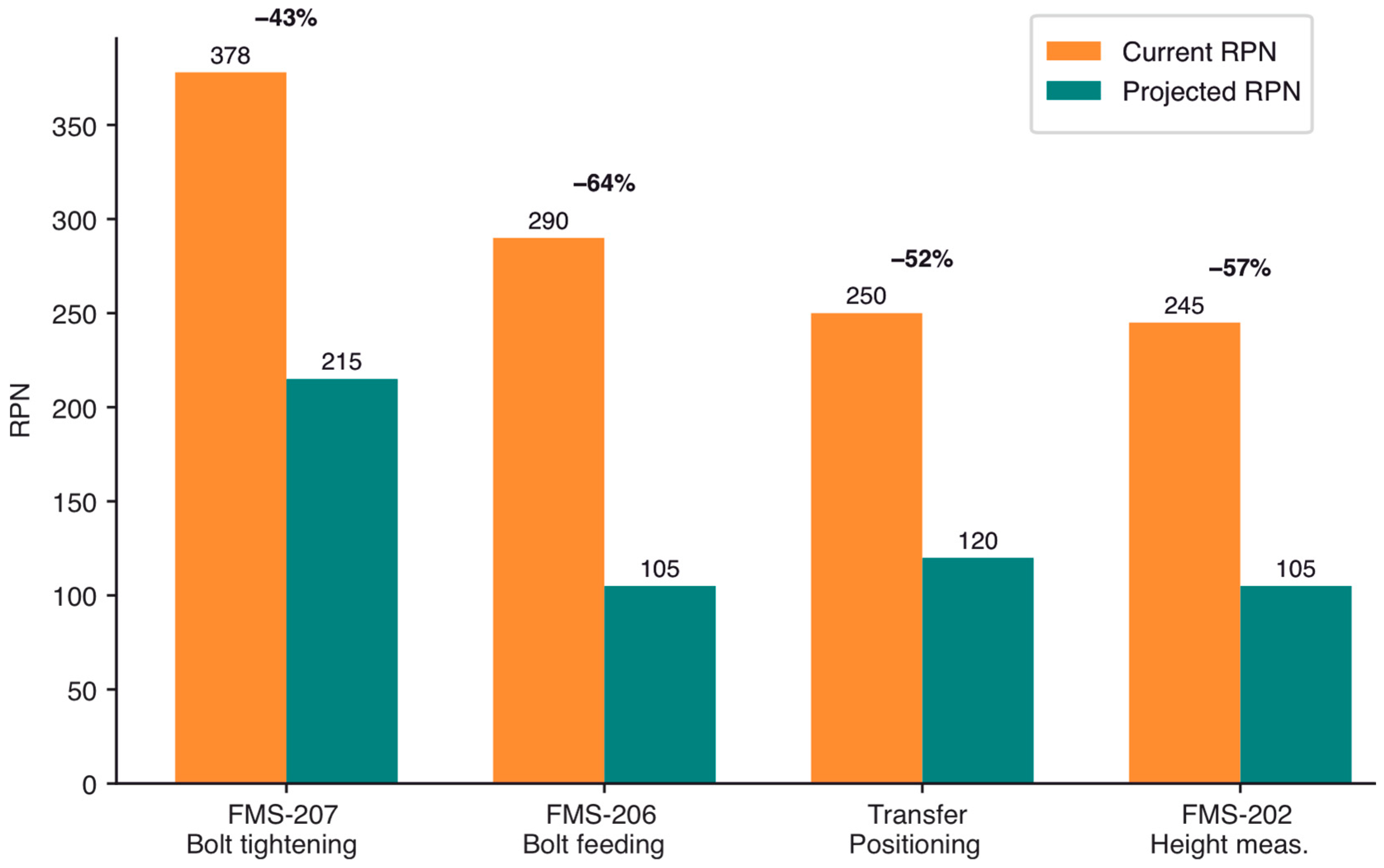
- FMS-207 Bolt Tightening (RPN = 378): Implement torque angle signature monitoring. Projected scenario: D 7→4, projected post-action RPN = 216 (−43%);
- FMS-206 Bolt Feeding (RPN = 290): Add vision-based bolt presence confirmation. Projected scenario: D 7→3, O 6→5, projected post-action RPN = 105 (−64%);
- Transfer System Positioning (RPN = 250): Upgrade to high-resolution proximity sensors with analog output. Projected scenario: D 7→4, O 6→5, projected post-action RPN = 120 (−52%);
- FMS-202 Bearing Height Measurement (RPN = 245): Implement redundant laser displacement sensor. Projected scenario: D 7→3, projected post-action RPN = 108 (−57%).
5.3.2. Near-Term Actions (Medium Priority, Target: 3–6 Months)
5.3.3. Long-Term Actions (Low Priority, Target: 6–12 Months)
5.4. Comparison with Conventional Expert-Only PFMEA
5.5. Practical Implications
5.6. Limitations and Threats to Validity
- Single-line validation—although the FMS-200 case covers 18 product variants assembled on the same line [23], cross-line external validation through additional case studies on different Flexible manufacturing system (FMS) platforms and industries is needed to establish broader generalizability;
- Data quality and completeness—minor or transient failures may not have been recorded;
- Expert judgment subjectivity—inter-rater reliability was not formally assessed;
- Validation scope—primarily internal validation without controlled experiments;
- Temporal stability—the PFMEA snapshot represents a specific observation period;
- Generalizability—the framework does not address integration with Fault tree analysis (FTA), Reliability block diagram (RBD), or advanced Statistical process control (SPC) methods.
6. Conclusions and Future Work
6.1. Summary of Findings and Contributions
- The proposed framework demonstrates that operational failure data, classical quality tools, and PFMEA can be integrated into a single traceable workflow for flexible assembly systems. This conclusion is supported by application to 186 failure events across 40 failure modes collected over 2743 assembly cycles involving 18 distinct product configurations on the FMS-200 line [23]. The multi-variant nature of the validation data strengthens confidence that the framework is applicable where event-level failure logging and process-step decomposition are available, even under product variability;
- In the studied FMS-200 line, the dominant risk concentration was associated with transfer and pneumatic subsystems (approximately 90% of aggregated RPN), indicating that local actuator and positioning weaknesses can govern system-level risk. The quantitative magnitude is case-specific, but the analytical logic is transferable to other modular assembly systems;
- The framework provides added value beyond conventional PFMEA by linking shop floor evidence to PFMEA entries and by aggregating risk at failure-mode, station, and technology levels. This is especially relevant in flexible manufacturing where isolated failure analysis is insufficient for strategic prioritization;
- Detection-related weaknesses emerged as a major leverage point for risk reduction in the most critical failure modes. Monitoring, interlocking, redundancy, and direct verification controls should be prioritized before more costly design changes whenever the failure mechanism allows this;
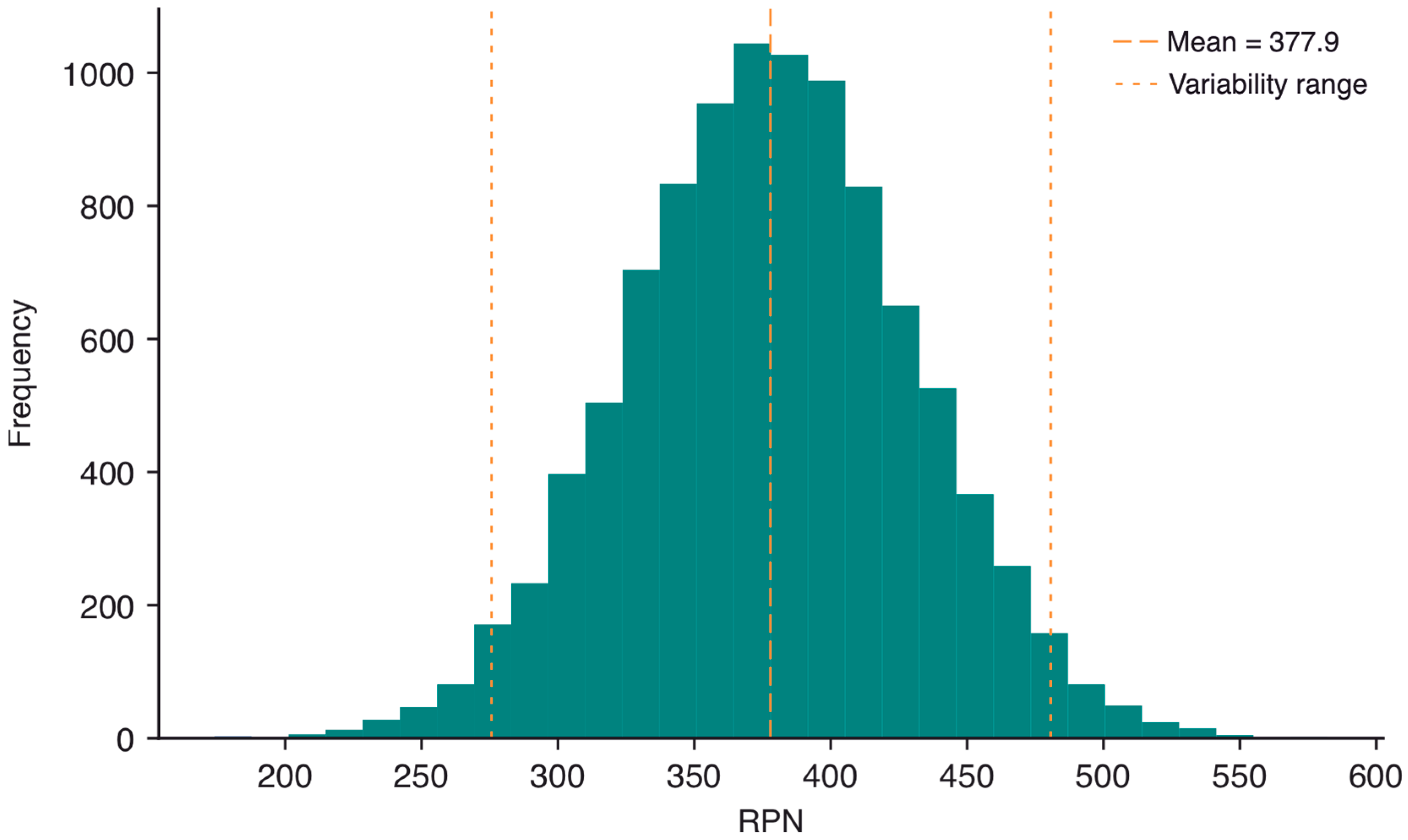
- The uncertainty analysis indicates that the most critical failure modes remain high-priority under plausible bounded rating variation (±1 step: top mode retains #1 in 94.7% of iterations; ±2 step: retains top 5 in 64.7%), supporting robust prioritization;
- The present study demonstrates methodological applicability and decision-support relevance, but not full post-implementation effectiveness. Broader effectiveness claims require longitudinal before–after evidence, baseline comparison, and additional case studies across other flexible manufacturing configurations;
- Future work should extend the framework toward multi-case validation, reconfigurable routing scenarios, stronger dependency-aware uncertainty models, and deeper integration with predictive maintenance, digital twins, and complementary reliability methods.
6.2. Practical Implications and Recommendations
6.3. Future Research Directions
6.4. Concluding Remarks
Author Contributions
Funding
Institutional Review Board Statement
Informed Consent Statement
Data Availability Statement
Acknowledgments
Conflicts of Interest
Abbreviations
| AP | Action Priority |
| AIoT | Artificial Intelligence of Things |
| FTA | Fault Tree Analysis |
| FMS | Flexible Manufacturing System |
| KDE | Kernel Density Estimation |
| LLM | Large Language Model |
| FAAL | Flexible Assembly Automated Line |
| FMEA | Failure Mode and Effects Analysis |
| PFMEA | Process Failure Mode and Effects Analysis |
| RBD | Reliability Block Diagram |
| SPC | Statistical Process Control |
| S | Severity |
| O | Occurrence |
| D | Detection |
References
- Koren, Y.; Gu, X.; Guo, W. Reconfigurable manufacturing systems: Principles, design, and future trends. Front. Mech. Eng. 2018, 13, 121–136. [Google Scholar] [CrossRef]
- Klaput, P.; Herčík, R.; Macháček, Z.; Noskievičová, D.; Dostál, V.; Vykydal, D. Mutual combination of selected principles and technologies of Industry 4.0 and quality management methods-case study. Qual. Eng. 2024, 36, 207–226. [Google Scholar] [CrossRef]
- Tague, N.R. The Quality Toolbox, 3rd ed.; ASQ Quality Press: Milwaukee, WI, USA, 2023. [Google Scholar]
- IEC 60812; Failure Modes and Effects Analysis (FMEA and FMECA). International Electrotechnical Commission: Geneva, Switzerland, 2018.
- AIAG; VDA. Failure Mode and Effects Analysis (FMEA) Handbook; AIAG: Southfield, MI, USA, 2019. [Google Scholar]
- Liu, H.C.; You, J.X.; Fan, X.J.; Lin, Q.L. Failure mode and effects analysis using D numbers and grey relational projection method. Expert Syst. Appl. 2013, 40, 4670–4679. [Google Scholar] [CrossRef]
- Carpitella, S.; Certa, A.; Izquierdo, J.; La Fata, C.M. A combined multi-criteria approach to support FMECA analyses: A real-world case. Reliab. Eng. Syst. Saf. 2018, 169, 394–402. [Google Scholar] [CrossRef]
- Laman, S.A. The ASQ Certified Quality Engineer Handbook, 5th ed.; ASQ Quality Press: Milwaukee, WI, USA, 2022. [Google Scholar]
- Bertolini, M.; Mezzogori, D.; Neroni, M.; Zammori, F. Machine learning for industrial applications: A comprehensive literature review. Expert Syst. Appl. 2021, 175, 114820. [Google Scholar] [CrossRef]
- Catelani, M.; Ciani, L.; Venzi, M.; Galar, D. FMECA assessment for railway safety-critical systems investigating a new risk threshold method. IEEE Access 2020, 8, 86483–86492. [Google Scholar] [CrossRef]
- Filz, M.-A.; Langner, J.E.B.; Herrmann, C.; Thiede, S. Data-driven failure mode and effect analysis (FMEA) to enhance maintenance planning. Comput. Ind. 2021, 129, 103451. [Google Scholar] [CrossRef]
- Arabian-Hoseynabadi, H.; Oraee, H.; Tavner, P.J. Failure modes and effects analysis (FMEA) for wind turbines. Int. J. Electr. Power Energy Syst. 2010, 32, 817–824. [Google Scholar] [CrossRef]
- Stamatis, D.H. The OEE Primer: Understanding Overall Equipment Effectiveness, Reliability, and Maintainability; CRC Press: Boca Raton, FL, USA, 2019. [Google Scholar]
- Liu, Y.; Kong, Z.; Zhang, Q. Failure mode risk assessment methodology for controlling multi-uncertainties in the assessment process. Eng. Appl. Artif. Intell. 2022, 116, 105470. [Google Scholar] [CrossRef]
- Ivančan, J. New FMEA Risk Ranking Approach Utilizing Four Fuzzy Logic Systems. Machines 2021, 9, 292. [Google Scholar] [CrossRef]
- Cai, B.; Liu, Y.; Liu, Z.; Tian, X.; Dong, X.; Yu, S. Using Bayesian networks in reliability evaluation for subsea blowout preventer control system. Reliab. Eng. Syst. Saf. 2012, 108, 32–41. [Google Scholar] [CrossRef]
- Yazdi, M. Risk assessment based on novel intuitionistic fuzzy-hybrid-modified TOPSIS approach. Saf. Sci. 2018, 110, 438–448. [Google Scholar] [CrossRef]
- Gueorguiev, T. A critical review of the new APQP reference manual for automotive quality management. In Proceedings of the IEEE International Conference on Communications, Information, Electronic and Energy Systems (CIEES), Veliko Tarnovo, Bulgaria, 20–22 November 2024. [Google Scholar] [CrossRef]
- El Hassani, I.; Masrour, T.; Kourouma, N.; Motte, D.; Tavčar, J. Integrating large language models for improved failure mode and effects analysis (FMEA): A framework and case study. Proc. Des. Soc. 2024, 4, 2019–2028. [Google Scholar] [CrossRef]
- Xia, Y.; Jazdi, N.; Weyrich, M. Enhance FMEA with large language models for assisted risk management in technical processes and products. In Proceedings of the 2024 IEEE 29th International Conference on Emerging Technologies and Factory Automation (ETFA), Padova, Italy, 10–13 September 2024. [Google Scholar] [CrossRef]
- Angelov, S.; Lazarova, M. Using LLM for image correction proposals. In Proceedings of the 13th International Scientific Conference on Computer Science (COMSCI), Sozopol, Bulgaria, 13–15 September 2025. [Google Scholar] [CrossRef]
- Thomas, D. Revolutionizing failure modes and effects analysis with ChatGPT: Unleashing the power of AI language models. J. Fail. Anal. Prev. 2023, 23, 911–913. [Google Scholar] [CrossRef]
- Vassilev, V.; Dimitrova, R.; Nikolov, S. Optimization of Flexible Automatic Assembly Line Operation Using Classical Quality Management Tools. In Proceedings of the International Conference on Electrical Engineering and Power Electronics Systems (EEPES), Alexandroupolis, Greece, 18–20 June 2025. [Google Scholar]
- Malakov, I.; Zaharinov, V. Interactive software system for multicriteria choosing of the structural variant of complex technical systems. In Proceedings of the 23rd International DAAAM Symposium, Vienna, Austria, 17–19 October 2012; pp. 199–204. [Google Scholar]
- Malakov, I.; Zaharinov, V. Computer aided determination of criteria priority for structural optimization of technical systems. Procedia Eng. 2014, 69, 735–744. [Google Scholar] [CrossRef][Green Version]
- SMC Corporation. FMS-200 User Manual, Version 1.0; SMC Corporation: Tokyo, Japan, 2015.
- Chai, B.X.; Gunaratne, M.; Ravandi, M.; Wang, J.; Dharmawickrema, T.; Di Pietro, A.; Jin, J.; Georgakopoulos, D. Smart Industrial Internet of Things Framework for Composites Manufacturing. Sensors 2024, 24, 4852. [Google Scholar] [CrossRef] [PubMed]
- Tao, F.; Cheng, J.; Qi, Q.; Zhang, M.; Zhang, H.; Sui, F. Digital twin-driven product design, manufacturing and service with big data. Int. J. Adv. Manuf. Technol. 2018, 94, 3563–3576. [Google Scholar] [CrossRef]
- Kritzinger, W.; Karner, M.; Traar, G.; Henjes, J.; Sihn, W. Digital twin in manufacturing: A categorical literature review and classification. IFAC-PapersOnLine 2018, 51, 1016–1022. [Google Scholar] [CrossRef]





| S Rating | Description | Example in Assembly Context |
|---|---|---|
| 9–10 | Hazardous or serious safety concern | Assembly fails causing safety hazard to operator or end user |
| 7–8 | Very high effect; assembly inoperable | Bearing unit cannot function; customer return likely |
| 5–6 | High effect; significant degradation | Reduced bearing life; potential warranty claim |
| 3–4 | Moderate effect; minor degradation | Cosmetic defect; rework required |
| 1–2 | Low or no effect | Minor variation within tolerance; no impact |
| Score | Q | Sf | R | Dt |
|---|---|---|---|---|
| 1 | No relevant quality effect; minor deviation within tolerance | No safety or service impact | Immediate in-station correction possible | Contained at current station |
| 2 | Minor nonconformance; local adjustment or minor rework | Minor service degradation; negligible customer impact | Recoverable with minor intervention or local rework | May pass to next station; typically contained internally |
| 3 | Significant nonconformance; rework, replacement, or scrap | Functional degradation; warranty complaint probable | Recoverable only through significant disassembly or rework | Propagates through several downstream operations |
| 4 | Functional nonconformance affecting performance or acceptance | Serious functional or safety-related consequence | Non-recoverable in process; major intervention required | Can escape line or reach customer if not intercepted |
| O Rating | Occurrence Intensity (λᵢ = Failures per 1000 Cycles) | Assignment Rule |
|---|---|---|
| 9–10 | >50 per 1000 cycles (λ > 0.050) | Failure occurs in majority of production runs; systematic process deficiency |
| 7–8 | 20–50 per 1000 cycles (0.020 ≤ λ ≤ 0.050) | Frequent failure; recurring pattern requiring priority intervention |
| 5–6 | 5–20 per 1000 cycles (0.005 ≤ λ < 0.020) | Moderate occurrence; documented recurrence across observation period |
| 3–4 | 1–5 per 1000 cycles (0.001 ≤ λ < 0.005) | Low occurrence; rare but documented events |
| 1–2 | <1 per 1000 cycles (λ < 0.001) | Very low or no observed events; theoretical possibility |
| D Rating | Detection Capability | Control Characteristics |
|---|---|---|
| 9–10 | Cannot detect or very remote chance | No sensor; operator visual inspection unreliable |
| 7–8 | Remote chance of detection | Single sensor with no redundancy; marginal signal quality |
| 5–6 | Moderate chance of detection | Sensor present but no interlock; escape possible if signal marginal |
| 3–4 | High chance of detection | Sensor + PLC interlock; occasional escapes due to sensor degradation |
| 1–2 | Almost certain detection | Redundant sensors + interlock; error-proofing (poka-yoke); zero escapes observed |
| Station | Primary Function | Key Technologies | Representative Failure Modes |
|---|---|---|---|
| Transfer System | Pallet transport and positioning | Electric motor conveyors, pneumatic stoppers, positioning sensors | Pallet misalignment, stopper jam, sensor drift |
| FMS-201 | Base part loading and orientation verification | Gravity feeder, pneumatic pusher, probe sensor, vacuum gripper | Inverted base not detected, vacuum loss, gripper misalignment |
| FMS-202 | Bearing placement and height measurement | Gravity feeder, rotary actuator, linear encoder, two-finger gripper | Bearing height out-of-tolerance, gripper jamming, feeder empty |
| FMS-203 | Hydraulic pressing (interference fit simulation) | Hydraulic press, force sensor, pneumatic stoppers | Press force deviation, stopper misalignment, sensor calibration drift |
| FMS-204 | Shaft selection and orientation | Pneumatic feeders, vacuum gripper | Shaft orientation error, vacuum leak |
| FMS-205 | Cover placement and orientation | Gravity feeder, pneumatic manipulator, probe sensor, vision verification | Inverted cover, feeder jam, manipulator positioning error, vision system false reject |
| FMS-206 | Bolt feeding and orientation with pallet repositioning | Vibratory feeder, pneumatic orientation unit | Bolt missing, orientation failure, pallet not repositioned |
| FMS-207 | Robotic assembly and bolt tightening | Industrial robot, electric screwdriver, torque monitoring | Bolt cross-threading, torque out-of-spec, robot positioning error |
| FMS-208 | Automatic storage of finished assemblies | Pneumatic ejector, gravity storage rack, presence sensor | Ejector failure, storage position occupied, sensor malfunction |
| Rank | Process Step | Failure Mode | S | O × D | RPN |
|---|---|---|---|---|---|
| 1 | FMS-207 | Bolt cross-threading or insufficient torque | 9 | 6 × 7 | 378 |
| 2 | FMS-206 | Bolt does not present in gripper | 7 | 6 × 7 | 294 |
| 3 | FMS-206 | Bolt orientation incorrect | 7 | 6 × 7 | 294 |
| 4 | Transfer | Pallet positioning error at station | 6 | 6 × 7 | 252 |
| 5 | FMS-202 | Bearing height out of size | 6 | 6 × 7 | 252 |
| Failure Mode | Nominal RPN | ±1: Mean RPN | ±1: P(Top 5) | ±2: Mean RPN | ±2: P(Top 5) |
|---|---|---|---|---|---|
| FMS-207 bolt tightening | 378 | 377.9 | 83.5% | 371.8 | 64.7% |
| FMS-201 orientation check | 294 | 293.1 | 44.0% | 294.1 | 39.3% |
| FMS-202 extractor failure | 294 | 294.3 | 45.1% | 294.4 | 39.5% |
| FMS-203 press positioning | 294 | 293.9 | 45.1% | 292.5 | 38.7% |
| Transport pallet positioning | 294 | 293.9 | 44.5% | 296.8 | 39.9% |
| Interpretation | Rank order stable | Top mode ≥ 83% | Rank order weaker | Top mode ≥ 64% | Rank order stable |
| Criterion | Conventional PFMEA | Proposed Framework | FMEA 4.0 (ML-Based) |
|---|---|---|---|
| Rating traceability | Expert judgment only; no audit trail | Data-linked O; documented S, D basis | Sensor-derived; requires training data |
| Expert effort | High (all ratings subjective) | Moderate (O data-driven; S, D partially) | Low after setup; high initial development |
| Adaptability | Manual reevaluation | Structured update via check sheets/Pareto | Automatic with retraining; model drift risk |
| Uncertainty quantification | None (deterministic RPN) | Monte Carlo ±1 step; rank stability | Probabilistic outputs; confidence intervals |
| Implementation complexity | Low; spreadsheet-based | Moderate; data infrastructure needed | High; ML expertise + sensor integration |
Disclaimer/Publisher’s Note: The statements, opinions and data contained in all publications are solely those of the individual author(s) and contributor(s) and not of MDPI and/or the editor(s). MDPI and/or the editor(s) disclaim responsibility for any injury to people or property resulting from any ideas, methods, instructions or products referred to in the content. |
© 2026 by the authors. Licensee MDPI, Basel, Switzerland. This article is an open access article distributed under the terms and conditions of the Creative Commons Attribution (CC BY) license.
Share and Cite
Komarski, D.; Vassilev, V.; Nikolov, S.; Dimitrova, R.; Dimitrov, S. Data-Driven Process FMEA for Flexible Manufacturing Systems: Framework and Industrial Case Study. Appl. Sci. 2026, 16, 3760. https://doi.org/10.3390/app16083760
Komarski D, Vassilev V, Nikolov S, Dimitrova R, Dimitrov S. Data-Driven Process FMEA for Flexible Manufacturing Systems: Framework and Industrial Case Study. Applied Sciences. 2026; 16(8):3760. https://doi.org/10.3390/app16083760
Chicago/Turabian StyleKomarski, Dobri, Velizar Vassilev, Stiliyan Nikolov, Reneta Dimitrova, and Slav Dimitrov. 2026. "Data-Driven Process FMEA for Flexible Manufacturing Systems: Framework and Industrial Case Study" Applied Sciences 16, no. 8: 3760. https://doi.org/10.3390/app16083760
APA StyleKomarski, D., Vassilev, V., Nikolov, S., Dimitrova, R., & Dimitrov, S. (2026). Data-Driven Process FMEA for Flexible Manufacturing Systems: Framework and Industrial Case Study. Applied Sciences, 16(8), 3760. https://doi.org/10.3390/app16083760