Review

Tackling Paediatric Dynapenia: AI-Guided Neuromuscular Active Break Model for Early-Year Primary School Students


by
Andrew Sortwell
1,2,*,
Carmel Mary Diezmann
3,
Rodrigo Ramirez-Campillo
4,5,6 and
Aron J. Murphy
2
1
School of Education, The University of Notre Dame Australia, Sydney 2007, Australia
2
School of Health Sciences, The University of Notre Dame Australia, Sydney 2007, Australia
3
School of Education, Queensland University of Technology, Brisbane 4000, Australia
4
Sport Sciences and Human Performance Laboratories, Instituto de Alta Investigación, Universidad de Tarapacá, Arica 1010069, Chile
5
Exercise and Rehabilitation Sciences Institute, Faculty of Rehabilitation Sciences, Universidad Andres Bello, Santiago 7591538, Chile
6
Department of Physical Activity Sciences, Universidad de Los Lagos, Santiago 8320000, Chile
*
Author to whom correspondence should be addressed.
Appl. Sci. 2026, 16(8), 3654; https://doi.org/10.3390/app16083654
Submission received: 1 March 2026 / Revised: 21 March 2026 / Accepted: 2 April 2026 / Published: 8 April 2026
(This article belongs to the Special Issue Children's Exercise Medicine: Bridging Science and Healthy Futures)

Abstract

School-based neuromuscular training interventions have the potential to mitigate dynapenia in the paediatric population and enhance movement skill outcomes; however, translating research into practice in primary school settings has been slow due to the expertise and professional learning required for implementation. This review describes the new teacher-supported intervention ‘Kids Innovative Neuromuscular Enhancement & Teacher-supported Instructional Coaching with AI’ (Kinetic AI) and presents evidence supporting its use in primary school settings. The Scale for the Assessment of Narrative Review Articles (SANRA) was used to guide the narrative and conceptual review methodology employed to synthesise peer-reviewed literature on paediatric dynapenia, school-based neuromuscular training, and AI technology-supported instructional models. This synthesis informed the development of a conceptual approach to neuromuscular training delivery in primary schools. The newly developed Kinetic AI conceptual model provides a pathway to embed neuromuscular training within active class breaks, offering adaptive feedback and targeted teacher support to facilitate implementation. This approach has the potential to bridge gaps between research, access, and practice. The Kinetic AI application is designed to support children’s muscular fitness and movement skills through school-based neuromuscular training, while addressing barriers to research translation and teacher expertise. When applied during school breaks, this approach has the potential to reduce the risk of dynapenia and contribute to scalable improvements in paediatric health and wellbeing.

1. Introduction

Over time, older adults typically experience an age-associated decline in neuromuscular function (e.g., slower and/or reduced muscular force-generating capacity) termed ‘dynapenia’. Dynapenia is a term derived from two Greek words dyna (i.e., force, power, strength) and penia (poverty), referring to impaired skeletal muscle force performance and/or mechanical power (the product of force and velocity), influenced by both neurologic and skeletal muscle properties. Hence, dynapenia denotes an age-associated decline in neuromuscular function (e.g., slower and/or reduced muscular force-generating capacity), a key contributor to physical impairment in older adults [1], and to increased risks of falls, disability, disease burden, and mortality [2]. In older adults, dynapenia reflects reduced muscle strength and may serve as an early clinical indicator of probable sarcopenia (i.e., decreasing skeletal muscle mass and function), although confirmation generally also requires evidence of low muscle quantity or quality [3,4]. However, dynapenia is not limited to older adults. In 2017, MacDonald and Faigenbaum [5] proposed the term ‘paediatric dynapenia’, to define a modifiable condition of insufficient muscular strength and neuromuscular function relative to functional demands, increasing relevance across the lifespan. In children, the concern is not age-related decline in the traditional sense, but rather inadequate development of muscular strength, neuromuscular power, and movement competence during critical developmental periods [6]. In this context, paediatric dynapenia may be understood as a clinically and functionally meaningful deficit in muscular fitness and neuromuscular capability that limits children’s capacity to participate effectively in age-appropriate movement, play, and physical activity [7,8].
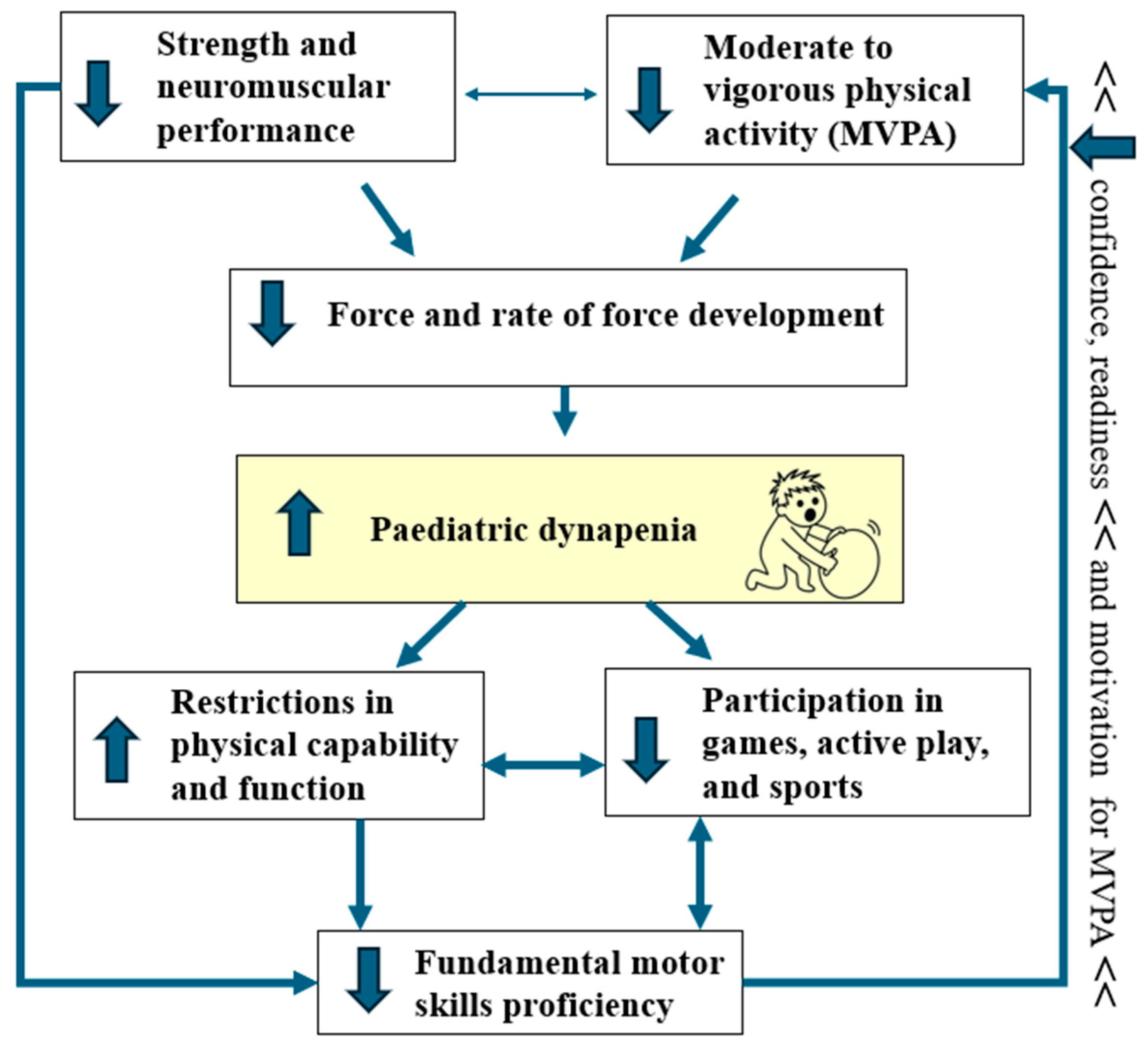
Children’s physical activity levels and sedentary behaviour can be associated with low levels of muscular strength and power, and low levels of fundamental movement skill proficiency [9]. Over time, insufficient physical activity can lead to paediatric dynapenia, characterised by reduced muscular fitness (e.g., muscle weakness), physical limitations [10], neuromuscular decline and reduced performance, as well as an increased likelihood of physical inactivity and sedentary habits, which can predispose children to long-term musculoskeletal issues (e.g., muscle disuse atrophy) [11] (Figure 1).
Although childhood activities provide the foundation for a lifetime of optimal motor function, regrettably, an increased number of children today possess relatively weak cardiovascular, neuromuscular, and skeletal systems, hindering their ability to perform fundamental movement skills (i.e., running, skipping, jumping, throwing) and participate with competence and enjoyment in physical activities and sports [12,13,14]. Inadequate muscular fitness (e.g., endurance, neuromuscular power, strength) development during childhood increases the likelihood of insufficient neuromuscular capability for the effective development and performance of fundamental movement skills, which in turn may diminish future participation in physical activities and increase the risk of injuries [15,16,17]. If the benefits of play in early childhood are to be fully realised, children need opportunities to build the physical attributes to engage in games and physical activities of all kinds. Therefore, paediatric dynapenia may hinder physical development, and may have a detrimental role in social participation and contribute to long-term health issues, including obesity and cardiovascular diseases, underscoring the importance of early intervention to prevent or reverse paediatric dynapenia [7].
To combat the growing trends of reduced physical activity and muscular fitness, the World Health Organisation (WHO) Physical Activity Guidelines recommend that children and young people engage in ≥60 min of physical activity daily, including muscle- and bone-strengthening exercises, three or more times per week [18]. The WHO defines muscle strengthening as physical or movement-related activities and exercises that increase skeletal muscle power, endurance, strength and hypertrophy, and provides the following examples: strength training, resistance training, or exercises that focus on muscular strength and endurance [18]. These types of muscle-strengthening activities are essential for developing physical strength, enhancing posture and coordination, and promoting overall health and wellbeing [18,19]. Furthermore, because effective participation in movement and play requires both sufficient force generation (e.g., take-off during jumping) and force absorption (e.g., landing from a jump) [20], children with greater muscular strength and neuromuscular power may be more likely to achieve the recommended 60 min of daily moderate-to-vigorous physical activity (MVPA) and less likely to experience functional impairments, movement-related injuries, or associated comorbid conditions [11,13,21]. To limit or reverse paediatric dynapenia and ensure children thrive physically, immediate and targeted intervention in primary schools to ensure adequate muscular fitness is essential. However, embedding muscle-strengthening into primary programs is problematic because few generalist classroom teachers have the specialist knowledge to design and implement quality programs [22,23], and may not be a priority in the Physical Education (PE) curriculum [24].
This paper outlines a novel conceptual approach to providing teachers with guidance to promote accessible neuromuscular training opportunities for students. The conceptual model builds directly on the authors of this current paper’s intervention, described in a published research protocol on the Open Science Framework (OSF) (https://osf.io/xc36y/; accessed on 28 February 2026), providing a transparent foundation for the work that follows [25]. Therefore, the paper commences with an overview of how neuromuscular training may help prevent and reverse the risks and consequences of paediatric dynapenia, followed by a discussion of the role of technology, particularly artificial intelligence (AI), in supporting teachers in implementing neuromuscular training during active breaks (e.g., brain breaks). It concludes with the presentation of the Kinetic AI conceptual model as a scalable, innovative framework to enhance children’s neuromuscular development and health outcomes. To support this conceptual work, we draw on a narrative and conceptual review of purposively selected peer-reviewed literature parallel to the published intervention protocol.

2. Methods

The conduct of this review was guided by the ‘Scale for the Assessment of Narrative Review Articles’ (SANRA), as narrative review methodology is particularly appropriate for examining broad, conceptually complex topics and synthesising diverse theoretical, empirical, and practice-based evidence [26]. For this narrative and conceptual review, the literature search was conducted in PubMed/MEDLINE, Scopus, and Web of Science from database inception, using a combination of controlled vocabulary where available and free-text keywords to capture literature across three intersecting domains: paediatric dynapenia and low muscular fitness, school-based neuromuscular training and active-break delivery, and AI- or technology-supported instructional guidance for teachers in primary school settings. The search strategy was developed to reflect these domains and constructed as follows: (child OR paediatric OR pediatric* OR “primary school*” OR “elementary school*” OR “early years”) AND (dynapenia OR “muscular fitness” OR “muscle strength” OR “muscle weakness” OR “neuromuscular function” OR “motor competence” OR “fundamental movement skill*”) AND (“neuromuscular training” OR “integrative neuromuscular training” OR plyometric* OR “resistance training” OR “strength training” OR “active break*” OR “brain break*” OR “school-based physical activity”) AND (“artificial intelligence” OR AI OR app OR apps OR mHealth OR “mobile application*” OR technolog* OR digital OR “teacher support*” OR “instructional guidance”). Consistent with a narrative and conceptual review methodology, the literature was identified purposively to represent key theoretical, empirical, and implementation evidence, rather than through a formal systematic database search. Evidence from these sources, together with insights derived from the authors’ previously published intervention protocol (See https://osf.io/xc36y/; accessed on 28 February 2026), was synthesised to inform the design and description of the Kinetic AI system, a teacher-supported, AI-guided neuromuscular training conceptual model intended for implementation within primary school active breaks. The methodology focused on integrating established physiological and pedagogical evidence with practical implementation considerations to propose a scalable, practice-informed framework for neuromuscular training in early primary school settings.

3. Conceptual Synthesis and Discussion

3.1. Building a Stronger Future in Primary School Years

A population-wide approach is needed to prevent and treat paediatric dynapenia. Hence, the promotion of childhood physical activity should not only emphasise aerobic-type activities but also escalate the importance of integrating movement activities centred on developing muscular fitness [24]. Considering that childhood provides a critical window (i.e., high level of plasticity) for developing muscular fitness and healthy habits that could persist into adolescence, primary school environments, and PE curricula can play a crucial role in the holistic development of young, healthy children [27].
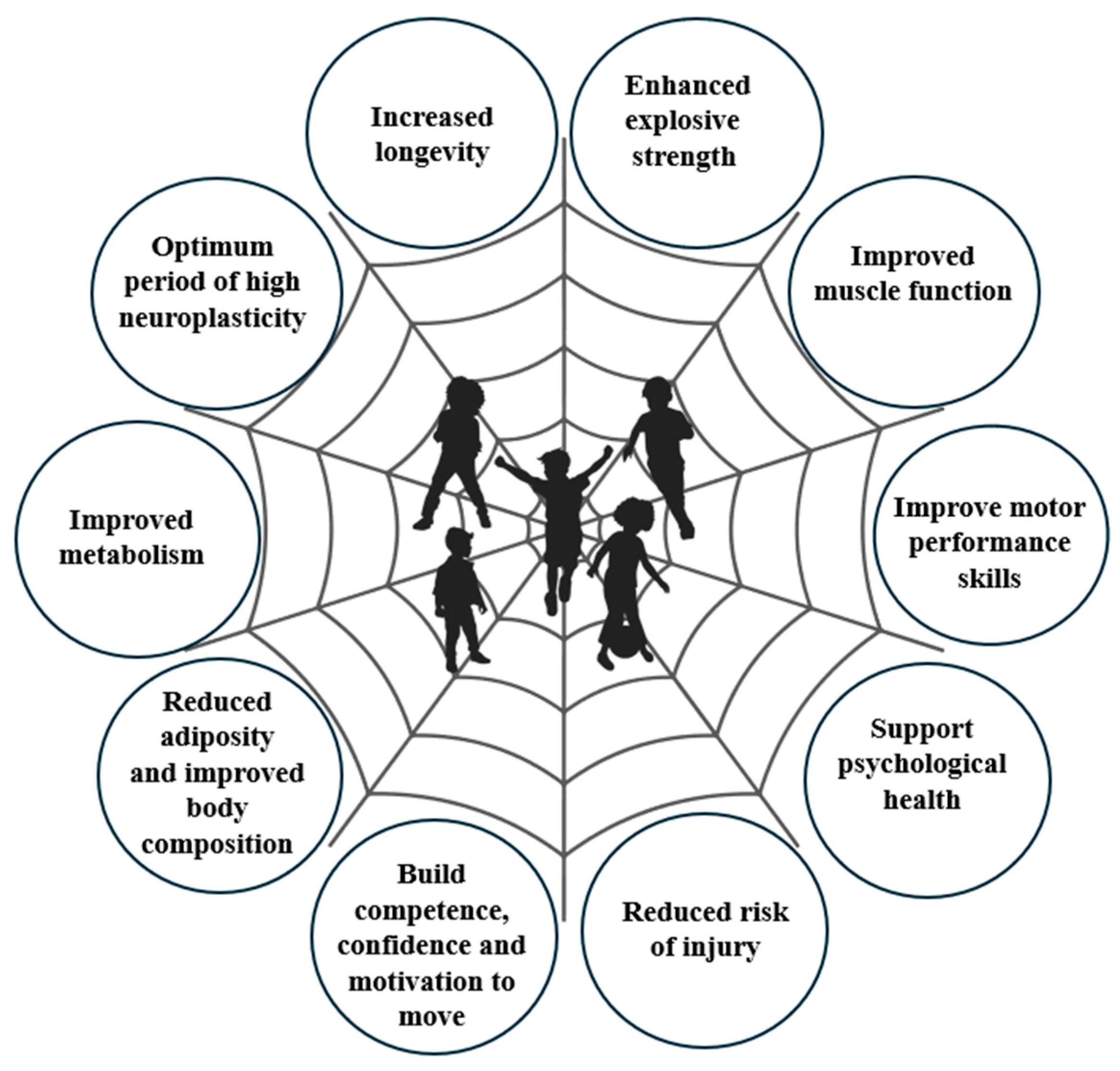
Neuromuscular training (i.e., plyometrics, integrative neuromuscular training) can enhance paediatric neuromuscular development and reduce the risk of dynapenia [28]. Across previous studies, neuromuscular training interventions in children have typically been implemented over approximately 6 to 12 weeks, most often in primary-school-aged cohorts, and have reported improvements in outcomes such as muscular strength, power, sprint performance, balance, coordination, and fundamental movement skills [28,29,30]. Such training (i.e., plyometrics, integrative neuromuscular training) combines strength and conditioning with motor skill development, creating a structured approach that optimises muscular fitness and motor control during critical periods of growth during the early years of childhood (i.e., 5–9 years). Compared to typical PE approaches centred around skill development and then application of skills in games and modified sports, neuromuscular training produces synergistic improvements in explosive strength, coordination, movement competence, and muscular fitness, contributing to enabling participation with competence and confidence in overall physical activity [28,31] (Figure 2). Mechanistically, these benefits are likely mediated through a combination of neural, musculoskeletal, and behavioural adaptations [32]. In childhood, neuromuscular training can enhance motor unit recruitment, inter- and intramuscular coordination, proprioceptive control, and movement efficiency, while also stimulating improvements in tendon stiffness, force transmission, postural stability, and the capacity to produce and absorb force safely during dynamic tasks [28,32]. These biophysiological adaptations may improve children’s ability to run, jump, land, decelerate, and change direction with greater control and less perceived effort [28]. In turn, improved movement competence and perceived physical capability may increase children’s confidence, enjoyment, and willingness to participate in play, sport, and exercise, thereby reinforcing physical activity engagement and supporting healthier long-term developmental trajectories [13]. Examples of neuromuscular activities are: squat-to-stand and hip-hinge drills; jump-and-stick landings and mini-hurdle/box jumps; hopping, skipping and lateral bounds; agility-ladder footwork and zig-zag change-of-direction cuts; deceleration and stopping drills; bear/crawl patterns, crab walks, and plank/bracing holds; medicine-ball chest passes/overhead throws (light loads); resistance-band rows and assisted squats; step-ups; and single-leg balance-and-reach tasks.
Neuromuscular training enhances sensory feedback and central nervous system processes that underpin dynamic control of the joints [20,32], leading to the aforementioned benefits [31,33,34,35,36]. Moreover, neuromuscular training also contributes to healthier body composition, improved musculoskeletal health, better metabolic function, positive mental health outcomes, can reduce injury risk factors, and may promote lifelong physical health [37,38]. Introducing neuromuscular training in childhood, particularly before puberty, may yield long-term benefits for functional capacity and health outcomes throughout adolescence [28]. Neuromuscular training, when appropriately tailored to individual needs and abilities, can constitute an all-in-one “therapeutic prescription” due to its unique anatomical, physiological, and psychological benefits [31,39,40]. Furthermore, neuromuscular training is safe, cost-effective, and adaptable for school settings, which can be utilised during active school break periods, making it an effective way to enhance PE programs and address time and resource constraints [31,39]. However, these benefits are contingent on appropriate implementation conditions, including age-appropriate exercise selection, progressive loading, adequate supervision, and consideration of individual differences in physical maturity, movement competence, and any pre-existing musculoskeletal concerns [41,42]. Without these safeguards, poorly instructed or overly demanding activities may compromise movement quality and potentially increase risk, particularly for children with low baseline strength, balance deficits, or current injury symptoms.

3.2. Reversing Childhood Trends: Time for a Different View and Approach

Alongside structured school-based approaches, technology is emerging as another powerful tool for promoting physical activity and supporting healthier behaviours in children and adolescents. Over the last decade, fitness applications (apps) have gained popularity, coinciding with research into understanding the value and advantages of instructing and guiding engagement in physical activity to empower youth to attain a healthy lifestyle [43]. Fitness apps have become a trend in the worldwide fitness sector, and are gaining popularity in exercise science-infused education settings, resulting in new patterns of physical activity behaviour and PE delivery [43,44]. These new patterns are often connected to monitoring engagement in movement activities (i.e., distance covered, heart rate) [45], employing behaviour modification approaches such as feedback [46], the use of contingent incentives such as progressions (i.e., inferred achievement levels) [47], and perceived support [48].
Within the school setting, apps might help address challenges in delivering active breaks, particularly as a strategy to counter paediatric dynapenia. Challenges can arise in delivering active breaks during the school day, particularly in the absence of a PE teacher specialist to instruct and deliver specialised movement skills and muscular fitness activities, such as neuromuscular training (i.e., traditionally delivered by strength and conditioning specialists). Primary classroom teachers often face a professional knowledge gap due to the demands of teaching across multiple curriculum areas and limited access to targeted professional learning [22,23]. Furthermore, delays in translating research into practice can exacerbate the challenge of engaging primary school students in contemporary pedagogical approaches, especially from general classroom teachers [49].
Without accelerating the transfer or translation of research into real-world practice, overcoming the typically slow translation process becomes difficult. However, apps, including emerging AI-based applications, may help address these challenges by providing structured, ready-to-use lesson sequences and just-in-time guidance so classroom teachers can provide students with access to specialised neuromuscular training via the teacher without specialist expertise [50,51]. Indeed, teachers can use AI applications to: (i) implement activities with fidelity to a structured plan; (ii) observe, record, and respond to AI assessment prompts, providing feedback on student progress; and (iii) celebrate progress with students and maintain engagement through recognition and level-ups. AI apps have the potential to empower teachers and make them self-reliant, while also developing their capacity through implicit professional learning through the app’s modelling during implementation [52].

3.3. Adoption of an Innovative Conceptual Approach by Teachers to Advance Paediatric Health

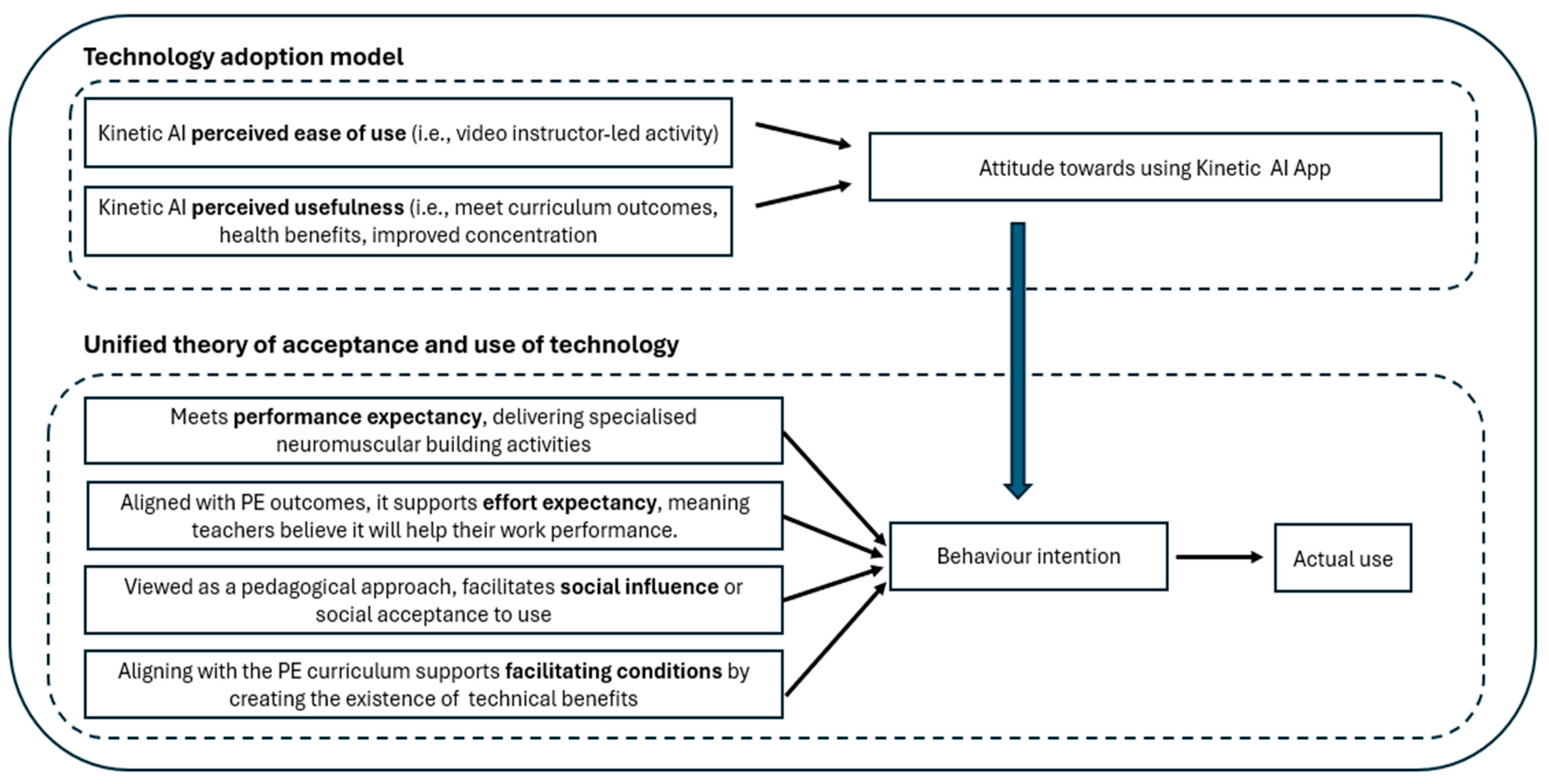
For teachers to use apps successfully to address childhood dynapenia, it is essential to understand the theoretical professional use of apps. Several theoretical frameworks explain the intention to use apps and the acceptance of new technology, which refers to one’s readiness to adopt technology [53]. For example, the technology adoption model proposed by Davis [54,55] assumes that an individual’s attitude decides the behavioural intention. Accordingly, attitudes evolve around two beliefs: (i) perceived usefulness, including student health and wellbeing outcomes, PE curriculum-related, improving efficiency, and quality of delivering movement breaks; and (ii) perceived ease of use (i.e., teachers believe the AI app requires minimal effort), is simple to operate, and is easily integrated into daily routines. These two beliefs help predict teachers’ intentions to adopt and regularly use the AI app to support classroom activities [56]. In addition to teachers’ beliefs about technology adoption, teachers’ acceptance and use of technology needs to be considered.
The Unified Theory of Acceptance and Use of Technology (UTAUT) highlights four factors that may influence the use of apps [57,58]: (i) performance expectancy: refers to the extent to which teachers believe the AI app will enhance their ability to deliver effective and engaging fitness breaks; (ii) effort expectancy: captures the degree to which teachers perceive the AI app as easy to learn, use, and integrate into classroom routines; (iii) social influence: reflects the extent to which teachers feel that other staff, including school leaders, or the wider educational community require or support them to use the AI app; (iv) facilitating conditions: represent teachers’ perceptions of the technical support, training, and organisational resources available to enable effective use of the app. However, teacher attitudes and intentions alone may not be sufficient to ensure successful implementation in school environments. Structural and institutional factors, including the quality of digital infrastructure, device availability, internet reliability, and variation in resourcing across schools, may substantially influence the feasibility and consistency of app-based delivery. In addition, inter-school variability in leadership support, staff capability, timetabling, and curriculum priorities may further affect implementation. Consideration must also be given to student data protection, privacy, and governance requirements, particularly where AI-enabled applications collect, store, or analyse student performance data.
Within the context of primary school education, Figure 3 shows a conceptual model integrating the adoption model [54,55] and the UTAUT model [57,58]. This model provides a methodological framework for guiding the development of an AI app for use by teachers that emphasises teachers’ willingness and positive behaviour toward the adoption of educational technology [57,59], while recognising that adoption is also shaped by broader organisational, technical, and ethical conditions within schools. More specifically, these theoretical models informed the design of Kinetic AI in several ways. Perceived usefulness and performance expectancy were addressed by designing the app to help teachers deliver structured neuromuscular training efficiently, monitor student progress, and support PE-related outcomes. Perceived ease of use and effort expectancy informed the use of short ready-to-use sessions, clear video modelling, simple teacher input fields, and automated progression decisions intended to minimise planning burden and cognitive load during implementation. Social influence is reflected in the app’s intended alignment with school-based health and curriculum priorities, enabling support from school leaders and the wider educational community. Facilitating conditions informed the emphasis on practical classroom integration, minimal equipment requirements, embedded guidance, and the need for organisational support, training, and digital infrastructure to enable sustained use.

3.4. New Conceptual Model for Paediatric Neuromuscular Training

Taken together, the above theories highlight the conditions under which teachers are most likely to adopt and sustain the use of AI-supported applications. Using these insights as a foundation, we now move toward developing a new conceptual model for delivering neuromuscular training while also ensuring alignment with both the principles of technology adoption and the practical realities of classroom implementation. The ‘Kids Innovative Neuromuscular Enhancement & Teacher-supported Instructional Coaching with AI’ (Kinetic AI) represents this new conceptual model, designed to support the development and function of the childhood neuromuscular system in the school setting, while ensuring access for all children (Figure 4).
The Kinetic AI model integrates three key inputs: (i) AI-directed group programs; (ii) robust evidence-based periodised child-specific neuromuscular training programs; and (iii) enabling student access to specialised neuromuscular training. These strategies collectively ensure that students have greater access to context-specific, practical neuromuscular training. Thus, the model represents the shared outcome of nurturing and supporting children’s neuromuscular development and functional capacity, which are objectives of the PE curriculum in the early years [60].
The conceptual model assists in facilitating guided neuromuscular training during scheduled active breaks (i.e., brain breaks), which have been shown to improve students’ muscular fitness and fundamental movement skills [61]. More recently, AI software applications have shown promise in enhancing the delivery of physical activity programs aimed at improving children’s fitness [62]. Given the widespread challenges educators face, particularly in under-resourced or remote primary schools, and the lack of available PE teacher expertise, the conceptual model offers an innovative solution, such as AI capabilities, with promising potential to bridge the gap [63]. For primary school teachers, AI applications can generate specialised (i.e., neuromuscular training) physical activity plans for the paediatric population (i.e., primary school students), guide the type, duration, and intensity of movements, display modelling of the activity, and use teacher input based on student rate of perceived exertion, completion rate and ability to perform the activity with the correct technique to inform future activities. In its current form, the AI component should be understood as a rules-based decision engine rather than a machine learning system. That is, the application does not “learn” from large external datasets; instead, it applies predefined decision rules to teacher-entered class performance indicators to adjust subsequent exercise prescriptions. These rules draw on periodisation principles and pre-specified progression thresholds linked to movement quality, task completion, and perceived exertion.
General classroom primary school teachers may improve their confidence and competence in delivering neuromuscular training when supported by structured digital tools. Indeed, modelling, scaffolded progression, and situated practice are effective in building teacher capability [64,65], while progressive, developmentally appropriate activities enhance children’s motor skill acquisition [33,66]. An AI app that guides students through an 8-week sequence of exercises, each building upon the last, provides teachers with embedded professional learning, enabling them to facilitate movement safely while strengthening their own self-efficacy [67] and pedagogical competence. A key strength of this new conceptual model is that it promotes curriculum sustainability, as teachers emerge from the program better equipped to adapt and continue neuromuscular training activities independently beyond the initial use of the app.

3.5. Translating Neuromuscular Training into Practice for the Paediatric Population

The Kinetic AI model is a conceptual framework to support the application of exercises designed to promote neuromuscular training to the paediatric population, based on a structured, dynamic, and flexible neuromuscular training plan (see Figure 4, Table 1 and Supplementary File, Tables S1, pp. 3–5). The neuromuscular training activities are specifically designed for primary school children in the Australian context and are based on previous research [35,68,69]; however, the underlying principles and structure of the model are intended to be adaptable and transferable to other country contexts, with localisation of exercise selection, delivery constraints, and curriculum or policy alignment as required. The neuromuscular training exercises can be accessed via the published protocol (https://osf.io/xc36y/files/vt2p5; accessed on 28 February 2026).
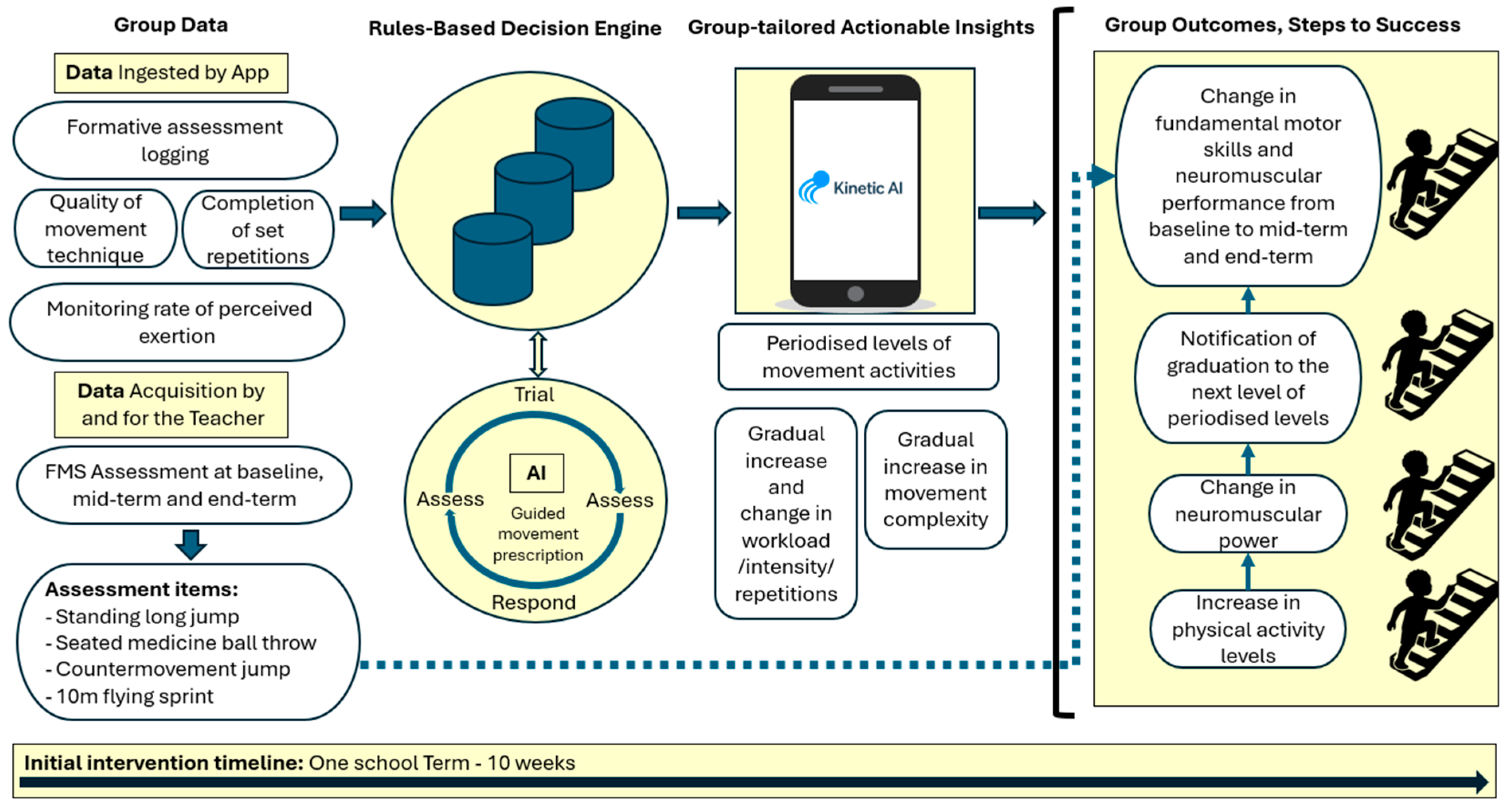
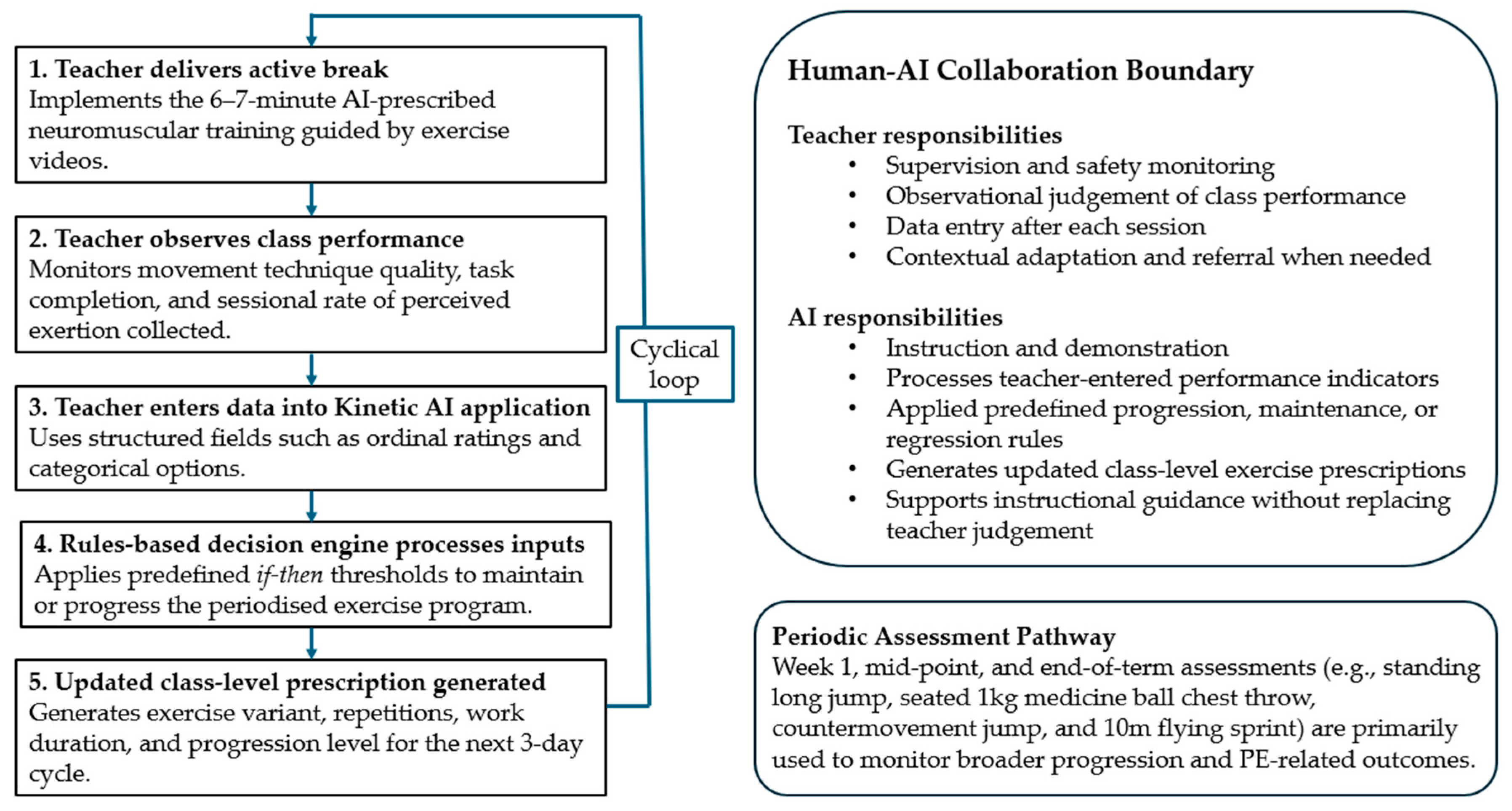
The application is AI-driven, providing class-specific exercise prescriptions tailored to the neuromuscular developmental stage of early-year students (i.e., Kindergarten, Grades 1 and 2). A key feature of Kinetic AI is its capacity to customise according to class performance data or formative assessment. Based on the class performance data (i.e., quality of movement technique, completion of repetitions, and rate of perceived exertion), the AI algorithm dynamically adjusts the intensity, repetitions, difficulty of neuromuscular training activity, and level progression for the active break sessions that follow (Figure 4). From a technical perspective, the system architecture follows a teacher-in-the-loop workflow. The input data are teacher-entered categorical and ordinal ratings recorded after each session, including movement technique quality, task completion (e.g., proportion of repetitions completed), and sessional rate of perceived exertion (S-RPE). These inputs are processed by a rules-based decision engine that applies predefined if–then thresholds to determine whether the next session should maintain or progress exercise parameters. The output of this process is an updated class-level prescription, including exercise variant, repetition number, work duration, and progression level. The feedback mechanism is cyclical: the teacher initiates the delivery of the prescribed active break via the app, observes student performance, enters relevant performance indicators into the app, and the system then generates the subsequent three-day exercise sequence based on those inputs.
In this human–AI collaboration model, the teacher remains responsible for initiating instruction via the app, supervision, safety monitoring, observational judgement, and any decision to modify, pause, or discontinue an activity for individual students or the class. The AI component supports, but does not replace, teacher expertise by generating class-level exercise prescriptions, sequencing progressions, and applying predefined decision rules to teacher-entered data. Thus, Kinetic AI functions as a decision-support and instructional-guidance tool, whereas the teacher retains responsibility for pedagogical delivery, contextual adaptation, and student wellbeing. More specifically, the adaptation process operates as a parameter-adjustment system in which teacher-observed inputs are converted into progression decisions using predefined thresholds. Technique quality functions as the primary safety and readiness indicator; if movement quality is rated below the expected standard, the algorithm prevents progression above the current level. Completion of repetitions functions as a task-capacity indicator; if most students complete the prescribed repetitions successfully, the algorithm can maintain or increase the training volume and/or the difficulty of the exercise (see Table 1). Rate of perceived exertion (RPE) functions as an internal-load indicator; if the reported exertion is too low, the subsequent session may increase repetitions, duration, or movement complexity. In this way, algorithmic decisions are based on structured if–then logic applied to the combined profile of movement quality, task completion, and perceived effort, rather than on autonomous machine learning [70]. To improve transparency, the operational dataflow pathway underpinning Kinetic AI is summarised in Figure 5. Teacher-observed class performance data (i.e., movement technique quality, task completion, and sessional rate of perceived exertion) are entered into the app, processed through a rules-based decision engine using predefined thresholds, and returned as updated class-level exercise prescriptions for the subsequent active break cycle.
In addition to using the AI app, the teacher collects student performance data at the start (i.e., Week One), middle, and end of a school Term (i.e., Week Ten) to assess student progression, which can also be used to measure students’ attainment of PE curriculum outcomes. The teacher data collection includes product measures of fundamental movement skills: standing long jump, seated 1 kg medicine ball chest throw, countermovement jump (i.e., a vertical jump where the student quickly dips down before jumping upward), and 10 m flying sprint. These assessments were chosen because they are valid, reliable indicators of lower- and upper-body power, speed, and overall fundamental motor skills and neuromuscular performance in children [31,33,34,35,36], while remaining feasible for generalist teachers to administer without specialised equipment or training and requiring only limited time to complete. However, in real classroom conditions, measurement reliability may be influenced by variation in teacher administration and scoring, particularly where generalist teachers may have limited experience in motor performance testing in PE [71]. To strengthen consistency, teachers should receive brief training in standardised assessment procedures, including demonstration protocols, scoring criteria, and practice opportunities, to reduce inter-rater variability and enhance the reliability of data collected across time points [72].
In the Kinetic AI app, the prescribed exercise activities are periodised, consisting of levels of progression centred on a fun, cultural and contextually relevant theme (e.g., “Bushland Bounce”). The ‘Bushland Bounce’ theme (see Table 1) links Australian animal movements with exercise techniques that allow the instructor in AI app videos to “step into the child’s tongue” in Australian primary schools, creatively depicting a picture of the desired movement patterns. Animal-like exercises include those of the tree frog, koala, dingo, possum, emu, eagle, wallaby, kangaroo, and Tasmanian devil. Each AI-generated active break (i.e., 6 to 7 min) is carefully designed to enhance neuromuscular power, strength, fitness, movement coordination, and balance. The Kinetic AI Bushland Bounce-themed neuromuscular training program is implemented daily, with the AI algorithm generating a set program for three consecutive days, then updating the active break program for another three days of active breaks based on input data. Participants perform the exercises as required, and when a ball is needed, a Pilates ball (diameter 25 cm) is used. At the teacher’s discretion, a student can use a 500 g medicine ball instead of the Pilates ball.
The data collected in the week prior to commencing, during (i.e., in the middle), and in the week following the completion of the 8-week Kinetic AI program can be used to assess children’s performance at the group and individual levels. Various classes will likely make different levels of progress on the four assessment tasks (i.e., standing long jump, seated 1 kg medicine ball chest throw, countermovement jump and 10 m flying sprint) depending on their prior experience and opportunities. However, a child who is making limited progress might have other issues, such as low muscle tone. Hence, referrals should be made to a PE specialist or an occupational therapist for further assessment, suggested remedial interventions or activities, and guidance.
After the 8-week Kinetic AI program is completed, teachers can apply what they learned from the app to continue developing students’ neuromuscular fitness by repeating the program with simple progressions, such as holding exercises longer, adding extra repetitions, combining movements, or introducing balance challenges. They can also apply their learning to lead short, game-based active break sessions (e.g., 5 to 10 min), using warm-up games, muscular fitness circuits, and fun finishers (e.g., a relay incorporating plyometric jumps or hops) that sustain both engagement and progression.

4. Conclusions

Current trends in physical inactivity and paediatric dynapenia among children and youth support the importance of accessible, developmentally appropriate interventions early in life. The proposed conceptual approach, Kinetic AI, offers primary school teachers practical, evidence-based solution that can be readily integrated into the school day, providing students with access to activities that reduce the risk of paediatric dynapenia while also moving them closer to achieving PE curriculum outcomes. Flexible, dynamic, structured neuromuscular training, infused into active breaks, using conceptual approaches, such as Kinetic AI, needs to be further researched and investigated for use in primary school early years, to allow reversing or preventing paediatric dynapenia, improving muscular fitness levels, and setting children up for lifelong health and engagement in physical activity.
This paper highlights the potential of early, school-based interventions, such as Kinetic AI, to address paediatric dynapenia, enhance muscular fitness, and support immediate and long-term health and performance outcomes across diverse educational and cultural contexts. The broad significance of muscular fitness can extend beyond supporting children’s daily health and may also have wider relevance across the lifespan, including for later physical performance. By way of illustration, Leong et al. [73] demonstrated that national handgrip strength is a significant predictor of success at the Summer Olympic Games across countries of all income levels. However, this association should be interpreted cautiously, as it reflects a population-level relationship rather than a direct or intended outcome of primary school-based interventions such as Kinetic AI. As the global sporting community looks ahead to the upcoming Olympic Games (i.e., Los Angeles 2028 and Brisbane 2032) and international sporting cycles, implementing innovative, scalable approaches to improving muscular fitness is timely and relevant from a public health and physical literacy perspective, given the heightened focus and investment that typically accompany major host events.

Supplementary Materials

The following supporting information can be downloaded at: https://www.mdpi.com/article/10.3390/app16083654/s1, Table S1: Bush Land Bounce Activity: Orientation Statement and Procedure.

Author Contributions

Conceptualization, A.S.; methodology, A.S. and C.M.D.; software, A.S.; investigation, A.S. and C.M.D.; writing—original draft preparation, A.S., C.M.D. and R.R.-C.; writing—review and editing, A.S., C.M.D., R.R.-C. and A.J.M.; visualization, A.S. All authors have read and agreed to the published version of the manuscript.

Funding

This research received no external funding.

Institutional Review Board Statement

Not applicable.

Informed Consent Statement

Not applicable.

Data Availability Statement

Data sharing is not applicable to this article as no datasets were generated or analysed during the current study.

Conflicts of Interest

The authors declare no conflicts of interest.

Abbreviations

The following abbreviations are used in this manuscript:
AIArtificial Intelligence
FMSFundamental movement skills
MVPAModerate-to-vigorous physical activity
PEPhysical Education
UTAUTUnified Theory of Acceptance and Use of Technology

References

  1. Sivritepe, R.; Siyer, O.K.; Tiril, S.M.; Basat, S.U. Do we know about dynapenia? North. Clin. Istanb. 2024, 11, 593–599. [Google Scholar] [CrossRef] [PubMed]
  2. Yeung, S.S.Y.; Reijnierse, E.M.; Pham, V.K.; Trappenburg, M.C.; Lim, W.K.; Meskers, C.G.M.; Maier, A.B. Sarcopenia and its association with falls and fractures in older adults: A systematic review and meta-analysis. J. Cachexia Sarcopenia Muscle 2019, 10, 485–500. [Google Scholar] [CrossRef] [PubMed]
  3. Chen, L.K.; Woo, J.; Assantachai, P.; Auyeung, T.W.; Chou, M.Y.; Iijima, K.; Jang, H.C.; Kang, L.; Kim, M.; Kim, S.; et al. Asian Working Group for Sarcopenia: 2019 Consensus Update on Sarcopenia Diagnosis and Treatment. J. Am. Med. Dir. Assoc. 2020, 21, 300–307.e302. [Google Scholar] [CrossRef]
  4. Cruz-Jentoft, A.J.; Bahat, G.; Bauer, J.; Boirie, Y.; Bruyère, O.; Cederholm, T.; Cooper, C.; Landi, F.; Rolland, Y.; Sayer, A.A.; et al. Sarcopenia: Revised European consensus on definition and diagnosis. Age Ageing 2019, 48, 16–31. [Google Scholar] [CrossRef]
  5. MacDonald, J.; Faigenbaum, A. Dynapenia: It’s not just for grown-ups anymore. Acta Paediatr. 2017, 106, 696–697. [Google Scholar] [CrossRef]
  6. Faigenbaum, A.D.; Rebullido, T.R.; Peña, J.; Chulvi-Medrano, I. Resistance Exercise for the Prevention and Treatment of Pediatric Dynapenia. J. Sci. Sport Exerc. 2019, 1, 208–216. [Google Scholar] [CrossRef]
  7. Chaabene, H.; Ramirez-Campillo, R.; Moran, J.; Schega, L.; Prieske, O.; Sandau, I.; Negra, Y.; Behrens, M. The Era of Resistance Training as a Primary Form of Physical Activity for Physical Fitness and Health in Youth Has Come. Sports Med. 2025, 55, 2073–2090. [Google Scholar] [CrossRef]
  8. Faigenbaum, A.D.; Bruno, L.E. A fundamental approach for treating pediatric dynapenia in kids. ACSM’s Health Fit. J. 2017, 21, 18–24. [Google Scholar] [CrossRef]
  9. Lopes, L.; Santos, R.; Coelho-e-Silva, M.; Draper, C.; Mota, J.; Jidovtseff, B.; Clark, C.; Schmidt, M.; Morgan, P.; Duncan, M.; et al. A Narrative Review of Motor Competence in Children and Adolescents: What We Know and What We Need to Find Out. Int. J. Environ. Res. Public Health 2021, 18, 18. [Google Scholar] [CrossRef]
  10. Ruas, C.V.; Ratel, S.; Nosaka, K.; Castellano, G.; Pinto, R.S. Resistance training effects on pubertal children with a risk of developing pediatric dynapenia. Eur. J. Appl. Physiol. 2024, 124, 2123–2137. [Google Scholar] [CrossRef]
  11. Orsso, C.E.; Tibaes, J.R.; Oliveira, C.L.; Rubin, D.A.; Field, C.J.; Heymsfield, S.B.; Prado, C.M.; Haqq, A.M. Low muscle mass and strength in pediatrics patients: Why should we care? Clin. Nutr. 2019, 38, 2002–2015. [Google Scholar] [CrossRef]
  12. Wu, H.; Eungpinichpong, W.; Ruan, H.; Zhang, X.; Dong, X. Relationship between motor fitness, fundamental movement skills, and quality of movement patterns in primary school children. PLoS ONE 2021, 16, e0237760. [Google Scholar] [CrossRef]
  13. Sortwell, A.; Ramirez-Campillo, R.; Murphy, A.; Newton, M.; Hine, G.; Piggott, B. Associations Between Fundamental Movement Skills, Muscular Fitness, Self-Perception and Physical Activity in Primary School Students. J. Funct. Morphol. Kinesiol. 2024, 9, 272. [Google Scholar] [CrossRef]
  14. Liu, C.; Cao, Y.; Zhang, Z.; Gao, R.; Qu, G. Correlation of fundamental movement skills with health-related fitness elements in children and adolescents: A systematic review. Front. Public Health 2023, 11, 1129258. [Google Scholar] [CrossRef] [PubMed]
  15. Behringer, M.; Heede, A.; Matthews, M.; Mester, J. Effects of Strength Training on Motor Performance Skills in Children and Adolescents: A Meta-Analysis. Pediatr. Exerc. Sci. 2011, 23, 186–206. [Google Scholar] [CrossRef] [PubMed]
  16. Park, S.-W.; Yoon, S.-H.; Lee, S.-M. Exploring the Relationship between Fundamental Movement Skills and Health-Related Fitness among First and Second Graders in Korea: Implications for Healthy Childhood Development. Healthcare 2024, 12, 1629. [Google Scholar] [CrossRef]
  17. Sortwell, A.; Behringer, M.; Granacher, U.; Trimble, K.; Forte, P.; Neiva, H.; Clemente-Suárez, V.; Ramirez-Campillo, R.; Konukman, F.; Tufekcioglu, E.; et al. Advancing Sports Science and Physical Education Research Through a Shared Understanding of the Term Motor Performance Skills: A Scoping Review with Content Analysis. Int. J. Kinesiol. Sports Sci. 2022, 10, 18–27. [Google Scholar] [CrossRef]
  18. Bull, F.C.; Al-Ansari, S.S.; Biddle, S.; Borodulin, K.; Buman, M.P.; Cardon, G.; Carty, C.; Chaput, J.P.; Chastin, S.; Chou, R.; et al. World Health Organization 2020 guidelines on physical activity and sedentary behaviour. Br. J. Sports Med. 2020, 54, 1451–1462. [Google Scholar] [CrossRef]
  19. Okely, A.D.; Ghersi, D.; Loughran, S.P.; Cliff, D.P.; Shilton, T.; Jones, R.A.; Stanley, R.M.; Sherring, J.; Toms, N.; Eckermann, S.; et al. A collaborative approach to adopting/adapting guidelines. The Australian 24-hour movement guidelines for children (5–12 years) and young people (13–17 years): An integration of physical activity, sedentary behaviour, and sleep. Int. J. Behav. Nutr. Phys. Act. 2022, 19, 2. [Google Scholar] [CrossRef]
  20. Xu, D.; Zhou, H.; Quan, W.; Ma, X.; Chon, T.-E.; Fernandez, J.; Gusztav, F.; Kovács, A.; Baker, J.S.; Gu, Y. New Insights Optimize Landing Strategies to Reduce Lower Limb Injury Risk. Cyborg Bionic Syst. 2024, 5, 0126. [Google Scholar] [CrossRef]
  21. Myer, G.D.; Faigenbaum, A.D.; Edwards, N.M.; Clark, J.F.; Best, T.M.; Sallis, R.E. Sixty minutes of what? A developing brain perspective for activating children with an integrative exercise approach. Br. J. Sports Med. 2015, 49, 1510–1516. [Google Scholar] [CrossRef] [PubMed]
  22. Allen, J.; Quarmby, T.; Dillon, M. ‘To a certain extent it is a business decision’: Exploring external providers’ perspectives of delivering outsourced primary school physical education. Sport Educ. Soc. 2024, 29, 1099–1113. [Google Scholar] [CrossRef]
  23. Spittle, S.; Spittle, M.; Itoh, S. Outsourcing Physical Education in Schools: What and Why Do Schools Outsource to External Providers? Front. Sports Act. Living 2022, 4, 854617. [Google Scholar] [CrossRef]
  24. Sortwell, A.; Ramirez-Campillo, R.; Granacher, U.; Joyce, C.; Forte, P.; Marinho, D.A.; Ferraz, R.; Trimble, K. The Health and Physical Education Curriculum: Does It Address Muscular Fitness? J. Funct. Morphol. Kinesiol. 2026, 11, 40. [Google Scholar] [CrossRef]
  25. Sortwell, A.; Diezmann, C.; Ramírez-Campillo, R.; Murphy, A. Effectiveness of AI-Guided Neuromuscular Program on Fundamental Movement Skills, Muscular Strength and Power in Early Years Primary School Students: Randomised Controlled Trial Study Protocol. 2025. Available online: https://osf.io/xc36y/files/uaznq (accessed on 28 February 2026). [CrossRef]
  26. Baethge, C.; Goldbeck-Wood, S.; Mertens, S. SANRA-a scale for the quality assessment of narrative review articles. Res. Integr. Peer Rev. 2019, 4, 5. [Google Scholar] [CrossRef]
  27. Henriksson, H.; Henriksson, P.; Tynelius, P.; Ortega, F.B. Muscular weakness in adolescence is associated with disability 30 years later: A population-based cohort study of 1.2 million men. Br. J. Sports Med. 2019, 53, 1221–1230. [Google Scholar] [CrossRef]
  28. Li, M.; Crotti, M.; Martins, R.; Tiernan, C.; Lyons, M.; Lander, N.; Barnett, L.M.; Duncan, M.J. The Road to Designing Integrated Neuromuscular Training Programs for Children and Adolescents: A Systematic Review and Meta-Analysis. J. Strength Cond. Res. 2025, 39, e1105–e1122. [Google Scholar] [CrossRef]
  29. Sortwell, A.; Newton, M.; Marinho, D.A.; Knijnik, J.; Ramirez-Campillo, R. Potential Role of Plyometric Training in the Development of Motor Performance Skills: A Narrative Review. Kinesiol. Rev. 2022, 11, 158–170. [Google Scholar] [CrossRef]
  30. Villa-González, E.; Barranco-Ruiz, Y.; García-Hermoso, A.; Faigenbaum, A.D. Efficacy of school-based interventions for improving muscular fitness outcomes in children: A systematic review and meta-analysis. Eur. J. Sport Sci. 2023, 23, 444–459. [Google Scholar] [CrossRef]
  31. Sortwell, A.; O’Brien, K.; Murphy, A.; Ramirez-Campillo, R.; Piggott, B.; Hine, G.; Newton, M. Effects of plyometric-based structured game active breaks on fundamental movement skills, muscular fitness, self-perception, and actual behaviour in primary school students. Biol. Sport 2024, 41, 69–78. [Google Scholar] [CrossRef] [PubMed]
  32. Lecce, E.; Amoruso, P.; Felici, F.; Bazzucchi, I. Resistance training-induced adaptations in the neuromuscular system: Physiological mechanisms and implications for human performance. J. Physiol. 2026, 604, 81–115. [Google Scholar] [CrossRef]
  33. Sortwell, A.; Newton, M.; Marinho, D.; Ferraz, R.; Perlman, D. The Effects of an Eight Week Plyometric-based Program on Motor Performance Skills and Muscular Power in 7–8-Year-Old Primary School Students. Int. J. Kinesiol. Sports Sci. 2021, 9, 1–12. [Google Scholar] [CrossRef]
  34. Duncan, M.J.; Eyre, E.L.J.; Oxford, S.W. The Effects of 10-week Integrated Neuromuscular Training on Fundamental Movement Skills and Physical Self-efficacy in 6–7-Year-Old Children. J. Strength Cond. Res. 2018, 32, 3348–3356. [Google Scholar] [CrossRef]
  35. Faigenbaum, A.D.; Farrell, A.; Fabiano, M.; Radler, T.; Naclerio, F.; Ratamess, N.A.; Kang, J.; Myer, G.D. Effects of integrative neuromuscular training on fitness performance in children. Pediatr. Exerc. Sci. 2011, 23, 573–584. [Google Scholar] [CrossRef]
  36. Font-Lladó, R.; López-Ros, V.; Montalvo, A.M.; Sinclair, G.; Prats-Puig, A.; Fort-Vanmeerhaeghe, A. A Pedagogical Approach to Integrative Neuromuscular Training to Improve Motor Competence in Children: A Randomized Controlled Trail. J. Strength Cond. Res. 2020, 34, 3078–3085. [Google Scholar] [CrossRef]
  37. Cavaggioni, L.; Gilardini, L.; Croci, M.; Formenti, D.; Merati, G.; Bertoli, S. The usefulness of Integrative Neuromuscular Training to counteract obesity: A narrative review. Int. J. Obes. 2024, 48, 22–32. [Google Scholar] [CrossRef]
  38. Akbar, S.; Soh, K.G.; Jazaily Mohd Nasiruddin, N.; Bashir, M.; Cao, S.; Soh, K.L. Effects of neuromuscular training on athletes physical fitness in sports: A systematic review. Front. Physiol. 2022, 13, 939042. [Google Scholar] [CrossRef] [PubMed]
  39. Glapa, A.; Grzesiak, J.; Laudanska-Krzeminska, I.; Chin, M.K.; Edginton, C.R.; Mok, M.M.C.; Bronikowski, M. The Impact of Brain Breaks Classroom-Based Physical Activities on Attitudes toward Physical Activity in Polish School Children in Third to Fifth Grade. Int. J. Environ. Res. Public Health 2018, 15, 368. [Google Scholar] [CrossRef] [PubMed]
  40. Chen, B.; Deng, L.; Liu, Y.; Deng, X.; Yuan, X. The Effect of Integrative Neuromuscular Training on Enhancing Athletic Performance: A Systematic Review and Meta-Analysis. Life 2025, 15, 1183. [Google Scholar] [CrossRef]
  41. Zwolski, C.; Quatman-Yates, C.; Paterno, M.V. Resistance Training in Youth: Laying the Foundation for Injury Prevention and Physical Literacy. Sports Health 2017, 9, 436–443. [Google Scholar] [CrossRef] [PubMed]
  42. Lloyd, R.S.; Faigenbaum, A.D.; Stone, M.H.; Oliver, J.L.; Jeffreys, I.; Moody, J.A.; Brewer, C.; Pierce, K.C.; McCambridge, T.M.; Howard, R.; et al. Position statement on youth resistance training: The 2014 International Consensus. Br. J. Sports Med. 2014, 48, 498. [Google Scholar] [CrossRef]
  43. Hu, J.; He, W.; Zhang, J.; Song, J. Examining the Impacts of Fitness App Features on User Well-Being. Inf. Manag. 2023, 60, 103796. [Google Scholar] [CrossRef]
  44. Kercher, V.M.; Kercher, K.; Bennion, T.; Levy, P.; Alexander, C.; Amaral, P.C.; Li, Y.-M.; Han, J.; Liu, Y.; Wang, R.; et al. 2022 Fitness Trends from Around the Globe. ACSM’s Health Fit. J. 2022, 26, 21–37. [Google Scholar] [CrossRef]
  45. Lin, C.-W.; Mao, T.-Y.; Huang, Y.-C.; Sia, W.Y.; Yang, C.-C. Exploring the Adoption of Nike+ Run Club App: An Application of the Theory of Reasoned Action. Math. Probl. Eng. 2020, 2020, 8568629. [Google Scholar] [CrossRef]
  46. Papastergiou, M.; Natsis, P.; Vernadakis, N.; Antoniou, P. Introducing tablets and a mobile fitness application into primary school physical education. Educ. Inf. Technol. 2021, 26, 799–816. [Google Scholar] [CrossRef]
  47. Faizah, A.; Hardian, A.F.A.; Nandini, R.D.; Handayani, P.W.; Harahap, N.C. The Influence of Incentive-Based Mobile Fitness Apps on Users’ Continuance Intention With Gender Moderation Effects: Quantitative and Qualitative Study. JMIR Hum. Factors 2024, 11, e50957. [Google Scholar] [CrossRef] [PubMed]
  48. Palicka, P.; Jakubec, L.; Zvoníček, J. Mobile apps that support physical activities and the potential of these applications in physical education at school. J. Hum. Sport Exerc. 2016, 11, S176–S194. [Google Scholar] [CrossRef]
  49. Morris, Z.S.; Wooding, S.; Grant, J. The answer is 17 years, what is the question: Understanding time lags in translational research. J. R. Soc. Med. 2011, 104, 510–520. [Google Scholar] [CrossRef] [PubMed]
  50. Wang, J.W.; Zhu, Z.; Shuling, Z.; Fan, J.; Jin, Y.; Gao, Z.L.; Chen, W.D.; Li, X. Effectiveness of mHealth App-Based Interventions for Increasing Physical Activity and Improving Physical Fitness in Children and Adolescents: Systematic Review and Meta-Analysis. JMIR mHealth uHealth 2024, 12, e51478. [Google Scholar] [CrossRef]
  51. Hoare, J.; Smith-Ferguson, J. Using AI to boost evidence-based teaching and learning: A collaborative approach across a network of schools. Theory Pract. 2025, 64, 407–420. [Google Scholar] [CrossRef]
  52. Tan, X.; Cheng, G.; Ling, M.H. Artificial intelligence in teaching and teacher professional development: A systematic review. Comput. Educ. Artif. Intell. 2025, 8, 100355. [Google Scholar] [CrossRef]
  53. Angosto, S.; García-Fernández, J.; Grimaldi-Puyana, M. A systematic review of intention to use fitness apps (2020–2023). Humanit. Soc. Sci. Commun. 2023, 10, 512. [Google Scholar] [CrossRef]
  54. Davis, F.D. Perceived Usefulness, Perceived Ease of Use, and User Acceptance of Information Technology. MIS Q. 1989, 13, 319–340. [Google Scholar] [CrossRef]
  55. Davis, F.D.; Bagozzi, R.P.; Warshaw, P.R. User Acceptance of Computer Technology: A Comparison of Two Theoretical Models. Manag. Sci. 1989, 35, 982–1003. [Google Scholar] [CrossRef]
  56. Wang, Y.; Wang, X. Artificial intelligence in physical education: Comprehensive review and future teacher training strategies. Front. Public Health 2024, 12, 1484848. [Google Scholar] [CrossRef] [PubMed]
  57. Zhao, J.; Li, S.; Zhang, J. Understanding Teachers’ Adoption of AI Technologies: An Empirical Study from Chinese Middle Schools. Systems 2025, 13, 302. [Google Scholar] [CrossRef]
  58. Venkatesh, V.; Morris, M.G.; Davis, G.B.; Davis, F.D. User acceptance of information technology: Toward a unified view. MIS Q. 2003, 27, 425–478. [Google Scholar] [CrossRef]
  59. Konstantinidou, E.; Scherer, R. Teaching with technology: A large-scale, international, and multilevel study of the roles of teacher and school characteristics. Comput. Educ. 2022, 179, 104424. [Google Scholar] [CrossRef]
  60. Lorås, H. The Effects of Physical Education on Motor Competence in Children and Adolescents: A Systematic Review and Meta-Analysis. Sports 2020, 8, 88. [Google Scholar] [CrossRef]
  61. Lin, J.; Zhang, R.; Shen, J.; Zhou, A. Effects of school-based neuromuscular training on fundamental movement skills and physical fitness in children: A systematic review. PeerJ 2022, 10, e13726. [Google Scholar] [CrossRef]
  62. Park, S.-W.; Lim, D.-H.; Kim, J.-H.; Kim, S.-H.; Han, Y.-O. Effectiveness of a Digital Game-Based Physical Activity Program (AI-FIT) on Health-Related Physical Fitness in Elementary School Children. Healthcare 2025, 13, 1327. [Google Scholar] [CrossRef]
  63. Konukman, F.; Sortwell, A.; Filiz, B.; Tufekcioglu, E.; Yilmaz, E. Artificial Intelligence in Teaching Health and Physical Education. J. Phys. Educ. Recreat. Danc. 2025, 96, 58–62. [Google Scholar] [CrossRef]
  64. Tveitnes, M.S.; Helgevold, N.; Moen, V. Bridging the gap between theory and practice? Working with digital problem-based cases to strengthen student teachers as research-literate. Discov. Educ. 2025, 4, 228. [Google Scholar] [CrossRef]
  65. Darling-Hammond, L.; Hyler, M.; Gardner, M. Effective Teacher Professional Development; Learning Policy Institute: Palo Alto, CA, USA, 2017. [Google Scholar]
  66. Lloyd, R.S.; Oliver, J.L. The Youth Physical Development Model: A New Approach to Long-Term Athletic Development. Strength Cond. J. 2012, 34, 61–72. [Google Scholar] [CrossRef]
  67. Bandura, A. Self-Efficacy: The Exercise of Control; W H Freeman/Times Books/Henry Holt & Co.: New York, NY, USA, 1997; p. ix, 604. [Google Scholar]
  68. Faigenbaum, A.D.; Myer, G.D.; Farrell, A.; Radler, T.; Fabiano, M.; Kang, J.; Ratamess, N.; Khoury, J.; Hewett, T.E. Integrative neuromuscular training and sex-specific fitness performance in 7-year-old children: An exploratory investigation. J. Athl. Train. 2014, 49, 145–153. [Google Scholar] [CrossRef]
  69. Sinđić, M.; Mačak, D.; Todorović, N.; Purda, B.; Batez, M. Effect of Integrated Neuromuscular Exercise in Physical Education Class on Health-Related Fitness in Female Children. Healthcare 2021, 9, 312. [Google Scholar] [CrossRef] [PubMed]
  70. Mănescu, A.M.; Tudor, A.C.; Dinciu, C.C.; Hangu, S.; Mărgărit, I.R.; Tudor, V.; Mănescu, C.O.; Ciomag, R.V.; Rădulescu, M.L.; Hangu, C.; et al. Interpretable Machine Learning on Simulation-Derived Biomechanical Features for Hamstrings-Quadriceps Imbalance Detection in Running. Sports 2025, 13, 439. [Google Scholar] [CrossRef]
  71. Eddy, L.H.; Preston, N.; Boom, S.; Davison, J.; Brooks, R.; Bingham, D.D.; Mon-Williams, M.; Hill, L.J.B. The validity and reliability of school-based fundamental movement skills screening to identify children with motor difficulties. PLoS ONE 2024, 19, e0297412. [Google Scholar] [CrossRef]
  72. Gavigan, N.; Goss, H.; Belton, S. Inter-rater reliability of the FMS2 assessment tool among generalist primary-school teachers. J. Sci. Med. Sport 2025, 28, 1019–1025. [Google Scholar] [CrossRef]
  73. Leong, D.P.; McKee, M.; Yusuf, S.; Investigators, P. Population muscle strength predicts Olympic medal tallies: Evidence from 20 countries in the PURE prospective cohort study. PLoS ONE 2017, 12, e0169821. [Google Scholar] [CrossRef]
Figure 1. Interconnected and potential causal factors for paediatric dynapenia.
Applsci 16 03654 g001
Figure 2. Web of rationale for neuromuscular training in preventing and treating paediatric dynapenia in primary school children.
Applsci 16 03654 g002
Figure 3. Conceptual model of relevant theories supporting application design and adoption. Note: AI app: artificial intelligence application; PE: physical education.
Applsci 16 03654 g003
Figure 4. Overall architecture of the conceptual artificial intelligence (AI) neuromuscular intervention system.
Applsci 16 03654 g004
Figure 5. Dataflow and feedback pathway within the Kinetic AI teacher-in-the-loop system.
Applsci 16 03654 g005
Table 1. Kinetic AI—bushland bounce theme periodised framework.
Training Intervention ***
Primary exercises considerations
-
Select only two exercises/session.
-
2 sets/exercise, use high intensity (20 s time limit per set).
-
20 s of rest between sets and exercises.
-
Progressed * repetitions every 2 weeks.
Weeks
1–4
(A1 **) Tree Frog Front Squats—Front squats: 7–10 reps
(A2) Tree Frog Reach—Standing jump and reach for the stars: 7–10 reps
(A3) Tree Frog X Jumps—Triple X Jump: 7–10 reps
(B1) Dingo Puppy A-G Push-ups—ABC push-ups: A-G
(B2) Dingo Puppy A-K Push-ups—ABC push-ups: A-K
(C1) Kookaburra Pop and catch: 7–10 reps
Weeks
5–8
(D1) Tree Frog Back Squats—Back squats: 7–10 reps
(D2) Tree Frog Leaps—Squat jump: 7–10 reps
(D3) Tree Frog Twist Jumps—90° jump: 7–10 reps
(E1) Dingo Push-ups—Push-ups on knees: 7–10 reps
(E2) Dingo Push-ups—Push-ups on knees: 10 reps
(F1) Possum Catch—Ball drop and catch: 7–10 reps
Secondary exercises consideration
-
Select only two exercises/session.
-
1 set/exercise, use low intensity (30 s time limit per set).
-
20 s of rest between sets and exercises.
-
Progressed * repetitions every 2 weeks.
Weeks
1–2
(G1) Emu Stand—Single leg balance: 15 s
(G2) Eagle Toss—Overhead throw, and catch: 5 reps
(G3) Eagle Toss and Clap—Overhead throw, clap hands, and catch: 5 reps
(H1) Wallaby Knee Taps—Knees tap and catch: 4 reps
(I1) Kangaroo Twists—Hip twister: 10 times
Weeks
3–4
(J1) Koala Hop Toss—Single leg overhead throw and catch: 6 reps
(J2) Emu Balance Press—Single leg balance and overhead press: 10 reps
(K1) Tasmanian Develop Slam—Standing two-handed throw down 5 reps
(K2) Tasmanian Devil Paw Swipes—Standing one-handed throw down 3 reps right, 3 reps left
(L1) Wallaby Side Taps—Knees tap and catch: 3 reps right and then 3 reps left
Weeks 5–6(M1) Koala Chops—Overhead chop: 10 reps
(M2) Koala Hop Toss—Single leg hops, overhead throw, and catch: 10 reps
(M3) Emu Chest Push—Single leg balance and chest press: 10 reps
(N1) Wallaby Switch Taps—Alternate right and left knee tap and catch: 6 reps
(O1) Tasmanian Devel Power Drop—Single leg standing throw down: 8 reps
Weeks 7–8(P1) Koala Cross Chops—Diagonal chop: 12 reps
(P2) Koala Leaps and Swipes—Side jump overhead diagonal chop: 30 s
(P3) Tasmania Devil Tree Pull—Single leg bent over row: 8 reps left, 8 reps right
(Q1) Possum Scramble Catch—Get up and catch: 10 reps
(Q2) Wallaby Scissor Squats—Knee tap, turn and catch: 5 reps
Note: *: always with focus on proper exercise technique. If the students are generally not performing one of the set exercises with good technique and completing all repetitions, they should continue to perform that exercise in the next session, even though the other exercises (which are being performed correctly for the correct number of reps) have been updated (progressed). **: letters and numbers associated with a given exercise denote its “intensity” (difficulty). For example, A2 is a more advanced exercise compared to A1. ***: All sessions begin with marching in place, using a high-knee with arm-circling technique, as a dynamic warm-up for 1 min. After each session, the teacher will record if (i) correct technique was performed by the class; (ii) all prescribed reps were completed; (iii) the student’s rate of perceived exertion.
Disclaimer/Publisher’s Note: The statements, opinions and data contained in all publications are solely those of the individual author(s) and contributor(s) and not of MDPI and/or the editor(s). MDPI and/or the editor(s) disclaim responsibility for any injury to people or property resulting from any ideas, methods, instructions or products referred to in the content.