1. Introduction
Traffic oscillations, manifested as repeated cycles of deceleration and acceleration under congested conditions, are a persistent source of inefficiency in urban transport systems. They degrade roadway safety, increase fuel consumption, and reduce the reliability of traffic operations, especially on heavily signalised urban corridors where queues propagate across closely spaced intersections [
1,
2] (Because these oscillatory dynamics emerge from vehicle-level interactions, microscopic car-following models remain important tools for understanding and managing congestion formation and dissipation.
Among the most established formulations, the Intelligent Driver Model (IDM) and the Optimal Velocity Model (OVM) have been widely used to represent longitudinal traffic behaviour under varying flow conditions [
3]). Although recent studies have increasingly employed data-driven and machine learning-based traffic models, physics-based microscopic models continue to be preferred for policy-oriented traffic assessment because of their interpretability, behavioural transparency, and suitability for scenario testing in controlled network environments. These properties are particularly relevant when evaluating the operational implications of emerging vehicle technologies such as Autonomous Vehicles (AVs).
A growing body of research has examined the influence of AVs on traffic flow in both urban and rural contexts. Existing findings generally suggest that AV effects are not uniformly linear across penetration levels. For example, Fujiu et al. [
4] reported that average delay may initially increase slightly at lower AV shares before improving more clearly at higher penetration rates, while other studies have shown that the magnitude and direction of AV impacts depend strongly on demand conditions, network structure, and behavioural assumptions [
5,
6] More recent work has also highlighted that AV outcomes depend on implementation details such as communication reliability, transition of control, and dedicated-lane strategies, which may either reinforce or weaken the expected gains from automation [
7,
8]. Taken together, these studies indicate that automation benefits cannot be generalized without calibration in a specific operational setting.
In parallel, studies using Google-based traffic data have demonstrated the value of online congestion observations for urban traffic analysis. Prior work has shown that Google Maps traffic information can support congestion description, traffic pattern detection, and environmental estimation [
9,
10,
11]. However, these applications have rarely been extended to the calibration of microscopic traffic simulations for AV impact assessment in real signalised urban corridors [
12].
Accordingly, an important methodological gap remains at the intersection of these studies. First, many AV simulation studies rely on simplified or hypothetical networks, limiting their representativeness for dense signalised urban arterials. Second, even when real networks are modelled, calibration is often based primarily on conventional traffic counts, without incorporating high-resolution, link-level congestion observations across time. Third, most previous studies evaluate AV impacts using aggregate network indicators such as delay, speed, and throughput, while giving limited attention to emergency-response mobility as a distinct operational outcome. As a result, few studies combine high-resolution congestion observations, link-level microscopic calibration, and AV penetration analysis in a real signalised urban network, particularly with explicit attention to ambulance movement under peak-period congestion [
9,
10].
This gap is especially relevant in corridors where recurrent congestion directly affects emergency accessibility. In such environments, the value of automation is not limited to average traffic efficiency; it also lies in its potential to stabilize flow, reduce queue turbulence, and improve the reliability of critical trips such as ambulance movements. The Atakum district of Samsun, and especially Atatürk Boulevard, provides a suitable case for addressing this gap because it is a strategically important and recurrently congested urban artery connecting residential, commercial, and health-service zones through closely spaced signalised intersections. These characteristics make it an analytically relevant test environment for examining whether AV deployment can improve not only general traffic performance, but also emergency-response efficiency in a real urban corridor.
To address this need, the present study develops and calibrates a microscopic Aimsun traffic simulation model for the Atakum district of Samsun, Türkiye, using congestion observations derived from the Google Traffic Index (GTI) at 10 min resolution. GTI values are converted into a four-level ordinal congestion scale and synchronized with the simulated network at the segment level. The base origin–destination (OD) matrix, initialized from 2020 traffic counts, is then refined through iterative OD scaling on mismatched corridors and signal retiming at key intersections until acceptable agreement is achieved in both congestion-state reproduction and count-based volume consistency [
11,
12,
13]. On this calibrated basis, five AV penetration scenarios (0%, 25%, 50%, 75%, and 100%) are tested under peak-hour conditions.
This study makes three main contributions. First, it proposes a practical calibration workflow that integrates GTI-based link-level congestion observations into a microscopic simulation framework for a real signalised urban network. Second, it evaluates AV penetration not only through conventional network indicators such as delay, stop time, speed, throughput, missed turns, and total journey time, but also through an emergency-mobility metric expressed as ambulance travel time in seconds per kilometre along a representative corridor. Third, it provides empirical evidence that, in a signalised urban setting, increasing AV penetration primarily improves flow stability rather than nominal network capacity. In this respect, the study contributes a calibrated, corridor-based assessment of how gradual AV deployment may influence both general traffic performance and emergency response efficiency in a congested urban environment.
2. Materials and Methods
This study investigates the impact of Autonomous Vehicle (AV) penetration on urban traffic performance and ambulance response efficiency in the Atakum district of Samsun, Türkiye. The analysis was conducted in Aimsun Next, a microscopic traffic simulation platform that enables detailed representation of individual vehicle behaviour, traffic control logic, network interactions, and intelligent transportation system applications such as connected and autonomous vehicles [
13,
14,
15,
16,
17,
18].
The methodological framework was structured around three components: (i) data preparation and network definition, (ii) behavioural and operational assumptions for mixed traffic simulation, and (iii) calibration and validation of the model using observed congestion states and traffic counts.
2.1. Data and Study Area
The study area was centred on Atatürk Boulevard in the Atakum district of Samsun, Türkiye. This corridor was selected because it is a strategically important, signalised urban arterial connecting residential, commercial, and health-service zones. The corridor experiences recurrent congestion during peak hours, includes closely spaced intersections, and carries a mixed traffic stream, making it a suitable case for evaluating both traffic stabilisation and emergency mobility under urban congestion conditions.
The base origin–destination (OD) matrix for the Atakum network was initialized using 2020 traffic counts. This matrix provided the initial demand pattern for the morning peak-hour simulations. To represent observed traffic conditions, Google Maps traffic history was collected at 10 min intervals during representative weekday morning peak periods (08:00–09:00). These observations were converted into a Google Traffic Index (GTI) using a four-level ordinal congestion scale, where green = 1, orange = 2, red = 3, and dark red = 4 [
19]. The GTI colour classification adopted in this study is summarised in
Table 1.
2.2. Google Traffic Index (GTI) Extraction and Synchronization
GTI observations were manually recorded over multiple ordinary weekdays during the morning peak period. For each predefined road segment, the dominant traffic colour covering the largest proportion of the segment length was assigned as the representative GTI class. Where multiple colours appeared on the same segment, the colour occupying the greatest spatial extent was selected. To improve consistency across time intervals, all observations were collected by the same operator using a fixed segmentation scheme.
The resulting GTI records, including segment ID, timestamp, and GTI class, were then synchronized with the Aimsun model. Spatial matching was performed by linking GTI segment identifiers to the corresponding network links or polylines, while temporal matching was carried out using 10 min time bins. This procedure enabled direct comparison between simulated traffic states and observed congestion classes at the link level [
9,
10,
16,
19,
20].
2.3. Simulation Outputs and Performance Measures
The principal traffic indicators extracted from Aimsun were average speed, flow, and occupancy, obtained from section and detector statistics. These indicators were used for both calibration and scenario evaluation. For network-level assessment, the study considered delay, stop time, mean speed, throughput, missed turns, and total journey time. In addition, ambulance performance was evaluated along a defined ambulance corridor using travel time per kilometre (s/km) as a dedicated emergency-mobility metric.
2.4. Behavioural Assumptions and Simulation Parameters
The simulation was based on IDM-type longitudinal behaviour and MOBIL-type lateral behaviour, implemented through Aimsun’s behavioural settings for conventional and automated vehicles. Three vehicle representations were used in the analysis: human-driven vehicles, Autopilot/ACC vehicles, and a priority ambulance vehicle. The same parameterization framework was maintained across all scenarios in order to ensure consistency and comparability of results [
21,
22,
23].
For human-driven vehicles, the model assumed larger minimum gaps, longer reaction times, lower desired acceleration, and less coordinated lane-changing behaviour. These settings were selected to represent conventional urban driving under recurrent congestion, where driver response is slower, and interactions are more variable [
24].
For Autopilot/ACC vehicles, the model assumed shorter reaction times, slightly smaller standstill gaps, higher desired acceleration, somewhat stronger comfortable deceleration, greater lane-changing cooperation, and a lower lane-change incentive threshold. These values were chosen to represent smoother and more coordinated driving under connected or partially automated urban conditions rather than aggressive driving behaviour [
24].
The difference between the two vehicle types is therefore both behavioural and operational. Human-driven vehicles introduce more variability in car-following and lane-changing decisions, whereas Autopilot/ACC vehicles respond more consistently to surrounding traffic conditions. In a signalised urban corridor such as Atatürk Boulevard, where traffic performance is strongly influenced by closely spaced intersections, recurrent queues, and interrupted flow, such behavioural differences are important for assessing the stabilisation effect of automation [
20,
24].
The selected parameter values were chosen in accordance with the characteristics of the Atakum case study. Since the corridor is urban, signalised, and frequently congested, the AV settings were defined to improve traffic stability without creating unrealistic free-flow advantages. For this reason, the automated vehicles were not assigned excessively aggressive headways or acceleration values. Instead, the adopted values represent a cautious but efficient automation profile that is consistent with recent mixed-traffic simulation studies based on IDM and MOBIL formulations [
18,
19,
21,
22,
23,
24,
25,
26].
The ambulance was modelled as a priority vehicle in all scenarios. To isolate the effect of network stabilisation from route-priority settings, ambulance priority rules were kept constant throughout the analysis. Under the baseline human-driven case, the ambulance was assigned a desired speed 10% higher than that of regular vehicles. In the AV scenarios, it was assigned the same Autopilot/ACC behavioural family, with reduced headway and enhanced acceleration capability to represent operation under connected conditions. Therefore, the reported ambulance results should be interpreted as an integrated operational estimate reflecting both network-level stabilisation and automation-related behavioural advantages. The behavioural parameter values used for human-driven and Autopilot/ACC vehicles are listed in
Table 2.
The parameter values shown in
Table 2 were used consistently in all simulation scenarios. No alternative behavioural parameter sets were introduced in other parts of the study. In this way, the observed differences across scenarios can be attributed to the changing AV penetration rates rather than to changes in the behavioural structure of the model. Accordingly, the scenario structure was designed to isolate the effect of changing AV penetration under a constant calibrated network configuration, so that differences across experiments could be interpreted as comparative responses to alternative behavioural compositions rather than as forecasts of future realised traffic states [
12,
15,
16].
2.5. IDM Formulation
Following the canonical formulation of the Intelligent Driver Model (IDM), the longitudinal acceleration of the following vehicle is defined as
where the desired dynamic gap is
In this formulation,
and
denote the speed and position of the following vehicle, while
and
refer to the leader. The parameter
is the minimum standstill gap,
is the desired time headway,
is the desired acceleration,
is the comfortable deceleration,
is the desired free-flow speed, and
is the acceleration exponent. The main symbols and parameters used in the IDM/MOBIL framework are summarised in
Table 3.
In discrete-time implementation, speed non-negativity was enforced numerically in order to maintain physically consistent vehicle movement. The IDM was selected because its parameters are interpretable, transparent for calibration, and suitable for analysing the behavioural differences between human-driven and automated traffic in mixed urban conditions. This was particularly important in the Atakum case, where the main objective was to evaluate how changes in driving behaviour influence congestion stabilisation in a signalised urban corridor rather than to rely on a less interpretable black-box modelling structure.
2.6. Calibration Strategy
The calibration objective was to reduce discrepancies between simulated traffic states and observed GTI-based congestion classes while preserving consistency with available traffic counts. The calibration began with the 2020 OD matrix and the existing signal timing plans for the study area. A base simulation was first performed under morning peak conditions.
The calibration then proceeded iteratively in two parallel directions. First, OD matrix weights were adjusted on corridors where persistent differences were observed between simulated and GTI-derived congestion classes, particularly along major sections of Atatürk Boulevard. Second, signal control parameters, including cycle length, green splits, and offsets, were refined at critical intersections in order to better reproduce the observed temporal and spatial congestion pattern.
This simulation–comparison process was repeated until the calibrated model reproduced the observed congestion pattern and the available traffic counts with acceptable agreement, consistent with established microsimulation calibration practice and the Aimsun validation framework [
12,
15,
16]. The overall calibration workflow consisted of four sequential steps:
Initialization of the OD matrix from 2020 traffic counts;
Extraction and synchronization of GTI observations;
Iterative OD adjustment and signal retiming;
Post-calibration validation using GTI class agreement and GEH statistics.
This procedure follows accepted microscopic traffic simulation practice and Aimsun’s recommended calibration framework [
12,
15,
27,
28].
2.7. Mapping GTI Levels to Simulated Speed Ranges
To compare observed GTI classes with simulated outputs, each GTI level was associated with a corresponding speed range. The reference speed for each link was defined using the posted speed limit or, where appropriate, an equivalent free-flow estimate obtained from low-demand simulation conditions. Initial threshold values were derived from the literature and then adjusted during calibration to preserve monotonic consistency and maximize agreement between simulated speed classes and observed GTI levels.
The final interpretation was applied as follows:
GTI = 1: Approximately 90–100% of reference free-flow speed;
GTI = 2: Approximately 70–85% of reference speed;
GTI = 3: Approximately 35–60% of reference speed;
GTI = 4: Below approximately 35% of reference speed.
Although this mapping was informed by previous studies using Google-based congestion data, the thresholds were locally refined to reflect the operational characteristics of the Atakum network [
29].
2.8. Validation Approach and Acceptance Criteria
Validation was conducted through two complementary approaches. First, categorical validation assessed whether the calibrated model reproduced the observed spatiotemporal pattern of congestion by comparing simulated GTI-equivalent classes with observed GTI classes across 10 min intervals at the segment level. This approach was considered appropriate because GTI-based observations provide an ordinal representation of traffic states and have been used in previous studies to describe and analyse urban congestion patterns from online map platforms [
9,
10,
30].
Second, volumetric validation examined whether the same calibrated model remained consistent with available traffic counts by using the GEH statistic at count locations. This measure was retained because agreement in traffic states alone is not sufficient for microsimulation validation unless the calibrated model also preserves reasonable consistency with observed demand and link-level volumes, as recommended in established simulation practice and in the Aimsun calibration framework [
12,
15,
16].
These two indicators were considered sufficient for the purposes of this study because they jointly address the two conditions most relevant to subsequent AV scenario testing in a signalised urban corridor. The categorical comparison evaluates whether the model reproduces the temporal and spatial distribution of congestion, while the GEH statistic evaluates whether this representation remains compatible with observed traffic volumes. Taken together, they provide a practical and methodologically coherent basis for validating a corridor-based urban microsimulation calibrated with GTI observations and count data [
9,
10,
12,
15].
Accordingly, the model was considered acceptable when it showed satisfactory agreement with observed GTI classes across time and when the large majority of count-based comparisons satisfied standard GEH thresholds used in microsimulation applications [
12,
15,
16].
2.9. Scenario Design
Five AV penetration scenarios were simulated in order to examine how progressively larger shares of automated driving behaviour influence traffic performance under the same calibrated urban operating conditions: 0%, 25%, 50%, 75%, and 100% AV. Across all scenarios, the network geometry, demand pattern, signal timing framework, and calibration settings were kept unchanged. Thus, the only systematic experimental change between scenarios was the proportion of vehicles assigned to the human-driven versus Autopilot/ACC behavioural parameter sets reported in
Table 2 [
12,
15].
The 0% AV scenario represents the baseline condition in which all regular vehicles follow the human-driven parameter family, characterized by longer reaction times, larger minimum gaps, lower desired acceleration, and less cooperative lane-changing behaviour. The 25%, 50%, and 75% scenarios represent progressively mixed-traffic conditions in which the corresponding share of vehicles is assigned to the Autopilot/ACC parameter family, while the remaining vehicles continue to operate under the human-driven settings. The 100% AV scenario represents a fully automated reference case in which all regular vehicles follow the automated behavioural family. Because the behavioural parameter sets remained fixed across all experiments, the scenario logic is directly linked to penetration level rather than to changes in the behavioural formulation itself [
18,
19,
20,
23].
The expected effect of increasing AV penetration in this framework was not a mechanical increase in nominal capacity, but a progressive reduction in car-following variability, smoother acceleration–deceleration cycles, and more coordinated lane-changing interactions. In a signalised urban corridor, such effects are expected to reduce internal flow disturbances, dampen queue oscillations, and improve operational stability, while leaving intersection-controlled throughput comparatively constrained under fixed demand and signal settings [
4,
6,
7,
8,
20,
24].
These scenarios should therefore be interpreted as controlled simulation experiments designed to compare conditional network responses under alternative AV penetration assumptions, rather than as direct predictions of future traffic conditions in Samsun. Their purpose is to identify the directional and relative effects of behavioural automation within the calibrated network environment used in this study [
12,
15].
2.10. Ambulance Corridor Evaluation
In addition to network-wide indicators, a dedicated ambulance route was defined between the main emergency dispatch centre and the regional hospital along Atatürk Boulevard. This route included the key signalised intersections most likely to influence emergency movement during congested periods. Ambulance performance was assessed using travel time, mean speed, and travel time per kilometre (s/km) across all five AV penetration scenarios. The purpose of this corridor-based analysis was to evaluate emergency-response mobility explicitly rather than infer it indirectly from average network conditions.
4. Discussion and Comparative Analysis
This study calibrated and evaluated the Atakum–Samsun urban network in Aimsun using the Google Traffic Index (GTI) as an observation proxy, mapped to a 1–4 ordinal congestion scale and synchronized at 10 min intervals during the morning peak. After OD scaling on critical corridors and signal retiming, the five automation-penetration scenarios (0, 25, 50, 75, 100 percent AV) produced a consistent pattern. Because these scenarios were defined as controlled variations in behavioural composition under otherwise fixed calibrated conditions, the resulting trends should be interpreted as comparative and model-conditional rather than as unconditional forecasts of real-world AV deployment outcomes [
6,
12,
15,
16].
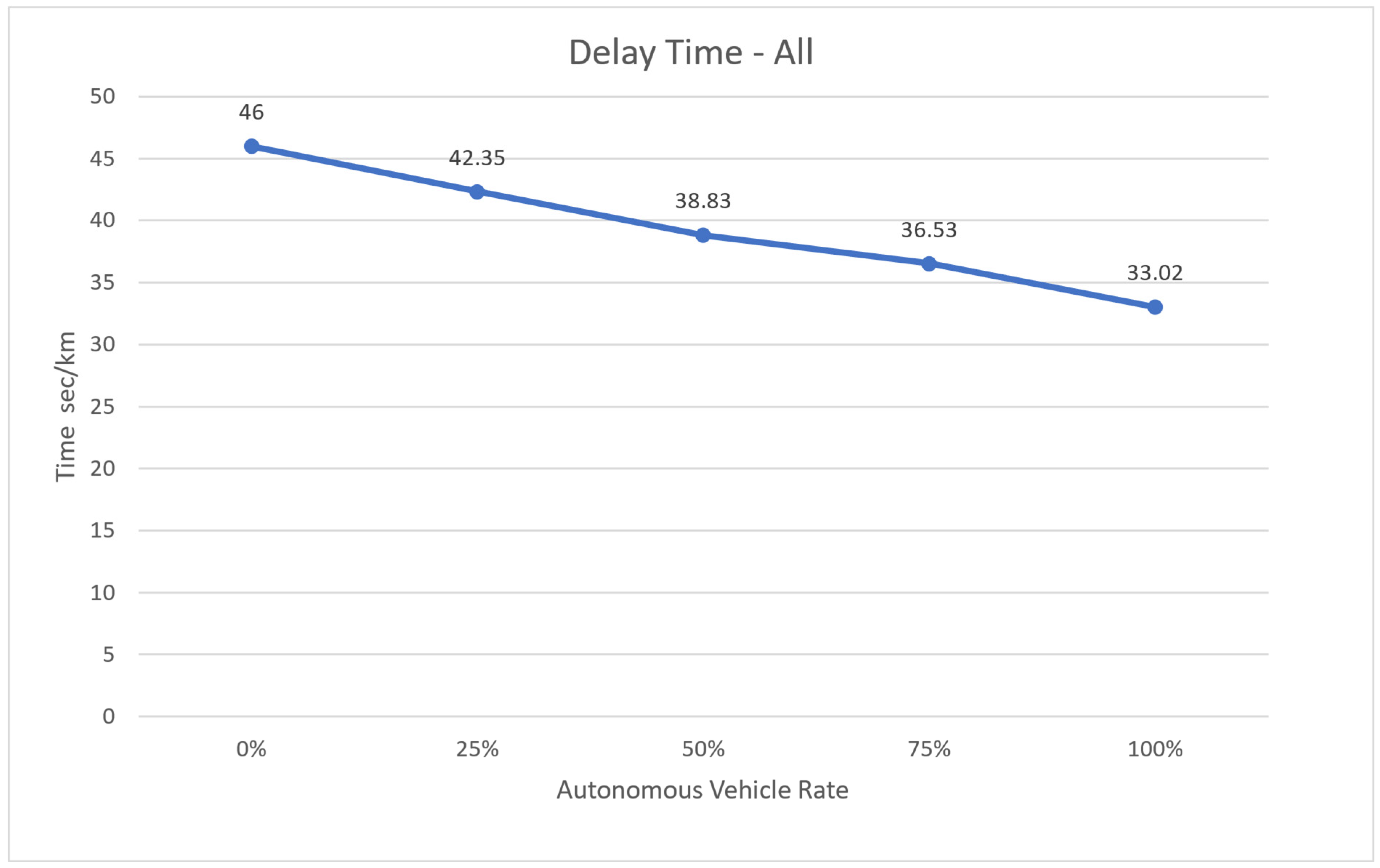
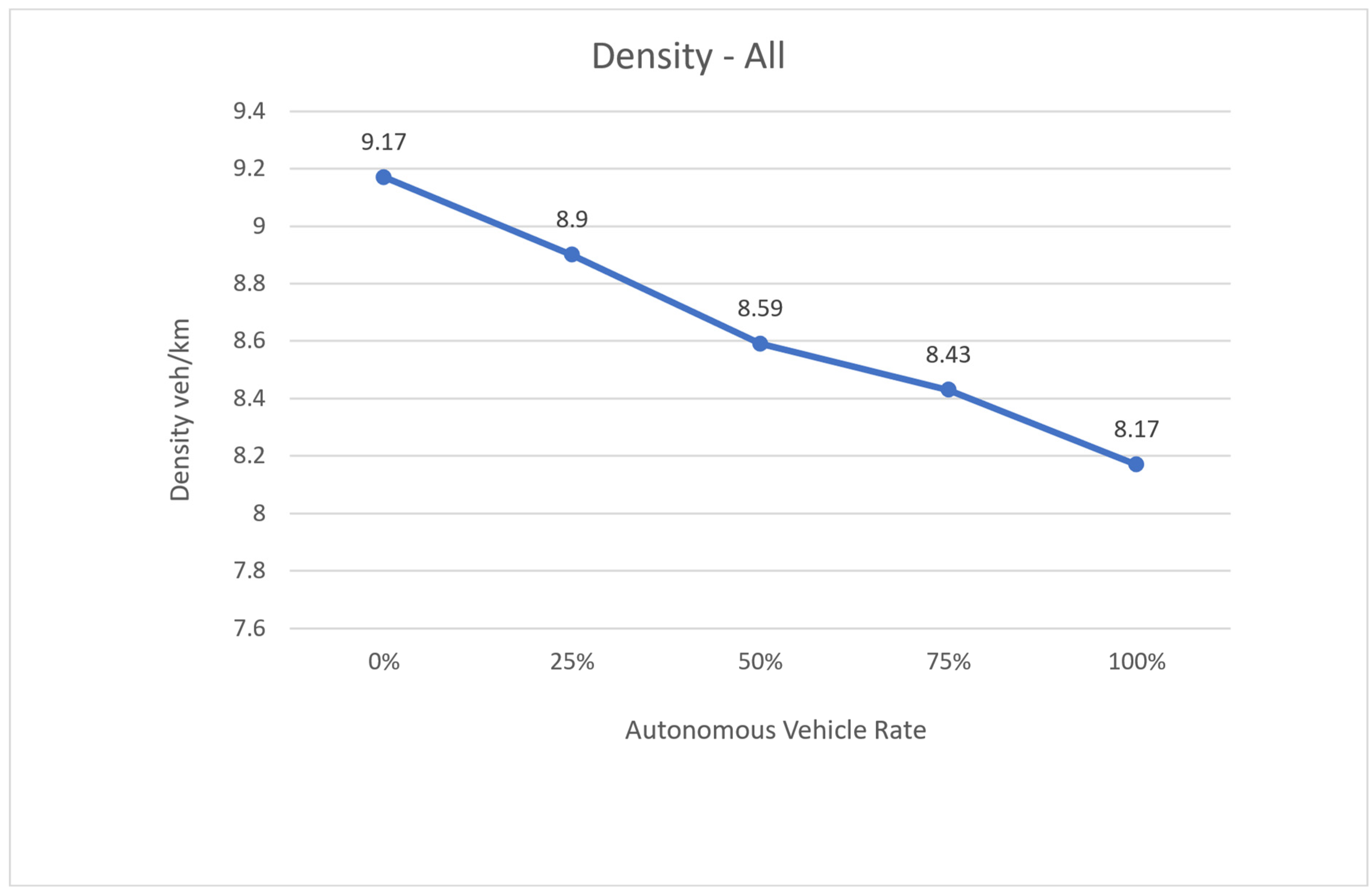
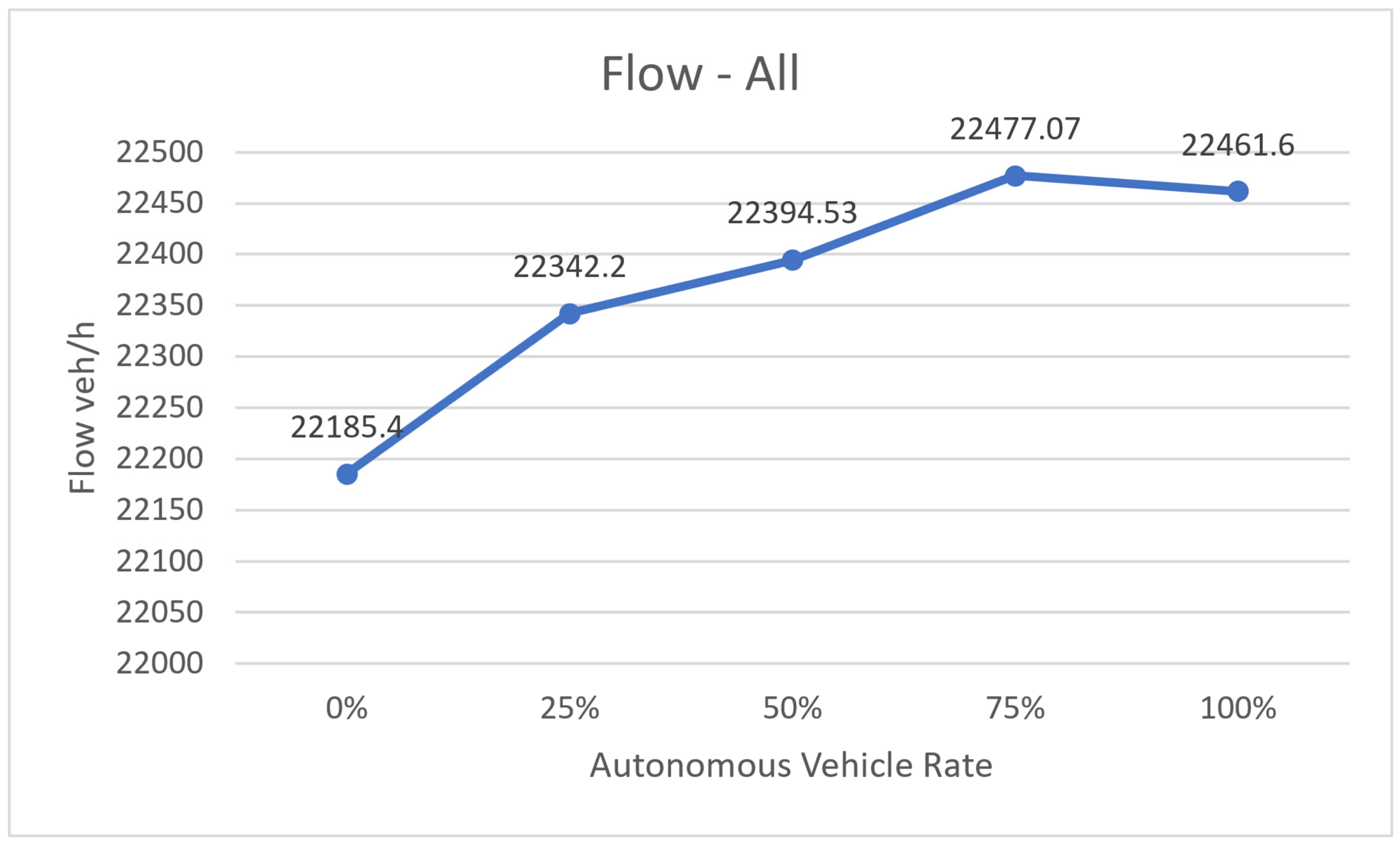
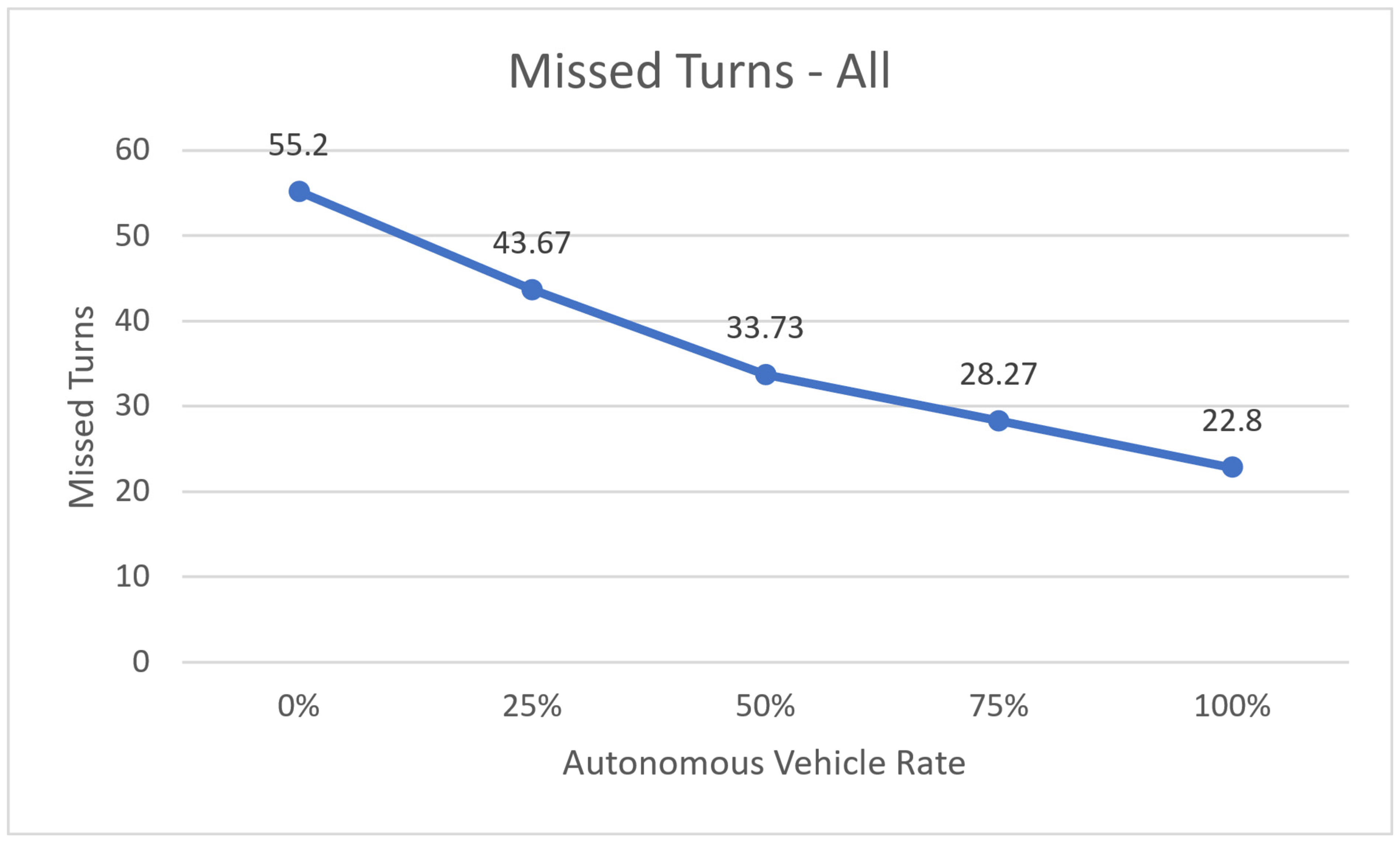
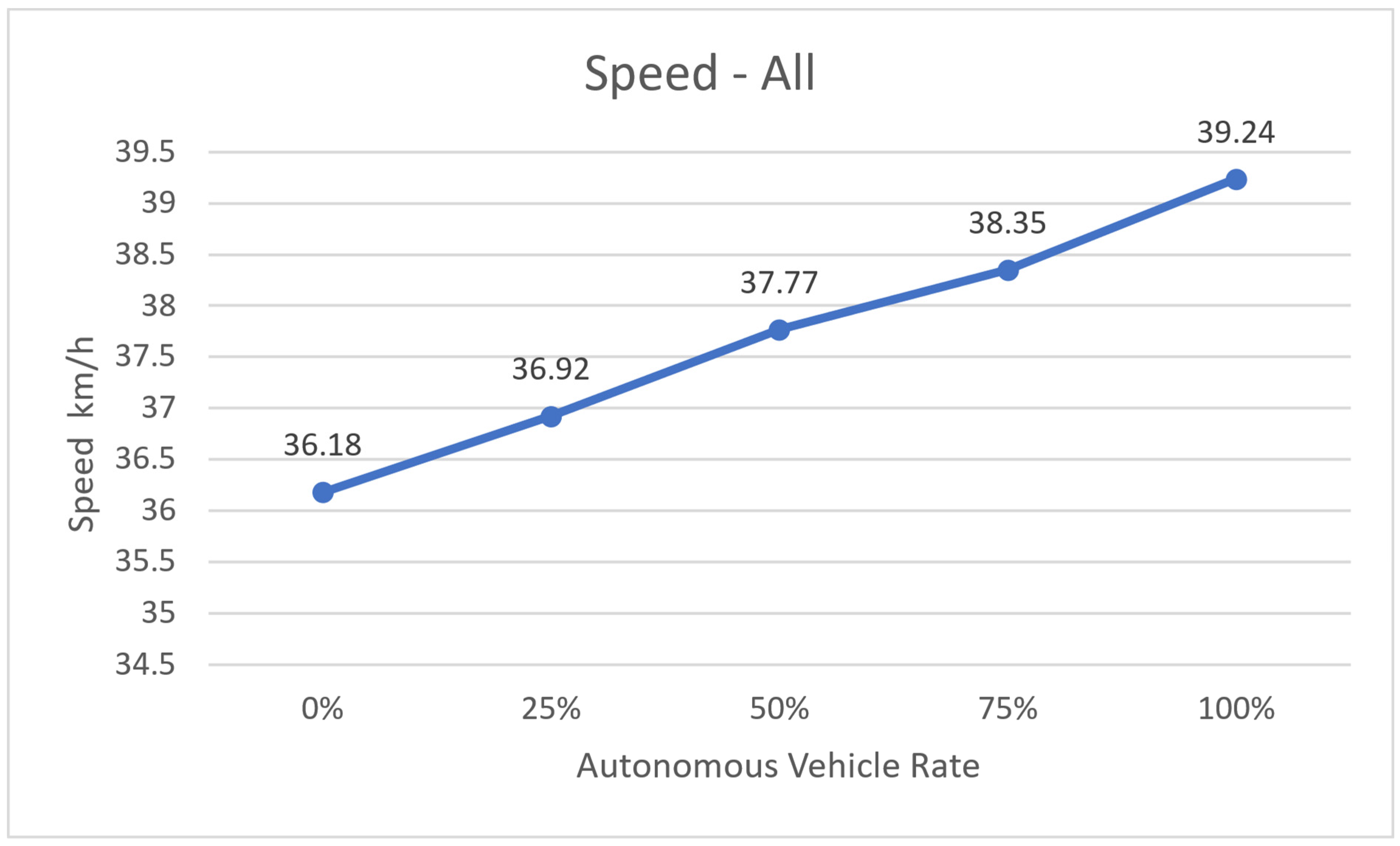
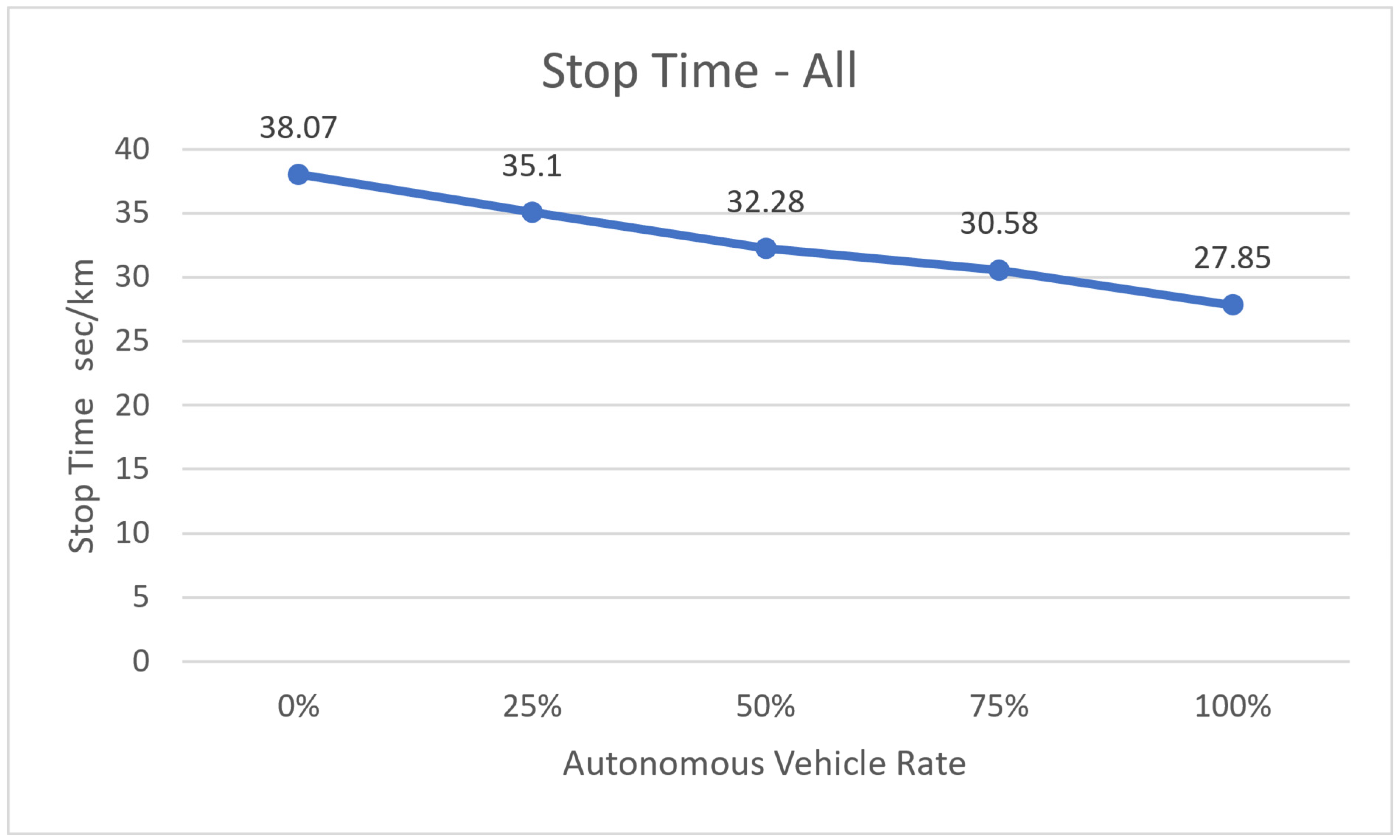
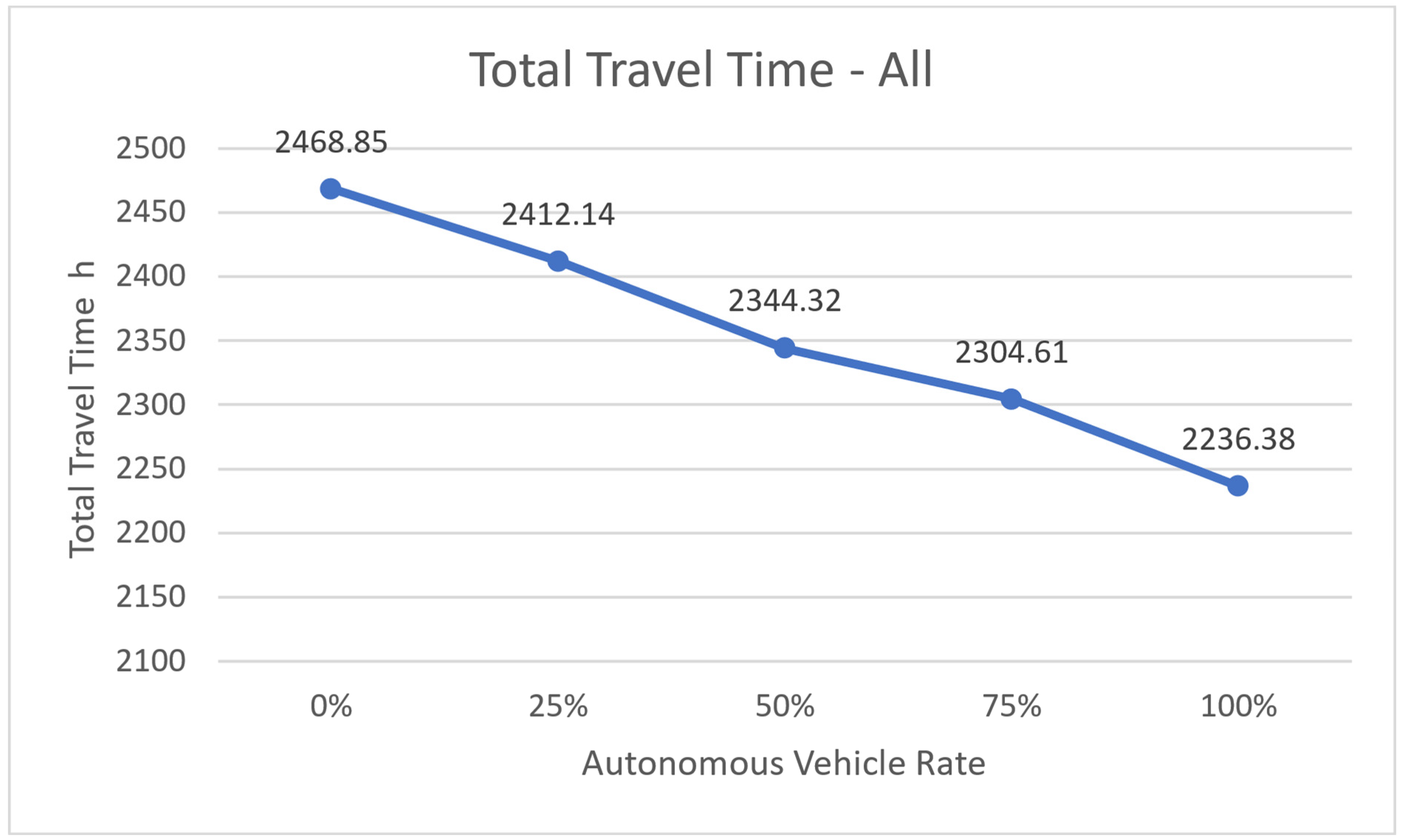
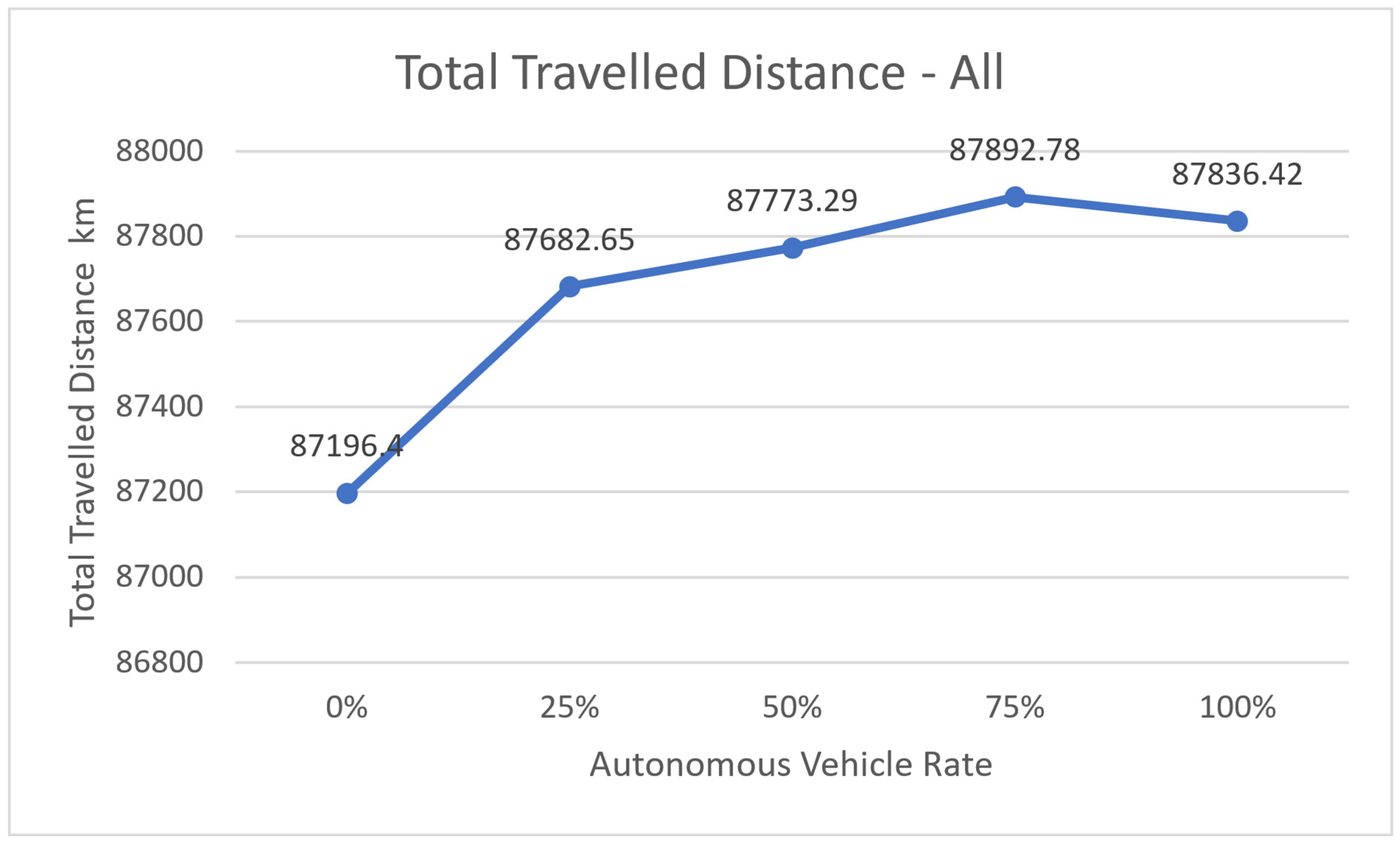
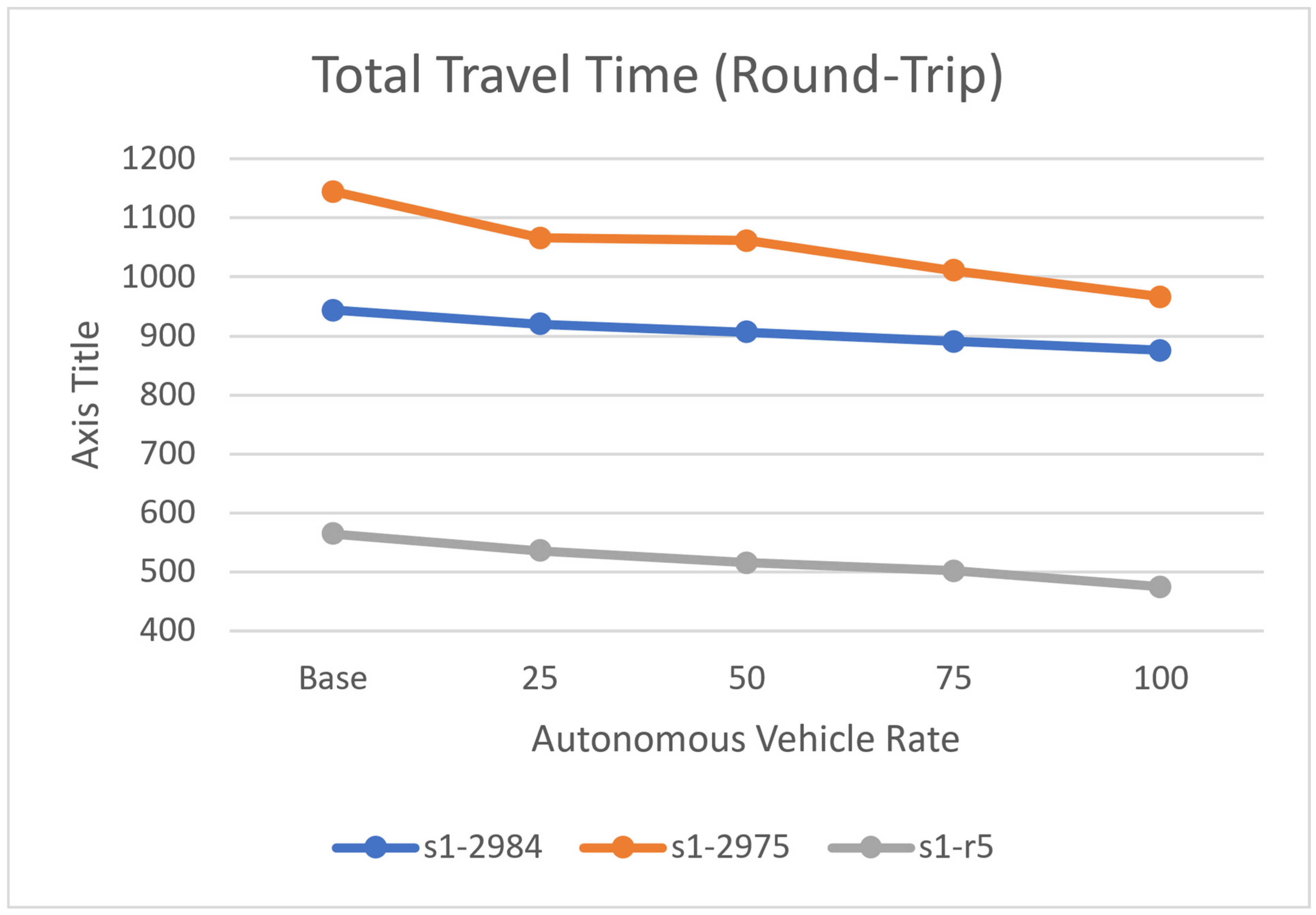
At the network level, the scenario results showed monotonic reductions in delay, stop time, and missed turns, together with a moderate increase in mean speed and nearly constant total throughput of approximately 22.2–22.5 thousand vehicles per hour. Variability around the peak period also narrowed as AV penetration increased, indicating smoother traffic evolution under interrupted urban flow.
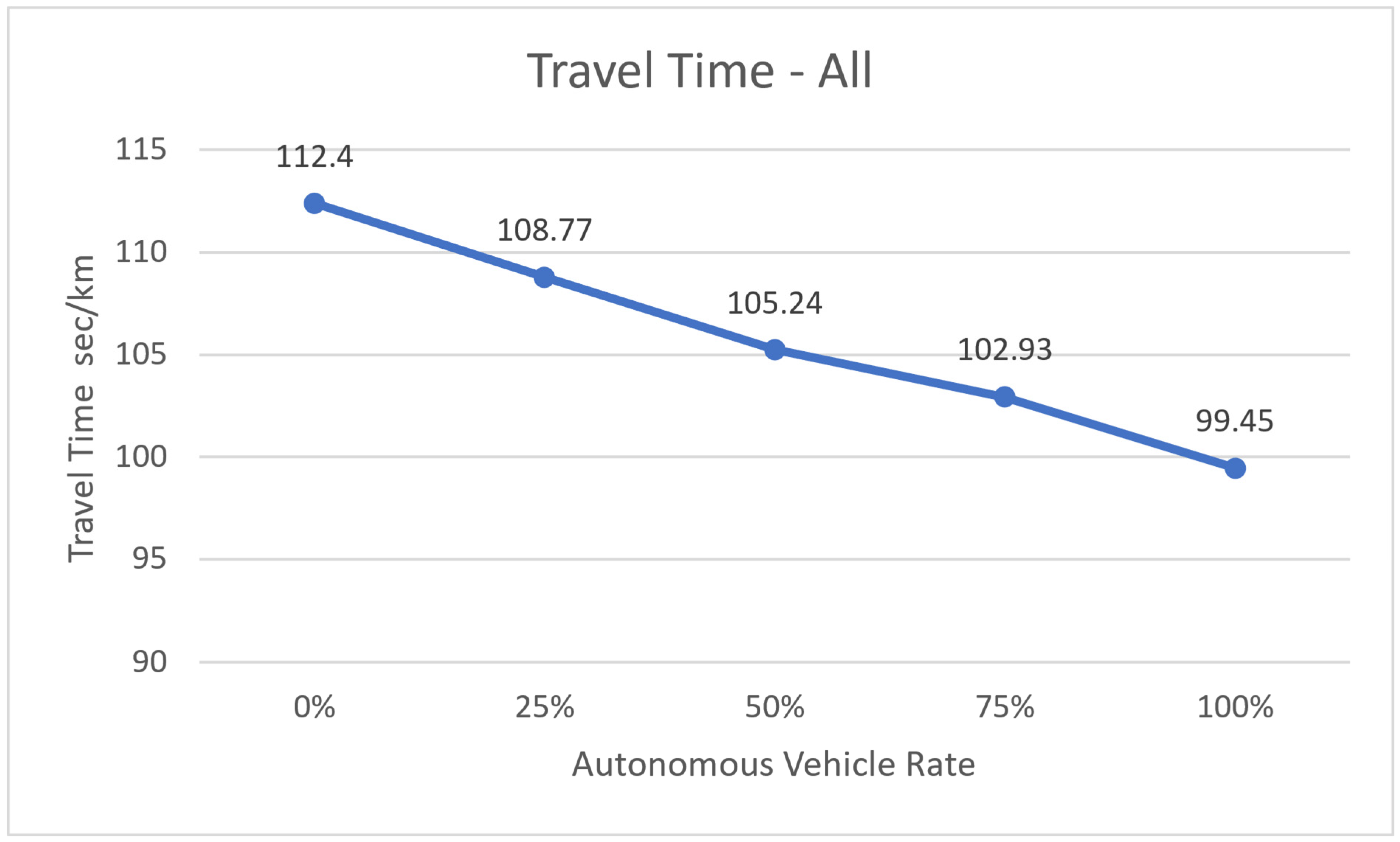
At the corridor level, ambulance travel time decreased by 11.5% per kilometre between the 0% and 100% AV scenarios. This route-specific result should be interpreted separately from the aggregate network findings, as it reflects the operational response of the defined ambulance corridor under the behavioural and priority assumptions applied in the simulation [
6,
15,
34].
It should be mentioned that the combined effects of network stabilisation and altered ambulance behavioural parameters under higher automation scenarios may account for a portion of the observed improvement in ambulance performance. Therefore, rather than being a completely isolated network effect, the observed improvement is an upper-bound operational estimate under integrated automation conditions.
From a technical perspective, the pattern observed in the Atakum network is consistent with the behavioural logic of the adopted IDM/MOBIL-type parameterization. As the share of automated vehicles increased, shorter reaction times, smaller standstill gaps, and greater lane-changing cooperation reduced the amplitude of stop-and-go propagation and improved the regularity of vehicle interactions. Under the fixed signal timing and demand conditions of this study, these behavioural changes would be expected to smooth the evolution of queues and reduce internal disturbances between intersections rather than substantially increase intersection discharge capacity. This mechanism provides a plausible explanation for the simultaneous decline in delay, stop time, and missed turns alongside the comparatively constant throughput observed across scenarios [
6,
15,
18,
19,
20,
21,
31,
35,
36].
This interpretation is broadly consistent with previous studies showing that the benefits of automation in mixed traffic depend strongly on operating conditions and behavioural assumptions. Talebpour and Mahmassani [
36] (2016) reported that connected and autonomous vehicles can improve flow stability, but that throughput effects depend on penetration rate and traffic regime. Similarly, Fujiu et al. [
32] found that AV impacts in urban and rural environments are not uniformly linear and may vary across penetration levels. The Atakum results align with these studies in suggesting that, in a signalised urban corridor, the principal early benefit of automation is more likely to be improved operational stability than a large increase in nominal network capacity [
4,
6].
The comparison with Garg and Bouroche [
37] (2023) is also informative. Their analysis emphasised the sensitivity of mixed-traffic outcomes to behavioural assumptions and communication conditions, and showed that more conservative AV settings may improve safety surrogates while slightly increasing travel time. In the present study, direct safety surrogates were not modelled; however, the reduction in missed turns and the visible damping of queue oscillations are directionally consistent with the idea that more orderly and cooperative traffic interactions can reduce disruptive conflict-generating behaviour. At the same time, the absence of a network-wide efficiency penalty in Atakum likely reflects the specific arterial and signalised context of the case study, together with the fact that the automated vehicle parameters were calibrated to represent cautious but efficient urban behaviour rather than highly conservative control settings [
7,
19,
23].
The findings also complement the city-scale perspective reported by Yıldırım and Özuysal [
38] (2024). Their results indicated that dedicated-lane strategies can amplify automation benefits, whereas transition-of-control processes may reduce performance under heavy demand. In this respect, the Atakum scenarios may be interpreted as a baseline mixed-traffic reference without dedicated-lane allocation or explicit transition-of-control events. The measured gains observed here therefore suggest that even without corridor segregation, progressively more coordinated automated behaviour can improve urban traffic operation. At the same time, the literature implies that such gains may not transfer directly to real deployment contexts in which handover events, lane management constraints, or infrastructure adaptations become important [
8,
33].
The TransAID framework provides an additional behavioural interpretation of these results. Its emphasis on multi-mode ACC/CACC control and carefully managed transitions between speed-control, gap-control, and collision-avoidance states is consistent with the broader principle that smoother control logic can stabilise mixed traffic, whereas poorly managed mode changes may reintroduce local disturbances. Although such mode-transition mechanisms were not explicitly represented in the present model, the Atakum findings are compatible with the “stabilisation” side of that literature and reinforce the practical relevance of designing automation strategies that prioritise coordination and disturbance reduction in congested urban corridors [
26,
37].
From a practice perspective, these results do not imply that automation alone will remove congestion from a signalised urban network. Rather, they suggest that under a calibrated corridor environment, automation may provide operational benefits by improving the regularity of traffic flow and by supporting more reliable movement on critical routes such as the modelled ambulance corridor. For planners and traffic operators, the main implication is therefore not an immediate expectation of large capacity gains, but the possibility of modest yet meaningful improvements in stability, delay reduction, and route reliability under progressive AV penetration. These implications should nevertheless be interpreted with caution and within the bounds of the modelling assumptions adopted in this study [
12,
15,
33,
34].
7. Limitations
Several limitations should be made explicit when interpreting the results of this study. First, the Google Traffic Index (GTI) was used as an ordinal proxy for observed congestion rather than as a direct measurement of speed, density, or trajectory-level behaviour. Although GTI provided a practical basis for link-level calibration and was cross-checked against traffic counts through categorical and volumetric validation, it remains a relative congestion indicator derived from map-based traffic visualisation. Accordingly, the calibration confirmed agreement in congestion-state representation and count consistency, but it did not validate detailed vehicle trajectories, lane-level interactions, shockwave propagation, or exact travel-time distributions on individual links [
9,
10,
12,
15,
16,
21,
34].
Second, the observational time structure was limited to 10 min bins during representative weekday morning peak periods. This temporal aggregation was appropriate for corridor-scale calibration, but it may smooth short-lived fluctuations in queue spillback, signal-cycle-level disturbances, and brief stop-and-go episodes. The results should therefore be interpreted as reflecting aggregated peak-period traffic states rather than second-by-second traffic dynamics.
Third, the simulation model itself imposes structural constraints. The experiments were conducted under fixed demand, fixed network geometry, and a common signal timing framework across scenarios, so the reported differences isolate the effect of behavioural composition under controlled conditions rather than the full range of real-world adaptation processes. In practice, future AV deployment may interact with route choice, departure time, signal control adaptation, communication failures, heterogeneous driver compliance, and infrastructure changes that were not represented here [
7,
8,
12,
15].
Fourth, several important outcome domains were not explicitly validated or modelled. The study did not validate safety surrogates, emissions, fuel consumption, trajectory-level control transitions, or communication reliability. Likewise, the ambulance corridor analysis was not validated against real emergency vehicle travel-time records, and the model did not separately validate the independent contribution of ambulance behavioural automation versus network-level stabilisation. For this reason, the reported ambulance improvement should be read as an integrated operational estimate within the simulated framework rather than as a validated real-world emergency-response prediction [
15,
19,
23,
36,
38].
Finally, the behavioural parameterisation of automated vehicles represents one calibrated and intentionally cautious urban automation profile, not the full spectrum of possible AV control logics. Different assumptions regarding headway policy, lane-change aggressiveness, transition-of-control behaviour, or cooperative control architecture could produce different magnitudes of effect. The present results are therefore best interpreted as scenario-based evidence within a calibrated microsimulation setting, not as universally transferable estimates for all urban networks or all automation technologies.
8. Future Work
Several extensions would strengthen the present framework and improve its relevance for applied deployment analysis. A first priority is real-world validation beyond aggregate congestion-state agreement and traffic counts. Future studies should compare simulated corridor outputs with observed link speeds, probe-vehicle trajectories, and, where accessible, emergency vehicle travel-time records in order to assess whether the model reproduces not only congestion classes and volumes, but also route-level travel-time behaviour under peak conditions [
9,
10,
12,
15,
16].
A second direction is to extend the behavioural and control assumptions represented in the model. This includes explicit modelling of Transition of Control (ToC), communication uncertainty, dedicated-lane allocation, and multi-mode ACC/CACC logic, all of which may alter the magnitude and robustness of the benefits observed in the present study [
7,
8,
26]. Related work should also incorporate sensitivity analysis over wider AV parameter ranges, including headway policy, lane-change aggressiveness, and cooperative control settings, in order to determine which effects are robust and which are parameter-dependent [
19,
23,
35].
A third priority is to broaden the scope of evaluated outcomes. Future research should integrate surrogate safety indicators, emissions and fuel-consumption estimates, and adaptive traffic-control scenarios in order to assess whether the stabilisation effects identified here translate into wider operational and environmental benefits. Finally, comparative applications across additional signalised corridors and cities would help determine how transferable the GTI-calibrated workflow is across urban contexts with different geometry, demand structure, and emergency-route dependence [
8,
12,
15].