Article

The Use of Scanning XRF to Map the Reduction in Foxing Stains on Paper with Chelating Agents

Victoria and Albert Museum, Cromwell Rd, London SW7 2RL, UK
*
Author to whom correspondence should be addressed.
Appl. Sci. 2026, 16(7), 3506; https://doi.org/10.3390/app16073506
Submission received: 27 January 2026 / Revised: 12 February 2026 / Accepted: 1 April 2026 / Published: 3 April 2026
(This article belongs to the Special Issue Innovative Methods for Paper Conservation and Preservation)

Abstract

To reduce staining, paper conservators have increasingly treated artworks on paper with enhanced washing using chelating agents, which form complexes with metallic ions, thus facilitating the removal of stains. However, questions remain regarding the efficacy of the method and its impact on the long-term preservation of paper. A treatment of enhanced washing was undertaken on a nineteenth-century mezzotint printed using the chine collé technique, by David Lucas after a painting by John Constable, which was disfigured by significant foxing stains. This intervention provided the opportunity to investigate the mechanism and efficacy of the treatment and whether an alkali reserve could successfully be reintroduced. The print was analysed before, during, and after treatment with a Bruker M6 Jetstream scanning X-ray fluorescence (XRF) spectrometer. The results provided spatially resolved information on the effects of the treatment and gave new insights into the heavily debated causes of foxing on paper, challenging the link with iron contamination. Instead, the distribution of foxing stains showed a correlation with the presence of potassium and calcium, and their reduction during washing corresponded with an improvement in appearance. Calcium replenishment proved only partially successful. Finally, scanning XRF has rarely been used for the analysis of artworks on paper; this study proves its value for research.

1. Introduction

The use of chelating agents, such as citrate-based solutions or EDTA (ethylenediaminetetraacetic acid), is an increasingly common conservation treatment for removing stains from paper. However, the efficacy of these treatments and the mechanism by which they work have been relatively understudied. The few publications on the subject have mostly appeared in informal newsletters or conference proceedings, not peer-reviewed publications (as noted by Venus et al. [1]). Paper conservation treatment in preparation for a display at the V&A South Kensington, John Constable and David Lucas: A Unison of Feeling, which is about the relationship between the painter John Constable and the printmaker David Lucas, presented the chance to add to our knowledge of foxing and the use of chelating agents. One artwork in the exhibition, The Cornfield (V&A E.776-1991), which is a mezzotint printed using the chine collé technique, from 1833, was chosen for research due to the extent of foxing stains across its surface. Analysis of the print using scanning X-ray fluorescence spectroscopy (XRF) was performed before, during, and after the conservation treatment in order to examine the mechanism by which chelating agents contribute to enhanced washing and stain reduction. Time constraints related to the exhibition preparation meant that decisions on testing and treatment protocols were based on knowledge, experience, and the materials and equipment available to hand. With a single museum object as the focus of this project, only one treatment method could be tested, unlike the multiple possibilities for experiments using simulated artworks, and the analysis was limited to non-destructive methods, i.e., scanning XRF.

1.1. Foxing in Paper

One of the most common types of staining on paper is known as foxing, which describes a variety of small, localised irregular spots of mainly brown, yellow, or reddish discolouration. This staining has often been attributed to biological activity, such as fungi and bacteria colonisation, or to metallic contamination [2,3]. The varied appearance, composition, and behaviour of these small spots suggest they likely result from one or more contributing factors, which are then exacerbated by moisture.
The common characteristic across different types of foxing stains is the localised deterioration of the cellulose chains of the paper, from processes such as hydrolysis or oxidation [2]. Acidic metallic ions can act as catalysts for both reactions, whilst the presence of enzymes and acids that are released by mould and other microorganisms can initiate hydrolysis [2,4]. Both deterioration mechanisms result in the formation of sugars, which can then undergo condensation reactions into coloured degradation products (large organic molecules with chromophores) [4]. Additionally, staining in paper can be caused by the corrosion of metal particles [4] or by the presence of fungal structures and metabolites, which can have a rusty colour [5].
The ultraviolet fluorescence of foxing stains has been noted [2,6,7]. The early stage of oxidation creates short, conjugated bonds which fluoresce. As oxidation increases, the conjugated bonds lengthen and absorb the visible light, resulting in a decrease in fluorescence but an increase in visible discolouration. However, microbial activity can also produce fluorescent molecules. Thus, while ultraviolet fluorescence could be used to monitor the progression of deterioration, it is not conclusive as to the cause of foxing stains. Other types of analysis, such as elemental characterisation, are needed.

1.2. Elemental Analysis of Paper

Whilst the main component of paper is cellulose (C6H10O5)n, which is a polysaccharide, there can also be minor residual metal content. Recent research has examined these inorganic elements, particularly magnesium (Mg), aluminium (Al), sulphur (S), potassium (K), calcium (Ca), and iron (Fe), and their importance for paper stability [8]. These inorganic elements can originate from sizing, fillers, or coatings that are applied to the paper itself or from metallic inclusions derived from the machinery, the supply water, or the wood pulp used in the papermaking process [8,9].
Characterisation of the inorganic components of paper has been performed using non-destructive techniques such as portable X-ray fluorescence spectroscopy (pXRF) [10] or destructive techniques like inductively coupled plasma optical emission spectrometry (ICP-OES) [11].
Elemental analysis has also been used to characterise naturally aged paper with foxing stains. The results of these studies have been inconclusive [5,7,12,13,14,15]: even within each study, the results have been variable, with staining sometimes correlating with iron concentration [7,15], sometimes with other elements such as potassium [7,13] or calcium [14], and sometimes with no clear correlation [5]. These results add to the hypothesis that several different factors can lead to the formation of foxing stains. In addition, another study, albeit not specifically on foxing, found no correlation between the iron or copper content and variables associated with degradation, such as pH and yellowness [11].
Scanning electron microscopy–electron dispersive spectrometry (SEM-EDX) has been used for the analysis of paper, although the focus has mainly been on the examination of cellulose fibres, including the appearance of deterioration or the presence of microorganisms [5,16]. Even when the distribution of inorganic components has been noted [1,14], the analysis was still performed on a microscopic level. Finally, whilst SEM-EDX is technically non-destructive (if a variable pressure SEM, which removes the need for conductive coating, is used), the technique is limited to an object which fits in a vacuum chamber. Therefore, SEM-EDX almost always necessitates sampling, making it unsuitable for artworks in museum collections.
Scanning X-ray fluorescence spectroscopy, also known as macro-XRF or MA-XRF, improves on pXRF, ICP-OES, and SEM-EDX by permitting spatially resolved, non-destructive elemental analysis. Since its development in the 1990s, particularly since the introduction of the commercially available Bruker Jetstream (in which a µXRF spectrometer is mounted on a motorised frame), scanning XRF has been widely adopted in heritage science [17,18]. However, most of the published research has centred on the analysis of paintings. The small number of articles about artworks on paper has primarily focused on the identification of pigments in printing or drawing media and/or the use of preparatory grounds [19,20,21,22,23]. Few have centred on the paper substrate itself (a recent exception is Duncan et al. [24]). The relative ease of performing analysis with scanning XRF makes it a useful tool to dynamically monitor the conservation treatment of museum objects and support decision-making by conservators.

1.3. Chelating Treatment of Paper

As metal cores have been identified within some foxing stains, chelating agents have been suggested as particularly useful for treatments, as they preferentially bind with metallic elements [1,25,26]. The chelating agents that are most commonly used in conservation are citrate solutions (sodium or ammonium citrate), EDTA (ethylenediaminetetraacetic acid), DTPA (diethylenetriaminepentaacetic acid), and phytic acid (as calcium phytate). These chelators work by complexing, or sequestering, metal ions, which then facilitates their removal during washing. The stability of the complexes formed depends on the choice of chelator, pH, and the coordination number of the metal that is targeted [25]. This then affects what type of metal is preferentially complexed, i.e., iron or calcium [25,27]. Because chelating agents have been used in paper conservation, artificial ageing has been undertaken to assess the long-term effects of enhanced washing [1,28,29]. The studies have stressed the need for thorough rinsing. Concerns have also been raised about the ability of chelating agents to deplete the calcium in paper, therefore reducing its alkaline reserve, which may negatively affect its long-term stability [1,30,31,32].
Although some of these studies have noticed a possible link between calcium and overall discolouration [1,31], the spatial relationship between the calcium concentration and the localised staining was not established because of the analytical methods used. However, Dwan highlighted anecdotal comments by conservators who noted that they observed less effective cleaning during their practical work when using calcium-enriched chelating solutions, which suggested that effective stain reduction was linked to calcium removal [33]. By permitting non-destructive, spatially resolved qualitative analysis, scanning XRF could potentially provide answers to this conundrum, thus motivating this case study on the treatment of a 19th-century artwork. Therefore, despite its limitations, this study provides a different and important perspective compared to studies based on modern samples with artificially induced deterioration or samples from historical book pages.

2. Materials and Method

2.1. Mezzotint by David Lucas After Constable’s ‘The Cornfield’, London, 1833

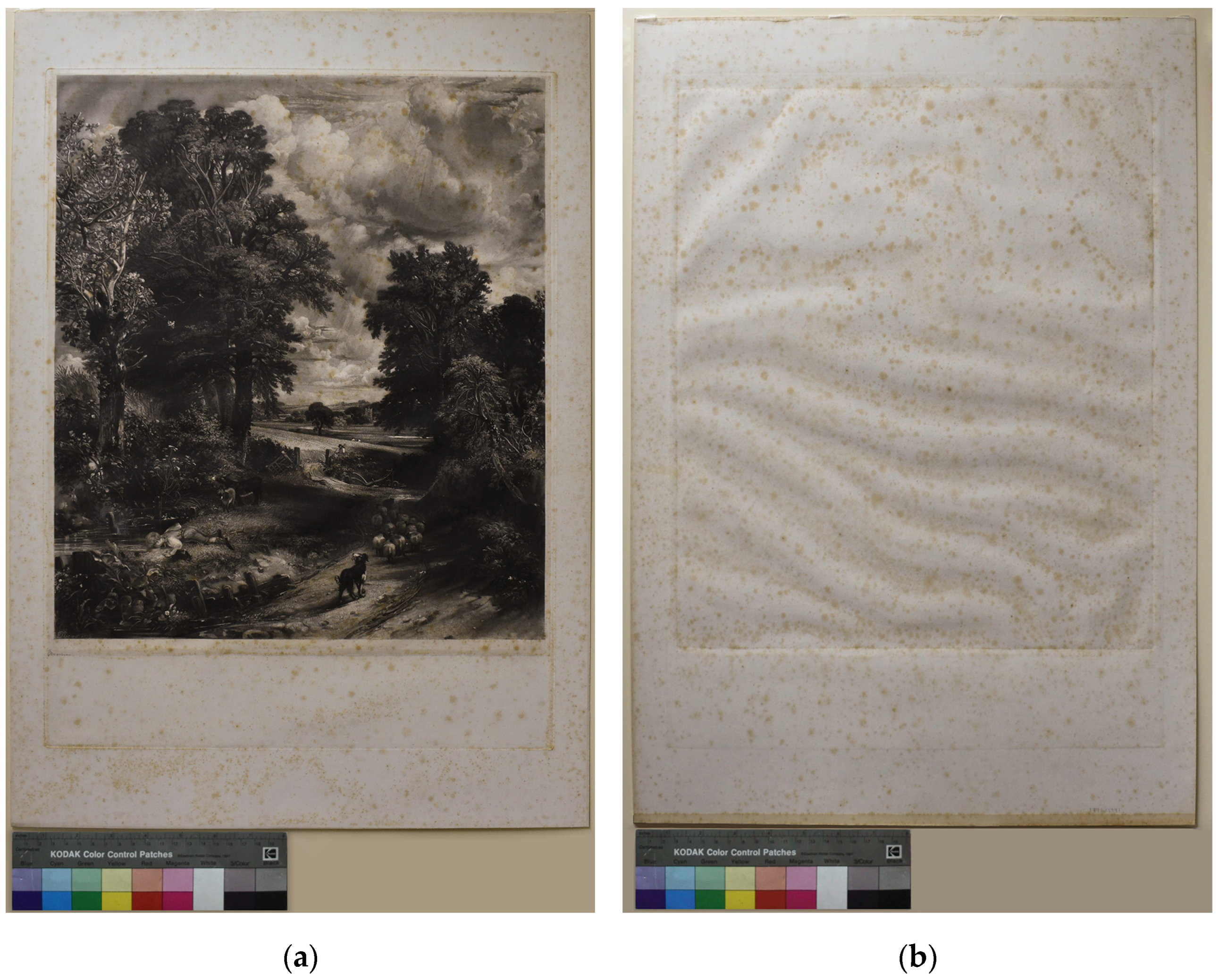
The Cornfield, by David Lucas after the painting by John Constable, is a mezzotint heightened with white opaque paint, printed using the chine collé technique, and inlaid into woven paper, measuring 69 cm × 51 cm (Figure 1).
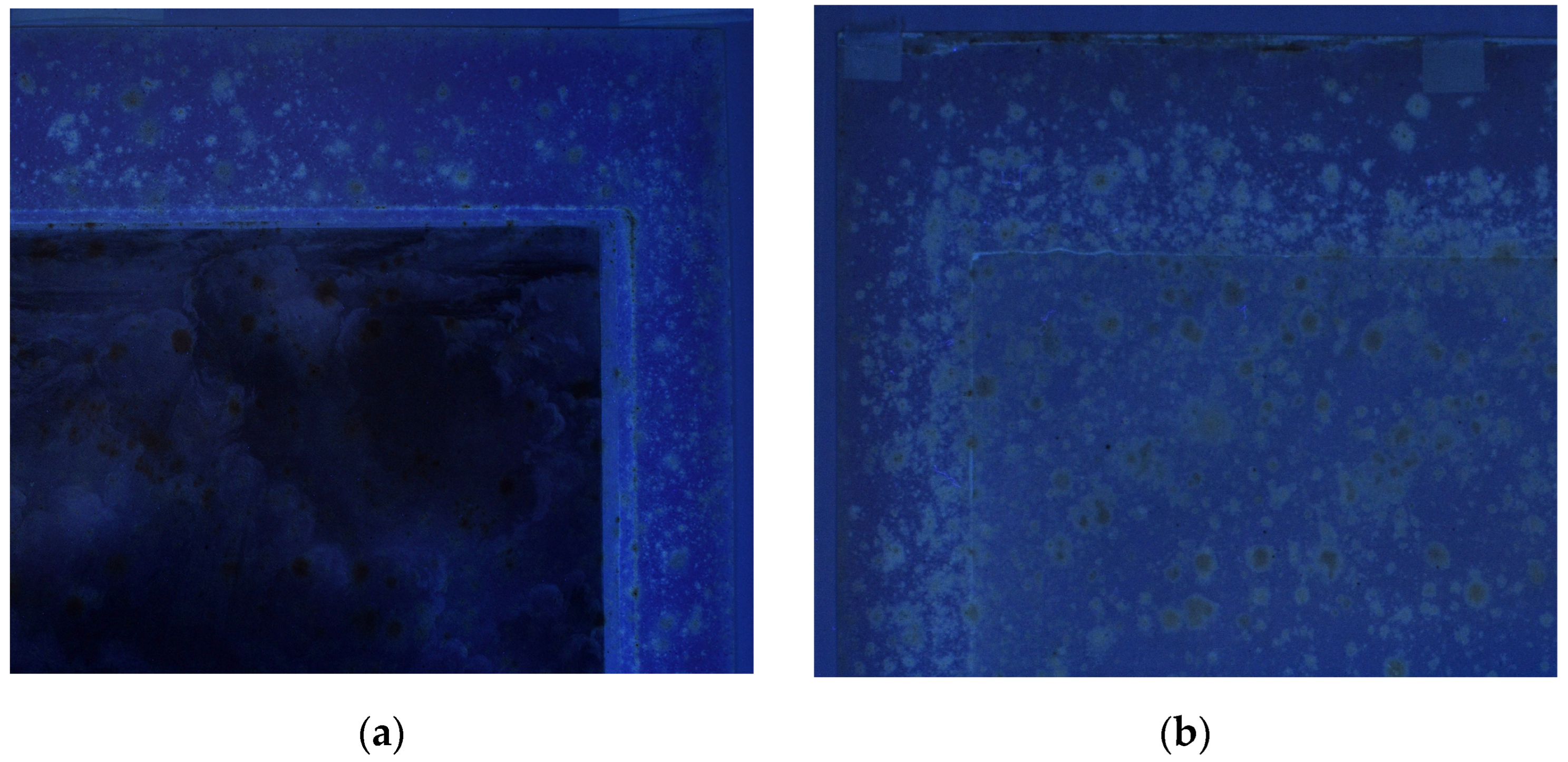
The chine collé technique typically involves a sheet of thin paper (the chine) placed on the inked printing matrix, followed by a thicker sheet (the plate paper), which is then run through the press together to form the print. To encourage the bonding between the papers, they are usually dampened, and sometimes a weak adhesive or sizing agent is also applied. However, with The Cornfield, the chine and plate paper are similar in weight and seem to have been trimmed and then adhered to a heavyweight border paper. The extreme pressure of the printing process, compacting the chine collé paper, has led to its sensitivity towards moisture and subsequent cockling. The UV fluorescence in the verso follows this damage, indicating that it may have been in this condition for a while, as the undulated areas were more exposed to the atmosphere (Figure 1, also see Supplementary Materials).
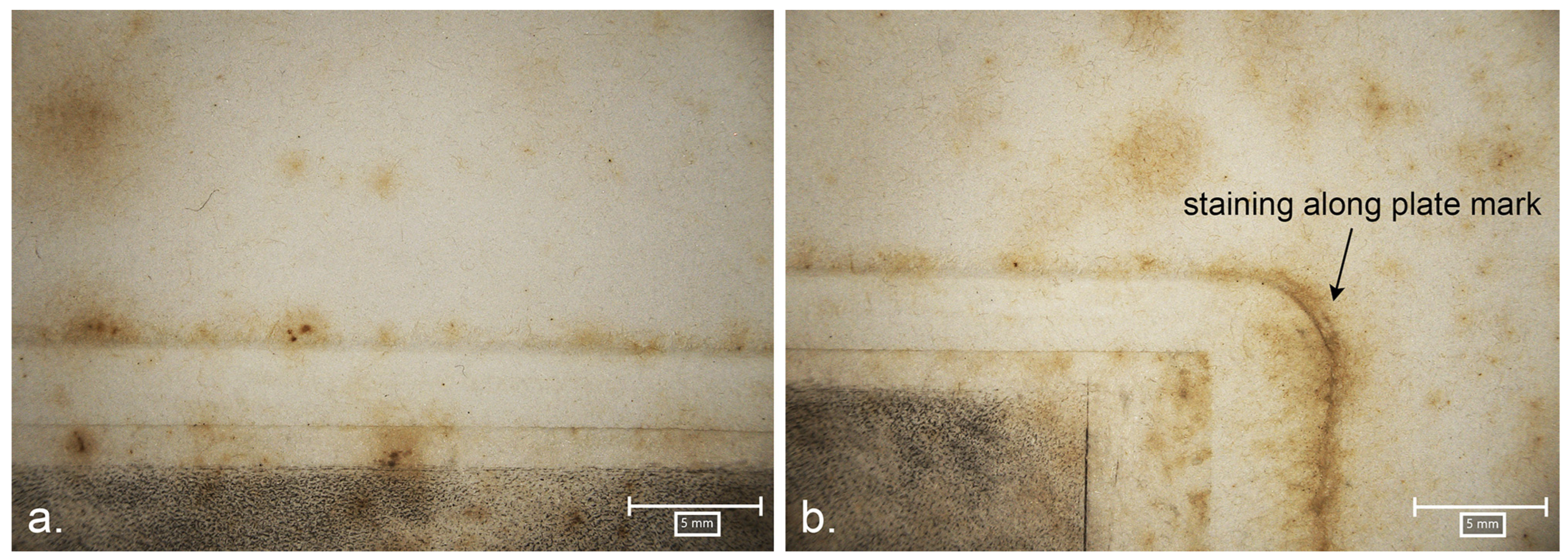
There were extensive foxing stains on both the recto and verso of the print, with some stains appearing to go through the thickness of the paper. The stains had a varied appearance: some were small spots with a dark brown centre, whilst others were larger and more diffuse in colour (Figure 2a).
Under UV illumination, the stains also fluoresced in different manners (Figure 3). The larger diffuse stains had the lightest fluorescence, whilst the darkest stains fluoresced less and even absorbed to show a darker colour than the paper. Some areas of the lighter fluorescence, although yet to show visible discolouration, might indicate the initial degradation of the paper. There was also localised discolouration along the plate mark (Figure 2b). Small, rusted metal inclusions were not seen.

2.2. Treatment Methodology

The treatment aim was to reduce the foxing stains, especially within lightly printed areas like the sky, to be less distracting. Through this process, the print would also be flattened to reduce the large undulations in the paper. This would require aqueous treatment, which for chine collé prints poses a risk of the layers separating. To prevent this, the efficiency of the washing treatment was important. A suction table was used to support the large wet print, whilst a vacuum was used to minimise the risk of separation. Exhibition time constraints and the substantial foxing meant that localised stain reduction was not feasible. Although the entire sheet was discoloured, the treatment needed to target the darker foxing stains, whilst also avoiding overcleaning.
Chelating agents have been used successfully by paper conservators to reduce different stains (e.g., [34,35,36]). However, their use in combination with a reducing agent has also been suggested as beneficial, so that ferric iron (Fe3+), which is insoluble, can be reduced to its ferrous state (Fe2+), which is slightly soluble and therefore more easily complexed and removed [25,33]. Within conservation, suggested reducing agents include sodium dithionite [25,37], with sodium metabisulfite as a less hazardous alternative [38], and sodium borohydride, which is useful when iron is found across an entire artwork [33], as is the case with The Cornfield. As a bleaching agent, sodium borohydride can also reduce the coloured components (conjugated double bonds) of degraded paper to provide an overall brightening effect. It can also have a detrimental effect on the ink and paper, for example, from saponification or blistering, if the concentration, pH, or exposure time is too high [39,40].
The print underwent aqueous treatment only twice due to the risks involved with the print delaminating: first to reduce the foxing and second to remove residues and replenish lost calcium. Therefore, a combination of chelators was used together in the hope of increasing the effectiveness of the treatment. Tri-ammonium citrate (TAC) has three bonding sites that are fully deprotonated (free to bond with metal ions) at pH 7, whilst EDTA has six bonding sites that are fully deprotonated at pH 11. However, at this high pH, iron ions can form iron hydroxides, which are insoluble salts. Therefore, a lower pH is more effective at complexing iron ions, even though EDTA will be in a less active form [25,33]. The print then needed thorough rinsing, as EDTA residues can have pro-oxidant properties, which can increase the catalytic activity of any remaining iron in the paper [41].
Whilst it is possible to combine reducing and chelating agents in a solution to be applied together, due to the pH difference in the chosen solutions, an alternate spray application of 0.1% sodium borohydride (Merck KGaA, Darmstadt, Germany), pH around 9–10, and a combined solution of 4% EDTA (Fisher Scientific, Loughborough, UK) and 2% TAC (Fisher Scientific, Loughborough, UK), pH around 6–7, was chosen for The Cornfield. The removal of discolouration was monitored by the colour of the blotting paper underneath the print on the suction table.
The second step of the treatment involved rinsing the print with distilled water and replenishing the calcium levels, which was accomplished through the spray application of a saturated calcium bicarbonate solution. Different calcium salts have been shown to be effective for re-incorporating calcium ions in paper [42], and calcium hydroxide has been used in studies after treatment with chelators [30]. However, it has been shown that calcium bicarbonate was able to replenish calcium ions to a higher degree than calcium hydroxide or acetate [32], and Venus et al. [1] successfully increased calcium levels with calcium bicarbonate on test samples.

2.3. Experiment Methodology

Scanning X-ray fluorescence (XRF) was carried out using a Bruker M6 Jetstream spectrometer (Bruker Nano GmbH, Berlin, Germany) equipped with a Rh-target microfocus X-ray tube and two 60 mm2 XFlash silicon drift detectors (SDD). For all the scans, an aluminium plate, covered in Kapton (polyimide) tape, was placed behind the print to reduce background noise. The X-ray tube was operated at 50 kV and 600 μA with no filter. The analysis was performed with a 100 μm spot size, a 100 μm pixel size, and a dwell time of 100 ms/pixel. The same parameters were used for scanning before, during, and after treatment. To ensure a consistent working distance between the scans, the spectrometer height was set by focusing on the region of interest in the artwork using the 100× microscope.
The spectra were processed, and the elemental distribution maps were created using the Bruker M6 Jetstream software, version 1.6.758.0. Using this software, it is unfortunately not possible to generate maps with intensity scales. Because of the open architecture of the system and the inherent nature of paper, which is dominated by low-Z elements, the results should be viewed as strictly qualitative, not quantitative.
Choosing the scanning XRF parameters required a compromise between the quality of results, the scanning time, and the size of the area that was analysed. A preliminary scan was conducted on a small area using the same parameters as above, except for a shorter dwell time (25 ms/pixel). However, the signal-to-noise ratio of this scan did not provide sufficiently high-quality results because of the overall low count rate due to the minor concentration of inorganic elements in the paper (results for this scan, which support those presented in this article, are provided in Appendix A). Therefore, a longer dwell time was used for the final scan. Similarly, a 100 μm spot size (the smallest possible on the M6 Jetstream) was chosen, as previous experience with the instrument had demonstrated that scanning at a high resolution was necessary to visualise the fine details of the staining. The shorter working distance needed at this setting also reduced the loss of signal through interaction with the air. However, the extended time required using such a small spot size (approximately 12 h for only a 65 mm × 65 mm area) necessitated the analysis of a smaller area than was originally envisaged. Potential damage from light exposure during long scans can be mitigated by dimming or turning off the LEDs on the Bruker M6 Jetstream during analysis.

Analysis Location

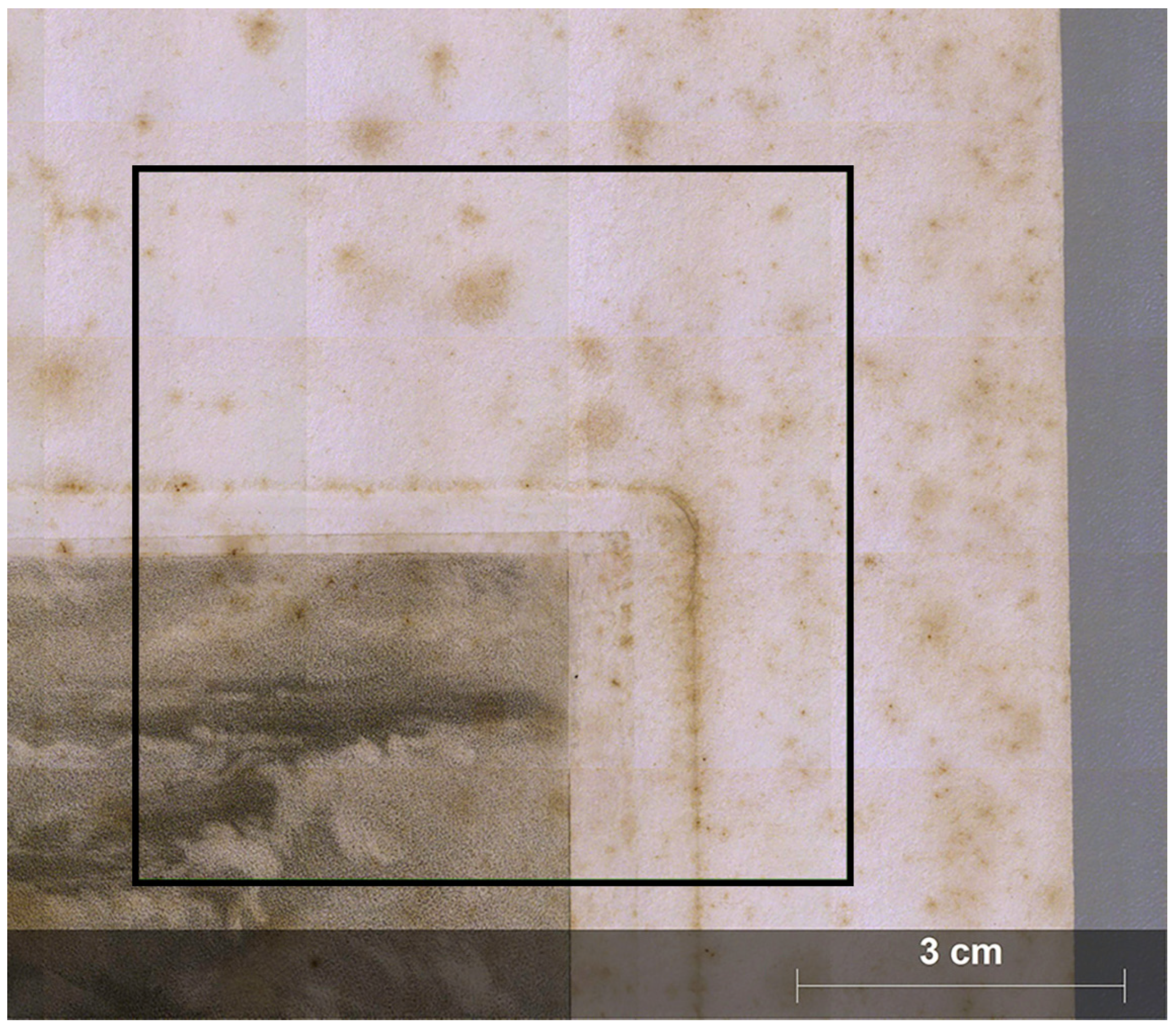
An area with a high concentration of foxing stains was chosen for analysis (Figure 4). The location along the edge of the platemark, at the upper right of the print, facilitated the consistent orientation of repeated measurements. The analysed area, measuring 65 mm × 65 mm, contained sections both with and without ink and included the three different materials used in the artwork: the printed chine paper, the plate paper, and the border paper. Whilst the area was chosen to include foxing stains with different morphologies, it is possible that it does not fully represent the variations in condition present within the object.

3. Results

3.1. Before Treatment: Chemical Composition of Paper and Foxing Stains

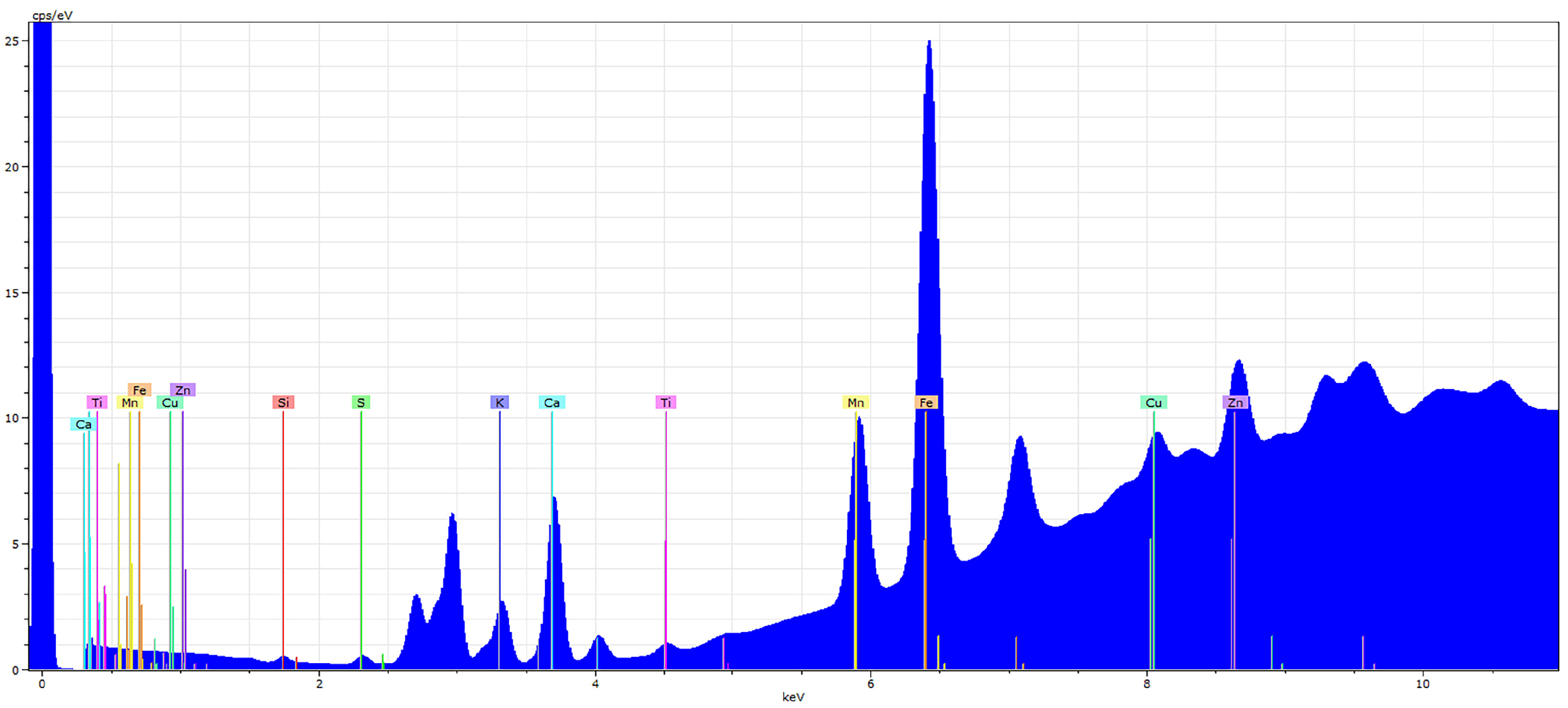
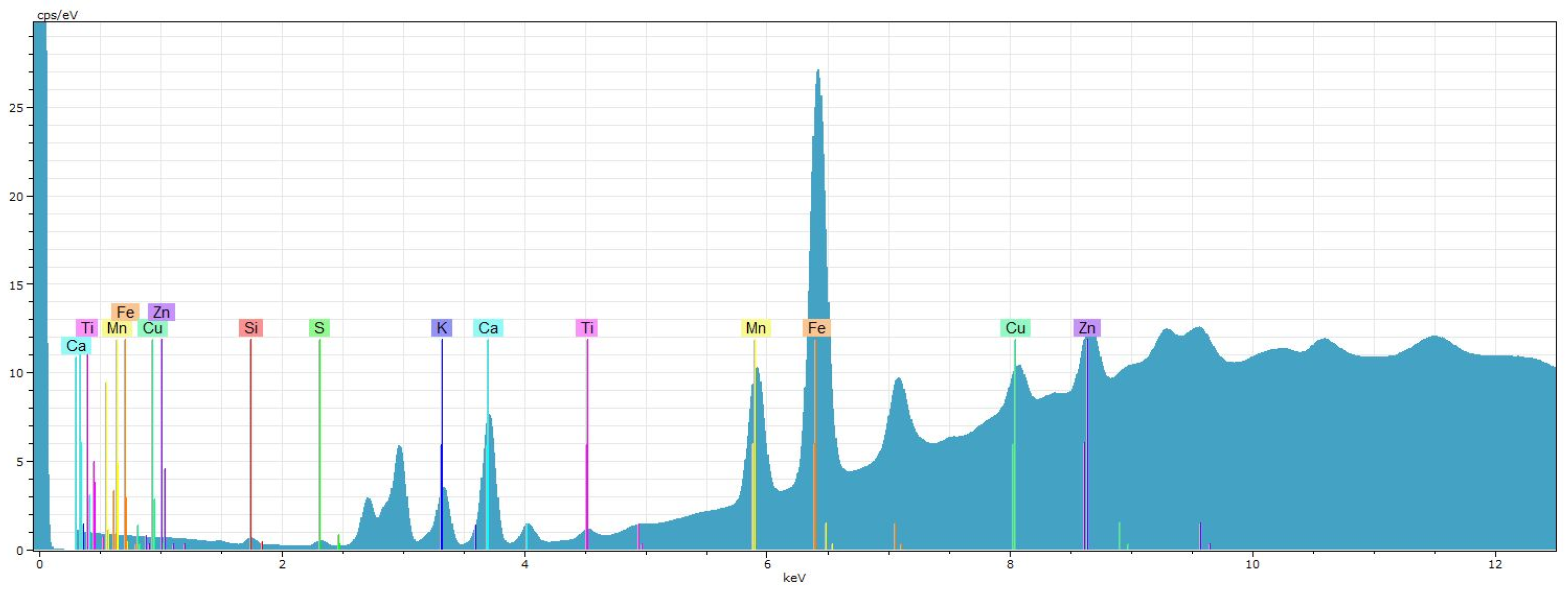
The sum spectrum produced by scanning XRF indicated that the main elements present in the analysed area were potassium, calcium, manganese, and iron, along with sulphur, titanium, copper, zinc, and strontium (Figure 5). The small number of counts demonstrated the low concentrations of these elements; this was expected, as carbon, hydrogen, and oxygen, the major elements in cellulose, which constitutes most of the paper itself, are not detectable with XRF. No other elements were present in significant concentrations. However, due to the small size of the scan, the results might not be representative of the entire artwork.
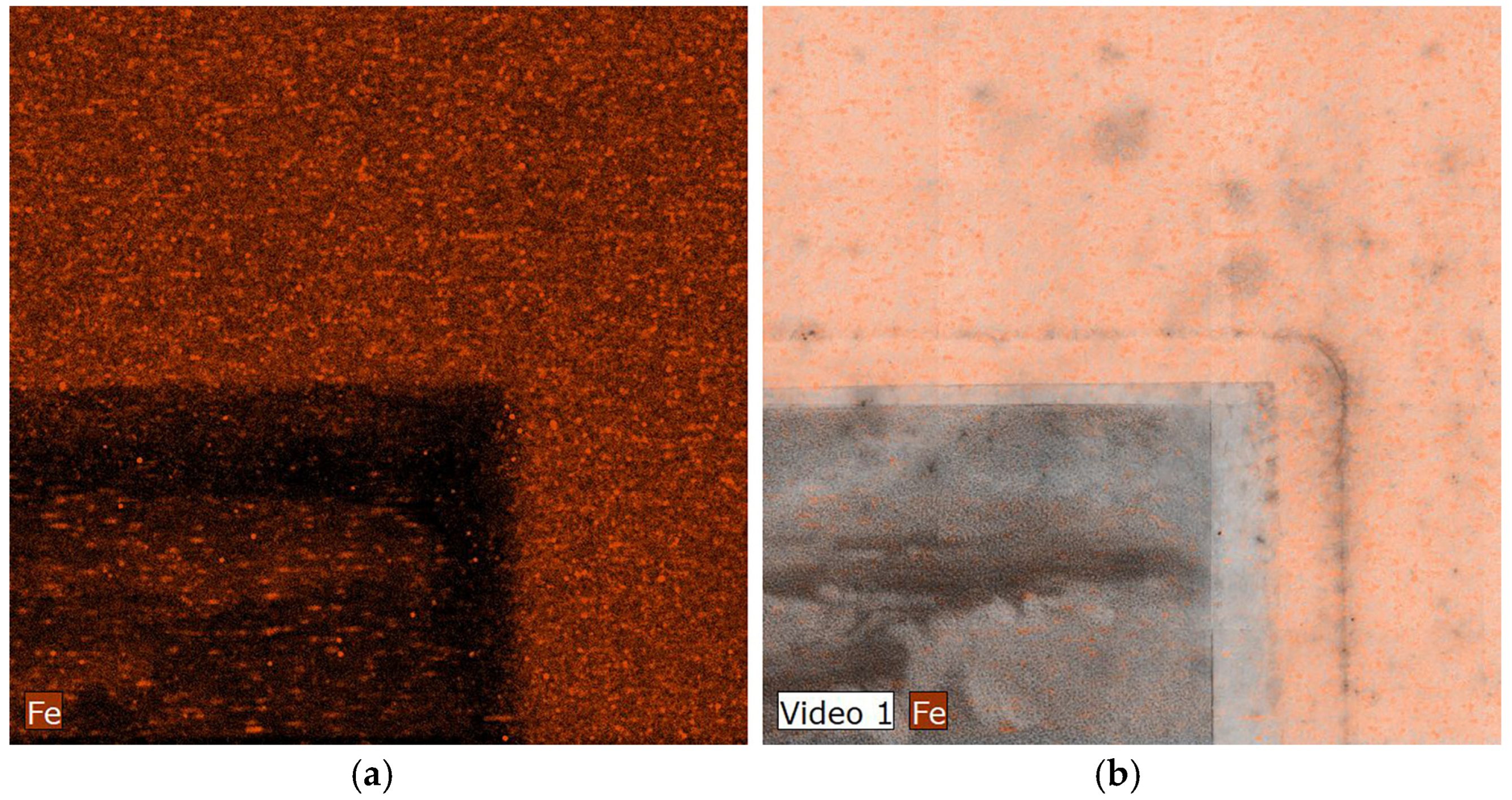
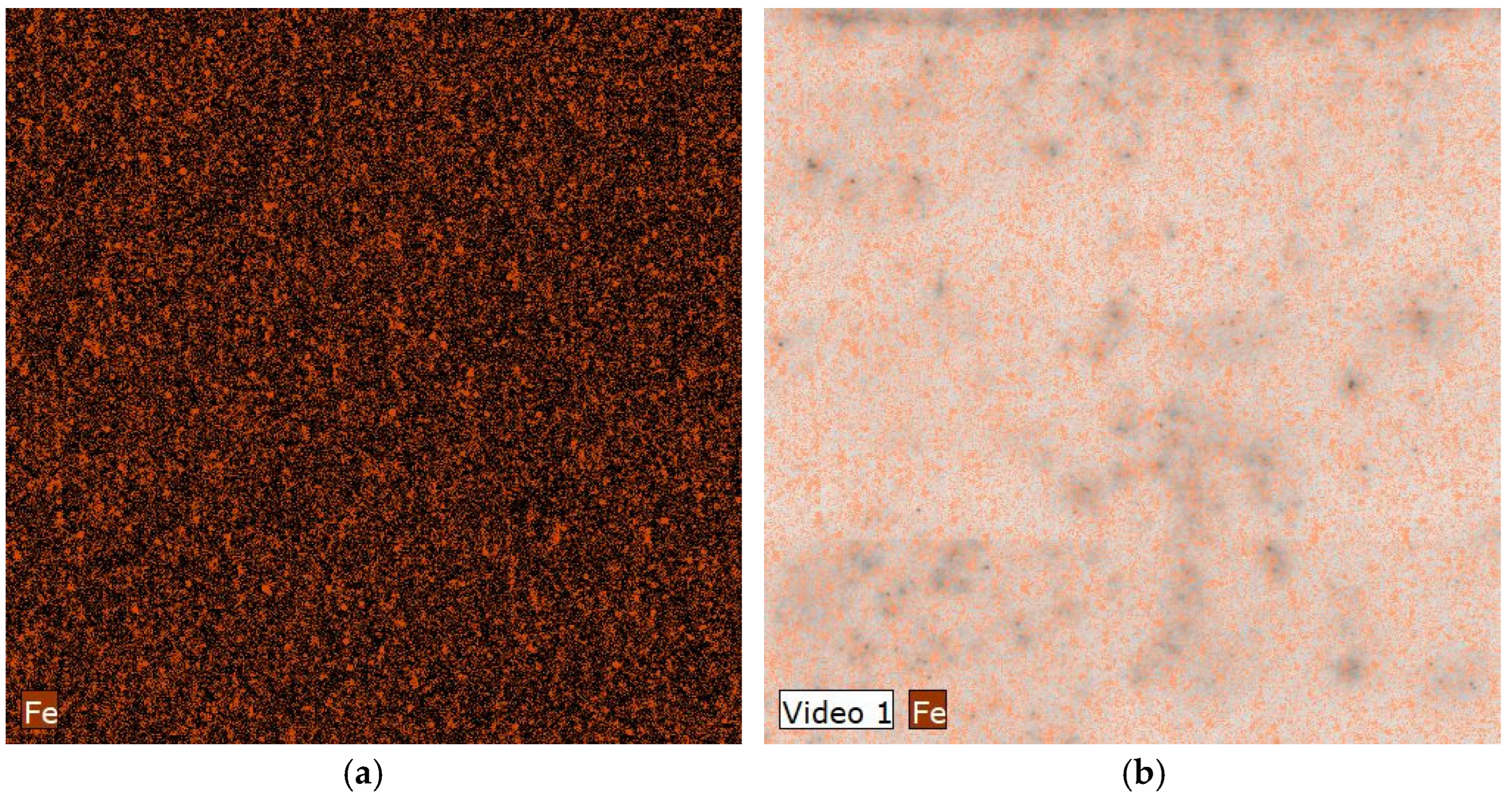
Looking at the elements in turn, iron was evenly distributed throughout the border paper, albeit with lower concentrations in the area of the print itself, probably reflecting differences between the chine collé and the border paper (Figure 6). Notably, there did not appear to be a correlation between the distribution of foxing stains and the presence of the iron.
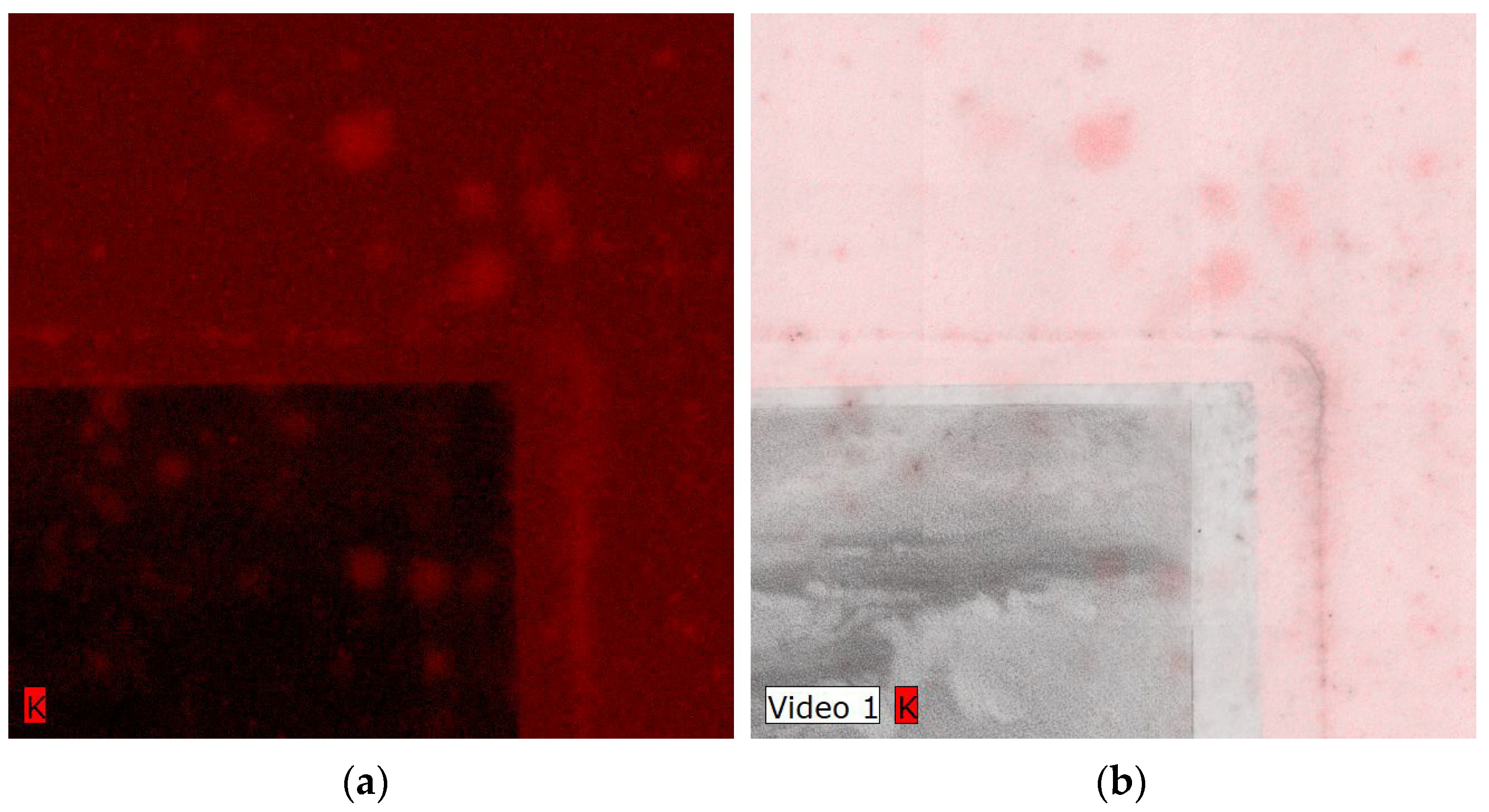
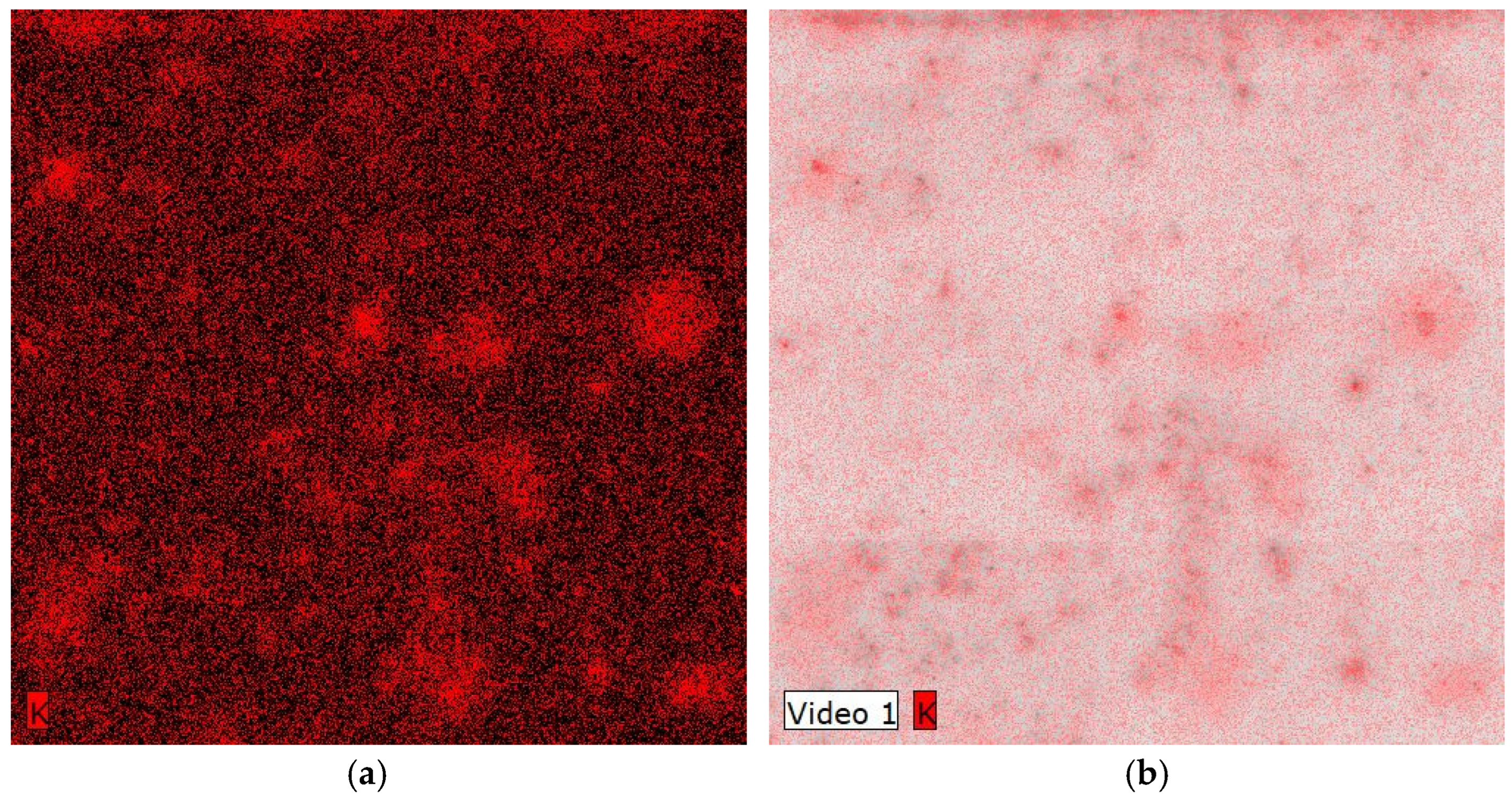
In contrast, there was a very strong correlation between the presence of potassium and the foxing stains, including both the large spots and the small spots with dark centres, as well as some of the staining along the plate mark (Figure 7). However, it is important to note that the low absolute values of potassium, as seen in the sum spectrum (Figure 5), reflect both low concentration and the limited ability of the XRF instrument to detect light elements, such as potassium, without the use of a helium flush.
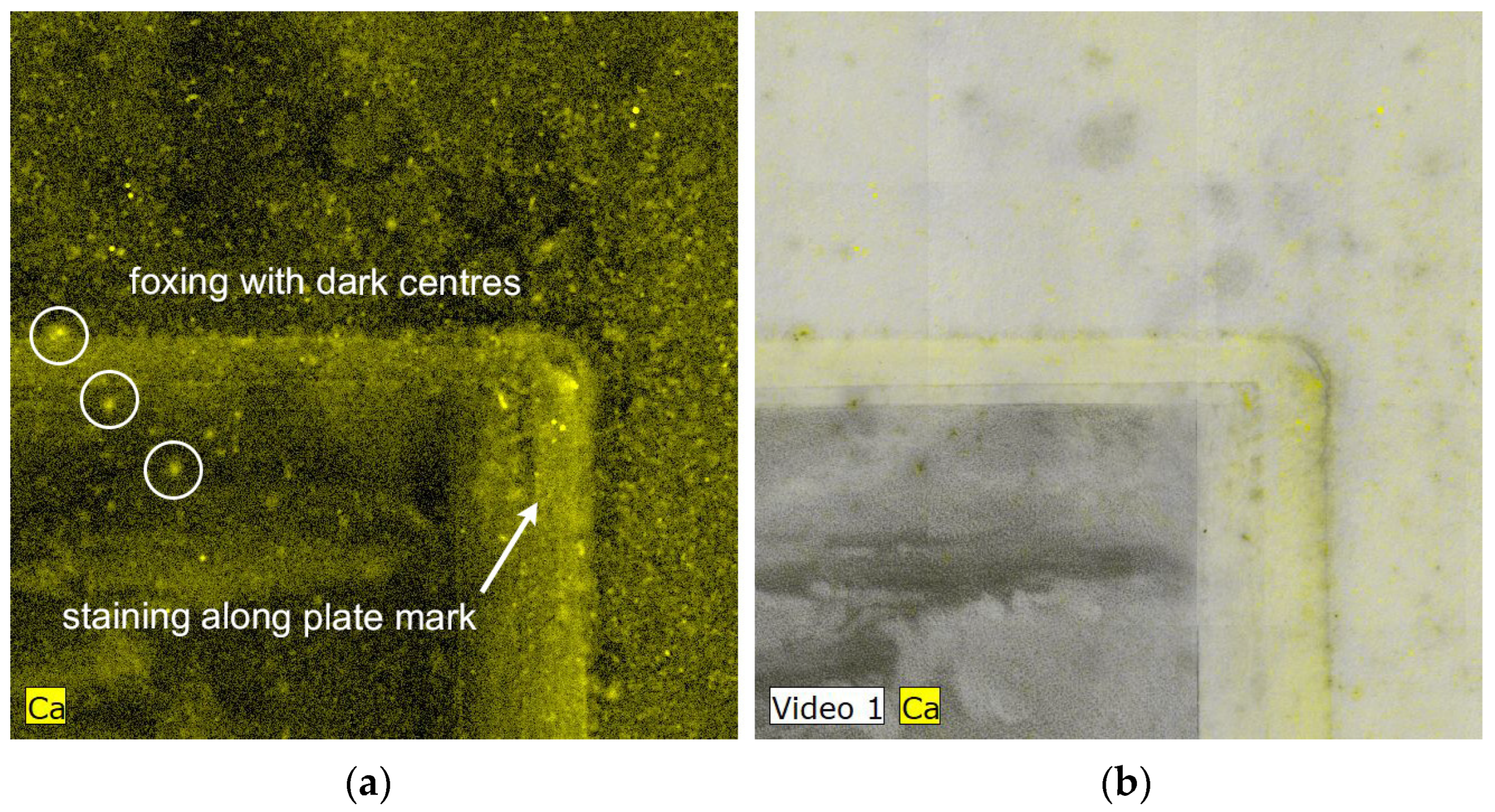
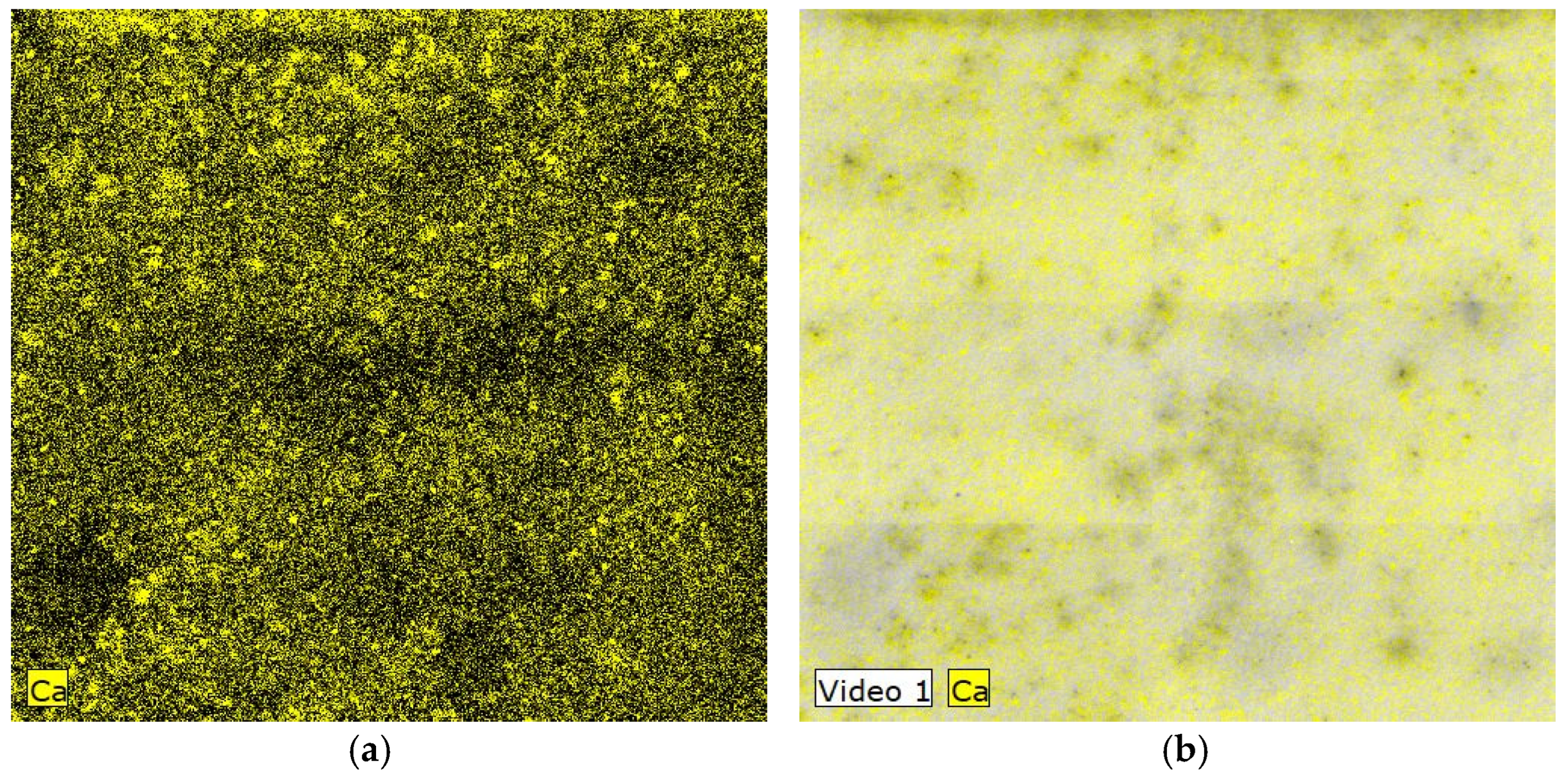
Calcium was present across the analysed area and was especially high where there were foxing stains with dark brown centres (Figure 8). Calcium was also concentrated along the plate mark, correlating with the staining there.
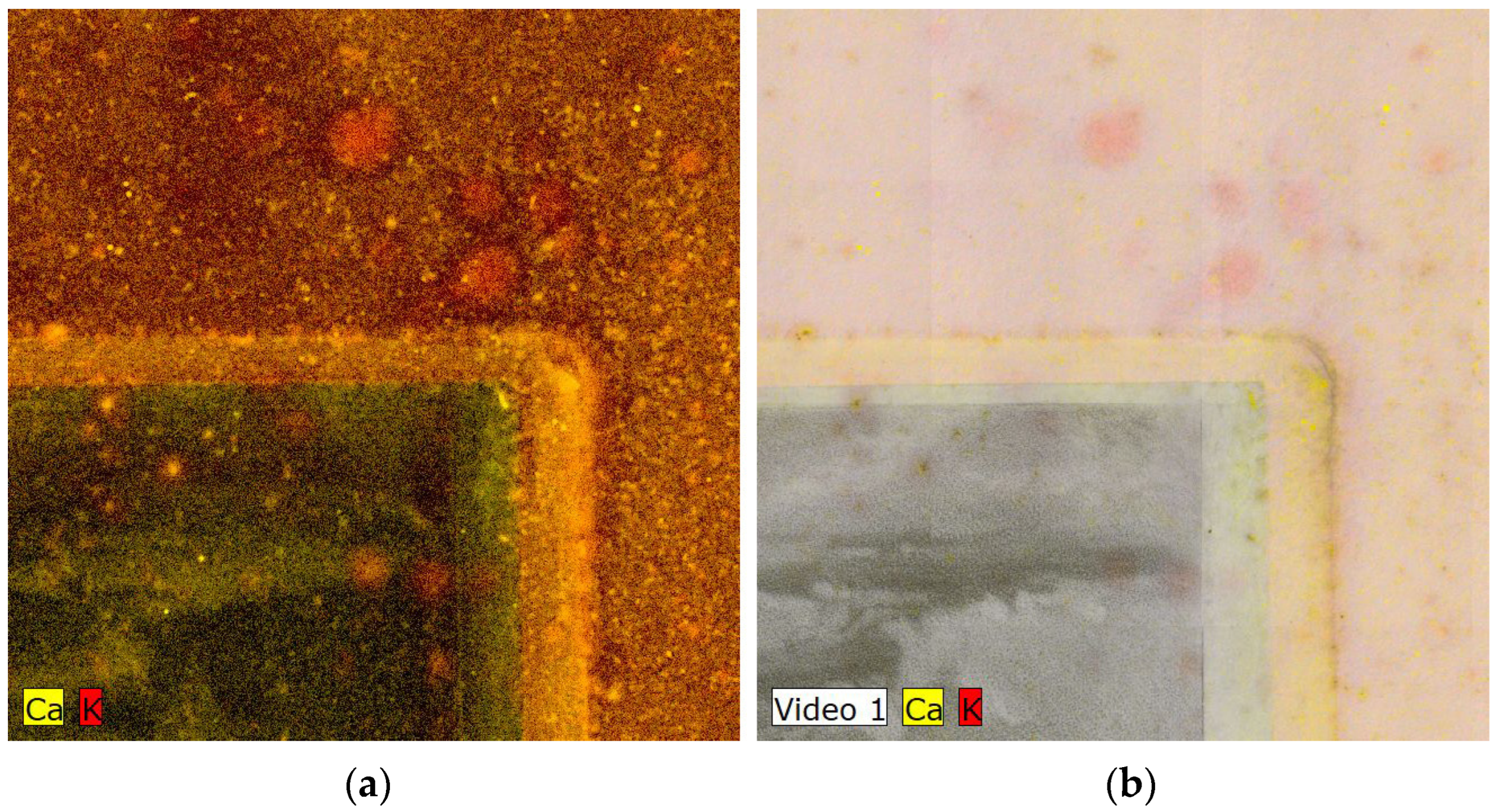
The combined elemental distribution map for potassium and calcium showed that they had distinct distributions, with each specific to the different types of staining (Figure 9). Potassium correlated with the large, diffuse foxing stains, and to a lesser extent, with the small foxing stains. Calcium correlated with the foxing spots with dark centres but not with the large, diffuse foxing stains. Both potassium and calcium correlated with the staining along the plate mark, although the calcium showed a wider distribution in those areas.
Reinforcing the association of potassium and calcium, but not iron, with the distribution of foxing stains, there was also a strong correlation between the two elements, particularly potassium, and the areas which appeared fluorescent under UV illumination (Figure 3).
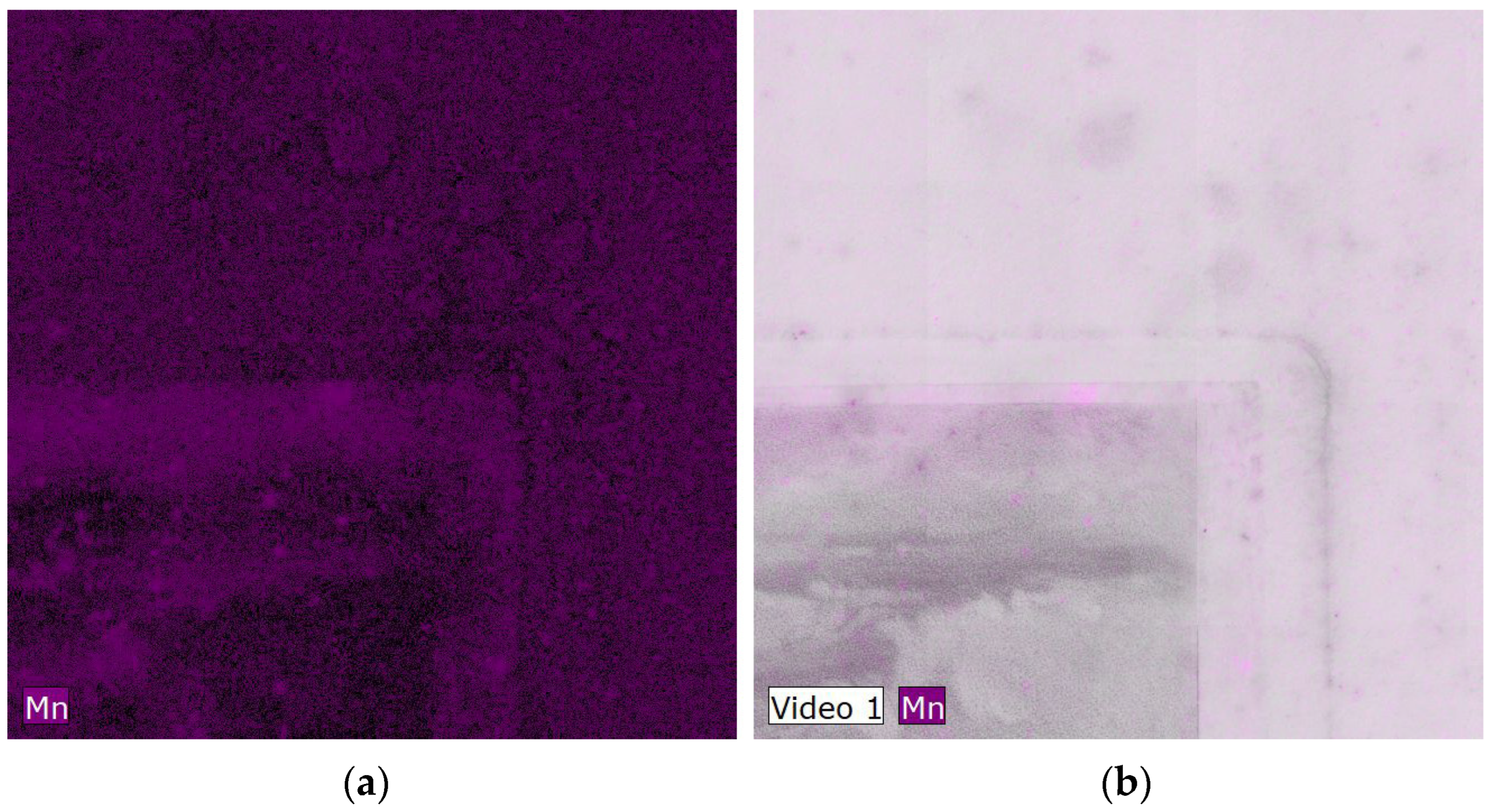
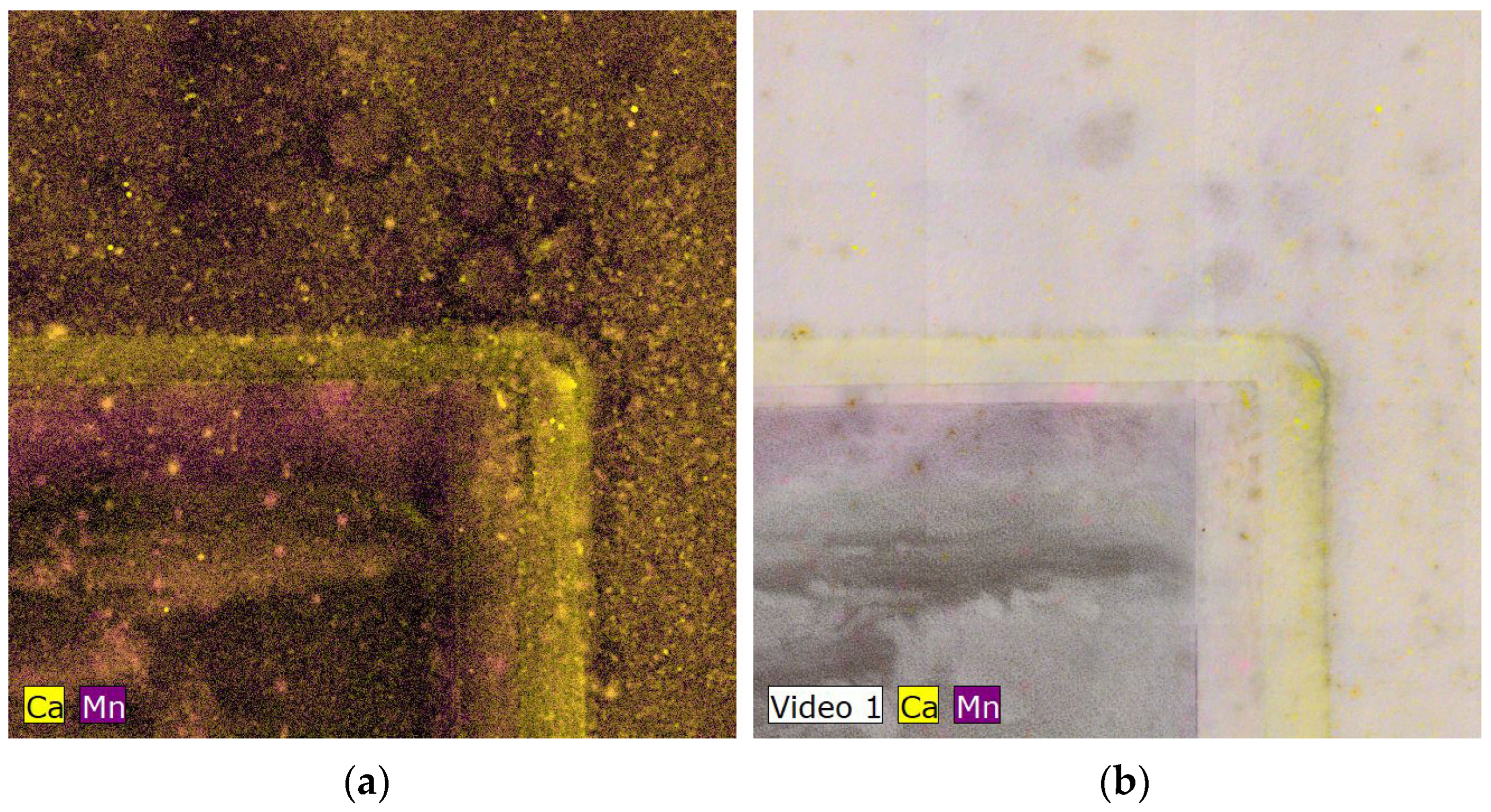
Manganese was present in the paper in low concentrations and in clusters, particularly in the printed area (Figure 10). Whilst associated with calcium in some places, the correlation between the presence of manganese and discolouration was less clear (Figure 11).
Copper and zinc were present as small dots in the border paper, but not in the print itself, either as the individual metals or combined (i.e., as brass). These possibly represent metallic inclusions in the paper from the papermaking process. (See Supplementary Material for additional elemental distribution maps).

3.2. During and After Treatment: Effect of Treatment on Chemical Composition

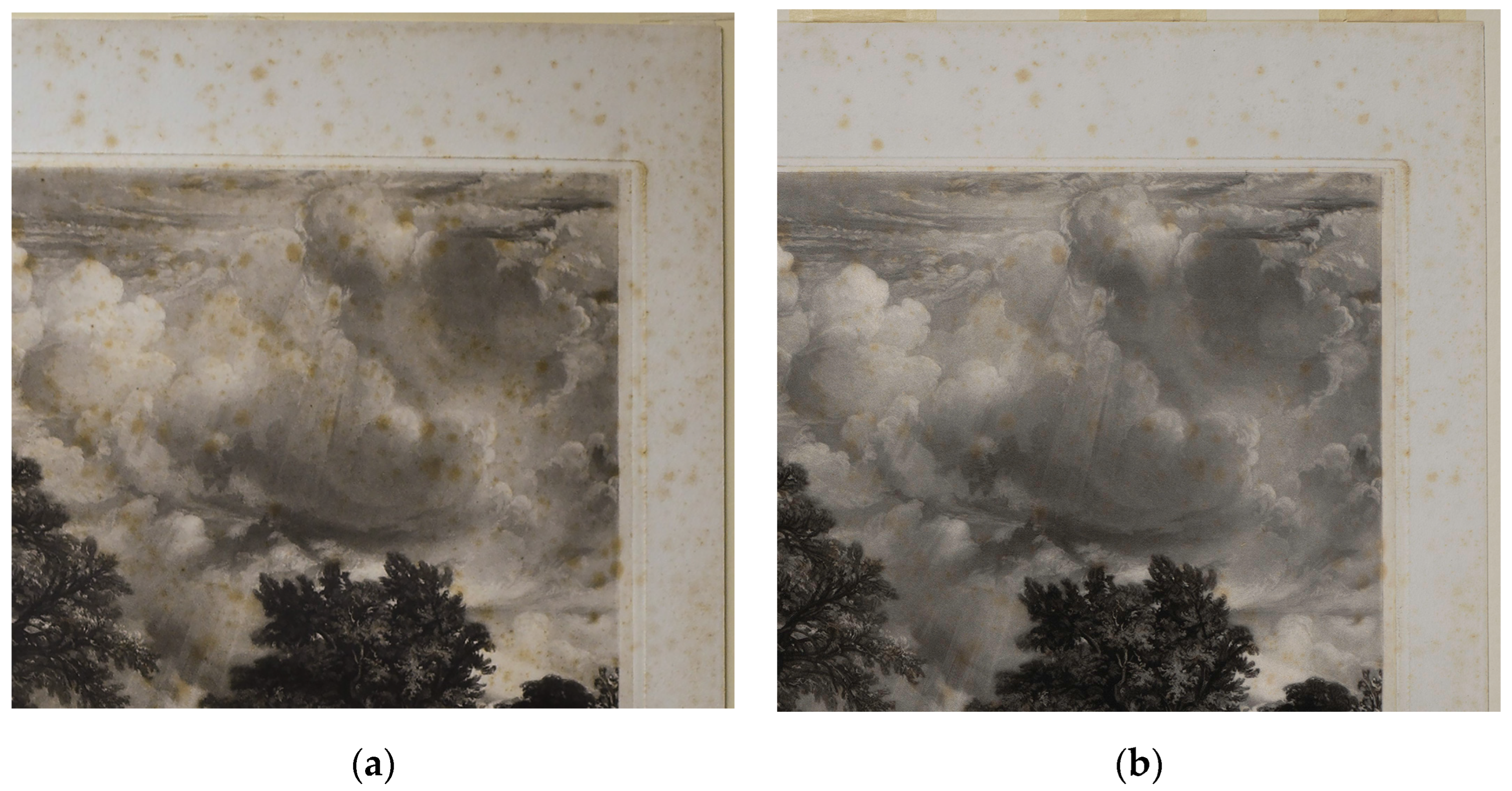
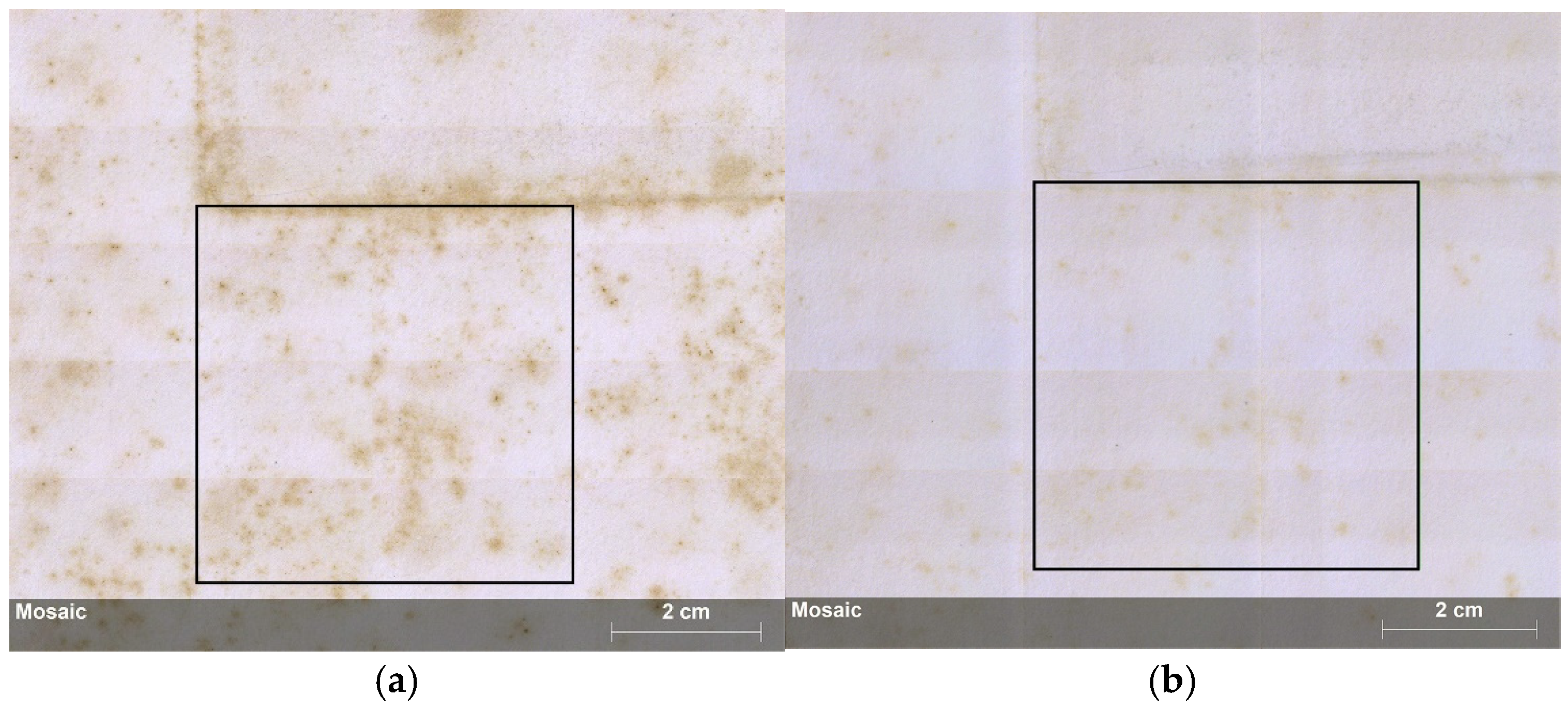
Analysis of the same area was performed during and after the conservation treatment. The treatment was successful in reducing the appearance of the foxing stains, especially within the printed image, although darker foxing spots were still visible within the border paper. The overall brightness of the papers was also improved (Figure 12).
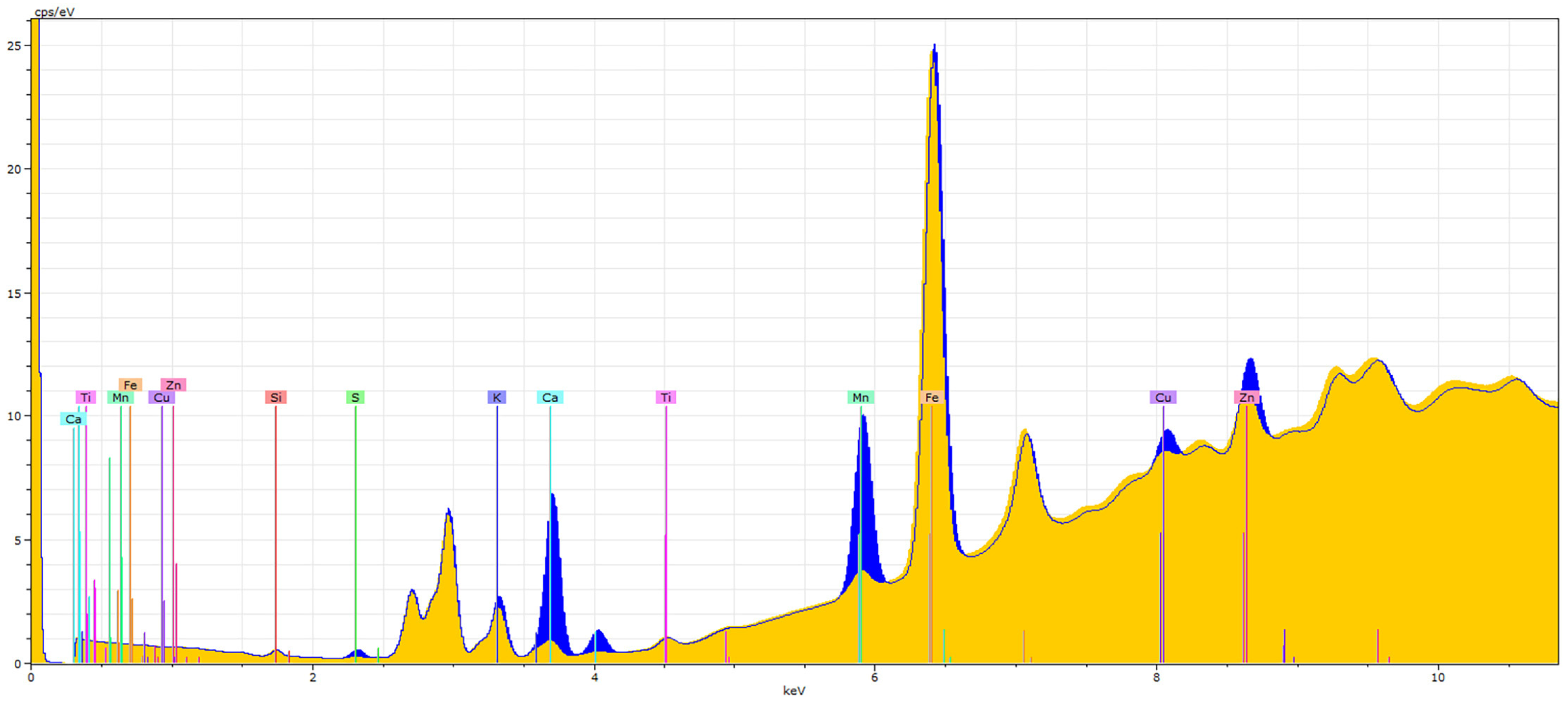
Although, as discussed in the methodology, the results are qualitative, not quantitative, comparison of the sum spectra of the analysed area before and during treatment showed noticeable changes in the composition (Figure 13). The peaks for sulphur, calcium, manganese, and copper were significantly reduced, indicating a major loss of those elements, whilst those for potassium and zinc were slightly reduced. The peak for iron appeared unchanged.
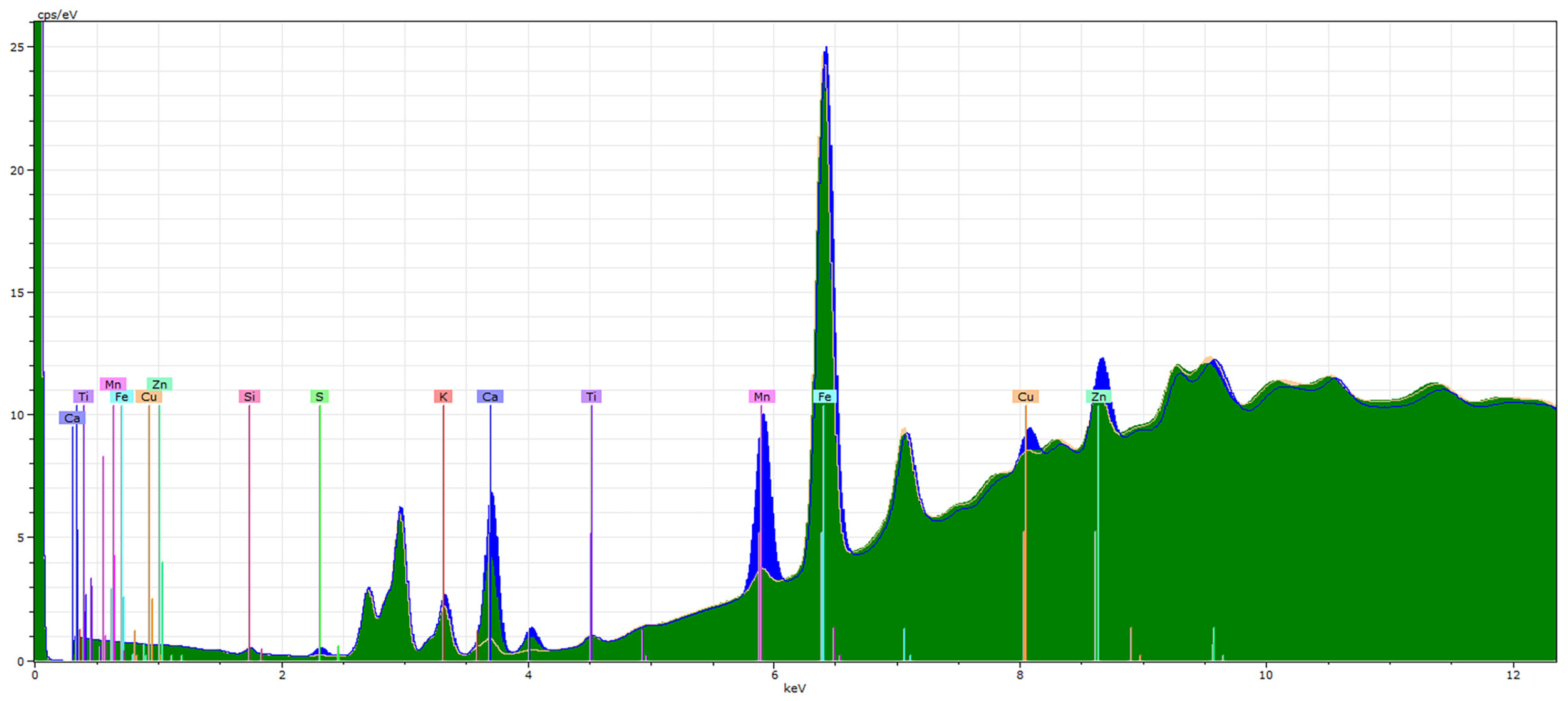
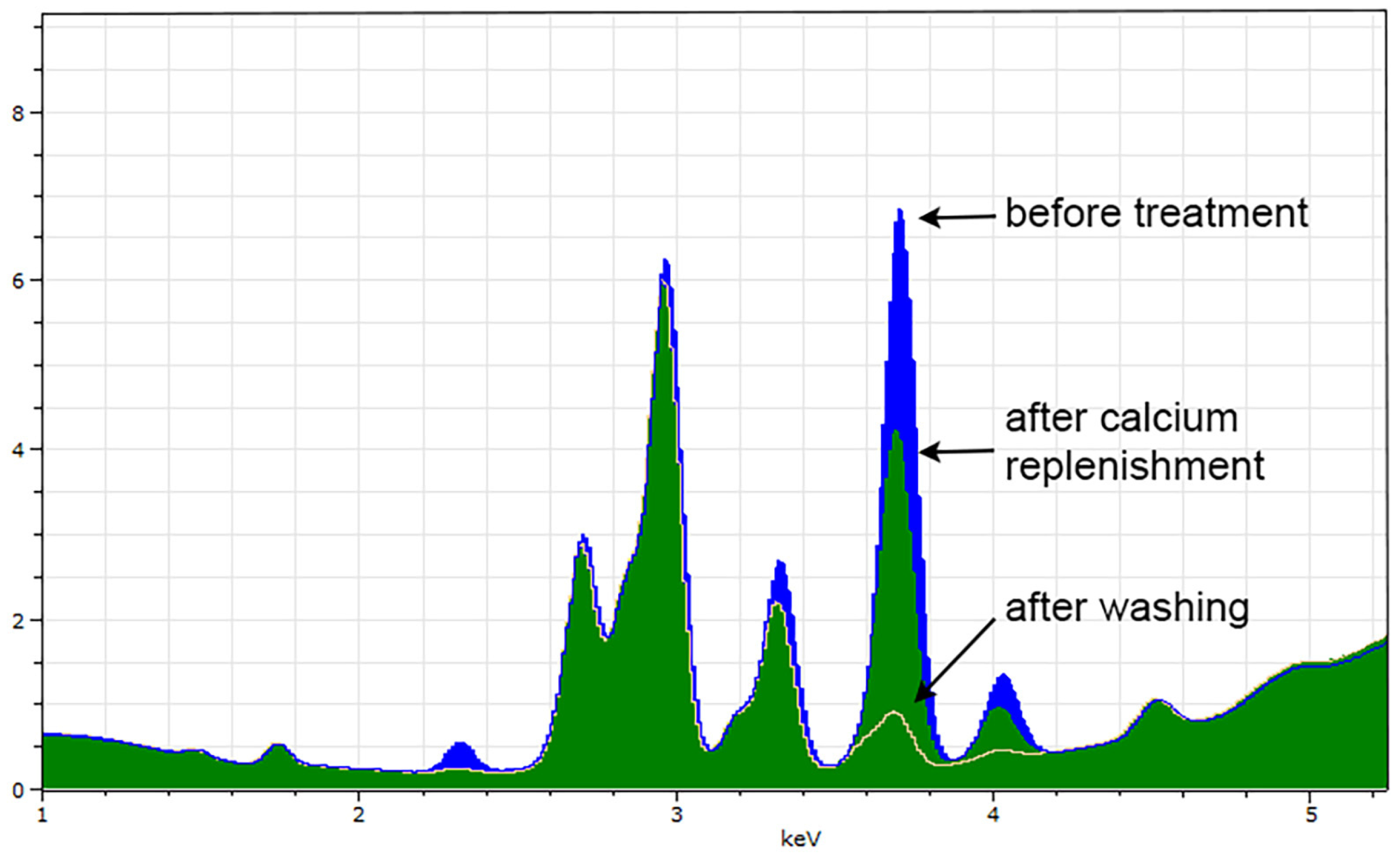
After the calcium replenishment treatment (spray application of calcium bicarbonate), calcium increased measurably, albeit not to its original level (Figure 14 and Figure 15). Potassium and zinc showed a very minor increase, and manganese and sulphur remained at their reduced levels.
The elemental distribution maps before, during, and after treatment showed changes in the locations and concentrations of the individual elements, which add to the information provided by the spectra.
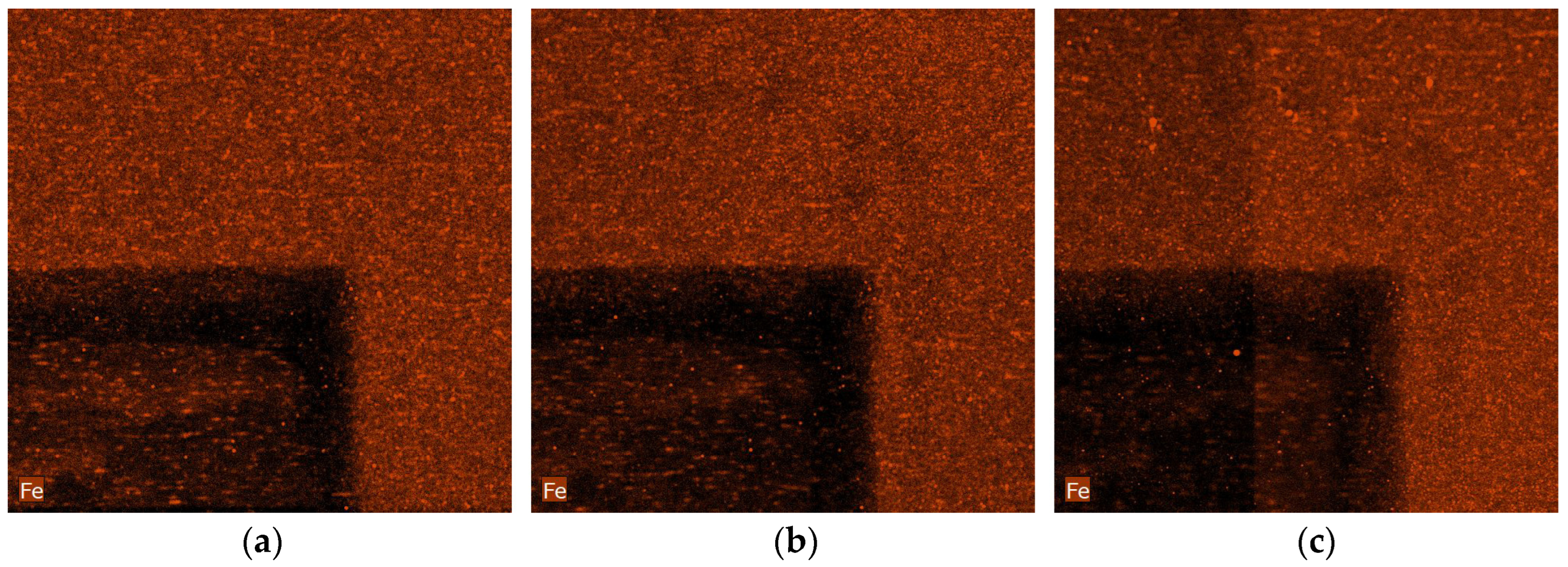
In keeping with its consistent peak height in the sum spectra, the distribution of iron did not seem to change throughout the treatment process, despite the use of both reducing and chelating agents (Figure 16).
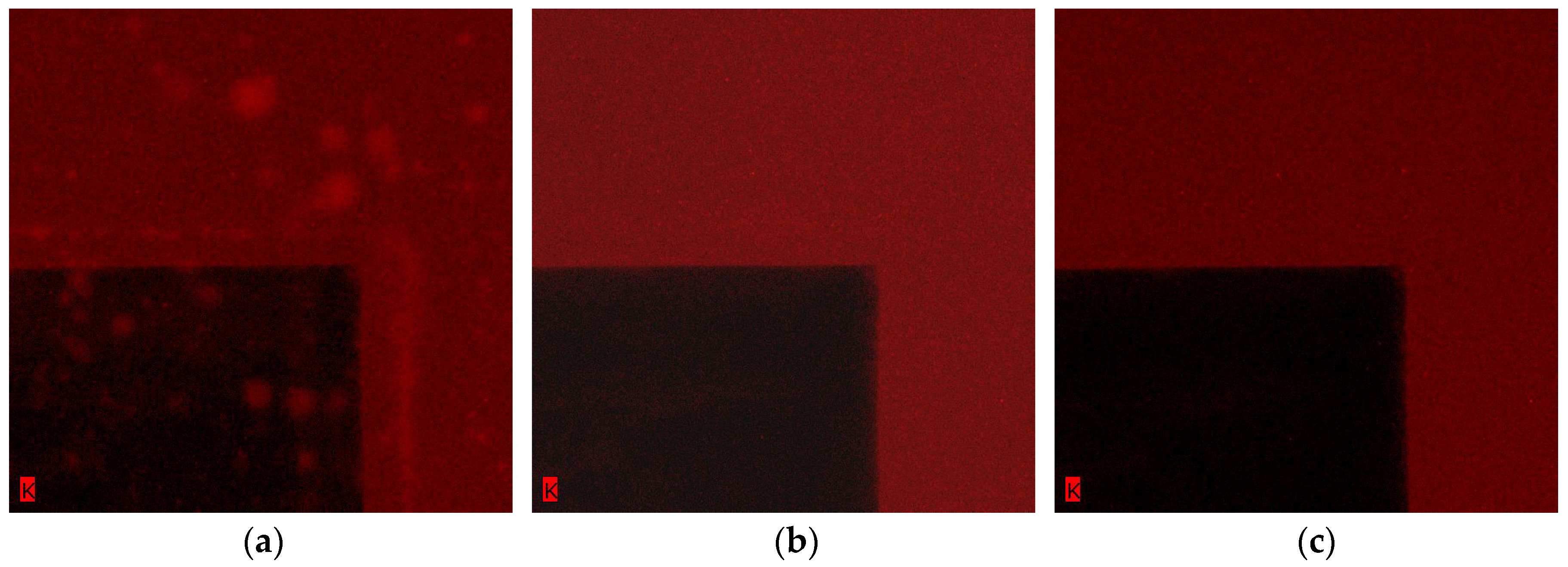
As predicted by the spectra, major changes in potassium were visible in the elemental distribution maps (Figure 17). During and after treatment, the clusters of potassium correlating with the staining disappeared, and the remaining potassium was evenly distributed within the border paper.
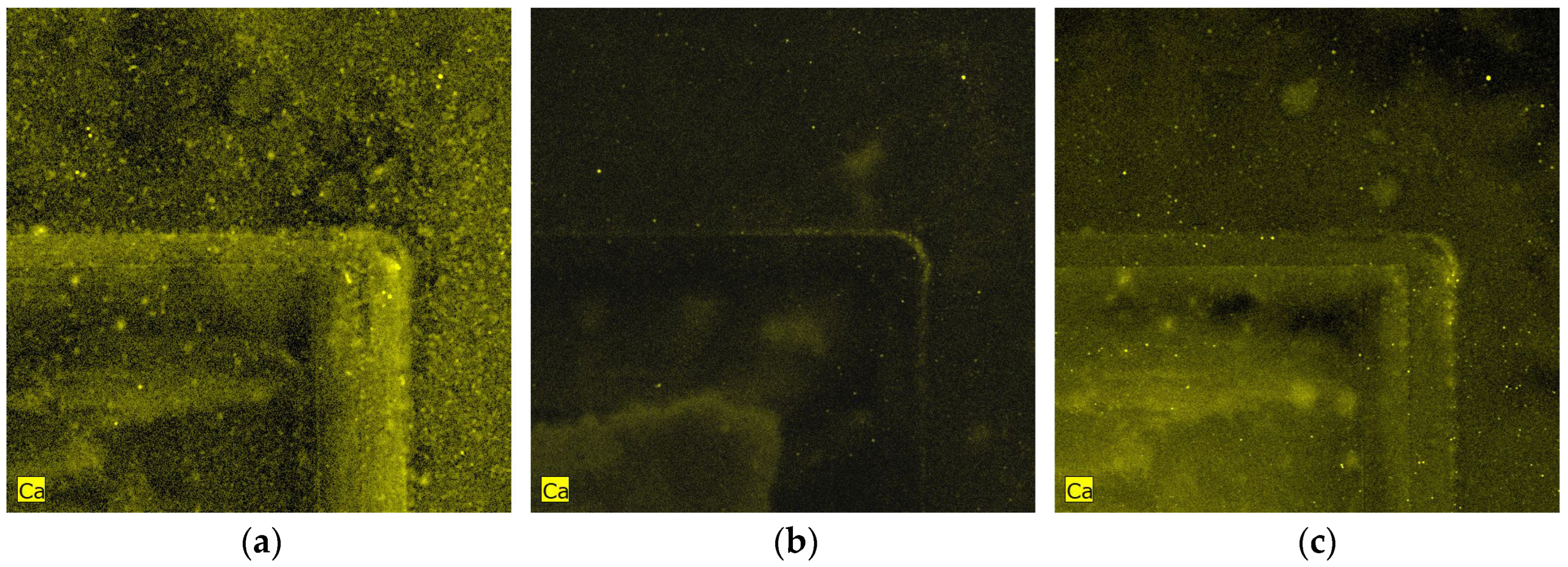
The distribution of calcium also underwent dramatic changes (Figure 18). During treatment, the calcium was reduced, particularly in areas associated with foxing stains, although there does appear to be a tideline formation (visible in the lower left of the map). After treatment, the calcium was more evenly distributed across the print, but interestingly, the calcium was especially concentrated in the areas which had the worst stains before treatment.
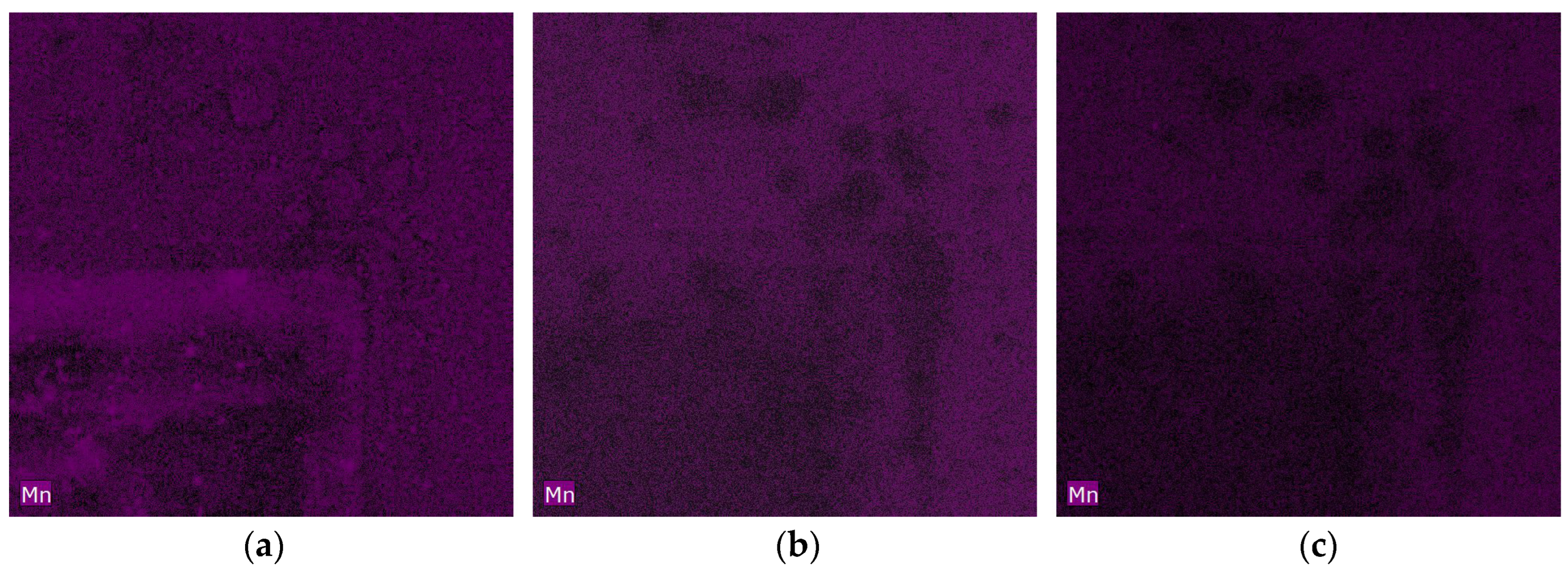
During and after treatment, the clusters of manganese seemingly disappeared, and there was a visible absence of manganese in what had been the worst areas of foxing (Figure 19).

4. Discussion

Several causes of foxing stains have been proposed, with staining often attributed to the presence of iron. However, our results suggest that, at least in this instance, the distribution of foxing stains was associated not with the presence of iron, but rather with that of calcium and potassium.
The relationship between the visible staining and calcium, along with other elements such as potassium and manganese, is of major interest. Recent work by Duncan et al. [24], also using scanning XRF, similarly noted the correlation of calcium, potassium, and sulphur with a disfiguring tideline on an intaglio print, although in that instance, a certain amount of these elements was likely introduced by the contaminated water. Duncan et al. [24] were able to reduce the extent of staining by gel washing, with a concomitant decrease in the concentration of these ions also observed.
Our results also showed that aqueous treatment with chelating agents led to a decrease in calcium content and thus had a potential detrimental effect on the long-term stability of the paper. The deacidification treatment (i.e., calcium replenishment) was effective at increasing the calcium, albeit not to the original levels. These results reinforce the findings of previous studies based on unstained paper samples [1,30,31,32].
The mobility of calcium seen within our study needs further research, and whether the formation of a “tideline” during the replenishing process is of concern, especially depending on the elapsed time between treatment steps. The final build-up of calcium in the areas which initially were most stained also needs to be studied. Do our results reflect damage to the cellulose network, and will the accumulation of calcium in those areas lead to more staining, or less, in the future?
Both the images of the foxing stains under UV illumination and the mapping of calcium showed small areas of fluorescence and concentrations that have yet to show visible staining, which may prove a useful tool in understanding the progression of deterioration within paper.
Contrary to assumptions, there did not, at least in this case study, seem to be a correlation between iron and foxing stains. This finding reinforces several previous studies, which also found the correlation to be inconsistent [5,7,13,14]. Significantly, chelating agents, often chosen specifically for the purpose of removing iron, did not have a noticeable effect on the iron concentration. It may not have decreased for several reasons. The sodium borohydride may not have been effective in reducing the insoluble ferric iron (Fe3+), with a stronger reducing agent needed instead (XRF cannot distinguish between the oxidation states of iron). Also, any ferrous (Fe2+) ions present may not have been effectively complexed, solubilised and removed due to the pH concentration and/or the chelating agent chosen. Finally, it may be present as “fixed” iron, i.e., in a stable compound, such as iron silicate within a clay filler [25] (p. 39). This is less reactive and harder to chelate and would seemingly be less likely to contribute towards cellulose deterioration.
Whilst this study does not address the root causes of foxing stains, the reason for the observed distributional changes in certain elements can be suggested. We hypothesise that cellulose degradation products form ionic bonds with calcium and potassium, and then continued deterioration of the paper results in the build-up of stains as foxing spots. The complexing of calcium ions with soil particles has been previously noted by Daniels [43] (p. 343), and Anders et al. [44] (p. 483) stated that carboxyl groups on oxidised cellulose chains form ionic bonds with alkaline earth cations, such as calcium. Therefore, our analysis also suggests that the mechanism underlying enhanced paper washing is different from what was expected. Rather than forming complexes with iron, chelating agents seemed to preferentially bind with calcium and other elements, including potassium and manganese, which facilitated the removal of soluble degradation products. Albeit without spatially resolved data, previous studies also noted this [1,31]. This mechanism would suggest that enhanced washing by conservators would need to target the removal of calcium, potassium, and other elements for the most effective stain reduction treatments. Improvements to deacidification methods are essential. A particular focus should be given to changes in the calcium concentration, including the feasibility of calcium replenishment and the implications of treatments on the long-term preservation of paper.
More research is still needed into the root causes of foxing stains—whether environmental conditions, microbial activity, metallic impurities, paper additives or other factors, and whether the removal of the transition metals is important, even though the mechanism behind the stain removal was not linked to their presence in this instance. The treatment of The Cornfield with chelating agents did reduce the levels of copper (see sum spectra above, Figure 13 and Figure 14), which, as an element, is more catalytically active than iron [45], and its removal should support the paper’s long-term preservation. Building on this study, the nature of different types of staining and methods to distinguish them, e.g., using XRF, needs further investigation. Once the causes of staining are better understood, different methods of optimising treatments could be tested.
Finally, regarding the heritage science research into paper, this study has demonstrated the usefulness of scanning XRF for the analysis of paper, as it is an entirely non-destructive technique that is capable of providing spatially resolved elemental information. Nonetheless, methodological improvements are needed to achieve the best results for different types of paper in the least time, whilst limiting the risk of damage. Equipment modifications, such as the use of a helium purge, could help improve the detection of light elements.

5. Conclusions

Scanning XRF of an artwork on paper before, during, and after treatment has provided new information on foxing stains and the use of chelating agents in paper conservation. Whilst the exact causes of foxing stains remain uncertain, the distribution of staining across the analysed artwork correlated with the presence of calcium and potassium, not with iron. Treatment with chelating agents significantly improved the visual appearance of the print but also resulted in a major reduction in the concentration of calcium, which is an element known to contribute to the stability of paper. Deacidification treatment measurably increased the amount of calcium present, albeit not to the original levels. Anecdotal results of treatments echo the outcomes of this case study and show the importance and the need for both practice-based observations and scientific studies within paper conservation research.
Although our case study only centred on a single object, our results add to the body of knowledge on foxing and the use of chelating agents, highlighting many potential avenues for future research.
In addition, this case study was designed to provide preliminary data on the use of scanning XRF to dynamically monitor conservation treatment. It has successfully demonstrated the usefulness of scanning XRF for the analysis of paper artworks and will hopefully lead to its greater adoption in paper conservation research.

Supplementary Materials

The following supporting information can be downloaded at https://www.mdpi.com/article/10.3390/app16073506/s1, Supplementary Material S1: the additional UV and digital microscopy images and the scanning XRF data (PDF).

Author Contributions

Conceptualisation, K.D.; methodology, E.L.D. and K.D.; formal analysis, E.L.D.; investigation, E.L.D. and K.D.; data curation, E.L.D.; writing—original draft preparation, E.L.D. and K.D.; writing—review and editing, E.L.D. and K.D.; visualisation, E.L.D. and K.D.; project administration, E.L.D. and K.D. All authors have read and agreed to the published version of the manuscript.

Funding

This research received no external funding.

Institutional Review Board Statement

Not applicable.

Informed Consent Statement

Not applicable.

Data Availability Statement

The original contributions presented in this study are included in the article and Supplementary Material. Further inquiries can be directed to the corresponding author.

Acknowledgments

Thanks go to Lucia Burgio and Barbara Borghese for their support of this research and our curatorial colleagues, Alice Clanachan, Katharine Martin and Juliet Ceresole for their support during the print’s treatment. Thank you to Mathilde Renauld for lending a pair of hands for the treatment of such a large print. We also thank Marieke Gerken and Roald Tagle, from Bruker Nano GmbH, for their advice during analysis. We are grateful to the UKRI Arts and Humanities Research Council (reference AH/V012134/1), through the Capability for Collections Fund (CapCo), for funding the refurbishment of the V&A science laboratory, including the purchase of the scientific equipment that was used in this study. Thanks to Teresa Duncan and Amy Hughes for their generosity in sharing their own research during K.D.’s Fellowship, which helped inspire this project, and to Kathryn Morales for her guidance regarding mapping.

Conflicts of Interest

The authors declare no conflicts of interest.

Abbreviations

The following abbreviations are used in this manuscript:
XRFX-ray fluorescence spectroscopy
SEM-EDXScanning electron microscopy–energy dispersive spectrometry
DPTADiethylenetriaminepentaacetic acid
EDTAEthylenediaminetetraacetic acid
TACTri-ammonium citrate

Appendix A

A preliminary scan of a small area, measuring 50 mm × 50 mm, located at the lower left of the print and consisting only of the border paper, was analysed to test scanning parameters (Figure A1). The X-ray tube was operated at 50 kV and 600 μA with no filter. The area analysis was performed with a 100 μm spot size at a 100 μm step distance and a dwell time of 25 ms/pixel. The spectra were processed and elemental distribution maps were created using the Bruker M6 Jetstream software. For the scans, an aluminium plate, covered in Kapton (polyimide) tape, was placed behind the print in order to reduce the background noise. The results produced by these parameters were noisier than desirable, so for the final scan (in the main article), the dwell time was increased to 100 ms/pixel. Analysis of the test area was only performed before and during the treatment (after washing but before calcium replenishment).
Figure A1. The lower left corner of the print, showing the area of the scanning XRF analysis (within the black border) (a) before treatment and (b) during treatment.
Applsci 16 03506 g0a1
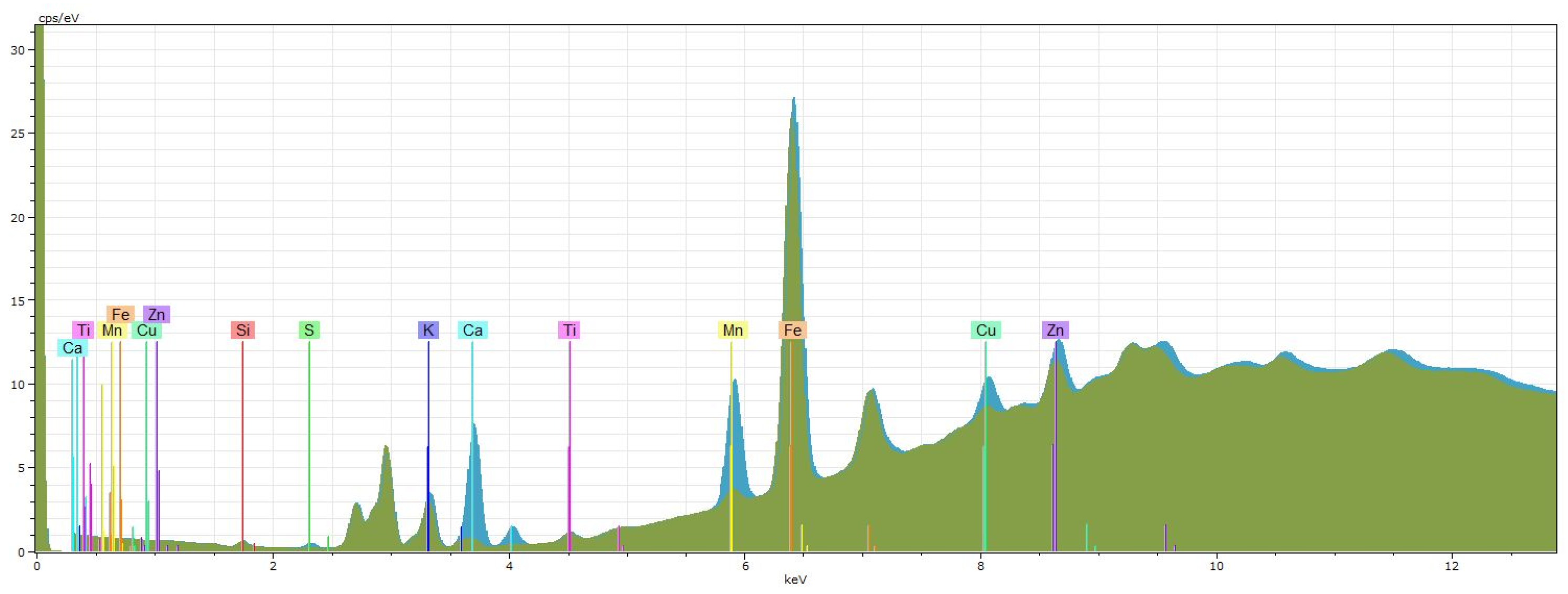
In the sum spectrum before treatment, potassium (K), calcium (Ca), manganese (Mn), and iron (Fe) are the main elements seen, along with minor amounts of sulphur (S), titanium (Ti), copper (Cu), zinc (Zn), and strontium (Sr) (Figure A2).
Figure A2. The sum spectrum of the lower left corner of the print before treatment.
Applsci 16 03506 g0a2
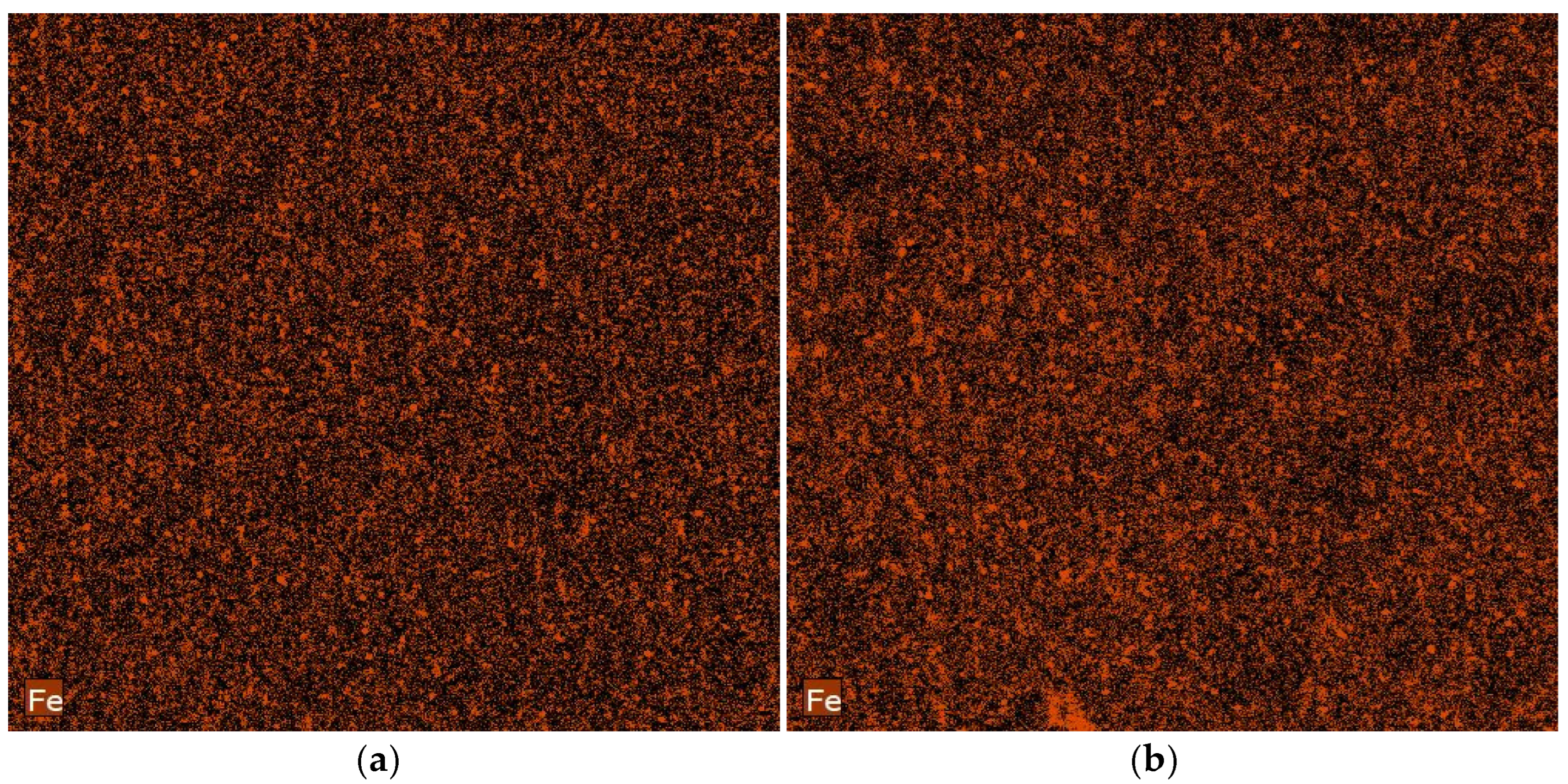
As with the larger area of the print, the distribution of iron did not seem to correlate with foxing (Figure A3).
Figure A3. The elemental distribution map of iron (Fe Kα) (a) without and (b) with a video image.
Applsci 16 03506 g0a3
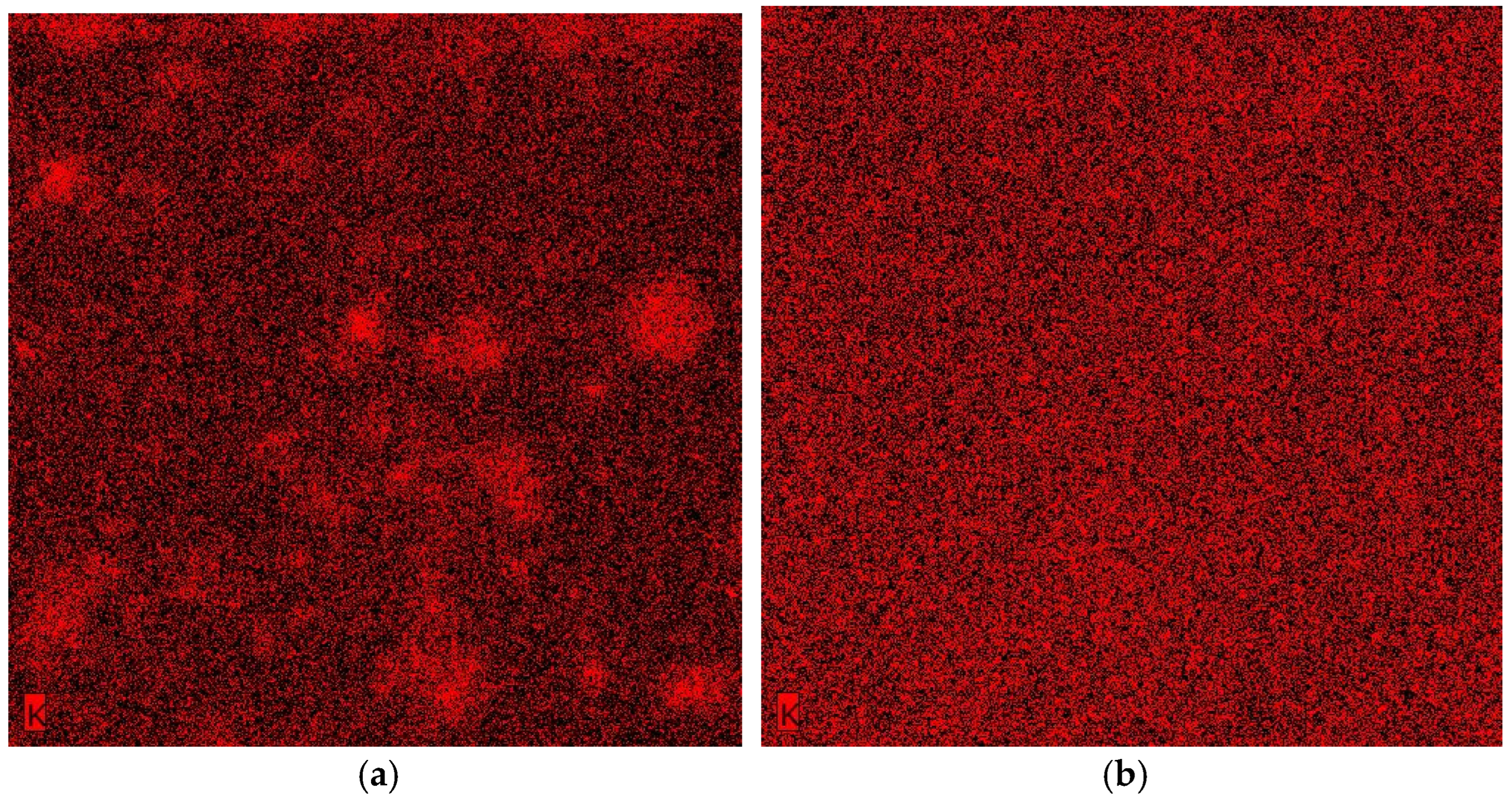
In contrast, the distribution of potassium did correlate with staining (Figure A4).
Figure A4. The elemental distribution map of potassium (K Kα) (a) without and (b) with a video image.
Applsci 16 03506 g0a4
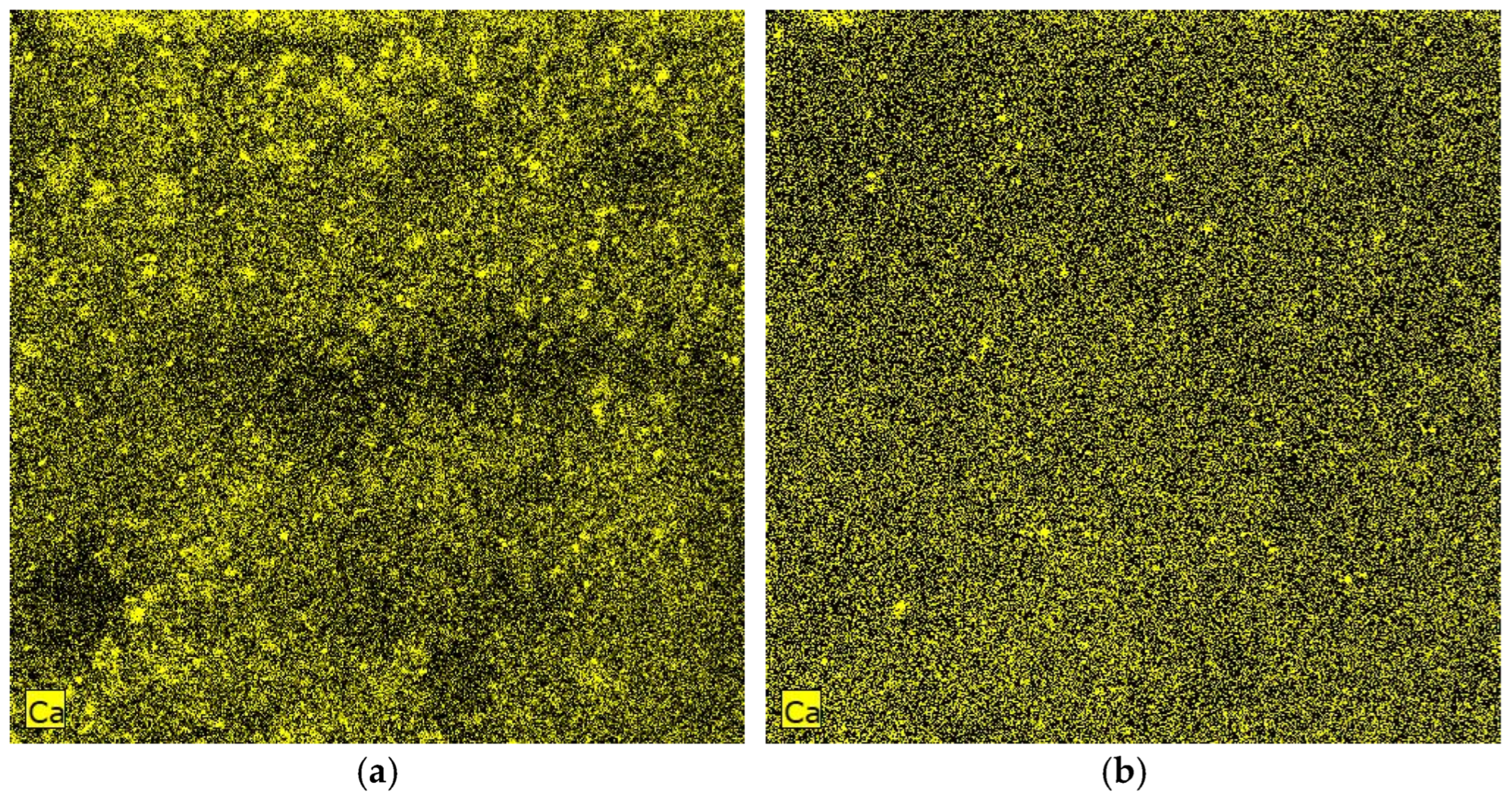
Calcium was unevenly distributed across the area (Figure A5).
Figure A5. The elemental distribution map of calcium (Ca Kα) (a) without and (b) with a video image.
Applsci 16 03506 g0a5
Enhanced washing (see details in main article) resulted in a decrease in sulphur, calcium, manganese, and copper, as shown by the sum spectrum (Figure A6).
Figure A6. The sum spectra of the lower left corner of the print before treatment (blue) and after treatment (green).
Applsci 16 03506 g0a6
The distribution of iron showed little change after washing (Figure A7).
Figure A7. The elemental distribution map of iron (Fe Kα) (a) before treatment and (b) during treatment.
Applsci 16 03506 g0a7
In contrast, the clusters of potassium seemed to disappear after washing (Figure A8).
Figure A8. The elemental distribution map of potassium (K Kα) (a) before treatment and (b) during treatment.
Applsci 16 03506 g0a8
Calcium also seemed to decrease in concentration and clustering (Figure A9).
Figure A9. The elemental distribution map of calcium (Ca Kα) (a) before treatment and (b) during treatment.
Applsci 16 03506 g0a9

References

  1. Venus, P.; Henniges, U.; Brückle, I.; Maitland, C.; Smith, T.J.; Moriarty, M.; Bladek, K.; Vedoy, D.; Potthast, A. Testing Ammonium Citrates for Enhanced Washing of Paper. J. Am. Inst. Conserv. 2025, 64, 176–195. [Google Scholar] [CrossRef]
  2. Choi, S. Foxing on Paper: A Literature Review. J. Am. Inst. Conserv. 2007, 46, 137–152. [Google Scholar] [CrossRef]
  3. Mina, L. Foxy Underpants: Or the Use of Chelators and Enzymes to Reduce Foxing Stains on Early Nineteenth Century Men’s Linen Underpants. J. Am. Inst. Conserv. 2020, 59, 3–17. [Google Scholar] [CrossRef]
  4. Whitmore, P.M. Paper Ageing and the Influence of Water. In Paper and Water: A Guide for Conservators; Banik, G., Brückle, I., Eds.; Siegl: Munich, Germany, 2018; pp. 219–254. [Google Scholar]
  5. Florian, M.-L.E. The Role of the Conidia of Fungi in Fox Spots. Stud. Conserv. 1996, 41, 65–75. [Google Scholar] [CrossRef]
  6. Cain, C.E.; Miller, B.A. Proposed Classification of Foxing. In Book and Paper Group Postprints, American Institute for Conservation 10th Annual Meeting Milwaukee; AIC: Washington, DC, USA, 1982; pp. 29–30. [Google Scholar]
  7. Bicchieri, M.; Pappalardo, G.; Romano, F.P.; Sementilli, F.M.; De Acutis, R. Characterization of Foxing Stains by Chemical and Spectrometric Methods. Restaurator 2001, 22, 1–19. [Google Scholar] [CrossRef]
  8. Barrett, T.; Ormsby, M.; Lang, J.B. Non-Destructive Analysis of 14th–19th Century European Handmade Papers. Restaurator 2016, 37, 93–135. [Google Scholar] [CrossRef]
  9. Bertalan, S. Foxing and Reverse Foxing: Condition Problems in Modern Papers and the Role of Inorganic Addivites. Book Pap. Group Annu. 2015, 33, 13–22. [Google Scholar]
  10. Barrett, T.; Shannon, R.; Wade, J.; Lang, J. XRF Analysis of Historical Paper in Open Books. In Handheld XRF for Art and Archaeology; Shugar, A.N., Mass, J.L., Eds.; Leuven University Press: Leuven, Belgium, 2013; pp. 191–214. [Google Scholar]
  11. Stephens, C.H.; Barrett, T.; Whitmore, P.M.; Wade, J.A.; Mazurek, J.; Schilling, M. Composition and Condition of Naturally Aged Papers. J. Am. Inst. Conserv. 2008, 47, 201–215. [Google Scholar] [CrossRef]
  12. Malešič, J.; Kojc, M.; Šelih, V.S. Assessment of the Effect of Various Bleaching Agents on Papers with Foxing Stains. Restaurator 2008, 29, 142–154. [Google Scholar] [CrossRef]
  13. Manso, M.; Pessanha, S.; Figueira, F.; Valadas, S.; Guilherme, A.; Afonso, M.; Rocha, A.C.; Oliveira, M.J.; Ribeiro, I.; Carvalho, M.L. Characterisation of Foxing Stains in Eighteenth to Nineteenth Century Drawings Using Non-Destructive Techniques. Anal. Bioanal. Chem. 2009, 395, 2029–2036. [Google Scholar] [CrossRef]
  14. Nunes, M.; Relvas, C.; Figueira, F.; Campelo, J.; Candeias, A.; Caldeira, A.T.; Ferreira, T. Analytical and Microbiological Characterization of Paper Samples Exhibiting Foxing Stains. Microsc. Microanal. 2015, 21, 63–77. [Google Scholar] [CrossRef]
  15. Koochakzaei, A.; Alizadeh Gharetapeh, S. Paper Foxing Stains on a Historic Manuscript from the Early Qajar Era: Abiotic or Biotic Foxing? Heritage 2021, 4, 1366–1374. [Google Scholar] [CrossRef]
  16. Pinzari, F.; Pasquariello, F.; De Mico, A. Spoilage Reproduced Under Controlled Conditions. Macromol. Symp. 2006, 238, 57–66. [Google Scholar] [CrossRef]
  17. Alfeld, M.; de Viguerie, L. Recent Developments in Spectroscopic Imaging Techniques for Historical Paintings—A Review. Spectrochim. Acta Part B At. Spectrosc. 2017, 136, 81–105. [Google Scholar] [CrossRef]
  18. Romano, F.P.; Janssens, K. Preface to the Special Issue on: MA-XRF “Developments and Applications of Macro-XRF in Conservation, Art, and Archeology” (Trieste, Italy, 24 and 25 September 2017). X-Ray Spectrom. 2019, 48, 249–250. [Google Scholar] [CrossRef]
  19. Daher, C.; Sutherland, K.; Stratis, H.; Casadio, F. Paul Gauguin’s Noa Noa Prints: Multi-Analytical Characterization of the Printmaking Techniques and Materials. Microchem. J. 2018, 138, 348–359. [Google Scholar] [CrossRef]
  20. Daly, N.S.; Sullivan, M.; Lee, L.; Delaney, J.K.; Trentelman, K. Odilon Redon’s Noir Drawings: Characterization of Materials and Methods Using Noninvasive Imaging and Spectroscopies. Herit. Sci. 2019, 7, 43. [Google Scholar] [CrossRef]
  21. Bicchieri, M.; Biocca, P.; Caliri, C.; Romano, F.P. Complementary MA-XRF and μ-Raman Results on Two Leonardo Da Vinci Drawings. X-Ray Spectrom. 2021, 50, 401–409. [Google Scholar] [CrossRef]
  22. Zuena, M.; Baroni, L.; Graziani, V.; Iorio, M.; Lins, S.; Ricci, M.A.; Ridolfi, S.; Ruggiero, L.; Tortora, L.; Valbonetti, L.; et al. The Techniques and Materials of a 16th Century Drawing by Giorgio Vasari: A Multi-Analytical Investigation. Microchem. J. 2021, 170, 106757. [Google Scholar] [CrossRef]
  23. Risdonne, V.; Melita, L.N.; Burgio, L.; Morris, R. Scientific investigation of the Minsterley Maidens’ crowns. Eur. Phys. J. Plus 2023, 138, 602. [Google Scholar] [CrossRef]
  24. Duncan, T.T.; Sullivan, M.R.; Hughes, A.E.; Morales, K.M.; Chan, E.P.; Berrie, B.H. The Role of Adsorption in Agarose Gel Cleaning of Artworks on Paper. Gels 2025, 11, 965. [Google Scholar] [CrossRef]
  25. Burgess, H. The Use of Chelating Agents in Conservation Treatments. Pap. Conserv. 1991, 15, 36–44. [Google Scholar] [CrossRef]
  26. Prestowitz, B.; Theodorakopoulos, C.; Colbourne, J. A Preliminary Investigation Into the Use of Diethylenetriaminepentaacetic Acid and Ethylenediaminetetraacetic Acid to Treat Iron Induced Foxing in Paper Objects. Book Pap. Group Annu. 2016, 35, 163–170. [Google Scholar]
  27. Phenix, A.; Burnstock, A. The Removal of Surface Dirt on Paintings with Chelating Agents. Conserv. 1992, 16, 28–38. [Google Scholar] [CrossRef]
  28. Hashimoto, L. Examining Effects of Ammonium Citrate Immersions on Paper. In Proceedings of the Association of North American Graduate Programs in Conservation Annual Student Conference, Philadelphia, PA, USA, 16–19 April 2015; Association of North American Graduate Programs in Conservation: New York, NY, USA, 2015. [Google Scholar]
  29. Brockman, M. Accelerated Aging Study of Papers Treated with Citrate Solutions. WAAC Newsl. 2020, 42, 11–13. [Google Scholar]
  30. Barbisan, S. The Use of Chelating Agents in Paper Conservation: A Workshop Review. WAAC Newsl. 2018, 40, 12–16. [Google Scholar]
  31. Pemberton, B.; Melzer, L. A Preliminary Investigation into Three Aids to Washing Paper: XRF Elemental Analysis of Paper Treated with EDTA, TAC and Ammonia. In 2010 AICCM Book, Paper, and Photographic Materials Symposium; AICCM: Canberra, Australia, 2010; pp. 58–63. [Google Scholar]
  32. Zachman, L. The Effect of Various Aqueous Bathing Solutions on the Calcium Content of Paper. In Proceedings of the American Institute for Conservation 48th Virtual Annual Meeting, Online, 21 May–2 September 2020; American Institute for Conservation: Washington, DC, USA, 2020. [Google Scholar]
  33. Dwan, A.; Stavroudis, C. Chelating Agents in Paper Conservation. WAAC Newsl. 2020, 42, 16–22. [Google Scholar]
  34. Dwan, A. Ammonium Citrates for Stain Removal in Paper. WAAC Newsl. 2015, 37, 10–12. [Google Scholar]
  35. Novak, A.; Kenyan, D. Recapturing the Subtleties. Book Pap. Group Annu. 2017, 36, 52–57. [Google Scholar]
  36. Brockman, M.; Farek, E. Investigation into the Reduction of Foxing Stains in Paper. Book Pap. Group Annu. 2019, 38, 102–111. [Google Scholar]
  37. Selwyn, L.; Tse, S. The chemistry of sodium dithionite and its use in conservation. Stud. Conserv. 2008, 53, 61–73. [Google Scholar] [CrossRef]
  38. Irwin, S. A Comparison of the Use of Sodium Metabisulfite and Sodium Dithionite for Removing Rust Stains from Paper. Book Pap. Group Annu. 2011, 30, 37–46. [Google Scholar]
  39. Henniges, U.; Potthast, A. Bleaching Revisited: Impact of Oxidative and Reductive Bleaching Treatments on Cellulose and Paper. Restaurator 2009, 30, 294–320. [Google Scholar] [CrossRef]
  40. Brückle, I.; Henniges, U. Thoughts on Bleaching Guidelines. J. Pap. Conserv. 2017, 18, 10–17. [Google Scholar] [CrossRef]
  41. Strlič, M.; Kolar, J.; Pihlar, B. Some Preventive Cellulose Antioxidants Studied by an Aromatic Hydroxylation Assay. Polym. Degrad. Stab. 2001, 72, 535–539. [Google Scholar] [CrossRef]
  42. Bogaard, J.; Whitmore, P.M. Effects of Dilute Calcium Washing Treatments on Paper. J. Am. Inst. Conserv. 2001, 40, 105–123. [Google Scholar] [CrossRef]
  43. Daniels, V. The Rate of Discolouration Removal from Paper by Washing. In Paper and Water: A Guide for Conservators; Banik, G., Brückle, I., Eds.; Siegl: Munich, Germany, 2018; pp. 339–362. [Google Scholar]
  44. Anders, M.; Bredereck, K.; Haberditzl, A. Mechanisms of Paper Ageing and Non-aqueous Paper Deacidification Combined with Paper Strengthening. In Preprints, International Committee for Conservation 11th Triennial Meeting Edinburgh; James & James (Science Publishers) Ltd.: London, UK, 1996; pp. 481–487. [Google Scholar]
  45. Strlič, M.; Kolar, J.; Šelih, V.; Kočar, D.; Pihlar, B. A Comparative Study of Several Transition Metals in Fenton-Like Reaction Systems at Circum-Neutral pH. Acta Chim. Slov. 2003, 50, 619–632. [Google Scholar]
Figure 1. An overview of The Cornfield (E.776-1991) under normal light: (a) recto and (b) verso.
Applsci 16 03506 g001
Figure 2. (a) The varied foxing stains and (b) the staining along the plate mark, in the upper right corner of the print. The images were captured using a Hirox HRX-01 digital microscope with integral ring LED light (Hirox Co. Ltd., Tokyo, Japan), and were processed with the HRX-01 software, version 2.32, and Adobe Photoshop, version 23.5.1.
Applsci 16 03506 g002
Figure 3. The detail of the print under ultraviolet illumination: (a) recto and (b) verso.
Applsci 16 03506 g003
Figure 4. The detail of the print before treatment, showing the area that was analysed with scanning XRF (within the black border).
Applsci 16 03506 g004
Figure 5. The sum spectrum of the print before treatment: silicon (Si), sulphur (S), potassium (K), calcium (Ca), titanium (Ti), manganese (Mn), iron (Fe), copper (Cu), and zinc (Zn) are present.
Applsci 16 03506 g005
Figure 6. The elemental distribution map of iron (Fe Kα) (a) without and (b) with a video image.
Applsci 16 03506 g006
Figure 7. The elemental distribution map of potassium (K Kα) (a) without and (b) with a video image.
Applsci 16 03506 g007
Figure 8. The elemental distribution map of calcium (Ca Kα) (a) without and (b) with a video image.
Applsci 16 03506 g008
Figure 9. The combined elemental distribution map of potassium (K Kα) and calcium (Ca Kα) (a) without and (b) with a video image.
Applsci 16 03506 g009
Figure 10. The elemental distribution map of manganese (Mn Kα) (a) without and (b) with a video image.
Applsci 16 03506 g010
Figure 11. The combined elemental distribution map of calcium (Ca Kα) and manganese (Mn Kα) (a) without and (b) with a video image.
Applsci 16 03506 g011
Figure 12. The corner detail of the print (a) before treatment and (b) after treatment.
Applsci 16 03506 g012
Figure 13. The sum spectra of the area before treatment (blue) and during treatment (yellow), showing a significant reduction in the concentrations of sulphur (S), calcium (Ca), manganese (Mn), copper (Cu), and zinc (Zn).
Applsci 16 03506 g013
Figure 14. The sum spectra of the area before treatment (blue), during treatment (yellow line) and after treatment (green), showing changes in the elemental concentrations during the course of the treatment.
Applsci 16 03506 g014
Figure 15. The detail of the spectra, showing the change in calcium concentration (Ca Kα = 3.69 keV) before treatment (blue), during treatment (yellow line), and after treatment (green). The relatively minimal variation between the scans is shown by the minor difference in height of the argon peak (Kα = 2.96 keV) in the three sum spectra.
Applsci 16 03506 g015
Figure 16. The elemental distribution map of iron (Fe Kα) (a) before treatment, (b) during treatment and (c) after treatment (note: the vertical line in the after-treatment image appears to be an artefact from scanning).
Applsci 16 03506 g016
Figure 17. The elemental distribution map of potassium (K Kα) (a) before treatment, (b) during treatment and (c) after treatment.
Applsci 16 03506 g017
Figure 18. The elemental distribution map of calcium (Ca Kα) (a) before treatment, (b) during treatment and (c) after treatment.
Applsci 16 03506 g018
Figure 19. The elemental distribution map of manganese (Mn Kα) (a) before treatment, (b) during treatment and (c) after treatment.
Applsci 16 03506 g019
Disclaimer/Publisher’s Note: The statements, opinions and data contained in all publications are solely those of the individual author(s) and contributor(s) and not of MDPI and/or the editor(s). MDPI and/or the editor(s) disclaim responsibility for any injury to people or property resulting from any ideas, methods, instructions or products referred to in the content.