Cyber–Physical Systems: The Last Defense


Abstract
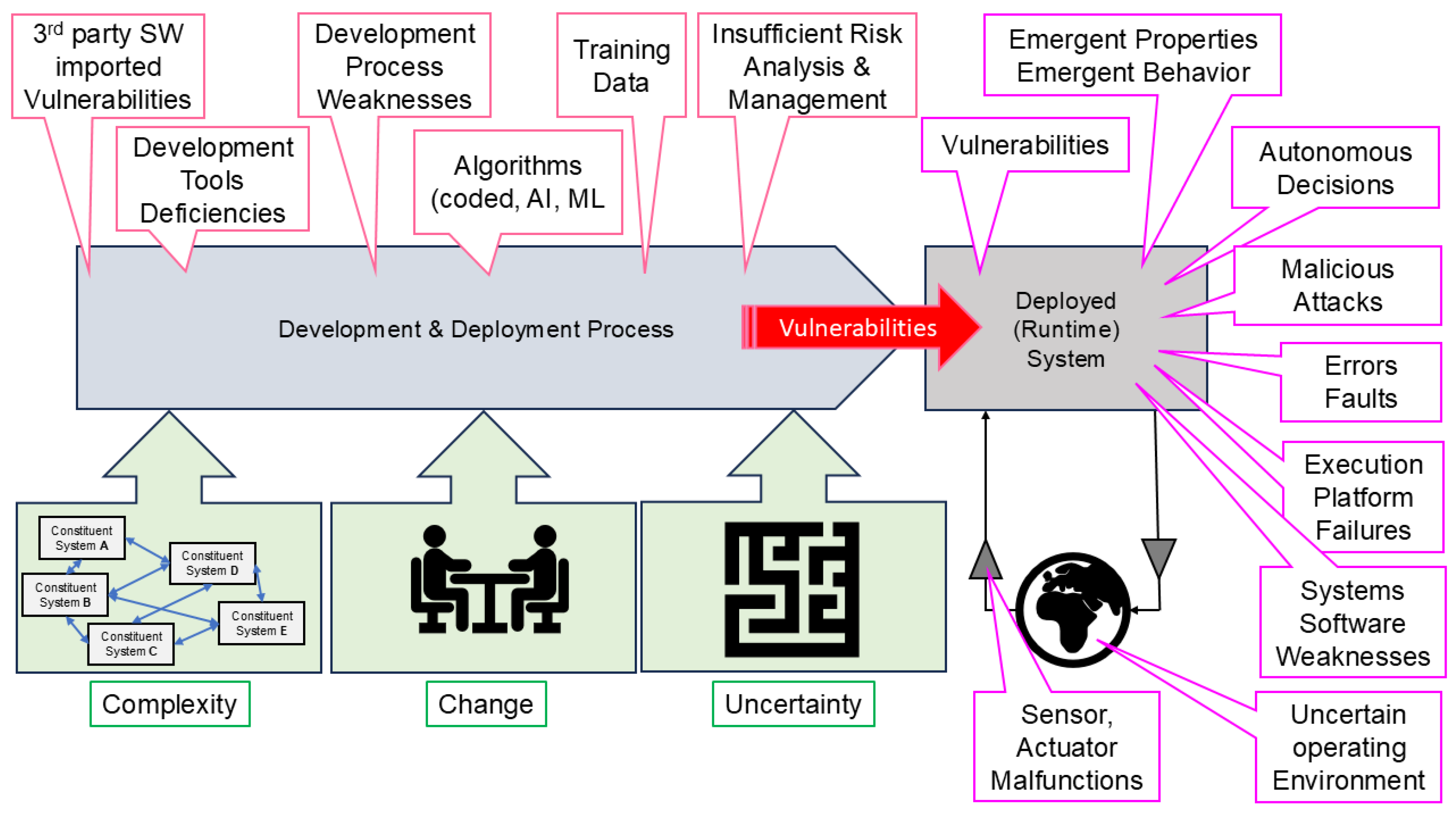
1. Introduction and Context
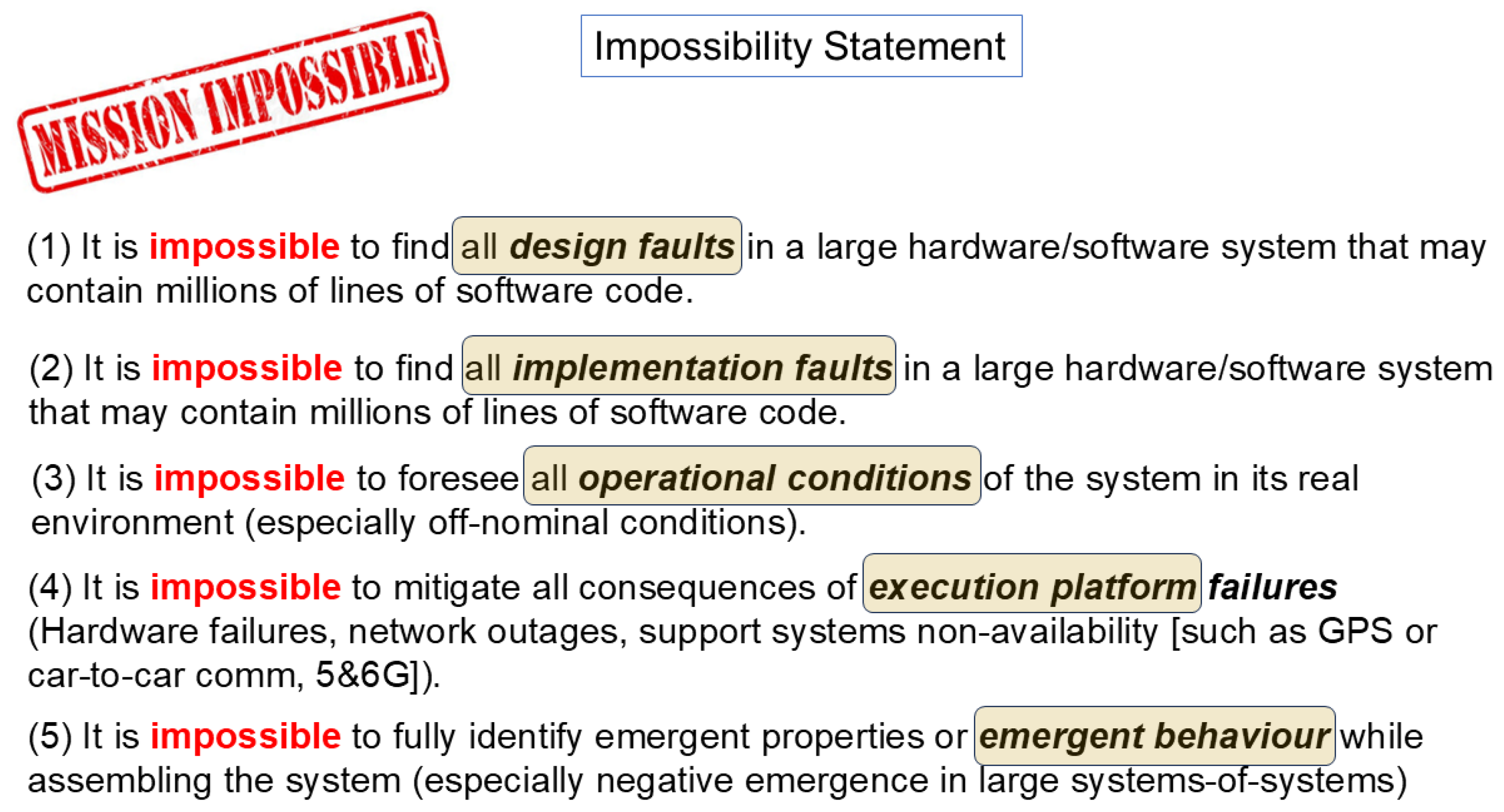
2. Impossibility Statement
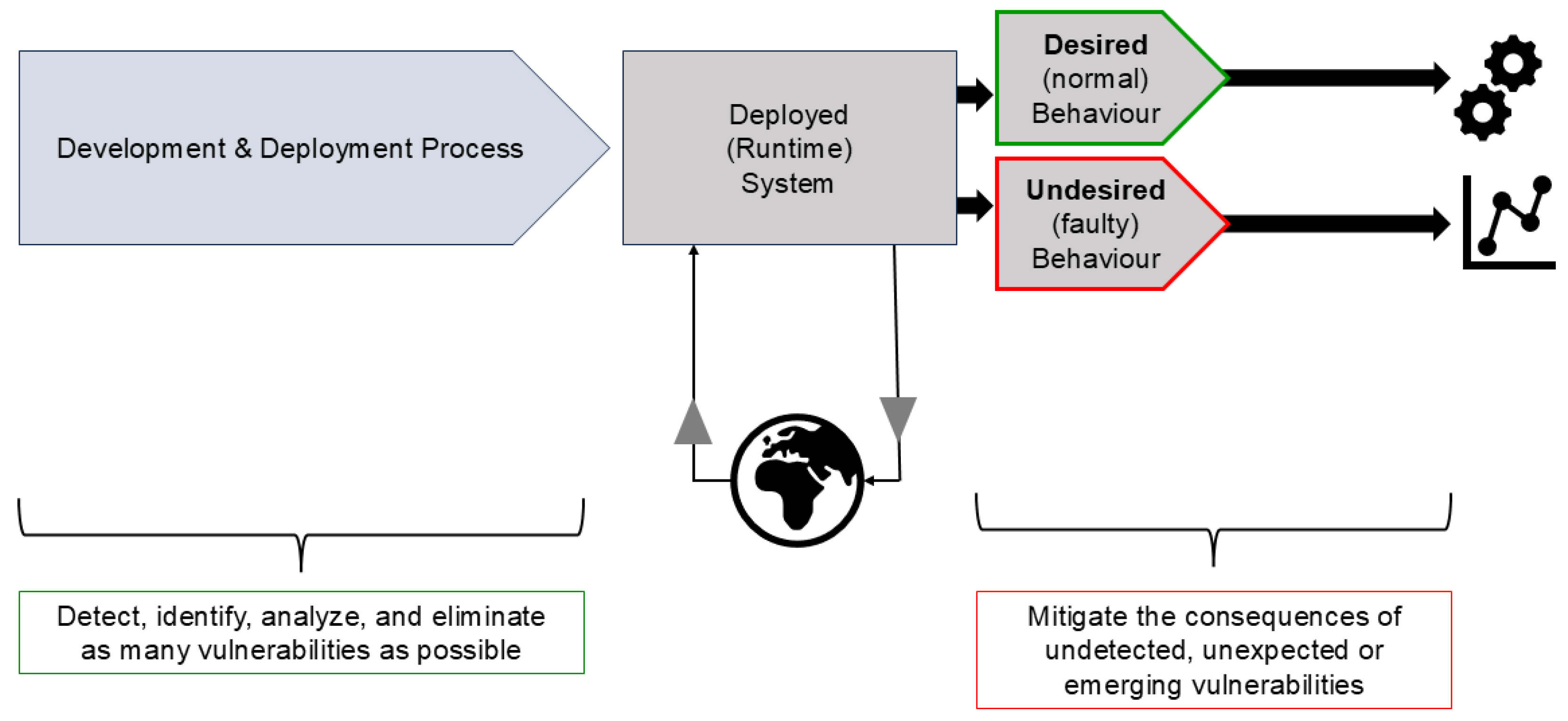
3. Cyber–Physical Systems Behavior
- (1)
- Desired behavior: Safe and secure operation, complete adherence to specifications, full conformance with laws and regulations, respecting all timing conditions, satisfactory handling of all errors, faults, and failures, comprehensive interaction with the user, and trustworthy in all situations and operating conditions;
- (2)
- Undesired behavior: Unsafe, insecure, dangerous, incomprehensible, untrustworthy, or erratic behavior.
4. Cyber–Physical Systems Runtime Monitoring
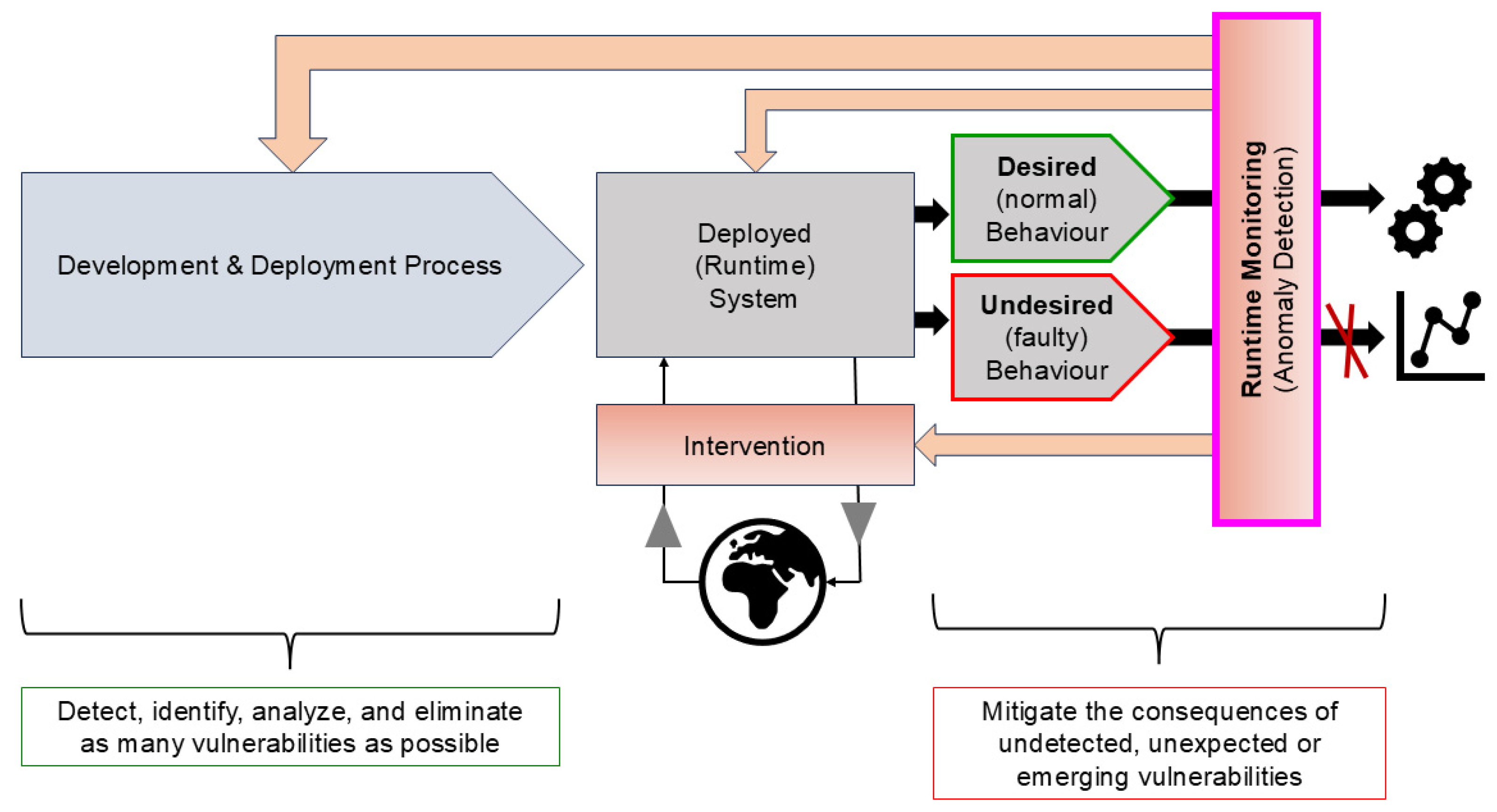
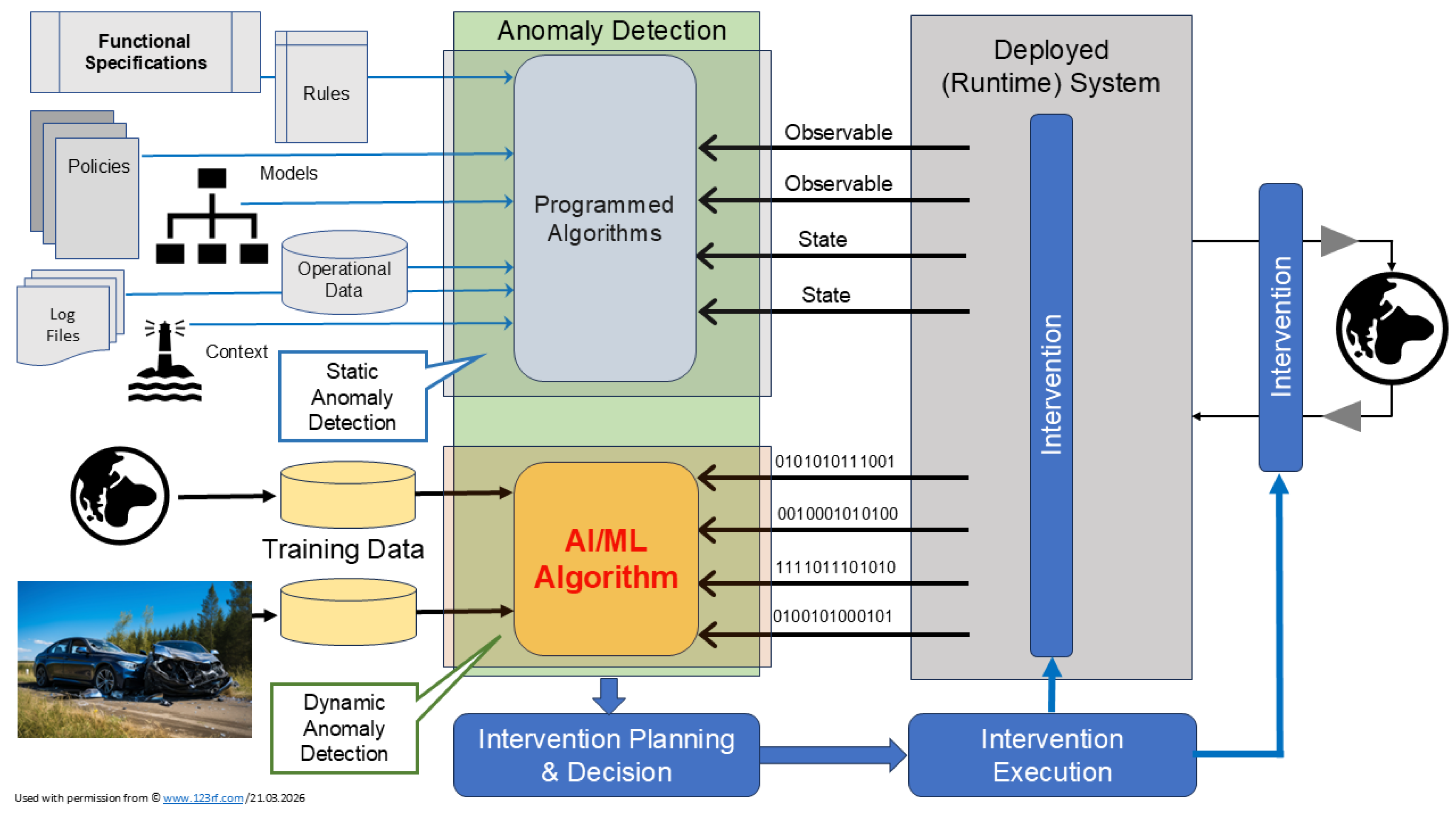
5. Monitor–Analyze–Intervene
- (1)
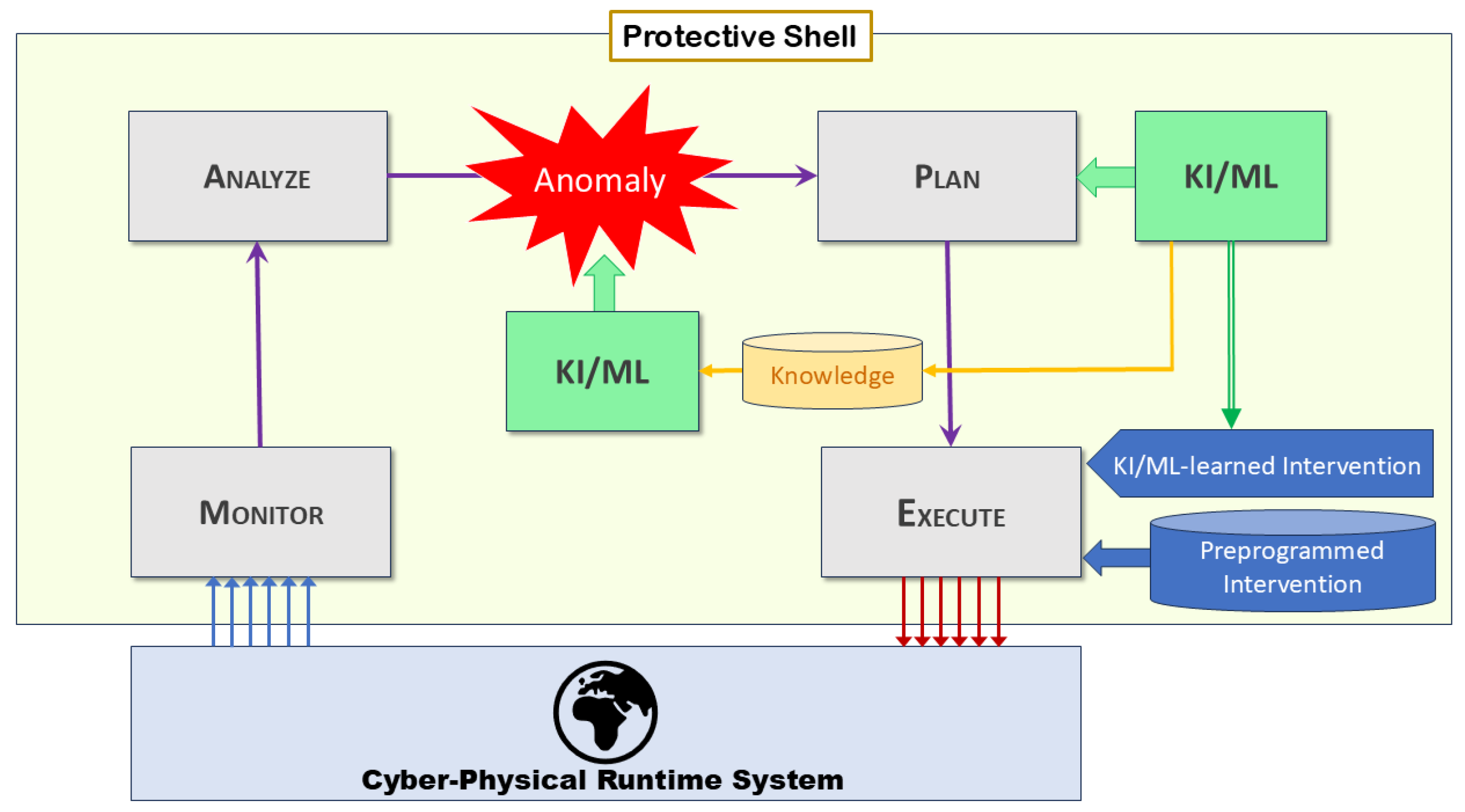
- The deployed cyber–physical runtime system in its operating environment;
- (2)
- The anomaly detection (symbolizing the necessary hardware and software for the application at hand);
- (3)
- The intervention planning element;
- (4)
- The intervention execution blocks.
5.1. Monitor
- Data obtained from the real world;
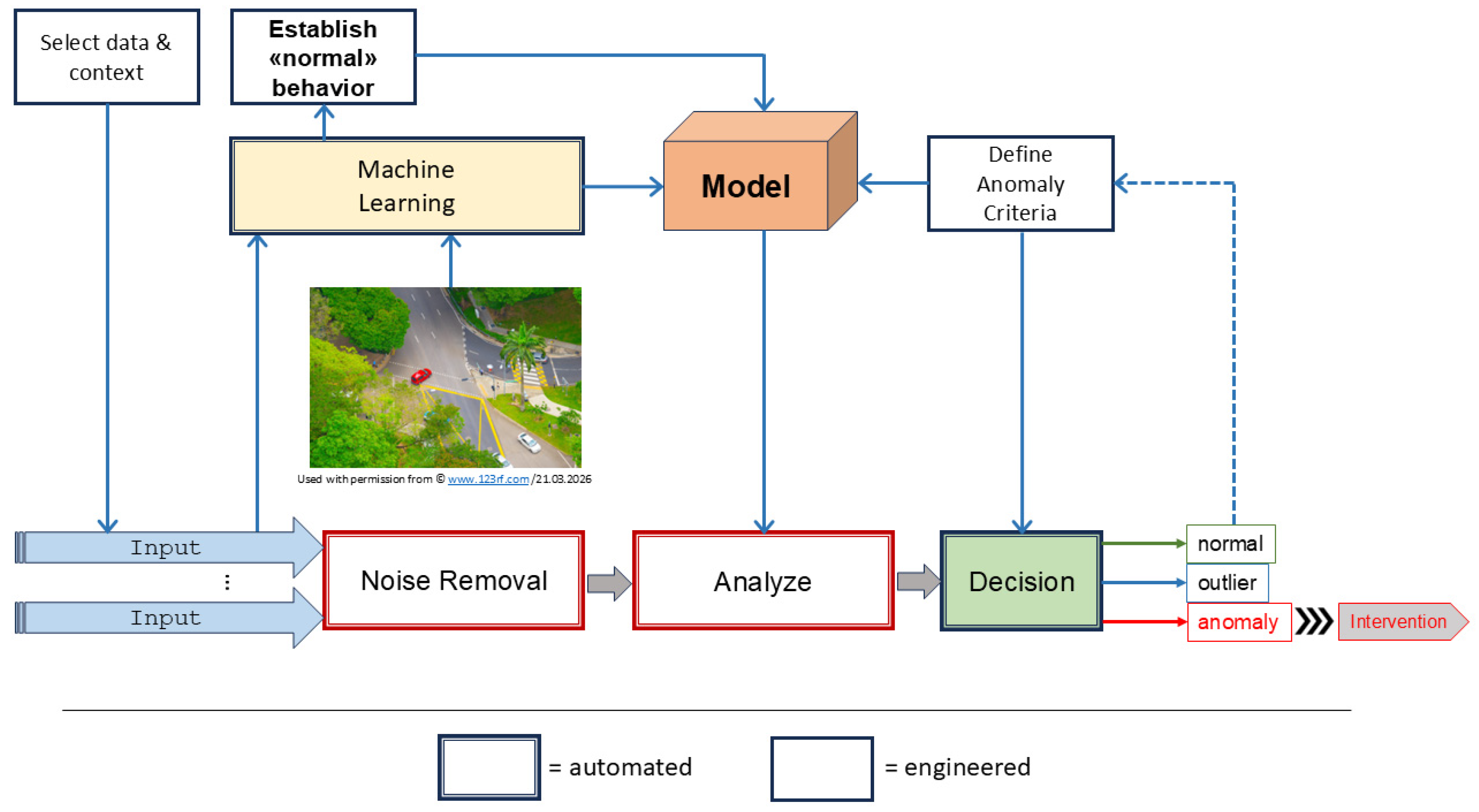
5.2. Analyze
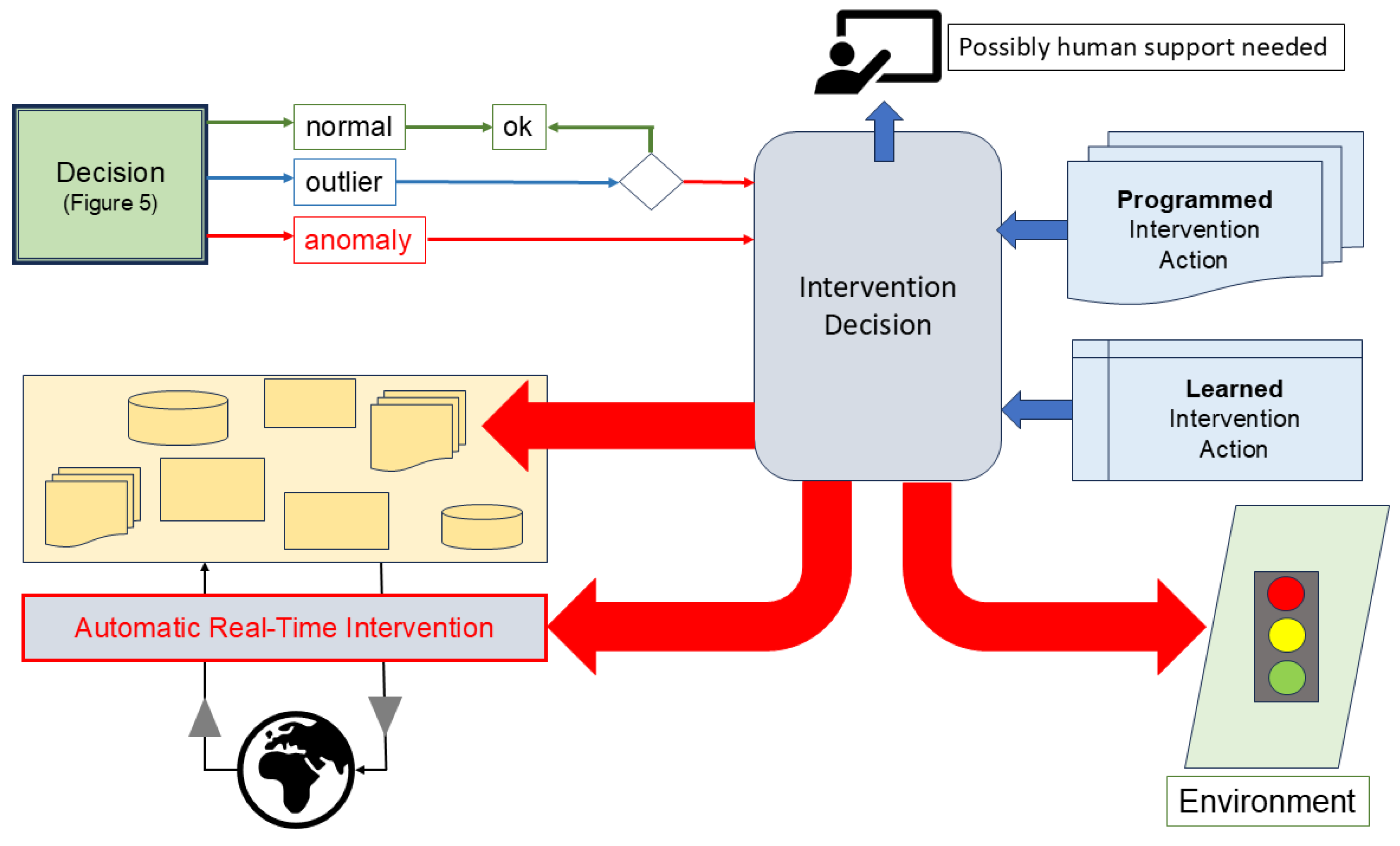
5.3. Intervene
- Directly influence the behavior of the control system, i.e., block, change, or override functionality;
- Override or correct sensor or actuator values, i.e., protect the system from harmful input or output values;
- Manipulate the operating environment of the CPS.
- Isolating a network node immediately after an unknown thread in the operating system is detected;
- Shutting down a TCP/IP port when excessive in- or outbound traffic is measured;
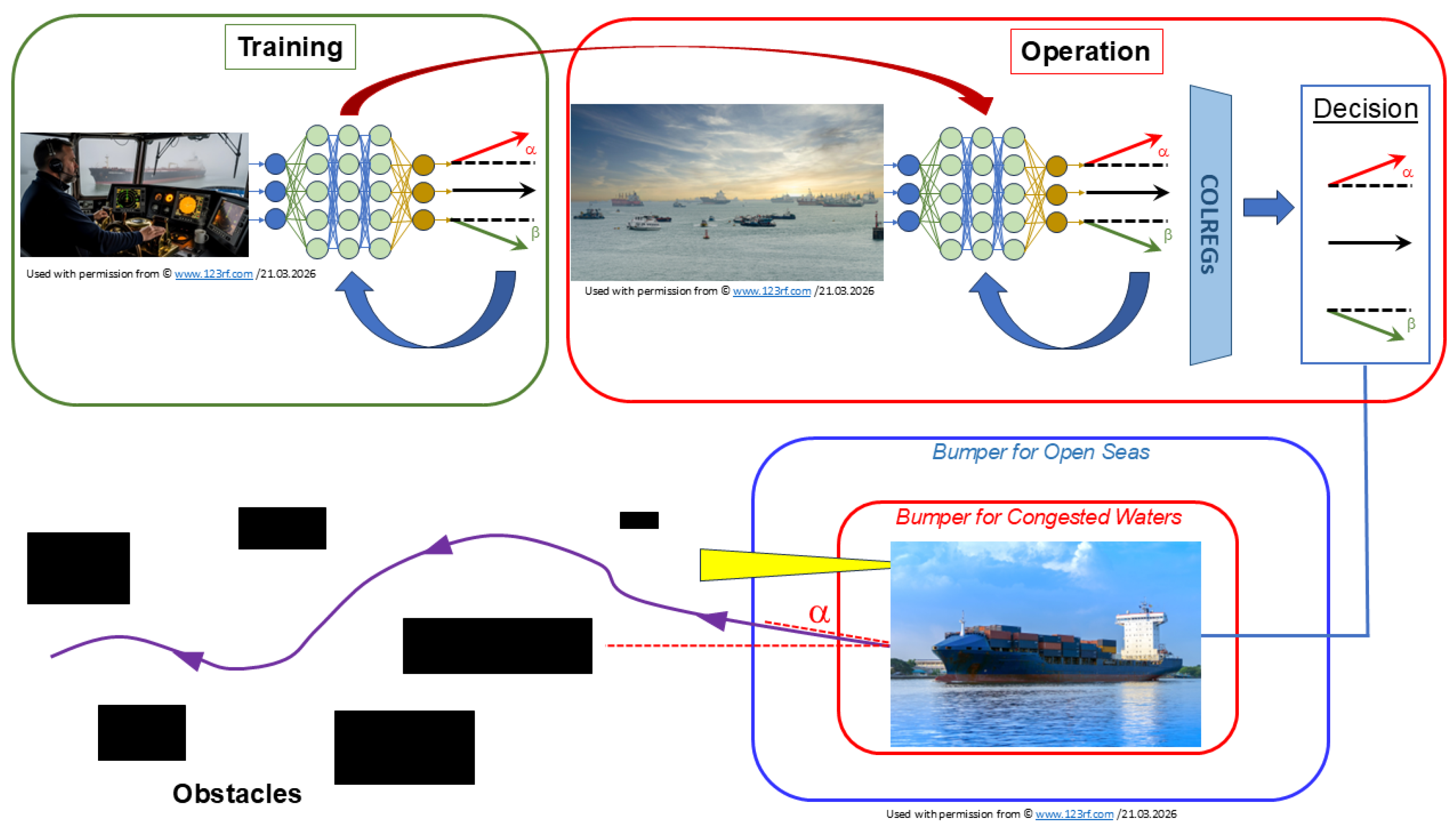
- Taking over a ship’s control when a threatening collision course is computed;
- Setting all traffic lights by the involved car to red after an accident at the intersection;
- Automatically take evasive action when a car recognizes an imminent hit of a pedestrian, animal, or cyclist;
- Force the CPS into a safe state, e.g., trigger an emergency stop of the train;
- Switch to a safe, degraded mode of operation, e.g., limit the maximum speed of a car to 80 km/h after a failure of the antiskid control;
- Close the system access for an employee after unauthorized data access attempts;
- Contact a cardholder after untypical payment behavior is detected from their card.
6. Machine Learning Algorithms
- Deep reinforcement learning [35] for the AI safety example. Reinforcement learning is a machine learning paradigm in which the machine learns by interacting with the context/environment and collects rewards or penalties according to a gain function, to maximize cumulative reward over time;
- Unsupervised learning [36] for the AI security example. Unsupervised machine learning is a machine learning paradigm in which algorithms learn patterns and structure directly from unlabeled data, without using explicit target outputs or example answers to guide learning.
7. Safety: Last Defense
8. Security: Last Defense
- (1)
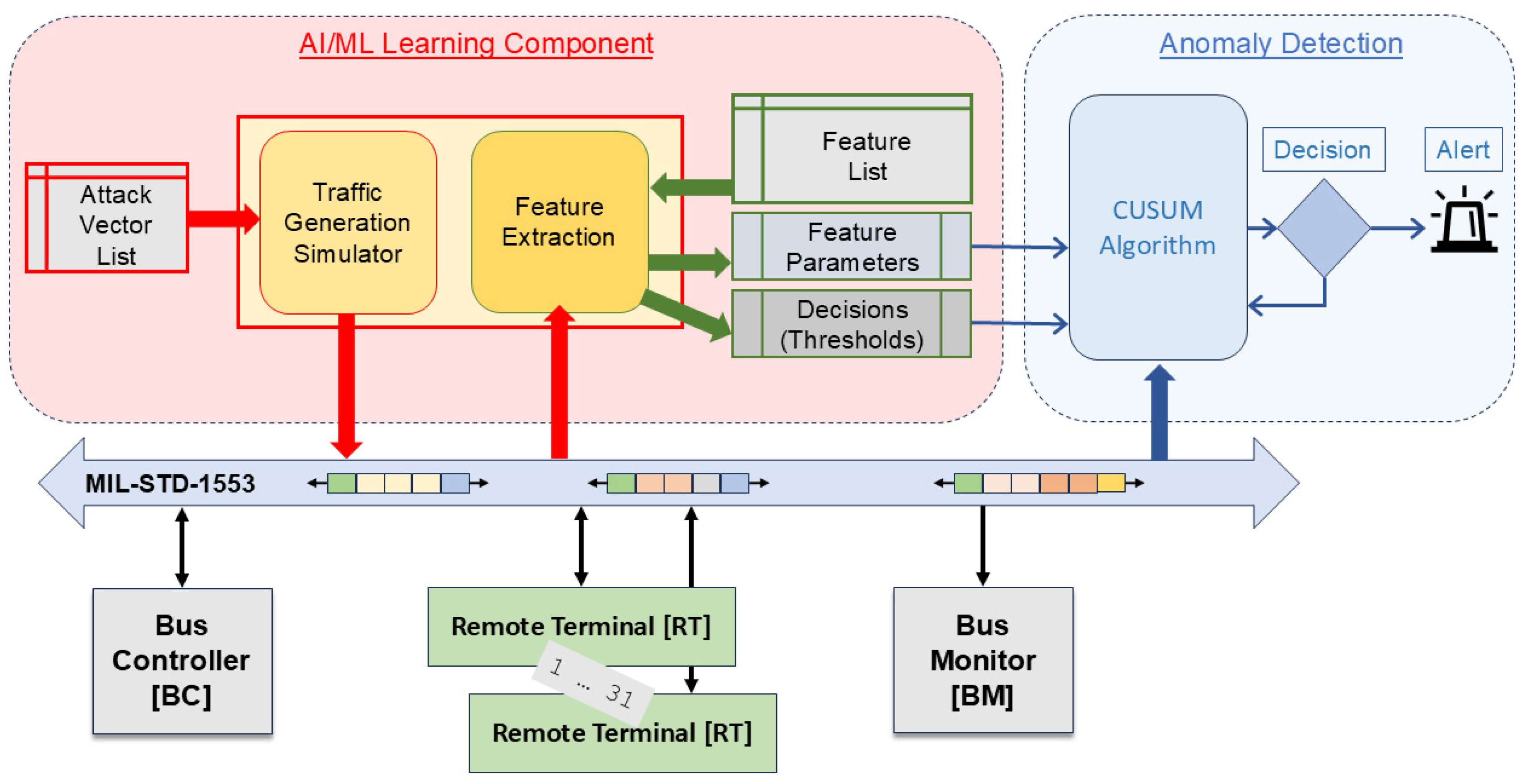
- The MIL-STD-1553 bus with the bus controller, the bus monitor, and 1…31 bus participants (= remote terminals);
- (2)
- The AI/ML learning component. The first function is a traffic-generation simulator that generates malicious traffic patterns based on a list of attack vectors. The second function is the feature extraction parameters based on a predefined feature list. The relevant feature parameters and their anomaly decision parameters, together with the decision criteria (thresholds), are then provided to the anomaly detection mechanism;
- (3)
- The anomaly detection mechanism. This mechanism monitors bus traffic and detects anomalies using the CUSUM (Cumulative Sum) algorithm [45,46]. This statistical change-detection algorithm [47] identifies when a time-series feature deviates from a reference one. Finally, the decision mechanism—usually based on thresholds—raises an alarm if an anomaly is suspected and triggers defense mechanisms, such as isolating suspicious nodes.
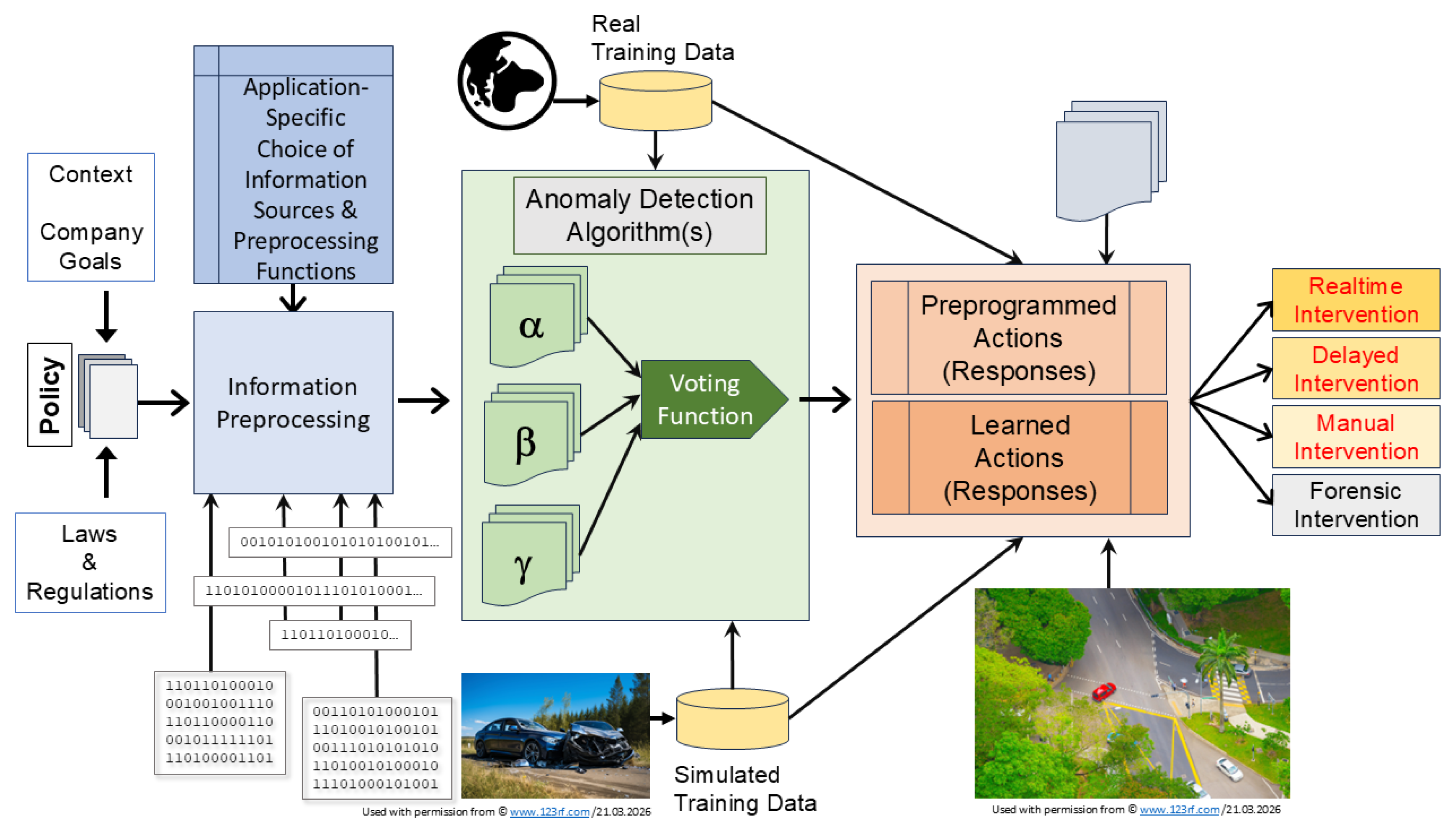
9. Protective Shell
10. Extended Attack Surface, XAI, and Robust AI
- (1)
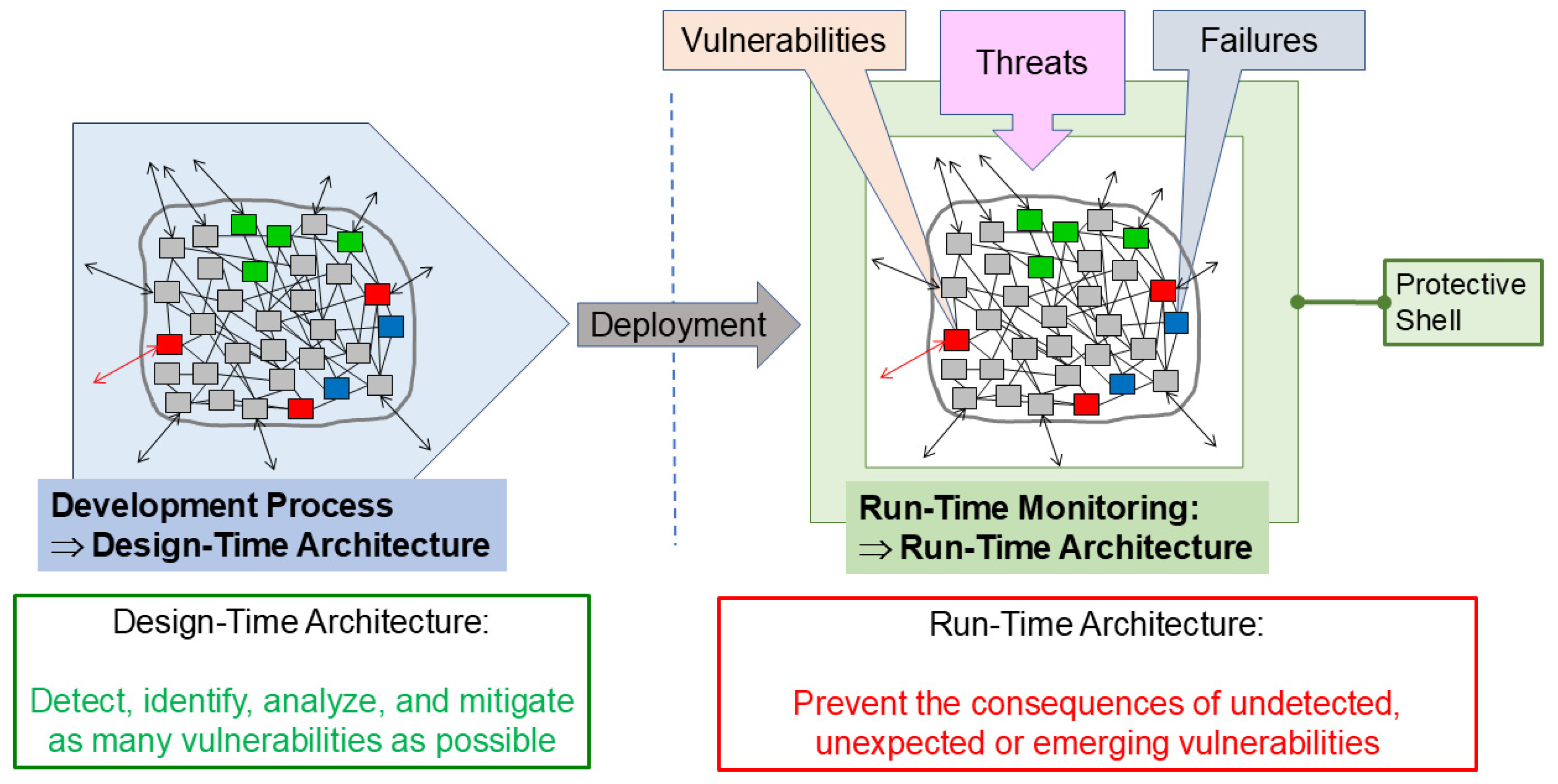
- The protective shell increases the system’s complexity by introducing additional hardware, software, and processes. As experience shows, additional complexity also enlarges the attack surface [55], i.e., generates new failure modes [56] and enables new attack vectors [57]. Unfortunately, effective kill chains, i.e., specific attack methods and tools, are readily available to target AI systems [58]. A meticulous and thorough risk analysis for the protective shell is therefore required.
- (2)
- Artificial intelligence and machine learning may execute autonomous, inexplicable (although possibly correct) decisions and actions. This autonomous behavior may cause legal, audit, and regulatory issues, but it also poses the danger of harmful decisions. Therefore, safety- or security-critical AI applications must rely solely on explainable artificial intelligence (XAI) mechanisms [59,60] and safety-certified algorithms [52,61].
- (3)
- In AI-based safety- or security-critical CPS, severe damage can result from their malfunction. Failures, malicious activities, deficient learning, and other issues can cause such malfunctions. To guard against these, the AI must be safe and robust. Fortunately, the field of safe and robust AI is developing rapidly, and sources are available [60,62,63,64].
- (4)
11. AI/ML Laws and Regulations
12. Forensics
- (1)
- Defend against post-accident and post-incident unwarranted accusations;
- (2)
- Allow for authoritative discovery of the causes/sources of accidents and incidents, and use them to improve the CPS.
13. The Value of Machine Learning for Safety and Security
14. Open Challenges
- Authoritative and law-conforming policies covering the application of artificial intelligence/machine learning for safety and security in different fields of application and diverse organizations;
- Dependable, transparent machine learning algorithms (Explainable AI) [83];
- Reliable, consistent, and fair training data (either from the real world or simulated), including their provisioning methods;
- Correct, timely, and effective intervention mechanisms, including their planning and decision mechanisms;
- Collection of sufficient, meaningful, and legally acceptable forensic data [73];
- Metrics for the evaluation of the efficiency and effectiveness of AI/ML usage;
- Defense against attacks on the AI/ML algorithms, their implementations, and training data;
- Development and enforcement of ethical principles, guidelines, and standards for AI/ML applications.
15. The Last Question: AI Ethics
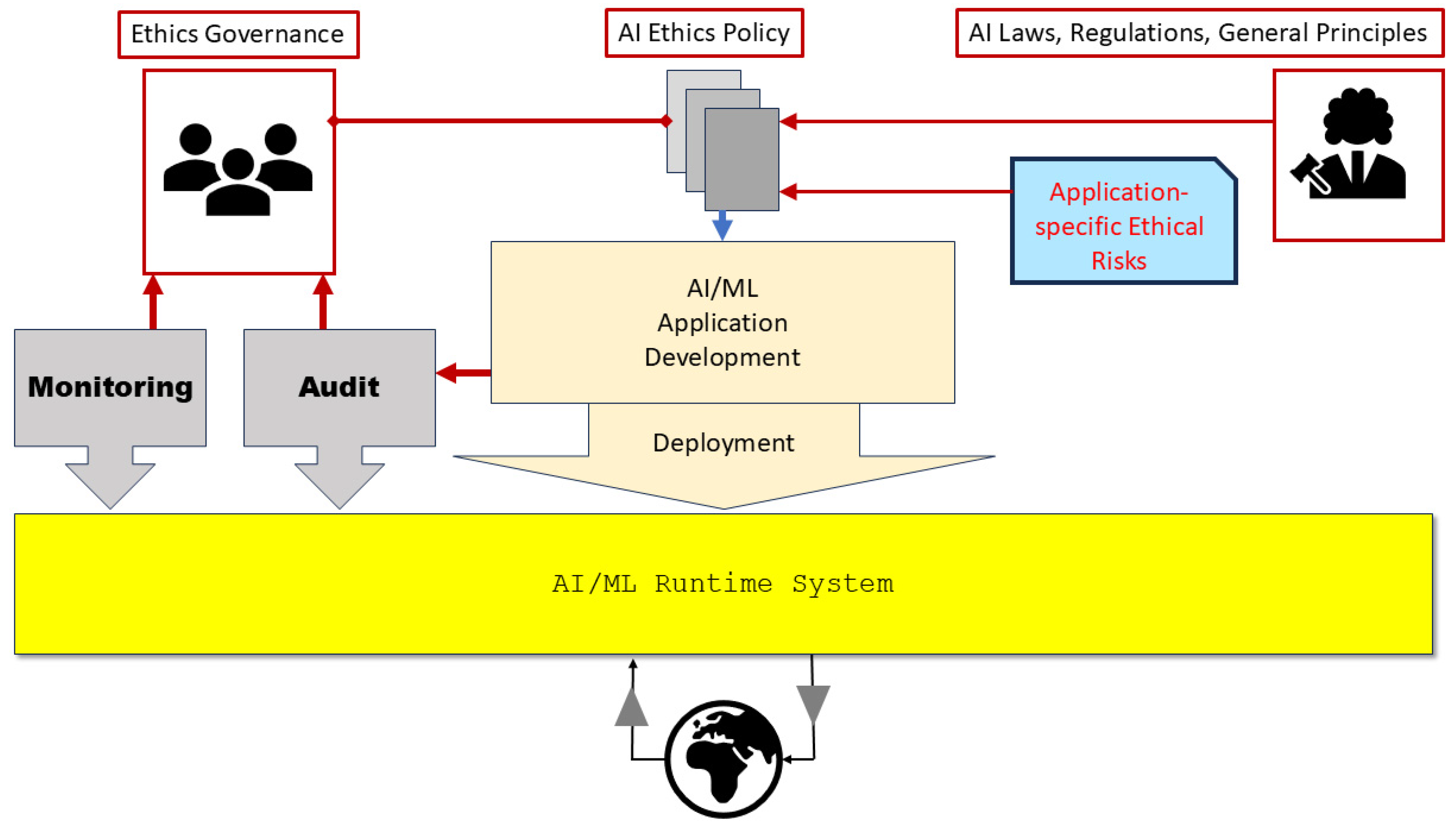
- A complete, actionable, enforceable ethics policy, aligned to laws, regulations, and general principles, and focused on the specific application;
- A strong, dedicated, and responsible governance (governance board, assigned responsibilities;
- Monitoring and auditing facilities (partially automated) to detect and correct ethics violations.
16. Conclusions
Funding
Institutional Review Board Statement
Informed Consent Statement
Data Availability Statement
Acknowledgments
Conflicts of Interest
References
- Alur, R. Principles of Cyber-Physical Systems; MIT Press: Cambridge, MA, USA, 2015; ISBN 978-0-262-02911-7. [Google Scholar]
- Möller, D. Guide to Computing Fundamentals in Cyber-Physical Systems—Concepts, Design Methods, and Applications; Springer International Publishing: Cham, Switzerland, 2016; ISBN 978-3-319-79747-2. [Google Scholar]
- Griffor, E. Handbook of System Safety and Security—Cyber Risk and Risk Management, Cyber Security, Threat Analysis, Functional Safety, Software Systems, and Cyber-Physical Systems; Elsevier: Amsterdam, The Netherlands, 2016; ISBN 978-0-128-03773-7. [Google Scholar]
- Rainey, L.B.; Jamshidi, M. Engineering Emergence—A Modeling and Simulation Approach; CRC Press: Boca Raton, FL, USA, 2018; ISBN 978-1-138-04616-0. [Google Scholar]
- Fitzgerald, J.; Morisset, C. Can We Develop Holistic Approaches to Delivering Cyber-Physical Systems Security? Res. Dir. Cyber-Phys. Syst. 2024, 2, e2. [Google Scholar] [CrossRef]
- Papow, J. Glitch—The Hidden Impact of Faulty Software; Prentice Hall: Upper Saddle River, NJ, USA, 2010; ISBN 978-0-132-16063-6. [Google Scholar]
- Stewart, A.J. A Vulnerable System—The History of Information Security in the Computer Age; Cornell University Press: Ithaca, NY, USA, 2021; ISBN 978-1-501-75894-2. [Google Scholar]
- Axelrod, C.W. Engineering Safe and Secure Software Systems; Artech House Books: Norwood, MA, USA, 2012; ISBN 978-1-608-07472-3. [Google Scholar]
- Bahr, N.J. System Safety Engineering and Risk Assessment: A Practical Approach, 2nd ed.; CRC Press: Boca Raton, FL, USA, 2017; ISBN 978-1-138-89336-8. [Google Scholar]
- Furrer, F.J. Safety and Security of Cyber-Physical Systems; Springer Vieweg: Wiesbaden, Germany, 2022; ISBN 978-3-658-37181-4. [Google Scholar]
- Knight, J. Fundamentals of Dependable Computing for Software Engineers; CRC Press: Boca Raton, FL, USA, 2012; ISBN 978-1-439-86255-1. [Google Scholar]
- Furrer, F.J. Future-Proof Software-Systems—A Sustainable Evolution Strategy; Springer Vieweg: Wiesbaden, Germany, 2019; ISBN 978-3-658-19937-1. [Google Scholar]
- Kopetz, H. An Architecture for Safe Driving Automation. In Principles of Systems Design; Raskin, J.F., Chatterjee, K., Doyen, L., Majumdar, R., Eds.; Lecture Notes in Computer Science; Springer Nature: Cham, Switzerland, 2022; Volume 13660, ISBN 978-3-031-22336-5. [Google Scholar] [CrossRef]
- Banish, G. OBD-I & OBD-II—A Complete Guide to Diagnosis, Repair, and Emissions Compliance; CarTech Books: North Branch, MN, USA, 2023; ISBN 978-1-61325-752-4. [Google Scholar]
- Bartocci, E.; Falcone, Y. (Eds.) Lectures on Runtime Verification—Introductory and Advanced Topics; Springer Nature: Cham, Switzerland, 2018; ISBN 978-3-319-75631-8 (LNCS 10457). [Google Scholar]
- Harrison, L. How to Use Runtime Monitoring for Automotive Functional Safety. TechDesignForum White Paper 2020. Available online: https://www.ti.com/lit/wp/snla457/snla457.pdf?ts=1773218575155&ref_url=https%253A%252F%252Fwww.bing.com%252F (accessed on 9 December 2025).
- Haupt, N.B.; Liggesmeyer, P. A Runtime Safety Monitoring Approach for Adaptable Autonomous Systems. In Computer Safety, Reliability, and Security; Romanovsky, A., Troubitsyna, E., Gashi, I., Schoitsch, E., Bitsch, F., Eds.; SAFECOMP 2019. Lecture Notes in Computer Science; Springer International Publishing: Cham, Switzerland, 2019; Volume 11699, Available online: https://www.researchgate.net/publication/335557336_A_Runtime_Safety_Monitoring_Approach_for_Adaptable_Autonomous_Systems/link/5dd2b7b0299bf1b74b4e14f7/download (accessed on 10 November 2025).
- Kane, A. Runtime Monitoring for Safety-Critical Embedded Systems. Ph.D. Thesis, Carnegie Mellon University, Pittsburgh, PA, USA, 2015. Available online: https://users.ece.cmu.edu/~koopman/thesis/kane.pdf (accessed on 10 November 2025).
- Khan, M.T.; Serpanos, D.; Shrobe, H. Sound and Complete Runtime Security Monitor for Application Software. arXiv 2016, arXiv:1601.04263v1. Available online: https://www.researchgate.net/publication/291229626_Sound_and_Complete_Runtime_Security_Monitor_for_Application_Software (accessed on 10 November 2025).
- Janicke, H.; Nicholson, A.; Webber, S.; Cau, A. Run-Time-Monitoring for Industrial Control Systems. Electronics 2015, 4, 995–1017. [Google Scholar] [CrossRef]
- Mehrotra, K.G.; Mohan, C.K.; Huang, H. Anomaly Detection Principles and Algorithms (Terrorism, Security, and Computation); Springer International Publishing: Cham, Switzerland, 2019; ISBN 978-3-319-88445-5. [Google Scholar]
- Dunning, T.; Friedman, E. Practical Machine Learning—A New Look at Anomaly Detection; O’Reilly and Associates: Sebastopol, CA, USA, 2014; ISBN 978-1-491-91160-0. [Google Scholar]
- Bhuyan, H. Network Traffic Anomaly Detection and Prevention—Concepts, Techniques, and Tools; Springer International Publishing: Cham, Switzerland, 2018; ISBN 978-3-319-87968-0. [Google Scholar]
- Kuo, C. Modern Time Series Anomaly Detection—With Python & R Code Examples; Packt Publishing: Birmingham, UK, 2022; ISBN 979-8-363-29575-1. [Google Scholar]
- Sarkis. Training Data for Machine Learning—Human Supervision from Annotation to Data; O’Reilly and Associates: Sebastopol, CA, USA, 2023; ISBN 978-1-492-09452-4. [Google Scholar]
- Nikolenko, S.I. Synthetic Data for Deep Learning; Springer Nature Switzerland: Cham, Switzerland, 2021; ISBN 978-3-030-75177-7. [Google Scholar]
- Nassif, J.; Tekli, J.; Kamradt, M. Synthetic Data—Revolutionizing the Industrial Metaverse; Springer Nature: Cham, Switzerland, 2024; ISBN 978-3-031-47559-7. [Google Scholar]
- Buttfield-Addison, P.; Buttfield-Addison, M.; Nugent, T.; Manning, J. Practical Simulations for Machine Learning—Using Synthetic Data for AI; O’Reilly Media Inc.: Sebastopol, CA, USA, 2022; ISBN 978-1-492-08992-6. [Google Scholar]
- Adari, S.K.; Alla, S. Beginning Anomaly Detection Using Python-Based Deep Learning—Implement Anomaly Detection Applications with Keras and PyTorch; Apress Media: New York, NY, USA, 2024; ISBN 979-8-8688-0007-8. [Google Scholar] [CrossRef]
- Vaseghi, S.V. Advanced Digital Signal Processing and Noise Reduction, 2nd ed.; John Wiley & Sons: Chichester, UK, 2000; ISBN 978-0-4716-2692-3. [Google Scholar]
- Burger, W.; Burge, M.J. Digital Image Processing—An Algorithmic Introduction, 3rd ed.; Springer Nature Switzerland: Cham, Switzerland, 2022; ISBN 978-3-031-05743-4. [Google Scholar] [CrossRef]
- Bilgin, E. Mastering Reinforcement Learning with Python—Build Next-Generation, Self-Learning Models Using Reinforcement Learning Techniques and Best Practices; Packt Publishing: Birmingham, UK, 2020; ISBN 978-1-838-64414-7. [Google Scholar]
- Beckers, A.; Teubner, G. Three Liability Regimes for Artificial Intelligence—Algorithmic Actants, Hybrids, Crowds; HART Publishing: Oxford, UK, 2023; ISBN 978-1-5099-4937-3. [Google Scholar]
- Prince, S.J.D. Understanding Deep Learning; The MIT Press: Cambridge, MA, USA, 2023; ISBN 978-0-262-04864-4. [Google Scholar]
- Oh, J.; Farquhar, G.; Kemaev, I.; Calian, D.A.; Hessel, M.; Zintgraf, L.; Singh, S.; van Hasselt, H.; Silver, D. Discovering state-of-the-art reinforcement learning algorithms. Nature 2025, 648, 312. [Google Scholar] [CrossRef] [PubMed]
- Koul, N. Kickstart Unsupervised Machine Learning; Orange Education Pvt Ltd.: Delhi, India, 2025; ISBN -978-9-349-88743-5. [Google Scholar]
- Hashimoto, H.; Nishimura, H.; Nishiyama, H.; Higuchi, G. Development of AI-based Automatic Collision Avoidance System and Evaluation by Actual Ship Experiment. ClassNK Tech. J. 2021, 3, 41–51. Available online: https://www.classnk.or.jp/hp/pdf/research/rd/2021/03_e05.pdf (accessed on 10 November 2025).
- Shen, H.; Hashimoto, H.; Matsuda, A.; Taniguchi, Y.; Terada, D.; Guo, C. Automatic collision avoidance of multiple ships based on deep Q-learning. Appl. Ocean. Res. 2019, 86, 268–288. [Google Scholar] [CrossRef]
- Francois-Lavet, V.; Henderson, P.; Islam, R.; Bellemare, M.G.; Pineau, J. An Introduction to Deep Reinforcement Learning. Found. Trends Mach. Learn. 2018, 11, 219–354. [Google Scholar] [CrossRef]
- Winder, P. Reinforcement Learning—Industrial Applications of Intelligent Agents; O’Reilly Media: Sebastopol, CA, USA, 2020; ISBN 978-1-098-11483-1. [Google Scholar]
- IMO. COLREG—Preventing Collisions at Sea; IMO (The International Maritime Organization): London, UK, 1972; Available online: https://www.imo.org/en/OurWork/Safety/Pages/Preventing-Collisions.aspx (accessed on 10 November 2025).
- Cockcroft, A.N.; Lameijer, J.N.F. A Guide to the Collision Avoidance Rules, 7th ed.; Butterworth-Heinemann: Kidlington, UK, 2012. [Google Scholar]
- Hadeer, A.; Traore, I.; Quinan, P.; Ganame, K.; Boudar, O. A Collection of Datasets for Intrusion Detection in MIL-STD-1553. In Artificial Intelligence for Cyber-Physical Systems Hardening; Springer: Cham, Switzerland, 2022; Chapter 4. [Google Scholar] [CrossRef]
- Sachdev, K.; Saad, H.S.; Traore, I.; Ganame, K.; Boudar, O. Unsupervised Anomaly Detection for MIL-STD-1553 Avionic Platforms Using CUSUM; Chapter 5 in Artificial Intelligence for Cyber-Physical Systems Hardening; Springer: Berlin/Heidelberg, Germany, 2023. [Google Scholar] [CrossRef]
- Granjon, P. The CUSUM Algorithm; GIPSA-lab, Grenoble Campus: Saint Martin d’Hères, France, 2014; Available online: https://hal.science/hal-00914697/document (accessed on 10 November 2025).
- Koshti, V.V. Cumulative Sum Control Chart. Int. J. Phys. Math. Sci. 2011, 1, 28–32. Available online: https://www.researchgate.net/publication/230888065_Cumulative_sum_control_chart (accessed on 10 November 2025).
- Page, E.S. Continuous Inspection Schemes. Biometrika 1954, 41, 100–115. [Google Scholar] [CrossRef]
- Eliot, L. AI Guardian Angel Bots for Deep AI Trustworthiness—Practical Advances in Artificial Intelligence; LBE Press Publishing: Tucker, GA, USA, 2016; ISBN 978-0-6928-0061-4. [Google Scholar]
- Furrer, F.J. Safe and secure system architectures for cyber-physical systems. Inform. Spektrum 2023, 46, 96–103. [Google Scholar] [CrossRef]
- Diver, R. Guardians of AI—Building Innovation and Safety with AI; Amazon Fulfillment: Wroclaw, Poland, 2024; ISBN 979-8-32210-964-4. [Google Scholar]
- Voulgaris, Z.; Engelfriet, A. AI Safety—Strategies for Ensuring Responsible, Ethical, and Reliable AI Systems; Technics Publications: Sedona, AZ, USA, 2025; ISBN 978-1-63462-734-4. [Google Scholar]
- Landon, E.V. Engineering Safety for Embodied AI (Building Trustworthy AI in Robotics, Vehicles, and Beyond); Amazon Italia Logistics S.r.l.: Torrazza Piemonte, TO, Italy, 2025; ISBN 979-8-264618-43-7. [Google Scholar]
- Lalanda, P.; McCann, J.A.; Diaconescu, A. Autonomic Computing—Principles, Design and Implementation; Springer: London, UK, 2013; ISBN 978-1-4471-5006-0. [Google Scholar]
- IBM. Business Consulting Services an Architectural Blueprint for Autonomic Computing, 4th ed.; IBM Autonomic Computing: Yorktown Heights, NY, USA, 2006; Available online: http://www-01.ibm.com/software/tivoli/autonomic (accessed on 10 November 2025).
- Cybellium Ltd. Mastering Attack Surface Management—A Comprehensive Guide to Learn Attack Surface Management; Cybellium Ltd.: Tel Aviv, Israel, 2023; ISBN 979-8-8591-4008-4. [Google Scholar]
- Stamatis, D.H. Risk Management Using Failure Mode and Effect Analysis (FMEA); Quality Press: Milwaukee, MI, USA, 2019; ISBN 978-0-8738-9978-9. [Google Scholar]
- Haber, M.J.; Hibbert, B. Asset Attack Vectors—Building Effective Vulnerability Management Strategies to Protect Organizations; Apress Media LLC.: New York, NY, USA, 2018; ISBN 978-1-4842-3626-0. [Google Scholar] [CrossRef]
- Gibian, D. Hacking Artificial Intelligence—A Leader’s Guide from Deepfakes to Breaking Deep Learning; Rowman & Littlefield: London, UK, 2022; ISBN 978-1-5381-5508-0. [Google Scholar]
- Simon, C. Deep Learning and XAI Techniques for Anomaly Detection—Integrate the Theory and Practice of Deep Anomaly Explainability; Packt Publishing: Birmingham, UK, 2023; ISBN 978-1-804-61775-5. [Google Scholar]
- Huang, X.; Jin, G.; Ruan, W. Machine Learning Safety; Springer Nature Singapore Pte. Ltd.: Singapore, 2023; ISBN 978-981-19-6813-6. [Google Scholar] [CrossRef]
- Koopman, P. Embodied AI Safety (Reimagining Safety Engineering for Artificial Intelligence in Physical Systems); Amazon Fulfillment: Wroclaw, Poland, 2025; ISBN 979-8-29238-441-0. [Google Scholar]
- Guerraoui, R.; Gupta, N.; Pinot, R. Robust Machine Learning—Distributed Methods for Safe AI; Springer Nature Singapore: Singapore, 2024; ISBN 978-981-97-0687-7. [Google Scholar] [CrossRef]
- Yampolskiy, R.V. AI—Unexplainable, Unpredictable, Uncontrollable; Chapman & Hall/CRC: Boca Raton, CA, USA, 2024; ISBN 978-1-032-57626-8. [Google Scholar] [CrossRef]
- Hall, P.; Curtis, J.; Pandey, P. Machine Learning for High-Risk Applications—Techniques for Responsible AI; O’Reilly Media Inc.: Sebastopol, CA, USA, 2023; ISBN 978-1-098-10243-2. [Google Scholar]
- King, A. AI, Automation and War—The Rise of a Military-Tech Complex; Princeton University Press: Princeton, NJ, USA, 2025; ISBN 978-0-691-26514-8. [Google Scholar]
- Blessed Editions. The Silent Threat of Artificial Intelligence—Geoffrey Hinton’s Urgent Warning; Springer: Singapore, 2025; ISBN 979-8-2922-7287-8. [Google Scholar]
- Windholz, N. The EU AI Act Handbook: Compliant Usage of Artificial Intelligence in the Private and Public Sectors; Carl Hanser Verlag GmbH & Co. KG: Munich, Germany, 2025; ISBN 978-1-56990-314-8. [Google Scholar]
- EUR-Lex Regulation (EU). 2024/1689 of the European Parliament and of the Council of 13 June 2024 Laying Down Harmonised Rules on Artificial Intelligence; Document 32024R1689; Official Journal of the European Union: Brussels, Belgium, 2025; Available online: https://eur-lex.europa.eu/legal-content/EN/TXT/?uri=CELEX%3A32024R1689 (accessed on 10 November 2025).
- European Union Artificial Intelligence Act. Regulation (EU) 2024/1689 of the European Parliament and of the Council; Official Journal of the European Union: Brussels, Belgium, 2024; Available online: https://eur-lex.europa.eu/legal-content/EN/TXT/PDF/?uri=OJ:L_202401689 (accessed on 10 November 2025).
- Lee, J. Artificial Intelligence and International Law; Springer Nature Singapore Pte Ltd.: Singapore, 2023; ISBN 978-981-191498-0. [Google Scholar] [CrossRef]
- Tzimas, T. Legal and Ethical Challenges of Artificial Intelligence from an International Law Perspective; Springer Nature: Cham, Switzerland, 2022; ISBN 978-3-030-78587-1. [Google Scholar] [CrossRef]
- Winkle, T. Product Development within Artificial Intelligence, Ethics, and Legal Risk—Exemplary for Safe Autonomous Vehicles; Springer Fachmedien Vieweg: Wiesbaden, Germany, 2022; ISBN 978-3-658-34292-0. [Google Scholar] [CrossRef]
- Marcella, A.J. Editor Cyber Forensics—Examining Emerging and Hybrid Technologies; CRC Press: Boca Raton, FL, USA, 2021; ISBN 978-0-367-52424-1. [Google Scholar]
- Kävrestad, J. Fundamentals of Digital Forensics—Theory, Methods, and Real-Life Applications, 2nd ed.; Springer Nature: Cham, Switzerland, 2020; ISBN 978-3-030-38953-6. [Google Scholar] [CrossRef]
- Oettinger, W. Learn Computer Forensics—Your One-Stop Guide to Searching, Analyzing, Acquiring, and Securing Digital Evidence, 2nd ed.; Packt Publishing: Birmingham, UK, 2022; ISBN 978-1-803-23830-2. [Google Scholar]
- Karmakar, G.; Wakankar, A.; Kabra, A.; Pandya, P. Development of Safety-Critical Systems—Architecture and Software; Springer Nature Switzerland: Cham, Switzerland, 2023; ISBN 978-3-031-27900-3. [Google Scholar]
- Leveson, N.G. An Introduction to System Safety Engineering; The MIT Press: Cambridge, MA, USA, 2023; ISBN 978-0-262-54688-1. [Google Scholar]
- Mudgal, S. Managing the Cyber Risk—A CISO’s Practical Guide to Threat and Vulnerability Management; BPB Publications: New Delhi, India, 2025; ISBN 978-93-65892-918. [Google Scholar]
- Landoll, D. The Security Risk Assessment Handbook—A Complete Guide for Performing Security Risk Assessments; CRC Press: Boca Raton, FL, USA, 2021; ISBN 978-1-032-04165-0. [Google Scholar]
- Musser, M.; Garriott, A. Machine Learning and Cybersecurity—Hype and Reality; CSET Center for Security and Emerging Technology, Georgetown Walsh School of Foreign Services; Georgetown University: Washington, DC, USA, 2021. [Google Scholar] [CrossRef]
- NAP (National Academies of Sciences, Engineering, and Medicine). Machine Learning for Safety-Critical Applications: Opportunities, Challenges, and a Research Agenda; The National Academies Press: Washington, DC, USA, 2025. [Google Scholar] [CrossRef]
- VC3. Corporation the Evolution of Artificial Intelligence in Cybersecurity; VC3 Corporation: Columbia, SC, USA, 2023; Available online: https://www.vc3.com/blog/the-evolution-of-artificial-intelligence-in-cybersecurity (accessed on 10 November 2025).
- Mehta, M.; Palade, V.; Chatterjee, I. Explainable AI—Foundations, Methodologies and Applications; Springer Nature: Cham, Switzerland, 2022; ISBN 978-3-031-12806-6. [Google Scholar] [CrossRef]
- Coeckelbergh, M. AI Ethics; The MIT Press: Cambridge, MA, USA, 2020; ISBN 978-0-262-53819-0. [Google Scholar]
- EU. Regulation of the European Parliament and of the Council laying Down Harmonized Rules on Artificial Intelligence (Artificial Intelligence Act); 21.4.2021 COM(2021) 206 Final; European Commission: Brussels, Belgium, 2021; Available online: https://eur-lex.europa.eu/resource.html?uri=cellar:e0649735-a372-11eb-9585-01aa75ed71a1.0001.02/DOC_1&format=PDF (accessed on 10 November 2025).
- Press, L. EU Artificial Intelligence Act—The Essential Reference; Lex Press: Paris, France, 2024; ISBN 979-8-8827-1805-2. [Google Scholar]
- Huang, C.; Zhang, Z.; Mao, B.; Yao, X. An Overview of Artificial Intelligence Ethics. IEEE Trans. Artif. Intell. 2023, 4, 799–819. [Google Scholar] [CrossRef]
- Boddington, P. AI Ethics: Foundations, Theory, and Algorithms; Springer Nature Singapore Pte Ltd.: Singapore, 2024; ISBN 978-981-19-9384-8. [Google Scholar] [CrossRef]
- UNESCO (United Nations Educational, Scientific and Cultural Organization). Recommendation on the Ethics of Artificial Intelligence; UNESCO: Paris, France, 2023; Available online: https://www.unesco.org/en/artificial-intelligence/recommendation-ethics (accessed on 10 November 2025).
- Davis, J.G. The Path Forward—Restructuring AI for Safety, Security & Sovereign Accountability. A Modern Approach to Modern Autonomous Systems; ALETHEIA Protocol: Acapulco, Mexico, 2026; ISBN 979-8242379497. [Google Scholar]
- Spark, C. Ethical AI Blueprint—Frameworks for Fairness, Safety, and Trust in Machine Learning; Published Independently by Charles Spark; 2025; ISBN 979-8268446548. [Google Scholar]


Disclaimer/Publisher’s Note: The statements, opinions and data contained in all publications are solely those of the individual author(s) and contributor(s) and not of MDPI and/or the editor(s). MDPI and/or the editor(s) disclaim responsibility for any injury to people or property resulting from any ideas, methods, instructions or products referred to in the content. |
© 2026 by the author. Licensee MDPI, Basel, Switzerland. This article is an open access article distributed under the terms and conditions of the Creative Commons Attribution (CC BY) license.
Share and Cite
Furrer, F.J. Cyber–Physical Systems: The Last Defense. Appl. Sci. 2026, 16, 3467. https://doi.org/10.3390/app16073467
Furrer FJ. Cyber–Physical Systems: The Last Defense. Applied Sciences. 2026; 16(7):3467. https://doi.org/10.3390/app16073467
Chicago/Turabian StyleFurrer, Frank J. 2026. "Cyber–Physical Systems: The Last Defense" Applied Sciences 16, no. 7: 3467. https://doi.org/10.3390/app16073467
APA StyleFurrer, F. J. (2026). Cyber–Physical Systems: The Last Defense. Applied Sciences, 16(7), 3467. https://doi.org/10.3390/app16073467