Article

Solar-Activated Persulfate Oxidation Process in Treatment of Dye Solutions

by
Coşku Barışsever
1,*,
Saltuk Pirgalıoğlu
2 and
Şifa Doğan
3
1
Department of Environmental Sciences, Institute of Graduate Studies and Research, European University of Lefke, Northern Cyprus, TR-10 Mersin, 99010 Lefke, Turkey
2
Environmental Engineering Department, Engineering Faculty, European University of Lefke, Northern Cyprus, TR-10 Mersin, 99010 Lefke, Turkey
3
Environmental Engineering Department, Engineering Faculty, Cyprus International University, Northern Cyprus, TR-10 Mersin, 99258 Nicosia, Turkey
*
Author to whom correspondence should be addressed.
Appl. Sci. 2026, 16(7), 3373; https://doi.org/10.3390/app16073373
Submission received: 21 January 2026 / Revised: 24 March 2026 / Accepted: 25 March 2026 / Published: 31 March 2026

Abstract

In this study, sodium persulfate was used to oxidize Reactive Black 5 (RB5), an azo dye commonly used in the textile industry, and Reactive Blue 4 (RB4), an anthraquinone dye. Persulfate was activated using Fe(II) and natural solar irradiation to generate sulfate radicals (SO4•−), which possess a high redox potential and effectively oxidize organic pollutants in wastewater. Batch experiments demonstrated that the combined use of Fe(II) and solar-activated persulfate achieves up to 99% dye removal. The influence of natural solar irradiation was evaluated under outdoor conditions for both dye solutions, confirming the effectiveness of solar-activated persulfate oxidation. Mineralization was monitored via total organic carbon (TOC) analysis, with up to 97% dissolved organic carbon removal observed at the highest persulfate dosage for RB5. Two activation pathways were examined, and the results indicate that solar activation is a sustainable approach to minimizing energy and chemical consumption. This study also demonstrates the solar activation potential of the Lefke region in Northern Cyprus for advanced oxidation processes.

1. Introduction

Urbanization, population growth, agricultural expansion, and industrial development have contributed to the continuous release of organic compounds into the environment, many of which are considered potential threats to aquatic ecosystems and human health [1]. Among industrial sectors, the textile industry is one of the largest environmental polluters due to the discharge of untreated dye-containing effluents. More than 10,000 types of dyes are produced for textile applications, of which approximately 70% are azo dyes and 15% are anthraquinone dyes [2]. These dyes are often recalcitrant, toxic, and potentially carcinogenic, thereby entailing serious risks of environmental contamination. According to World Bank estimates, 17–20% of total industrial wastewater is generated by textile production [3].
RB4 and RB5 are hazardous, water-soluble anionic dyes; studies have shown that RB5 is a strongly mutagenic and carcinogenic contaminant capable of releasing toxic amines, while RB4 has been reported to induce significant genotoxicity and cause developmental abnormalities in aquatic species. Both dyes persist in aquatic environments, reducing light penetration and thereby inhibiting photosynthesis; thus, advanced treatment technologies are required for effective detoxification [4]. Therefore, developing effective treatment strategies beyond conventional methods, which are typically insufficient for dye removal, is critical for ensuring environmental sustainability and water quality.
Advanced oxidation processes (AOPs) have gained importance in wastewater treatment thanks to their ability to oxidize recalcitrant and toxic pollutants into less harmful substances and mineralize them into CO2 and water [5]. Free radicals such as hydroxyl radicals (HO, Eo = 1.89–2.72 V) and sulfate radicals (SO4•− Eo = 2.5–3.1 V) are generated in AOPs, which enables the effective oxidation of organic compounds in wastewater. Sulfate radicals have the advantages of a higher redox potential than HO, greater selectivity and oxidation efficiency, effective reactivity over a wider pH range, and a longer half-life (30–40 µs) compared to the 20 µs half-life of hydroxyl radicals, thereby enhancing contact with target compounds and improving mass transfer stability [6]. In short, the number of studies on sulfate radical-based AOPs has increased considerably over recent years.
Recent studies highlight the potential of solar-assisted AOPs. Pacheco-Álvarez et al. (2025) investigated dye removal in sulfate- and chloride-rich media using a solar photoelectro-Fenton process; they reported that UV irradiation enhanced pollutant degradation and demonstrated the sustainability of solar-driven treatment approaches [7]. Similarly, Pérez-Lucas et al. (2023) demonstrated the efficient removal of pharmaceuticals from wastewater effluents via solar-driven heterogeneous photocatalysis using TiO2 and sodium persulfate, emphasizing the applicability of this method in Mediterranean regions characterized by high solar irradiance [8].
AOPs can employ various photocatalysts, with TiO2 being the most widely used, and integrate oxidants such as hydrogen peroxide, peroxymonosulfate, or persulfate with metal catalysts or UV irradiation [6]. Persulfate (S2O82−), a strong oxidant with a standard oxidation potential of 2.01 V, has attracted increasing interest thanks to its high stability and solubility, low toxicity, and relatively low cost [9]. Persulfate can be activated by heat, UV radiation, transition metal ions, or metal oxides in order to produce SO4•− radicals, as illustrated in Equations (1) and (2):
S2O82−+ heat/UV→ 2 SO4•−
S2O82− + Men+ → SO4•− + Me(n+1)+ + SO42−
Activation via Fe(II) is one of the most common pathways (Equation (3)). However, excessive Fe(II) can act as a radical scavenger (Equation (4)), limiting the efficiency of the process:
S2O82− + Fe2+ → Fe3+ + SO42− + SO4•−
SO4•− + Fe2+ → Fe3+ + SO42−
Persulfate activation results in the generation of sulfate radicals (SO4) with a high oxidation potential of 2.6 V, capable of oxidizing most organic contaminants in water. However, radical production efficiency is often constrained by operational conditions and associated costs. Therefore, developing cost-effective methods for efficient free radical generation has gained importance in recent years. To address these limitations, combined AOPs such as UV/H2O2, UV/O3, and UV/Fe(II)/H2O2 have been developed to improve the efficiency of single AOPs [10].
Brillas (2023) studied the removal of antibiotics from real and synthetic wastewaters using persulfate-based advanced oxidation processes, and the results demonstrate that activated persulfate can effectively degrade antibiotic contaminants [11]. Nidheesh et al. (2022) reviewed sulfate radical-based AOPs for textile wastewater treatment and found that the most commonly used activation processes involve metal-based systems, including metal ions, zero-valent metals, metal oxides, and metal–organic complexes [12]. Urán-Duque et al. (2021) examined the development of sulfate radical-based AOPs for wastewater treatment and reported that most studies remain in the laboratory setting, with limited real-world applications [13]. Moreover, research specifically investigating the efficiency of solar-driven AOPs is still scarce.
In this study, natural solar irradiation and iron (II) sulfate were used to activate persulfate and decolorize RB5 and RB4 in a batch reactor system. Solar irradiation offers a cost-effective method of persulfate activation in advanced oxidation processes; however, during winter months or in locations with insufficient UV light, iron (II) ions can be employed to compensate for the lack of solar activation. Iron is also environmentally friendly, cost-effective, relatively less toxic, and serves as an efficient activator compared with many other transition metals [14].
The objectives of this study are as follows: to evaluate the potential use of persulfate as an effective oxidant in the treatment of textile dyes such as RB5 and RB4; to investigate the reaction kinetics between these dyes and sulfate radicals; to determine dye removal efficiencies under different reaction conditions; and to assess the effects of solar irradiation and Fe(II) addition on the degradation processes. The combined use of solar energy and iron(II) in persulfate activation is proposed as a sustainable approach to treating wastewater. In Northern Cyprus, research on solar-activated persulfate remains limited; therefore, this study aims to contribute to the existing literature on solar-assisted persulfate oxidation in wastewater treatment.
While previous studies have demonstrated the potential of solar-assisted or metal-activated persulfate in wastewater treatment [6,7,10,11,12], research that integrates natural solar irradiation with Fe(II) catalysis for the degradation of commonly used textile dyes under ambient conditions is still scarce. Moreover, studies that evaluate the efficiency of solar-activated persulfate in specific geographic regions with high solar potential, such as Northern Cyprus, are limited. The novelty of this study lies in its systematic investigation of the combined use of natural solar irradiation and Fe(II) in persulfate activation to degrade two widely used dyes, RB5 and RB4, under realistic ambient conditions. Additionally, the study evaluates the regional solar energy potential of Northern Cyprus in wastewater treatment applications, highlighting the feasibility of implementing this integrated activation strategy under real outdoor conditions.

2. Materials and Methods

2.1. Materials

Sodium persulfate (Na2S2O8) and iron (II) sulfate (FeSO4) were used as received. The dyes used in this study were RB5 (C26H21N5Na4O19S6) and RB4 (C23H14Cl2N6O8S2). Solutions were prepared using deionized water. Sodium persulfate, RB5 (dye content > 50%), and RB4 (dye content > 35%) were purchased from Isomer Laboratory and Medical Supplies Ltd., Nicosia, Northern Cyprus, and supplied by Sigma Aldrich, St. Louis, MI, USA. A distilled water system was purchased from Turkey. C18 cartridges were obtained from the Cayman Chemical Company (Ann Arbor, MI, USA).

2.2. Experiments

Indoor experiments were conducted prior to any solar experiments to evaluate the influence of key parameters and assess the role of iron (II) in the absence of natural solar light. To examine the effect of solar irradiation, outdoor experiments were performed under sunny conditions. All experiments were performed in triplicate. Experimental runs that were conducted with the presence of iron needed to be conducted under acidic conditions to maintain a homogenous reaction medium and operate under optimum conditions. When all chemical species were added to the solution, the starting pH was recorded at around 3 ± 0.5; the conditions were also acidic for the sunlight experiments without iron addition. The initial pH was recorded as 6 ± 0.5 for RB-5 and 5 ± 0.5 for RB-4. The pH of the solution at the end of the reaction period was also recorded as 3 ± 0.2, as an average value for all experiments. Oxidation experiments tend to lower the pH of solutions due to organic acid formation; hence, these acids are weak and result in pH values of around 3.

2.2.1. Oxidation Reactions

In the experiments, a 50 mg/L aqueous dye solution was prepared in a 250 mL cylindrical glass batch reactor. In the Fe(II)-catalyzed experiments, the solution was stirred continuously in a beaker using a magnetic stirrer; in the solar irradiation experiments, the beaker was placed outdoors. The reaction was initiated by adding sodium persulfate, and the experiments were conducted at ambient pH conditions. The investigated parameters included the dye/persulfate and dye/Fe(II)/persulfate molar ratios. For both RB5 and RB4, persulfate-to-dye molar ratios of 1:10, 1:50, 1:100, 1:500, and 1:1000 were used. The Fe(II)-to-dye molar ratios tested were 1:5, 1:10, 1:50, and 1:100.

2.2.2. Analytic Measurements

Liquid samples were taken periodically, cooled, and measured immediately using a UV–visible spectrophotometer at 595 nm (Rayleigh UV–Vis 1800 apparatus) manufactured in China and sourced by Uslu Lab., Ankara, Turkey. Measurements were made every 1 min for the first 5 min and every 5 min for an hour. Mineralization was monitored using TOC measurements (Shimadzu, Kyoto, Japan, VCPN-TOC analyzer via a non-purgeable organic carbon method). UV measurements were conducted immediately after samples were collected. The rate of reaction for TOC removal was found to be negligible in the absence of heating or sunlight. Samples collected for TOC removal were also analyzed immediately after collection. Byproducts were monitored using a Shimadzu Gas Chromatography–Mass Spectrometer (GCMS) 2010 Plus. Prior to analysis, solid-phase extraction was performed in order to concentrate the products and transfer the aqueous solution into the organic phase. The extraction method was as follows: C18 cartridges were conditioned with 5 mL of methanol and washed with 5 mL of deionized water, and a 100 mL sample was passed through the cartridge and eluted with 5 mL of methanol. The GCMS analysis was carried out with a TRB-5MS (length 30 m, ID 20 mm, with a 0.25 μm film coating) capillary column, and the extract was directly injected into the ion source using a transfer line heated to 250 °C. The chromatographic separation was performed using EPA Method 8270 manufactured in GL Sciences Inc., Tokyo, Japan and sourced by Anteknik Ltd., Istanbul, Turkey.

3. Results and Discussion

3.1. The Effect of Persulfate and Iron Concentration on RB5 and RB4 Oxidation

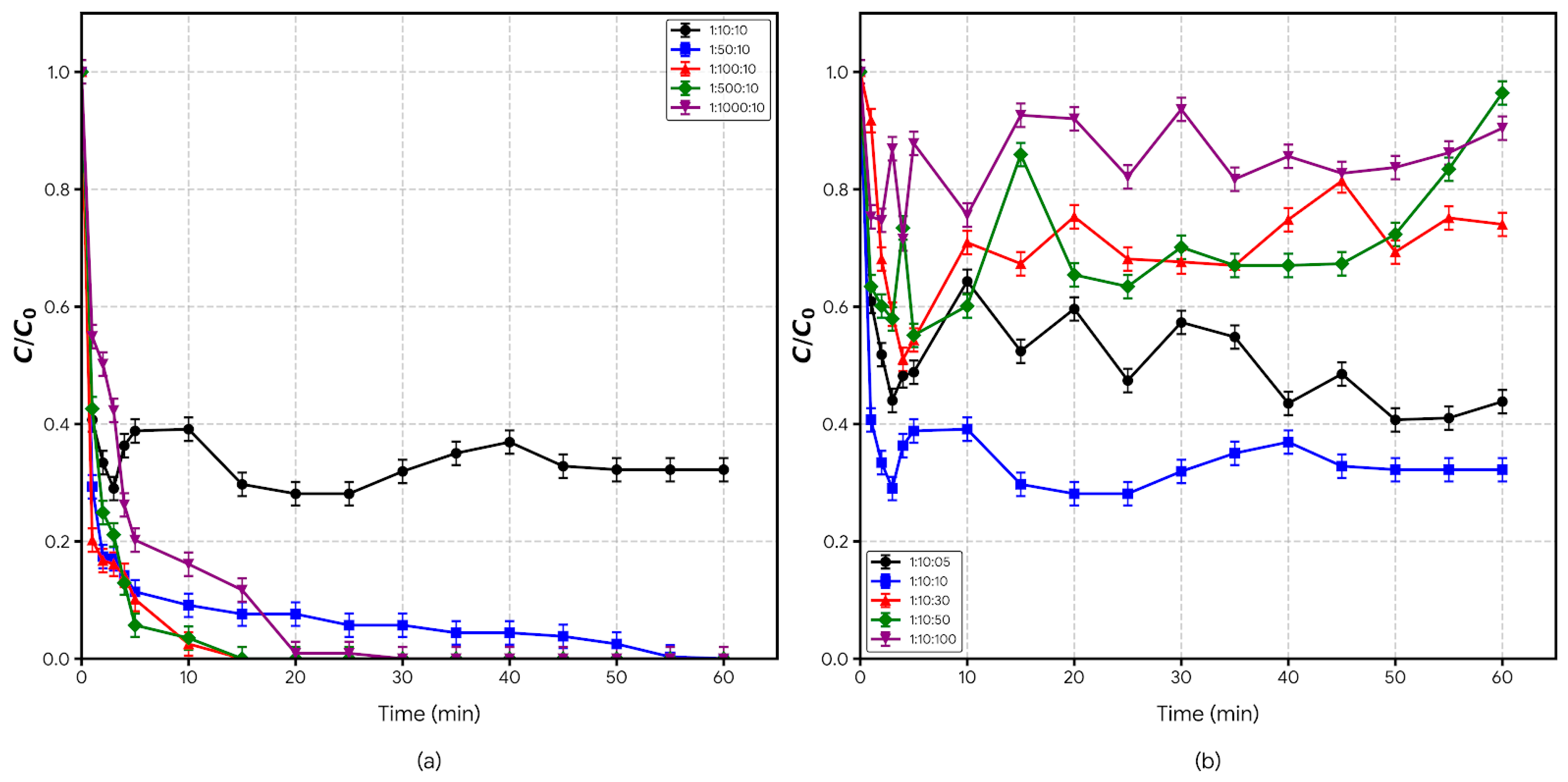
To evaluate the effect of persulfate concentration on RB5 and RB4 oxidation, experiments were conducted using a constant Fe(II)/dye molar ratio of 1:50, with persulfate/dye ratios of 1:10, 1:50, 1:100, 1:500, and 1:1000. The effect of persulfate dosage on RB5 oxidation is presented in Figure 1a. As observed, increasing the persulfate concentration led to a significant decrease in dye concentration. The 1:500 and 1:1000 ratios yielded almost identical removal efficiencies. Basilio et al. (2021) also reported that the thermal activation of persulfate enhanced RB5 degradation, with higher persulfate concentrations resulting in improved removal efficiency [15].
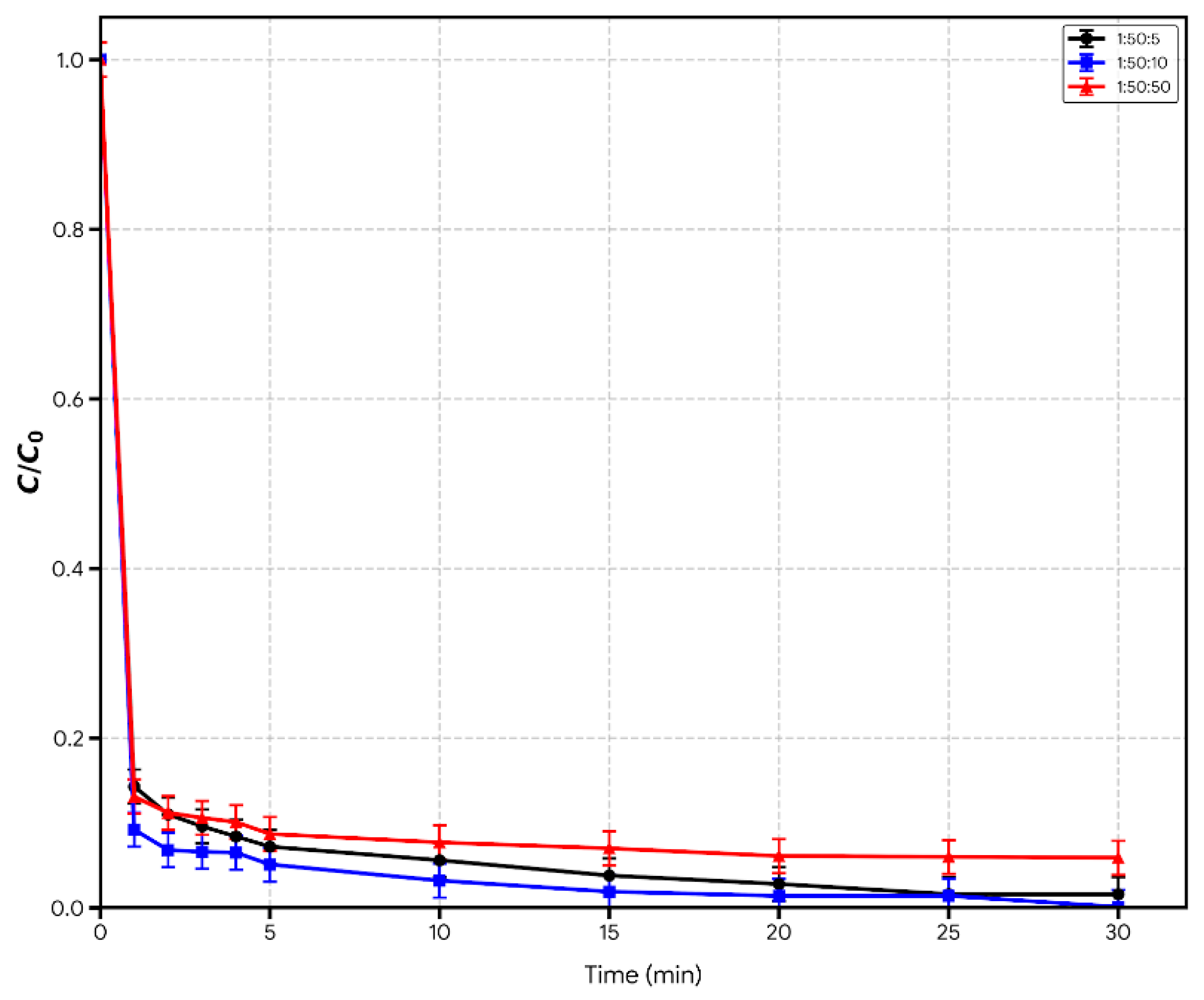
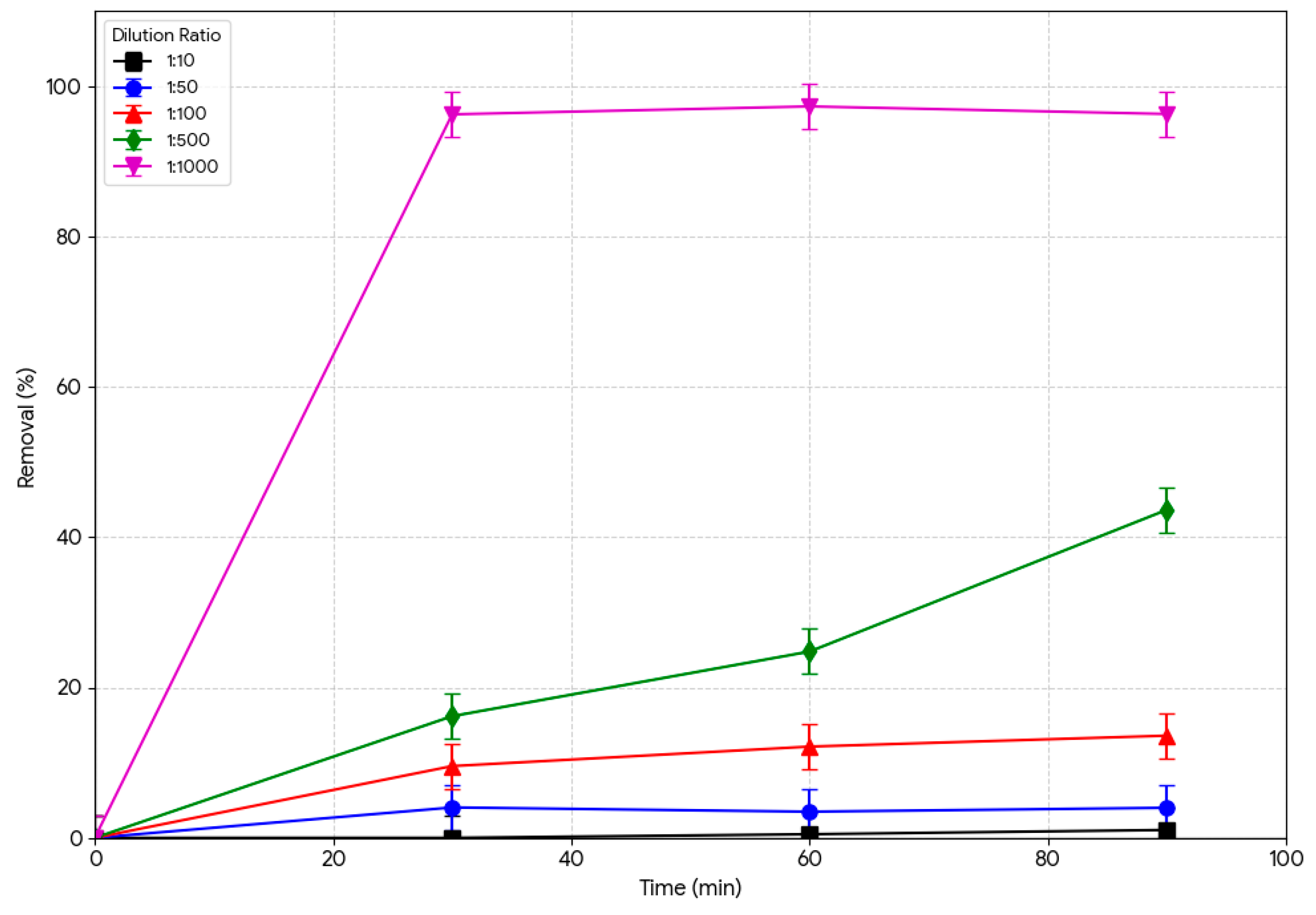
In order to assess the effect of iron sulfate concentration on RB5 oxidation, a 1:10 ratio of PS with iron sulfate dosages of 1:5, 1:10, 1:30, 1:50, and 1:100 was used; the results are shown in Figure 1b. As shown, increasing the iron sulfate dosage relative to the persulfate dosage had a negative effect on oxidation. The oxidation of RB5 using a 1:50 persulfate dosage with iron sulfate dosages of 1:5, 1:10, and 1:50 was also examined, and the results are shown in Figure 2. As shown, an excessive amount of iron decreased the efficiency of the degradation process.
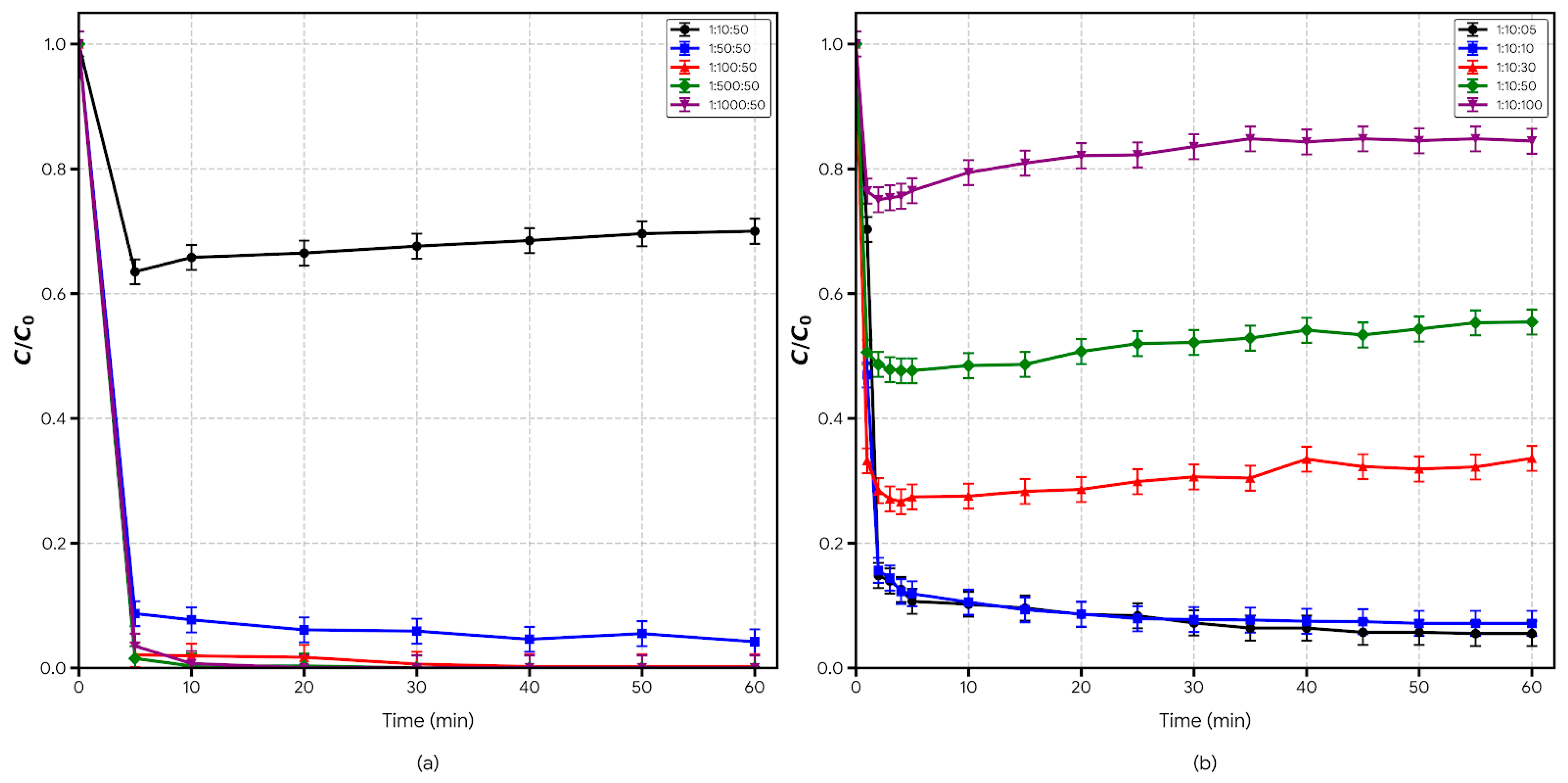
To evaluate the effect of Fe(II) concentration on RB4 oxidation, experiments were conducted using a persulfate/dye ratio of 1:10, with Fe(II)/dye ratios of 1:10, 1:50, 1:100, 1:500, and 1:1000 (Figure 3a). The results indicate that increasing the Fe(II) concentration initially enhanced the oxidation efficiency. Further experiments showed that excessive iron negatively affected oxidation. As seen in Figure 3a,b, radical scavenging occurred when the Fe(II) ratio exceeded a 1:1 molar ratio relative to persulfate, leading to decreased performance for both RB4 and RB5.
Dong et al. (2020) investigated Fe(II)-activated persulfate oxidation for the degradation of iodoform, a disinfection byproduct, and found that an appropriate Fe(II)/PS molar ratio enhanced sulfate radical generation, whereas excessive Fe(II) led to radical scavenging and reduced degradation efficiency [16]. Rodriguez et al. 2014 studied Orange G oxidation by persulfate activation using Fe (II), Fe (III), and zero-valent iron (ZVI), and their results show that the activation of persulfate to form sulfate radicals can be limited by sulfate radical scavenging when an excessive iron dosage is used [17]. Equations (3) and (4) can be used to observe the scavenging effect of iron in oxidation media. A recent study by Sun et al. developed a Fe–Al dual-electrode electrochemical system for persulfate activation to treat wastewater containing binary azo dyes (Reactive Black 5 and Reactive Red X-3B) [18]. Using periodic polarity reversal and direct current modes, the process achieved rapid degradation, with removal efficiencies reaching approximately 99% for RB5 within 10–15 min under optimized conditions. The degradation was fastest during the initial minutes of the reaction, primarily driven by sulfate radicals (SO4), while hydroxyl radicals played a secondary role.

3.2. The Effect of Solar Irradiation on RB5 and RB4 Oxidation

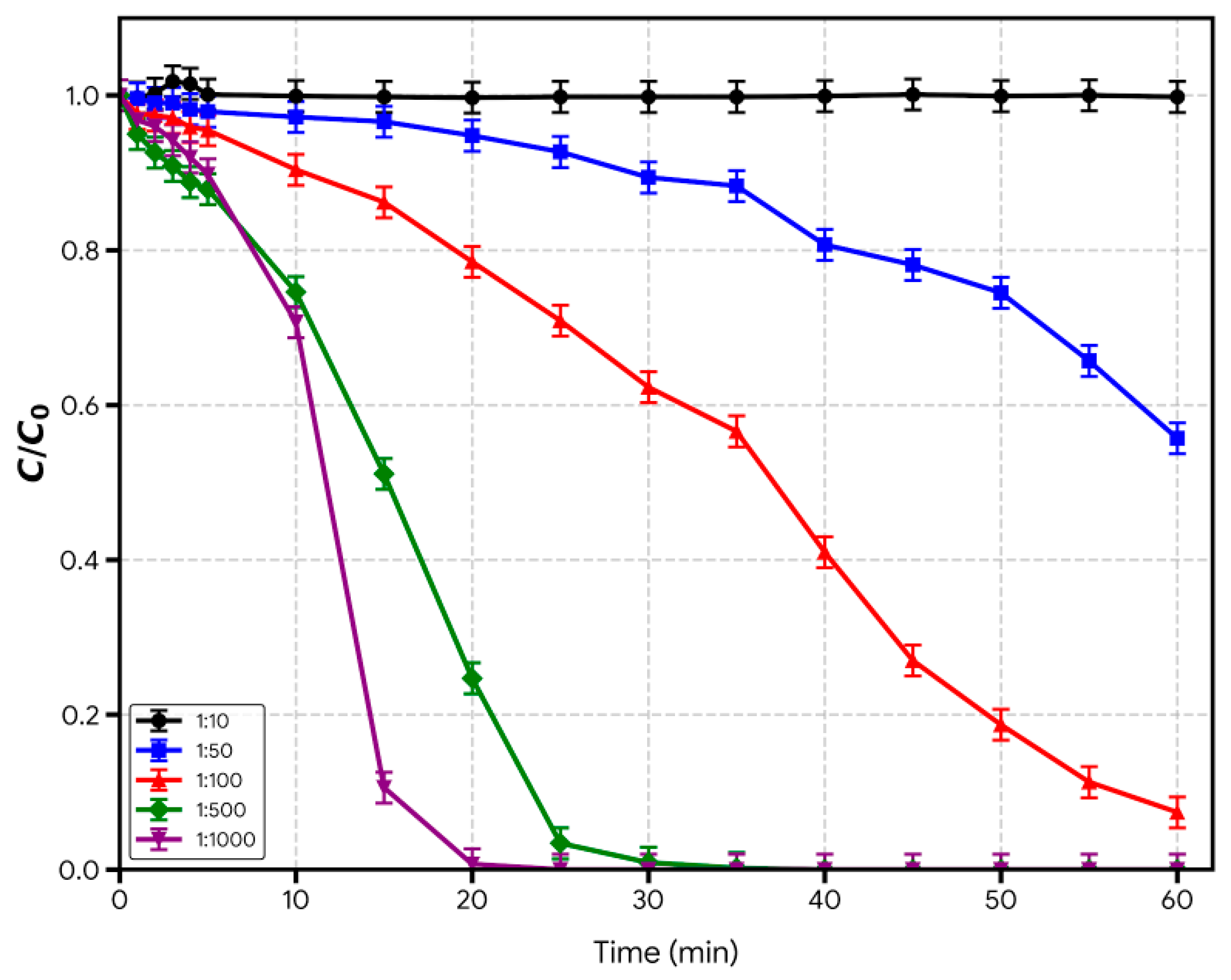
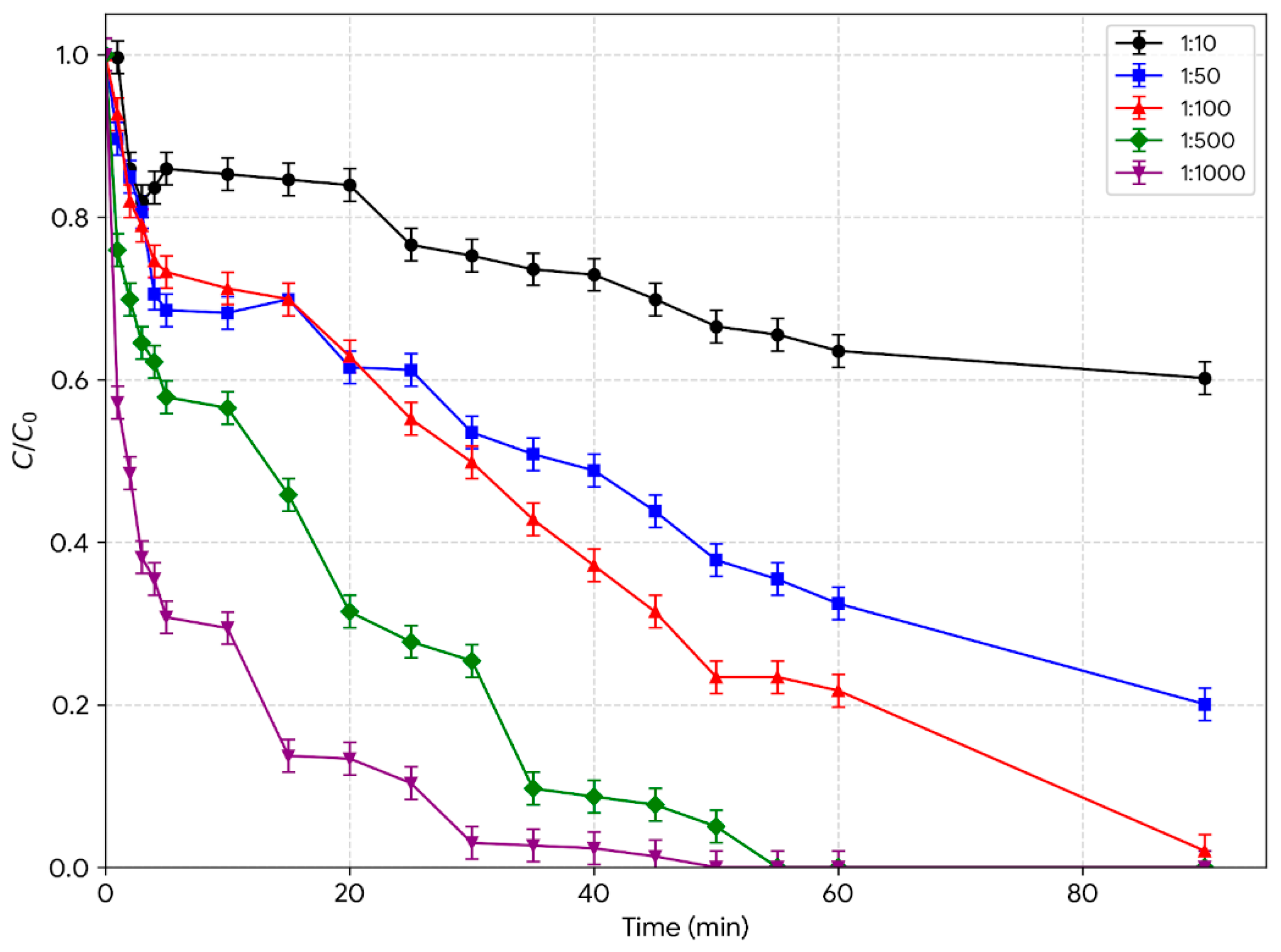
The effect of solar irradiation on RB5 degradation was investigated in a batch reactor using persulfate under natural sunlight. Experiments were performed on sunny days when temperatures reached up to 45 °C. Persulfate/dye ratios of 1:10, 1:50, 1:100, 1:500, and 1:1000 were tested to evaluate the influence of persulfate dosage on solar-assisted degradation, and the results are presented in Figure 4. As observed, increasing the persulfate ratio enhanced the degradation process. The solar radiation intensity in the experimental area was approximately 29.3 MJ/m2 (339 W/m2 calculated based on 24 h—508 W/m2 based on sunshine hours).
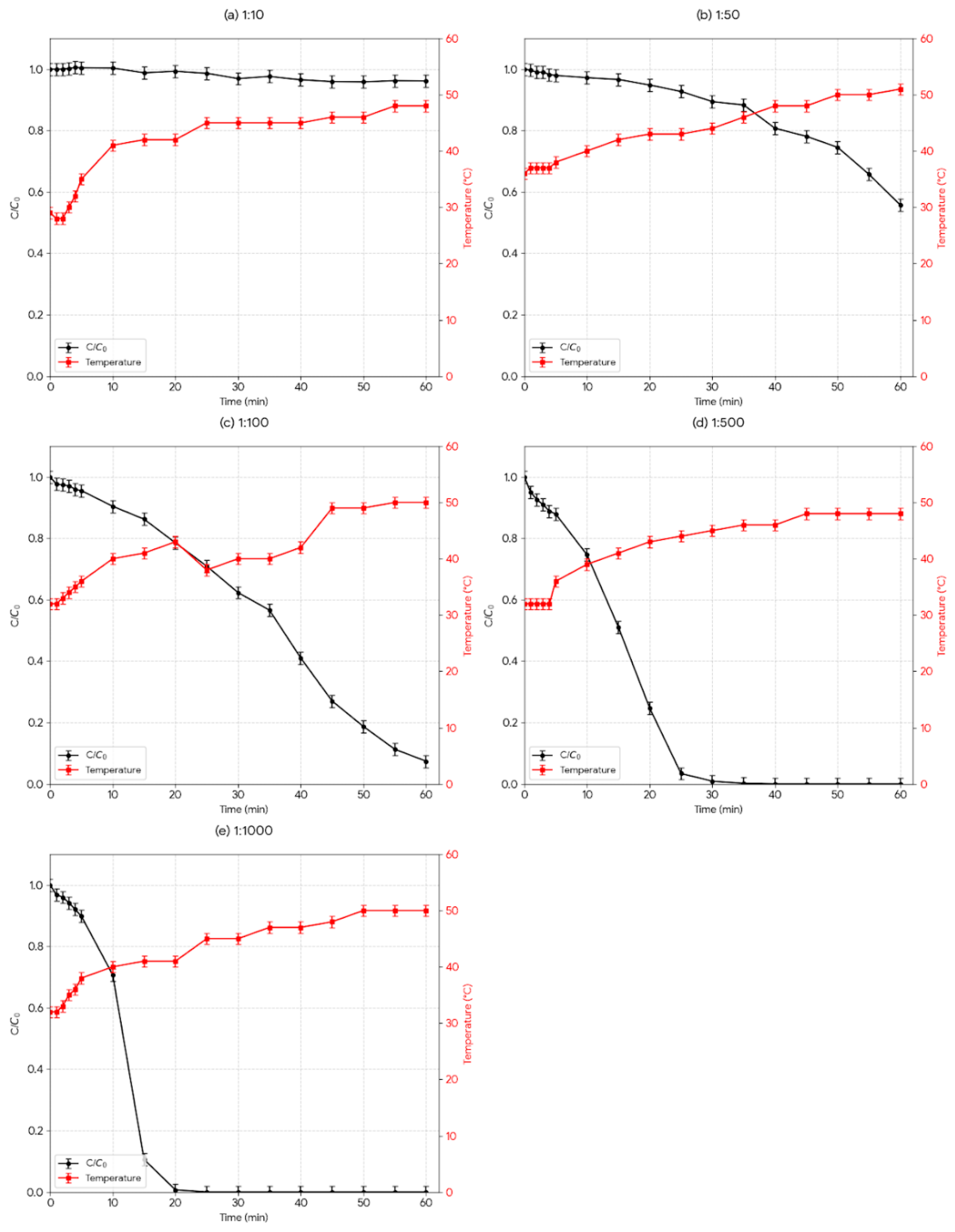
The effect of temperature on persulfate activation is shown in Figure 5. Increased persulfate dosage improved RB5 degradation; the effect of solar irradiation increased the effectiveness of sulfate radical formation, and complete degradation was achieved in less than 20 min at a persulfate/dye ratio of 1:1000 (Figure 5e). Before the solar experiments, indoor experiments were conducted without sunlight and using a 1:1000 PS dosage. No significant color removal was observed at 25 °C.
Recent research highlights the effectiveness of solar-driven persulfate (PS) activation in degrading organic pollutants. Moradi, M. and Saien, J. (2025) reported that a solar/PS/Fe2+ system under simulated solar irradiation achieved ~77% degradation within ~70 min at neutral pH using 180 mg L−1 PS, following pseudo-first-order kinetics (k ≈ 0.037 min−1) [19]. These results demonstrate that solar irradiation effectively enhances persulfate activation and reaction rates, supporting its applicability to persistent azo dyes such as RB5 under environmentally relevant conditions.
The mineralization efficiency of solar-activated persulfate was further evaluated using TOC analysis. Persulfate dosages of 1:10, 1:50, 1:100, 1:500, and 1:1000 were analyzed, and increasing the persulfate dosage improved TOC removal, with near-complete mineralization achieved at the 1:1000 ratio (Figure 6). Chen and Liu (2021) also reported that solar-assisted persulfate oxidation of nitrobenzene using Ag/Pb3O4 semiconductors resulted in increased TOC removal with higher persulfate dosages [20].
Furthermore, the oxidation of RB4 under solar irradiation and the persulfate/dye ratios of 1:10, 1:50, 1:100, 1:500, and 1:1000 were investigated, and the results are shown in Figure 7. Increasing the persulfate dosage improved RB4 oxidation under solar irradiation, which was measured as 35.2 MJ/m2 (406.8 W/m2 calculated based on 24 h—536 W/m2 based on sunshine hours) for the experiment area.
Kinetic analysis was carried out for the runs conducted with the solar-activated persulfate oxidation of dyes RB5 and RB4. A comparison between first- and second-order rate analysis with linear regression favored pseudo-first-order reaction kinetics in the case of both dyes.
It was observed that the decolorization of RB5 solutions via solar-driven oxidation occurs after a certain increase in temperature (Figure 4). When the linear model ln(C/C0) vs. time was applied to the region where the change in concentration was more significant, it resulted in better R2 values but a pseudo-rate constant, as shown in Table 1.
Pseudo-first-order constants confirm that increasing persulfate concentrations increased the reaction rate. RB4 decolorization better fits first-order reaction kinetics. The decolorization of RB5 solutions was faster than the decolorization of RB4 solutions.

3.3. Byproduct Formation

Byproduct formation during RB5 oxidation was monitored via GC-MS chromatography. The presence of byproducts at a 1:10 PS ratio was observed after 90 min. The identified byproducts and related information are shown in Table 2. It is clear that the cleavage of the nitrogen double bond (which caused the color disappearance) resulted in the release of benzene ring-containing compounds [21]. It was not possible to observe byproduct formation for runs with high persulfate dosages and high TOC removals.

3.4. Proposed Mechanism of Dye Degradation by Solar-Activated Persulfate

The experimental results obtained in this study indicate that the degradation of RB5 and RB4 is primarily driven by sulfate radicals (SO4•−) generated from the activation of persulfate under solar irradiation and/or Fe(II) catalysis. Under solar irradiation, persulfate (S2O82−) absorbs photons or gains thermal energy to undergo homolytic cleavage and form two sulfate radicals. These radicals can further generate hydroxyl radicals (OH) and other reactive oxygen species (O2•−, 1O2), which attack azo and anthraquinone chromophores, leading to dye decolorization and mineralization. Simultaneously, Fe(II) catalyzes the decomposition of persulfate (S2O82− + Fe2+ → Fe3+ + SO42− + SO4•−), while excessive Fe(II) can act as a scavenger for SO4•−, reducing efficiency. Similar ROS-driven mechanisms have been reported in recent studies using Fe3O4/GO composites [18] and ferrilanthanide catalysts [22]. El-monem et al. (2024) studied the photo-thermal activation of persulfate for the efficient degradation of industrial wastewaters, demonstrating that sulfate and hydroxyl radicals are prevailing reactive species in solar-thermal PS systems [23]. Additionally, Fe(II) catalyzes the decomposition of persulfate to produce SO4•− in the usual way.
The initial pH plays a critical role in Fe(II)-activated persulfate systems used for the degradation of textile dyes such as Reactive Black 5 (RB5) and Reactive Black 4 (RB4). Acidic conditions favor persulfate activation and the generation of sulfate (SO4•−) and hydroxyl (OH) radicals because Fe2+ remains soluble, enhancing dye degradation efficiency [24]. In contrast, alkaline conditions reduce oxidation performance due to Fe2+ precipitation as iron hydroxides and the subsequent decrease in radical production [24]. Although higher efficiencies are often reported under acidic conditions, a near-neutral pH is generally preferred for practical wastewater treatment to minimize chemical consumption in pH adjustments and to reduce sludge formation, thereby improving process feasibility [6].

4. Conclusions

The oxidation of RB5 and RB4, which are azo and anthraquinone dyes commonly used in the textile industry, was studied using sulfate radicals generated from persulfate activated by Fe(II) and solar irradiation. A key finding is that natural solar irradiation effectively activated persulfate, achieving ≥99% color removal for both dyes at a persulfate/dye ratio of 1:1000. This ratio also enabled the near-complete mineralization of TOC, demonstrating that solar-activated persulfate is highly effective for degrading organic pollutants, including textile dyes. Some byproducts, including benzene derivatives, were detected under low persulfate dosages and incomplete TOC removal conditions. In regions with abundant sunlight, solar-activated persulfate can serve as an environmentally friendly and efficient option for wastewater treatment [25].
The experiments also showed that Fe(II) activation improved color removal efficiency at an optimal dose; however, excessive Fe(II) decreased efficiency due to sulfate radical scavenging. Combining solar activation with Fe(II) catalysis provides a flexible and effective strategy for textile dye treatment. In the absence of sufficient solar irradiation, Fe(II)-activated persulfate can serve as a viable alternative approach for dye decolorization.

Author Contributions

Conceptualization, S.P. and C.B.; methodology, C.B.; software, C.B.; validation, S.P., Ş.D. and C.B.; formal analysis, S.P.; investigation, C.B.; resources, C.B.; data curation, C.B.; writing—original draft preparation, C.B.; writing—review and editing, S.P.; visualization, C.B.; supervision, S.P.; project administration, S.P. All authors have read and agreed to the published version of the manuscript.

Funding

This research received funding from EUL BAPKO.0302320, and the APC was funded by C.B.

Institutional Review Board Statement

Not applicable.

Informed Consent Statement

Not applicable.

Data Availability Statement

The raw data supporting the conclusions of this article will be made available by the authors on request.

Conflicts of Interest

The authors declare no conflicts of interest.

References

  1. Arellano, M.; Sanromán, M.Á.; Pazos, M. Sulfate Radicals-Based Technology as a Promising Strategy for Wastewater Management. In Frontiers in Water-Energy-Nexus—Nature-Based Solutions, Advanced Technologies and Best Practices for Environmental Sustainability; Advances in Science, Technology and Innovation; Springer: Cham, Switzerland, 2020; pp. 113–115. [Google Scholar] [CrossRef] [Scilit]
  2. Andrew, O.A.; Pirgalıoğlu, S.; Doğan, Ş. Heat Activated Persulfate Oxidation of Reactive Black 5. Desalin. Water Treat. 2020, 177, 393–399. [Google Scholar] [CrossRef] [Scilit]
  3. Zhang, Y.; Shaad, K.; Vollmer, D.; Ma, C. Treatment of Textile Wastewater Using Advanced Oxidation Processes—A Critical Review. Water 2021, 13, 3515. [Google Scholar] [CrossRef] [Scilit]
  4. Mohammadi-Galangash, M.; Mousavi, S.K.; Shirzad-Siboni, M. Photocatalytic Degradation of Reactive Black 5 from Synthetic and Real Wastewater under Visible Light with TiO2 Coated PET Photocatalysts. Sci. Rep. 2025, 15, 14314. [Google Scholar] [CrossRef] [Scilit]
  5. Olmez-Hanci, T.; Arslan-Alaton, I. Comparison of Sulfate and Hydroxyl Radical Based Advanced Oxidation of Phenol. Chem. Eng. J. 2013, 224, 10–16. [Google Scholar] [CrossRef] [Scilit]
  6. Guerra-Rodríguez, S.; Rodríguez, E.; Singh, D.N.; Rodríguez-Chueca, J. Assessment of Sulfate Radical-Based Advanced Oxidation Processes for Water and Wastewater Treatment: A Review. Water 2018, 10, 1828. [Google Scholar] [CrossRef] [Scilit]
  7. Pacheco-Álvarez, M.O.A.; Bravo-yumi, N.; Oller, I.; Peralta-hern, J.M. Solar-Photoelectro-Fenton Process as a Cost-Efficient Alternative for Removal of Industrial Dyes in Sulfate and Chloride Media: Pilot Scale Evaluation. Appl. Catal. O Open 2025, 202, 207037. [Google Scholar] [CrossRef] [Scilit]
  8. Pérez-Lucas, G.; Aatik, A.E.; Aliste, M.; Navarro, G.; Fenoll, J.; Navarro, S. Removal of Contaminants of Emerging Concern from a Wastewater Effluent by Solar-Driven Heterogeneous Photocatalysis: A Case Study of Pharmaceuticals. Water. Air. Soil Pollut. 2023, 234, 55. [Google Scholar] [CrossRef] [Scilit]
  9. Amor, C.; Rodríguez-Chueca, J.; Fernandes, J.L.; Domínguez, J.R.; Lucas, M.S.; Peres, J.A. Winery Wastewater Treatment by Sulphate Radical Based-Advanced Oxidation Processes (SR-AOP): Thermally vs. UV-Assisted Persulphate Activation. Process Saf. Environ. Prot. 2019, 122, 94–101. [Google Scholar] [CrossRef] [Scilit]
  10. Ma, D.; Yi, H.; Lai, C.; Liu, X.; Huo, X.; An, Z.; Li, L.; Fu, Y.; Li, B.; Zhang, M.; et al. Critical Review of Advanced Oxidation Processes in Organic Wastewater Treatment. Chemosphere 2021, 275, 130104. [Google Scholar] [CrossRef] [Scilit]
  11. Brillas, E. Progress of Antibiotics Removal from Synthetic and Real Waters and Wastewaters by Persulfate-Based Advanced Oxidation Processes. J. Environ. Chem. Eng. 2023, 11, 111303. [Google Scholar] [CrossRef] [Scilit]
  12. Nidheesh, P.V.; Couras, C.; Karim, A.V.; Nadais, H. A Review of Integrated Advanced Oxidation Processes and Biological Processes for Organic Pollutant Removal. Chem. Eng. Commun. 2022, 209, 390–432. [Google Scholar] [CrossRef] [Scilit]
  13. Urán-Duque, L.; Saldarriaga-Molina, J.C.; Rubio-Clemente, A. Advanced Oxidation Processes Based on Sulfate Radicals for Wastewater Treatment: Research Trends. Water 2021, 13, 2445. [Google Scholar] [CrossRef] [Scilit]
  14. Nam, N.T.P.; Cuong, N.N.; Trung, L.D. Study on COD and Color Removal Efficiency in Textile Dyeing Wastewater by Iron Electro-Coagulation Technology Combined with Persulfate. IOP Conf. Ser. Earth Environ. Sci. 2024, 1349, 012015. [Google Scholar] [CrossRef] [Scilit]
  15. Basilio, A.O.; Dohler, L.; Servin, M.; Gouvea, C.A.K.; Ribeiro, R.R.; Peralta-Zamora, P. Degradation of Reactive Dyes by Thermally Activated Persulfate and Reuse of Treated Textile Dye-Bath. J. Braz. Chem. Soc. 2021, 32, 1865–1873. [Google Scholar] [CrossRef] [Scilit]
  16. Dong, Z.; Wang, F.; Song, X.; Zhang, M.; Jiang, C.; Sun, F.; Li, M. Fe (II)-Activated Persulfate Oxidation Effectively Degrades Iodoform in Water: Influential Factors and Kinetics Analysis. Arab. J. Chem. 2020, 13, 5009–5017. [Google Scholar] [CrossRef] [Scilit]
  17. Rodriguez, S.; Vasquez, L.; Costa, D.; Romero, A.; Santos, A. Oxidation of Orange G by Persulfate Activated by Fe(II), Fe(III) and Zero Valent Iron (ZVI). Chemosphere 2014, 101, 86–92. [Google Scholar] [CrossRef] [Scilit]
  18. Sun, Z.; Zhao, W.; Wu, J.; Shi, K.; Zhang, L.; Kou, W. One-Step Hydrothermal Synthesis of Fe3O4/GO Composites Combined with Persulfate for the Removal of Reactive Black in Aqueous Solution. Bull. Chem. React. Eng. Catal. 2025, 20, 392–402. [Google Scholar] [CrossRef] [Scilit]
  19. Moradi, M.; Saien, J. Solar/metal activation of persulfate in homogeneous processes for simultaneous degradation of antibiotic and dye pollutants. J. Photochem. Photobiol. A Chem. 2025, 468, 116500. [Google Scholar] [CrossRef] [Scilit]
  20. Chen, W.S.; Liu, Y.C. Photocatalytic Degradation of Nitrobenzene in Wastewater by Persulfate Integrated with Ag/Pb3O4 Semiconductor under Visible Light Irradiation. Heliyon 2021, 7, e06984. [Google Scholar] [CrossRef] [Scilit]
  21. NIST Chemistry WebBook, SRD 69. Available online: https://webbook.nist.gov/chemistry/str-file/ (accessed on 17 May 2022).
  22. Arslan-Alaton, I.; Koba-Ucun, O.; Turkten, N.; Sora, I.N.; Bekbolet, M. More about Persulfate-Assisted Ferrilanthanide-Mediated Photocatalysis of Textile Industry Dye Reactive Black 5: Surface Properties and Structural Assessment. Water 2023, 15, 906. [Google Scholar] [CrossRef] [Scilit]
  23. El-monem, H.A.; Mahanna, H.; El-Halwany, M.; Samy, M. Photo-Thermal Activation of Persulfate for the Efficient Degradation of Synthetic and Real Industrial Wastewaters: System Optimization and Cost Estimation. Environ. Sci. Pollut. Res. 2024, 31, 24153–24162. [Google Scholar] [CrossRef] [Scilit] [PubMed]
  24. Wang, J.; Wang, S. Activation of Persulfate (PS) and Peroxymonosulfate (PMS) and Application for the Degradation of Emerging Contaminants. Chem. Eng. J. 2018, 334, 1502–1517. [Google Scholar] [CrossRef] [Scilit]
  25. Zheng, Z.; Man, J.H.K.; Wang, X.; Kwan, A.S.K.; Yim, K.T.; Lo, I.M.C. Enhanced Micropollutant Degradation over Catalyst-Free Synergistic Activation of Periodate and Persulfate under Solar Light. Environ. Sci. Pollut. Res. 2025, 32, 16931–16944. [Google Scholar] [CrossRef] [Scilit] [PubMed]
Figure 1. Effect of iron and persulfate dosages on oxidation of RB5 solutions. (a) Effect of persulfate dosage (dye: iron(II) sulfate = 1:50). (b) Effect of iron dosage (dye: persulfate = 1:10).
Applsci 16 03373 g001
Figure 2. Oxidation of RB5 at a 1:50 dye/persulfate ratio with different iron sulfate dosages.
Applsci 16 03373 g002
Figure 3. Effect of iron and persulfate dosage on oxidation of RB4 solutions. (a) Effect of persulfate dosage (dye: iron(II) sulfate = 1:10). (b) Effect of iron dosage on oxidation of RB4 (dye: persulfate = 1:10).
Applsci 16 03373 g003
Figure 4. Oxidation of RB5 at different dye/persulfate ratios using solar irradiation.
Applsci 16 03373 g004
Figure 5. Effect of temperature during solar-activated persulfate oxidation. (ae) represent different dye/persulfate molar ratios.
Applsci 16 03373 g005
Figure 6. The effect of persulfate on TOC removal with time.
Applsci 16 03373 g006
Figure 7. Oxidation of RB4 at different dye/persulfate ratios using solar irradiation.
Applsci 16 03373 g007
Table 1. Pseudo-first-order rate constants.
1st Order k (min−1) 1st Order R2
RB51:10 0.00086 0.92
1:50 0.00747 0.85
1:100 0.03698 0.86
1:500 0.16416 0.89
1:1000 0.22374 0.83
RB41:10 0.00530 0.87
1:50 0.01590 0.97
1:100 0.03340 0.88
1:500 0.05450 0.96
1:1000 0.08550 0.96
Table 2. Identified byproducts for RB5 oxidation under a 1:10 dose after 90 min.
Similarity %NameMolecular Weight (g/mol)Molecular Formula Molecular Structure Library
80 Peak 1—Phthalic acid, allyl ethyl ester234C13H14O4Applsci 16 03373 i001WILEY 7
60Peak 2—N,N-Dimethyl-N′-phenyl-formamidine148C9H12N2Applsci 16 03373 i002
68Peak 3—Phenol, 2-methyl-4-(1,1,3,3-tetramethylbutyl)220C15H24OApplsci 16 03373 i003
Molecular structures have been taken from NIST Chemistry WebBook, SRD 69 [21].
Disclaimer/Publisher’s Note: The statements, opinions and data contained in all publications are solely those of the individual author(s) and contributor(s) and not of MDPI and/or the editor(s). MDPI and/or the editor(s) disclaim responsibility for any injury to people or property resulting from any ideas, methods, instructions or products referred to in the content.