1. Introduction
Shallow geothermal energy is a renewable, environmentally friendly, and geographically versatile energy source, and it is widely utilized for heating and cooling, primarily through closed-loop ground-coupled heat pump (GCHP) systems [
1,
2,
3]. Borehole heat exchangers (BHEs), the core component of GCHPs, can be in the form of vertical boreholes, energy piles, borehole thermal storage, or geo-energy structures. As BHE-based systems and geo-energy structures become a key solution for decarbonizing buildings and industrial processes, a critical challenge arises [
4,
5]. Due to global population distribution and bedrock depth patterns, a significant proportion of heat exchange wellbores will likely be installed in shallow bedrock (depths < 200 m) rather than in unconsolidated geological layers [
6].
The distinct properties of rock mass different from unconsolidated layers should be recognized. Rock mass is the combination of intact rock and discontinuities, which denotes any separation in the rock continuum having effectively zero tensile strength and is used without any genetic connotation (e.g., the words “joint” or “fault” which describe discontinuities formed in different ways) [
7]. On the other hand, soil is a material composed of minerals, soil organic matter, living organisms, gas, and water [
8]. While groundwater recharge may be slow in low-permeability bedrock, areas with developed fissures and karst features can form productive aquifers, facilitating substantial water flow and recharge. For instance, karst aquifers can have runoff moduli as high as 20 L/(s·km
2) and flow velocities reaching hundreds of meters per day [
9]. Primarily recharged by seasonally variable precipitation, groundwater in bedrock typically shows heterogeneous and anisotropic characteristics [
10,
11]. For instance, in karst systems, water table fluctuations can exceed 100 m annually [
10].
Fluctuation of groundwater might impose influences on rock mechanics, hence impact the stability of geothermal boreholes and other forms of geo-energy structures, such as underground coal gasification and co-mining of minerals and geothermal resources. Especially considering that most energy geo-structures are dual-function engineering sub-structures for heat transfer and storage, aside from the original structural purpose [
12,
13,
14], in the forms of integrating geothermal extraction with building foundations, including energy piles [
15,
16], walls [
17] and tunnels [
18].
Change in fracture water content would alter the internal water pressure, effective stress and mechanical behavior of rock masses. Guo et al. [
19] used an electro-hydraulic servo-controlled rock triaxial testing machine to investigate the variation in soft rock strength under different immersing durations and confining pressures, performing pseudo-triaxial mechanical tests. The study focused on the influence of confining pressure and saturation state on soft rock strength, analyzing in detail the mechanisms and characteristics of how these factors affect strength changes. The study also proposed support principles for weak surrounding rock under high ground stress. Zheng et al. [
20], addressing the issue of groundwater exacerbating large deformations in soft rock tunnels during shale tunnel construction, investigated the microscopic mechanisms and mechanical properties of water-saturated shale softening. The study found that minerals in shale expand upon contact with water, producing loose, porous flocculent materials that disrupt the originally dense layered structure, leading to fragmentation. It is also concluded that cementation between mineral particles gradually deteriorates, increasing pores and fractures, resulting in reduced shale strength and weakened deformation resistance. Zhang [
21], based on a highway tunnel engineering case, applied fuzzy mathematics theory combined with field monitoring and numerical calculations to conduct an in-depth study of the tunnel’s mechanical characteristics. The results showed that analyzing mechanical properties, such as crown settlement, peripheral convergence, surrounding rock stress, and steel arch stress, in dry versus water-rich sections provides valuable insights for groundwater prediction and defect treatment in similar highway tunnels. Song and Gao [
22] selected a soft rock tunnel as a case study and used numerical simulations to compare stress–strain characteristics of the initial support and surrounding rock in natural versus water-immersed states. The results indicated that hydrophilic minerals in the surrounding rock expand upon contact with water, leading to various hazards in the tunnel’s initial support. Wang and Zhou [
23] used fractal geometry theory to simulate the distribution of rough fracture surfaces and fracture apertures, and modeled solute transport in rough fractures. The results demonstrated that rough fractures exhibit delayed concentration fronts, along with heterogeneity and anisotropy. Wang et al. [
24] noted that after excavation and drainage in karst tunnels, groundwater seepage and exchange rates increase. A mathematical model for limestone permeability evolution was established to derive an evolution equation for the permeability tensor under karst tunnel drainage conditions. Vinci et al. [
25] emphasized that characterizing subsurface fluid flow requires considering hydro-mechanical coupling between fluid pressure changes and rock deformation. Particularly for compressible fluid flow along flexible conduits such as joints, fractures, or faults, it is strongly influenced by surrounding rock deformation. Comparisons with field data revealed coupling between fluid flow within fractures and rock deformation induced by flow pressure variations along fractures.
The reviewed studies above demonstrated the controlling mechanisms of fracture water on rock mechanical behaviors, and corresponding measurements in stability enforcement; two key questions remain unanswered:
- (1)
It is already known that fracture dip angle plays a governing role in failure of rock mass, but how would it impact the failure mechanism when combined with variation in groundwater saturation?
- (2)
Most current studies focus on the influence of increasing water content in fractures, but what influence would be expected when groundwater reduces in post-flooding periods?
Focusing on the two objectives above, this experimental study used limestone material to prepare standard rock specimens and conducted triaxial compression tests to analyze variation patterns of mechanical properties under conventional, immersed, and immersed-dried conditions. These three conditions were to present changes in water saturation in rock masses during dry, flooding and post-flooding cycles. The combined influencing mechanism of groundwater saturation and fracture dip angle on mechanical properties of typical fractured rock mass was investigated.
The stability of fissured rock masses is influenced by both hydrological conditions and fissure geometry. Owing to the relatively homogeneous properties of these fissures, an increase in water saturation tends to weaken the mechanical properties of steeper fissures more pronouncedly, including cohesive force, internal friction angle and strength envelope. Additionally, gravitational water present along fissure planes reduces effective stress and weakens interfacial bonding. These mechanisms elevate the risk of shear slippage through fissure reactivation. Consequently, rock masses with steeper fissures are more susceptible to water-induced weakening, and particular attention should be given to the potential for borehole collapse in steeply inclined fractured zones during periods of high-water table. This research offers a novel, systematic understanding of how fissure geometry governs the hydro-mechanical behavior of fractured rock. It also holds practical value by providing theoretical support for stability risk assessment in geo-energy structures located in shallow bedrock.
2. Sample Preparation and Mechanical Test
During July 2024, field investigations were conducted on outcrops in the city of Guiyang, southwest China, documenting 142 fractures within 26 fracture sets. The results reveal that fracture dip angles primarily concentrate in two ranges (0–15° and 75–90°). Considering that nearly flat or nearly vertical angles are not expected to clearly demonstrate the effect of fissure as a mechanically weak plane, specimens with fissure dip angles of 15° and 75° were selected in the experiment.
Limestone from a karst area in southwest China was selected as the primary material for the specimens, with Portland cement used as a gelled material. The limestone and Portland cement were mixed in a 3:1 ratio, and after thorough stirring, the mixture was placed into specially designed rectangular molds, which was titled by 15° or 75°. The lower part of the sample was poured first, and was air dried for 20 min, then the upper part was poured later, so a joint 15° or 75° was created in the concrete bulk. The cast bulk was then cured in an artificially controlled environment with specific temperature and humidity conditions for 15 days to ensure the strength of the specimens.
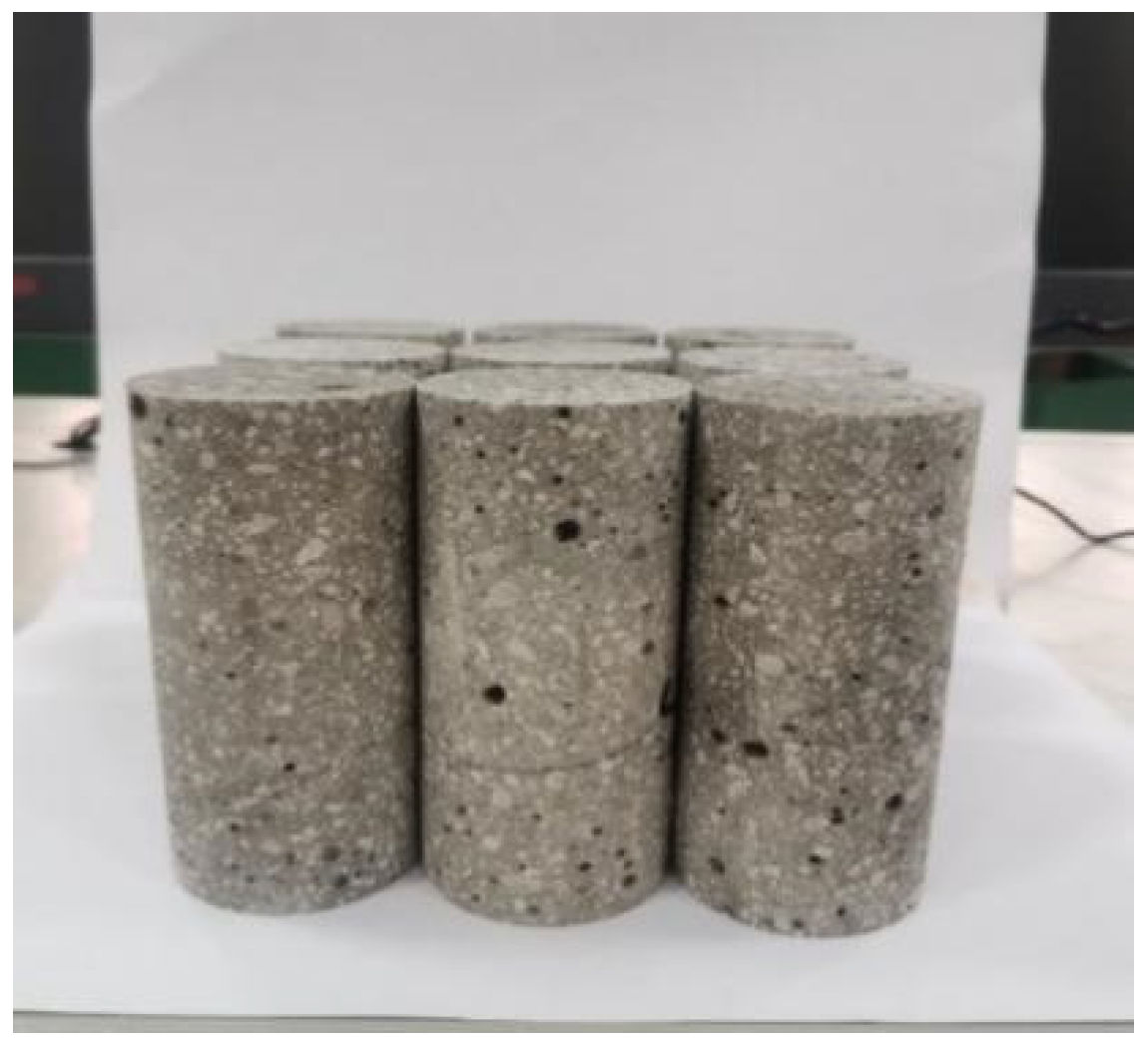
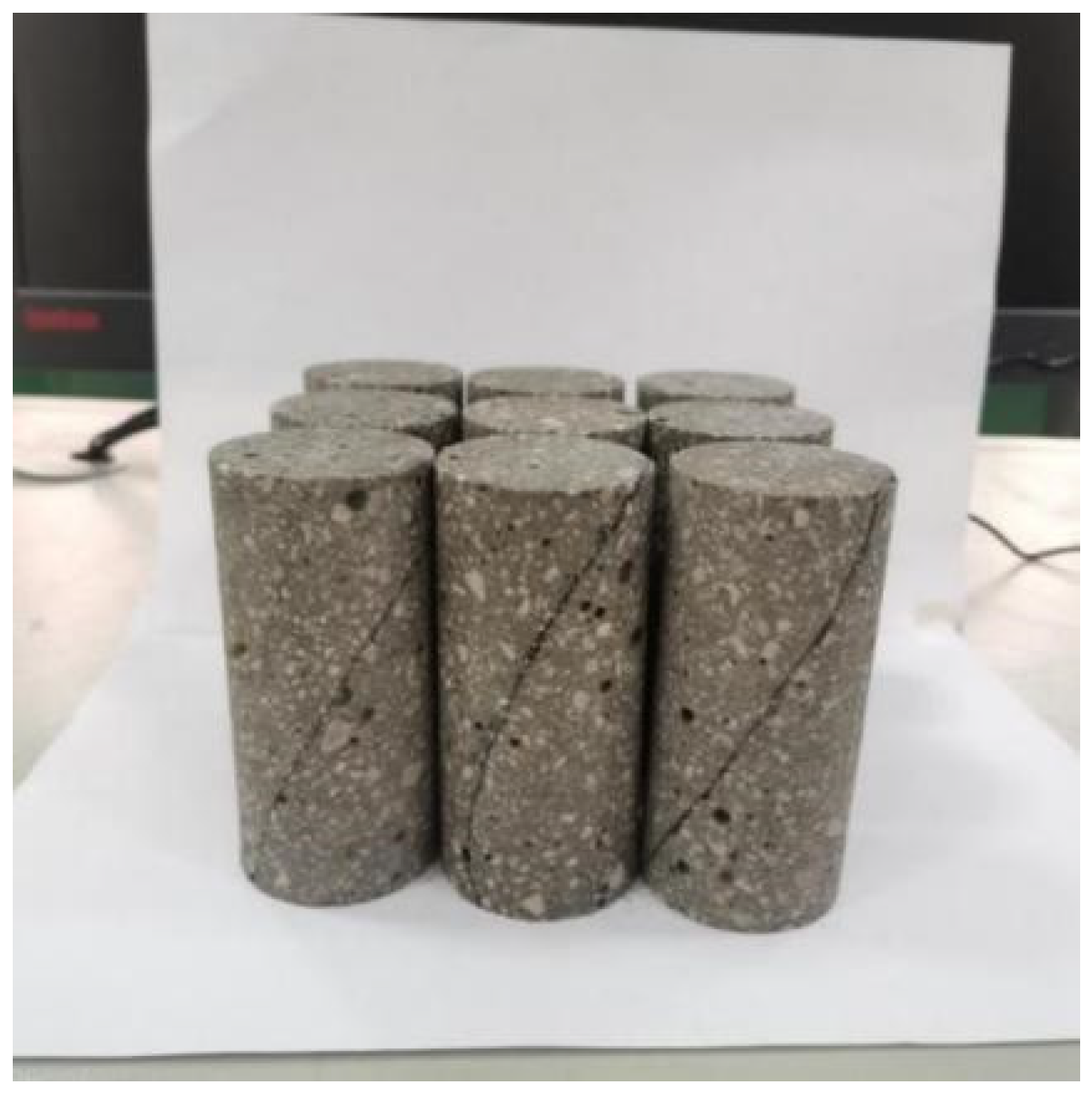
After curing, column specimens were cored using a 50 mm inner-diameter coring bit, with 12 samples collected for each angle. It was essential to ensure that the structural plane fully penetrated the core, avoiding issues such as core breakage during drilling, incomplete penetration of the structural plane, or the absence of fractures in the core. All the test specimens were prepared as standard cylinder samples with a diameter of 50 mm and a height of 100 mm, as shown in
Figure 1 and
Figure 2. To ensure uniform stress distribution during triaxial compression testing, the end faces of the cores were processed using a grinding machine and measured with a digital micrometer. The end faces had to meet the specified tolerance requirements: the diameter error over the entire height of the specimen should not exceed 0.3 mm; the maximum non-parallelism of the two end faces should not exceed 0.05 mm; and the end faces should be perpendicular to the specimen axis, with a maximum deviation of 0.25°.
The samples were divided into three storage conditions: conventional, immersed, and immersed-dried. Each group consisted of 4 samples, resulting in a total of 24 samples (
Table 1). The samples were wrapped in plastic film to isolate them from air, thereby preventing moisture absorption during storage or reducing the evaporation of internal moisture.
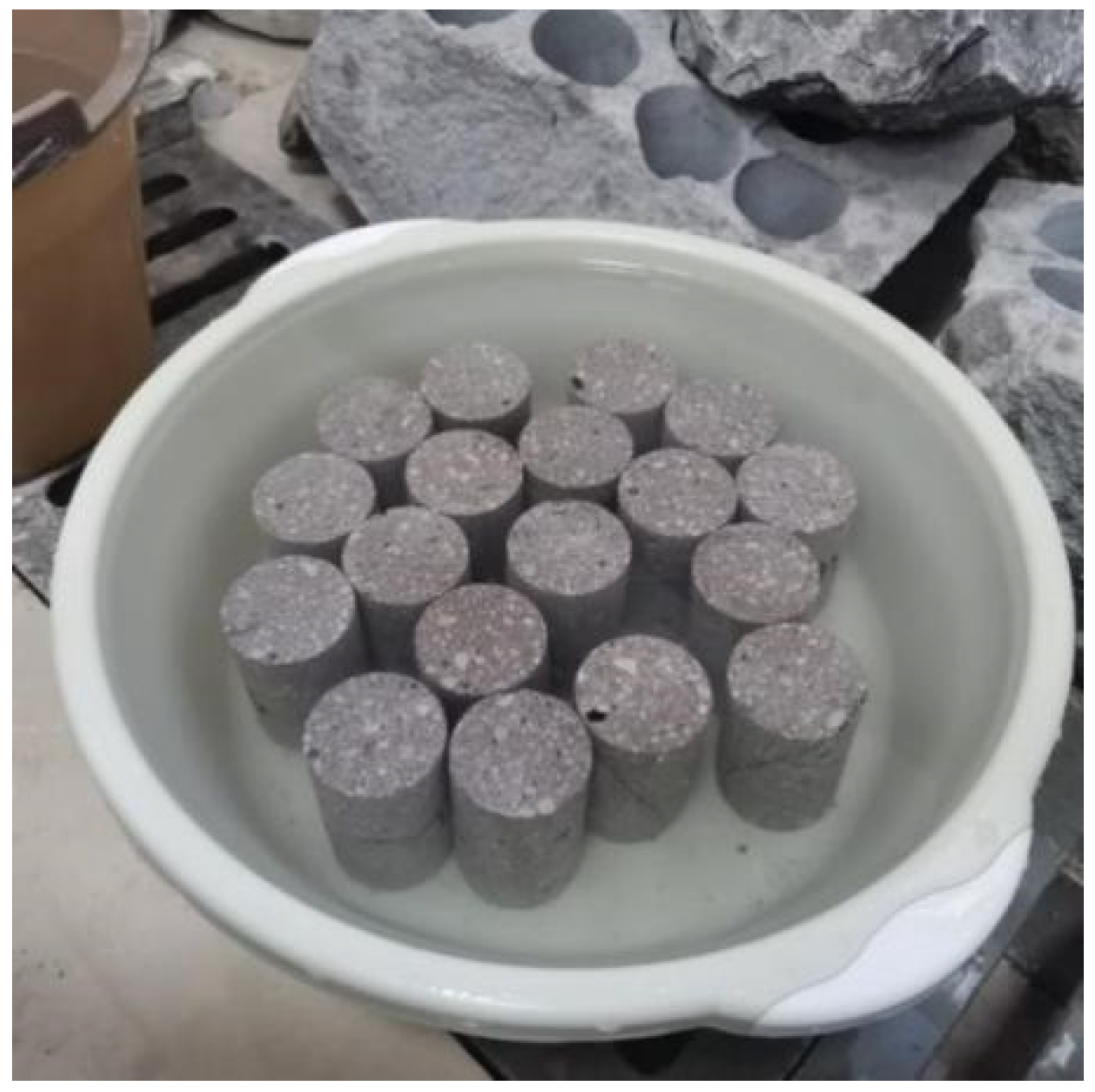
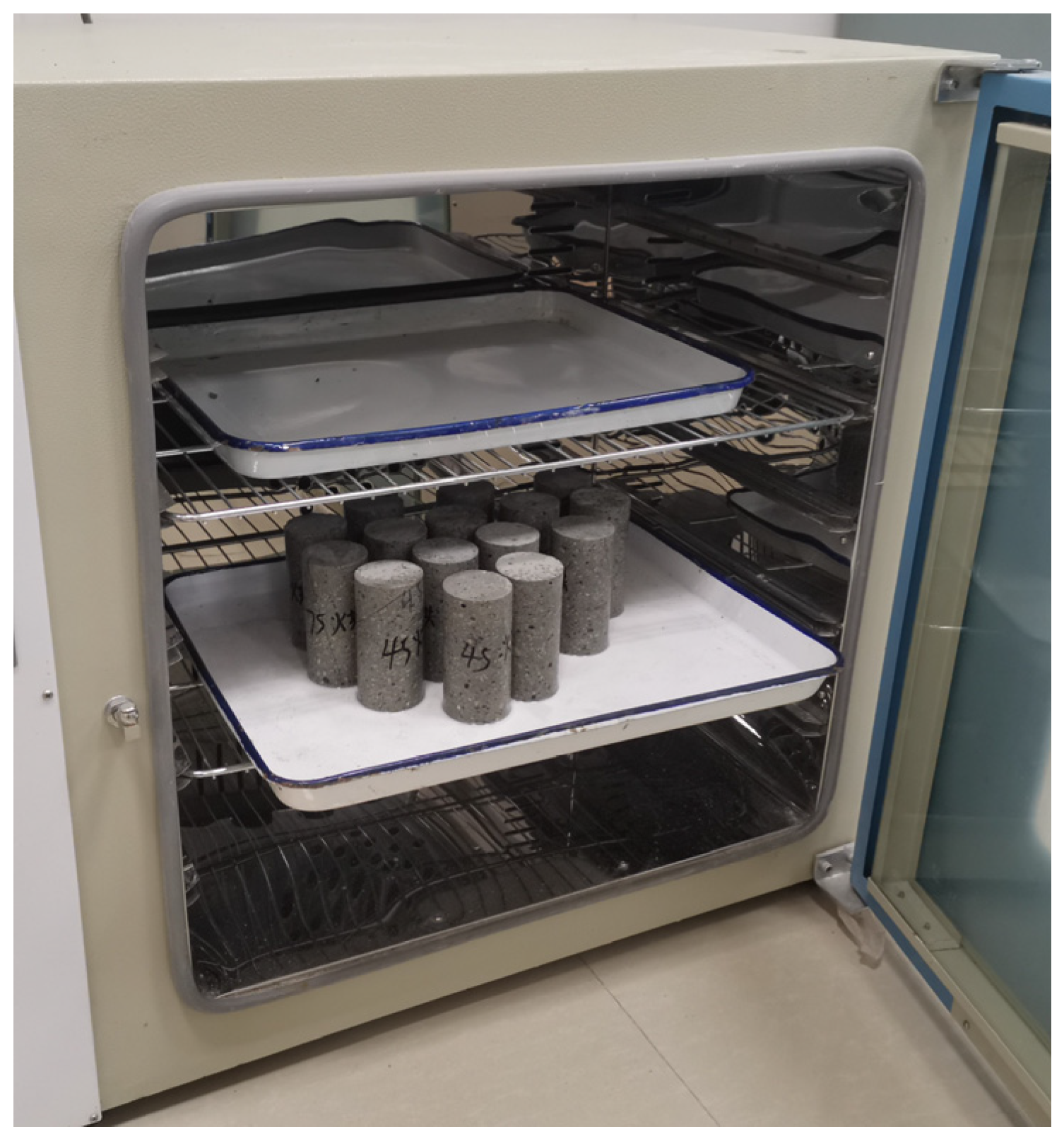
For the immersing process, the samples were fully submerged in water for at least 48 h, after which they were weighed every 2 h of immersing until the weight did not change. The samples were then wrapped in plastic film for storage. During the drying phase, the immersed samples were placed in a constant-temperature oven for drying. The oven temperature was set at 110 °C, and the drying time was at least 12 h, until their weights did not change. After the oven temperature dropped to room temperature, the samples were removed and wrapped in plastic film for storage. All the samples were repaired in the same environment and following the same procedure to reduce possible human error in the following mechanical test. The immersing process is illustrated in
Figure 3, and the drying of immersed samples is shown in
Figure 4.
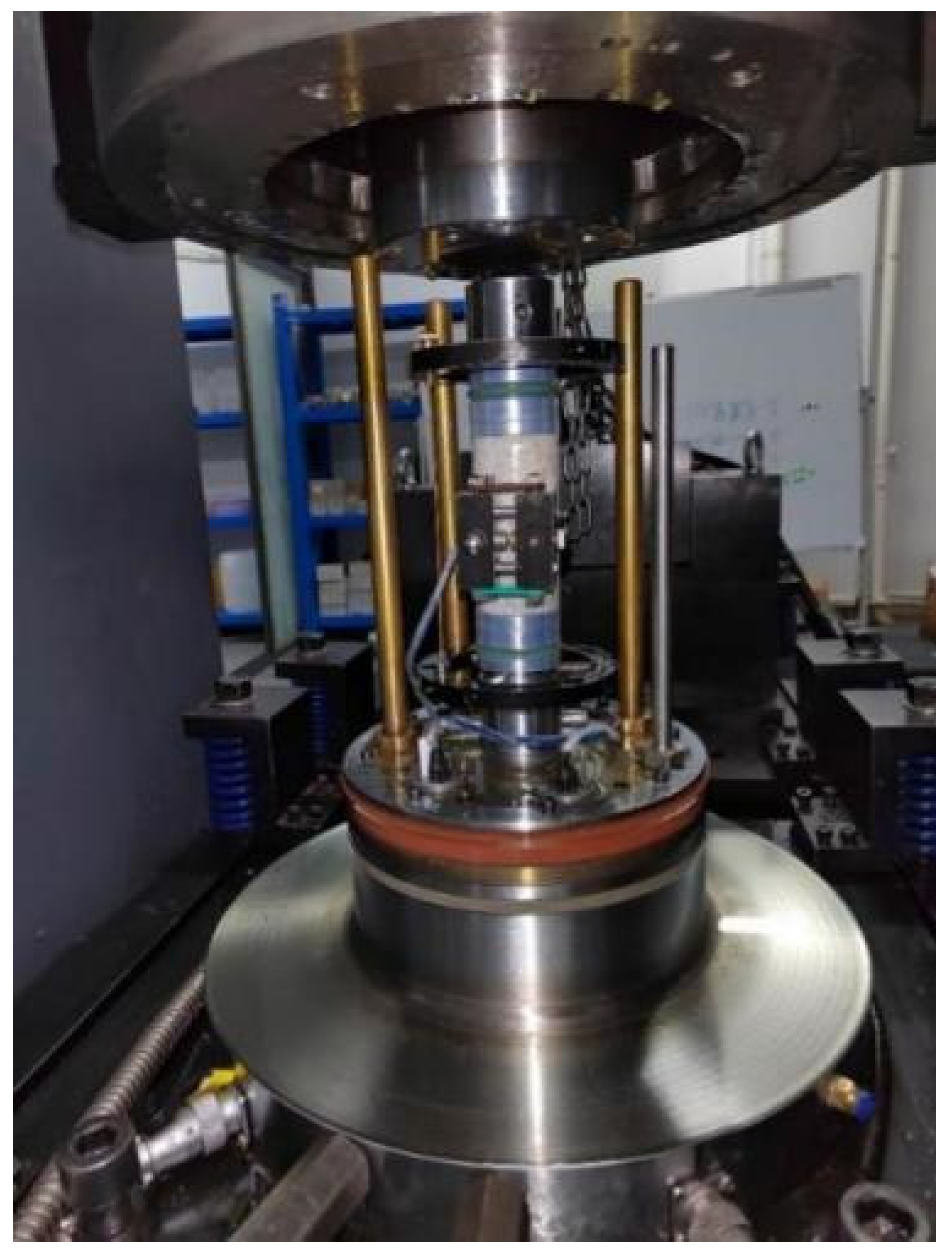
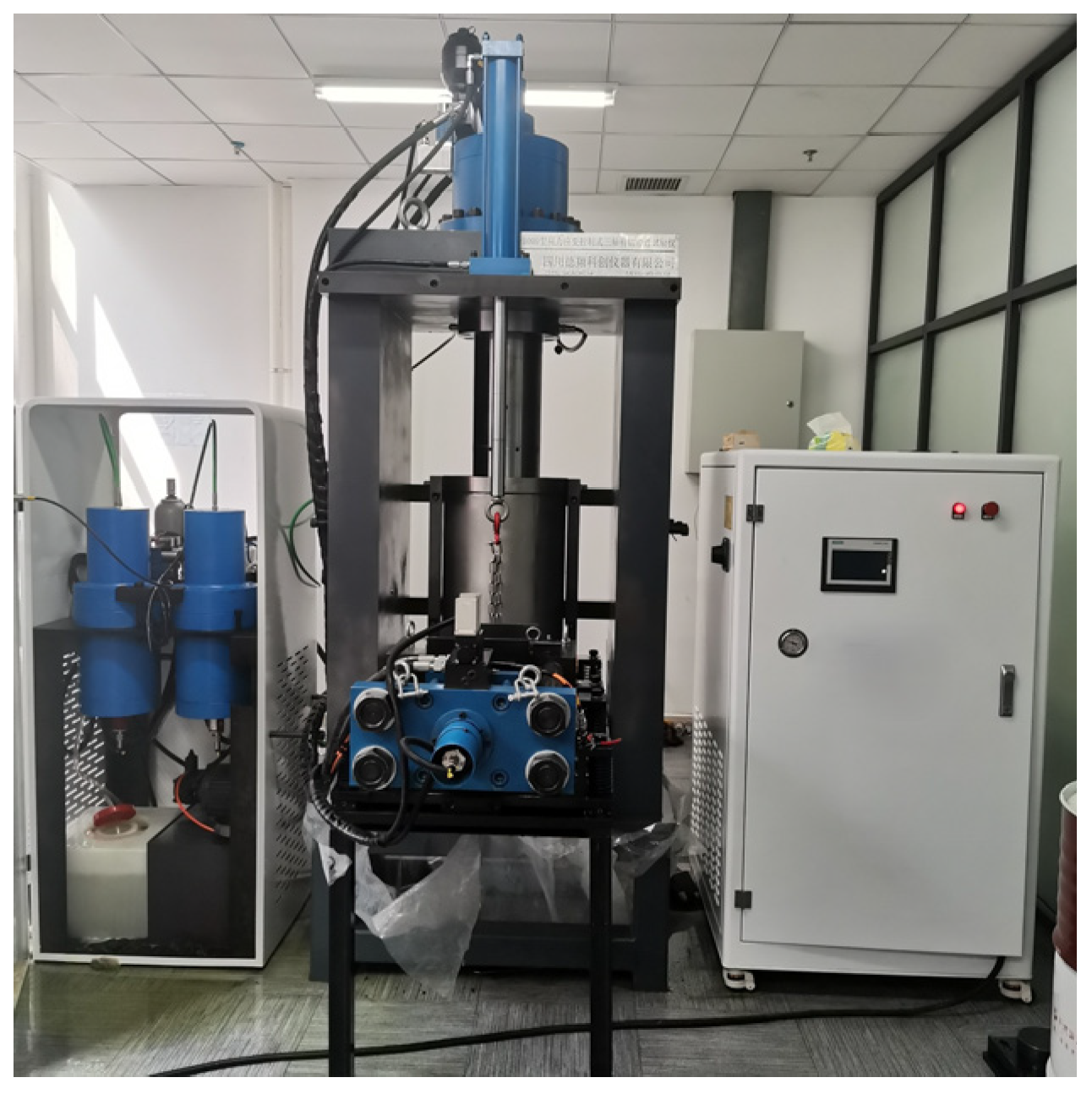
The triaxial compressive tests were conducted on conventional, immersed, and immersed-dried samples under a loading rate of 0.04 mm/s. Since the borehole depth in most shallow geothermal energy development projects is less than 200 m, the confining pressure in triaxial compression test was set to be 5 MPa. All the samples were tested with the same equipment following standard operation procedures.
The failure conditions of the fissures and the maximum load and stress were observed when the samples were completely destroyed. The strength, stress–strain curve of samples from different groups was recorded, and Mohr’s stress circles along with strength envelope curves under ultimate conditions were plotted to analyze the strength variations in structural planes at different angles under conventional, immersed, and immersed-dried states. The setup for sample triaxial compression testing is shown in
Figure 5, and the testing apparatus is illustrated in
Figure 6.
3. Test Results
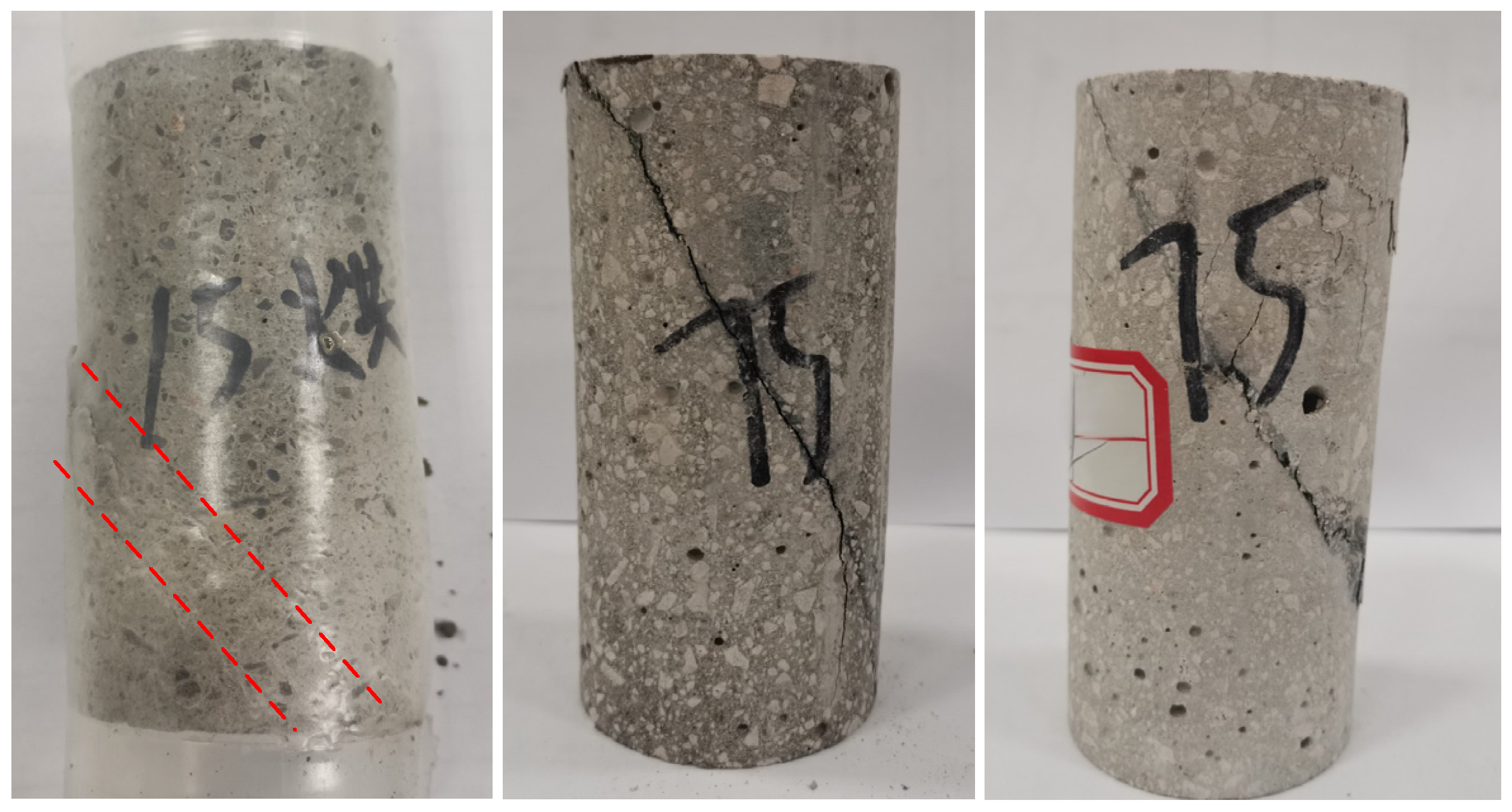
The test results are presented in
Table 2. The specimens were broken by shear failure, as shear fracture on the sample with a fissure angle of 15°, or fracture slippage on the sample with a fissure angle of 75° were observed (
Figure 7). In the following sections, the Coulomb criterion is used to analyze the failure mechanism.
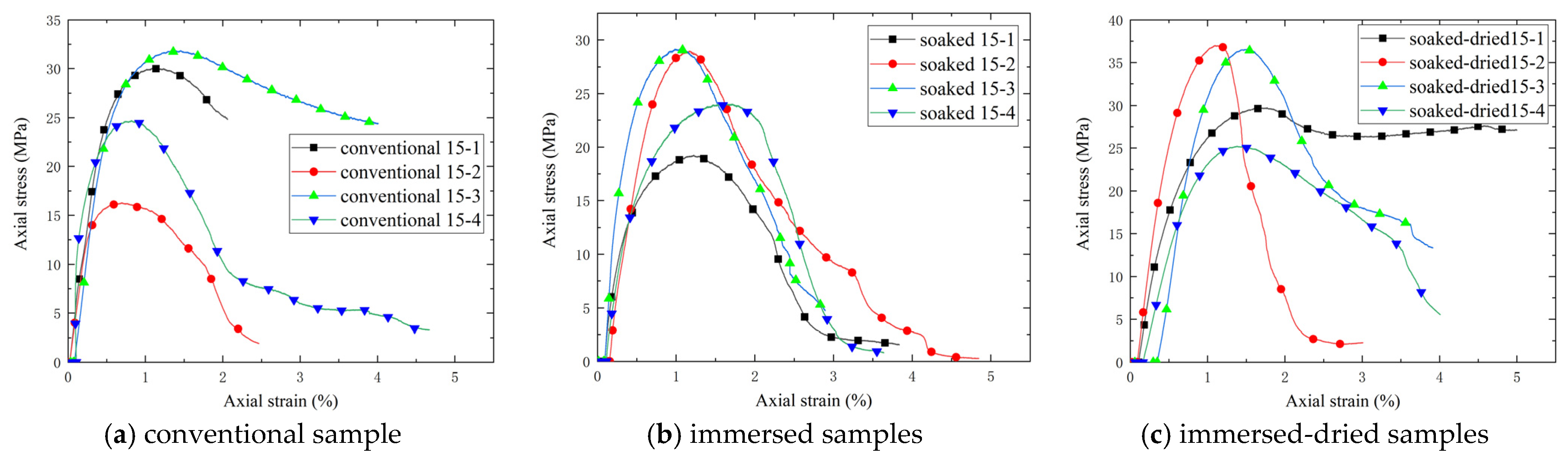
The average triaxial compressive strengths of rock samples with a fissure angle of 15° under conventional, immersed, and immersed-dried conditions were 26.0 MPa, 25.3 MPa, and 32.3 MPa, respectively. After being immersed, the average strength decreased by 0.7 MPa on average. After drying, the average strength increased, being 6.3 MPa higher than the conventional condition and 7 MPa higher than the immersed condition. The stress–strain curve for the sample with a fissure angle of 15° is shown in
Figure 8.
Although the test results demonstrate that the average strength weakened after immersing, and recovered after drying, the standard deviation is ±6.0 MPa for conventional samples, ±4.0 MPa for immersed samples, and ±5.0 MPa for immersed-dried samples. Due to the relatively large deviation in results, such a “weakening-recovery” trend of average strength is very vague.
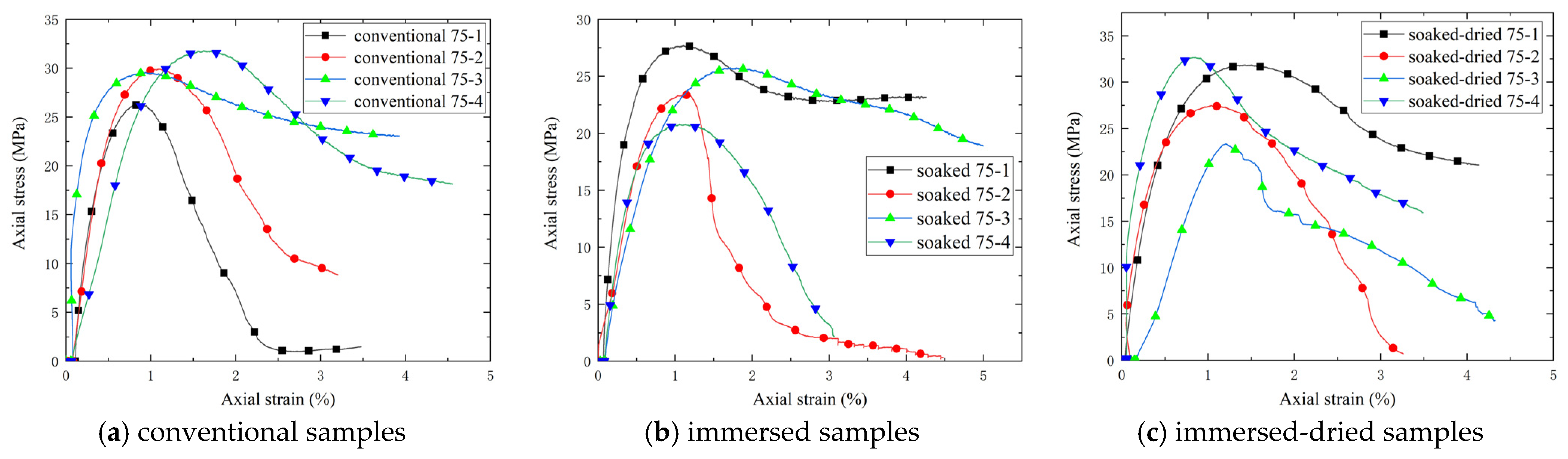
The average strengths of the conventional, immersed, and immersed-dried samples with a fissure angle of 75° were 29.7 MPa, 24.6 MPa, and 29 MPa, respectively. After the immersing treatment, the average sample strength decreased by 5.1 MPa compared to the conventional condition. The average strength of the immersed-dried sample partially recovered by 4.4 MPa compared to the immersed condition. The stress–strain curve for the sample with a fissure angle of 75° is shown in
Figure 9. The standard deviation is ±9.0 MPa for conventional samples, ±2.7 MPa for immersed samples, and ±3.5 MPa for immersed-dried samples. The relatively large deviation means that the “weakening-recovery” trend of average strength is also very vague.
The variation in triaxial strength indicates that immersing treatment weakened the sample strength, but the recovery degree by drying is vague. It also demonstrates that changes in hydrological conditions exert a more pronounced influence on the mechanical properties of rock samples with steeper fissure angles, as the average strength decreased more but recovered less. Therefore, to further explore the combined influencing mechanism of groundwater saturation and fracture dip angle on mechanical properties of typical fractured rock mass, variations in key parameters in the Coulomb criterion and Mohr strength theory are investigated. Coulomb proposed that the failure of rock is primarily shear failure, and the strength of rock, which is actually its frictional resistance, equals the sum of the cohesive force of the rock itself against shear friction and the frictional force generated by the conventional force on the shear plane. The shear strength envelope is expressed as [
7]:
where
τ is the shear stress on the shear plane;
σ is the conventional stress acting on the shear plane;
c (MPa) is the cohesion, representing the inherent bonding strength between rock particles;
ϕ (°) is the angle of internal friction, reflecting the roughness of the shear plane and frictional properties between mineral grains;
σ1 is the maximum principal stress;
σ3 is the minimum principal stress; and
σc is the uniaxial compressive strength of rock under uniaxial stress.
According to the strength theory, failure occurs when the Mohr’s stress circle touches the strength envelope. There are strength envelopes for the fissures and intact rock respectively. When stress circle touches the strength envelope of fissure, slippage along the fissure occurs.
To plot the strength envelopes, uniaxial strength test on the 75° fissure angle samples was conducted under different conditions necessary to generate Mohr’s circles. The uniaxial strength values are presented in
Table 3. The average uniaxial strength in
Table 3 and average triaxial strength in
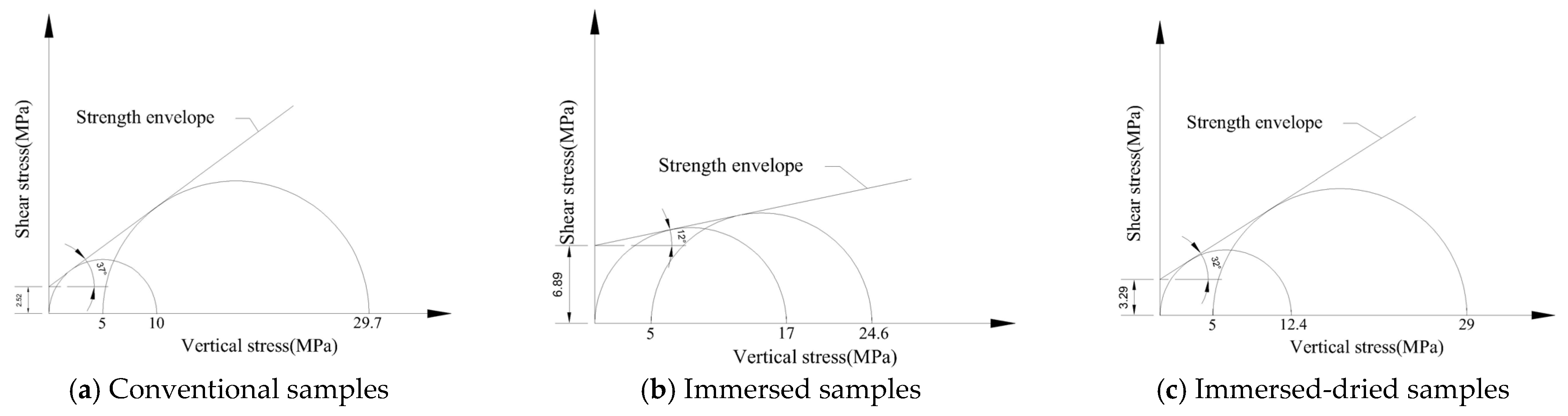
Table 2 were used to plot the Mohr’s circles and strength envelopes for samples with 75° fissure angle under conventional, immersed, and immersed–dried conditions in
Figure 10. Corresponding cohesion and internal friction angle values are summarized in
Table 4.
For conventional samples, the cohesion was 2.52 MPa with an internal friction angle of 37°; for immersed samples, the cohesion was 6.89 MPa with an internal friction angle of 12°; and for immersed–dried samples, the cohesion was 3.29 MPa with an internal friction angle of 33°. It is evident that immersing treatment could enhance the cohesive force of the fissure, while the drying treatment would reduce the cohesive force.
It also shows that immersing treatment markedly flattened the strength envelope, inducing a higher failure risk. After drying, the strength envelope became steeper again, indicating a partial recovery of mechanical properties and a reduced risk of slippage along the fissure with vertical loading compared to the immersed condition.
4. Discussion
The aforementioned test results demonstrate that groundwater conditions can significantly influence the strength of fissured rock samples. Especially, the hydrological conditions exert a more pronounced influence on rock samples with steeper fissure angles. The underlying mechanisms and the extent of influence differ, as discussed below.
Failure in fractured rocks may occur either through the intact rock matrix or slippage along the fissure, with the latter representing reactivation of mechanically weak discontinuities. When the fissure dip angle is gentle or nearly vertical, failure tends to propagate through the intact rock matrix; when the dip angle is steep, failure is more likely to occur along the discontinuity plane.
It is known that the mechanical properties of discontinuities are expected to be generally weaker than those of intact rock. Consequently, water immersing reduces the strength of 75° fissure angle samples to a greater extent than that of 15° fissure angle samples. Another reason is that part of the imbibed water in the intact rock matrix remains unsaturated, existing as capillary water that can enhance effective stress and bonding between mineral grains [
26]. In contrast, water within fissure planes is saturated gravity water, which reduces effective stress and weakens the mechanical properties of the fissures.
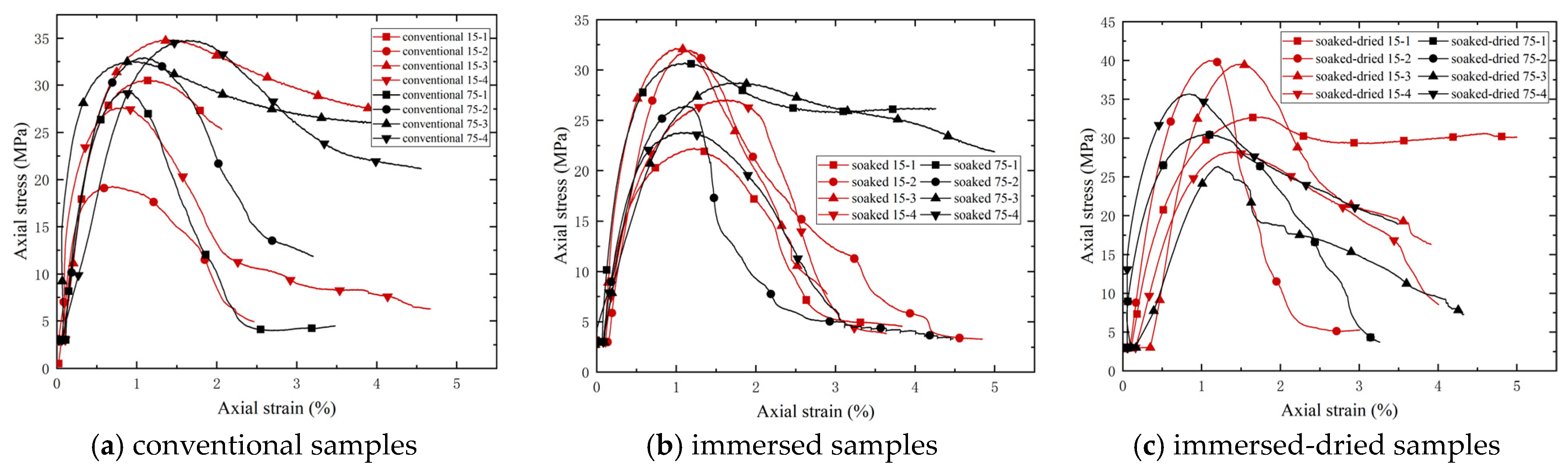
A comparison of triaxial stress–strain curves for samples with different fissure angles is presented in
Figure 11. Under conventional conditions, the curves for 15° fissure angle samples show greater scatter than those for 75° fissure angle samples. This again reflects the difference in failure mechanisms: failure through the intact matrix versus slippage along the fissure. Due to the inherent heterogeneity in mineral composition, the strength, elastic modulus, and Poisson’s ratio of intact rock, or rock with a gentle fissure angle, tend to exhibit a widely variable pattern. In contrast, the mechanical properties of fissures are less variable, leading to more concentrated stress–strain curves for 75° fissure angle samples. After immersing, mechanical properties are enhanced and become more uniform; thus, the stress–strain curves of immersed 15° fissure angle samples are less dispersed, and such a trend persisted under the immersed and dried conditions.
From the test results and discussions above, it is known that the groundwater fluctuation would more likely impact the mechanical stability of geo-energy structures in surrounding rock masses with steeper discontinuity angles. The risk of slippage along joints or fractures is expected to be higher during flooding seasons than dry seasons. These different responses of gentle and steep fissure angle samples are explained by a dual-state water model: saturated water in fissures reduces effective stress, while capillary water in the matrix may improve bonding.
5. Conclusions
In this study, cast specimens containing joints at angles of 15° and 75° were divided into three groups, and mechanical tests were conducted under conventional, water-immersed, and immersed-dried conditions. The triaxial strength, cohesion, angle of internal friction and stress–strain curves were obtained. Variations in mechanical properties of both sample sets at different conditions and coupled influencing mechanism of hydrological conditions and fissure angle on rock failure, and failure risk of surrounding ground hosting geo-energy structures were discussed. The following conclusions can be drawn:
Hydrological conditions influence the mechanical behavior of fissured rock, and the fissure angle controls both the failure mechanism and the extent of hydrological impact. In samples with gentle fissure angles, failure occurs mainly through the intact rock matrix, and hydrological effects are relatively moderate. In contrast, samples with steep fissure angles tend to fail along the fissure plane, where water saturation significantly reduces strength.
Strength envelope evolution reflects changes in cohesion and internal friction. Immersing flattens the strength envelope, indicating reduced frictional resistance along fissures. After drying, friction angle recovers partially, leading to a steeper envelope and reduced slip risk.
Capillary water in the unsaturated intact matrix can enhance effective stress, but saturated gravity water in fissure planes reduces effective stress and weakens interfacial bonding. This partially explains the more pronounced strength degradation in steeply fissured samples under immersed conditions.
Stress–strain behavior correlates with failure mode heterogeneity. Samples failing through intact rock fracturing show greater scatter in stress–strain curves due to inherent material heterogeneity, while those failing along fissures exhibit more consistent curves. This is because fissure properties are less heterogeneous, and immersing treatment is expected to weaken fissure mechanical properties more homogeneously.
In summary, the stability of fissured rock masses under changing groundwater conditions depends not only on the hydrological environment but also critically on fissure geometry. Steeper fissures are more susceptible to water-induced weakening and pose a higher risk of shear slippage by fissure reactivation. Therefore, given the characteristic strong seasonal fluctuations in bedrock groundwater levels, special attention should be paid to the risk of borehole collapse within steeply inclined fractured zones during the high-water table seasons.
However, there are limitations in this study. First, this experimental research on limestone and the micro-scope interaction between water and mineral might be different in other rock types. Secondly, we used artificial standard specimens with a diameter of 50 mm and a height of 100 mm; the relatively small size might not sufficiently exclude the effects of heterogeneities, such as micro-bubbles and micro-cracks, resulting in inevitable data dispersion. Third, the typical shallow geothermal borehole depth (<200 m) was taken as an example so the confining pressure in the triaxial test was set as 5 MPa, which might be different from a deep environment.
Author Contributions
Conceptualization, P.P.; Methodology, C.L.; Validation, S.P.; Formal analysis, C.L. and R.G.; Investigation, C.L. and S.P.; Data curation, R.G. and X.M.; Writing—original draft, C.L., S.P. and X.M.; Writing—review & editing, C.L., R.G. and X.M.; Visualization, X.M.; Supervision, P.P.; Project administration, P.P.; Funding acquisition, C.L. and P.P. All authors have read and agreed to the published version of the manuscript.
Funding
This research was funded by the Science and Technology Program of Guizhou Province [grant No. [2023]128] and research program of Guizhou Power Grid Co., Ltd. [grant No. GZKJXM20232568]. And the APC was funded by the Science and Technology Program of Guizhou Province [grant No. [2023]128].
Data Availability Statement
The raw data supporting the conclusions of this article will be made available by the authors on request.
Conflicts of Interest
Authors were employed by the company Electric Power Research Institute of Guizhou Power Grid Co., Ltd. and Guizhou University, China. The authors declare that the research was conducted in the absence of any commercial or financial relationships that could be construed as a potential conflict of interest. The funders had no role in the design of the study; in the collection, analyses, or interpretation of data; in the writing of the manuscript; or in the decision to publish the results.
References
- Ahmed, A.A.; Assadi, M.; Kalantar, A.; Sliwa, T.; Sapińska-Śliwa, A. A critical review on the use of shallow geothermal energy systems for heating and cooling purposes. Energies 2022, 15, 4281. [Google Scholar] [CrossRef] [Scilit]
- EGEC. Geothermal Market Report [OL]. 2022. Available online: https://www.thinkgeoenergy.com/ (accessed on 18 December 2025).
- Ministry of Housing and Urban-Rural Development (MOHURD). The 14th Five-Year Plan for Building Energy Efficiency and Green Building Development. Tech Rep. Mar. [Online]. 2022. Available online: http://www.mohurd.gov.cn (accessed on 18 December 2025).
- Cui, P.; Yang, W.; Zhang, W.; Zhu, K.; Spitler, J.D.; Yu, M. Advances in ground heat exchangers for space heating and cooling: Review and perspectives. Energy Built Environ. 2024, 5, 255–269. [Google Scholar] [CrossRef] [Scilit]
- Labus, K.; Labus, M.; Leśniak, G. Thermal properties of rocks from deep boreholes in Poland in terms of obtaining geothermal energy from enhanced geothermal systems. Adv. Geo-Energy Res. 2023, 8, 76–88. [Google Scholar] [CrossRef] [Scilit]
- Pei, P.; Sun, J.; Liu, Y.; Ran, R.; Wang, Y. Properties of borehole heat exchangers in shallow bedrock: Insights and perspectives based on project data and rock mass characteristics. J. Energy Storage 2025, 130, 117463. [Google Scholar] [CrossRef] [Scilit]
- Hudson, J.; Harrison, J.; Popescu, M. Engineering Rock Mechanics: An Introduction to the Principles. Appl. Mech. Rev. 2002, 55, B30. [Google Scholar] [CrossRef] [Scilit]
- Needelman, B. What are soils? Nat. Educ. Knowl. 2013, 4, 2. [Google Scholar]
- Guo, C.; Li, W. Karst Multi-Media Environment and Karst Groundwater System; Chemical Industry Press: Beijing, China, 2006. [Google Scholar]
- Deng, F.; Li, W.; Pei, P.; Wang, L.; Ren, Y. Study on design and calculation method of borehole heat exchangers based on seasonal patterns of groundwater. Renew. Energy 2024, 220, 119711. [Google Scholar] [CrossRef] [Scilit]
- Deng, F.; Pei, P.; Ren, Y.; Luo, T.; Chen, Y. Investigation and evaluation methods of shallow geothermal energy considering the influences of fracture water flow. Geotherm. Energy 2023, 11, 25. [Google Scholar] [CrossRef] [Scilit]
- Meibodi, S.; Loveridge, F. The future role of energy geostructures in fifth generation district heating and cooling networks. Energy 2022, 240, 122481. [Google Scholar] [CrossRef] [Scilit]
- McCartney, J.; Sánchez, M.; Tomac, I. Energy geotechnics: Advances in subsurface energy recovery, storage, exchange, and waste management. Comput. Geotech. 2016, 75, 244–256. [Google Scholar] [CrossRef] [Scilit]
- Cen, D.; Xia, C. Review on heat transfer and thermos-mechanical behavior of energy geostructures. Underground Space 2026, 26, 36–81. [Google Scholar] [CrossRef] [Scilit]
- Mohamad, Z.; Fardoun, F.; Meftah, F. A review on energy piles design, evaluation, and optimization. J. Clean. Prod. 2021, 292, 125802. [Google Scholar] [CrossRef] [Scilit]
- Cecinato, F.; Loveridge, F.A. Influences on the thermal efficiency of energy piles. Energy 2015, 82, 1021–1033. [Google Scholar] [CrossRef] [Scilit]
- Makasis, N.; Narsilio, G.A. Investigating the thermal performance of energy soldier pile walls. Géoméch. Energy Environ. 2022, 30, 100242. [Google Scholar] [CrossRef] [Scilit]
- Barla, M.; Di Donna, A.; Perino, A. Application of energy tunnels to an urban environment. Geothermics 2016, 61, 104–113. [Google Scholar] [CrossRef] [Scilit]
- Guo, F.L.; Zhang, D.L.; Su, J. Experimental Study on Influence of Underground Water and Confining Pressure on Mechanical Properties of Soft Rock. Chin. J. Rock Mech. Eng. 2007, 26, 2324–2332. [Google Scholar]
- Zheng, X.Q.; Liu, J.; Bian, K. Softening micro-mechanism and mechanical properties of water-saturated shale in Northwestern Hubei. Rock Soil Mech. 2017, 38, 2022–2028. [Google Scholar]
- Zhang, Y.L. Groundwater Prediction and Mechanical Characteristics Analysis of Water-Rich Tunnels. Master’s Thesis, Southwest Jiaotong University, Chengdu, China, 2013. [Google Scholar]
- Song, Q.H.; Gao, W.L. Study on Mechanical Characteristics and Construction Countermeasures of Soft Rock Tunnel Considering Groundwater Influence. J. Highw. Transp. Res. Dev. 2018, 14, 165–166. [Google Scholar]
- Wang, J.G.; Zhou, Z.F. Simulation of Solute Transport in Fractured Rock Mass Based on Fractal Theory. Chin. J. Rock Mech. Eng. 2004, 23, 1358–1362. [Google Scholar]
- Wang, J.X.; Zhu, H.H.; Yang, L.Z. Analysis of Permeability Evolution of Limestone Surrounding Rock. Chin. J. Rock Mech. Eng. 2004, 23, 3152–3156. [Google Scholar]
- Vinci, C.; Renner, J.; Steeb, H. A hybrid-dimensional approach for an efficient numerical modeling of the hydro-mechanics of fractures. Water Resour. Res. 2014, 50, 1616–1635. [Google Scholar] [CrossRef] [Scilit]
- Wu, S.; Li, L.; Zhang, X. Rock Mechanics; High Education Press: Beijing, China, 2021. [Google Scholar]
| Disclaimer/Publisher’s Note: The statements, opinions and data contained in all publications are solely those of the individual author(s) and contributor(s) and not of MDPI and/or the editor(s). MDPI and/or the editor(s) disclaim responsibility for any injury to people or property resulting from any ideas, methods, instructions or products referred to in the content. |