1. Introduction
The glaciers represent a critical component of the Earth’s ecosystem and serve as a sensitive indicator of climate change [
1]. With the intensification of global warming, glacier melting has accelerated, exerting profound impacts on global sea-level rise, freshwater availability, and regional ecosystems [
2]. Glacier velocity is a key parameter for understanding glacier dynamics and assessing climate response [
3]. Variations in glacier velocity are influenced not only by internal factors such as ice temperature, snow accumulation, and basal friction, but also respond sensitively to external climatic forcing [
4]. On the one hand, accelerated glacier flow provides direct evidence of climate warming, and long-term monitoring facilitates the assessment of warming rates [
5]. On the other hand, glacier velocity is closely linked to ice volume estimates, and its monitoring enables the quantification of mass balance and evaluation of glacier responses to climate change [
6]. Consequently, glacier velocity monitoring is considered an essential approach for assessing climate impacts and predicting future glacier evolution.
At present, optical remote sensing and synthetic aperture radar (SAR) are the main methods to obtain glacier velocity from remote sensing images [
7,
8]. Although optical remote sensing can provide more abundant spectral information, optical images are usually limited by cloud and light conditions. As an active microwave sensor, SAR provides the advantage of all-weather and day-and-night observation capability, and is a valuable tool for studying glacier movement [
9]. Two widely applied SAR-based techniques are interferometric SAR (InSAR) and pixel offset tracking, both of which have undergone substantial methodological advancements. Goldstein [
10] et al. first introduced InSAR for glacier monitoring in 1993, enabling the retrieval of large-scale, continuous glacier motion fields, though only along the satellite line-of-sight. To derive two-dimensional glacier velocities, Joughin [
11] et al. employed ERS data from both ascending and descending orbits to reconstruct orthogonal velocity components via geometric constraints.
Furthermore, Berardino [
12] et al. enhanced the robustness of displacement retrieval by combining small-baseline interferograms, thereby mitigating the effects of spatial decorrelation. Although InSAR achieves high-precision velocity estimates, its performance is often limited by phase decorrelation. To address this, Gray [
13] et al. adopted cross-correlation of SAR amplitude images to retrieve glacier displacement. On this basis, pixel offset tracking techniques have been continuously improved [
14]. Additional techniques, such as polarimetric similarity measures [
15] and iterative directional filtering [
16], have further enhanced the reliability of glacier monitoring. Nevertheless, the surface characteristics of glaciers will be affected by various factors [
17], such as the freezing and thawing cycle of glaciers [
18] and rapid movement [
19], which alter radar scattering characteristics and degrade both phase and amplitude coherence. As a result, despite advances in retrieval techniques, glacier velocity fields derived from SAR image pairs remain incomplete, with missing data persisting in areas of decorrelation.
A common approach to addressing missing glacier velocity is spatial interpolation, including methods such as nearest neighbor interpolation, Kriging, and regression analysis [
20,
21,
22]. Although spatial interpolation can fill the missing data, the reliability of interpolation results depends on the spatial distribution of the missing data. Therefore, the reconstructed glacier velocity results are unstable and prone to significant errors. Hippert-Ferrer [
23,
24] et al. developed a method for filling missing values in remote sensing displacement time series based on EOF analysis, which uses both spatial and temporal features to construct results, and is more accurate than simple temporal or spatial interpolation. However, if the spatiotemporal covariance is weak or unstable, the EOF pattern may not accurately capture the true dynamics. In addition, the use of optical images to reconstruct the missing velocity has been proven to be an effective way to solve the problem of glacier velocity missing [
25,
26]. However, due to the availability of optical images and the complexity of multi-source remote sensing data fusion, this method is more suitable for solving the seasonal large-area missing data rather than the local missing data in a short time.
With the continuous advancement of artificial intelligence, deep learning has emerged as an efficient approach for data modeling and prediction and has been widely applied to missing data recovery tasks [
27,
28,
29]. Compared with traditional interpolation or statistical methods, deep learning models can automatically learn intrinsic features and latent patterns from data through end-to-end training, thereby demonstrating superior reconstruction capability in complex scenarios. Among these approaches, Convolutional Neural Networks (CNNs) are effective in extracting structural information and have achieved significant success in spatial data reconstruction. In addition, CNN-based models have also been applied to velocity estimation tasks in radar signal processing, demonstrating the capability of deep learning to directly infer motion information from radar observations [
30]. However, CNN-based methods primarily capture local spatial features and may have limited ability to model long-term temporal dependencies [
31]. Recurrent Neural Networks (RNNs) and their improved variants, such as Long Short-Term Memory (LSTM) networks, model temporal dependencies to predict and recover missing values in time series, but they are generally more suitable for short-term sequences with strong temporal correlations [
32,
33]. In recent years, the emergence of hybrid network architectures has further enhanced reconstruction performance. For example, a multi-scale CNN–LSTM network has been developed for imputing spatiotemporal data with long-term gaps, demonstrating improved reconstruction performance, though requiring higher computational costs [
34]. Overall, deep learning-based recovery methods are evolving from single-domain modeling toward spatiotemporal coupled modeling and generative reconstruction frameworks.
Although previous studies have demonstrated the feasibility of deep learning for missing data recovery, effectively exploiting the intrinsic dynamics of glacier velocity fields for reliable reconstruction remains challenging. Li et al. [
35] first introduced deep learning into glacier velocity recovery by formulating the task as a supervised learning problem using an artificial neural network. To our knowledge, this remains the only deep learning–based method specifically developed for glacier velocity recovery. Despite its effectiveness, the approach relies heavily on external auxiliary data, such as glacier thickness and surface slope, which are often unavailable in polar and high-mountain regions. Even when accessible, these datasets are typically derived from historical observations or low-temporal-resolution products, leading to temporal inconsistencies with the target velocity data and introducing additional uncertainties.
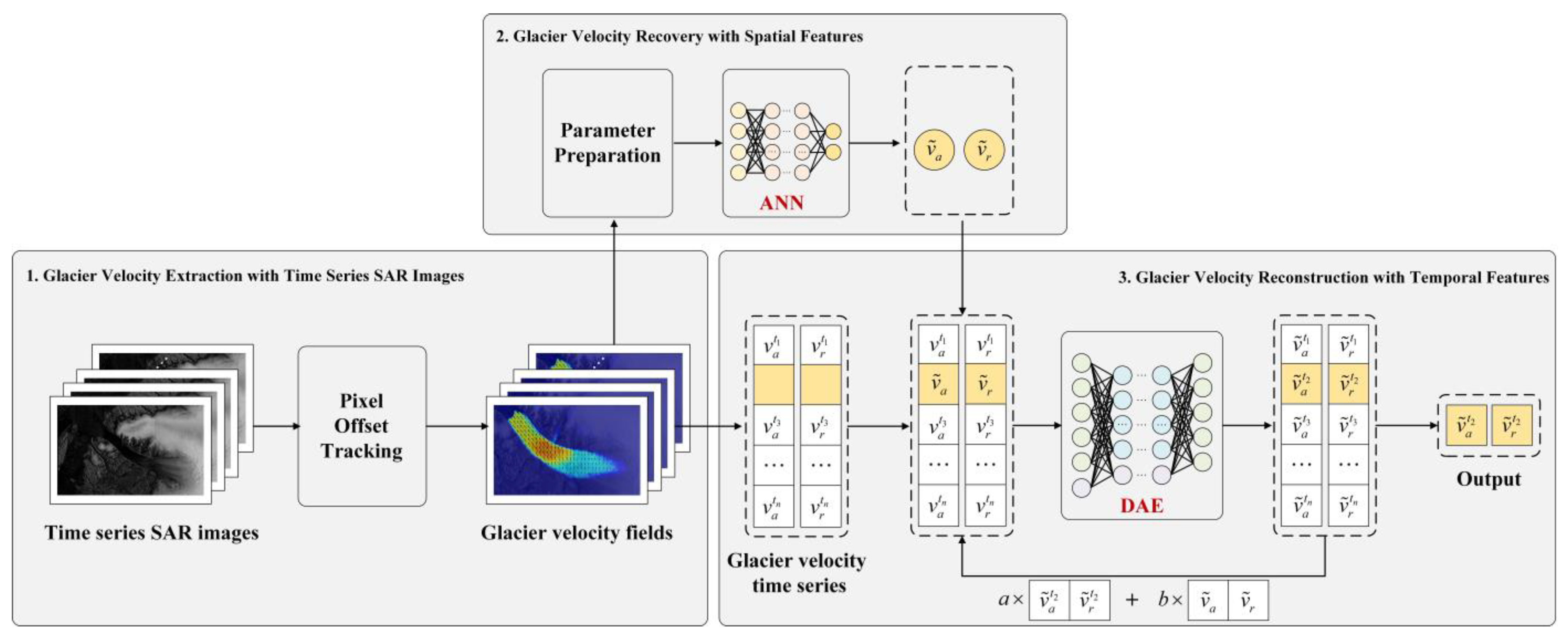
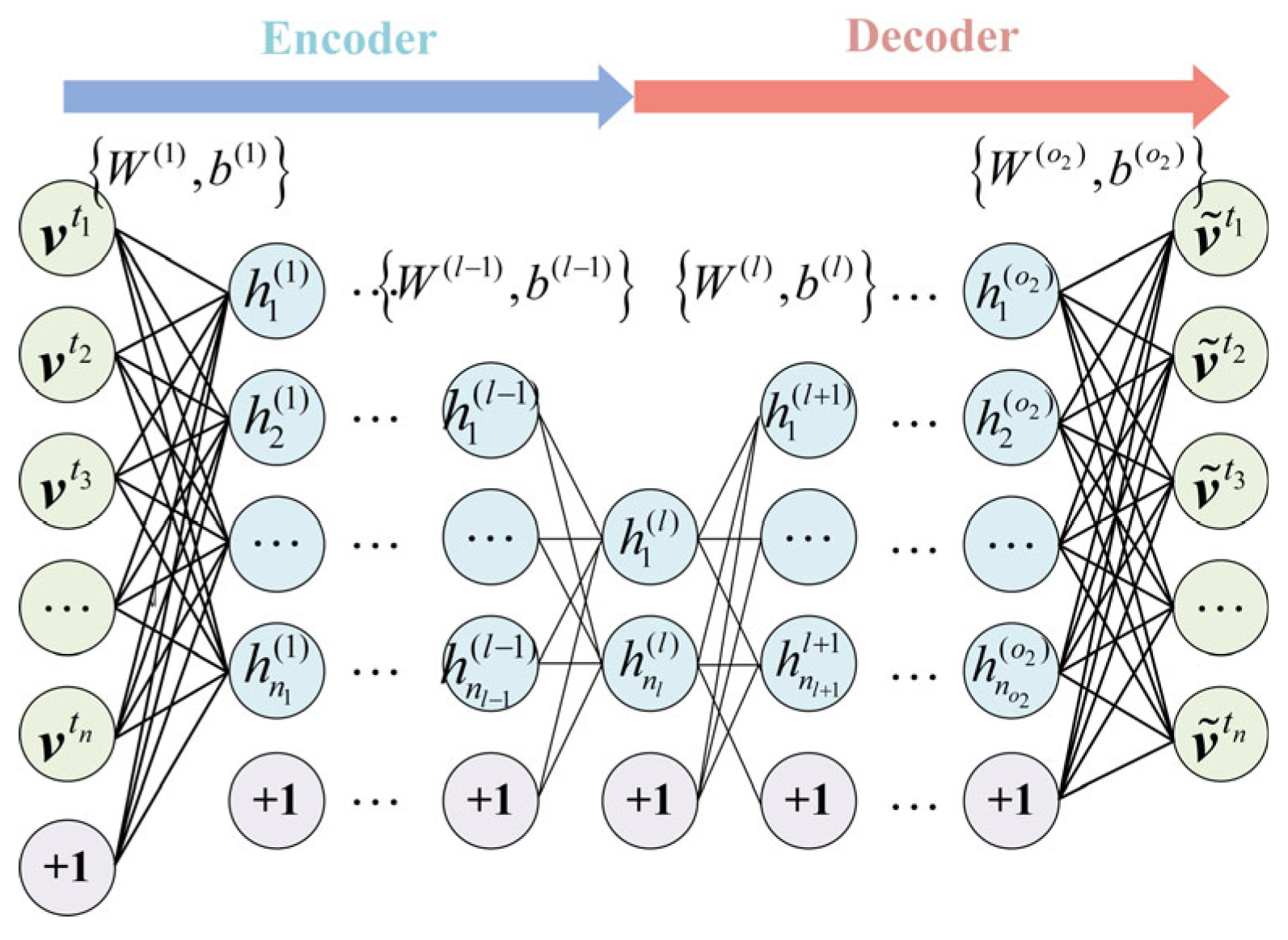
To improve the accuracy and robustness of glacier velocity recovery, this study proposes a spatiotemporal hybrid neural network framework that integrates an Artificial Neural Network (ANN) with a Denoising Autoencoder (DAE) to model glacier velocity dynamics. The ANN module is designed to learn the spatial structural characteristics of glacier velocity fields, including both local spatial patterns and large-scale flow structures, thereby providing spatial prior constraints for regions with missing observations. The ANN outputs are then used as inputs to the DAE module, which focuses on modeling temporal evolution by learning latent representations of complete velocity samples and performing global reconstruction.
Unlike conventional recursive prediction architectures, the proposed framework performs one-step reconstruction by jointly utilizing information from both preceding and subsequent observations in the time series. This design reduces the accumulation of prediction errors and improves training stability when dealing with discontinuous or partially missing time series. Furthermore, the spatial predictions from the ANN and the temporal reconstructions from the DAE are not simply combined through a fixed linear scheme. Instead, they are iteratively integrated using an adaptive weighting mechanism, which dynamically balances spatial priors and temporal consistency during the optimization process. In addition, a time-aware loss function is introduced to impose temporal constraints on the reconstructed velocity fields, allowing the model to better capture the underlying dynamics of glacier motion.
The scientific novelty of this work lies in three aspects. First, glacier velocity recovery is reformulated as a spatiotemporal decoupling–reconstruction problem, in which spatial structure and temporal evolution are learned separately and iteratively reconciled, rather than jointly predicted within a single network. Second, an adaptive fusion strategy dynamically balances spatial priors and temporal consistency, enabling the model to capture nonstationary glacier dynamics without relying on external auxiliary datasets. Third, a time-aware loss function imposes physically meaningful temporal constraints, improving reconstruction robustness and mitigating error propagation across missing intervals.
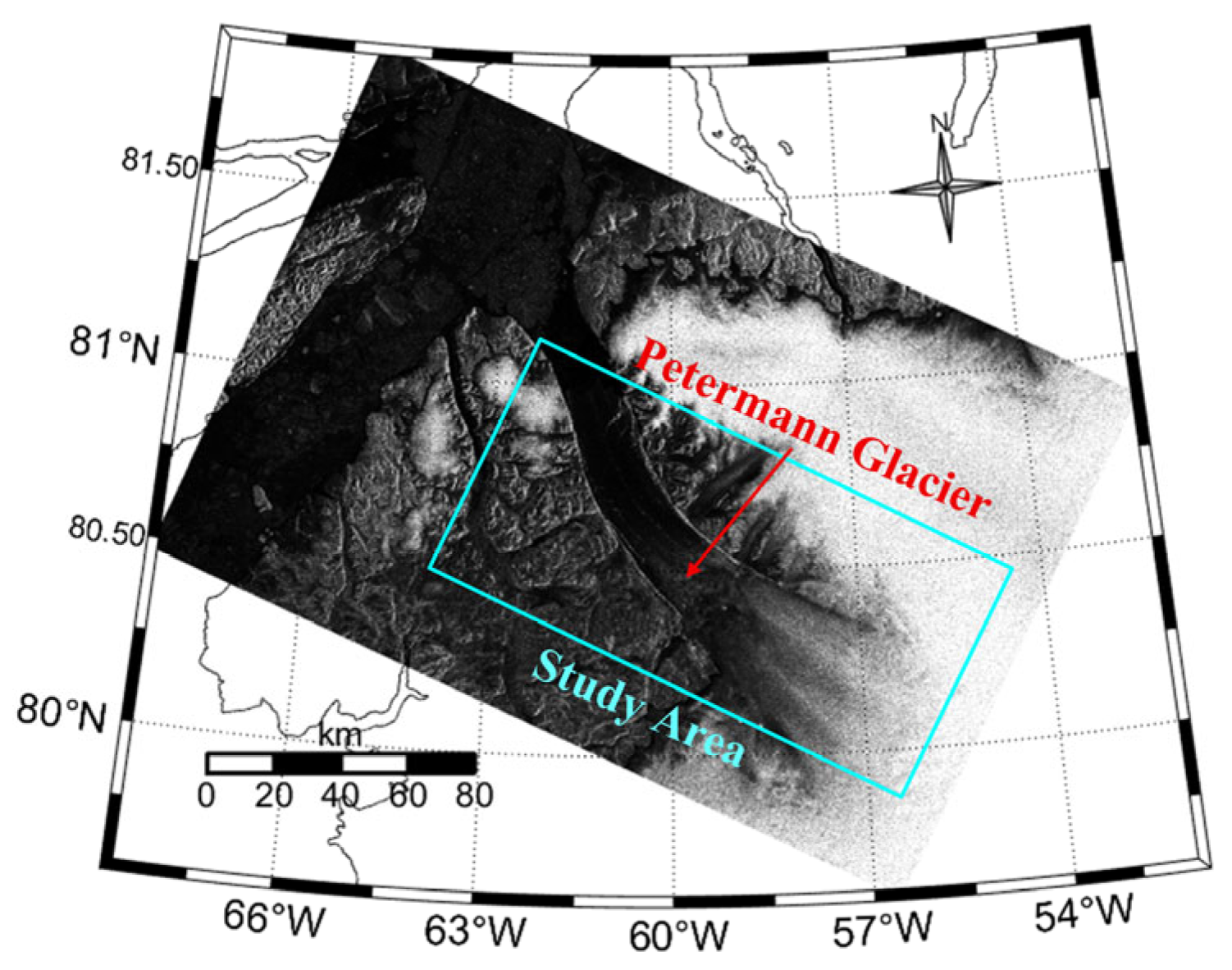
The proposed method was applied to the Petermann Glacier velocity fields obtained using Sentinel-1 images, and the missing velocity of Petermann Glacier was successfully recovered. The results were also used to analyze the seasonal differences in the Petermann Glacier velocity. The structure of this paper is as follows:
Section 2 describes the study area and the data used in the study;
Section 3 introduces the methods used in this paper in detail; in
Section 4, specific research examples and experimental results are given; in
Section 5, the applicability of the method and the seasonal differences of Petermann Glacier are discussed; The conclusion is given in
Section 6.
4. Results
This section presents representative experimental results and systematically evaluates the reliability of the proposed approach. First, glacier velocity fields of Petermann Glacier across different months are compared before and after velocity recovery. Next, the accuracy of the reconstructed velocity fields is quantitatively assessed through cross-validation. Furthermore, ablation experiments are conducted to analyze the contribution of each network module to the overall reconstruction performance. Finally, a parameter sensitivity analysis is carried out to examine the influence of key hyperparameters on reconstruction accuracy and to verify the robustness of the proposed method.
4.1. Recovery of the Missing Glacier Velocity
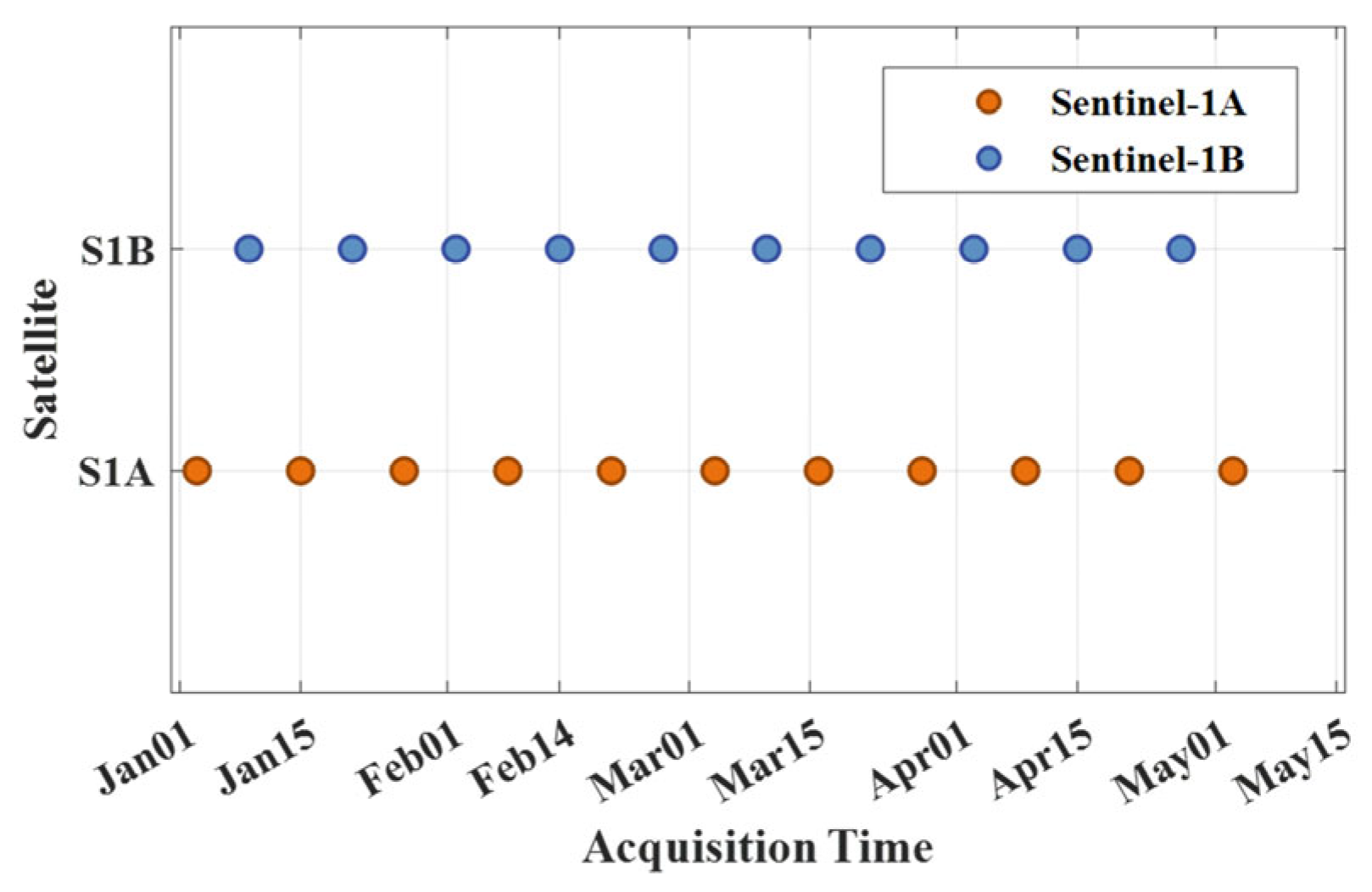
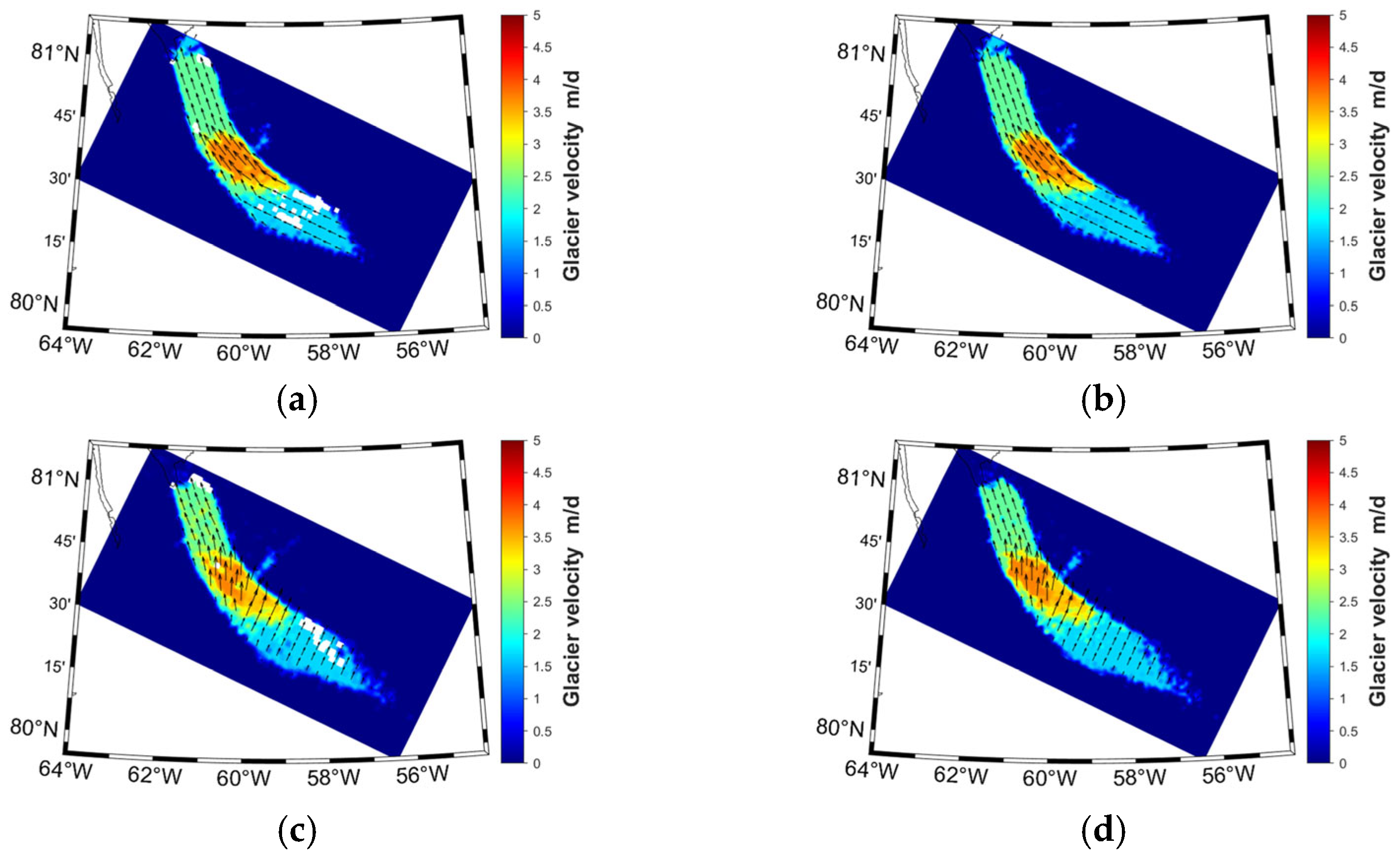
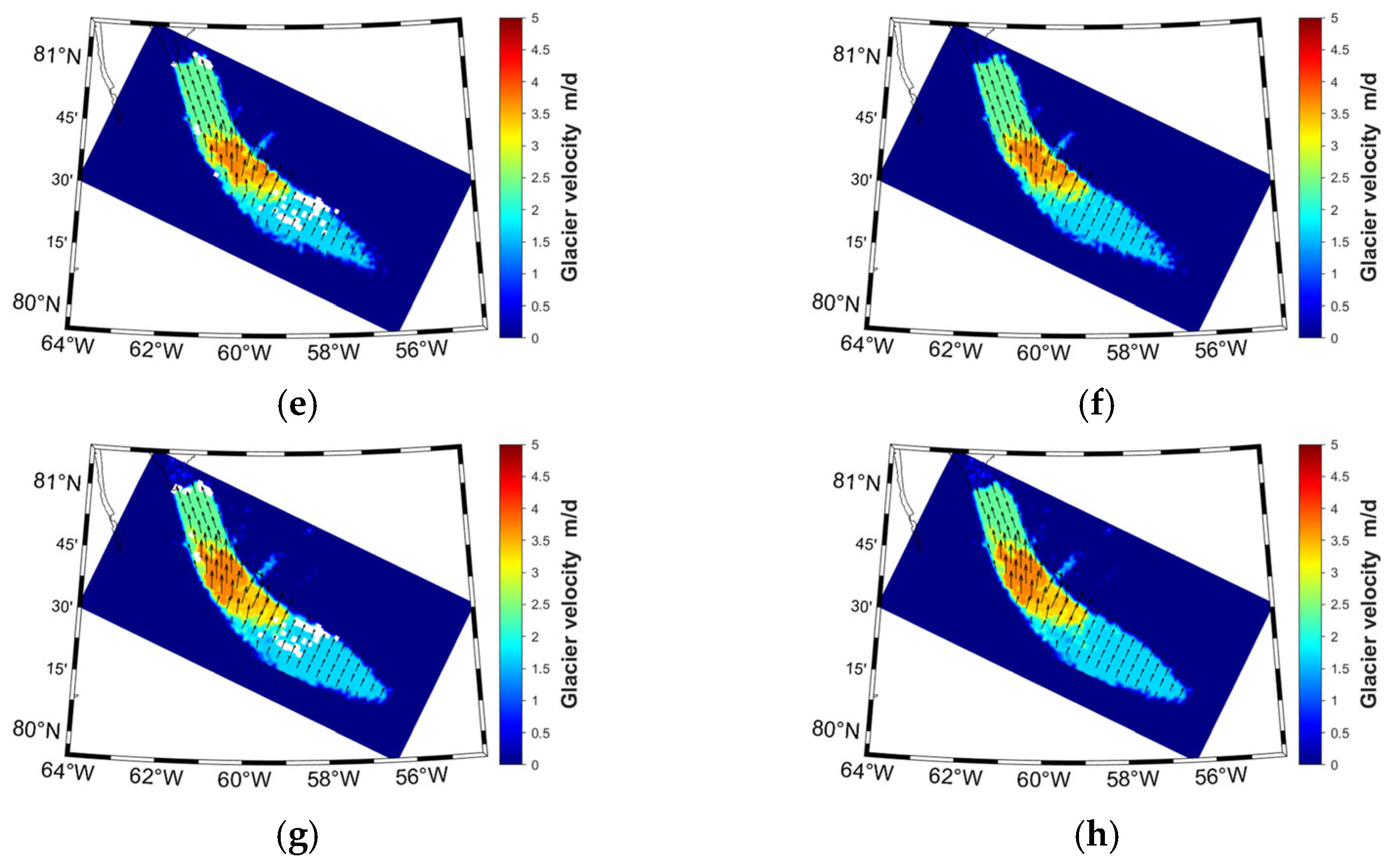
Using the existing SAR images, 20 glacier velocity fields from January to April were obtained.
Figure 7 presents examples of the original and the reconstructed glacier velocity fields for each month. The figures reveal that there is a minor absence in velocity fields from January to April, particularly prominent in the glacier accumulation zone. A detailed discussion on the missing glacier velocity will be provided in subsequent sections. The glacier velocity fields in the second column demonstrate that the absence in the glacier velocity field has been fully recovered.
4.2. Cross Validation
To verify the practical reliability of the proposed method, cross-validation is conducted in this section to assess the reconstructed glacier velocities. In scenarios where measured data is scarce, cross-validation serves as an effective approach to verify the accuracy of results. Specifically, the method involves randomly introducing missing values into the obtained complete velocity field and subsequently reconstructing these missing velocities using the method outlined in this paper. In this study, missing regions were randomly placed on the glacier as circles with randomly varied radii. Firstly, missing regions in the acquired glacier velocity field often occur as locally continuous patches, and circular simulations can effectively approximate the spatial characteristics of these patches. Secondly, using circles allows precise control over the radius, enabling a systematic analysis of restoration method performance across varying missing region sizes. The validation is conducted by comparing the errors between the reconstructed glacier velocity field and the original field prior to the introduction of missing values.
More precisely, calculate and compare the root mean square errors (RMSE) in both value (
) and direction (
) between the reconstructed glacier velocity and the reference velocity:
is the number of glacier velocity points involved in the statistics,
and
represent the value and direction of the reconstructed glacier velocity for the
data point.
and
represent the value and direction of the reference glacier velocity, respectively. Taking the glacier velocity field from 3 January to 9 January 2021 as an example, the results are shown in
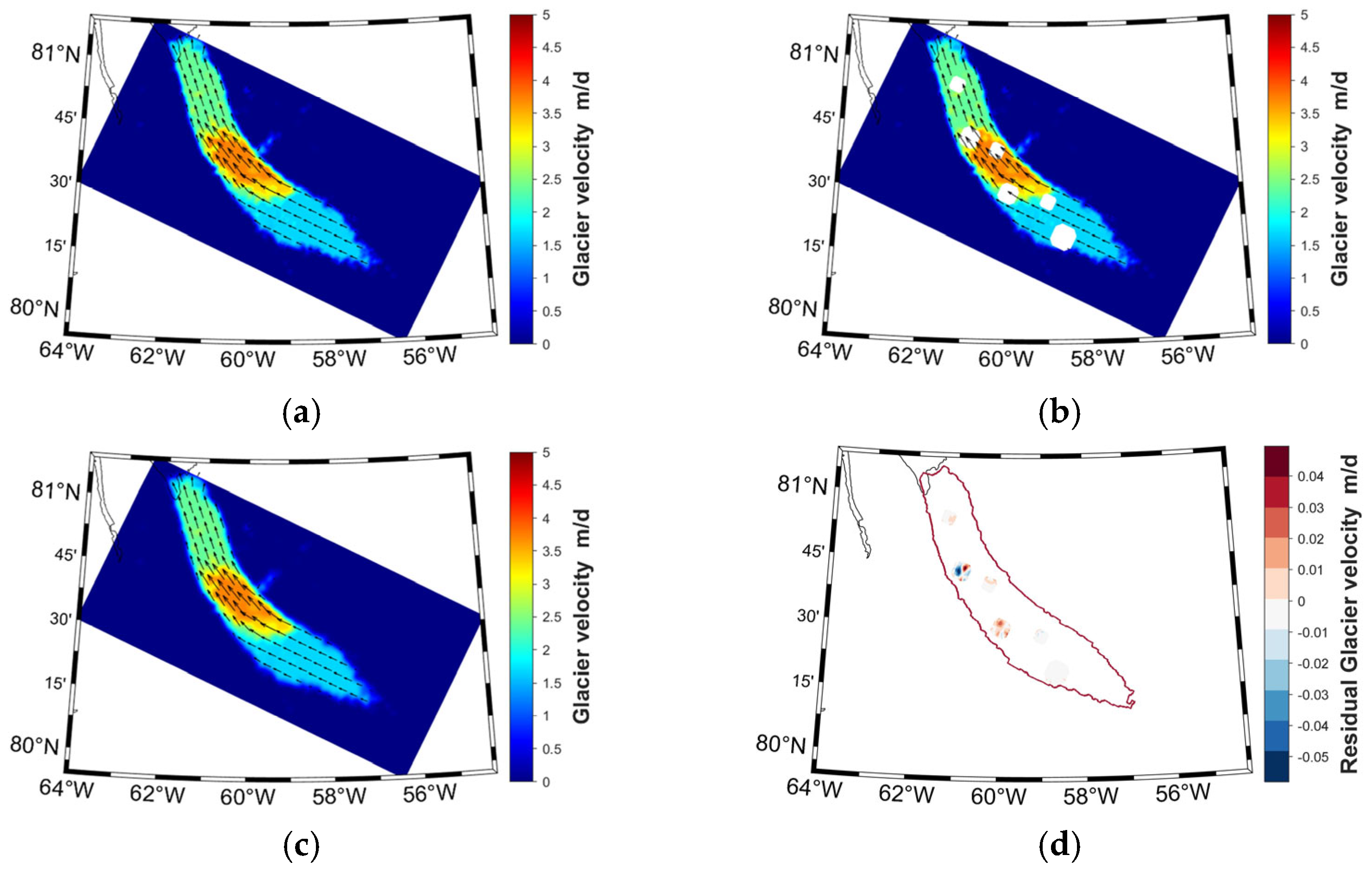
Figure 8.
Figure 8a presents the reference glacier velocity field. To mitigate the influence of specific locations on the reconstruction results, a portion of the glacier velocity data was randomly removed across various glacier regions using SAR image pairs, as illustrated in
Figure 8b. The missing velocity data were reconstructed using the proposed combined neural network, with the resulting velocity field shown in
Figure 8c. Quantitative evaluation shows that the RMSE between the reconstructed and reference velocity fields are 0.013 m/d in magnitude and 0.412° in direction, indicating a high degree of consistency. Moreover, the difference map in
Figure 8d reveals that although a large portion of the accumulation zone was removed, the reconstruction error in this region is minimal. The mean and standard deviation of the difference are 0.0015 m/d and 0.0021 m/d, respectively, which were smaller than those of 0.0048 m/d and 0.0082 m/d in the ablation zone. This can be attributed to the relatively stable velocity of glaciers in the accumulation zone, where spatiotemporal variation is limited. As a result, the new neural network is able to effectively learn and utilize the temporal and spatial patterns in this region during the reconstruction process.
4.3. Ablation Experiments
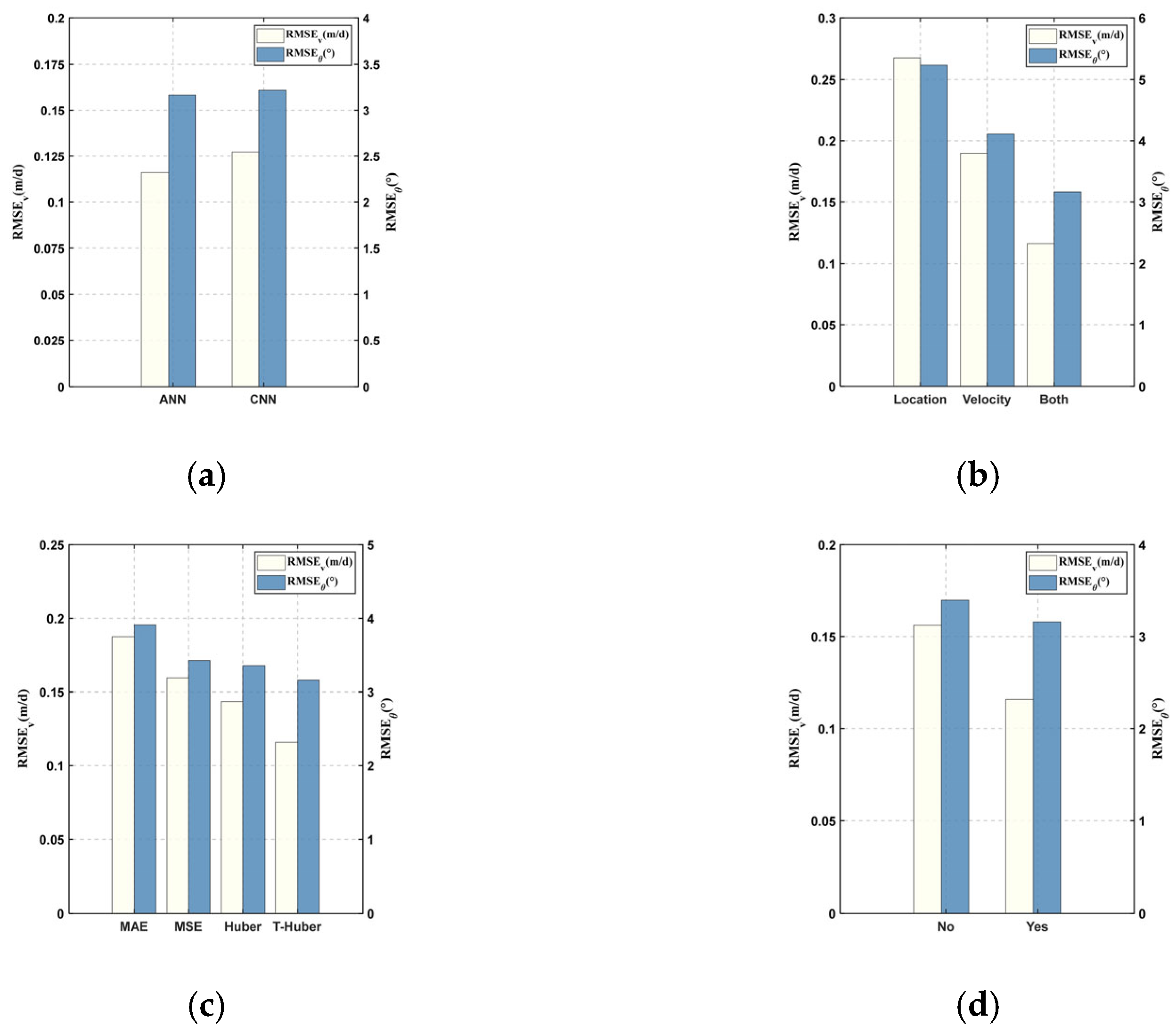
To assess the influence of various network components on the glacier velocity reconstruction performance, ablation experiments were conducted in this subsection (
Figure 9). During the experiments, the contributions of the ANN architecture, the input parameters of the ANN, the error function of the DAE, and the weighted iteration of the two networks to the overall network performance were analyzed. These network structures were either removed or substituted to evaluate their individual impacts on reconstruction accuracy. The statistical analysis included 80,000 missing glacier velocity samples, with the results being evaluated using the RMSE.
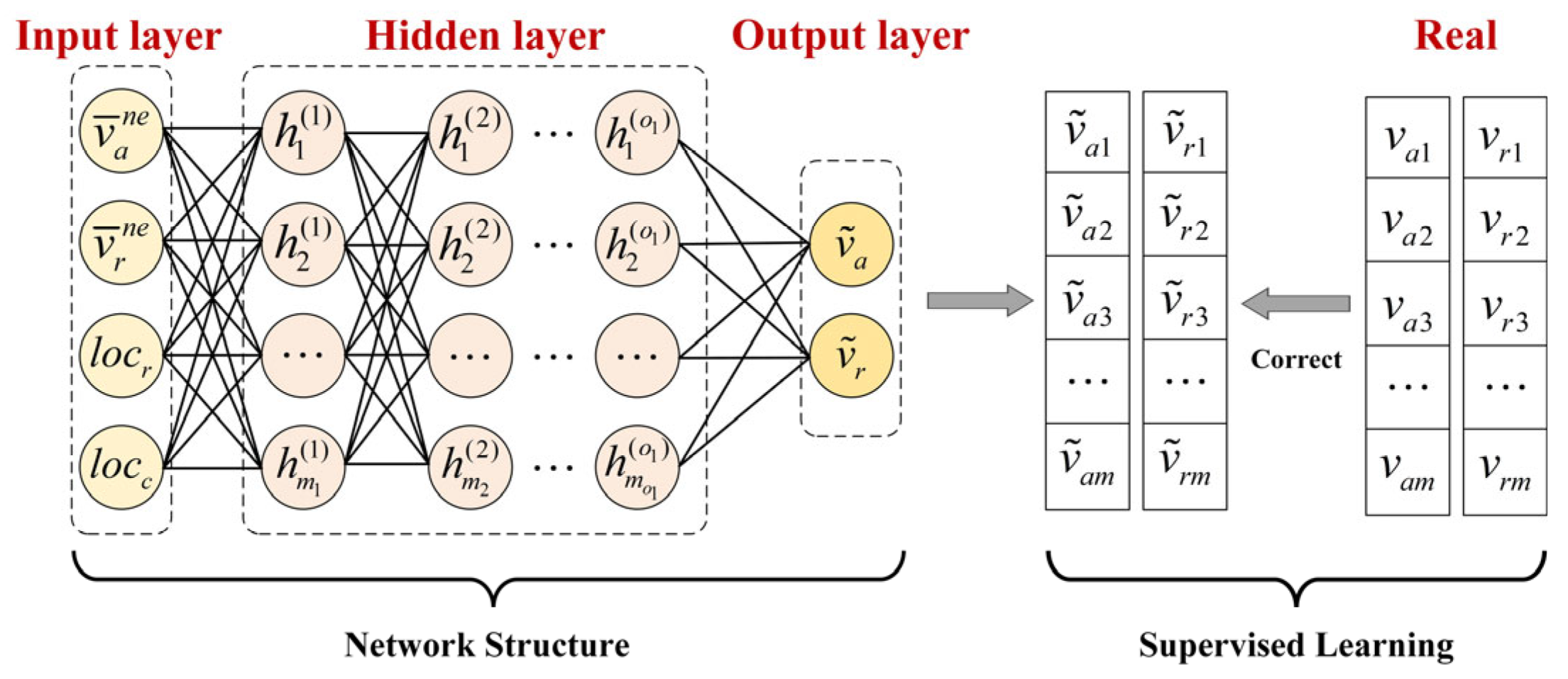
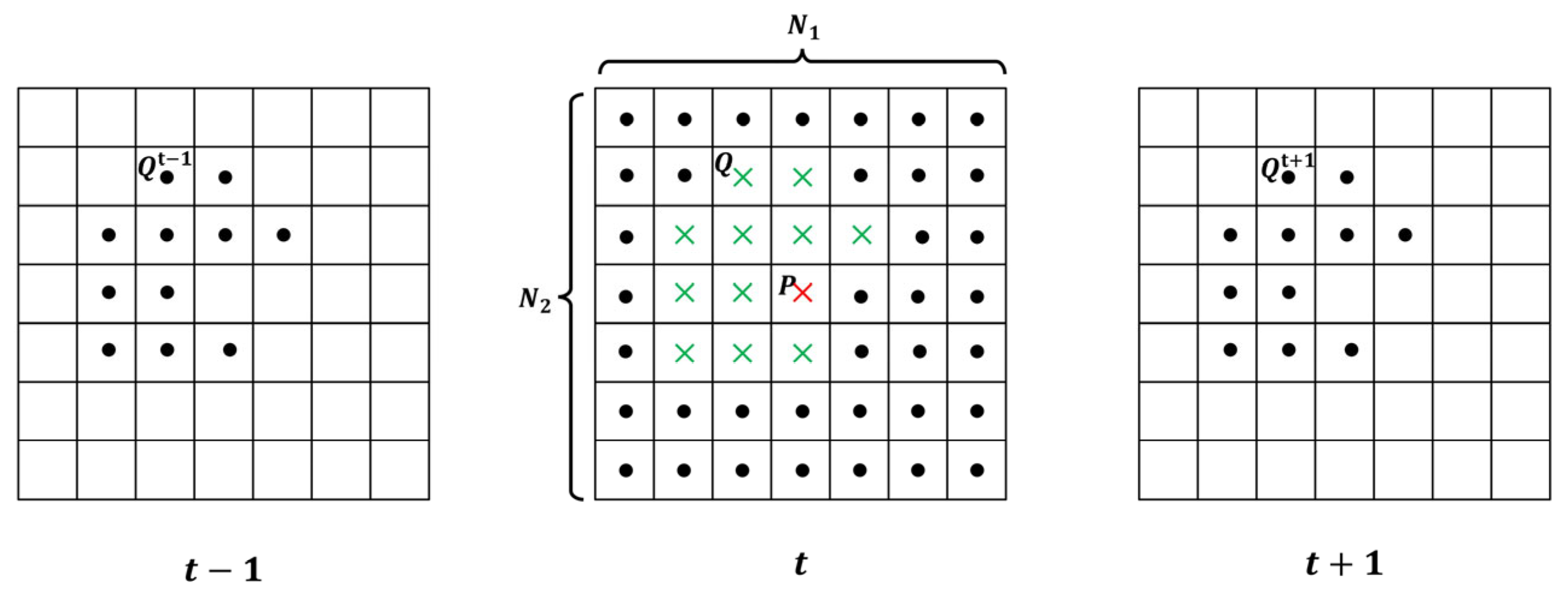
To reconstruct glacier velocity, the network must first learn its spatial characteristics. In this section, we integrate an ANN and a convolutional neural network (CNN) separately with a DAE to assess the relative effectiveness of different spatial feature extraction strategies in recovering missing glacier velocity data. In the experimental design, the ANN receives spatial statistical descriptors such as the neighborhood mean velocity for each point and its corresponding spatial coordinates as inputs, whereas the CNN operates on fixed-size local patches extracted from the velocity field. The comparative results of the two network architectures are presented in
Figure 9a.
As shown in
Figure 9a, the ANN-based combination outperforms the CNN-based approach, achieving
and
values of 0.116 m/d and 3.162°, respectively, compared to 0.127 m/d and 3.215° for the CNN. This performance gap can be attributed to the distinct feature-learning capabilities of the two models. CNN is particularly adept at capturing local spatial patterns and structural features, thus primarily emphasizing neighborhood characteristics of glacier velocity during training. In contrast, the ANN can accommodate arbitrarily shaped, non-gridded input features and incorporate additional attributes such as spatial location. Since glacier velocity is influenced not only by local dynamics but also by large-scale factors such as ice thickness distribution and topography—which remain relatively stable over short timescales—the inclusion of spatial location effectively encodes global spatial context. Consequently, the ANN achieves superior performance by jointly leveraging both local neighborhood information and broader spatial characteristics of the glacier.
In contrast, the ANN can accommodate arbitrarily shaped, non-gridded input features and incorporate additional attributes such as spatial location. Since glacier velocity is influenced not only by local dynamics but also by large-scale factors such as ice thickness distribution and topography—which remain relatively stable over short timescales—the inclusion of spatial location effectively encodes global spatial context. Consequently, the ANN achieves superior performance by jointly leveraging both local neighborhood information and broader spatial characteristics of the glacier.
Theoretically, the input parameters of the ANN directly influence the capacity of the network to learn spatial features. To further ascertain the impact of these input parameters on network performance, this section conducts a comparative experiment. Specifically, only the position coordinates or neighborhood average velocity are input into the ANN respectively, and the results are compared with the results of inputting all parameters. The comparison results are shown in
Figure 9b.
In
Figure 9b, the network with all parameters input has the best results, followed by the network with the neighborhood average velocity, whose
and
are 0.180 m/d and 4.009° respectively. However, the largest errors—0.294 m/d in value and 5.683° in direction—were observed when only spatial coordinates were used as input. This is primarily because the core principle of ANN training relies on capturing spatial correlations in glacier velocity. Although spatial coordinates can partially reflect the spatial distribution of glacier motion, glacier velocity at a fixed location may vary significantly over time. Consequently, the correlation between location and glacier velocity is substantially weaker than the correlation between a given glacier velocity and its neighboring velocities. Therefore, incorporating both spatial coordinates and neighboring velocity information as input allows the ANN to more effectively leverage spatial dependencies, resulting in improved preliminary reconstruction performance.
In the training of a DAE, the error function serves as a benchmark for measuring the difference between the model output and the original input, thereby influencing the direction and effectiveness of model optimization. In this section, the outcomes of four distinct loss functions were compared, which are mean squared error (MSE), mean absolute error (MAE), the Huber, and the T-Huber error function employed in this paper. Specifically, MSE and MAE can be formulated as follows:
In the formula,
represents the number of glacier velocity points involved in the statistics. The comparison of glacier velocity reconstruction results using four error functions is shown in
Figure 9c.
From the bar chart, it is evident that utilizing MAE as the error function results in the largest error, specifically with 0.187 m/d in value and 4.054° in direction, whereas using MSE yields superior results compared to MAE. Generally, MAE is more apt for scenarios with substantial data fluctuations. However, in the case of glaciers, their velocity typically does not undergo significant fluctuations over short periods without external forces such as ice avalanches or sudden changes in base water pressure. MSE, on the other hand, is more sensitive to larger errors but lacks robustness against outliers. The Huber error function amalgamates the strengths of both MSE and MAE. Given the presence of anomalous data in glacier measurements, the use of the Huber error function proves markedly better than the first two, whose and are 0.144 m/d and 3.479°, respectively. Additionally, the glacier velocity exhibits a stronger correlation with velocities from temporally adjacent observations. Consequently, the T-Huber error function equips the network with enhanced intelligence in addressing missing velocity data within time series, thereby elevating the quality of glacier velocity reconstruction results.
In the proposed network architecture, the ANN focuses on spatial features, while the DAE emphasizes temporal features. In the process of learning, the spatiotemporal characteristics of glacier velocity can cause different biases in the predicted values, and theoretically, finding a balance point between the two biases can effectively improve the predictive performance of the network. Balancing these biases can theoretically improve prediction accuracy. Experiments comparing results with and without weighted iteration show clear advantages of using it, with improvements of 0.040 m/d in velocity and 0.233° in direction (
Figure 9d). By assigning weights to the outputs of the ANN and DAE, the model effectively combines spatial and temporal features, allowing it to automatically learn their relative importance and enhancing the robustness of glacier velocity reconstruction.
Moreover, to evaluate the effectiveness of the fusion strategy, several alternative fusion mechanisms were compared, including fixed linear fusion, nonlinear gating-based fusion, and the adaptive fusion strategy adopted in this study. In the fixed linear scheme, equal weights (0.5 for spatial features and 0.5 for temporal features) were used to combine the two components, while the nonlinear gating mechanism employs a sigmoid function to dynamically balance their contributions. The results are summarized in
Table 2. As shown in
Table 2, fixed linear fusion produces the largest reconstruction errors, indicating that simple averaging cannot effectively balance spatial and temporal information. The nonlinear gating mechanism significantly improves reconstruction accuracy, and the proposed method further reduces both velocity magnitude and direction errors, although the improvement over nonlinear gating is relatively modest. Nevertheless, it achieves competitive performance while maintaining a simpler model structure.
4.4. Sensitivity Analysis
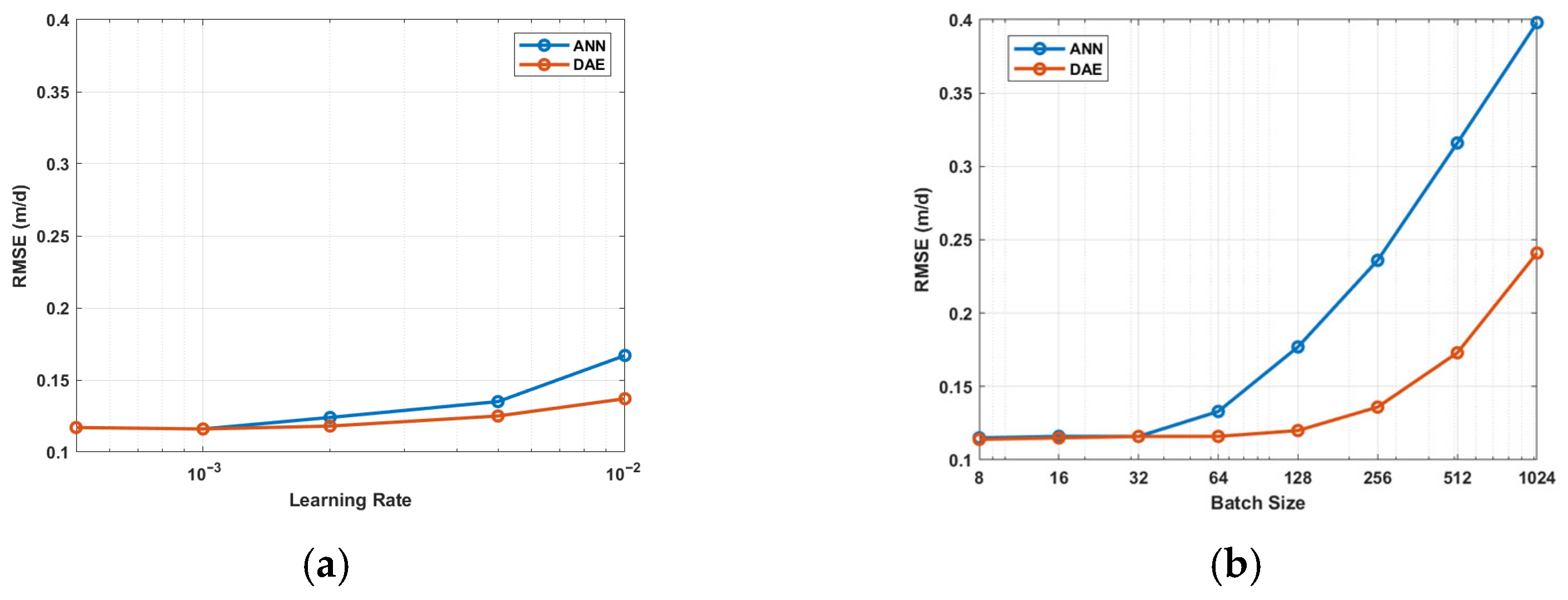
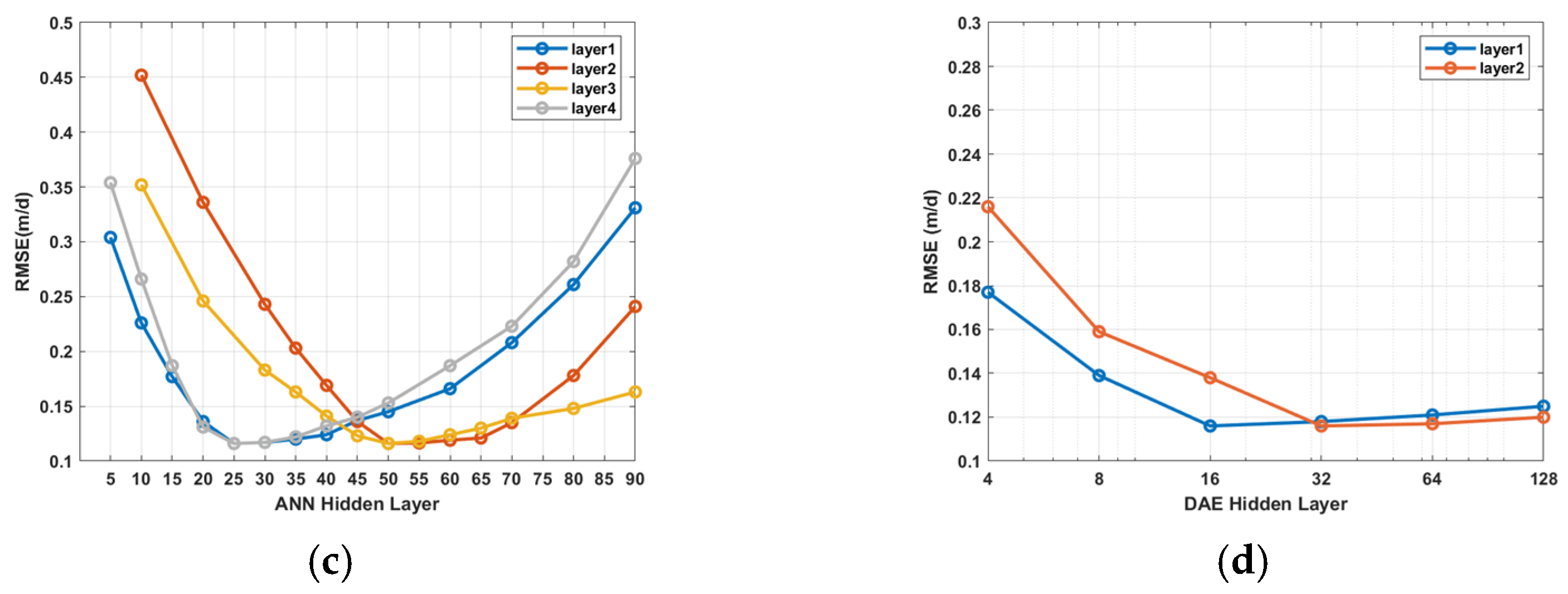
To further evaluate the performance of the proposed hybrid network, a sensitivity analysis was conducted on key network parameters. The effects of learning rate, batch size, and the number of hidden layer nodes on glacier velocity recovery by both the ANN and DAE networks were investigated. The results are presented in
Figure 10.
Figure 10a illustrates the influence of the learning rate on the recovery performance. It can be observed that the reconstruction error gradually increases as the learning rate rises. Overall, a learning rate of 0.001 represents a reasonable trade-off between training efficiency and network performance.
Figure 10b shows the effect of batch size. It is evident that excessively large batch sizes can degrade network performance due to reduced generalization. Furthermore, the ANN is more sensitive to batch size than the DAE. This difference arises from their respective learning tasks: the ANN must capture both global and local features of glacier velocity simultaneously, making its gradient estimation highly dependent on batch size. Large batches may hinder the learning of fine local features. In contrast, the DAE primarily focuses on the temporal dynamics of glacier velocities, reconstructing time-series patterns to extract stable temporal correlations. Since temporal evolution trends at different spatial locations are typically highly correlated, the DAE exhibits greater robustness to batch size during training.
Figure 10c and
Figure 10d present the sensitivity results for the number of hidden nodes in the ANN and DAE models, respectively. For the ANN, the RMSE decreases significantly as the number of hidden nodes increases from 5 to approximately 30–50, indicating sufficient model capacity to capture nonlinear characteristics. However, when the number exceeds 60, the error increases, suggesting overfitting and reduced generalization. In contrast, the DAE achieves optimal performance with 16–32 hidden nodes, where the reconstruction error is minimized and the denoising capability is strongest. Beyond this range, a slight RMSE increase implies that an overly wide coding layer may introduce redundant features. Overall, a moderate network size effectively balances feature representation and overfitting, leading to improved model stability and predictive accuracy.
5. Discussion
This section begins by comprehensively evaluating the applicability and effectiveness of the proposed method for glacier velocity reconstruction. By comparing reconstructed glacier velocity obtained using different methods, the performance of the method in this paper is further discussed. Subsequently, the glacier velocity reconstruction results when different types of missing data exist are compared by controlling variables, and the applicability of the method is further discussed. In addition, to gain deeper insights into the motion characteristics of Petermann Glacier, this section presents a seasonal comparison of the glacier velocity and investigates the underlying causes of variations observed between winter and spring.
5.1. Comparison of Different Methods
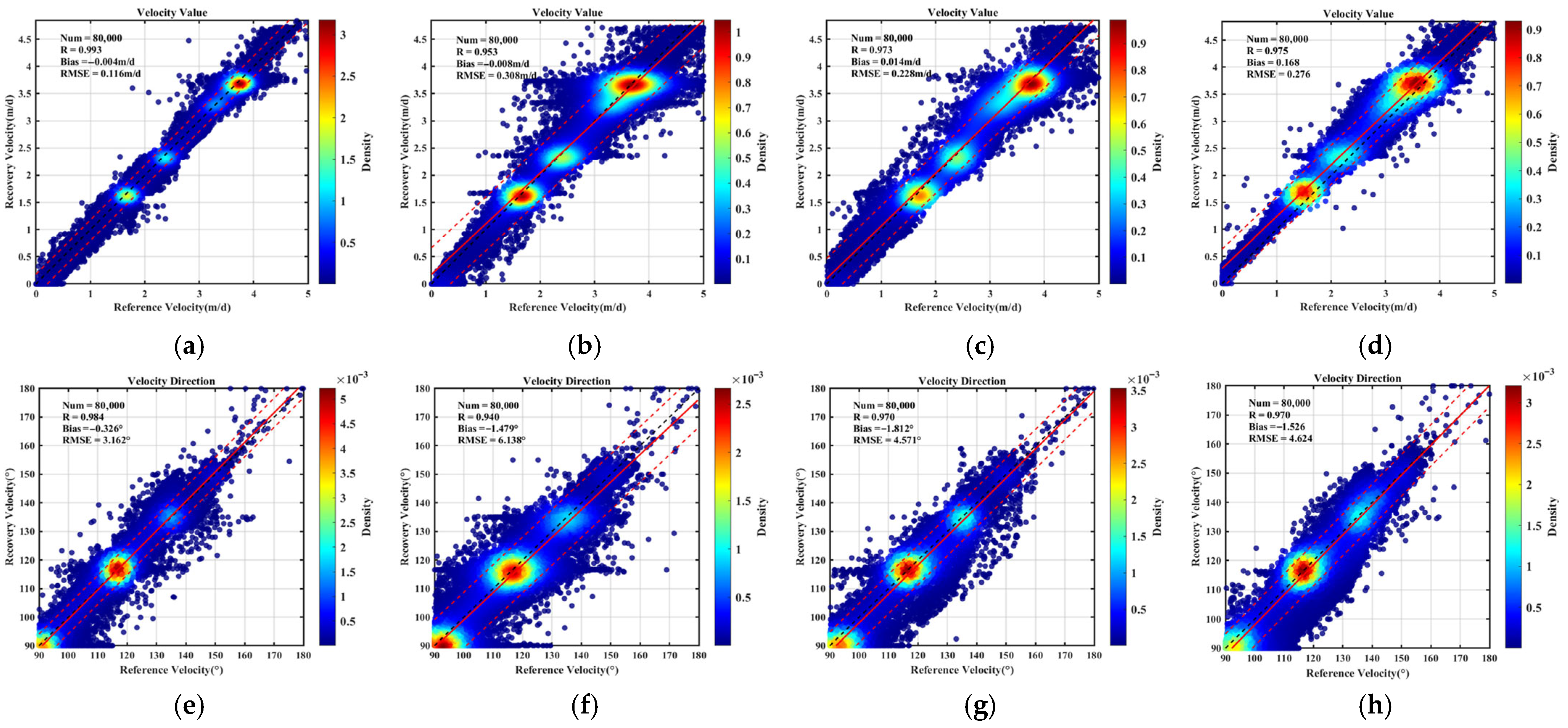
To further verify the effectiveness of the method, additional missing data were created using the obtained glacier velocity field and reconstructed using the proposed method. In the experiment, 80,000 data points were involved in the statistics, and the statistical results of cross-validation are shown in
Figure 11. Additionally, to further validate the effectiveness of the method, a comparison was made between the proposed method, the Kriging method, the Cooperative ANN (CoANN) method [
35] and the EM-EOF method [
24], with the comparison results presented in
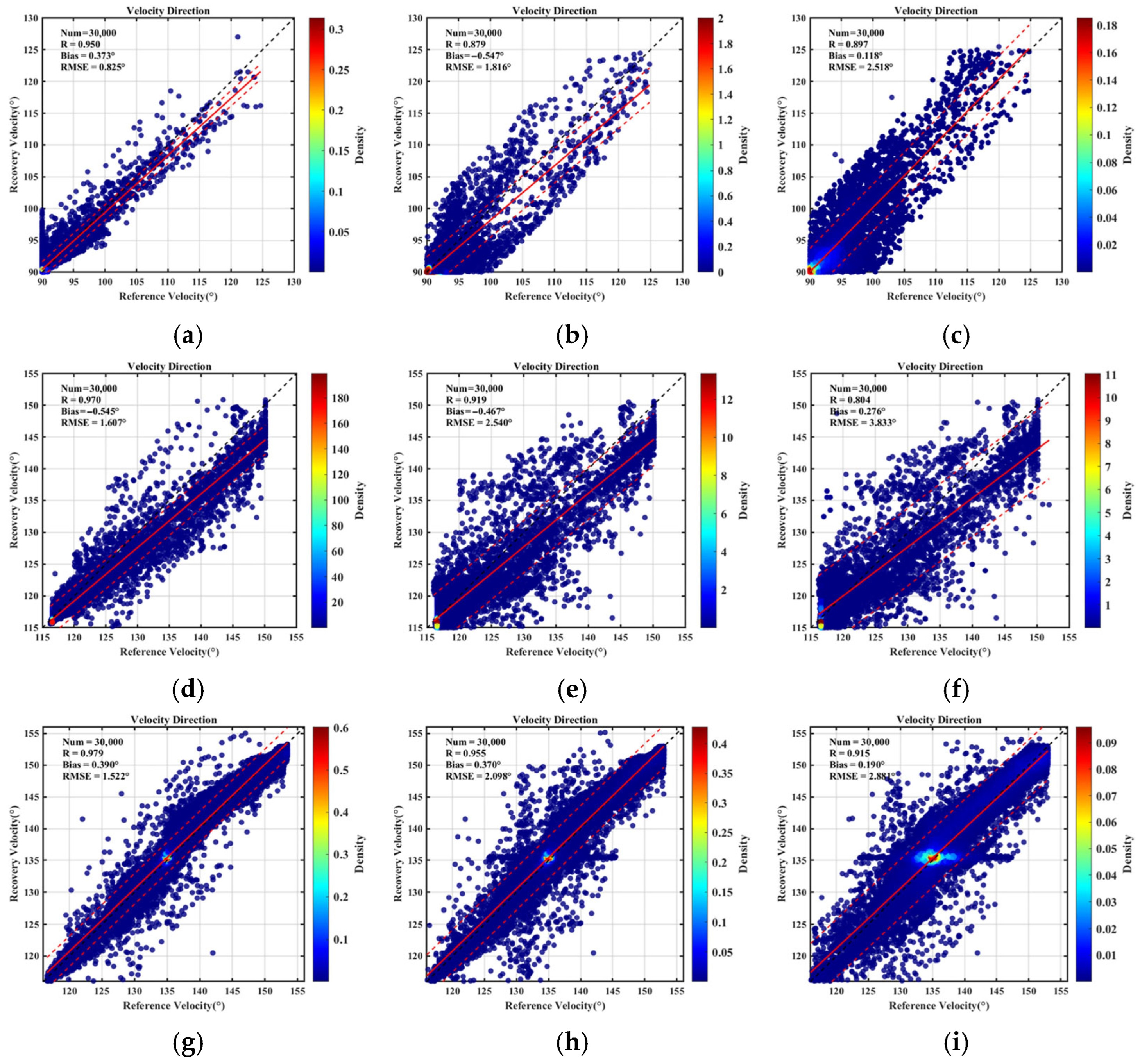
Figure 11. The core idea of the CoANN method is to formulate glacier velocity reconstruction as a supervised learning problem. Specifically, the network is trained by taking the spatial coordinates of glacier velocity along with key factors influencing glacier dynamics (e.g., surface slope) as inputs to the ANN, which ultimately reconstructs the missing velocity values. The EM-EOF method decomposes the enhanced spatiotemporal covariance of the displacement time series into EOF modes and then selects the optimal EOF mode set to reconstruct the time series.
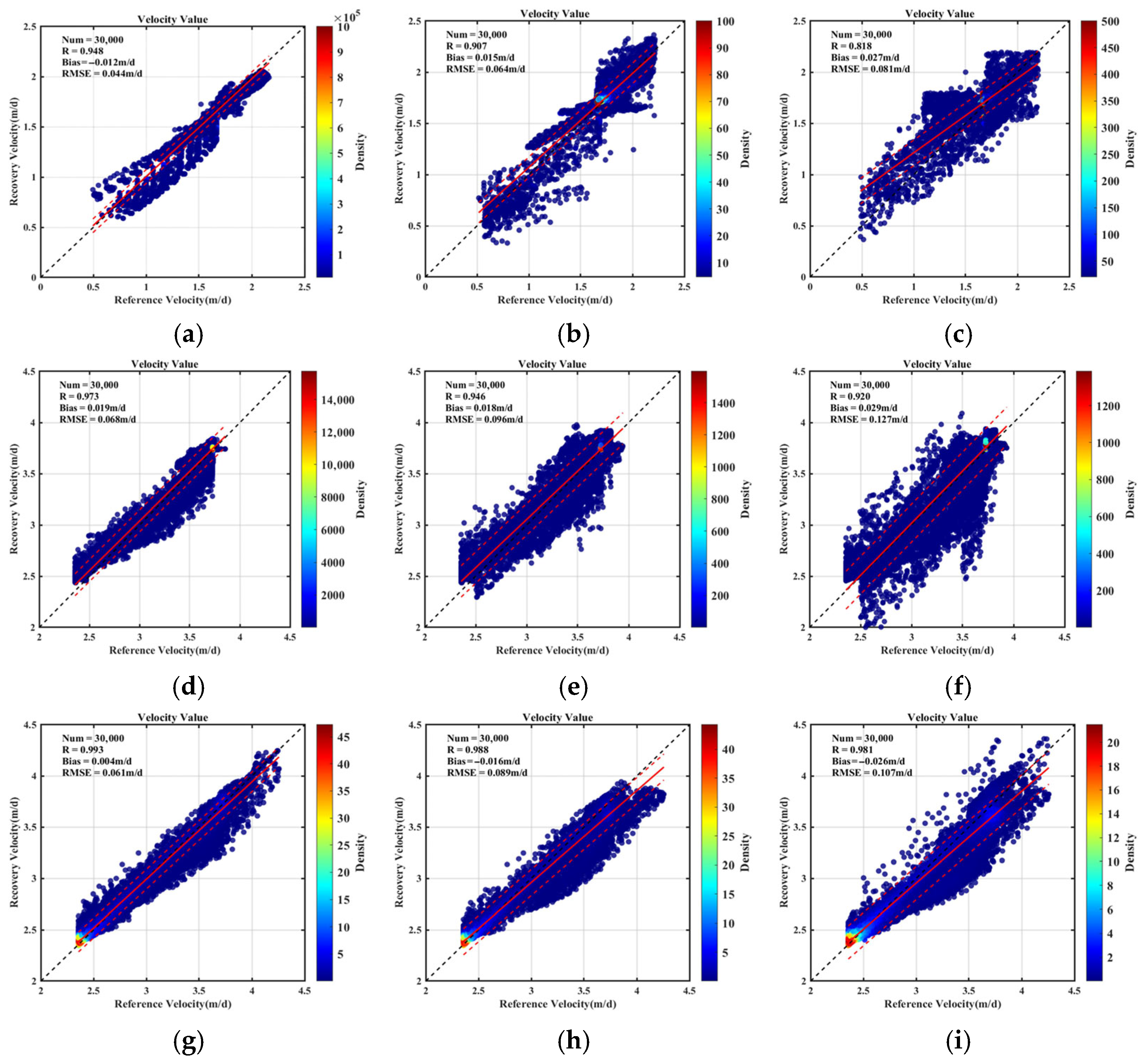
From the comparison results, it can be observed that the RMSEs of glacier velocity value obtained by the method proposed in this paper, Kriging, CoANN and EM-EOF are 0.116 m/d, 0.308 m/d, 0.228 m/d, and 0.276 m/d, respectively. Additionally, the RMSEs in velocity direction are 3.162°, 6.138°, 4.571°, and 4.462°, respectively. This indicates that the method proposed in this paper significantly improves the accuracy of the reconstructed glacier velocity compared to traditional methods. Specifically, Kriging performs well in low-velocity areas but shows significant errors in medium to high-velocity areas. This is because it estimates the values of unknown points using spatial autocorrelation. Generally, glacier movement is relatively stable in the accumulation zone, and the movement on the glacier surface exhibits strong spatial correlation. Therefore, Kriging performs better in low-velocity areas where spatial continuity is stronger and variations are minimal.
Although the CoANN incorporates terrain-related parameters during training, glacier motion is influenced by factors beyond topography. In the absence of additional parameters such as ice thickness, the training process still relies primarily on the spatial distribution of glacier velocity, leading to large errors in regions where velocity exhibits strong fluctuations. In addition, the EM-EOF accounts for the spatiotemporal characteristics of glacier velocity. However, the orthogonal empirical decomposition transforms two-dimensional vectors into one-dimensional representations, thereby discarding part of the spatial information. As a result, its errors remain larger than those of the proposed method. In contrast, the method proposed in this study effectively integrates both spatial and temporal features during training, enabling it to better capture complex patterns and demonstrate greater robustness across different glacier zones.
In contrast, the method proposed in this study effectively integrates spatial and temporal features during training, which is particularly advantageous for the Petermann Glacier. While local glacier velocities may change rapidly due to seasonal meltwater and dynamic ice flows, the overall velocity pattern of the Petermann Glacier remains relatively stable because of topographic influences. Unlike traditional interpolation techniques, which capture only local spatial correlations, the ANN module in our framework can simultaneously learn both global and local spatial features of glacier velocity. Moreover, the method incorporates an adaptive fusion mechanism that dynamically balances the contributions of spatial and temporal features, allowing the model to adjust to different glacier regions and varying data conditions. This adaptive spatiotemporal integration enables accurate reconstruction of glacier velocities and explains why the proposed method consistently outperforms traditional approaches on the Petermann Glacier.
Furthermore, to evaluate whether the improvement achieved by the proposed method is statistically significant, a paired Wilcoxon signed-rank test was conducted on the recovery errors obtained from different methods, and the corresponding results were reported in
Table 3. The extremely small
p-values (
p < 0.001) indicate that the proposed method provides statistically significant improvements compared with the other approaches. In addition, the higher correlation coefficients and lower root mean square errors presented in
Figure 11 further demonstrate the substantial practical advantages of the proposed method.
5.2. Comparison of Different Missing Types
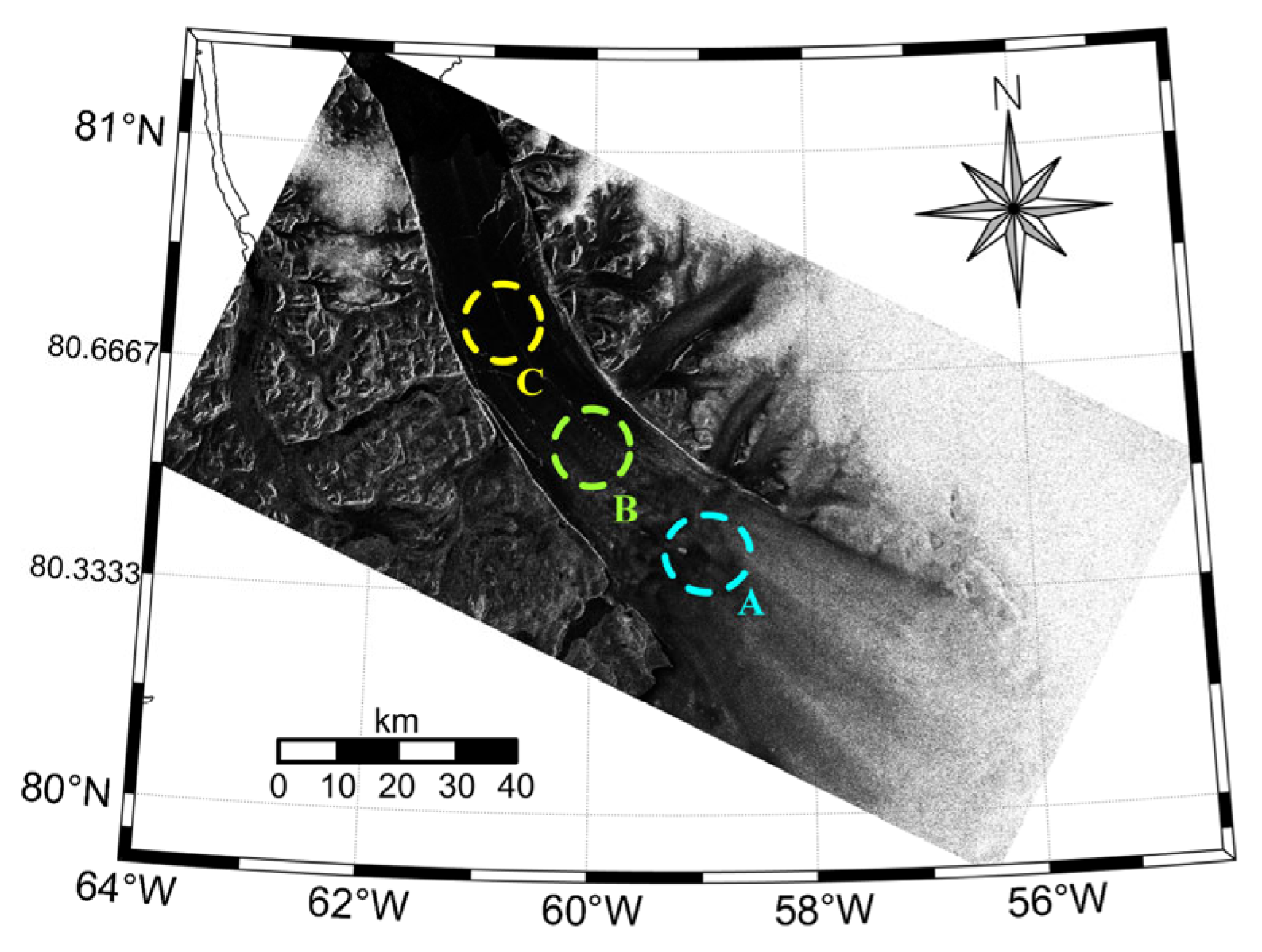
To further investigate the impact of different types of missing areas on the accuracy of glacier velocity reconstruction, the study simulated varying missing data scenarios by introducing missing areas of different locations and extents within the obtained glacier velocity field. Notably, the varying degrees of missing data refer to contiguous missing areas of glacier velocity at the same locations. Subsequently, the neural network was employed to reconstruct the glacier velocity. The detailed experimental setup is described as follows. Firstly, keeping the degree of glacier velocity missing unchanged, we set up missing values in areas A, B, and C (
Figure 12). The reason for selecting these areas is that glacier velocities exhibit different characteristics in the three areas. At the same time, the missing degree in each area is changed, and the continuous missing areas are 10 km
2, 30 km
2, and 50 km
2 respectively. The glacier velocities were reconstructed, and the comparison results between the reconstructed and reference glacier velocity fields are presented in
Figure 13 and
Figure 14. In both figures, each column corresponds to the reconstruction results for different missing data locations, while each row represents the results for varying degrees of missing data at the same location.
Comparing the results of different missing areas, it can be seen that the recovery effect of missing data in Region A is significantly better than that in Region B and Region C. Region A is located in the accumulation zone of the glacier. Generally, the accumulation zone of a glacier represents an area of net mass gain, where snowfall exceeds melt, thereby replenishing the glacier. Ice motion in this zone is typically more stable, with basal sliding playing only a minor role. Instead, flow is dominated by plastic deformation within the ice body [
36]. This flow form results in relatively gentle velocity changes, small spatial gradients, and limited velocity differences between adjacent points. Therefore, the glacier velocity is highly correlated with the glacier velocity in the adjacent area, which means that the input parameters of ANN are more reliable. Moreover, since the accumulation rate of snowfall and the glacier velocity driven by glacial flow typically reach a state of dynamic equilibrium [
46], the glacier velocity tends to remain stable over time under steady climate conditions. As a result, the glacier velocity at a given location exhibits strong temporal correlation, enabling the DAE to more effectively reconstruct glacier velocities based on temporal features.
Comparing the results with different degrees of missing data reveals that as the degree of missing data increases, the reconstruction error of glacier velocity also increases. There are mainly two reasons for this result. On the one hand, the input parameters of ANN are related to the glacier velocity within the missing velocity neighborhood window. When there is a large area of continuous missing data, there are fewer effective glacier velocity points within the neighborhood window, leading to increased errors in the input parameters of ANN and thus increasing the error in the reconstruction results. On the other hand, as the degree of missing data increases, the effective spatiotemporal information of the glacier velocity field is continuously decreasing, which means that the useful features extracted by the network during training are decreasing. This directly affects the training effect of the network.
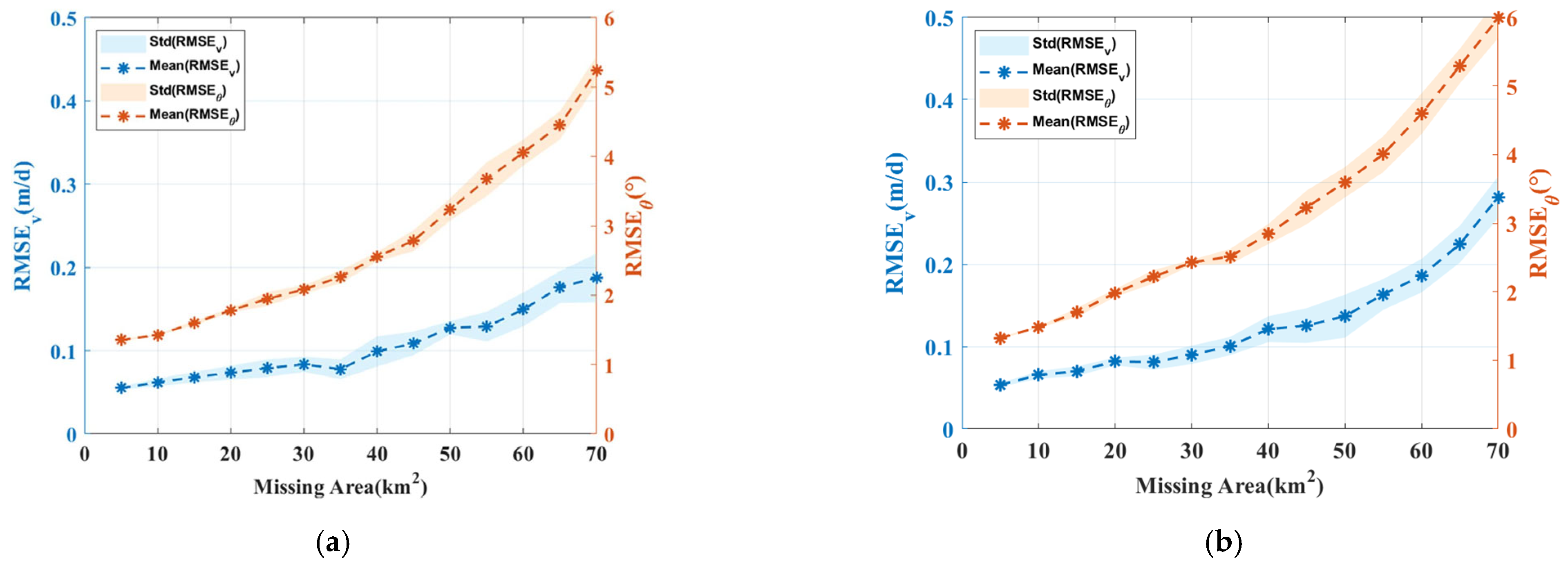
Furthermore, to further ascertain the impact of the missing degree of glacier velocity on method performance, the study expanded the continuous glacier velocity missing area range and utilized the proposed method to recover the missing glacier velocity. For each area size, the missing blocks were randomly selected within the glacier domain. To mitigate the influence of experimental randomness on statistical results, five replicate experiments were conducted for each missing area size. The detailed results are presented in
Figure 15a. It is evident that as the continuous glacier velocity missing area increases, the accuracy of glacier velocity reconstruction gradually decreases, and the robustness of the method also diminishes.
Simultaneously, to further evaluate the performance of the proposed method under more stringent conditions, we conducted experiments specifically on high-strain glacier margins and assessed the reconstruction capability in these regions. High-strain areas, identified by calculating the effective strain rate from the observed velocity field, exhibit rapid velocity variations and present the most challenging conditions for velocity reconstruction. Missing blocks of varying sizes were introduced to simulate realistic continuous data gaps. Each missing area size was tested with five replicate experiments. As shown in
Figure 15b, although the error in high-strain areas is slightly higher than in randomly selected regions, the proposed method can still effectively recover the glacier surface velocity for small to medium-sized missing areas. As the missing area increases, the reconstruction performance gradually decreases.
The proposed method demonstrates strong adaptability and robustness in glacier velocity recovery, particularly under short-term missing conditions. It effectively leverages the spatial and temporal information of observational data to accurately recover small to medium-sized missing regions, maintaining reasonable reconstruction accuracy even in high-strain areas. Moreover, repeated experiments and statistical analyses indicate that the method is stable under the influence of experimental randomness and fluctuations. However, when the velocity field contains continuous, large-area missing regions, such as those caused by extensive summer meltwater, the reconstruction accuracy and stability are significantly reduced due to the limited availability of training data. Therefore, this method is not suitable for direct application to long-term, large-area missing regions in summer and should be combined with other approaches or multi-source data for effective recovery.
5.3. Comparison of Glacier Velocity in Different Seasons
The glacier velocity fields before and after reconstruction of Petermann Glacier in the winter (January and February) and spring (March and April) of 2021 have been acquired in this paper. This study focuses on the long-term average velocity of glaciers rather than the instantaneous velocity at a specific moment. This choice is motivated by both methodological constraints and the inherent physical characteristics of glacier flow. On the methodological side, glacier velocities derived from SAR image pixel offset tracking do not represent instantaneous values at a single point in time; instead, they correspond to the average velocity over a given observation time baseline. The associated velocity error can be expressed as:
where
is the resolution of the satellite image used,
is the interpolation multiple during pixel offset tracking, and
is the observation time interval.
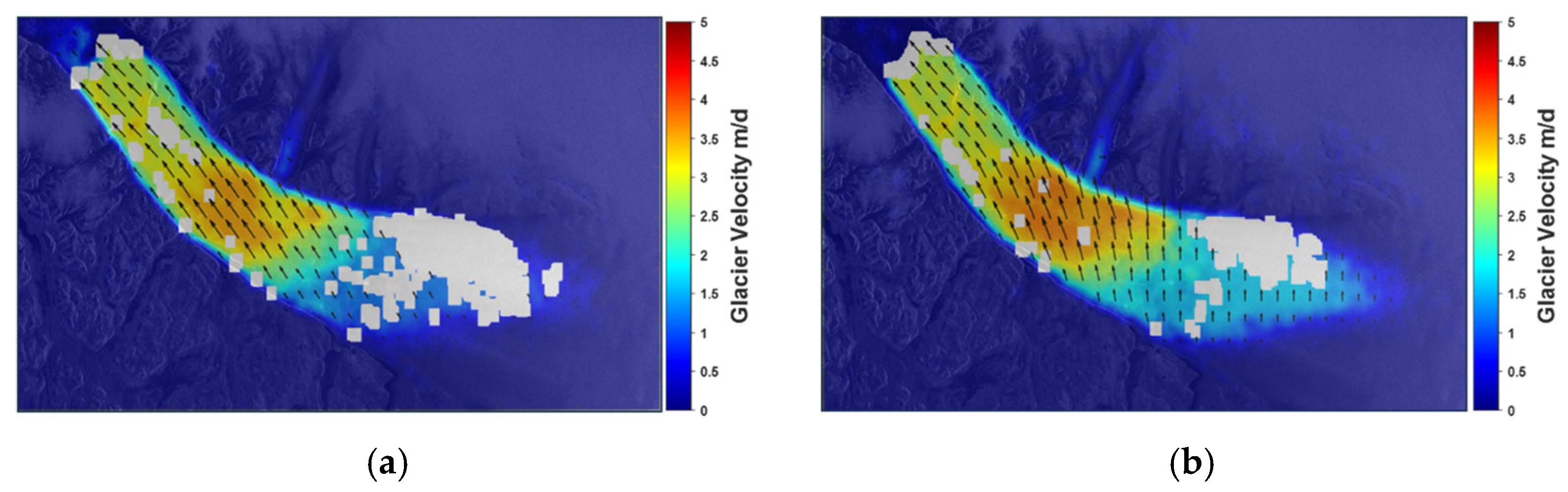
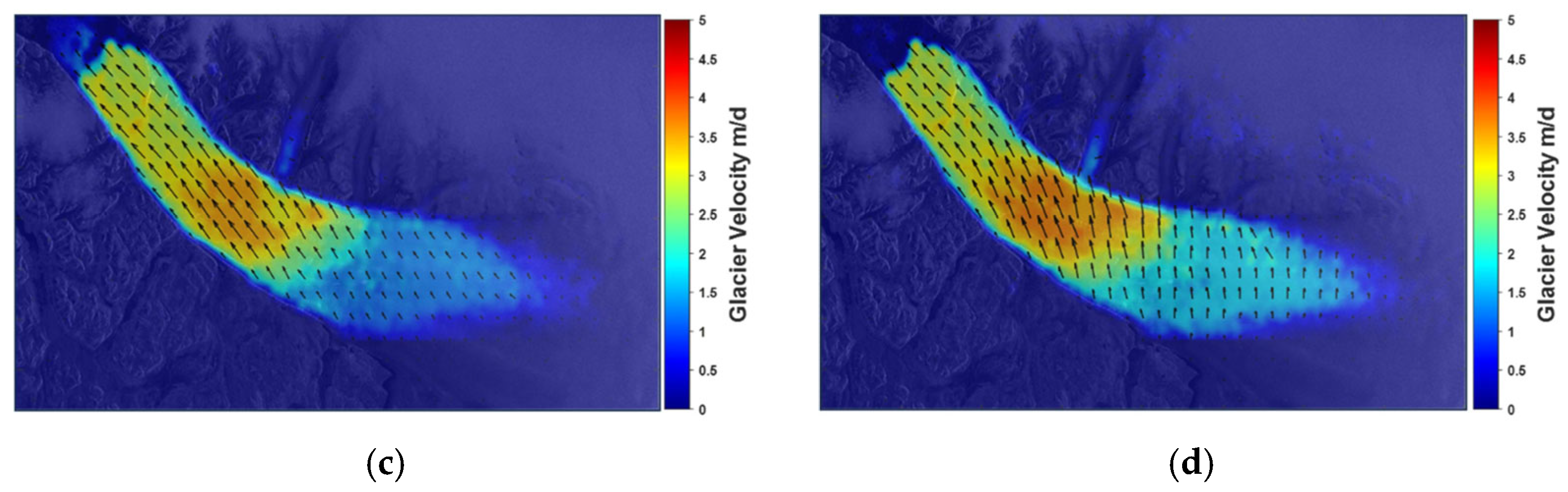
The error decreases as the observation interval increases. Therefore, long-term observations are more effective in reducing velocity uncertainties. From a physical perspective, glacier motion is influenced by factors such as meltwater input, basal hydrological conditions, and surface mass balance, and can exhibit substantial short-term fluctuations. These instantaneous variations often obscure the underlying long-term dynamic trends. In contrast, long-term average velocities provide a more robust representation of glacier dynamics, which is crucial for detecting sustained changes under climate forcing, mitigating the effects of short-term noise, and supplying reliable input for ice-flow models and sea-level rise projections. The average velocity of Petermann Glacier before and after reconstruction in winter and spring is shown in
Figure 16.
Figure 16a and
Figure 16b present the glacier velocity fields before reconstruction in winter and spring, respectively. Petermann Glacier exhibits varying degrees of missing areas in both winter and spring, with the missing areas mainly concentrated in the accumulation zone of the glacier. This is due to the thick snow cover in the glacier accumulation zone, which obscures surface features, making it difficult to track glacier characteristics using SAR images. Additionally, the presence of ice and snow in the accumulation zone affects the scattering characteristics of the glacier, thereby influencing the acquisition of the glacier velocity. Meanwhile, the missing data situation in the glacier accumulation zone appears to improve during spring. A plausible explanation is that rising temperatures lead to a reduction in surface snow cover, thereby enhancing the quality of glacier velocity observations.
However, as temperatures continue to rise into summer and approach the critical threshold of 0 °C, the extent of missing data increases again—this time primarily in the ablation zone [
26]. This is mainly attributed to the accumulation of meltwater on the glacier surface, which alters the scattering properties.
Figure 16c and
Figure 16d present the glacier velocity fields after reconstruction in winter and spring, respectively. It can be observed that the glacier velocity in spring has significantly increased compared to that in winter. This can be attributed to the reduced efficiency of the glacier’s hydrological system at this time. As spring arrives, surface snow on the Petermann Glacier gradually melts, and the meltwater is routed to the glacier bed through crevasses, thereby lowering basal friction, enhancing basal sliding, and accelerating glacier flow.
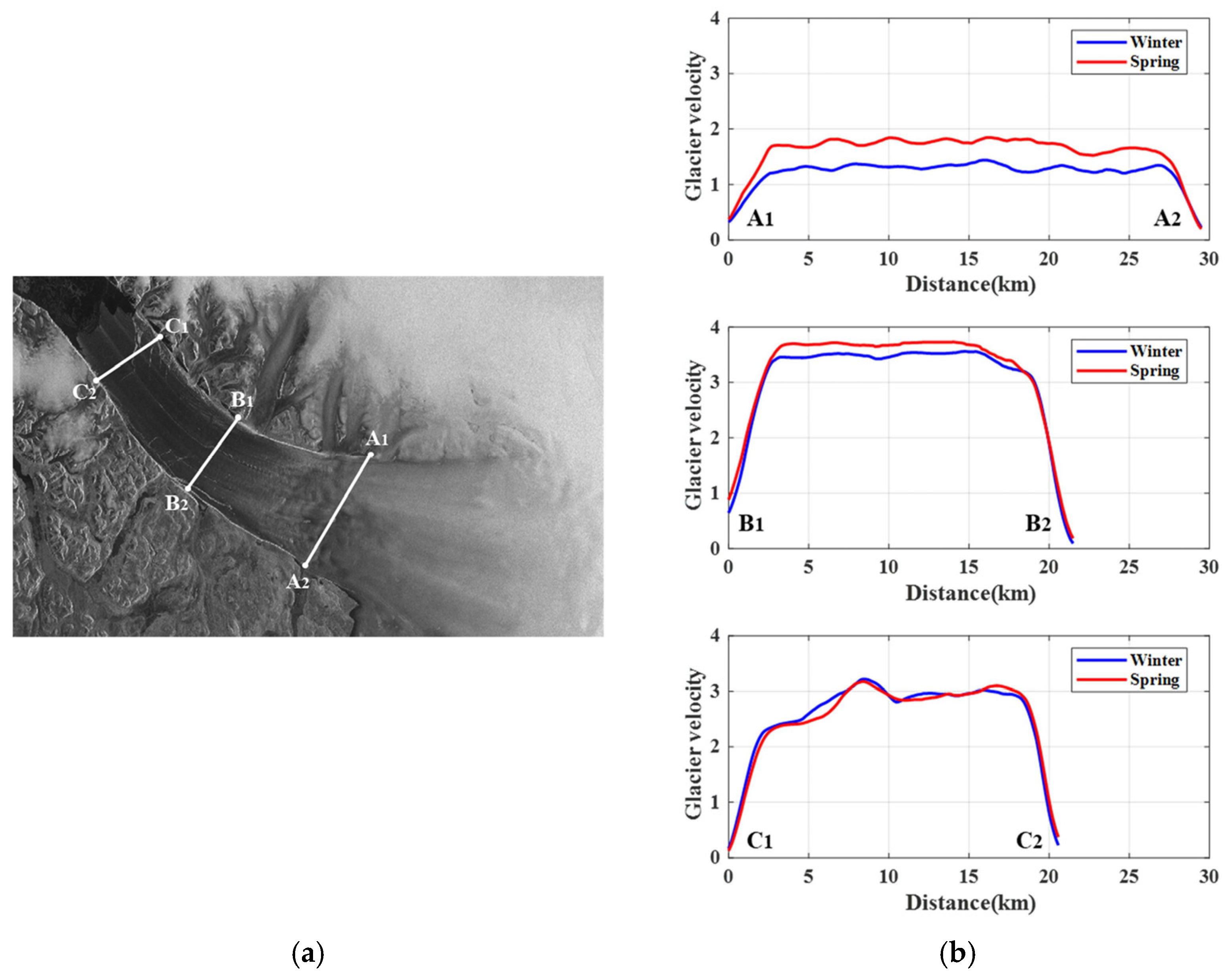
In addition, this paper compares the seasonal differences in different regions of the glacier (
Figure 17). As shown in
Figure 17a, profiles are taken along the glacier section direction in different regions of the glacier. Profile A1–A2 is taken from the accumulation zone of the glacier, while profiles B1–B2 and C1–C2 are taken from the high-velocity zone and the front end of the floating ice tongue in the ablation zone of the glacier, respectively. Observations in
Figure 17 indicate that, along the transverse profile of the glacier, the glacier velocity is consistently higher in the central region compared to the lateral margins. This pattern is primarily attributed to increased basal and lateral friction exerted by the valley sidewalls. The mechanical constraints imposed by the adjacent bedrock intensify internal ice deformation and energy dissipation, thereby substantially reducing glacier velocities near the margins [
47].
In addition, the accumulation zone demonstrates more pronounced seasonal variations in velocity. This study posits several plausible mechanisms underlying this behavior. Among them, the presence and variability of subglacial water are recognized as critical controls on glacier dynamics. During spring, enhanced surface melting leads to increased meltwater percolation to the glacier bed, elevating subglacial water pressure and promoting basal sliding. In the accumulation zone, the relatively steep slopes facilitate meltwater percolation to the base. At the same time, the basal hydrological system in this zone is generally more confined and has low drainage efficiency, causing water pressure to rise rapidly and enhancing basal sliding. Consequently, glacier velocities in the accumulation zone are significantly higher in spring than in winter, thereby explaining the significantly elevated velocities observed during spring relative to winter in the accumulation zone.
5.4. Method Applicability
The proposed framework has been preliminarily validated on the Petermann Glacier, demonstrating stable and consistent reconstruction performance. As a dynamically active outlet glacier, Petermann Glacier is characterized by relatively high flow velocities and stable large-scale flow behavior, making it a representative case for evaluating spatiotemporal learning–based reconstruction methods. Although the method is not explicitly restricted to specific glacier types, its applicability largely depends on the dynamic characteristics of the target glacier system. In particular, glaciers exhibiting coherent spatial flow structures and temporally correlated velocity evolution provide more favorable conditions for learning coupled spatiotemporal representations. Under such conditions, the network can effectively capture stable spatial patterns associated with ice dynamics while exploiting temporal continuity to constrain the reconstruction process. Therefore, the framework is expected to show strong applicability to outlet and tidewater glaciers characterized by relatively high flow velocities and stable flow directions.
Nevertheless, several limitations should be acknowledged. For inland glaciers with slow flow and weak temporal variability, the contribution of temporal information becomes limited, weakening the advantage of the DAE component and causing the model to rely more heavily on spatial feature learning. In such cases, recovery performance may primarily depend on spatial inference, reducing the benefits of spatiotemporally coupled modeling. In addition, the applicability of the framework to surging glaciers may be constrained. These glaciers are often governed by complex basal processes and exhibit abrupt, non-periodic accelerations. Because the framework implicitly assumes temporal continuity, rapid transient signals may be partially smoothed, which may lead to temporal lag or underestimation of peak velocities during surge events, thereby increasing reconstruction uncertainty.
The generalization ability of the framework is also influenced by the availability, quality, and temporal sampling density of velocity observations. Reliable latent representations require sufficiently dense time-series information, whereas sparse or irregular observations may reduce reconstruction stability. Although the model is designed to learn general statistical characteristics of glacier motion rather than glacier-specific patterns, its performance across diverse geographic settings and dynamic regimes still requires further systematic validation.
Overall, the proposed framework provides a data-driven approach for glacier velocity reconstruction under incomplete observations, rather than a universal solution applicable to all glacier types. Its primary objective is to enhance the spatiotemporal continuity of velocity fields by exploiting statistical regularities in glacier motion, thereby serving as a complement to, rather than a replacement for, traditional physically based models. Further validation across a wider range of glacier environments is necessary to fully assess its applicability and scalability. Future work will focus on improving model robustness and transferability through cross-glacier transfer learning, domain adaptation strategies, and the incorporation of physically informed constraints, such as flow-direction consistency and strain-rate regularization. These developments are expected to enable models trained in data-rich regions to support velocity reconstruction in data-scarce areas while maintaining physical consistency.