Article

Research on the Performance of Non-Contact Magnetic Transmission for Leakage Detection Devices in Storage Tank Floating Roofs


School of Mechanical Engineering, Jiangsu Ocean University, Cangwu Road, Lianyungang 222005, China
*
Author to whom correspondence should be addressed.
Appl. Sci. 2026, 16(7), 3126; https://doi.org/10.3390/app16073126
Submission received: 3 March 2026 / Revised: 20 March 2026 / Accepted: 22 March 2026 / Published: 24 March 2026
(This article belongs to the Section Mechanical Engineering)

Featured Application

This study proposes a passive monitoring scheme for petrochemical storage tanks, along with experimental and simulation analysis of the magnetic transmission technology involved.

Abstract

Floating roof seal integrity is critical for safety and emission control in petroleum storage tanks, yet current detection methods suffer from spark risks and operational inefficiencies. This study proposes an intrinsically safe, non-contact leakage detection system utilizing oil-swellable rubber actuators coupled with a linear magnetic transmission mechanism. By integrating quasi-static experiments with finite element simulations, we investigated the impact of permanent magnet geometry on transmission performance. The results establish a “thickness priority principle”, revealing that increasing magnet thickness nonlinearly enhances shear force and transmission efficiency, whereas increasing width yields diminishing returns due to magnetic flux leakage and added mass. Furthermore, comparative analysis demonstrates that optimized monolithic magnets significantly outperform arrayed configurations, achieving a 471% increase in shear force and a 3.7-fold improvement in transmission efficiency. Based on these findings, a practical detection device was designed and verified against API 650 standards. The proposed solution offers a reliable, electricity-free, and real-time monitoring method for early leakage detection in hazardous tank environments.

1. Introduction

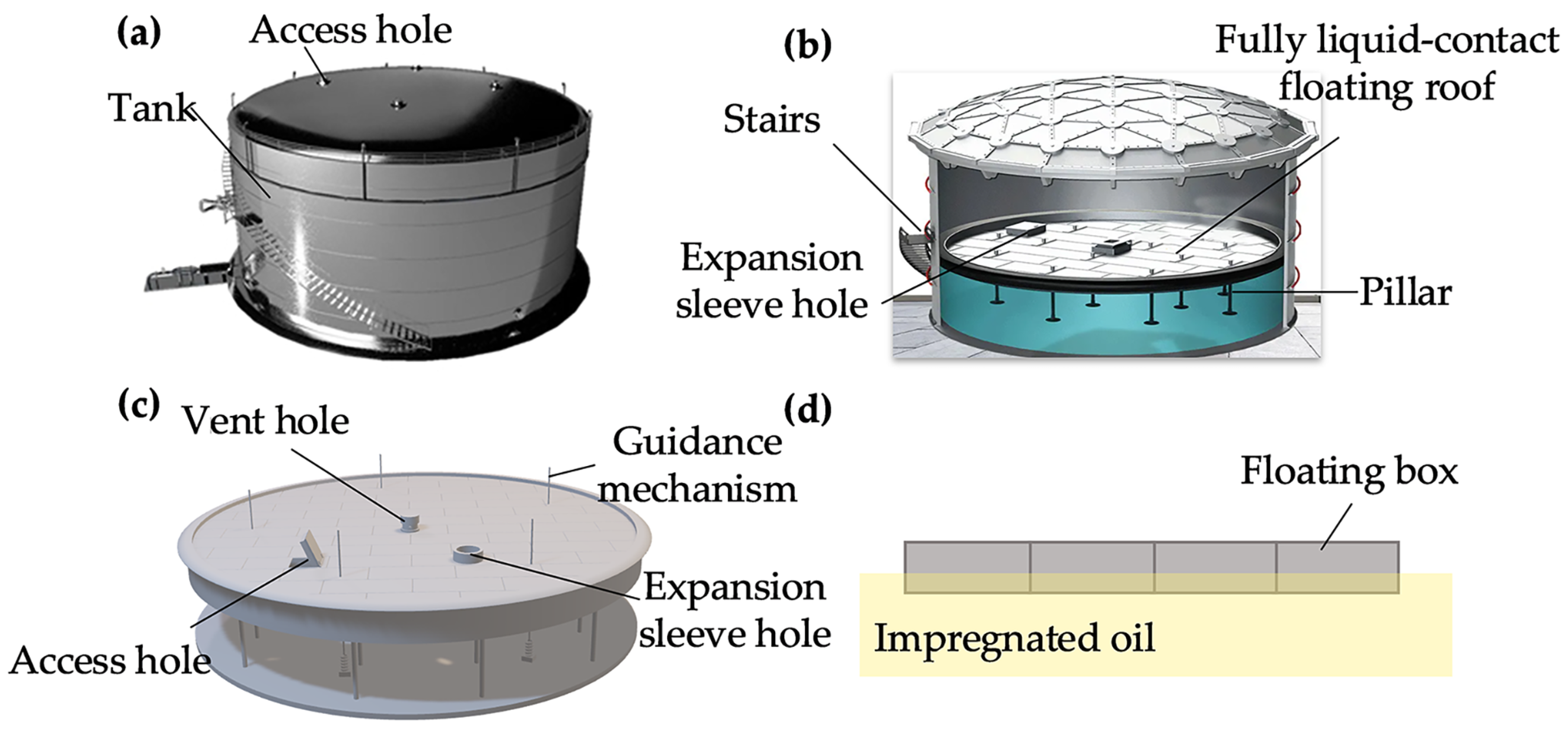
Amid the global trend toward developing and applying clean energy, petroleum remains a cornerstone energy source supporting societal development. In recent years, with increasing oil extraction, the construction of large-scale petroleum tank farms has advanced rapidly. However, the petroleum and related liquids stored in these tanks are highly flammable. Leakage can readily lead to severe accidents such as fires and explosions, resulting in casualties and environmental pollution. The floating roof inside petroleum storage tanks, serving as a safety device and core sealing component for suppressing oil volatilization, directly impacts tank operational safety, reliability, and stability. Currently, full-contact floating roofs have become mainstream. By completely covering the oil surface, they significantly reduce volatile organic compound (VOC) emissions. As shown in Figure 1, the main body of a full-contact floating roof consists of rectangular buoyancy chambers and peripheral sealing structures. However, the floating roof structure is susceptible to weld seam failure due to liquid level fluctuations, displacement, and friction with the tank wall, allowing oil vapor to infiltrate the chambers and causing loss of buoyancy. Due to the large scale of the floating roof and the complex internal tank environment, sensors involving electrical signals cannot be used during status detection to ensure tank safety, making leakage detection in the floating roof chambers highly challenging.
As storage tanks remain in long-term service, floating roof leakage issues gradually emerge, often remaining undetected in early stages. Chinese research teams [1,2,3,4,5] have improved monitoring strategies by investigating the flow characteristics of volatile organic compounds. American teams [6,7,8,9,10] have applied drone technology and non-contact detection methods to study floating roof problems, while Japanese researchers [11,12,13] have examined the effects of seismic sloshing on tanks, exploring floating roof types and developing various detection technologies. However, these techniques still exhibit limitations for leakage detection specifically. Therefore, this paper introduces magnetic transmission to enhance detection efficiency and ensure floating roof safety. Among the aforementioned studies, conventional on-site inspection [14] is a standard method but suffers from limitations such as low accuracy, inefficiency, and time consumption. In the 1990s, the United States implemented acoustic emission online detection technology [15,16,17], enabling the precise localization of leakage points and assessment of leakage severity in large atmospheric storage tank floors. However, acoustic emission technology is typically used for monitoring the dynamic development of corrosion defects in tank floors and walls. It struggles to distinguish continuous leakage signals from friction and fluid noise within the tank, making it unsuitable for precise floating roof leakage detection. Magnetic flux leakage (MFL) testing [18,19,20] involves magnetizing ferromagnetic materials and using sensors to observe magnetic field strength to infer defect locations. This method [21] is only applicable to ferromagnetic materials and cannot detect weld seams on weakly magnetic stainless steel floating roofs.
Leakage at the welds of buoyancy chambers can allow petroleum and its derivative liquid fuels to seep into the originally sealed chambers. One approach involves using oil-swellable rubbers that absorb fuel liquid for detection. Research on oil-gas sensors based on mechanical deformation is still in its preliminary stages. In our previous work [22], a gasoline leakage sensor based on rubber material was proposed. Experimental results showed that an oil-swellable rubber with an area of 1 × 10⁻⁴ m2 could generate a thrust force in the vertical direction when immersed in gasoline, reaching a maximum of 1.4 N after 90 min. Installing this oil-swellable rubber in the floating roof’s sealing module allows for expansion deformation upon leakage, subsequently transmitting the internal deformation externally via magnetic force for signal transmission. However, this signal transmission concept lacks detailed analysis and optimization. Therefore, this paper conducts further in-depth research by analyzing the magnetic transmission performance of various permanent magnet array structures through quasi-static and dynamic experiments. Additionally, COMSOL Multiphysics 6.2 simulations are used to evaluate the magnetic transmission performance of more permanent magnet structures, and ultimately, an efficient magnetic transmission solution is proposed. Current research on permanent magnet motors [23,24,25] focuses on demagnetization suppression, loss optimization, and the coupled electromagnetic-thermal-mechanical analysis in high-speed applications, with hybrid magnet topologies and segmentation optimization emerging as key technological directions for enhancing the torque density and reliability of interior permanent magnet motors. For magnetic couplings and magnetically driven pumps [26], attention is given to the influence of slip angle and air gap on torque transmission, as well as issues such as eddy current losses and related challenges. In addition, there is the application of magnetic transmission in micro-robots [27,28]. Building upon the current research landscape of magnetic transmission in various applications, this paper systematically investigates the performance of non-contact linear magnetic transmission through a combined experimental and simulation approach. This study aims to investigate the application of non-contact linear magnetic transmission in floating roof leakage detection and propose an efficient real-time detection scheme capable of monitoring the operational status of each floating roof unit, thereby ensuring the safe and stable operation of the floating roof.

2. Experimental Design

2.1. Magnetic Transmission Experimental Setup Design

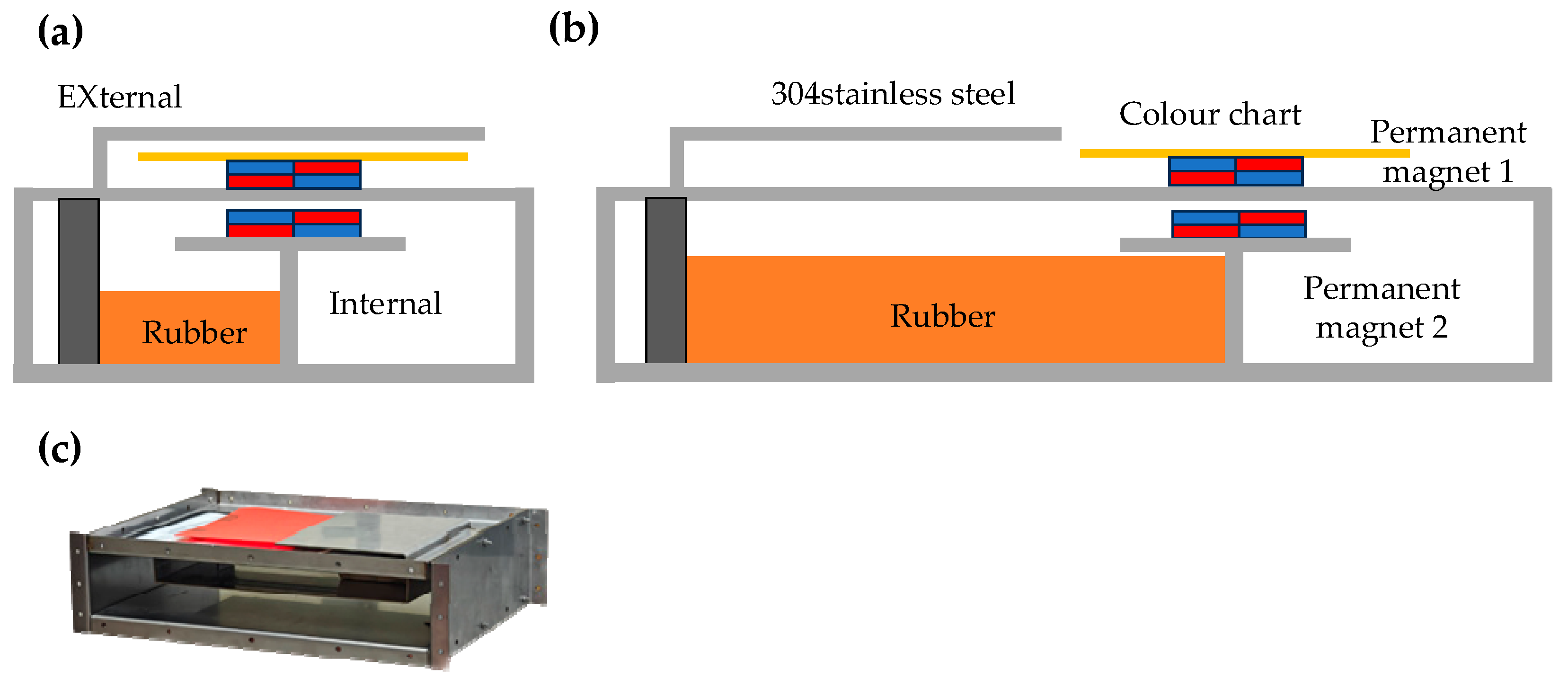
Figure 2 shows a new type of floating roof leak detection device. This device primarily utilizes the expansion of rubber upon oil absorption to generate thrust, which drives the permanent magnet below for contactless magnetic transmission. The internal magnetic force is transmitted to the exterior, causing the upper permanent magnet to move synchronously. This movement pushes the color display plate above the permanent magnet out of the stainless steel plate. A camera installed at the top of the storage tank captures the color change, and machine vision detects and transmits the leakage information. Figure 2c shows the physical prototype of the leak detection device independently designed by our team.
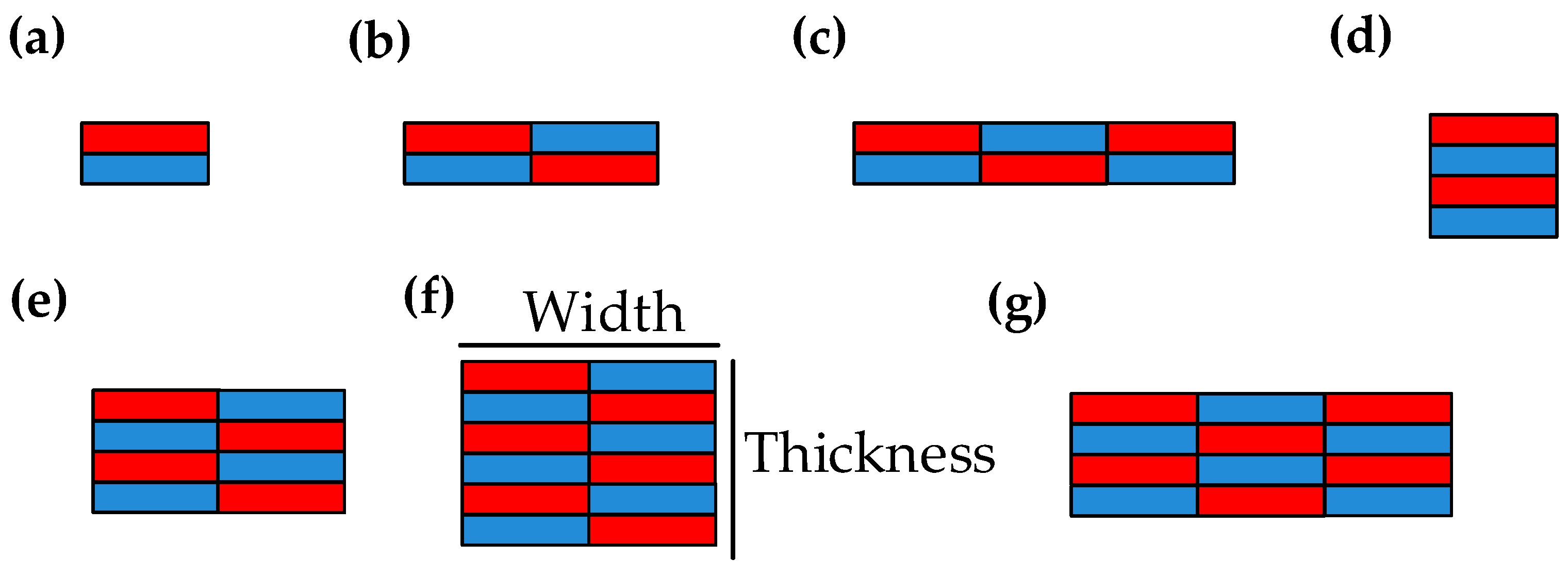
This study designed and constructed a magnetic transmission experimental test platform to investigate the application performance of non-contact magnetic transmission in floating roof leakage detection. The aim was to quantitatively analyze the influence of permanent magnet geometric parameters (thickness, width) on its transmission performance. The experiment adopted multiple N52 NdFeB permanent magnets (2 × 10 × 30 mm) as the research subjects. To study the impact of different size parameters on magnetic performance, multiple sets of parameterized permanent magnet arrays were designed with varying thicknesses (2, 4, 6, 8 mm) and widths (10, 20, 30, 40, 50 mm), as detailed in Figure 3. In Figure 3a, red is used to represent the north pole of the permanent magnet, and blue is used to represent the south pole of the permanent magnet. Two identical sets of these parameterized arrays were fixed to the sensor and moving device, respectively (Figure 4), for static experiments measuring the maximum shear force between the magnets. The experiment used an electric translation stage (Model: BHMC100, Beijing Bohong Zhida Technology Co., Ltd., Beijing, China) moving at 0.03 mm/s to simulate the thrust generated by rubber expansion inside the floating roof. Simultaneously, a high-precision force sensor (Model: WM10S, Changzhou Allison Technology Co., Ltd., Changzhou, China, Range 3 N, Accuracy 0.01% FS) measured the interaction force between the magnet arrays.
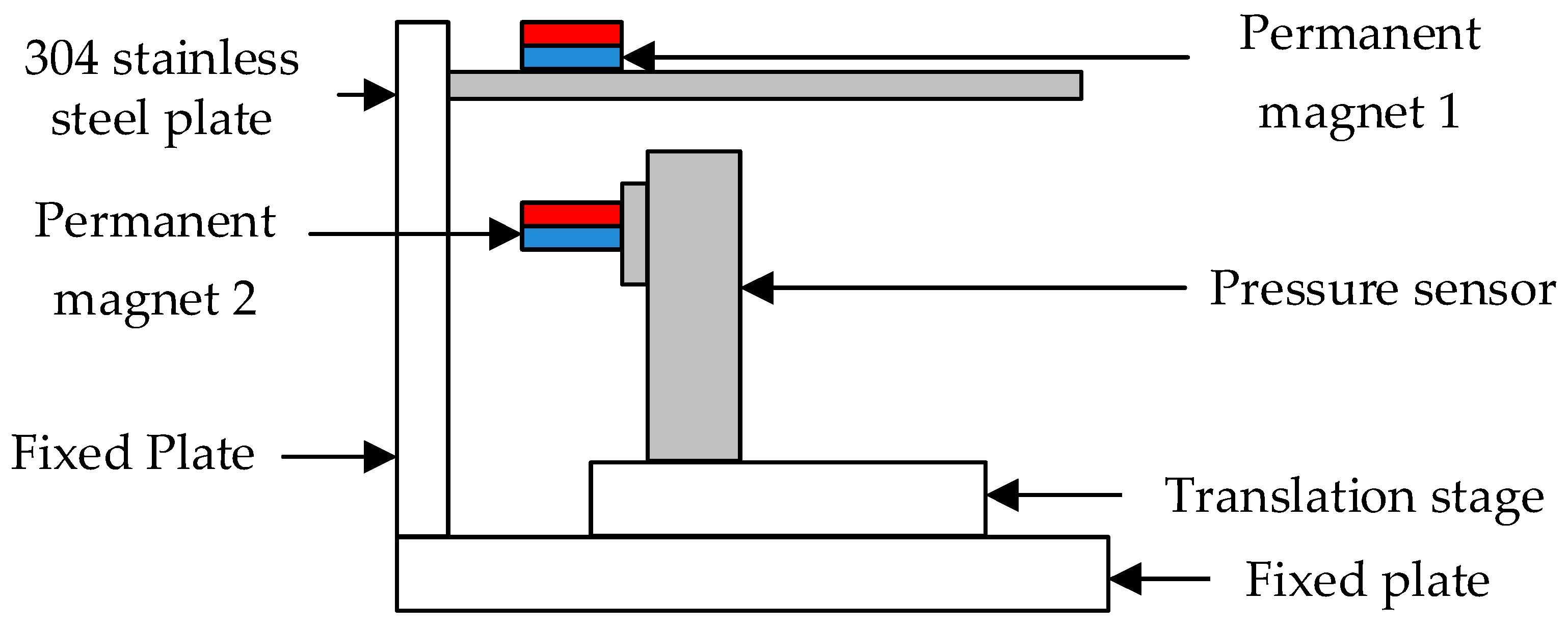
Furthermore, considering practical working conditions, the influence of various frictional interferences and environmental factors on the detection device’s transmission performance must be accounted for. Therefore, dynamic experiments were also designed to study the critical magnetic force during the instantaneous startup of the permanent magnets. The parameterized permanent magnet structures (Figure 3) were placed on either side of a stainless steel plate, with a pressure sensor vertically fixed on a horizontal translation stage to measure the interaction force during magnet movement. The experimental setup schematic is shown in Figure 5.

2.2. Analytical Model

To understand the principles of magnetic transmission and provide a theoretical basis for simulation, the analytical model for two sets of permanent magnet arrays is first discussed. This model describes the interaction principles between permanent magnets and the method for calculating forces. The basic theoretical framework for non-contact magnetic transmission is established based on Maxwell’s equations and the Maxwell stress tensor method.
First, based on the equation B = 0 from Maxwell’s equations and the equation from Gauss’s law for magnetism [29,30], the magnetic flux density B formed by the mutual coupling of permanent magnets is:
B = × A
where denotes the gradient operator, and A denotes the magnetic vector potential. According to the magnetostatic model and Ampère’s circuital law [31,32], × H = J c + J e x t = 0 , where H denotes the magnetic field strength, J c denotes the conduction current density, and J e x t denotes the external current density, all of which are 0. The constitutive B-H relation for the N52 permanent magnet is:
B = μ 0 μ r e c H + B r
where μ 0 denotes the vacuum permeability, μ r e c denotes the recoil relative permeability of the permanent magnet, and B r denotes the remanent magnetic flux density vector. The constitutive B-H relation for the surrounding environment [31] is:
B = μ 0 μ r H
where μ r denotes the relative permeability of the environment. To ensure calculation accuracy and efficiency, the Maxwell stress tensor method [32,33] is typically used in software to calculate the force between magnets. Starting from the microscopic form of the Lorentz force law [34], the force density is f = ρ E + J × B , where ρ is the charge density, and J denotes the current density. Using Maxwell’s equations [35] to eliminate the source terms, the force density formula can be rewritten as:
f = T ε 0 μ 0 S t
where T denotes the Maxwell stress tensor, ε 0 denotes the vacuum permittivity, S denotes the Poynting vector, S = 1 μ 0 E × B , this denotes 0 under magnetostatic conditions. Thus, the force density simplifies to:
f = T
The Lorentz force density formula denotes f = J × B . Using Ampère’s law × B = μ 0 J and the identity ( × B ) × B = ( B ) B 1 2 B 2 to eliminate the current density term, the force density f becomes:
f = 1 μ 0 [ ( B ) B 1 2 B 2 ) ]
Using another identity ( B ) B = ( B B ) B ( B ) and Gauss’s law, the force density f is derived as:
f = [ 1 μ 0 ( B B 1 2 B 2 I ) ]
where B 2 = B B , I denotes the unit tensor, and B B denotes the tensor product, T = 1 μ 0 ( B B 1 2 B 2 I ) . Integrating the force density over the volume [36] gives the total force F:
F = V f d V = V T d V
Applying the divergence theorem converts the volume integral into a surface integral, yielding the magnetic force F:
F = S d n T d S = 1 μ 0 S [ ( B n ) B 1 2 ( B B ) n ] d S
where S denotes the surface of the permanent magnet, and n denotes the unit normal vector to the surface. In summary, this analytical model establishes the fundamental theoretical framework for magnetic transmission. By solving the magnetic field distribution determined by Maxwell’s equations and the constitutive relations of the permanent magnets, and subsequently employing the Maxwell stress tensor method to calculate the interaction forces between permanent magnets, it provides a theoretical basis for accurate simulation using COMSOL Multiphysics 6.2 software.

3. Experiments and Simulation

3.1. Quasi-Static and Dynamic Experiments

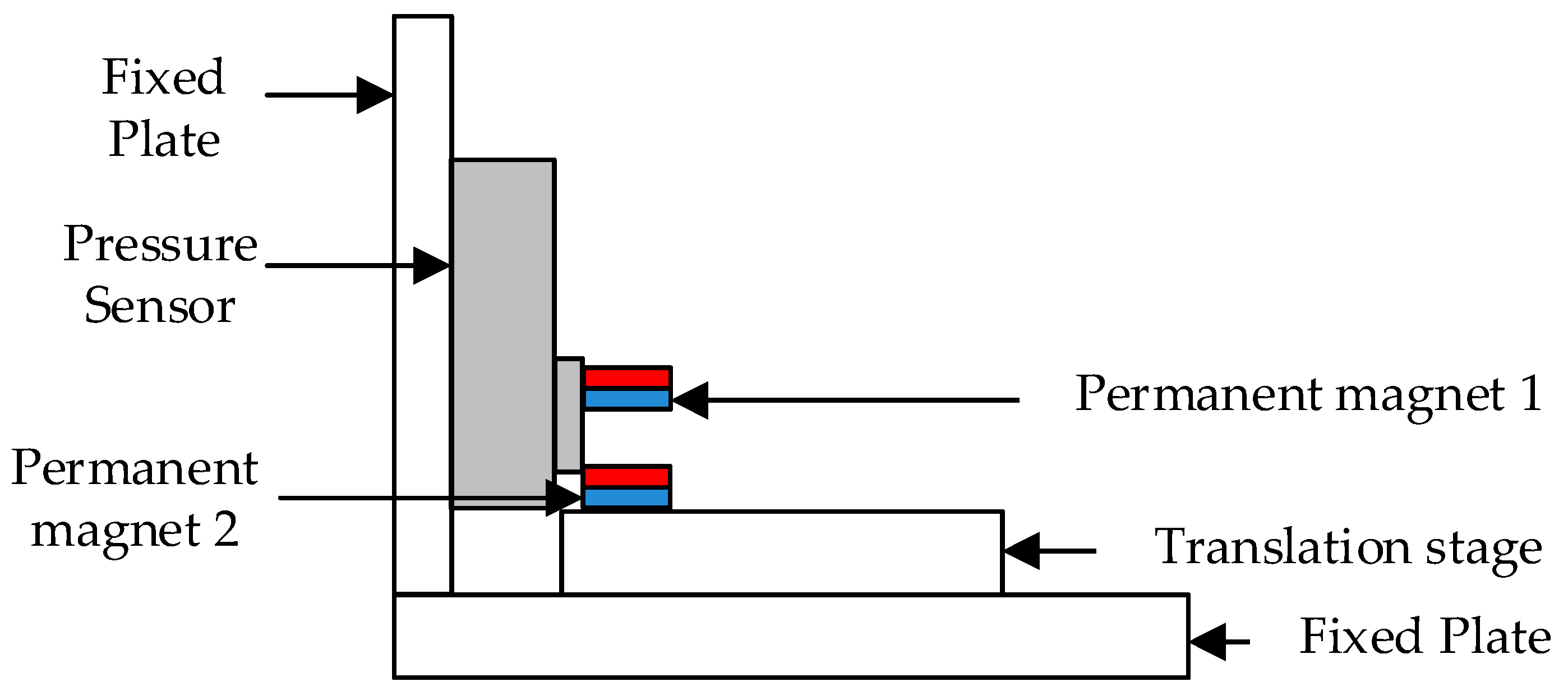
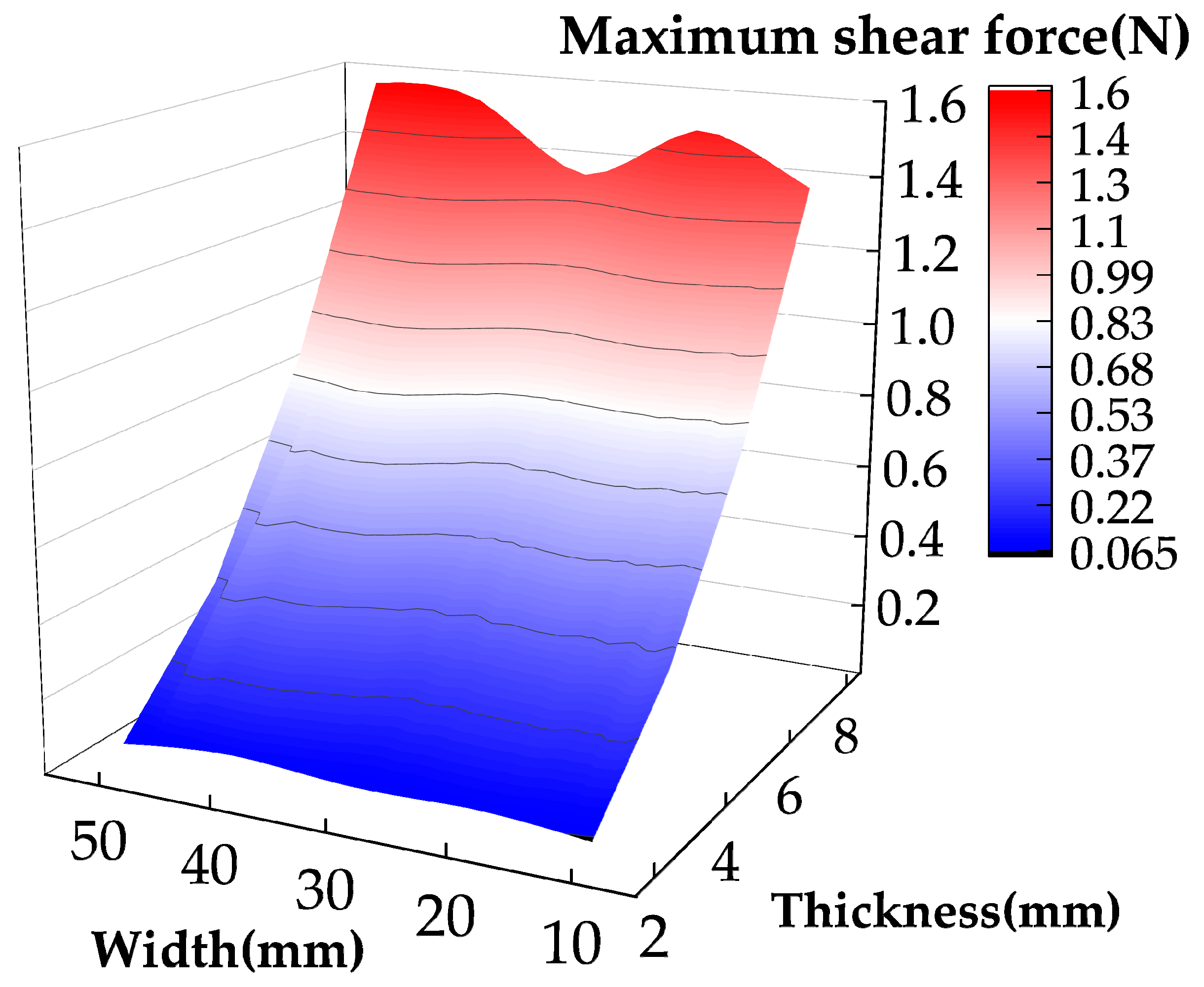
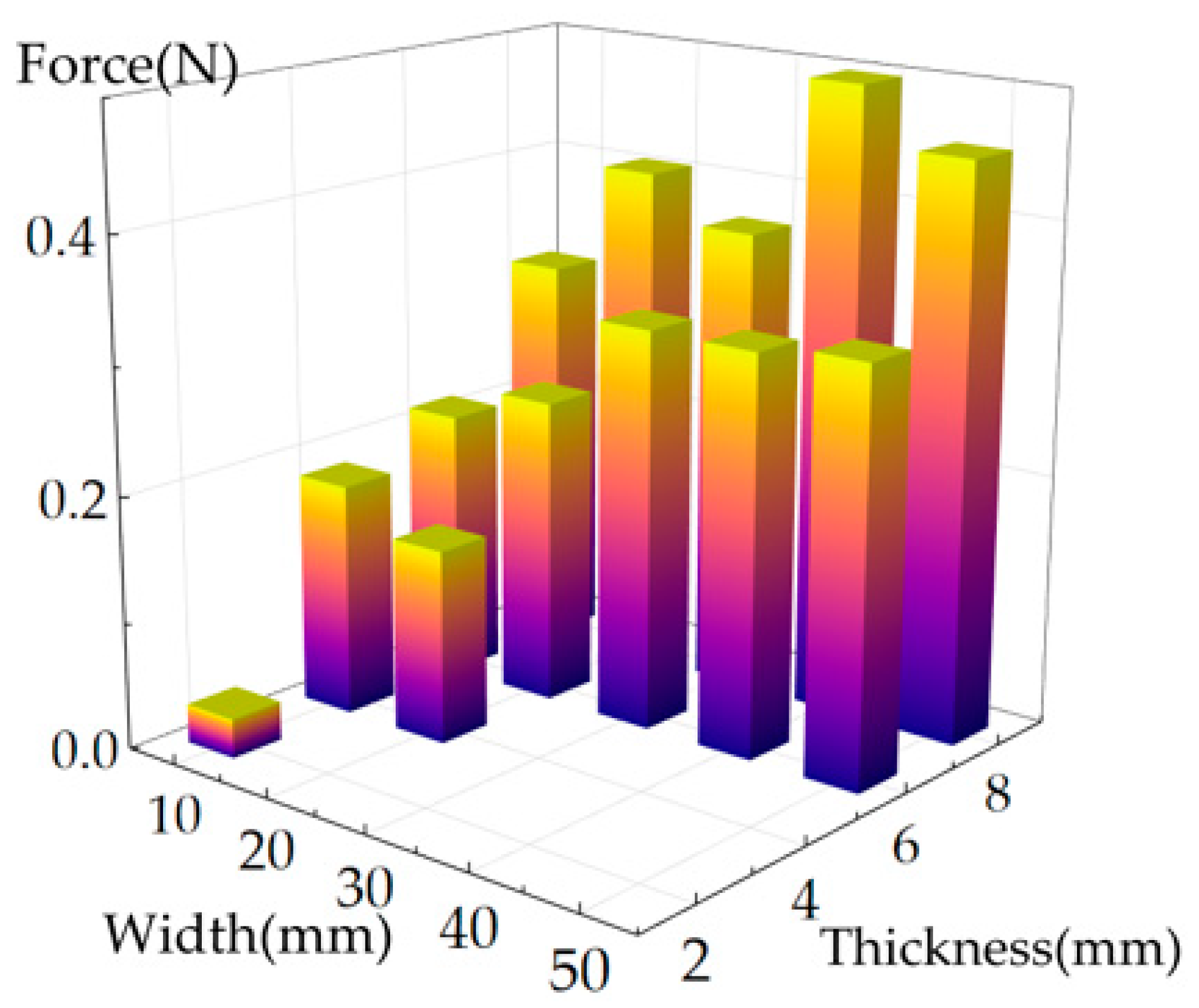
The force transmitted from the internal permanent magnet to the external one in the floating roof chamber is the shear force. Therefore, quasi-static experiments were first conducted to obtain the maximum shear force between the permanent magnets. Simulation parameters were compared with experimental ones, followed by simulation analysis of the specified permanent magnets. Based on the experimental design in Figure 4, the measured variation of the maximum shear force is shown in Figure 6. Experiments indicate that the maximum shear force increased with the thickness of the N52 permanent magnets, showing a nonlinear growth trend. In contrast, changes in the maximum shear force with increasing width were insignificant, with the curve being relatively flat. For magnets with a width of 10 mm, increasing the thickness from 2 mm to 8 mm changed the maximum shear force from 0.0655 N to 1.3514 N, a significant increase of 19.6 times. This indicates that the leakage detection device can enhance the shear force by increasing the magnet thickness, whereas increasing the width is largely ineffective.
Given that the leakage detection device (Figure 2) is to be installed on floating structures like floating roofs, reducing the mass of the detection device becomes a necessary optimization direction. As the permanent magnets are the main components of the sensor’s transmission part, their transmission performance needs to be maximized. Therefore, a dimensionless number was designed to express the transmission efficiency η of the permanent magnets:
η = F max m g
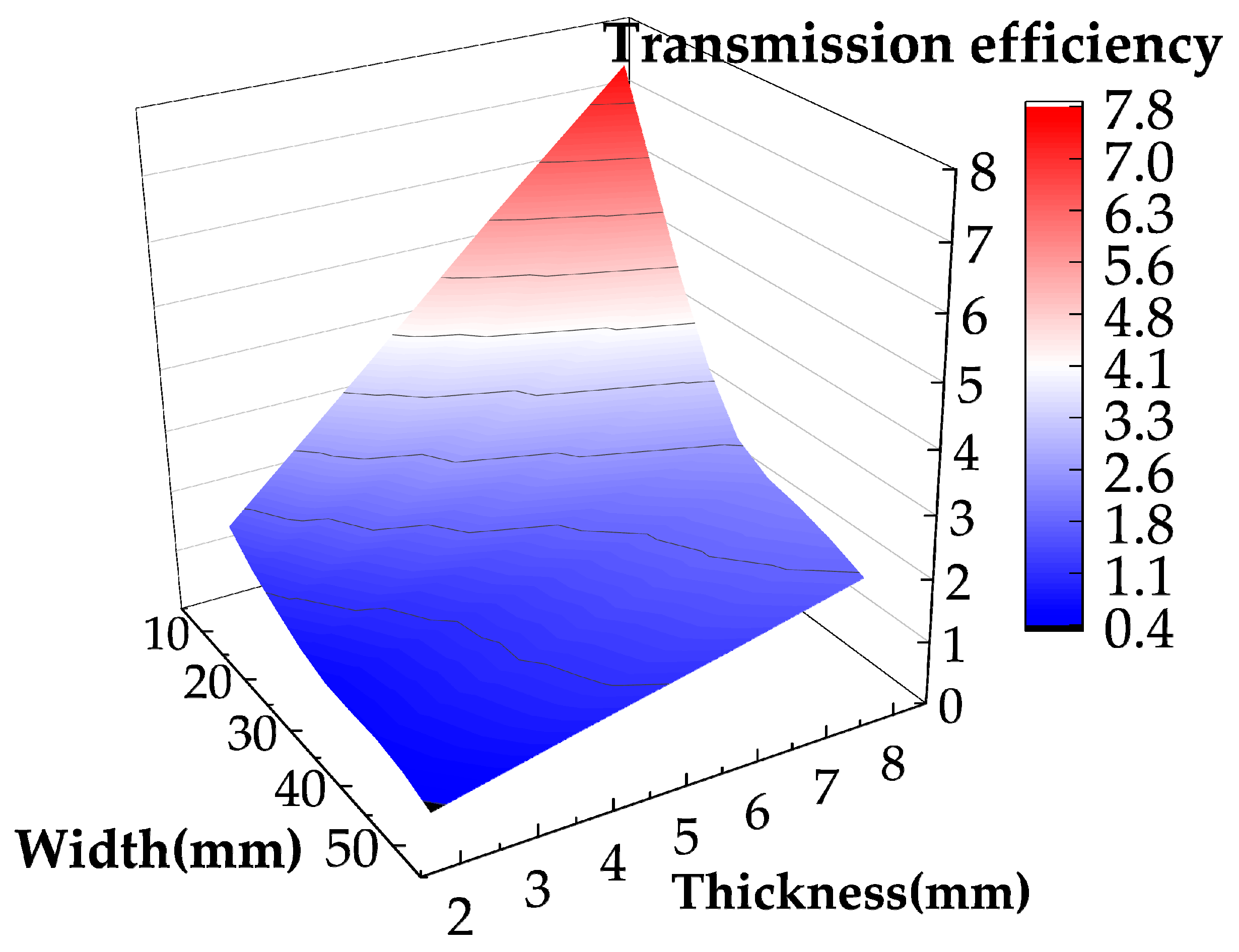
where m is the mass of the permanent magnet, and Fmax is the maximum shear force. Based on Formula (10), the data variation shown in Figure 7 was obtained. Experiments showed that increasing the magnet thickness also led to a nonlinear increase in magnetic transmission efficiency. Conversely, increasing the magnet width exacerbates magnetic flux leakage and adds mass, limiting the gain in magnetic transmission and consequently reducing transmission efficiency. Therefore, in the design of magnetic transmission systems using permanent magnet arrays, increasing the thickness is far more effective than increasing the width for improving efficiency. This finding should guide the design of compact and efficient leakage detection devices.
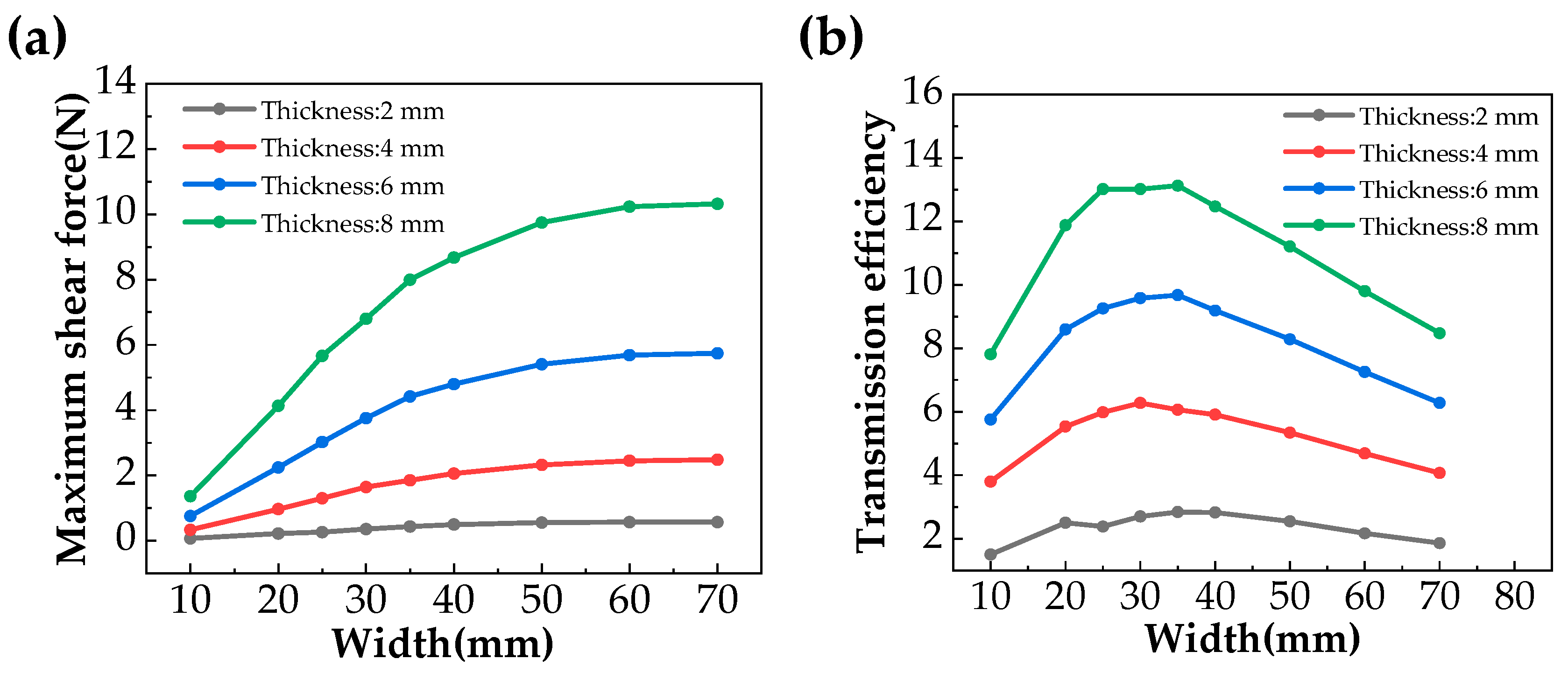
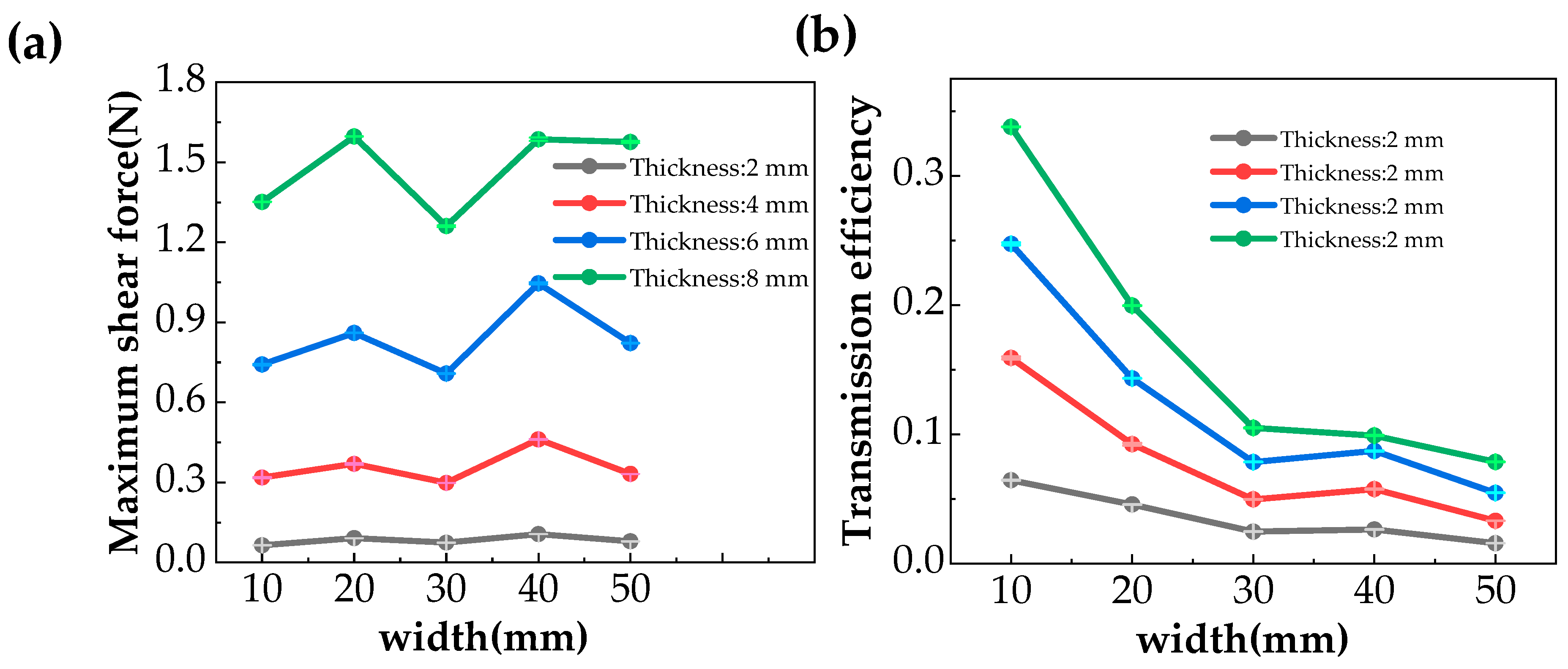
In summary, in the design of permanent magnet arrays, transmission efficiency increases with thickness but decreases with width. This leads to the proposal of the “thickness priority principle” for magnetic transmission design, i.e., prioritizing the thickness design of the permanent magnets in the transmission part of the leakage detection device. Figure 8 more intuitively shows the relationship between the performance of permanent magnets with varying widths and thicknesses.
According to Figure 8a, for the same thickness, the maximum shear force fluctuated slightly with increasing width but remained largely unchanged overall. Figure 8b shows that transmission efficiency decreased with increasing width. For instance, the transmission efficiency of a 20 mm wide magnet decreased by approximately 40% compared to a 10 mm wide magnet. The overall trend showed an initial rapid decline, followed by a gradual levelling off. Based on the above research, transmission performance improves significantly with increasing thickness. For example, for a permanent magnet with a width of 10 mm, the transmission efficiency increased from 1.49 at 2 mm thickness to 7.81 at 8 mm thickness, a 4.2-fold improvement. Increasing thickness equivalently increases the volume and total magnetic energy of the permanent magnet, directly enhancing both shear force and transmission efficiency. In contrast, increasing the width may lead to greater magnetic flux loss and degraded magnetic field uniformity, resulting in stagnating or even decreasing force and continuously decreasing efficiency.
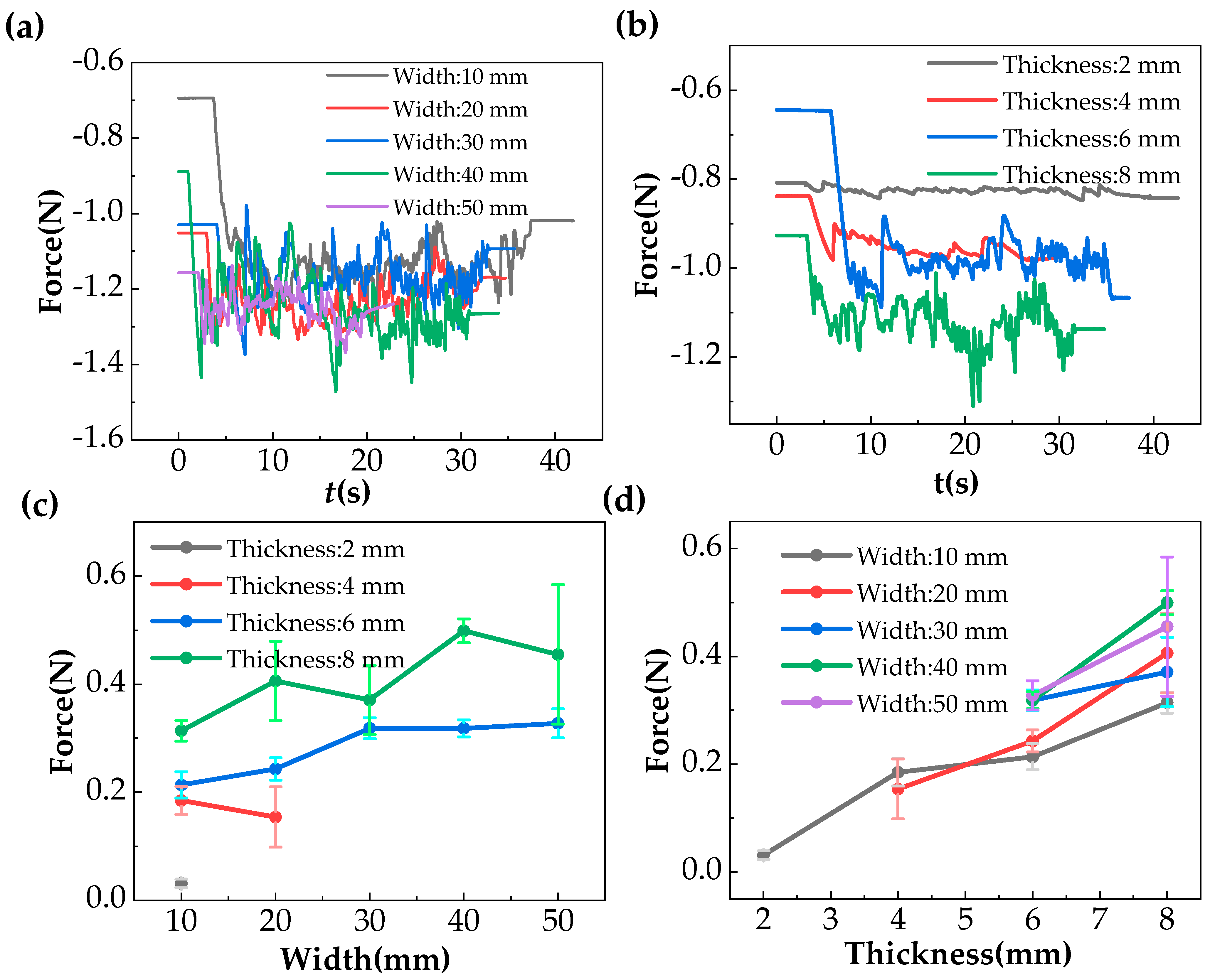
Although quasi-static experiments revealed the influence of permanent magnet parameters on transmission performance, the permanent magnets are in motion under actual working conditions, necessitating the consideration of frictional interference on the detection device’s operation. Dynamic experiments yielded the maximum static friction force for the upper permanent magnet, as shown in Figure 9 (missing data indicate the upper magnet did not move), with data acquired by the force sensor.
From Figure 9, the maximum static friction force differed little for N52 permanent magnet arrays of the same thickness but different widths. Figure 10a,b shows the interaction force vs. time curves for different parameter arrays during the experiment. Due to magnetic field interactions, the upper magnet exhibited non-synchronous displacement, leading to complex shear force variations, with greater fluctuations observed for larger thicknesses. According to Figure 10c,d, when the thickness is constant, increasing the width increases the maximum static friction force only marginally and unstably, whereas increasing the thickness gradually increases the maximum static friction force. The upper permanent magnet must overcome the maximum static friction force to move. The experiment measured the maximum static friction force at the instant of startup as 0.499 N for an 8 mm thick, 40 mm wide magnet. Under these experimental conditions, the leakage detection device requires a minimum magnetic shear force of 0.5 N to ensure stable operation. Considering the complex environment inside petroleum storage tanks, the friction coefficient on the floating roof surface becomes more complex (measured by our team as 0.3812 ± 0.0232 for stainless steel against N52 permanent magnets in air at 29.5 °C and 50% RH). To ensure device reliability and the safety of the floating roof detection process, a safety factor s needs to be introduced. Thus, the required magnetic force F for the device is
F = s f max
where f max denotes the maximum static friction force. According to the safety design principles for internal floating roofs in Appendix H of API 650 [37], the value of s is taken as 2–3. Based on this, considering the volume, mass, and transmission performance of the detection device, if a fixed number of magnets is used, they should be arranged in the thickness direction rather than the width direction. Comprehensive calculations suggest that for magnetic transmission design, a permanent magnet array with a width of 10 mm and a thickness of 8 mm is recommended. This array provides a maximum shear force of 1.35 N and a transmission efficiency of 7.76, representing a 420% improvement in transmission efficiency compared to a 2 mm thickness, balancing compactness and lightweight requirements.

3.2. Simulation Analysis

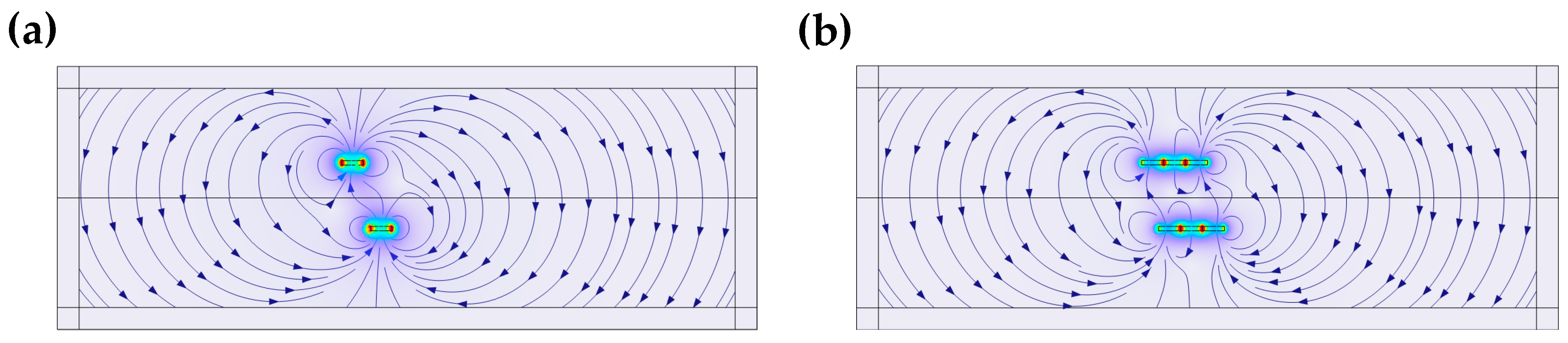
To verify the experimental conclusions and optimize the leakage detection device design, COMSOL simulation software was used to simulate and analyze the width and thickness of the permanent magnets. Figure 11 shows the variation of the magnetic flux density norm |B| during a quasi-static simulation. The figure indicates that the magnetic flux density is strongest at the junction of the two permanent magnets and secondary at the edges. The magnetic field strength first increases and then decreases. The figure also demonstrates that increasing the width leads to magnetic flux loss.
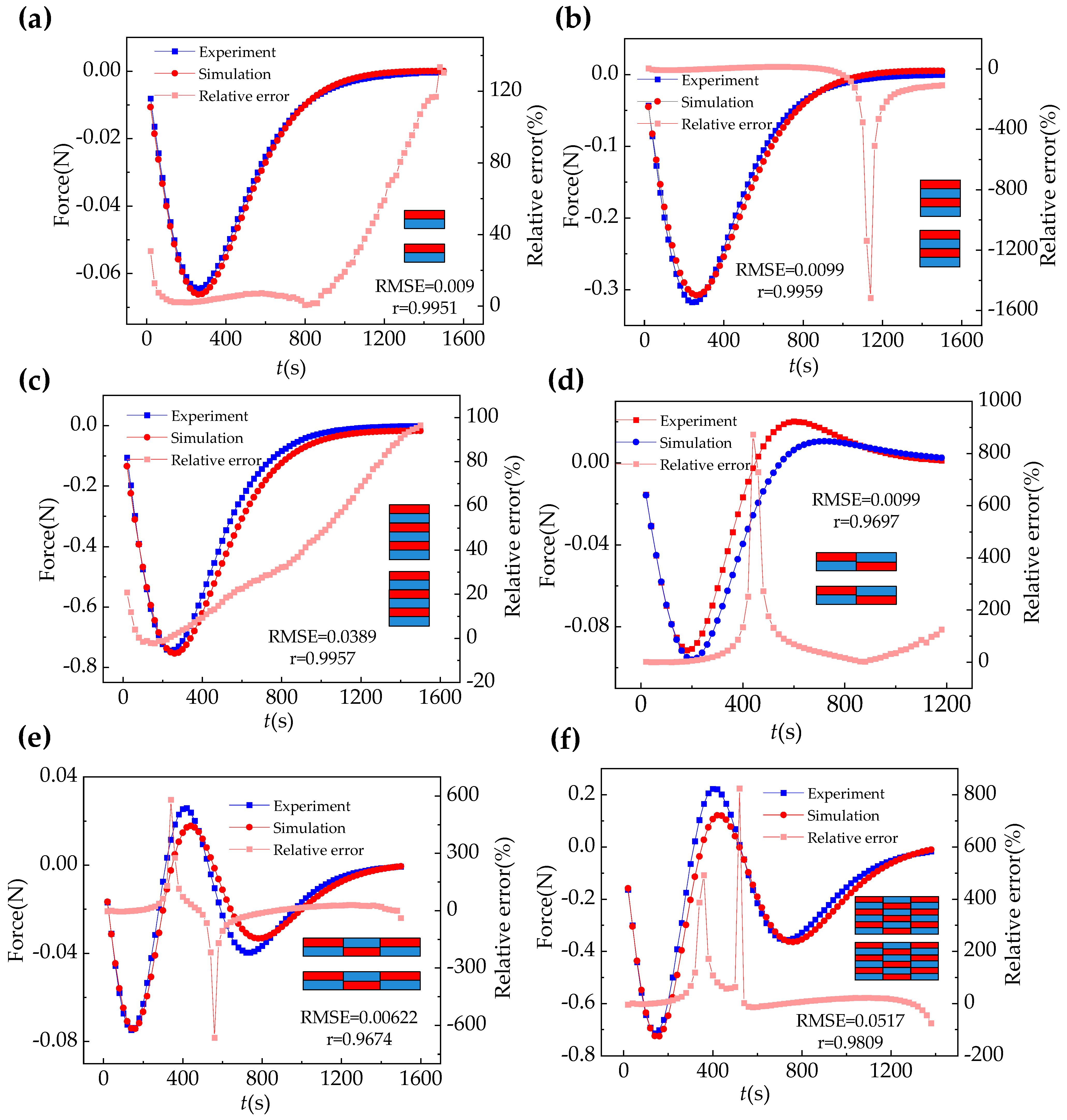
Figure 12 presents the comparison of quasi-static simulated magnetic forces for different permanent magnet arrays. The experimental and simulation curves showed good consistency, which verifies the reliability of the simulation model, where RMSE (Root Mean Square Error) represents the root mean square error, and r represents the Pearson correlation coefficient, with a larger coefficient indicating a very strong positive correlation between the experiment and the simulation. The simulation parameters were remanence flux density, norm B r = 1.05 T, and recoil permeability μ r e c = 1.05. Figure 12a–c indicates that increasing thickness significantly enhances the maximum shear force, attributable to increased volume and magnetic moment, resulting in greater magnetic field strength and gradient. Figure 12a,d,e confirms that increasing the width moderately increases the shear force, with the magnetic force showing a fluctuating curve due to magnetic field coupling in the arrays. Figure 12c,f reflects that selecting an appropriate array structure is crucial. Excessive width exacerbates magnetic flux loss, while sufficient thickness is fundamental for ensuring transmission. The maximum shear force was reached around 200 s in the graphs, corresponding to a parallel spacing of 6 mm between the two magnet arrays.

3.3. Subsection Performance Optimization of the Leakage Device

Through experiments on parameterized arrays (Figure 4 and Figure 5), the “thickness priority principle” for magnetic transmission design has been established. However, this conclusion was derived solely based on the structure of arrayed permanent magnets. In practical engineering applications, arrayed permanent magnets are formed by splicing multiple individual magnets. The magnetic field coupling between adjacent magnets tends to cause magnetic field distortion, and the splicing gaps exacerbate edge magnetic flux leakage. These issues lead to deviations between the actual transmission performance and the theoretical values. To address the inherent defects of the arrayed structure and verify the applicability of the “thickness priority principle” across different magnet structures, this study further conducted simulation analyses on monolithic N52 permanent magnets (Figure 13). By comparing the magnetic field distribution, maximum shear force, and transmission efficiency of arrayed and monolithic magnets under the same geometric parameters (thickness and width), the study focused on investigating the influence of structural forms on the stability of magnetic transmission. Ultimately, an optimal magnet design scheme was selected, which integrates high-efficiency magnetic transmission capability, low magnetic flux loss, and engineering installation convenience.
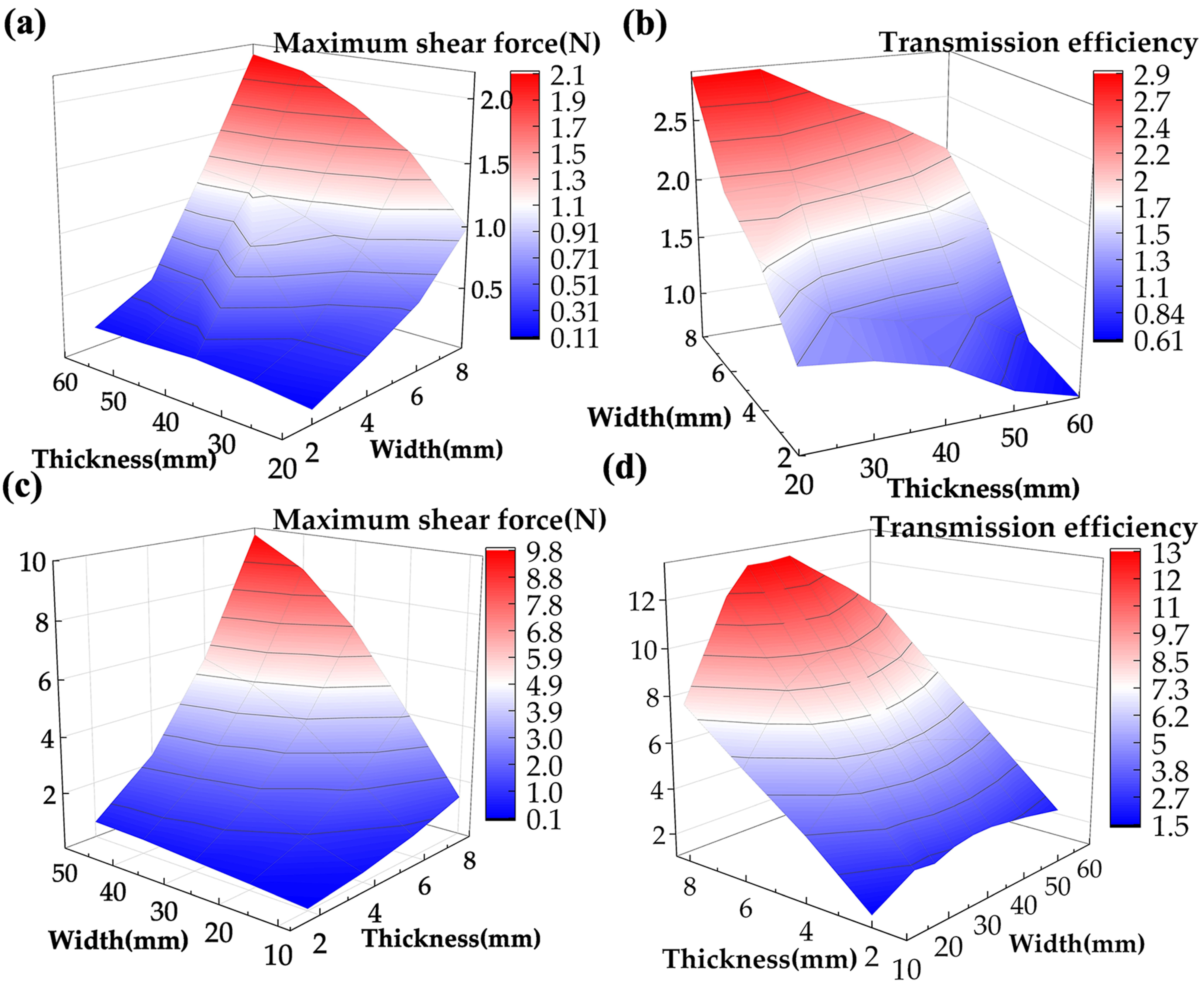
Based on the previously proposed thickness priority principle and the conclusion that increasing width limits magnetic performance gain, one might intuitively consider that two slender, needle-like magnets would be the most efficient design. To verify the relationship with the permanent magnet structure, this study further simulated the data variation of monolithic permanent magnets under different parameters. Figure 14 shows the simulated maximum shear force and transmission efficiency relationship for monolithic magnets with a thickness-to-width ratio >1 (thickness 20–60 mm, width 2–8 mm), and the same for monolithic magnets with a thickness-to-width ratio ≤ 1 (thickness 2–8 mm, width 10–70 mm). Comparing both, the monolithic magnets with a thickness-to-width ratio ≤ 1 exhibited more prominent maximum shear force and transmission efficiency. Figure 15 clearly expresses the performance relationship for monolithic magnets with a thickness-to-width ratio ≤ 1.
Figure 14a,b shows that for monolithic magnets with a thickness-to-width ratio > 1, increasing both thickness and width increases the maximum shear force. This is because increasing the width enhances magnetic flux density and magnetic moment, and the monolithic magnet does not require mutual coupling like the array, thus improving transmission efficiency. However, as thickness increases, the added mass and excessively large thickness-to-width ratio cause the transmission efficiency to decrease. This shares similarities with the magnetic transmission performance of permanent magnet arrays. It is concluded that the magnetic transmission structure inside the floating roof leakage detection device requires a suitable thickness-to-width ratio and cannot simply be designed as needle-shaped.
Figure 14c,d shows that as the width increases, the maximum shear force increases but the growth rate gradually slows, exhibiting nonlinear saturation. Transmission efficiency first improves and then declines. Since transmission efficiency does not increase indefinitely with width, there exists an optimal permanent magnet width that maximizes efficiency. Simulation of monolithic magnets with widths of 20–40 mm determined that efficiency reached a maximum at a width of 35 mm (Figure 15). Beyond this width, transmission efficiency decreases due to magnetic flux density saturation and magnetic leakage phenomena. In contrast, increasing thickness consistently and effectively enhances transmission efficiency. Regarding the design of the leakage detection device, compared to parameterized arrays, monolithic magnets still adhere to the thickness priority principle. However, concerning the width influence, parameterized arrays (Figure 3) show that shear force fluctuates and transmission efficiency decreases with increasing width; whereas monolithic magnets (Figure 13) show that shear force increases but tends to saturate, and transmission efficiency first increases and then decreases. This indicates that increasing the width is ineffective for enhancing transmission performance in parameterized arrays because the two represent different arrangement modes concerning width, leading to inherent differences in their magnetic fields. Parameterized arrays require magnetic field mutual cancellation and the generation of new fields, whereas the monolithic structure has a uniform field, hence the different impact of width.
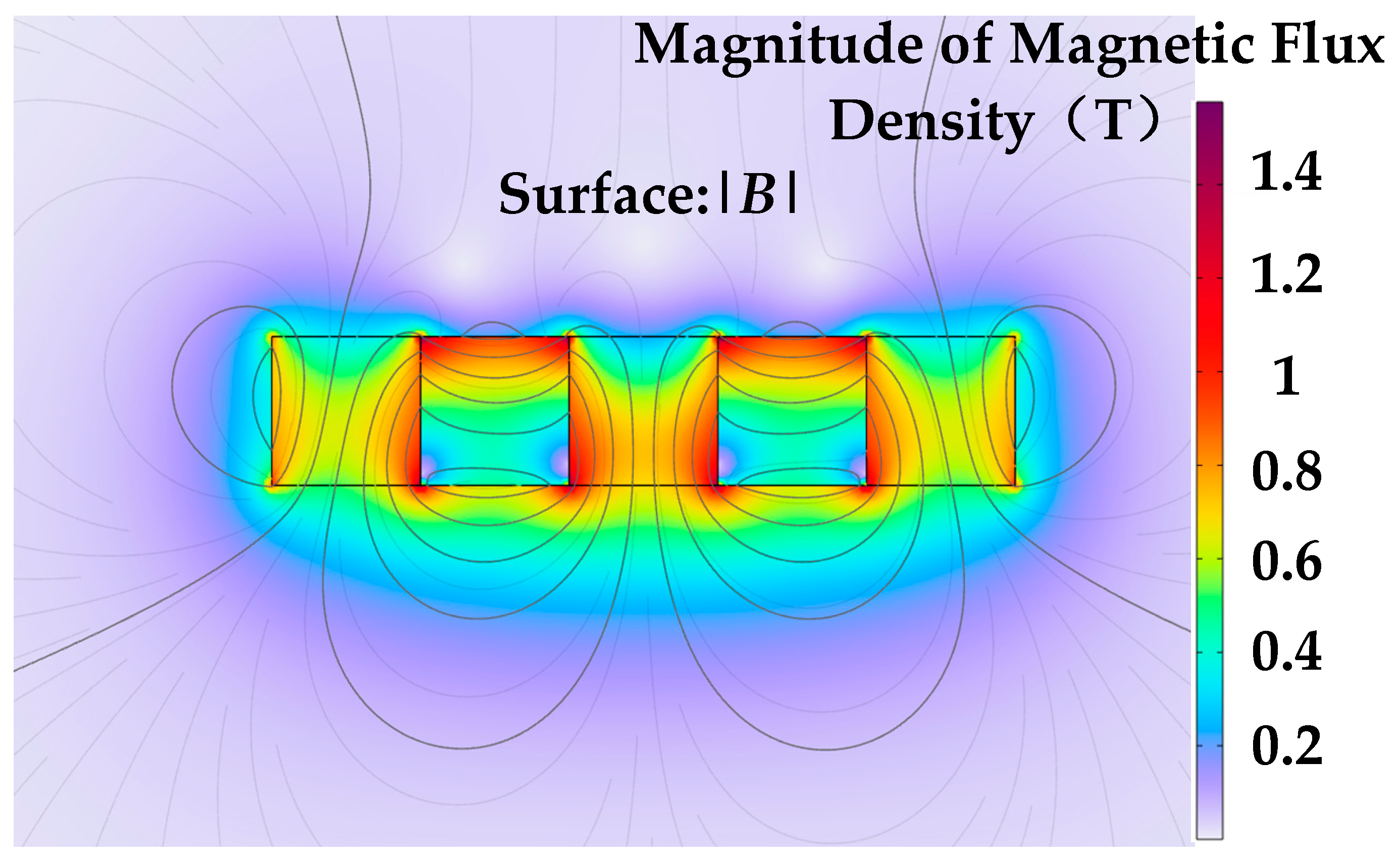
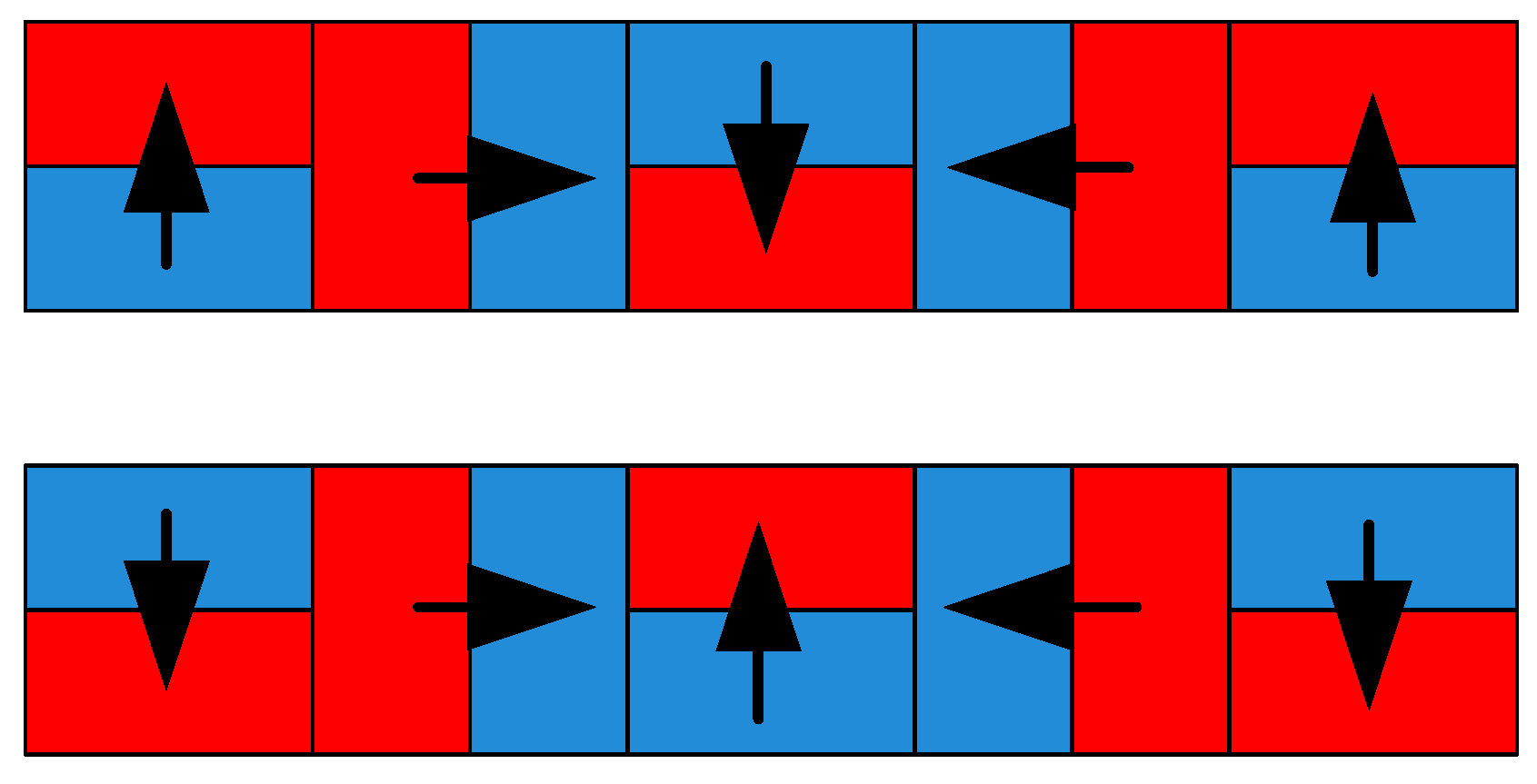
The Halbach array (Figure 16) exhibits a one-sided magnetic field enhancement effect, enabling a greater repulsive force with less permanent magnet material. It is commonly used in magnetic bearings [38], motors [39], and maglev trains [40]. Its transverse shear force performance may potentially surpass that of a monolithic permanent magnet. Therefore, this paper conducted a simulation analysis of the transmission performance of the Halbach array structure (Figure 17) and compared its parameters with those of a monolithic permanent magnet structure.
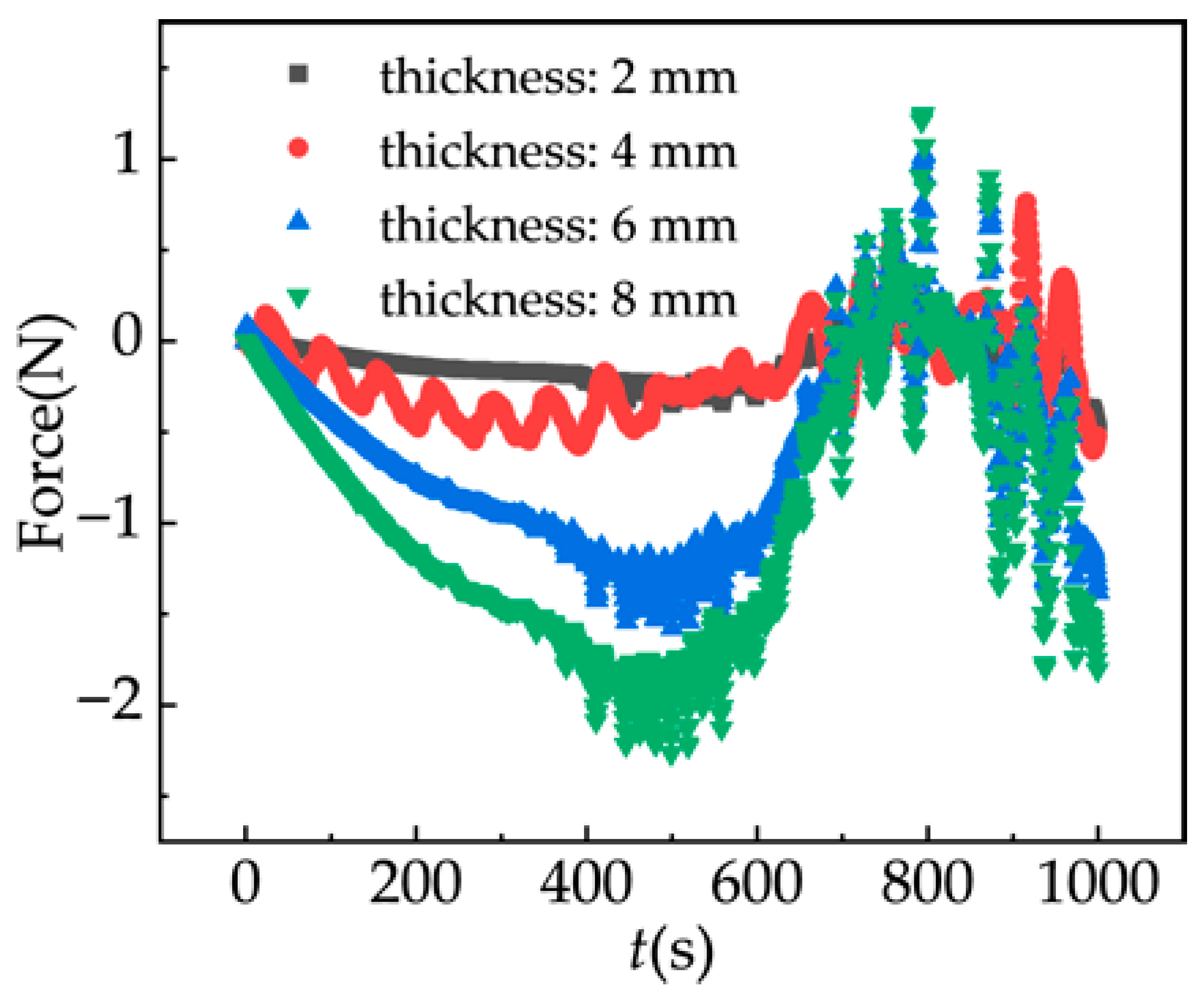
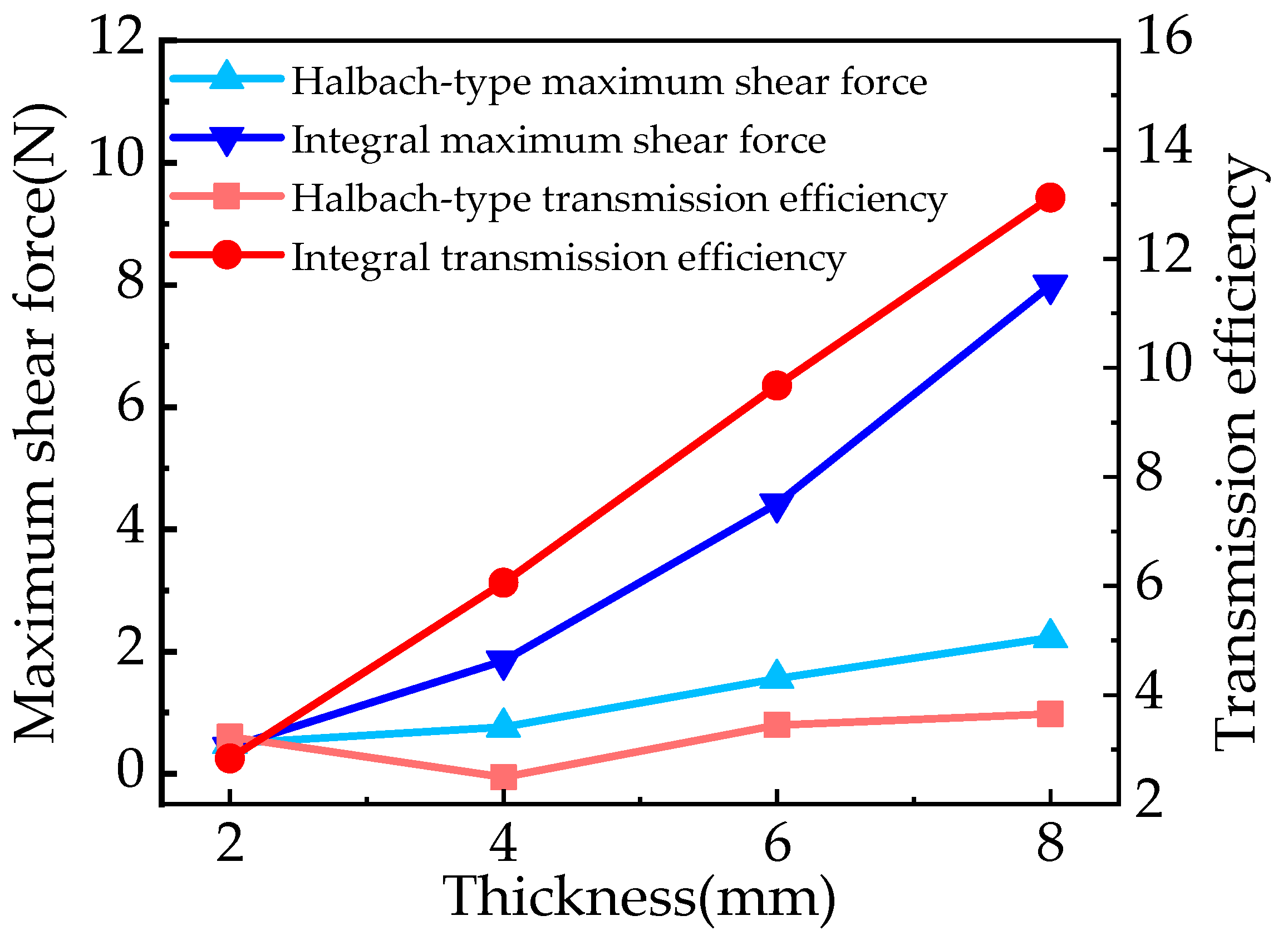
To facilitate comparison with the optimal transmission performance of a monolithic permanent magnet, the width of the Halbach array was kept at 35 mm, while only its thickness was varied (2–8 mm). Figure 18 illustrates the shear force of the Halbach array over time at different thicknesses. The shear force exhibits multi-segment fluctuations, with fluctuations becoming more intense as the thickness increases. The overall trend is similar to that of the parameterized permanent magnet array. This indicates that the one-sided magnetic field enhancement characteristic of the Halbach array does indeed improve the shear force. Figure 19 shows the relationship between the magnetic force performance of the Halbach array and its thickness. The maximum shear force increases with thickness, while the transmission efficiency fluctuates within a certain range due to the increased volume of the permanent magnet. Based on the safety factor s required in the study, the optimal thickness for the Halbach array is 8 mm. At this thickness, the maximum shear force is 2.226 N, and the transmission efficiency is 3.6532. However, its transmission performance is inferior to that of the monolithic permanent magnet, and this performance gap widens as the thickness increases. The reason lies in the magnetic field characteristics of the Halbach array: it only enhances the force in the vertical direction, while the transverse magnetic field components partially cancel each other out due to the array configuration. Furthermore, the rate of increase in shear force is lower than the rate of increase in mass, resulting in lower transmission efficiency.
In summary, the maximum shear force of monolithic magnets with a thickness-to-width ratio > 1 is slightly better than that of arrays, but their transmission efficiency is inferior. When the thickness-to-width ratio is ≤1, both the maximum shear force and transmission efficiency of monolithic magnets surpass the former two. Although the Halbach array can provide a relatively large and stable maximum shear force, its maximum shear force and transmission efficiency are lower than those of a monolithic permanent magnet with a thickness-to-width ratio ≤ 1. However, the performance of the Halbach array remains superior to that of the other two structures. This indicates that optimizing the magnetic performance of permanent magnets requires a certain thickness-to-width ratio and arrangement. Calculation and analysis show that the optimal parameters for a monolithic magnet are a width of 35 mm and a thickness of 10 mm, achieving a shear force of 7.99 N and a transmission efficiency of 13.12. Compared to a parameterized array of the same specifications, the shear force increased by 471% and the transmission efficiency by 3.7 times. Compared to the best parameterized array, the monolithic magnet’s shear force increased by 492% and transmission efficiency by 6 times. This is because the monolithic structure is uniformly magnetized, with an increased effective magnetic moment, avoiding flux loss and magnetic field cancellation caused by splicing. Therefore, it is concluded that custom-designed monolithic permanent magnets should be used in the leakage detection device, offering higher transmission efficiency while maintaining low mass, ensuring the safe operation of storage tank floating roofs.

4. Leakage Detection Device Design

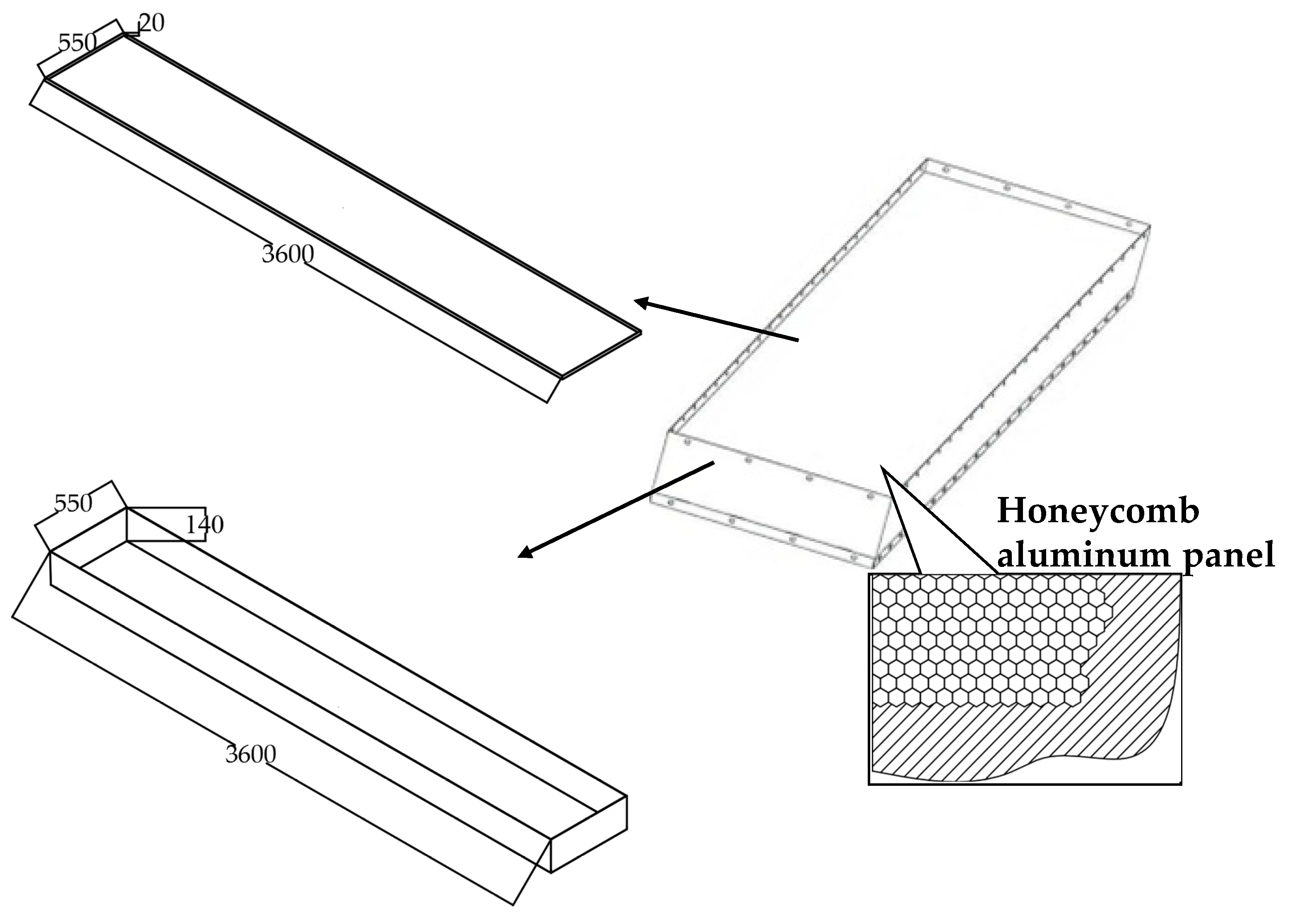
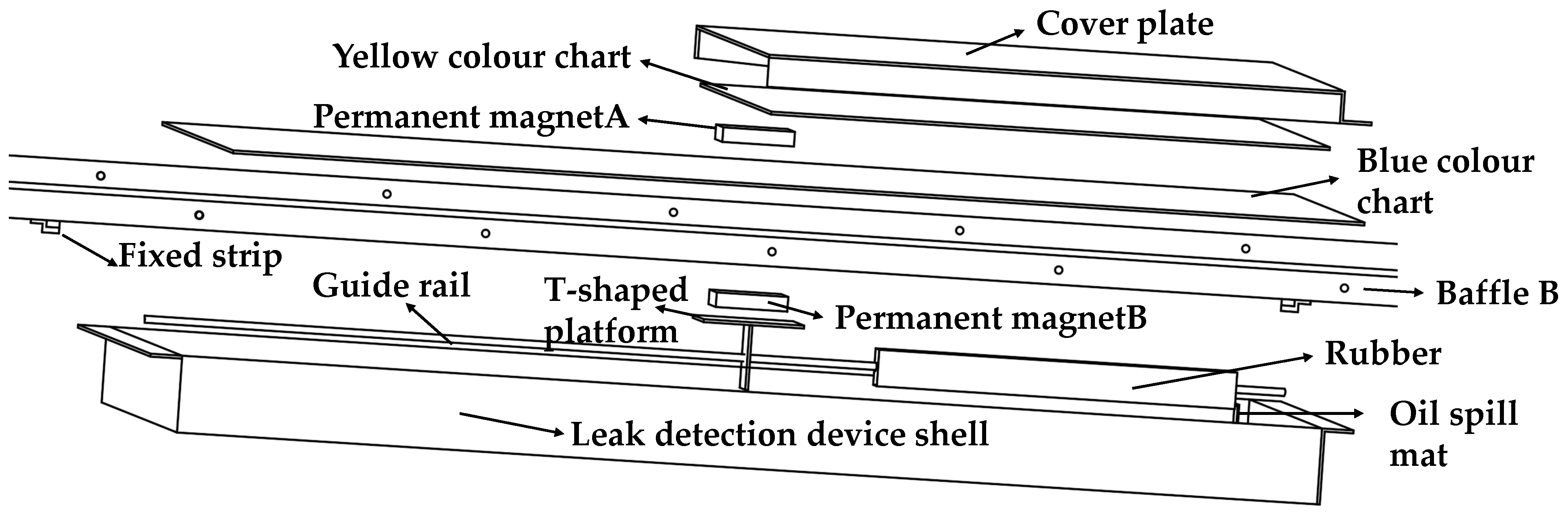
In safety detection for storage tank floating roofs, magnetic transmission technology not only provides a non-contact solution for transmitting detection signals but also offers a novel method for real-time monitoring of the floating roof status and leakage warning while maintaining the integrity of the buoyancy chamber. As a key component for dynamic sealing inside the tank, the floating roof operates in an environment characterized by strong corrosiveness, height humidity, and significant vibration. Installing the leakage detection device inside the floating roof chamber avoids excessive mechanical wear and medium erosion risks. Based on the previous theoretical and practical research, taking a universal solid floating roof unit module measuring 3.6 m long, 0.55 m wide, and 0.14 m high as an example (Figure 20), its volume is 0.2772 m3. The shell material is 304/316 stainless steel, filled with aluminum honeycomb, with a mass of approximately 86 kg. The leakage detection device is installed in the center of the floating roof module (Figure 21). Figure 22 shows a partial enlarged view of the leakage detection device in a full-contact box-type floating roof.
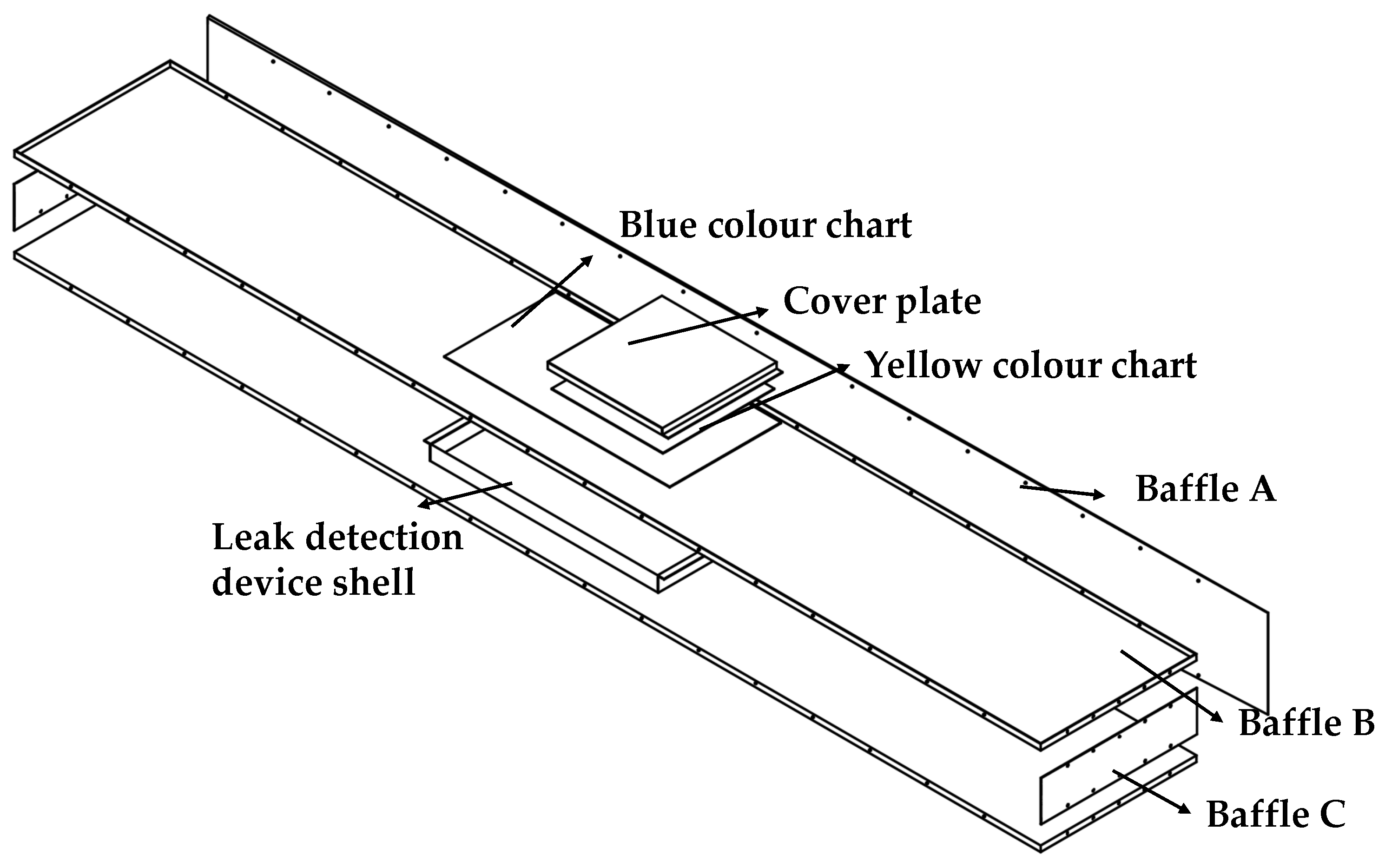
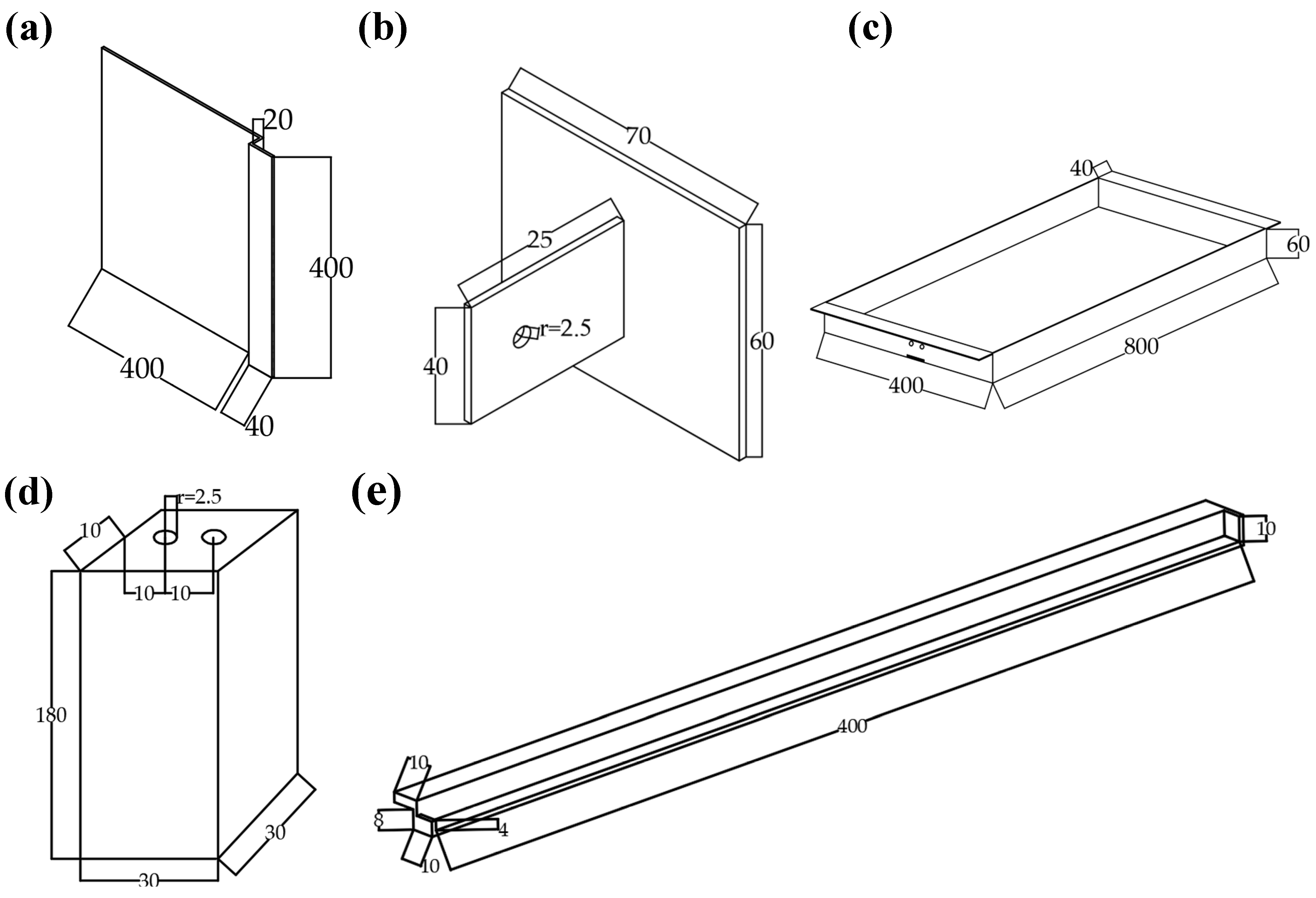
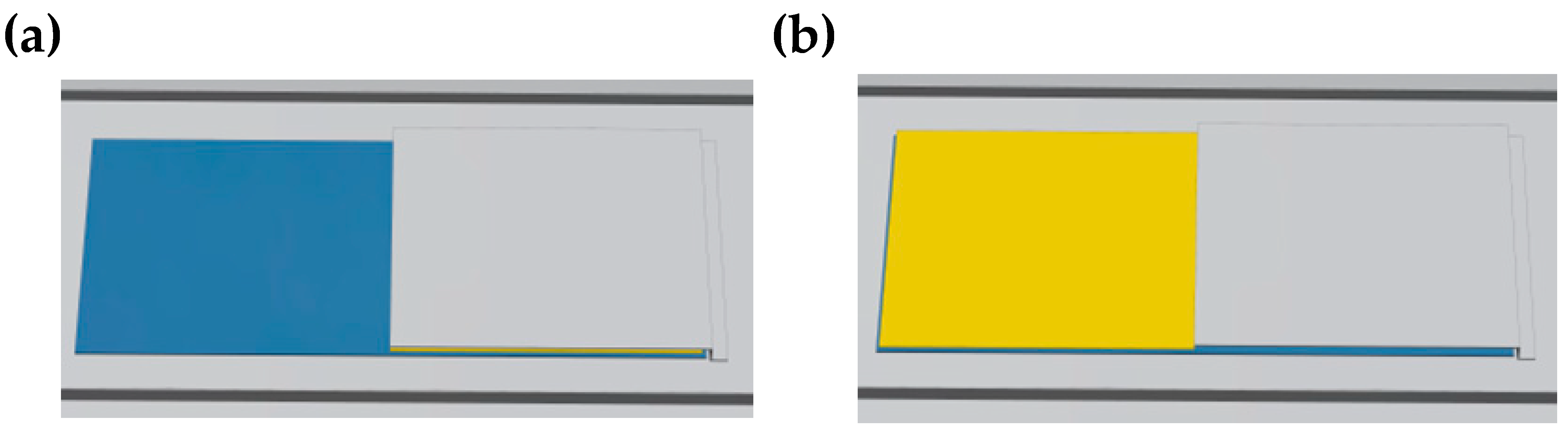
Based on the above introduction, the leakage detection device mainly consists of three parts: the power module, the transmission module, and the color-indicating module. The device housing is made of PC/ABS alloy, structured as a hollowed-out box shown in Figure 23c, containing the power and transmission modules. A combination of natural rubber (30 × 180 × 30 mm) and an oil-absorbing blanket is selected as the power module. A hole is required in the center of the rubber, where a guide rail is installed to ensure that the rubber expands along the designated direction. Based on the simulation and discussion in Section 3.3, the monolithic permanent magnet performs best at a thickness of 10 mm and a width of 35 mm, providing a maximum shear force of 7.99 N and a transmission efficiency of 13.12. Therefore, monolithic permanent magnets are adopted as the transmission part and are installed on the inner and outer sides of the full-contact floating roof chamber, respectively. The lower magnet is installed on a T-shaped platform, which requires a central hole for the guide rail. A blue indicator plate is placed below the upper magnet, and a yellow indicator plate is placed above it. The yellow plate and the upper magnet are bonded using modified epoxy structural adhesive, chosen for its excellent elasticity, high/low-temperature resistance, aging resistance, and insulating properties after curing. When no leakage occurs, they remain under the cover plate. The leakage detection device housing is installed inside the floating roof chamber using fixing strips. The fixing strips and cover plate are welded inside the chamber to ensure its sealing integrity, with a distance of 800 mm between the fixing strips. The various structures are listed in Table 1, and Figure 23 shows the dimensions not annotated in Table 1. The Zuo team [22] utilized an oil-swellable rubber with a cross-sectional area of 1 × 10⁻⁴ m2, generating a vertical thrust of 1.4 N in gasoline. Therefore, in practice, using 30 × 180 × 30 mm natural rubber can generate at least 12.6 N of thrust, sufficient to meet the magnetic transmission performance requirements of the device in complex environments. The leakage detection device operates based on the thrust generated by oil-swellable rubber expansion, pushing the lower permanent magnet inside the floating roof chamber. This causes the external upper magnet to follow the movement of the lower magnet through magnetic field coupling. At this point, the machine vision system captures the color change of the indicator plate from blue to yellow as the leakage criterion, transmitting leakage information and generating visual reports and leakage warnings combined with digital twin technology (Figure 24).
Having defined the concept of magnetic transmission efficiency earlier, the impact of the device mass on the overall structural performance of the floating roof needs further discussion after completing the structural design of the leakage detection device. The detection device not only ensures the safe operation of the floating roof, but also its own reliability, durability, and installation precision directly affect the stability of the floating roof sealing system. If the weight distribution and buoyancy design of the detection device do not match the floating roof structure, altering its force balance, it may cause main beam deformation or uneven/excessive stress on pillars. Therefore, the device design must comply with the technical requirements for internal floating roofs in Appendix H of API 650 [35]. For instance, the buoyancy of all internal floats must support at least twice their weight (including the weight of the float deck, seals, and other attachments), plus excess buoyancy to offset the friction generated by the peripheral and internal seals during filling operations. Additionally, the floating roof must safely support at least two persons walking anywhere on the roof without damaging the roof or causing the product stored in the tank to overflow onto the roof. Therefore, based on the leakage detection design in Figure 20, Figure 21, Figure 22 and Figure 23 and the materials in Table 1, the total weight is calculated as follows: detection device housing 0.364 kg, T-platform 0.012 kg, guide rail 0.019 kg, cover plate 1.39 kg, rubber 0.147 kg, permanent magnets 0.155 kg, fixing strips 0.04 kg, oil-absorbing blanket 0.05 kg, yellow indicator plate 0.019 kg, blue indicator plate 0.038 kg, totaling 2.408 kg. This meets the floating roof installation requirements of API 650 [37] and will not affect the overall operation of the floating roof. The aforementioned quality data results are based on Figure 21, Figure 22 and Figure 23 as the research foundation.
The leakage detection device utilizes the oil-absorbing expansion of rubber material to generate thrust, which pushes the lower permanent magnet inside the floating roof compartment, causing the upper permanent magnet outside the floating roof unit to move synchronously in the same direction through magnetic field coupling. At this point, the machine vision system captures the color change of the indicator plate from blue to red as the leakage criterion, thereby transmitting leakage information and generating visual reports and leakage warnings in conjunction with digital twin technology. Meanwhile, considering the force requirements derived from friction analysis and safety factors, the leakage detection device uses rubber measuring 30 × 180 × 30 mm to ensure stable thrust generation in complex oil and gas environments, and employs permanent magnets (10 × 35 × 30 mm) to guarantee stable magnetic transmission, thereby enhancing the reliability of the device. The device accounts for 2.8% of the original floating roof unit’s mass and does not affect the overall operation of the floating roof.

5. Conclusions

This study addresses the critical challenge of safely monitoring floating roof integrity by proposing an intrinsically safe, non-contact leakage detection device driven by oil-swellable rubber actuators. By establishing a comprehensive framework combining quasi-static experiments with finite element simulations, the research successfully identified the geometric parameters that govern magnetic coupling performance in confined tank environments. The investigation reveals a fundamental “thickness priority principle” for linear magnetic transmission design: increasing magnet thickness results in a nonlinear enhancement of both shear force and transmission efficiency, whereas increasing width yields diminishing returns due to saturation and edge flux leakage. This theoretical insight provides a vital guideline for optimizing magnetic actuators under strict weight and volume constraints.
Furthermore, a comparative analysis highlighted the distinct advantages of optimized monolithic permanent magnets over traditional array structures. The results demonstrate that a monolithic magnet with a width of 35 mm and a thickness of 10 mm eliminates the magnetic field cancellation and non-uniformity inherent in spliced arrays. This optimized configuration achieved a maximum shear force of 7.99 N and a transmission efficiency index of 13.12, representing a 471% increase in force and a 3.7-fold improvement in efficiency compared to equivalent array designs. These findings overturn the assumption that complex arrays are necessary for this application, validating that a simplified, robust monolithic structure offers superior performance for linear transmission tasks.
Ultimately, these theoretical and experimental findings were translated into a practical engineering solution that strictly adheres to API 650 safety standards. The developed device operates without external electrical power, thereby eliminating ignition risks while ensuring real-time responsiveness to leakage events. By integrating high-efficiency magnetic transmission with a passive triggering mechanism, this study provides a reliable, maintenance-free, and easily installable strategy for enhancing the operational safety of large-scale petroleum storage facilities.
Future research will focus on three key areas for further development. In terms of transmission structure, the plan involves adopting higher-performance magnetic materials and exploring more Halbach array configurations to enhance magnetic flux density and transmission torque; regarding device reliability, the long-term performance and aging patterns of oil-sensitive rubber under different operating conditions will be systematically evaluated, while the corrosion resistance and magnetic stability of permanent magnets will be improved. In terms of system intelligent integration, deep learning-based visual recognition and digital twin technology are combined to construct a three-dimensional dynamic monitoring platform covering the entire tank farm. This enables precise leak localization, risk assessment, and intelligent maintenance decision-making, ultimately evolving into an integrated tank health management system.

Author Contributions

Conceptualization, B.Z., W.J. and P.Z.; methodology, B.Z., W.J. and P.Z.; software, B.Z.; validation, B.Z. and P.Z.; formal analysis, B.Z. and P.Z.; investigation, B.Z. and P.Z.; resources, B.Z., W.J. and P.Z.; data curation, B.Z., X.H. and Z.T.; writing—original draft preparation, B.Z.; writing—review and editing, B.Z. and P.Z.; visualization, B.Z.; supervision, P.Z.; project administration, P.Z.; funding acquisition, P.Z. All authors have read and agreed to the published version of the manuscript.

Funding

This work was supported by the Lianyungang Science and Technology Plan Project: Key Research and Development Program (No. SF2510).

Institutional Review Board Statement

Not applicable.

Informed Consent Statement

Not applicable.

Data Availability Statement

The data that support the findings of this study were generated using COMSOL Multiphysics 6.2. The data are available from the corresponding author upon reasonable request.

Acknowledgments

The authors acknowledge the use of a generative artificial intelligence tool for language editing and rephrasing purposes only. The AI tool was not used for data generation, data analysis, modeling, interpretation of results, or scientific decision-making, and all technical content and conclusions remain the full responsibility of the authors.

Conflicts of Interest

The authors declare no potential conflicts of interest regarding the publication of this work. In addition, the ethical issues, including plagiarism, informed consent, misconduct, data fabrication and/or falsification, double publication and/or submission, and redundancy, have been completely witnessed by the authors.

Abbreviations

RMSERoot Mean Square Error

References

  1. Sha, S.; Liu, S.; Huang, M.; Fan, N.; Wang, N.; Cai, M. Volatile Organic Compound Emission Status and Control Perspectives in the Petroleum Refining Industry in China. Atmosphere 2022, 13, 1194. [Google Scholar] [CrossRef]
  2. Fang, J.; Huang, W.; Huang, F.; Fu, L.; Zhang, G. Investigation of the Superposition Effect of Oil Vapor Leakage and Diffusion from External Floating-Roof Tanks Using CFD Numerical Simulations and Wind-Tunnel Experiments. Processes 2020, 8, 299. [Google Scholar] [CrossRef]
  3. Cen, K.; Yao, T.; Wang, Q.; Xiong, S. A risk-based methodology for the optimal placement of hazardous gas detectors. Chin. J. Chem. Eng. 2018, 26, 1078–1086. [Google Scholar] [CrossRef]
  4. Xia, W.; Xu, K.; Tan, J.Z.; Lao, R.Q.; Wang, Y. Numerical Simulation of Performance and Structural Optimization of Labyrinth Seal in an Oil Storage Tank with Inner Floating Roof. Lubr. Eng. 2021, 46, 88–93. [Google Scholar] [CrossRef]
  5. Li, J.C.; Liu, M.; Dang, S.W.; Hu, L.C.; Chen, G.; Zhang, S.D.; Kong, X.H.; Xu, H. Numerical Study on the Influence of Various Design Variables on the Behavior Characteristics of Oil and Gas in Internal Floating Roof Tanks. Energies 2024, 17, 4336. [Google Scholar] [CrossRef]
  6. Manik, M.M.; Sabarethinam, K. Fragility assessment of bottom plates in above ground storage tanks during flood events. J. Loss Prev. Process Ind. 2023, 82, 104975. [Google Scholar] [CrossRef]
  7. Bretschneider, L.; Bollmann, S.; Houssin-Agbomson, D.; Shaw, J.; Howes, N.; Nguyen, L.; Robinson, R.; Helmore, J.; Lichtenstern, M.; Nwaboh, J.; et al. Concepts for drone based pipeline leak detection. Front. Robot. AI 2024, 11, 1426206. [Google Scholar] [CrossRef] [PubMed]
  8. Zinke, R.; Virothi, N.; Köhler, F.; Klippel, A.; Schalau, S.; Krause, U. Experimental measurement of initial evaporation mass flows from gasoline spills and comparison with empirical models. Process Saf. Prog. 2020, 399, e12128. [Google Scholar] [CrossRef]
  9. De Franchis, C.; Lostis, G.; Abdennadher, H.; Arias, P.; Madaule, T.; Davy, A.; Calisti, S.; Morel, J.-M.; Grompone, R.; Facciolo, G. Method and System for Remotely Measuring the Volume of Liquid Stored in External Floating Roof Tanks. U.S. Patent 10,672,139, 2 June 2020. [Google Scholar]
  10. Badjagbo, K.; Sauvé, S. Real-time continuous monitoring methods for airborne VOCs. Trends Anal. Chem. 2007, 26, 931–940. [Google Scholar] [CrossRef]
  11. Hatayama, K. Lessons from the 2003 Tokachi-oki, Japan, earthquake for prediction of long-period strong ground motions and sloshing damage to oil storage tanks. J. Seismol. 2008, 12, 255–263. [Google Scholar] [CrossRef]
  12. Watanabe, K.; Jodai, K.; Miyashita, K.; Oono, K.; Yamamoto, N.; Hirooka, S.; Kataoka, S. Influence of earthquakes on the rock caverns of underground petroleum stockpiling bases. J. Groundw. Soc. 2022, 64, 21–34. [Google Scholar] [CrossRef]
  13. Yoshida, S.; Akamatsu, S.; Sekine, K.; Mitsuta, T. Sloshing Characteristics of Single-Deck Floating Roofs in Cylindrical Storage Tanks. J. Environ. Eng. 2010, 5, 39–50. [Google Scholar] [CrossRef][Green Version]
  14. Priyadarshan, S.S.; Iacono, S.; Vercelli, G. A UAV-Based Digital Twin Framework for Real-Time Monitoring and Risk Assessment of Floating Roof Storage Tanks. In 2024 IEEE International Conference on Big Data (BigData); IEEE: New York, NY, USA, 2024; pp. 5526–5531. [Google Scholar] [CrossRef]
  15. Liu, Y.F.; Shi, L.X.; Sa, Q.E.; Zhang, T.N.; Chai, Y.Q.; Si, X.F.; Wang, Y.M.; Li, B.J. Exploration and Application of Acoustic Emission Detection Technology in Leakage Detection of the Bottom Plate of Crude Oil Metal Storage Tanks. J. Phys. Conf. Ser. 2023, 2594, 012059. [Google Scholar] [CrossRef]
  16. Olszewska, A. Using the acoustic emission method for testing aboveground vertical storage tank bottoms. Appl. Acoust. 2022, 188, 108564. [Google Scholar] [CrossRef]
  17. Liying, S.; Yibo, L.; Libo, S.; Lingge, L.I. Comparison of Magnetic Flux Leakage (MFL) and Acoustic Emission (AE) techniques in corrosion inspection for pressure pipelines. In Proceedings of the 31st Chinese Control Conference; IEEE: New York, NY, USA, 2012; pp. 5375–5378. [Google Scholar] [CrossRef]
  18. Heidary, H.; Mehrpouya, M.A.; Ghalee, A.; Oskouei, A.R. A design for a yoke to detect a notch on edge by using magnetic flux leakage method. Eur. Phys. J. Plus 2021, 136, 1–20. [Google Scholar] [CrossRef]
  19. Tang, J.; Wang, R.; Qiu, G.; Hu, Y.; Kang, Y. Mechanism of Magnetic Flux Leakage Detection Method Based on the Slotted Ferromagnetic Lift-Off Layer. Sensors 2022, 22, 3587. [Google Scholar] [CrossRef]
  20. Durai, M.; Lin, Z.Q.; Lan, C.W.; Chang, H.; Peng, C.C. Study of Defects in the Petrochemical Storage Tank Floor using the Magnetic Flux Leakage (MFL) Technique. J. Fail. Anal. Prev. 2022, 22, 807–814. [Google Scholar] [CrossRef]
  21. Feng, B.; Wu, J.; Tu, J.K.Y. A Review of Magnetic Flux Leakage Nondestructive Testing. Materials 2022, 15, 7362. [Google Scholar] [CrossRef] [PubMed]
  22. Zuo, P.; Xu, T.L.; Zhuang, B.Y.; Jiang, W.; Sun, C. Floating disc sensor and monitoring system based on self-driven deformation. China Spec. Equip. Saf. 2025, 41, 72–76. (In Chinese) [Google Scholar]
  23. Vlachou, V.I.; Sakkas, G.K.; Xintaropoulos, F.P.; Pechlivanidou, M.S.C.; Kefalas, T.D.; Tsili, M.A.; Kladas, A.G. Overview on permanent magnet motor trends and developments. Energies 2024, 17, 538. [Google Scholar] [CrossRef]
  24. Sayed, E.; Yang, Y.; Bilgin, B.; Bakr, M.H.; Emadi, A. A Comprehensive Review of Flux Barriers in Interior Permanent Magnet Synchronous Machines. IEEE Access 2019, 7, 149168–149181. [Google Scholar] [CrossRef]
  25. Mörée, G.; Sjölund, J.; Leijon, M. A review of permanent magnet models used for designing electrical machines. IEEE Trans. Magn. 2022, 58, 1–19. [Google Scholar] [CrossRef]
  26. Kong, X.X.; Liu, H.L. A review of magnetic couplers for high-speed magnetic drive pumps. Pump Technol. 2023, 1–5. (In Chinese) [Google Scholar]
  27. Hong, C.; Ren, Z.; Wang, C.; Li, M.; Wu, Y.; Tang, D.; Hu, W.; Sitti, M. Magnetically actuated gearbox for the wireless control of millimeter-scale robots. Sci. Robot. 2022, 7, eabo4401. [Google Scholar] [CrossRef]
  28. Hong, C.; Wu, Y.; Wang, C.; Ren, Z.; Wang, C.; Liu, Z.; Hu, W.; Sitti, M. Wireless flow-powered miniature robot capable of traversing tubular structures. Sci. Robot. 2024, 9, eadi5155. [Google Scholar] [CrossRef] [PubMed]
  29. Furlani, E.P. Permanent Magnet and Electromechanical Devices: Materials, Analysis, and Applications; Elsevier: Amsterdam, The Netherlands, 2001; pp. 110–136. [Google Scholar]
  30. Kumar, M.G.; Yan, H.G.; Hiroshi, D.; Muramatsu, K.; Guan, W.; Yuan, J.; Tian, C.; Chen, B. Proposal of Maxwell Stress Tensor for Local Force Calculation in Magnetic Body. IEEE Trans. Magn. 2018, 54, 1–4. [Google Scholar] [CrossRef]
  31. COMSOL Inc. Porous Media Module User’s Guide; COMSOL Inc.: Stockholm, Sweden, 2021. [Google Scholar]
  32. COMSOL Inc. Chemical Reaction Engineering Module User’s Guide; COMSOL Inc.: Stockholm, Sweden, 2021. [Google Scholar]
  33. Bermudez, A.; Rodriguez, A.L.; Villar, I. Extended Formulas to Compute Resultant and Contact Electromagnetic Force and Torque From Maxwell Stress Tensors. IEEE Trans. Magn. 2017, 53, 1–9. [Google Scholar] [CrossRef]
  34. Jackson, J.D. Classical Electrodynamics; John Wiley & Sons: Hoboken, NJ, USA, 2021. [Google Scholar]
  35. Lin, Z.W. On the expanded Maxwell’s equations for moving charged media system—General theory, mathematical solutions and applications in TENG. Mater. Today 2022, 52, 348–363. [Google Scholar] [CrossRef]
  36. Spałek, D. Generalization of Maxwell Stress Tensor Method for Magnetically Anisotropic Regions. IEEE Trans. Magn. 2019, 55, 1–6. [Google Scholar] [CrossRef]
  37. American Petroleum Institute. Welded Steel Tanks for Oil Storage; American Petroleum Institute: Washington, DC, USA, 2025. [Google Scholar]
  38. Yoo, S.-Y.; Kim, W.-Y.; Kim, S.-J.; Lee, W.-R.; Bae, Y.-C.; Noh, M. Optimal design of non-contact thrust bearing using permanent magnet rings. Int. J. Precis. Eng. Manuf. 2011, 12, 1009–1014. [Google Scholar] [CrossRef]
  39. Huang, X.Z.; Yu, H.C.; Zhou, B.; Li, L.Y.; Gerada, D.; Gerada, C.; Qian, Z.Y. Detent-Force Minimization of Double-Sided Permanent Magnet Linear Synchronous Motor by Shifting One of the Primary Components. IEEE Trans. Ind. Electron. 2020, 67, 180–191. [Google Scholar] [CrossRef]
  40. Ye, J.; Zhan, P.; Zeng, J.; Kuang, H.; Deng, Y.; Fan, K.; Su, B. Concise magnetic force model for Halbach-type magnet arrays and its application in permanent magnetic guideway optimization. J. Magn. Magn. Mater. 2023, 587, 171301. [Google Scholar] [CrossRef]
Figure 1. Full-contact floating roof of a petroleum storage tank: (a) Petroleum storage tank, (b) Internal tank view, (c) Full-contact floating roof, (d) Cross-section of a full-contact floating roof.
Applsci 16 03126 g001
Figure 2. Floating roof leakage detection device: (a) Before rubber oil-absorption expansion, (b) After rubber oil-absorption expansion, (c) Physical prototype of the device.
Applsci 16 03126 g002
Figure 3. Parameterized permanent magnet arrays: (a) 2 × 10 × 30 mm array, (b) 2 × 20 × 30 mm array, (c) 2 × 30 × 30 mm array, (d) 4 × 10 × 30 mm array, (e) 4 × 20 × 30 mm array, (f) 6 × 20 × 30 mm array, (g) 4 × 30 × 30 mm array.
Applsci 16 03126 g003
Figure 4. Schematic diagram of the lateral shear force measurement experiment.
Applsci 16 03126 g004
Figure 5. Schematic diagram of the instantaneous magnetic force measurement experiment.
Applsci 16 03126 g005
Figure 6. Maximum shear force distribution of parameterized permanent magnet arrays.
Applsci 16 03126 g006
Figure 7. Transmission efficiency distribution of parameterized permanent magnet arrays.
Applsci 16 03126 g007
Figure 8. Performance of permanent magnets with different thicknesses: (a) Shear force vs. width curves, (b) Transmission efficiency vs. width curves.
Applsci 16 03126 g008
Figure 9. Maximum static friction force of parameterized permanent magnet arrays.
Applsci 16 03126 g009
Figure 10. Dynamic shear force variation curves: (a) Shear force vs. time for 4 mm thick magnets, (b) Shear force vs. time for 10 mm wide magnets, (c) Shear force vs. width relationship, (d) Shear force vs. thickness relationship.
Applsci 16 03126 g010
Figure 11. Simulation results of magnetic flux density norm: (a) Distribution for 10 × 2 × 30 mm permanent magnet, (b) Distribution for 30 × 2 × 30 mm permanent magnet.
Applsci 16 03126 g011
Figure 12. Comparison of experimental and simulated lateral shear force for permanent magnets: (a) Shear force vs. time for 2 × 10 × 30 mm, (b) Shear force vs. time for 4 × 10 × 30 mm, (c) Shear force vs. time for 6 × 10 × 30 mm, (d) Shear force vs. time for 2 × 20 × 30 mm, (e) Shear force vs. time for 2 × 30 × 30 mm, (f) Shear force vs. time for 6 × 30 × 30 mm.
Applsci 16 03126 g012
Figure 13. Permanent magnets: (a) 2 × 20 × 30 mm permanent magnet array vs. monolithic, (b) 4 × 20 × 30 mm permanent magnet array vs. monolithic.
Applsci 16 03126 g013
Figure 14. Simulated performance of permanent magnets: (a) Maximum shear force distribution for thickness-to-width ratio > 1, (b) Transmission efficiency distribution for thickness-to-width ratio > 1, (c) Maximum shear force distribution for thickness-to-width ratio ≤ 1, (d) Transmission efficiency distribution for thickness-to-width ratio ≤ 1.
Applsci 16 03126 g014
Figure 15. Performance of monolithic permanent magnets with different thicknesses: (a) Shear force vs. width curves, (b) Transmission efficiency vs. width curves.
Applsci 16 03126 g015
Figure 16. Magnetic flux density distribution of the Halbach array permanent magnet.
Applsci 16 03126 g016
Figure 17. Halbach array permanent magnet.
Applsci 16 03126 g017
Figure 18. Relationship between shear force and time for Halbach arrays of different thicknesses.
Applsci 16 03126 g018
Figure 19. Relationship between transmission performance and thickness for Halbach arrays and monolithic permanent magnets.
Applsci 16 03126 g019
Figure 20. Box-type floating roof.
Applsci 16 03126 g020
Figure 21. Exploded view of the leakage detection device.
Applsci 16 03126 g021
Figure 22. Partial enlarged view of the leakage detection device.
Applsci 16 03126 g022
Figure 23. Part dimension diagrams: (a) Cover plate, (b) T-shaped platform, (c) Rubber, (d) Leakage detection device housing, (e) Guide rail.
Applsci 16 03126 g023
Figure 24. Floating roof status: (a) Floating roof chamber not leaking, (b) Floating roof chamber leaking.
Applsci 16 03126 g024
Table 1. Material list for the full-contact box-type floating roof.
NameSpecificationMaterialQuantity
Permanent magnet10 × 35 × 30 mmNdFeB2
Rubber30 × 180 × 30 mmRaw rubber1
Oil spill mat2 × 60 × 30 mmPP1
Leak detection device shell-PC/ABS alloy1
Blue color plate1 × 800 × 400 mmPC/ABS alloy1
Yellow color plate1 × 400 × 400 mmPC/ABS alloy1
T-shaped platform-PC/ABS alloy2
Fixed strip-Alloy 50832
Guide railφ5 × 800 mmPC/ABS alloy2
Baffle A-304/3162
Baffle B-304/3162
Baffle C-304/3162
Cover plate-304/3161
Disclaimer/Publisher’s Note: The statements, opinions and data contained in all publications are solely those of the individual author(s) and contributor(s) and not of MDPI and/or the editor(s). MDPI and/or the editor(s) disclaim responsibility for any injury to people or property resulting from any ideas, methods, instructions or products referred to in the content.