Article

A Novel Fluorescent Probe for the Determination of Aluminum Ions in Aqueous Samples

1
Key Laboratory of Resource Biology and Biotechnology in Western China, Ministry of Education, School of Life Science, Northwest University, Xi’an 710069, China
2
Xi’an Institute for Food and Drug Control, Xi’an 710054, China
*
Author to whom correspondence should be addressed.
Appl. Sci. 2026, 16(6), 2970; https://doi.org/10.3390/app16062970
Submission received: 8 February 2026 / Revised: 13 March 2026 / Accepted: 17 March 2026 / Published: 19 March 2026

Abstract

In this paper, the target compound, 4-hydroxy-3-[[(2-hydroxy-1-naphthalenyl)methylene]amino]benzenesulfonamide (hereafter referred to as HA), was synthesized via the reaction of 2-hydroxy-1-naphthaldehyde with 2-aminophenol-4-sulfonamide in an 86% yield. In methanol–water (v/v, 1:1, pH 5.0 acetate buffer), HA displays a “turn-on” fluorescence response at 531 nm (λex = 411 nm) toward Al3+ with high selectivity over 17 common metal ions and 11 anions. The fluorescence intensity is linearly correlated to an Al3+ concentration from 1 to 10 µM (R2 = 0.999) with a detection limit of 58 nM (3σ/k). Job’s plot and DFT calculations (M06/6-31G) both support a 1:1 binding stoichiometry. Under the tested conditions (with the methanol–water medium having an effective ionic strength equivalent to a low-salinity environment), the probe’s performance was unaffected. In natural aqueous samples (tap water and bottled water), which typically have low salinity (estimated as 0–5‰), Al3+ in the samples can also be chelated by the HA probe with a precision of relative standard deviation of less than 1%, and the recovery rate is higher than 90%. The probe exhibited acceptable relative recovery and low standard deviation, demonstrating a rapid and convenient novel method for detecting Al3+ in a natural aqueous sample.

1. Introduction

The abnormal accumulation of metal ions poses significant threats to both ecosystems and human health. Aluminum is naturally present as the trivalent cation Al3+, with most of it attached to silicate and forming water-insoluble complexes [1]. Although it ranks third in crustal abundance, Al3+ is non-essential and potentially toxic to humans, having been implicated in Alzheimer’s disease, Parkinson disease, and osteoporosis [2]. The World Health Organization (WHO) has therefore set a provisional tolerable weekly intake (PTWI) of 2 mg kg−1 of body weight [3]. Yet the 2022 European Food Safety Authority (EFSA) total-diet study showed that consuming only 1.5 L of alum-treated drinking water can deliver 1.8 mg of aluminum to a 60 kg adult—already 90% of the PTWI [4]. Furthermore, Al3+ have been conventionally employed as coagulants in drinking water treatment processes [5,6,7]. Therefore, given aluminum’s bioaccumulation potential and associated health risks, it is imperative to develop a simple yet sensitive method for detecting Al3+ in real aqueous systems.
Conventional analytical techniques, such as Atomic Absorption Spectroscopy (AAS), Inductively Coupled Plasma Mass Spectrometry (ICP-MS), and X-ray Fluorescence (XRF), represent the mainstream standard methods for total aluminum determination [8,9,10]. However, they are generally associated with significant limitations: the instrumentation is costly and bulky, sample preparation often requires complex and time-consuming acid digestion procedures, and critically, they cannot distinguish between different aluminum species—particularly the highly toxic and environmentally mobile free Al3+ [11,12,13]. Therefore, the selective detection of Al3+, rather than total aluminum, in real aqueous samples presents a distinct analytical challenge.
To specifically target Al3+, molecular spectroscopic methods such as UV-Vis and fluorescence spectroscopy have been widely employed [14,15]. The complexity of real water matrices further exacerbates this analytical challenge. Natural waters contain a diverse mixture of components—including dissolved salts (leading to variable ionic strength and salinity), natural organic matter (NOM), suspended particulates, and a multitude of coexisting ions—that can significantly interfere with metal ion detection [16]. High salinity can alter the ionic strength of the medium, potentially affecting the binding affinity and fluorescence quantum yield of molecular probes. Dissolved organic matter may compete with the probe for Al3+ complexation or contribute to background fluorescence, reducing sensitivity and accuracy [17]. Furthermore, suspended particles can scatter light, introducing artifacts into spectroscopic measurements. Therefore, developing a fluorescent probe that not only selectively recognizes Al3+ but also maintains robust analytical performance in the presence of these complex matrix components is a critical and challenging task. Although UV-Vis-based probes offer operational simplicity, they frequently exhibit insufficient sensitivity and poor anti-interference capability in domestic aqueous samples [16,17,18]. In contrast, fluorescence spectroscopy has emerged as a more attractive alternative due to its superior sensitivity, high selectivity, rapid response, and potential for real-time and on-site monitoring [19,20]. For comprehensive overviews of fluorescent sensor development for metal ions in aqueous environments [21].
Fluorescence detection offers the advantages of real-time monitoring, non-invasiveness, and low cost [22]. However, Al3+, as hard Lewis acids, exhibit extremely poor spectroscopic properties: they lack d–d transitions, possess strong hydration (hydration enthalpy ΔH_hyd = −4690 kJ·mol−1), and typically show quantum yields below 0.05 even after chelation, resulting in low contrast between bound and free states [23,24]. Consequently, fewer than fifty Al3+-selective fluorescent probes have been reported in the past five years, with most operating at short wavelengths below 450 nm, where biological autofluorescence interference is severe. Therefore, the development of a water-compatible, long-wavelength, highly selective, and biocompatible fluorescent probe for Al3+ remains a significant challenge in analytical chemistry [25,26,27].
Among various fluorescence probes, small-molecular fluorescent chemosensors, especially those based on Schiff base structures, have shown remarkable advantages for Al3+ detection [28,29]. The Schiff base moiety provides a strong binding affinity and selectivity for Al3+ through its nitrogen and oxygen donor atoms [29,30]. Furthermore, its structure is highly tunable, allowing for the rational design of probes with enhanced photophysical properties, water compatibility, and specificity for Al3+ over competing metal ions [31]. Consequently, the development of novel Schiff base-based fluorescent probes represents a promising direction for achieving sensitive and selective detection of Al3+ in real aqueous systems. Specifically, naphthalene–sulfonamide Schiff bases offer the following features: (a) A rigid π-conjugated plane that redshifts the emission wavelength into the visible region (>500 nm). (b) An O, N, N-tridentate coordination pocket formed by the sulfonamide and imine nitrogen atoms, which can form a 1:1 five-membered chelate ring with Al3+, enhancing the quantum yield by restricting intramolecular rotation. (c) A sulfonate group that improves water solubility and enables dual penetration across mitochondrial and plasma membranes without reported teratogenicity [32,33,34,35,36].
In this study, a novel fluorescent probe HA was successfully synthesized via a one-step Schiff base condensation reaction between 2-hydroxy-1-naphthaldehyde and 2-aminophenol-4-sulfonamide. The probe exhibits a 1:1 stoichiometric binding ratio with Al3+ and maintains stable performance across a wide pH range. It demonstrates excellent ion selectivity, specifically recognizing Al3+ without responding to divalent Fe2+ or Fe3+. Furthermore, the probe was successfully applied for the determination of Al3+ content in real aqueous samples.

2. Methods

2.1. Materials and Instruments

All chemicals were purchased from commercial suppliers and used without further purification. 2-Hydroxy-1-naphthaldehyde (98%), 2-aminophenol-4-sulfonamide (97%), and all metal salts (e.g., Al(NO3)3·9H2O, FeCl3, etc.) and anions salts (e.g., NaCl, Na2CO3, etc.) were of analytical grade and obtained from Aladdin Industrial Corporation (Shanghai, China). Solvents such as methanol, ethanol, and DMSO-d6 were of HPLC or analytical grade and purchased from Sinopharm Chemical Reagent Co., Ltd. (Shanghai, China). All aqueous solutions were prepared using deionized water (18.2 MΩ·cm) from a Milli-Q system (Millipore, Burlington, MA, USA). 1H NMR spectra were recorded on a Bruker Avance 400 MHz spectrometer in DMSO-d6. Fluorescence spectra were acquired on a Horiba FluoroMax-4 spectrofluorometer (411 nm excitation). All experiments were performed at room temperature (25 ± 2 °C) under ambient laboratory conditions. To minimize potential contamination, all glassware was thoroughly cleaned with dilute nitric acid, rinsed repeatedly with deionized water, and dried prior to use. DFT calculations were performed with Gaussian 09 at the M06/6-31G level.

2.2. Synthesis of Probe HA

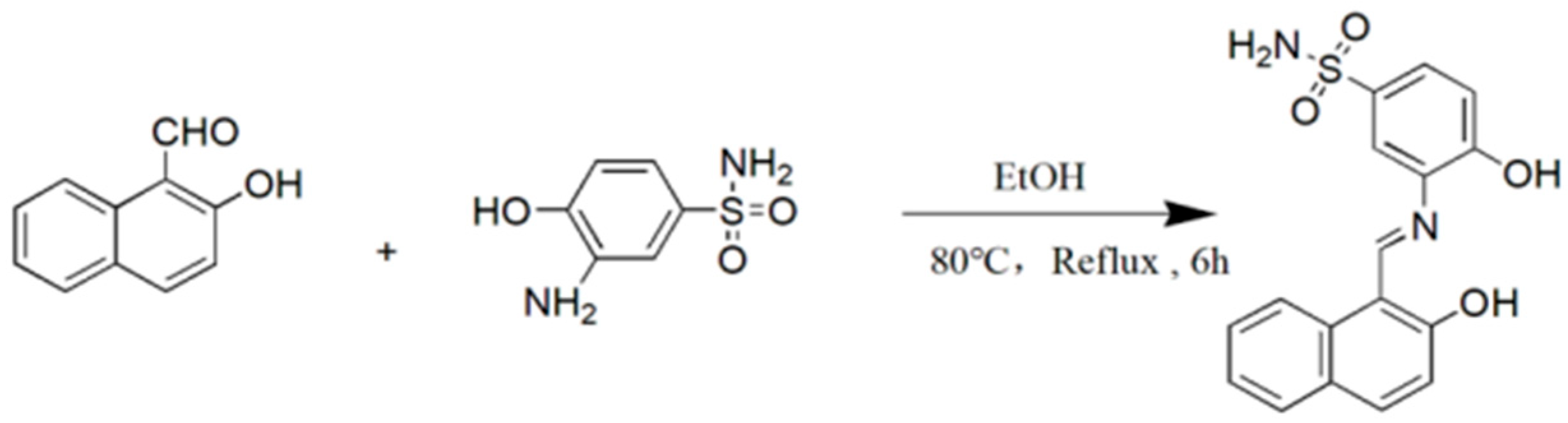
To a solution of 2-hydroxy-1-naphthaldehyde (1.0 mmol) in anhydrous ethanol (10 mL), 2-aminophenol-4-sulfonamide (1.0 mmol) in ethanol (10 mL) was added dropwise. Then, the mixture was stirred and refluxed at 80 °C for 6 h. After cooling to RT, the orange precipitate was filtered, washed with cold ethanol and dried under vacuum to afford HA (Figure 1).

2.3. Preparation of Metal Ion Solutions and Buffer Solutions

Preparation of Probe HA Solution: Dissolve 0.0342 g of the probe in anhydrous methanol and dilute into a 100 mL volumetric flask to obtain a 1 mmol·L−1 probe stock solution. Add an accurate volume of 30 mL of the probe stock solution into a 100 mL volumetric flask, dilute with anhydrous methanol, and mix to obtain a 0.3 mmol·L−1 HA solution.
Preparation of Metal Ion Solutions: Prepare 1 mmol·L−1 solutions of K+, Tl+, Na+, Ni+, Ba2+, Mg2+, Ca2+, Cu2+, Pb2+, Hg2+, Fe2+, Mn2+, Co2+, Zn2+, Cr3+, Fe3+, In3+, and Al3+. Dilute the concentrations for subsequent experiments based on the stock solution concentration.
Preparation of Anion Solutions: Prepare 1 mmol·L−1 solutions of Cl, CH3COO, ClO4, CO32−, VO3, NO2, NO3, S2−, SO42−, and HPO42−. Dilute the concentrations for subsequent experiments based on the stock solution concentration.
Weigh 0.820 g of sodium acetate (NaAc) into a 100 mL volumetric flask, dilute to the mark with deionized water, and prepare a 0.1 mol/L NaAc stock solution. Measure 0.575 mL of glacial acetic acid into a 100 mL volumetric flask, dilute to the mark, and prepare a 0.1 mol/L HAc stock solution. After measuring the required volumes of NaAc stock solution and HAc stock solution, adjust with a pH meter to prepare HAc-NaAc buffer solutions with pH values of 3.0, 4.0, 5.0, and 6.0.
Weigh 3.12 g of sodium dihydrogen phosphate (NaH2PO4·2H2O) into a 100 mL volumetric flask, dilute to the mark with deionized water, and prepare a 0.2 mol/L NaH2PO4 stock solution. Weigh 5.36 g of disodium hydrogen phosphate (Na2HPO4·7H2O) into a 100 mL volumetric flask, dilute to the mark with deionized water, and prepare a 0.2 mol/L Na2HPO4 stock solution. After measuring the required volumes of NaH2PO4 stock solution and Na2HPO4 stock solution, adjust with a pH meter to prepare phosphate buffer solutions with pH values of 7.0, 8.0, 9.0, 10.0, and 11.0.

2.4. Ion Selectivity Test

To investigate the exclusive selectivity of the synthesized HA for Al3+, select 18 common metal cations (K+, Na+, Tl+, Ni2+, Mg2+, Fe2+, Cu2+, Hg2+, Pb2+, Ca2+, Ba2+, Mn2+, Co2+, Zn2+, Cr3+, In3+, Fe3+, Al3+) and 11 anions (Cl, CH3COO, ClO4, CO32−, VO3, NO2, NO3, S2−, SO42−, HPO42−, HCO32−). Prepare 29 clean test tubes and add 1 mL of 0.3 mmol·L−1 probe solution to each test tube, followed by 1 mL of 0.3 mmol·L−1 solutions of the 29 ions. Take another test tube as a control and add 1 mL of 0.3 mmol·L−1 HA solution and 1 mL of deionized water, mix well and let stand. Perform fluorescence spectroscopy at an excitation of 411 nm and observe the fluorescence color changes under a UV lamp.

2.5. pH Investigation

To explore the optimal pH conditions for the complexation reaction between probe HA and Al3+, set two groups of test tubes, A and B, with 9 test tubes in each group.
Group A: 1 mL of 0.3 mmol·L−1 HA solution, 1 mL deionized water, and 1 mL buffer solution with pH ranging from 3.0 to 11.0;
Group B: 1 mL of 0.3 mmol·L−1 HA solution, 1 mL of 0.3 mmol·L−1 Al3+ solution, and 1 mL buffer solution with pH ranging from 3.0 to 11.0.
Measure the fluorescence intensity using a Hitachi F-7000 fluorescence spectrophotometer (Hitachi, Japan).

2.6. Stability Test

To assess the long-term stability of the probe, monitor the stability changes in probe HA over 120 min. Add 1 mL of 0.3 mmol·L−1 Al3+ solution, 1 mL of pH 5.0 acetic acid/sodium acetate, and 1 mL of 0.3 mmol·L−1 HA solution to the detection system. Record the fluorescence intensity every 5 min.

2.7. Competitive Test

Take two test tubes, one containing 1 mL of 0.3 mmol·L−1 HA, 1 mL of deionized water, and 1 mL of pH 5.0 acetate-acetic acid buffer solution as a blank control; the other containing 1 mL of 0.3 mmol·L−1 HA, 1 mL of pH 5.0 acetate-acetic acid buffer solution, and 1 mL of 0.3 mmol·L−1 Al3+ solution.
Prepare two sets of clean test tubes, with 17 test tubes in each set. In one set, add 1 mL of 0.3 mmol·L−1 HA, 500 μL of deionized water, and 1 mL of pH 5.0 acetate-acetic acid buffer solution, followed by 500 μL of interfering ion solutions of K+, Na+, Ni+, Tl+, Mg2+, Cu2+, Ba2+, Ca2+, Pb2+, Hg2+, Fe2+, Mn2+, Zn2+, Co2+, Cr3+, In3+, and Fe3+, respectively. In the other set, add 1 mL of 0.3 mmol·L−1 HA, 500 μL of Al3+ solution, and 1 mL of pH 5.0 acetate-acetic acid buffer solution, followed by 500 μL of the other interfering ion solutions of K+, Na+, Ni+, Tl+, Mg2+, Cu2+, Ba2+, Ca2+, Pb2+, Hg2+, Fe2+, Mn2+, Zn2+, Co2+, Cr3+, In3+, and Fe3+, respectively. Measure the fluorescence intensity using a fluorescence spectrophotometer.

2.8. Reversibility Test

The coordination reaction of the HA-Al3+ system is reversible. When a stronger competing ligand is added, the original coordination system dissociates, leading to a change in the fluorescence signal. Following the method described in Section 2.3, prepare the EDTA-2Na solution.
Take four test tubes, labeled a, b, c, and d, and add the following samples:
a.
HA Control Solution
Mix 1 mL of 0.3 mmol·L−1 HA solution with 1 mL of pH 5.0 acetate buffer, and dilute the mixture to a volume with 3 mL of deionized water.
b.
Al3+-HA Binding System
Combine 1 mL of 0.3 mmol·L−1 Al3+ solution, 1 mL of 0.3 mmol·L−1 HA solution, and 1 mL of pH 5.0 acetate buffer and dilute with 2 mL of deionized water.
c.
EDTA Competitive System
To a mixture containing 1 mL of 0.3 mmol·L−1 Al3+, 1 mL of 0.3 mmol·L−1 HA, and 1 mL of pH 5.0 acetate buffer, add 1 mL of deionized water and 1 mL of EDTA solution.
d.
Al3+ Re-addition Competitive Recovery System
Prepare a mixture from 1 mL of 0.3 mmol·L−1 Al3+, 1 mL of 0.3 mmol·L−1 HA, and 1 mL of pH 5.0 acetate buffer. Subsequently, add 1 mL of EDTA solution, followed by 1 mL of 0.3 mmol·L−1 Al3+ solution. After all preparations are complete, mix them and test on the instrument.

2.9. Coordination Ratio Test

To verify the coordination between the probe and Al3+ and determine the binding ratio of probe HA to Al3+, dilute a 1 mmol·L−1 Al3+ stock solution with deionized water to obtain a series of gradient concentration Al3+ solutions with concentrations of 30, 60, 90, 120, 150, 180, 210, 240, 270, 300, 330, 360, 390, 420, 450, 480, 510, 540, 570, and 600 μmol·L−1. Then, mix different concentrations of Al3+ solutions with equal volumes of HA solution, add pH 5.0 acetate-acetic acid buffer, and measure the fluorescence intensity after 25 min.

2.10. Establishment of Working Curve

The working curve of probe HA for Al3+ was measured. Under the condition of keeping the total concentration of HA and Al3+ constant at 600 μmol·L−1, the mole fraction of Al3+ was continuously changed in the range of 0.1 to 0.9. This was achieved by preparing nine equal-volume mixed solutions, with the Al3+ concentration to probe HA concentration ratio changing in sequence as 1:9, 2:8, 3:7, 4:6, 5:5, 6:4, 7:3, 8:2, and 9:1 for the experiments.

2.11. Sensitivity and Linearity Test

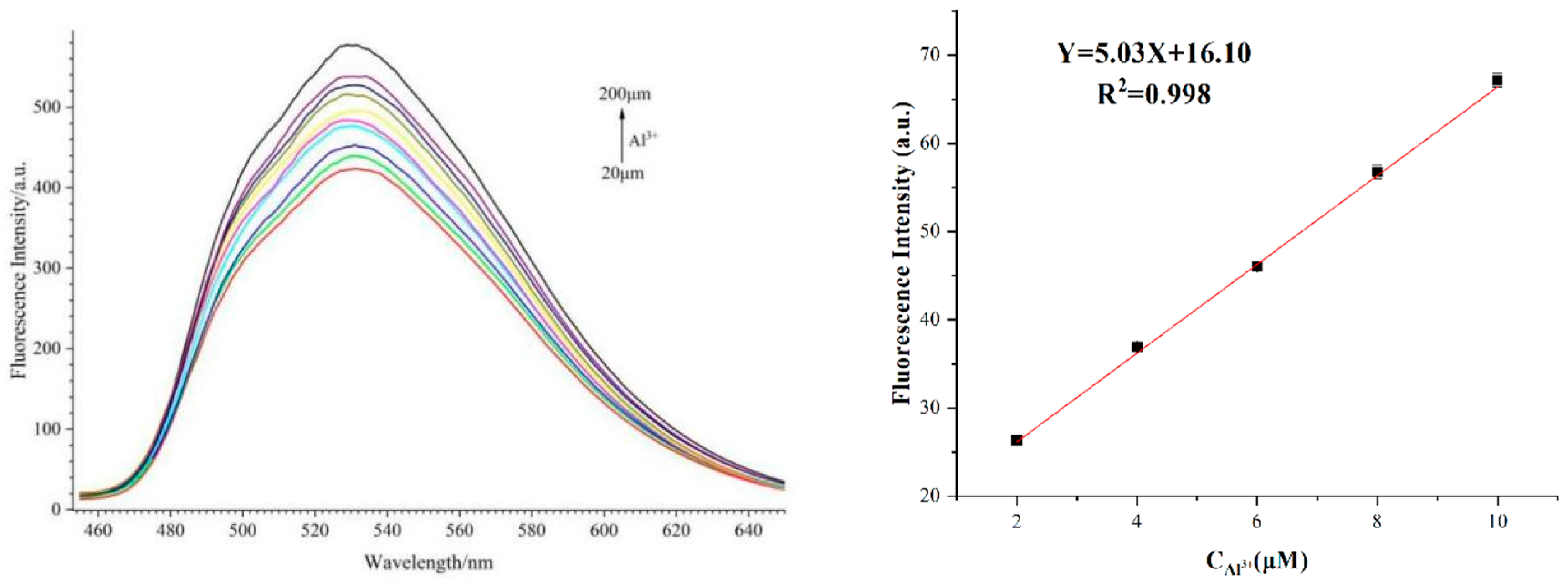
The fluorescence titration experiment of Al3+ on the fluorescent probe HA was used to study the fluorescence spectra of HA at different Al3+ concentrations. Different concentrations of Al3+ (20–200 μmol·L−1) were added to the HA (200 μmol·L−1) solution. Under an excitation wavelength of 411 nm, the fluorescence was measured and the fluorescence emission spectra were recorded to obtain the fluorescence titration trend of Al3+ on the fluorescent probe HA. To establish the calibration curve for Al3+ quantification, five Al3+ standard solutions with concentrations of 2, 4, 6, 8, and 10 μmol·L−1 were prepared. For each concentration, three replicate samples were prepared by adding 1 mL of the Al3+ standard solution, 1 mL of 0.3 mmol·L−1 probe HA solution, and 1 mL of pH 5.0 acetate buffer. After mixing and allowing the mixture to stand for 25 min, the fluorescence intensity at 531 nm was measured for each replicate. The mean fluorescence intensity for each concentration was then plotted against the Al3+ concentration to generate the calibration curve, which was fitted using linear regression analysis. After mixing and letting it stand for 25 min, the test was performed on the instrument.

2.12. Fluorescence Quantum Yield Measurement

The fluorescence quantum yields (Φ) of probe HA and the HA-Al3+ complex were determined using a relative method with quinine sulfate in 0.1 M H2SO4 ( Φ r e f = 0.54) as the reference standard. The absorbance of all solutions at the excitation wavelength (411 nm) was kept below 0.1 to minimize inner-filter effects. Fluorescence spectra were recorded under identical conditions for both the samples and the reference. The quantum yield was calculated using the following equation:
Φ s = Φ r e f × ( I s / I r e f ) × ( A r e f / A s ) × ( η s 2 / η r e f 2 )
where Φ is the quantum yield, I is the integrated fluorescence intensity, A is the absorbance at the excitation wavelength, and η is the refractive index of the solvent. The refractive index of the methanol–water mixture (1:1, v/v) was estimated as 1.34, and that of 0.1 M H2SO4 was taken as 1.33.

2.13. Density Functional Theory (DFT) Calculation of Probe HA and Al3+

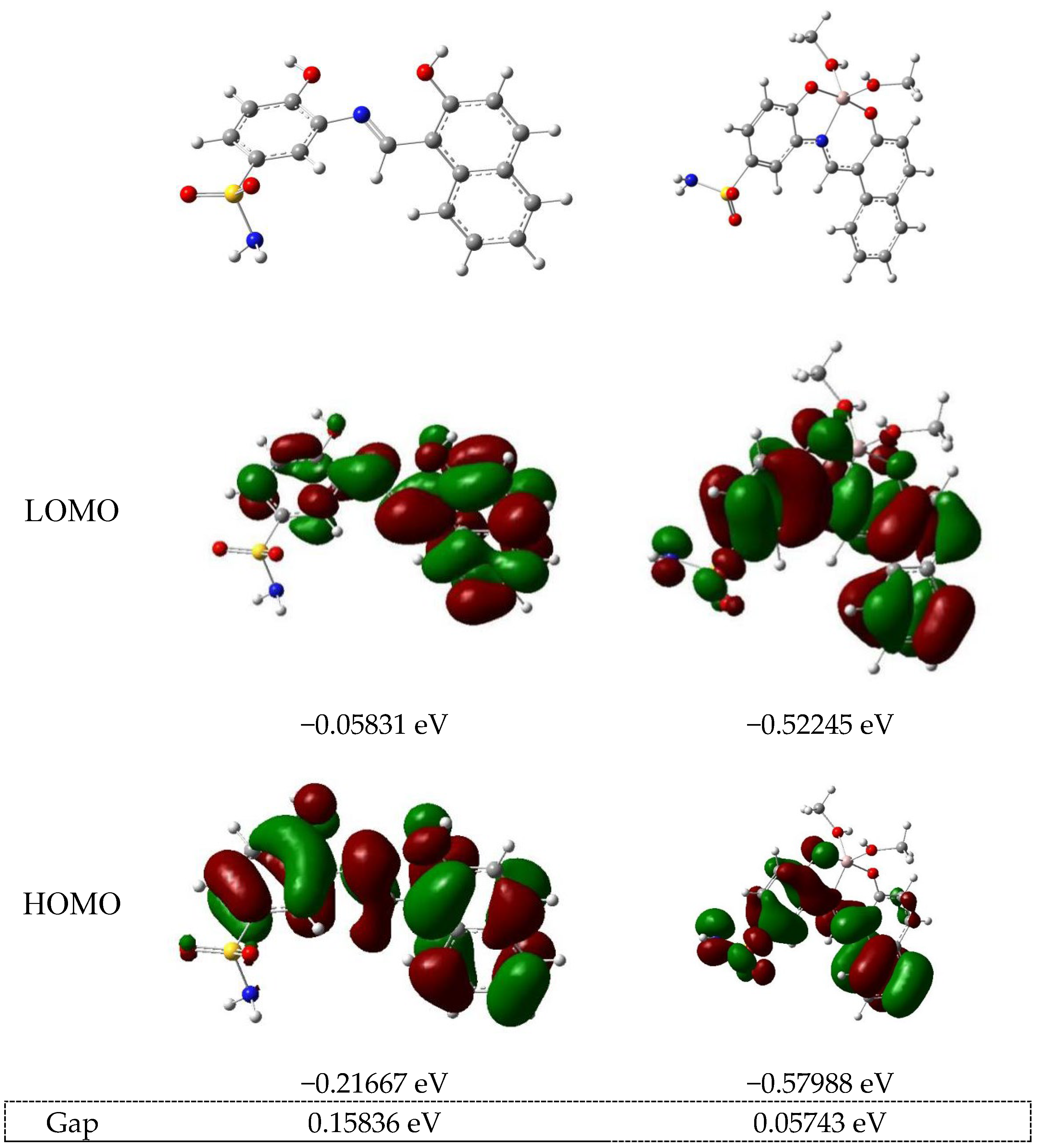
To better verify the recognition mechanism of probe HA for Al3+, density functional theory (DFT) calculations were performed using the Gaussian 09 software package. The molecular geometries of probe HA and its HA-Al3+ complex were optimized using the M06 density functional method with the 6–31G(d) basis set for all atoms. To account for the influence of the solvent environment, which is critical for accurately modeling molecular structures and properties in solution, geometry optimizations were performed using the integral equation formalism variant of the polarizable continuum model (IEFPCM) with methanol as the solvent (dielectric constant ε = 32.6), reflecting the major organic component of the experimental methanol–water (1:1, v/v) medium. No explicit solvent molecules were included in the model; the solvent effect was treated implicitly using the IEFPCM approach. Frequency calculations were performed at the same level of theory to confirm that the optimized structures corresponded to energy minima (no imaginary frequencies). The HOMO and LUMO energy levels and distributions were visualized using Gaussian 16W software. This computational approach provides insights into the electronic structure and binding characteristics of HA and its Al3+ complex under conditions that approximate the experimental solvent environment.

2.14. Detection of Al3+ in Real Aqueous Samples

Based on the high specificity of the HA probe for Al3+, the method was applied to detect Al3+ in real aqueous samples. Tap water and commercially available bottled water were selected for analysis. Prior to detection, all aqueous samples were filtered through a 0.22 μm membrane. To evaluate the accuracy of the method under real sample conditions, a standard addition procedure was followed. First, a “sample blank” was prepared using the unspiked filtered water sample to determine any background signal. Then, three aliquots of each filtered water sample were spiked with Al3+ standard solutions to achieve final added concentrations of 1, 5, and 10 μM. Each spiked sample and the unspiked sample blank were prepared in triplicate. The fluorescence intensity of each prepared solution was measured, and the Al3+ concentration in the spiked samples was determined by subtracting the signal of the sample blank and interpolating on the pre-established calibration curve (Section 3.7). The recovery percentage was calculated as (concentration found/concentration spiked) × 100%.

3. Results and Discussion

3.1. Selectivity

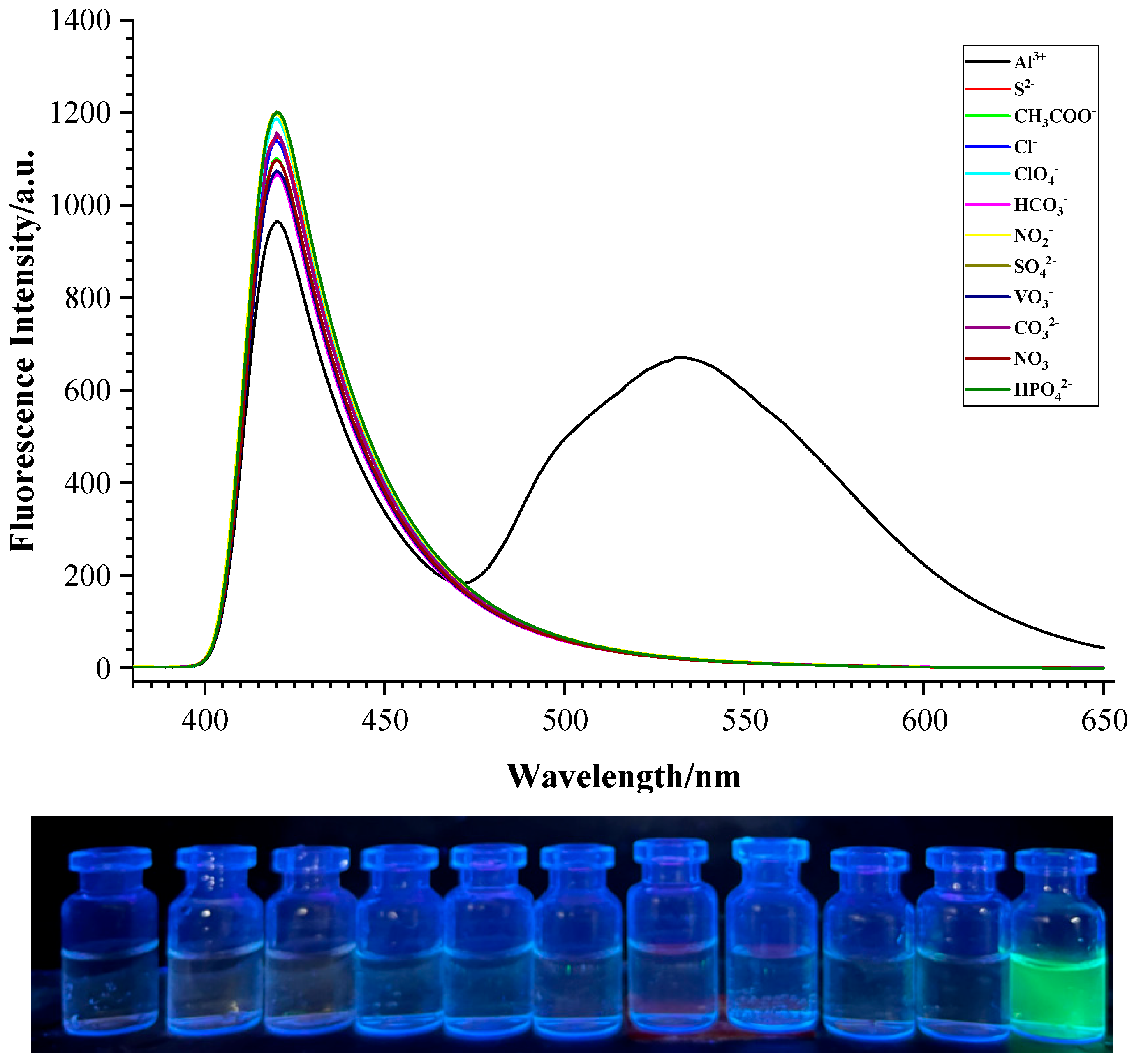
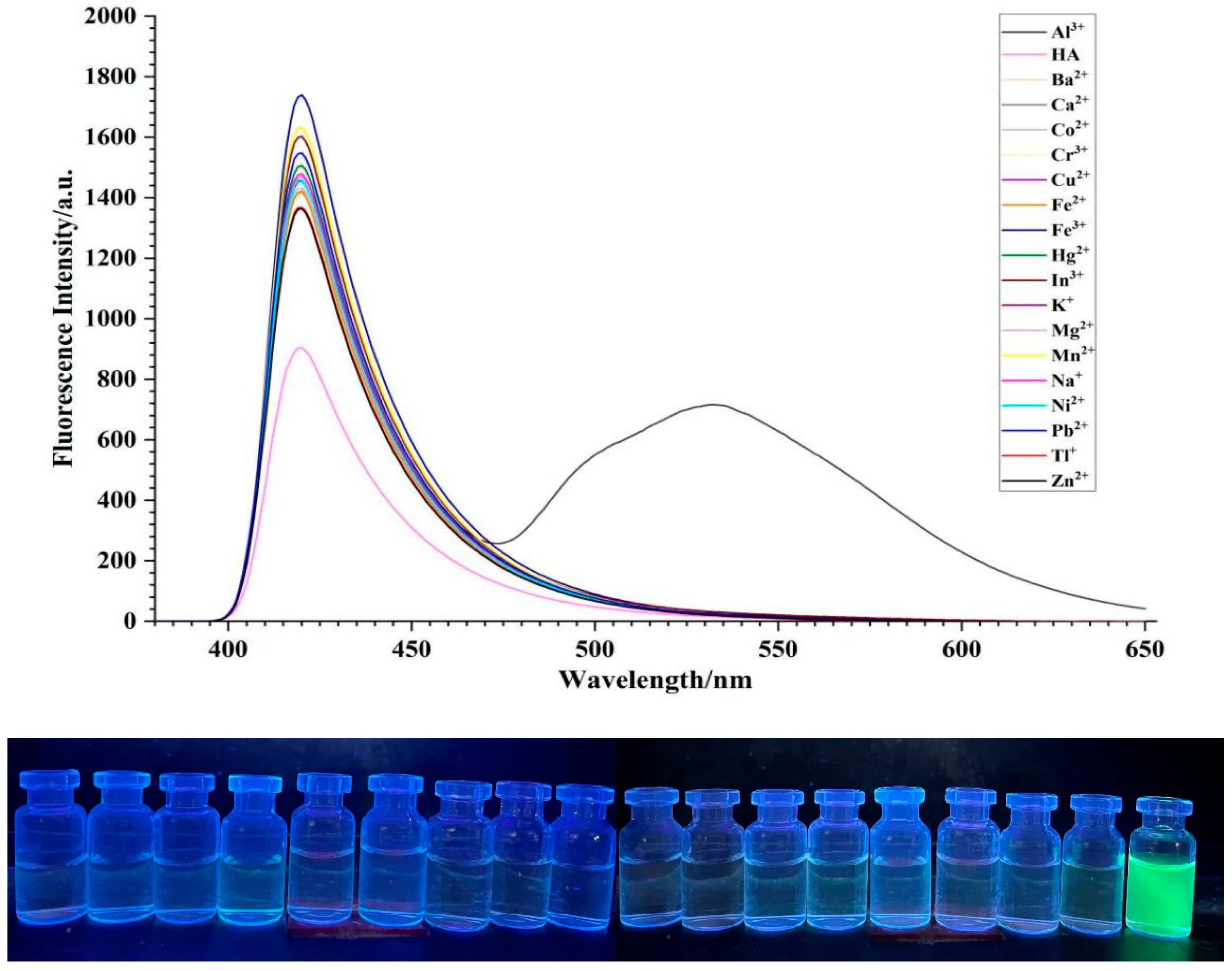
As can be seen from Figure 2 and Figure 3, under a 365 nm UV lamp, the HA solution only emits a bright yellow fluorescence after the addition of Al3+, while the other 17 metal ion solutions and 10 anion solutions added show no fluorescence or only very weak fluorescence. Correspondingly, the HA and Al3+ solution system exhibits a strong fluorescence emission peak at 531 nm, with Al3+ showing a significant fluorescence enhancement effect on the probe HA. When the other 17 metal ion solutions and 11 anion solutions are added, the fluorescence intensity changes very little or remains almost unchanged, indicating that the probe HA can achieve fluorescence selective recognition of Al3+.

3.2. pH Effect

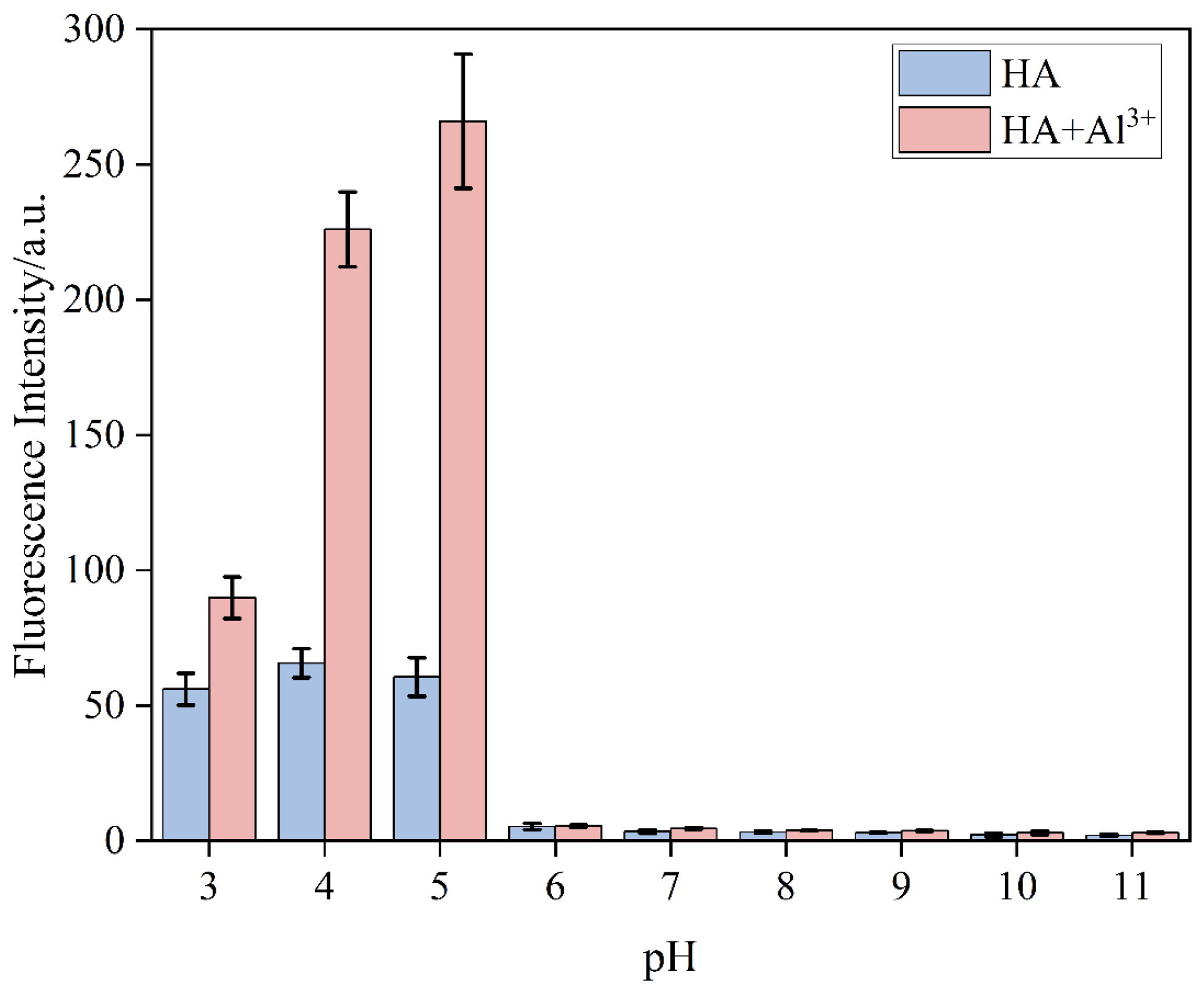
Analysis of Figure 4 reveals that the HA-Al3+ complex exhibits stronger fluorescence signals at pH 4.0 and pH 5.0 compared to the HA-deionized water system. Conversely, when the pH is 3.0 or ranges from 6.0 to 11.0, the fluorescence intensity differences between the probe HA and the HA-Al3+ systems are not significant. This may be attributed to the protonation of the phenolic groups under strong acidic conditions and the decomposition of the probe HA under strong alkaline conditions, resulting in weaker fluorescence, or even no fluorescence. The fluorescence intensity difference between the HA-Al3+ complex and the probe HA is maximal at pH 5.0. Therefore, for subsequent experiments, an acetate-acetic acid buffer solution at pH 5.0 is selected for investigation.

3.3. Response Time and Stability

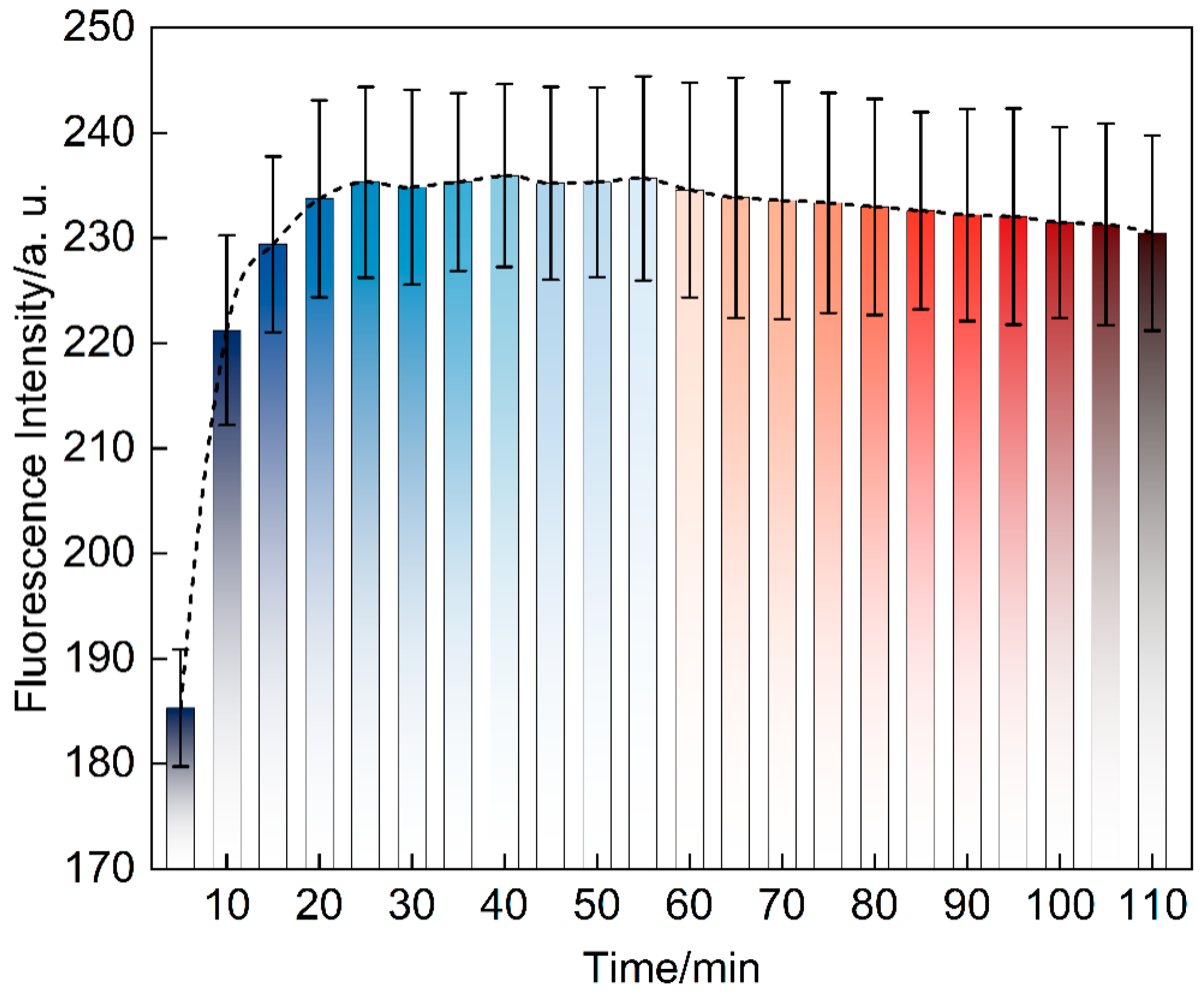
As can be seen from Figure 5, the fluorescence intensity of the HA-Al3+ complex continuously increases within 5 to 25 min, but gradually levels off after 25 min, indicating that the reaction is complete. Therefore, the complexation reaction reaches a stable state after 25 min. Hence, 25 min is chosen as the reaction time for HA-Al3+ in subsequent experiments.

3.4. Competitive Experiments

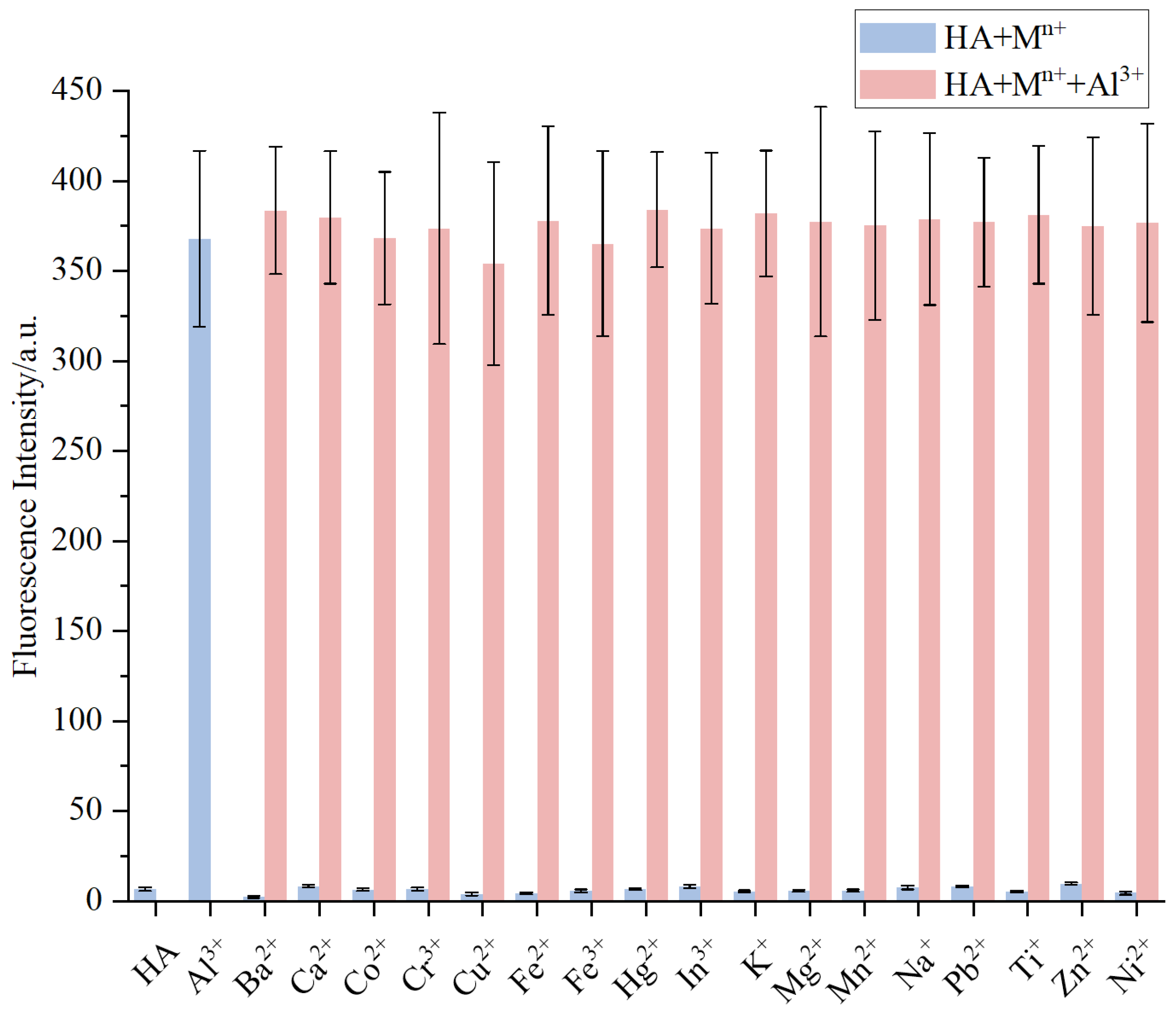
As can be seen from Figure 6, after the addition of Al3+ to the HA-Mn+ system, the entire system still maintains its fluorescence response characteristics. It is worth noting that when Al3+ coexists with the other 17 metal ions in the same reaction system, the fluorescence response signal of the HA-Al3+ system is significantly stronger than that of the HA-Mn+ system. This result indicates that the presence of competing cations does not prevent HA from binding to Al3+, demonstrating excellent anti-interference ability against a background of diverse metal ions. Furthermore, as shown in Figure 3, common anions also exhibit negligible interference with the HA-Al3+ complex, confirming that the fluorescence response is highly specific to Al3+. While these controlled experiments effectively simulate the ionic complexity of natural waters, they do not account for potential interferences from non-ionic matrix components such as dissolved organic matter, which could, in principle, compete for Al3+ binding or contribute to background fluorescence. The impact of such components is best assessed through analysis of real-world samples with diverse characteristics. Therefore, the probe molecule not only has excellent selectivity for Al3+ but also maintains a stable fluorescence signal output in a complex ion environment, demonstrating good anti-interference characteristics.

3.5. Reversibility

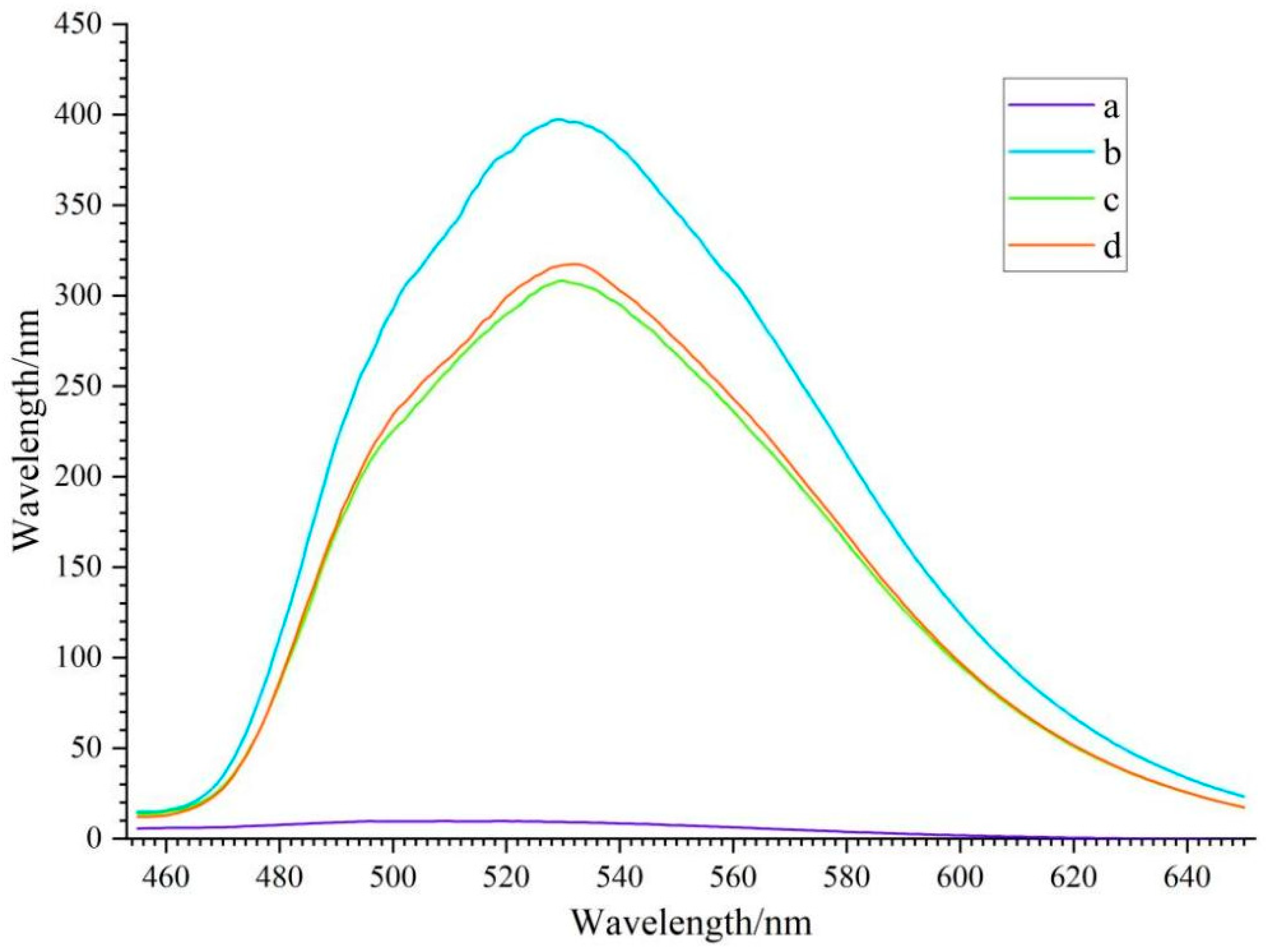
Curve a in Figure 7 represents the fluorescence intensity of HA itself without complexation with metal Al3+, which is relatively weak at 531 nm. Curve b indicates that the fluorescence intensity significantly increases after the formation of the HA-Al3+ complex. Curve c shows a decrease in fluorescence intensity upon the addition of EDTA, suggesting that EDTA competitively dissociates the HA-Al3+ complex. Curve d demonstrates that the fluorescence intensity increases again after the re-addition of Al3+, indicating that the reaction of the HA-Al3+ complex is reversible.

3.6. Binding Stoichiometry

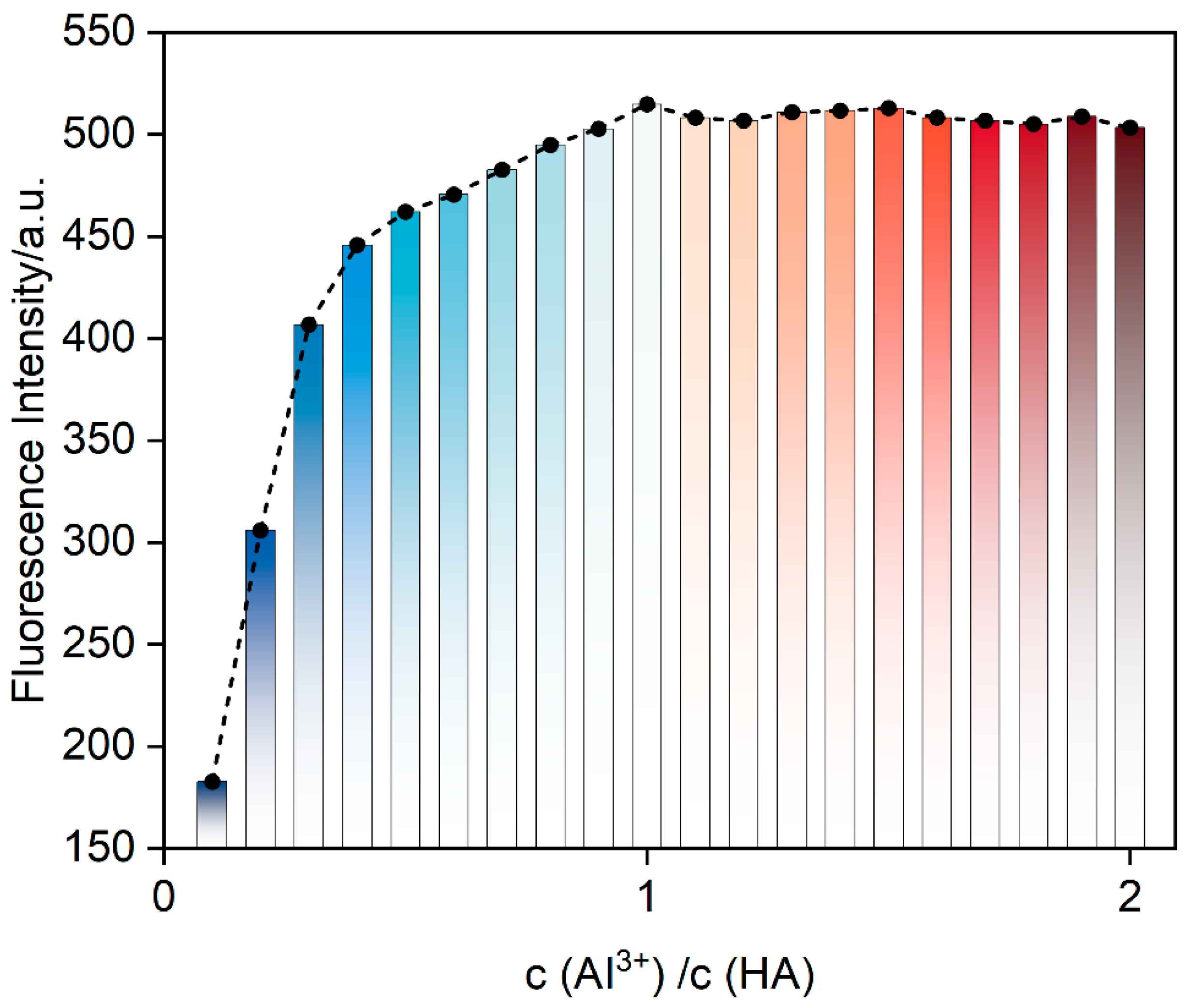
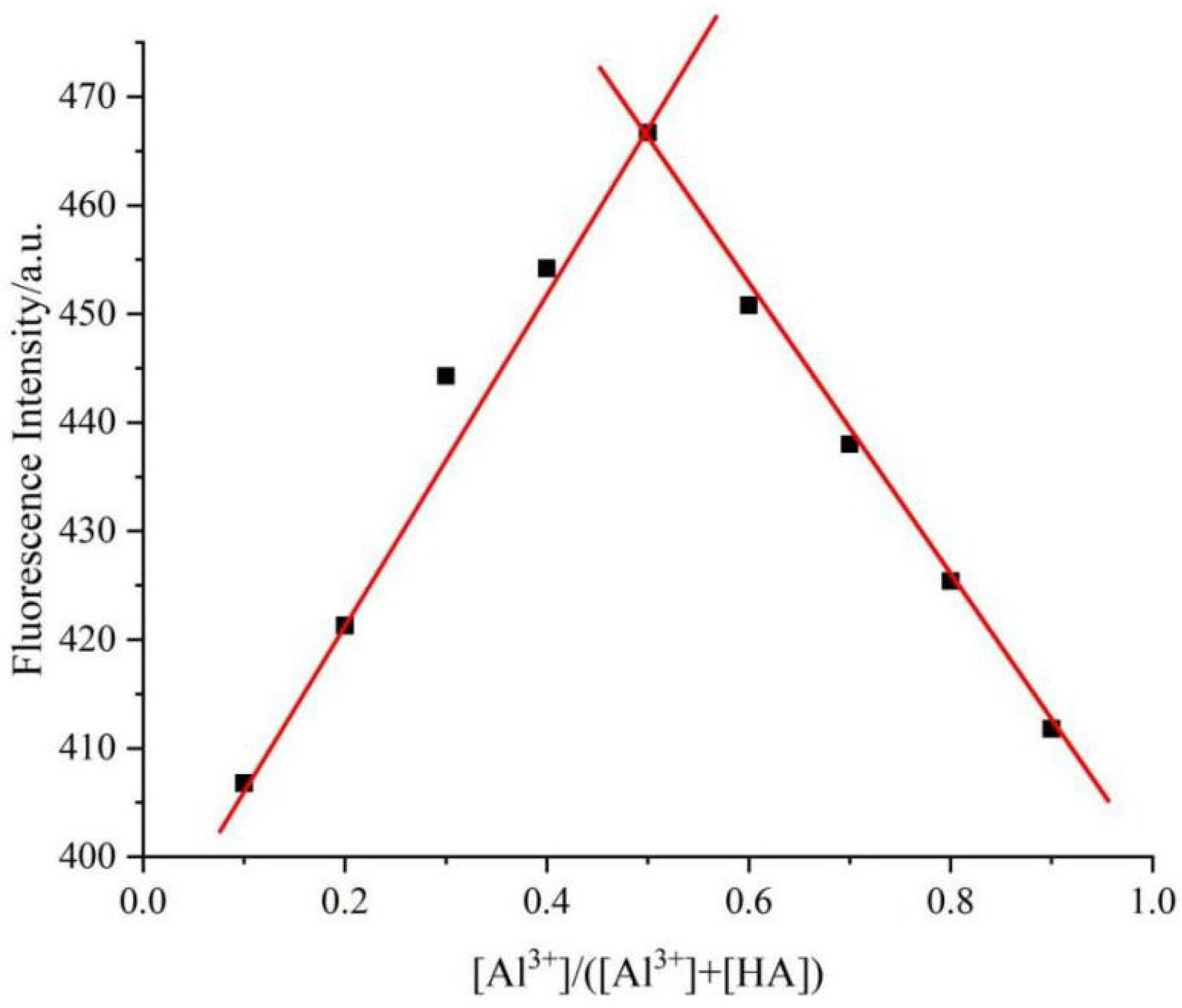
As can be seen from Figure 8, when the ratio c(Al3+)/c(HA) is less than or equal to 1, the fluorescence intensity at 531 nm increases with the concentration of Al3+. When c(Al3+)/c(HA) equals 1, the fluorescence intensity reaches its maximum value. When c(Al3+)/c(HA) is greater than 1, the fluorescence intensity of the complex system remains essentially stable, indicating that HA and Al3+ likely bind in a 1:1 ratio. Based on the fluorescence detection results, a graph was plotted, and from Figure 9, Figure 10 and Figure 11, a peak can be observed. The position of this peak corresponds to the binding ratio of the fluorescent probe HA to Al3+. The Job’s plot experimental results further indicate that the fluorescent probe HA binds to Al3+ in a 1:1 ratio. It is worth noting that the binding stoichiometry analysis using the mole ratio method (Figure 8) was performed at relatively higher concentrations (30–600 μmol·L−1) to ensure sufficient fluorescence signal intensity and signal-to-noise ratio for accurate determination of the saturation point. At the lower concentration range used for analytical calibration (1–10 μmol/L), the fluorescence signals are weaker and the signal-to-noise ratio is lower, which could introduce greater uncertainty in identifying the precise inflection point corresponding to the binding stoichiometry. However, it is important to emphasize that the binding stoichiometry is an intrinsic chemical property of the HA-Al3+ complex that should be independent of concentration, provided that the complex formation follows a simple 1:1 model and no concentration-dependent aggregation or other phenomena occur. This is supported by the Job’s plot analysis (Figure 9), which was conducted at a total concentration of 600 μmol·L−1 and independently confirmed the 1:1 binding ratio. Furthermore, the excellent linearity of the calibration curve in the 1–10 μmol·L−1 range (R2 = 0.999) is consistent with a single, stable complex species being formed across this concentration range, indirectly supporting that the 1:1 binding stoichiometry holds at lower concentrations as well.

3.7. Detection Limit and Linear Range

As can be seen from Figure 10, as the concentration of Al3+ increases, the fluorescence intensity of HA gradually enhances. When the concentration ratio reaches 1:1 or higher, the fluorescence intensity of the fluorescent probe HA no longer increases. The results indicate that the binding ratio of the fluorescent probe HA to Al3+ is 1:1. Additionally, linear fitting of the fluorescence intensity at 531 nm reveals a good linear relationship between the concentration of Al3+ and the fluorescence intensity of the complex when the Al3+ concentration ranges from 1 μM to 10 μM. The linear regression equation is Y = 5.03X+ 16.10. By continuously measuring the blank fluorescent probe HA solution without Al3+ 11 times and calculating based on (limit of detection) LOD = 3σ/k, the detection limit of Al3+ is determined to be 0.052 μmol·L−1. The probe HA significantly enhances the fluorescence quantum yield through planar rigidity design and intramolecular charge transfer mechanisms, with a low detection limit of 0.052 μmol·L−1. The limit of quantification (LOQ), calculated as 10σ/k, was found to be 0.173 μmol·L−1. The precision of the method was assessed by the relative standard deviation (RSD) of replicate measurements, and the accuracy was evaluated through recovery experiments in real samples, both of which are detailed in Section 3.9.

3.8. DFT Calculations

Based on the stoichiometric ratio of 1:1 for the complexation of HA with Al3+, Density Functional Perturbation (DFP) calculations were performed for the probe HA and Al3+. The optimized geometric configuration of the HA-Al3+ complex is shown in Figure 11, where intramolecular hydrogen bonds can be observed between the phenolic hydroxyl group and nearby atoms. In the Al3+ complex, coordination is achieved through distinct Al-O and Al-N bonds with Al3+. Job’s plot experiments have confirmed a 1:1 binding ratio for the HA-Al3+ complex. To further investigate the binding characteristics between probe HA and Al3+, the highest occupied molecular orbital (HOMO) and the lowest unoccupied molecular orbital (LUMO) for both HA and the HA-Al3+ complex are depicted in Figure 11. For HA, the HOMO energy is −0.21667 eV and the LUMO energy is −0.05831 eV, resulting in a band gap energy of 0.15836 eV. For the HA-Al3+ complex, the HOMO energy is −0.57988 eV and the LUMO energy is −0.52245 eV, with a band gap energy of 0.05743 eV. This indicates that the band gap energy of the HA-Al3+ complex is lower than that of the individual probe HA, suggesting greater stability. Compared to HA, the energy required to excite electrons is reduced. The fluorescence quantum yield measurements further support the “turn-on” sensing mechanism. Free probe HA exhibited a low quantum yield (Φ = 0.023), which is attributed to non-radiative decay pathways such as C=N isomerization and PET. Upon complexation with Al3+, the quantum yield increased dramatically to 0.187. This approximately 8-fold enhancement is consistent with the formation of a rigid, planar complex that restricts intramolecular rotation and suppresses PET, corroborating the DFT results which showed a reduced HOMO-LUMO band gap and increased molecular stability upon Al3+ binding.

3.9. Al3+ Detection in Real Aqueous Samples

This study demonstrates that the HA probe-based fluorescence method is effective for detecting Al3+ in aqueous samples. As shown in Table 1, the method exhibits excellent analytical performance in both Tap and Bottled water matrices: the spike recovery rates for Al3+ range from 90.92% to 100.69%, with all relative standard deviations (RSDs) below 1%. These results confirm the method’s accuracy and precision in two common types of drinking water, which represent low-salinity matrices with relatively simple compositions. However, we acknowledge that the applicability of the method would be further strengthened by testing a broader diversity of natural water samples, such as river water, lake water, or even seawater, which possess more complex matrix characteristics including higher salinity and dissolved organic carbon content. Future work will focus on validating the HA probe’s performance in such diverse environmental water matrices to fully establish its practical utility. The experimental findings substantiate that the proposed methodology demonstrates superior accuracy and exceptional precision, thereby fulfilling the essential criteria for reliable quantification of Al3+ in real aqueous samples.

3.10. Comparison with Previously Reported Al3+ Fluorescent Probes

To contextualize the analytical performance of probe HA, we compared its key features with those of recently reported fluorescent probes for Al3+ detection. As summarized in Table 2, HA exhibits several notable advantages. Firstly, its detection limit of 58 nM is significantly lower than many previously reported probes and is well below the WHO guideline for Al3+ in drinking water (7.41 μM). Secondly, the probe operates at a relatively long emission wavelength (531 nm), which helps minimize interference from background autofluorescence commonly encountered in biological and environmental samples. Thirdly, HA demonstrates excellent water compatibility due to the presence of the sulfonate group, enabling detection in aqueous media without requiring high organic solvent content. Finally, the probe has been successfully validated in real water samples (tap and bottled water) with satisfactory recoveries, demonstrating its practical applicability. While some probes may offer even lower detection limits or longer emission wavelengths, HA distinguishes itself through its combination of sensitive and selective detection, straightforward one-step synthesis, and proven performance in real-world aqueous matrices.

4. Conclusions

To address the technical limitations of current Al3+ detection methods, this study successfully resolved this critical challenge through the development of a Schiff-base fluorescent probe HA. The probe not only overcomes inherent spectroscopic obstacles in Al3+ detection but also effectively bridges the gap between laboratory analysis and practical applications. Compared with conventional instrumental methods for total aluminum determination, which typically require extensive sample pretreatment, the innovation of probe HA lies in its integration of excellent aqueous compatibility, high selectivity against interfering ions such as Fe3+, and a straightforward synthesis into a single platform—demonstrating performance superior to most reported fluorescent probes. In practical aqueous sample testing, the probe HA demonstrates exceptional accuracy and precision. Despite these strengths, we acknowledge certain limitations of the current study. The evaluation of real-world applicability was confined to tap water and commercially bottled water, which represent relatively clean and low-salinity matrices. The performance of HA in more complex environmental waters, such as rivers, lakes, or estuaries containing higher levels of dissolved organic matter, suspended particulates, and variable salinity, remains to be investigated. Additionally, while the probe HA exhibits excellent selectivity against a wide range of competing ions, potential interference from strong Al3+-chelating ligands (e.g., citrate, phosphate) that may be present in natural waters was not assessed in detail. Nevertheless, the method’s simplicity, high sensitivity, and selectivity make it a promising candidate for Al3+ monitoring in drinking water and other low-salinity aqueous systems. Future research will be directed toward validating the HA probe in a broader spectrum of natural water sources and exploring strategies to mitigate potential matrix effects, thereby extending its utility to more challenging environmental applications. As an innovative dual-functional probe, HA enables rapid monitoring of Al3+ in aqueous samples with traceability, and its simplicity, high sensitivity, and selectivity make this method a promising candidate for application in real aqueous sample monitoring.

Author Contributions

Conceptualization, M.L. and L.Z.; methodology, S.Z.; validation, C.W. (Chen Wang), R.F., H.Z. and C.W. (Chenyu Wang); formal analysis, S.Z.; investigation, L.Z.; resources, J.L.; data curation, L.Z.; writing—original draft preparation, M.L.; writing—review and editing, N.Z.; visualization, Y.S.; supervision, Y.A.; project administration, N.Z.; funding acquisition, J.L. All authors have read and agreed to the published version of the manuscript.

Funding

This work was funded by the National Natural Science Foundation of China (No. 20872118 and 30070905); the Natural Science Foundation of Shannxi Province, China (No. 2014JM4125, 2020JM-419 and 2025JC-YBMS-1080); and the Foundation of Shaanxi Administration of traditional Chinese Medicine, China (No. 13-JC012 and 2019-ZZ-JC044).

Institutional Review Board Statement

Not applicable.

Informed Consent Statement

Not applicable.

Data Availability Statement

Dates are available from the authors.

Acknowledgments

We gratefully acknowledge the financial support from the National Natural Science Foundation of China and the Natural Science Foundation of Shaanxi Province for this research.

Conflicts of Interest

The authors declare no conflicts of interest.

References

  1. Hodson, M.J.; Evans, D.E. Aluminium–silicon interactions in higher plants. J. Exp. Bot. 2020, 71, 6719–6729. [Google Scholar] [CrossRef]
  2. Bryliński, Ł.; Kostelecka, K.; Woliński, F.; Duda, P.; Góra, J.; Granat, M.; Flieger, J.; Teresiński, G.; Buszewicz, G.; Sitarz, R.; et al. Aluminium in the human brain: Routes of penetration, toxicity, and resulting complications. Int. J. Mol. Sci. 2023, 24, 7228. [Google Scholar] [CrossRef]
  3. Kongta, N.; Judprasong, K.; Chunhabundit, R.; Sirivarasai, J.; Karnpanit, W. Assessment of Exposure to Aluminum through Consumption of Noodle Products. Foods 2023, 12, 3960. [Google Scholar] [CrossRef] [PubMed]
  4. Suomi, J.; Tuominen, P. Cumulative risk assessment of the dietary heavy metal and aluminum exposure of Finnish adults. Environ. Monit. Assess. 2023, 195, 809. [Google Scholar] [CrossRef]
  5. Niquette, P.; Monette, F.; Azzouz, A.; Hausler, R. Impacts of substituting aluminum-based coagulants in drinking water treatment. Water Qual. Res. J. 2004, 39, 303–310. [Google Scholar] [CrossRef]
  6. Liu, J.; Zhang, J.; Dai, Z.; Li, B.; Chen, X.; Meng, X. Recycling aluminum from polyaluminum chloride sludge through acid dissolution and cation resin separation/purification. Water Res. 2024, 262, 122096. [Google Scholar] [CrossRef]
  7. Krupińska, I. Suitability of highly polymerised polyaluminium chlorides (PACls) in the treatment of mixture of groundwater and surface water. Molecules 2023, 28, 468. [Google Scholar] [CrossRef] [PubMed]
  8. Frankowski, M.; Zioła-Frankowska, A.; Kurzyca, I.; Novotný, K.; Vaculovič, T.; Kanický, V.; Siepak, M.; Siepak, J. Determination of aluminium in groundwater samples by GF-AAS, ICP-AES, ICP-MS and modelling of inorganic aluminium complexes. Environ. Monit. Assess. 2011, 182, 71–84. [Google Scholar] [CrossRef]
  9. El Hosry, L.; Sok, N.; Richa, R.; Al Mashtoub, L.; Cayot, P.; Bou-Maroun, E. Sample preparation and analytical techniques in the determination of trace elements in food: A review. Foods 2023, 12, 895. [Google Scholar] [CrossRef]
  10. San Martín, S.P.; Bauçà, J.M.; Martinez-Morillo, E. Determination of aluminum concentrations in biological specimens: Application in the clinical laboratory. Adv. Lab. Med./Av. Med. Lab. 2022, 3, 153–159. [Google Scholar] [CrossRef] [PubMed]
  11. Adesina, K.E.; Burgos, C.J.; Grier, T.R.; Sayam, A.S.; Specht, A.J. Ways to measure metals: From ICP-MS to XRF. Curr. Environ. Health Rep. 2025, 12, 7. [Google Scholar] [CrossRef]
  12. Hart, K.A.; Trueman, B.; Halfyard, E.A.; Sterling, S.M. Detection and Prediction of Toxic Aluminum Concentrations in High-Priority Salmon Rivers in Nova Scotia: Toxic Al concentrations in salmon rivers. Environ. Toxicol. Chem. 2024, 43, 2545–2556. [Google Scholar] [CrossRef]
  13. Csorba, B.; Farkas, L.; Mihalkó, A.; Boros, R.Z.; Gresits, I.L. Photometric determination of trace amounts of aluminum in nearly saturated rock salt solutions used by chlor-alkali industry. Period. Polytech. Chem. Eng. 2023, 67, 442–451. [Google Scholar] [CrossRef]
  14. Mohanty, P.; Behura, R.; Bhardwaj, V.; Dash, P.P.; Sahoo, S.K.; Jali, B.R. Recent advancement on chromo-fluorogenic sensing of aluminum (III) with Schiff bases. Trends Environ. Anal. Chem. 2022, 34, e00166. [Google Scholar] [CrossRef]
  15. Yang, C.; Zhao, J. A simple ‘turn-on’fluorescence chemosensor for Al (iii) detection in aqueous solution and solid matrix. RSC Adv. 2024, 14, 1464–1471. [Google Scholar] [CrossRef]
  16. Alshareef, F.; Algethami, J.S.; Alhamami, M.A.; Alosaimi, E.H.; Al-Saidi, H.M.; Khan, S. Recent advancement in organic fluorescent and colorimetric chemosensors for the detection of Al3+ ions: A review (2019–2024). J. Environ. Chem. Eng. 2024, 12, 114110. [Google Scholar] [CrossRef]
  17. Ren, H.; Li, F.; Yu, S.; Wu, P. The detection of multiple analytes by using visual colorimetric and fluorometric multimodal chemosensor based on the azo dye. Heliyon 2022, 8, e10216. [Google Scholar] [CrossRef] [PubMed]
  18. Fakayode, S.O.; Walgama, C.; Fernand Narcisse, V.E.; Grant, C. Electrochemical and colorimetric nanosensors for detection of heavy metal ions: A review. Sensors 2023, 23, 9080. [Google Scholar] [CrossRef] [PubMed]
  19. Kotadiya, R. Illuminating the analytical chemistry Profile: A Three-Decade comprehensive review of fluorometric quantitation in pharmaceutical formulations. Microchem. J. 2024, 208, 112568. [Google Scholar] [CrossRef]
  20. Nath, P.; Mahtaba, K.R.; Ray, A. Fluorescence-based portable assays for detection of biological and chemical analytes. Sensors 2023, 23, 5053. [Google Scholar] [CrossRef]
  21. De Acha, N.; Elosúa, C.; Corres, J.M.; Arregui, F.J. Fluorescent Sensors for the Detection of Heavy Metal Ions in Aqueous Media. Sensors 2019, 19, 599. [Google Scholar] [CrossRef]
  22. Huang, S.; Yan, H.; Lin, L.; Guo, H.; Yang, F. Novel fluorescent sensor for Al3+ based on a bis-tetraphenylimidazole Schiff base. J. Photochem. Photobiol. A Chem. 2024, 447, 115212. [Google Scholar] [CrossRef]
  23. Das, B.; Murmu, K.C.; Dey, S.K.; Chaudhuri, S.M.; Almarhoon, Z.M.; Ansari, M.Z.; Bag, P.P.; Dolai, M. Pyrazole appended Schiff base based sensor for Al3+ detection: Spectroscopic investigation, real sample analysis and cell imaging studies. Inorg. Chem. Commun. 2024, 170, 113108. [Google Scholar] [CrossRef]
  24. Shaw, C.A.; Seneff, S.; Kette, S.D.; Tomljenovic, L.; Oller, J.W., Jr.; Davidson, R.M. Aluminum-Induced Entropy in Biological Systems: Implications for Neurological Disease. J. Toxicol. 2014, 2014, 491316. [Google Scholar] [CrossRef]
  25. Zou, Y.; Liu, Y. A novel isophorone-based NIR fluorescent and colormetric probe for Al3+ sensing and its application for living cells and plants imaging. Spectrochim. Acta Part A Mol. Biomol. Spectrosc. 2024, 312, 124040. [Google Scholar] [CrossRef] [PubMed]
  26. Zhao, C.; Asif, M.; Lu, W.; Shuang, S.; Tang, Y.; Dong, C. Al3+ induced hydrolysis of anthraquinone-based Schiff base fluorescent probe for determination PPi ions and bioimaging. J. Mol. Liq. 2024, 400, 124507. [Google Scholar] [CrossRef]
  27. Zhao, C.; Xu, H.; Meng, Y.; Wang, Y.; Shuang, S.; Dong, C. Anthraquinone-based Schiff base fluorescent probe for the sequential sensing of Al3+ and pyrophosphate in a near-perfect aqueous solution and bioimaging. J. Mol. Liq. 2023, 391, 123326. [Google Scholar] [CrossRef]
  28. Kolcu, F.; Kaya, I. Carbazole-based Schiff base: A sensitive fluorescent ‘turn-on’chemosensor for recognition of Al (III) ions in aqueous-alcohol media. Arab. J. Chem. 2022, 15, 103935. [Google Scholar] [CrossRef]
  29. Silswal, A.; Sharma, D.; Koner, A.L.; Om, H.; Rana, R. A highly efficient, selective, reversible and ultra-sensitive fluorescence “Turn-ON” chemosensor for aluminium ions by a novel Schiff base. Spectrochim. Acta Part A Mol. Biomol. Spectrosc. 2024, 320, 124575. [Google Scholar]
  30. Cai, S.; Zhang, K.; Cai, X. Highly Selective Fluorescent Sensor for Detection of Al3+ Based on Schiff-Base of 2-Hydroxy-1-Naphthaldehyde and 8-Aminoquinoline and Its Applications. J. Appl. Spectrosc. 2024, 91, 659–668. [Google Scholar] [CrossRef]
  31. Li, Y.; Liu, Y.; Wei, X.; Wang, L.; Wang, Y.; Zhang, Q. A symmetric Schiff base fluorescent “turn-on” chemosensor for aluminum (III) ion selective detection based on hydrolysis. J. Mol. Struct. 2022, 1261, 132884. [Google Scholar] [CrossRef]
  32. Mondal, S.; Bhanja, A.K.; Ojha, D.; Mondal, T.K.; Chattopadhyayb, D.; Sinha, C. Fluorescence sensing and intracellular imaging of Al3+ ions by using naphthalene based sulfonamide chemosensor: Structure, computation and biological studies. RSC Adv. 2015, 5, 73626–73638. [Google Scholar] [CrossRef]
  33. Xing, Z.; Wang, J.; Huang, J.; Chen, X.; Zong, Z.; Fan, C.; Huang, G. A significant fluorescence turn-on probe for the recognition of Al3+ and its application. Molecules 2022, 27, 2569. [Google Scholar] [CrossRef]
  34. Chae, J.B.; Yun, D.; Lee, H.; Lee, H.; Kim, K.T.; Kim, C. Highly sensitive dansyl-based chemosensor for detection of Cu2+ in aqueous solution and zebrafish. ACS Omega 2019, 4, 12537–12543. [Google Scholar] [CrossRef]
  35. Reimann, M.J.; Salmon, D.R.; Horton, J.T.; Gier, E.C.; Jefferies, L.R. Water-soluble sulfonate Schiff-base ligands as fluorescent detectors for metal ions in drinking water and biological systems. ACS Omega 2019, 4, 2874–2882. [Google Scholar] [CrossRef]
  36. Shen, K.; Mao, S.; Shi, X.; Wang, F.; Xu, Y.; Aderinto, S.O.; Wu, H. Characterization of a highly Al3+-selective fluorescence probe based on naphthalimide-Schiff base and its application to practical water samples. Luminescence 2018, 33, 54–63. [Google Scholar] [CrossRef] [PubMed]
Figure 1. Synthesis of HA.
Applsci 16 02970 g001
Figure 2. Fluorescence response of HA (0.3 mM) toward various metal cations (0.3 mM) in methanol–water (1:1, pH 5.0). Inset: Photographs under 365 nm UV lamp.
Applsci 16 02970 g002
Figure 3. Fluorescence response of HA (0.3 mM) toward various metal anions (0.3 mM) in methanol–water (1:1, pH 5.0). Inset: Photographs under 365 nm UV lamp.
Applsci 16 02970 g003
Figure 4. Effect of pH on fluorescence intensity of HA and HA–Al3+ (0.3 mM each).
Applsci 16 02970 g004
Figure 5. Time-dependent fluorescence intensity of HA–Al3+.
Applsci 16 02970 g005
Figure 6. Competitive fluorescence responses of HA toward Al3+ (0.3 mM) in the presence of 0.3 mM interfering ions.
Applsci 16 02970 g006
Figure 7. Reversible fluorescence switching cycles of HA–Al3+ upon alternate addition of EDTA and Al3+.
Applsci 16 02970 g007
Figure 8. The binding ratio relationship diagram of probe HA with Al3+.
Applsci 16 02970 g008
Figure 9. Figure 9. Job’s plot for HA–Al3+ complex ([HA] + [Al3+] = 600 µM).
Applsci 16 02970 g009
Figure 10. The fluorescence titration results of the probe and the linear relationship diagram between the probe and chloride ions.
Applsci 16 02970 g010
Figure 11. Optimized structures and HOMO–LUMO distributions of HA and HA–Al3+ obtained by DFT.
Applsci 16 02970 g011
Table 1. Fluorescence detection of Al3+ in tap water and bottled water (n = 3).
SamplesSpiked (μM)Found (μM)Recovery (%)RSD (%)
Tap Water0undetected
10.91891.850.43
54.79195.830.12
109.97199.710.05
Bottled Water0undetected
10.90990.920.33
54.98799.750.48
1010.07100.690.06
Table 2. Comparison of probe HA with previously reported fluorescent probes for Al3+ detection.
ProbeBinding StoichiometryLOD (μM)Emission Wavelength (nm)Test MediumReal Sample ApplicationReference
HA (this work)1:10.058531MeOH-H2O (1:1, v/v)Tap water, bottled waterThis work
Schiff-base derivative A1:10.21505EtOH-H2O (1:1, v/v)Not applied[28]
Isophorone-based probe1:10.089585DMSO-H2O (1:1, v/v)River water, living cells[25]
Anthraquinone-based Schiff base1:10.13547DMSO-H2O (1:9, v/v)Tap water, river water[27]
Pyrazole appended Schiff base1:10.12460MeOH-H2O (1:1, v/v)Tap water, living cells[23]
Naphthalimide-Schiff base1:10.21525DMF-H2O (1:1, v/v)Tap water, lake water[36]
Disclaimer/Publisher’s Note: The statements, opinions and data contained in all publications are solely those of the individual author(s) and contributor(s) and not of MDPI and/or the editor(s). MDPI and/or the editor(s) disclaim responsibility for any injury to people or property resulting from any ideas, methods, instructions or products referred to in the content.