Article

Analysis of 3D-Printed Cycloidal Gear Degradation in a Run-to-Failure Test

1
Faculty of Mechanical Engineering, Casimir Pulaski Radom University, 54 Stasieckiego, 26-600 Radom, Poland
2
Institute of Mechanical Science, Vilnius Gediminas Technical University, 11 Sauletekio al., LT-10223 Vilnius, Lithuania
*
Author to whom correspondence should be addressed.
Appl. Sci. 2026, 16(6), 2866; https://doi.org/10.3390/app16062866
Submission received: 26 February 2026 / Revised: 12 March 2026 / Accepted: 13 March 2026 / Published: 16 March 2026

Abstract

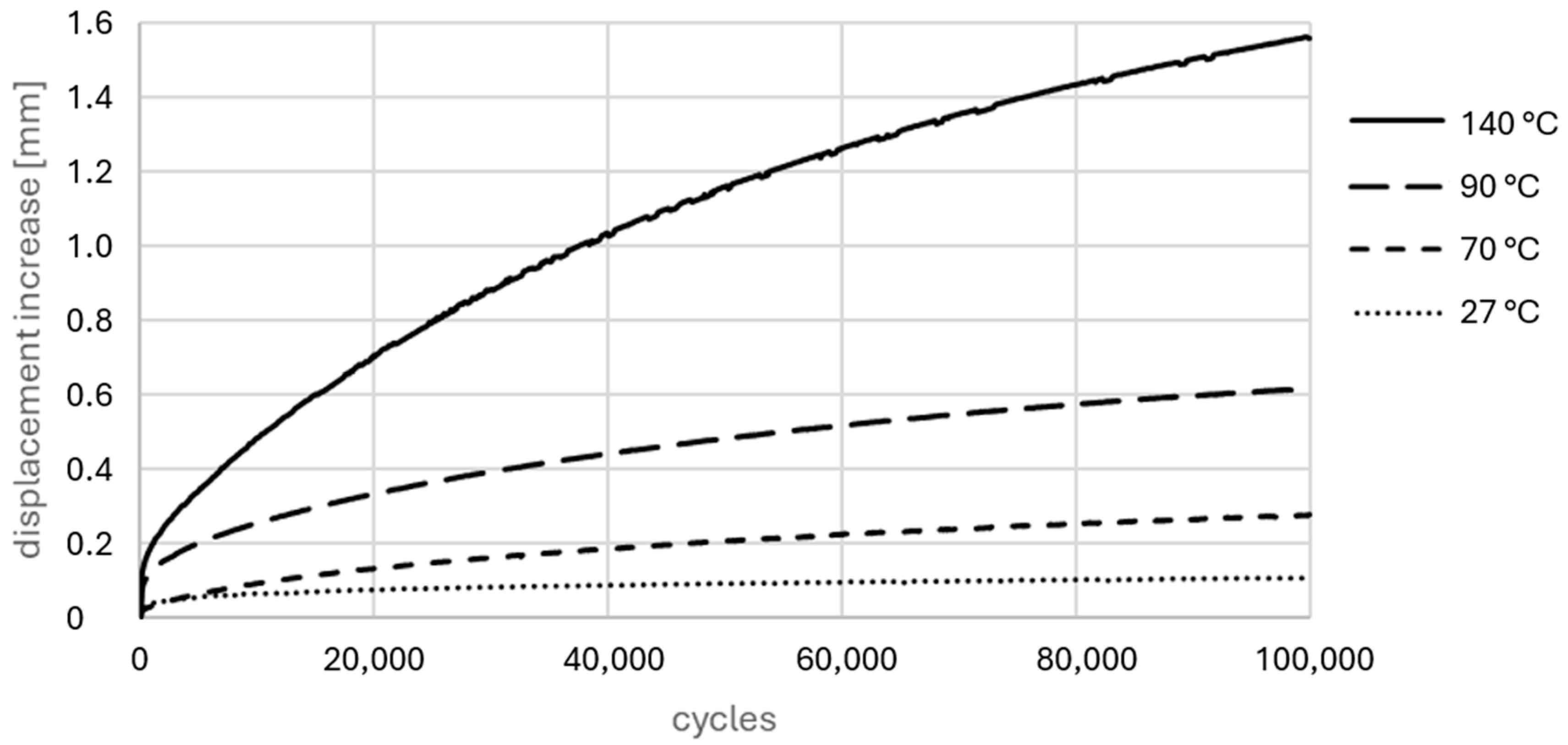
The paper presents results of a degradation analysis of polyamide 12 reinforced with carbon fibers used for additive manufacturing of cycloidal gear. Both FEM simulation and a fatigue test indicated the ability of the material to withstand loads during the work of cycloidal transmission. However, a run-to-failure (RTF) test revealed critical failure after 105 cycles, with displacement and damage of the material in the area close to bearing instead of expected areas of teeth being in friction with pins. Acceleration analysis with time synchronous averaging (TSA) confirmed rapid degradation of the material’s strength at the end of the RTF test. It was found that the PA12 cycloidal gear damage was a result of fatigue accelerated by the temperature increase under the cyclic loads that took place during the RTF test. In particular, displacement of 0.2 mm did not appear in the specimens tested at 27 °C even after 105 cycles, while at 140 °C this value was reached almost immediately. At 70 °C and 90 °C, plastic deformation of 0.2 mm was reached after 30,000 and 5000 cycles, respectively. The finding can be used in a predictive maintenance system of such cycloidal transmission with 3D-printed polymer gears.

1. Introduction

It is widely known that a cycloidal tooth is stronger than an involute one, and due to less sliding, it has less wear [1]. At the same time, comparison of the performance of conventional profiles based on epitrochoids, hypotrochoids, or cycloids demonstrated that none of these three profile types can be pointed out as universally better one than the others [2]. In order to transfer torque, cycloidal drives utilize the rotation of cycloidal disks, which reduces backlash and improves efficiency [3]. Due to their precision, high gear ratios, and capacity to handle heavy loads, cycloidal drives have found applications in responsible units used in robotics and aerospace industries [4]. Compared to standard involute gears, a number of design advantages of cycloidal gears can be listed, resulting from their unique geometry. While typical involute gears normally utilize contact of only one or two pairs of teeth at a time, generating high surface pressures, cycloidal gears can utilize from 30% up to 50% of the gear teeth simultaneously. As a result, better force distribution ensures significantly higher resistance to impact overloads and exceptional torque density while maintaining compact dimensions. Furthermore, the sliding friction dominant in involute gears is unfavorable for wear and contributes to heating. The rolling friction between the teeth and pins in cycloidal gearboxes allows for high mechanical efficiency and minimized backlash, a critical parameter in precise positioning systems. However, the specific surface contact in cycloidal transmissions has stringent material requirements, which, in the case of carbon fiber-reinforced polymers like PA12CF15, require a detailed analysis of degradation processes.
However, cycloidal discs used in the cycloidal gearboxes require extremely high geometric precision because even the smallest manufacturing inaccuracies can negatively affect their effectiveness and durability [5]. When manufacturing cycloidal tooth profiles of high precision, the complexity of traditional machining techniques requires increased costs, thus reducing the overall economic efficiency [6]. There are results of relationship analyses between geometrical parameters, manufacturing methods, and precision performance of the cycloidal reducer [7]. The authors analyzed tolerance allocation and proposed optimization of the tolerances design according to the required motion accuracy and recommended some adaptive tooth modifications to reduce the machining cost.
Apart from gear skiving technology and precision grinding [8,9], a wide range of recently developed advanced processes can be used for the manufacturing of gears [10], including laser beam machining, spark erosion machining, abrasive water jet machining, injection compression molding, or additive manufacturing (AM). Berger [11] evaluated the potential of several AM processes for the fabrication of gears and cycloid drives, proposing some strategies for the quality control and material behavior tests. Budzik and Pisula [12] listed numerous AM techniques and polymer materials that can be used for gear manufacturing. Beyond the technical and economic aspects, a significant factor in favor of implementing additive technologies in gear production is their positive environmental profile. Unlike traditional manufacturing methods, 3D printing allows for significant optimization of resource consumption and reduction in production waste, which aligns with modern life cycle assessment (LCA) standards, improving the environmental-friendliness and carbon efficiency of the production process compared to energy-intensive steel processing [13].
One of the most common materials used in the production of cycloidal discs is PA12CF15, i.e., nylon or polyamide PA12 with 15% carbon fiber [14]. To ensure cost-effectiveness, a long operating life, and low wear, a PA12CF15 3D-printed cycloidal speed reducer was fabricated and examined by Barsomian and his team [15]. The authors admitted that 3D printing of the gears is challenging in terms of precision, durability, and strength. Conducting a review of materials and performance of polymer gears, Jain and Patil [16] pointed out that the selection of a gear material and various factors including working parameters may affect the performance and failure behavior of the plastic, AM fabricated gears. Under complex load conditions, composite structures like PA12CF15 are subjected to the cyclic stresses which result from the significant degradation of the composite structure and worsening of the performance during long-term service [17].
Numerous works are devoted to the wear and degradation of cycloidal gears made of different materials, and a wide range of the mechanically dominated methods of wear modeling is available [18]. Guan et al. [19] investigated the wear mechanism and friction behavior of cycloidal gear made out of 20CrMo material after different heat treatment processes. They found that the high-concentration nitrocarburizing process ensured exceptional wear performance of the disc in operating conditions. Li and co-authors [20] considered the transient effects of the motion of pins and oil film squeezing and proposed for the cycloidal gear-pin pair a novel tribo-dynamics model able to predict the wear region. Jiang and team [21] developed a novel viscosity-pressure model, combining traditional stability, surface micro-morphological analysis, and contact fatigue modeling, revealing critical insights into surface characteristics and their impact on fatigue, while the employed neural proxy-based optimization strategy significantly reduced fatigue risks. However, no study devoted to the fatigue degradation of 3D-printed cycloidal gears has been published so far, to the best of our knowledge.
Contemporary trends in mechanical engineering place increasing emphasis on sustainability and minimizing the environmental impact of production processes. Using additive manufacturing techniques instead of traditional machining significantly reduces material waste, as raw material is applied only where necessary to maintain the structural integrity of the part. For AM techniques, there are studies concerning key strategies aimed at achieving sustainability and waste reduction, including optimization of design, technology, and process, material selection, recycling, on-demand production, and smart manufacturing [22]. In the case of polymers such as PA12CF15, precise material dosing using FDM technology reduces the use of expensive and energy-intensive carbon fibers. Furthermore, the push for component weight reduction directly translates into lower energy and material consumption during fabrication and further energy savings during the operation of the as-fabricated engineering systems. The use of thermoplastics also opens the path to recycling according to the principles of a circular economy, providing a significant advantage over difficult-to-degrade or heavy metal components. Circular economy strategies have been worked out and are available for various fibrous polymer composites [23]. The recycled powders can be used also in additive manufacturing of the polymer gears [24]. Recycling of PA12 waste is possible via a radiation spheroidization method [25] or using mechanical recycling methods, relevant within the global requirements of the circular economy [26].
In the present study, a disc with cycloidal profile was 3D-printed using a fused deposition modeling (FDM) method out of PA12CF15 polymer composite. It underwent fatigue tests up to failure, using the relevant test rig. Unexpectedly, critical degradation appeared in the area close to bearing, not in the interface between polymer surface and metal pins. Additional analysis and temperature analysis provided an explanation for why this sort of fatigue degradation took place.

2. Materials and Methods

2.1. The Tested Object

Based on the initial experimental results published earlier [27,28], it was found that the steel components of the cycloidal gearbox are able to bear relevant loads. In the present study, it was decided to test an additively manufactured gear in order to reduce the mass of the gearbox while retaining its performance characteristics. For that purpose, a carbon fiber (CF)-reinforced PA12 polyamide (nylon) filament was used. Nylon PA12 was chosen since it is a multipurpose material customary for 3D-printing applications due to high interlayer adhesion; it exhibits flexibility when thin and high durability. There are additional advantages when using with carbon fiber reinforcement, which allows for the fabrication of thin, lightweight components of high-impact absorption and dimensional stability and elasticity with reduced thermal expansion [29]. According to the recent report, CF reinforcement contributed to the increase in ultimate tensile strength by 168%,and to even more significant improvement in the creep resistance [30]. In the current research, 15% of reinforcement was added so that the composition was denoted PA12CF15.
The cycloidal gear for the test was 3D-printed using a Raise3D Pro3 device with a dual-head and electronic lifting system (Raise3D, Stafford, TX, USA) ensuring repeatability of 5 μm. The printing area was closed, and its dimensions were 300 mm × 300 mm × 300 mm. During the fabrication, the nozzle temperature was 265 °C, the build plate temperature was 90 °C, with a layer height of 0.2 mm and total thickness of the outer coating of 2 mm. Filling was 30% with a honeycomb pattern, and no supports were used. More details are provided in Table 1.
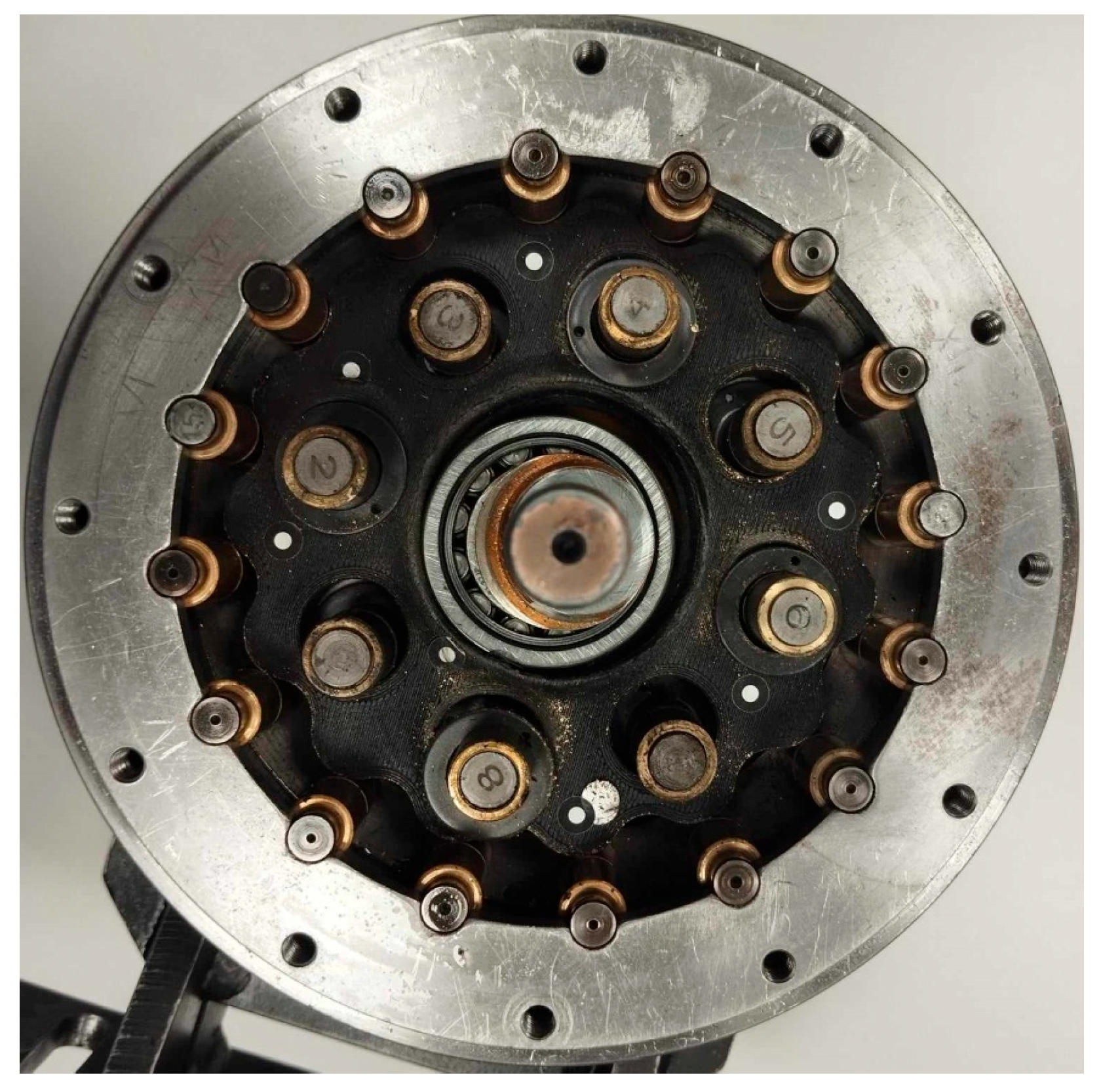
The use of 15% carbon fiber reinforcement significantly increased tensile strength and improved creep resistance compared to pure polyamide 12. Key mechanical properties used for further analysis, including Young’s modulus, were experimentally determined for specific density and fill pattern. The assembled as-fabricated polymer gear along with steel components are shown in Figure 1.
To check the correctness of the designed parameters λ, b, and q as specified and explained in the Appendix A, three main tasks were to be solved, as follows:
  • To determine the internal stress in the cycloidal disc under the loads;
  • To perform a fatigue test of the PA12CF15 material at different temperatures;
  • To perform a run-to-failure (RTF) test of the gearbox with PA12CF15 cycloidal disc;
  • To verify the degradation mode of the cycloidal disc.

2.2. FEM Analysis

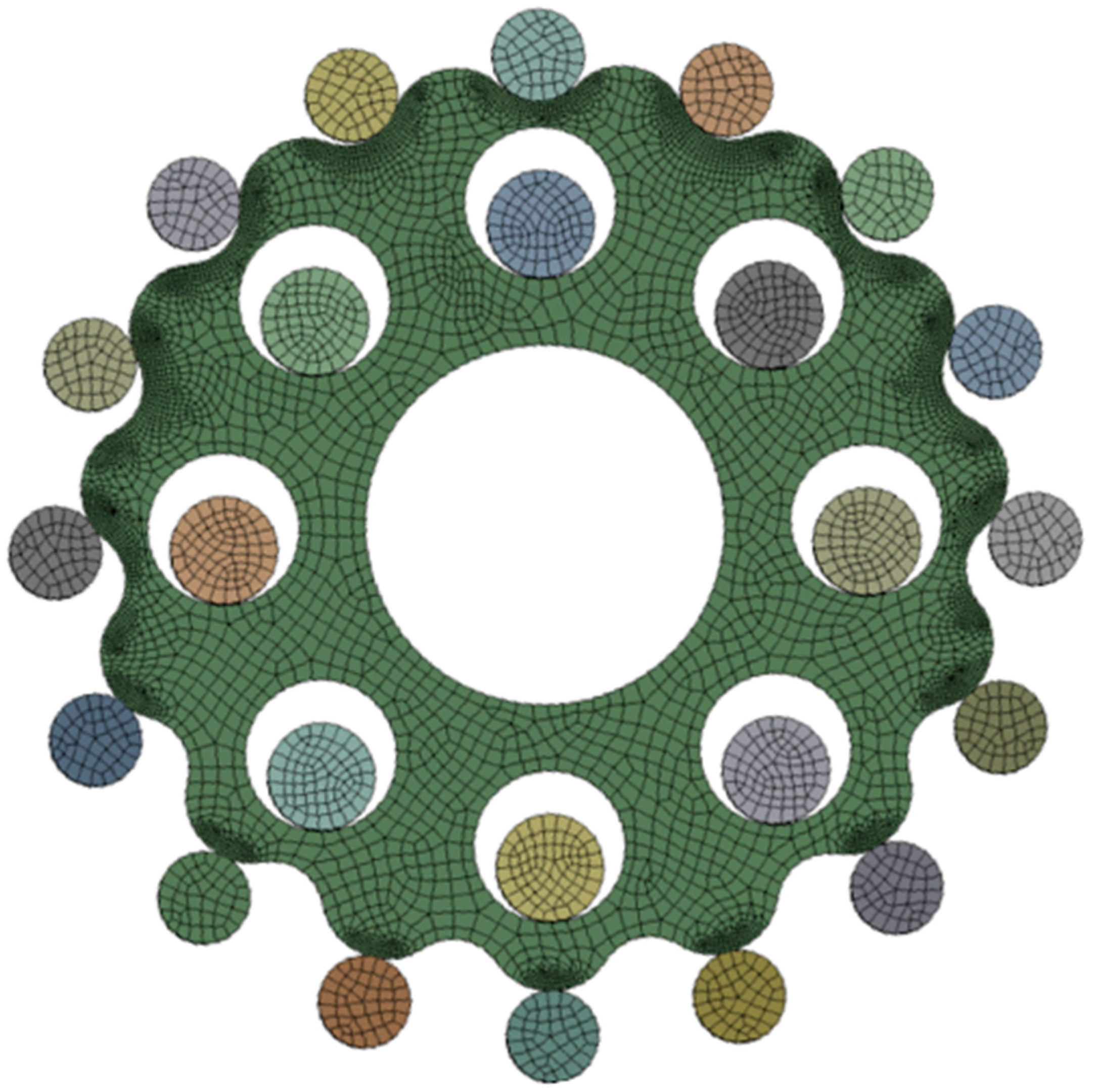
To investigate the internal stresses of the cycloidal disc, a FEM simulation was conducted using ANSYS 2024R2 system (ANSYS, Inc., Canonsburg, PA, USA). The model comprised 150,000 Hex20 elements, as shown in Figure 2. The contact sizing method, with an element size of 0.5 mm, was employed to achieve a more precise characterization of stress in the contact areas.
A frictionless surface-to-surface contact was assumed to simulate the interface between the internal and external pins interacting with the cycloidal disc. The material used in the FEM simulation for the pins was steel, while for the cycloidal disc it was PA12CF15, with modified material parameters taken from static experimental tests, where the Young’s modulus was 998 MPa for the same infill pattern and density.
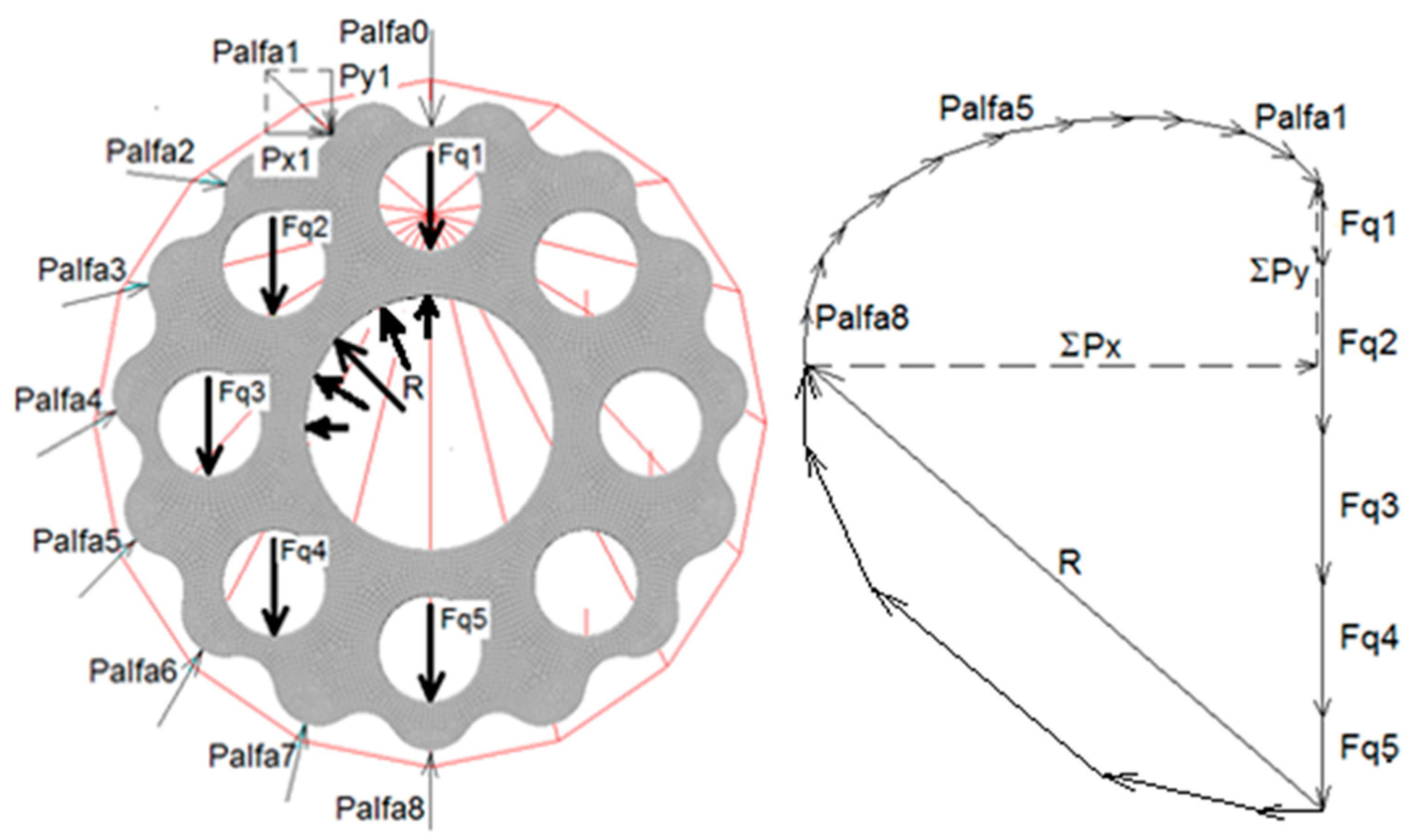
Load R transmitted from the input shaft on a single cycloidal disc force caused force distribution dependent on the angle of the contact points of rolling elements. It was calculated according to the scheme shown in Figure 3 and the following equation:
R = ( P x ) 2 + ( F q i P y ) 2 .

2.3. Fatigue Test

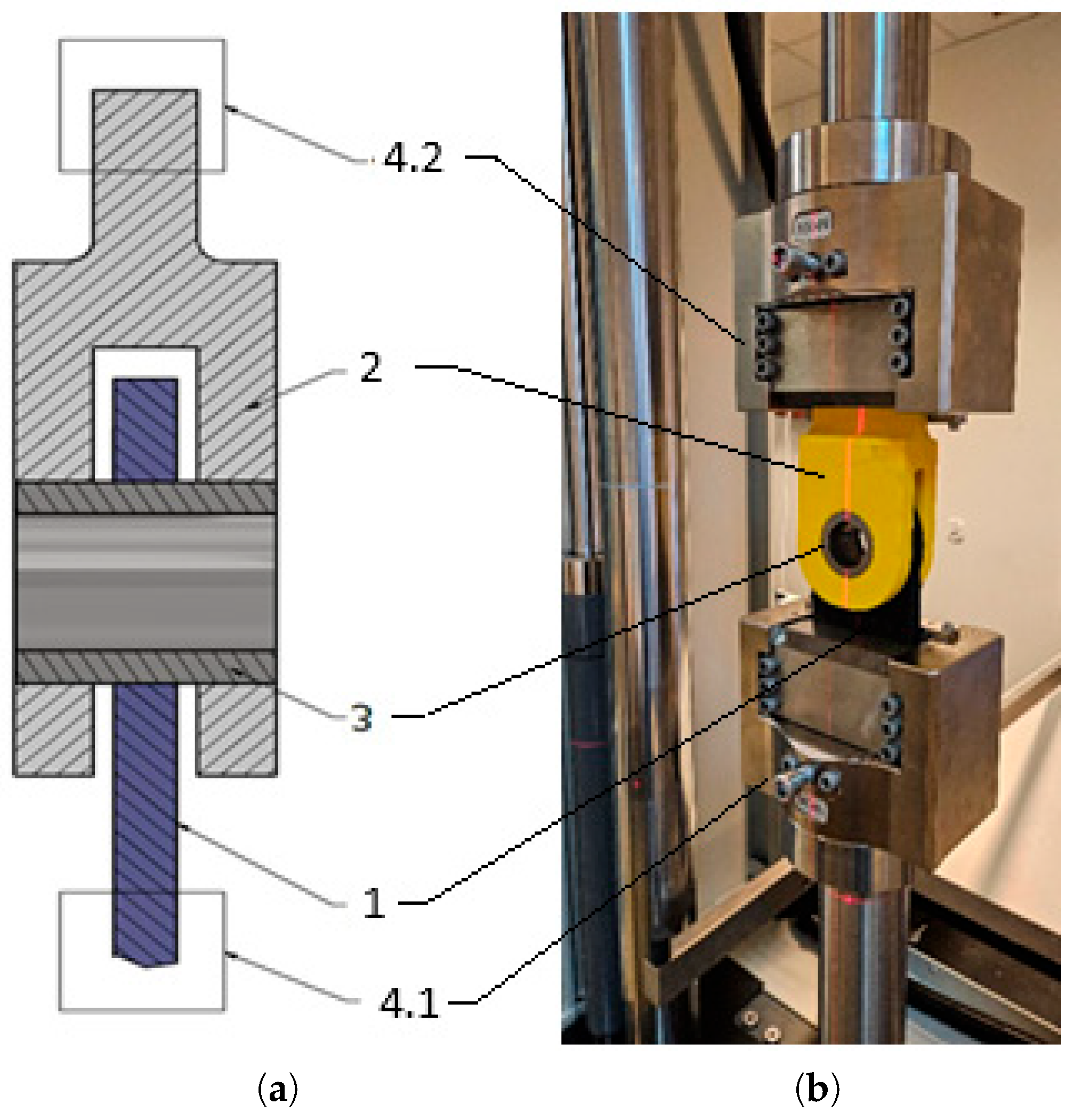
Feasibility of the PA12CF15 material for the cycloidal gearbox was checked using the fatigue test. The test was conducted using the hydraulic testing machine Zwick/Roel HB100 equipped with a temperature chamber (Ulm, Germany). The test was carried out with a specially prepared specimen denoted 1 in Figure 4a, which imitated the shape of the internal part of the cycloidal disc with the bearing mounting hole. The specimen fabricated with the same technology using the same material PA12CF15, was mounted on the steel shaft and supported by a hollow steel shaft (3) in order to reproduce the load conditions in the gearbox. The entire holder was clamped in the testing machine as shown in Figure 4b, using holders (4.1) and (4.2).
In order to stay in conformity with the RTF tests, the fatigue tests were performed at different temperatures using the thermal chamber of the testing machine. Since it was impossible to know real-time temperatures in the gearbox during the RTF test, the fatigue test was performed at the following temperatures: 27 °C, 70 °C, 90 °C, and 140 °C.
The choice of the abovementioned specific temperature steps for fatigue testing was made in order to investigate the behavior of the PA12CF15 material in various thermomechanical states. A temperature of 27 °C was the reference point for the material in its glassy state. The values of 70 °C and 90 °C were chosen to cover the range above the glass transition temperature Tg of polyamide 12. The typical Tg value for PA12 is around 40–50 °C [31], and at this point there is a rapid increase in the mobility of macromolecular segments, leading to increased susceptibility to plastic deformation. The last step represented by temperature 140 °C corresponds with extreme operating conditions in a highly elastic state. It is intentionally close to the softening and melting temperature Tm = 175–180 °C [32], which allowed for the simulation of the material behavior just before the complete loss of structural cohesion. This approach allowed for a direct correlation of fatigue results with the housing temperature recorded during the RTF test, which reached 70 °C in the 40th minute.
Other parameters of the fatigue test were chosen to remain close to the RTF test conditions, as follows:
  • Frequency of interaction between the bearing and cycloidal disc was fb = 33 Hz, which corresponded with a rotation speed of the input shaft of 2000 rpm;
  • The resultant force R acting on the cycloidal disc was modeled as a harmonic excitation represented by a sinusoidal function oscillating around zero, with a peak amplitude of ±260 N. This approach was adopted to simulate the cyclic loading conditions that took place during the regular operation of the gearbox, where the transmitted forces periodically varied in both magnitude and direction;
  • Minimal duration of the fatigue test was assumed to be 105 cycles.

2.4. Run-to-Failure Test

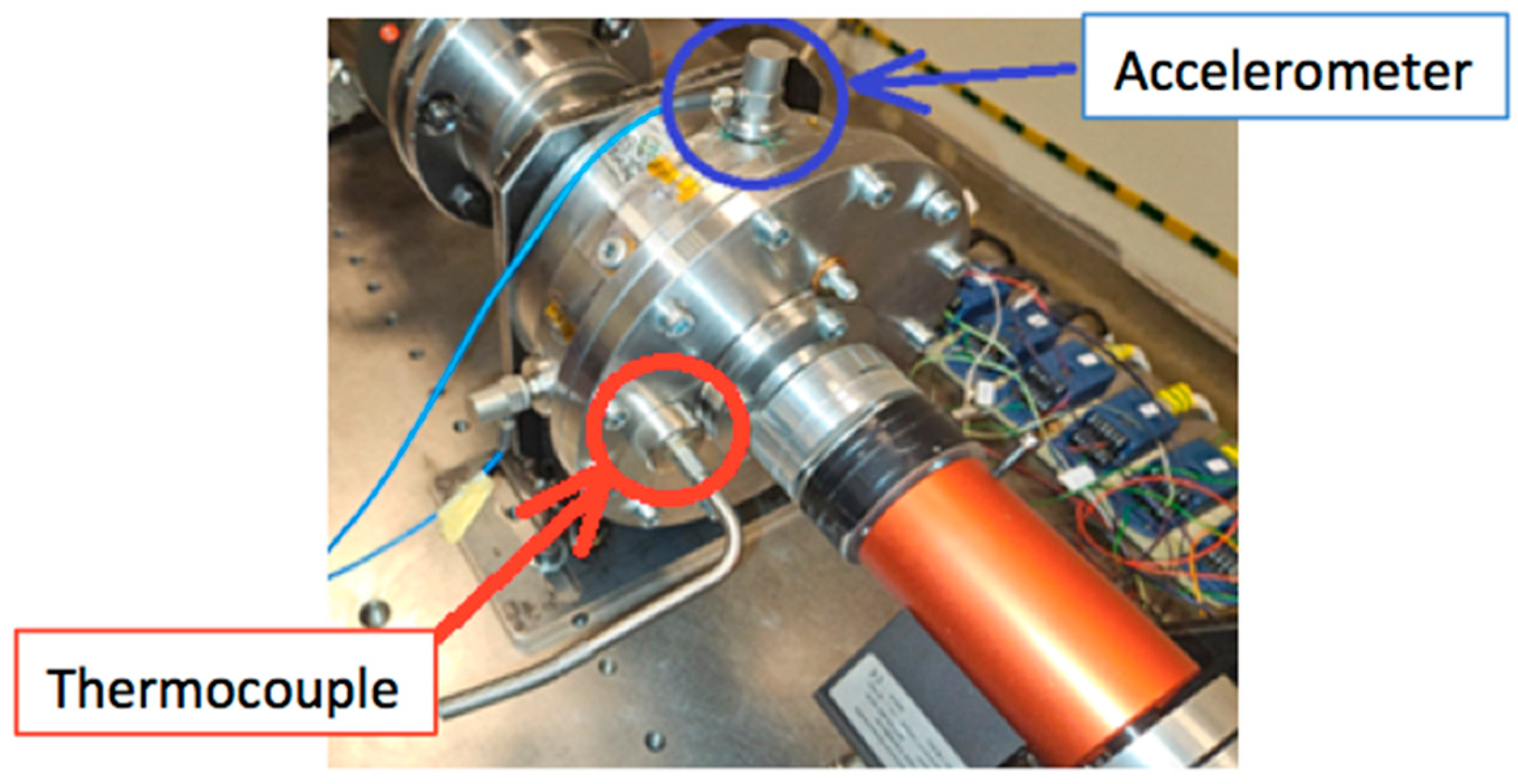
The RTF test was conducted using a dedicated test rig equipped with all the necessary components, including a data acquisition system. The test rig shown in Figure 5 was described in detail in [28]. The accelerometer for data acquisition was placed at the top of the cycloidal gearbox and indicated with a blue arrow in Figure 5. Due to the need to ensure synchronization of the acceleration signal with the shaft position in TSA analysis, the signals recorded by the vertically mounted accelerometer were correlated with additional tachometer signals collected on the input shaft.
The test was performed using the settings as follows:
  • Constant input speed of 2000 rpm;
  • Constant gearbox load of 32 Nm.
The duration of the test was determined by the emergency stop of the test rig when the cycloidal disks significantly impeded the rotation of the input motor. Overall test duration until failure was 48 min.

2.5. Data Processing

The data acquisition system was based on National Instruments hardware and LabView Q3 software. The number of samples was 50,000 for one data set, the sampling frequency was 25.6 kHz, and the data acquisition interval was Δt = 1 min. Each portion of registered data took 1.8 s. Registration was initiated every time by the tachometer signal collected from the input shaft. After the test, 48 data packages with recorded acceleration signals were obtained. The analysis was conducted using MATLAB 2024a software.
The time synchronous averaging (TSA) method was used to process collected signals and to assess possibility of real-time failure prediction. The data obtained from the RTF test was analyzed in a multi-stage process with two main stages, as follows:
  • Data collection, signal segmentation, phase detection, and averaging synchronized segments to obtain the synchronous average signal;
  • Anomaly identification: analysis of TSA results allows for the detection of anomalies indicating wear or failures of gearbox elements such as gear teeth or bearings.
TSA is very useful in vibration signal analysis, particularly in the diagnostics of rotating machinery, with its ability to reduce noise and to extract defect-specific signals [33], according to the following formula:
x T S A ( t ) = 1 N k = 0 N 1 x ( t + k T ) ,
where xTSA(t) is the signal obtained through TSA; N is the number of periods over which the signal is averaged; x(t) is the original time-domain signal; and T is the synchronous period corresponding with a shaft rotation period.
An in-depth comparative analysis of TSA signals was performed based on the following statistical indicators:
  • RMS (root mean square), an effective measure of the signal indicating the average vibration energy;
  • Kurtosis, a measure of the “peakedness” of the signal distribution indicating the presence of peaks;
  • Skewness, a measure of the asymmetry of the signal distribution;
  • Peak-to-peak, the difference between the maximum and minimum signal values.
For the peak amplitude analysis, the respective values for each data set corresponding to different time points during the RTF test were calculated using the formula:
A P E A K = m a x | x T S A ( t ) | .
The variance of the TSA signal, s T S A 2 (t), represents the dispersion of signal values around the mean value. The formula for the TSA signal variance is as follows:
s T S A 2 ( t ) = 1 N i = 1 N [ x i ( t ) x T S A ( t ) ] 2 .
Calculating the variance of the TSA signal allows for assessing the quality of the averaged signal and noise reduction. A variance close to zero indicates good synchronization and effective noise reduction.
A spectral analysis of TSA signals was conducted to detect changes in characteristic frequencies related to failures. Fast Fourier transform (FFT) was used for frequency analysis.

3. Results and Discussion

3.1. Stress Distribution

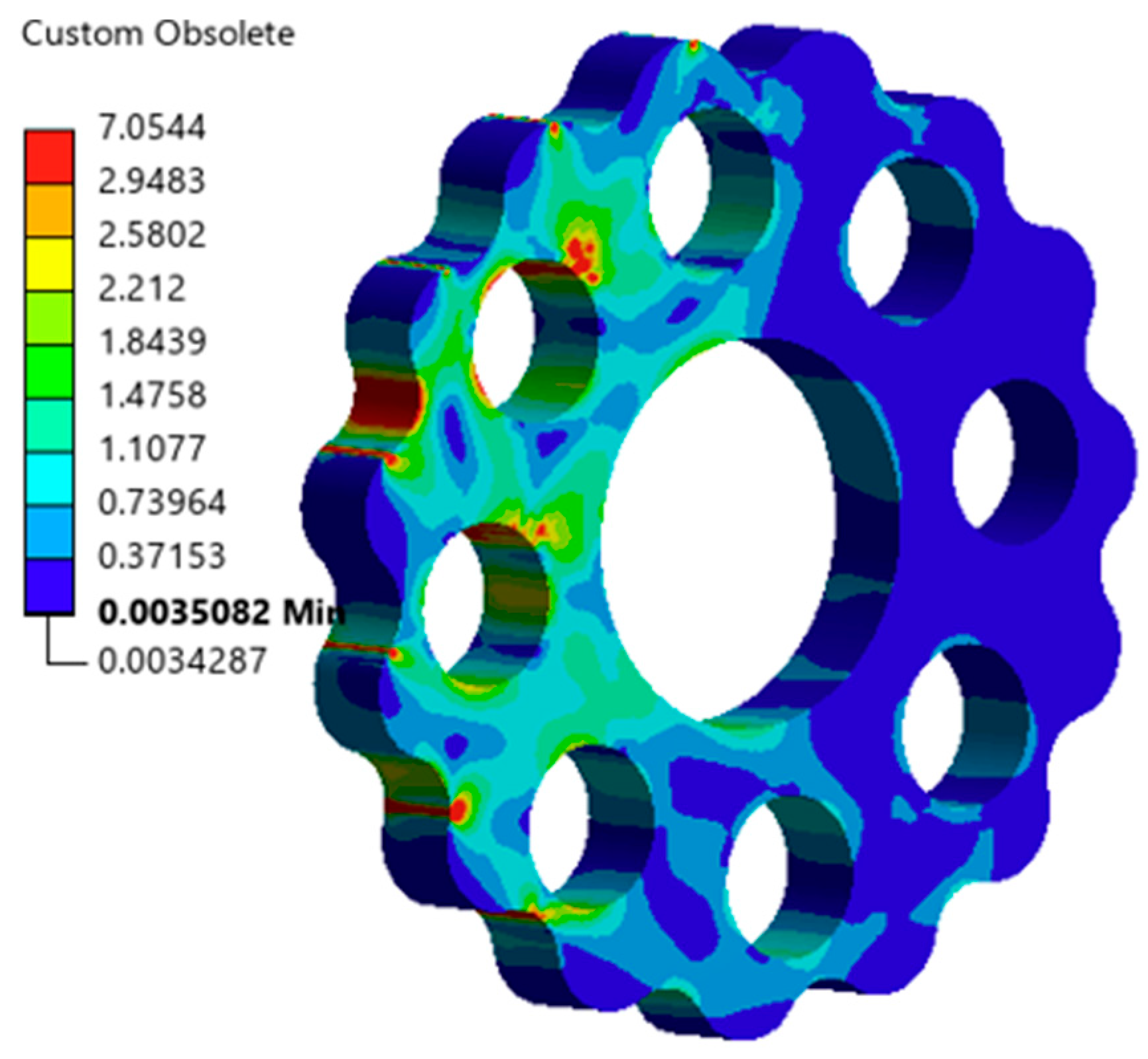
Figure 6 shows the calculated von Mises stress distribution in the cycloidal disc. Notable concentrations of the stresses are seen around the contact points of the cycloidal disc with the internal and external pins.
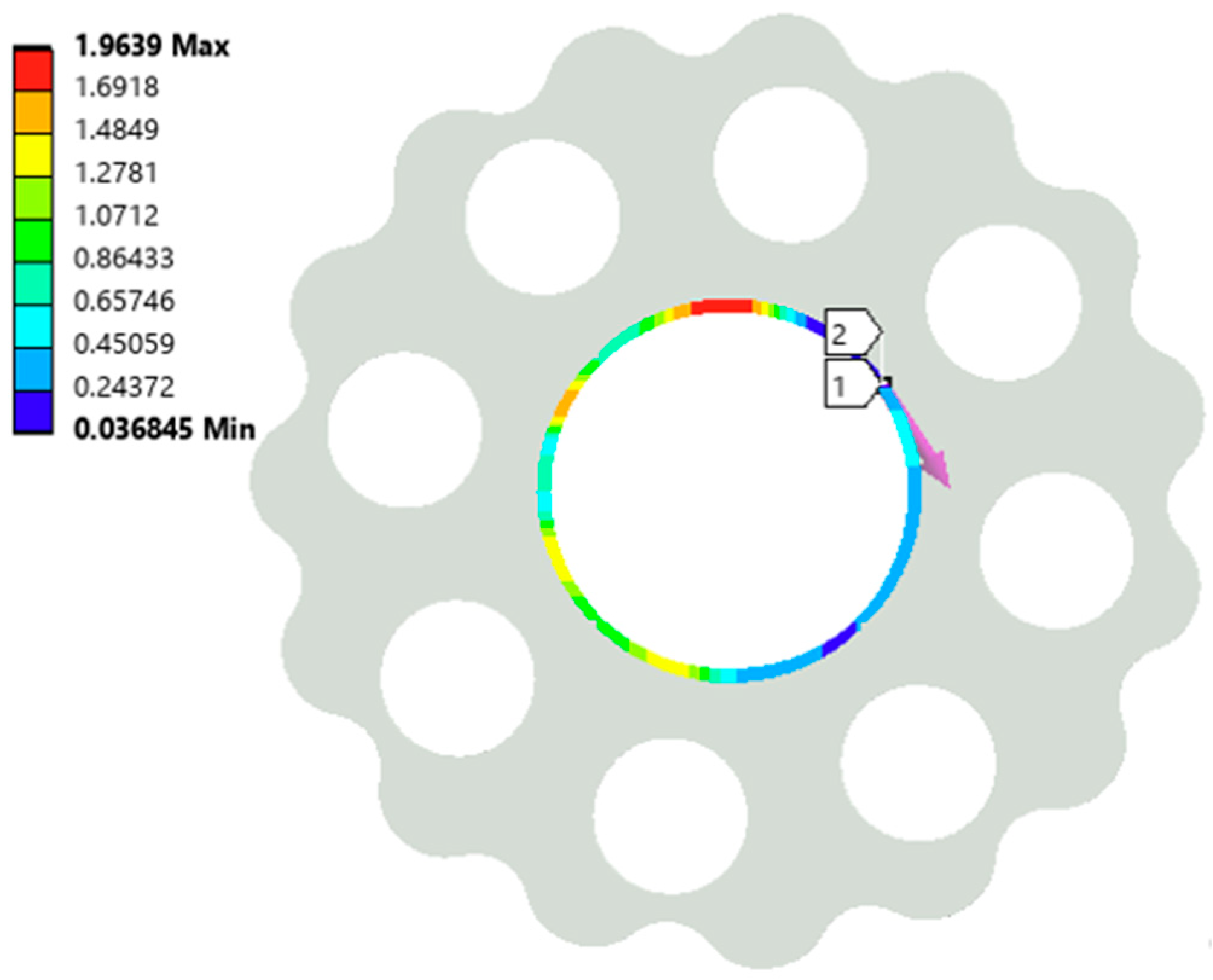
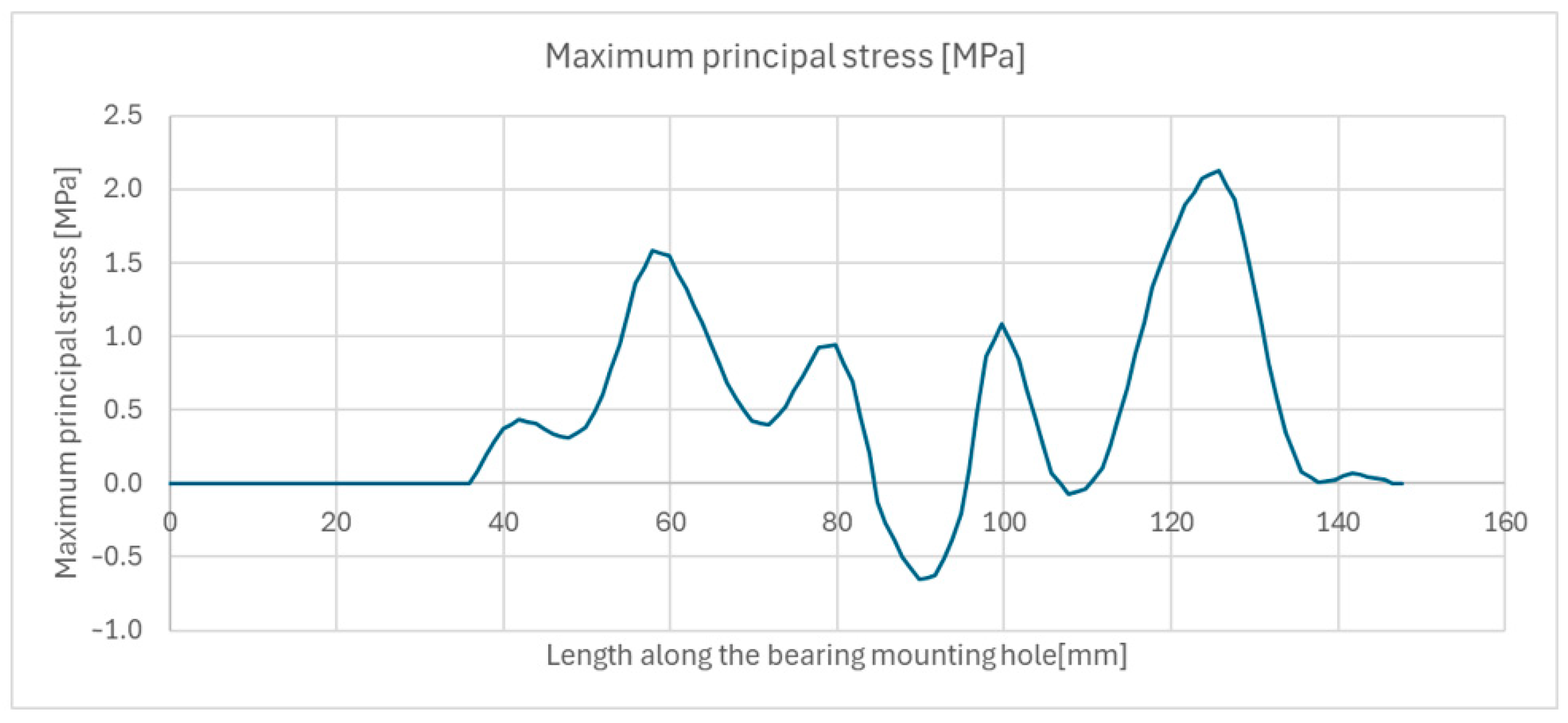
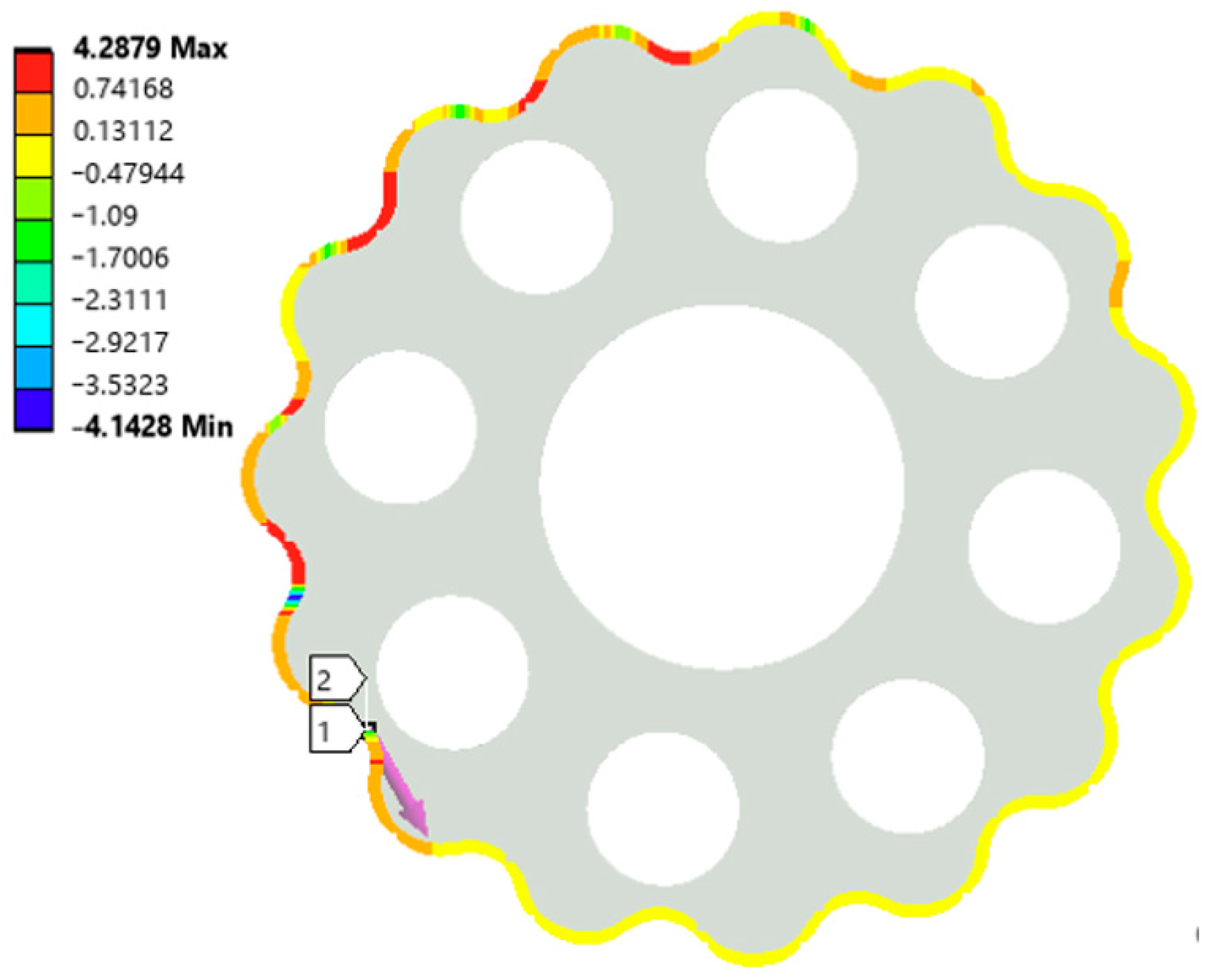
However, the failure mode of the 3D-printed cycloidal disc was not related to the stress concentration shown in Figure 6 as it could be expected. It did not happen even at the contact areas between the internal and external pins’ cycloidal disc surface. It was found that the critical degradation took place in the area adjacent to the bearing. To look closer at the stress distributed along the surface of the bearing hole, stress distribution is presented in Figure 7, and the stress history plot is shown in Figure 8.
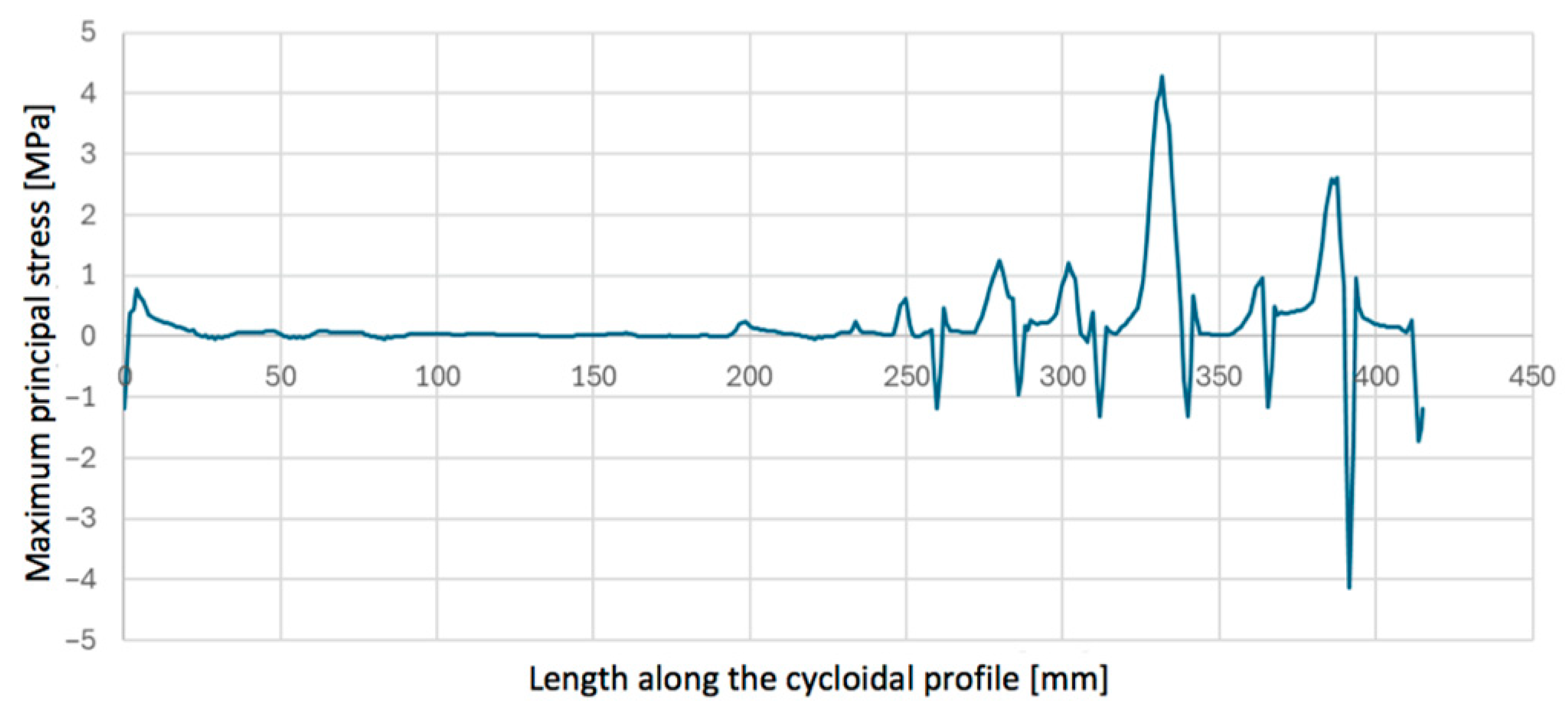
The largest registered peak-to-peak value of the maximal principal stress along the bearing hole was 2.5 MPa, which was below the critical value of the polyamide components, reported, e.g., in [34]. Much higher values were obtained along the cycloidal outer profile, which is seen in Figure 9 and Figure 10. In that case, maximal stress values in both directions, positive and negative, reached ca. 4.1 MPa.
In assessment of the maximal, acceptable stresses, the following limitations for the PA12CF15 cycloidal disc were considered:
  • Filling of the volume with 30% of material, which was close to 35% according to the analyzed and discussed data available in literature [35];
  • Stress concentration factor was assumed to be 1.7 according to published results [36];
  • Additionally, the safety margin was expanded, with the factor 2 reflecting the anisotropy and structural defects of the AM parts [37].
The latter factor is sufficient due to the reported minor variations of 3D-printed PA12 mechanical properties in directions X and Y. In particular, directional differences of stiffness and critical stress appeared to be small enough to consider the material nearly isotropic, while from the perspective of strain properties, it can be termed as moderate anisotropy [38].
With all the abovementioned conditions taken into account, the acceptable stress in the cycloidal disc can be assessed as σacc = 6.2 MPa. It is significantly higher than the maximal stress values of 4.1 MPa calculated for the model. Thus, it can be assumed that the strength of the 3D-printed PA12CF15 cycloidal disc is sufficient to bear the loads typical for the gearbox, considering 30% filling, the stress concentration and structural anisotropy.

3.2. Fatigue Strength

However, any gear is subject to cyclic loads and, thus, to fatigue degradation. The results of the fatigue test are presented in Figure 11. It is evident that the increased temperature caused much higher plastic deformations under the same load.
It is important to note that the plastic deformation of the specimen even after 105 cycles at 27 °C did not exceed 0.12 mm and exhibited an insignificant rising trend after 20,000 cycles. In contrast, under an elevated temperature of 140 °C, plastic deformation increased significantly during the entire test time and reached 1.55 mm after 105 cycles. While some intermediate temperature value can be expected in the gearbox, it may affect the fatigue strength of the 3D-printed PA12CF15 cycloidal gear.

3.3. Run-to-Failure Results

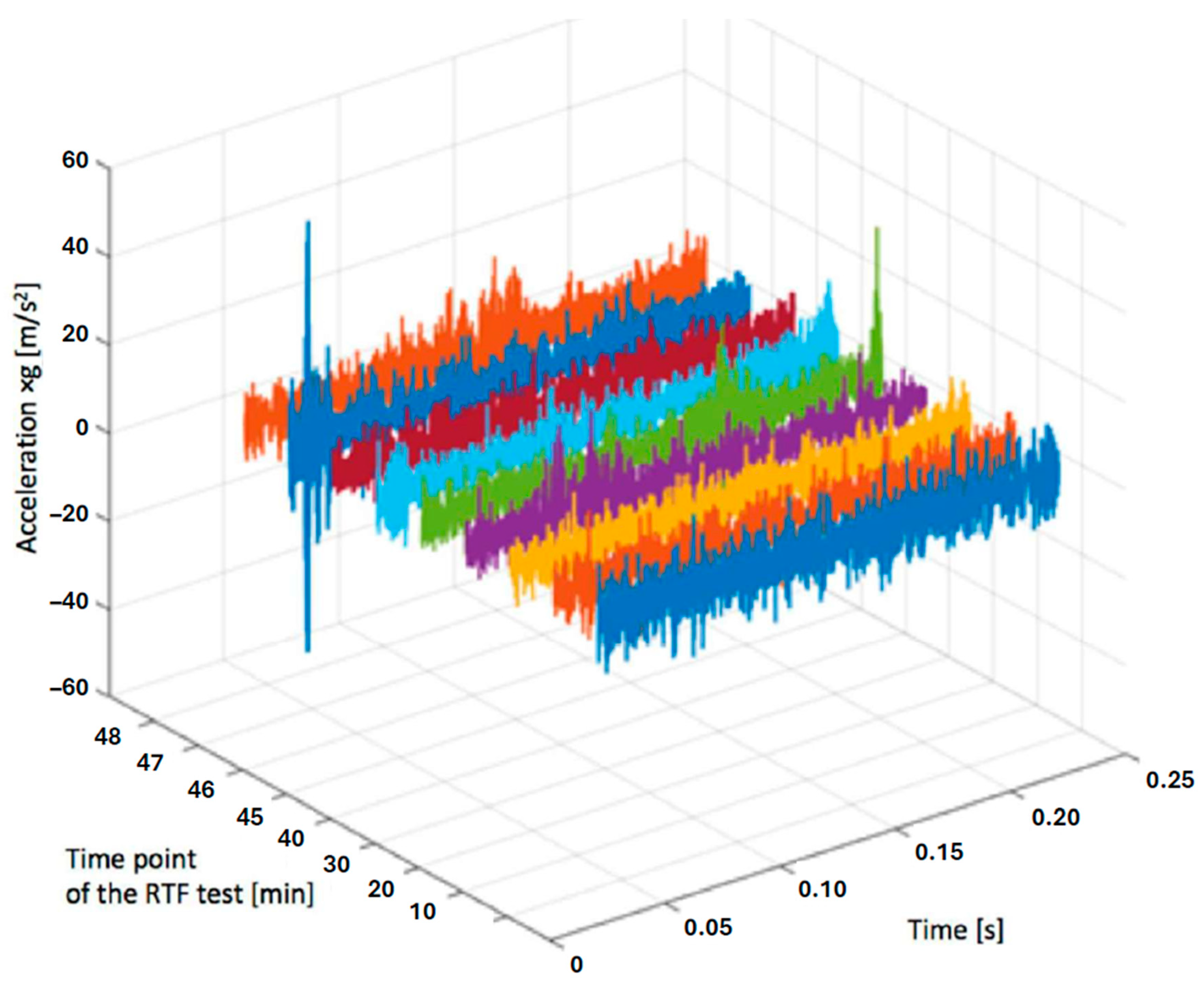
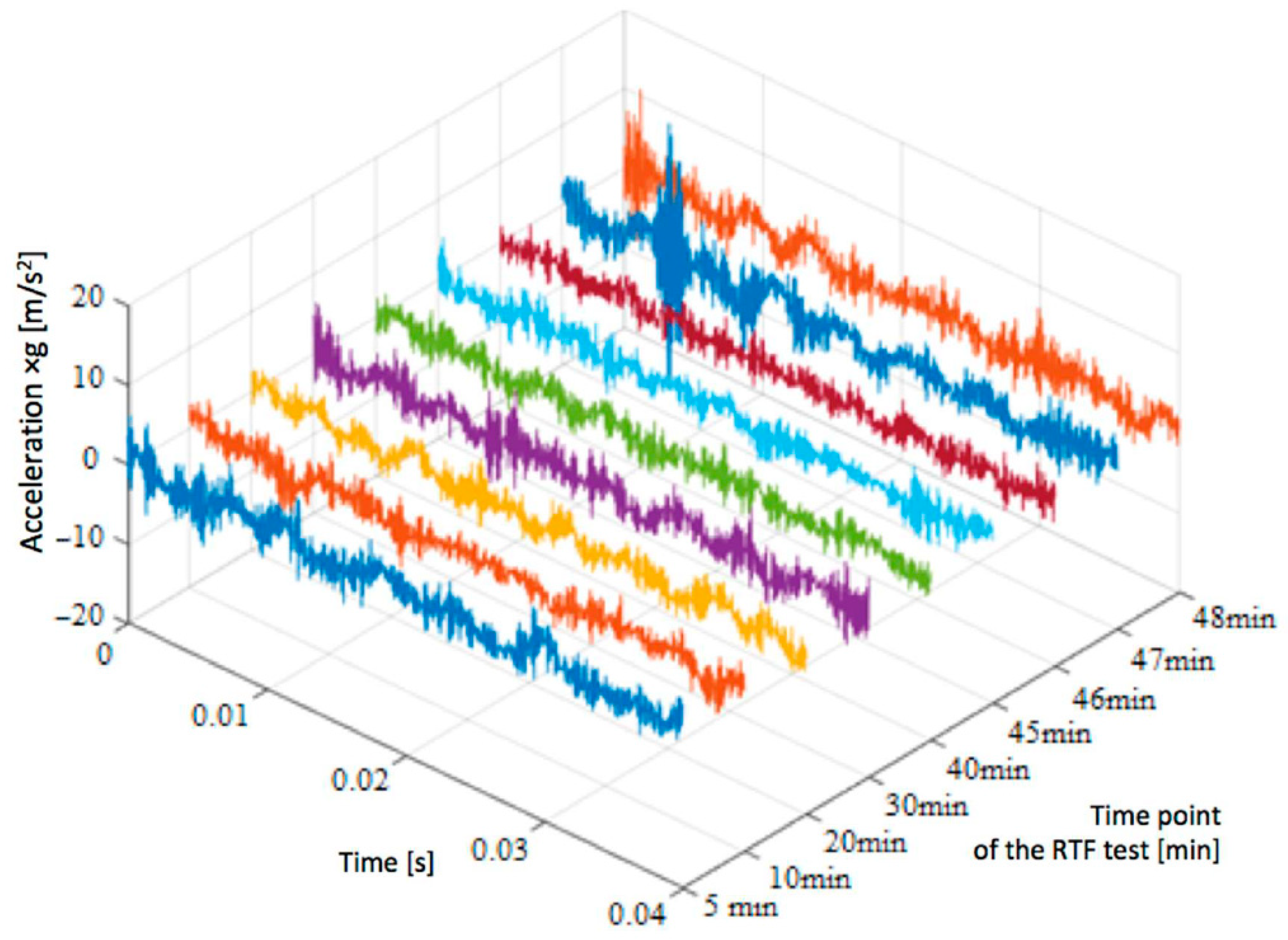
The calculated acceleration values in the time domain for various sampling points during the test duration are shown in Figure 12. It can be noted that in the initial phases of the RTF test corresponding to data recorded at time points 5–20 min, acceleration changes were relatively stable, though some fluctuations appeared. Acceleration values were expressed in multiples of gravitational acceleration, assuming 1 g = 9.80665 m/s2.
However, in the middle phases of the RTF test at time points 30–45 min, increased variations and peaks in acceleration can be observed, which may indicate the beginning of gearbox degradation. In the final phases of the RTF test at 46–48 min, accelerations plots exhibited significant instability indicating an impending failure. Further, acceleration plots became unstable and exhibited variability typical for mechanical systems nearing the end of their life cycle, accompanied by larger vibrations.
The calculated synchronous averages of the time-domain accelerations for the recorded signals are shown in Figure 13. The time axis represents one rotation of the shaft of duration ca. 0.04 s, which is dependent on the test conditions at 1500 rpm.
The signals exhibited in Figure 13 are of high dynamic and chaotic variability, which may be related to irregular noise or instability in the transmission. Large variations in amplitude during one rotation are indicated by the differences from −20× g to 20× g present in the plot. Such a high amplitude can be assigned to the significant dynamic loads caused by the damage of the cycloidal disc in the gearbox. Especially when the plots from different phases of the test were compared, more chaotic, noisy and unstable signals were received at 47 or 48 min, while smoother and more stable ones were at 5 or 10 min.
From the registered plots shown in Figure 12, a systematic increase in the vibration energy dispersion can be seen at subsequent points of the test duration. At the beginning, from 5 to 20 min, accelerations remained concentrated in the limited range, while at the end of the test, especially from 45 to 48 min, significant signal irregularities appeared. This phenomenon can be attributed to the development of complex, non-linear dynamic processes related to the advanced degradation process of the gearbox components. Thus, in the initial stages of the RTF test, signals exhibited quasi-periodic behavior, indicating the stable work of the transmission with dominating harmonics generated by the rotational movement. Non-stationary fluctuations of the signal may appear due to dynamically unstable work caused by increasing displacements, microscale strikes, and local resonances in the final stage of the test.
The mean value of the acceleration in the diagrams in Figure 12 gradually shifted as the test proceeded. It indicated the increasing asymmetry of the dynamical forces acting on the transmission components, possibly caused by the imbalance of the system, unsteady distribution of the loads or even microcracks in the cycloidal disc. In the final stage of the RTF test, at 47 and 48 min, pulses of exceptionally high amplitudes appeared. These corresponded with some short events of very high energy. Such a signal may occur when some parts of the material are torn away, or possibly when tooth impact or momentary jamming of a damaged gear element takes place. It may indicate that the system is quickly approaching a critical state preceding its failure.
Figure 13 reveals modulation of the amplitude and frequency of the signal related to the complex interactions between the vibrations of the cooperating transmission components. This sort of modulation can emerge from the superposition of vibrations from several sources or perhaps from the feedback actions between the developing clearances in the gearbox and the actual forces, which result in non-linear effects. The trend seen in Figure 13 indicates an evolution from deterministic, predictable vibrations to irregular and chaotic ones. The latter is typical for the mechanical systems in a state of advanced degradation, losing their dynamic stability and accompanied by an increase in signal entropy. An increasing trend in the range of active frequencies is observed in the recorded signals shown in Figure 13. Initially, low-frequency vibration components dominated, but in the final stages, distinct higher-frequency components appeared. This indicates the emergence of new vibration sources, such as bearing clearances, damage of the cycloidal gear surfaces, or dynamic instabilities of the input shaft.
The statistical indicators were calculated for data sets collected at different time points during the RTF test. The results are collected in Table 2. Generally, the level of the signals in different data sets remained stable, though for 48 min the RMS value is significantly higher than that for any other time point. It may indicate an increase in signal intensity related to the mechanical damage in the gearbox or the appearance of stronger noise.
In turn, kurtosis for most of the points fell in a range between 2.73 and 4.56, which suggests that the signals exhibited moderate deviations from the normal distribution. However, at 47 min, kurtosis appeared to be very high, indicating the presence of rare but high values for the signal. These may be attributed to some events of high energy, like mechanical strikes or resonant vibrations.
As for skewness, its values mainly oscillated around zero, suggesting symmetry of the signal distributions.
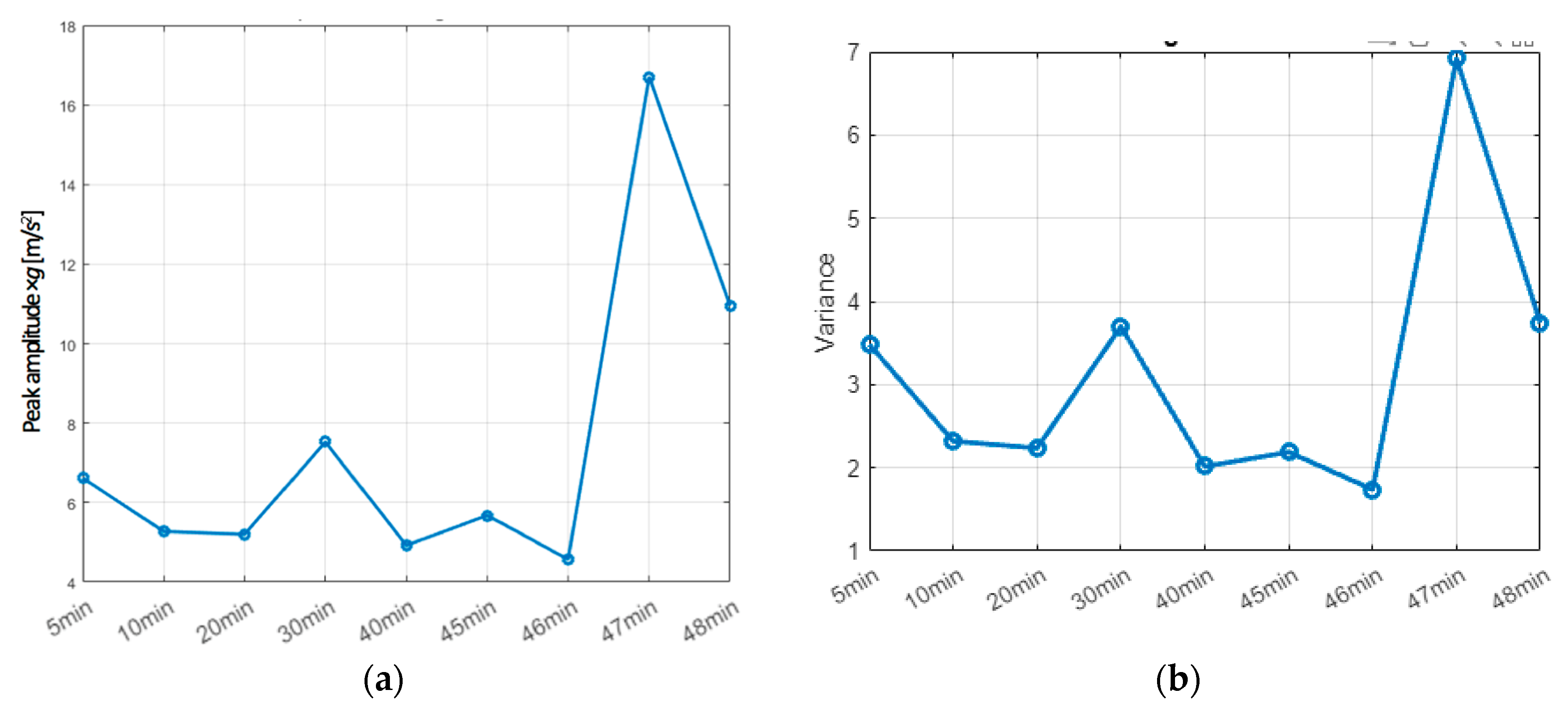
In the case of the peak-to-peak statistical parameter, it can mainly be found in a range from 8 to 19, while for the point 47 min, it jumped up to 32.81. Such a difference can be explained by the presence of a significant change in the acceleration value caused by serious mechanical flaws, such as strikes, dynamical imbalance or bearing damages. Similar results provided by TSA signal variance analysis with outstanding value can be seen for 47 min in the graph of peak amplitudes, APEAK, shown in Figure 14a and in the graph for variance in Figure 14b.
Importantly, especially peak-to-peak values in Table 2, as well as variance and APEAK in Figure 14 at a subsequent point of 48 min remained high, though somewhat lower than those for 47 min. It may indicate that the permanent damage appeared at that very moment, which would cause critical failure and breakdown in the nearest time points.
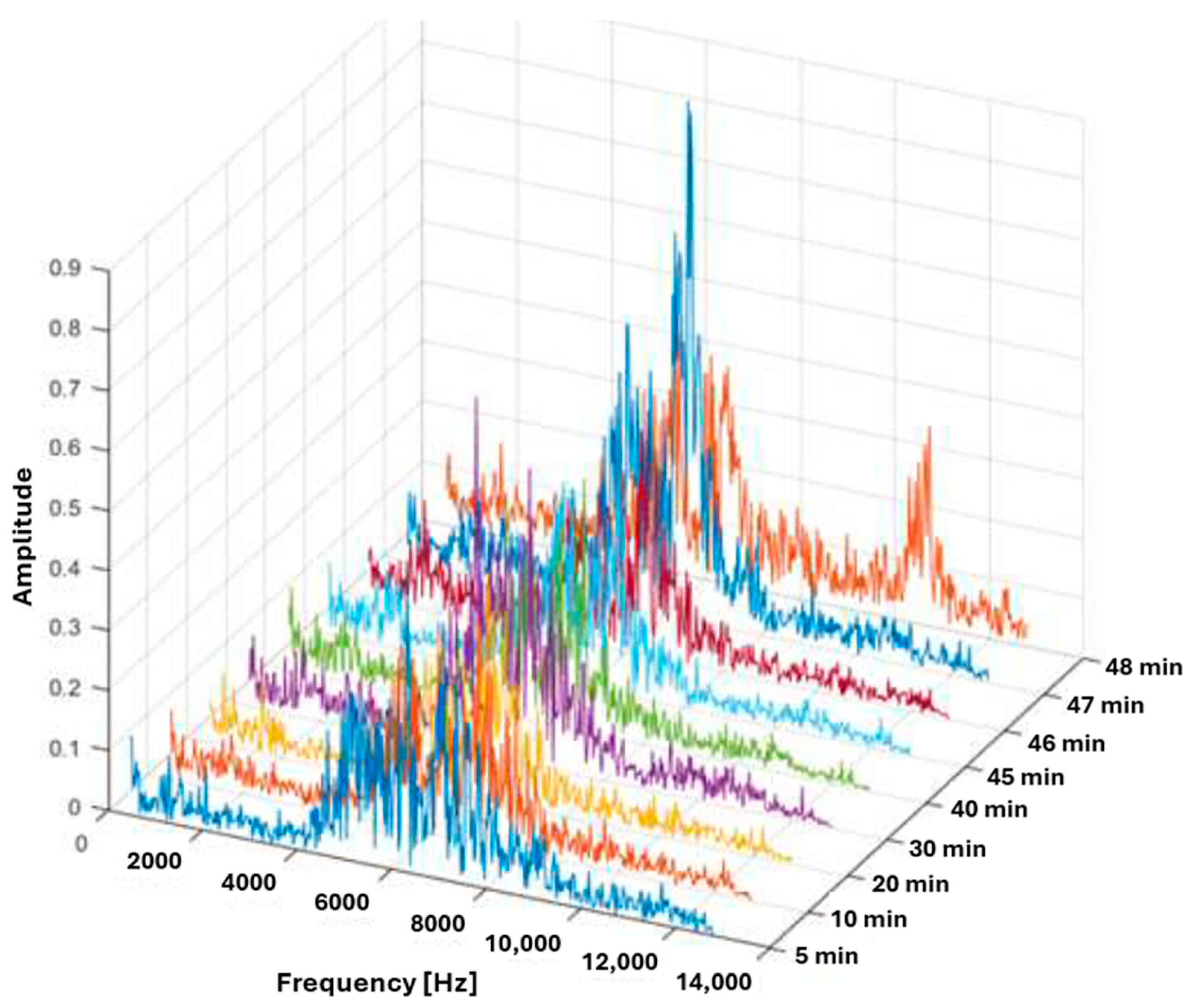
This conclusion is confirmed by the frequency analysis of TSA results. Spectra of TSA signals for data sets registered at different time points shown in Figure 15 exhibited new frequency components and significant alterations from the previous ones during the last few minutes of the test.
Thus, the results of the presented analysis suggest that the failure moment was approached rather instantly in the final minutes of the test. No gradual increase in the parameters analyzed was noted. A significant “jump” in peak amplitudes, variance, and changes in the signal spectrum indicated that the failure was likely to occur within a few minutes after the 45th minute of the test.

3.4. Verification of the Damage Pattern

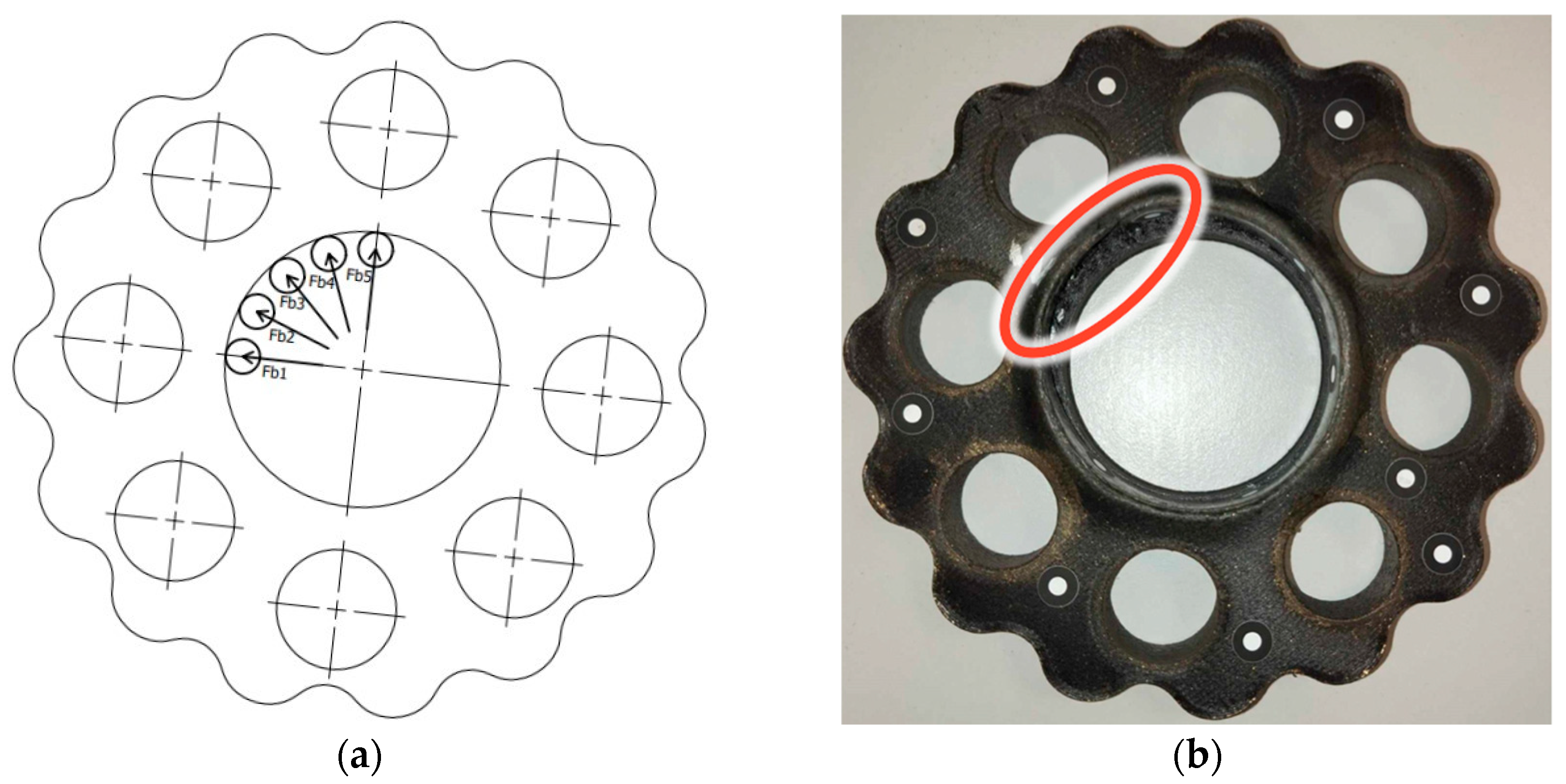
In order to confirm the mechanical and thermal nature of the damage in the area adjacent to the bearing hole in the cycloidal gear, a verification procedure was performed. An area of increased stresses appeared adjacent to the bearing hole, as is shown in the scheme of the bearing load distribution in Figure 16a, and to the actual deformation of the hole after the RTF test, emphasized with a red circle in Figure 16b.
From the FEM calculations of the stresses in the cycloidal disc presented in Figure 6, the disc did not show the appearance of critical degradation and failure. However, it might have taken place in the conditions of elevated temperature. Results of fatigue tests presented in Figure 11, indicated an increase in plastic deformation of the specimens at higher temperatures. In particular, a displacement of 0.2 mm did not appear in the specimens tested at 27 °C even after 105 cycles, while at 140 °C it was reached almost immediately. At 70 °C and 90 °C, plastic deformation of 0.2 mm was reached after 30,000 and 5000 cycles, respectively. Thus, an increase in the temperature during the RTF test would have weakened the fatigue strength of the PA12CF15 material. A gradual rise in the temperature was registered by the thermocouple placed in the housing of the gearbox, as shown in Figure 5. The diagram in Figure 17 exhibits an almost proportional temperature increase during the test.
Notably, a temperature of 70 °C was registered after 40 min of the RTF tests, which corresponded with 80,000 cycles. While the diagram in Figure 11 suggests a displacement of ca. 0.25 mm at that point, even larger damage to the cycloidal disc under the RTF test could be expected due to the fact that the temperature of the interacting elements in the gearbox should be higher than that of its housing. Anyway, the time point of 40 min was very likely the starting point of the degradation that quickly became critical and caused the critical damage few minutes later. The end of life of the cycloidal disc was noted at the time point 48 min, which corresponded with 95,040 cycles.
It can be assumed that temperature was the critical factor in the RTF test. While TSA analysis allowed for revealing the increasing degradation of the component, rising temperatures indicated the emergence of the critical conditions for the disc material. Thus, in the work conditions of the cycloidal gear, solid lubricant inclusions would not inhibit degradation of the PA12 polymer [39]. Further research will be dedicated to the reliable measurement and control of thermal work conditions for the cycloidal gearbox with PA12CF15 discs. Combination of temperature control with TSA signal monitoring is a promising research direction, allowing for the replacement of steel components with lightweight 3D-printed ones while keeping the required performance parameters.
It is worth noting that the honeycomb-like infill pattern exhibits high torsional stiffness and good energy absorption capacity, which was initially confirmed by FEM simulations. However, the internal structure of the printed component also significantly influences its thermophysical properties. Closed-cell patterns, such as honeycomb, can limit convective heat transfer from the gear’s interior, promoting local accumulation of thermal energy generated during friction and cyclic deformation. Other structures, such as gyroids with an open architecture, could potentially improve air circulation within the component and delay achieving the critical temperature for the PA12CF15 material. Nevertheless, with an assumed 30% infill, the obtained static strength was sufficient to withstand the nominal loads, suggesting that infill pattern optimization in future studies should be focused primarily on improving the system’s thermal stability.
The results indicate that the primary factor contributing to the temperature increase was the excitation frequency. The effect is particularly pronounced in components made of materials with low thermal conductivity, such as elastomers [40,41]. According to standardized testing procedures, such materials are recommended to be evaluated at excitation frequencies below 5 Hz. During cyclic loading, the mechanical energy associated with plastic deformation is converted into heat, which, due to limited thermal conductivity, cannot dissipate efficiently and therefore accumulates in regions subjected to varying forces. In the fatigue test shown in Figure 4, the tested component was not enclosed within the gearbox housing, allowing partial heat dissipation to the surrounding environment. Therefore, in order to obtain reliable results, it was necessary to use a thermal chamber to replicate the thermal conditions corresponding to the actual operating environment inside the gearbox.

4. Conclusions

A run-to-failure test with time synchronous averaging analysis of the collected data combined with fatigue tests at different temperatures allowed for drawing the following conclusions about the performance of PA12CF15 cycloidal gear.
Significant differences in the frequency content of TSA signals were observed during the RTF test. Substantial increases in peak amplitudes and variance might have been treated as reliable indicators of an impending critical failure. In addition, changes in the frequency patterns of the acceleration signal stayed in accordance and helped to identify developing failures in a timely manner. The final minutes of the test showed the parameters of signals, suggesting a quickly approaching failure.
Fatigue tests performed at different temperatures indicated high dependence of the material strength on the temperature. In particular, plastic deformation of ca. 0.25 mm at a temperature of 70 °C was registered after 80,000 cycles, which corresponded with 40 min of RTF tests. The registered gradual rise in the temperature during the RTF test confirmed that the critical damage to the PA12CF15 cycloidal disc was closely connected with the elevated temperature. Combination of acceleration signal monitoring with temperature control may be used in predictive maintenance systems to prevent failure of gearboxes with 3D-printed PA12CF15 cycloidal discs.
The research results indicate that FDM technology using PA12CF15 composites has significant potential for scaling up in industrial applications. A key argument for implementing this method is the high repeatability of the manufacturing process. Large-scale production can be achieved by creating 3D printer farms, which allows for flexible batch management without the need for costly tooling changes typical of traditional machining. This decentralized production helps shorten supply chains and reduce warehousing costs and opens up possibilities for the implementation of smart factory concepts. Furthermore, the ability to reduce gear weight while maintaining required performance parameters makes this technology attractive for the robotics and aerospace sectors. Integrating vibration signal monitoring (TSA method) with print farm control systems will enable the creation of an integrated industrial ecosystem in which production and predictive maintenance complement each other.

Author Contributions

Conceptualization, K.O. and M.W.; methodology, K.O. and M.R.; software, M.W.; validation, M.W.; formal analysis, K.O. and M.R.; investigation, M.W.; resources, K.O.; data curation, M.W.; writing—original draft preparation, K.O.; writing—review and editing, M.W. and M.R.; visualization, M.R.; supervision, K.O.; project administration, M.W.; funding acquisition, K.O. All authors have read and agreed to the published version of the manuscript.

Funding

This research received no external funding.

Data Availability Statement

Data is included in the manuscript.

Conflicts of Interest

The authors declare no conflicts of interest.

Abbreviations

The following abbreviations are used in this manuscript:
AMAdditive manufacturing
CFCarbon fiber
FDMFused deposition modeling
FEMFinite elements method
FFTFast Fourier transform
PAPolyamide
RMSRoot mean square
RTFRun-to-failure
TSATime synchronous averaging

Appendix A. Geometry of a Cycloidal Gearbox

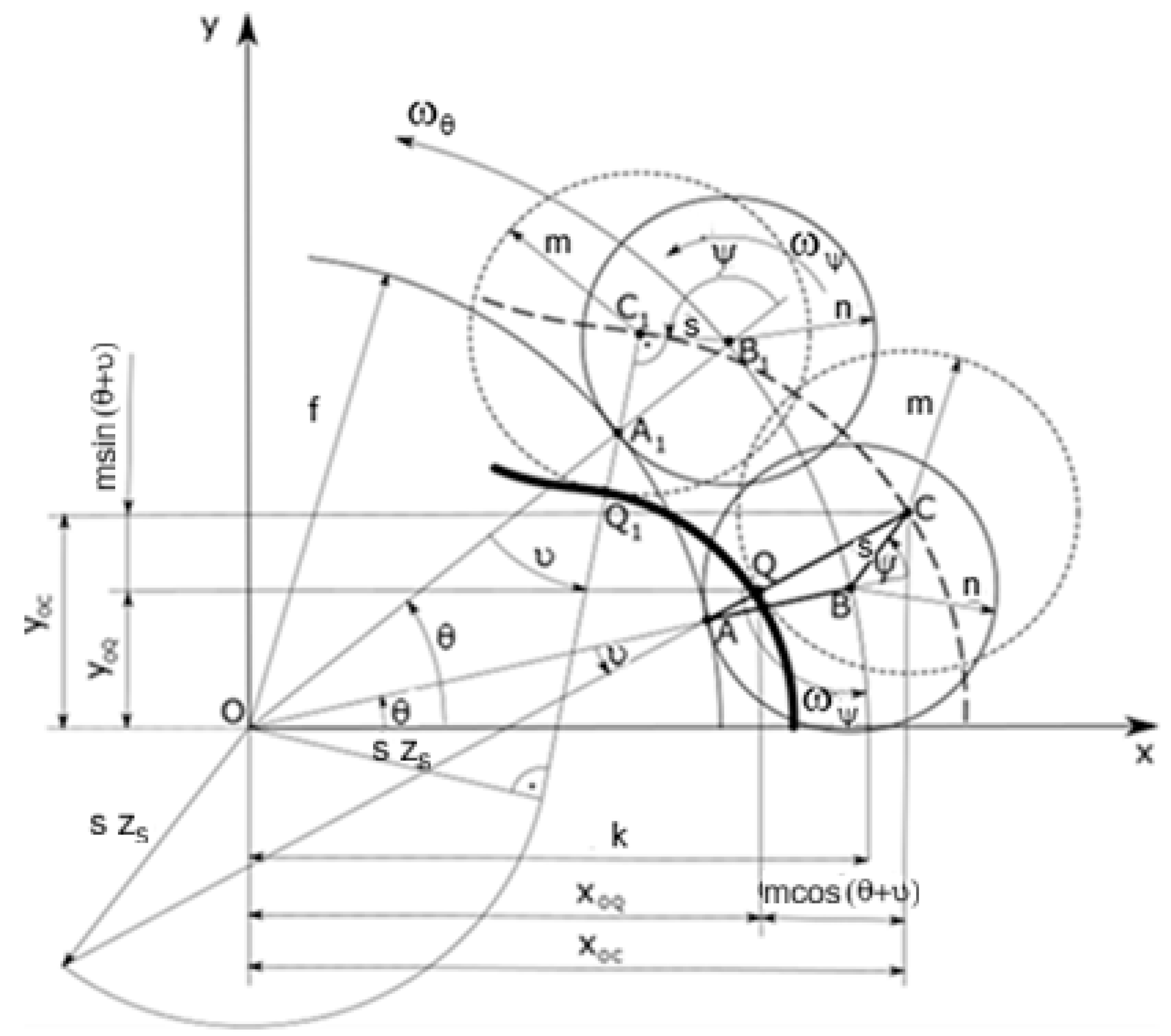
The geometry of a cycloidal gearbox is determined by the following parameters presented in Figure A1:
  • The tooth profile of the cycloidal gear;
  • The geometric conditions of the gear operation;
  • The design of the load transfer from the input shaft through the interaction of the cycloidal gears with the housing to the output shaft.
Figure A1. Geometrical parameters that define the epicycloidal profile of the gear.
Applsci 16 02866 g0a1
Thus, the geometry of the cycloidal gearbox of speed reduction ratio i can be described by the following formula derived using the available literature [42]:
i = z s z k z s = z s = ψ θ ,
z k = z s + 1 ,
where zs is the number of teeth in the cycloidal disc; zk is the number of external pins in the gearbox housing; θ, ψ are the angles shown in Figure A1 that define the epicycloid measured on the two circles, fixed and rolling ones.
Cycloidal gear represents a profile of shortened epicycloid that can be characterized by two parameters, module M and coefficient λ, related to the shortening of an epicycloid, as follows:
M = a b = β α = | i | ,
λ = e b = e · z k a + b ,
where s is eccentricity, f is the radius of the fixed circle, and n is the radius of the rolling circle.
The epicycloidal profile shown in Figure A1 is built by the equidistant curve of the shortened epicycloid and can be described by the following parametric equations:
x ( θ ) = n · ( z s + 1 ) · cos ( θ ) λ · n · cos [ ( z s + 1 ) · θ ] m · cos ( θ ) λ · m · cos [ ( z s + 1 ) · θ ] 1 2 · λ · cos ( z s · θ ) + λ 2 ,
y ( θ ) = n · ( z s + 1 ) · sin ( θ ) λ · n · sin [ ( z s + 1 ) · θ ] m · sin ( θ ) λ · m · sin [ ( z s + 1 ) · θ ] 1 2 · λ · cos ( z s · θ ) + λ 2 ,
where m is the displacement equidistant.
Equations (A1) and (A2) determine the profile of cycloidal gear with various parameters, such as teeth number z1, radius of the rolling circle n, epicycloid shortening coefficient λ, and displacement equidistant m. However, apart from these parameters, at the design stage it is necessary to check the conditions of the cooperation of the two gears. Thus, when calculating the gearbox, geometrical conditions of its operation were considered, as follows:
Condition of the neighboring outer pins:
e m z k · sin ( π z k ) · λ .
Prevention of teeth to be undercut can be described as follows:
M e m · z k + 1 3 3 · z k · z k + 1 z k 1 · λ 2 1 λ 2 .
Condition of the equidistant shape of the shortened epicycloid:
z k 2 2 · z k 1 < λ < 1 .

References

  1. Mabie, H.H.; Reinholtz, C.F. Mechanisms and Dynamics of Machinery, 4th ed.; Wiley: Hoboken, NJ, USA, 1987. [Google Scholar]
  2. Robison, A.J.; Vacca, A. Performance comparison of epitrochoidal, hypotrochoidal, and cycloidal gerotor gear profiles. Mech. Mach. Theory 2021, 158, 104228. [Google Scholar] [CrossRef]
  3. Król, R. Analysis of the backlash in the single stage cycloidal gearbox. Arch. Mech. Eng. 2022, 69, 693–711. [Google Scholar] [CrossRef]
  4. Maccioni, L.; Fraccaroli, L.; Blagojevic, M.; Rotini, F.; Vidoni, R.; Concli, F. Finite element analysis of torque ripple: Effects of gear ratio, transmitted power, nominal clearance, and mesh density in cycloidal drives. Forsch Ingenieurwes 2025, 89, 98. [Google Scholar] [CrossRef]
  5. Mo, J.; Gong, X.; Luo, S.; Fu, S.; Chang, X.; Liao, L. Geometric design and dynamic characteristics of a novel abnormal cycloidal gear reducer. Adv. Mech. Eng. 2023, 15, 168781322311588. [Google Scholar] [CrossRef]
  6. Yi, H.; Meng, X.; Chen, Y.; Cao, H. A review of multi-material composite gears: Integration of lightweight and transmission performance. Thin-Walled Struct. 2025, 216, 113666. [Google Scholar] [CrossRef]
  7. Lin, K.; Chan, K.; Lee, J. Kinematic error analysis and tolerance allocation of cycloidal gear reducers. Mech. Mach. Theory 2018, 124, 73–91. [Google Scholar] [CrossRef]
  8. Zhao, S.; Du, Y.; Li, J.; Jin, Y.; Wang, S.; Li, X. Advancing gear manufacturing: A comprehensive review of gear skiving technology. Precis. Eng. 2025, 94, 657–674. [Google Scholar] [CrossRef]
  9. Su, J.; Zhang, Y.; Deng, X. Analysis and experimental study of cycloid gear form grinding temperature field. Int. J. Adv. Manuf. Technol. 2020, 110, 949–965. [Google Scholar] [CrossRef]
  10. Gupta, K.; Jain, N.K.; Laubscher, R. Advanced Gear Manufacturing and Finishing: Classical and Modern Processes; Academic Press: London, UK, 2017. [Google Scholar] [CrossRef]
  11. Berger, U. Aspects of accuracy and precision in the additive manufacturing of plastic gears. Virtual Phys. Prototyp. 2015, 10, 49–57. [Google Scholar] [CrossRef]
  12. Budzik, G.; Pisula, J. Additive manufacturing of polymer gears. In Polymer Gears; Thomas, S., Huskić, M., Maria, H.J., Tavćar, J., Eds.; Elsevier: Amsterdam, The Netherlands, 2025; pp. 375–397. [Google Scholar] [CrossRef]
  13. Xiao, J.; Song, L.; Guan, X.S.; Bai, M. Mechanical, hydration process, and microstructural properties of eco-friendly UHDC incorporating recycled concrete powder. Constr. Build. Mater. 2026, 507, 145063. [Google Scholar] [CrossRef]
  14. Iftekar, S.F.; Aabid, A.; Amir, A.; Baig, M. Advancements and limitations in 3D printing materials and technologies: A critical review. Polymers 2023, 15, 2519. [Google Scholar] [CrossRef] [PubMed]
  15. Barsomian, C.; Eswaran, N.B.P.; Pesenti, M.; Gandolla, M.; Braghin, F.; Carpanzano, E.; Roveda, L. Dynamic characterization and control of a back-support exoskeleton 3D-printed cycloidal actuator. CIRP Ann. 2024, 73, 29–32. [Google Scholar] [CrossRef]
  16. Jain, M.; Patil, S. A review on materials and performance characteristics of polymer gears. Proc. Inst. Mech. Eng. Part C J. Mech. Eng. Sci. 2022, 237, 2762–2790. [Google Scholar] [CrossRef]
  17. Yan, Y.; Pastor, M.-L.; Abisset-Chavanne, E.; Gong, X. Rapid identification of fatigue degradation law of composite material based on IR thermograph. Compos. Struct. 2025, 354, 118787. [Google Scholar] [CrossRef]
  18. Pawlus, P.; Reizer, R. A State of the Art on Mechanically Dominated Methods of Wear Modelling. Arch. Comput. Methods Eng. 2025, in press. [Google Scholar] [CrossRef]
  19. Guan, J.; Wu, D.; Zhang, L.; Wang, G.; Chen, W.; Lin, W.; Zhao, H.; Bai, P.; Tian, Y.; Song, W. The friction behavior and wear mechanism of RV reducer gear steel (20CrMo) subjected to three different heat treatment processes from −20 °C to 100 °C. J. Mater. Res. Technol. 2024, 32, 2609–2623. [Google Scholar] [CrossRef]
  20. Li, R.; Zheng, P.; Wang, G.; Li, G.; Chi, S.; Meng, X. Tribo-dynamics modeling of cycloidal gear-pin pair considering transient effects. Int. J. Mech. Sci. 2025, 305, 110809. [Google Scholar] [CrossRef]
  21. Jiang, N.; Qian, R.; Qiao, H.; Chen, Y.; Cao, H.; Liu, Y.; Wang, C. Neural-driven viscosity modeling and fatigue optimization for cycloidal gear systems. Tribol. Int. 2025, 202, 110311. [Google Scholar] [CrossRef]
  22. Bello, K.A.; Maladzhi, R.W. Innovative and best practices in sustainable strategies for waste reduction in additive manufacturing. Hybrid Adv. 2025, 11, 100527. [Google Scholar] [CrossRef]
  23. Das, T.K.; Jesionek, M.; Ali, M.G.; Ganguly, S.; Poater, A. Advancing sustainability: Circular economy strategies for fibrous polymer composites. Clean. Mater. 2026, 19, 100381. [Google Scholar] [CrossRef]
  24. Calignano, F.; Bove, A.; Mercurio, V.; Marchiandi, G. Effect of recycled powder and gear profile into the functionality of additive manufacturing polymer gears. Rapid Prototyp. J. 2024, 30, 16–31. [Google Scholar] [CrossRef]
  25. Gruber, P.; Kryszak, B.; Olejarczyk, M. Radiation spheroidization as a potential method enabling recycling of polyamide 12 waste from powder bed fusion of polymers. Mater. Des. 2025, 257, 114540. [Google Scholar] [CrossRef]
  26. Castanha, N.; Hellmeister Dantas, F.B.; Marangoni Júnior, L. Mechanical recycling of polyamides: A review. Trends Food Sci. Technol. 2025, 162, 105107. [Google Scholar] [CrossRef]
  27. Komorska, I.; Olejarczyk, K.; Puchalski, A.; Wikło, M.; Wołczyński, Z. Fault Diagnosing of Cycloidal Gear Reducer Using Statistical Features of Vibration Signal and Multifractal Spectra. Sensors 2023, 23, 1645. [Google Scholar] [CrossRef] [PubMed]
  28. Olejarczyk, K.; Wikło, M.; Kołodziejczyk, K. The cycloidal gearbox efficiency for different types of bearings—Sleeves vs. needle bearings. Proc. Inst. Mech. Eng. Part C J. Mech. Eng. Sci. 2019, 233, 7401–7411. [Google Scholar] [CrossRef]
  29. Rodríguez-Reyna, S.L.; Díaz-Aguilera, J.H.; Acevedo-Parra, H.R.; García, C.J.; Gutierrez-Castañeda, E.J.; Tapia, F. Design and optimization methodology for different 3D processed materials (PLA, ABS and carbon fiber reinforced nylon PA12) subjected to static and dynamic loads. J. Mech. Behav. Biomed. Mater. 2024, 150, 106257. [Google Scholar] [CrossRef] [PubMed]
  30. Pejkowski, Ł.; Seyda, J.; Nowicki, K.; Mrozik, D. Mechanical performance of non-reinforced, carbon fiber reinforced and glass bubbles reinforced 3D printed PA12 polyamide. Polym. Test. 2023, 118, 107891. [Google Scholar] [CrossRef]
  31. Androsch, R.; Schick, C. Hydrogen-bond density controlled sub-Tg annealing peaks in fast-scanning-chip calorimeter heating scans of non-crystallized aliphatic polyamides. Thermochim. Acta 2025, 748, 179997. [Google Scholar] [CrossRef]
  32. Avanzini, A.; Tomasoni, A.; Xu, Z.; Berto, F.; Razavi, N. Fracture assessment of polyamide 12 (PA12) specimens fabricated via Multi Jet FusionTM in the presence of geometrical discontinuities. Eng. Fract. Mech. 2024, 303, 110118. [Google Scholar] [CrossRef]
  33. Dalpiaz, G.; Rivola, A.; Rubini, R. Effectiveness and sensitivity of vibration processing techniques for local fault detection in gears. Mech. Syst. Signal Process. 2000, 14, 387–412. [Google Scholar] [CrossRef]
  34. Yang, F.; Schnuerch, A.; Chen, X. Quantitative influences of successive reuse on thermal decomposition, molecular evolution, and elemental composition of polyamide 12 residues in selective laser sintering. Int. J. Adv. Manuf. Technol. 2021, 115, 3121–3138. [Google Scholar] [CrossRef]
  35. Ali, Z.; Yan, Y.; Mei, H.; Cheng, L.; Zhang, L. Effect of infill density, build direction and heat treatment on the tensile mechanical properties of 3D-printed carbon-fiber nylon composites. Compos. Struct. 2023, 304, 116370. [Google Scholar] [CrossRef]
  36. Kundurthi, S.; Tran, F.; Chen, S.; Mapkar, J.; Haq, M. Bead geometry–induced stress concentration factors in material extrusion polymer additive manufacturing. Rapid Prototyp. J. 2023, 29, 1438–1452. [Google Scholar] [CrossRef]
  37. Forster, A.M. Materials Testing Standards for Additive Manufacturing of Polymer Materials: State of the Art and Standards Applicability: National Institute of Standard Technology Interagency Report 8059, NISTIR; U.S. Department of Commerce: Gaithersburg, MD, USA, 2015. [Google Scholar] [CrossRef]
  38. D’Andrea, D.; Crisafulli, D.; Berto, F.; Risitano, G.; Santonocito, D. Innovative and rapid thermographic approaches for the evaluation of fatigue life of SLS PA12. Procedia Struct. Integr. 2026, 76, 151–158. [Google Scholar] [CrossRef]
  39. Nar, K.; Majewski, C.; Lewis, R. Evaluating the effect of solid lubricant inclusion on the friction and wear properties of Laser Sintered Polyamide-12 components. Wear 2023, 522, 204873. [Google Scholar] [CrossRef]
  40. Schröder, J.; Lion, A.; Johlitz, M. Numerical studies on the self-heating phenomenon of elastomers based on finite thermoviscoelasticity. J. Rubber. Res. 2021, 24, 237–248. [Google Scholar] [CrossRef]
  41. Liu, Y.; Chen, W.; Jiang, D. Review on Heat Generation of Rubber Composites. Polymers 2023, 15, 2. [Google Scholar] [CrossRef] [PubMed]
  42. Chmurawa, M. Cycloidal Planetary Gears with Modification of Meshing; Silesian Technical University: Katowice, Poland, 2002. [Google Scholar]
Figure 1. Steel cycloidal gearbox with PA12CF15 additively manufactured gear.
Applsci 16 02866 g001
Figure 2. FEM model of the cycloidal disc working with internal and external pins.
Applsci 16 02866 g002
Figure 3. Force distribution under load R on the cycloidal disc.
Applsci 16 02866 g003
Figure 4. Fatigue test setup: (a) scheme of the holder with the tested specimen; (b) holder mounted in the testing machine. 1—Tested specimen of geometry imitating the inner part of the cycloidal disk, 2—auxiliary structure mounted in a fixed holder, 3—hollow steel shaft, 4.1—movable holder of a hydraulic machine, 4.2—fixed holder of a hydraulic machine.
Applsci 16 02866 g004
Figure 5. RTF test rig with the tested gearbox.
Applsci 16 02866 g005
Figure 6. Von Mises stress on the cycloidal disc for the load of 32 Nm applied to the input shaft of the gearbox.
Applsci 16 02866 g006
Figure 7. Maximum principal stresses along the bearing hole profile. Points 1 and 2 denote the start and end of the defined path.
Applsci 16 02866 g007
Figure 8. Maximum principal stress along the bearing hole profile between points 1 and 2 shown in Figure 7.
Applsci 16 02866 g008
Figure 9. Maximum principal stresses along the cycloidal profile. Points 1 and 2 denote the start and end of the defined path.
Applsci 16 02866 g009
Figure 10. Maximum principal stress along the cycloidal profile between points 1 and 2 shown in Figure 9.
Applsci 16 02866 g010
Figure 11. Plastic deformation of the specimens after subsequent cycles of loads at different temperatures.
Applsci 16 02866 g011
Figure 12. Acceleration signals as a function of time for different test time points.
Applsci 16 02866 g012
Figure 13. Calculated synchronous averages of the time-domain accelerations as a function of time for different test time points.
Applsci 16 02866 g013
Figure 14. TSA results at different time points: (a) peak amplitudes APEAK; (b) signal variance values.
Applsci 16 02866 g014
Figure 15. Spectra of TSA signals for data sets collected at different time points.
Applsci 16 02866 g015
Figure 16. Degradation of the cycloidal disc: (a) scheme of the bearing load distribution; (b) area of plastic deformation after RTF test.
Applsci 16 02866 g016
Figure 17. Registered increase in the temperature during the RTF test.
Applsci 16 02866 g017
Table 1. FDM parameters.
ParameterDescription
MaterialPolyamide 12 reinforced with carbon fibers 15%
Filling and patternFilling 30%, honeycomb pattern
Young’s modulusFor 30% filling E = 998 MPa
Nozzle diameter0.4 mm
Layer thickness0.2 mm
Outer coating2 mm
Number of outer layersTop 4 layers, bottom 4 layers
Number of wall loops4
Pattern of full fillingTop and bottom: full filling straight-line pattern
Table 2. Statistical indicators for the selected data sets.
Time PointStatistical Parameter
RMS ×g [m/s2]KurtosisSkewnessPeak-to-Peak ×g [m/s2]
5 min1.90873.19110.1624512.398
10 min1.59873.649−0.3646110.258
20 min1.59092.73480.0717058.8413
30 min1.97083.25870.08713213.239
40 min1.49362.7712−0.109698.7369
45 min1.53923.2989−0.110939.9981
46 min1.39212.88010.09262280,186
47 min2.676710.069−0.2034732.811
48 min1.98164.56240.1092419.473
Disclaimer/Publisher’s Note: The statements, opinions and data contained in all publications are solely those of the individual author(s) and contributor(s) and not of MDPI and/or the editor(s). MDPI and/or the editor(s) disclaim responsibility for any injury to people or property resulting from any ideas, methods, instructions or products referred to in the content.