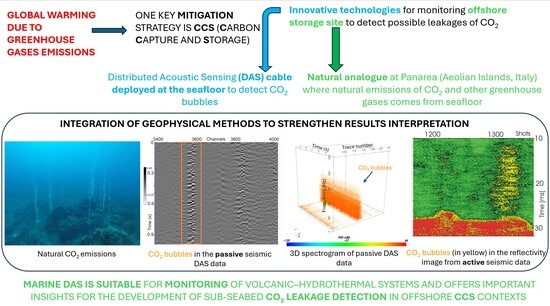
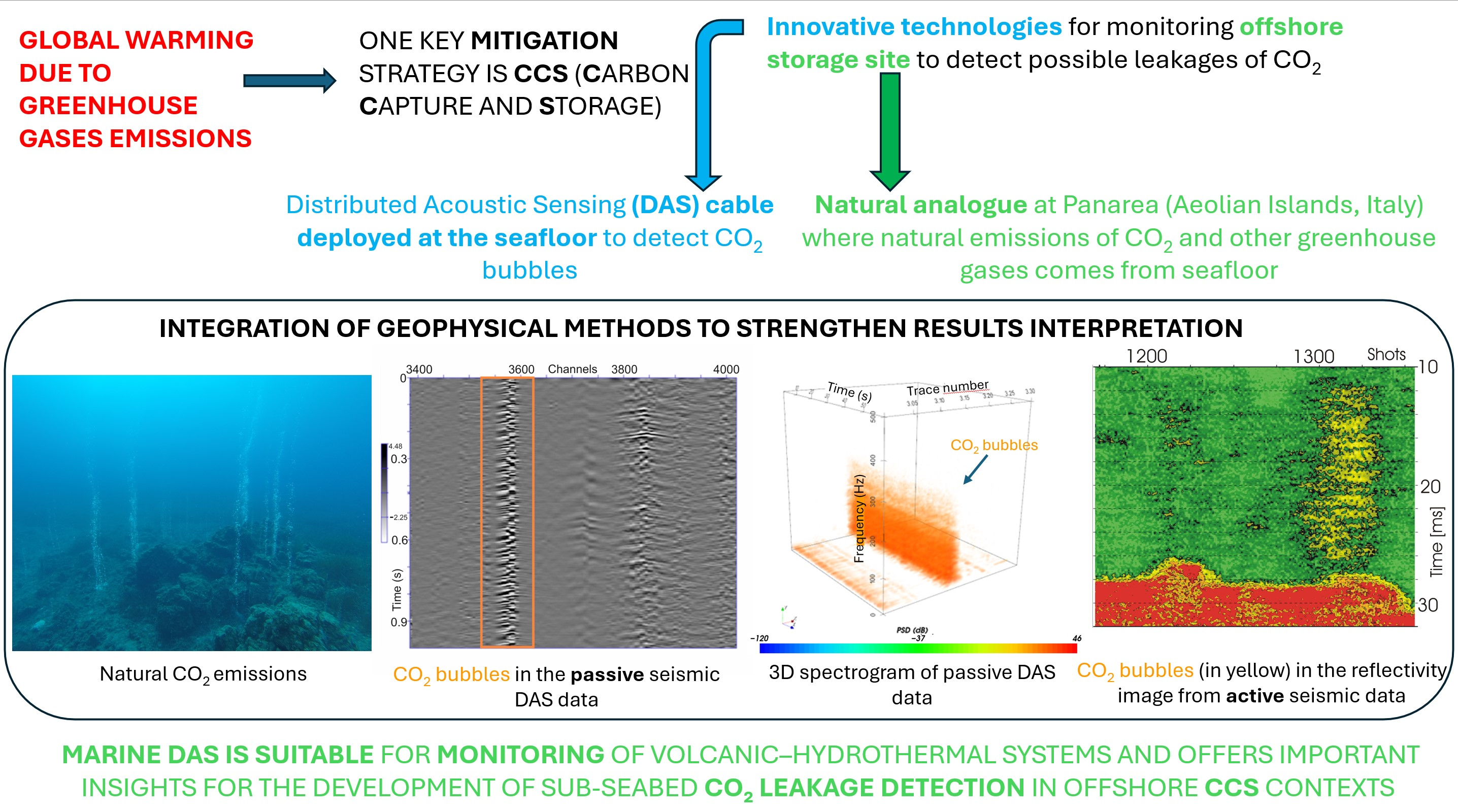
1. Introduction
The monitoring of dynamic processes at the seabed is a central challenge in Earth sciences, with implications spanning volcanology, marine geophysics, oceanography, and environmental surveillance. Submarine gas emissions represent a key manifestation of fluid migration processes occurring within the shallow subsurface and are commonly associated with volcanic–hydrothermal systems, tectonic activity, and sedimentary basins. Gas emissions and shallow-gas pockets generate characteristic acoustic and seismic signals that can be exploited to investigate seabed processes, fluid pathways, and subsurface structure [
1,
2,
3]. At the same time, natural gas seepage sites have gained increasing relevance as analogues for evaluating monitoring strategies applicable to offshore carbon capture and sequestration (CCS), where early detection of potential CO
2 leakage is critical for environmental safety and storage integrity [
4,
5].
In recent years, Distributed Acoustic Sensing (DAS) has emerged as a transformative geophysical technology, enabling the use of fiber-optic cables as dense, distributed seismic and acoustic sensor arrays. DAS systems measure strain or strain-rate variations along optical fibers up to sub-meter spatial resolution and high temporal sampling, providing unprecedented spatial coverage compared to conventional discrete sensors. DAS was successfully applied in the characterization and monitoring of onshore CO
2 storage sites in combined CCS-geothermal applications [
6,
7,
8]. Initially developed for borehole and onshore seismic monitoring, DAS has rapidly expanded into marine environments, where existing or newly deployed submarine cables offer new opportunities for continuous geophysical observation. Previous studies have demonstrated the capability of marine DAS to record ambient seismic noise, microseisms, oceanographic signals, and earthquake wavefields, as well as to support seismic imaging of the subsurface [
9,
10,
11,
12].
Despite this rapid progress, the application of DAS in shallow-water environments remains comparatively less explored and poses specific challenges related to cable–seabed coupling, bathymetric variability, and complex acoustic wavefields. Nevertheless, shallow marine settings are of particular interest for studying seabed processes, including sediment dynamics, fluid venting, and volcanic degassing. Recent investigations have shown that DAS can detect acoustic signals generated by gas bubbles in natural, controlled or industrial settings, opening new perspectives for monitoring gas release phenomena [
13]. Complementary studies on underwater acoustics have further demonstrated that bubble emissions produce distinctive high-frequency signatures linked to bubble size, flux, and release dynamics [
14]. However, field-scale demonstrations of DAS detecting natural CO
2 emissions in shallow marine volcanic environments remain scarce.
The volcanic island of Panarea, part of the Aeolian arc in southern Italy, represents a unique natural laboratory for addressing this gap. The area is characterized by persistent submarine degassing, dominated by CO
2-rich emissions rising through shallow sediments in well-defined venting zones. These emissions are associated with the island’s active volcanic–hydrothermal system and have been extensively studied from a geochemical and biological perspective [
15,
16,
17]. From a geophysical standpoint, Panarea offers an exceptional opportunity to investigate the acoustic and seismic expression of natural gas release processes under real marine conditions. Moreover, Panarea hosts the NatLab Italy facility, part of ECCSEL-ERIC, the European Research Infrastructure for CO
2 capture, utilisation, transport and storage as well as geothermal energy exploitation and subsurface energy storage. Even more so, the site has been recognized as a reference location for experiments relevant to subsurface CO
2 migration and monitoring technologies [
18].
In this study, we present the results of a marine DAS experiment conducted offshore Panarea, aimed at assessing the feasibility of detecting natural CO2 bubble emissions using a seabed-deployed fiber-optic cable interrogated by two different DAS systems. The experiment was designed as a passive monitoring test, complemented by controlled bubble releases to provide reference signals and by an independent high-resolution boomer–streamer seismic survey to characterize the shallow subsurface along the cable profile. The primary objective is to evaluate the sensitivity of DAS to gas-related acoustic signals in a shallow volcanic marine environment and to discuss the implications for geophysical monitoring of seabed processes. A secondary objective is to explore the relevance of these findings for offshore CCS monitoring, where natural degassing sites such as Panarea serve as valuable analogues for potential CO2 leakage scenarios.
2. Materials and Methods
2.1. Logistic Setup
The complexity of planned experiments and of logistics aspects in Panarea required careful preparation. Permissions were obtained from local and maritime authorities, including the municipality of Panarea and the coast guard. The DAS reel and interrogator systems were transported to Panarea via boat. Given the restricted vehicle access on the island, arrangements were made to move and install the equipment at the harbor. Continuous power and data connectivity were ensured through the van-based acquisition setup.
To improve the robustness of the study, different geophysical methods were employed as described in the following paragraphs.
2.2. Multibeam Survey
The morphobathymetric data were acquired using a Norbit iWBMSh, a multibeam echosounder (producted by Norbit ASA, Trondheim, Norway) with an integrated Applanix Oceanmaster inertial system. Positioning was achieved with Real Time Kinematic (RTK) provided by NTRIP (Networked Transport of RTCM via Internet Protocol), using an HxGN SmartNet (Leica Geosystems S.p.A., Lodi, Italy) subscription, which ensures centimeter accuracy. The whole system was installed on board a small vessel, making it useful for operation in very shallow water and close to the shore. The multibeam data were acquired and post-processed using Teledyne PDS vers. 4.4.11.2 software (developed by Teledyne RESON, Rotterdam, The Netherlands) to obtain a Digital Terrain Model (DTM) with a cell resolution of 5 cm.
2.3. DAS Instrumentation and Deployment
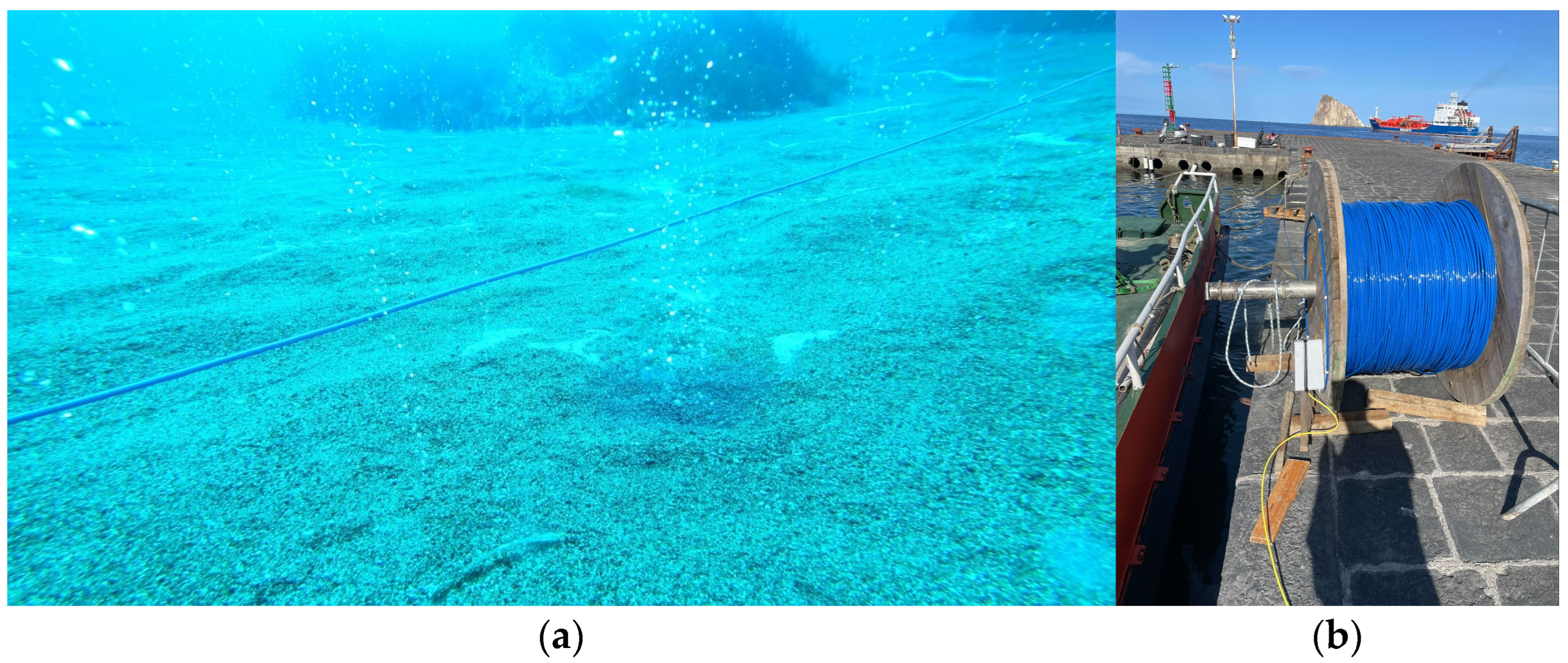
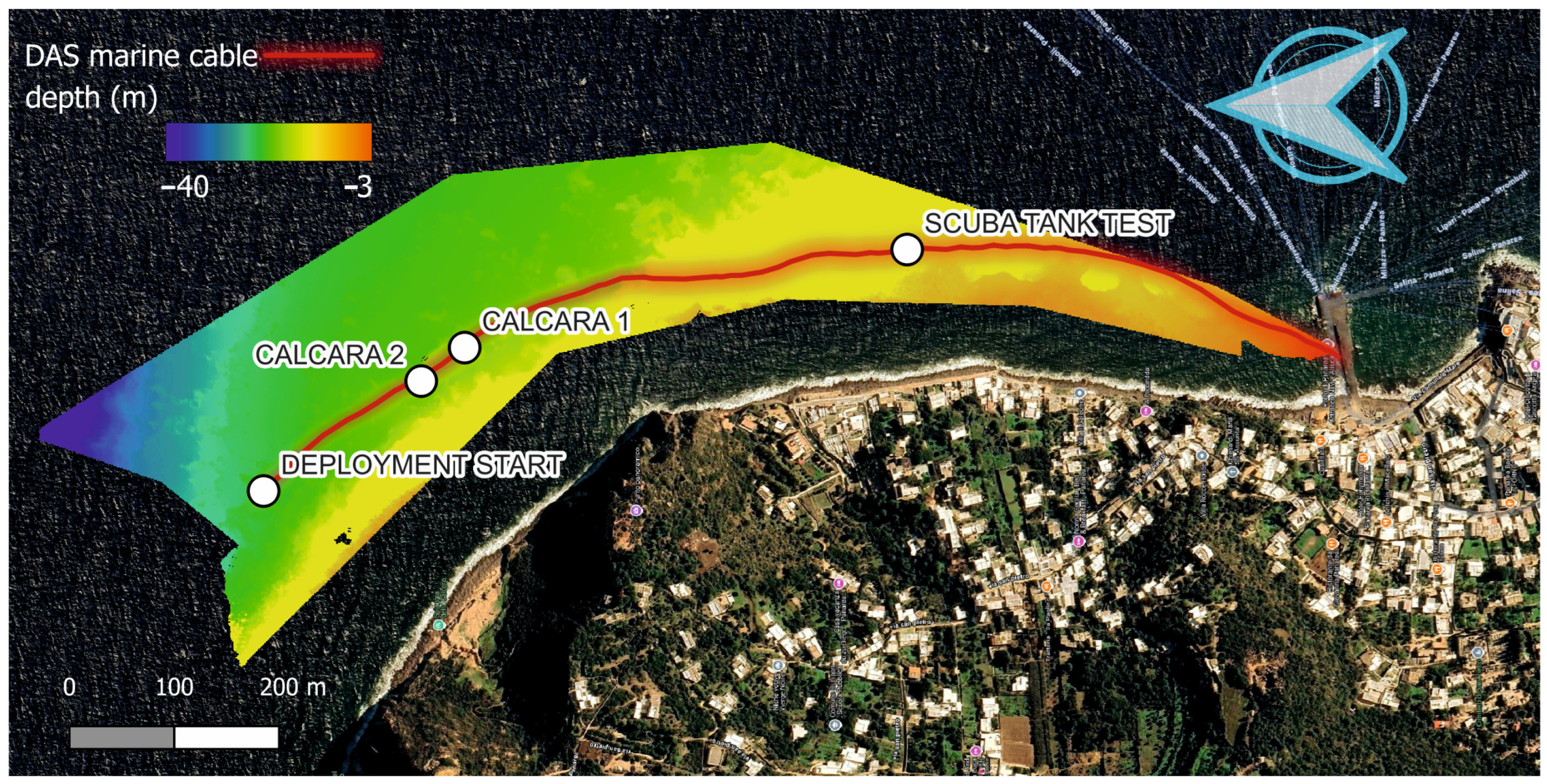
The field experiment was conducted in May 2025. A 1.1 km length armored fiber-optic cable (Silixa Ltd., Elstree, UK, PS-3S2M1X-2PA090-01-BL) was deployed from a vessel along a pre-defined route extending offshore from the Panarea harbor pier, reaching the natural venting areas close to the Calcara beach (
Figure 1).
The DAS cable was laid using a dedicated vessel, whose route was pre-set to follow the trajectory designed to reach the natural emission points of the CO
2 bubbles (Calcara area).
Figure 2 shows the trajectory followed by the vessel during the cable deployment based on the position data recorded by the internal GPS, as well as the location of the relevant emission spots and the bathymetric map.
The cable includes two types of single-mode (SM) fibers: 1 standard and 1 enhanced Constellation
® fiber. Standard DAS uses naturally occurring Rayleigh backscattering in standard optical fibers to measure strain: a coherent laser pulse is sent through the fiber, and phase changes in the backscattered light reveal dynamic strain along its length, effectively turning the entire fiber into a continuous sensor. Constellation
® fiber is an engineered version of a standard SM, in which punctual scatterers are accurately placed along the fiber at regular distance (in this case 10 m), by means of advanced doping processes. For further insights on fiber technology refer to Sun et al. [
19]. Each fiber is then connected onshore to a dedicated interrogator (Silixa Ltd.): iDAS
® (standard SM) and Carina
® (Constellation
®), both installed inside a laboratory van positioned on the pier. This cutting-edge instrumentation used in the experiment is a mobile unit belonging to the geophysical research infrastructure PITOP [
20,
21], located in north-eastern Italy, part of ECCSEL-ERIC.
The main DAS system parameters for the passive acquisition were:
Natural CO2 bubble emissions provided continuous acoustic sources. For calibration purpose, divers released air from scuba tanks near the cable at predefined locations, producing controlled bubble signals used as positive controls.
2.4. Passive Seismic Data Acquisition and Processing
Continuous DAS recordings were acquired simultaneously from both interrogators throughout the deployment. The raw data were analysed in real time using time-domain plots and spectrogram visualization to identify transient events and persistent noise. Ormsby band-pass filters were applied to enhance signal-to-noise ratios and isolate acoustic features associated with bubble release, while minimizing phase distortion.
2.5. Active Seismic Survey
In the DAS deployment area, a very high-resolution seismic survey was conducted using a Boomer source to investigate the shallow subsurface and identify potential CO2 gas leakage features. The seismic source consisted of an AA301 electrodynamic Boomer plate (Applied Acoustic Engineering Ltd., Gorleston, UK), mounted on a catamaran frame and towed at a depth of approximately 40 cm below sea level. The Boomer plate was powered by a CSP-N energy source and generated a theoretical minimum-phase wavelet every 0.5 s, with an amplitude spectrum ranging from 200 to 4000 Hz and a dominant frequency of approximately 2000 Hz. The receiving system was a single-channel Geo-Sense streamer composed of eight pre-amplified hydrophones connected in series and distributed over an active length of 3 m. This configuration enhances the signal-to-noise ratio by coherently summing reflected signals while attenuating random noise. A constant source–receiver offset of 3 m was maintained during acquisition, with the streamer towed as shallow as possible to minimize destructive interference between primary reflections and surface-related multiples. Data acquisition was performed using a TRITON-ELICS acquisition card with a 24-bit A/D converter and managed through TRITON SBP-Logger v. 1.6.500 software, which allowed real-time quality control. The sampling interval was 0.05 ms, with a record length of 120–200 ms. Data were acquired at an average vessel speed of less than 4 knots, resulting in a trace spacing of approximately 0.8–1 m. Seismic data processing was carried out using Epos v.1.6.500 (AspenTech, Bedford, MA, USA). Electrical disturbances were mitigated through averaging of frequencies and amplitudes within temporal windows of adjacent traces. Amplitude recovery was achieved by applying spherical divergence correction starting from the seafloor, followed by an inversion curve. Additional band-pass filtering was applied based on the spectral characteristics of the recorded signal.
2.6. Side-Scan Sonar Survey
After the DAS cable was deployed, a side scan sonar survey was conducted to characterize the area in the proximity of the cable on the seabed. For this survey, a compact side scan sonar, model 4125i producted by Edgetech, West Wareham, MA, USA, was used with dual simultaneous frequencies of 400–900 kHz and Full Spectrum® CHIRP technology, which provides higher resolution images at ranges up to 50% greater than non-CHIRP systems operating at the same frequency.
The side scan sonar was towed 15 metres behind the vessel, which moved forward at a reduced speed of 2.5 knots, while positioning and navigation were performed using Edgetech DISCOVER 4125D vers. 43.0.1.103 and Teledyne PDS vers. 4.4.11.2 software (developed by Teledyne RESON, Rotterdam, The Netherlands).
3. Results
3.1. Preliminary Environmental and Signal Evaluation
A high-resolution preliminary multibeam survey in the area of Panarea Island was conducted before the DAS experiment took place. The survey had two purposes: to identify areas with strong gas emissions and to determine the morphology of the seabed in order to select the best path for DAS cable deployment. On the basis of this survey, the marine fiber-optic cable was laid on the seafloor, extending seaward from the Panarea harbor pier in water depths ranging from a few meters nearshore to roughly 20 m offshore.
The cable was connected onshore to the iDAS and Carina® (Silixa Ltd.) interrogators, to compare the signals of standard single-mode and Constellation® fibers. The performance of the two different interrogators and of the DAS armored fiber optic cable was tested in real conditions for offshore investigations. The whole system was installed, set-up and calibrated to suit the logistic and environmental conditions of the surveyed area.
Natural CO
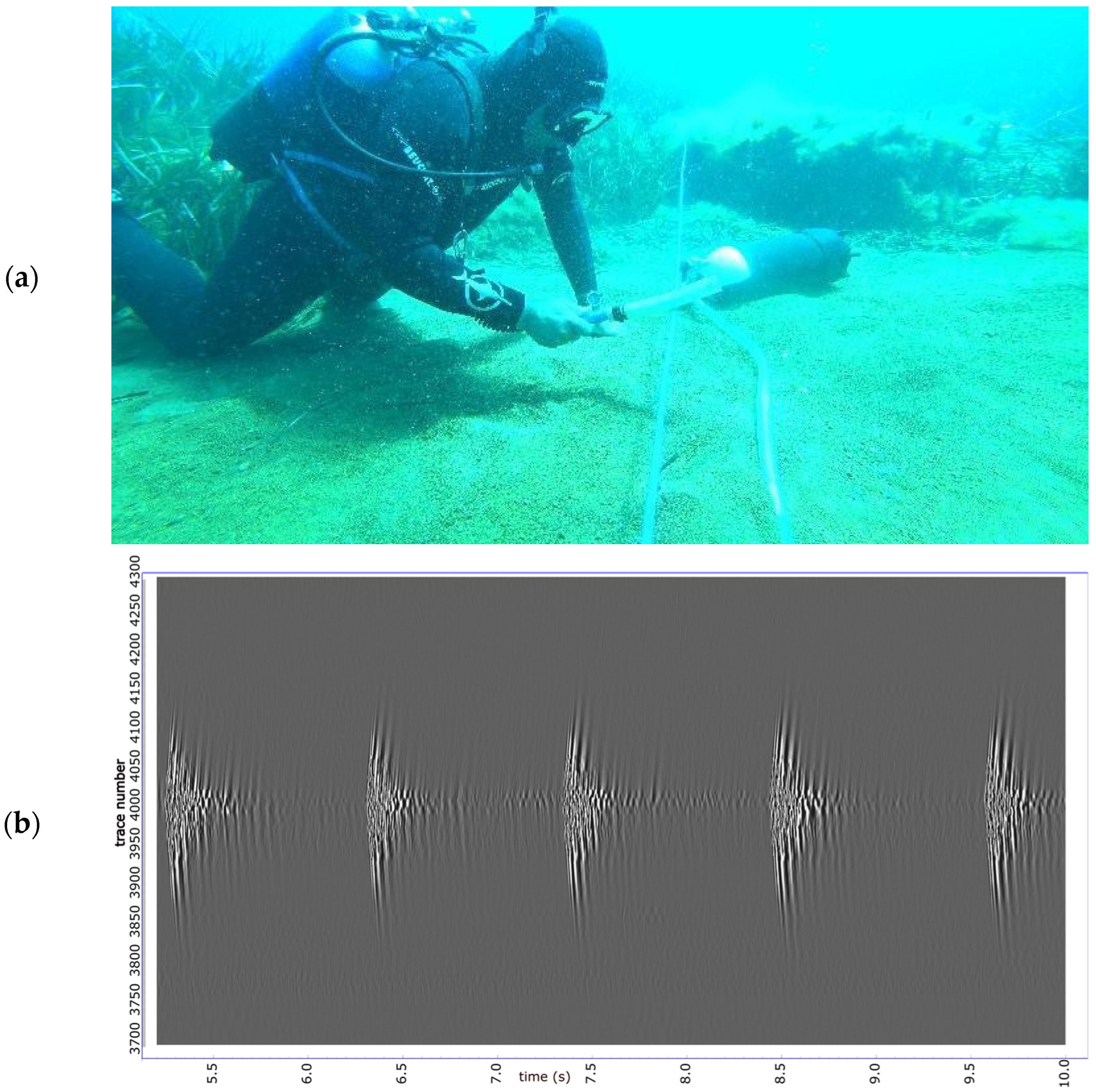
2 bubble emissions in the area provided continuous acoustic sources; in order to obtain a controlled and repeatable reference, divers released air from scuba tanks at selected locations along the cable. Tap tests were performed to identify the exact locations of the bubble emission points and to take note of the related trace numbers along the cable. These tests were carried out with the help of scuba divers to enable a precise configuration of acquisition parameters (
Figure 3).
Time-domain “waterfall visualization” was mainly employed in real-time during the acquisition to detect DAS signal variations as a function of time and to highlight transient bubble events with respect to persistent background noise.
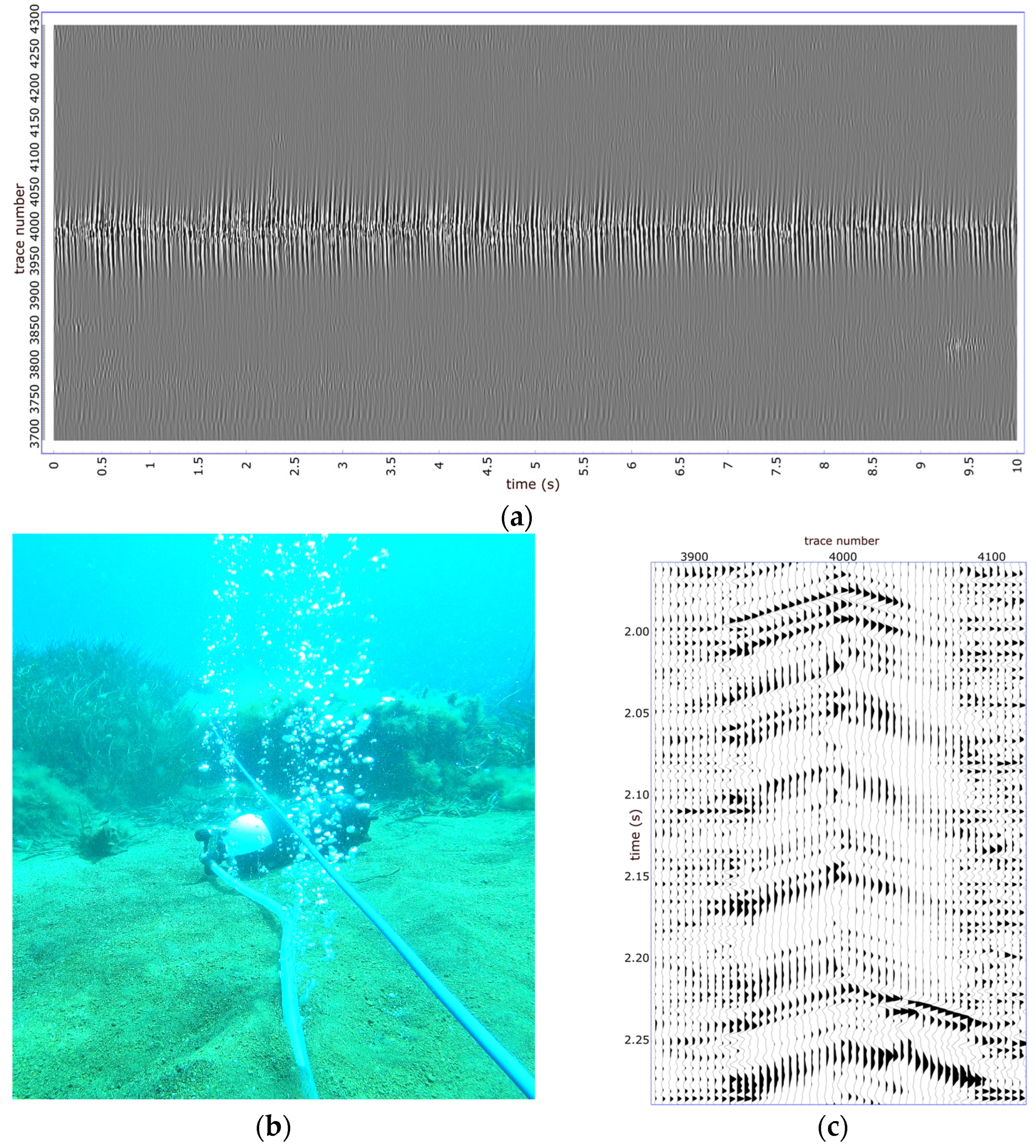
Signals from artificial bubbles (air from scuba tank) were clearly detected at the selected spot, providing reference data and supporting the interpretation of natural bubble signals (
Figure 4). The moveout in
Figure 4c represents the generated bubbles source signal traveling along the fiber at different times depending on distance.
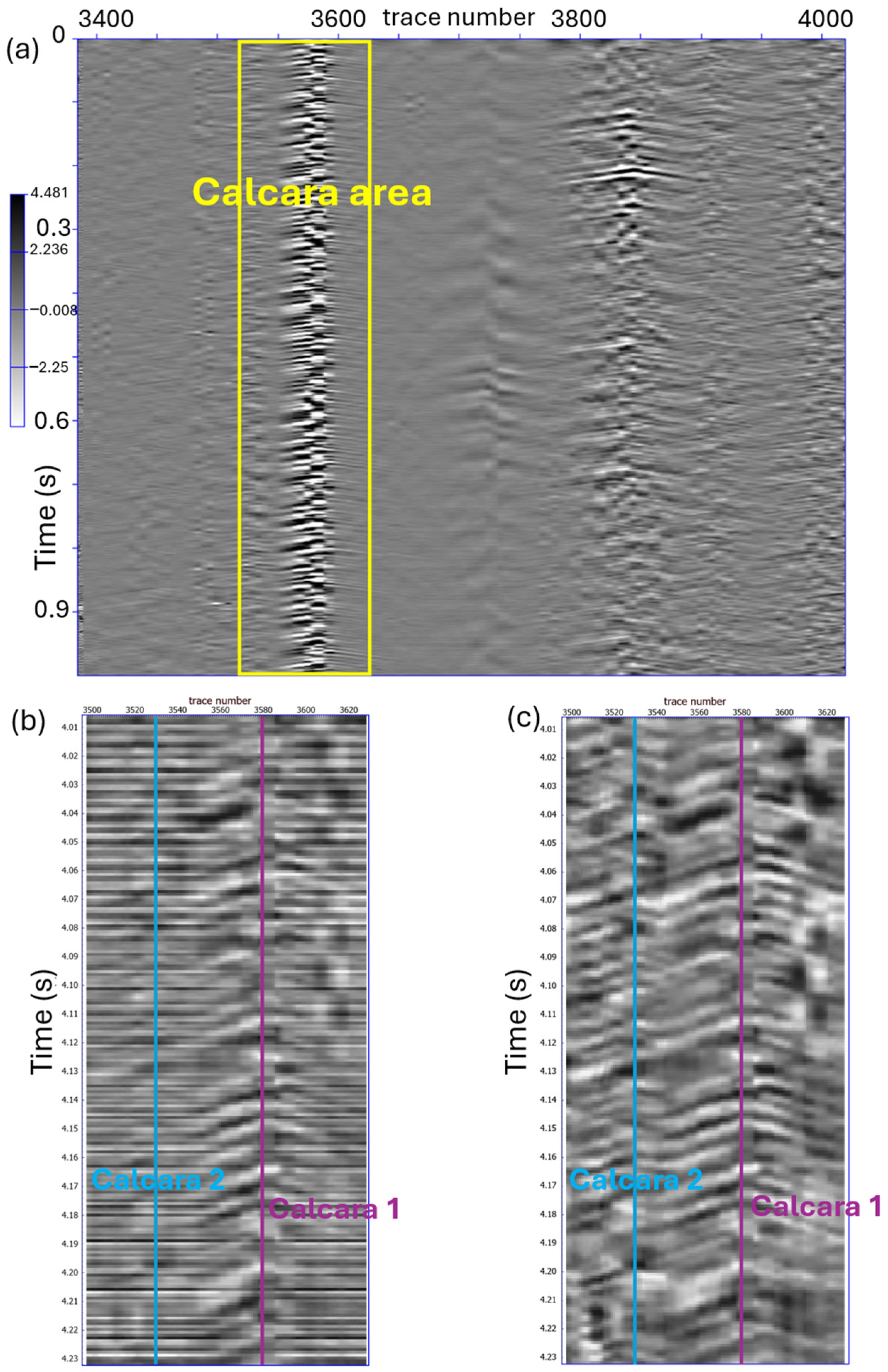
With reference to the spontaneous CO
2 bubble emissions, the interrogators-DAS system enabled to spot the leakage of the natural gas in the selected locations (Calcara 1 and 2 in
Figure 2); data collected before and after a pre-processing step (i.e., noise reduction, Ormsby filter) are reported in
Figure 5, which highlights the signal recorded along the whole deployed cable and provides an insight on the two spots of natural CO
2 bubbles emissions.
These representative results show that distinct acoustic signatures coincident with visual CO2 bubble release could be efficiently recorded at the studied locations (Calcara 1 and 2), even with minimal processing efforts.
3.2. Signal to Noise Analyses
A signal-to-noise ratio (SNR) analysis was performed to evaluate the performance of the different fiber types and interrogators deployed during the Panarea experiment.
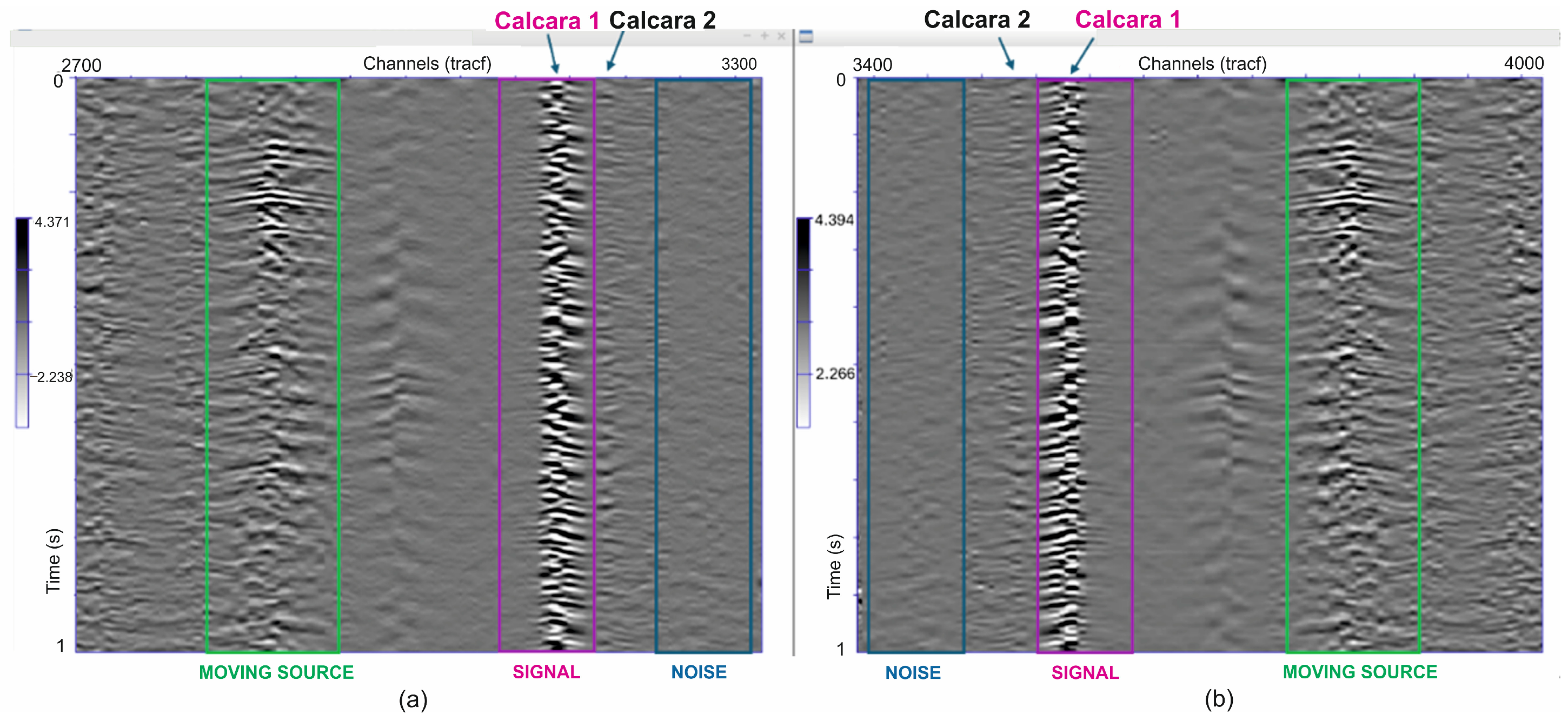
Figure 6 shows one second of passive DAS data recorded by the iDAS interrogator on the single-mode fiber (
Figure 6a) and by the Carina
® interrogator on the engineered fiber (
Figure 6b). The two fibers are co-located within the same marine cable, allowing a direct comparison under identical environmental and source conditions. For display purposes only, the data were bandpass filtered 10-20-90-100 Hz.
Signal and noise windows were selected based on the spatial and temporal characteristics of the recorded wavefield. The signal window (magenta rectangles in
Figure 6) corresponds to the Calcara 1 area, where natural CO
2 emissions dominate the recordings, while the noise window (blue rectangles) was selected in a nearby zone characterized by the absence of persistent degassing signals. Additional transient features, highlighted by green rectangles, are tentatively interpreted as noise generated by a temporary moving source, either at the sea surface or in proximity to the cable, as indicated by their rapid temporal attenuation compared to the more stable signal associated with natural emissions.
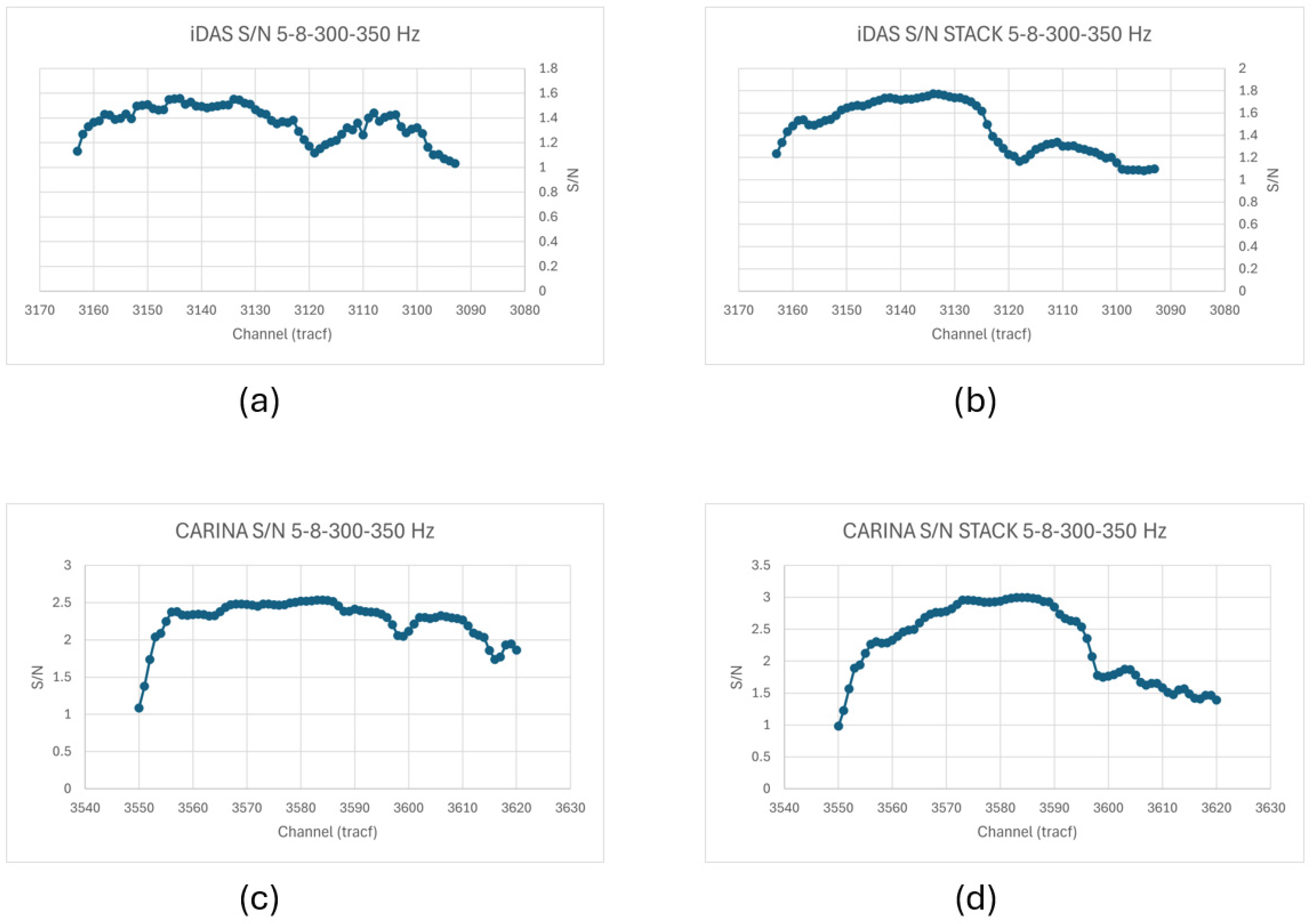
The SNR analysis was based on a root mean square (RMS) windowed approach. Each dataset consisted of 24 passive records of 60 s duration. The first record acquired by iDAS and the corresponding record from Carina® were band-pass filtered 5-8-300-350 Hz, to attenuate residual optical noise, and analyzed over a 10 s window spanning 71 adjacent traces. For each dataset, the RMS value was computed trace by trace within the signal window and normalized by the average RMS of the noise traces, yielding a spatial distribution of SNR along the cable segment.
The resulting SNR distributions for the first record are shown in
Figure 7a (iDAS) and
Figure 7c (Carina
®). Channel numbering is referenced to the distance from the pier, with reversed order for iDAS to facilitate comparison with the Carina
® geometry.
Both interrogators exhibit similar spatial trends in SNR, reflecting consistent signal behavior along the cable; however, higher SNR values are systematically observed for the Carina
® system. To increase the robustness of the analysis, all 24 records were stacked for each interrogator and the SNR was recomputed using the same procedure. The stacked results (
Figure 7b for iDAS and
Figure 7d for Carina
®) confirm the superior SNR of the engineered fiber interrogated by Carina
®, while also showing a clear improvement in the SNR of the iDAS data due to stacking.
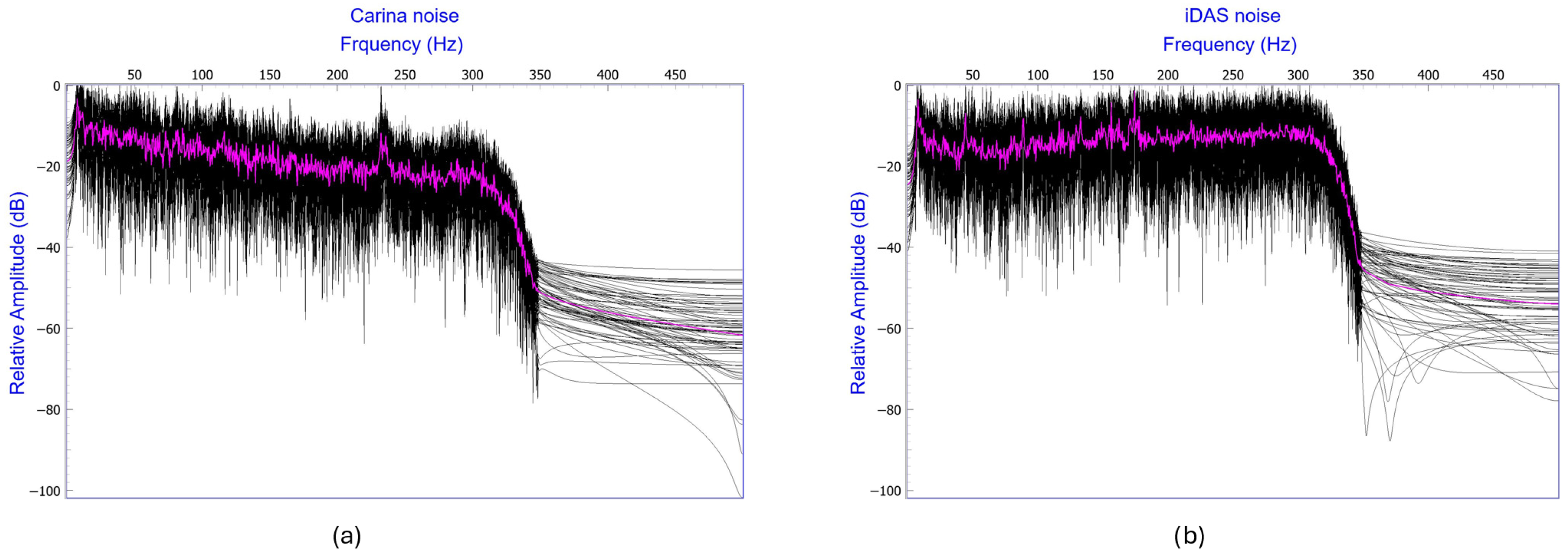
To further characterize noise levels, amplitude spectra in decibels were computed for the noise windows stacked over all records.
Figure 8 displays the individual noise spectra for each trace (black lines) and their average (magenta line) for both Carina
® and iDAS.
The Carina® data exhibit a consistently lower noise floor across the analyzed frequency range, confirming the reduced noise content observed in the time-domain SNR analysis.
3.3. Frequency-Domain Analyses
In shallow water environment, gas bubbles from the seafloor produce spectral peaks at lower frequencies compared with deep water because hydrostatic pressure is lower, allowing bubbles to remain larger at equilibrium. According to Minnaert theory, resonance frequency depends on bubble radius
R and hydrostatic pressure
P0 according to the following Equation (1):
So, lower pressure decreases the resonance frequency. Shallow water also introduces boundary effects from the seafloor and surface (which can broaden or split spectral peaks) and bubbles rise quickly, causing their resonance frequency to shift downward during ascent. Despite these complexities, the fundamental relationship between bubble size, hydrostatic pressure, and spectral resonance remains valid, making spectral analysis a useful tool for characterizing bubble emissions [
22].
Frequency-domain analyses were performed on DAS recordings acquired during both the controlled air-release experiment and the observation of natural CO
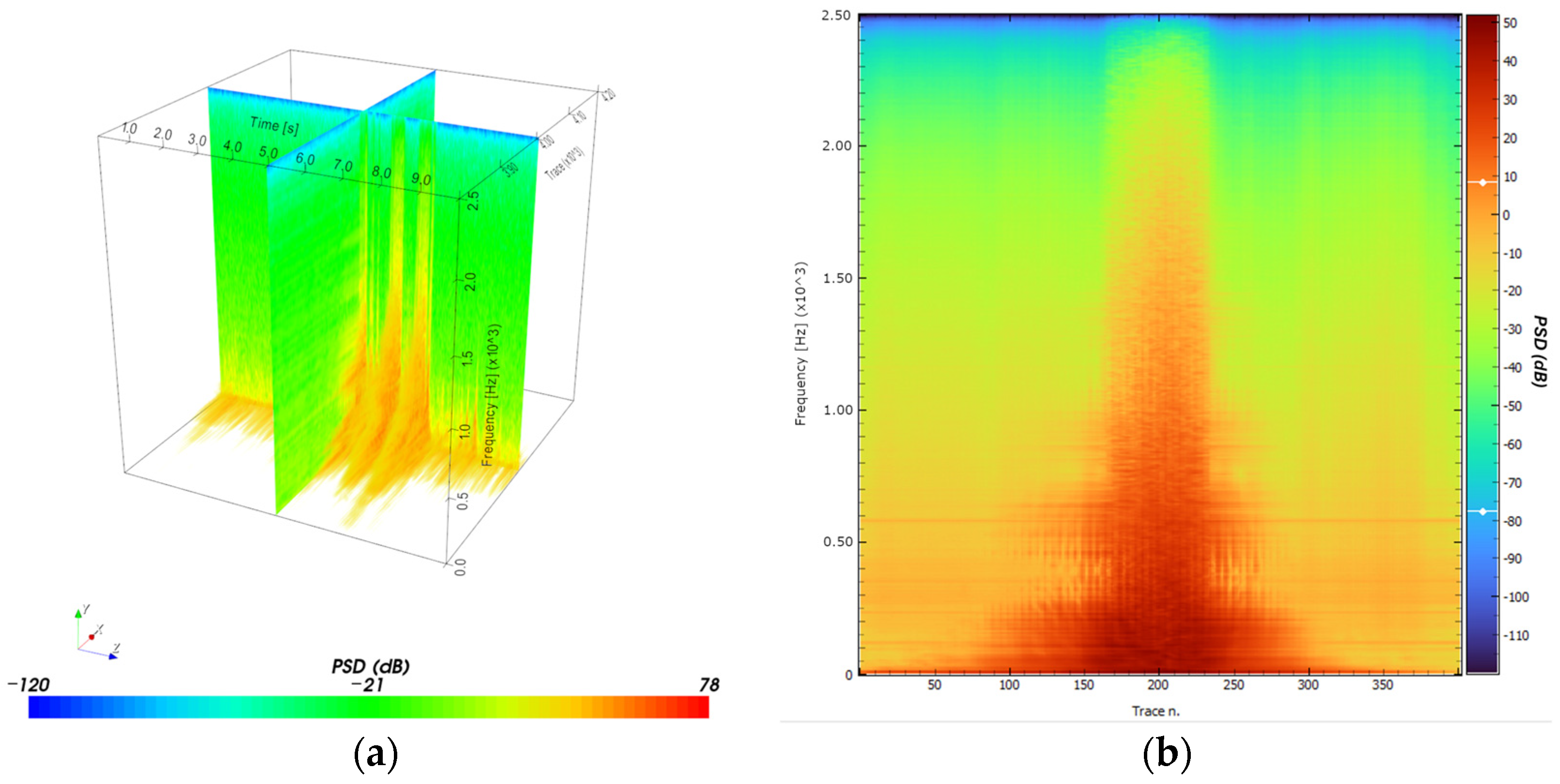
2 emissions in the Calcara area. The reference signal was generated by a controlled air release from a scuba tank, with three alternating phases of gas flow opening and closure, providing a well-defined benchmark for spectral characterization. A representative 10 s record was analyzed using time–frequency methods, and the corresponding three-dimensional spectrogram of the Power Spectral Density (PSD) clearly highlights the transitions between gas emission and quiescent phases (
Figure 9a).
The same record is displayed as a PSD heatmap (
Figure 9b), which emphasizes the dominant frequency components associated with the gas release. Although the active emission lasts less than 3 s within the 10 s window, the integrated spectral representation distinctly reveals frequency bands characteristic of the gaseous emissions (up to 2000 Hz). This result demonstrates that even short-duration gas-release events can be effectively detected through spectral integration over relatively long time windows, preserving the essential information related to bubble activity.
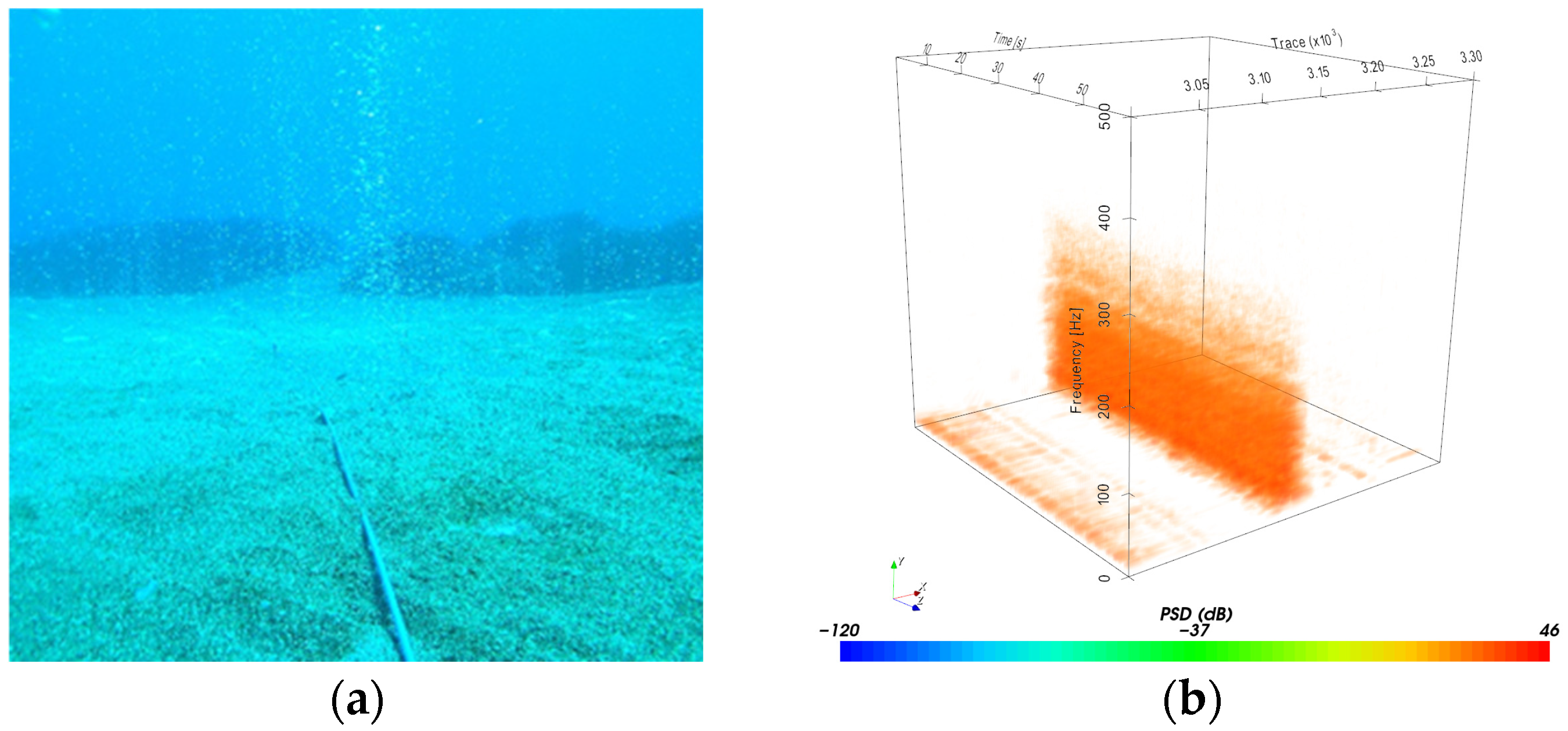
A similar spectral approach was applied to DAS data recorded in the area of natural gas emissions at Calcara 1 and 2. In this case, a longer time window of 60 s was considered to capture the persistent nature of the degassing process. The resulting three-dimensional spectrogram (
Figure 10), filtered to remove frequencies above 350 Hz for display purposes, shows sustained spectral energy with relatively stable frequency content over time.
This behavior is consistent with a quasi-continuous gas flux, in agreement with visual observations from underwater images and video recordings (
Supporting Information section).
3.4. Active Seismic Processing
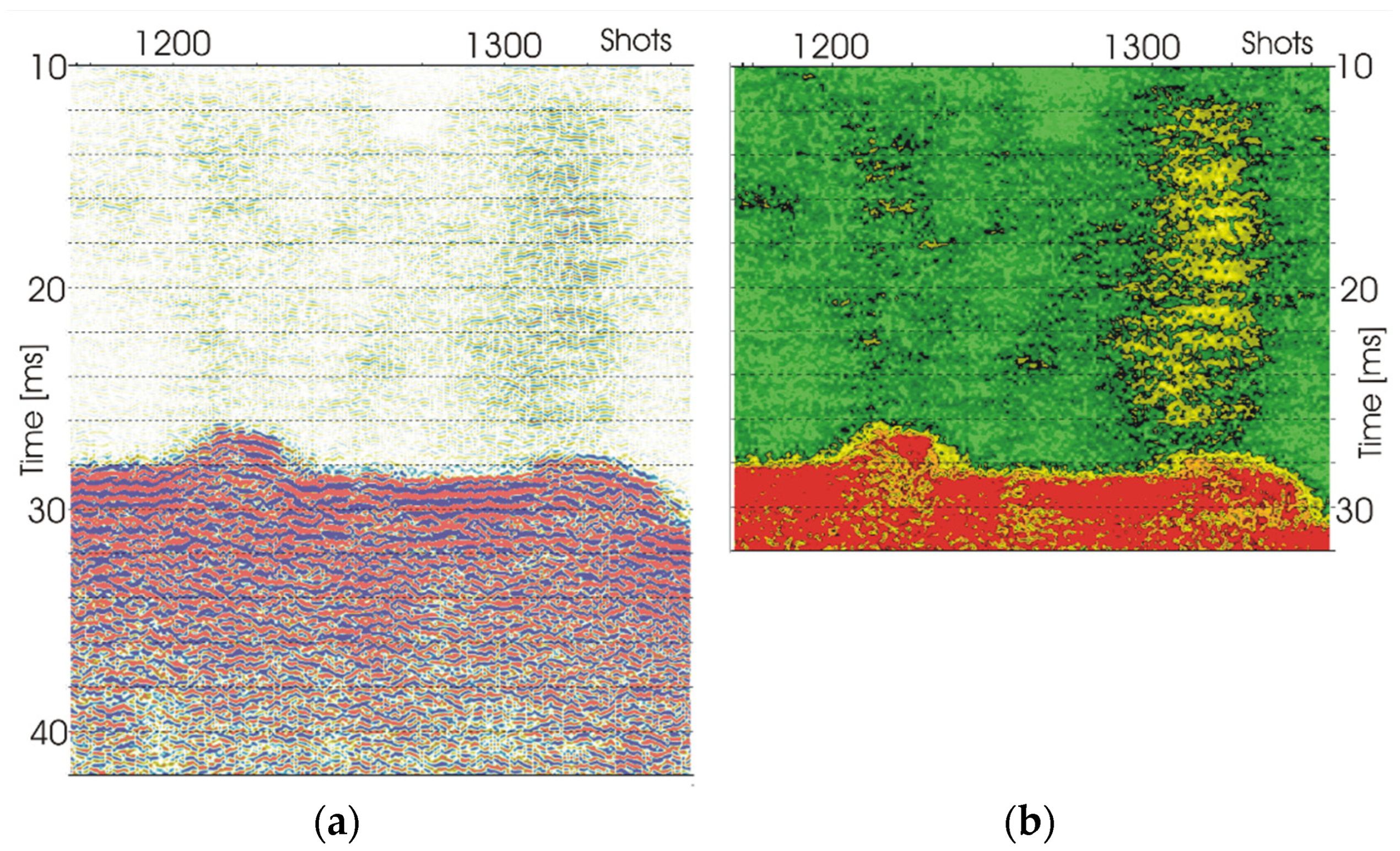
In support of the interpretation resulting from passive data, the Boomer active seismic data reveal a seabed characterized by limited sediment cover overlying rocky substrates, resulting in restricted acoustic penetration beneath rock aggregations (
Figure 11).
The presence of two rock accretions is clearly visible. The sedimentary layer between them is very thin. The strength of reflectivity (calculated with Hilbert transform) image of the Very High Resolution Seismic (VHRS) profile acquired between Calcara 1 and Calcara 2 (
Figure 11) clearly highlights the flow of bubbles (yellow) emerging near the rock accretions, rising towards the surface.
Despite this limitation, several anomalous acoustic flares were identified within the water column. In the Calcara 1 and 2 area, these features manifest as localized amplitude anomalies spatially associated with rock accretions and known degassing zones.
The visibility of these flares is significantly enhanced by applying the Hilbert transform and computing the instantaneous amplitude, which provides a measure of reflection strength and highlights high-energy anomalies within the seismic section [
23]. These observations are consistent with active gas seepage and provide independent geophysical evidence supporting the presence of CO
2 emissions in the surveyed area.
Data integration from different methods is increasingly recognized as essential for robust interpretation: in our case, the passive/active seismic combined approach led to results that strengthen the reliability of the overall characterization of the area of interest.
3.5. Seafloor Imaging
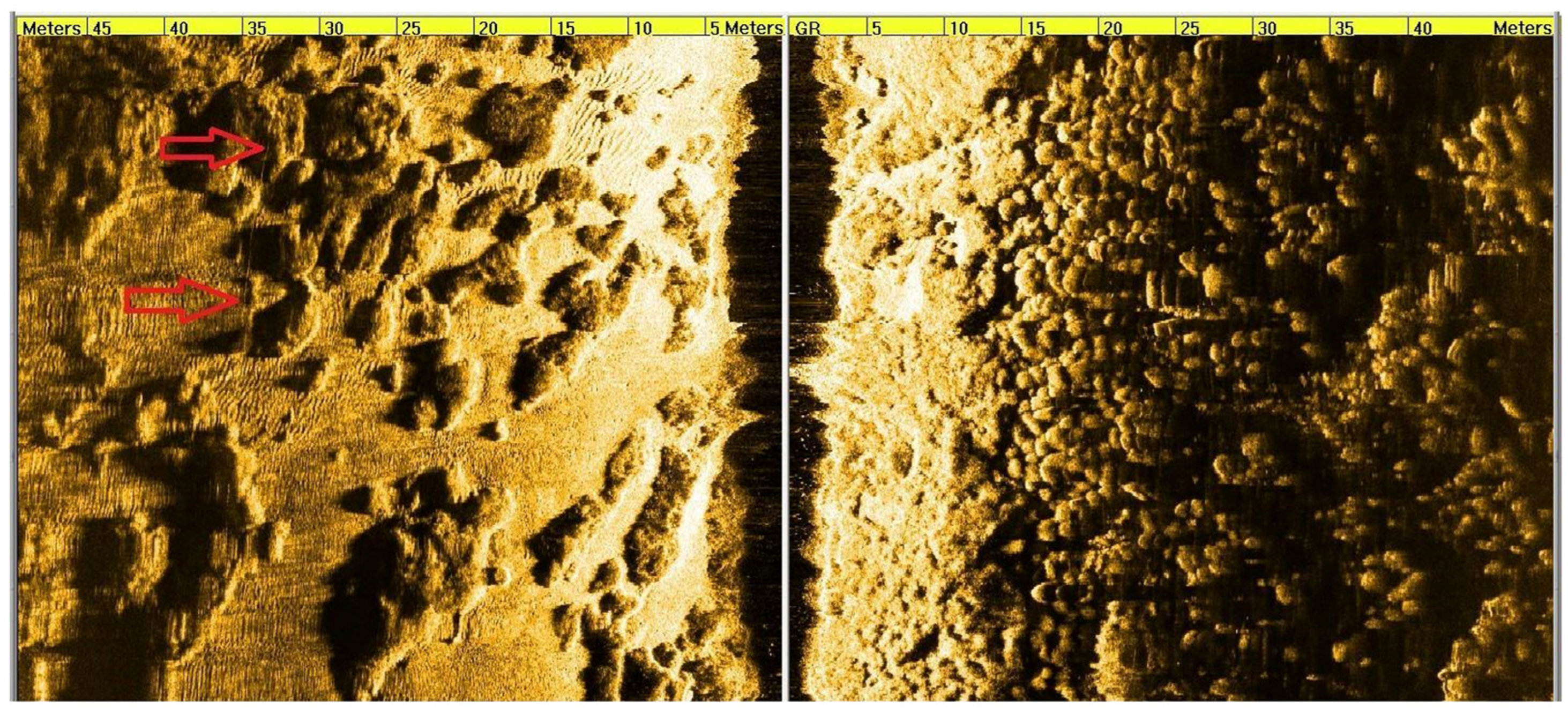
A side-scan sonar survey was also conducted to map seafloor morphology, highlighting textural variations and vent structures; the DAS cable itself was spotted on the seabed in several areas, and a small portion of the cable is indicated in
Figure 12.
Side-scan sonar images revealed heterogeneous seafloor morphology characterized by fine sediments, volcanic fragments, and hydrothermal features. The sonar survey further confirmed the localization of the fiber-optic cable in the areas of the vent fields.
4. Discussion
4.1. DAS Sensitivity to Submarine CO2 Bubble Emissions
DAS can detect seafloor gas emissions generated by oscillating bubbles. Through analysis of the bubble resonance frequency (Minnaert frequency), it is theoretically possible to estimate bubble size, derive bubble volume and, combined with bubble emission rate, approximate gas flux [
24,
25,
26]. However, translating acoustic measurements into quantitative gas flux is challenging. DAS measures strain along the fiber rather than absolute pressure, meaning signal amplitude depends strongly on cable coupling, distance from the seep, sediment properties, and installation geometry. Marine environmental noise (waves, currents, shipping, biological sources) further obscures spectral features. As a result, absolute gas flux estimation requires careful calibration with independent measurements such as geochemical or optical/sonar observations [
16,
27].
The results of the Panarea experiment demonstrate that marine Distributed Acoustic Sensing (DAS) is capable of detecting acoustic signals associated with natural CO2 bubble emissions in a shallow volcanic environment. The observed signals are characterized by high-frequency, transient acoustic energy localized in space and time, consistent with the physical processes governing bubble formation, oscillation, and collapse in water. The clear detection of controlled air releases from scuba tanks provides an effective reference signal, confirming that the recorded DAS responses are effectively sensitive to bubble-related acoustic phenomena over background noise or instrumental artifacts.
These observations are in agreement with recent studies showing that DAS can detect gas-related acoustic signals in both controlled and natural settings. Caudron et al. [
13] demonstrated the feasibility of using DAS to monitor gas bubbles in a volcanic context, highlighting the sensitivity of fiber-optic sensing to high-frequency acoustic emissions. Similarly, laboratory and field investigations of underwater acoustics have shown that gas bubbles generate distinctive spectral signatures dependent on bubble size, release rate, and ambient pressure conditions [
14]. The Panarea results extend these findings by providing a field-scale demonstration in a shallow marine volcanic system, where complex acoustic conditions and variable seabed coupling typically challenge conventional monitoring approaches.
4.2. Implications of SNR Analysis for Marine DAS Performance
The signal-to-noise analysis provides quantitative evidence of the impact of fiber type and interrogator design on DAS data quality in a shallow marine environment. The consistently higher SNR values observed for the engineered fiber interrogated by Carina
® are in agreement with the technical specifications of the system and with previous studies highlighting the improved sensitivity and reduced noise characteristics of engineered fibers compared to standard single-mode fibers [
28,
29].
The fact that both interrogators exhibit similar spatial trends in SNR indicates that environmental factors, such as seabed coupling and source distribution, exert a primary control on signal variability along the cable. However, the systematic SNR enhancement provided by the Carina® system demonstrates its advantage for detecting low-amplitude, persistent signals such as those associated with natural CO2 degassing. This is particularly relevant in shallow-water settings, where ambient noise from surface sea waves, vessel traffic, and marine fauna activity can significantly degrade signal quality.
The improvement observed in both datasets after stacking highlights the effectiveness of temporal averaging for enhancing DAS signal detectability. While stacking is a well-established technique in seismic analysis, its application in passive DAS monitoring underscores the potential for optimizing long-term surveillance strategies by combining appropriate acquisition parameters with processing techniques. In the context of continuous monitoring, the combination of engineered fibers and stacking approaches can improve detection capabilities without increasing deployment complexity.
The reduced noise floor observed in the Carina® amplitude spectra further supports its suitability for applications requiring reliable detection of weak acoustic signals over extended periods. From an Earth sciences perspective, this enhanced performance facilitates more robust observation of gas emission processes in volcanic–hydrothermal systems. From an applied standpoint, particularly in offshore CCS monitoring scenarios, improved SNR directly translates into increased sensitivity for early detection of small leakage events and subtle temporal variations in gas flux. While standard fibers provide an adequate baseline capability for CCS monitoring, engineered fibers offer significant operational and safety advantages. For industrial-scale shallow-water CCS sites, where early leak detection and fine-scale characterization of gas emissions are essential, engineered fibers are more than a “nice-to-have”; they provide a level of sensitivity and data fidelity that can meaningfully improve monitoring effectiveness, risk mitigation, and long-term assurance of storage integrity.
4.3. Interpretation of Spectral Signatures and Implications for Monitoring
The spectral characteristics observed in both controlled and natural gas-release experiments provide important insights into the acoustic signature of submarine gas emissions as recorded by marine DAS. The scuba tank experiment confirms that bubble-related acoustic signals generate identifiable and repeatable time and frequency signals, even when the duration of active emission is short relative to the analysis window. This behavior is consistent with previous studies on underwater bubble acoustics, which have shown that gas release produces broadband acoustic energy with dominant frequency components linked to bubble size and release dynamics [
14].
The persistence and spectral stability of the signals observed in the Calcara area further support the interpretation that the DAS response is suitable to detect continuous natural CO
2 degassing. Similar spectral persistence has been reported in DAS-based observations of volcanic or gas-related acoustic sources, where sustained emissions result in stable frequency bands over time [
13]. The agreement between DAS-derived spectrograms and independent underwater scuba diver visual observations strengthens confidence in the ability of DAS to reliably detect and characterize submarine gas emissions in shallow marine environments.
From a methodological perspective, the use of 3D spectrograms and PSD heatmaps offers a practical advantage for long-term monitoring applications. DAS systems generate very large data volumes, which can limit their applicability for continuous monitoring if raw data storage is required. The results presented here show that integrating spectral information over relatively long time windows allows the preservation of key indicators of gas leakage while significantly reducing data volume. This approach is particularly relevant for applications such as offshore CCS monitoring, where continuous surveillance over extended periods is required and early detection of changes in gas flux or emission characteristics is critical.
Overall, the spectral analysis presented in this study complements time-domain observations and reinforces the role of marine DAS as a versatile geophysical tool for detecting and characterizing submarine gas emissions.
4.4. Influence of Shallow-Water Conditions and Cable–Seabed Coupling
Water environments pose specific challenges for DAS deployments, including attenuation of seismic energy, multipath propagation, and spatially variable coupling between the cable and the seabed. Despite these limitations, the Panarea experiment shows that effective coupling was achieved over significant portions of the deployed fiber, enabling the detection of both ambient seismic noise and localized bubble-related signals.
Previous marine DAS studies have emphasized the critical role of coupling and bathymetry in controlling signal quality. Lior et al. [
9] demonstrated that DAS response can vary significantly with water depth and seabed conditions, while Idrissi et al. [
10] highlighted the importance of long cable deployments for capturing a wide range of marine acoustic and seismic signals. In the Panarea setting, the presence of volcanic and hydrothermal deposits likely enhances local coupling in some areas, facilitating the transmission of acoustic energy from bubble emissions to the fiber. This observation suggests that volcanic marine environments may be particularly favorable for DAS-based monitoring of seabed processes.
4.5. Integration with Independent Seismic and Seabed Imaging Data
The combination of passive DAS monitoring with an independent high-resolution boomer–streamer seismic survey provides valuable framework for interpreting the recorded signals. The active seismic data offer a structural image of the shallow subsurface along the DAS cable profile, highlighting a thin sedimentary layering and the flow of bubbles emerging from the seafloor. While the active seismic signals recorded by the DAS system will be discussed in a future study, the seismic section supports the description of the geological framework controlling gas migration pathways and vent localization.
Similarly, side-scan sonar imaging of the seabed reveals textural heterogeneity and morphological features associated with venting areas, as well as the position of the deployed fiber-optic cable. The integration of DAS data with seabed imaging supports a multi-method geophysical approach, in which passive acoustic sensing is complemented by independent structural and morphological observations.
4.6. Comparison with Recent Studies on Marine DAS Deployments
Compared to previous marine DAS experiments in the recent literature, the Panarea study is distinguished by its focus on natural CO
2 emissions in a shallow volcanic setting rather than on tectonic or oceanographic signals alone. Many existing studies have emphasized deep-water deployments or long-distance telecommunications cables for earthquake and noise monitoring [
9,
10]. In contrast, the Panarea deployment demonstrates that relatively short, purpose-deployed cables can yield scientifically meaningful results in shallow coastal environments.
Recent works by Rafi et al. [
28] and Zahir et al. [
29] have highlighted the importance of fiber type, interrogation strategy, and acquisition parameters in optimizing DAS performance. The use of two interrogators in this experiment allowed for a comparative assessment of system performance under identical environmental conditions, providing additional insight into the robustness of DAS measurements in marine applications. Although a detailed comparison of fiber types is beyond the scope of this paper, the successful detection of bubble-related signals by both systems underscores the adaptability of DAS technology to diverse marine settings.
4.7. Implications for Volcanic Monitoring and CCS Leakage Detection
From an Earth sciences perspective, the ability to detect submarine CO2 emissions using DAS has significant implications for monitoring volcanic and hydrothermal systems. Gas emissions are a key indicator of subsurface processes, and their temporal variability can provide insights into changes in permeability, fluid pressure, and magmatic activity. DAS offers the potential for continuous, spatially distributed monitoring of such emissions with minimal environmental impact, complementing traditional geochemical and visual observation methods.
Beyond volcanology, the Panarea experiment provides valuable insights relevant to offshore CCS monitoring. Natural CO2 degassing sites represent realistic analogues for potential leakage scenarios from sub-seabed storage reservoirs. The demonstrated sensitivity of DAS to bubble-related acoustic signals suggests that fiber-optic sensing could contribute to early detection systems for CO2 leakage, particularly when integrated with other geophysical and geochemical monitoring tools. Importantly, the use of passive DAS avoids the need for repeated active surveys, reducing operational costs and environmental disturbance.
4.8. Limitations and Future Perspectives
While the results presented here are promising, several limitations should be acknowledged. The detection and characterization of bubble emissions depend on environmental noise levels, coupling conditions, and acquisition parameters, which may vary over time. Quantitative estimation of gas fluxes requires further investigation, including calibration with independent measurements. Future work should focus on laboratory calibrations, long-term deployments, advanced signal processing techniques, and joint interpretation with geochemical and oceanographic data.
Despite these limitations, this study demonstrates that marine DAS represents a powerful addition to the geophysical toolbox for investigating seabed processes.
5. Conclusions
This study presents a field-scale demonstration of marine Distributed Acoustic Sensing (DAS) technology applied to the detection of natural CO2 emissions in a shallow volcanic marine environment. The experiment conducted offshore Panarea confirms that a seabed-deployed fiber-optic cable, interrogated with DAS, can successfully record acoustic signals associated with both natural CO2 bubble release and controlled artificial gas emissions. These results highlight the sensitivity of DAS to gas-related acoustic phenomena under complex shallow-water conditions.
The integration of passive DAS monitoring with independent high-resolution boomer–streamer seismic acquisition and side-scan sonar observations provides a comprehensive geophysical framework for interpreting seabed processes. The structural information derived from the seismic section contributes to understanding the geological features related to gas migration and vent localization along the cable profile.
From an Earth sciences perspective, the Panarea experiment underscores the potential of DAS as a low-impact, spatially continuous monitoring tool for volcanic and hydrothermal environments, where gas emissions play a critical role in revealing subsurface dynamics. The ability to detect bubble-related acoustic signals using a relatively short, purpose-deployed marine fiber further suggests that DAS can be effectively applied in coastal and shallow-water settings, which have traditionally been challenging for conventional seismic instrumentation.
Beyond its volcanological significance, this study provides important insights relevant to offshore carbon capture and sequestration (CCS). In the framework of the European Union’s strategy to combat global warming, CCS plays a crucial role in the EU Green Deal and the monitoring of storage sites, both onshore and offshore, is a key tool. Natural CO2 degassing sites such as Panarea offer realistic analogues for potential leakage scenarios from sub-seabed storage reservoirs. The demonstrated capability of DAS to detect gas emissions supports its potential role in future CCS monitoring strategies, particularly as part of integrated, long-term seabed surveillance systems for early detection and consequent containment actions. Although DAS is highly effective for detecting leakage onset, mapping seep locations, and monitoring relative flux variations over time, precise volumetric quantification remains technically difficult without complementary data and modelling. Continued methodological development and interdisciplinary integration are expected to further enhance its applicability to both fundamental Earth science research and applied monitoring of sub-seabed CO2 storage systems.




 ,
,