Article

Fe3O4@LDH Hybrids as Drug Delivery Systems for Meloxicam: A Physical–Chemical Characterization and In Vitro Study


1
Chemistry Department, University of Pavia, Viale Taramelli 16, 27100 Pavia, PV, Italy
2
CSGI—Consorzio per i Sistemi a Grande Interfase, Via della Lastruccia 3, 50019 Sesto Fiorentino, FI, Italy
3
Department of Physics, University of Pavia, Via Bassi 6, 27100 Pavia, PV, Italy
4
Department of Drug Sciences, University of Pavia, Viale Taramelli 12, 27100 Pavia, PV, Italy
*
Author to whom correspondence should be addressed.
Appl. Sci. 2026, 16(6), 2853; https://doi.org/10.3390/app16062853
Submission received: 18 February 2026 / Revised: 11 March 2026 / Accepted: 12 March 2026 / Published: 16 March 2026

Featured Application

Magnetic core–shell nanocomposites based on magnetite and layered double hydroxides could be employed for targeted meloxicam drug delivery.

Abstract

Magnetic nanoparticles represent the next-generation drug delivery systems, enabling drug targeting to specific organs without adverse effects on the body and with a controlled release rate. Their strengths are represented by biocompatibility, low cost, and easy drug loading; some drawbacks are aggregation and poor stability in biological media. In the present work, we synthesized magnetic core–shell structures with a magnetite core coated with layered double hydroxides (LDHs) based on Mg2+ or Zn2+ and Al3+ ions and loaded with meloxicam, a poorly water-soluble anti-inflammatory drug. Several syntheses have been attempted to obtain iron oxides based on the only magnetite phase. The combined use of different characterization techniques allowed us to reveal that the best product, showing the crucial room temperature superparamagnetism and a good level of compositional uniformity, was obtained from co-precipitation in nitrogen flow. The next LDH coating was successful, even if the hybrids showed the occurrence of aggregation. The drug was mainly adsorbed onto the LDH surfaces, as shown by the X-ray diffraction and Infrared Spectroscopy techniques. The loaded meloxicam amount was low, but the subsequent release into simulated body fluid could be prolonged for 4 days. Our study provides a proof of concept about the importance of a thorough characterization of the nanocomposite hybrids and their possible use for tricky drugs, such as those of class II of the Biopharmaceutical Classification System.

1. Introduction

At present, nanotechnology is the most powerful resource for researchers to obtain the various functional materials required for numerous application fields. In particular, the drug delivery field is increasingly demanding new systems able to provide controlled and sustained drug release, as well as patient-specific therapies [1,2]. In this context, but also for catalysis, environmental protection, water purification, and energy applications, layered double hydroxides (LDHs) are ideal candidates [3,4,5]. LDHs are a well-known class of anionic clays with chemical formula [M2+1−x M3+x (OH)2](An−)x/n yH2O, with M2+ (Mg, Zn, Ni, Co or Cu), M3+ (Al, Cr, Sc, Ga, Gd or Fe) and An−, and anions such as CO32−, NO3, Cl, which should balance the positive charges of hydrotalcite layers (0.2 < x < 0.33, and y amount of interlayer water). The anions in the LDH structure can be exchanged with negatively charged drugs, providing well-performing drug delivery systems [6,7]. The LDHs’ main strengths are represented by easy synthetic processes, biocompatibility, low toxicity and low cost, high specific surface area and capacity of exchange anions, pH-dependent solubility, high ability for drug loading, and pH-controlled release of guest molecules. Some drawbacks are their difficult separation from aqueous solutions, low solubility in water, and poor surface modification capabilities [8].
Magnetic nanoparticles-based LDHs as the next generation of drug delivery systems could facilitate the transfer of drug molecules to the involved organs, avoiding side effects on the whole human body, and their magnetic properties, like superparamagnetism, make the transport of pharmaceuticals more efficient [9,10]. So far, the classic core–shell model has been adopted by many magnetic drug-loaded nano-vehicles and, in general, applied to some model drugs such as doxorubicin, ibuprofen, diclofenac and methotrexate [11,12,13,14,15,16,17]. The most diffused core is represented by Fe3O4 nanoparticles, helping a targeted drug delivery thanks to their unique structure, superparamagnetic properties, high specific surface area, low toxicity, biodegradability, high half-life, biocompatibility, easy modification, stability, eco-friendliness, low production cost, and the transfer of drugs to the target tissue using an external magnet. However, the only Fe3O4 nanoparticles with long-term toxic effects easily aggregate in aqueous environments and show poor stability in biological media, reducing their delivery efficiency. Luckily, the surface of Fe3O4 nanoparticles can be modified using a variety of biocompatible materials, such as polymers, chitosan or polyethylene glycol [11,15,16,17]. So, the incorporation of Fe3O4 nanoparticles with LDH nanosheets for the construction of magnetic LDH nanocomposites can prevent the aggregation of magnetic Fe3O4 nanoparticles. However, a controlled assembly of magnetically functionalized LDHs nano-vehicles is still a challenge. A lot of synthesis methods have been employed for these hybrids, with the conventional co-precipitation as the most common, with only some variations in temperature, pH adjustment and the rate of reagents’ addition. However, a large part of the available syntheses is time-consuming, requiring many steps to obtain the final product. Another issue is related to the Fe3O4 nanoparticles themselves. During their synthesis, due to the ease of iron oxidation, maghemite or hematite can form together with or instead of magnetite, with consequences on the final magnetic properties of the product [18]. In addition, magnetite and maghemite are hardly distinguishable, with the classical powder diffraction studies showing the same spinel structure, while hematite is structurally different and can be more easily recognized [19].
The need for efficient drug delivery systems is especially urgent for poorly soluble drugs, difficult to solubilize and administer to patients. In particular, the oxicam class of non-steroidal anti-inflammatory drugs (NSAIDs), classified as Biopharmaceutical Classification System (BCS) class II, i.e., drugs with low solubility and high permeability, is particularly tough to treat. In this context, meloxicam, 4-hydroxy-2-methyl-N-(5-methyl-2-thiazolyl)-2H-1,2-benzothiazine-3-carboxamide-1,1-dioxide (C14H13N3O4S2) has analgesic, anti-inflammatory, and antipyretic properties and can treat arthritis and osteoarthrosis for a limited time and rheumatoid arthritis for longer times. Meloxicam is insoluble in water, slightly soluble in methanol and ethanol, and highly soluble in DMF and DMSO [6].
At present, the synthesis of well-performing core–shell magnetic structures suitable for drug delivery is an open challenge.
Our aim was to synthesize Fe3O4 nanoparticles from different syntheses and characterize them with combined physical and chemical techniques (X-ray powder diffraction (XRD), Fourier-transform infrared spectroscopy (FT-IR), scanning electron microscopy (SEM) coupled with energy-dispersive spectroscopy (EDS), electron paramagnetic resonance (EPR) and SQUID magnetometry) to accurately determine the formed phase. Then, Mg-Al and Zn-Al layered double hydroxides were coated on them, and the obtained core–shell hybrids, characterized with the same techniques employed for the nanoparticles, were employed as drug delivery systems for meloxicam, to our knowledge, never tried before. Finally, the drug release profile was studied in “in vitro” conditions that simulate the biological environment.

2. Materials and Methods

Meloxicam (MLX) was generously donated by Olon (Casaletto Lodigiano, LO, Italy). All the other reagents were of analytical grade and were obtained from Sigma-Aldrich (St. Louis, MO, USA).

2.1. Synthesis of Fe3O4 Nanoparticles

Different syntheses, considered as the most effective, were employed to look for the best conditions that could allow the obtaining of magnetite in a pure form and in a rapid and reproducible way.
-
Polyol synthesis: An amount of 8 mmol of FeCl3 6H2O was dissolved in 45 mL of ethylene glycol, and then 45 mmol of sodium acetate was added under vigorous stirring. The obtained solution was then transferred to a Teflon stainless-steel apparatus, placed in an oven, and heated at 180 °C for 10 h. After cooling to room temperature (RT), the product was centrifuged and washed many times with water and ethanol. Finally, it was dried in an oven at 60 °C overnight [13,18]. This sample will be named Fe3O4-P.
-
Co-precipitation synthesis in N2 flow: FeCl3 6H2O and FeCl2 6H2O (molar ratio: 2:1) were dissolved in water with stirring under a nitrogen atmosphere. Then, the solution was heated at 80 °C. When the desired temperature was reached, 7 mL of NH4OH was added. The solution was maintained for about 10 min at 80 °C and then was cooled to RT, centrifuged, washed with water and ethanol, and dried in an oven at 60 °C overnight [20,21]. This sample will be named Fe3O4-N2.
-
Citric acid-assisted synthesis: The third synthesis was similar to the second one, but with the addition of citric acid as a surfactant. A solution was obtained by dissolving 2 g of citric acid in 4 mL of distilled water. This solution was added to the iron chloride mixture after maintenance for 10 min at 80 °C. Vigorous stirring was performed for 35 min with reflux under nitrogen, and then the solution was cooled to RT, washed with water and ethanol, and dried in an oven at 60 °C overnight [16]. This sample will be named Fe3O4-CA.
As we will demonstrate in the following, the best sample was Fe3O4-N2, showing room-temperature superparamagnetism, compositional uniformity and homogeneity. It was, therefore, the one chosen to prepare the hybrids.

2.2. Synthesis of the Fe3O4@LDH Hybrids

An amount of 150 mg of Fe3O4-N2 nanoparticles was dispersed through sonication for 20 min in water. Then, 1.5 g of NaNO3 was dissolved in the dispersion, with the aim of increasing the likelihood of having NO3 anions between the LDHs layers, making the subsequent exchange with the drug easier. In the meantime, two solutions were prepared: NaOH (0.4 M) and metal nitrates in a 3:1 ratio in 50 mL of water (0.53 g of Zn(NO3)2 6H2O, 0.225 g of Al(NO3)3 9H2O, 0.46 g of Mg(NO3)2 6H2O, and 0.225 g of Al(NO3)3 9H2O). These solutions were added drop by drop, each one to two equal nanoparticle dispersions under nitrogen flow, maintaining the pH at about 8.5 for ZnAl-LDH and 10 for MgAl-LDH by adding the basic solution. When the addition of nitrates was ended, after about 10 min, the products were centrifuged, washed three times with water and ethanol, and dried at 60 °C overnight. These samples will be named Fe3O4@ZnAl-NO3-LDH and Fe3O4@MgAl-NO3-LDH.
For ZnAl-LDH, another synthesis was tried with the aim of verifying the influence of synthesis parameters on the drug loading. However, after the morphological characterization of the product, due to its non-convincing characteristics (see Section 3.2.1), the same synthesis was not applied to MgAl-LDH. To obtain this product, 150 mg of Fe3O4-N2 were dispersed through sonication for 20 min in a 1:1 mixture of methanol and water. In the meantime, two solutions in a 1:1 mixture of methanol and water were prepared: NaOH (0.4 M) and nitrates in a 3:1 ratio in 50 mL (0.53 g of Zn(NO3)2 6H2O and 0.225 g of Al(NO3)3 9H2O). This solution was added to the nanoparticle’s dispersion drop by drop under nitrogen flow, maintaining the pH at about 8.5 with NaOH addition. When the addition of nitrates was ended, after about 10 min, the product was centrifuged, washed three times with water and ethanol, and dried at 60 °C overnight. This sample will be named Fe3O4@ZnAl-LDH.
In addition, two samples of only LDH, with a M2+/M3+ ratio of 3, Mg3Al-LDH and Zn3Al-LDH were prepared [6] as a reference. They will be named MgAl-LDH and ZnAl-LDH.
For all the preparations, the water was decarbonated by boiling under nitrogen.

2.3. Drug Loading

An amount of 100 mg of Meloxicam was dissolved in a 2:1 ethanol–decarbonated water mixture (10 mL) under vigorous stirring, with sonication applied to facilitate dissolution. Then, 100 mg of nanoparticles (Fe3O4@ZnAl-NO3-LDH, Fe3O4@MgAl-NO3-LDH or Fe3O4@ZnAl-LDH) was added and further sonicated to favor a good dispersion. The mixture, under nitrogen flow, was left under stirring overnight. The product was then collected by centrifugation and left in an oven at 35 °C for drying. The samples will be named Fe3O4@ZnAl-NO3-LDH-MLX, Fe3O4@MgAl-NO3-LD-MLX and Fe3O4@ZnAl-LDH-MLX.
To help the results’ understanding, the acronyms of the prepared samples, together with a brief description, are reported in Table 1.

2.4. Techniques

2.4.1. Physical Chemical Techniques

X-ray powder diffraction measurements were performed with a Bruker D2 diffractometer (Bruker BioSpin, Karlsruhe, Germany) with Cu Kα radiation, a Ni filter, and a position-sensitive detector. The patterns were collected in air using a silicon sample holder with the following conditions: a step size of 0.03° and a counting time of 1 s/step in the 5–60° angular range.
Fourier-transform infrared spectra were collected using a Nicolet FT-IR iS20 spectrometer (Nicolet, Madison, WI, USA) with the ATR (Attenuated Total Reflectance) sampling accessory (Smart iTR with diamond plate). The spectra were obtained by co-adding 32 scans in the 4000–500 cm−1 range at a 4 cm−1 resolution.
A scanning electron microscope Zeiss Evo MA10 (Carl Zeiss, Oberkochen, Germany) coupled with an EDS detector for microanalysis (X-max 50 mm, Oxford Instruments, Wiesbaden, Germany) (acceleration voltage of the electron beam of 20 kV) was used to collect the images and microanalysis spectra. For SEM analysis, the samples were sputtered with gold, while for EDS, they were used without a metallic coating.
The EPR measurements were carried out at room temperature with a Bruker spectrometer (Bruker BioSpin, Karlsruhe, Germany) in the X-band (about 9.46 GHz), varying the magnetic field in the range between 300 and 6300 Oe. Due to the huge signals’ intensity, only traces of the sample were measured, keeping the microwave power at a low value of 1.86 mW. The signal intensities were not referred to the sample mass unit in the figures, but they were reduced to similar values for each sample to facilitate visual comparison.
Static magnetization measurements were performed by using a Quantum Design Squid magnetometer (Quantum Design, San Diego, CA, USA). Hysteresis loops were collected at 300 K and 10 K with a magnetic field ranging between 0 and ±40,000 Oe.

2.4.2. Pharmaceutical Measurements

The UV–vis spectra of all components were recorded beforehand to ensure they did not interfere with the determination of meloxicam.
Drug loading into the hybrids was measured by placing an accurately weighed amount of finely ground sample into a flask containing phosphate-buffered saline (PBS; pH 7.4) [22], a condition in which the drug is highly soluble, and maintaining it under stirring. The drug concentration in the fluid was determined at increasing times until a constant value was reached (3 replicates).
The aggregation behavior was evaluated by dynamic light scattering (DLS), and the size distribution, together with the polydispersity index (PDI), was measured both in water and in PBS. In addition, ζ-potential analyses were performed to further assess the colloidal stability of the system in these media. All DLS and ζ-potential measurements were performed at room temperature (25 °C) using a Malvern Zetasizer Nano ZS instrument (Malvern Instruments Ltd., Malvern, UK).
To evaluate the drug release rate from the nanoparticles, the US Pharmacopoeia basket apparatus [23] (Erweka DT-D6, Erweka GmbH, Düsseldorf, Germany) was used. Agitation was set to 30 rpm for 15 min every 3 h in a thermostated bath at 37 °C. A sample containing 7.5 mg of MLX was placed in a dialysis membrane (25kD, Spectrum™ Spectra/Por®7, Fischer Scientific, Segrate, Italy) with 5 mL of PBS. The closed membrane was placed in the basket and then submerged in 450 mL of the same fluid. At set intervals, a pump drew part of the dissolution fluid and sent it to the spectrophotometer (Lambda 25, PerkinElmer, Monza, Italy) to measure the absorbance at 362 nm before returning the sample to the dissolution vessel. The software (Winlab V6, PerkinElmer, Monza, Italy) used a precalibrated curve to determine the drug concentration over time (3 replicates). After testing, the samples were recovered and dried under vacuum for further analysis.
We verified the effect of the membrane on the release profile of the drug alone under the same conditions, and we attached the results in the Supplementary Materials (Figure S1).
To interpret the drug release kinetics, the following models were checked, based on their relevance to the drug delivery processes: zero-order, first-order, Higuchi, and Korsmeyer–Peppas [24], along with their related correlation coefficients.

3. Results

3.1. Core Characterization

To evaluate the samples’ purity level and to verify the presence of only magnetite in the core nanoparticles, different techniques were employed to overcome the limitations of each of them.
The XRD patterns of the three synthesized Fe3O4 samples are compared in Figure 1. The bars of the peak positions expected for the magnetite phase are also reported (card N. 82-1533).
It is evident that, in all cases, all the peaks agree well with the expected reflections. However, as it is well known, maghemite γ-Fe2O3, i.e., the Fe2+-deficient form of magnetite, has the same spinel structure and the same diffraction pattern, making it impossible to distinguish them from XRD only. In Figure 1, it seems that the presence of hematite has been excluded, having its maximum peak at about 33°, clearly absent in all the patterns. A well-evident difference between the samples is the peak broadening. The Fe3O4-P sample has narrower peaks, suggesting a higher crystallinity with respect to the other samples; this is mainly due to the synthesis temperatures, 180 °C for the Fe3O4-P sample instead of about 80 °C for the others. The presence of citric acid does not seem to affect the peak broadening nor the pattern background (see the Fe3O4-CA pattern).
By applying the Scherrer formula to the main spinel peak at about 35° (hkl 311), we can estimate an average crystallite size of 32 nm, 13 nm and 11 nm for Fe3O4-P, Fe3O4-N2 and Fe3O4-CA, respectively. All the samples are nanometric, as required for biomedical applications, with more favorable values for those obtained in nitrogen flow.
The collected patterns are equal to those present in many published papers and attributed to magnetite [13,20,21].
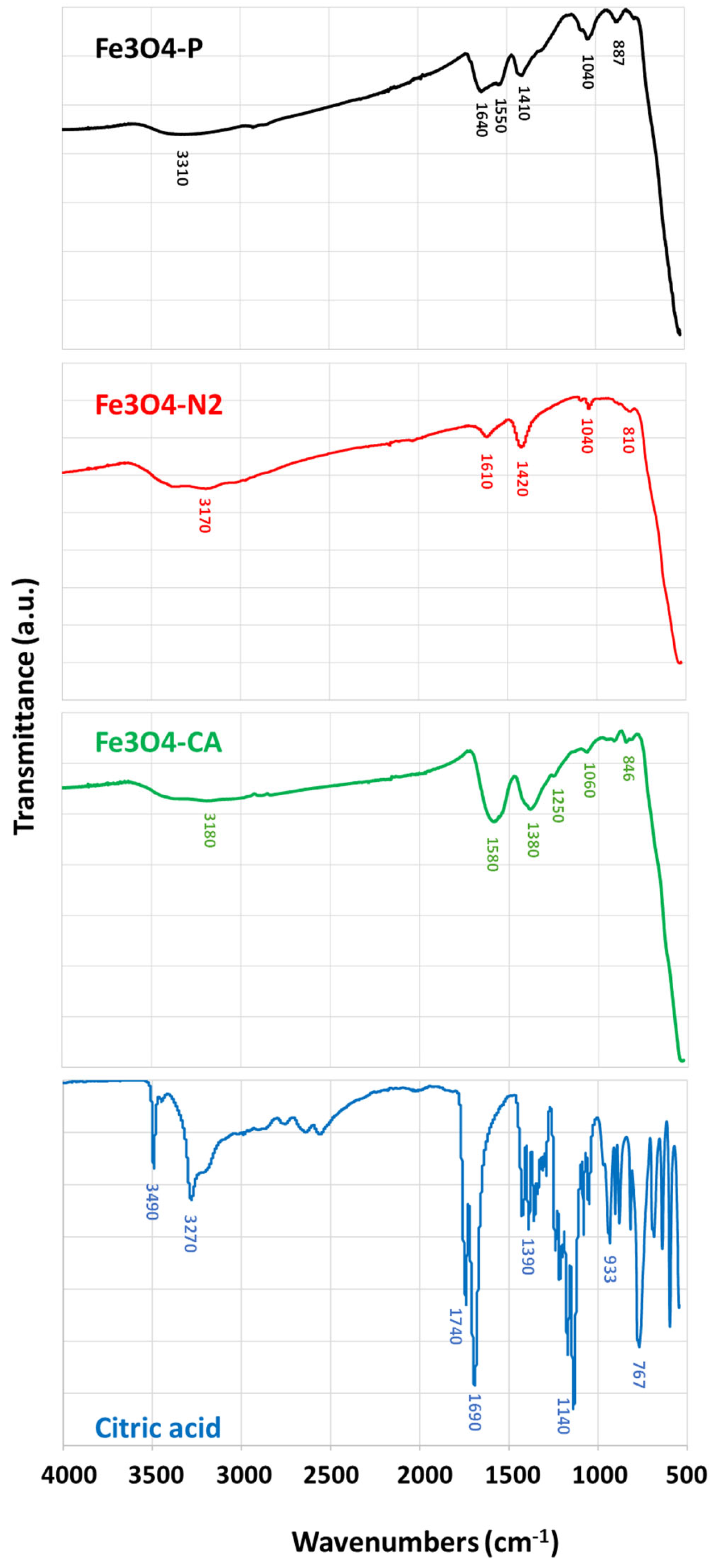
The FT-IR spectroscopy can also help to make some assessments of the sample’s structure. In Figure 2, the spectra of the three samples are reported, together with that of pure citric acid.
The broad bands present in the spectra of the Fe3O4 samples at about 3310–3170 cm−1 and 1610 cm−1 are due to the stretching and bending vibrations of the hydroxyl groups of physically adsorbed water molecules. The band at about 1410 cm−1 (the broadened 1380 cm−1 for Fe3O4-CA) is due to C-O stretching of carbonate formed by reaction of atmospheric CO2 with alkaline hydrated surface during magnetite synthesis. The small peak at around 1040 cm−1 could be assigned to the C-O-C group, while the band at about 887–810 cm−1 can be due to residual chloride ions employed during the syntheses [25]. The decreasing transmittance under 600 cm−1 is attributed to Fe-O bonds.
For the sample coated with citric acid, the comparison with the spectrum of pure citric acid could be useful. The citric acid spectrum has a lot of peaks (Figure 2) [15]. The two peaks at 3490 cm−1 (sharp) and 3270 cm−1 (broad) are due to OH, typical of acids. The 1740 and 1690 cm−1 bands are due to the stretching of C=O carboxylic groups. The 1140 cm−1 peak is due to C-O stretching of a tertiary alcohol, and the 767 cm−1 peak to C-H bending.
The spectrum of the Fe3O4-CA sample looks like that of the other magnetite samples. The only difference is the enlargement of the bands at around 1380 and 1580 cm−1, which can be related to a contribution of the citric acid; their shift with respect to the original positions can suggest the formation of chemisorption interactions with the magnetite nanoparticles. As for XRD, also from the spectroscopic point of view, the samples are in line with those present in the literature [9,13].
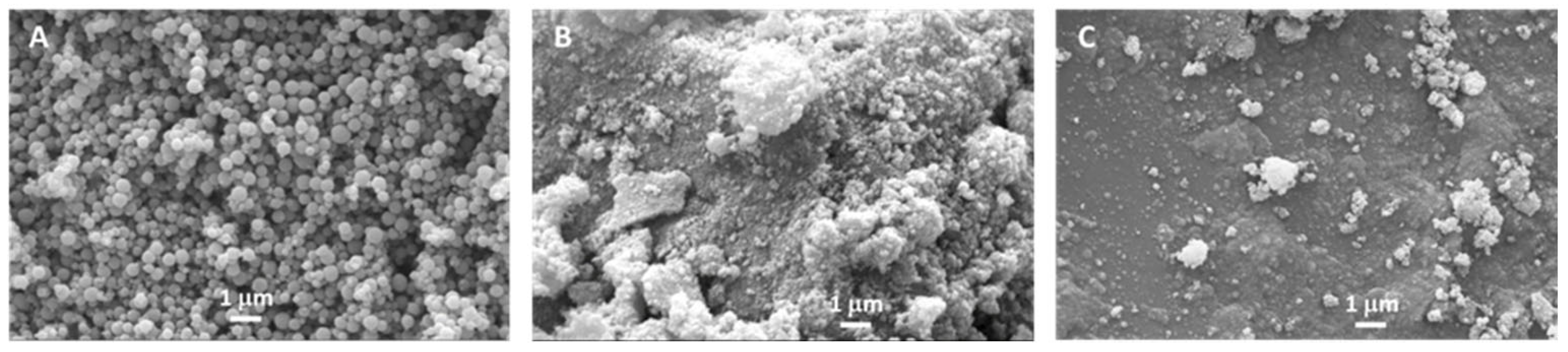
The morphology of the samples was investigated by SEM measurements (Figure 3). It is evident that they are completely different.
Spherical and homogeneous particles were formed for the polyol synthesis, as expected (Figure 3A) [26]. The co-precipitation under nitrogen flow (Figure 3B) still produces spherical particles, very small but more aggregated with respect to the Fe3O4-P sample. The addition of citric acid during the synthesis produces a sample in which the spherical particles (again visible) are covered and incorporated in a big block (Figure 3C). This evidence represents an unfavorable aspect because nanoparticles’ aggregation must be avoided for applications in the drug delivery field. Therefore, this sample will be discarded, and the magnetic characterization with EPR and magnetometry will concern Fe3O4-P and Fe3O4-N2 only.
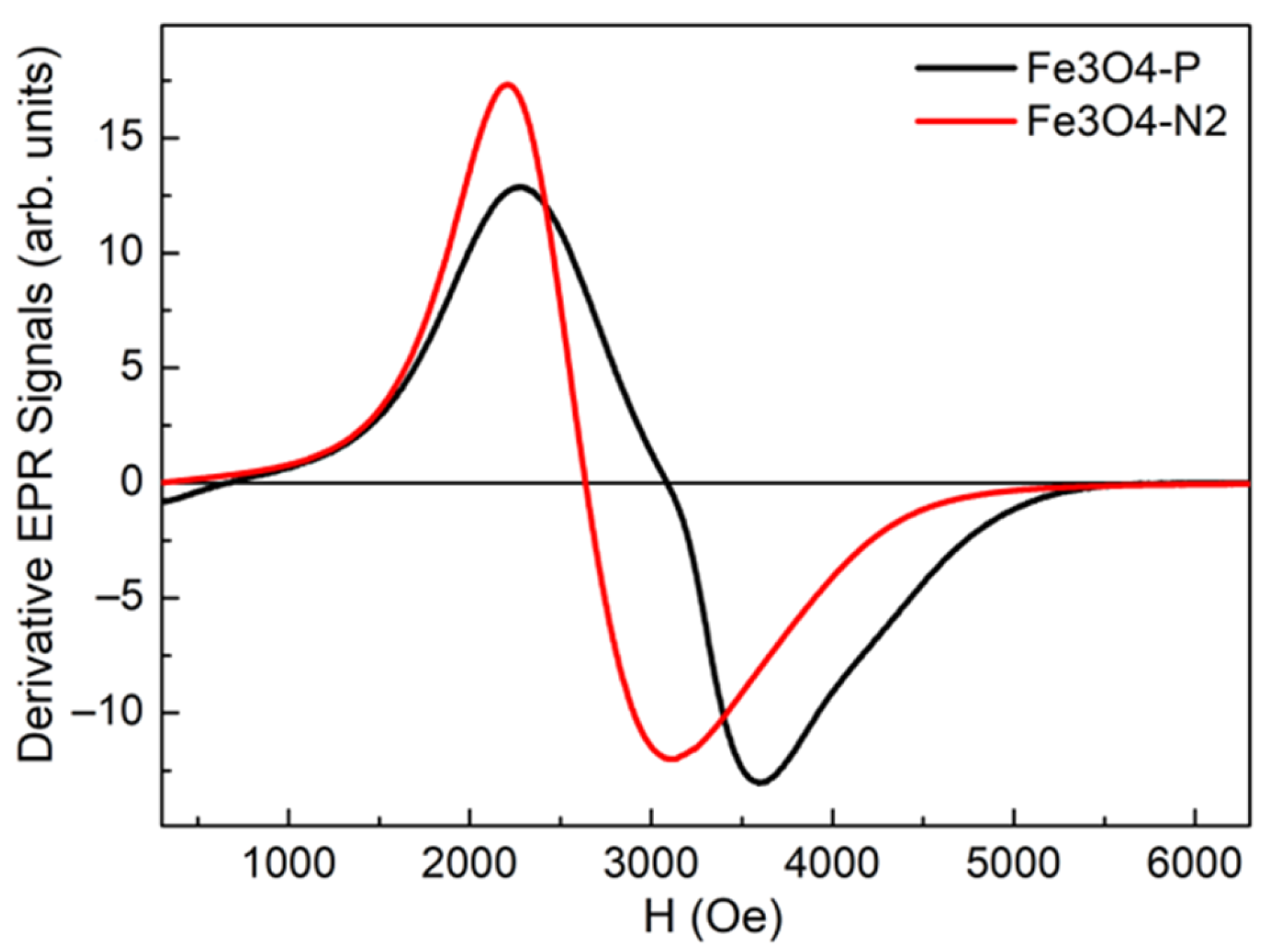
The EPR analysis can provide further information concerning sample composition and homogeneity. Figure 4 shows the spectra collected at room temperature from the two considered samples.
A single-component spectrum centered at g ≅ 2.6 was recorded for Fe3O4-N2, showing the peculiar line shape previously observed for the pure magnetite phase [27]. A more complex line shape was instead observed for the Fe3O4-P spectrum, deriving from the superposition of at least three different, and generally broader, components. Two of them were centered at g values of about 2.2, suggesting the presence of local magnetic fields, due to magnetic correlations, lower with respect to the case of Fe3O4-N2. The third component, much broader, was scarcely detectable looking at the lowest magnetic field region and can be related to the presence of stronger local magnetic fields. Then, the EPR line shape observed for Fe3O4-P strongly suggests compositional inhomogeneity. Sample regions characterized by different TC values can be present in this case, which can be related, for example, to a broad distribution of grain dimensions of the same phase or to the coexistence of different magnetic phases, possibly magnetite and maghemite [28], hardly distinguishable with XRD analysis. The presence of different, not stable phases is also consistent with the clear changes observed in the Fe3O4-P spectrum line shape during time (see Supplementary Information, Figure S2A). In addition, the sample’s brown coloring agrees with the presence of different iron oxides coexisting with magnetite nanoparticles. No variation was instead detected for the spectra collected in analogous conditions for Fe3O4-N2 (Figure S2B), which, moreover, is black, as expected for pure magnetite. Thus, the EPR study demonstrates the suitability of co-precipitation in nitrogen flow to obtain magnetite nanoparticles with a high level of purity and homogeneity.
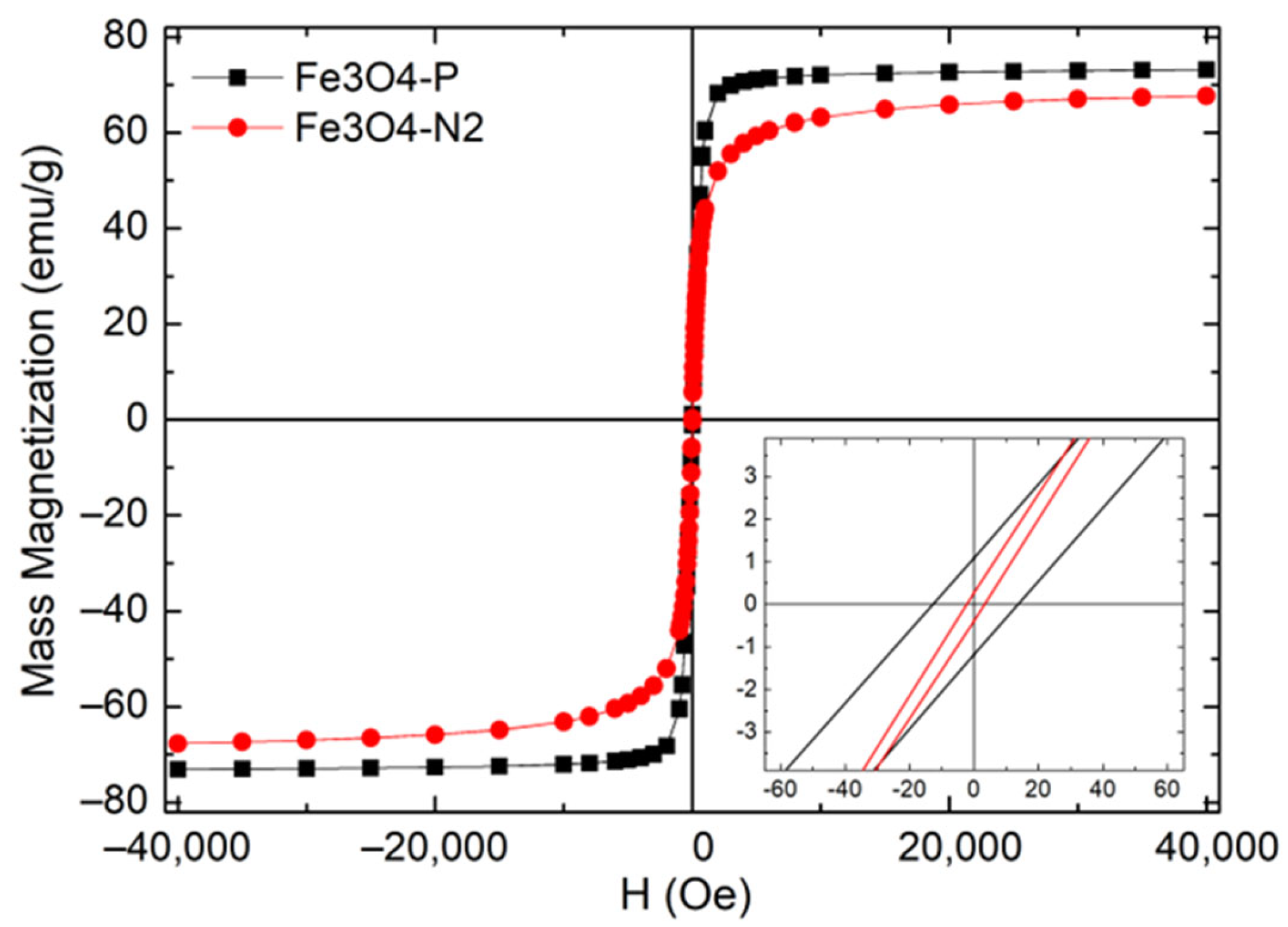
Squid magnetometry has been used to verify the presence of superparamagnetism at room temperature, a crucial requirement for applications of magnetic nanoparticles in the field of drug delivery. Figure 5 reports the hysteresis loops collected at 300 K for the two considered samples.
The Fe3O4-N2 curve shows the S-shape typical of superparamagnetic materials, i.e., with negligible values of coercive field and remnant magnetization. A saturation value of about 67 emu/g is achieved, compatible with the values previously observed for superparamagnetic magnetite nanoparticles (see, for example, ref. [29]). Close results were obtained for Fe3O4-P, but substantial differences are noteworthy. Indeed, for this compound, not negligible, even though very small, values of coercive magnetic field and remnant magnetization can be evinced from the inset of Figure 5. Moreover, a higher saturation value (about 73 emu/g) is achieved. It should be noted that the presence of ferrimagnetism would lead to higher saturation values with respect to the only presence of superparamagnetism [28]. The compositional inhomogeneity inferred from EPR results for Fe3O4-P suggests that room temperature ferrimagnetism could involve at least some sample regions. The presence of ferrimagnetic zones in Fe3O4-P should also be favored, with respect to the Fe3O4-N2 case, by the generally greater diameter of nanoparticles [28,30], as shown by SEM micrographs, even though with a lower aggregation level. A higher average crystallite size for Fe3O4-P was also estimated by XRD analysis, consistent with the higher synthesis temperature and longer synthesis duration. Hysteresis loops collected at 10 K (Figure S3) further support these considerations. In fact, a clear-cut change in the curve shape is detectable for Fe3O4-N2, as typically occurs in the case of transition from superparamagnetic to ferrimagnetic states (the coercive field value reaches 270 Oe at 10 K), while minor changes are revealed for the Fe3O4-P loops, with a coercive field variation of about 80 Oe in the same temperature range.
The results obtained from the magnetic characterization allowed us to definitely indicate Fe3O4-N2 as the best and most convincing product, which was then used for the hybrids’ preparation.

3.2. Fe3O4@LDH Physical–Chemical Characterization

3.2.1. ZnAl-LDH Case

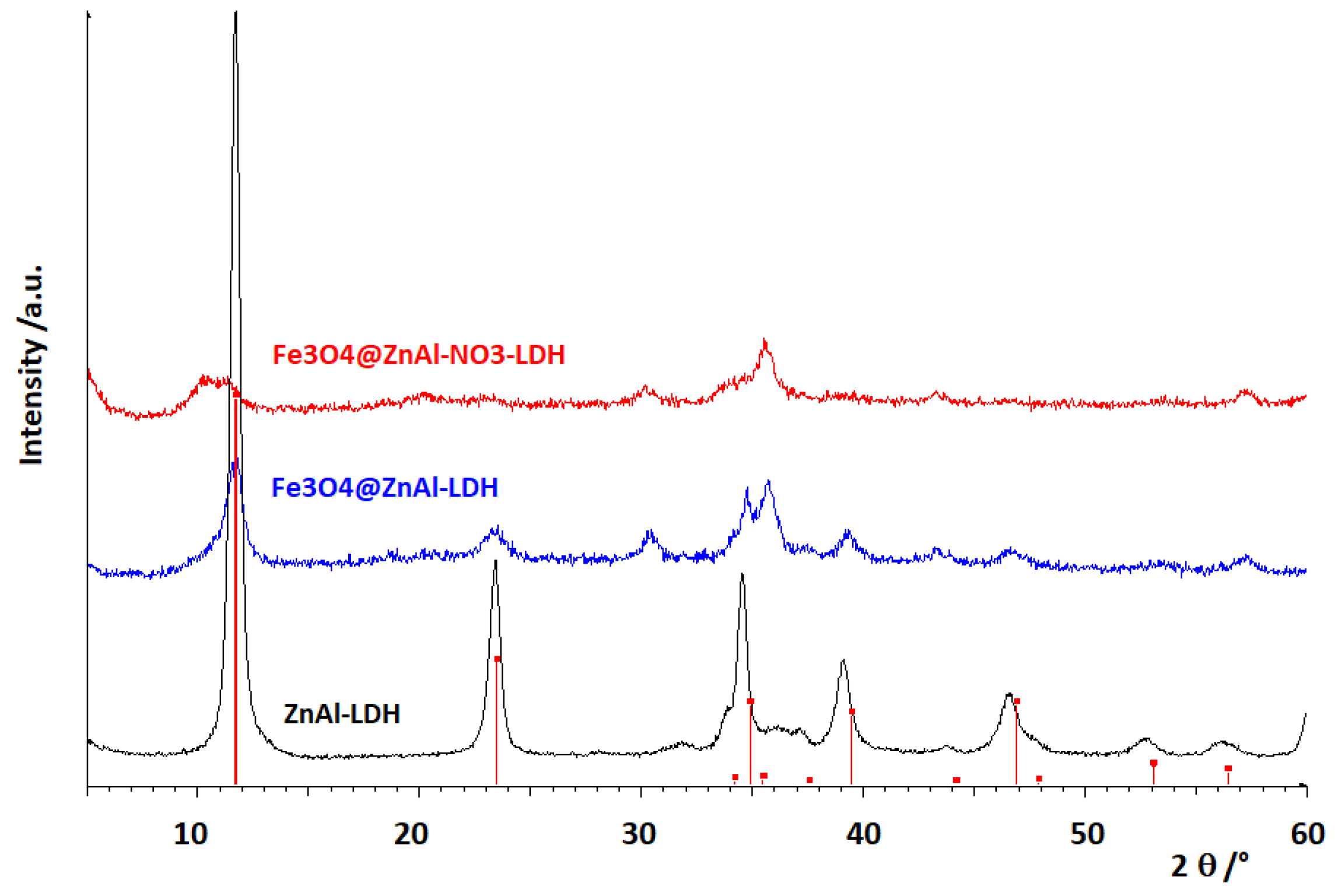
The structural analysis was first performed to assess the phases. In Figure 6, the XRD patterns of ZnAl-LDH and the hybrids are compared.
The ZnAl-LDH pattern has intense peaks, suggesting high crystallinity; the angular peak positions agree with those expected for a layered double hydroxide (see also the agreement with the red bars in Figure 6) [6]. Some peaks due to zincite ZnO can be detected. This could happen when the pH value during synthesis is not properly controlled [6]. The main peak at about 11°, attributed to the 003 reflection, is also present in the hybrids, but with a low intensity with respect to the LDH alone. The same is true for all the other LDH peaks, whose low intensities are easily explained by the low LDH amount present on the Fe3O4 nanoparticles, as expected for a coating layer (see the Fe3O4@ZnAl-LDH pattern). In the Fe3O4@ZnAl-NO3-LDH sample, the 003 peak is markedly broadened towards the left side, and a second peak could be appreciated. This can suggest that in the LDH interlayers, carbonate and nitrate anions can be both present, forming two slightly different LDHs with different interplanar distances. This is consistent with the experimental synthesis, performed with an excess of nitrate ions trying to limit the carbonate entrance. We can note that, notwithstanding the precautions taken during the synthesis performed in nitrogen flow, the carbonate anions, due to their high ionic strength, are then present.
The peaks due to magnetite are similar in the hybrids, demonstrating the maintenance of the magnetite core structure, independently of the performed hybrid synthesis. So, XRD measurements demonstrated the right hybrid formation for both syntheses.
The FT-IR spectra of the Zn series of samples are shown in Figure S4. For the pure ZnAl-LDH, a broad band at 3418 cm−1 due to OH groups of hydroxides and possibly water molecules and a band at 1327 cm−1 due to carbonate/nitrate anions located between the hydroxide layers are present. Bands at 733 and 547 cm−1 due to Zn-O and Al-O bonds of octahedra of the hydrotalcite layers are present, too. For the magnetic hybrids with the magnetite core, the bands are the same, with the only difference regarding the signal at about 729 cm−1 that appears lowered due to the low LDH amount onto magnetite surfaces and the one at 547 cm−1 that instead appears intensified due to the contribution of the Fe-O bonds of magnetite.
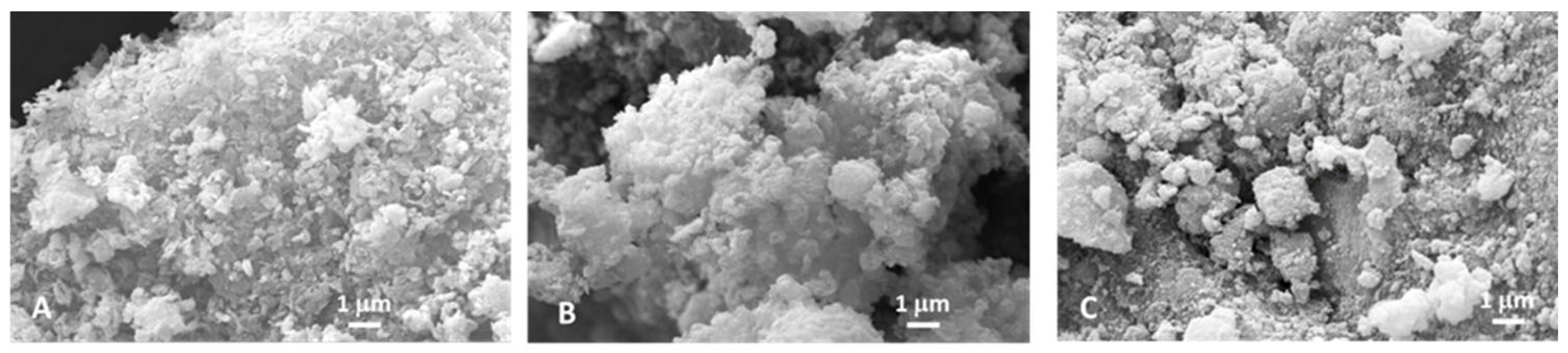
The morphology of ZnAl-LDH is appreciable in Figure 7A. This sample is constituted by aggregates of small and well-defined particles, resembling flakes. The hybrid with magnetite without NaNO3 addition (Figure 7B) has a different morphology, with a prevalence of aggregates of spherical particles. The hybrid obtained with NaNO3 addition (Figure 7C) possesses a similar morphology, but the spherical particles are very small, so that a favorable drug loading can be foreseen for this sample.

3.2.2. MgAl-LDH Case

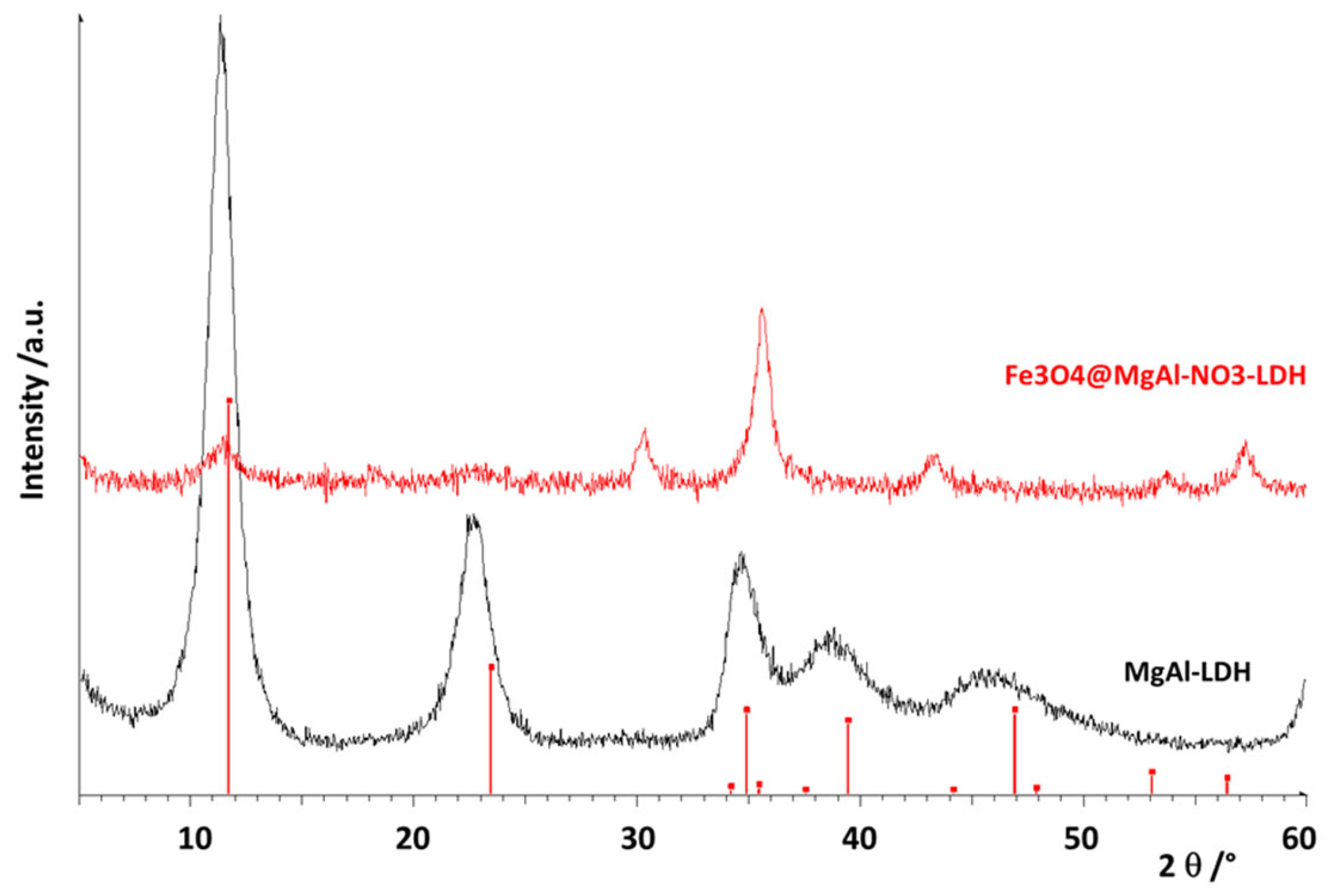
The XRD patterns of MgAl-LDH and the hybrid are shown in Figure 8.
The MgAl-LDH pattern has well-evident peaks, suggesting good crystallinity; the angular peak positions agree with those expected for a layered double hydroxide (see the agreement with the red bars in Figure 8). The most intense peaks are those of the 003, 006 and 009 reflections (at about 11°, 22° and 35°). The peak positions suggest that the carbonate ions are the prevalent counterions present between the layers, as for ZnAl-LDH [6]. In the hybrid pattern, the two phases, LDH and magnetite, are clearly present. Also in this case, the LDH peaks have low intensities, due to the low LDH amount as a coating of the magnetic core.
The FT-IR measurements were also performed on MgAl-LDH and the related magnetic hybrid (Figure S5). The spectrum of pure LDH shows the expected vibrations due to the main LDH functional groups: hydroxyl, carbonate/nitrate, water and metal–oxygen, as for ZnAl-LDH. The broad band at about 3418 cm−1 and that at 1623 cm−1 due to OH groups of layered hydroxide, and possibly water molecules, are present. The different broadening of these bands can be due to the different contributions of water molecules. A peak at about 1360 cm−1 is observed, due to the vibrations of carbonate/nitrate groups, very difficult to distinguish by means of IR signals. At the low wave numbers, we could expect the M-O and M-OH functional groups vibrations, of both LDH and magnetite, that we can attribute to the signal detected at 556 cm−1 and to the curve decrease observed under 700 cm−1 (Figure S5).
The morphologies of pure MgAl-LDH and the corresponding hybrid are shown in Figure 9.
MgAl-LDH has extended and compact blocks, in which, however, a sort of layer stacking is evident. When the LDH is present as a coating onto magnetite particles, the morphology is different with respect to MgAl-LDH, but very similar to that of the analogous zinc sample, with aggregates of spherical particles, that, in this case, seem, however, more compact.

3.3. Magnetic Characterization of Hybrids

The magnetic characterization was conducted on the two selected hybrid samples synthesized with the addition of nitrates, and the results will be compared in the following to those previously obtained for the core magnetite nanoparticles, Fe3O4-N2.
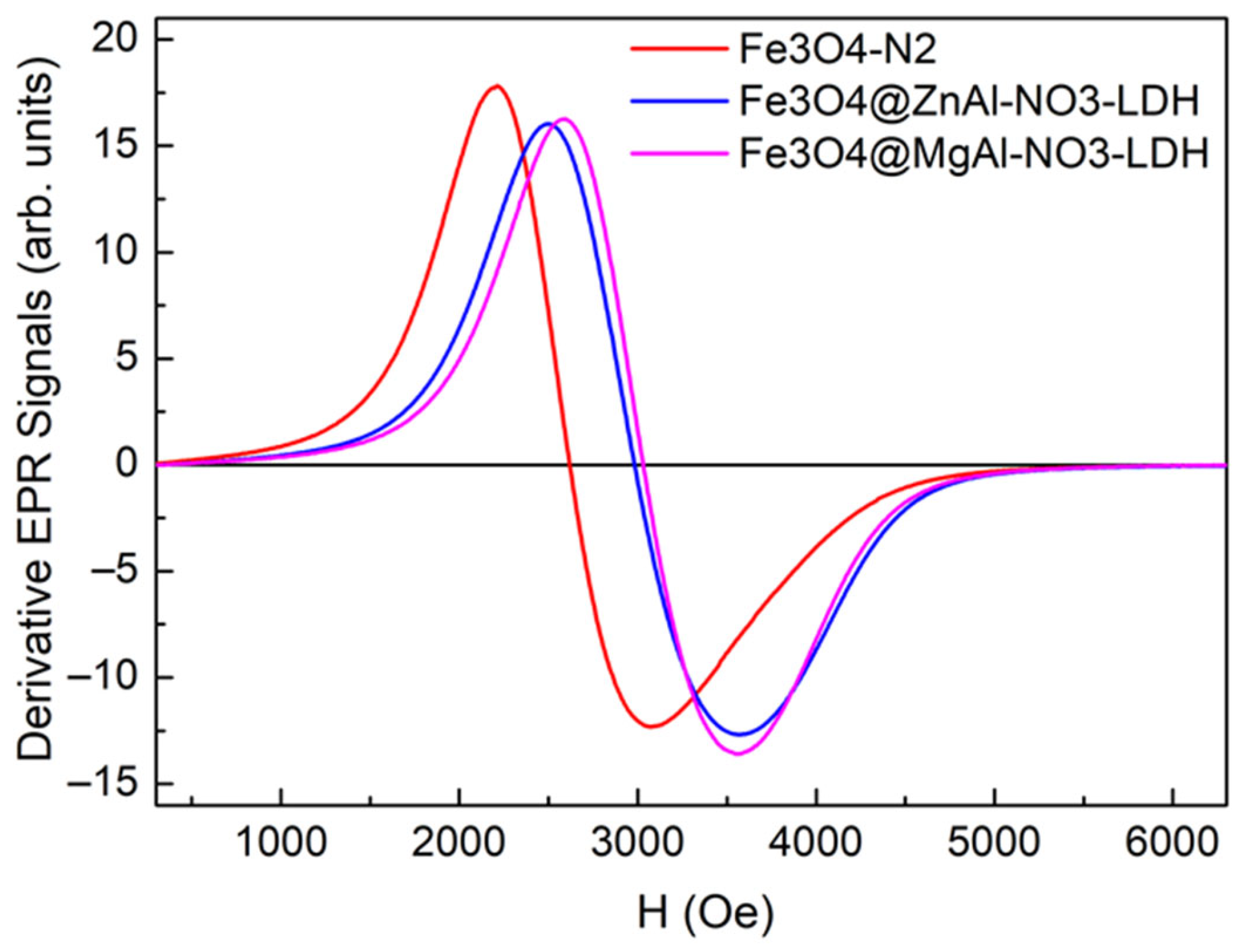
Figure 10 shows the EPR spectra recorded at room temperature.
A signal with the line shape typical of magnetite nanoparticles, already observed for Fe3O4-N2, is revealed for the hybrids too, confirming the maintenance of the magnetite core structure. The main difference between spectra coming from Fe3O4-N2 and from the related hybrids is the signal position: a g-value of about 2.25 is achieved for the hybrids, markedly lower with respect to g ≅ 2.6, obtained for Fe3O4-N2. This further demonstrates the successful hybridization of magnetite. Indeed, no EPR signal is expected from the diamagnetic LDH coating, but an effective LDH coating is expected to prevent aggregation of magnetic Fe3O4 nanoparticles, thus hindering the magnetic interactions between magnetic cores. This would give rise to less intense local magnetic fields with respect to the starting Fe3O4-N2 case, and, in turn, to lower g-values, as actually experimentally occurs.
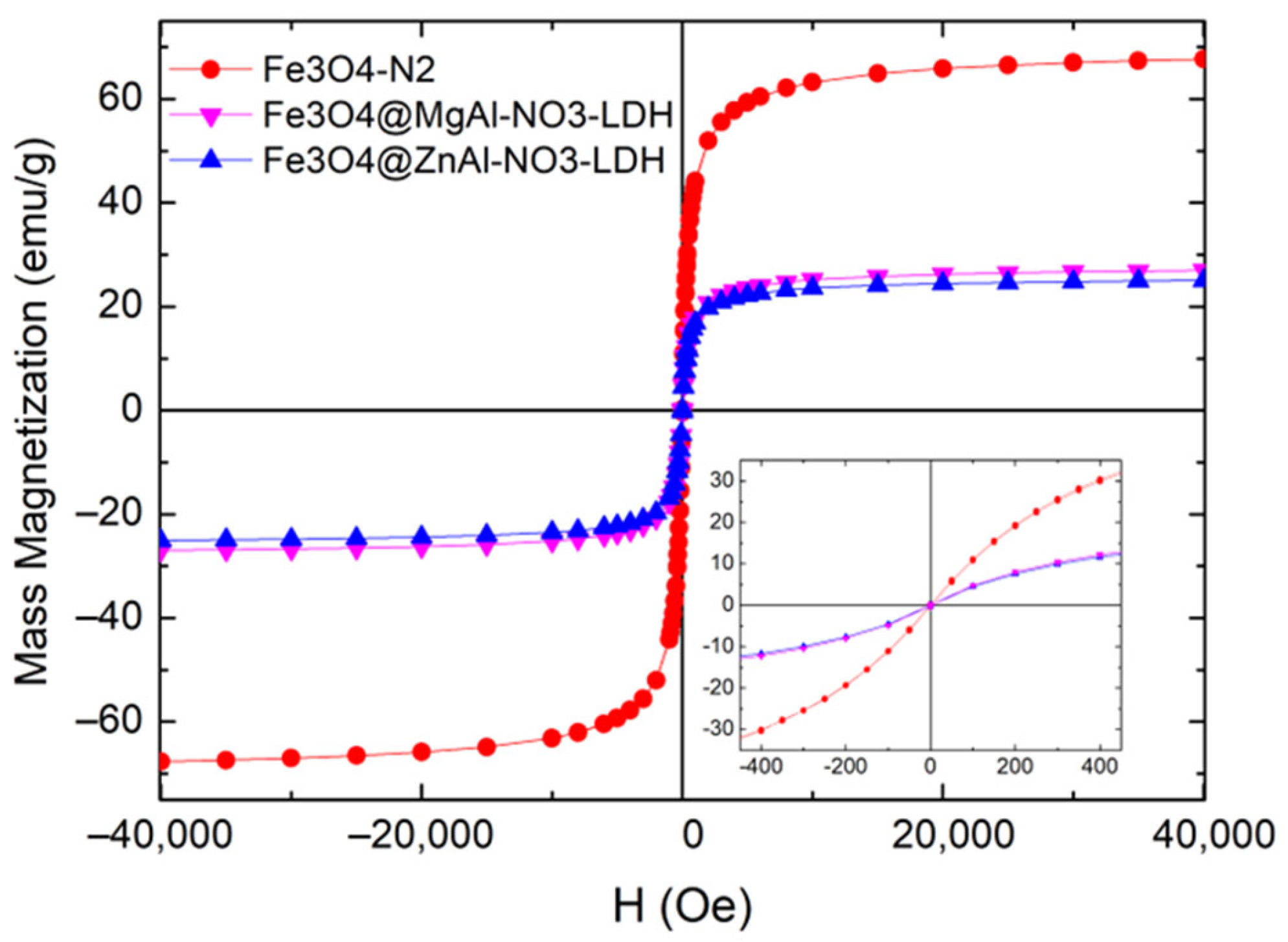
The coating effect can also be easily evidenced by means of static magnetization results. Figure 11 shows the hysteresis loops recorded at room temperature for the three samples.
The S-shape typical of the superparamagnetic phase, previously observed for Fe3O4-N2, is essentially maintained after coating, with negligible values of both coercive field and remnant magnetization. A huge reduction in saturation mass magnetization is observed after coating, clearly due to the presence, in the samples, of non-magnetic LDH amounts together with the magnetite cores. Nevertheless, the achieved M saturation value is still appropriate for magnetic targeted drug delivery [29]. A slightly greater M decrease occurs for Fe3O4@ZnAl-NO3-LDH, consistent with a greater weight contribution of LDH in this case. An analogous situation was observed at 10 K, where the same coercive field value (about 270 Oe) was recorded for the three compounds, consistent with the maintenance of the magnetite core structure. The M-value reduction is maintained for the hybrids at this temperature, too (Figure S6).
Based on structural, morphological and EPR analysis and on magnetization measurements, we can state that the hybrid samples were successfully synthesized with suitable characteristics to be used as drug delivery systems.

3.4. Fe3O4@LDH@Drug Hybrids

3.4.1. Physical–Chemical Characterization

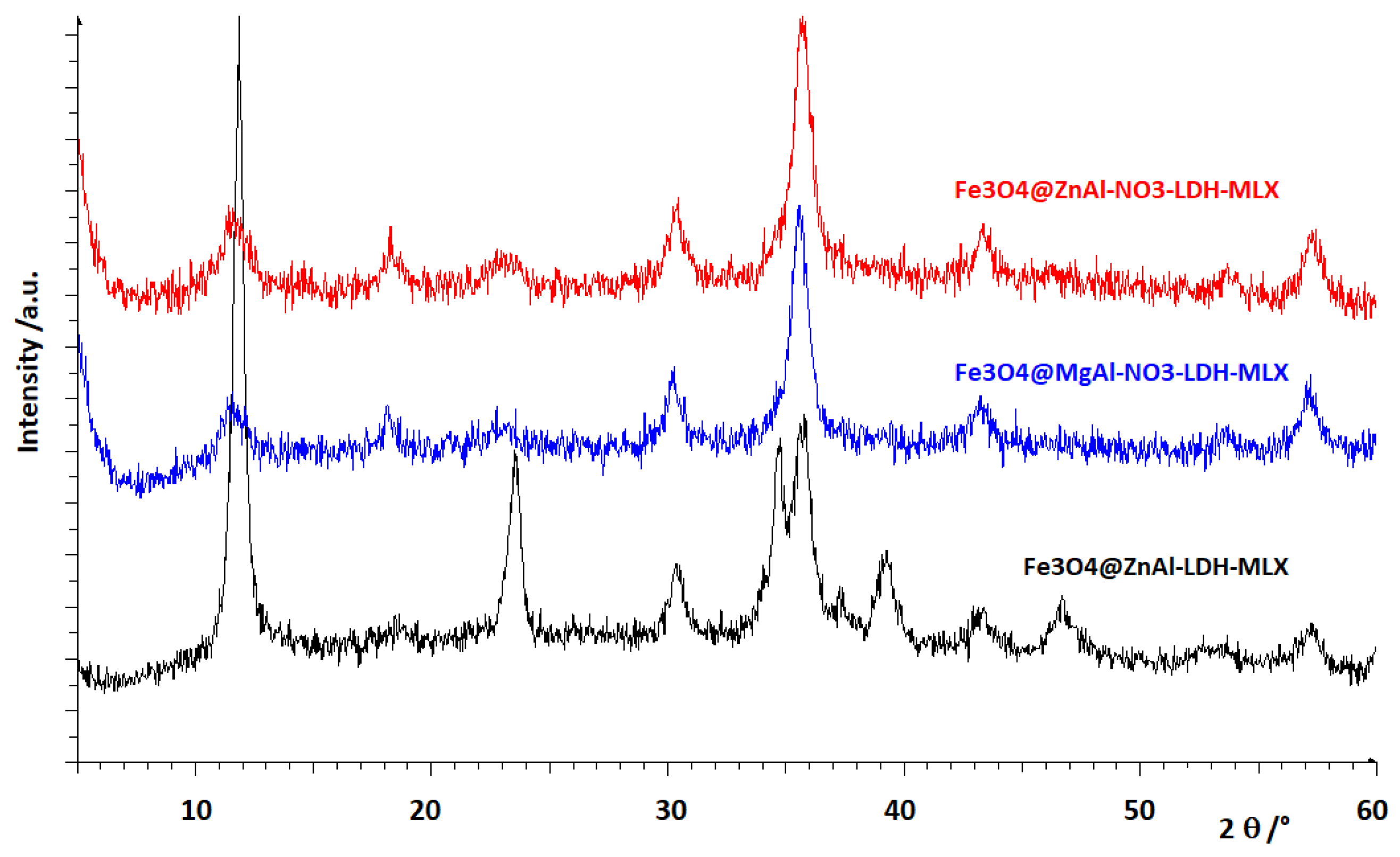
After the characterization of the hybrid components alone, the drug loading was performed, and three samples were obtained, two of them based on ZnAl-LDH and one on MgAl-LDH. Their XRD patterns are reported in Figure 12; the pattern of pure meloxicam is shown in Figure S7, as a reference.
For all the samples, no particular differences with respect to the inorganic support alone can be appreciated (Figure 6 and Figure 8). The LDH peaks seem not to shift with respect to the positions expected for nitrated or carbonated LDH, suggesting that the meloxicam does not mainly intercalate into the LDH layers, but possibly adsorbs onto surfaces. The absence of drug peaks in the patterns can suggest that it turned out to be amorphous or that it is present in a limited amount. This last hypothesis can also be supported by the possible presence of carbonate anions as counterions in the LDH layers, which can hardly be exchanged with drugs.
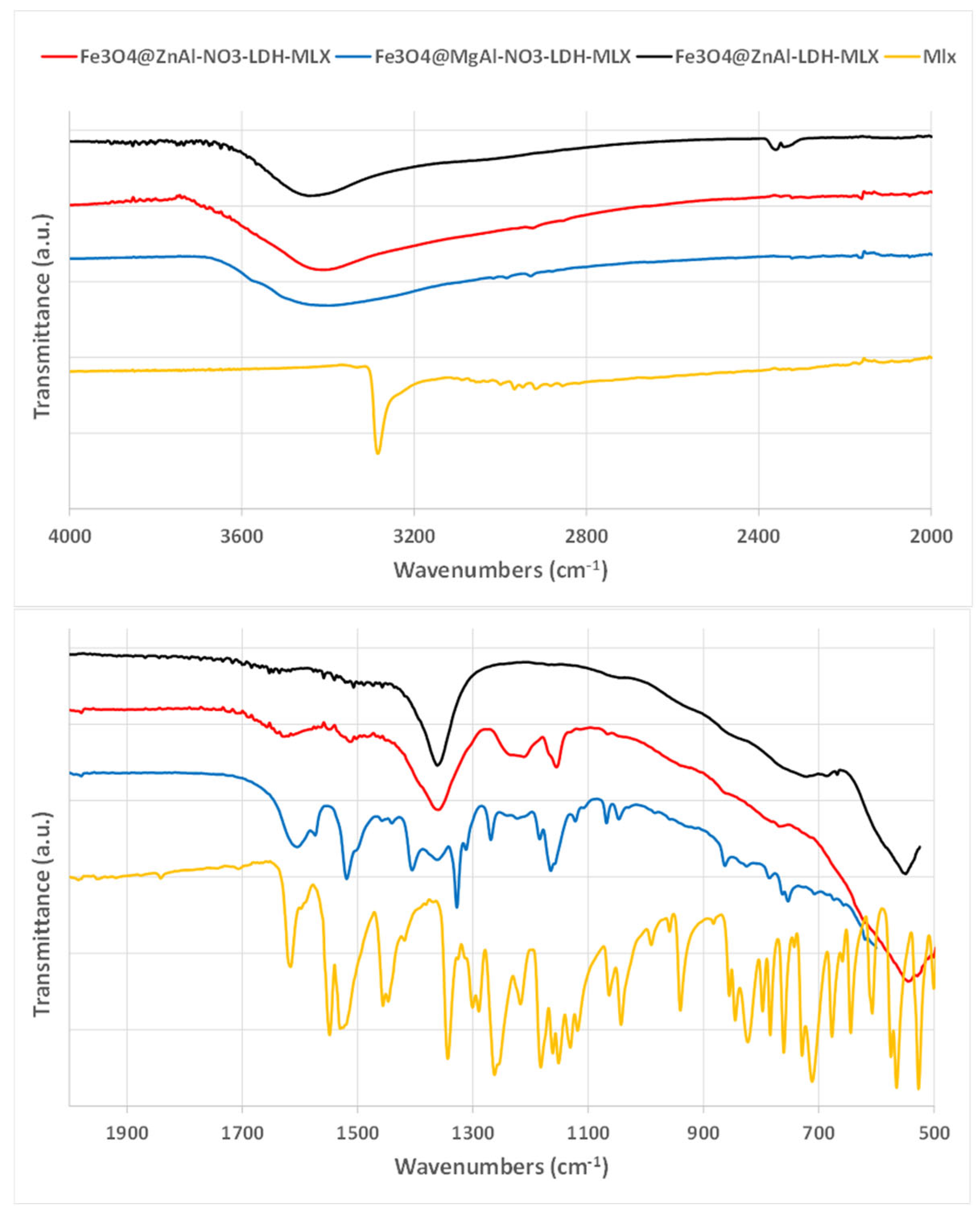
To evidence the possible presence of the drug, FT-IR spectroscopy was applied (Figure 13).
The main absorptions of meloxicam are located at 3288 cm−1 (NH stretching), 1618 cm−1 (stretching of amide C=O), 1550–1528–1456 cm−1 (stretching of aromatic ring), and 1345 and 1183 cm−1 (asymmetric and symmetric stretching of SO2) (Figure 13) [31]. The hydroxyl band at about 3400 cm−1 is present in all the samples. In the case of Fe3O4@MgAl-NO3-LDH-MLX and Fe3O4@ZnAl-NO3-LDH-MLX, it is particularly broad, probably masking the effect of the 3300 cm−1 band of the drug. The band at about 1360 cm−1, typical of the inorganic supports (Figures S4 and S5), is due to carbonate/nitrate anions present in different amounts in the hybrids.
Numerous peaks appear in the 1700–900 cm−1 spectral region for both Fe3O4@MgAl-NO3-LDH-MLX and Fe3O4@ZnAl-NO3-LDH-MLX. For the Mg sample, the band positions and number are like those of the drug, while for the Zn sample, the number of peaks is lower, and they seem shifted with respect to the drug alone. This can suggest that a different loading and interaction with the drug occurred for the samples. The peak at about 1380 cm−1 is less evident in the Fe3O4@MgAl-NO3-LDH-MLX sample, probably due to the drug adsorption onto the surfaces. By analyzing the drug bands in the hybrids, it is evident that the most involved seem to be those of aromatic ring, which shift or disappear, suggesting the meloxicam immobilization on the LDH surfaces, particularly for the Fe3O4@ZnAl-NO3-LDH-MLX sample.
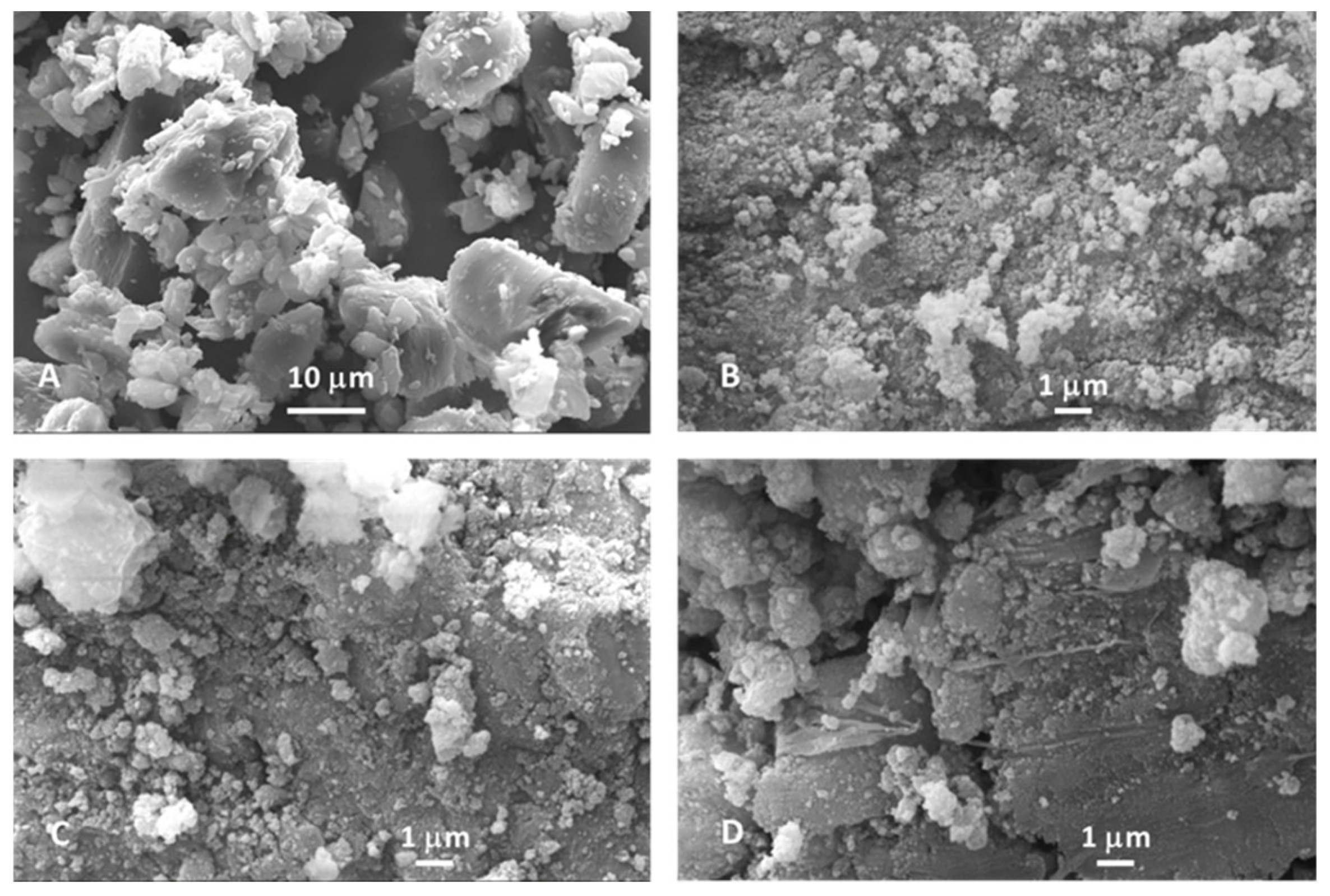
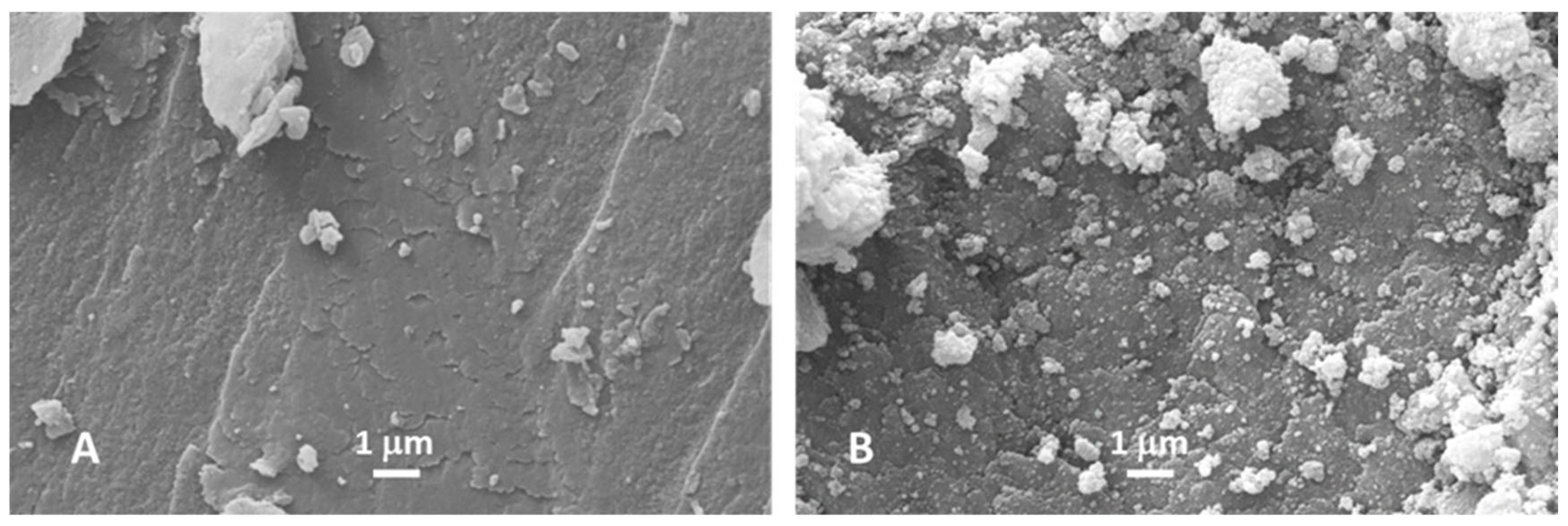
The hybrids loaded with meloxicam were also analyzed with SEM (Figure 14) and compared with pure meloxicam.
The drug (Figure 14A) is constituted by big particles, up to 20 μm. Most of them have an irregular parallelepiped shape. The morphology of Fe3O4@ZnAl-LDH-MLX and Fe3O4@ZnAl-NO3-LDH-MLX (Figure 14B,C) is similar; they are composed of aggregates of small spherical particles, as the only inorganic support (Figure 7). Different is the case of the Fe3O4@MgAl-NO3-LDH-MLX sample; the aggregates are like those of the other samples, but some are elongated, and flat particles appear.
Based on the above observations, from the magnetic point of view, the meloxicam addition only implies the presence of a higher amount of diamagnetic coating material in the sample. Only an enhancement of the LDH coating effects is, then, reasonably expected after drug loading. As an example, the EPR results obtained on the Fe3O4@ZnAl-NO3-LDH-MLX sample are reported in Figure S8, compared with the ones obtained for the related inorganic support and for the starting Fe3O4-N2 compound.
The chemical composition of the hybrids was determined by EDS microanalysis (Table S1), showing that all the expected elements, Zn, Mg, Al, Fe, and O are present. From Table S1, the M2+/M3+ ratio for the different LDHs can also be calculated; they compare well with the value of 3, i.e., the stoichiometric one.

3.4.2. Pharmaceutical Results

Drug loading in the different samples is reported in the first column of Table 2, while the second column reports the quantity of microspheres, corresponding to a dose of 7.5 mg of MLX. The drug-loading values agree with the FT-IR suggestions. It was speculated that a low drug amount was present in Fe3O4@ZnAl-LDH-MLX, as was, in fact, verified (Table 2), because no drug peaks were evident in the FT-IR spectrum (Figure 13). The highest drug amount was supposed to be in the magnesium-based hybrid, due to the high intensities of drug peaks, but this was not so (Table 2). We can argue that the high intensities of drug peaks are instead related to weak interactions with the core, rather than to high drug loading, which was instead verified for Fe3O4@ZnAl-NO3-LDH-MLX.
For the Fe3O4@ZnAl-LDH-MLX sample, the weight of the sample is too high to be included in an injectable form, confirming the unsuitability of this hybrid, while for Fe3O4@MgAl-NO3-LDH-MLX and especially for Fe3O4@ZnAl-NO3-LDH-MLX, the quantity is more suitable for an injectable pharmaceutical application.
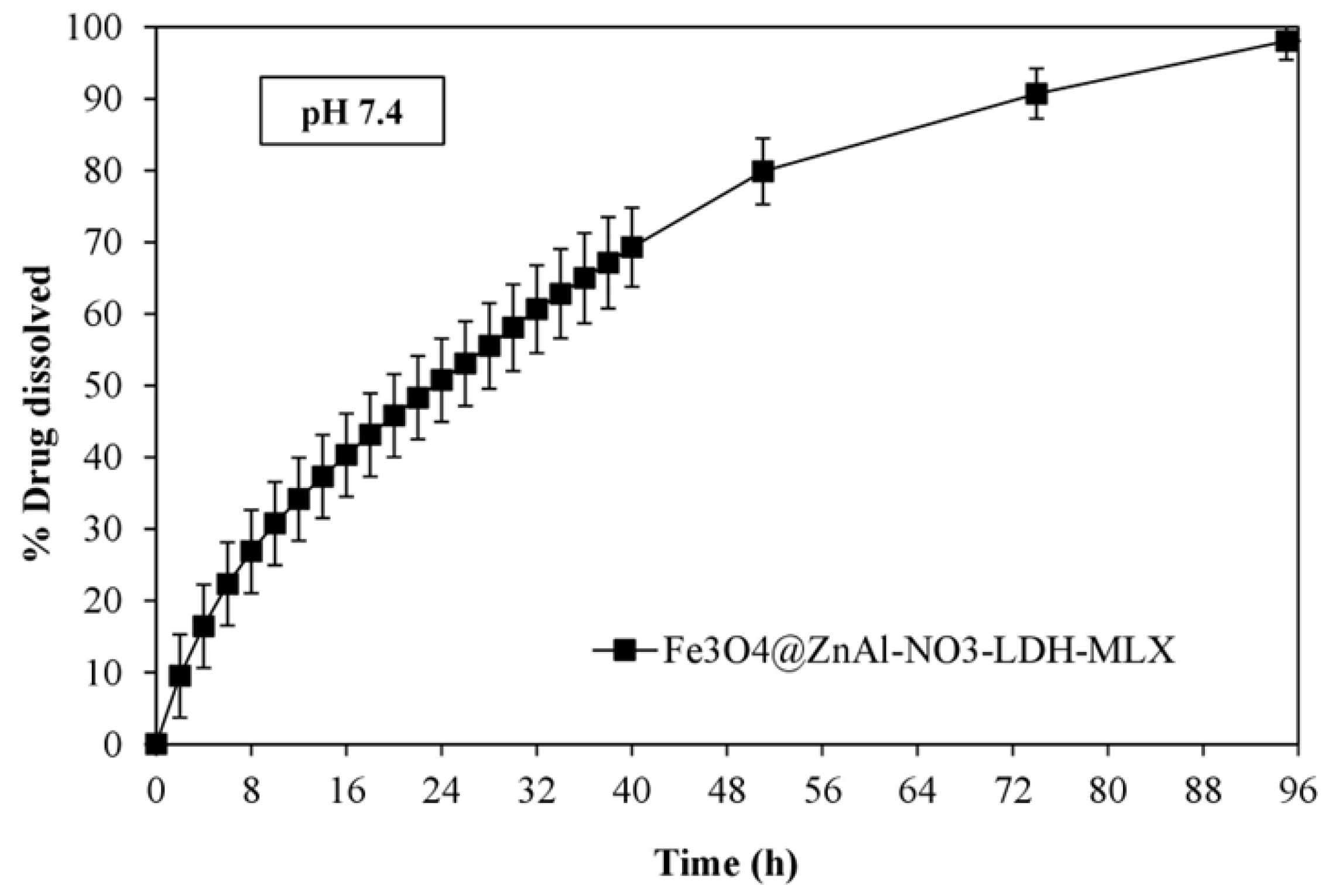
The Fe3O4@ZnAl-NO3-LDH-MLX sample shows higher and suitable drug loading, and, for this reason, it was chosen for the dissolution test investigation. It can release the loaded drug in a controlled and sustained manner over 96 h (4 days) (Figure 15).
The process shows neither leg-time nor burst effect, which is very positive for this type of administration. The kinetics that best approximates the release mechanism was the diffusive one, i.e., the Higuchi model, with a correlation coefficient of 0.9983 (Table 3). Fitting the Korsmeyer–Peppas equation also confirms this hypothesis, with an n-value of 0.74. This kinetics approximates a constant release rate, which is more predictable and, thus, more desirable for the drug release process.
The possible aggregation of the systems was determined by DLS measurements, as well as the polydispersity and zeta-potential. As can be seen in Table 4, the system tends to aggregate, especially in water, while in PBS, this tendency is less marked. The Z-potential indicates a partial negative charge of −17 mV, which could be favorably increased during the formulation phase to inhibit particle aggregation.

4. Discussion

Core–shell structures are complex systems. For their production, many synthesis steps require attention. The magnetic core based on iron oxides, apparently easy to obtain, should be thoroughly investigated to verify the formed phase and so to rightly understand the corresponding magnetic features, crucial for the biomedical application. The feedback coming from magnetic characterization during the synthesis steps could be useful to improve the synthesis procedure, obtaining a purer and more homogeneous sample. In our case, notwithstanding the easy and speedy polyol synthesis, which apparently led to the formation of a magnetite phase with spherical and homogeneous particles, the application of spectroscopic and magnetic techniques revealed that the product had instead compositional inhomogeneities and possibly a spread of particle dimensions. Likewise, the use of the same characterization techniques demonstrated that the synthesis performed in nitrogen flow, longer and more treacherous, instead produced magnetite with a high level of purity and homogeneity. These observations demonstrate the importance of the combined use of different techniques. Moreover, it must be noted that the only XRD, in the peculiar case of magnetic cores involving phases structurally very similar, is not able, for example, to differentiate magnetite from maghemite, nor to determine the possible hematite presence when the particles are nanometric. However, the use of EPR spectroscopy and magnetization measurements was also crucial in the subsequent step of the synthesis, after the core characterization, to guarantee that the addition of the LDH coating layer, requiring other treatments in basic solution, did not alter the core purity. Employing combined techniques, we determined that both ZnAl- and MgAl-LDH-based hybrids were satisfactory from a structural and morphological point of view. It should be pointed out, however, that notwithstanding the precautions taken during the syntheses, some amount of carbonate anions was intercalated between the layers, also when a nitrate excess was employed, so affecting the subsequent drug loading. In fact, the drug loading amount was, in general, low but different, both between Zn- and Mg-based hybrids and also between the two Zn hybrids. The FT-IR spectra seemed to suggest that for a Mg-based hybrid, a higher loading is present, due to the high intensities of drug bands, but the interactions with LDH seem to be weak and limited only to the surfaces, so not satisfactory for an efficient hybrid. For Zn-based hybrids, the drug bands, even if with low intensities with respect to those of a MgAl-based hybrid, were shifted with respect to the original positions, suggesting an effective and stronger interaction. The main difference between the hybrids seems to be the presence of nitrate counterions, which can be easily exchanged with a drug with respect to carbonate species, favoring, in part, the intercalation process of the drug with respect to the only surface adsorption, so improving the loaded amount and the subsequent controlled release. Some aggregation was determined by both morphological measurements and dynamic light scattering. Pharmaceutical measurements confirm the spectroscopic findings. The highest and optimal drug loading was verified for the Fe3O4@ZnAl-NO3-LDH-MLX sample, which seems to have suitable structural, morphological, and spectroscopic features to be used for targeted drug release. Meloxicam is also loaded by the MgAl hybrid, even if in a low amount, so we can conclude that, given the presence of the same nitrate anion, the ZnAl LDH hybrid can load and release meloxicam in a more efficient way and could definitely be considered as our best drug delivery system.
It must be noted that these obtained systems have some limits, however, and certainly need optimization. First, it is mandatory to reduce the aggregation of particles, the well-known issue of these systems, starting from the magnetite core itself, for example, by better tuning the citric acid functionalization. This could be obtained by trying to vary the citric acid concentration during the synthesis. Moreover, some different functionalization of the magnetite core or the use of polymers to load the drug in the system could also be useful. In addition, during the LDH coating synthesis, the absence of carbonate anions should be guaranteed. The same LDH could be modified by changing the M2+/M3+ ratio employed, or also by using other cations, maybe more congenial to the drug. These possible optimizations are expected to lead to an increase in the loaded drug amount and to improve its subsequent controlled release.

5. Conclusions

The magnetic properties of core–shell systems strictly depend on the characteristics of the formed magnetic phase. This study highlights the importance of thoroughly characterizing both the core nanoparticles and the resulting hybrid structures using appropriate physical techniques, particularly spectroscopic and magnetic measurements, which are especially suitable for iron oxides and, in particular, magnetite. We demonstrate that the core–shell structures can be employed, apart from model drugs such as doxorubicin, diclofenac and ibuprofen, also for poorly soluble drugs such as meloxicam, opening the way to their use for many biomedical applications.

Supplementary Materials

The following supporting information can be downloaded at https://www.mdpi.com/article/10.3390/app16062853/s1. Figure S1—Dissolution profile of MLX alone in the same conditions as the magnetic nanoparticles to verify the effect of the membrane on the release profile. Figure S2—EPR spectra recorded at different times for Fe3O4-P (A) and Fe3O4-N2 (B) samples. Figure S3—Hysteresis loops collected at 10 K for Fe3O4-P and Fe3O4-N2 samples. Inset: Enlarged view of the same curves in the near-zero magnetic field region. Figure S4—FT-IR spectra of ZnAl-LDH and magnetic hybrid samples. Figure S5—FT-IR spectra of MgAl-LDH and magnetic hybrid samples. Figure S6—Hysteresis loops collected at 10K for Fe3O4-N2 and related hybrids. Inset: Enlarged view of the same curves in the near-to-zero magnetic field region. Figure S7—Pattern of pure meloxicam. Figure S8—Room-temperature EPR signal from Fe3O4@ZnAl-NO3-LDH-MLX sample compared with the ones collected for the related inorganic support and for the starting Fe3O4-N2 compound. Table S1—Chemical compositions (atomic percentage) determined by EDS analysis.

Author Contributions

Conceptualization, M.B.; methodology, M.C.M., V.F., D.F. and S.P.; validation, M.C.M., V.F., S.P. and L.M.; formal analysis, M.C.M., L.M. and V.F.; investigation, M.B., D.F., V.B., G.B., V.F., S.P. and M.C.M.; writing—original draft preparation, M.B., M.C.M. and L.M.; writing—review and editing, M.B., M.C.M., G.B., V.F., S.P. and L.M.; visualization, G.B., M.C.M., V.F. and M.B.; supervision, M.B. and L.M. All authors have read and agreed to the published version of the manuscript.

Funding

This research received no external funding.

Institutional Review Board Statement

Not applicable.

Informed Consent Statement

Not applicable.

Data Availability Statement

The raw data supporting the conclusions of this article will be made available by the authors upon reasonable request.

Acknowledgments

M.B., V.B. and G.B. acknowledge support from the Ministero dell’Università e della Ricerca (MUR) and the University of Pavia through the program “Dipartimenti di Eccellenza” (2023–2027). The authors gratefully acknowledge M. Pirola for the precious technical assistance.

Conflicts of Interest

The authors declare no conflicts of interest.

References

  1. Clavelland Ochioni, A.; Sousa Vieira, I.R.; Conte-Junior, C.A. Advances in stimuli-responsive nanoparticles for cancer therapy: Mechanisms, functional materials, and emerging technologies. J. Drug Deliv. Sci. Technol. 2025, 114, 107519. [Google Scholar] [CrossRef]
  2. Khan, H.U.; Raza, N.; Maheen, S.; Abbas, H.; Salem, M.E.; Khan, I.; Naseem, M.; Shafqat, S.S. Advances in targeted drug delivery systems for cancer treatment: Current trends and future prospects. J. Drug Deliv. Sci. Technol. 2025, 113, 107402. [Google Scholar] [CrossRef]
  3. You, X.; Chen, L.; He, S.; Zhang, G. Solid Acid–Base Catalysts Based on Layered Double Hydroxides Applied for Green Catalytic Transformations. Catalysts 2024, 14, 28. [Google Scholar] [CrossRef]
  4. Dai, C.; Wu, X.; Wang, Q.; Bai, Y.; Zhao, D.; Fu, J.; Fu, B.; Ding, H. Layered double hydroxides for efficient treatment of heavy metals and organic pollutants: Recent progress and future perspectives. Sep. Purif. Technol. 2025, 352, 128277. [Google Scholar] [CrossRef]
  5. Lin, Q.; Wang, L. Layered double hydroxides as electrode materials for flexible energy storage devices. J. Semicond. 2023, 44, 041601. [Google Scholar] [CrossRef]
  6. Guagliano, M.; Monteforte, F.; Bruni, G.; Friuli, V.; Maggi, L.; Quinzeni, I.; Bini, M. The peculiar dissolution behaviour of Piretanide hosted in layered double hydroxides. Appl. Clay Sci. 2020, 198, 105826. [Google Scholar] [CrossRef]
  7. Yousefi, V.; Tarhriz, V.; Eyvazi, S.; Dilmaghani, A. Synthesis and application of magnetic@layered double hydroxide as an anti-inflammatory drugs nanocarrier. J. Nanobiotechnol. 2020, 18, 155. [Google Scholar] [CrossRef]
  8. Yan, L.; Gonca, S.; Zhu, G.; Zhang, W.; Chen, X. Layered double hydroxide nanostructures and nanocomposites for biomedical applications. J. Mater. Chem. B 2019, 7, 5583. [Google Scholar] [CrossRef] [PubMed]
  9. Bi, X.; Fan, T.; Zhang, H. Novel Morphology-Controlled Hierarchical Core@Shell Structural Organo-Layered Double Hydroxides Magnetic Nanovehicles for Drug Release. ACS Appl. Mater. Interfaces 2014, 6, 20498–20509. [Google Scholar] [CrossRef]
  10. Bini, M. Nanoferrites as biocompatible materials. In Soft Nanoferrites for Biomedical and Environmental Applications; Thakur, A., Thakur, P., Eds.; CRC Press: Boca Raton, FL, USA, 2025; Chapter 5. [Google Scholar] [CrossRef]
  11. Prasad, ·C.; Tang, H.; Liu, W. Magnetic Fe3O4 based layered double hydroxides (LDHs) nanocomposites (Fe3O4/LDHs): Recent review of progress in synthesis, properties and applications. J. Nanostruct. Chem. 2018, 8, 393–412. [Google Scholar] [CrossRef]
  12. Jiang, W.; Wu, J.; Tian, R.; Jiang, W. Synthesis and characterization of magnetic mesoporous core–shell nanocomposites for targeted drug delivery applications. J. Porous Mater. 2017, 24, 257–265. [Google Scholar] [CrossRef]
  13. Zhao, X.; Wang, W.Y.; Li, X.D.; Li, S.; Song, F. Core-shell structure of Fe3O4@MTX-LDH/Au NPs for cancer therapy. Mater. Sci. Eng. 2018, 89, 422–428. [Google Scholar] [CrossRef] [PubMed]
  14. Sohrabnezhad, S.; Poursafar, Z.; Asadollahi, A. Synthesis of novel core@shell of MgAl layered double hydroxide @ porous magnetic shell (MgAl-LDH@PMN) as carrier for ciprofloxacin drug. Appl. Clay Sci. 2020, 190, 105586. [Google Scholar] [CrossRef]
  15. Gruskiene, R.; Krivorotova, T.; Staneviciene, R.; Ratautas, D.; Serviene, E.; Sereikaite, J. Preparation and characterization of iron oxide magnetic nanoparticles functionalized by nisin. Coll. Appl. Surf. B Biointerfaces 2018, 169, 126–134. [Google Scholar] [CrossRef] [PubMed]
  16. Nigam, S.; Barick, K.C. Development of citrate-stabilized Fe3O4 nanoparticles: Conjugation and release of doxorubicin for therapeutic applications. J. Magn. Magn. Mater. 2011, 323, 237–243. [Google Scholar] [CrossRef]
  17. Barkhordari, ·S.; Alizadeh, A. Fabrication of pH-sensitive chitosan/layered double hydroxide (LDH)/Fe3O4 nanocomposite hydrogel beads for controlled release of diclofenac. Polym. Bull. 2022, 79, 5533–5548. [Google Scholar] [CrossRef]
  18. Xu, G.; Li, L.; Shen, Z.; Tao, Z.; Zhang, Y.; Tian, H.; Wei, X.; Shen, G.; Han, G. Magnetite Fe3O4 nanoparticles and hematite α-Fe2O3 uniform oblique hexagonal microdisks, drum-like particles and spindles and their magnetic properties. J. Alloys Comp. 2015, 629, 36–42. [Google Scholar] [CrossRef]
  19. Bini, M. Biocompatibility of nanoferrites: An important parameter. In Nanoferrites for Emerging Environmental Applications; Thakur, A., Thakur, P., Eds.; Elsevier: Amsterdam, The Netherlands, 2025; Chapter 6. [Google Scholar]
  20. Gilanizadeh, M.; Zeynizadeh, B. Synthesis and characterization of the immobilized Ni–Zn–Fe layered double hydroxide (LDH) on silica-coated magnetite as a mesoporous and magnetically reusable catalyst for the preparation of benzylidenemalononitriles and bisdimedones (tetraketones) under green conditions. New J. Chem. 2018, 42, 8553–8566. [Google Scholar]
  21. Shahabadi, N.; Razlansari, M.; Zhaleh, H.; Mansouri, K. Antiproliferative effects of new magnetic pH-responsive drug delivery system composed of Fe3O4, CaAl layered double hydroxide and levodopa on melanoma cancer cells. Mat. Sci. Eng. C 2019, 101, 472–486. [Google Scholar] [CrossRef]
  22. European Directorate for the Quality of Medicines & HealthCare. Buffer Solutions. In European Pharmacopoeia, 11th ed.; European Directorate for the Quality of Medicines & HealthCare: Strasbourg, France, 2010; pp. 632–638. [Google Scholar]
  23. United States Pharmacopeial Convention, Inc. Dissolution. In The United States Pharmacopeia (USP43-NF38); United States Pharmacopeial Convention, Inc.: Rockville, MD, USA, 2023; p. 6945. [Google Scholar]
  24. Paarakh, M.P.; Jose, P.A.; Setty, C.M.; Christoper, G.P. Release kinetics–concepts and applications. Int. J. Pharm. Res. Technol. 2018, 8, 12–20. [Google Scholar]
  25. Hubetska, T.; Demchenko, V.; Kobylinska, N. Surface engineering: Binary Mg, Fe-LDH xFe3O4 nanocomposites for improved magnetic solid-phase extraction of pharmaceuticals from aqueous solution. Mater. Adv. 2024, 5, 8145–8163. [Google Scholar] [CrossRef]
  26. Oh, A.H.; Park, H.Y.; Jung, Y.G.; Choi, S.C.; An, G.S. Synthesis of Fe3O4 nanoparticles of various size via the polyol method. Ceram. Int. 2020, 46, 10723–10728. [Google Scholar] [CrossRef]
  27. Azzoni, C.B.; Mozzati, M.C.; Massarotti, V.; Capsoni, D.; Bini, M. New insights into the magnetic properties of the Ca2Fe2O5 ferrite. Solid State Sci. 2007, 9, 515–520. [Google Scholar] [CrossRef]
  28. Nguyen, M.D.; Tran, H.V.; Xu, S.; Lee, T.R. Fe3O4 Nanoparticles: Structures, Synthesis, Magnetic Properties, Surface Functionalization, and Emerging Applications. Appl. Sci. 2021, 11, 11301. [Google Scholar] [CrossRef] [PubMed]
  29. Karimi, S.; Namazi, H. Magnetic LDH Coated with DOX and CUR Physically Co-loaded onto PEG for Targeted and Controlled Co-delivery of Drugs to Liver Cancer Cells. J. Polym. Environ. 2025, 33, 269–284. [Google Scholar] [CrossRef]
  30. Di Corato, R.; Aloisi, A.; Rella, S.; Greneche, J.M.; Pugliese, G.; Pellegrino, T.; Malitesta, C.; Rinaldi, R. Maghemite Nanoparticles with Enhanced Magnetic Properties: One-Pot Preparation and Ultrastable Dextran Shell. ACS Appl. Mater. Interfaces 2018, 10, 20271–20280. [Google Scholar] [CrossRef]
  31. Maggi, L.; Friuli, V.; Cerea, B.; Bruni, G.; Berbenni, V.; Bini, M. Physicochemical Characterization of Hydroxyapatite Hybrids with Meloxicam for Dissolution Rate Improvement. Molecules 2024, 29, 2419. [Google Scholar] [CrossRef] [PubMed]
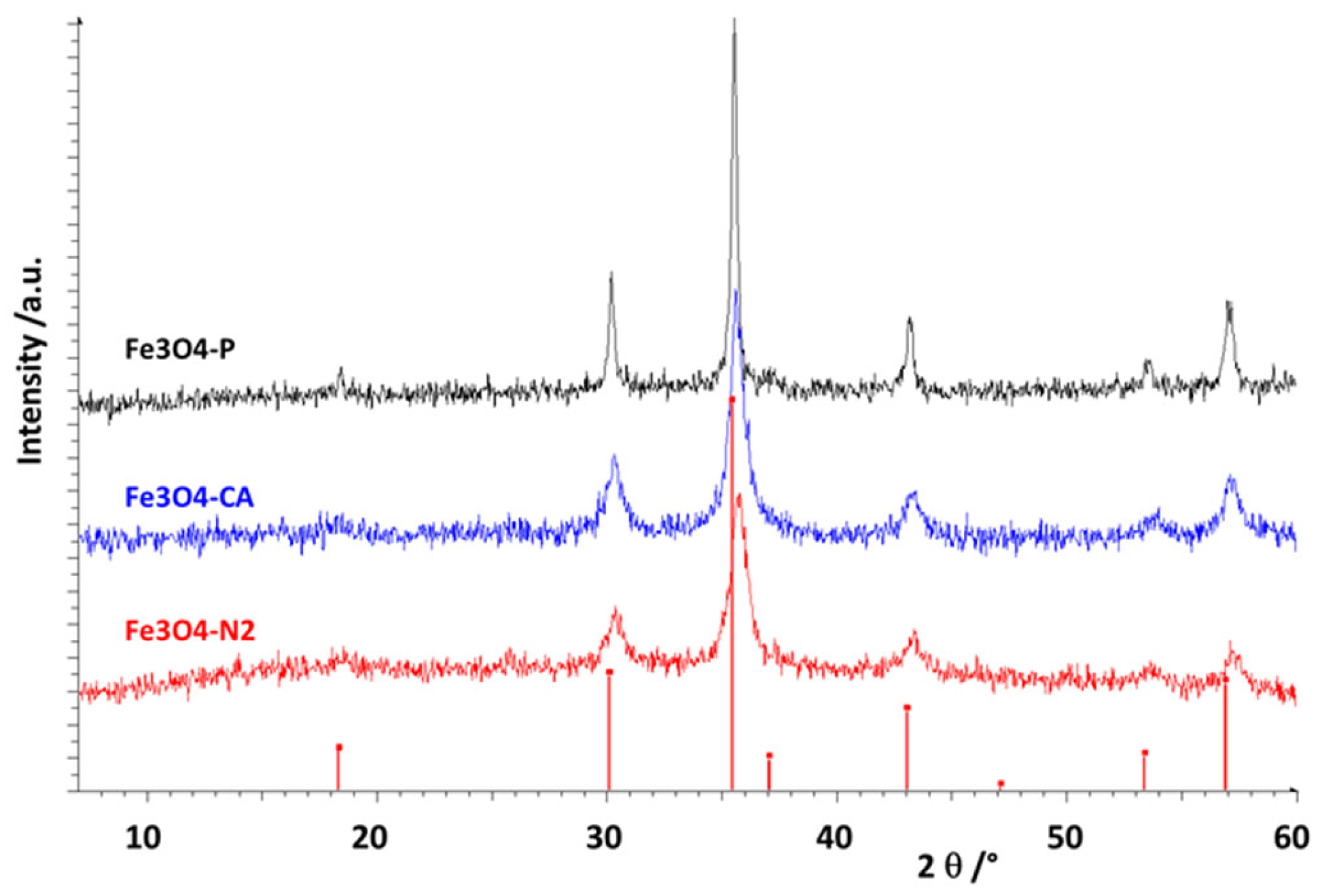
Figure 1. XRD patterns of the three different Fe3O4 samples. The bars of the expected peak positions of magnetite are also reported (Card N. 82-1533).
Applsci 16 02853 g001
Figure 2. FT-IR spectra of the three synthesized samples and citric acid alone, reported for comparison.
Applsci 16 02853 g002
Figure 3. SEM micrographs of (A) Fe3O4-P, (B) Fe3O4-N2 and (C) Fe3O4-CA samples. The magnification bar is reported in the images.
Applsci 16 02853 g003
Figure 4. Room temperature EPR spectra of Fe3O4-P and Fe3O4-N2.
Applsci 16 02853 g004
Figure 5. Room temperature hysteresis loops for Fe3O4-P and Fe3O4-N2. Inset: Enlarged view of the same curves in the near-zero magnetic field region.
Applsci 16 02853 g005
Figure 6. XRD patterns of hybrids based on ZnAl-LDH. The pattern of pure ZnAl-LDH is also reported for comparison. The red bars represent the expected reflections of hydrotalcite (Card N. 89-0460).
Applsci 16 02853 g006
Figure 7. SEM images of (A) ZnAl-LDH, (B) Fe3O4@ZnAl-LDH and (C) Fe3O4@ZnAl-NO3-LDH samples.
Applsci 16 02853 g007
Figure 8. XRD pattern of the Fe3O4@MgAl-NO3-LDH hybrid compared with that of MgAl-LDH. The red bars represent the expected reflections of hydrotalcite (Card N. 89-0460).
Applsci 16 02853 g008
Figure 9. SEM images of (A) MgAl-LDH and (B) Fe3O4@MgAl-NO3-LDH samples.
Applsci 16 02853 g009
Figure 10. Room-temperature EPR spectra collected for the two selected magnetic hybrid samples, compared with the one from Fe3O4-N2.
Applsci 16 02853 g010
Figure 11. Room temperature hysteresis loops collected for the two hybrids. Data for Fe3O4-N2 are also reported for comparison. Inset: Enlarged view in the near-zero magnetic field region.
Applsci 16 02853 g011
Figure 12. XRD patterns of hybrids loaded with meloxicam.
Applsci 16 02853 g012
Figure 13. FT-IR spectra of the hybrids loaded with meloxicam, compared with the pure meloxicam spectrum in the 4000–2000 cm−1 and 2000–500 cm−1 spectral ranges.
Applsci 16 02853 g013
Figure 14. SEM micrographs of (A) meloxicam, (B) Fe3O4@ZnAl-LDH-MLX, (C) Fe3O4@ZnAl-NO3-LDH-MLX and (D) Fe3O4@MgAl-NO3-LDH-MLX samples.
Applsci 16 02853 g014
Figure 15. Dissolution profile of the Fe3O4@ZnAl-NO3-LDH-MLX sample in conditions simulating the in vivo environment, PBS.
Applsci 16 02853 g015
Table 1. Acronyms of the different prepared samples.
AcronymDescription
Fe3O4-PFe3O4 nanoparticles from polyol synthesis
Fe3O4-N2Fe3O4 nanoparticles from co-precipitation under nitrogen flow
Fe3O4-CAFe3O4 nanoparticles with citric acid coating
Fe3O4@ZnAl-NO3-LDHFe3O4 core with Zn3Al-LDH with excess of nitrate
Fe3O4@MgAl-NO3-LDHFe3O4 core with Mg3Al-LDH with excess of nitrate
Fe3O4@ZnAl-LDHFe3O4 core with Zn3Al-LDH without nitrate excess
Fe3O4@ZnAl-NO3-LDH-MLXFe3O4@ZnAl-NO3-LDH with meloxicam loading
Fe3O4@MgAl-NO3-LDH-MLXFe3O4@MgAl-NO3-LDH with meloxicam loading
Fe3O4@ZnAl-LDH-MLXFe3O4@ZnAl-LDH with meloxicam loading
MgAl-LDHLDH alone with Mg3Al composition
ZnAl-LDHLDH alone with Zn3Al composition
Table 2. Drug load and weight corresponding to the dose of 7.5 mg of MLX.
Sample% Drug ContentSample Weight Equivalent to 7.5 mg of MLX (mg)
Fe3O4@ZnAl-LDH-MLX0.651154
Fe3O4@ZnAl-NO3-LDH-MLX9.5179
Fe3O4@MgAl-NO3-LDH-MLX2.89259
Table 3. Kinetics analysis of the dissolution process.
SampleZero-OrderFirst OrderHiguchiKorsmeyer–Peppas
R2R2K1R2R2n
Fe3O4@ZnAl-NO3-LDH-MLX0.92580.9944−0.01240.99830.98780.74
Table 4. Samples particle size, polydispersity, and zeta potential.
SampleAverage Size (nm ± SD)PDIz-Pot (mV)
Population 1Population 2
Fe3O4@ZnAl-NO3-LDH-MLX in PBS342.4 ± 4.6
(66.7% intensity)
755.6 ± 54.77 (33.3% intensity)0.923-
Fe3O4@ZnAl-NO3-LDH-MLX in water693.3± 100.2
(66.2% intensity)
479 ± 32.56 (33.8% intensity)0.910−17.1 ± 6.24
Disclaimer/Publisher’s Note: The statements, opinions and data contained in all publications are solely those of the individual author(s) and contributor(s) and not of MDPI and/or the editor(s). MDPI and/or the editor(s) disclaim responsibility for any injury to people or property resulting from any ideas, methods, instructions or products referred to in the content.