1. Introduction
In modern dentistry, the concept of “smart” materials is increasingly shifting from bulk material properties toward smart surface engineering and functional coating design. This transition enables the development of multifunctional implant and prosthetic surfaces with tailored bioactivity, antibacterial performance, controlled interaction with saliva and oral biofilms, stable wettability, and enhanced tribocorrosion resistance, while the mechanical performance of the substrate remains fundamentally unchanged [
1]. From an industrial manufacturing perspective, surface engineering and smart coating deposition represent critical final production stages, converting a mechanically suitable implant, abutment, or prosthetic reconstruction into a fully functional medical product with precisely defined interfacial properties [
1,
2]. Consequently, the current state of the art is evolving from conventional surface roughening toward multi-stage post-processing chains integrating controlled topography modification, contamination removal, surface activation, and deposition of smart nanocoatings, with long-term stability after cleaning, sterilization, and storage being a key requirement [
3].
In the context of the present review, the term “SMART” strategy refers to surface engineering approaches that provide active, adaptive, or multifunctional behavior beyond the role of conventional passive coatings. Unlike passive surface layers, which primarily act as static barriers or roughness modifiers, smart surface strategies are designed to respond to biological, chemical, or mechanical stimuli, or to provide controlled functional effects such as antibacterial action, enhanced bioactivity, stimulus-responsive release, adaptive interfacial behavior, or piezoelectric response. In this sense, the concept of smart surface engineering is not limited to coating composition alone but also includes the ability of the treated surface to actively influence implant–tissue interaction and long-term clinical functionality.
This distinction is particularly relevant in dental manufacturing, where conventional surface treatments such as roughening, etching, or passive oxide formation have long been used to improve osseointegration. In contrast, smart surface strategies aim to introduce additional functional mechanisms into the final surface architecture, thereby extending the role of surface engineering from passive structural optimization toward active biological and physicochemical modulation.
The dominant manufacturing platforms in contemporary dental systems include titanium and Ti-6Al-4V implants, titanium or zirconia abutments, and CAD/CAM crowns and bridges produced from zirconia or glass ceramics [
4]. Although these components are fabricated using diverse manufacturing routes (e.g., machining, milling, or additive manufacturing), it has been repeatedly demonstrated that the surface condition after manufacturing remains a major technological limitation. Typical deficiencies include abrasive residues, organic contamination, heterogeneous roughness, microdefects, and limited stability of hydrophilicity, all of which may negatively influence biological response and long-term clinical performance [
1,
2,
3]. Therefore, smart post-production surface functionalization is widely recognized as an indispensable processing step requiring strict control and reproducibility under mass-production conditions [
1,
2].
Within the titanium implant segment, current research and development increasingly focuses on multifunctional smart surface architectures combining micro- and nanotopography with chemical functionalization or advanced bioactive coatings. The primary objective is to promote stable osseointegration while simultaneously reducing bacterial adhesion [
5]. In this context, laser texturing represents one of the fastest-growing surface engineering technologies due to its capability for contactless and localized generation of micro-/nanostructures with high potential for automation and industrial scalability. Nevertheless, recent reviews highlight that industrial deployment depends on a narrow process window, stable reproducibility of surface topography, and sufficient resistance of the modified surface to subsequent processing steps, particularly cleaning and sterilization [
6,
7]. In parallel, contact-guidance surface designs have emerged as a promising smart surface concept, where laser-induced microgrooves influence cell behavior in soft tissue regions while limiting bacterial adhesion, which is particularly relevant for the transgingival interface of implant systems [
8].
Electrochemical surface modification technologies, particularly plasma electrolytic oxidation (PEO), have also demonstrated substantial industrial potential by enabling the direct formation of functional oxide coatings on finished implants. Reviews emphasize that PEO is a scalable surface engineering approach capable of producing porous structures favorable for biological integration, while simultaneously allowing incorporation of antibacterial or bioactive dopants. However, optimization of dopant concentration remains critical due to biocompatibility constraints [
9]. Recent studies identify Zn-doped or combined Ag/Zn-doped PEO coatings on dental titanium as representative examples of smart multifunctional coatings integrating antibacterial activity and biological compatibility within a single technological platform [
10].
Furthermore, plasma-based processes are gaining importance as final post-processing steps for surface decontamination and smart activation. Systematic reviews on cold atmospheric plasma (CAP) indicate a growing trend toward “just-in-time” surface activation performed immediately prior to implantation, thereby addressing the issue of hydrophilicity aging during storage [
11]. From a manufacturing perspective, this approach is attractive due to its compatibility with integration into production lines before packaging or sterilization. However, challenges remain in standardizing dosing parameters and ensuring the temporal stability of the induced surface effect [
12].
Atomic Layer Deposition (ALD) has recently gained attention as an advanced smart coating technology enabling the deposition of highly homogeneous, non-porous, and conformal nanolayers on complex implant and abutment geometries. ALD is frequently described as a promising post-processing method where uniform barrier coatings are required on threads or microstructured surfaces. Increasing attention is being devoted to ALD-deposited hydroxyapatite coatings on titanium and their influence on gingival fibroblast and keratinocyte behavior [
13]. In addition, ALD coatings based on TiO
2 or ZrO
2 have been investigated as functional barrier layers improving tribocorrosion performance and reducing particle release, which is critical for long-term implant reliability [
14]. A further emerging trend is area-selective ALD, enabling localized functionalization of specific zones, which may be particularly relevant for implant systems requiring region-specific surface properties [
15].
Surface engineering is equally critical for abutments, where current research emphasizes smart modification of the transgingival surface to minimize biofilm formation and promote stable soft tissue attachment. Comparative reviews of titanium and zirconia abutments underline the decisive role of final machining quality and surface cleanliness, with industrially applicable strategies relying on mechanical polishing followed by surface treatments compatible with standardized manufacturing processes [
16,
17,
18]. In the case of zirconia, achieving the desired surface topography without inducing microcracks or undesirable phase transformations remains a major technological challenge. This limitation reduces the applicability of aggressive surface treatments and increases the importance of precisely controlled finishing protocols [
19].
Femtosecond laser surface texturing represents an advanced surface engineering technique that enables precise modification of implant materials at both micro- and nanoscale levels. This technology uses ultrashort laser pulses with durations in the femtosecond range (10−15 s), which allows material processing with extremely high spatial precision and minimal thermal damage to the surrounding material. When applied to titanium dental implants, femtosecond lasers can generate periodic surface structures known as laser-induced periodic surface structures (LIPSS), as well as microgrooves, microchannels, and microporous surface morphologies. These structures significantly influence surface properties such as roughness, wettability, and surface energy, which play a crucial role in biological interactions at the bone–implant interface. Studies have shown that such laser-generated nanostructures can enhance osteoblast adhesion and proliferation while simultaneously reducing bacterial adhesion and biofilm formation on implant surfaces.
From a manufacturing and energy perspective, femtosecond laser processing offers several advantages compared with conventional chemical surface treatments. The process is typically performed in dry conditions and does not require aggressive chemical reagents such as acids or alkalis, which reduces the generation of hazardous chemical waste and simplifies environmental management. However, technology requires specialized ultrafast laser systems with high electrical power demand and precise beam control. Energy consumption depends primarily on parameters such as pulse energy, repetition rate, scanning speed, and the number of laser pulses applied during surface structuring. Higher laser energy and increased pulse count generally result in deeper or wider surface features but also increase processing time and electrical energy requirements. Nevertheless, the ability to generate highly controlled micro- and nanoscale structures without additional chemical processing steps makes femtosecond laser texturing a promising technology for the development of next-generation dental implant surfaces with improved biological and antibacterial performance [
20].
For CAD/CAM crowns and bridges produced from zirconia or glass ceramics, surface engineering is primarily determined by post-processing operations after milling and sintering. Numerous studies confirm that grinding, polishing, and glazing significantly influence surface roughness and consequently affect both the mechanical integrity of restorations and antagonist wear. High-quality polishing after occlusal adjustment is considered a critical determinant of long-term clinical performance in translucent zirconia restorations [
21].
In parallel, additive manufacturing is increasingly shaping dental production by enabling customized implants and prosthetic components. However, systematic reviews indicate that the as-printed surface often represents a limiting factor due to powder residues, porosity, and inhomogeneous roughness. Consequently, smart surface post-processing and coating strategies remain fundamental prerequisites for ensuring clinical usability of additively manufactured dental components [
22].
Overall, the current trajectory of surface engineering in smart dental materials is characterized by a transition toward multifunctional smart coatings and post-processing technologies, enabling surface designs that integrate biointegration, antibacterial functionality, and enhanced resistance to corrosion and mechanical loading [
23]. Key trends include laser texturing, antibacterial PEO coatings, plasma-based activation as a final production step, and the increasing use of ALD conformal nanocoatings for complex implant geometries. At the same time, controlled finishing operations such as grinding, polishing, and glazing remain decisive for CAD/CAM prosthetic materials, as they directly determine final surface quality and long-term functional performance [
24].
In clinical dental implantology, several surface treatments are currently considered standard reference technologies. Among the most widely used are sandblasted large-grit acid-etched (SLA) titanium surfaces and plasma-sprayed hydroxyapatite coatings, which have demonstrated reliable long-term clinical performance. These technologies serve as important baseline solutions in dental manufacturing and implantology. Therefore, evaluating emerging smart surface engineering strategies requires comparison with these established clinical standards in terms of manufacturing complexity, cost, scalability, and biological performance.
2. Materials and Methods
Table 1 summarizes the literature search strategy used to identify relevant publications for this review. The PRISMA framework was applied as a supportive methodological guideline to ensure transparency and reproducibility of the literature identification and screening process, while the final synthesis was conducted in a narrative form. Scopus and Web of Science were searched to identify studies relevant to the topic for the period from 2016 to 2025, with an English-language restriction. The search strategy was constructed using three groups of keywords focused on (A) smart material*; responsive material*, (B) surface treatment; surface modification; coating*, and (C) manufactur*; fabrication; processing. The individual keyword groups were combined using Boolean operators to ensure that only studies containing relevant terms from all three areas (A AND B AND C) were included in the results (see
Table 1).
The inclusion criteria were as follows: (1) publications published between 2016 and 2025; (2) publications written in English; (3) scientific papers published in peer-reviewed sources (scientific journals and conference proceedings); (4) studies focused on smart or responsive materials and their application in surface engineering; (5) studies analyzing surface treatments, surface modifications, or coatings in relation to the manufacturing process; and (6) studies in the medical field addressing dental manufacturing, particularly the production of dental implants, crowns, abutments, and implant-supported prosthetic systems.
The exclusion criteria were as follows: (1) books and book chapters; (2) studies outside the medical field (e.g., geology, construction, food, energy, catalysis); (3) studies focused on medical applications outside dentistry (e.g., cancer research, internal organs, general orthopedics, bone regeneration, tissue regeneration, tumors); (4) studies not addressing manufacturing or surface engineering; and (5) studies not related to dental implants, crowns, abutments, or implant-supported prosthetic systems. The review was conducted based on the PICO criteria:
P (Population): dental implants and prosthetic components (crowns, abutments, implant-supported systems);
I (Intervention): surface treatment, surface modification, or coating application as part of the manufacturing process;
C (Comparison): comparison of different manufacturing processes and surface engineering methods;
O (Outcome): improvement of surface properties relevant to dental applications (e.g., biocompatibility, osseointegration, corrosion resistance, antibacterial properties, mechanical properties).
Although only a limited number of studies directly address dental implant components, many relevant technological developments in smart surface engineering originate from broader materials science and surface engineering research. For this reason, the review also includes selected studies from related fields that investigate advanced surface modification technologies applicable to titanium and other biomedical implant materials. These studies provide important insights into coating mechanisms, surface structuring techniques, and functional surface properties that can subsequently be transferred to dental implant manufacturing. Therefore, the inclusion of these secondary-group studies allows a more comprehensive understanding of emerging smart surface engineering strategies relevant to the dental industry. Literature identification and screening were conducted using a structured approach based on PRISMA guidelines; however, due to the limited number of studies directly addressing dental manufacturing applications, the results were synthesized in the form of a critical narrative review.
3. Results
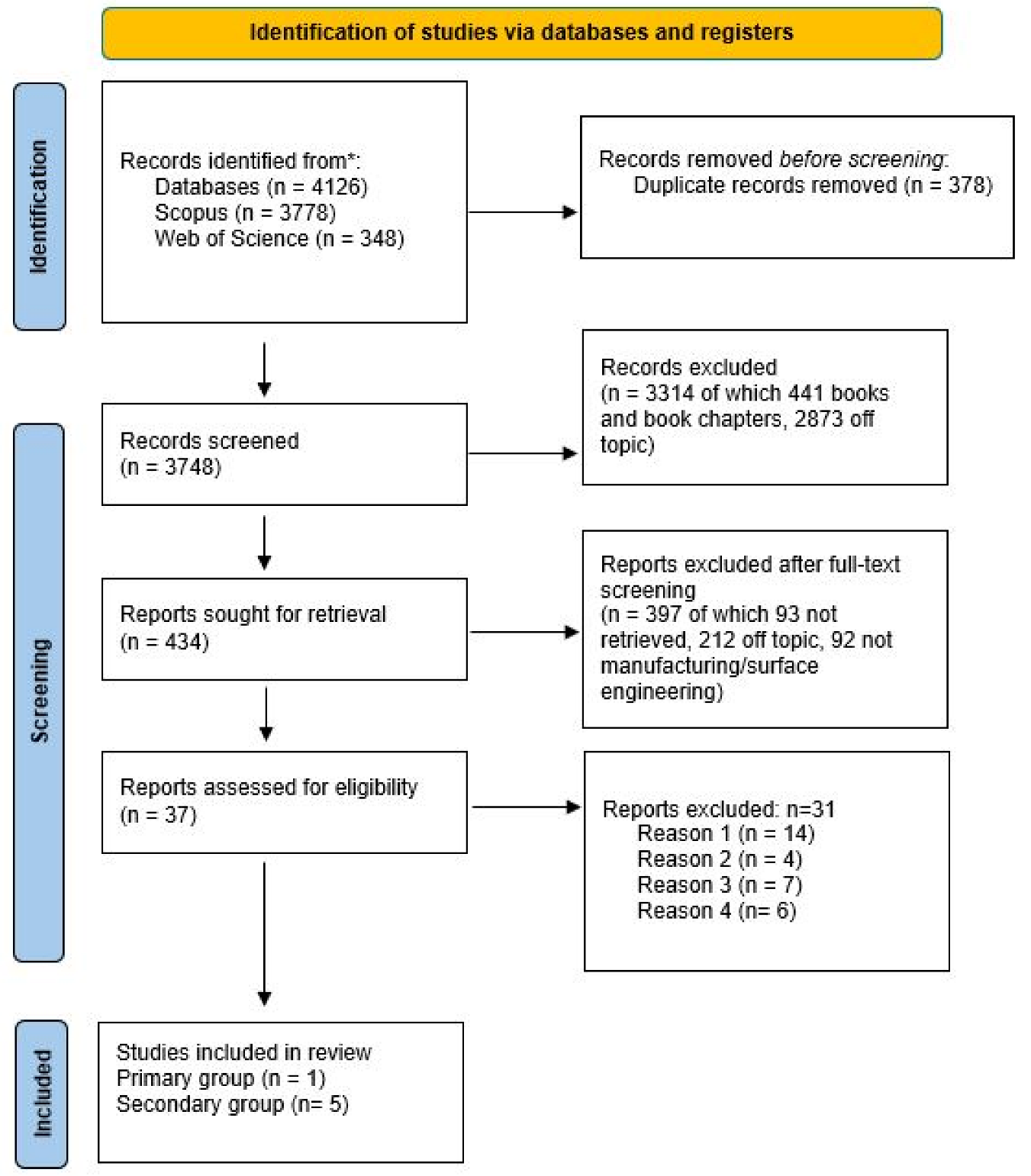
A total of 4126 publications were identified from the following databases: Scopus (3778) and Web of Science (348). After removing duplicates (378) using reference management software, a total of 3748 records remained for further screening.
Subsequently, 3748 records were screened based on their title and abstract with the support of automated screening tools. All screening decisions and excluded records were subsequently reviewed and verified by the authors. During this screening phase, 3314 records were excluded because 441 were books or book chapters, and 2873 were considered off topic (e.g., geology, civil engineering, food industry, energy, catalysis) and were not related to the medical field. Only studies related to medicine and the manufacturing of medical devices or components were retained. After the title and abstract screening, 434 publications remained eligible for full-text assessment.
In the next screening stage, full texts of the selected publications were assessed for eligibility. In the first phase of the full-text screening, 93 records were excluded because the full text could not be retrieved. Furthermore, 212 studies were excluded as they were outside the scope of this review, including studies focused on non-medical or non-dental biomedical topics such as internal organs, cancer-related research, bone regeneration, tissue engineering, and general orthopedic applications. Additionally, 92 studies were excluded because they were not focused on manufacturing processes or surface engineering approaches (surface treatment, surface modification, or coatings). After this phase, 37 studies remained.
In the second phase of the full-text screening, the remaining publications were assessed using stricter criteria focused on dental manufacturing applications and surface engineering approaches. During this step, 31 studies were excluded. The main reasons for exclusion included studies focused on tissue engineering and bone regeneration (n = 14), biomedical topics outside the dental field (n = 4), studies related to sensors, electronics, or robotic applications (n = 7), and studies focused primarily on general material characterization or broad biomedical applications, without direct relevance to dental implant manufacturing or surface engineering processes (n = 6).
Although the initial database search identified many records (n = 4126), the strict inclusion criteria significantly reduced the final number of eligible studies. The review specifically focused on publications addressing smart surface engineering strategies for dental implants, including experimental or technological approaches related to advanced coatings, nanostructuring, or adaptive surface functionalities. Many publications identified during the initial screening were excluded because they focused on conventional implant surface treatments, unrelated biomaterials, or purely clinical outcomes without addressing the underlying surface engineering technologies.
In addition, a substantial number of records were removed during full-text screening because they did not meet the predefined inclusion criteria, such as the absence of smart or responsive surface mechanisms, insufficient description of the manufacturing process, or a lack of technological relevance for implant surface engineering. As a result, only studies that directly addressed the technological development or functional mechanisms of smart surface modifications were included in the final synthesis.
After applying the final eligibility criteria, 6 studies were included in the qualitative analysis. Since only a limited number of publications were found to focus explicitly on surface engineering technologies directly used in dental implant and prosthetic manufacturing, the included studies were divided into two categories. The primary group consisted of studies directly addressing dental components, including implants, abutments, crowns, and implant-supported prosthetic systems (
n = 1). The secondary group included studies that were not strictly focused on dental manufacturing but investigated materials and surface engineering approaches widely used in dentistry, particularly titanium-based alloys, zirconia ceramics, hydroxyapatite-based coatings, and NiTi shape memory alloys (
n = 5). This secondary group was included because these material platforms represent the dominant structural and functional materials applied in dental implantology and prosthodontics, and surface modification strategies developed for these materials are often transferable to dental manufacturing practice. Therefore, the inclusion of the secondary group enabled the identification of relevant technological principles and smart coating strategies applicable to dental components, even if the original studies were conducted within a broader biomedical or materials science context. This approach ensured that the review reflects both the limited number of strictly dental-focused publications and the broader technological development of surface engineering solutions relevant to dental manufacturing. The results of each included study are summarized in the review and reported in the final screening tables (see
Table 2 and
Figure 1).
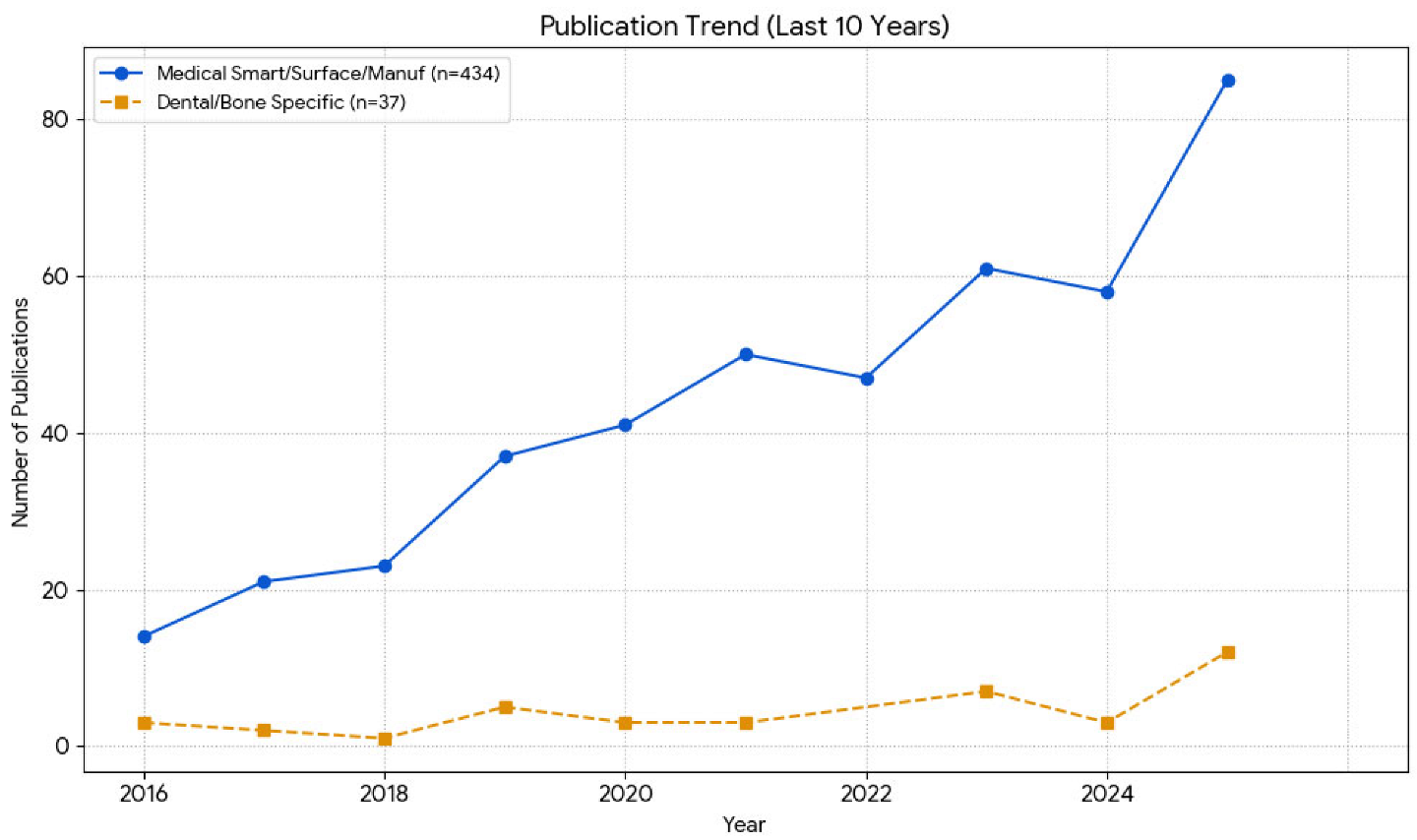
Figure 2 illustrates the publication trend over the period 2016–2025 for two analyzed groups. The first group represents a broader set of publications focused on smart materials, surface engineering, and manufacturing technologies in a medical context (
n = 434). The second group includes a narrower set of studies specifically related to dental or bone-oriented applications after full-text screening (
n = 37). The results demonstrate a clear increasing trend in the number of publications within the broader medical group, with the most significant growth observed in the most recent years of the period analyzed. In contrast, the number of publications directly focused on dental applications remains substantially lower throughout the entire time span. Although a slight increase is also observed in the dental-oriented group, the gap between the two datasets remains considerable. This trend confirms that research on smart materials and surface engineering is rapidly expanding in the medical field; however, studies directly addressing dental components and dental manufacturing applications still represent only a limited portion of the available literature.
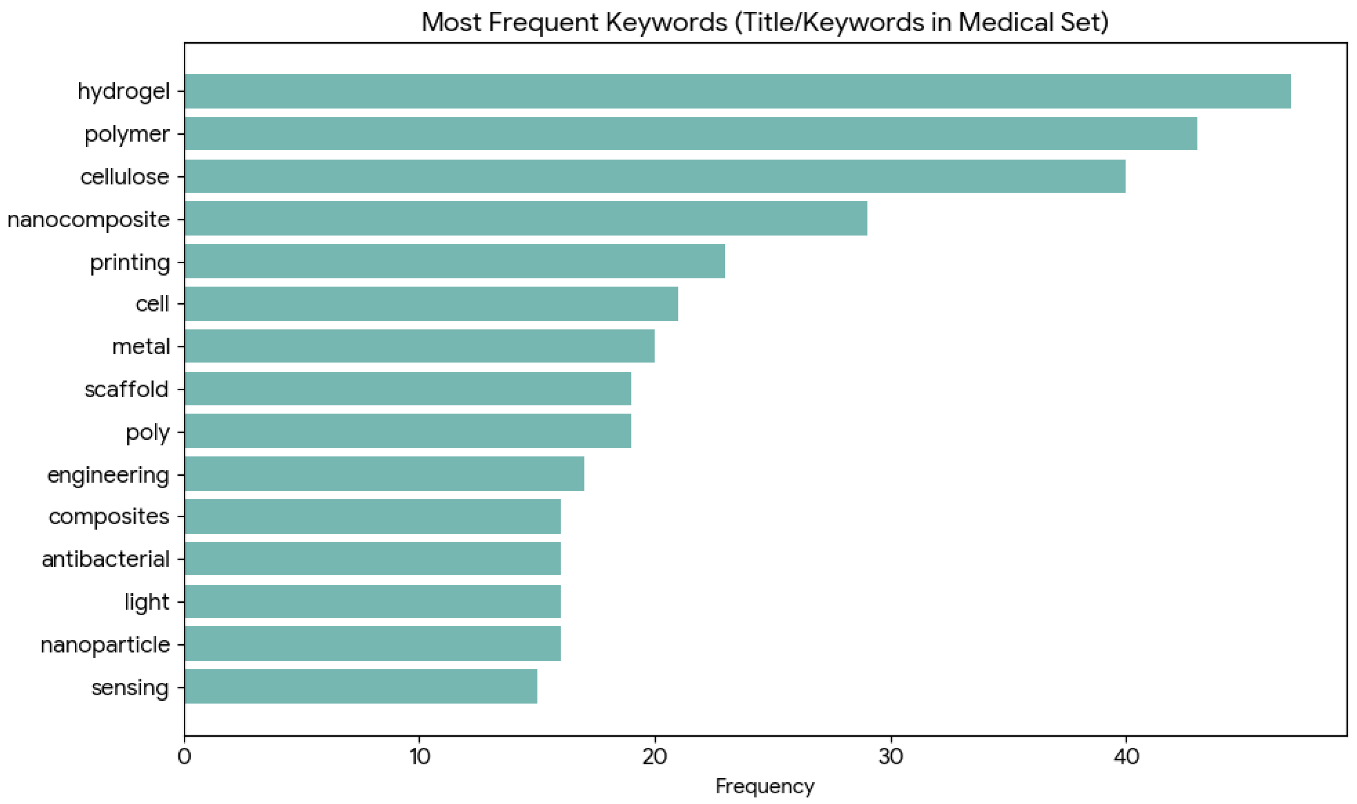
Figure 3 presents the most frequent keywords identified in the titles and keywords of publications included in the broader medical dataset (
n = 434). The most dominant terms include hydrogel, polymer, cellulose, nanocomposite, scaffold, and printing, indicating that current research is strongly oriented toward polymer-based biomaterials, composite structures, and tissue engineering applications. The high frequency of terms related to additive manufacturing further confirms the growing importance of 3D printing technologies in biomedical research. Additionally, the presence of keywords such as antibacterial, nanoparticle, and sensing reflects increasing interest in multifunctional materials combining biocompatibility with enhanced functional properties. Despite the broad range of investigated topics, the keyword distribution indirectly suggests that only a small portion of the literature is specifically focused on dental applications or materials commonly used in dental manufacturing. This finding supports the need for more targeted research addressing smart materials and surface engineering technologies applied to dental implants, crowns, and abutments.
Although the number of studies included in the final synthesis is relatively limited, the analyzed publications reveal several consistent technological trends in the development of smart surface engineering for dental implant materials. Most studies focus on advanced surface modification techniques capable of controlling surface morphology and chemistry at micro- and nanoscale levels. These technologies aim to enhance biological performance through improved cell adhesion, enhanced osseointegration, antibacterial functionality, and increased corrosion resistance. The reviewed studies collectively demonstrate that smart surface engineering approaches increasingly combine structural surface modification with functional coatings or bioactive surface layers, indicating a shift from passive surface treatments toward multifunctional implant surfaces.
4. Discussion
The comparative analysis of the selected studies indicates that current research in the field of smart surface engineering for dental implants is primarily oriented toward the development of multifunctional surfaces capable of simultaneously improving biological compatibility, antibacterial behavior, and corrosion resistance. Although the analyzed studies employ different technological approaches, including electrochemical treatments, nanocoatings, and surface structuring methods, they share a common objective of optimizing the implant–tissue interface through controlled surface engineering. This trend reflects a broader transition in biomaterials research from conventional passive surface treatments toward adaptive and responsive surface technologies.
These technologies (anodic oxidation, alkaline oxidation, and electrodeposition) were deliberately included in this review because they represent three practically applicable and complementary approaches for the development of smart functional coatings and smart surface architectures on titanium-based dental components. Their selection is supported by their frequent appearance in the scientific literature, their potential for industrial scalability, and their ability to introduce controllable surface functionalities relevant to dental applications, such as enhanced corrosion resistance, stable wettability, tailored micro-/nano-scale morphology, and improved biological response.
Anodic oxidation was selected as one of the most widely studied smart surface modification methods for titanium dental implants, since it enables the controlled formation of functional TiO2 oxide layers and provides a technologically robust platform for creating surfaces with tunable thickness, porosity, and chemical composition. Alkaline oxidation was included as a simpler chemical–thermal alternative capable of generating bioactive surface chemistry and improving surface reactivity, which may be attractive from a manufacturing perspective; however, available studies also indicate limitations, particularly regarding long-term stability and reproducibility of bioactivity. Electrodeposition was chosen due to its high flexibility for depositing bioactive smart coatings (e.g., hydroxyapatite-based or hybrid composite layers), which are often proposed to enhance osseointegration and provide multifunctional surface behavior.
The common rationale for selecting these technologies is their relevance to titanium dental implants and related components, as well as the fact that all three methods present significant research gaps in terms of energy efficiency, environmental impact, and process sustainability. These aspects are critical for the future development of smart coating technologies in dental manufacturing.
4.1. Smart Anodic Oxide Coatings for Dental Components
Anodic oxidation (anodization) of titanium surfaces represents one of the most important smart surface engineering technologies applied in dental implantology. Its main advantage is the ability to generate a controlled TiO
2 oxide layer with defined thickness, morphology, and chemical composition [
31]. This functional oxide layer acts as a smart interfacial coating capable of influencing implant–tissue interactions and improving osseointegration, corrosion resistance, and long-term performance of dental implants under oral conditions. The growing interest in anodic oxidation is largely associated with its capability to tailor micro- and nanoscale surface topography, which plays a critical role in biological response and implant integration [
32].
In dental applications, anodic oxidation is primarily investigated in relation to titanium implant fixtures. Advanced anodizing techniques, such as anodic spark deposition and plasma electrolytic oxidation (PEO), operate at higher voltages and enable the formation of thicker and more structured oxide coatings. These smart oxide surfaces are typically characterized by increased porosity and may incorporate electrolyte-derived elements into the oxide matrix, which can enhance bioactivity and improve corrosion stability. Such modifications are often considered clinically promising, as porous oxide layers may increase the effective surface area and support faster bone integration. However, the literature also indicates that coating properties are highly dependent on anodizing parameters and electrolyte composition, which limits the reproducibility and comparability of results across different studies [
33,
34,
35].
Corrosion stability is a key factor when evaluating anodized dental components, as the oral environment is chemically and mechanically complex. Anodized layers may enhance the passivation behavior of titanium, but their performance depends on processing conditions and the titanium alloy used. Moreover, oral conditions involve pH fluctuations, chloride ions, biofilm formation, mechanical wear, and microgaps at the implant–abutment interface. Marino and Mascaro reported that anodic oxide films can improve corrosion performance; however, electrochemical behavior strongly affects oxide structure and process parameters, leading to variability in reported results [
36]. Therefore, despite the benefits of anodization, long-term stability under realistic clinical conditions remains a critical challenge [
37].
Although anodic oxidation is well established for implant fixtures, its application to other dental components, such as abutments and implant-supported prosthetic systems, has been less systematically investigated. Abutments require high dimensional precision, are partially exposed to the oral environment, and are subjected to mechanical wear and aesthetic requirements. Consequently, anodizing processes optimized for implants may not be directly transferable to abutments or prosthetic structures. Additionally, much of the published evidence is based on in vitro experiments, while robust long-term clinical validation remains limited [
38].
From a critical perspective, current research on anodic oxidation is predominantly focused on biological performance and corrosion resistance, whereas sustainability-related and manufacturing-oriented aspects remain underexplored [
39,
40]. A major research gap concerns the energy efficiency of anodic oxidation, particularly for PEO-based methods requiring high voltages and energy-intensive discharge processes. Most studies do not report energy consumption per treated surface area, making it difficult to evaluate the technology from an industrial or economic viewpoint [
41]. Similarly, environmental aspects such as electrolyte toxicity, wastewater generation, recycling strategies, and overall ecological footprints are rarely addressed. Life-cycle assessment (LCA) and carbon footprint evaluation are also missing, limiting meaningful comparisons with alternative smart coating methods [
42].
In conclusion, anodic oxidation represents a highly promising smart coating and surface treatment technology for improving the performance of titanium dental implants. However, future research should focus on process standardization, industrial scalability, and reproducibility, as well as on the energy optimization and environmental sustainability of anodizing electrolytes and waste management. These factors represent essential directions for advancing anodic oxidation toward efficient and environmentally responsible smart dental manufacturing applications [
43].
From an environmental perspective, anodic oxidation is considered a relatively controlled electrochemical process, although it requires electrical energy and the use of acidic electrolytes. Depending on the process parameters, the environmental impact is mainly associated with electrolyte preparation and waste management. However, compared with more aggressive chemical treatments, anodic oxidation generally involves lower consumption of highly toxic chemicals.
4.2. Alkaline–Thermal Smart Surface Activation of Titanium Dental Components
Alkaline oxidation, often implemented as alkaline treatment of titanium surfaces in concentrated NaOH solutions followed by thermal processing, represents an important smart surface functionalization approach aimed at improving the bioactivity and corrosion resistance of dental implants and related titanium-based components [
44]. Unlike conventional coating technologies, this method is a chemical–thermal process intended to modify the naturally formed passive oxide layer of titanium and create a reactive surface that promotes apatite nucleation in biological environments. The review literature on dental implant surface modifications identifies alkaline treatments as an effective strategy to enhance wettability, surface chemical activity, and the ability of titanium surfaces to support osseointegration, emphasizing the significance of combining chemical exposure with subsequent thermal stabilization of the modified layer [
45]. From a manufacturing perspective, alkaline oxidation is attractive because it does not require vacuum equipment or highly complex processing systems; however, its outcomes are strongly dependent on NaOH concentration, exposure time, temperature, and precisely controlled heat-treatment conditions [
46].
The experimental work by Krupa et al. [
47] provides detailed insight into the effects of the alkaline treatment of titanium (10 M NaOH at 60 °C for 8 h) combined with heating at 500–700 °C, including the characterization of layer structure and behavior in simulated body fluid (SBF). The study demonstrates that alkaline oxidation results in porous surface layers containing TiO
2 and Na
2TiO
3, while the heat-treatment temperature significantly affects phase composition and surface performance. In terms of corrosion resistance, the authors reported the best results after heat treatment at 700 °C, where the highest polarization resistance and the lowest anodic current densities were observed within a potential range relevant to in vivo conditions. This improvement was attributed to the transformation of anatase to rutile and to layer consolidation associated with dehydration during thermal processing [
47].
However, the study also highlights an important limitation of alkaline oxidation: the bioactivity of the treated surfaces was considered unsatisfactory, as calcium phosphate precipitates formed in SBF did not develop into a continuous layer even after long-term immersion. The authors explicitly stated that their results did not allow a definitive conclusion regarding an optimal method that simultaneously ensures strong bioactivity and corrosion resistance, and they emphasized the need for long-term exposure studies and further biological validation [
48]. This conclusion is particularly relevant for dental applications, as it indicates that alkaline oxidation may be effective for improving corrosion-related performance, but its smart bioactive effect cannot be assumed to be automatic or universally applicable.
In the context of dental implantology, alkaline oxidation is often presented as a relatively simple approach for surface improvement; however, critical analysis suggests that most published studies remain limited to laboratory testing and material characterization. While many papers report favorable changes in roughness, wettability, or surface chemistry, comparability between studies is restricted due to the lack of standardized processing parameters. Moreover, although the method can theoretically be applied not only to implant fixtures but also to other dental components such as abutments or implant-supported prosthetic systems, the available literature remains largely focused on implant surfaces. Components requiring higher dimensional precision, aesthetic properties, and mechanical surface stability are investigated less systematically [
49]. This represents an important gap, since abutments are exposed to mechanical wear and chemical degradation in the oral cavity, and their surface properties can directly influence peri-implant tissues.
Although alkaline oxidation represents a promising and accessible method for modifying titanium dental components and can improve corrosion resistance (particularly when combined with appropriate thermal processing), the literature also reveals uncertainties regarding long-term bioactivity and clinical relevance [
50].
A key research gap is the lack of systematic evaluation of process energy efficiency, since high-temperature thermal treatment may require significant energy input, yet energy consumption is rarely reported. Environmental aspects are also insufficiently explored, particularly regarding the use of highly concentrated alkaline solutions (e.g., 10 M NaOH), their neutralization requirements, wastewater generation, and the potential for chemical recycling. Future research should therefore focus on process optimization in terms of energy demand, environmental sustainability, and industrial reproducibility, while also expanding biological and clinical validation of alkaline-oxidized titanium smart surfaces for practical dental applications [
51,
52].
In terms of environmental sustainability, alkaline oxidation involves chemical treatments typically based on sodium hydroxide solutions followed by thermal processing. Although the process is relatively simple and requires moderate energy input, careful management of alkaline solutions and post-treatment washing steps is necessary to minimize environmental impact.
4.3. Smart Electrodeposited Bioactive Coatings for Dental Applications
Electrodeposition represents one of the most practical smart coating technologies for dental components, particularly titanium implants and Ti-based alloys, as it enables the deposition of bioactive functional coatings under controlled conditions, often at relatively low temperatures and without the need for vacuum-based equipment. In the context of titanium biofunctionalization, electrodeposition is frequently described as an effective approach for tailoring implant surfaces toward improved tissue interaction, with the key advantage of enabling the deposition of inorganic, organic, or hybrid smart layers directly onto electrically conductive substrates [
53]. Nevertheless, electrodeposition remains a process in which the final coating quality is strongly dependent on bath chemistry, pH, current density or applied potential, hydrodynamic conditions, and post-treatment procedures. As a result, reproducibility across studies and consistency during industrial batch production remains challenging [
54].
A major strength of electrodeposition is its capability to generate porous micro- to nanoscale structures, which may enhance osteoconductivity and promote early cell attachment. Bozzini et al. demonstrated a one-step electrodeposition route for producing hydroxyapatite (HA)–heparin composite coatings on titanium, aiming to combine bioactivity with anticoagulant functionality [
55]. The authors reported that electrodeposition enabled the formation of relatively thick micrometer-scale coatings with nanofibrous morphology, and the incorporation of heparin was associated with improved cellular viability and proliferation compared to pure HA coatings [
56]. However, from a critical perspective, the translation of such findings into dental practice raises several unresolved issues. First, biological testing was performed on a cell line model that may not fully represent peri-implant oral conditions, thereby limiting clinical relevance. Second, long-term coating stability under combined mechanical loading (mastication, micromotion), abrasive wear, and chemically variable oral environments remains insufficiently evaluated. Third, functional biomolecule incorporation introduces additional concerns regarding controlled release, durability of the biological effect, and potential degradation or alteration during sterilization procedures [
57].
Another important direction is the use of pulsed electrodeposition, where controlled on/off potential cycles influence nucleation and crystal growth, enabling more refined control over coating morphology. Park et al. investigated pulsed electrodeposition of calcium phosphate (CaP)/chitosan coatings on Ti–6Al–4V substrates. Their results indicated that the as-deposited phase was predominantly brushite (DCPD), which was subsequently converted into hydroxyapatite through immersion in concentrated alkaline solution under elevated temperature [
58]. The authors reported significant improvement in corrosion resistance compared to untreated substrates, with coating performance strongly dependent on the deposition cycle number, and the best electrochemical behavior achieved at lower cycle counts [
59]. Critically, this study highlights the limitation of many electrodeposition investigations: the focus is predominantly on material and electrochemical characterization, while comprehensive biological validation (cell adhesion, inflammatory response, antibacterial activity) is often absent. Moreover, post-treatment conversion steps involving highly alkaline media represent additional process stages that may increase environmental burden and manufacturing complexity due to chemical handling, wastewater neutralization requirements, and workplace safety considerations [
60].
Although electrodeposition is frequently described as a cost-effective and potentially energy-efficient smart coating technique compared to several physical deposition methods, its energy efficiency and environmental impact are rarely quantified in a systematic manner. Key parameters such as energy consumption related to bath heating, pulsed current operation, electrolyte agitation, drying or thermal post-processing, and waste neutralization are generally not reported, limiting objective assessment of sustainability [
61]. Furthermore, there is a lack of industrial-scale studies addressing electrolyte recycling, reduction in aggressive chemical usage (particularly in alkaline post-treatments), minimization of hazardous waste streams, and long-term coating stability under realistic sterilization and clinical service conditions. Another critical gap lies in the absence of standardized mechanical and biological testing protocols, which restricts the ability to objectively compare coating systems and identify the most suitable electrodeposition strategies for dental implants, abutments, or implant-supported prosthetic components [
62]. Future research should therefore integrate material performance with quantitative energy and environmental indicators, supported by clinically relevant biological validation, to establish electrodeposition as a robust, scalable, and sustainable smart coating technology for dental manufacturing applications.
Environmental aspects of electrodeposition processes are mainly related to the composition of electrolytes and the generation of chemical waste. While electrodeposition enables precise coating formation at relatively low temperatures and moderate energy consumption, proper treatment of electrolyte solutions and by-products is required to reduce environmental risks associated with metal ions or chemical additives.
4.4. Comparison of Smart Surface Technologies with Conventional Technologies
To clearly demonstrate the technological novelty and industrial relevance of the analyzed smart surface engineering approaches, it is important to compare them with conventional surface treatments that currently represent clinical standards in dental implant manufacturing. Among the most widely applied reference technologies are sandblasted large-grit acid-etched (SLA) titanium surfaces and plasma-sprayed hydroxyapatite coatings, both of which have demonstrated reliable clinical performance and long-term osseointegration outcomes.
Table 3 provides a comparative overview of these established surface treatment technologies and the emerging smart surface engineering approaches discussed in this review.
The comparison presented in
Table 3 highlights several important differences between conventional implant surface treatments and the emerging smart surface engineering approaches. Conventional technologies, such as sandblasted large-grit acid-etched (SLA) surfaces and plasma-sprayed hydroxyapatite coatings, are widely used in clinical practice due to their proven reliability and well-documented osseointegration performance. These methods provide a relatively robust surface microstructure that supports bone integration and long-term implant stability. However, their ability to precisely control nanoscale surface properties and multifunctional characteristics remains limited.
In contrast, the smart surface engineering approaches analysed in this study offer significantly greater flexibility in tailoring surface properties at both micro- and nanoscale levels. Technologies such as anodic oxidation and electrodeposition enable the formation of controlled oxide layers and bioactive coatings that can enhance corrosion resistance, surface wettability, and biological interactions with surrounding tissues. Similarly, alkaline oxidation provides a relatively simple chemical route to modify surface chemistry and promote bioactivity.
Although the presented technologies are often discussed qualitatively in the literature, several studies report quantitative indicators describing their performance. To provide a clearer overview of the functional effectiveness of the analyzed surface engineering approaches,
Table 4 summarizes selected parameters reported in previous studies, including coating adhesion strength, quantitative indicators and corrosion behavior.
In recent years, advanced smart surface engineering technologies have attracted increasing attention due to their ability to tailor and implant surface properties at micro- and nanoscale levels. Methods such as anodic oxidation, alkaline oxidation, electrodeposition, and atomic layer deposition enable the formation of controlled oxide layers or bioactive coatings with improved physicochemical and biological properties.
Table 4 summarizes selected quantitative indicators reported in the literature.
In contrast, smart surface engineering approaches offer greater flexibility in tailoring implant surface properties. Techniques such as anodic oxidation and alkaline oxidation modify surface chemistry and improve corrosion resistance and bioactivity. Electrodeposition enables the formation of bioactive coatings, while atomic layer deposition (ALD) allows precise control of nanoscale coating thickness and uniformity.
Overall, these technologies provide new opportunities for optimizing implant surface functionality and represent promising approaches for the development of next-generation dental implant systems.
4.5. Energy Efficiency of Smart Coating Processes in Dental Manufacturing
Environmental sustainability of surface treatments in dental component manufacturing has gained increasing attention in recent years, particularly within the framework of green dentistry, which emphasizes reducing resource consumption, chemical waste, and the overall environmental burden of dental production workflows [
63]. Surface engineering processes represent a critical stage of dental manufacturing because they often involve intensive energy use, high water consumption during repeated rinsing cycles, and the generation of chemically contaminated wastewater [
64]. For this reason, evaluating smart coating technologies requires not only consideration of their biological performance but also their environmental impact.
From the perspective of individual surface modification technologies, different processes present distinct environmental challenges. For example, anodic oxidation, widely used for forming porous titanium oxide layers on implant surfaces, requires electrical energy for electrochemical reactions and the use of acidic electrolytes. The environmental impact of this technology is therefore associated mainly with electricity consumption and electrolyte management, including the treatment of spent solutions and rinsing water [
65].
Similarly, alkaline oxidation treatments, typically based on sodium hydroxide solutions followed by thermal stabilization, involve chemical consumption and energy demand during heating stages. Although the process itself is relatively simple, proper handling and neutralization of alkaline solutions are necessary to minimize environmental risks and wastewater contamination [
66].
In the case of electrodeposition processes, which are frequently used for depositing bioactive coatings such as hydroxyapatite layers, the environmental impact is primarily related to the composition of electrolyte baths and the management of chemical waste streams. While electrodeposition generally operates at moderate temperatures and therefore requires lower thermal energy compared with some other coating technologies, improper disposal of electrolyte solutions may result in the release of metal ions and chemical additives into wastewater systems [
67].
More advanced coating techniques, such as atomic layer deposition (ALD), offer exceptional control over coating thickness and nanoscale uniformity. However, these technologies may involve relatively high energy consumption due to vacuum operation and the use of specialized precursor chemicals. From an environmental perspective, the sustainability of ALD processes depends on the efficiency of precursor utilization and the minimization of chemical waste generated during deposition cycles [
68].
In addition to the technological processes themselves, supporting operational systems—such as ventilation, suction systems, compressors, sterilization equipment, and climate control—also contribute to the total energy consumption of dental manufacturing environments. These auxiliary systems may significantly influence the overall ecological footprint of surface treatment workflows, particularly in laboratory-scale production environments where batch processing and idle time can lead to inefficient energy utilization [
65].
A growing trend in dental laboratories is the implementation of Industry 4.0 and Productivity 4.0 strategies, where digital tools are applied to monitor production parameters, optimize process scheduling, and reduce downtime [
66]. These approaches may indirectly reduce the environmental impact of surface treatment technologies by improving process stability and minimizing defective production batches. However, current studies rarely provide quantitative evidence linking digitalization directly to reductions in energy consumption, chemical usage, or wastewater generation, which limits the ability to objectively assess the environmental benefits of these technologies [
67].
Despite the increasing interest in sustainable dentistry, quantitative environmental assessments of smart coating technologies remain limited. Comparable indicators such as energy consumption per treated surface area, water usage per batch, and chemical waste generation per component are rarely reported in the literature. Moreover, life-cycle assessment (LCA) studies focusing specifically on smart surface engineering processes are still scarce, preventing objective comparison between different surface treatment technologies. Future research should therefore focus on developing standardized sustainability metrics for surface engineering processes and linking environmental indicators with clinical performance of dental implant surfaces [
69,
70].
4.6. Ecological and Sustainability Aspects of Smart Surface Treatments and Coatings
Environmental aspects of surface treatments applied to dental components—including implants, abutments, and prosthetic structures—are becoming increasingly important as sustainability considerations gain greater attention in biomedical manufacturing. Surface engineering processes are among the most technologically demanding stages of dental production and are frequently associated with significant consumption of chemicals, water, and energy [
71]. While most studies focus primarily on improving biological performance and osseointegration, the ecological impact of smart coating technologies remains comparatively underexplored.
A major environmental concern is the use of chemical agents during surface treatment processes. Technologies such as electrochemical oxidation, alkaline treatment, or electrodeposition require chemical baths containing acids, alkalis, or electrolyte systems. These processes can generate wastewater streams containing chemical residues and dissolved metal ions that must be neutralized and treated before disposal. In addition, some conventional surface preparation methods may involve aggressive chemicals such as hydrofluoric acid, which require strict handling and disposal procedures due to their high toxicity and environmental risk [
72].
Another critical factor is water consumption, which is typically high due to repeated rinsing and cleaning stages required to remove residual chemicals from treated surfaces. In industrial practice, this results in large volumes of wastewater that must be processed through filtration or chemical treatment systems. Consequently, water management and wastewater recycling strategies are essential for reducing the ecological footprint of smart surface treatment workflows [
73].
Energy consumption also plays a significant role in determining the environmental impact of surface engineering technologies. Processes involving electrochemical reactions, high-voltage operation, or thermal post-treatment steps contribute to the overall carbon footprint of dental manufacturing, particularly when electricity is sourced from non-renewable energy systems. Optimizing process parameters and reducing unnecessary heating cycles are therefore key strategies for improving energy efficiency in coating production [
74].
In response to these challenges, recent research increasingly explores the application of sustainable manufacturing principles, including circular economy concepts and lean production strategies. Examples include the reduction in chemical bath volumes, recycling of electrolyte solutions, reuse of rinsing water, and the implementation of closed-loop systems for processing fluids. These approaches have the potential to significantly reduce raw material consumption and waste generation during surface treatment operations [
75,
76]. However, most currently available publications remain conceptual and provide limited industrial data demonstrating measurable improvements in real dental manufacturing environments.
A major research gap remains the lack of standardized and quantitative environmental evaluation of smart surface engineering technologies used in dental manufacturing [
77]. Life-cycle assessment studies focusing specifically on surface treatment technologies are still limited, making it difficult to objectively compare their carbon footprint, water consumption, chemical intensity, and waste generation. Future research should therefore aim to integrate environmental indicators with biological performance metrics of surface-modified implants, enabling the identification of technologies that are not only clinically effective but also environmentally sustainable [
78].
5. Conclusions
This narrative review provided a critical analysis of modern surface engineering technologies and manufacturing approaches applicable to the production of dental components, particularly implants, abutments, and crowns. Based on the PRISMA methodology, relevant studies focusing on surface treatments and coating deposition processes applied to commonly used dental materials such as titanium, zirconia, hydroxyapatite, and NiTi alloys were identified and evaluated. The findings indicate that technologies such as anodic oxidation, alkaline oxidation, and electrochemical coating deposition have significant potential to improve biocompatibility, corrosion resistance, and antibacterial performance of dental implant systems.
An important aspect that also emerged from the reviewed literature is the strong dependence of coating performance on the substrate material itself. Titanium and titanium alloys remain the most suitable substrates for advanced surface engineering technologies due to their favorable corrosion resistance, established clinical use, and compatibility with anodic oxidation-, plasma electrolytic oxidation-, and electrodeposition-based coating routes. In contrast, zirconia offers excellent esthetic performance and chemical stability, but its ceramic nature limits the applicability of several electrochemical coating techniques and requires more controlled finishing and coating strategies to avoid microcracking or undesirable phase transformation. NiTi alloys provide unique functional advantages due to their shape memory and superelasticity; however, their coating compatibility is complicated by the need to preserve these functional properties while simultaneously improving corrosion behavior and biological response. These differences indicate that the effectiveness and industrial applicability of smart surface engineering technologies cannot be evaluated independently of the substrate material, and future comparative research should more systematically address substrate–coating compatibility in dental manufacturing.
At the same time, the results confirm that research on smart materials and surface modification technologies in the medical field is rapidly expanding, whereas the number of studies directly focused on dental manufacturing remains relatively limited. This highlights the need for more targeted research addressing the specific requirements of dental applications and clinical practice.
The main identified research gaps include a lack of quantitative data on the energy demand of individual surface technologies, the absence of standardized methodologies for evaluating environmental impacts, and a limited number of comparative studies between different surface modification approaches. Environmental aspects such as chemical consumption, wastewater generation, and emissions associated with the surface treatment of dental components are often addressed only marginally in the literature, frequently without the use of comprehensive assessment tools such as life-cycle assessment (LCA).
Beyond the scope of the present review, several major challenges remain to be addressed before smart surface engineering technologies can be more broadly implemented in industrial dental manufacturing. One of the key issues is the long-term in vivo stability of smart coatings, including their resistance to degradation, delamination, wear, and chemical aging under complex oral conditions. Another important challenge concerns regulatory approval, as multifunctional implant surfaces with bioactive, antibacterial, or responsive behavior may face more complex validation pathways under regulatory systems such as the FDA and the European MDR. In addition, the transition from laboratory-scale surface engineering to industrial mass production remains difficult, particularly for technologies requiring high process precision, strict reproducibility, or complex chemical control. These aspects suggest that future research should not focus only on biological performance but also on long-term durability, regulatory feasibility, and scalable manufacturing implementation. Therefore, the future development of smart dental coatings should be guided not only by functional surface performance but also by material compatibility, industrial scalability, and regulatory acceptability.