Article

Blast Response and Multi-Objective Optimization of Stretching–Bending Synergistic Lattice Core Sandwich Panels

School of Mathematics, Statistics and Mechanics, Beijing University of Technology, Beijing 100124, China
*
Author to whom correspondence should be addressed.
Appl. Sci. 2026, 16(6), 2799; https://doi.org/10.3390/app16062799
Submission received: 14 February 2026 / Revised: 9 March 2026 / Accepted: 11 March 2026 / Published: 14 March 2026

Abstract

Sandwich structures with lattice cores are promising for blast protection, yet conventional uniform lattices (ULs) often exhibit limited energy absorption under impulsive loading. This work introduces a novel sandwich panel containing Stretching–Bending Synergistic Lattice (SBSL) cores, and the blast-resistance performance is investigated by finite element modeling (FEM). The results show that the areal specific energy absorption (ASEA) of the SBSLs cored with the same relative density exceeds that of ULs cored by up to 20%. Compared to the cored ULs, the cored SBSLs exhibit significant enhancements in total energy absorption (EA), with improvements of up to 8% for the core itself and 54.7% for the front face plate. Furthermore, the effect of geometric parameters on blast performance is systematically analyzed. The results indicate that reducing the rod diameter of the core cell and thickness of the face plate contributes to higher ASEA, while decreasing the cell height and thickness effectively suppresses the maximum instantaneous displacement (MaxD) of the back face plate. Finally, to further improve the performance, multi-objective optimizations are carried out. The results show that, compared with the baseline model, the MaxD of the optimized structure is reduced by 45%, while the ASEA is increased by 23%. This study demonstrates the significant potential of the SBSL core sandwich panel on blast-resistant protection applications.

1. Introduction

As composite structures, lattice sandwich panels offer an optimal combination of lightweight design and high energy absorption capability. They effectively dissipate explosive shock energy and attenuate vertical acceleration, supporting their widespread use in explosion protection systems such as protective doors, ship hulls, and armored vehicle belly plates. A typical sandwich panel consists of two thin face plates and a thicker core. Over the past decades, the dynamic mechanical properties (e.g., low-speed impact [1,2], penetration resistance [3,4], and blast resistance [5,6]) as well as other mechanical characteristics (e.g., vibration [7,8,9] and thermal performance [10,11]) of lattice sandwich panels have been extensively studied. With rapid advances in multi-scale lattice structures, sandwich panels incorporating these designs as cores are expected to exhibit superior blast resistance. This potential warrants further in-depth investigation into their blast performance and practical applications.
Current research on the blast resistance of sandwich panels primarily focused on their dynamic response under blast loading, energy absorption mechanisms, and structural design optimization. Dharmasena et al. [12] experimentally investigated the bending fracture response of pyramid lattice sandwich panels subjected to small-scale blast loads. Their findings, supported by a decoupled finite element model, accurately predicted panel deformation and identified failure mechanisms in both the face plates and the core. Li et al. [13] examined the dynamic response of corrugated sandwich panels under blast loading by experiment and numerical simulation and analyzed residual deflection and failure modes on varying load intensities. Their results suggest that gradient design and parameter optimization are viable strategies for improving blast resistance. Building on this line of research, Jin et al. [14] analyzed gradient negative Poisson’s ratio lattice structures with numerical simulations, focusing on deformation modes, energy absorption, and axial deflection. Their findings showed that the cores with a higher density on the upper side and crosswise orientation yielded optimal blast resistance. Similarly, Yang et al. [15] simulated the dynamic response of multilayer graded pyramid lattice sandwich panels under blast loads and studied the influence of stand-off distance and impulse on the blast-resistance performance. To enhance performance, Jiang et al. [16] employed a radial basis function surrogate model and a non-dominated sorting genetic algorithm to optimize a gradient inward-concave sandwich panel. The optimized configurations improved the face plate energy absorption ratio by 21.2% and 23.1%, respectively. Beyond structural design, multi-objective optimization frameworks have also proven to be effective. Qi et al. [17] introduced a multi-scale optimization method that achieved a 4.9% increase in specific energy absorption (SEA). Andika et al. [18] combined finite element analysis with machine learning for the multi-objective optimization of armored vehicles, reported enhanced blast performance through reduced permanent displacement, and increased SEA. Jiang et al. [19] developed a circular-core paper sandwich panel (CCPSP) with the Response Surface Methodology (RSM) and NSGA-II algorithm to maximize structural efficiency and identify optimal paper tube geometries that maximize structural efficiency. Li et al. [20] investigated the mechanical response of polyurea-coated auxetic honeycomb sandwich panels under blast loading and identified the optimal coating configuration through performance-oriented design. Compared to the baseline design, the optimized configuration achieves a 17.9% reduction in maximum backside deflection and a 66.1% improvement in specific energy absorption. Recent advances in architected metamaterials have demonstrated that properly designed internal kinematics can provide mechanical shielding capabilities under dynamic loading. For instance, ref. [21] experimentally and numerically showed that 3D pantographic metamaterials can act as mechanical shields by redistributing and attenuating impulsive energy through cooperative bending–stretching mechanisms. Their findings highlight that tailored microstructural architecture, rather than merely relative density, governs dynamic load transfer and energy dissipation mechanisms. These results further support the exploration of synergistic lattice configurations for blast mitigation applications.
Research on protective sandwich structures has evolved from monolithic plates to various core topologies, including stochastic foams, honeycombs, and periodic lattices. Among these, lattice structures have emerged as a particularly promising candidate due to their unique combination of high specific strength, exceptional stiffness-to-weight ratio, and remarkable design flexibility—offering fully three-dimensional load-bearing networks that enable efficient energy dissipation under multi-axial and impulsive loading, unlike stochastic foams or two-dimensional honeycombs. Within this family, recent advances have explored multi-scale architectures such as graded, hierarchical, and biphasic lattices. However, while graded lattices can mitigate stress concentrations, their performance under intense dynamic loading is highly sensitive to the gradient profile, and they often involve complex fabrication processes. Lattice structures can be categorized into two types based on their deformation mechanisms under compressive loading: stretching-dominated and bending-dominated [22]. Stretching-dominated lattices typically exhibit high peak stresses, but their cell struts are susceptible to buckling after yielding. This leads to a sharp drop in strength and pronounced stress softening, ultimately reducing the energy absorption efficiency. In contrast, bending-dominated lattices offer a stable stress plateau, while their relatively low average stress restricts the energy absorption performance [23]. In our previous works [24], a novel lattice structure, named Stretching–Bending Synergistic Lattices (SBSLs), was proposed based on a dual-scale design concept. In this configuration, the macroscopic skeleton adopts a stretching-dominated architecture, while the microscopic cells are designed as bending-dominated. Under dynamic compression, the structure exhibits three distinct stages prior to densification: a stress plateau stage, a stress plateau raising stage, and a stress climbing stage. Compared with uniform lattice structures, the SBSLs demonstrate enhanced compressive strength and energy absorption capacity. Notably, during the later phase of the stress plateau, the stress–strain curve exhibits a multi-stage stepped increase, enabling the simultaneous achievement of high strength and high energy absorption efficiency. Lattice sandwich panel structures, known for their lightweight and high energy absorption characteristics, are widely employed in blast-loading applications, owing to their capacity to absorb blast shock energy and mitigate vertical acceleration. Building on that, the present study aims to extend the application of SBSLs to blast-resistant sandwich structures by proposing a novel sandwich panel incorporating the SBSL as the core. The primary objective is to evaluate its dynamic response and energy absorption performance under blast loading and to further optimize its blast resistance. To achieve this, the explicit dynamic method and CONWEP algorithm are employed to analyze the dynamic response and energy absorption under blast loading. Subsequently, an optimization model is further established to enhance the blast-resistance performance.

2. Materials and Methods

2.1. Design

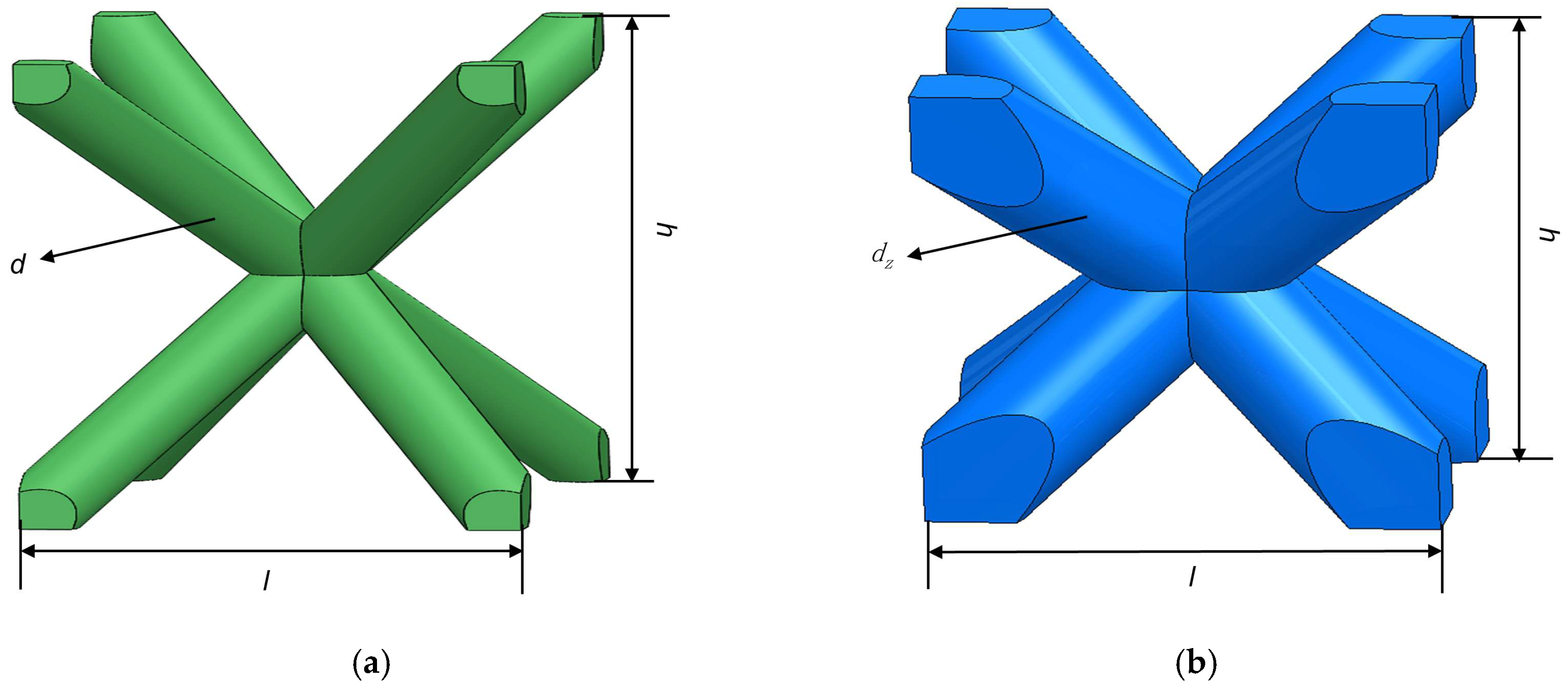
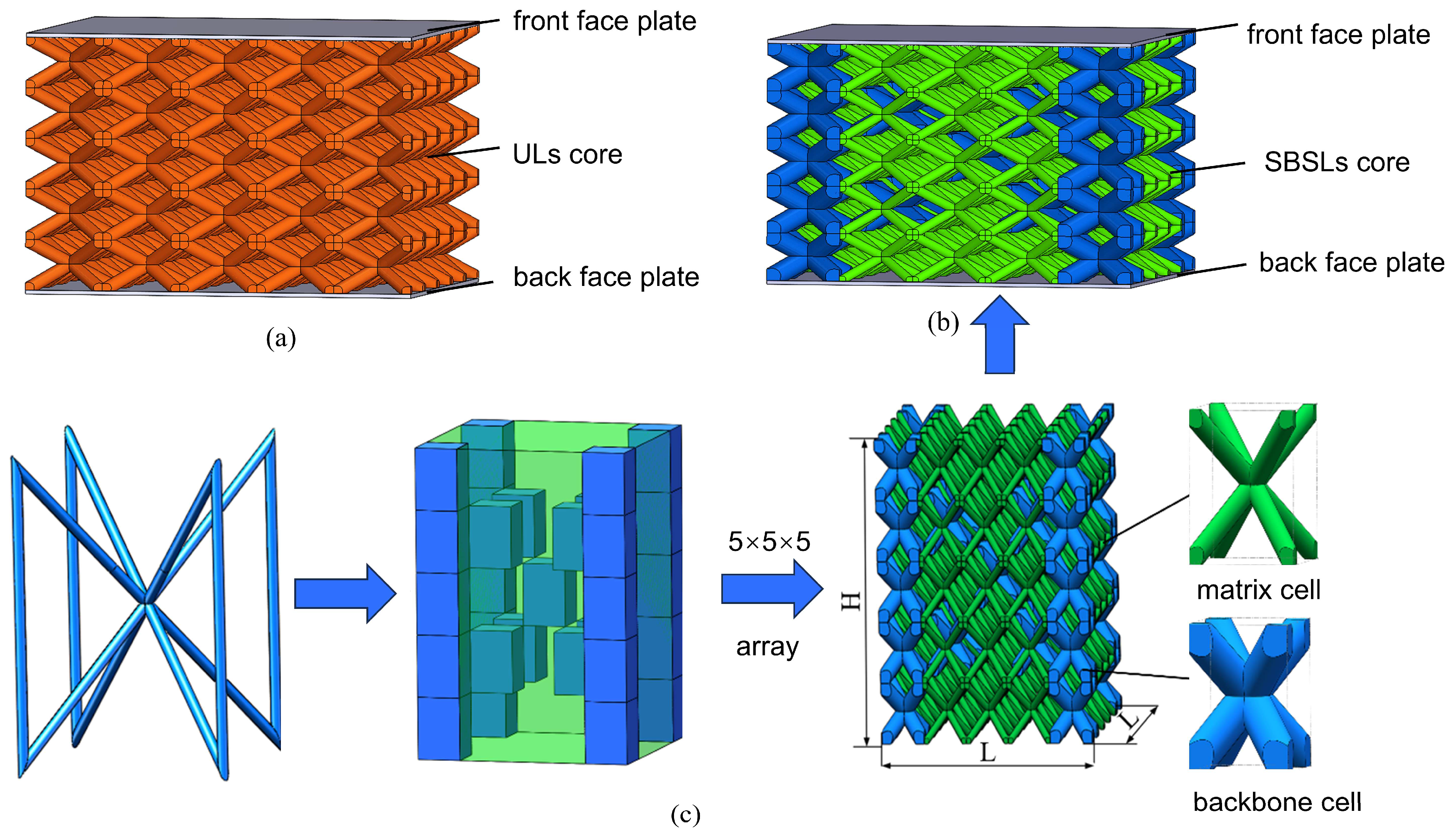
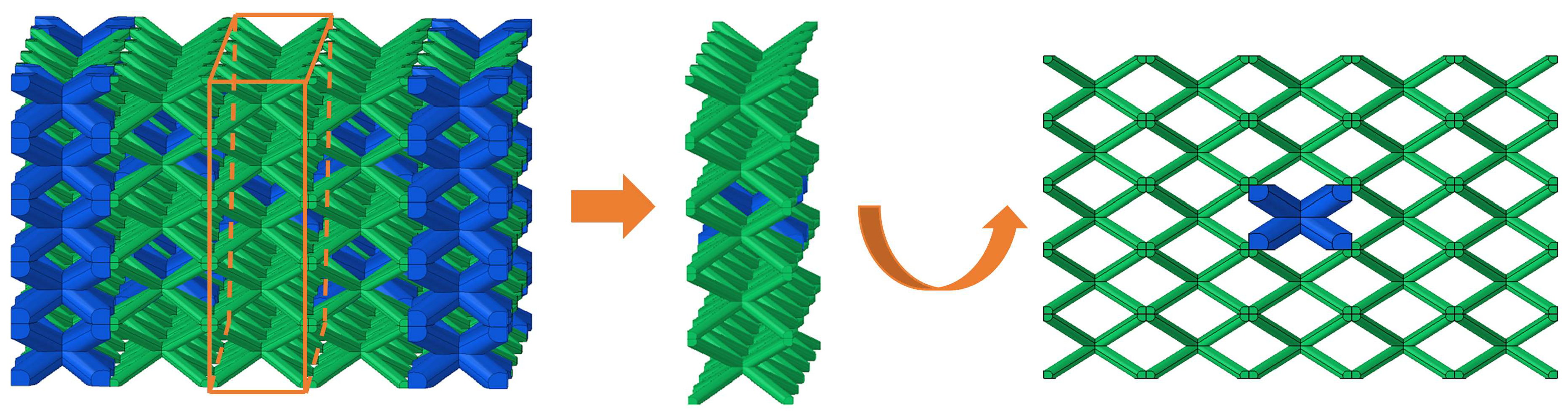
SBSLs are composed of two types of cells: the matrix cell and the backbone cell. Both types are BCC with different cell rod diameters. The schematic of the cells’ configurations is depicted in Figure 1a,b. Both cell types are defined by three independent geometric parameters: cell height h, horizontal side length l, and rod diameter (d or dz). The vertical side length equals the horizontal side, and all rods within a given cell share the same diameter. The two cell types are arranged as illustrated in Figure 2c to form the SBSL core. Plates are added to the upper and lower surfaces of the SBSL core to construct a cored SBSL sandwich panel. Subsequently a 5 × 5 × 5 cored SBSL sandwich panel with 125 unit cells of configuration is established, as shown in Figure 2b, which has 5 unit cells in the X, Y, and Z directions, respectively. The upper and lower panel size is 200 mm × 200 mm × 2 mm (length × width × height). The relationship between the diameters of cell rods and the relative density of the SBSL core is established through curve fitting [24]. The cored uniform lattices (ULs) sandwich panel with the same relative density and cell type is constructed, as shown in Figure 2a, which is convenient for comparison and analysis. The specific geometric parameters are shown in Table 1.

2.2. Numerical Simulation

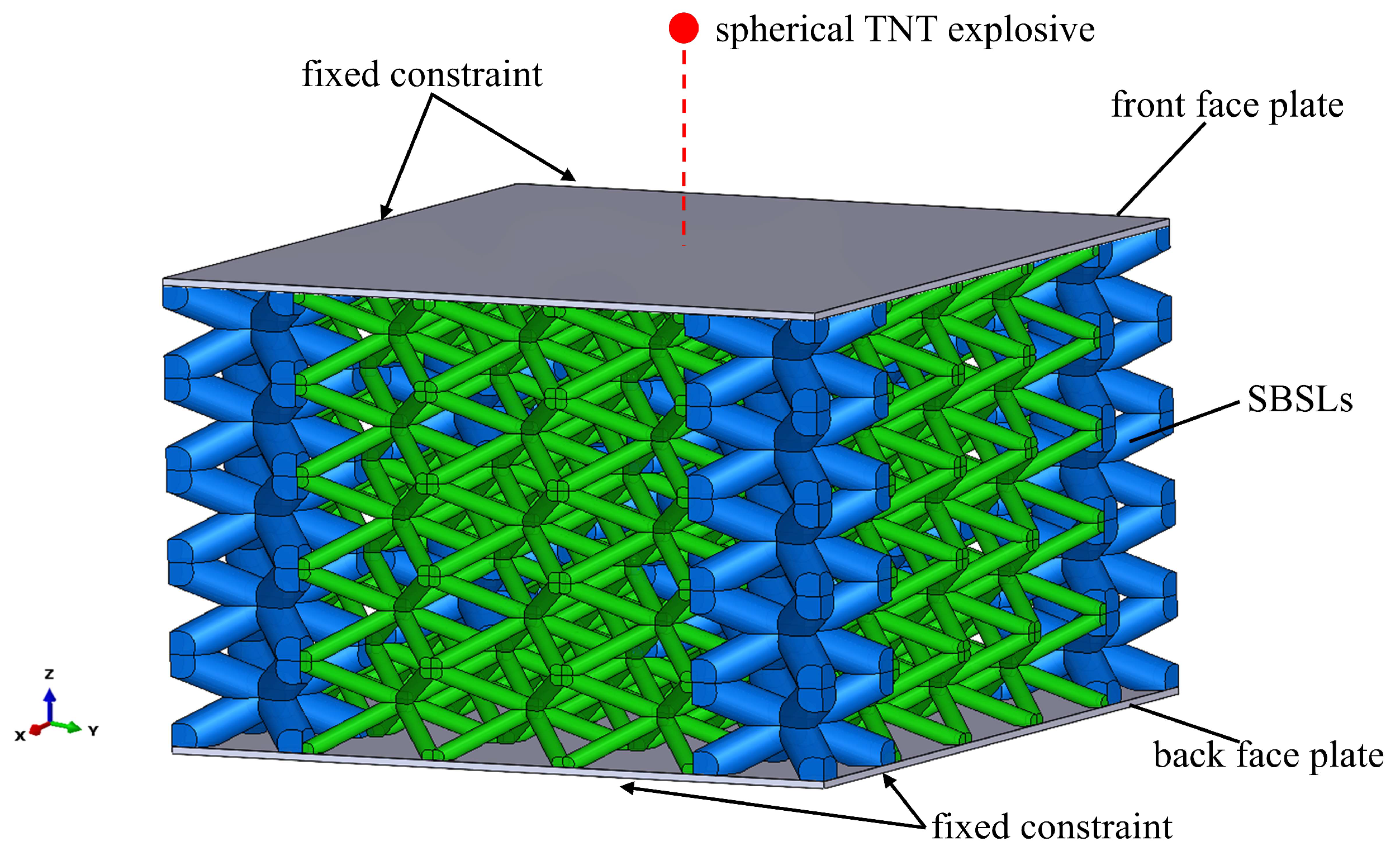
Nonlinear explicit finite element approaches have been widely adopted for modeling structures subjected to impact and impulsive loads, including reinforced concrete slabs with yielding supports and complex boundary interactions [26]. In this work, all finite element (FE) simulations are performed using the explicit dynamics finite element method (Abaqus/Explicit) to simulate the blast loading. As shown in Figure 3, the upper panel is the front face plate, and the lower panel is the back face plate. Fixed constraints are applied to the outermost layer of nodes around the overall structure, and the plates and lattice core are constrained by the “tie” constraint. An air blast point is positioned at the midpoint above the front face center, with a stand-off distance of 150 mm. The Conwep algorithm [27] is used to apply the pressure generated by the blast equivalent (TNT charges masses: 1, 1.5, 2, 2.5, and 3 kg).
The numerical simulation employs the Johnson–Cook (J-C) constitutive model for the AL6XN stainless steel, with a material density of 8.06 g/cm3, Young’s modulus of 195 GPa, and Poisson’s ratio of 0.3. The J-C model is expressed by Equation (1) [25]:
σ ¯ = A + B ε p n 1 + C ln ε ˙ ε ˙ 0 1 T T r T m T r m
Here, σ - is the flow stress; ε p is the equivalent plastic strain; ε ˙ is the plastic strain rate, with a reference strain rate ε ˙ 0 = 1/s; and T, Tr, and Tm represent the current temperature, room temperature, and melting temperature, respectively. The Johnson–Cook material constants A, B, C, n, and m are calibrated using Split Hopkinson Pressure Bar experiments, and their values are listed in Table 2 [28].
In the explicit dynamic simulations, adiabatic heating and temperature evolution are activated and fully considered. The temperature field is determined by the conversion of plastic work into heat, with a typical conversion efficiency factor applied. The simulations are not isothermal, and the transient temperature distribution is computed automatically throughout the analysis and coupled with the J-C flow stress model to reflect thermal softening.
For lattice structures, improvements in mechanical properties are closely linked to the local geometry at rod connections. The introduction of corners or smooth corners at nodes can significantly enhance static and dynamic performances by optimizing stress distribution and alleviating stress concentration, which boosts both strength and fatigue resistance [29]. In this study, a multi-objective optimization with numerous sample points is employed. Given the high computational expense of modeling fileted corners, the nodal geometry is idealized, with the assumption that the blast-resistance improvement from filets is uniform across all simulation models.

2.3. Simulation Verification

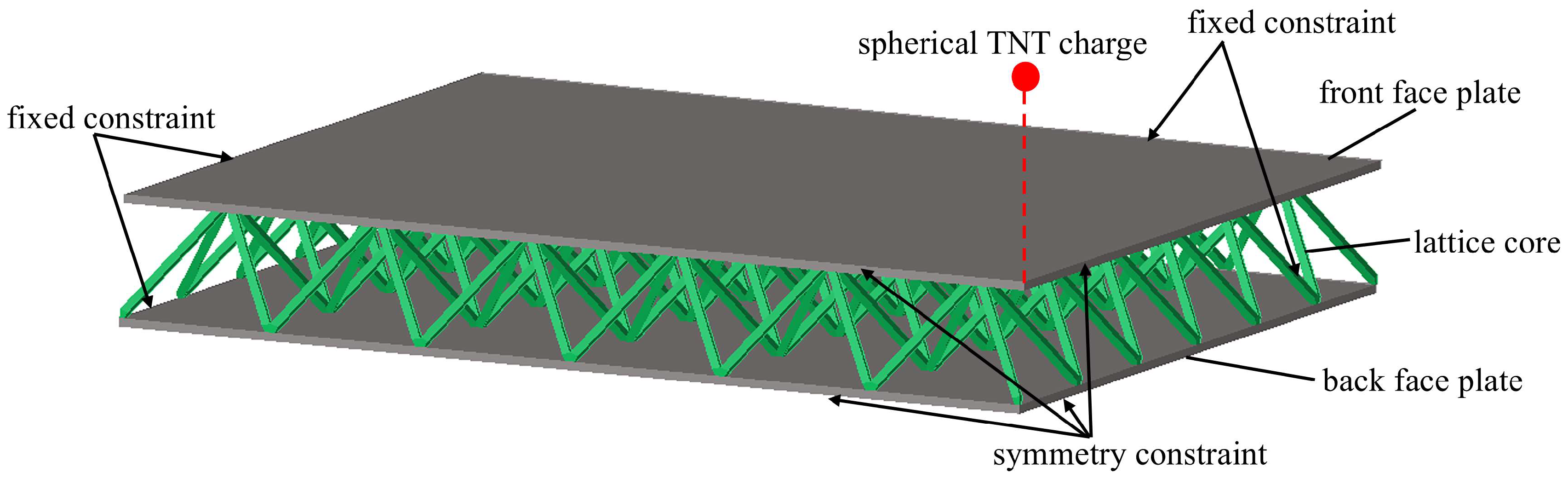
To assess the reliability of the numerical simulation model, three sets of models are established by the same parameters that were reported in the experimental study by Dharmasena et al. [12]. The pyramid lattice core layer used in the experiment has similar basic features as the SBSL core layer proposed in our work (such as slender rods and deformation centered around nodes). With high-quality experimental data, the accuracy of our model can be improved. The verification model is illustrated in Figure 4. A spherical TNT charge equivalent mass (mTNT) of 150 g is positioned directly above the center of the front face plate as the blast loading by the Conwep algorithm, and the stand-off distance SOD is 150 and 200 mm, which is the distance between the charge and the center of the front face plate. The main parameters are summarized in Table 3. To reduce computational cost and improve simulation efficiency, a quarter-symmetry model is adopted, as shown in Figure 4. Fixed boundary conditions are applied to the outermost layer of the nodes of the two adjacent end faces on the periphery around the overall structure, while symmetry constraints are imposed on the outermost layer of nodes of the other two adjacent end faces.
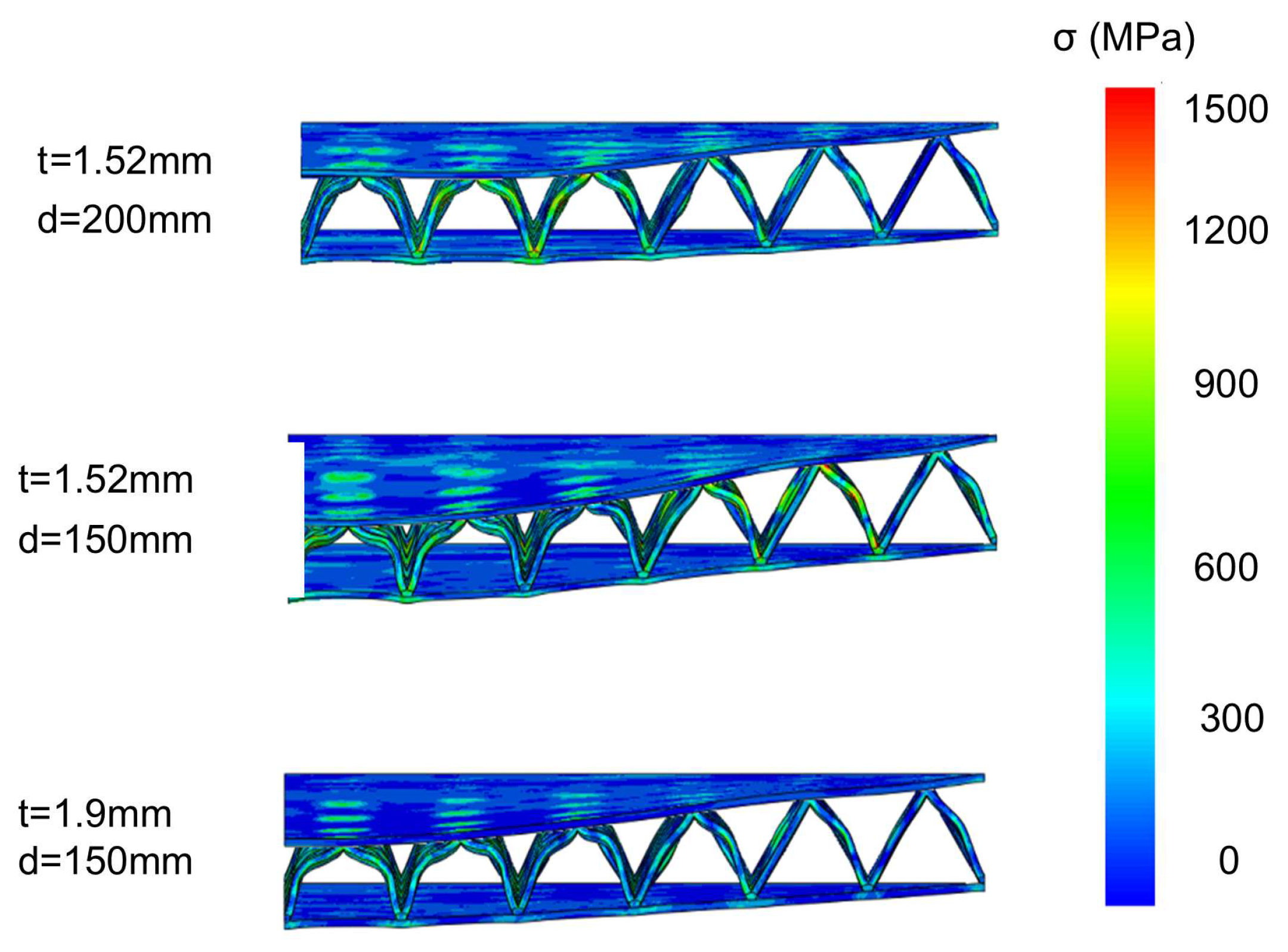
Table 3 presents the final displacements of the back face plate obtained from experiments [12] and simulations. It can be observed that the simulated displacements are consistently slightly lower than the experimental values, with relative errors all below 7%, indicating good quantitative agreement in terms of global deformation magnitude. Figure 5 provides the deformation patterns in simulations. This qualitative agreement in deformation morphology, combined with the quantitative error below 7% for the final displacements, demonstrates that the finite element model accurately represents the actual structural response under blast loading.

2.4. Evaluation Criteria

The maximum instantaneous displacement (MaxD) of the back face plate and the areal specific energy absorption (ASEA) are employed as evaluation criteria [16,30] to assess the blast-resistance performance. The specific expression for ASEA is given in Formula (2) [30]:
A S E A = E A M S = E A M / S = E A · S M
where EA is the total energy absorbed by the structure, Ms is the mass per unit area of the structure, S is the in-plane area of the sandwich panel, and M is the total mass of the sandwich structure.

2.5. Meshes Convergence Analysis

The general contact algorithm is employed, with a tangential friction coefficient of 0.15 and “hard” normal contact. The mesh consists of no fewer than three layers of hexahedral (C3D8) elements in the radial direction. To prevent the excessive distortion of these solid elements under deformation, distortion control with a length ratio of 0.1 is applied, and stability checks on the time increments are performed. A convergence analysis of the SBSLs model (Table 1) is conducted using matrix cell mesh sizes of 0.966, 1.066, 1.166, and 1.266. The influence of grid size on the results is examined. The results of MaxD and ASEA obtained are shown in Table 4. Considering both computational cost and accuracy comprehensively, a mesh size of 1.166 is consequently adopted, resulting in a total of 408,576 elements. Note that C3D8 is a fully integrated element and thus does not require hourglass control. The mesh sizes of the two face plates are 0.1.

3. Results and Discussion

3.1. The Influence of Blast Loads

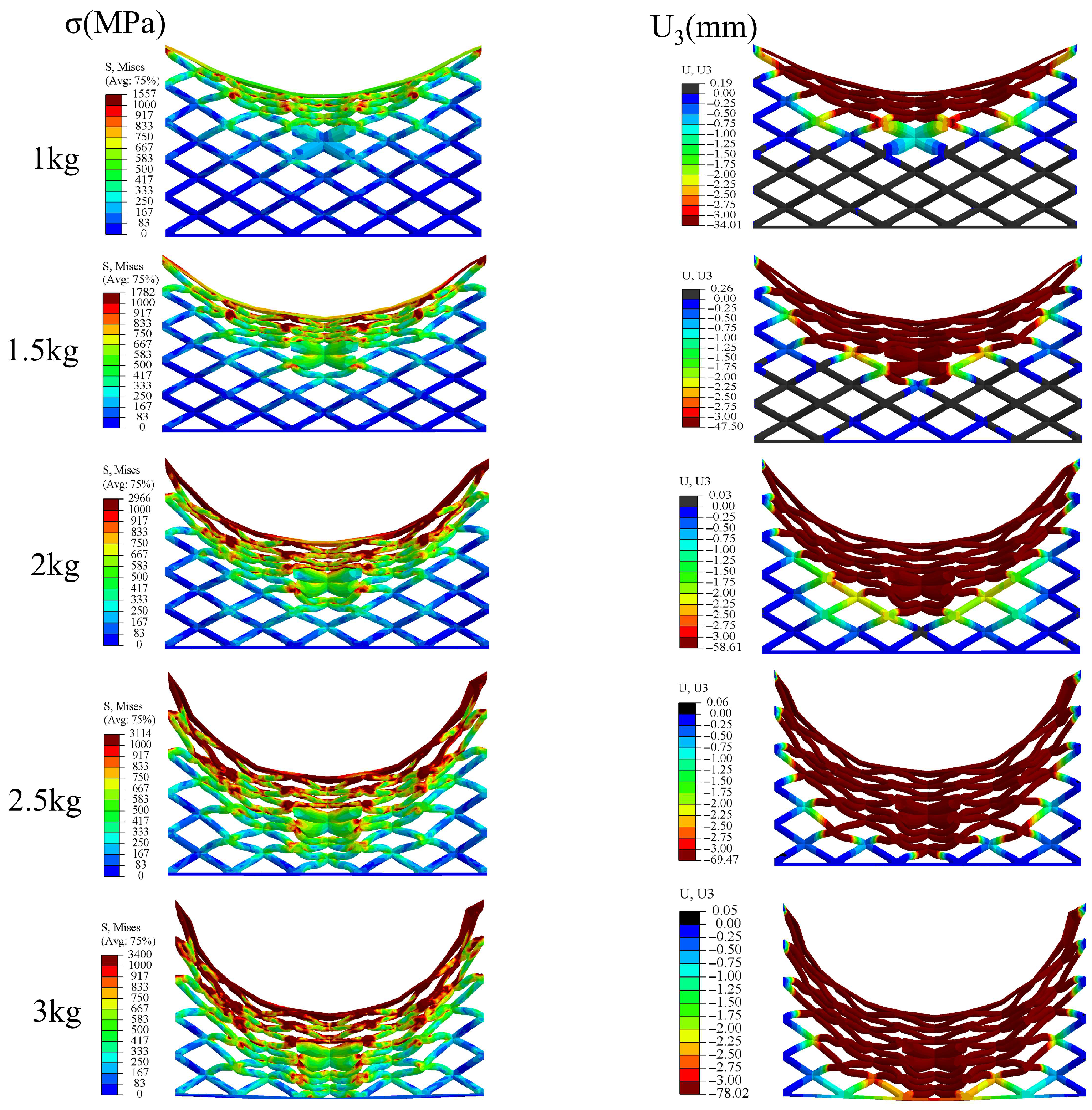
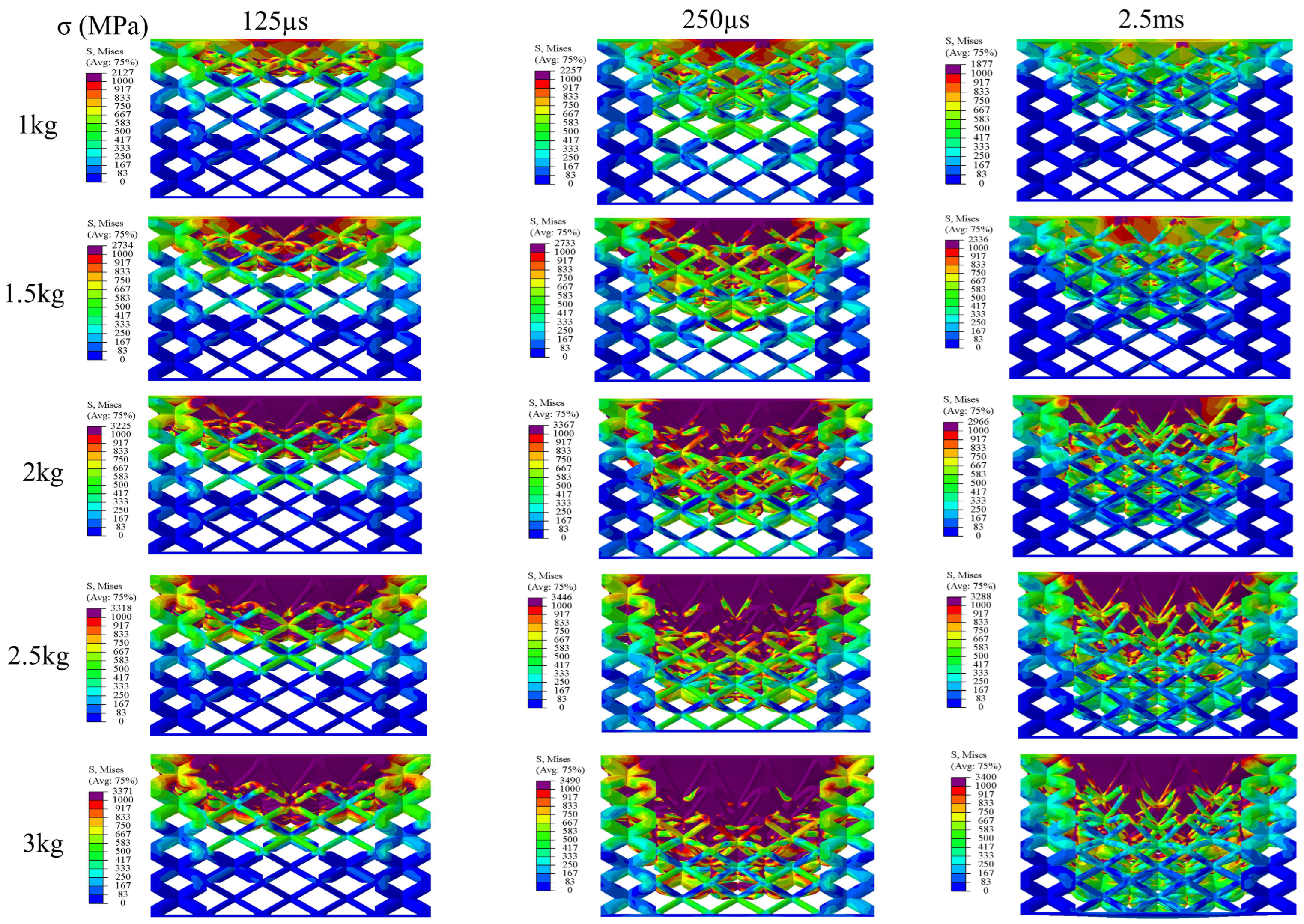
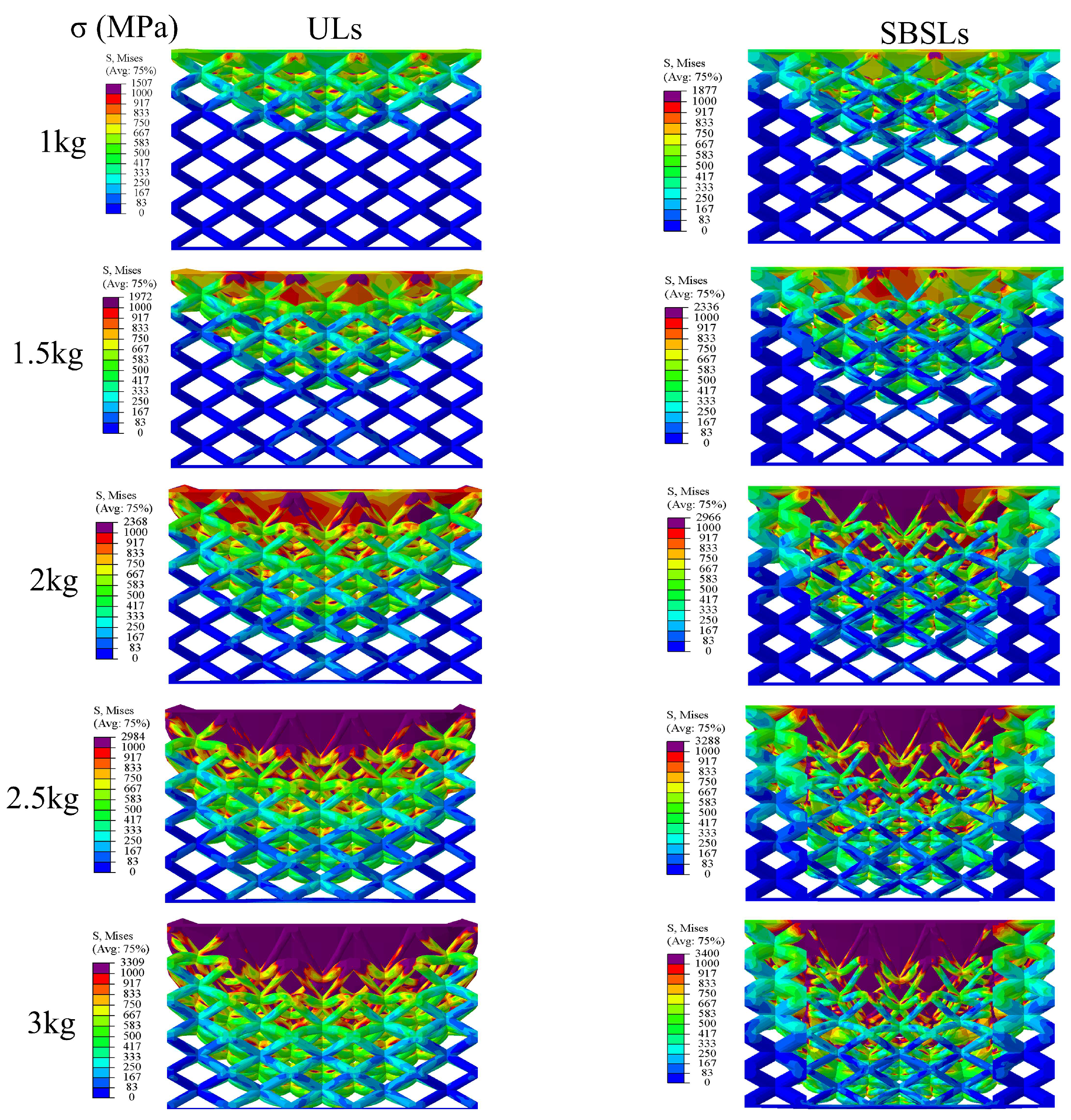
The magnitude of the blast loads is a critical factor which influences the blast resistance of the lattice sandwich panel. In this section, the SOD (150 mm), tf (2 mm), and td (2 mm) are constant, and the blast loads are varied by adjusting mTNT (1, 1.5, 2, 2.5, and 3 kg). The deformation process and stress distribution of the cored SBSL sandwich panels under different blast loads are shown in Figure 6. During the initial blast stage (0~125 μs), a rapid increase in stress is observed, accompanied by localized stress concentration and crushing at the interfaces between the front face plate and the cells. Deformation displays a marked gradient and decays both radially from the impact center and vertically from the top (first layer) to the bottom (third layer). During this stage, it is observed that an increase in blast loads resulted in peak stress and greater cell deformation. During the subsequent blast stage (125~250 μs), the blast wave propagates further toward the back face plate, with stress attaining the maximum. At this point, the front face plate reaches its peak displacement, and the five-layer core cells undergo sequential compression, ultimately inducing maximum deformation in the back face plate, as depicted in Figure 7b. In the post-blast stage (after 250 μs), the influence of the blast wave attenuates and loading declines. Certain cell struts remain partially compacted, while the entire structure under-goes damped oscillation around an equilibrium position before gradually stabilizing.
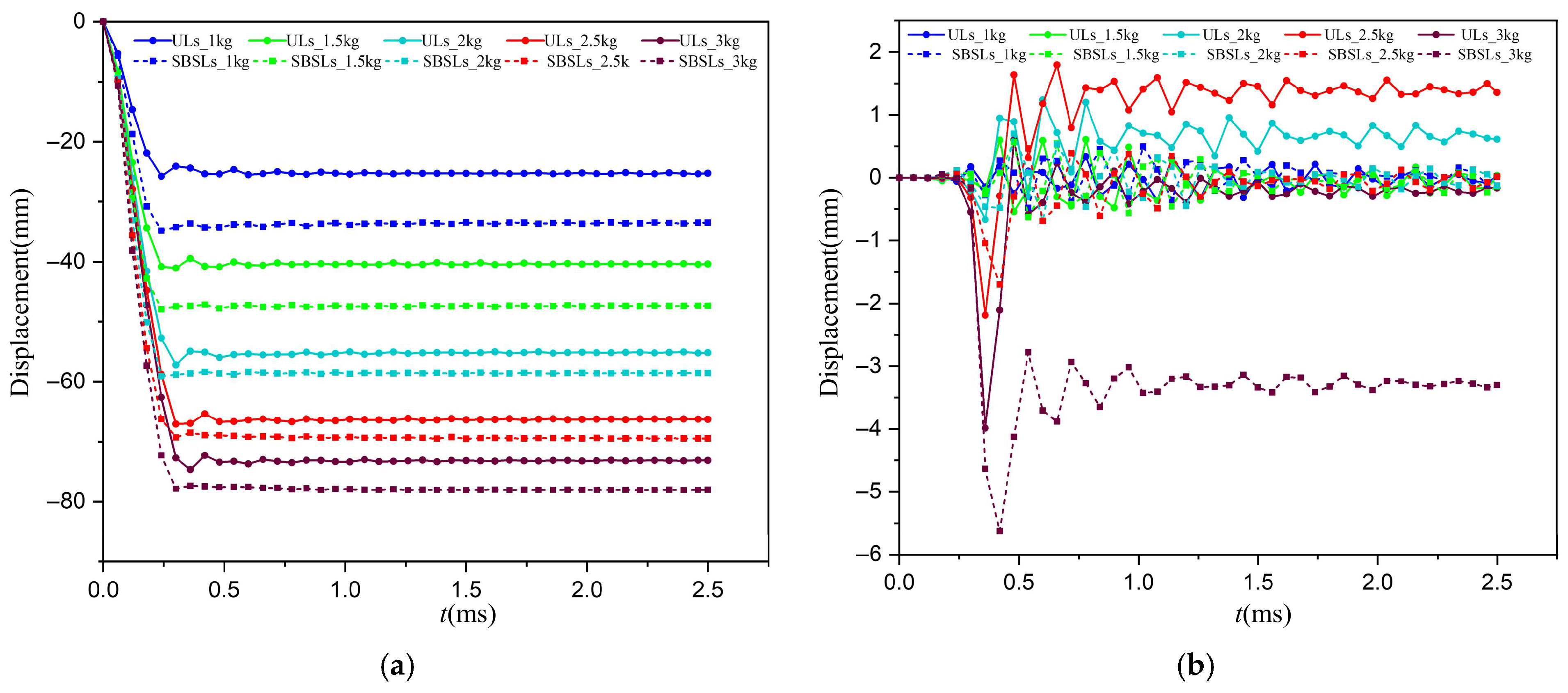
The displacement–time histories of the front and back face plates of cored UL and SBSL sandwich panels under different blast loads are shown in Figure 7. The front face plates of both structures rapidly reached their peak displacements and subsequently dissipated energy through vibrational damping. As the blast loads gradually increase, the displacement of the front face plate also gradually increases. The results reveal that the displacement of the front face plate of the cored SBSL sandwich panel always exceeds that of the ULs structures under all blast loads, as illustrated in Figure 7a. Owing to the energy-absorbing effect of the lattice core, the back face plate experiences significantly lower deformation than the front face plate, as illustrated in Figure 7b. The back face plates attain their maximum displacement concurrently with the peak displacement of the front plates; both structures subsequently dissipate energy through damped vibration. Under lower blast loads (mTNT ≤ 2.5 kg), the MaxD of the cored SBSL sandwich panel remains lower than that of the cored UL sandwich panel. As mTNT increases, the gap gradually increases. When mTNT is 3 kg, the MaxD of the cored SBSL sandwich panel not only increases substantially but also exceeds that of the ULs structures. It should be noted that, at the highest blast load (3 kg TNT), the SBSL core undergoes severe compaction of multiple cell layers (Figure 7 and Figure 9). Under such extreme conditions, the current Johnson–Cook plasticity model, without progressive damage, may overestimate energy absorption, as localized node fracture or strut tearing could occur in reality—potentially reducing the actual EA and altering failure progression. Thus, future work should incorporate calibrated damage models for AL6XN under high strain rates to enable a more comprehensive assessment of SBSLs performances in the regime approaching structural failure.
To further study the MaxD of the back face plate of the cored SBSL sandwich panel under different blast loads, the stress and displacement (Z direction) cloud maps of the middle row cells at 2.5 ms are extracted, as shown in Figure 8. As shown in Figure 9, it can be observed that the cell rods near the center point undergo buckling from top to bottom and gradually become compacted. As mTNT increases, the maximum stress and displacement (in the Z direction) of the middle row cell gradually increase, and the number of deformation layers increases from top to bottom. When mTNT is 3 kg, the core cells are subjected to substantial stress, leading to significant deformation and compaction. This compaction restricts the upward displacement of the back face plate and confines its vibration to oscillations of a large amplitude about the equilibrium position.
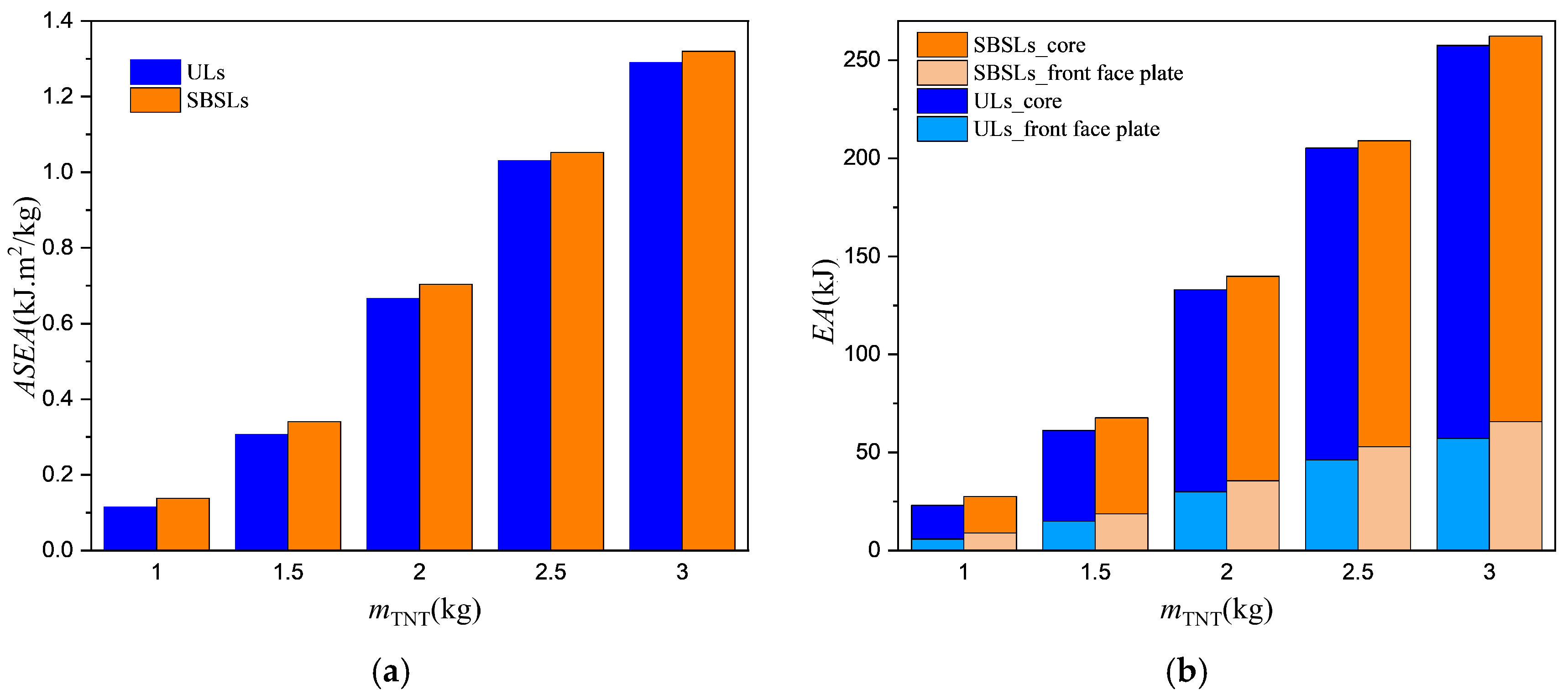
The ASEA of cored UL and SBSL sandwich panels under different blast loads is shown in Figure 10a. It can be observed that, as blast loads increase, the ASEA of both sandwich structures also increases. Under all blast loads, the ASEA of the cored SBSL sandwich panels is consistently greater than that of the ULs structures, with a maximum improvement of up to 20%. The EA contributions of each component are shown in Figure 10b. Since the EA of the back face plate is less than 1% of the overall EA, only the energy absorption ratio of the front face plate and the lattice core is discussed. The lattice core serves as the primary energy-absorbing component. As the blast loads increase, the proportion of energy absorbed by the lattice core rises from 74.65% to 77.78% for the ULs and from 67.28% to 74.96% for the SBSLs. Therefore, the introduction of the SBSL core not only enhances the EA of the lattice core but also increases that of the front face plate. Specifically, the maximum EA of the lattice core and the front plate on the cored SBSL sandwich panels can be improved by up to 8% and 54.7%, respectively, compared to the ULs structures. The presence of stiff backbone cells within SBSLs alters the propagation path of stress waves. Under blast loading, this “stretching–bending synergistic” mechanism is further amplified: the backbone cells, acting as anchor points, primarily bear tensile loads, thereby compelling adjacent matrix cells to undergo more pronounced bending deformation. Consequently, cored SBSL sandwich panels leverage this mechanism under blast loading to achieve greater plastic deformation capacity and dissipate more energy.
The cored SBSL sandwich panels exhibit a significant improvement in ASEA compared to the cored UL sandwich panels. This enhancement is primarily attributed to the introduction of the SBSL core, which leads to an increase in the compression of the lattice core. Based on the displacement of the front face and back face plates, the compression ratio c of the lattice core can be calculated, and the specific expression is as follows:
c = s max H = s 1 s 2 max H
where Smax denotes the maximum compression of the lattice core; S1 and S2 represent the displacements of the front face plate and back face plate, respectively; and H is the height of the lattice core.
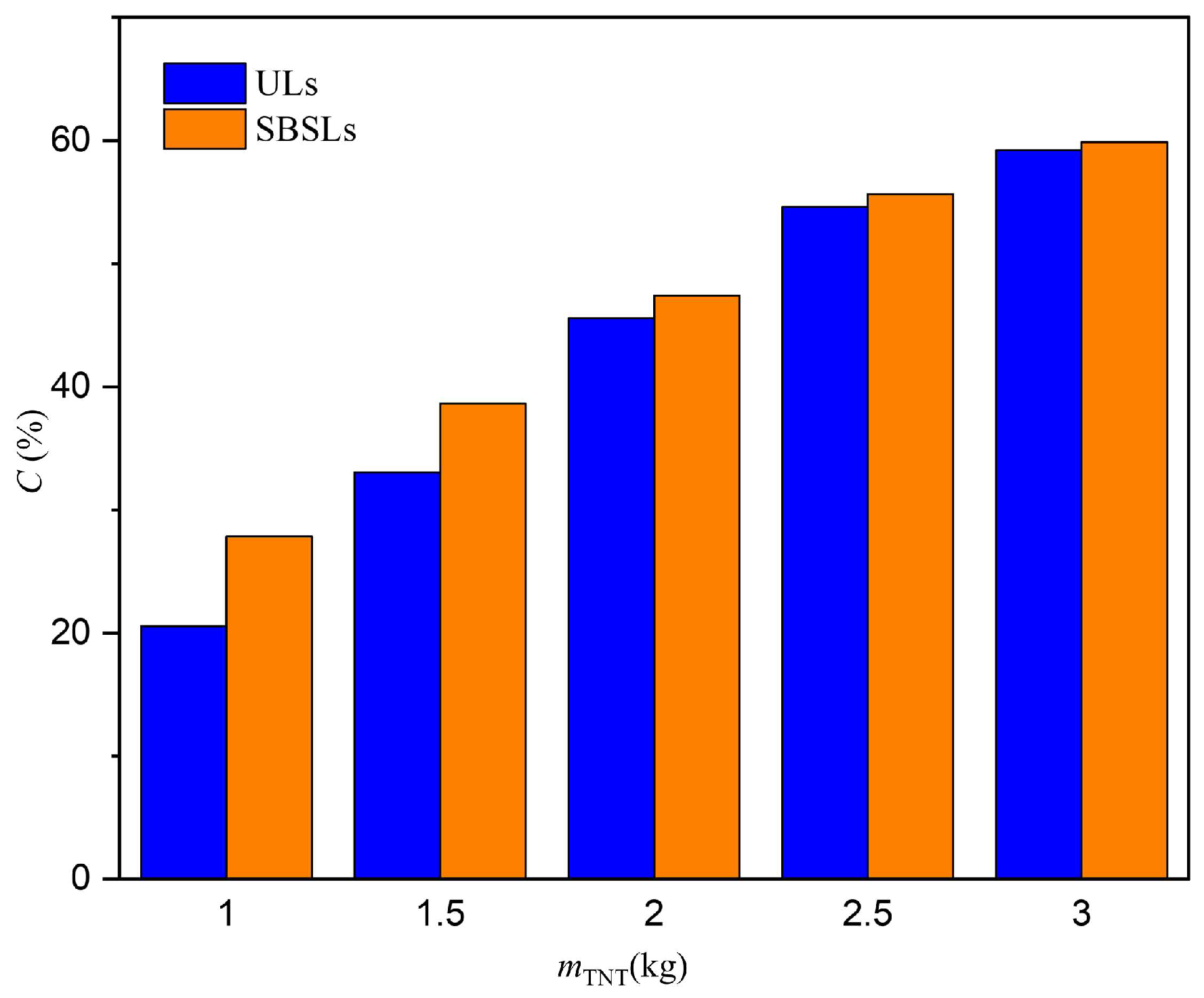
Starting from the point when the displacement of the back face plate reached its first peak, the maximum compression of the lattice core under different blast loads is calculated, and the corresponding core compression ratios are obtained, as shown in Figure 11. It can be observed that the core compression ratios for both structures increase with the intensity of the blast loads. Furthermore, the cored SBSL sandwich panels always exhibit a greater core compression ratio, which can be up to 35.4% higher than that of the cored UL sandwich panels.
The stress contours extracted from deformations at 2.5 ms reveal that the backbone cells of the SBSL core intensify the deformation of adjacent matrix cells aligned in the same column, as shown in Figure 12, which magnifies the compression and deformation. Consequently, the cored SBSL sandwich panels exhibit a superior energy absorption performance compared to the cored ULs configuration. Under the intense dynamic loading conditions of a blast, the SBSL structure leverages the synergy between stretching and bending to achieve a more substantial plastic deformation capacity (i.e., a higher compression ratio, as shown in Figure 11), thereby absorbing more energy. This is the underlying reason for its superior blast resistance compared to ULs.

3.2. Effect of Structural Parameters

3.2.1. Effect of Cell Parameters

A parametric study is conducted to investigate the influence of key geometric cell parameters on the blast resistance of the cored SBSL sandwich panels. Based on the validated model from Section 3.1, numerical simulations are performed with constant SOD (150 mm), mTNT (1.5 kg), tf (2 mm), and td (2 mm). The effects of h, d, and dz on the MaxD and ASEA are systematically evaluated.
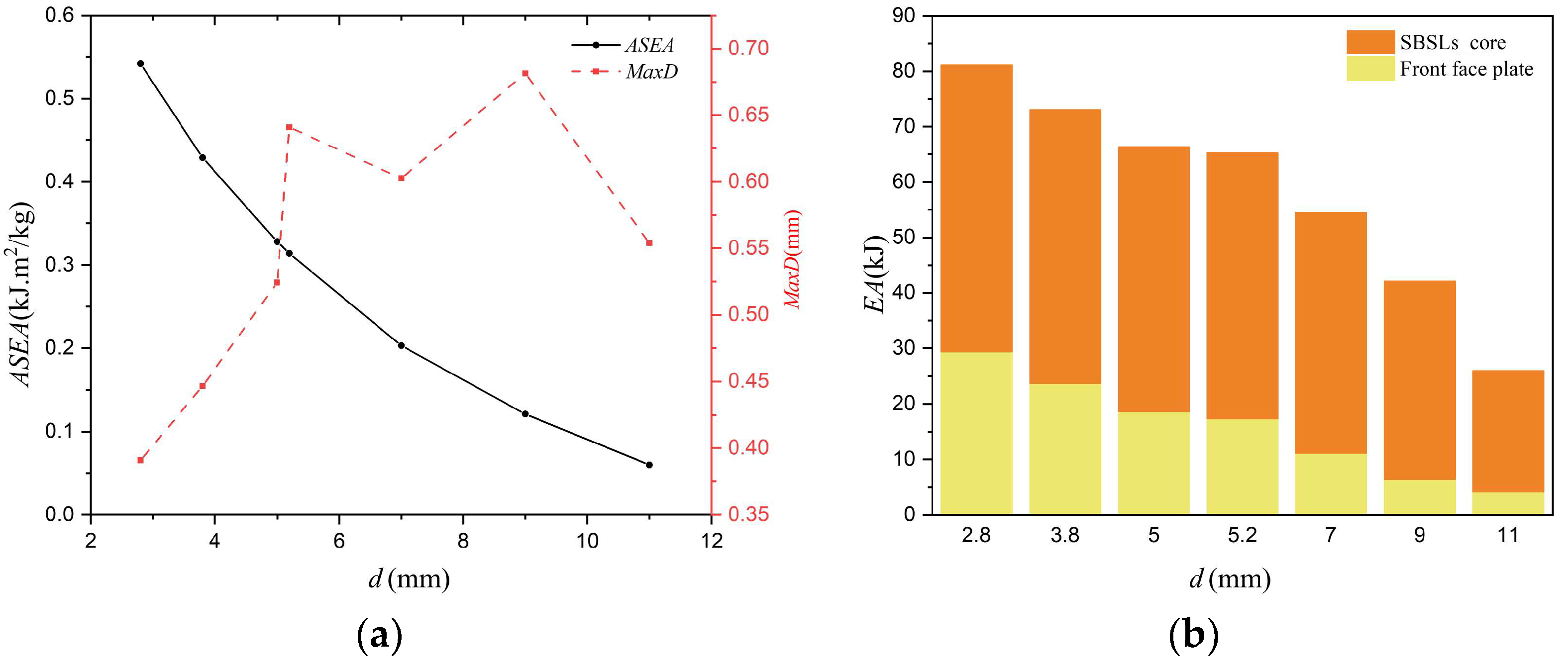
The MaxD and ASEA for matrix cells with different rod diameters (d = 2.8, 3.8, 5, 5.2, 7, 9, and 11 mm) are shown in Figure 13a. As d increases, the ASEA gradually decreases, while the MaxD demonstrates a fluctuating trend. The maximal MaxD occurs at d = 9 mm, whereas its minimum is observed at d = 2.8 mm. The contributions of the front face plate and the lattice core to the EA are shown in Figure 13b. It can be seen that the total EA decreases continuously with the increase in d. Correspondingly, the EA of both the front face plate and the lattice core also gradually diminishes, which directly leads to the observed reduction in the ASEA.
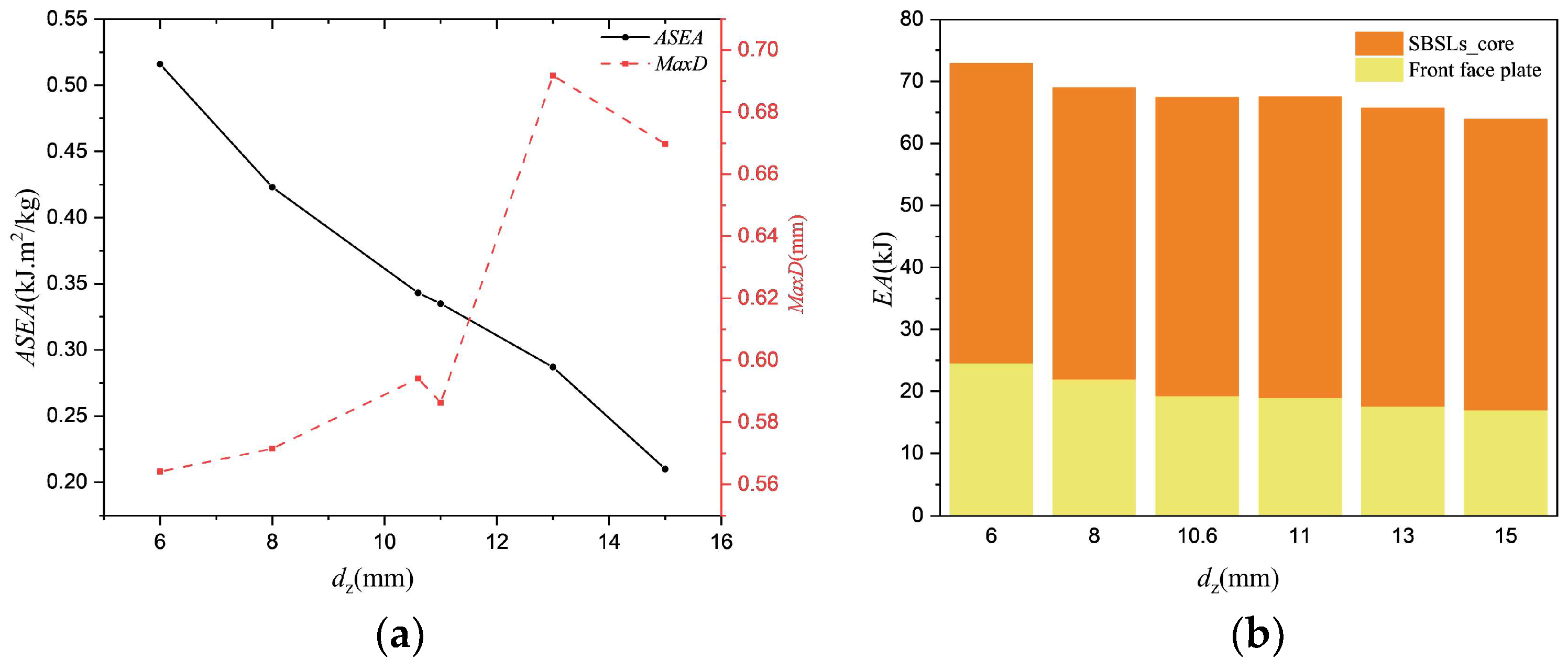
The influence of the dz is summarized in Figure 14a. A gradual decrease in ASEA is observed with increasing dz, whereas the MaxD exhibits a fluctuating pattern, with extremes at dz = 13 mm and 6 mm. The contributions of the front face plate and the lattice core to the total EA are presented in Figure 14b. It can be seen that as the dz increases, the total EA continuously decreases. The EA of both the front face plates and the lattice cores also gradually decreases, but the difference is not significant.
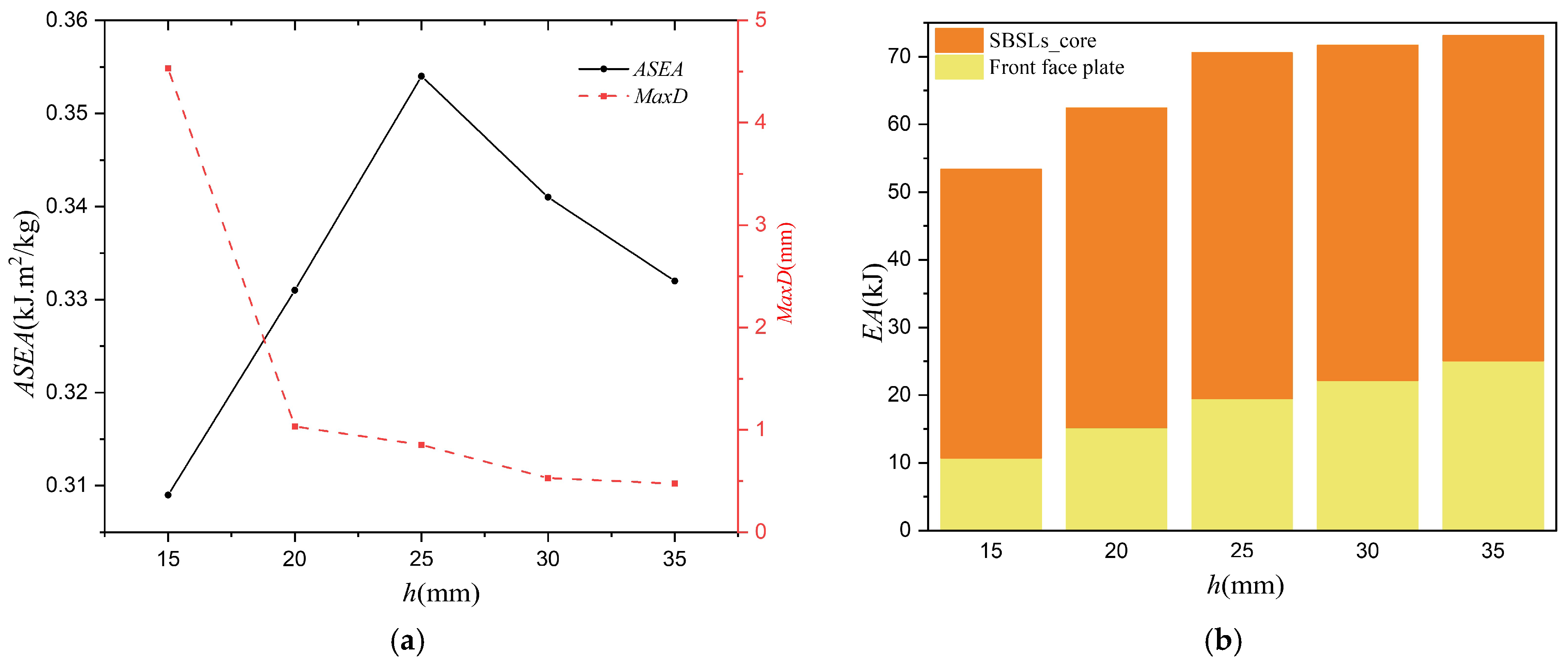
The variation in h influences the blast-resistance performance, as shown in Figure 15a. A non-monotonic relationship is observed for ASEA, which peaks at h = 25 mm, whereas the MaxD is inversely correlated with h. The contributions of the front face plate and the lattice core to the EA are illustrated in Figure 15b. It can be observed that the total EA increases with h. Specifically, the EA of the front face plate increases gradually, whereas the EA of the SBSLs cores first rises and then falls.

3.2.2. Effect of Plate Thickness Parameters

The face plates are a critical component of sandwich panel structures, primarily serving to enhance the overall structural stiffness, mitigate dynamic deformation under blast loading, and ensure that the lattice core can fully utilize its energy-absorbing capacity by compaction. The thickness of the face plates is a key dimensional parameter. Variations in the thickness of face plates not only alter the structural stiffness but also change the total mass, thereby influencing the ASEA. Excessively thin face plates are prone to penetration by the lattice struts, leading to face plate failure and resulting in non-uniform deformation of the lattice core. Conversely, excessively thick face plates lead to high structural stiffness, which can restrict the lattice from undergoing sufficient compressive deformation to effectively absorb the energy.
The effect of the thickness of face plates is investigated in the blast-resistance performance of the cored SBSL sandwich panels. The simulation parameters are set as follows: the SOD is 150 mm, the mTNT is 1.5 kg, the h is 25 mm, the d is 4.8772 mm, and the dz is 10.8339 mm. The tf and tb are set to 1 mm, 2 mm, 3 mm, and 4 mm, respectively.
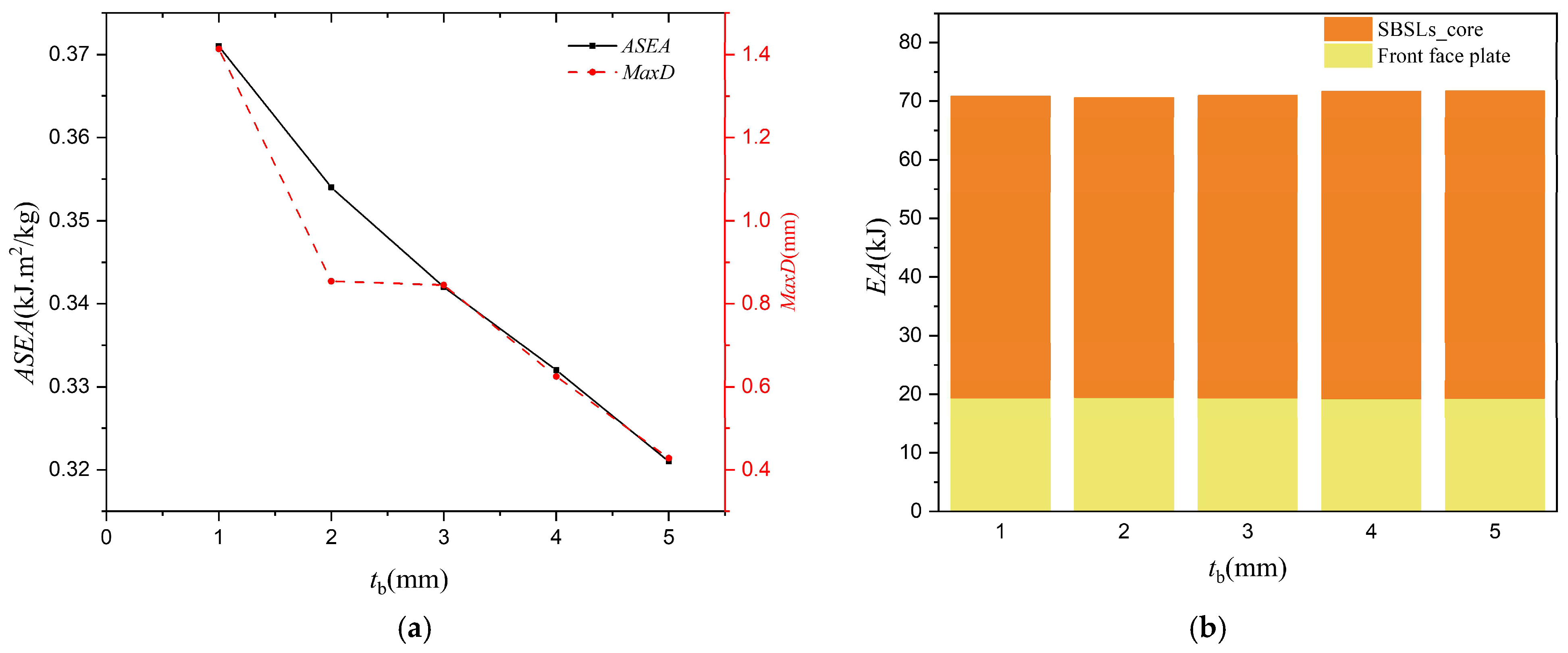
The MaxD and ASEA with different tb are shown in Figure 16a. The MaxD is only 1.41 mm, indicating that all back face plates with different tb can better resist the shock wave. It can be found that both the ASEA and MaxD decrease as the tb increases. The contributions of the front face plate and the SBSLs cores to the EA are illustrated in Figure 16b. It can be observed that as the tb increases, the total EA, as well as the EA of the front face plate and SBSLs cores, remain largely unchanged. This indicates that the tb has a minimal impact on the EA.
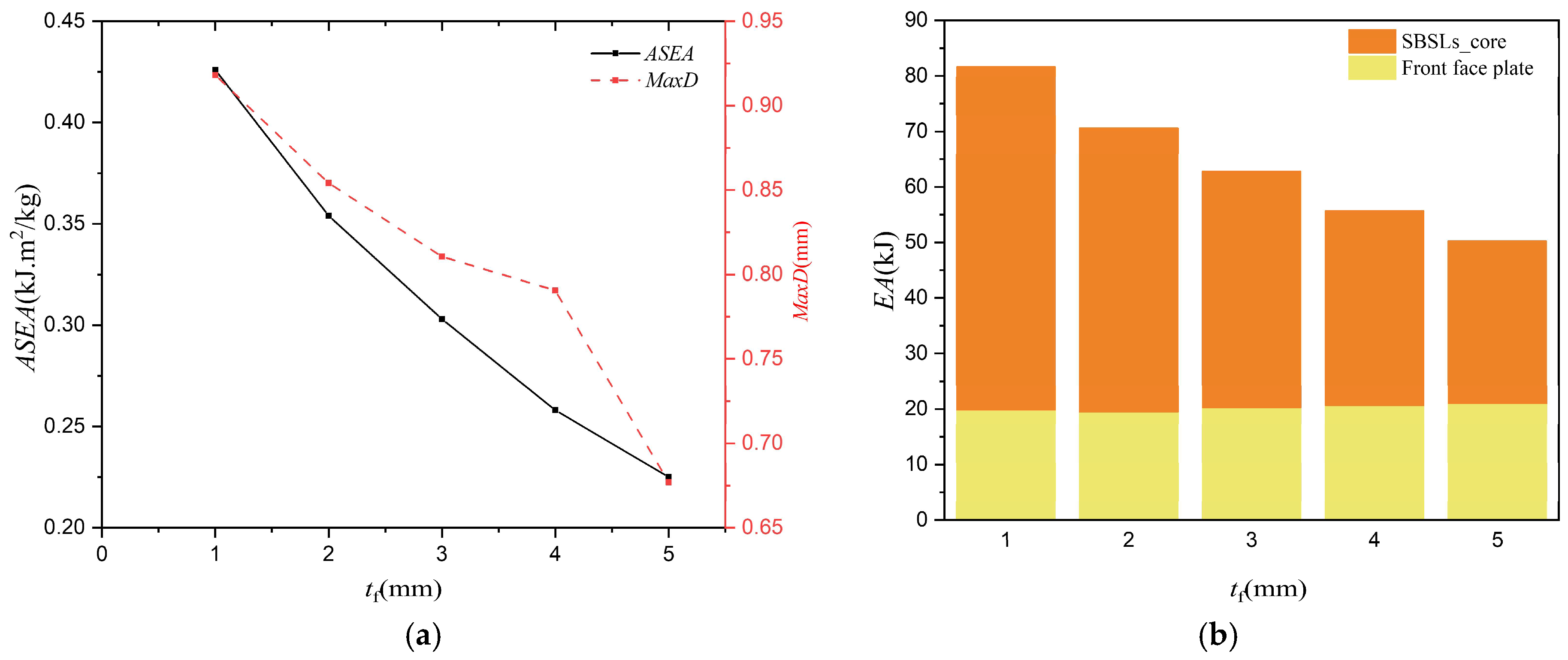
The MaxD and ASEA with different tf are shown in Figure 17a. It can be observed that, as the tf increases, both ASEA and MaxD show a decreasing trend, indicating that the increase in tf can effectively reduce the MaxD. The EA of the SBSLs cores decreases, while the EA of the front plate remains largely unchanged, so the EA and ASEA of the structure decrease, as illustrated in Figure 17b.

4. Multi-Objective Optimization

Based on the parameter analysis in Section 3.2, it is found that parameters such as h, d, dz, tf, and tb have significant influence on the MaxD and ASEA of the cored SBSL sandwich panels. To obtain the optimal blast-resistance performance, multi-objective optimization is performed.

4.1. Optimization Model

The rod diameters of cells in the same layer remain unchanged, and the cored SBSL sandwich panel is optimized. Taking the maximum ASEA and the minimum MaxD as the optimization objective and the h, d, dz, tf, and tb as design variable, the parameters of the optimization model are shown in Table 5. The optimization model is established as follows:
Find       x = h , d , d z , t f , t b T To optimize min F x = M a x D ( x ) , A S E A ( x ) T Subject to g 1 x : h m i n h h m a x g 2 x : d m i n d d m a x g 3 x : d z m i n d z d z m a x g 4 x : t f m i n t f t f m a x g 5 x : t b m i n t b t b m a x
An optimization framework integrating the design of experiments (DOE) and surrogate modeling is adopted. A Latin hypercube design is employed to generate 130 sampling points, from which corresponding finite element models are built and simulated in Abaqus to obtain the maximum backside deflection (MaxD) and specific energy absorption (ASEA). Given the highly nonlinear dynamic response of the structure under blast loading, conducting numerical simulations for all possible designs is computationally expensive. Therefore, a radial basis function (RBF) surrogate model is constructed based on the 130 sample points to approximate the relationship between the design variables and the optimization objectives. To evaluate its predictive capability, a cross-validation approach is adopted by randomly selecting 30 points from the sample set as the validation set, while the remaining points serve as the training set. The R2 fitting evaluation coefficients for MaxD and ASEA, calculated using Formula (5) [16], are 0.923 and 0.936, respectively. Additionally, the Root Mean Square Errors (RMSEs) [31] for MaxD and ASEA are 0.11235 and 0.1263, respectively. The surrogate model has a relatively high accuracy and can replace the numerical simulation for optimization:
R 2 = 1 ( y i y i ^ ) 2 ( y i y i ¯ ) 2
where y i is the numerical solution for each check point, y 1 ¯ is average of the numerical solutions, and y i ^ is for the predictive value of the surrogate model.
The genetic algorithm (GA) is a global optimization algorithm that simulates the natural evolutionary process to search for optimal solutions. The second-generation non-dominated sorting genetic algorithm with elitist strategy (NSGA-II) is a multi-objective optimization algorithm characterized by high computational efficiency and excellent Pareto solution set performance. With the NSGA-II optimization algorithm, 130 design of experiments (DOE) sampling points are selected as the initial population, with the number of generations being 200.

4.2. Optimization Results

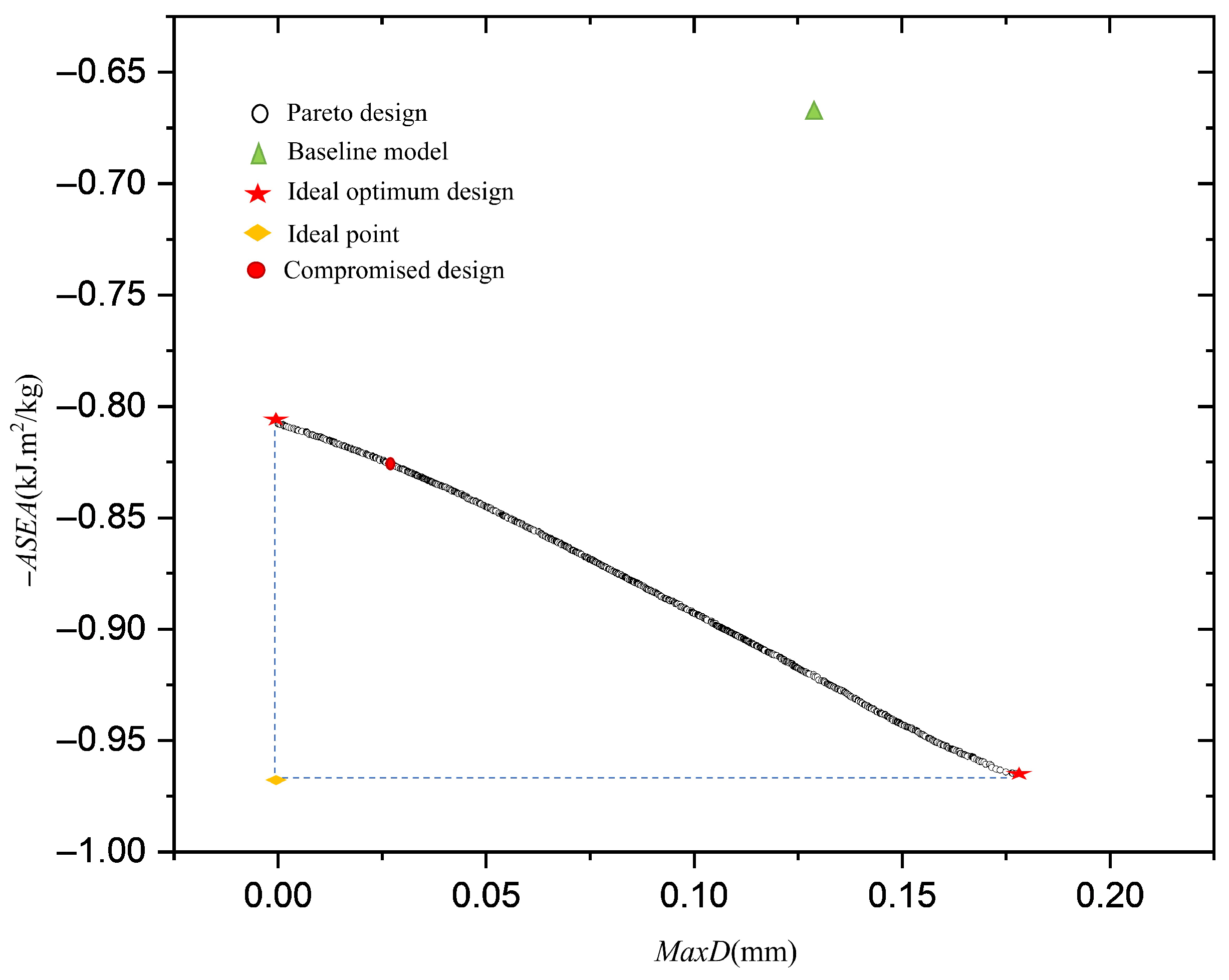
The Pareto front is obtained, as shown in Figure 18. It reveals the contradictory relationship between the two objectives. A decrease in the MaxD leads to an increase in -ASEA, and vice versa. In Figure 18, several other design schemes are also marked, and their configurations and performance details are summarized in Table 6.
The baseline model (marked with green triangles) is located in the upper-right region of the Pareto front in Figure 18. The points marked with yellow diamonds represent the ideal points, which are virtual optimal designs selected by the Ideal Point Method (IPM) [32]. These points represent the optimal designs for single-objective optimization (i.e., minimizing the MaxD only or maximizing the ASEA only). From Table 5, it is observed that a positive thickness gradient from the front face plate to the back face plate is advantageous for both maximizing the ASEA and minimizing the MaxD. This is because a thinner front face plate allows the SBSL core to fully compress and deform, which is beneficial for absorbing energy, while a thicker back face plate provides greater stiffness to resist plastic deformation caused by the shock wave. This indicates that a graded design of the panel thickness can enhance the blast resistance. Compared to the baseline model, the MaxD and ASEA improve by 99% and 21% on the MaxD ideal point, respectively. The ASEA improves by 45% on the ASEA ideal point. This means that the Pareto designs outperform the baseline model in at least one objective, demonstrating that the optimization is highly effective.
The compromise solution is identified by calculating the normalized distance between the ideal point and each Pareto optimal design, followed by selecting the point on the Pareto front with the smallest normalized distance from the ideal point. This compromise solution is marked with a red bubble in Figure 18. It can be observed that, compared to the baseline model, the MaxD and ASEA of the compromise solution have improved by 75% and 23%, respectively. In summary, the multi-objective optimization of SBSL sandwich panels under blast loading demonstrates a significant enhancement in blast-resistance performance.

5. Conclusions

In this paper, a novel blast-resistance protective structure, named the cored SBSL sandwich panel, was constructed, which was analyzed by the explicit dynamic finite element method (Abaqus/Explicit). The numerical model was validated against experimental data for conventional configurations, which provides some confidence in the predictive capability of the method. Taking the MaxD and ASEA of cored SBSL sandwich panels as evaluation indicators, the blast-resistance performance of the proposed cored SBSL sandwich panels was evaluated and compared with that of cored UL sandwich panels of equivalent mass under different blast loads. The effect of the main parameters on the blast resistance was investigated, and a multi-objective optimization model was established. The designed cored SBSL sandwich panels not only exhibit substantial energy absorption but also effectively mitigate blast shock waves and fragments. The unique topological configuration of the SBSL core layer offers enhanced support to the lattice sandwich panel, facilitating more extensive stretching and bending plastic deformation. Additionally, the hybrid design incorporating both thick and thin rods within the SBSL core optimizes the stiffness distribution, enabling coordinated deformation and synergistic energy dissipation between the components. It represents a key material innovation in lightweight protective technologies, with promising applications in aerospace, personal armor, vehicle armor, and related fields. Although the optimized model has been validated, the highly nonlinear dynamic response induced by blast loading implies that the surrogate model may not capture all transient local physical phenomena with the same fidelity as a high-resolution model. Therefore, before this optimization can be considered for engineering applications, experimental verification or validation through high-resolution simulations is necessary. The present study thus constitutes a conceptual and numerical design exploration rather than a definitively validated engineering solution. Furthermore, the nodes of lattice sandwich panels are critical regions for stress concentration, fatigue initiation, and potential failure. Future research should therefore further investigate the influence of nodal geometry on the blast resistance of such structures. In addition, the current numerical model does not account for progressive damage and fracturing, which could be crucial under extreme blast loads. Subsequent work should incorporate calibrated damage models to more accurately capture failure mechanisms and improve the prediction of absolute energy absorption for SBSLs under extreme loading. The main findings can be summarized as follows:
(1) Under different blast loads, the EA of the cored SBSL sandwich panels is primarily contributed by the front face plate and the lattice core. Compared to the cored UL sandwich panels, the introduction of the SBSL core enhances the compression ratio of the lattice core and the deformation of the front face plate. Specifically, the compression ratio is increased by up to 34.5%, while the EA of the lattice core and front face plate is improved by up to 8% and 54.7%, respectively. Consequently, the ASEA is enhanced by up to 20%.
(2) When the mTNT and SOD are constant, the ASEA decreases with the increase in the h, d, dz, tf, and tb. In contrast, ASEA initially increases and then decreases with h. The MaxD of the back face plate decreases with the reduction in h, tf, and tb. Variations in the dz and tb exhibit negligible effects on the EA.
(3) The results of optimization indicate that, compared to the baseline model, the MaxD and ASEA are improved by 99% and 21%, respectively, on the MaxD ideal point; the ASEA is improved by 45% on the ASEA ideal point; the MaxD and ASEA are enhanced by 75% and 23%; and the compromise solution demonstrates enhancements of 75% on the compromise solution.

Author Contributions

All authors contributed to the study conception and design. The first draft of the manuscript was written by X.G. and all authors commented on previous versions of the manuscript. L.L. provided supervision and guidance throughout the research process, and critically reviewed and revised the manuscript for important intellectual content. All authors have read and agreed to the published version of the manuscript.

Funding

This work was supported by the Natural Science Foundation of Beijing Municipality [grant number 3202001].

Institutional Review Board Statement

Not applicable.

Informed Consent Statement

Not applicable.

Data Availability Statement

The original contributions presented in this study are included in the article. Further inquiries can be directed to the corresponding author.

Conflicts of Interest

The authors declare that the research was conducted in the absence of any commercial or financial relationships that could be construed as a potential conflict of interest.

References

  1. Ramos, H.; Santiago, R.; Soe, S.; Theobald, P.; Alves, M. Response of gyroid lattice structures to impact loads. Int. J. Impact Eng. 2022, 164, 104202. [Google Scholar] [CrossRef]
  2. Andrew, J.J.; Schneider, J.; Ubaid, J.; Velmurugan, R.; Gupta, N.K.; Kumar, S. Energy absorption characteristics of additively manufactured plate-lattices under low-velocity impact loading. Int. J. Impact Eng. 2021, 149, 103768. [Google Scholar] [CrossRef]
  3. Wang, H.; Long, S.; Yao, X.; Lu, G.; Zhang, X.; Han, Q. Analytical study on the low-velocity impact penetration of the fully-clamped foam-core composite sandwich panels. Compos. Part B Eng. 2021, 224, 109214. [Google Scholar] [CrossRef]
  4. Yungwirth, C.J.; Radford, D.D.; Aronson, M.; Wadley, H.N.G. Experimental assessment of the ballistic response of composite pyramidal lattice truss structures. Compos. Part B Eng. 2008, 39, 556–569. [Google Scholar] [CrossRef]
  5. Singh, S.K.; Vengatachalam, B.; Poh, L.H. Sandwich panels with wavy hexachiral core layer against blast loads. Thin-Walled Struct. 2026, 218, 114022. [Google Scholar] [CrossRef]
  6. Chen, G.; Cheng, Y.; Zhang, P.; Cai, S.; Liu, J. Blast resistance of metallic double arrowhead honeycomb sandwich panels with different core configurations under the paper tube-guided air blast loading. Int. J. Mech. Sci. 2021, 201, 106457. [Google Scholar] [CrossRef]
  7. Al-Furjan, M.S.H.; Farrokhian, A.; Keshtegar, B.; Kolahchi, R.; Trung, N.T. Dynamic stability control of viscoelastic nanocomposite piezoelectric sandwich beams resting on Kerr foundation based on exponential piezoelasticity theory. Eur. J. Mech. A/Solids 2021, 86, 104169. [Google Scholar] [CrossRef]
  8. Wan, Z.; Liu, Y.; Chen, X.; Wu, H.; Yin, F.; Gao, R.; Li, Y.; Zhao, T. Experimental and Numerical Investigations of the Vibration and Acoustic Properties of Corrugated Sandwich Composite Panels. Appl. Sci. 2022, 12, 8553. [Google Scholar] [CrossRef]
  9. Liu, X.S.; He, M.X.; Ding, Q. Multi-objective Topology Optimization of Sandwich Lattice Structures for Vibration Suppression: Numerical and Experimental Investigations. J. Vib. Eng. Technol. 2024, 12, 6015–6029. [Google Scholar] [CrossRef]
  10. Ghafoorian, F.; Mehrpooya, M.; Shafiee, M. A comparative study of the performance of lattice structures embedded with phase change materials as thermal conductivity enhancers. Int. J. Heat Fluid Flow 2026, 117, 110000. [Google Scholar] [CrossRef]
  11. Park, K.; Kim, S. Design and thermal performance evaluation of airfoil struts body centered cubic lattice structure. Int. J. Heat Mass Transf. 2025, 247, 127104. [Google Scholar] [CrossRef]
  12. Dharmasena, K.P.; Wadley, H.N.G.; Williams, K.; Xue, Z.; Hutchinson, J.W. Response of metallic pyramidal lattice core sandwich panels to high intensity impulsive loading in air. Int. J. Impact Eng. 2011, 38, 275–289. [Google Scholar] [CrossRef]
  13. Li, X.; Wang, Z.; Zhu, F.; Wu, G.; Zhao, L. Response of aluminium corrugated sandwich panels under air blast loadings: Experiment and numerical simulation. Int. J. Impact Eng. 2014, 65, 79–88. [Google Scholar] [CrossRef]
  14. Jin, X.; Wang, Z.; Ning, J.; Xiao, G.; Liu, E.; Shu, X. Dynamic response of sandwich structures with graded auxetic honeycomb cores under blast loading. Compos. Part B Eng. 2016, 106, 206–217. [Google Scholar] [CrossRef]
  15. Yang, L.; Sui, L.; Li, X.; Dong, Y.; Zi, F.; Wu, L. Sandwich plates with gradient lattice cores subjected to air blast loadings. Mech. Adv. Mater. Struct. 2019, 28, 1355–1366. [Google Scholar] [CrossRef]
  16. Jiang, F.; Yang, S.; Qi, C.; Liu, H.-T.; Remennikov, A.; Pei, L.-Z. Blast response and multi-objective optimization of graded re-entrant circular auxetic cored sandwich panels. Compos. Struct. 2023, 305, 116494. [Google Scholar] [CrossRef]
  17. Qi, C.; Pei, L.Z.; Remennikov, A.; Yang, S.; Liu, J.; Wang, J.S.; Liao, X.W. Parametric study and optimization of the protect system containing a re-entrant hexagon cored sandwich panel under blast impact. Compos. Struct. 2020, 252, 112711. [Google Scholar] [CrossRef]
  18. Andika; Santosa, S.P.; Widagdo, D.; Pratomo, A.N. Design and Multi-Objective Optimization of Auxetic Sandwich Panels for Blastworthy Structures Using Machine Learning Method. Appl. Sci. 2024, 14, 10831. [Google Scholar] [CrossRef]
  19. Jiang, X.; Zhang, S.; Yu, M.; Sun, D. Multi-objective optimization design of a circular core paper sandwich panel. Nord. Pulp Pap. Res. J. 2024, 39, 587–600. [Google Scholar] [CrossRef]
  20. Li, L.; He, Q.; Guo, J.; Zhu, J.; Sun, Y.; Yan, D. Blast Response and Optimization Design of Polyurea-Coated Auxetic Honeycomb Sandwich Panels. Appl. Compos. Mater. 2023, 30, 2047–2070. [Google Scholar] [CrossRef]
  21. Ciallella, A.; Giorgio, I.; Barchiesi, E.; Alaimo, G.; Cattenone, A.; Smaniotto, B.; Vintache, A.; D’Annibale, F.; dell’Isola, F.; Hild, F.; et al. A 3D pantographic metamaterial behaving as a mechanical shield: Experimental and numerical evidence. Mater. Des. 2024, 237, 112554. [Google Scholar] [CrossRef]
  22. Deshpande, V.S.; Ashby, M.F.; Fleck, N.A. Foam topology: Bending versus stretching dominated architectures. Acta Mater. 2001, 49, 1035–1040. [Google Scholar] [CrossRef]
  23. Qiu, X.M.; Zhang, J.; Yu, T.X. Collapse of periodic planar lattices under uniaxial compression, part II: Dynamic crushing based on finite element simulation. Int. J. Impact Eng. 2009, 36, 1231–1241. [Google Scholar] [CrossRef]
  24. Yang, Z.; Liu, H.; Wu, Q.; Long, C. Study of Energy Absorption Characteristics and Deformation Mechanism of Stretching–Bending Synergistic Lattices Under Dynamic Compression. Adv. Eng. Mater. 2023, 25, 2201130. [Google Scholar] [CrossRef]
  25. Gao, X.; Long, L. Dynamic Compression Response and Optimization of Stretching–Bending Synergistic Lattices at High Strain Rates. Materials 2026, 19, 859. [Google Scholar] [CrossRef] [PubMed]
  26. Kezmane, A.; Chiaia, B.; Kumpyak, O.; Maksimov, V.; Placidi, L. 3D modelling of reinforced concrete slab with yielding supports subject to impact load. Eur. J. Environ. Civ. Eng. 2017, 21, 988–1025. [Google Scholar] [CrossRef]
  27. ConWep Blast Simulation Software; Version 6.10; U.S. Army Corps of Engineers: Vicksburg, MS, USA, 2010.
  28. Børvik, T.; Olovsson, L.; Hanssen, A.G.; Dharmasena, K.P.; Hansson, H.; Wadley, H.N.G. A discrete particle approach to simulate the combined effect of blast and sand impact loading of steel plates. J. Mech. Phys. Solids. 2011, 59, 940–958. [Google Scholar] [CrossRef]
  29. Iandiorio, C.; Mattei, G.; Marotta, E.; Costanza, G.; Tata, M.E.; Salvini, P. The Beneficial Effect of a TPMS-Based Fillet Shape on the Mechanical Strength of Metal Cubic Lattice Structures. Materials 2024, 17, 1553. [Google Scholar] [CrossRef]
  30. Yang, L.H.; Han, X.; Feng, L.J.; Chen, Z.B.; Yu, G.C.; Qu, J.; Yang, J.S.; Wu, L.Z. Numerical investigations on blast resistance of sandwich panels with multilayered graded hourglass lattice cores. J. Sandw. Struct. Mater. 2020, 22, 18. [Google Scholar] [CrossRef]
  31. Chai, T.; Draxler, R.R. Root mean square error (RMSE) or mean absolute error (MAE)?–Arguments against avoiding RMSE in the literature. Geosci. Model Dev. 2014, 7, 1525–1534. [Google Scholar] [CrossRef]
  32. Feng, X.; Wang, D.; Chen, S.; Gao, Q.; Tian, S. Multi-objective lightweight and crashworthiness optimization for the side structure of an automobile body. Struct. Multidiscip. Optim. 2018, 58, 1823–1843. [Google Scholar] [CrossRef]
Figure 1. Structure diagram of lattice cells: (a) matrix cells of SBSLs and (b) backbone cells of SBSLs [25].
Applsci 16 02799 g001
Figure 2. Lattice core sandwich panel: (a) cored UL sandwich panel, (b) cored SBSL sandwich panel, and (c) architecture design of SBSL core [25].
Applsci 16 02799 g002
Figure 3. Simulation model of cored SBSL sandwich panels under blast loading.
Applsci 16 02799 g003
Figure 4. Simulation validation model of cored pyramidal lattices sandwich plate under blast loading.
Applsci 16 02799 g004
Figure 5. The deformation patterns in simulations.
Applsci 16 02799 g005
Figure 6. Deformation process and stress cloud diagram of cored SBSL sandwich panels under different blast loads.
Applsci 16 02799 g006
Figure 7. Displacement–time curves of cored SBSL and UL sandwich panels under different blast loads. (a) Front face plates and (b) back face plates.
Applsci 16 02799 g007
Figure 8. Diagram of middle row of cells of the SBSLs core.
Applsci 16 02799 g008
Figure 9. The stress and displacement (Z direction) cloud diagram of the middle row of cells of the cored SBSL sandwich panels.
Applsci 16 02799 g009
Figure 10. The ASEA and EA of the cored SBSL and UL sandwich panels under different blast loads. (a) The ASEA and (b) the EA of each component.
Applsci 16 02799 g010
Figure 11. Core compression rates of the cored SBSL and UL sandwich panels under different blast loads.
Applsci 16 02799 g011
Figure 12. The stress cloud diagrams in the center section of the cored SBSL and UL sandwich panels under different blast loads.
Applsci 16 02799 g012
Figure 13. The influence of d. (a) The MaxD and ASEA with different d, and (b) the EA of the SBSLs cores and the front face plate with different d.
Applsci 16 02799 g013
Figure 14. The influence of dz. (a) The MaxD and ASEA with different dz, and (b) the EA of the SBSLs cores and the front face plates with different dz.
Applsci 16 02799 g014
Figure 15. The influence of the h. (a) The MaxD and ASEA with different h, and (b) the EA of the SBSLs cores and the front face plates with different h.
Applsci 16 02799 g015
Figure 16. The influence of tb. (a) The MaxD and ASEA with different tb, and (b) the EA of the SBSLs cores and the front face plate with different tb.
Applsci 16 02799 g016
Figure 17. The influence of tf. (a) The MaxD and ASEA with different tf, and (b) the EA of the SBSLs cores and the front face plate with different tf.
Applsci 16 02799 g017
Figure 18. The Pareto front of optimization of cored SBSL sandwich panels.
Applsci 16 02799 g018
Table 1. Geometry parameters for cells.
Cell TypeRod Diameter [mm]Cell Size
[mm]
Relative Density
[%]
Volume
[cm3]
Quantity
matrix cell of SBSLs4.877240 × 40 × 25104.00196
backbone cell of SBSLs10.833940 × 40 × 254016.00529
cell of ULs6.523540 × 40 × 2516.966.784125
Table 2. Parameters of Johnson–Cook model.
MaterialA
(MPa)
B
(MPa)
CnmTm
(K)
Tr
(K)
AL6XN41019020.0240.821.031700296
Table 3. The comparison of the final displacements between the experiments and simulations of the back blast panel.
Thickness
t (mm)
SOD
d (mm)
By Experiments [12]
(mm)
By Simulations
(mm)
Error
(%)
1.522008.658.452.31
1.5215014.1913.236.76
1.915010.7110.254.29
Table 4. The results of mesh convergence analysis.
Element Size
(mm)
MaxD
(mm)
MaxD Error
(%)
ASEA
(kJ.m2/kg)
ASEA Error
(%)
0.9660.86690.358
1.0660.86140.60.3560.5
1.1660.85411.50.3541.1
1.2660.8373.40.3492.5
Table 6. Design variables and blast-resistance performance of some typical designs in optimization.
Typesh
(mm)
d
(mm)
dz
(mm)
tf
(mm)
tb
(mm)
MaxD
(mm)
ASEA
(kJ.m2/kg)
Ideal min. −ASEA32.643.273.761.454.070.177−0.965
Ideal min. MaxD30.892.083.692.283.438.35 × 10−5−0.808
Ideal point-----8.35 × 10⁻⁵−0.965
Compromised design31.682.083.882.113.550.032−0.823
Baseline model2533330.129−0.658
Table 5. The parameters of the optimization models.
ParameterSOD
(mm)
mTNT
(kg)
l
(mm)
h
(mm)
d
(mm)
d z
(mm)
t f
(mm)
t b
(mm)
value1501.54015~352~152~151~51~5
Disclaimer/Publisher’s Note: The statements, opinions and data contained in all publications are solely those of the individual author(s) and contributor(s) and not of MDPI and/or the editor(s). MDPI and/or the editor(s) disclaim responsibility for any injury to people or property resulting from any ideas, methods, instructions or products referred to in the content.